
Good holiday leftover storage ideas start with a two-hour cleanup clock, shallow airtight containers, clear eat-first zones, labels, freezer decisions before food ages out, refrigerator thawing, and reheating only what you plan to eat to 165 F. Sort meats, gravy, salads, casseroles, breads, desserts, and sauces separately so each leftover keeps better and gets used safely.
Holiday leftovers are different from an ordinary weeknight container of dinner. After Christmas, New Year’s, or a big family meal, the fridge is crowded with ham, turkey, gravy, casseroles, salads, rolls, dips, desserts, and guest contributions that all need different handling.
These holiday leftover storage ideas are built around triage: what needs to cool quickly, what should be eaten first, what can freeze, and what should be reheated only once. The goal is less waste, better texture, and fewer mystery containers.
Top Recommended Products


You Might Also Like These Blog Posts
- Thanksgiving Leftover Storage
- How to Store Leftovers
- Christmas Meal Prep
- Holiday Freezer Prep
- Food Storage Labels
15 Holiday Leftover Storage Ideas
1. The Two-Hour Leftover Cleanup Window
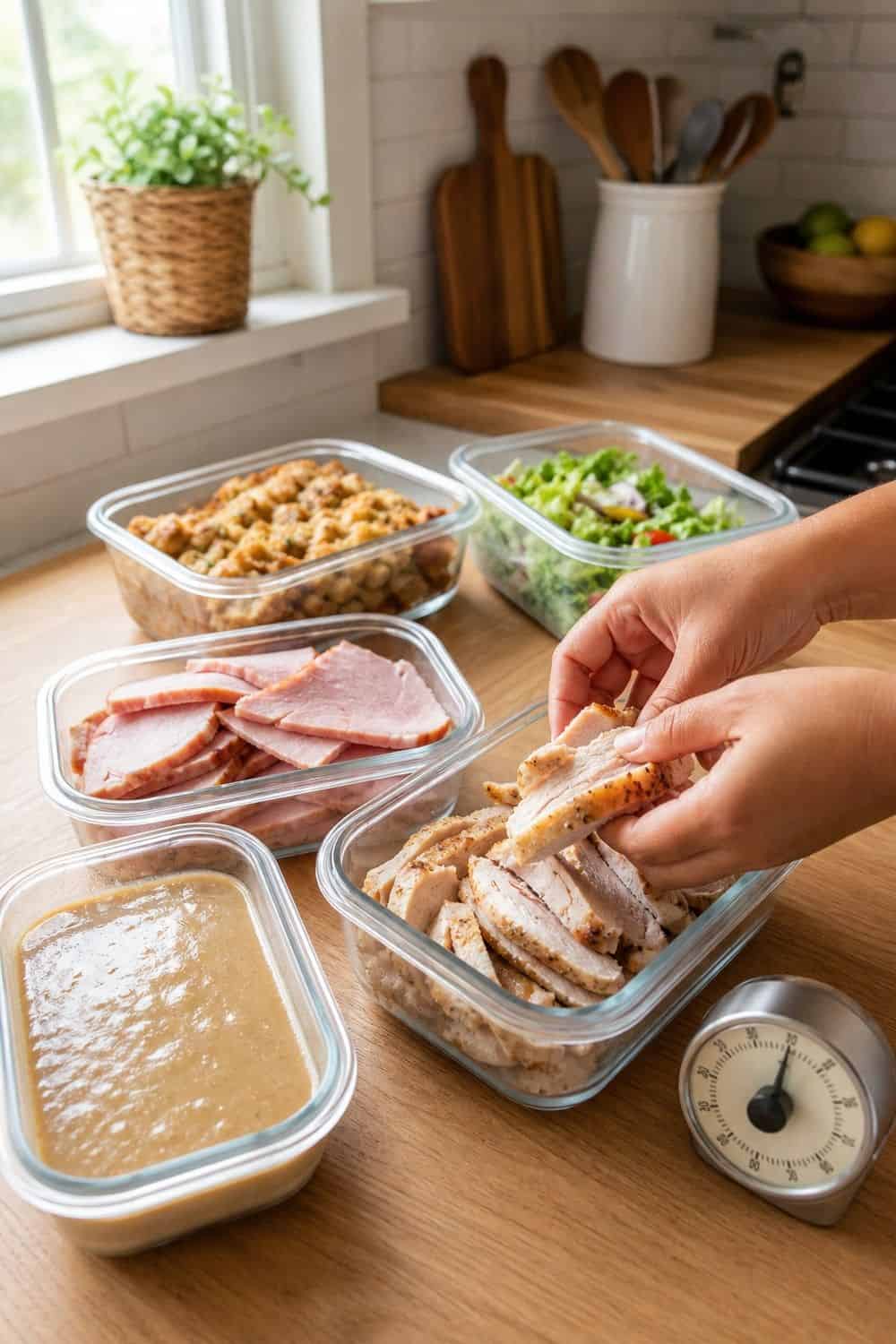
The first storage decision starts while the holiday table is still busy. Set a kitchen timer once perishable foods are out, then move ham, turkey, casseroles, salads, creamy dips, seafood appetizers, gravy, and buffet trays into safe storage within two hours unless they are being held properly hot or cold. This keeps Christmas dinner leftovers and party food from drifting into risky timing. Do not let a long dessert hour turn the main meal into forgotten counter food after guests leave.
2. Shallow Containers for Big Holiday Dishes
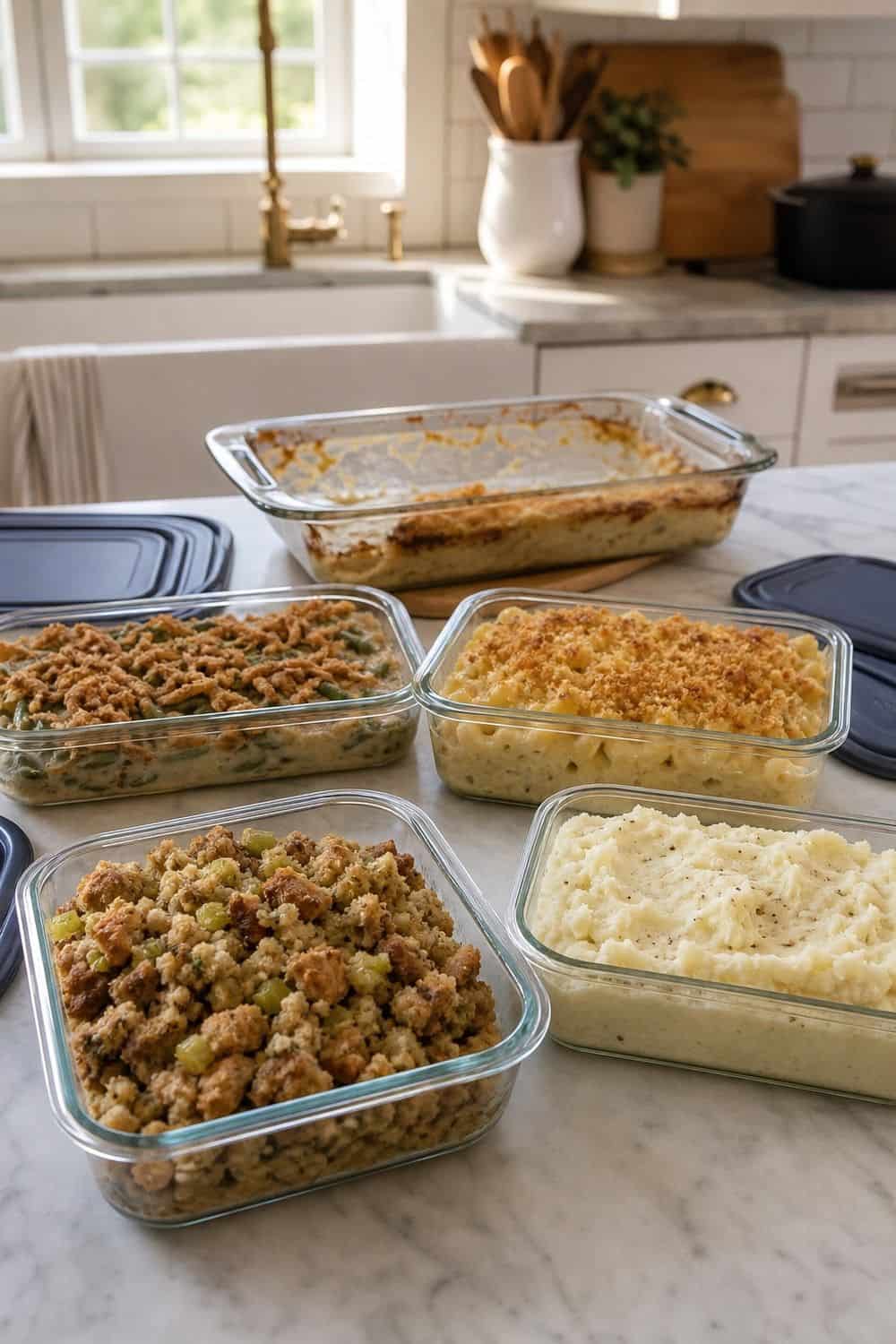
Deep pans of stuffing, mashed potatoes, pasta bakes, casseroles, and saucy mains cool slowly, especially when the fridge is already packed. Shallow food storage containers help leftovers chill faster and make later reheating easier because portions are not buried in one heavy dish.
Divide food after serving instead of sliding a full hot pan into the refrigerator. Crowded holiday cleanup is exactly when shallow containers earn their space after a large meal.
Use wider containers for dense sides and saucy mains so steam escapes faster before the lids go on. Label the pan if it needs oven reheating later.
3. An Eat-First Bin for Delicate Leftovers
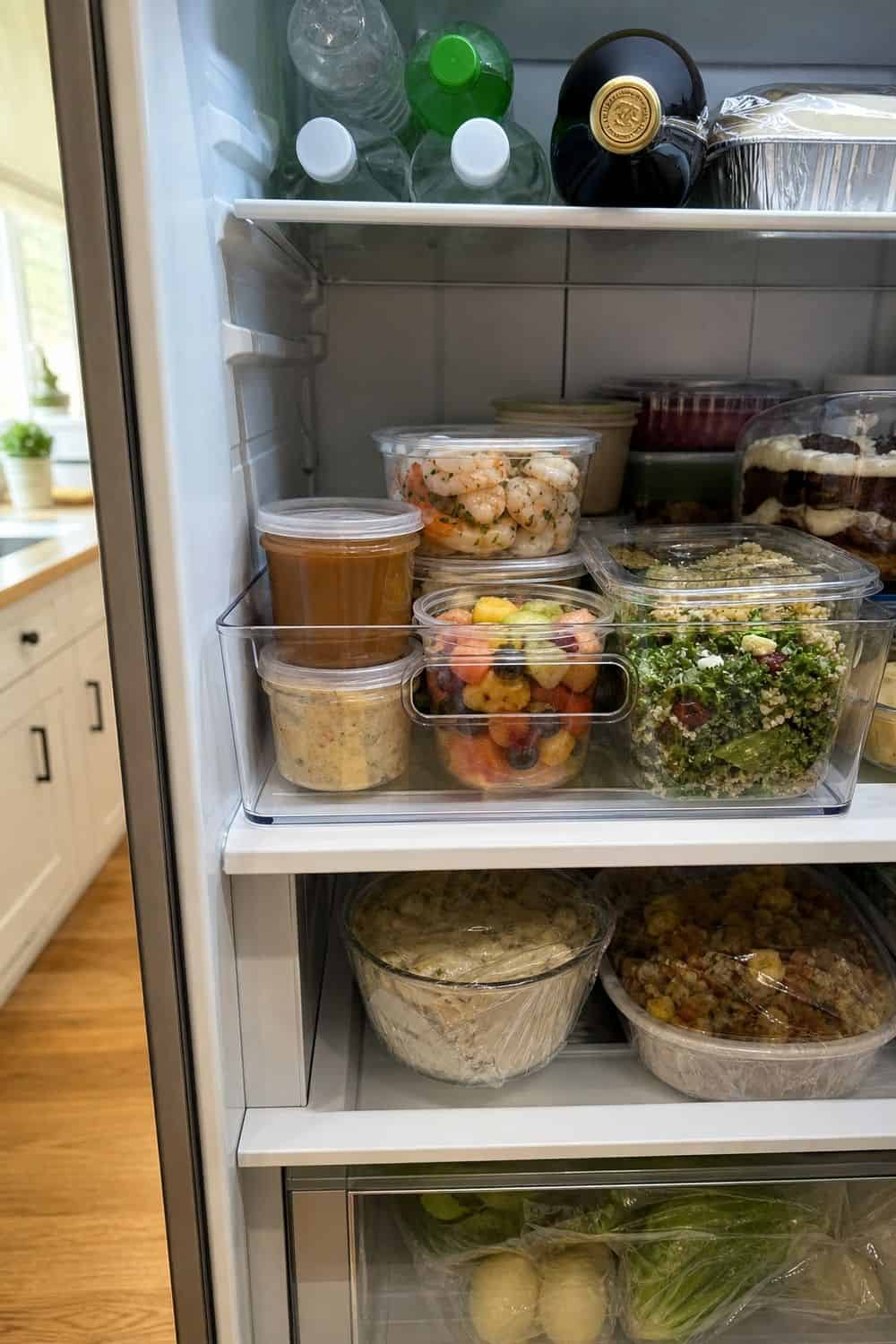
An eat-first bin keeps short-window leftovers from disappearing behind drinks, desserts, and unopened ingredients. Use clear refrigerator bins for gravy, seafood appetizers, dressed salads, cream-based dips, cut fruit, opened party platters, and anything that will lose quality quickly. Put the bin at eye level and tell the household what belongs there. This is holiday triage, not generic fridge tidying: the point is making the most delicate leftovers visible before everyone reaches for cookies, rolls, and dessert trays again tomorrow morning.
4. Individual Portions for Ham and Turkey
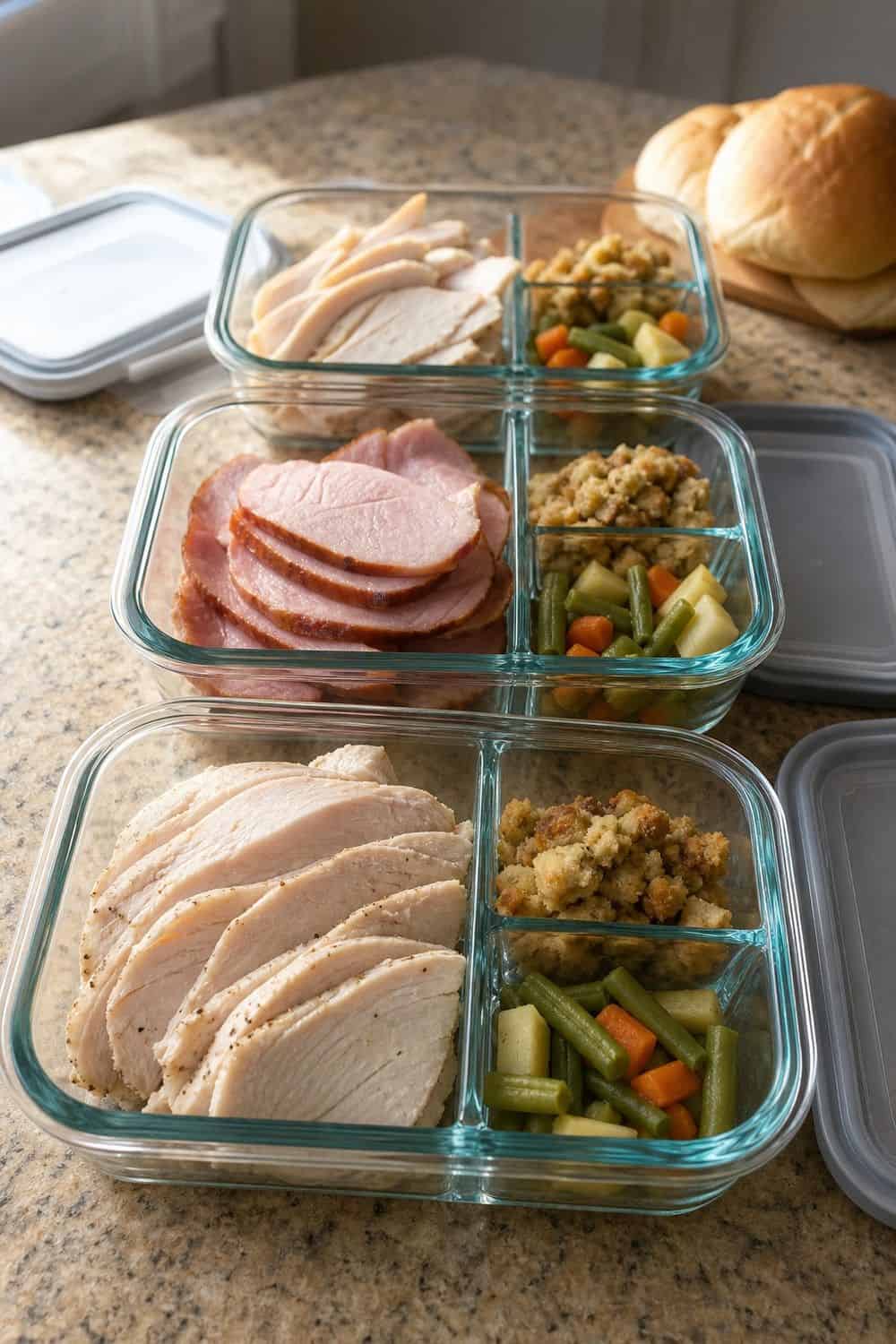
Sliced ham, turkey, roast beef, or chicken should not stay on one giant platter with sauces, rolls, and garnishes. Portion meats into meal-size divided meat storage containers so sandwiches, breakfast hash, soups, casseroles, and freezer packs are easier to plan during the week after Christmas dinner.
Keep cranberry sauce, gravy, and bread separate from the meat. That way each item can be used on its own schedule without turning everything soggy or hard to reheat later for lunch or soup.
5. Leakproof Containers for Gravy and Sauces
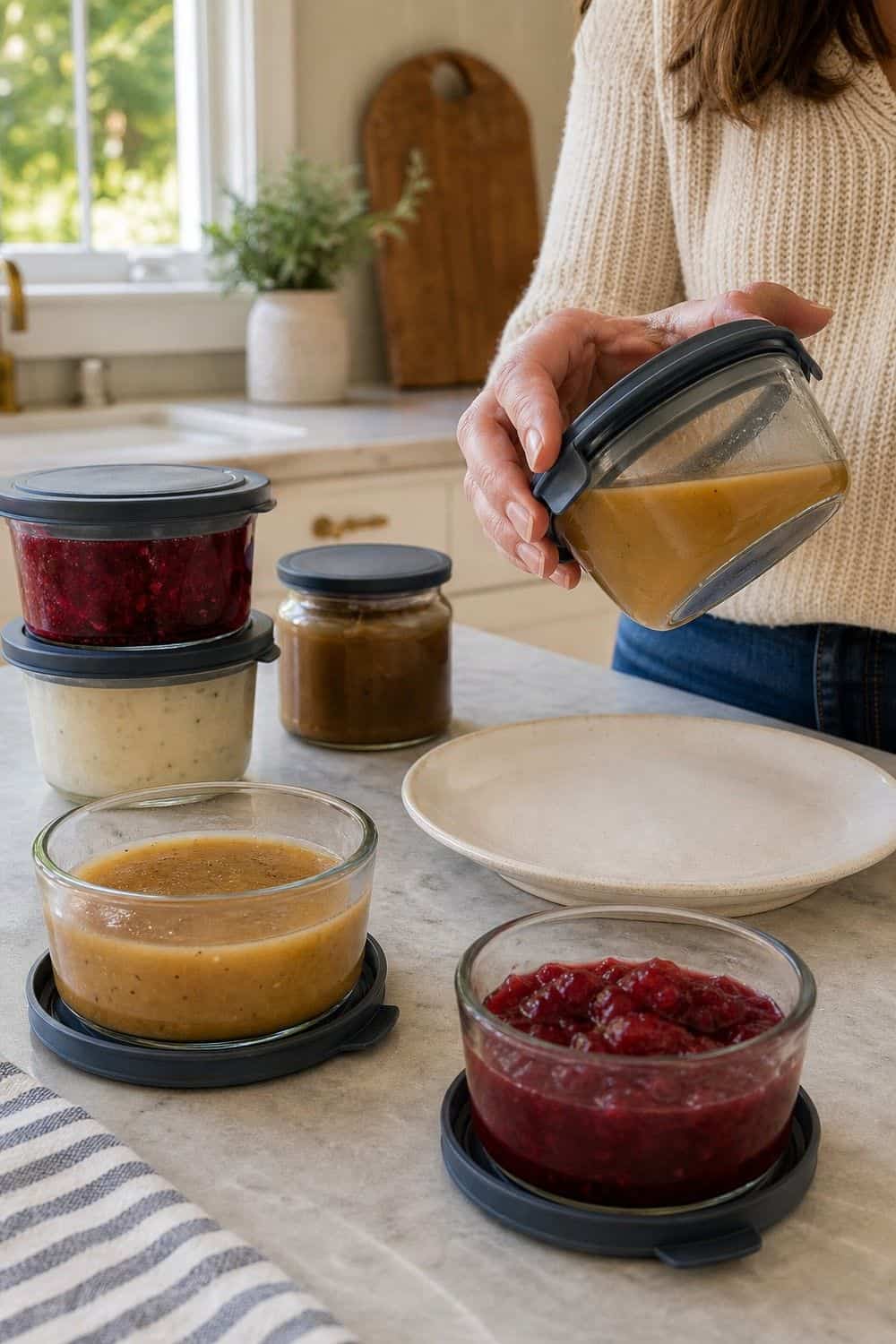
Gravy, pan sauce, jus, cheese sauce, cranberry glaze, cream sauce, and savory dips are easy to spill and easy to forget. A leakproof gravy container keeps sauce from coating the fridge shelf and makes small reheats easier.
Reheat only the amount you need, and warm sauces thoroughly before serving. Repeatedly heating the whole batch can hurt texture and shorten the useful window after the holiday meal.
Keep sweet sauces and savory sauces apart so cranberry glaze does not end up beside gravy. Small labels help when containers look similar after a crowded holiday dinner.
6. Crisp Casserole Toppings for Better Texture
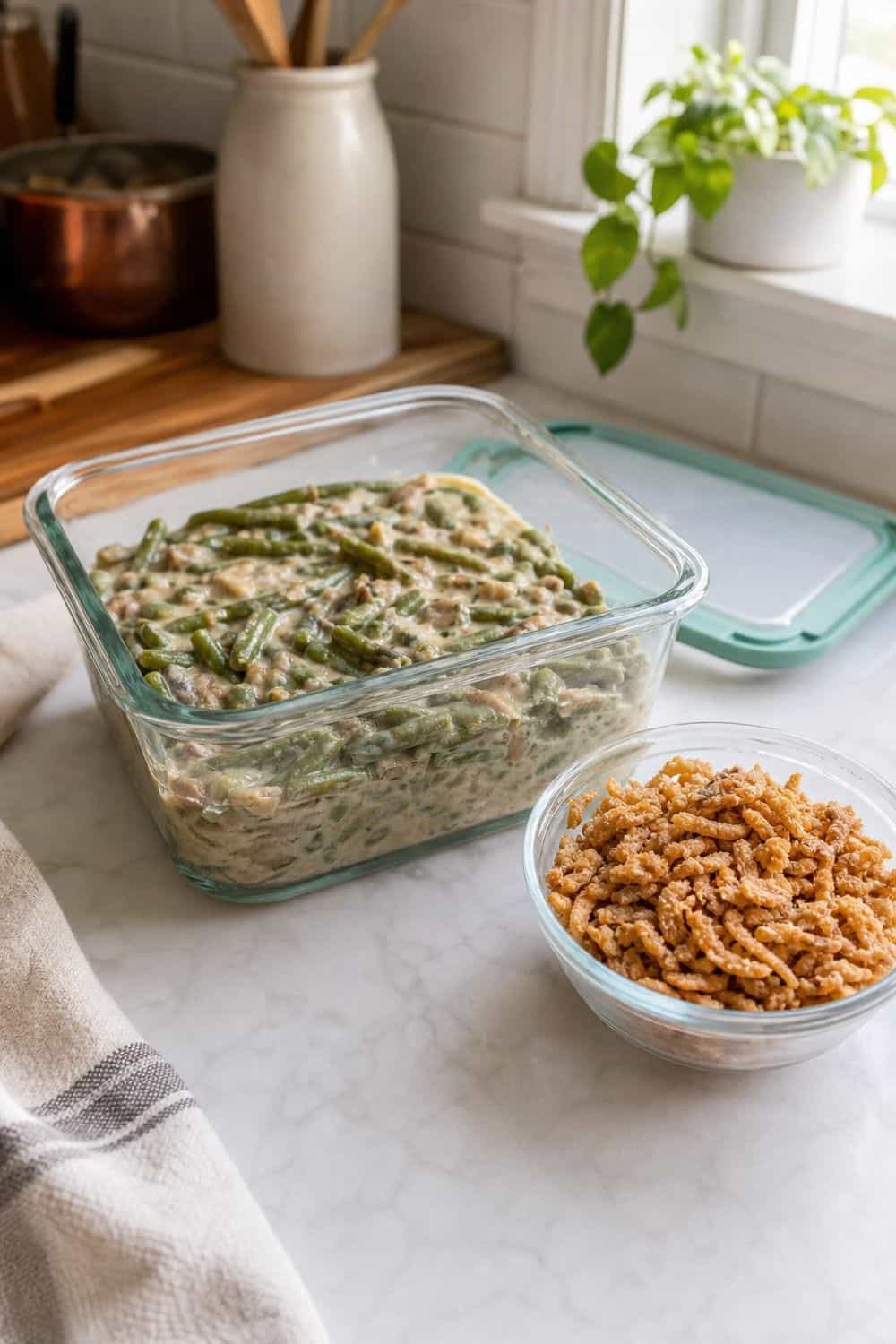
Green bean casserole, sweet potato casserole, macaroni and cheese, gratin, stuffing, and bread-topped bakes all suffer when crunchy toppings sit under steam. If possible, store fried onions, crumbs, nuts, herbs, or crisp topping pieces separately from the soft base.
Oven safe glass containers make it easier to reheat a portion and add the topping back near the end. This keeps texture closer to the original holiday dish instead of turning every bite soft after overnight storage in the crowded fridge.
7. Meal-Size Portions for Potatoes and Stuffing
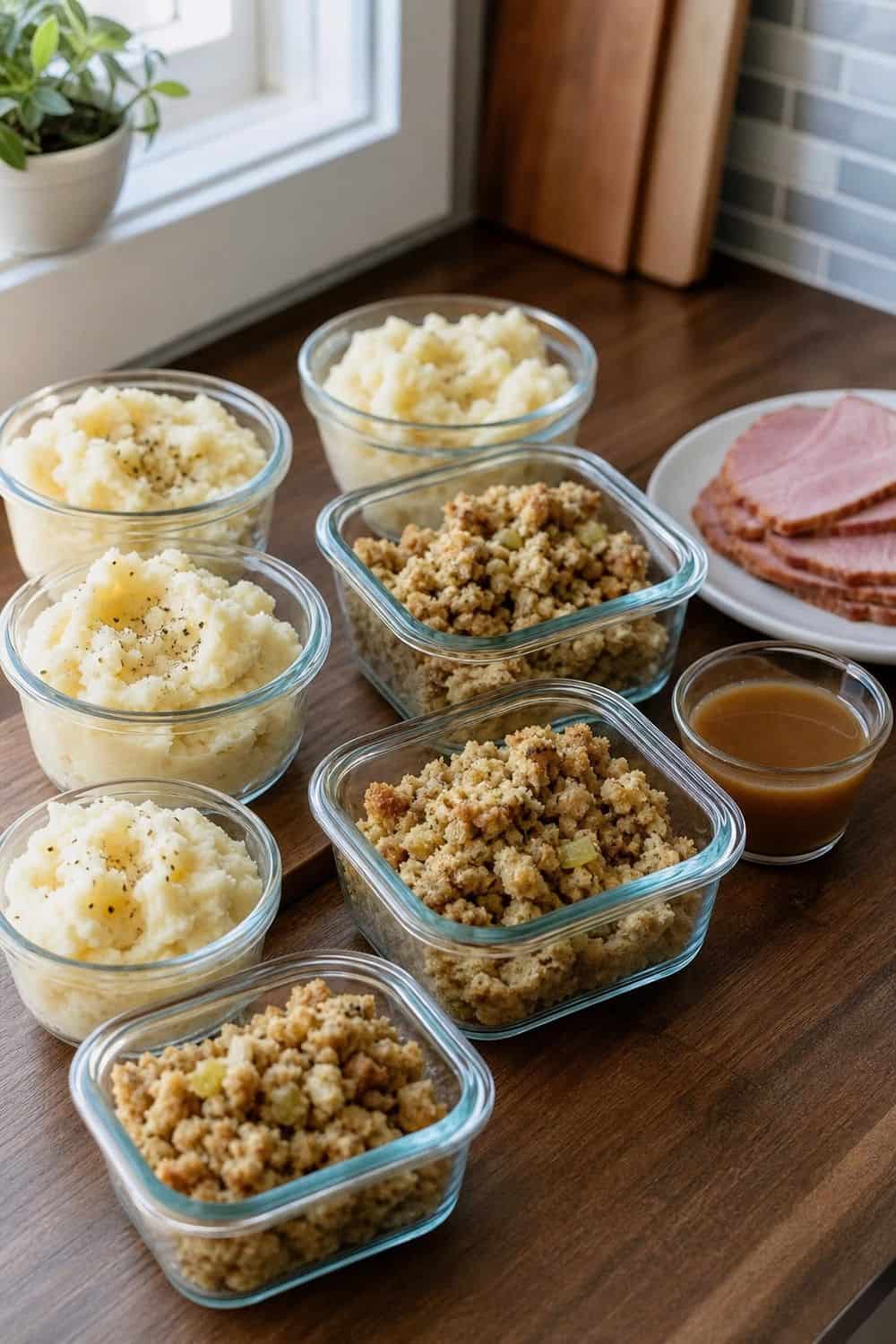
Mashed potatoes and stuffing are dense, so they are easy to over-reheat when stored in one big block. Pack them in smaller microwave safe glass bowls or oven-friendly portions that match the way you will actually eat them. Potatoes usually come back better with a splash of milk, broth, or gravy, while stuffing often tastes better reheated in the oven if crisp edges matter. Smaller portions also make it easier to pair leftovers with ham, turkey, roast beef, or soup.
8. Cold Salads With Dressing on the Side
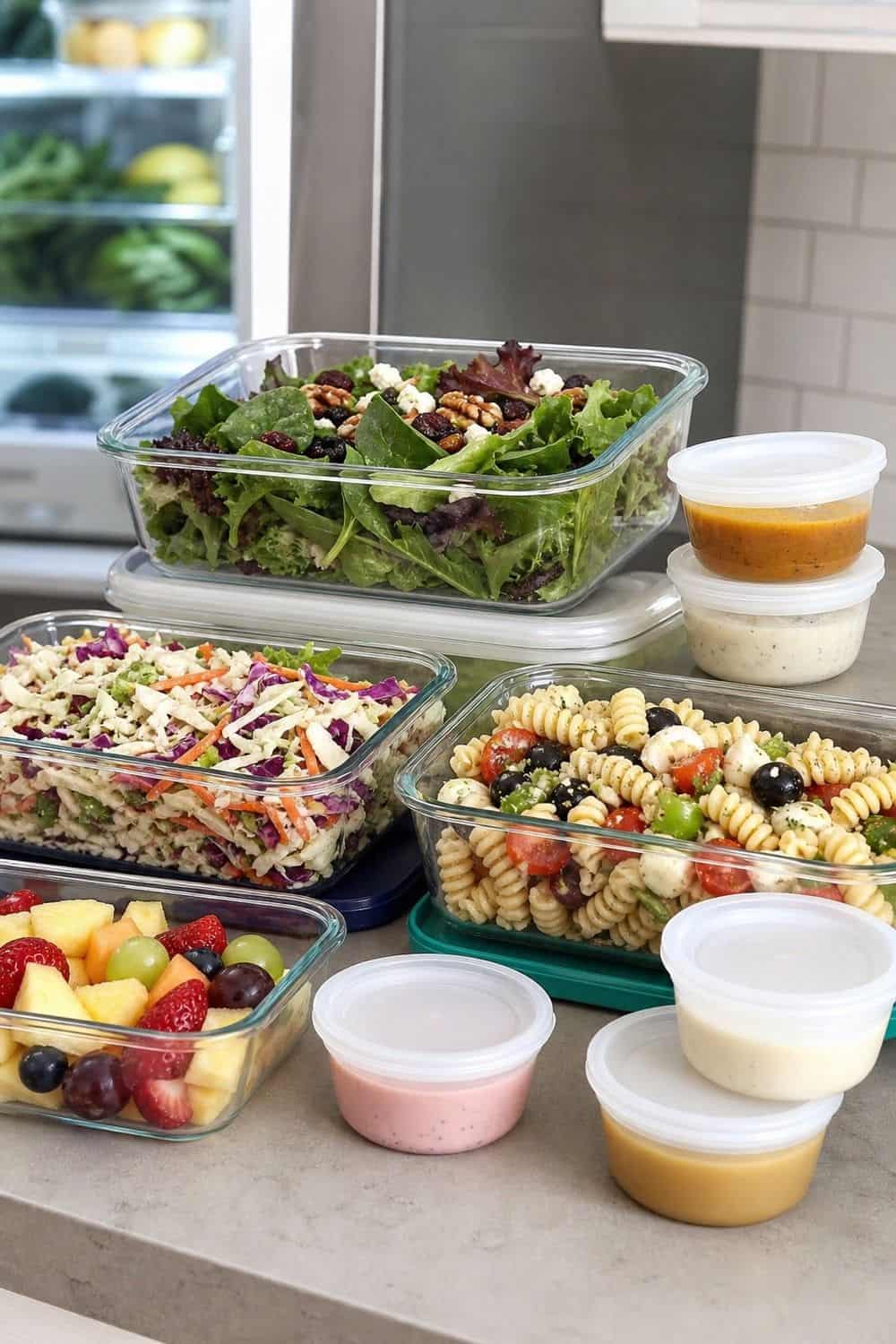
Holiday salads can go watery fast, especially green salad, slaw, Brussels sprout salad, pasta salad, potato salad, fruit salad, and grain salad. Store dressing in leakproof dressing containers whenever possible so greens stay crisp and sturdy salads do not become soupy.
Mayo- or dairy-based salads still need prompt refrigeration. Delicate salads belong in the eat-first group, while sturdier grain or cabbage salads may last better in the fridge.
If a salad was already dressed for the holiday table, store it separately from hot leftovers and plan to use it before texture fades or the greens collapse.
9. Dry Storage for Rolls and Holiday Bread
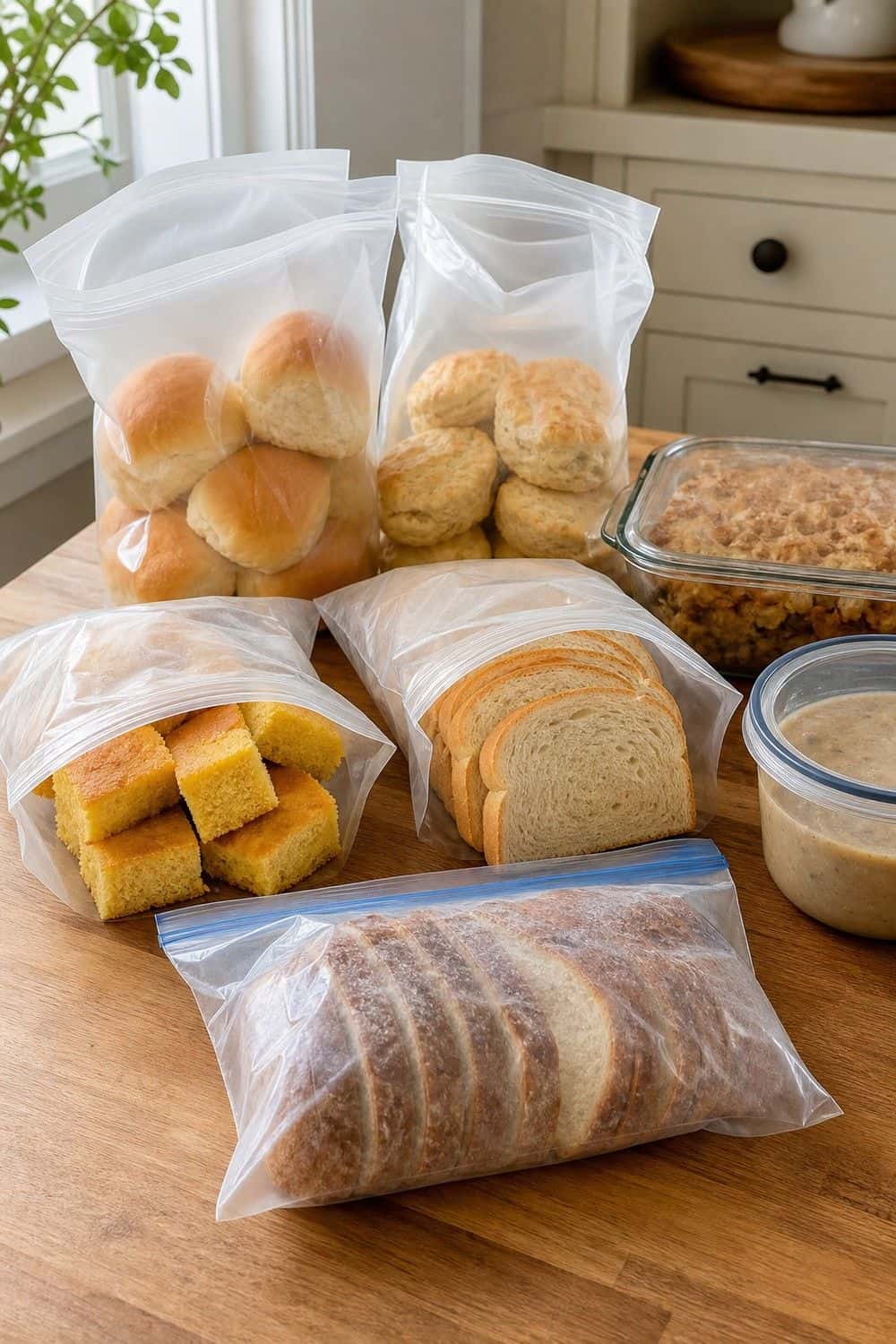
Dinner rolls, biscuits, sliced bread, panettone, brioche, cornbread, and sandwich rolls need protection from steam and sauces. Bread storage bags keep them away from gravy, meat juices, casseroles, and damp fridge air after the holiday meal ends, especially when the fridge is crowded.
If the bread will not be used soon, freeze extra rolls before they stale. They can become sliders, breakfast sandwiches, or soup sides later in the week with ham or turkey and gravy for quick lunches too.
10. A Separate Storage Plan for Holiday Desserts
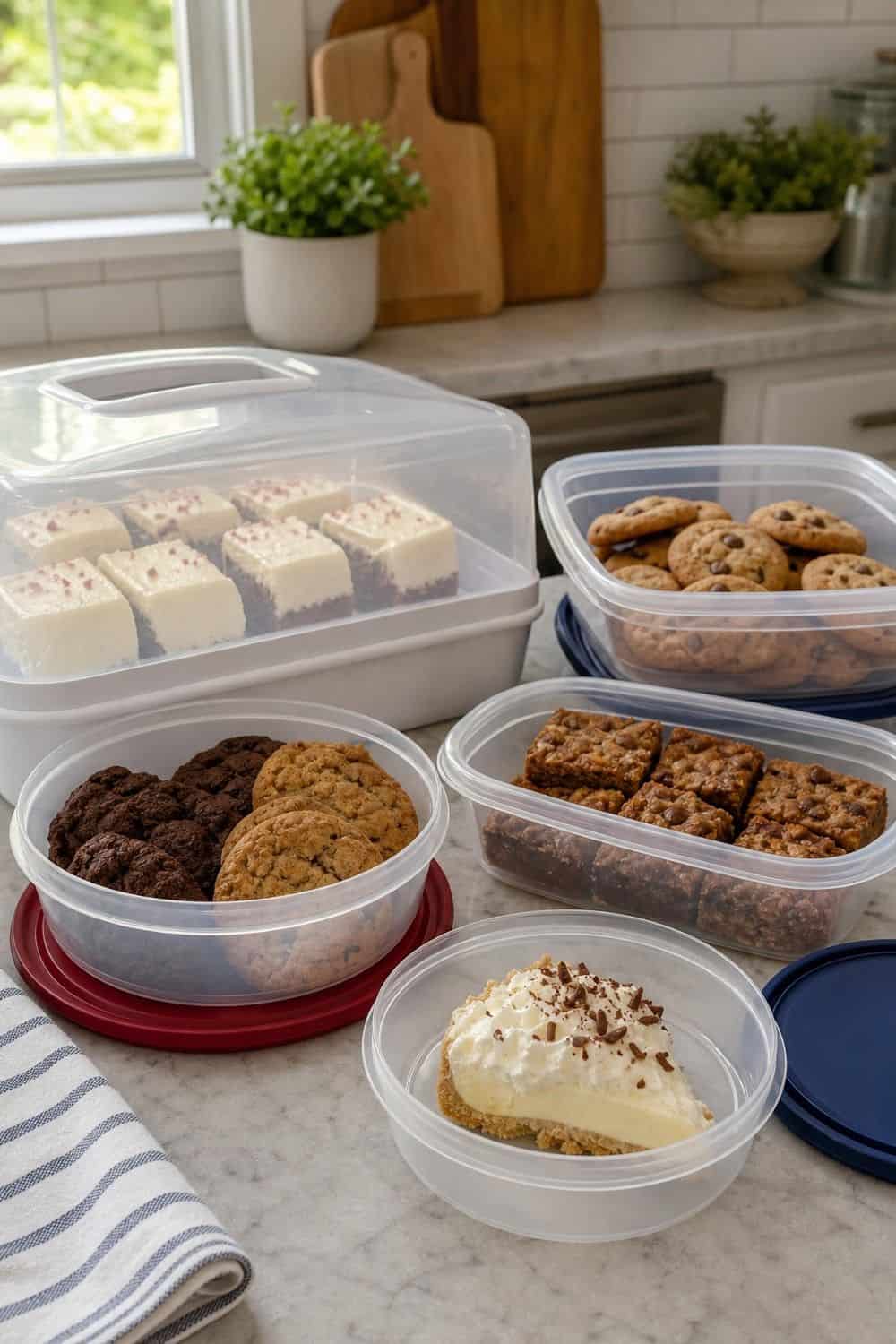
Desserts do not all belong on the counter. Plain cookies and sturdy bars can be handled differently from cheesecake, cream pies, custards, trifles, and cream-filled cakes that need refrigeration. A cake storage container protects slices, cupcakes, and frosted desserts from fridge odors and smashed corners. Keep pies, bars, cookies, and chilled desserts separated by texture and temperature needs, then label anything that should be eaten early. Dessert leftovers are still leftovers, not decoration after dinner service ends; pack or chill them like any other perishable leftover.
11. Freezer Portions Before the Holiday Window Closes
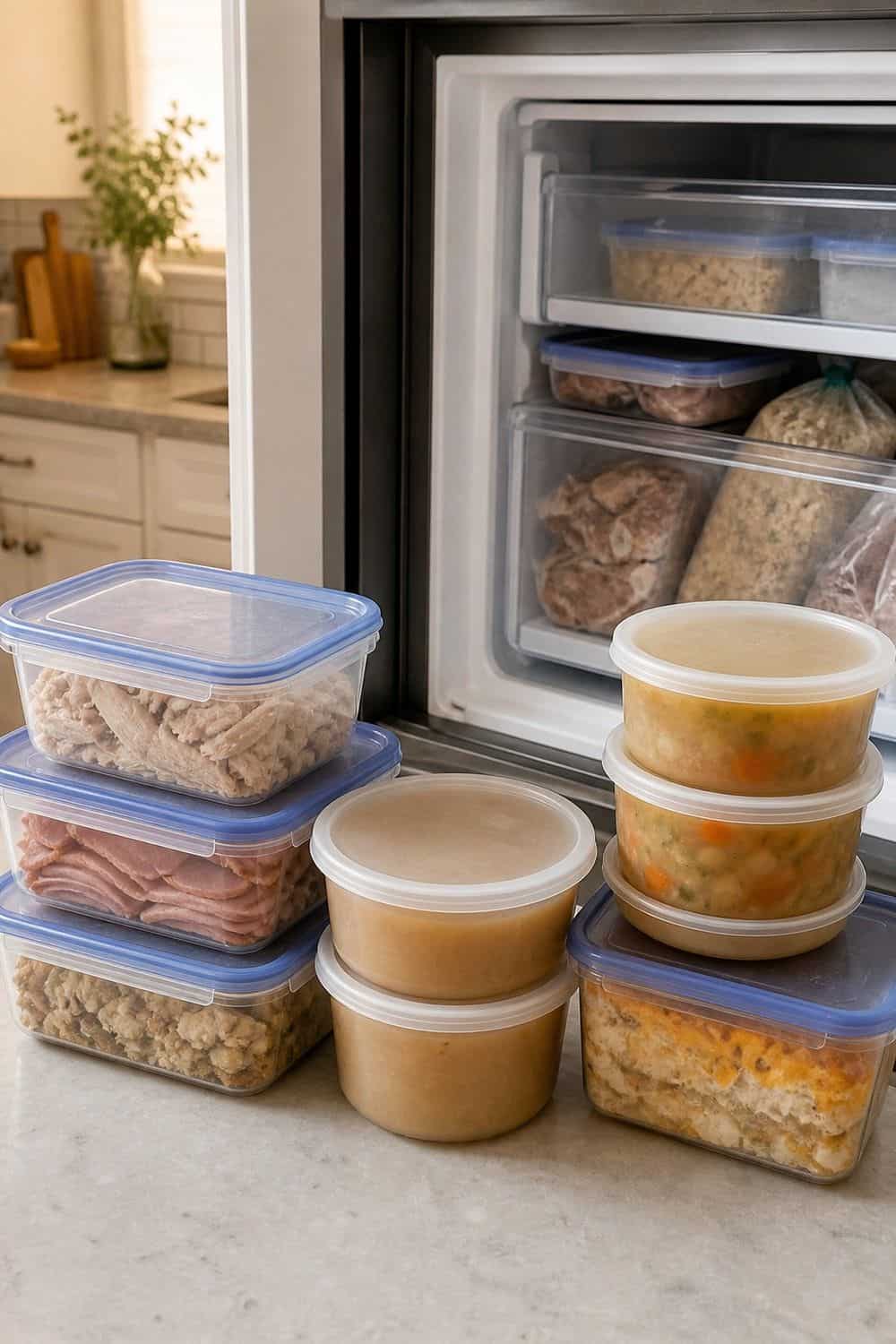
Freeze portions while the food is still appealing, before everyone is tired of the leftovers. Use freezer safe meal containers for turkey, ham, casseroles, stuffing, gravy, soup, and sturdy sides that will not be eaten within a few days.
Be honest about texture: dairy-heavy sides may separate, roasted vegetables can soften, and crisp toppings may lose crunch. Freezing preserves food better than waiting too long, but it cannot fix leftovers that sat out too long or were stored late after dinner service.
12. Food, Date, and Next-Use Labels
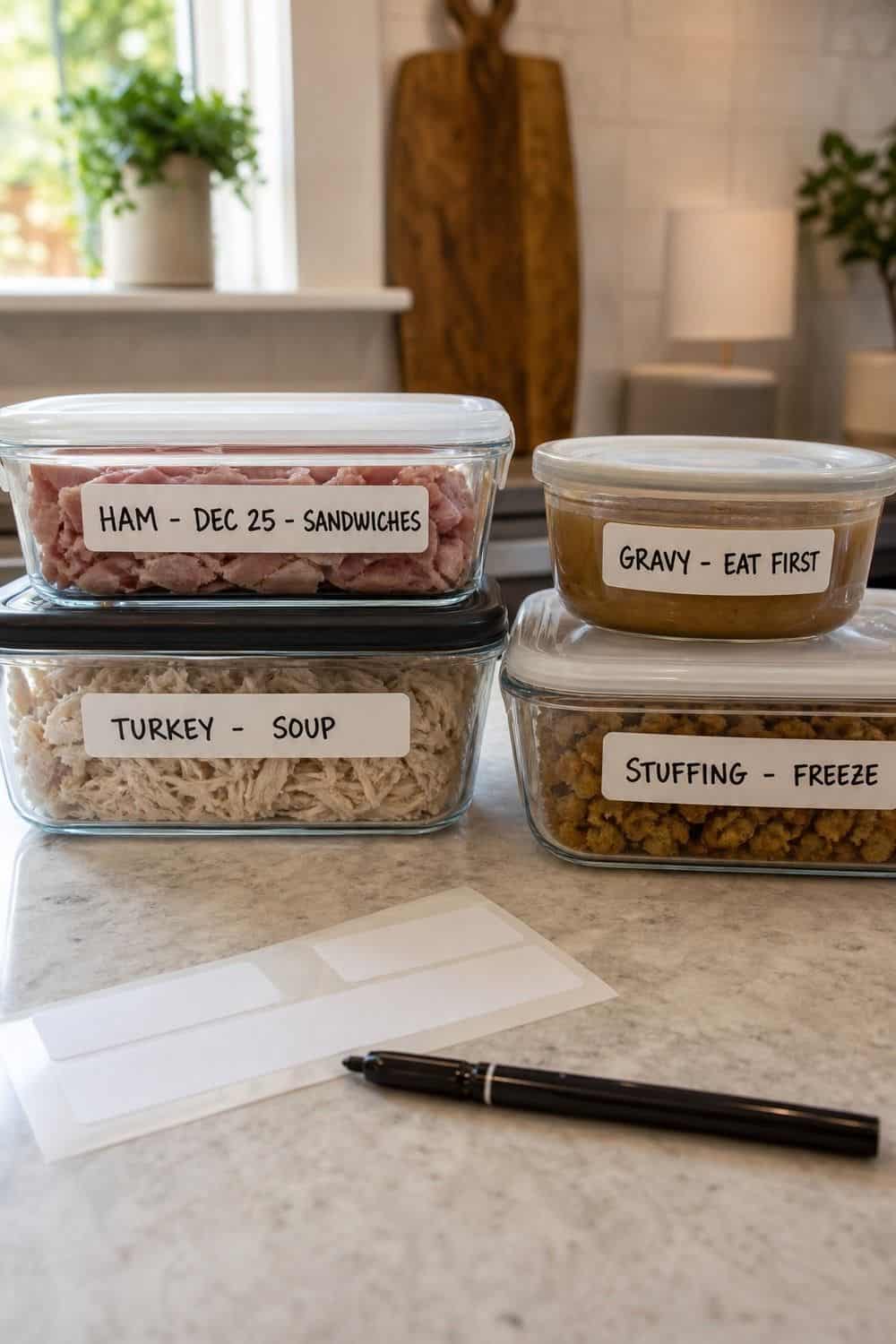
Dissolvable food labels should say what the food is, when it was cooked or stored, and the next use. Write “ham – Dec 25 – sandwiches,” “turkey – soup,” “gravy – eat first,” or “stuffing – freeze” instead of leaving mystery containers stacked in the back.
Labels are planning tools, not safety magic. If food sat out too long or was stored too late, a label does not make it safe for another meal later in the week. Use the label to plan, not to excuse risky timing.
13. Refrigerator Thawing for Frozen Holiday Leftovers
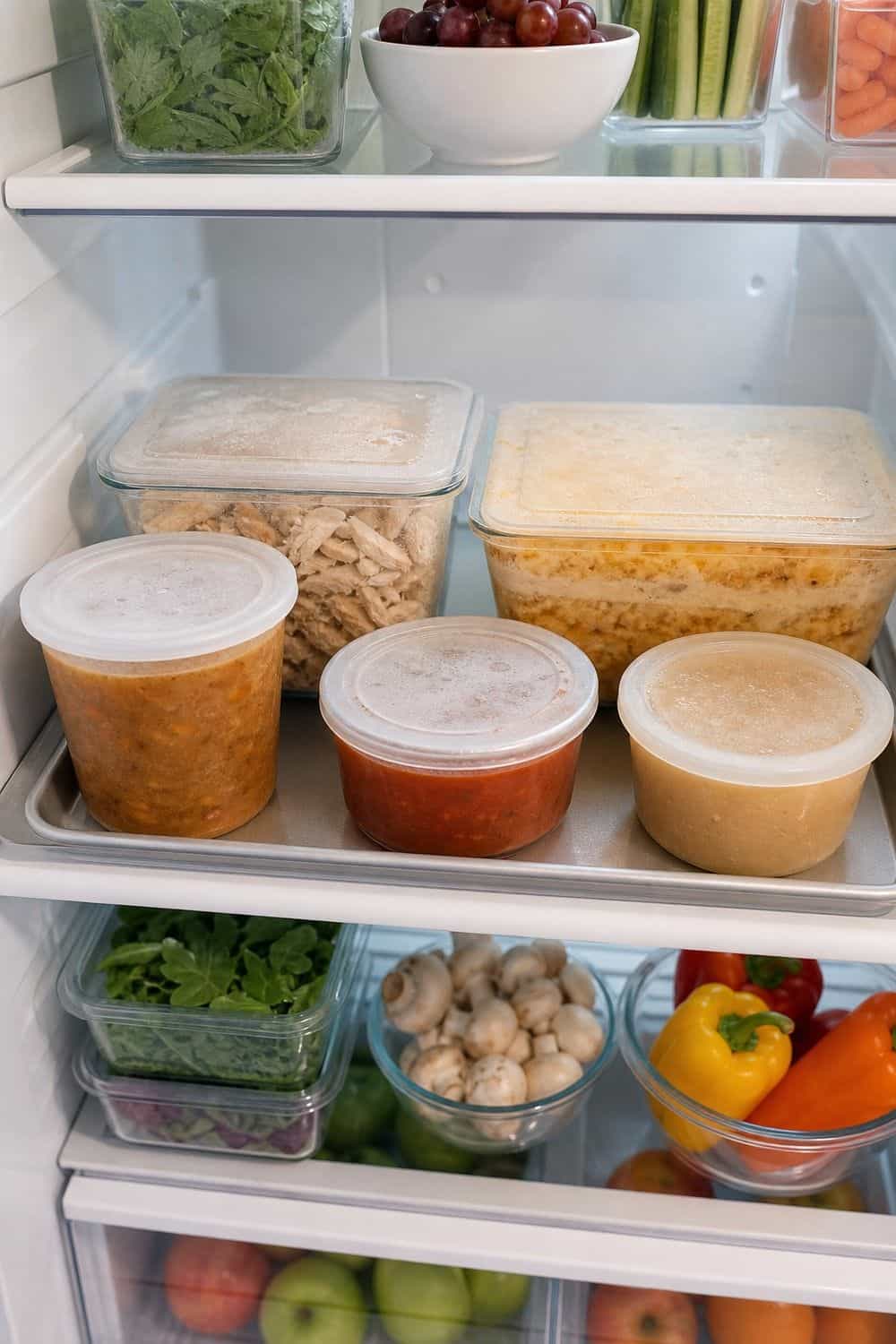
Frozen holiday leftovers thaw best in the refrigerator when you have time. Move meats, casseroles, soups, sauces, and gravy from the freezer to a refrigerator thawing tray so leaks stay contained and the container does not drip onto fresh food.
This is thawing cooked leftovers, not raw turkey. Give dense containers enough time, then reheat only what you plan to serve that meal after thawing.
Keep thawing containers labeled so no one mistakes them for fresh holiday sides. Thawed leftovers still need prompt use once they are ready for reheating.
14. Smaller Reheats for Safer Leftover Meals
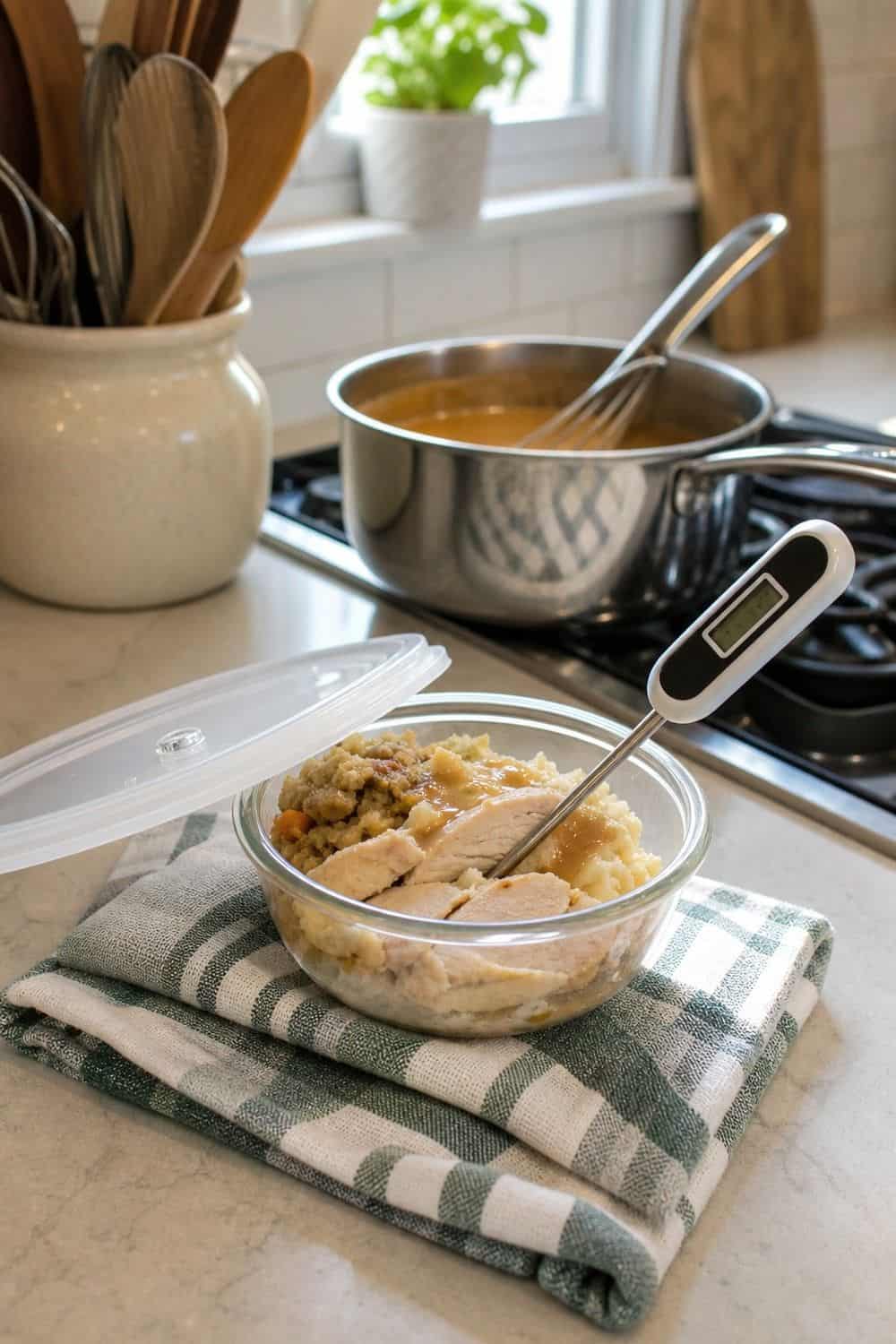
Holiday leftovers hold up better when the whole container is not heated and cooled again and again. Portion what you plan to eat, reheat leftovers to 165 F, and check dense foods with an instant read food thermometer when temperature matters.
Stir microwaved portions, cover food so it heats evenly, and bring gravies or sauces to a proper simmer when appropriate. Discard leftovers with unsafe timing instead of trying to rescue them by reheating later that week for dinner again.
15. A Holiday Leftover Use-Up Plan
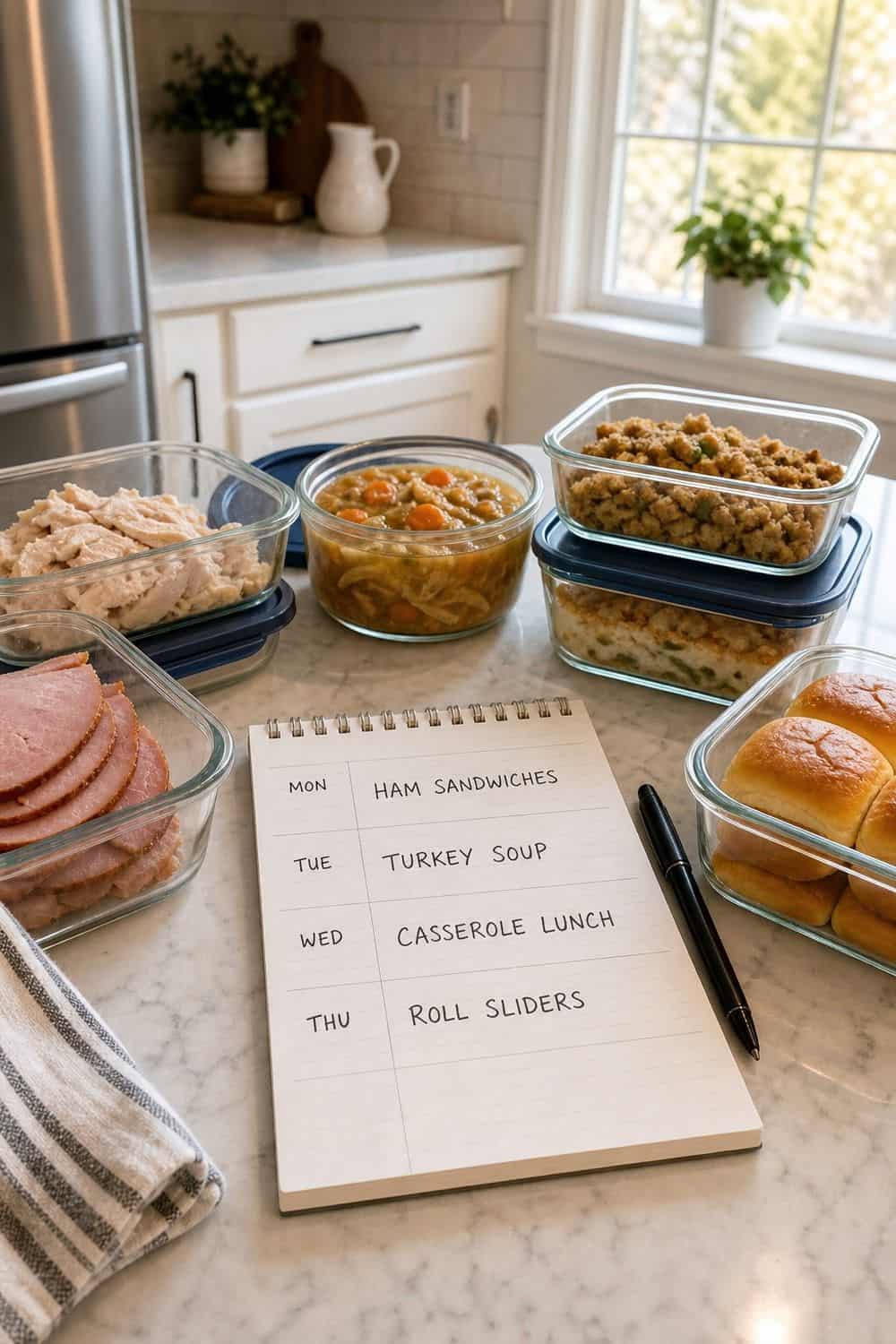
A weekly meal planner pad turns leftovers into assigned meals before they age out. Put ham sandwiches, turkey soup, roast beef hash, casserole lunches, cranberry sauce with yogurt, mashed potato cakes, roll sliders, and dessert portions onto specific days.
This does not need to become a full recipe project. The point is choosing what gets eaten first, what gets frozen, and what should be tossed if the timing was unsafe after the holiday meal cleanup is done for the day.
How to Think Through Holiday Leftover Storage
Holiday leftover storage works best as a sequence. Start with safe timing, cool food in shallow containers, group short-window foods where they are visible, label everything with a date and next use, then freeze what will not be eaten soon.
Different leftovers have different priorities. Gravy, seafood, creamy dips, dressed salads, and cut fruit should be handled early; meats and casseroles need clear portions; breads and desserts need texture protection; freezer portions should be packed before quality drops.
Freezing can preserve properly stored leftovers, but it cannot fix food that sat out too long. When timing is unclear, trust food-safety guidance over smell, appearance, or wishful thinking.
Frequently Asked Questions
How long can holiday leftovers stay out?
Perishable holiday leftovers should generally be refrigerated within two hours unless they are being held safely hot or cold. That includes turkey, ham, gravy, casseroles, creamy dips, salads, seafood appetizers, and buffet trays. If food sat out too long during a long dessert hour or party, it is safer to discard it.
How long do holiday leftovers last in the fridge?
Many refrigerated holiday leftovers are best used within a few days, but the exact window depends on the food and how it was handled. Meat, casseroles, gravy, salads, and creamy sides do not all age the same way. Label containers with the stored date, eat delicate foods first, and use official food-safety guidance for unusual dishes.
What holiday leftovers should be eaten first?
Eat gravy, seafood appetizers, creamy dips, dressed salads, cut fruit, opened party platters, and delicate desserts first. These tend to lose quality quickly or need more careful handling. Put them in a visible eat-first bin so they do not get buried behind drinks, rolls, cookies, and sturdier leftovers.
Can you freeze holiday leftovers?
Yes, many holiday leftovers can be frozen if they were stored safely first. Turkey, ham, casseroles, stuffing, gravy, soup, and some sides freeze well enough for later meals. Texture may change, especially with dairy-heavy sides, crisp toppings, bread, and roasted vegetables, so freeze portions you will realistically use.
What is the best container for holiday leftovers?
The best containers are shallow, airtight, easy to label, and sized for real portions. Shallow containers help food cool faster, clear bins make eat-first foods visible, leakproof containers protect sauces, and freezer-safe containers make longer storage easier. Avoid deep hot pans and mystery containers with no date.
How should you store leftover ham or turkey?
Store ham or turkey in meal-size portions, separate from gravy, cranberry sauce, rolls, and wet sides. Keep sliced meat in airtight containers so it can become sandwiches, soup, breakfast hash, casseroles, or freezer portions. Smaller portions chill, reheat, and get used more easily than one large holiday platter.
How do you thaw frozen holiday leftovers safely?
Thaw frozen holiday leftovers in the refrigerator when possible, especially meats, casseroles, sauces, soups, and gravy. Use a tray to catch leaks and keep the thawing container away from ready-to-eat foods. Plan ahead for dense containers, then reheat only the portion you plan to serve.
What temperature should holiday leftovers be reheated to?
Reheat leftovers to 165 F when reheating for safety. Stir dense foods, cover microwaved portions so heat distributes more evenly, and use an instant read thermometer when you are unsure. Gravies and sauces should be heated thoroughly, but do not repeatedly warm the entire container if you only need one serving.
When should you throw holiday leftovers away?
Throw away leftovers that sat out too long, were stored too late, smell or look off, or have been kept beyond a safe use window. Do not rely on smell alone, especially for creamy dishes, meats, gravy, seafood, and salads. When timing is uncertain after a long holiday meal, it is better to discard risky food.
Final Thoughts
The best holiday leftover storage ideas make the after-dinner window less chaotic. Cool food quickly, separate fragile leftovers, label containers, freeze before quality drops, thaw safely, and reheat only what you plan to eat so the holiday food stays useful instead of becoming a crowded fridge problem.
Last update on 2026-09-18 / Affiliate links / Images from Amazon Product Advertising API