
The smartest IKEA kitchen organization ideas start with measuring one problem area, then matching the right IKEA-style system to that zone. Use UPPDATERA for drawers, VARIERA for cabinets, rails or pegboards for walls, carts for flexible storage, IKEA 365+ or KORKEN for pantry staples, KLIPPKAKTUS or SNURRAD for fridge access, and HALLBAR for waste sorting. The goal is not to buy every organizer at once, but to make drawers, shelves, counters, and small kitchens easier to use.
IKEA kitchen organization ideas work best when they solve a specific storage problem instead of adding another container to an already crowded cabinet. The strongest pieces are usually the ones that disappear into the routine: a drawer tray that fits, a shelf insert that stops wasted height, a cart with one clear job, or a rail placed exactly where the tools are used.
Before buying anything, measure the drawer width, drawer depth, cabinet height, shelf depth, fridge shelf clearance, wall rail placement, and cart clearance. Then choose one zone to fix first. IKEA storage can look surprisingly custom when the pieces are repeated thoughtfully, but it can also turn messy fast if every shelf, counter, and wall gets a different organizer.

Top Recommended Products


You Might Also Like These Blog Posts
- Small Kitchen Organization
- Kitchen Organization Products
- Kitchen Drawer Organizers
- Budget Kitchen Organization
- Minimalist Kitchen Organization
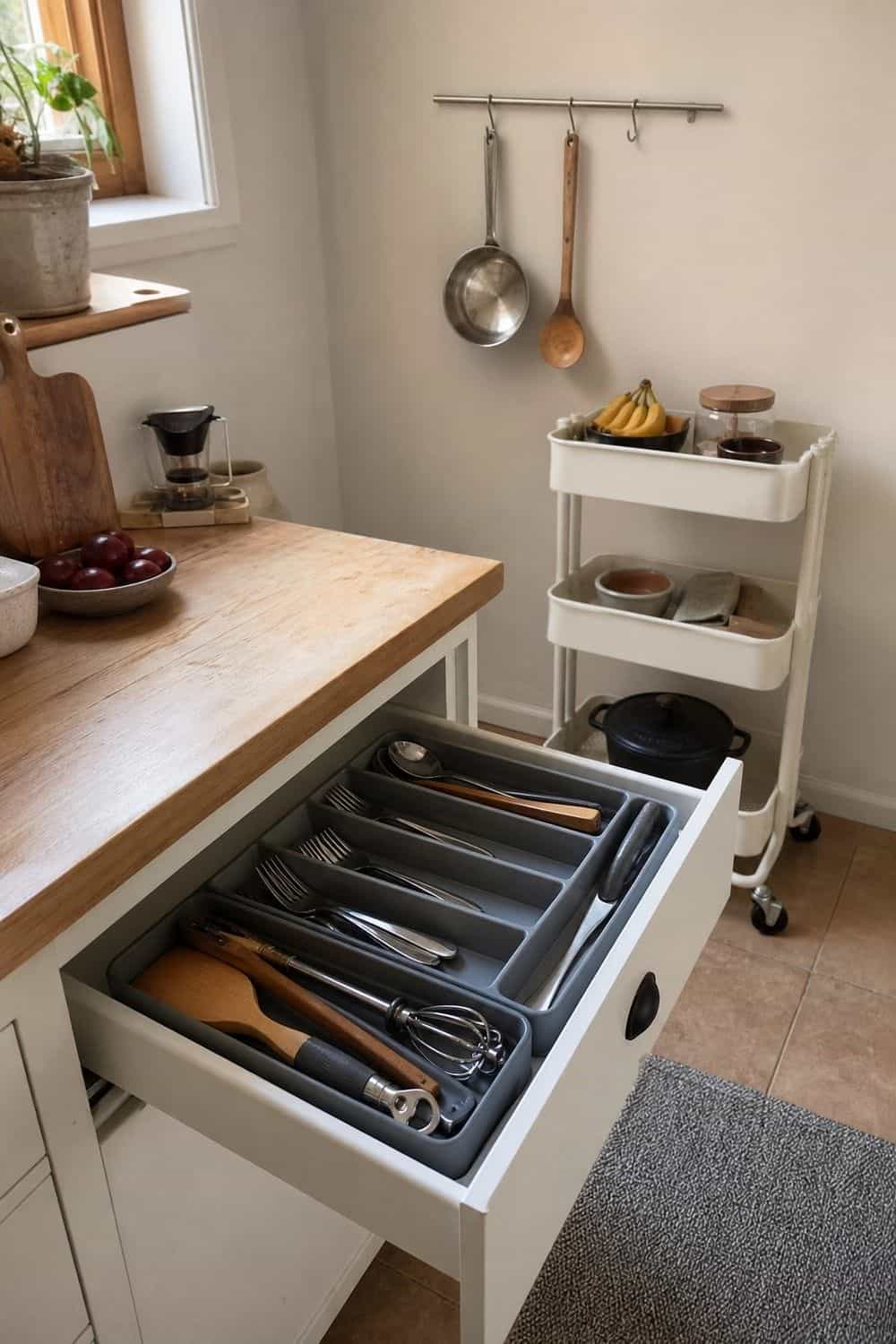
1. Sort Flatware With UPPDATERA Drawer Trays
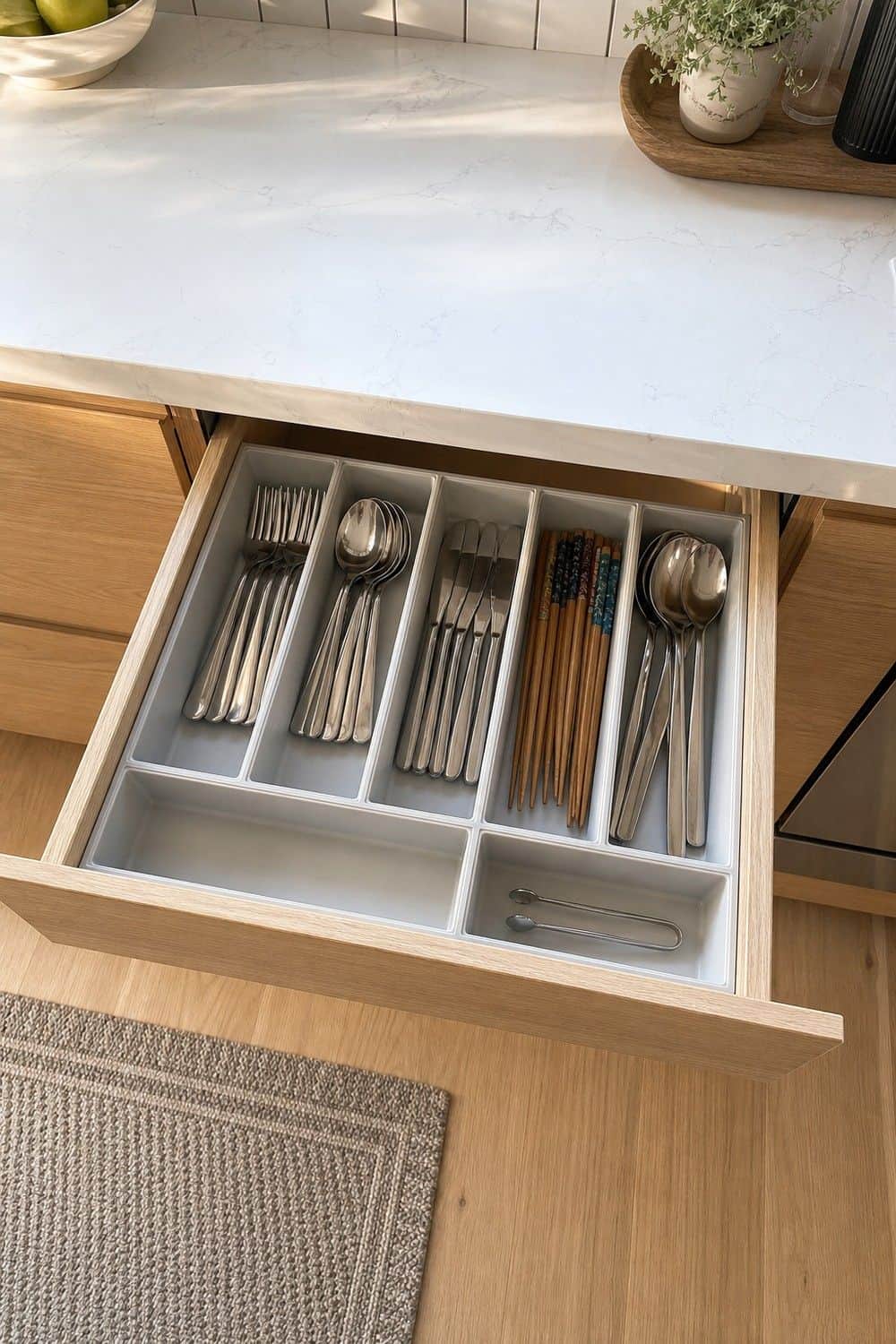
UPPDATERA trays are best when the drawer already holds a clear category, like flatware, serving spoons, chopsticks, or small prep tools. Start by emptying the drawer and grouping what you actually set the table with every day, then choose the tray size around those pieces instead of forcing the drawer to fit the insert. Leave one slim space for the odd tool that always needs a home, such as a bottle opener or tiny tongs. A drawer that still opens smoothly will feel much calmer than one that is perfectly divided but too tight to use.
2. Use UPPDATERA Pegs for Pots and Lids
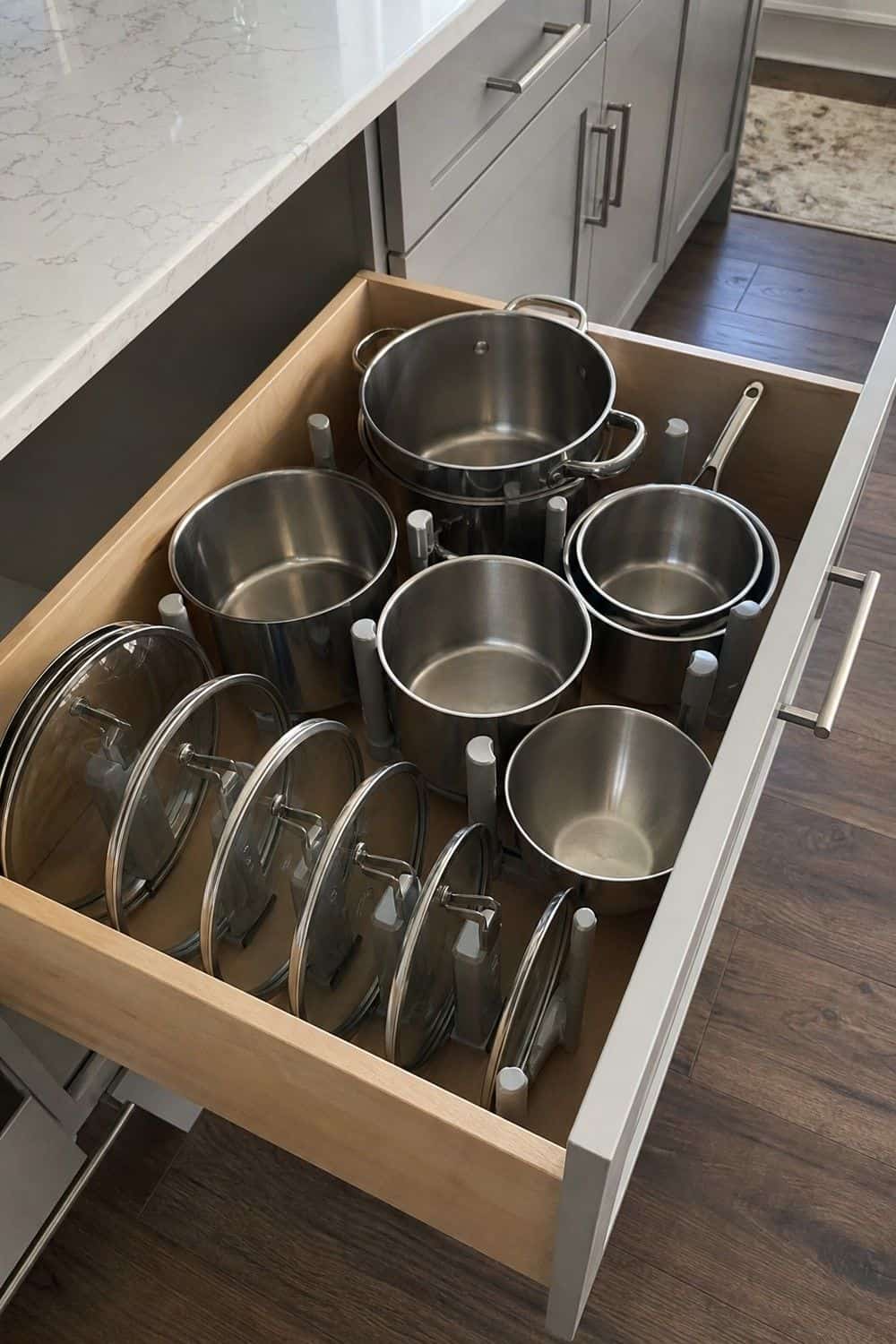
UPPDATERA pegs make sense for pots, lids, mixing bowls, and storage containers that slide around in a deep drawer. The nice part is that the layout can shift as your cookware changes, so you are not locked into one molded tray forever.
Set the heaviest pot in first, then build the peg pattern around it with enough finger room to lift it out. If lids are part of the same drawer, stand them in a small row near the front so dinner does not start with a noisy search.
3. Add a Dedicated Knife Insert
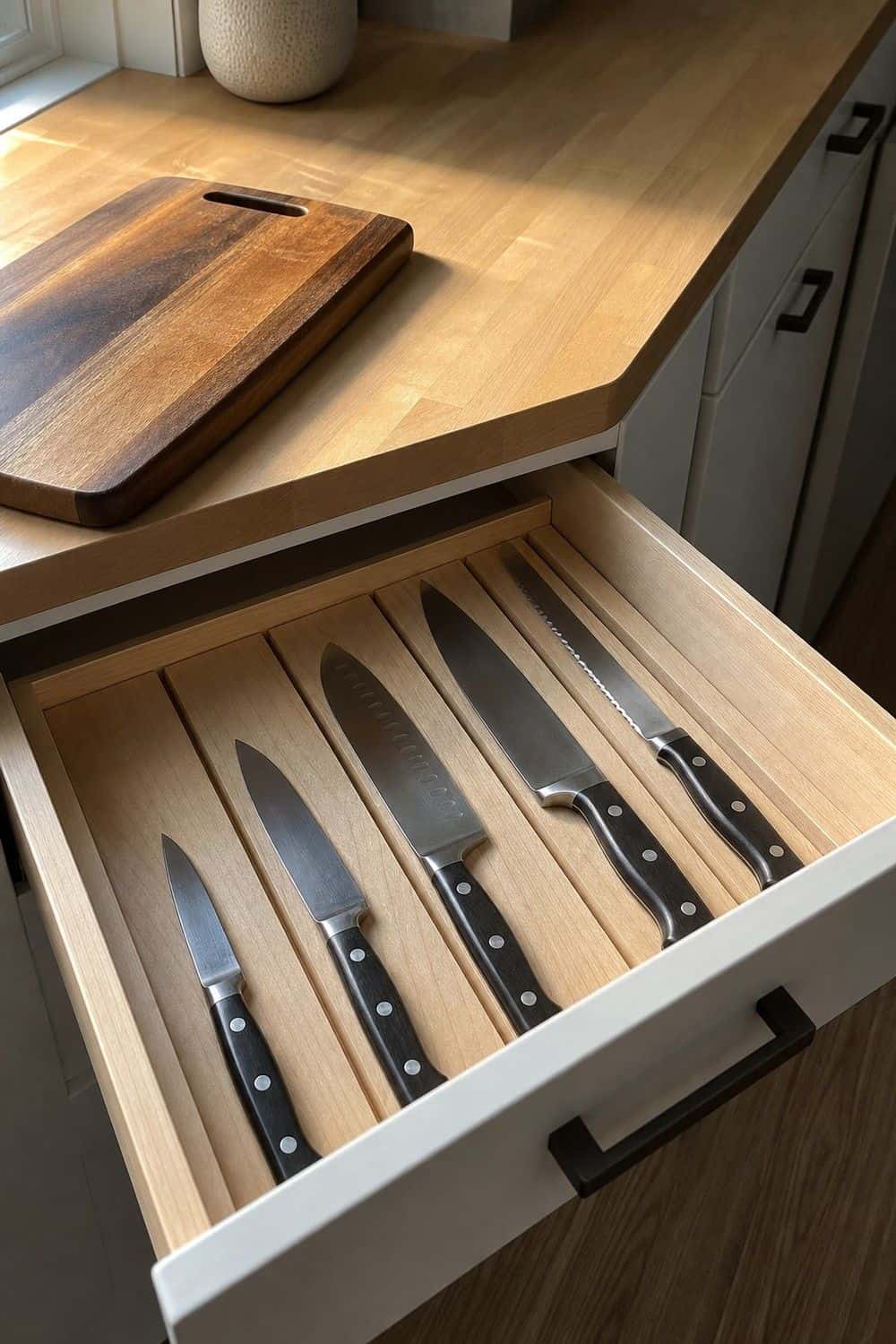
A dedicated knife insert is a good IKEA kitchen organization move when a counter block is stealing prep space. It keeps blades separated, flat, and easy to see, which is much nicer than letting knives bump against peelers and measuring spoons. Place the insert in the drawer closest to your main cutting board. If children use the kitchen, choose a higher or less obvious drawer and keep only the knives you reach for often. The goal is a safer prep zone, not a secret archive of every knife you own.
4. Double Cabinet Space With VARIERA Shelf Inserts
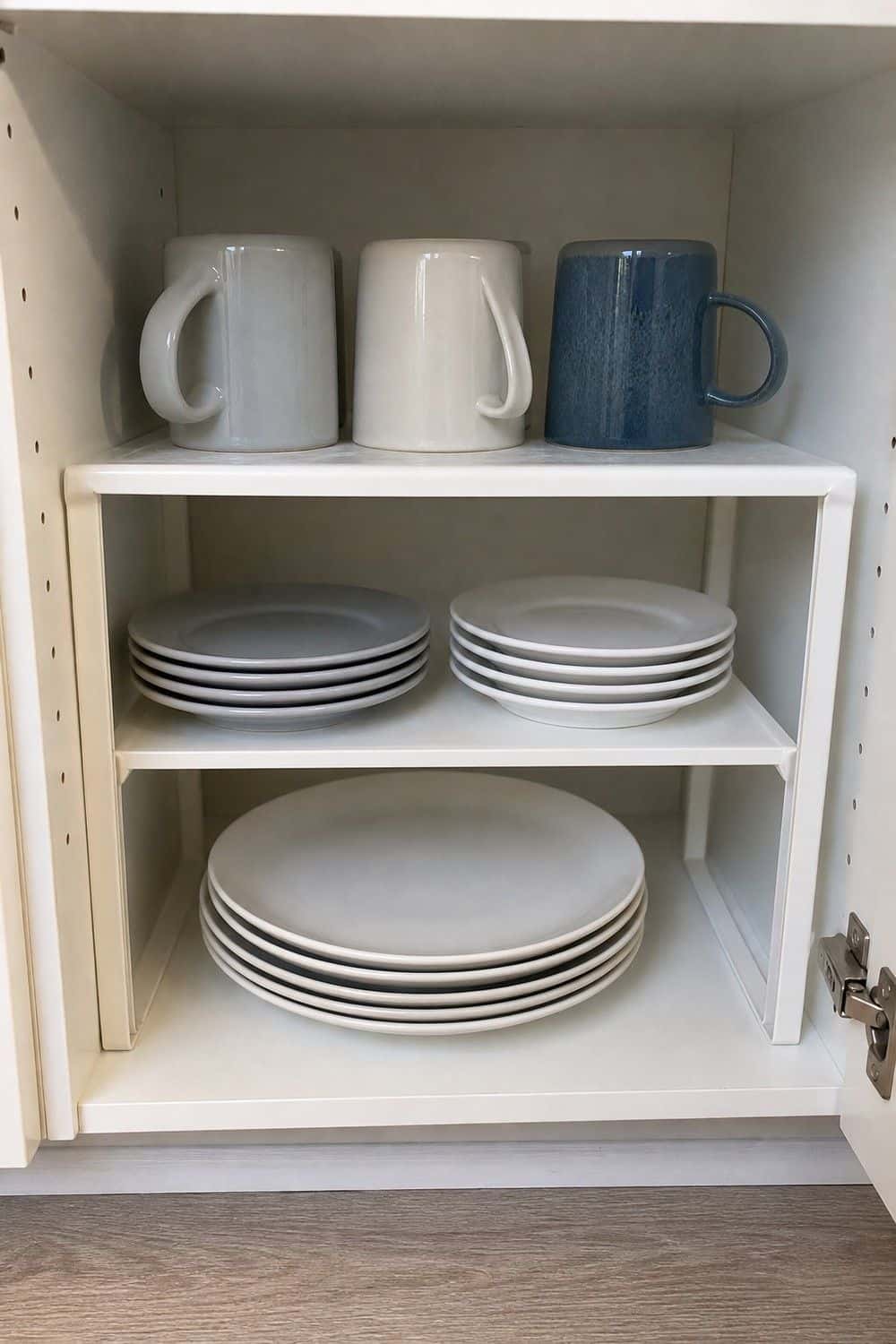
VARIERA shelf inserts are helpful when a cabinet has tall empty air above plates, mugs, bowls, or food containers. They give you a second level without adding a permanent shelf, which is perfect for cabinets that hold mixed pieces.
Measure the cabinet height with your dishes in place before buying. I like these most for stacks that stay fairly light, like side plates over dinner plates or mugs above cereal bowls. Heavy serving dishes should stay lower so the cabinet still feels easy to unload.
5. Corral Loose Pantry Items in VARIERA Boxes

VARIERA boxes work like little pull-out drawers for pantry shelves that collect packets and half-used bags. Use them for snacks, tea, baking chocolate, seasoning envelopes, lunchbox extras, or small cans that disappear when they sit loose on a deep shelf. Give each box one honest label and avoid mixing too many categories together. If a box stops sliding out easily, clear out the old packets and keep the category smaller. The box should make the shelf easier to shop from, not hide a second pantry inside it.
6. Use a VARIERA Pot Lid Organizer
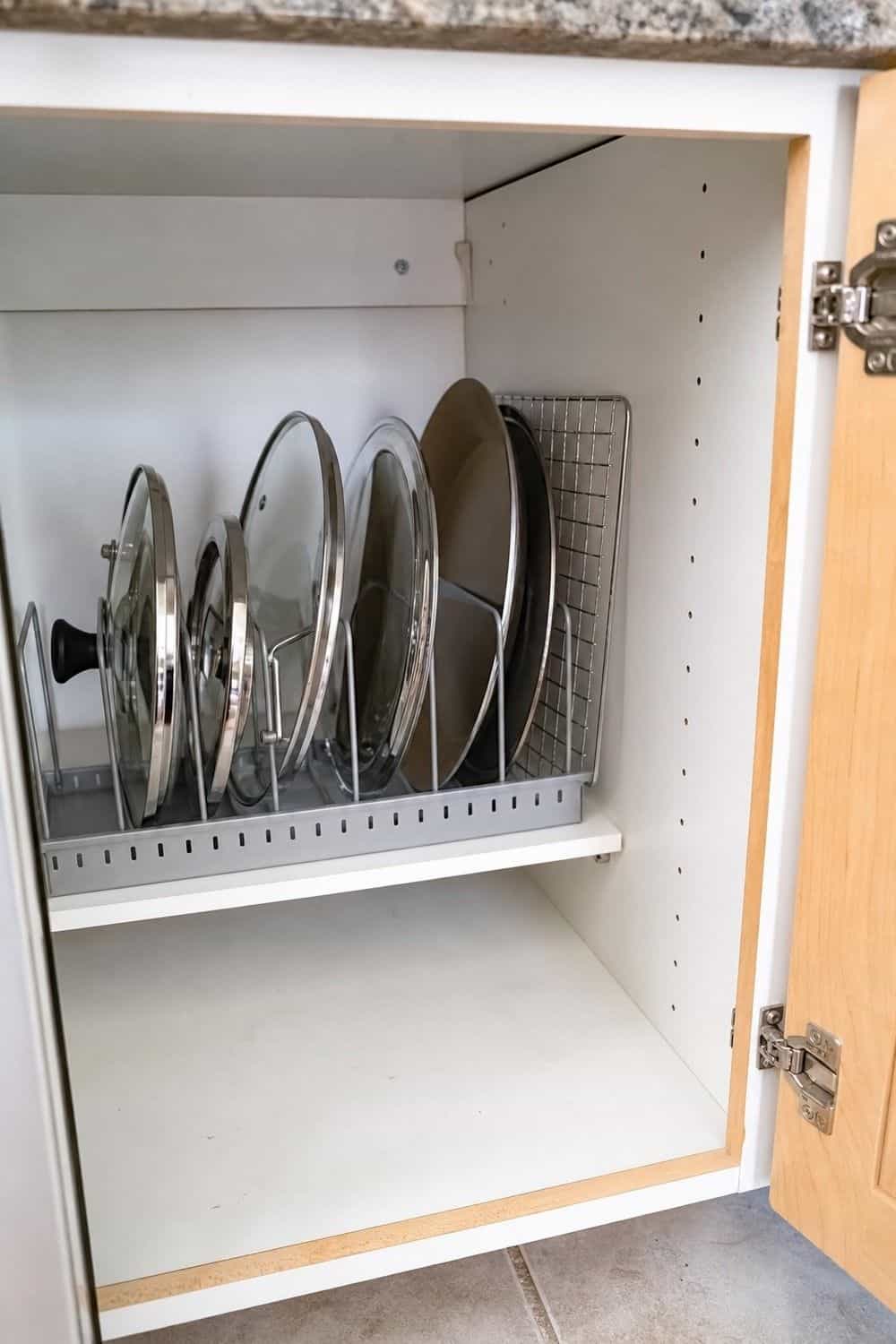
A VARIERA pot lid organizer can save a cabinet that always sounds like a metal avalanche. It works for lids, shallow pans, cooling racks, and even a few cutting boards if the pieces are not too heavy.
Place it where the lids can slide straight up without hitting the shelf above. If you cook often, keep the everyday lids in the easiest slots and move the odd sizes farther back. A lid organizer is only worth it when it stops the daily clatter.
7. File Bottles and Cans in a VARIERA Bottle Rack
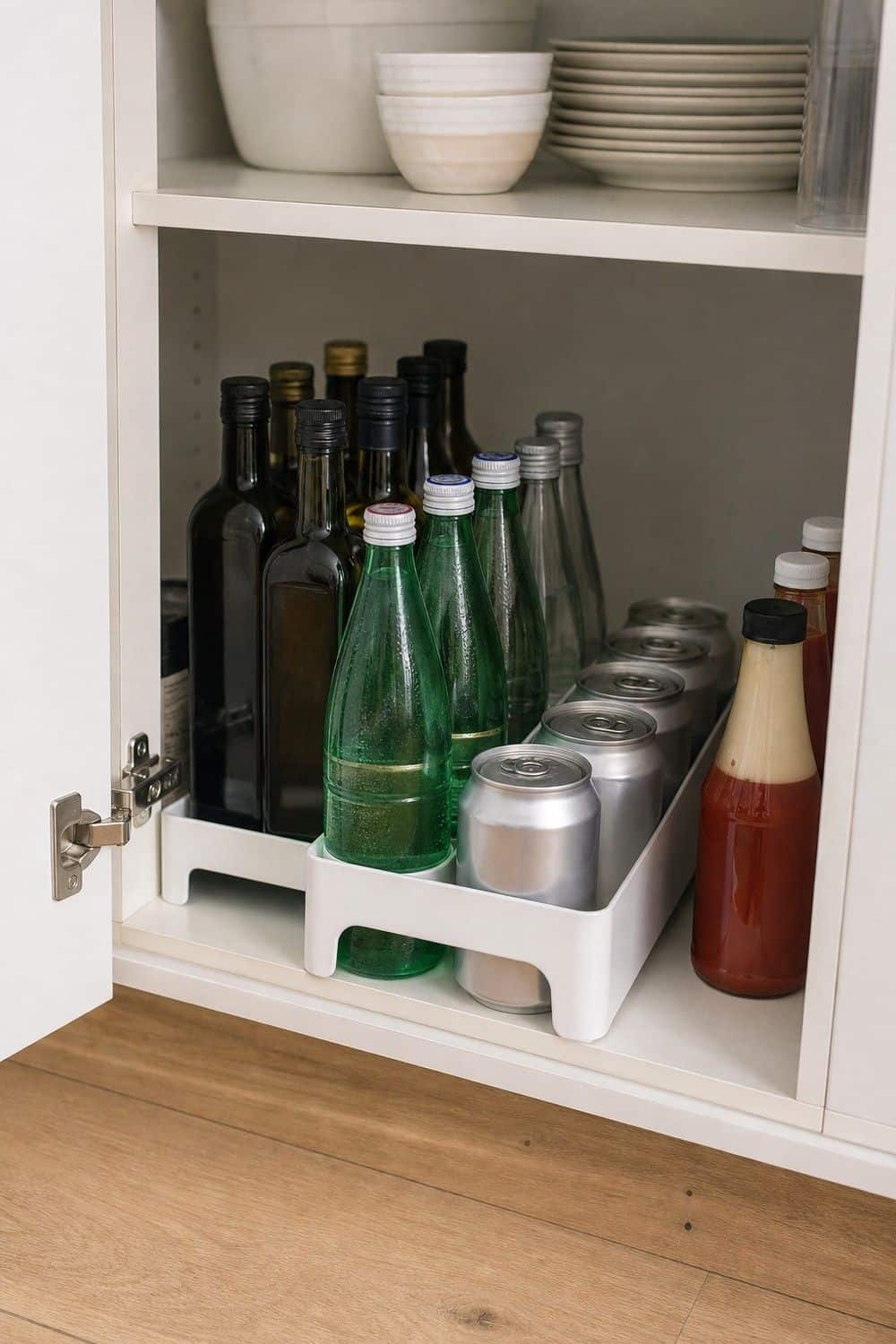
A VARIERA bottle rack is useful for anything that rolls, tips, or forms a messy row: oil bottles, sparkling water, canned drinks, large spice jars, or backup sauces. It is especially good in a cabinet where bottles fall forward when you reach behind them.
Check the height before you commit, because tall bottles need more clearance than the rack alone suggests. Keep similar items together so the row feels steady. If the bottles are glass, choose a spot where the rack will not be bumped by a drawer or door.
8. Turn OSTBIT Into a Cutting Board and Lid File
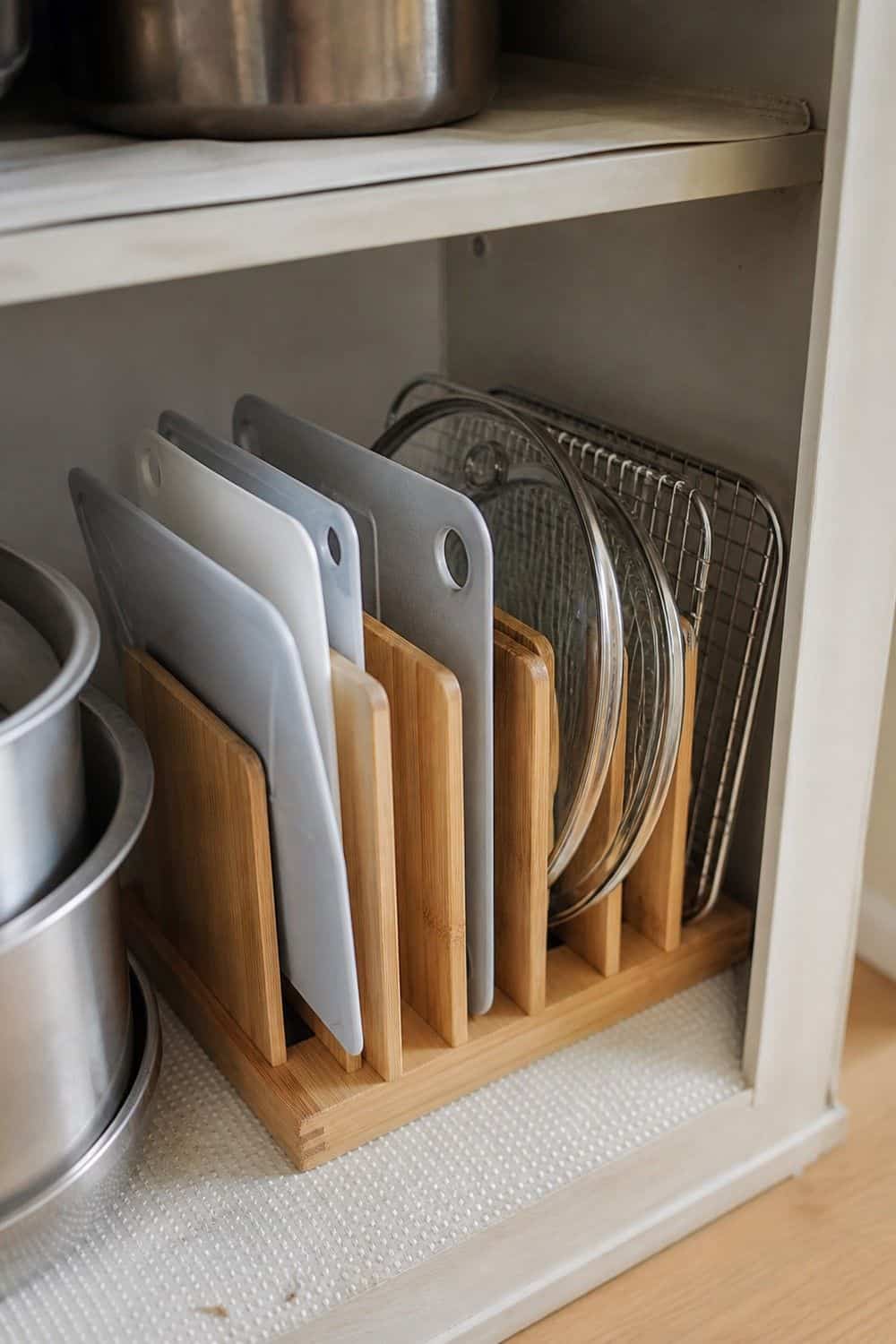
OSTBIT can do more than hold plates. In a kitchen, it can file lightweight cutting boards, plastic lids, small trays, cooling racks, and thin serving boards so you are not lifting a whole stack to find one piece. Use it on a low shelf or inside a cabinet where the boards can slide straight in and out. Heavy wood boards may need a sturdier divider, but for slim everyday pieces this is one of those quiet IKEA fixes that makes cooking feel less fussy.
9. Add a SUNNERSTA Rail for Lightweight Tools
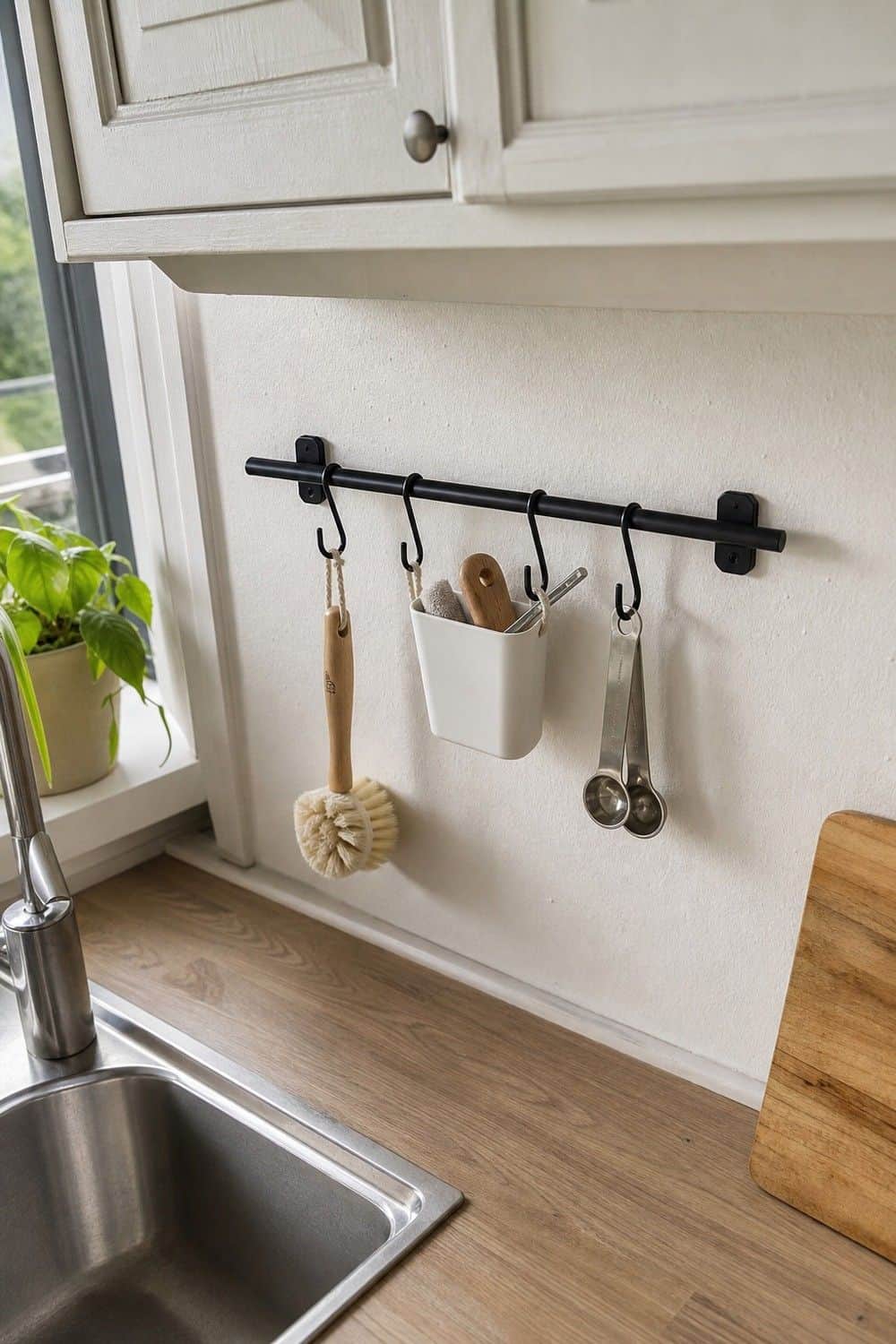
A SUNNERSTA rail is useful when small tools need to leave the counter but still stay close to the task. Hang dish brushes by the sink, measuring spoons by the baking shelf, or lightweight cooking tools near the stove if the wall can handle it.
Keep the rail selective. A few hooks and one small container usually look better than a crowded row of everything that used to live in a drawer. Check weight limits, cabinet door swings, and heat clearance before you decide where it belongs.
10. Use KUNGSFORS Hooks for Everyday Cooking Tools
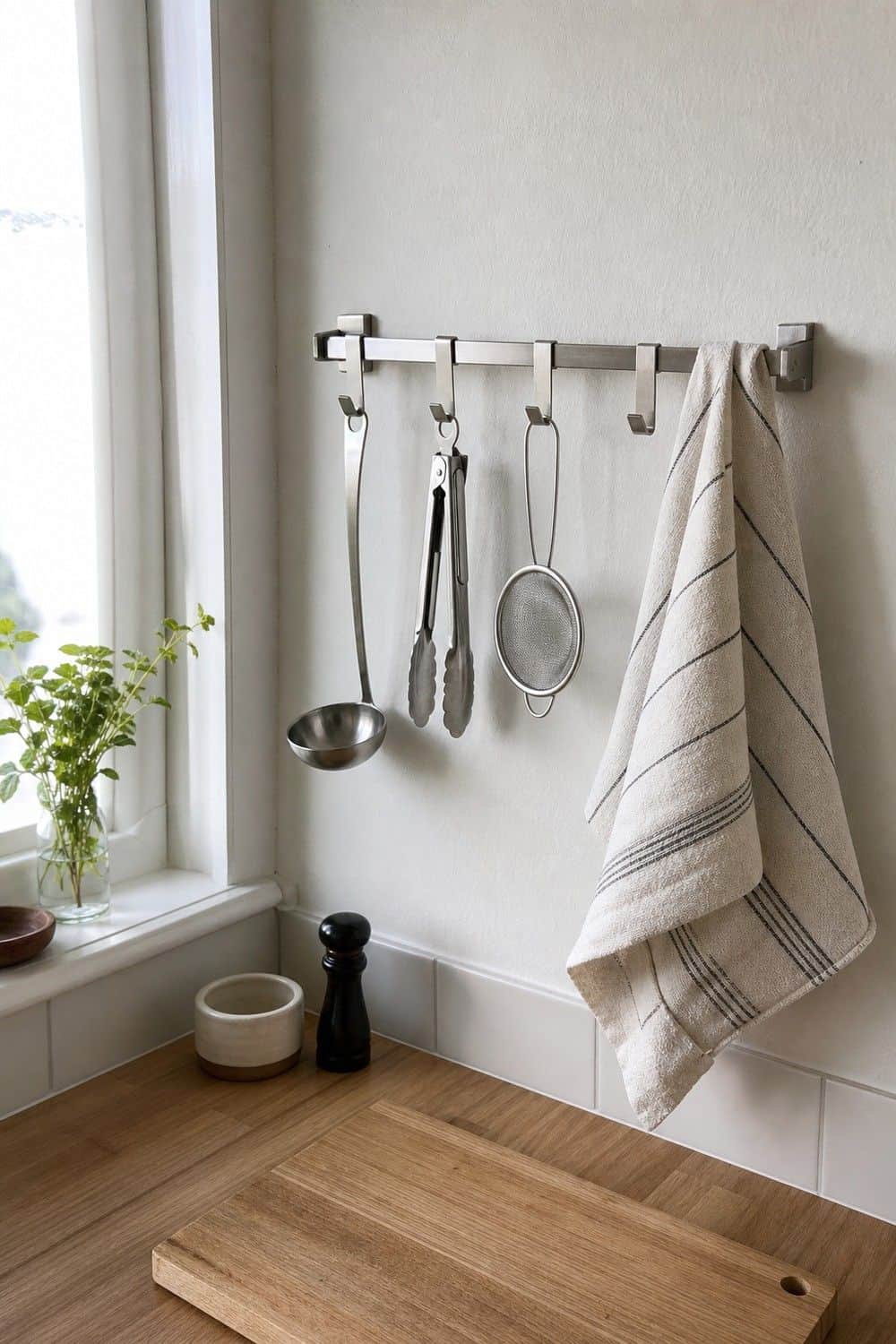
KUNGSFORS hooks are lovely for tools that are pretty enough to see and annoying enough to dig for. Think ladles, tongs, strainers, measuring cups, small pans, or a favorite dish towel near the prep area. The trick is restraint. Hang the pieces you use constantly, then leave the rest in drawers so the rail does not turn into visual noise. A short row of useful tools can make a kitchen feel relaxed and lived-in, while an overloaded rail starts to feel like work.
11. Free Counter Space With a KUNGSFORS Magnetic Knife Rack
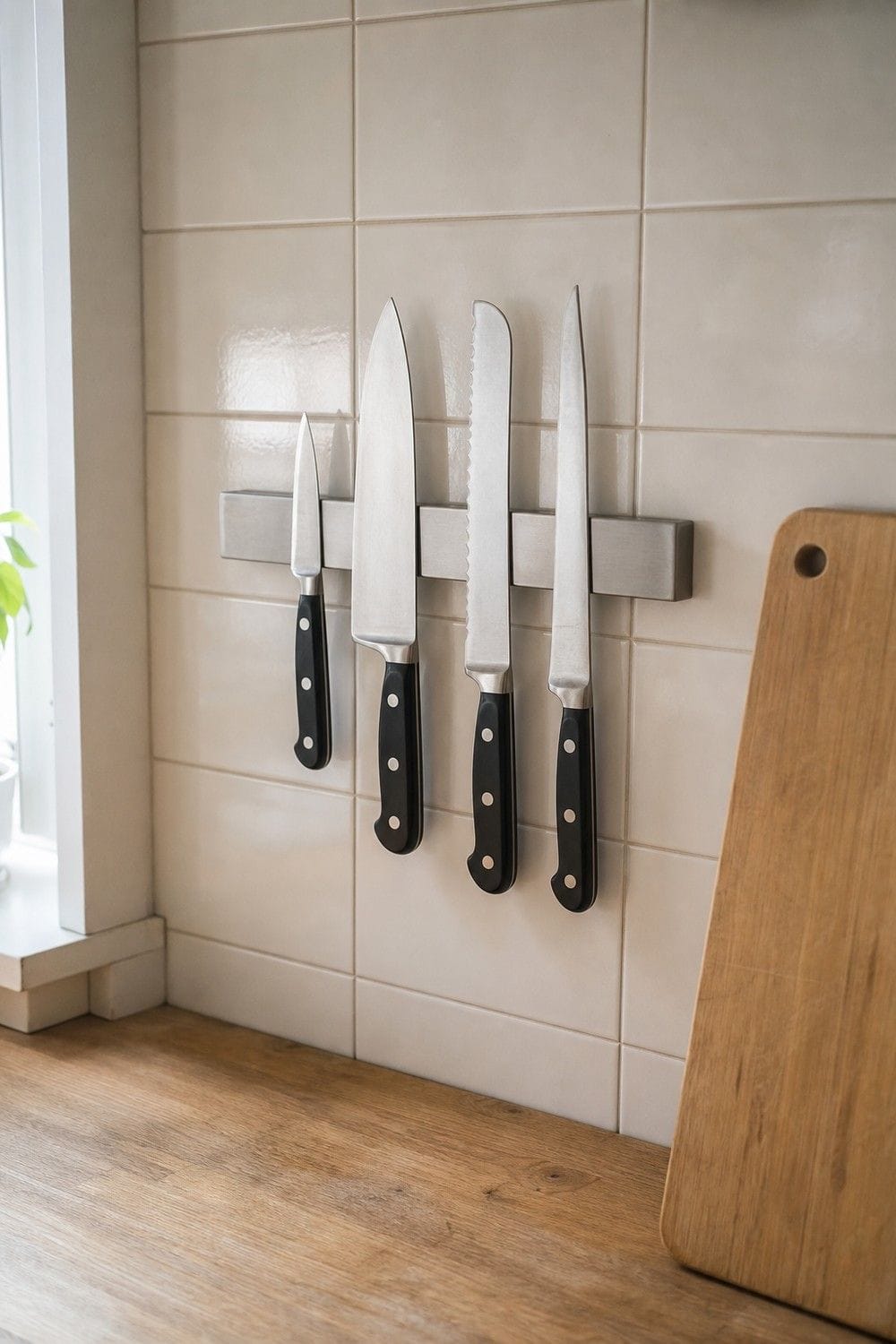
A KUNGSFORS magnetic knife rack can free up counter space when a knife block feels bulky. It also keeps the blades visible, which is helpful when you cook often and want the right knife without opening a drawer.
Install it near the cutting board but away from child reach, busy walkways, and cabinet doors that swing wide. Leave enough wall space to lift each knife sideways without scraping tile or knocking into hanging tools. Secure installation matters more than the look.
12. Use a SKADIS Pegboard for Flexible Kitchen Storage
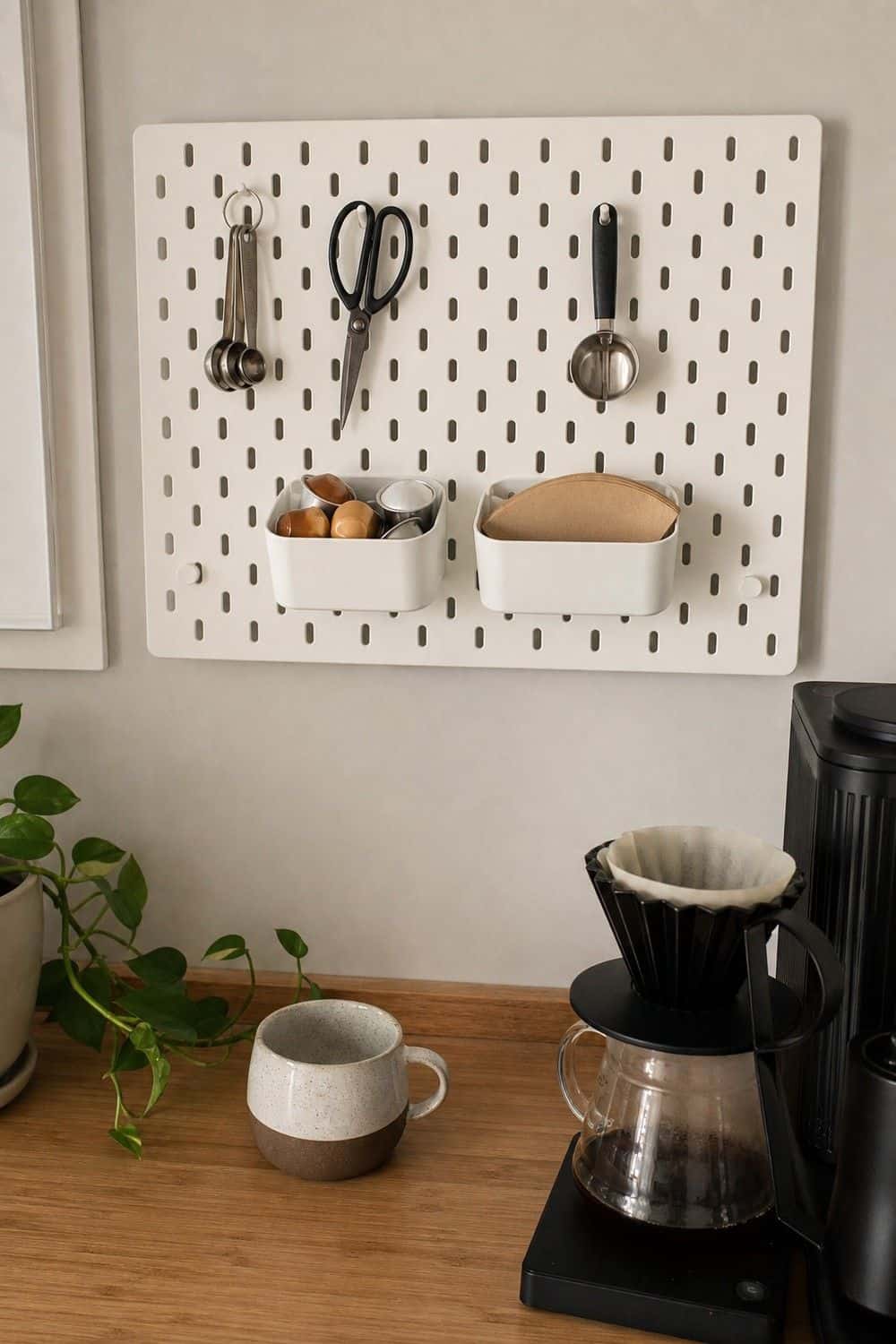
A SKADIS pegboard works best when it has one clear job. Use it for coffee tools, baking supplies, lunch-packing pieces, measuring spoons, scissors, or lightweight utensils instead of asking it to hold every loose thing from the counter.
Plan the board with a little breathing room and keep the lowest hooks easy to reach. A completely filled pegboard can look busy and become awkward to use, while a focused board gives you flexible storage that can change with the season, the school year, or your cooking habits.
13. Put a RASKOG Cart Beside the Prep Zone

A RASKOG cart is a good helper beside a prep zone, breakfast corner, or pantry wall when cabinets are already full. It can hold lunch supplies, baking ingredients, coffee extras, produce, or small appliances that need a place to land.
Give the cart one purpose and park it somewhere it can stay most of the time. The wheels are convenient, but the cart should not wander around collecting random overflow. Use the top shelf for the pieces you grab daily and the lower shelves for backup.
14. Use a NISSAFORS Cart for Narrow Gaps
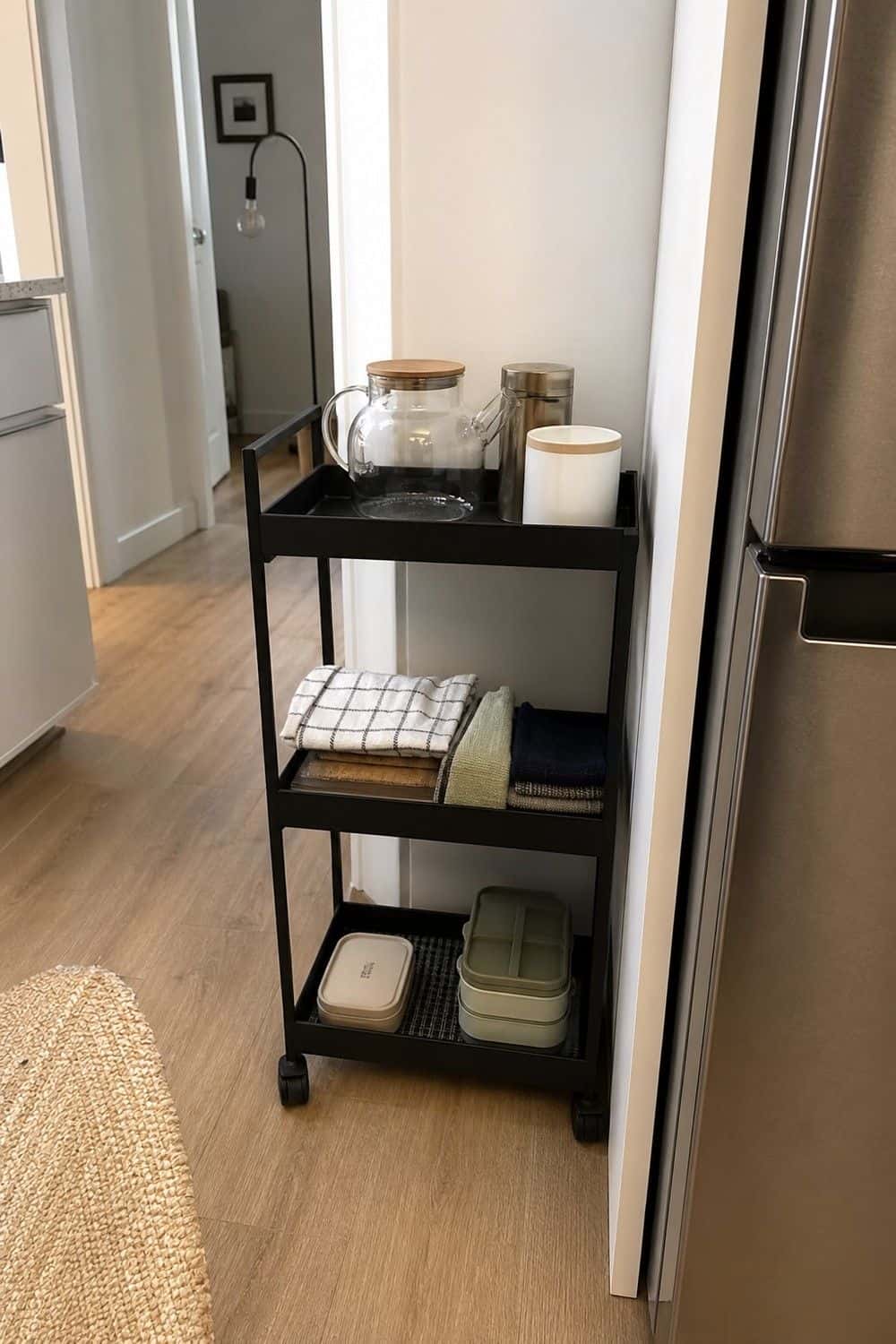
NISSAFORS is the cart I would look at for a narrow gap or a small wall that cannot handle deep furniture. It is slimmer than many utility carts, so it can work for tea supplies, snacks, dish towels, kids’ lunch pieces, or a tiny pantry overflow station. Measure the walkway before buying, especially if the cart will sit near a dishwasher, fridge, or oven. A narrow cart is only helpful if people can still move through the kitchen without bumping it every morning.
15. Turn BEKVAM Spice Racks Into Wall Storage
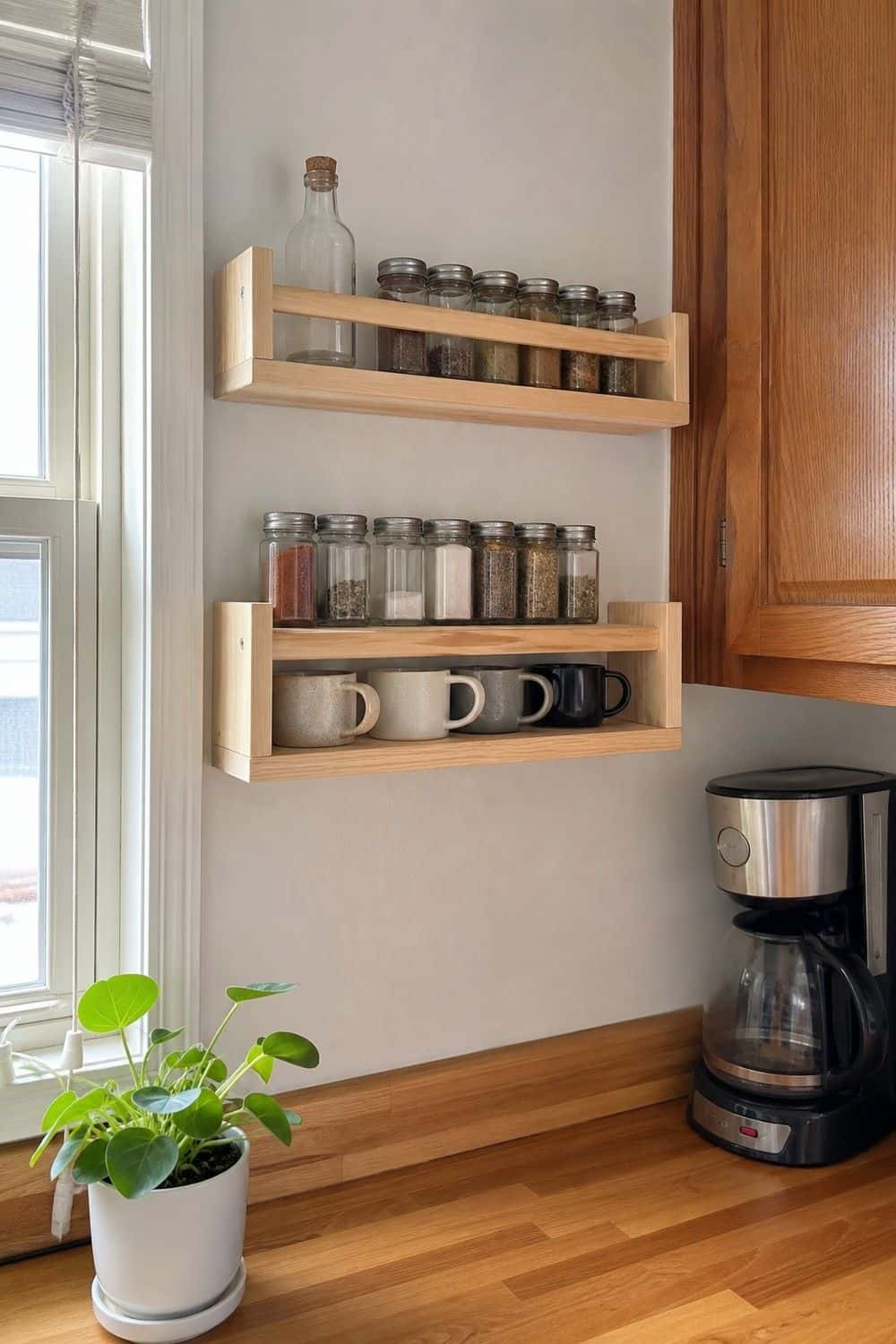
BEKVAM spice racks are small, but they can be charming wall storage when you use them for the right things. Try them for spice jars, small mugs, tea tins, kids’ cups, oils, or a few favorite cookbooks near the breakfast or coffee area.
Hang them where the shelf will not interfere with cabinet doors or elbows at the counter. I would rather use two tidy racks for daily pieces than cover a whole wall with shelves that need constant dusting and straightening.
16. Build a Pantry Shelf With IVAR
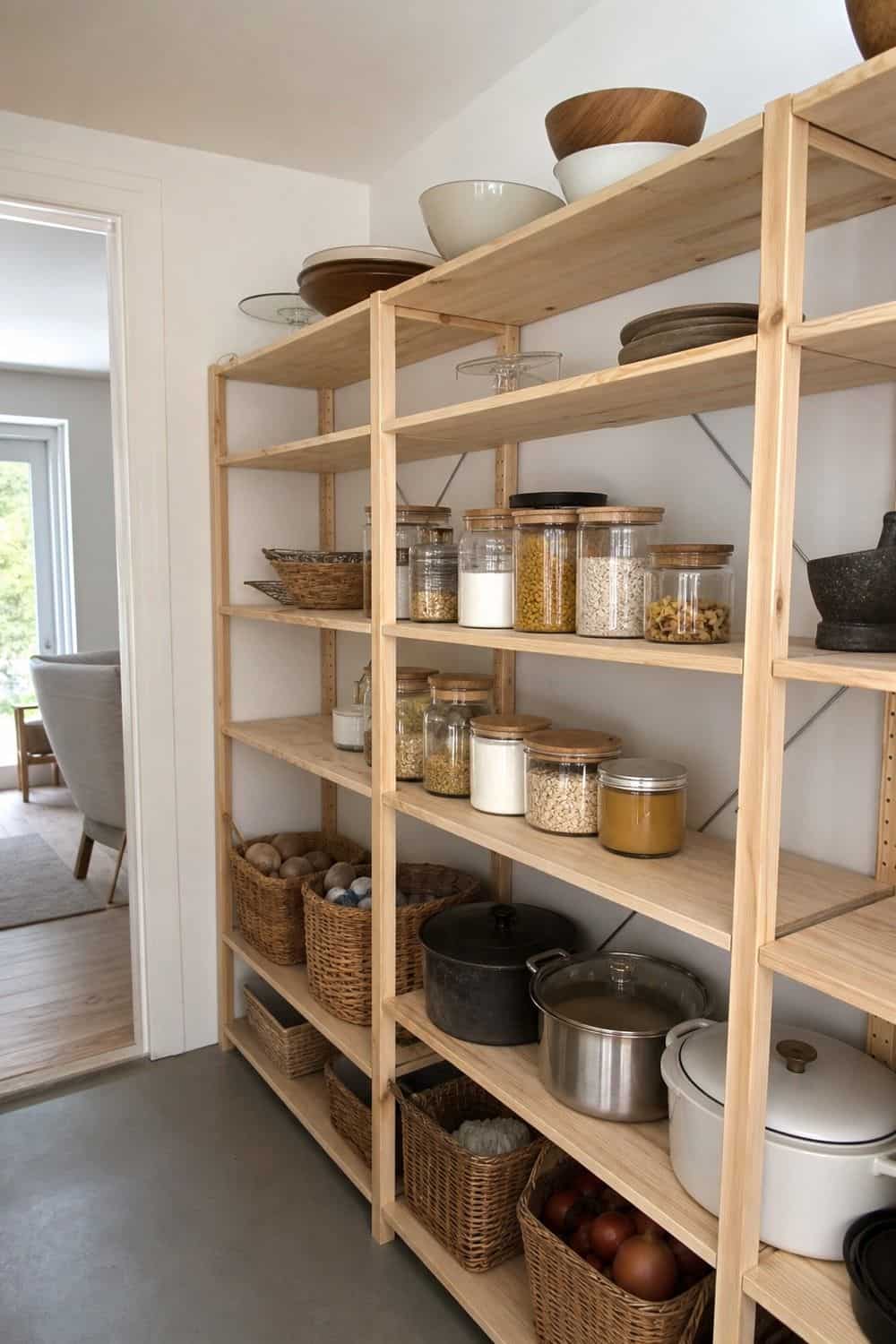
IVAR can create a real pantry wall when the kitchen never came with one. It works for dry goods, serving pieces, baskets, small appliances, extra dishes, and bulkier categories that need more structure than a cabinet shelf can give.
Put heavy pieces low, everyday food at waist height, and lighter extras up top. If the shelving sits in view of the dining area, use matching baskets or repeated jars for the messier categories. Anchor it where needed so the setup feels sturdy, not temporary.
17. Use OMAR Shelving for Utility Storage
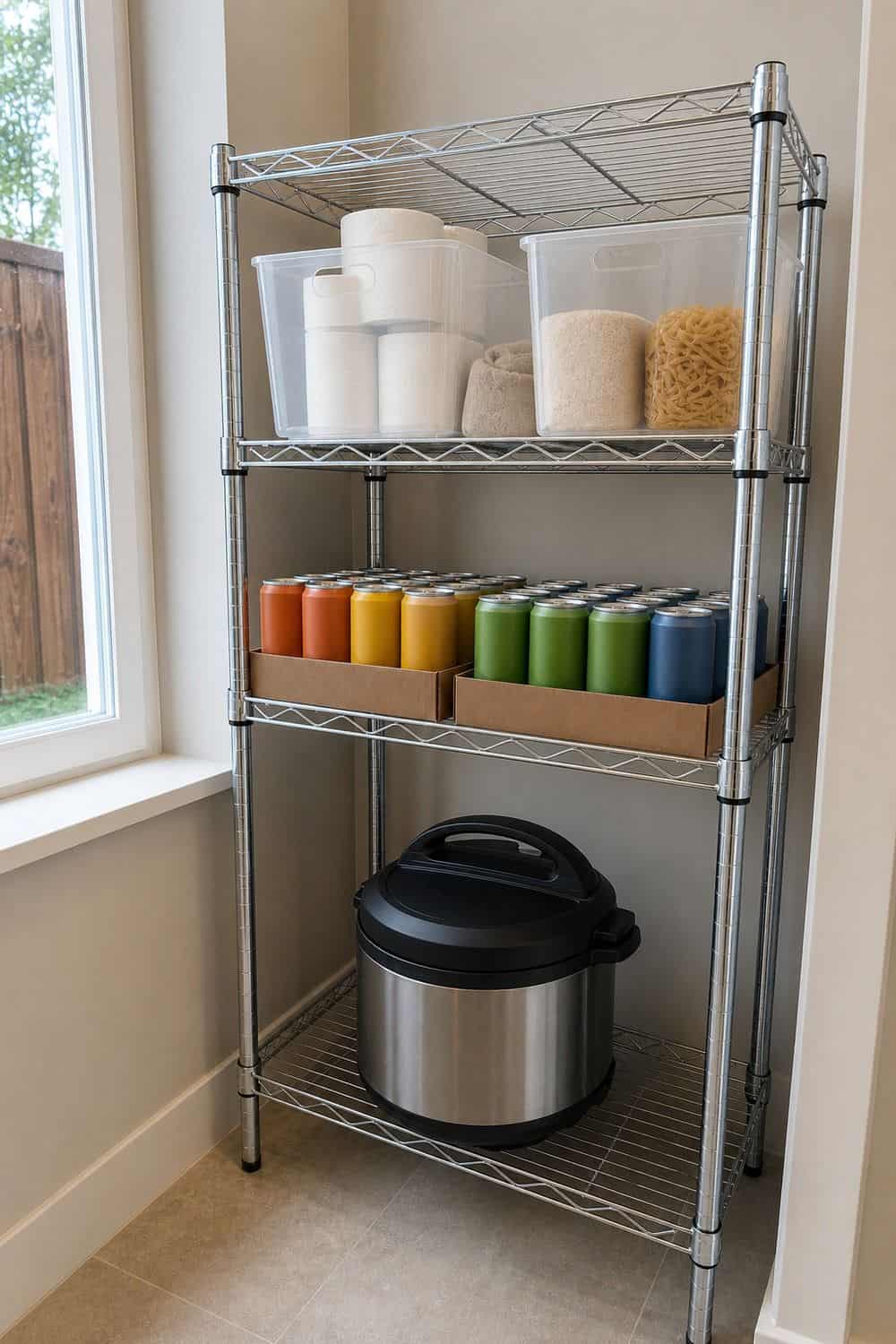
OMAR shelving is useful for a utility corner, pantry overflow, or a garage-adjacent kitchen zone where you need sturdy open storage. It can hold small appliances, drink cases, bulk goods, cleaning backstock, or serving pieces that do not fit inside cabinets.
Use bins or trays for small items so they do not slip through wire shelves. The shelves look best when each level has a purpose, like drinks on one shelf and appliances on another, rather than a little bit of everything everywhere.
18. Store Dry Goods in IKEA 365+ Containers

IKEA 365+ containers are a good fit for dry goods you use often enough to decant, such as oats, rice, pasta, flour, sugar, lentils, cereal, or snacks. Clear sides make it easy to see what is low before grocery day.
Choose sizes around the packages you actually buy. A tall container for a tiny amount of pasta just wastes shelf height, while a lid that seals well can save crackers and cereal from going stale. Keep a small label on the back or bottom if similar foods could be confused.
19. Use KORKEN Jars for Pretty Shelf Staples
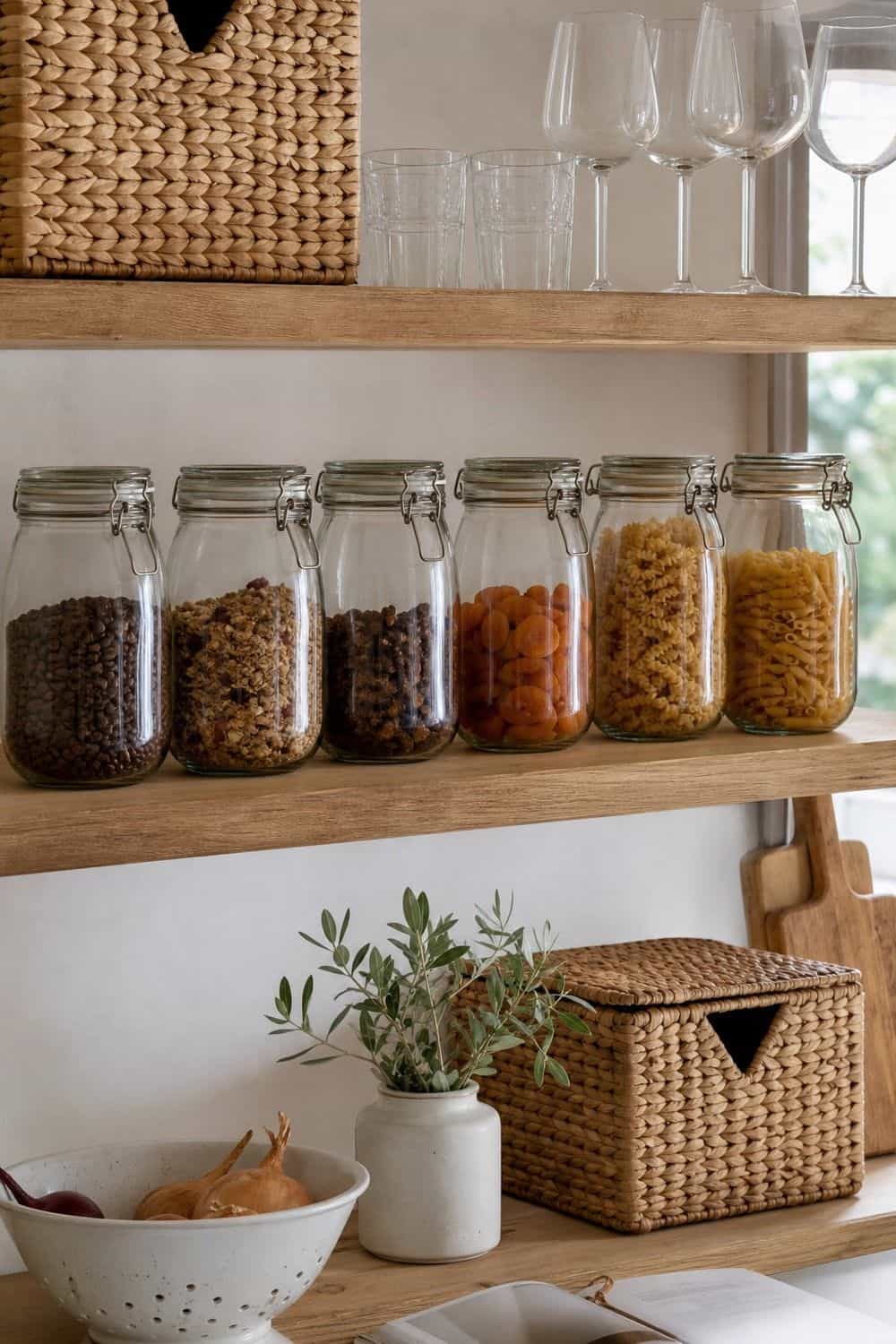
KORKEN jars make open shelves feel calmer when they hold pretty, frequently used staples. They are lovely for coffee beans, tea, granola, dried fruit, pasta, rice, cookies, or baking toppings that you want to see and actually reach for. Use them with a little restraint. Too many jars can turn a shelf into a shop display, so mix them with closed bins for less attractive packaging. If the jar is hard to wash or refill, save it for something you use slowly.
20. Add KLIPPKAKTUS Boxes to the Fridge
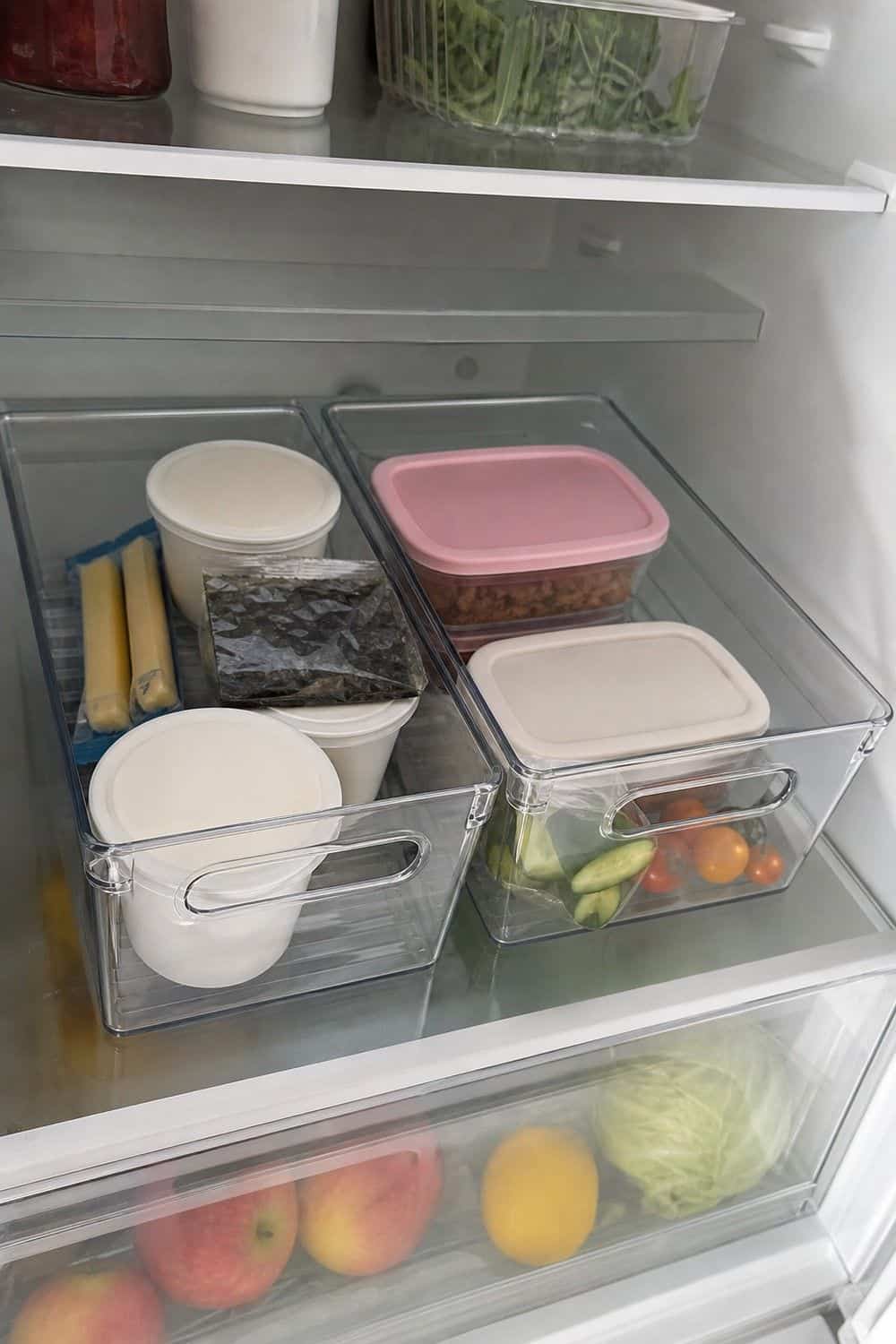
KLIPPKAKTUS-style fridge boxes help when cold food categories keep spreading across the shelf. Use them for yogurts, sauces, snack packs, small produce, lunch items, or breakfast pieces that need to stay together.
Before buying, measure the fridge shelf height and check whether the box blocks airflow or hides food behind it. Clear bins are most helpful when they come out like drawers, so choose categories you will actually pull forward, restock, and finish before they get pushed to the back.
21. Use SNURRAD for Hard-to-Reach Fridge Items

SNURRAD is useful for the awkward fridge items that always end up in the back: sauces, jars, pickles, dressings, small containers, or leftovers that should not be forgotten. A turntable brings the back row forward without unloading the shelf.
Use it for a focused category rather than the whole fridge. If every jar goes on the spinner, it becomes crowded quickly. Leave enough space around the edge so it can turn freely, and keep tall bottles off if they wobble.
22. Keep Counters Calm With NALBLECKA
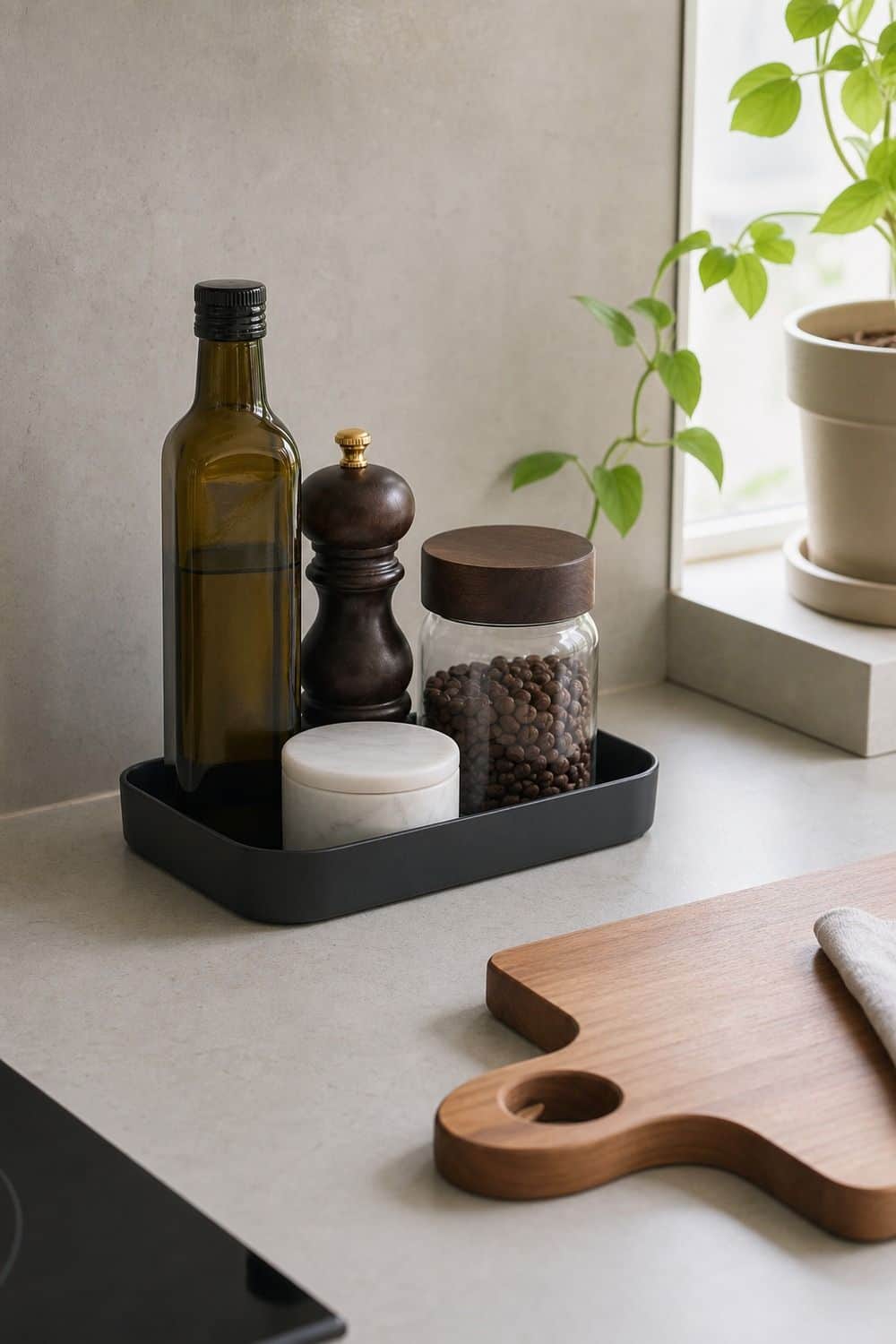
NALBLECKA can calm a counter when the problem is not storage volume, but little daily pieces wandering everywhere. Use a tray for olive oil, salt, coffee items, vitamins, tea, or the small things you reach for in one routine.
A tray works because it creates a boundary. Keep the group small and leave the surrounding counter clear enough to cook. If the tray gets crowded, reduce it to the pieces used every day and move the rest into a cabinet.
23. Use CHOKLADHAJ for Tiny Counter Corners

CHOKLADHAJ is helpful in tiny counter corners where a few upright items need a better home. It can hold utensils, spice jars, coffee spoons, napkins, small bottles, or the pieces that make a breakfast station easier to use. Place it where it supports one routine, not in the middle of your best prep space. A small countertop organizer should make the corner feel more settled and easier to wipe down, not create a decorative obstacle next to the cutting board.
24. Sort Recycling With HALLBAR Bins
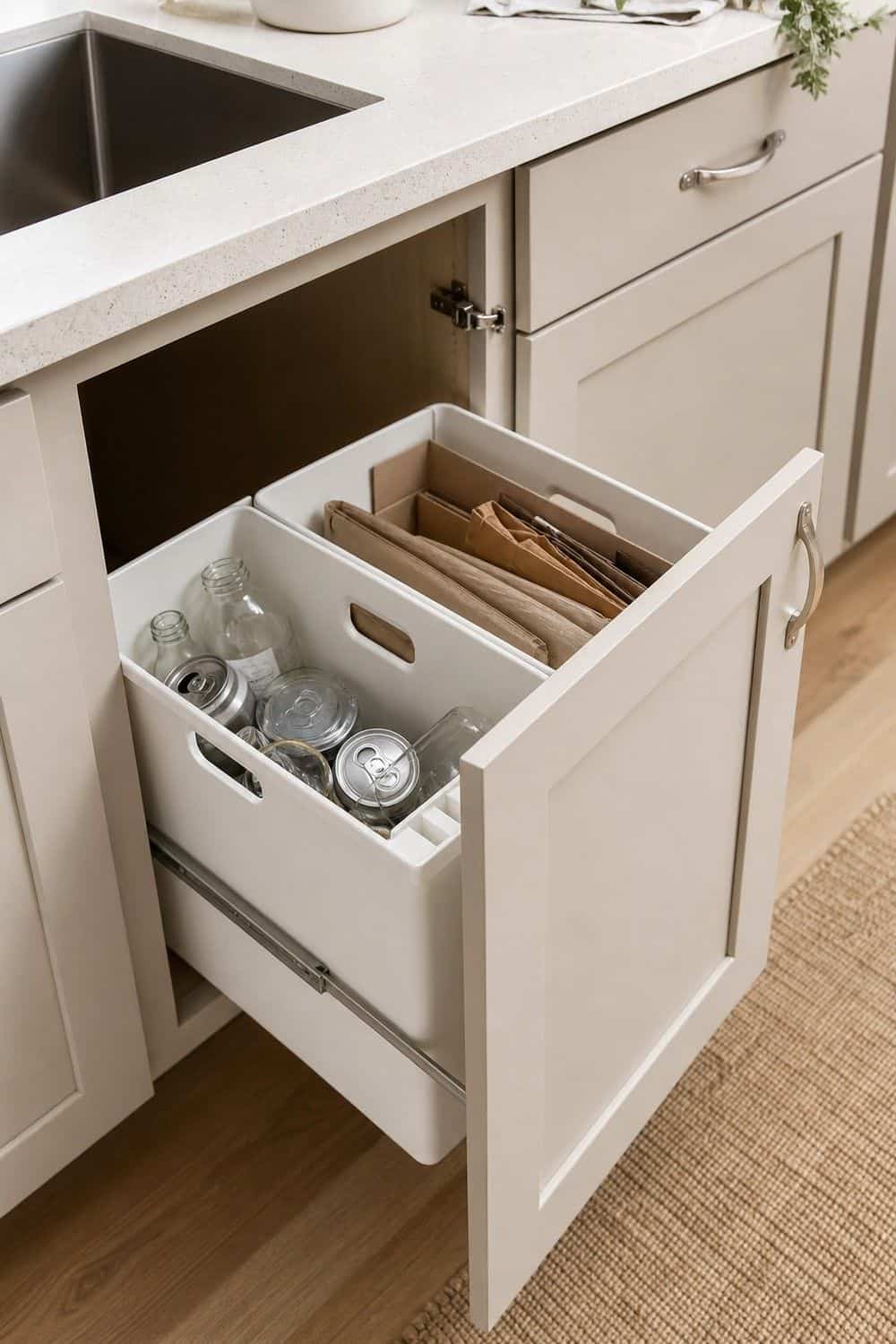
HALLBAR bins make recycling feel less like an afterthought when the kitchen has room for a proper sorting spot. Use them for cans, bottles, paper, food scraps, or trash depending on what your household separates most often.
Choose the bin count around your real routine and local rules. Two useful bins are better than four confusing ones. If the bins sit inside a cabinet, make sure the door opens fully and the handles are easy to grab when the bag is full.
25. Make One IKEA System Work Before Buying More
The smartest IKEA kitchen organization idea is to let one system prove itself before buying the next one. Start with the drawer, shelf, rail, cart, or pantry spot that slows you down every day, then live with that fix for a week.
Once you know what changed, it is much easier to choose the next piece. A kitchen filled with matching IKEA organizers can still feel chaotic if every product solves a different imaginary problem. Let the routine lead, then let the storage follow.
FAQs
What are the best IKEA kitchen organization ideas?
The best IKEA kitchen organization ideas include drawer inserts, shelf inserts, pot lid racks, wall rails, pegboards, utility carts, pantry containers, fridge organizers, and recycling bins. Match each product to one storage problem before buying more.
Which IKEA products are best for kitchen drawers?
UPPDATERA-style trays, knife inserts, adjustable pegs, and drawer dividers are the most useful for kitchen drawers. Choose the insert based on whether the drawer stores flatware, knives, cookware, lids, utensils, or food containers.
How do I organize kitchen cabinets with IKEA products?
Use VARIERA shelf inserts for vertical space, pot lid organizers for lids, bottle racks for rolling bottles or cans, OSTBIT holders for boards and trays, and pull-out boxes for deep shelves. Measure cabinet height and depth before choosing pieces.
What IKEA items help small kitchens?
Small kitchens can benefit from RASKOG or NISSAFORS carts, SUNNERSTA rails, SKADIS pegboards, BEKVAM spice racks, shelf inserts, compact counter organizers, and drawer inserts. The best choice depends on whether the kitchen needs wall storage, mobile storage, or better cabinet access.
Can IKEA organizers work in any kitchen?
Yes, IKEA organizers can work in almost any kitchen when you choose pieces around the space you actually have. Start with drawer trays, shelf inserts, bins, carts, or fridge organizers, then use wall-mounted rails or pegboards only where the wall type and weight limits make sense.
How do I organize an IKEA pantry?
Use IVAR or OMAR shelving for pantry structure, VARIERA boxes for loose packets, IKEA 365+ containers for stackable staples, KORKEN jars for visible dry goods, and labels for dates or cooking instructions. Keep daily foods at easy reach and bulk extras lower or higher.
Are IKEA kitchen organizers worth it?
IKEA kitchen organizers are worth it when they are measured and assigned to a specific storage problem. They are less helpful when bought randomly, stacked into already crowded spaces, or used for categories that should be sorted first.
How do I make IKEA kitchen storage look custom?
Make IKEA kitchen storage look custom by repeating materials, choosing matching inserts, using vertical storage carefully, keeping labels subtle, and avoiding overfilled shelves or counters. A few repeated finishes look more planned than a mix of every available organizer.
Final Thoughts
IKEA kitchen organization ideas are most useful when they begin with the way you actually cook, unload groceries, wash dishes, and reach for tools. Measure first, choose one storage problem, and let each organizer earn its space. When UPPDATERA, VARIERA, rails, carts, jars, fridge boxes, and recycling bins are used with restraint, the kitchen feels smarter without needing a custom renovation.
Last update on 2026-09-17 / Affiliate links / Images from Amazon Product Advertising API