
The best kitchen organization ideas store every item near the task it supports. Start with the pantry, create prep, cook, clean, breakfast, snack, fridge, and grocery zones, clear counters, use drawer dividers, keep cookware near the stove, add Lazy Susans and clear bins where they solve real problems, organize food container lids, plan trash and recycling flow, and do a weekly reset.
A functional kitchen is not organized because every bin matches. It works because groceries have a landing spot, pans live near the stove, dishes unload easily, counters stay useful, and food does not disappear behind the wrong cabinet door.
Use these kitchen organization ideas to build a whole-room system around prep, cooking, cleaning, pantry storage, fridge flow, snacks, paper clutter, and weekly maintenance. The aim is a kitchen that saves steps during real life.

Top Recommended Products


You Might Also Like These Blog Posts
- Small Kitchen Organization Ideas
- Kitchen Cabinet Organization
- Kitchen Drawer Organization
- Pantry Organization Ideas
- Fridge Organization Ideas
Kitchen Organization Ideas for Better Daily Workflow
Think of the kitchen as zones: prep, cook, bake, clean, pantry, fridge, coffee or breakfast, lunch and snacks, grocery unloading, and a command spot for household papers. Before buying organizers, remove expired food, duplicate tools, unmatched container lids, excess mugs, single-use gadgets, and bulk items with no real home. Measure first, choose products for one exact problem, and keep the maintenance rhythm simple: daily counter reset, weekly fridge and pantry check, and a monthly drawer or cabinet review.
1. Start With the Food Cabinets or Pantry

The pantry is often the best starting point because it affects grocery shopping, breakfast, snacks, dinner, and food waste. Pull food out, toss expired items, group real categories, then add clear pantry bins only where a category needs a boundary.
Try bins for baking, snacks, pasta, canned goods, grains, or lunchbox items. Avoid buying a full set before you know what actually needs containment. Good pantry organization makes food easier to see, use, and rotate before the next shop or meal plan.
2. Central Prep Station
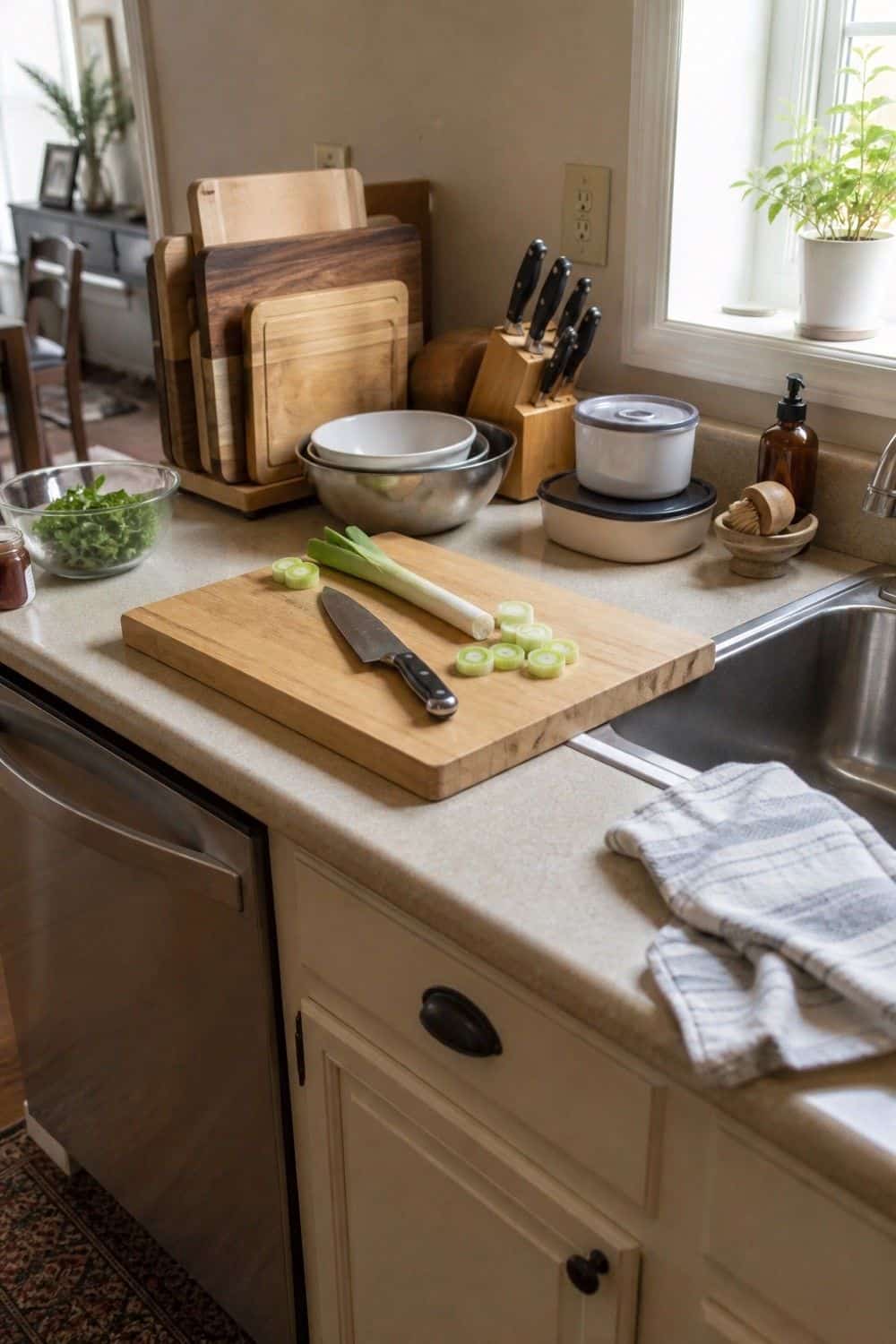
A central prep station reduces extra steps between the fridge, sink, and stove. Keep cutting boards, knives, mixing bowls, prep containers, and common seasonings close to the main work surface. A cutting board organizer can keep boards upright so they are easy to grab without emptying a cabinet.
This zone should stay clear enough for chopping vegetables, packing leftovers, or setting down groceries. If the counter becomes a drop zone, prep will move to the dining table or stove, and the kitchen workflow breaks down.
3. Cooking Tools at the Stove

Spatulas, tongs, ladles, salt, pepper, and cooking oil should live near the cooktop because that is where you reach for them. A utensil crock helps if it holds only the tools used every week.
If the crock turns into a crowded cup of duplicates, move lesser-used tools to a drawer. Countertop storage is helpful only when it saves motion and still leaves room for safe cooking, pan handles, and a spoon rest beside the burner or a nearby prep bowl.
4. Cookware Near the Cooktop
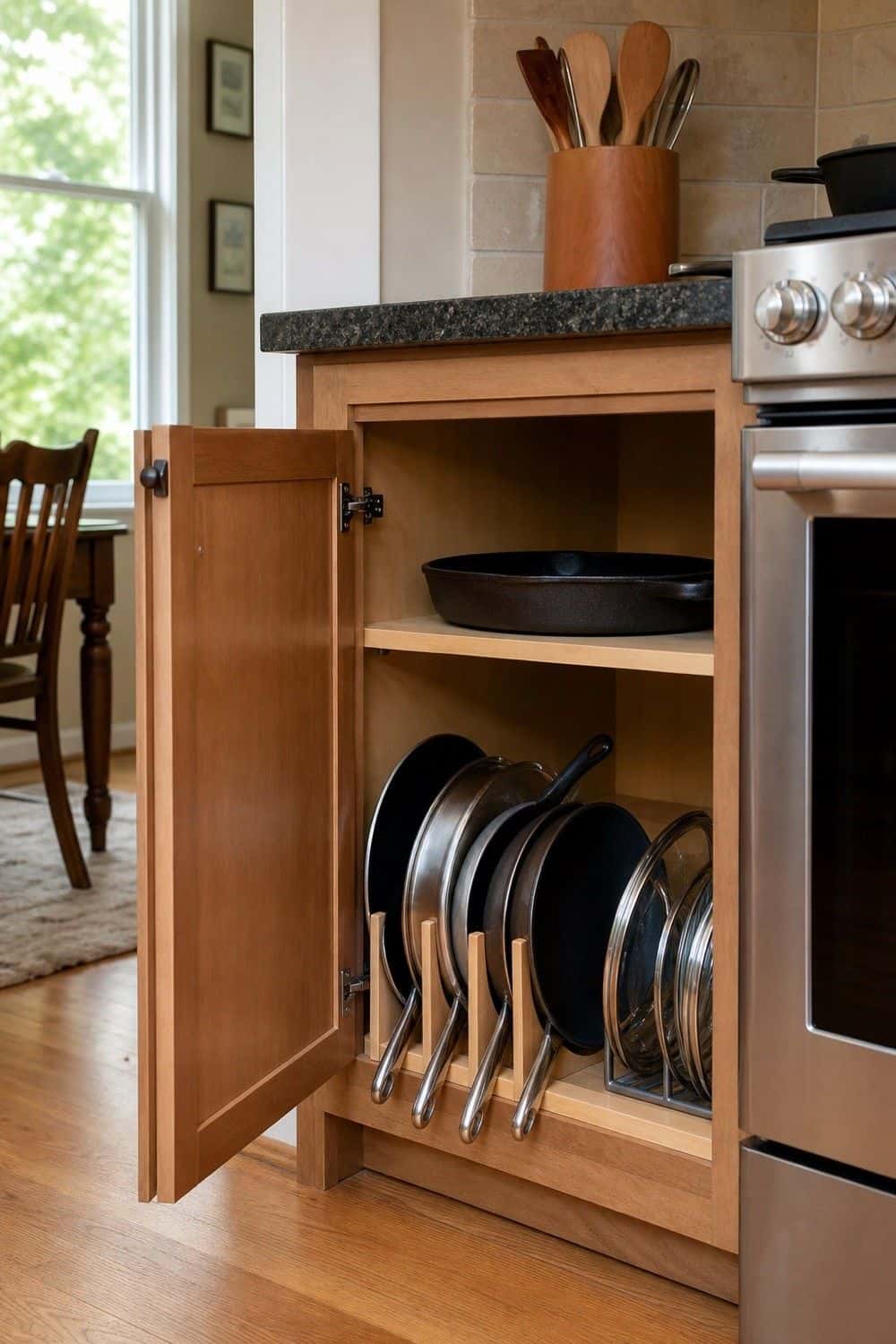
Pots, pans, lids, and sheet pans belong close to the range or oven whenever possible. A pot and pan organizer, lid rack, pull-out shelf, or vertical divider can stop stacks from collapsing every time you cook. Store daily pans in the easiest spot and move holiday or specialty cookware out of prime cabinets. The practical test is being able to start dinner without wrestling a pile of lids or pulling three pans out to reach one skillet. Put the heaviest pan at waist height if possible.
5. Dishes Near the Dishwasher or Dining Area
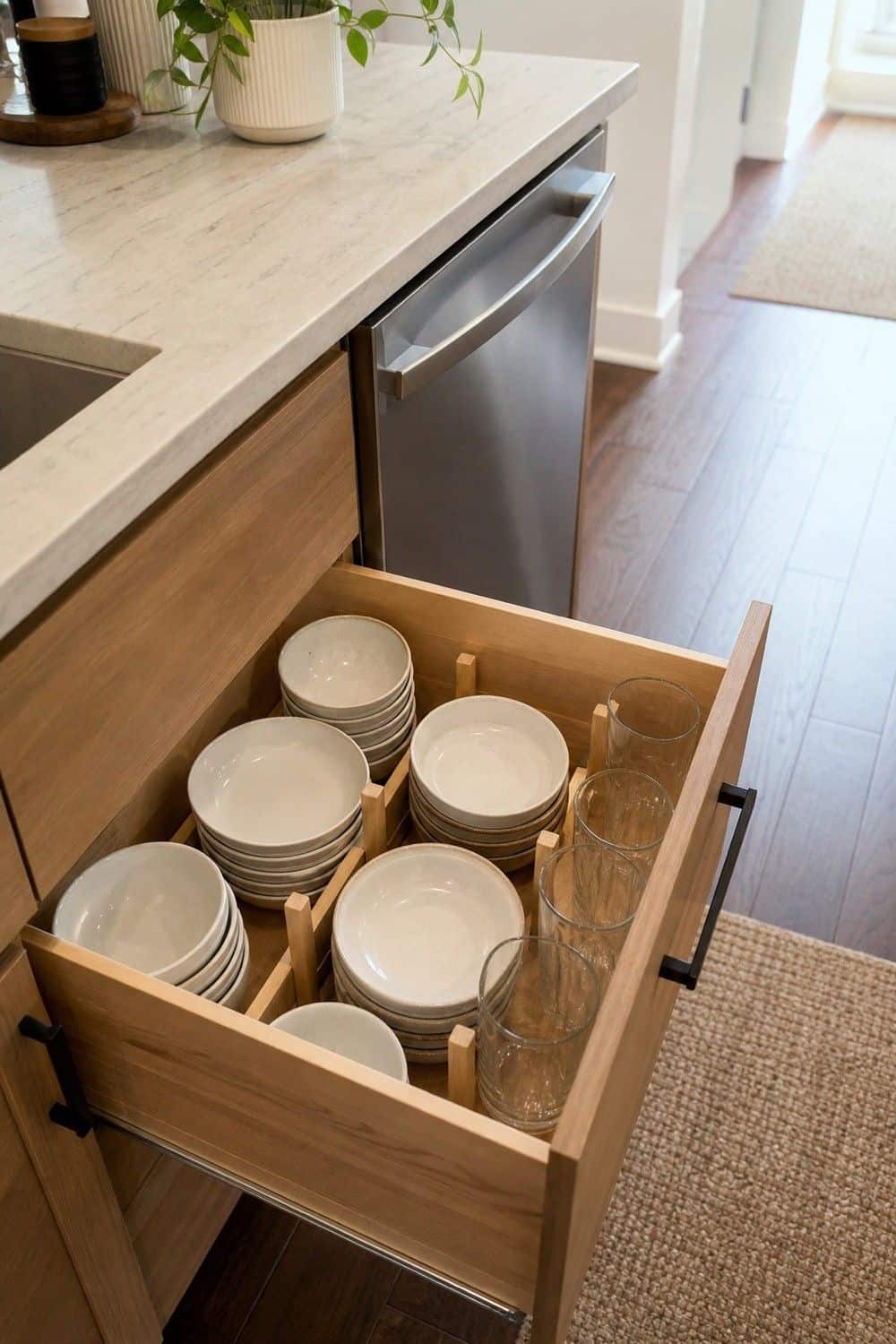
Plates, bowls, glasses, and cutlery should be easy to unload and easy to set out. If dishes are stored across the kitchen from the dishwasher, every unload takes longer than it should. Move everyday dishes closer to the dishwasher, table, island, or breakfast nook if the cabinet layout allows it. A dish storage rack can help separate plates or bowls in a deep drawer. This small shift often makes the kitchen feel more functional without buying anything new or changing cabinets.
6. Utensil Drawers Divided by Task

Utensil drawers work better when they are divided by task, not just by shape. Keep eating utensils near the dishwasher or table, prep tools near the prep zone, and cooking tools near the stove. An expandable drawer organizer is usually more forgiving than a fixed insert because real drawers are often odd sizes. Remove duplicates before adding dividers, or the organizer will only sort clutter into neater rows. Leave one small section for the odd tool you truly use, such as a peeler or opener.
7. Baking Zone for Dry Goods and Tools

A baking zone keeps flour, sugar, leaveners, measuring cups, mixing bowls, pans, parchment, and decorating tools from interrupting everyday cooking storage. Use one shelf, cabinet, bin, or drawer group for the supplies you use together. If you bake rarely, the zone can be farther from the main prep counter. If you bake often, keep measuring tools and dry goods close enough that cookies or muffins do not require a cabinet tour. Parchment, liners, and cooling racks should live with the pans.
8. Breakfast and Coffee Zone

A morning zone keeps mugs, filters, cereal boxes, oatmeal, sweeteners, and toaster items from scattering across the counter. Group coffee, tea, mugs, filters, sweeteners, breakfast containers, and the toaster near each other if possible. A coffee station organizer can help, but the real win is placing daily breakfast items where sleepy hands already go. Keep backup bags and bulk cereal elsewhere so the zone stays quick, clean, and easy to restock before bedtime. Add a small tray for spoons or tea bags.
9. Counter Trays for Daily Essentials
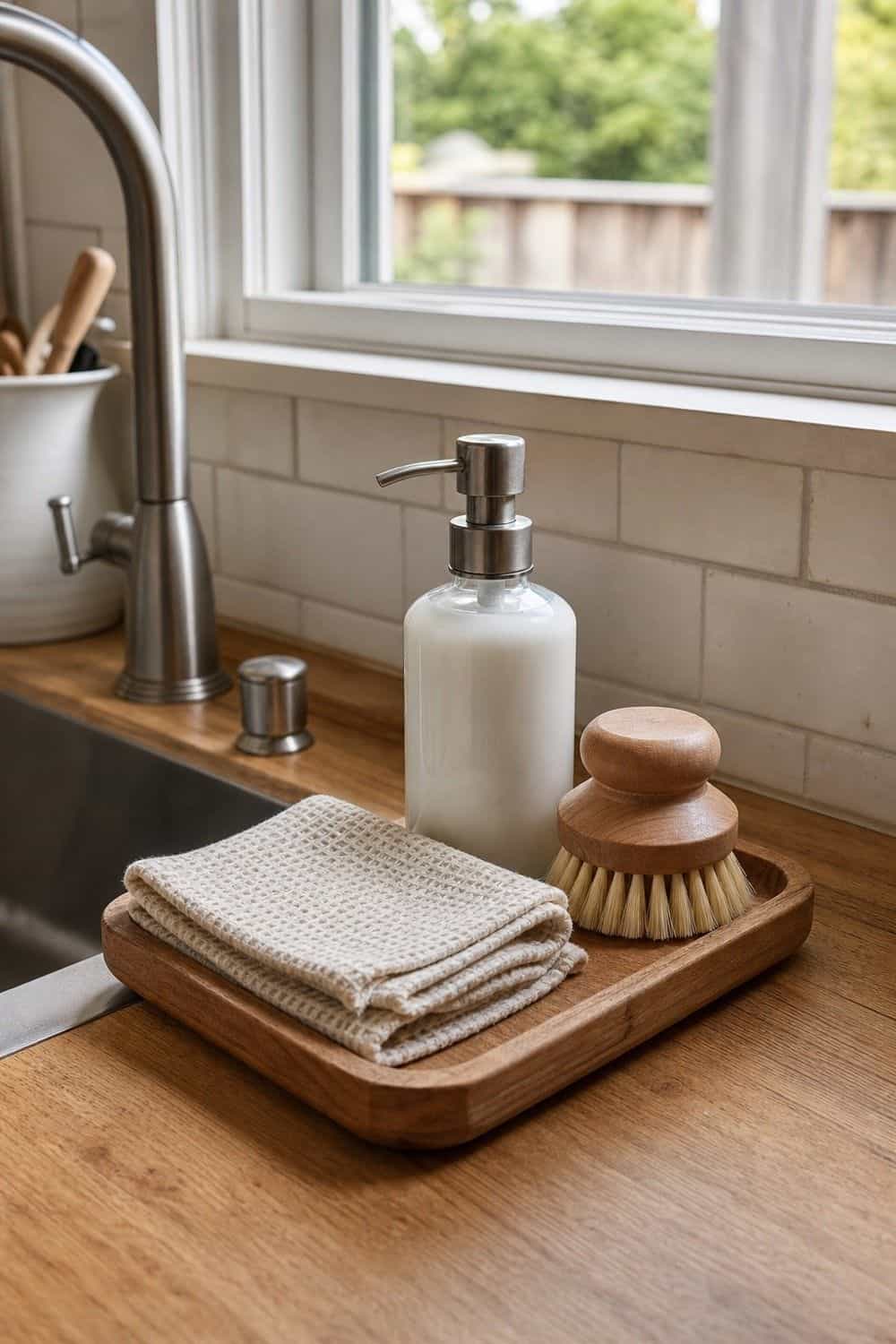
A kitchen counter tray can make daily essentials look contained and easier to lift for cleaning. Use one by the stove for oil and salt, by the sink for soap and a brush, or by the coffee maker for sugar and spoons. The tray should not become permission to leave everything out. If an item is not used daily, it probably belongs in a drawer, cabinet, or pantry zone instead. Lift the whole tray during wipe-downs so the counter still gets cleaned.
10. Appliance Storage by Frequency
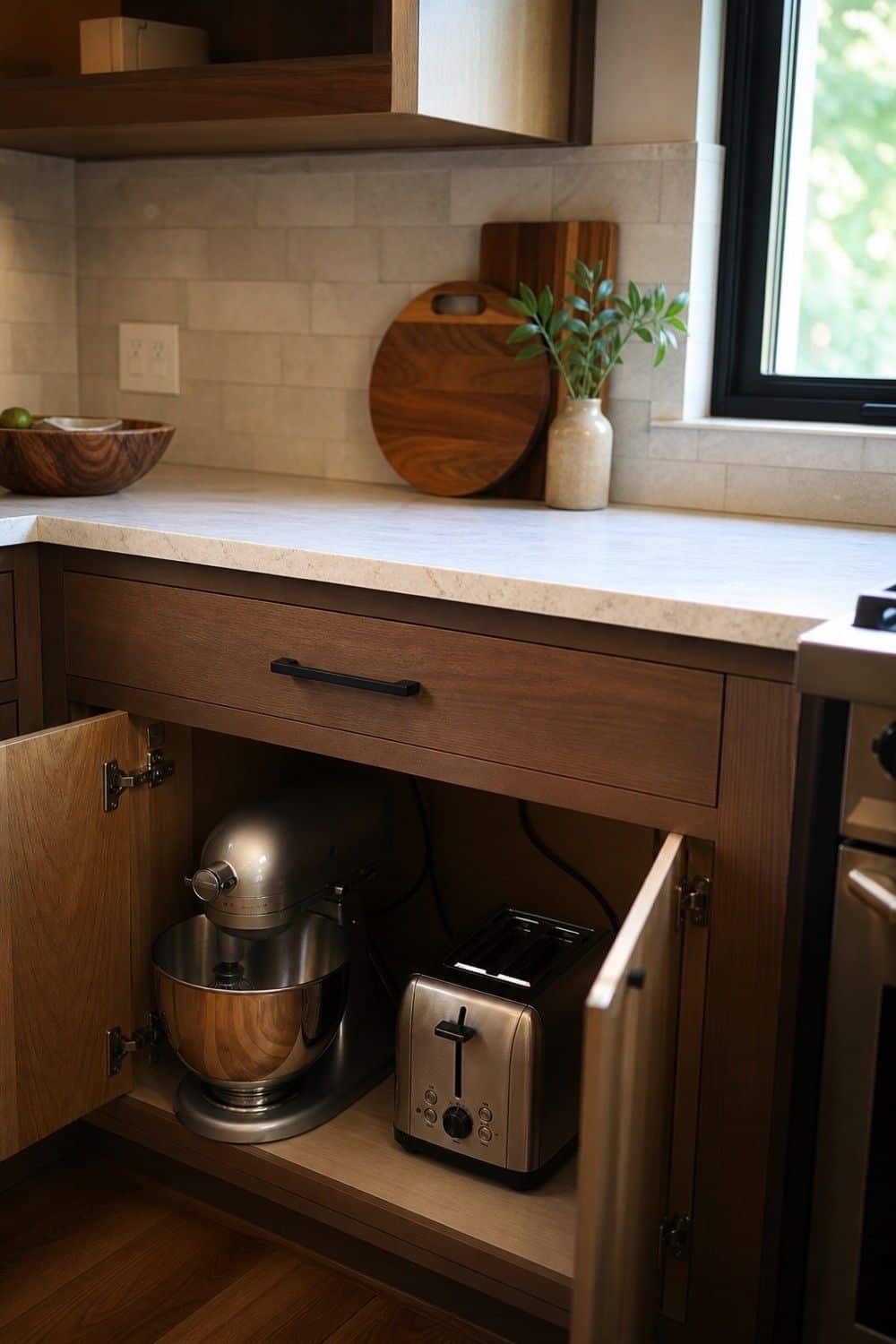
Appliances should earn their counter or cabinet space by how often they are used. Daily appliances can stay accessible. Weekly appliances need reachable storage. Rare appliances should move out of the most valuable kitchen zones. An appliance garage can help if it has ventilation, enough height, and safe cord access. Heavy appliances should not be stored so high that using them becomes risky. Frequency matters more than matching appliance finishes, and cords should not cross wet prep areas or block drawers.
11. Lazy Susan for Bottles and Jars

A kitchen Lazy Susan solves the problem of bottles and jars disappearing at the back of a cabinet. Use turntables for oils, vinegars, sauces, nut butters, baking extracts, condiments, or vitamins if they live in the kitchen. Keep similar items together and avoid stacking tall bottles where they can tip. A turntable is especially useful in corners, upper cabinets, or deep pantry shelves. It should make items visible with one spin, not become a crowded carousel of mystery jars and sticky drips.
12. Tiered Rack for Spices

A tiered spice rack makes labels easier to read than a flat row of jars. Keep spices near cooking, but not directly beside heat if the cabinet gets warm. A drawer insert, shelf riser, or cabinet rack can all work depending on the kitchen. Check freshness while arranging the jars because old spices waste space and make food taste dull. Place everyday seasonings in front and specialty spices behind them. Functional kitchen organization should make flavor faster, not just make jars line up.
13. Airtight Containers for Core Staples
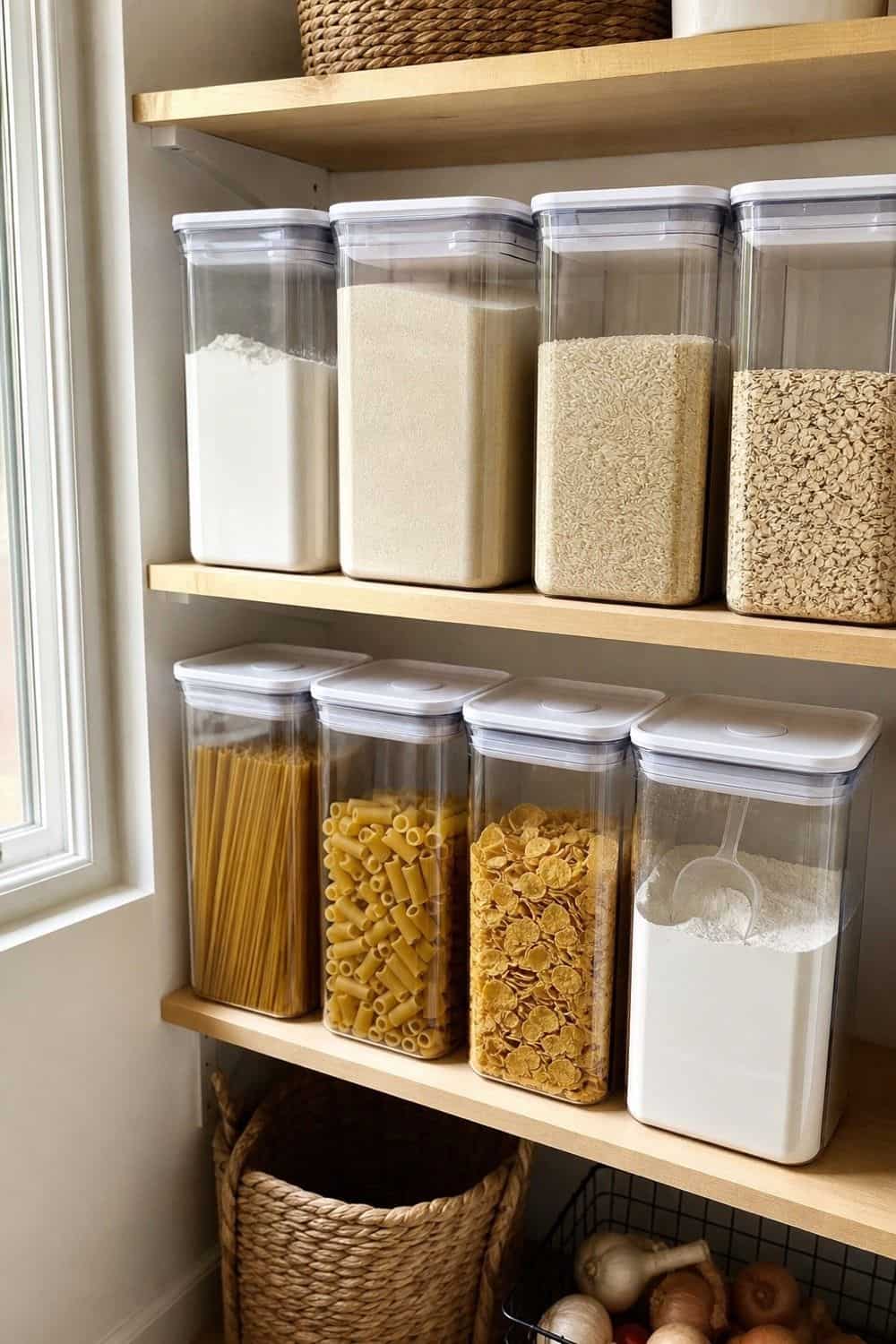
Airtight pantry containers are worth using for high-use staples such as flour, rice, oats, pasta, sugar, cereal, or coffee. Decanting everything can create extra work, so start with foods that go stale, spill, or get used weekly.
Add labels and keep dates or cooking instructions when you need them. A container system should help you cook and shop, not hide useful information or create a second chore. Keep a scoop only where it will stay clean, and avoid containers larger than the shelf.
14. Cabinet-Door Storage for Thin Items
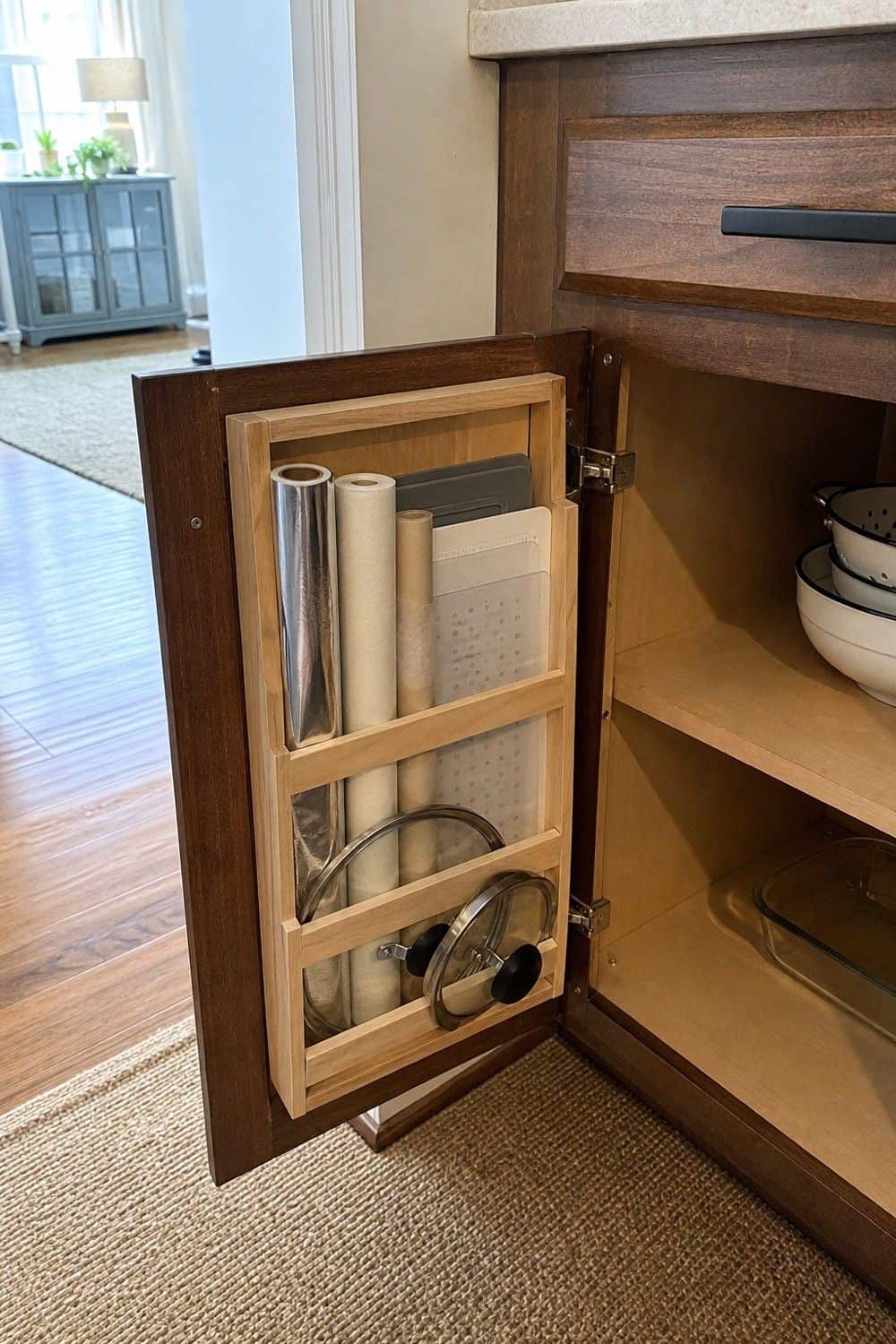
Cabinet doors can hold thin items that otherwise drift around drawers. Use door organizers for foil, wraps, measuring spoons, cutting board mats, pot lids, spices, cleaning cloths, or small packets.
Check door clearance before installing anything, and avoid heavy items that make hinges strain. Door storage helps most when it solves one narrow problem rather than turning every cabinet door into another crowded surface. Close the door slowly during setup to test fit, and check whether shelves inside still clear the rack.
15. Food Container Lids That Match

Food storage containers become frustrating when lids and bases do not match. Pull everything out, recycle damaged pieces, and keep only sets that actually close. A food container lid organizer can hold lids upright by shape or size.
Uniform containers are helpful if you store leftovers often, but they are not required. The essential system is being able to find a lid quickly before food cools on the counter. Keep lids upright so the smallest ones do not vanish behind larger rectangles.
16. Leftover Containers Near the Fridge
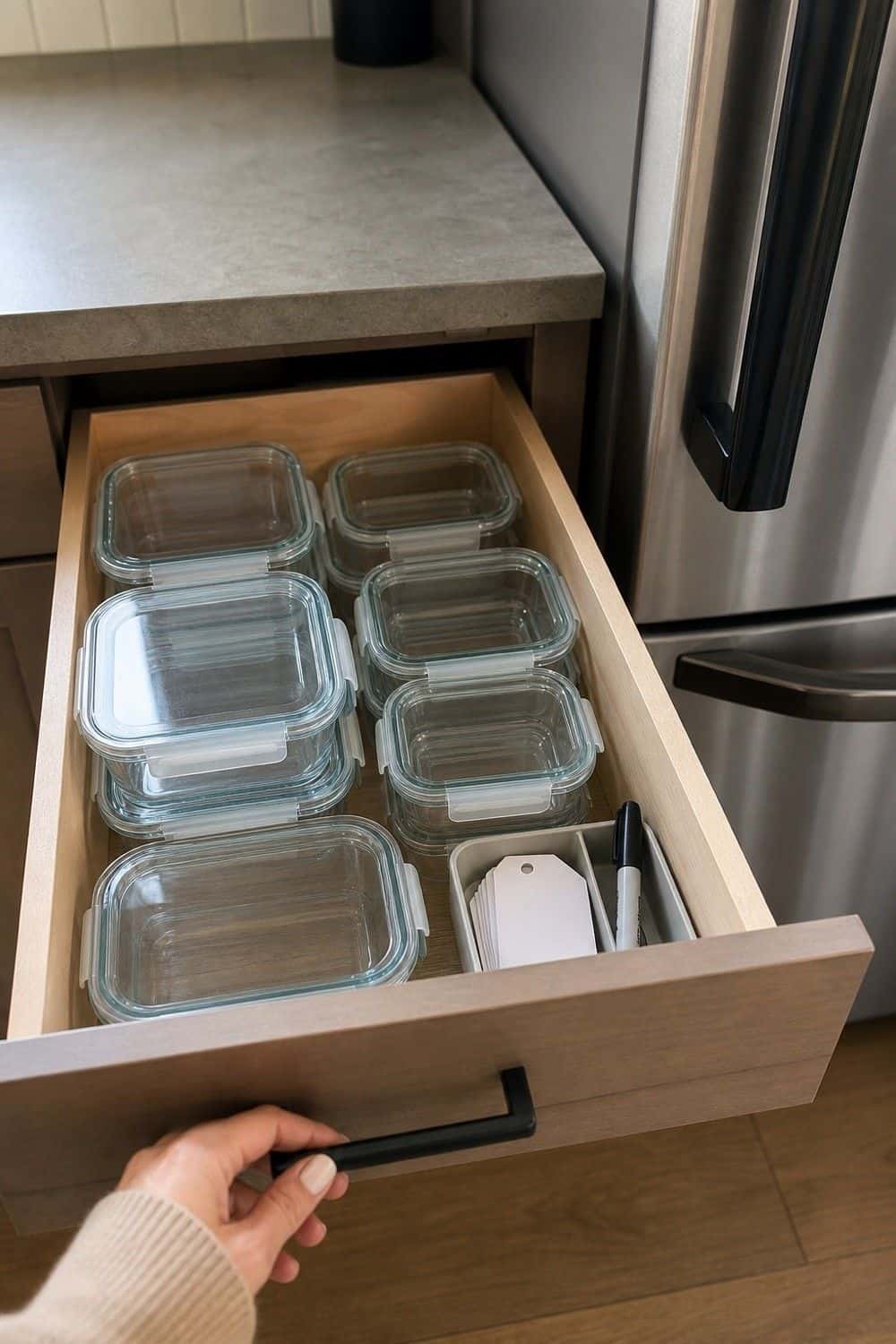
Leftover containers are most useful when they are close to the fridge, prep area, or dish storage. If containers live far away, food is more likely to sit in foil-covered bowls or disappear into the back of the refrigerator.
Keep glass leftover containers, labels, and a marker nearby if you meal prep or cook large batches. The easier storage feels, the faster dinner leftovers turn into tomorrow’s lunch instead of another foil-covered mystery bowl at the back of the fridge.
17. Lunch and Snack Zone

A snack and lunch zone helps the whole household find grab-and-go food without digging through every shelf. Group lunchbox items, wraps, small containers, snack organizer bins, fruit cups, crackers, and easy breakfast backups.
This is about household flow, not making the pantry look cute. Put kid snacks where children can reach them if that helps, and keep special snacks higher if they need a boundary. Refill the zone before school weeks begin, and remove empty boxes immediately so the bins stay honest.
18. Under-Sink Cleaning Supply Zone
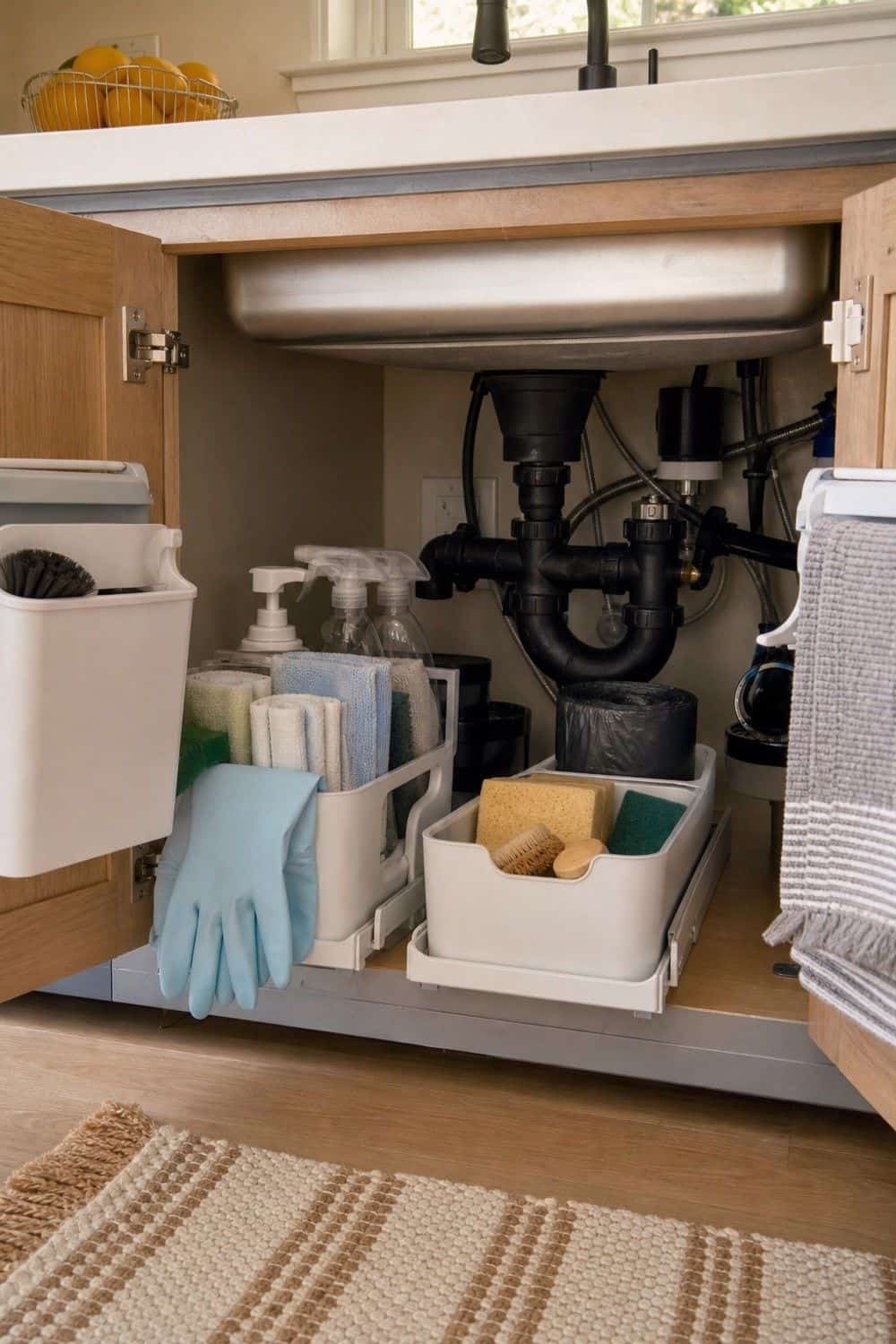
The under-sink area should support quick cleanup without becoming a risky tangle of bottles. Use lift-out bins, pull-outs, or an under-sink organizer for soap, sprays, cloths, dishwasher tablets, sponges, gloves, and trash bags.
Keep plumbing accessible and separate food storage from cleaning supplies. If leaks happen, you should be able to remove the organizer quickly. Store only kitchen cleaning items here, not every household product. Label anything that helpers may confuse, and keep backups behind daily sprays and soap bottles.
19. Trash and Recycling Workflow
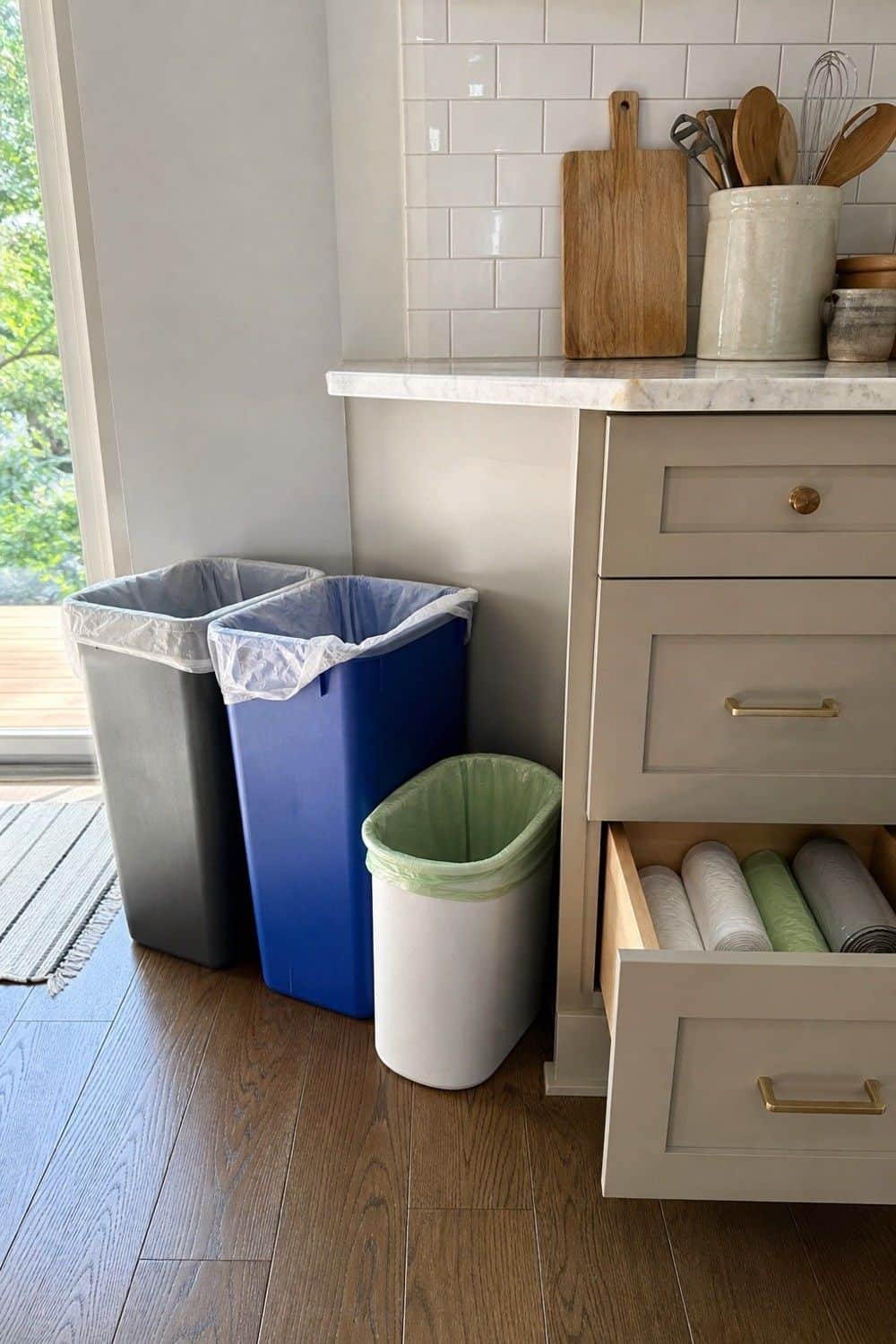
Trash, recycling, compost, and returnables need a real workflow or they end up on counters and floors. Place kitchen recycling bins near prep or cleanup if possible, but not where they block cabinet doors.
Keep liners, bags, and compost supplies close to the bins. If returnable bottles or cardboard pile up, create one container with a regular emptying routine. Waste zones should reduce mess, not become another mess beside the back door or pantry entrance after every grocery trip home.
20. Grocery Unloading Spot

A grocery unloading spot prevents bags, produce, and pantry items from spreading across the kitchen. Use a counter, island end, cart, or grocery bag holder as the temporary landing area. Before putting food away, check what is already open and rotate older items forward. This is where pantry organization connects to real shopping habits. If groceries skip this step, duplicates build up and older food gets buried. A short unloading routine can save more food than another bin or label.
21. Eat-First Bin for Older Food
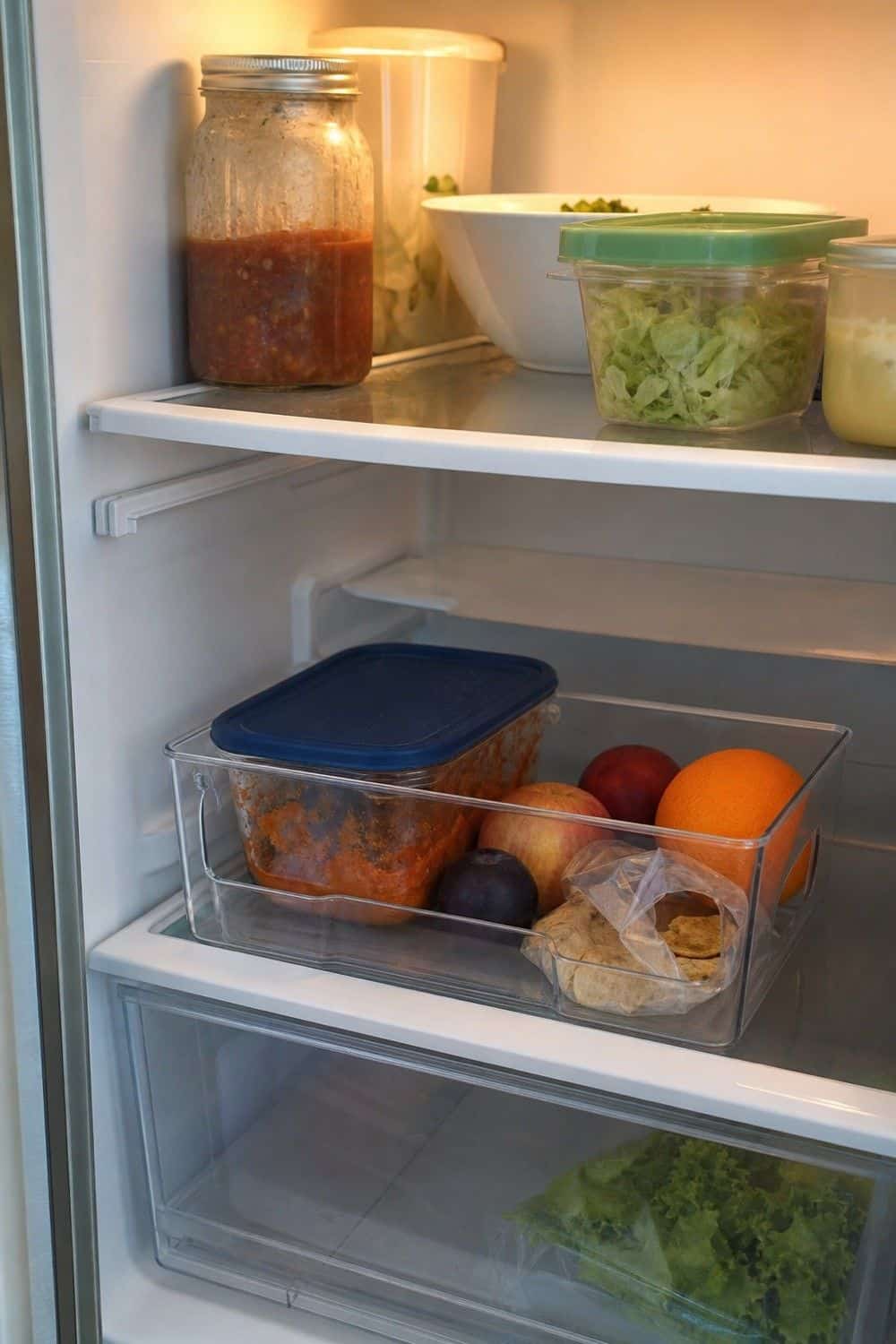
An eat-first bin gives older food one visible place to go. Use it for opened snacks, older produce, leftovers, pantry items near their best quality window, or ingredients that need to be used this week.
Place the bin in the fridge or pantry where people will actually see it. Check it before meal planning and before shopping. This small habit can reduce waste without reorganizing the entire kitchen, and it gives leftovers a clear first stop before takeout happens again.
22. Paper Clutter Away From Prep
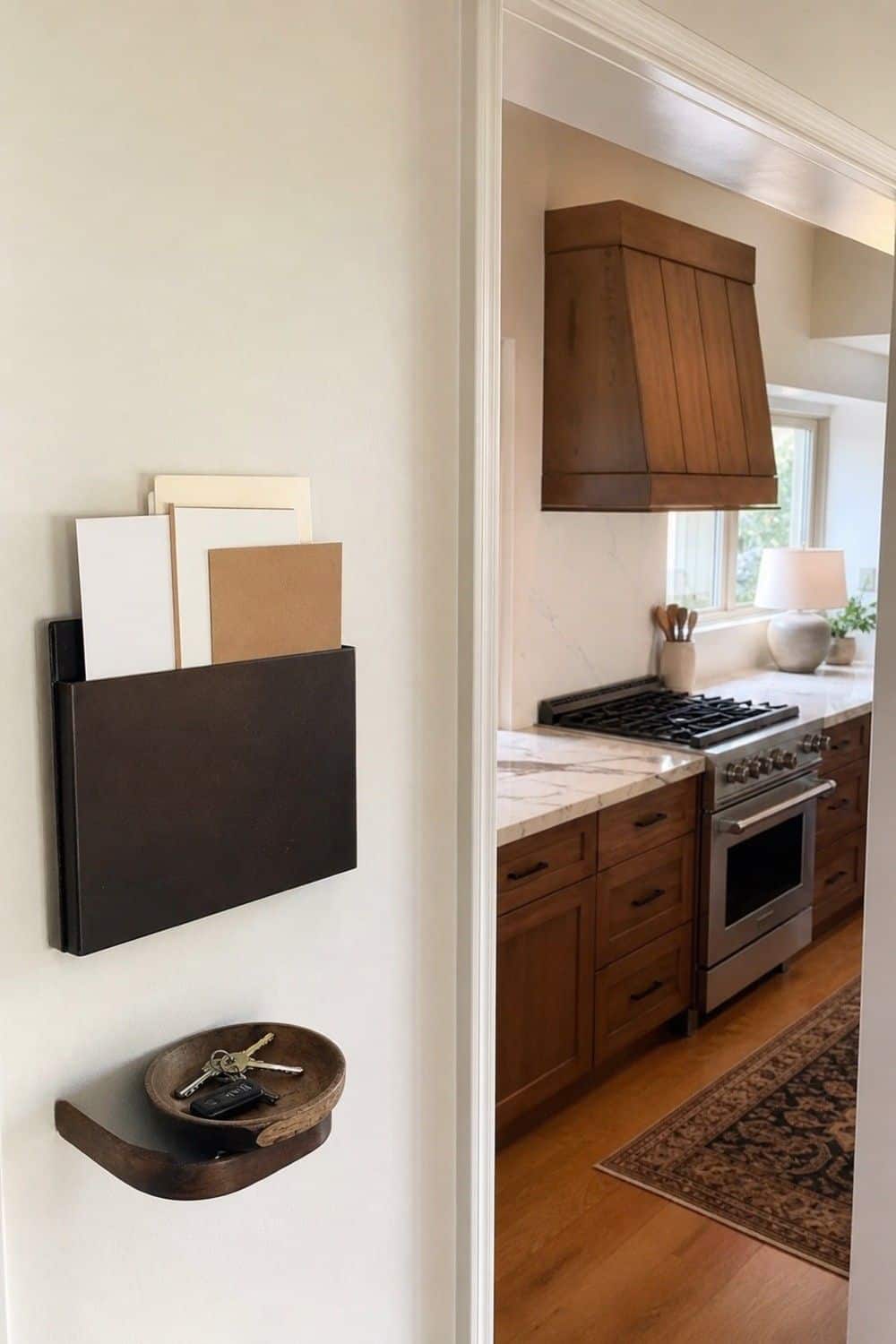
Kitchens collect mail, school papers, keys, receipts, coupons, and random household notes. Give paper a flat command spot away from cutting boards, the stove, and the sink. A magnetic memo board, wall pocket, or small file can hold the current papers without taking over food prep space. Keep only active papers there and move finished papers out during the weekly reset. Organization fails fast when a prep counter becomes the family office, mailroom, and charging station all at once every afternoon.
23. Drop Zone for Non-Kitchen Items
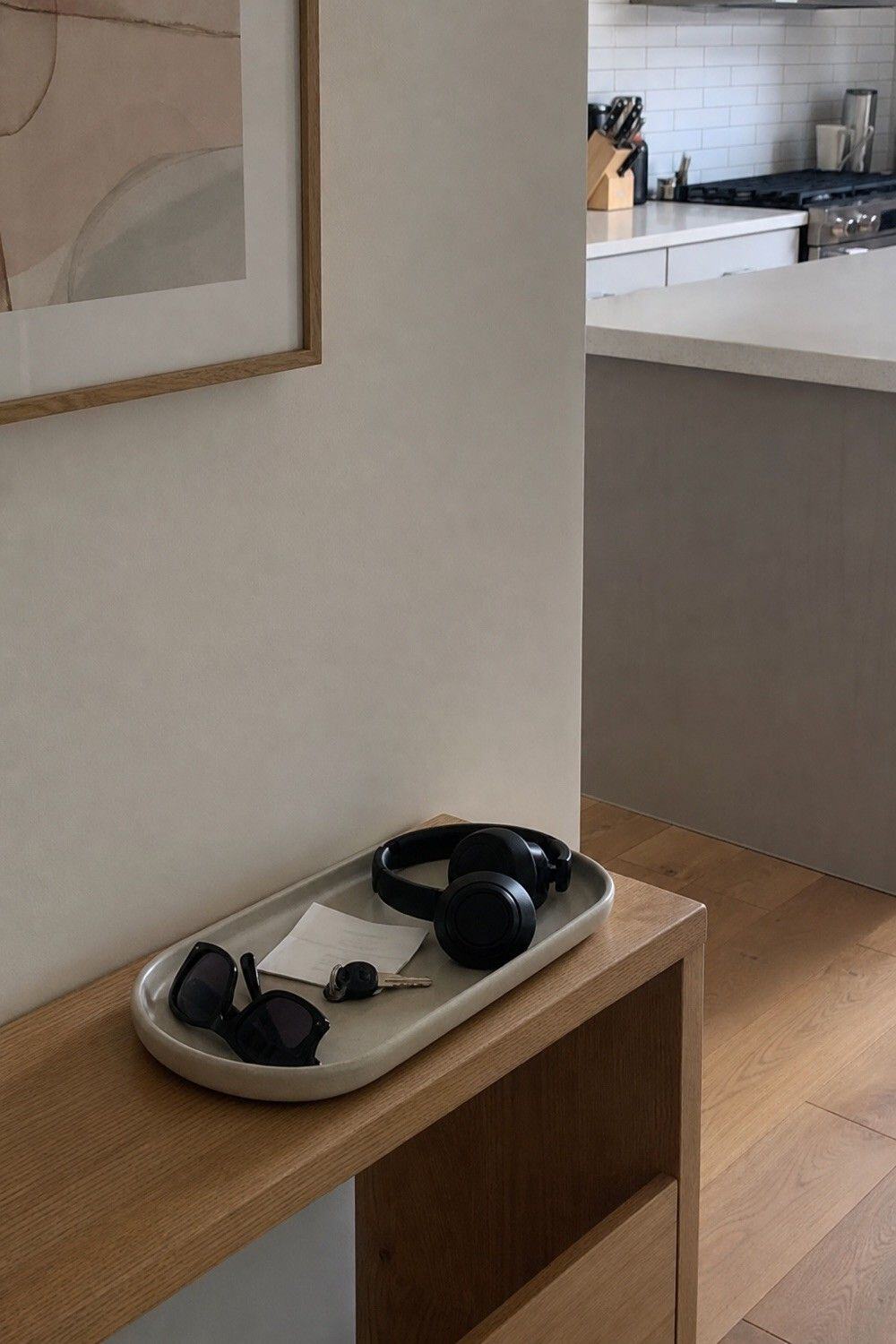
If non-kitchen items always land in the kitchen, give them one small home near the entry point. An entryway catchall tray, drawer, or basket can hold keys, sunglasses, headphones, and receipts temporarily.
The key word is briefly. Reset the tray daily so it does not become long-term storage. This protects food prep space while still respecting how people actually enter the house and unload pockets, bags, and receipts after work. Keep the tray small enough to force a real reset.
24. Labeling Kit for Shared Zones

A kitchen labeling kit is useful when labels solve a real communication problem. Use labels for pantry bins, leftovers, freezer meals, shared snack zones, and containers that other people need to return correctly.
Keep labels clear and practical, not decorative busywork. A label maker, tape, marker, or freezer label can all work. The best label helps someone else find or put away an item without asking, especially in shared snack and pantry zones or freezer bins. Date labels matter most for leftovers.
25. Weekly Kitchen Reset

A weekly kitchen reset keeps the whole system from sliding backward. Clear counters, wipe surfaces, check the fridge, check the pantry, return items to zones, empty trash and recycling, and plan one meal from food that needs using.
Microfiber cleaning cloths make the reset easier because they can handle counters, shelves, appliance fronts, and quick spills. The reset does not need to be long. It just needs to happen often enough that clutter never becomes the system, and food gets checked before shopping.
Frequently Asked Questions
What is the best way to organize a kitchen?
The best way is to organize by workflow zones: prep, cook, clean, pantry, fridge, breakfast, snacks, grocery unloading, and reset. Store each item near the task it supports.
Where should I start when organizing my kitchen?
Start with the pantry or food cabinets because they affect grocery shopping and daily meals. Then move to counters, drawers, cabinets, fridge flow, cleaning supplies, and weekly maintenance.
How do I organize kitchen cabinets?
Store items by use. Keep cookware near the stove, dishes near the dishwasher or dining area, food by category, and occasional items outside the easiest cabinet spaces.
How do I organize kitchen drawers?
Use dividers by task. Place cutlery near the dishwasher or table, prep tools near the prep counter, cooking tools near the stove, and specialty items away from daily-use drawers.
How do I keep kitchen counters clutter-free?
Keep only daily items out, use trays for true essentials, store appliances by frequency of use, and move paper clutter to a separate command spot away from prep surfaces.
What kitchen organizers are worth buying?
Clear bins, drawer dividers, Lazy Susans, tiered spice racks, pull-outs, cabinet-door organizers, and lid organizers are worth buying when they solve a specific storage problem.
How often should I reset my kitchen?
Do a short daily counter reset and a weekly fridge, pantry, trash, recycling, and drawer check. A monthly cabinet review can help catch duplicates and unused tools.
How do I organize a kitchen for meal prep?
Keep cutting boards, knives, prep bowls, containers, pantry staples, and fridge access close to the main prep station. Store leftover containers nearby so cooked food gets packed quickly.
Final Thoughts
The most useful kitchen organization ideas are built around movement, not matching bins. Put pantry food where you can see it, keep prep tools near the counter, store cookware near the stove, protect the cleaning zone, make groceries and leftovers easier to handle, and keep a weekly reset rhythm. A functional kitchen is one where the next meal is easier to start.
Last update on 2026-09-17 / Affiliate links / Images from Amazon Product Advertising API