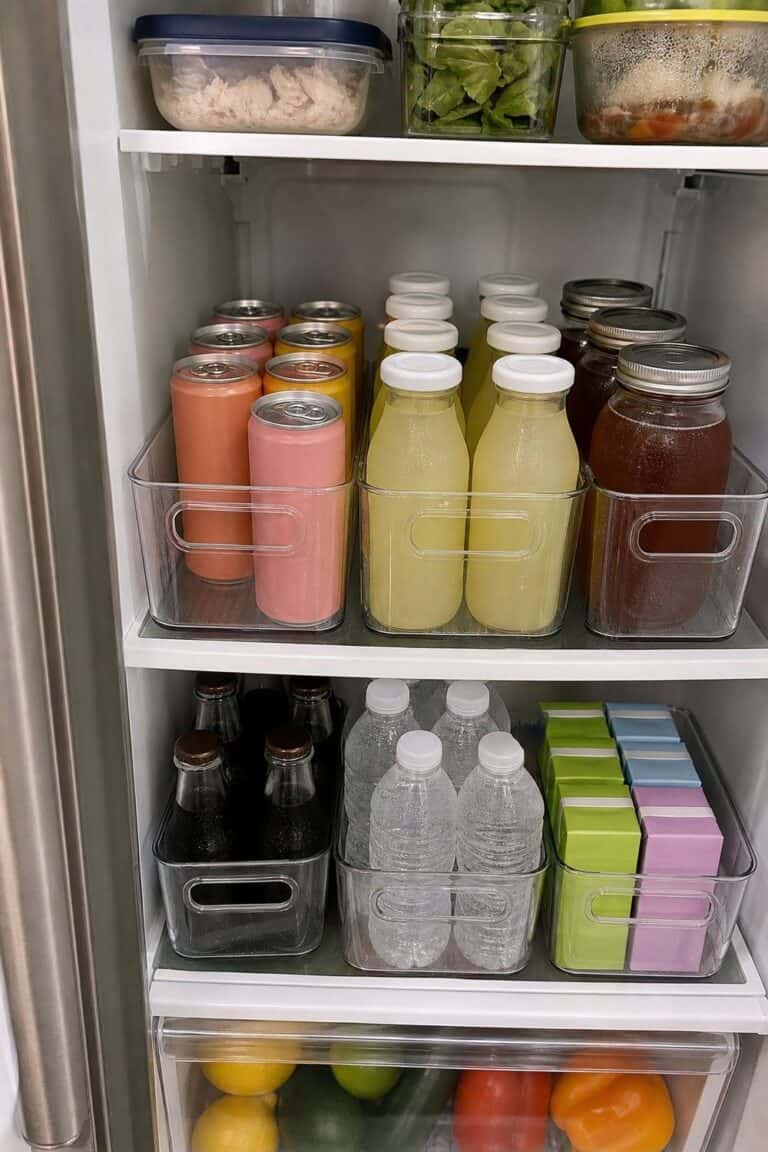
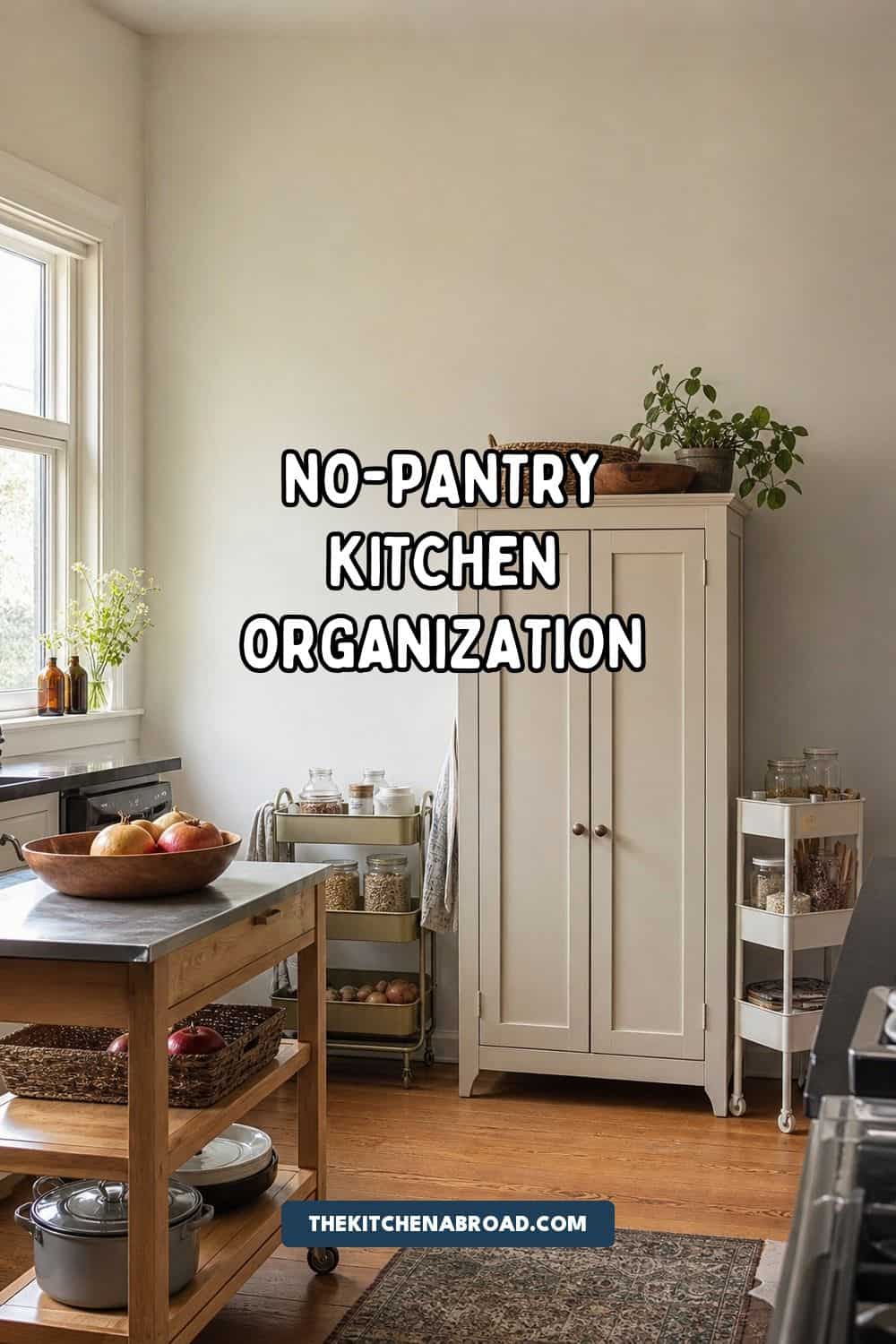
No-pantry kitchen organization works by creating pantry function across one main food cabinet, a few drawers, a rolling cart or freestanding cabinet, door and wall storage, and one labeled overflow spot nearby. Keep daily food in the kitchen, move backups out of prime space, and use labels so groceries do not get scattered wherever there is room.
A kitchen without a pantry can still store dry goods, snacks, cans, oils, breakfast items, and baking supplies in a way that feels calm and usable. The key is choosing a main food hub first, then adding smaller pantry alternatives only where they solve a real storage problem.
Instead of treating every empty gap as food storage, give each area a job. Cabinets can hold active staples, drawers can hold snacks or packets, carts can hold breakfast or baking extras, and nearby furniture or closets can hold unopened backups.
You Might Also Like These Blog Posts
- Small Kitchen Organization Ideas
- Tiny Kitchen Organization Ideas
- Studio Apartment Kitchen Organization Ideas
- Deep Pantry Ideas
- Pantry Organization Ideas
No-Pantry Kitchen Organization Ideas That Create Real Food Storage
1. Main Pantry Cabinet for Everyday Staples
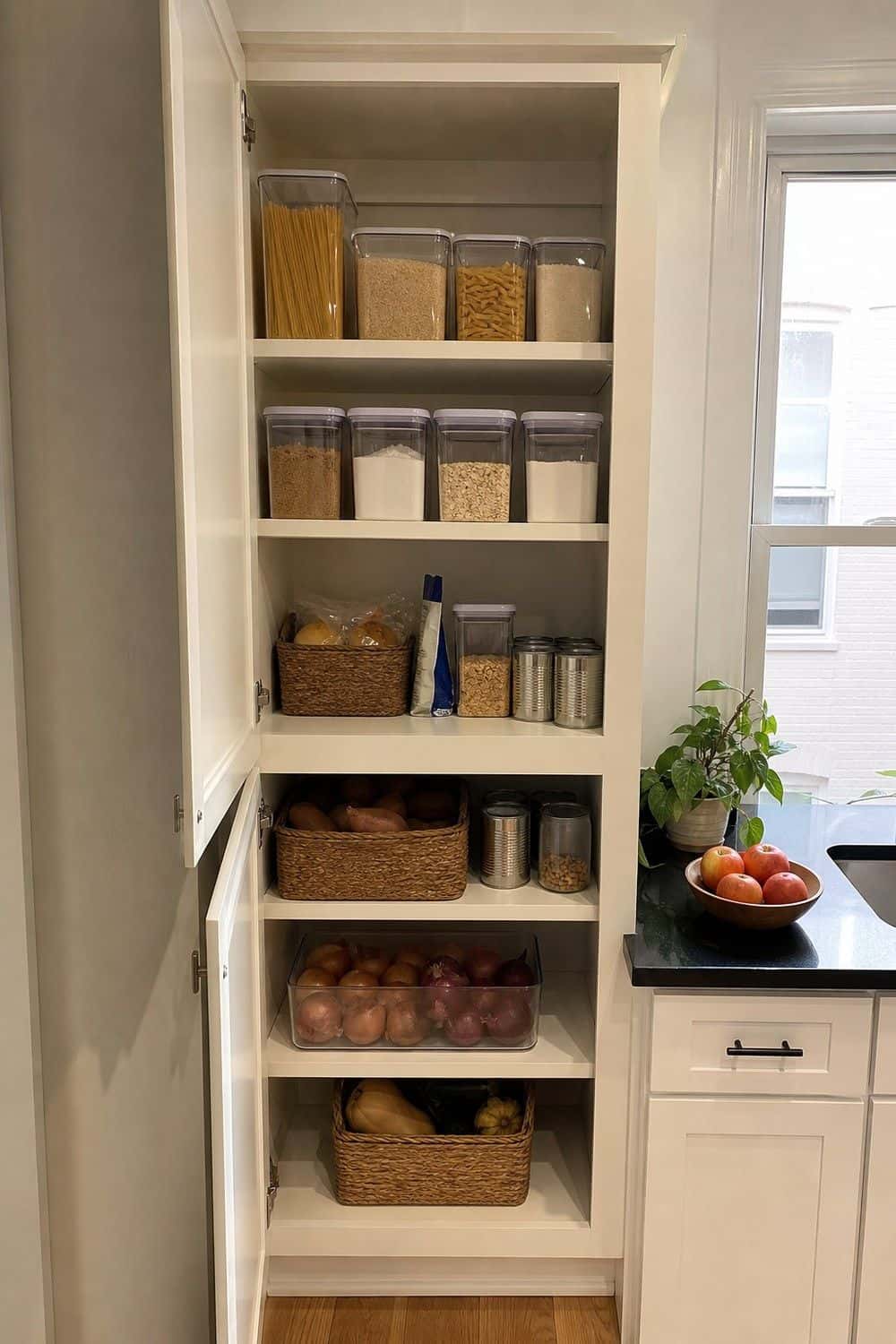
Pick the largest or easiest-to-reach cabinet and make it the main food hub. This keeps breakfast, pasta, rice, cans, snacks, and baking basics from spreading across every shelf in the kitchen. Use bins or shelf labels by category so the cabinet behaves like a small pantry, even if it is just two shelves. The main cabinet should hold active food, not every unopened duplicate. Backups can live elsewhere so everyday cooking stays easy to scan, and grocery unloading has one obvious starting point.
2. Roll-Out Shelves Inside a Food Cabinet

Roll-out shelves make a deep cabinet act more like pantry storage because cans, bags, and boxes slide into view instead of hiding in the back. They are especially useful in lower cabinets where bending and reaching make food disappear behind taller containers.
Measure cabinet width, depth, hinge placement, and door clearance before buying. Use roll-outs for heavy active categories such as cans, rice, pasta sauce, broth, and baking staples. Leave enough space at the front for fingers to pull the shelf out smoothly.
3. Deep Drawers for Pantry Staples

Deep drawers are strong pantry alternatives because you look down into them and can see more at once. Use island or lower drawers for cans, snacks, pasta, rice packets, lunch supplies, or breakfast bars.
Bins and dividers keep packets from sliding into a messy layer every time the drawer opens. Put heavier cans or jars in sturdy lower drawers, then keep lighter snacks or packets higher. Drawer storage stays clearer when each drawer has one food job and a quick label at the front.
4. Kitchen Island Snack Drawer

A snack drawer keeps bars, crackers, fruit cups, lunch add-ins, and grab-and-go items out of the main food cabinet. This helps open boxes stop taking over shelves meant for dinner staples, cans, and baking basics. Match the drawer height to the household. Lower drawers can work for kid-access snacks, while a higher drawer may suit snacks that need more supervision. Use shallow bins so choices stay visible. Keep backup boxes elsewhere and refill the drawer when space opens after grocery day.
5. Freestanding Pantry Cabinet Against an Open Wall

A freestanding cabinet is the closest substitute for a built-in pantry when the kitchen has one open wall or a nearby dining area. Choose adjustable shelves so tall cereal boxes, small appliances, canned goods, and baskets can share the space.
Measure walkway clearance with cabinet doors open, not just the wall width. This piece should hold the categories that need closed storage, such as dry goods, baking supplies, snacks, or backstock. Label shelves inside so it does not become random overflow furniture.
6. Sideboard Storage for Backup Food

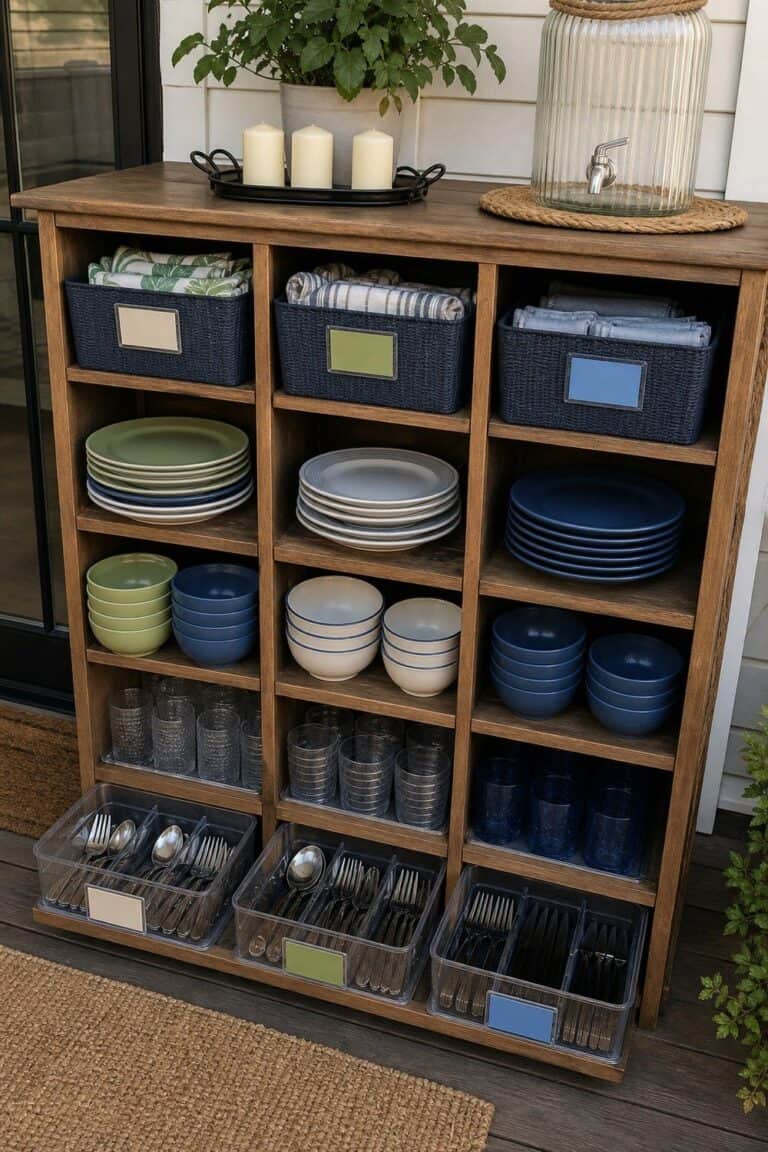
A sideboard near the kitchen or dining area can hold unopened pasta, canned goods, baking extras, paper goods, serving pieces, or extra snacks. Treat it as overflow rather than the daily pantry hub, especially if opening the doors during cooking would interrupt the flow.
Inside labels help because closed furniture can hide duplicates quickly. Use one basket for backup food and another for serving or paper goods so the piece does not become a mystery cabinet.
Keep the kitchen cabinet for opened and frequent items, then use the sideboard for backups, entertaining supplies, and less-used categories that do not need to be grabbed mid-recipe.
7. Narrow Bookcase as Open Pantry Storage

A narrow bookcase can become open pantry storage for jars, baskets, cookbooks, breakfast goods, tea, coffee, and lightweight pantry categories. Use matching bins only where they make categories easier to pull down, not as a disguise for mixed clutter. Because everything is visible, avoid bulky packaging and keep the top shelf lighter. Tall furniture should be anchored when needed, especially in a busy kitchen path. Plan for regular dusting because open food storage collects kitchen residue faster than closed cabinets.
8. Rolling Cart as a Movable Pantry
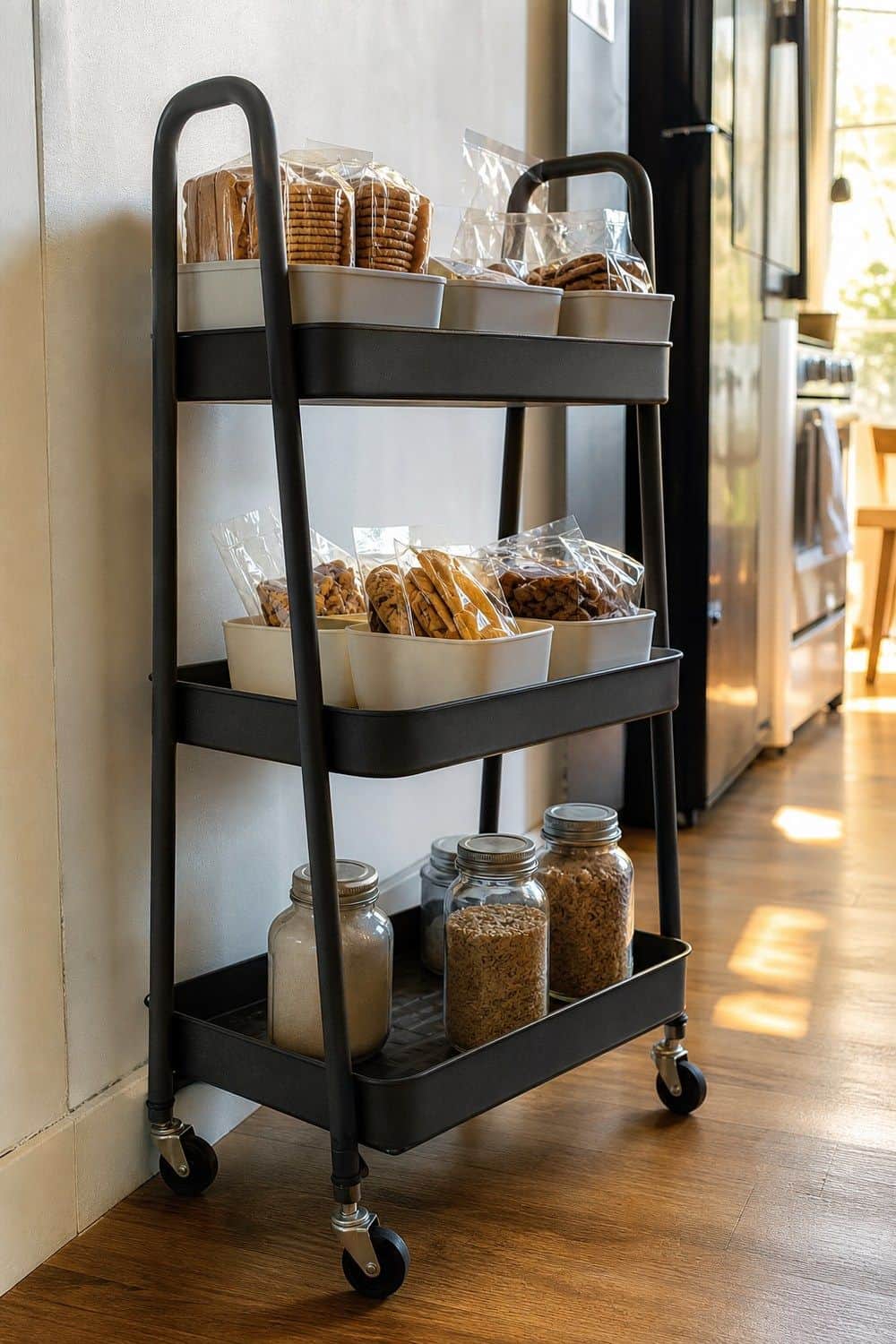
A rolling cart can hold breakfast supplies, coffee, baking extras, snacks, small appliances, or lunch packing items when cabinet space is tight. Choose one clear role so the cart does not become a moving junk shelf or a second counter.
Look for stable shelves, lockable wheels, and a parking spot that does not block the fridge, oven, or main walkway. Heavy jars belong low, while lighter packets can sit higher. A small bin on each shelf keeps categories from mixing when the cart moves.
9. Slim Cart Beside the Fridge
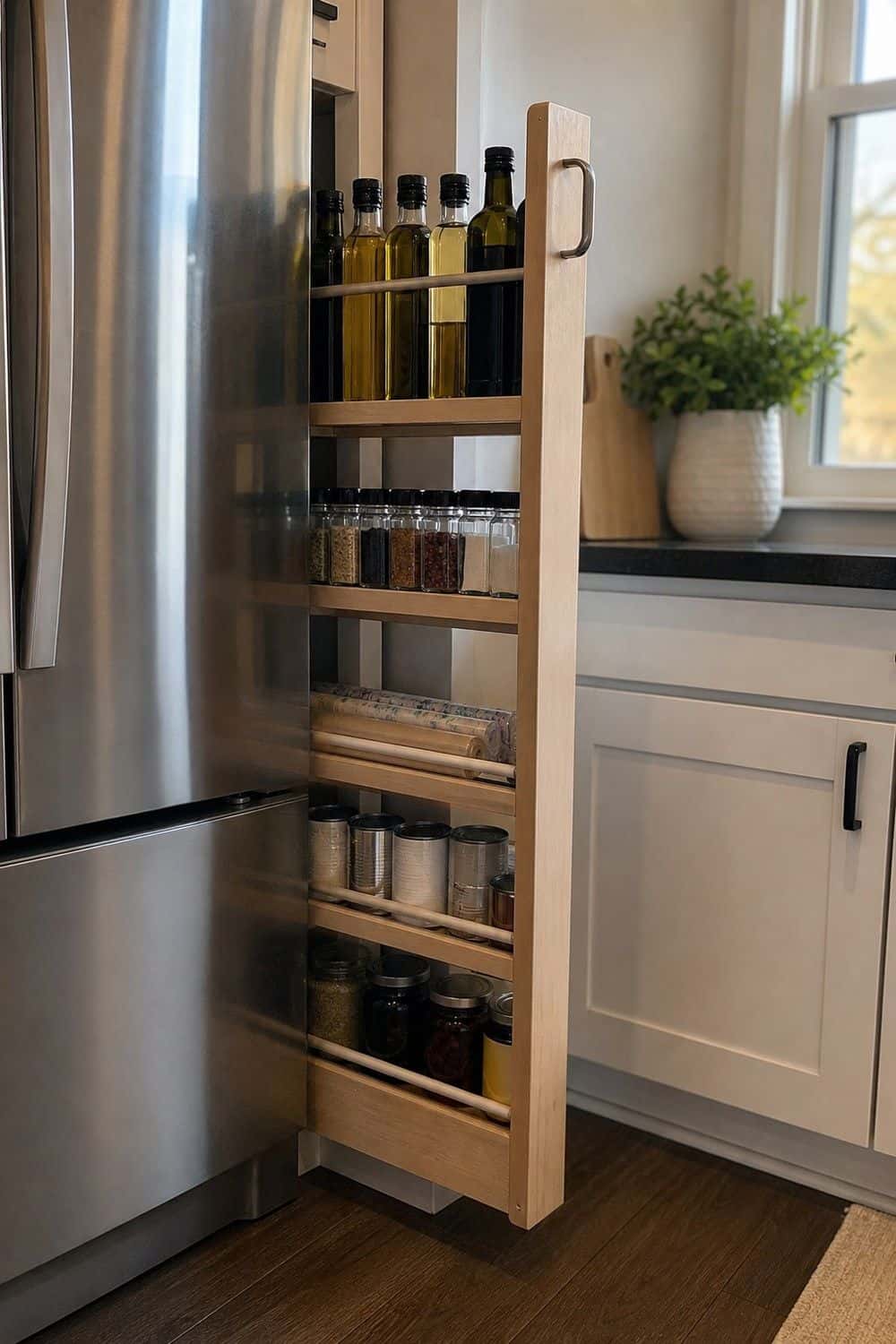
A slim cart can use the narrow gap beside a fridge, cabinet, or appliance wall for cans, oils, packets, spices, wraps, or backup condiments. Measure the gap in several places because floors, trim, and appliance sides are not always perfectly even.
Keep this cart for narrow, lightweight items that can handle being pulled out and pushed back. Avoid heat-heavy appliance sides and sunny spots that are rough on oils and spices. Add labels on shelf fronts so small items do not vanish in the narrow rows.
10. Over-Door Rack on a Nearby Door

An over-door rack can turn a kitchen, laundry, closet, or basement door near the kitchen into storage for packets, snacks, tea, wraps, spices, and lightweight bottles. This helps when the kitchen has no pantry closet but has a nearby door that opens cleanly and is easy to check before shopping. Label each basket by category so the door does not become a wall of mixed extras. Avoid heavy glass jars or bulk goods that strain the rack and make the door awkward.
11. Cabinet Door Racks for Spices and Packets
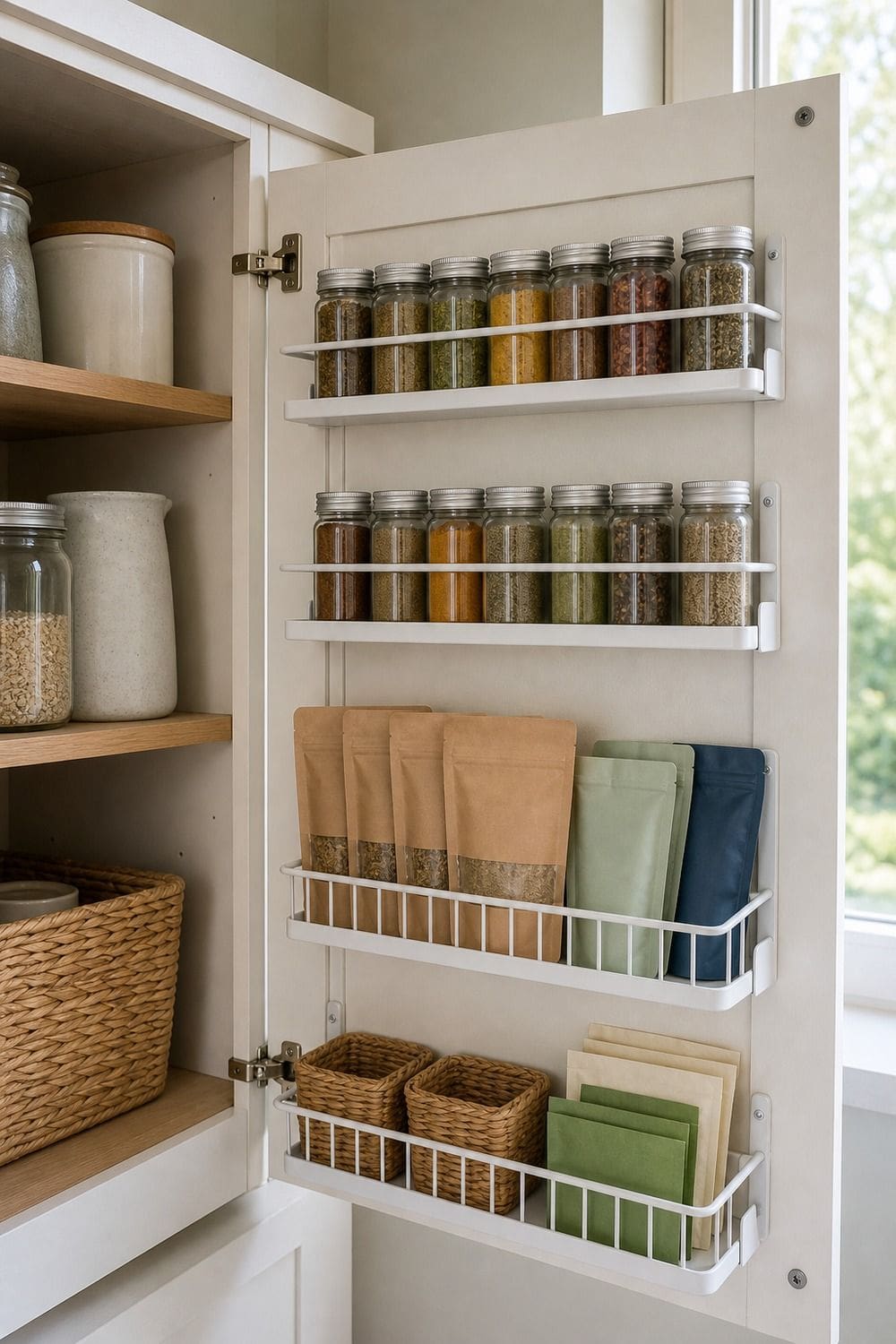
Inside cabinet doors can hold spices, seasoning packets, measuring spoons, foil boxes, wraps, or small snack packets. This frees shelf space for larger pantry goods without adding another visible storage piece. Check shelf clearance before installing so jars or boxes do not hit the cabinet frame when the door closes. Use narrow racks for spices and slightly deeper racks for packets or wraps. Door storage is best for lightweight categories that are used often enough to justify the easy access.
12. Open Shelves for Daily Dry Goods

Open shelves can help a kitchen without pantry storage, but they should hold only the categories that stay neat with daily use. Oats, coffee, tea, pasta jars, rice, mugs, and cookbooks are better candidates than half-open snack boxes or bulky multipacks.
Use clear containers or tidy baskets and leave space between categories. Open shelves collect dust and kitchen grease, so store bulk packaging and rarely used food behind closed doors. Keep the shelf shallow enough that items do not hide in a second row.
13. Airtight Containers for Visible Staples

Airtight containers make visible storage cleaner and more useful for oats, pasta, rice, cereal, flour, sugar, coffee, and frequently used baking staples. Decanting is worth it when the food is used often and the original packaging tears, spills, or looks chaotic on a shelf. Add a label with the food name and date if the package information is gone. Keep specialty ingredients in original packaging when instructions or allergens matter. Aim for better daily access, not a matching jar for every random ingredient.
14. Baskets Above Cabinets for Light Overflow
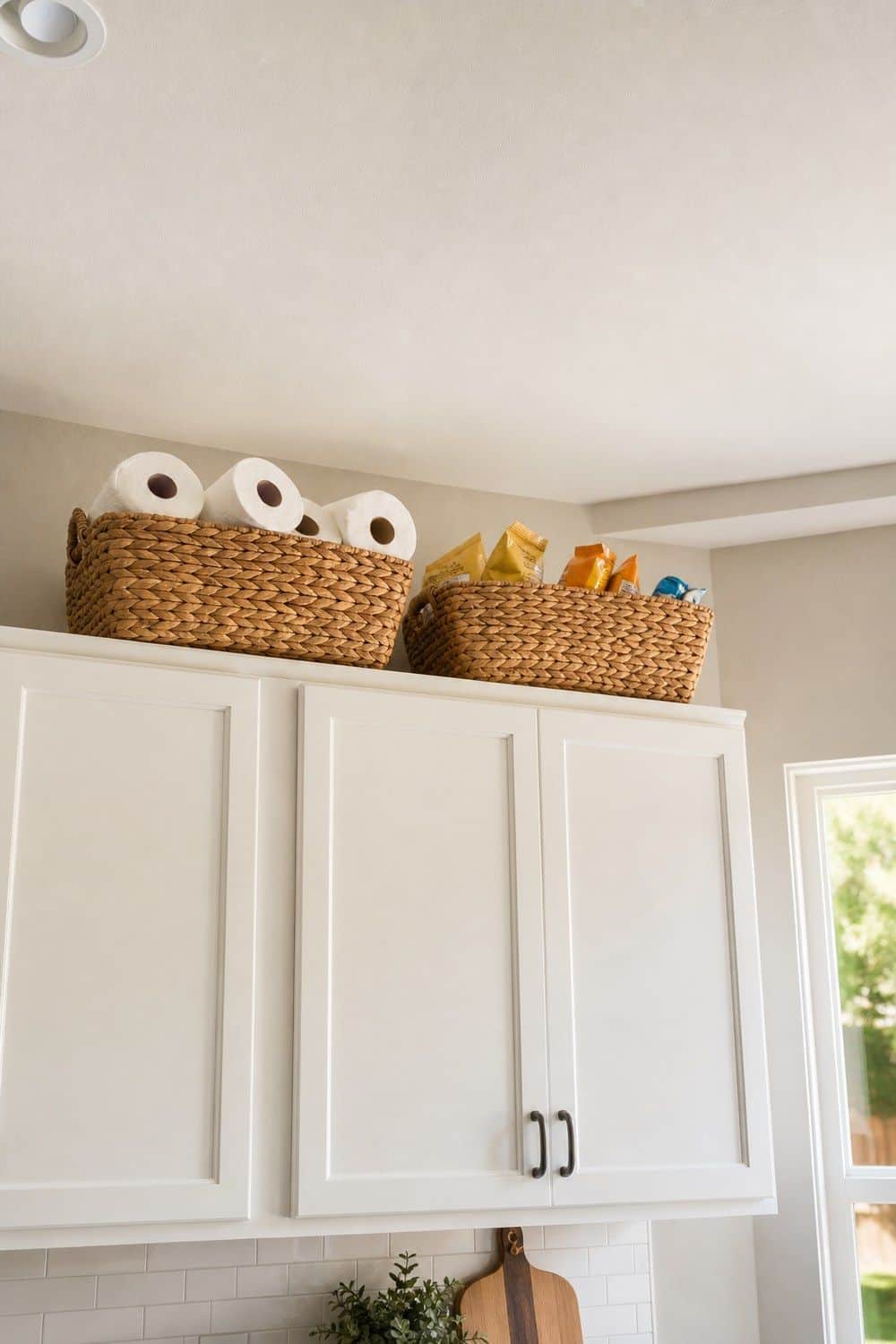
Above-cabinet baskets can hold paper goods, party supplies, unopened snacks, backup cereal, seasonal baking supplies, or lightweight overflow. They are best for items that are not needed every day and can be lifted down safely.
Choose baskets that are easy to lift and label them clearly from below if possible. Keep similar items together so the space does not turn into a forgotten ledge. Avoid storing heavy cans, glass jars, or daily breakfast food so high that restocking becomes annoying.
15. Under-Shelf Baskets Inside Cabinets

Under-shelf baskets create a second layer inside existing cabinets without drilling or adding furniture. They are useful for wraps, tortillas, napkins, tea towels, packets, lightweight snacks, or small lunch supplies. Measure shelf thickness before buying because some baskets only fit thin shelves. Also check door clearance so the basket does not hit the cabinet frame. This removable setup makes a normal cabinet behave more like layered pantry storage while keeping the main shelf available for boxes, jars, or cans below.
16. Shelf Risers for Cans in Cabinets

Can risers make beans, tomatoes, soup, coconut milk, vegetables, tuna, and broth easier to see in a standard cabinet. Without a riser, cans often stack flat and hide behind one another until duplicates pile up.
Group cans by type and keep older dates toward the front. This makes a normal cabinet feel closer to pantry shelving because each row has a visible purpose.
Measure shelf height before adding a riser, especially if cans share space with taller bottles or boxed food. Leave room to grab cans without knocking down the row behind them.
17. Turntables for Oils, Sauces, and Condiments

A cabinet lazy Susan helps oils, vinegars, sauces, syrups, nut butters, spreads, and condiments stay reachable without lining bottles three rows deep. Round bottles and jars rotate more easily than they stack.
Keep heavy glass on a lower shelf and avoid crowding the turntable until it stops spinning cleanly. Use one category per turntable when possible, such as cooking oils or breakfast spreads. This is especially helpful in corner cabinets or deep shelves that usually swallow small bottles and sticky jars.
18. Pot Rack Space for Cabinet Relief
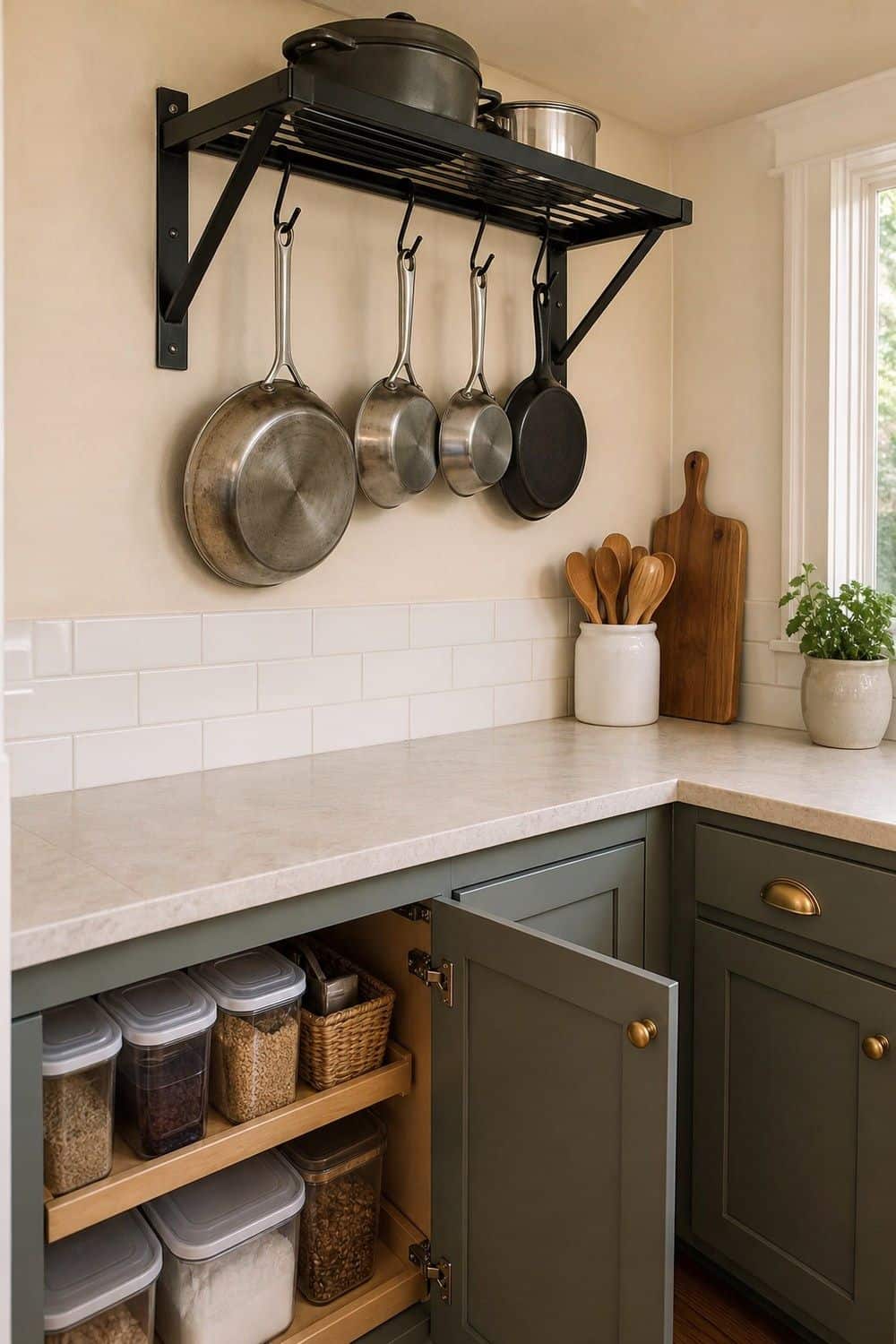
When there is no pantry, food storage often starts by moving non-food items out of cabinets. A pot rack can hold frequently used pans and free a lower cabinet for dry goods, cans, or baking supplies. Use sturdy wall or ceiling support, keep heavy pieces secure, and hang only cookware that truly gets used. This should recover cabinet space for food, not turn every pan into a display piece. Keep lids and awkward heavy pans in closed storage if they are hard to hang safely.
19. Wall Rail for Mugs and Utensils
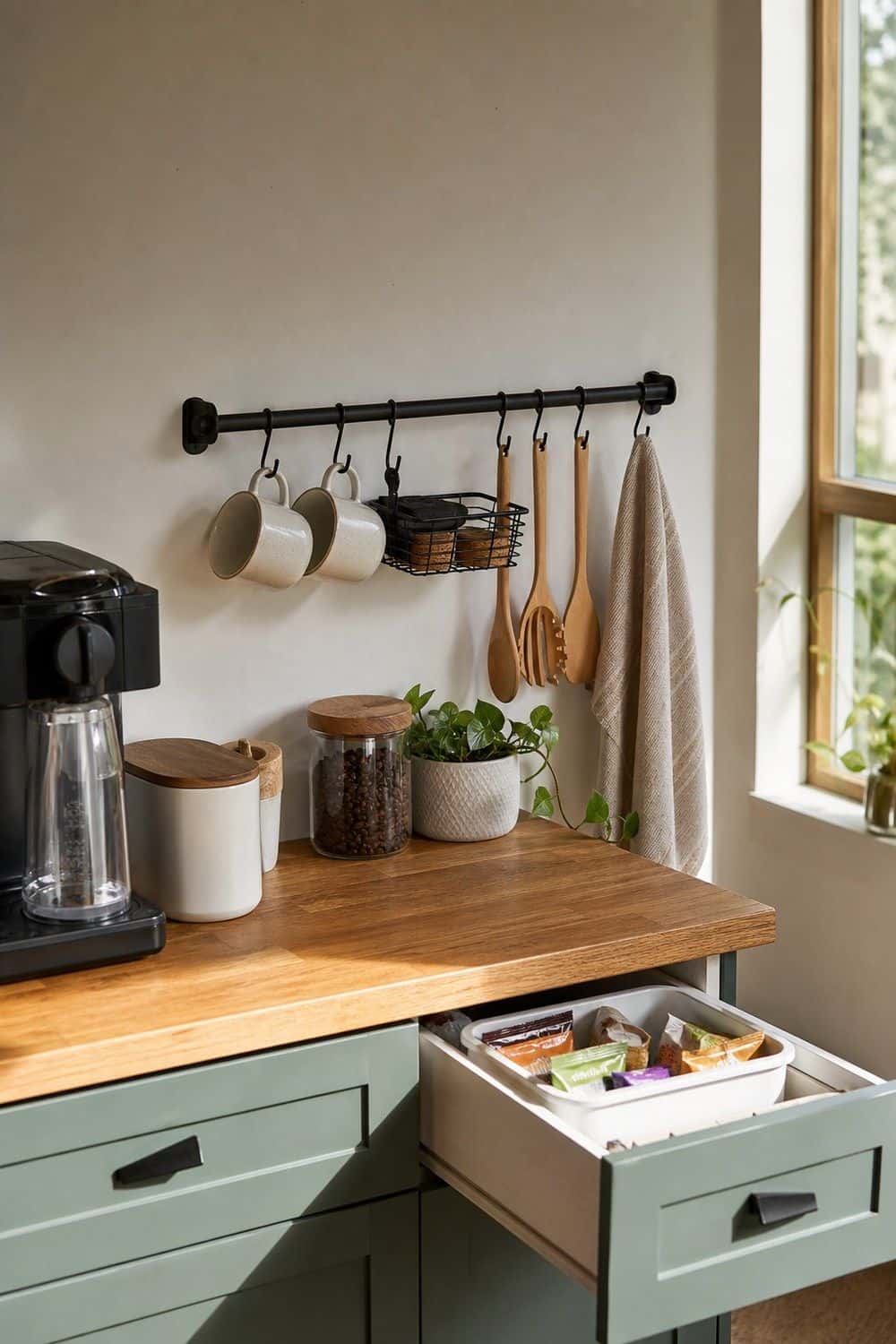
A wall rail can move mugs, utensils, towels, small baskets, or measuring tools out of drawers and cabinets. That freed space can become a food drawer, spice cabinet, or snack bin. Keep the rail tight and useful, with only the items that are grabbed often. Too many hanging pieces can make a working kitchen feel busier and harder to clean. Rails are especially useful near coffee supplies, prep zones, or a blank wall where a cabinet would not fit cleanly.
20. Pegboard Tool Storage Before More Food Storage
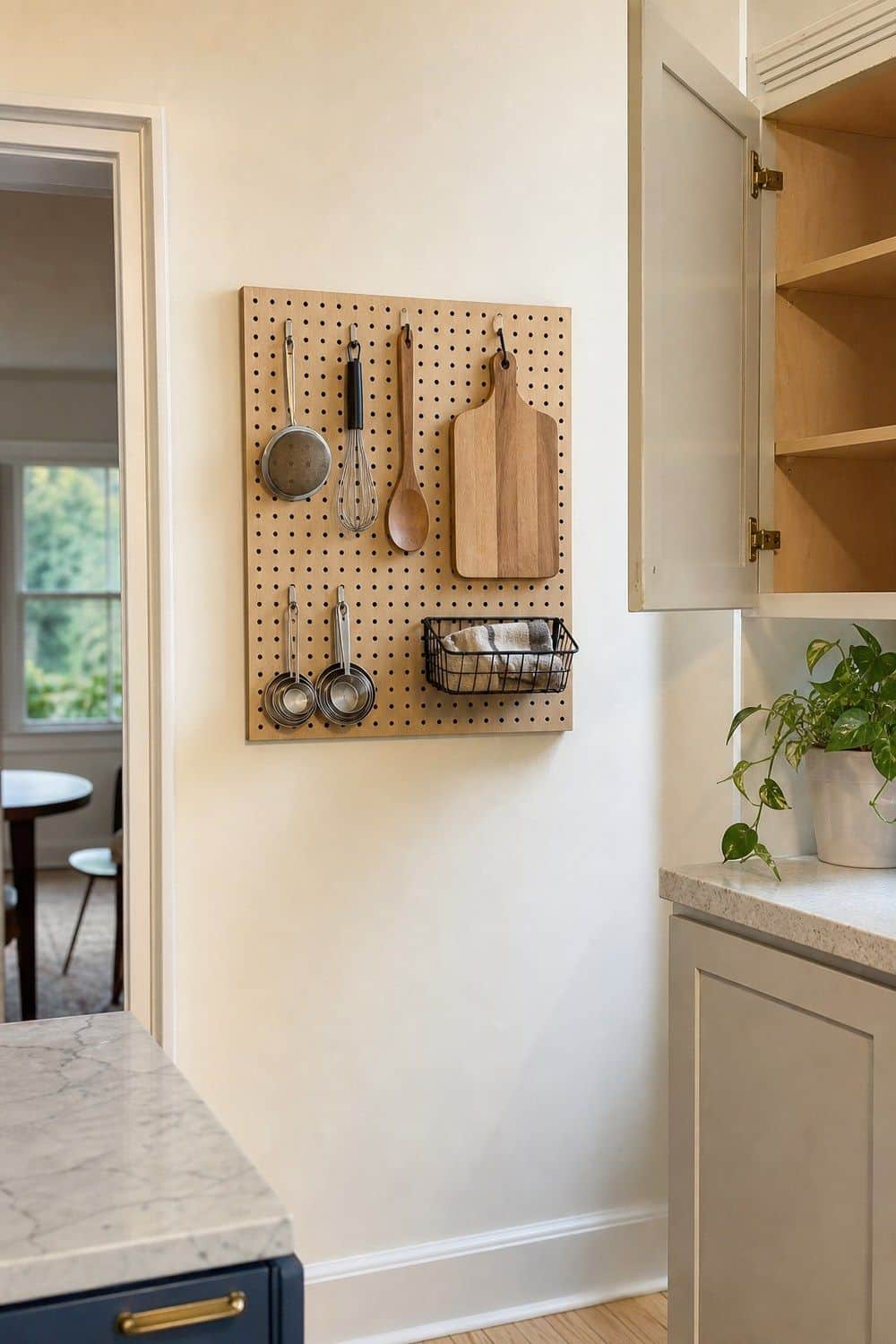
A pegboard can relocate utensils, pans, measuring cups, cutting boards, small baskets, and lightweight tools before you buy more food organizers. It can reveal storage you already have by moving cookware out of prime cabinets.
Arrange the board by frequency of use, with daily tools near the easiest reach. Use hooks and small baskets for items that would otherwise take a full drawer. Leave some negative space so the pegboard stays readable and does not become a visual junk drawer.
21. Toe-Kick Drawers for Rarely Used Backstock
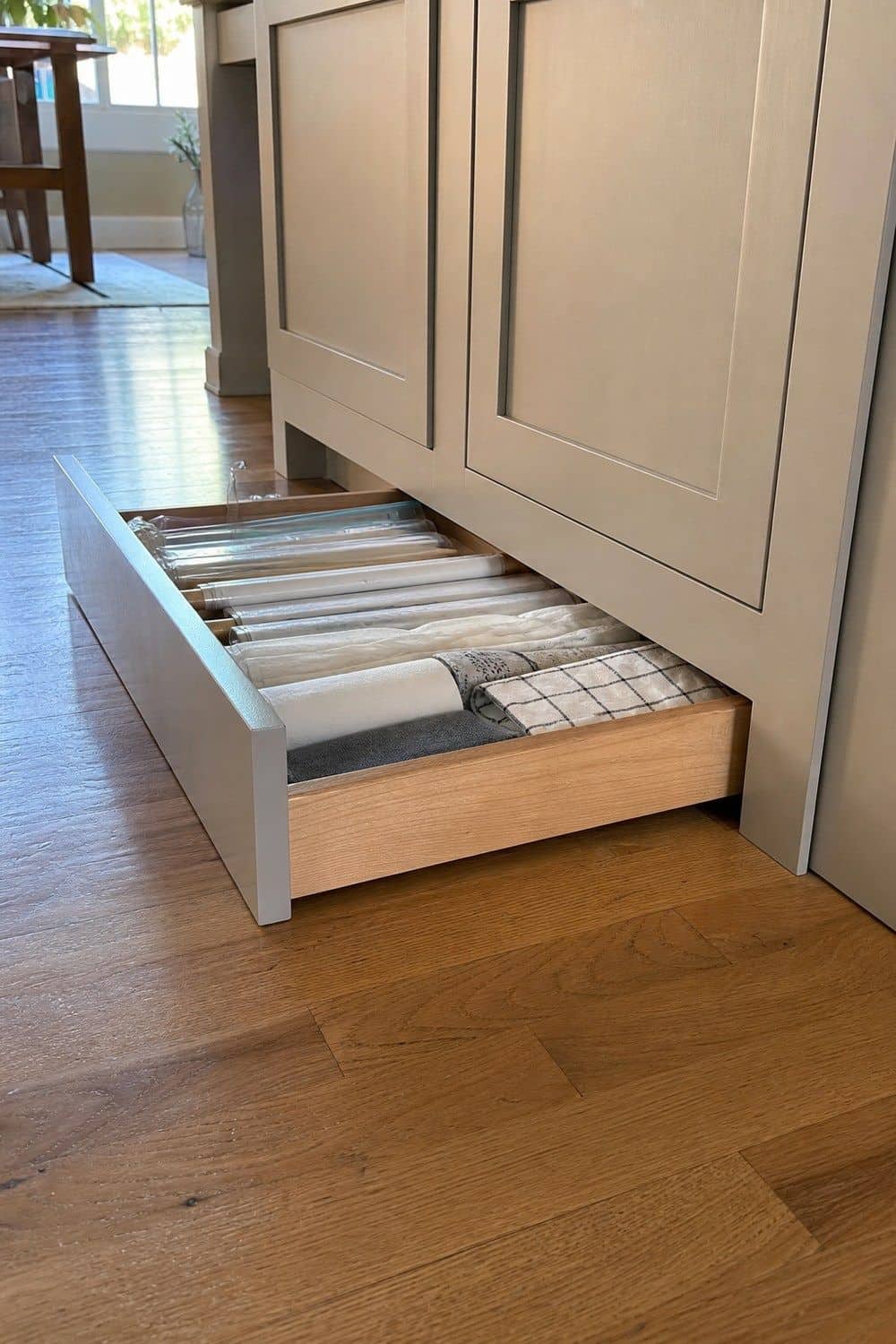
Toe-kick drawers are more custom than most no-pantry fixes, but they can help tiny kitchens use hidden space. They are best for flat or low-profile overflow such as extra wraps, seasonal cookie cutters, spare storage bags, lightweight packaged goods, or backup kitchen linens. Do not use them for heavy cans or everyday food that would be annoying to reach. If you are renovating or replacing cabinets, this is a quiet way to gain storage without adding another shelf, cart, or visible furniture piece.
22. Counter Pantry Items on One Tray

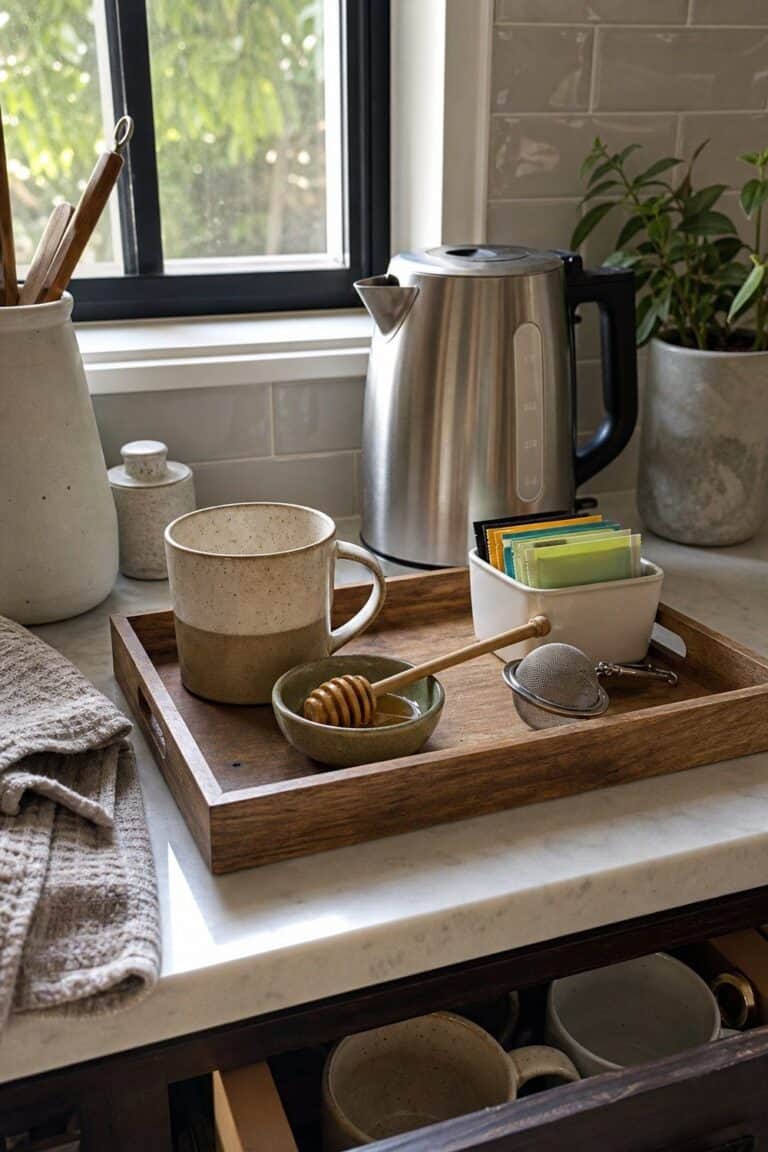
Some kitchens without pantries need bread, fruit, oils, coffee, or tea on the counter. A tray creates a clear limit so those items do not spread across the whole work surface or crowd prep space.
Choose a wipeable tray and keep it near the place where the items are used. Bread near breakfast supplies or oil near prep space makes more sense than a mixed tray of unrelated food.
If the tray overflows every week, move backups to a cabinet, cart, or closet instead of widening the counter zone. Counters should hold active food only.
23. Nearby Closet for Bulk Backups

A hall, laundry, entry, or utility closet can become backup storage for bulk packages, paper goods, unopened snacks, extra drinks, and duplicate dry goods. Keep active food in the kitchen and backups in the closet so daily cooking does not require walking around the house.
Use labeled bins by category, such as paper goods, unopened snacks, drinks, baking backup, and pasta backup. This prevents duplicate buying and makes grocery unloading more predictable. Avoid mixing cleaning products and food in the same open bin.
24. One Inventory List for Split Storage
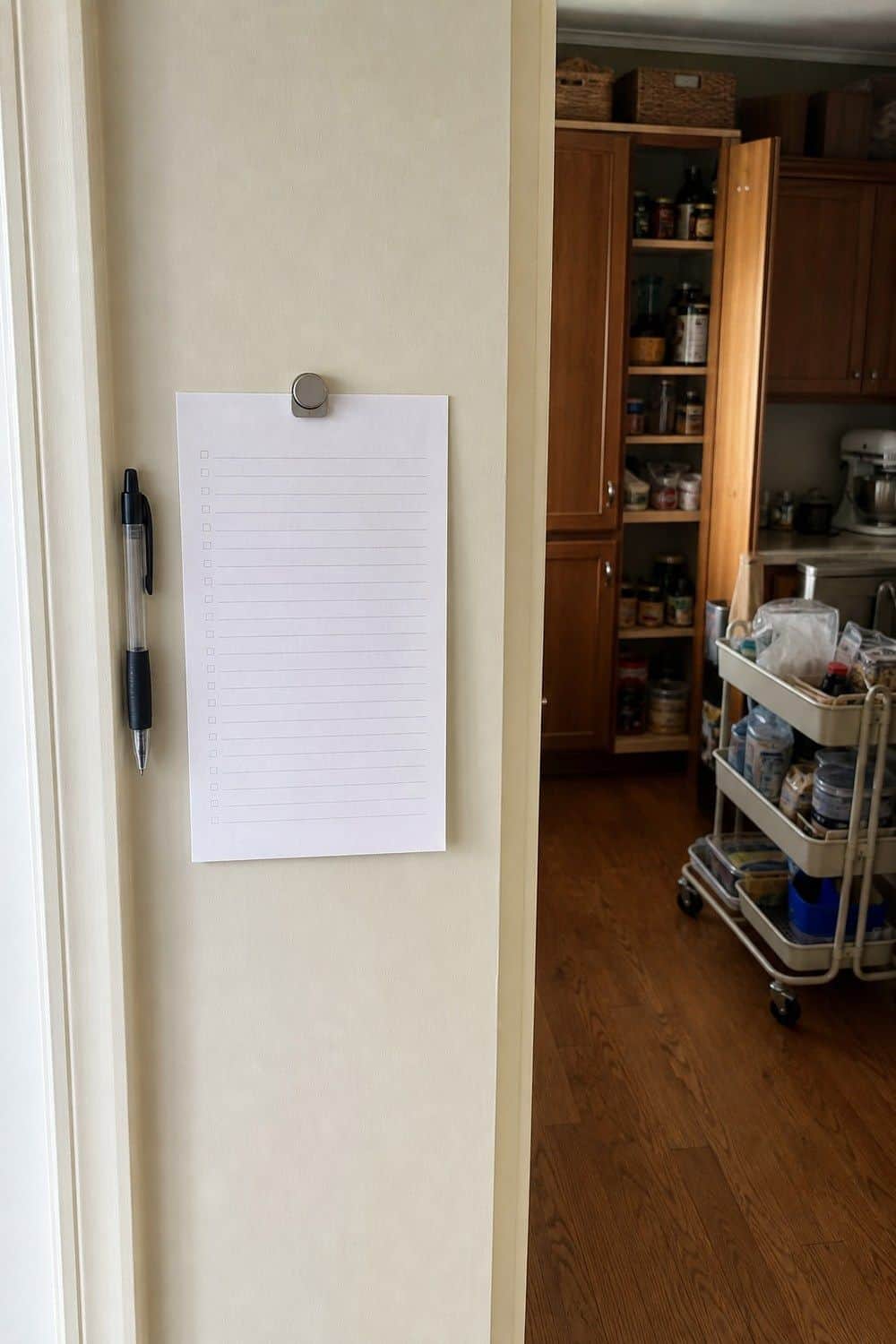
Food storage may be split between cabinets, drawers, a cart, a sideboard, and a nearby closet, so one inventory list keeps the system connected. Track unopened backups, freezer items, bulk goods, and staples that are running low or stored away from the kitchen.
Place the list near the main food cabinet or grocery list. Check it before shopping so the kitchen does not end up with four pasta boxes in four different places. A quick tally also helps decide what belongs in overflow after unloading.
25. Grocery-Day Reset for the No-Pantry System

A no-pantry kitchen needs a short reset after grocery shopping because storage is split across several places. Open packages should go to active kitchen zones, backups should move to overflow, heavy items should stay low, and labels should be updated before the bags are fully unpacked. If groceries get shoved into any open gap, the system falls apart quickly. Keep the reset practical: refill the snack drawer, rotate cans, update the inventory list, and clear the counter before the next meal starts.
How to Choose the Right Pantry Alternative
Choose the main pantry substitute by category and frequency. Everyday staples belong in a cabinet, drawer, or freestanding pantry cabinet near the cooking area. Snacks can go in a drawer, cart, or shallow bin. Oils and sauces usually fit well in a cabinet with a turntable.
Overflow belongs outside prime kitchen space. Use a sideboard, nearby closet, above-cabinet baskets, or labeled bins for unopened duplicates, bulk packages, paper goods, extra drinks, and seasonal baking supplies.
Visible storage needs stricter limits. Open shelves, carts, rails, and counters should hold only active categories that stay neat with normal use. If a category looks messy every week, move it behind a door.
Frequently Asked Questions
How do you organize a kitchen with no pantry?
Choose one main food cabinet or drawer, add clear bins and labels, use carts or furniture for overflow, and keep daily food separate from unopened backups.
Where do you put food if you do not have a pantry?
Use cabinets, deep drawers, a rolling cart, freestanding pantry cabinet, sideboard, open shelves, an over-door rack, or a nearby closet depending on the category.
How do you make a pantry in a small kitchen?
Convert one cabinet into the main food hub, add roll-out shelves, use a slim cart, install wall shelves, and move cookware or tools elsewhere to free food storage.
What can I use instead of a pantry?
You can use a freestanding cabinet, sideboard, bookcase, rolling cart, cabinet drawer, wall shelves, door rack, or nearby closet as a pantry alternative.
How do I keep a no-pantry kitchen from looking cluttered?
Limit counter storage, use labeled containers, keep visible shelves pared back, hide bulky packaging, and assign unopened overflow to one backup zone.
Are rolling carts good for pantry storage?
Yes, rolling carts work well for pantry storage when they have stable shelves, lockable wheels, and one clear category such as breakfast, coffee, baking, snacks, or small appliances.
How do you store snacks without a pantry?
Use a snack drawer, shallow basket, over-door rack, cart shelf, or clear bin inside a cabinet. Store backup boxes separately so open snacks do not take over.
How do you organize pantry overflow without a pantry?
Use a nearby closet, sideboard, above-cabinet baskets, or labeled bins for unopened duplicates and bulk items while keeping active food inside the kitchen.
Final Thoughts
No-pantry kitchen organization is really about assigning food to the right kind of storage. Use cabinets and drawers for active staples, carts and shelves for controlled daily categories, nearby furniture or closets for overflow, and one inventory list so split storage stays easy to manage.