

Bind the beef with almond flour, one egg and a splash of milk instead of breadcrumbs, sear the meatballs, then let them finish for 15 minutes in a quick San Marzano tomato sauce. Spoon it all over gluten-free spaghetti or penne. Dinner for four, about 45 minutes start to finish.
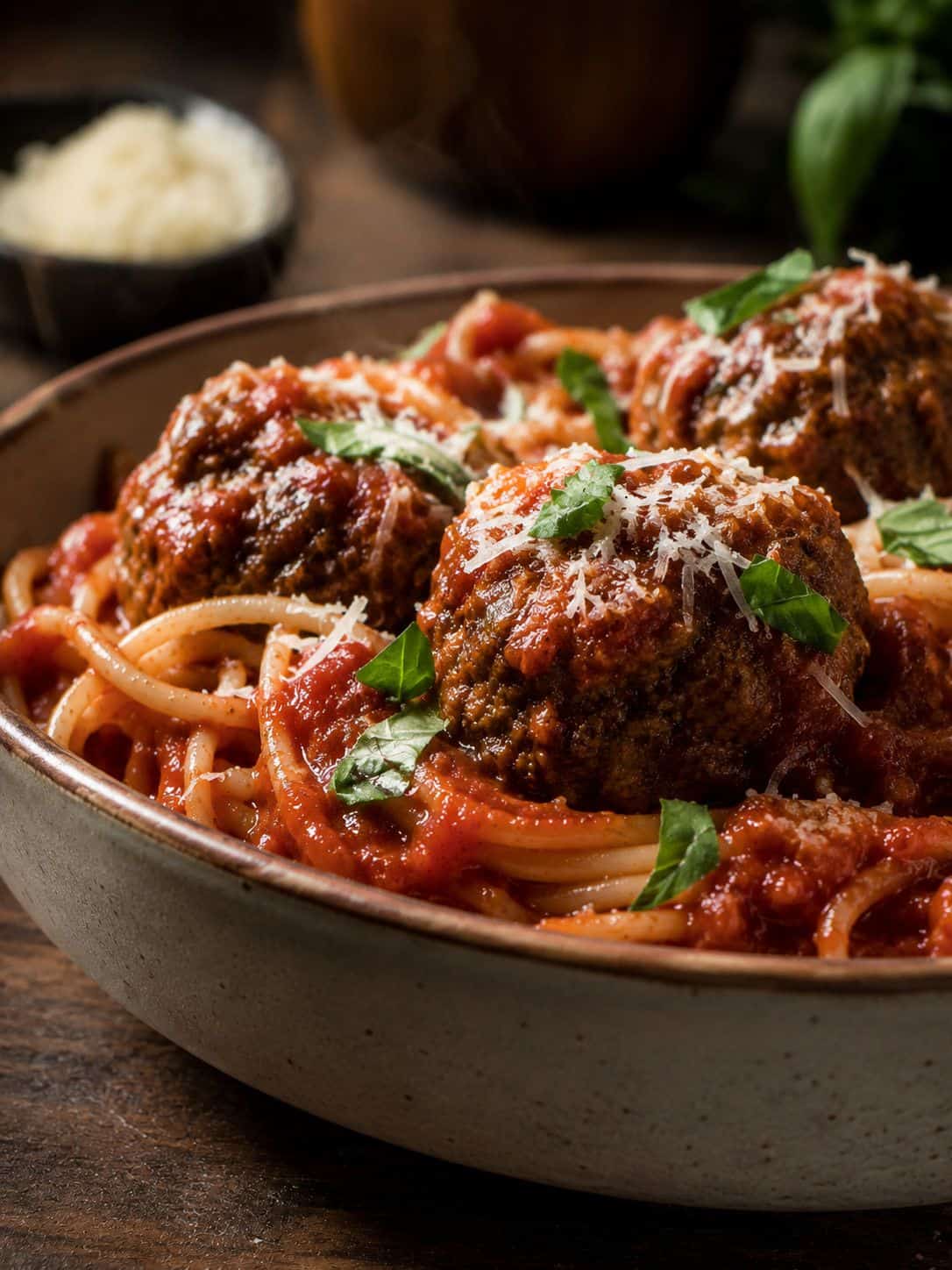
Breadcrumbs do one job in a meatball: they soak up liquid so the meat can’t squeeze itself dry. Almond flour does that job better. These gluten-free meatballs in tomato sauce pasta use a third of a cup of it, plus an egg and two tablespoons of milk, and they come out softer than plenty of wheat versions.
It’s a 45-minute dinner. One pan for the meatballs and the sauce, one pot for the pasta, and nothing you need a specialty shop for beyond a bag of almond flour and a good can of tomatoes.


Why almond flour makes a softer gluten-free meatball
Wheat breadcrumbs swell when they meet milk. That soft, swollen starch sits between the strands of ground meat and stops them from knitting into a tight ball. Most gluten-free swaps miss this. Rice flour stays gritty. Leaving the binder out completely gives you something closer to a small burger patty, dense and dry by the time the sauce is done.
Almond flour is mostly fat and protein, so it holds on to moisture instead of turning gummy. The egg sets around it as the meatball cooks. You end up with a meatball that keeps its shape through a 15-minute simmer and still falls apart under a fork.
Two more things matter. Use 80/20 beef. The fat is what keeps the middle juicy, and lean mince here is a false economy. Then mix with your hands only until the seasoning disappears into the meat. Every extra squeeze tightens the proteins, and that’s how meatballs turn bouncy.

Should you brown meatballs before they go into the sauce?
Yes, if you can spare ten minutes. A hot pan gives each meatball a brown crust, and the bits that stick to the skillet dissolve into the tomatoes you add next. Skip the sear and the sauce tastes flatter.
They don’t need to be cooked through at this stage. Two to three minutes a side, leave them alone until the crust releases, then onto a plate. The cooking finishes later, covered, in the sauce.
Feeding a crowd? Banquet kitchens roast meatballs by the tray because nobody turns two hundred of them by hand, and it works at home too. Bake them on parchment at 400°F (200°C) for 18 to 20 minutes, then give them about 10 minutes in the sauce. The outside is paler and softer than a pan-seared one, but you get your hands back.
However you cook them, ground beef is done at 160°F (71°C) in the center, according to the safe minimum internal temperature chart from FoodSafety.gov. An instant-read thermometer pushed into the biggest meatball ends any guessing.
A plain San Marzano sauce, no sugar needed
The sauce is simple on purpose: olive oil, sliced garlic, chili flakes, one 28-ounce can of whole San Marzano tomatoes, oregano, and torn basil right at the end. San Marzanos are sweeter and less sharp than most canned plum tomatoes, so there’s no sugar to balance them.
Buy them whole and crush them yourself, in the pan, with a wooden spoon or your hands. Whole canned tomatoes are usually the better fruit, and tearing them leaves a bit of texture.
Watch the garlic. It needs about a minute in the oil, until it smells sweet and stays pale. Browned garlic goes bitter, and a sauce this short has nowhere to hide it.
Swaps for the meat, the dairy and the pasta
A half-and-half mix of beef and pork makes a richer, more classic meatball. Ground turkey or chicken works for something lighter, but poultry is lean, so add an extra tablespoon of olive oil to the mix and cook it to 165°F (74°C).
For dairy-free meatballs, use a non-dairy milk and replace the parmesan with a teaspoon of nutritional yeast. The sauce is already dairy-free. Cooking around a nut allergy? Oat flour made from certified gluten-free oats swaps in for the almond flour. Cassava flour or fine gluten-free breadcrumbs work too.
The pasta matters more than people expect. Brown rice spaghetti tastes the most neutral and stands up to a heavy sauce. Chickpea pasta adds protein and a slightly beany note. Skip corn-based pasta here; it goes mushy under thick tomato sauce. Whatever you buy, drain it a minute before the packet time, because gluten-free pasta keeps softening once it meets hot sauce.
Want something green on the side? Asparagus with lemon and a little parmesan is the obvious partner, and this guide to asparagus and its best alternatives helps when it’s out of season.
Can you make the meatballs ahead or freeze them?
Both, and it’s the best reason to double the batch. Roll the meatballs, set them on a parchment-lined tray, freeze until hard, then bag them. They keep for up to three months and can go straight from the freezer into simmering sauce. Give frozen ones extra time and check the center with a thermometer.
Cooking the same day? Chill the rolled meatballs for 15 to 20 minutes before searing. Cold meatballs hold together much better in a hot pan.
The sauce freezes well on its own too. If you like having a few dinners banked, the same cook-once idea runs through these freezer meal prep ideas.
Gluten-free meatballs in tomato sauce pasta recipe
Prep time: 15 minutes
Cook time: 30 minutes
Total time: 45 minutes
Servings: 4
Ingredients
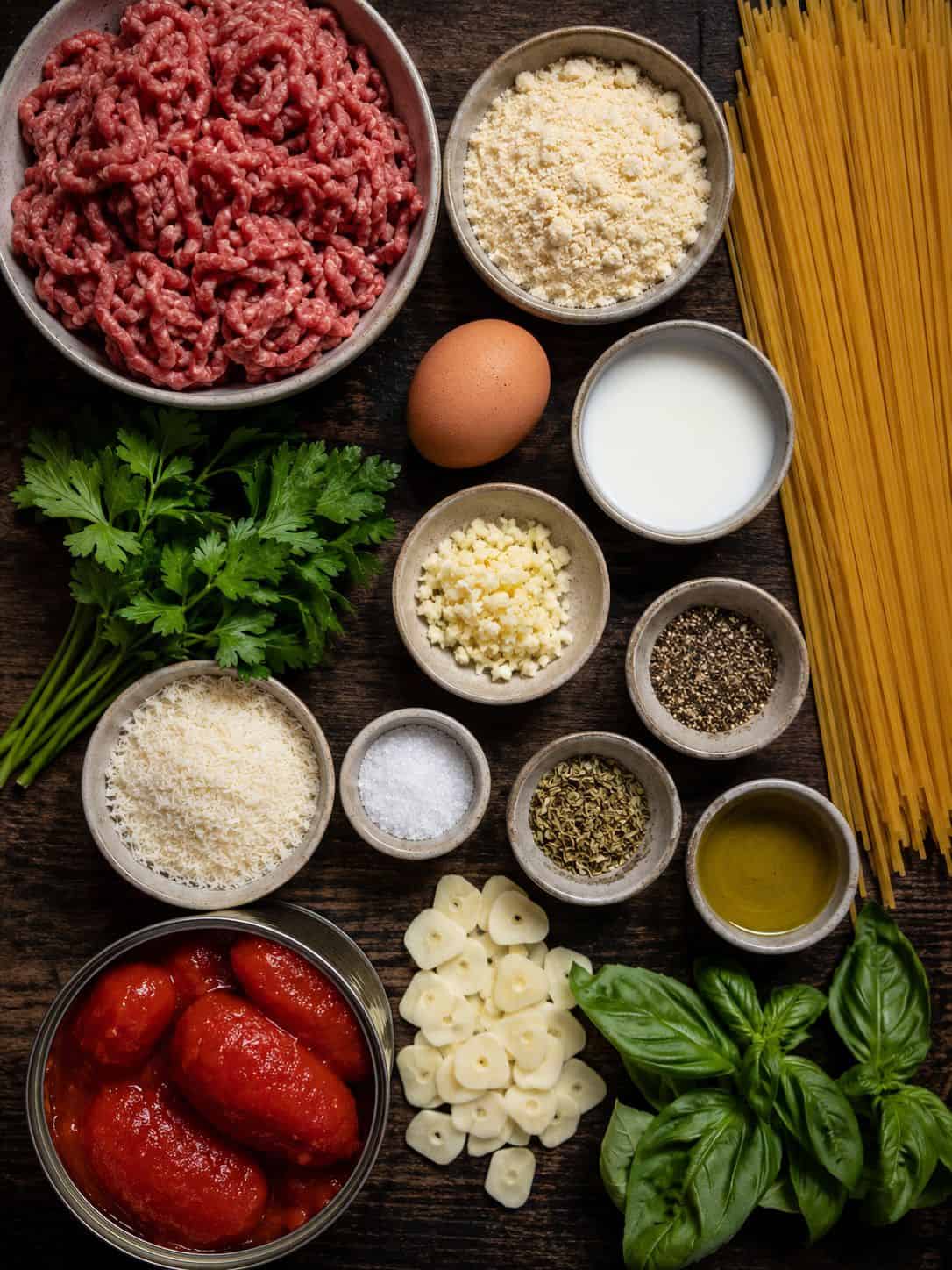
For the meatballs:
- 1 pound ground beef (80/20 blend)
- 1/3 cup almond flour
- 1 large egg
- 2 tablespoons milk (dairy or non-dairy)
- 3 cloves garlic, minced
- 1/4 cup fresh parsley, finely chopped
- 2 tablespoons grated parmesan cheese
- 1 teaspoon salt
- 1/2 teaspoon black pepper
- 1/2 teaspoon dried oregano
- 1/4 teaspoon red pepper flakes
- 1 tablespoon olive oil (for pan-searing)
For the tomato sauce:
- 1 can (28 oz) San Marzano whole peeled tomatoes
- 3 tablespoons olive oil
- 4 cloves garlic, thinly sliced
- 1/4 teaspoon red pepper flakes
- 1 teaspoon salt
- 1/2 teaspoon black pepper
- 1/2 teaspoon dried oregano
- 1/4 cup fresh basil leaves, torn
To serve:
- 12 oz gluten-free spaghetti or penne
- Fresh basil and grated parmesan for garnish
Instructions
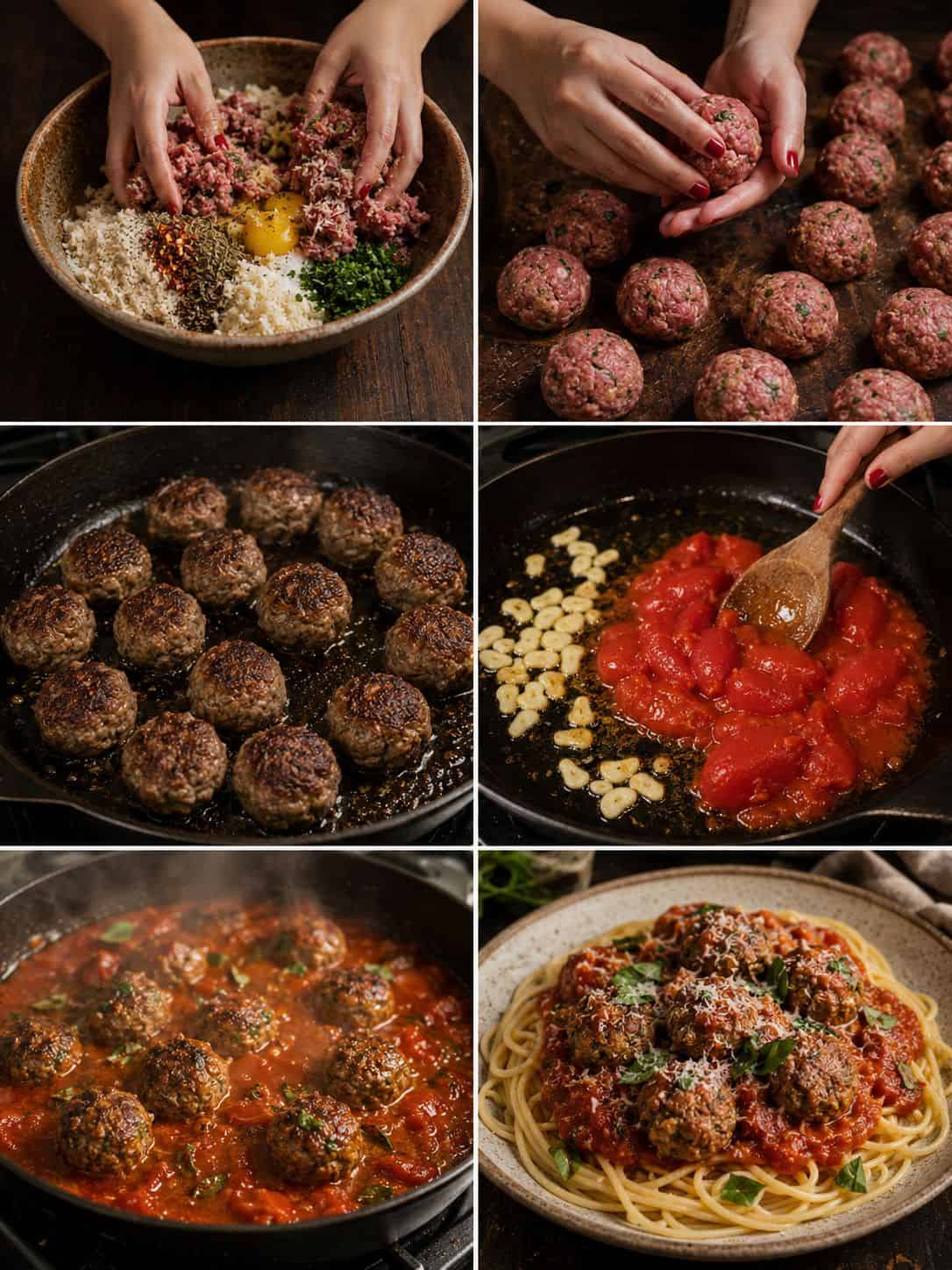
- In a large bowl, combine the ground beef, almond flour, egg, milk, minced garlic, parsley, parmesan, salt, pepper, oregano and red pepper flakes. Mix gently with your hands just until combined. Overmixing makes tough meatballs.
- Roll the mixture into balls about 1.5 inches (4 cm) across. You should get 16 to 18.
- Heat 1 tablespoon olive oil in a large skillet or Dutch oven over medium-high heat. Sear the meatballs in a single layer, in batches if needed, for 2 to 3 minutes per side, until browned and they release easily from the pan. They don’t need to be cooked through. Move them to a plate.
- Turn the heat down to medium. Add the 3 tablespoons olive oil and the sliced garlic and cook, stirring, for about 1 minute, until fragrant but not browned.
- Pour in the tomatoes and break them up with a wooden spoon or your hands. Stir in the salt, pepper, oregano and red pepper flakes.
- Bring to a gentle simmer and cook for 10 minutes, stirring now and then, until the sauce thickens slightly.
- Set the seared meatballs into the sauce. Cover and simmer on low heat for 15 minutes, turning them once halfway through.
- While the meatballs simmer, cook the pasta according to the package directions, then drain.
- Stir the torn basil into the sauce for the last 2 minutes.
- Spoon the meatballs and sauce over the pasta and finish with fresh basil and grated parmesan.
Notes
Leftover meatballs and sauce keep in an airtight container in the fridge for up to 4 days. Reheat gently on the stove over low heat, with a splash of water if the sauce has thickened. Meatballs and sauce (without the pasta) freeze for up to 3 months; cook the pasta fresh when you serve.
Gluten-free meatball questions
Do you cook meatballs before putting them in the sauce?
Browning them first is worth it, though they don’t need to be cooked through. Here they’re seared for 2 to 3 minutes a side, then finish cooking covered in the sauce for 15 minutes, which flavors the tomatoes and keeps the meat juicy.
What can I use instead of almond flour in meatballs?
Oat flour made from certified gluten-free oats is the closest swap and works for nut allergies. Cassava flour or a fine gluten-free breadcrumb also binds well. Use something that soaks up moisture without making the meatball heavy.
Why do gluten-free meatballs fall apart?
Usually there’s too little binder or the meat was handled too much. Use the full amount of almond flour and egg, mix just until combined, chill the rolled meatballs for 15 to 20 minutes, and don’t move them in the pan until a crust forms.
Can I bake the meatballs instead of frying them?
Yes, bake them on a parchment-lined tray at 400°F (200°C) for 18 to 20 minutes. Then simmer them in the sauce for about 10 minutes. They won’t have a crisp seared crust, but they stay tender and need less attention.
Which gluten-free pasta holds up best under tomato sauce?
Brown rice spaghetti holds up best and has the most neutral flavor. Chickpea pasta is a good higher-protein choice. Avoid corn pasta with a thick sauce, and cook any gluten-free pasta a minute less than the package says.
Key takeaways
- 1/3 cup almond flour, an egg and 2 tablespoons milk replace breadcrumbs in 1 pound of 80/20 beef.
- Sear the meatballs hard, then finish them covered in the sauce for 15 minutes.
- Whole San Marzano tomatoes crushed by hand need no added sugar.
- Brown rice or chickpea pasta works best; drain it a minute early.
- Freeze rolled raw meatballs on a tray, then bag them for up to 3 months.
Next up: two more ways with tomatoes
Once this is in your rotation, try something faster. This Chinese tomato and egg stir-fry takes 15 minutes and uses tomatoes in a completely different way, soft and sweet against scrambled egg.
For a meatless pasta night, the vegetable-heavy pasta primavera works with the same gluten-free spaghetti you bought for this.
Last update on 2026-10-04 / Affiliate links / Images from Amazon Product Advertising API