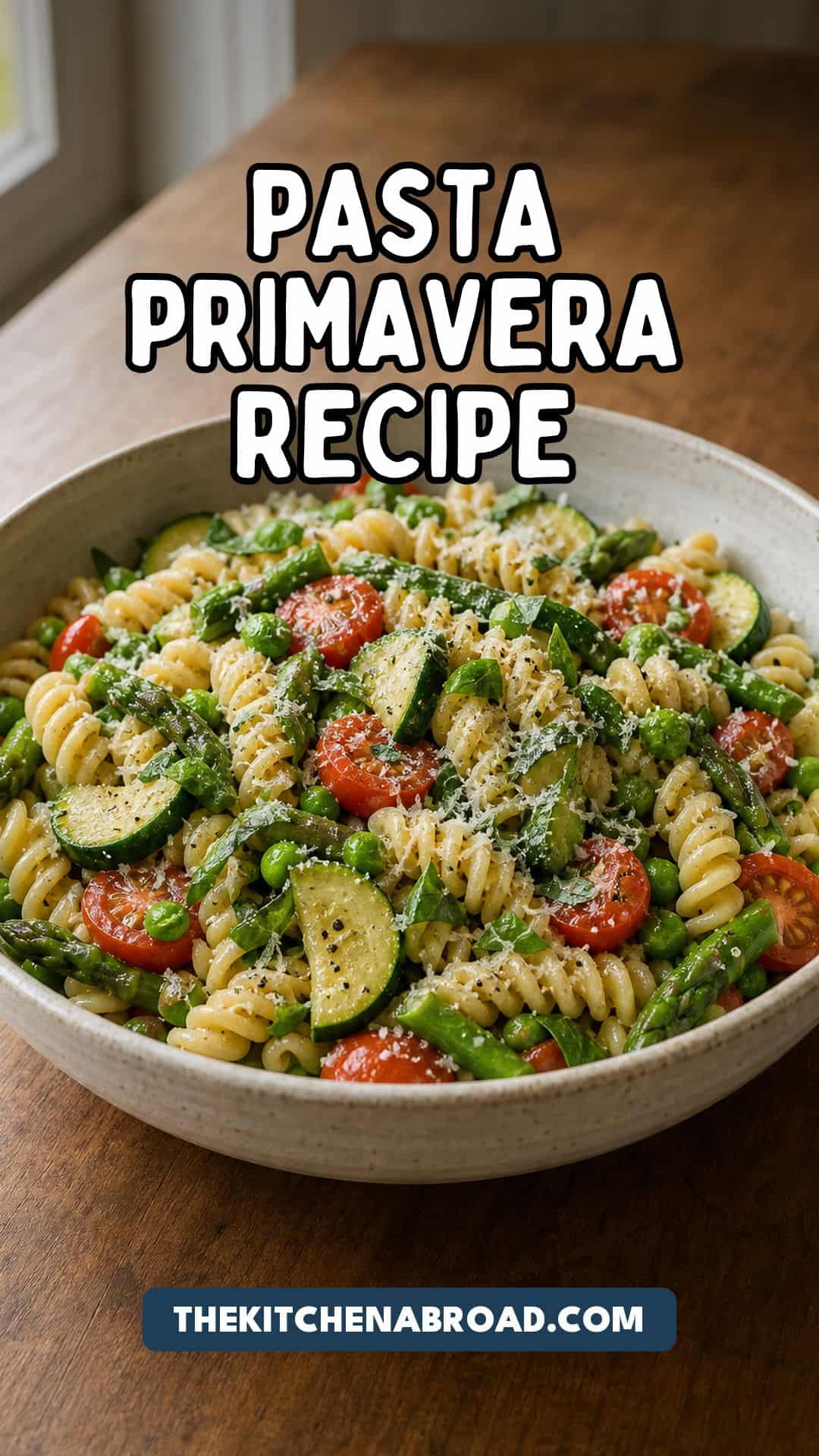
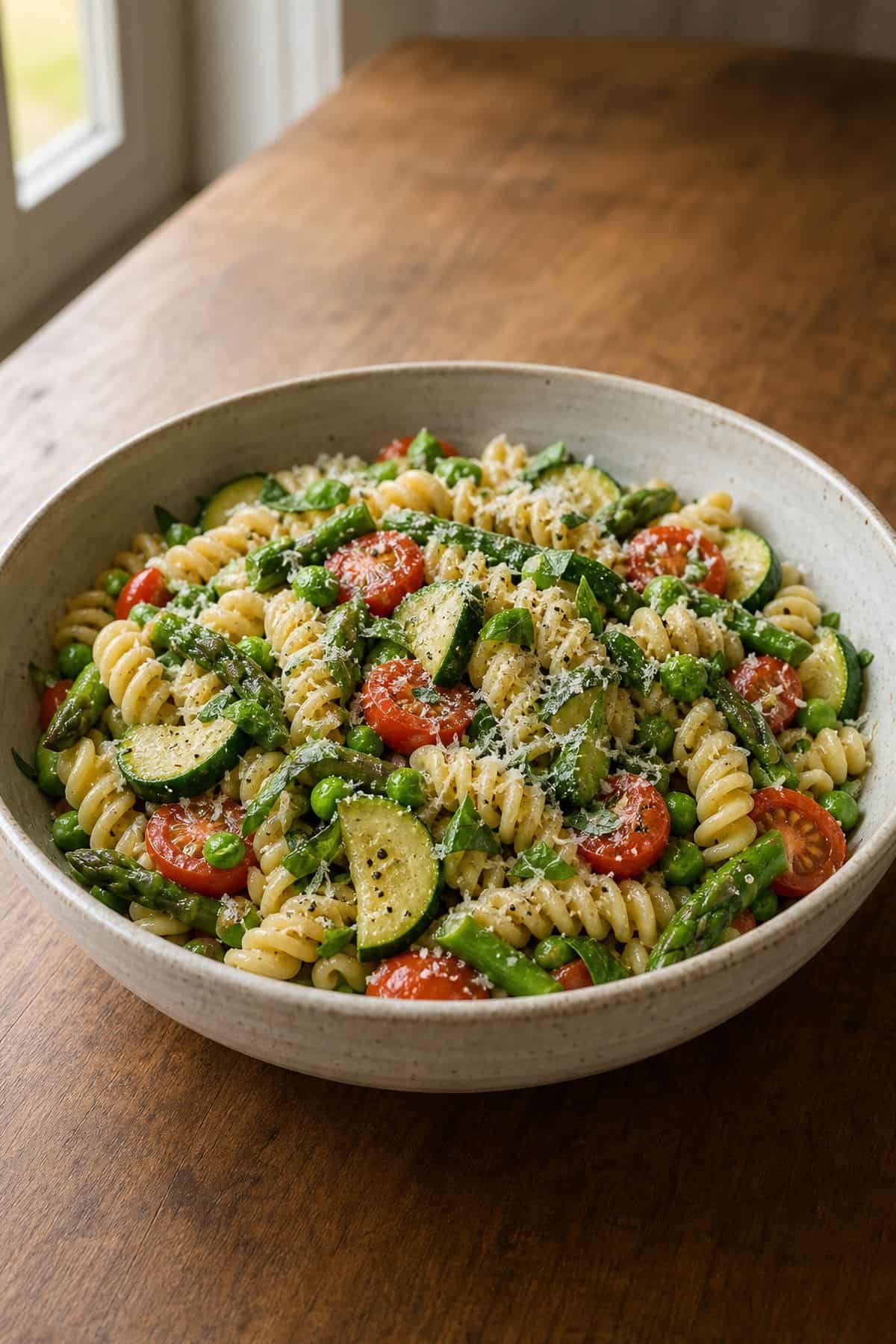
A proper pasta primavera recipe is the Italian-American spring pasta everyone mistakes for Italian: short pasta (penne or fusilli) tossed with the canonical Le Cirque vegetable lineup of asparagus, peas, zucchini, and cherry tomatoes, dressed in a modern lighter sauce of olive oil, lemon, and reserved pasta water instead of the original 1975 cream and butter. The hard vegetables get a 60-second blanch in the pasta water to lock the bright green; the soft ones sauté in olive oil with garlic and red pepper flakes; everything emulsifies off heat with grated Parmigiano and torn basil. Twenty minutes on the stove, on the table in thirty-five.
Pasta primavera was invented in 1975 at Le Cirque on East 65th Street in Manhattan, dreamed up by the restaurateur Sirio Maccioni and executed by his French-trained chef Jean Vergnes, and it was prepared tableside by the dining-room waitstaff because the kitchen brigade refused to cook a pasta dish that was not on the menu. Craig Claiborne and Pierre Franey codified it in The New York Times in 1977 and the rest of the country spent the next decade pretending it was a Tuscan import. Fifty years later, the cream and butter of the original are gone, replaced by an olive-oil-and-lemon emulsion that emerged in the 1990s as American home cooks walked away from the heavier 80s, and the dish is unmistakably better for it.
What You’ll Need
A large stainless-steel stock pot for blanching the vegetables and cooking the pasta in the same well-salted water, a wide 12-inch carbon-steel skillet for the sauté and the off-heat emulsion toss, a stainless box grater for the Parmigiano because pre-grated cheese will not melt into the sauce, a microplane for finishing lemon zest after the pan comes off the heat, and a large ceramic serving bowl to bring the dish to the table family-style.


Recommended Reads
- Aglio Olio
- Asparagus and Pea Risotto
- Spring Vegetable Salad
- Mother’s Day Brunch Ideas
- Best Easter Dinner Ideas
Where Pasta Primavera Came From
The dish has one of the cleanest origin stories in American restaurant cooking, and almost nobody tells it right. Pasta primavera was invented in 1975 at Le Cirque, the Upper East Side restaurant run by the Tuscan restaurateur Sirio Maccioni, with the French-trained executive chef Jean Vergnes doing the cooking and (depending on which source you trust) the painter Ed Giobbi or Maccioni’s wife Egidiana contributing the original vegetable lineup. The first version was spaghetti tossed in a cream, butter, and Parmesan sauce with sauteed spring vegetables, and the Le Cirque kitchen brigade objected to it so loudly that for the first few years it was assembled and tossed tableside by the dining-room waitstaff. Craig Claiborne and Pierre Franey published a recipe for it in The New York Times in 1977, the headline ran “Spaghetti Primavera, an Original Dish,” and from that moment forward the dish belonged to the entire American dining public.
The name is Italian for “spring” and the technique is French, the staging is unmistakably New York, and the dish is Italian-American, not Italian. It is on no menu in Rome or Bologna, and the small Italian restaurants that serve it abroad serve it because American tourists ask for it. The lighter olive-oil-and-lemon version that dominates the modern recipe lane emerged in the 1990s as American home cooks and food editors walked away from the cream-heavy 80s in favor of something brighter, faster, and built around the pasta water as the binding agent. Both versions are legitimate. The one in this recipe is the post-1990 evolution, which is the version anyone under fifty is actually going to cook on a weeknight.
A Few Notes on the Ingredients
- Canonical vegetables: Asparagus, peas, zucchini, and cherry tomatoes. The Le Cirque-era set, with no improvising. Bell peppers, carrots, broccoli, and mushrooms have crept into internet recipes since 2010 and push the dish toward stir-fry pasta and away from spring.
- Peas, fresh or frozen: Frozen are picked and frozen within hours of harvest and frequently taste fresher than the supermarket fresh ones in April. Snap peas can stand in for shelled peas if the season is ahead of you.
- Short pasta with ridges: Penne or fusilli are the right shapes, with farfalle a close third. Ridges and curls hold onto the chunky vegetables and the loose lemon emulsion in a way spaghetti cannot. Buy bronze-die if you have access to it; the rougher surface holds the sauce measurably better.
- Olive oil, lemon, pasta water: The modern lighter sauce. The starchy pasta water does the binding, the olive oil and lemon emulsify around it, and the Parmigiano finishes the texture. No cream, no butter, no half-and-half.
- Reserved pasta water: Pull a full cup of the cloudy, salted, starchy water before draining. The starch is what binds the oil and lemon into a sauce that clings instead of pooling.
- Parmigiano-Reggiano: Grate it fresh off the rind on a stainless box grater. Pre-grated cheese will not melt into the sauce, and the powdery shelf-stable versions read flat against the lemon.
- Garlic, red pepper flakes, basil: The supporting cast for the sauté and the finish. Four cloves of garlic minced into the zucchini, a half teaspoon of red pepper flakes for heat, and a quarter cup of basil torn by hand at the end.
Recipe: Pasta Primavera
Prep time: 15 minutes | Cook time: 20 minutes | Total time: 35 minutes | Serves: 4 to 6
Ingredients
- 1 lb (450 g) penne or fusilli
- 1 bunch (450 g) asparagus, trimmed and cut into 1-inch pieces
- 1 cup (150 g) peas, fresh or frozen
- 1 medium zucchini, halved lengthwise and sliced 1/4-inch
- 1 pint (300 g) cherry tomatoes, halved
- 4 cloves garlic, minced
- 1/4 cup (60 ml) olive oil, plus extra to finish
- Zest of 1 lemon and 2 tbsp (30 ml) lemon juice
- 1/2 tsp red pepper flakes
- 3/4 cup (75 g) freshly grated Parmigiano, plus extra for serving
- 1/4 cup (10 g) fresh basil, torn
- Salt and freshly ground black pepper
Instructions
- Bring a large pot of well-salted water to a rolling boil. The water should taste like the sea; this is the only seasoning the pasta and vegetables get from the inside.
- Drop the asparagus and peas into the boiling water and blanch for exactly 60 seconds. Lift them out with a spider strainer into a colander and set aside; do not shock in ice water, the residual heat is what you want.
- Bring the same water back to a boil and cook the pasta to al dente according to the package, usually one minute less than the recommended time. Before draining, reserve 1 cup of the starchy pasta water.
- While the pasta cooks, heat the olive oil in a 12-inch carbon-steel skillet over medium-high heat until shimmering. Add the zucchini in a single layer and sauté for 3 minutes, undisturbed for the first 90 seconds, until just tender at the edges and lightly golden.
- Add the minced garlic and red pepper flakes to the skillet and cook for 30 seconds, stirring constantly, until the garlic is fragrant but not browned.
- Add the halved cherry tomatoes and cook for 2 minutes, stirring once or twice, until the tomatoes start to slump and release some of their juice but still hold their shape.
- Add the drained pasta, the blanched asparagus and peas, 1/2 cup of the reserved pasta water, the lemon zest, and the lemon juice to the skillet. Toss vigorously for a full minute over the heat to emulsify the sauce around the pasta.
- Off the heat, add the grated Parmigiano, the torn basil, and a finishing glug of olive oil. Toss once more, season to taste with salt and plenty of black pepper, and add a splash more pasta water if the sauce looks tight.
- Serve immediately in a warm ceramic bowl, family-style, with extra grated Parmigiano on the side.
Notes
The 60-second blanch is the single technique that separates a magazine-quality primavera from a sad olive-green one. Any longer and the asparagus loses its color and its bite; any shorter and the centers stay raw and chalky. Set a timer and lift the vegetables the moment it sounds.
The case for short pasta over long is mechanical, not aesthetic. Penne and fusilli have ridges and curls that physically catch the chunky vegetables and the loose emulsion sauce; spaghetti is a smooth cylinder that slips. The fork test settles the question: every forkful of short pasta carries vegetables, sauce, and pasta in balance. Spaghetti separates into noodles on top and vegetables at the bottom of the bowl.
The pasta water is the emulsifier. The cloudy, starchy, salted liquid the pasta cooks in is what binds olive oil and lemon juice into a sauce that clings instead of pooling. Reserve a full cup before draining, even if you only use half; nothing seizes a finished plate of pasta faster than realizing the sauce is too tight and the pasta water is already down the drain.
Tips and Variations
Why the Modern Lighter Version Beats the 1975 Cream-Based Original
The original Le Cirque pasta primavera was built on cream, butter, and Parmesan, finished tableside, and designed for the dining patterns of mid-1970s New York, which involved a lot more dairy, a lot more butter, and a lot fewer Tuesday-night cooks at home. It was a great dish for its moment. The moment passed. The modern olive-oil-and-lemon version emerged in the 1990s as American home cooks walked away from cream-heavy pasta sauces and pivoted toward the brighter, lighter, vegetable-forward style that has held the dominant lane ever since. The lighter version actually tastes more like spring, the vegetables are not muffled under a coat of dairy, and the dish lands on the table in thirty-five minutes instead of an hour. You can still cook the 1975 version; it just is not the version anyone under fifty is going to cook twice.
The 60-Second Blanch That Keeps Vegetables Bright
Most pasta primavera recipes throw all of the vegetables into one skillet and cook them together for ten minutes. The result is a uniformly olive-green plate, because asparagus and peas turn from bright green to drab the moment they sit in a hot pan for more than two minutes. The fix is the 60-second blanch in salted pasta water. The hard green vegetables (asparagus, peas, sugar snaps) go into the boiling water for exactly one minute, get lifted out with a spider, and rest at room temperature on the side while the pasta and the sauté both happen separately. They go back in at the toss stage, already cleanly cooked, with their color locked in. The plate that lands on the table looks like a magazine photograph instead of a Tuesday leftover.
Picking Penne vs Fusilli vs Farfalle
All three shapes work and the differences are real but small. Penne has the largest interior cavity, which means it catches small vegetable pieces (peas, garlic, slumped tomato pulp) inside the tube and delivers them with the bite. Fusilli has the deepest ridges, which means it carries the most surface sauce of the three and reads as the silkiest in the bowl. Farfalle is the prettiest on the plate, but the bow-tie shape has thin edges that overcook a beat faster than the rest of the noodle, so the bite has to be timed precisely. Pick by what your hand reaches for at the pantry shelf. Penne is the safest bet for a first attempt; fusilli is the move once you know how the dish should look. Avoid orecchiette here (too thick), avoid spaghetti (slips), and avoid macaroni (too small to balance the vegetables).
Making This Vegan (Skipping the Parmigiano)
The olive-oil-and-lemon emulsion does most of the heavy lifting in this sauce, so the dish takes the loss of the Parmesan more gracefully than a cream-based version would. Skip the cheese entirely and finish the pasta with a half cup of toasted breadcrumbs (a sauté in olive oil with a pinch of salt) for the salty crunch the Parmigiano was providing. Alternatively, use a cashew-based vegan Parmesan; the better brands now read as remarkably close to the original. Bump the lemon juice by an extra teaspoon to compensate for the lost umami, and finish with a sharper drizzle of good olive oil at the table. The vegan version is not a compromise; it is a legitimate parallel recipe.
Adding Grilled Chicken or Shrimp for Protein
Pasta primavera is built as a vegetarian main, but it absorbs protein well if the kitchen is feeding a mixed table. Grilled chicken (breast or thigh, sliced into half-inch strips, cooked separately on a grill pan with olive oil, salt, and lemon zest) goes in at the toss stage along with the asparagus and peas. Seared shrimp (medium size, peeled, cooked thirty seconds a side in the same skillet before the zucchini) goes in at the same toss stage. White beans (one drained can, rinsed) add protein and starch without any meat at all, and they soak up the lemon emulsion beautifully. Do not cook the protein in with the vegetables; sear it separately and add at the end. The clean sauté is what keeps everything in its lane.
What to Serve It With
The lead role is a spring weeknight dinner, served warm in a wide ceramic bowl with a green salad alongside and a bottle of Sauvignon Blanc, Pinot Grigio, or Vermentino on the table. It also runs as the vegetarian main at an Easter lunch with a basket of crusty bread and a platter of marinated olives, the centerpiece of a Mother’s Day brunch following a frittata and a glass of dry rosé, and the standout cold-pasta dish at a spring picnic the next day (it eats remarkably well at room temperature and improves in the fridge overnight). Skip Chardonnay; the oak runs over the lemon. Skip red wine entirely; this is a dish for a chilled, dry, citrus-forward bottle.
This recipe is also in my easy pasta recipes, vegetarian dinner recipes and spring dinner ideas.
Frequently Asked Questions
What’s the most reliable pasta shape for primavera?
Short pasta with ridges or curls. Penne, fusilli, farfalle, or gemelli. The chunky vegetables and the loose lemon-emulsion sauce need a shape that physically catches and carries both; long noodles like spaghetti slip and the vegetables fall off the fork. The original 1975 Le Cirque version was built on spaghetti, but every modern home-cook version has corrected to short pasta, and the correction is right. Pick penne for the safest default, fusilli for the silkiest finish, farfalle for the prettiest plate.
Why was my pasta primavera watery?
Two causes, usually together. One, not enough Parmigiano and olive oil to emulsify the pasta water into a sauce; the cheese and the oil are what bind the starchy liquid into something that clings. Two, vegetables that were cooked too low and slow and released their internal liquid into the pan. The fix is a hotter sauté (medium-high, not medium) for a shorter time, and a finish with the cheese and oil added off the heat. Toss vigorously for a full minute after the cheese goes in; the emulsion forms during the toss, not before.
Can I make pasta primavera ahead?
Components yes, finished dish no. Blanch the asparagus and peas, sauté the zucchini and tomatoes, and store both in the refrigerator in separate containers up to a day ahead. Cook the pasta and assemble within ten minutes of serving. Combining the cooked pasta with the vegetables and sauce ahead of time results in soggy vegetables, a broken sauce, and a pasta that has soaked up all the liquid in the bowl. The one exception is leftovers; the dish eats remarkably well cold the next day, dressed with a touch more olive oil and lemon to revive it.
Is pasta primavera Italian or American?
American. Specifically Italian-American, invented in 1975 at Le Cirque in New York City by the restaurateur Sirio Maccioni and the chef Jean Vergnes. The name is Italian for “spring,” but the dish appears on no menu in Italy outside of restaurants catering to American tourists, and the technique is unmistakably French in origin (cream, butter, sauté) and New York in staging. The lighter modern olive-oil-and-lemon version is a 1990s American evolution. Calling it Italian is one of the most common things home cooks get wrong about this dish; the precise term is Italian-American.
How do I make it dairy-free?
Skip the Parmigiano and finish with a half cup of toasted breadcrumbs sauteed in olive oil with a pinch of salt; the breadcrumbs deliver the salty-crunchy hit the cheese was providing. Bump the lemon juice by an extra teaspoon to compensate for the lost umami. A cashew-based vegan Parmesan also works well in the same role. The olive-oil-and-lemon emulsion is the structural sauce here, and it does most of the work without dairy, which is why this dish takes the swap better than a cream-based primavera ever could.
What vegetables are most authentic?
The canonical Le Cirque-era lineup is asparagus, peas, zucchini, and cherry tomatoes. Those are the four that show up across every primary source on the 1975 original and the 1977 Times codification. Bell peppers, carrots, broccoli, and mushrooms are modern American grocery-store additions from the 1990s and 2000s; they are not wrong but they shift the dish away from spring and toward a generic vegetable pasta. The four-vegetable canonical set is the right one if the goal is the authentic version.
Key Takeaways
- Pasta primavera is Italian-American, not Italian; invented in 1975 at Le Cirque in NYC by Sirio Maccioni and chef Jean Vergnes.
- The canonical spring vegetable lineup is asparagus, peas, zucchini, and cherry tomatoes; skip the bell pepper and carrot.
- Use short pasta with ridges or curls (penne or fusilli) so the chunky vegetables and loose sauce stay on the fork.
- Cook the modern lighter version: olive oil, lemon, and reserved pasta water as the emulsion, not the original 1975 cream and butter.
- Blanch the asparagus and peas for exactly 60 seconds in the pasta water to lock the bright green; sauté the zucchini and tomatoes separately.
- Reserve a full cup of starchy pasta water before draining; the starch is what binds the olive oil, lemon, and Parmigiano into a sauce that clings.
Final Thoughts
Pasta primavera is one of the few American restaurant dishes with an origin date you can put on a calendar, a chef and a restaurateur you can name, and a recipe codified in print within two years of its invention. That precision is a gift to anyone cooking it at home, because it tells you exactly which version is the authentic one and exactly which substitutions are modern drift. The vegetables are asparagus, peas, zucchini, and cherry tomatoes. The pasta is short. The sauce, in 2026, is olive oil and lemon and pasta water, not cream and butter. Everything else is improvisation.
The reward for the small handful of right calls is a plate that looks like spring and tastes like a restaurant. Bright-green asparagus and peas that held their color through the 60-second blanch, slumped cherry tomatoes that gave up their juice without collapsing, zucchini that took on a faint golden edge in the carbon-steel skillet, all of it tossed with short pasta in a sauce that clings because the starch and the oil and the lemon did their work in the last minute of cooking. Grated Parmigiano over the top, basil torn by hand, a finishing zest of lemon, and a chilled glass of Vermentino on the side of the bowl.
That is what a 1975 tableside Manhattan invention and a 1990s American course-correction have converged on. A weeknight pasta that respects its history without being trapped by it. Thirty-five minutes on the stove, twelve months a year, and the canonical version of the dish almost everyone gets wrong.
Last update on 2026-11-19 / Affiliate links / Images from Amazon Product Advertising API