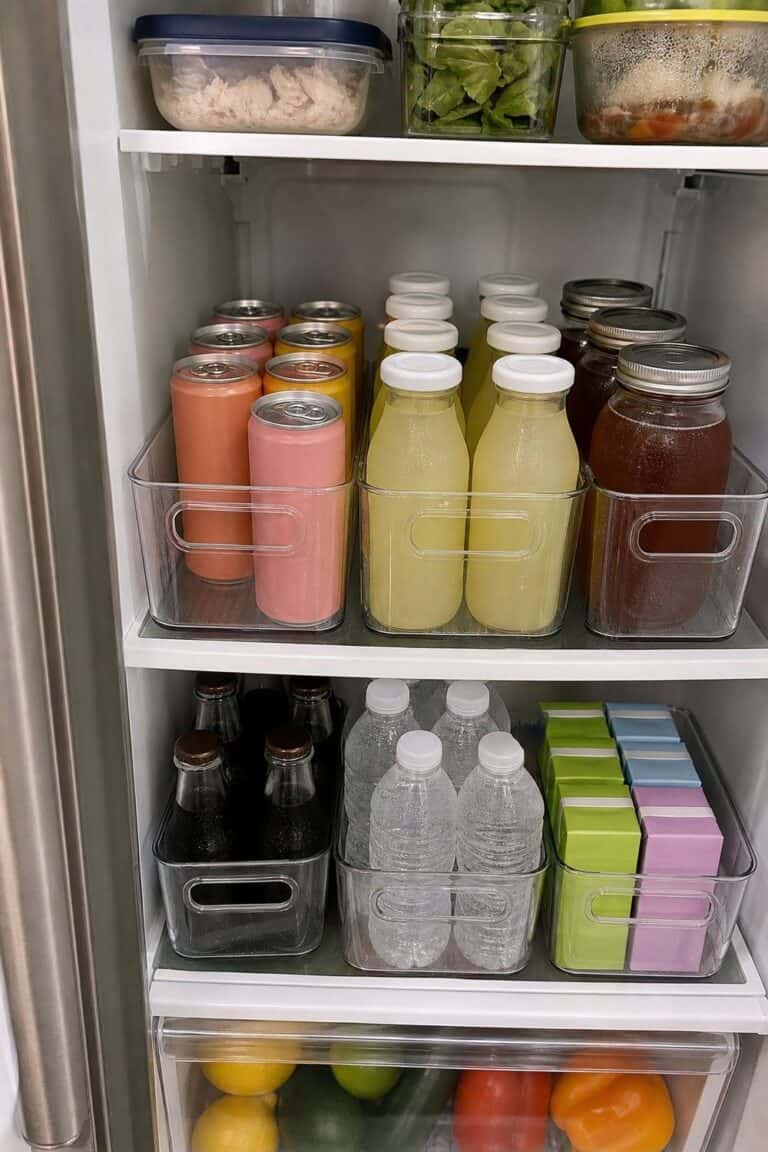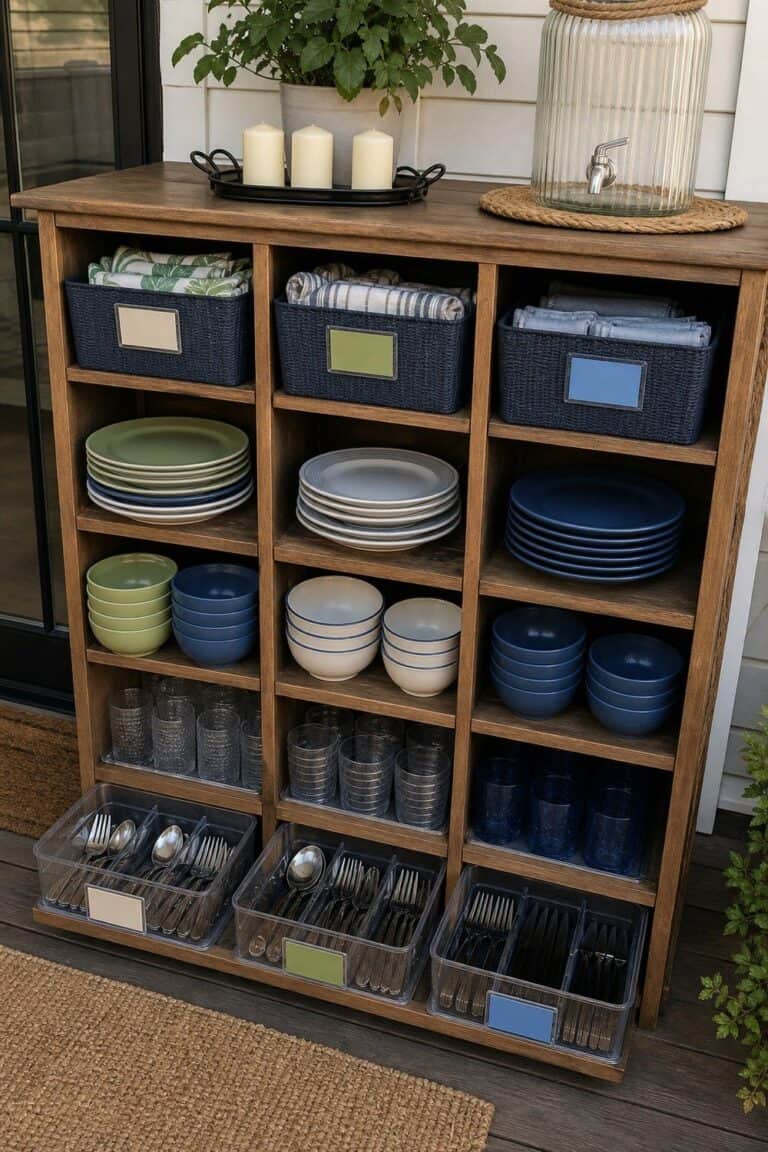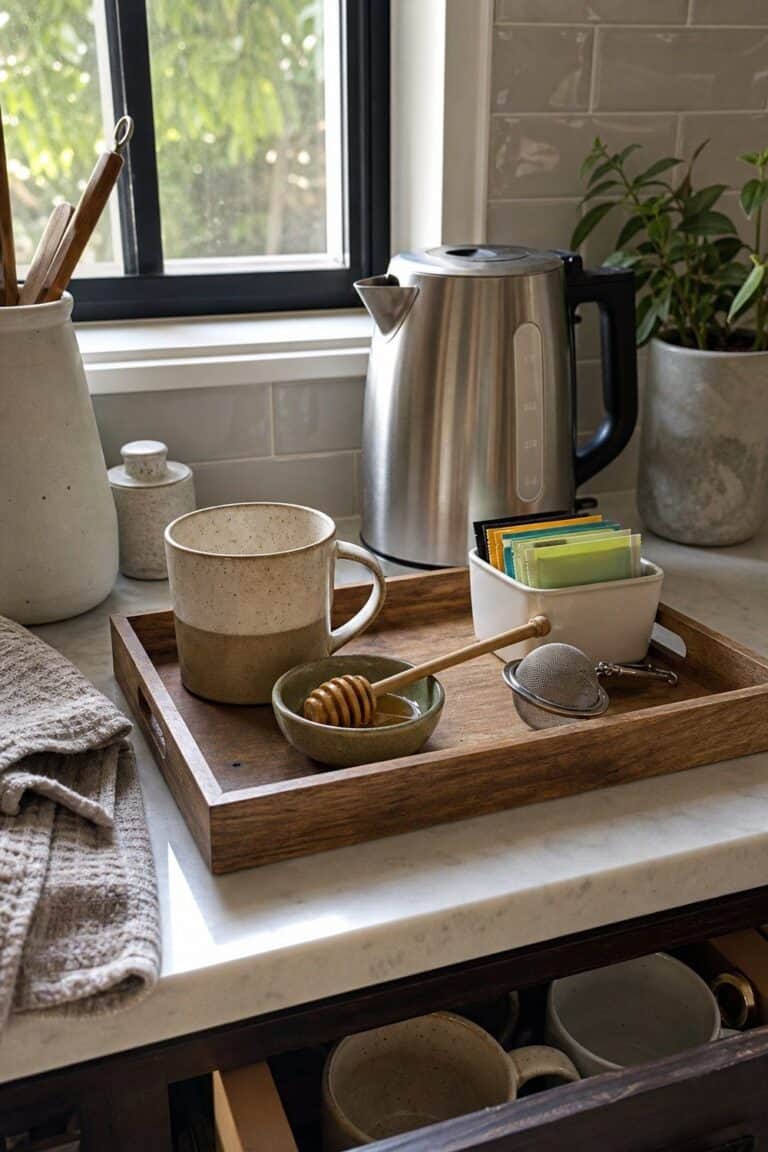
Pantry organization feels easier when items are grouped by meal or category, stored in right-size bins or containers, labeled clearly, placed by frequency of use, and reset before grocery shopping. Start with a cleanout and measurements, then choose organizers that solve real shelf problems.
Pantry organization ideas should make the pantry easier to cook from, shop from, restock, and clean. A useful pantry does not need matching jars on every shelf; it needs clear zones, realistic containers, visible labels, and enough room for normal groceries.
Before buying organizers, remove expired food, measure the shelves, decide the main categories, and notice which problems actually need solving. Some shelves need bins, some need labels, some need turntables, and some simply need fewer duplicates.
Top Recommended Products



You Might Also Like These Blog Posts
- Deep Pantry Ideas
- No-Pantry Kitchen Organization Ideas
- Baking Pantry Ideas
- Kitchen Organization Ideas
- Small Kitchen Organization Ideas
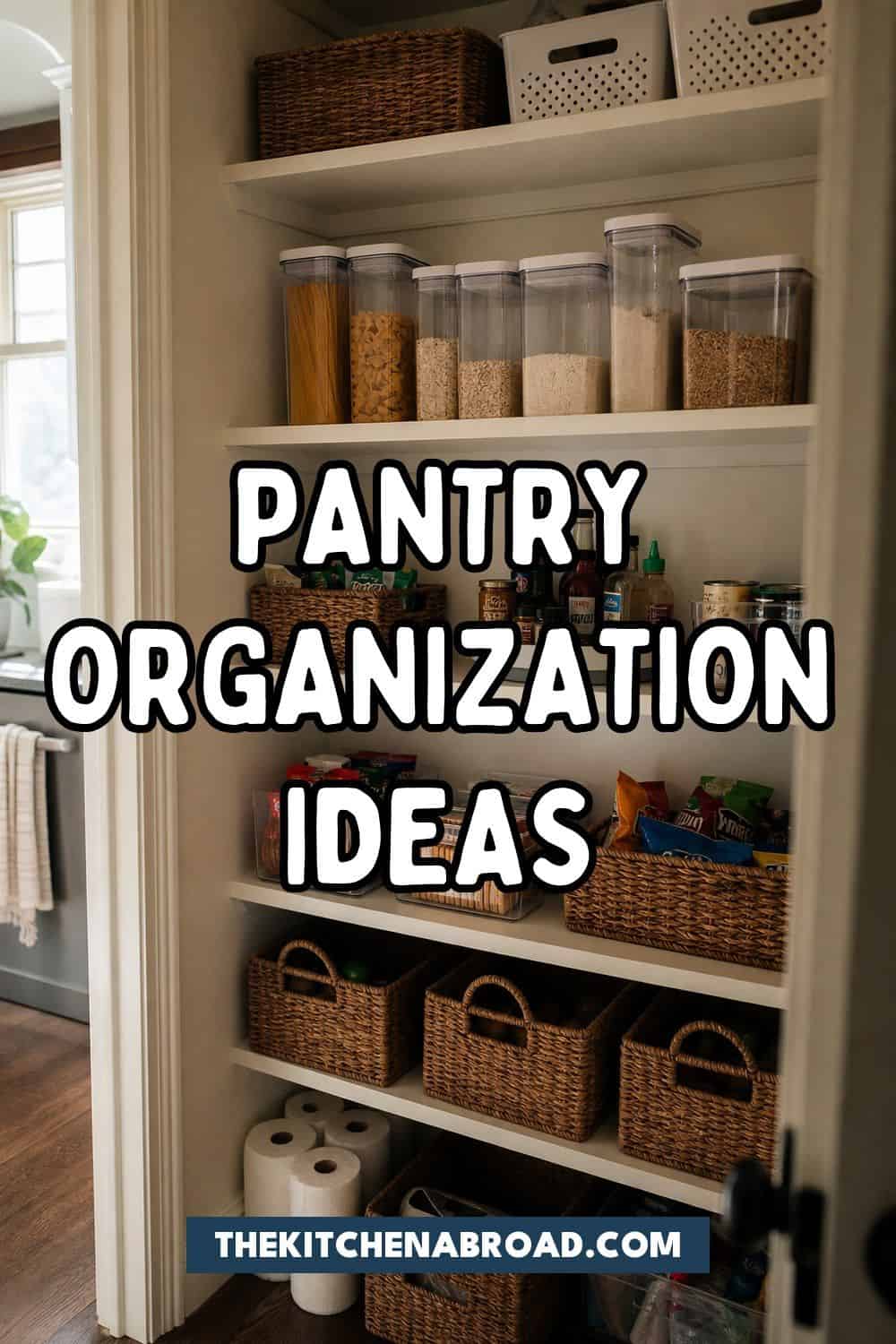
Pantry Organization Ideas That Make Daily Cooking Easier
1. Shelf-by-Shelf Cleanout Before the Big Reset
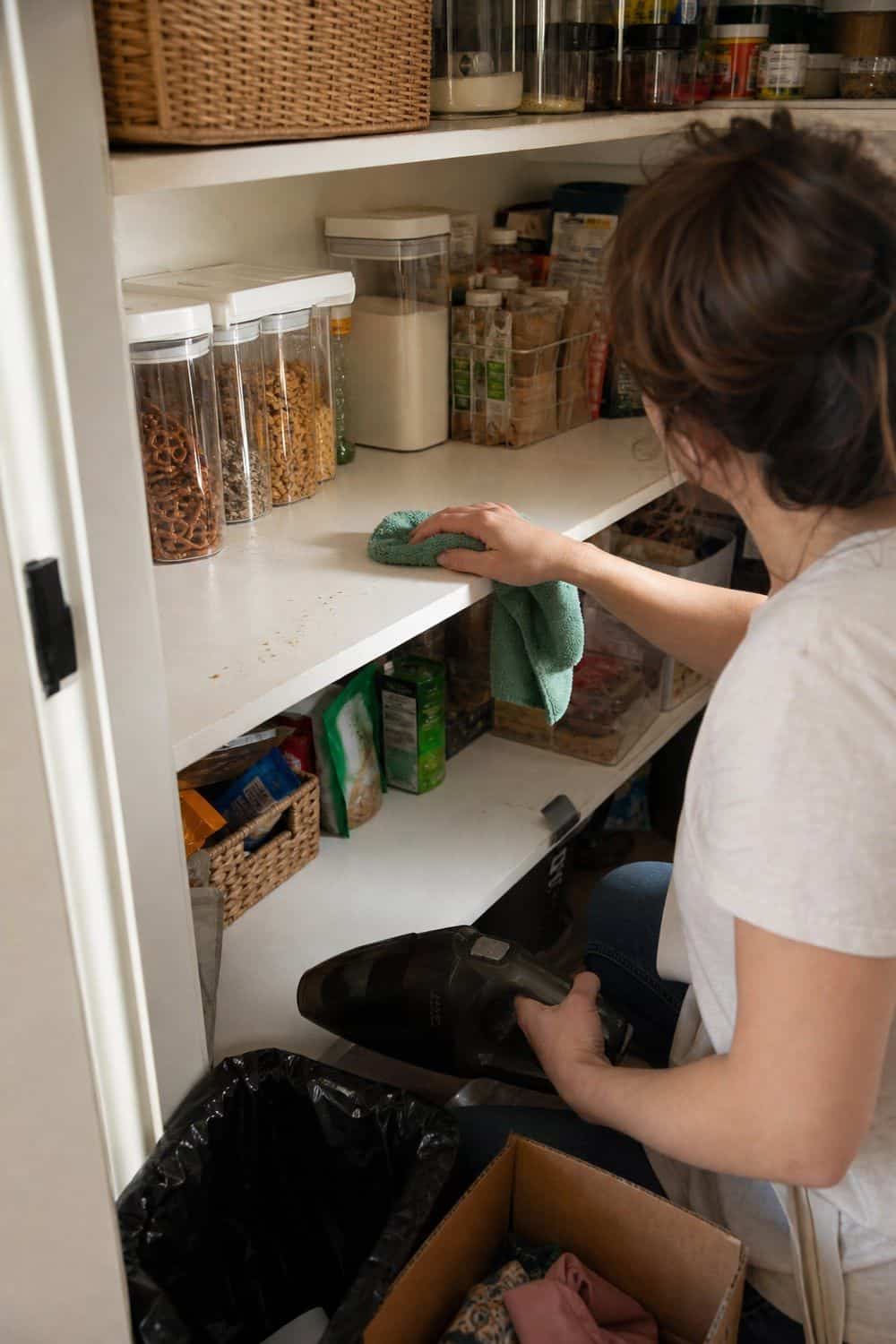
A shelf-by-shelf cleanout keeps the pantry reset manageable. Instead of emptying everything onto the counter, clear one shelf, wipe crumbs and sticky spots, check dates, and return only what still belongs there.
Pantry cleaning cloths are useful because syrup, flour dust, and snack crumbs tend to hide behind boxes. This slower approach prevents the project from stalling halfway and shows which shelves truly need organizers.
Avoid buying containers before seeing what food is expired, duplicated, or no longer part of the household’s cooking routine. The best organizer is easier to choose after the shelf is empty and wiped down.
2. Exact Shelf Measurements Before Organizer Shopping
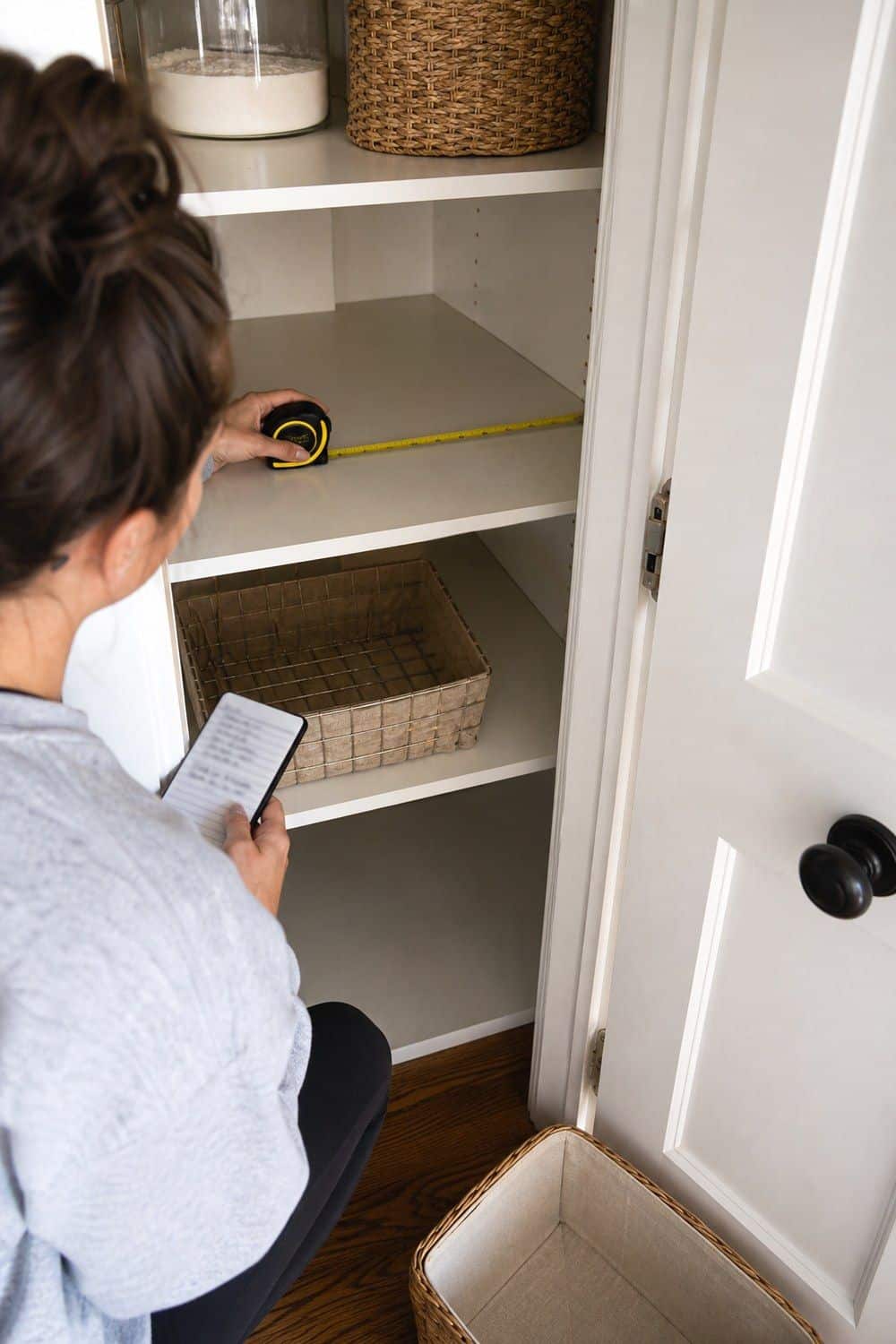
A pantry measuring tape can save money before any bins, risers, or containers come home. Measure shelf depth, width, height between shelves, door clearance, and whether the shelves can adjust. Write the numbers down before shopping so every organizer has a realistic size limit. Those numbers decide whether bins pull out, containers stack, and door racks close cleanly. Also note any hinges, shelf lips, outlets, or narrow corners that affect placement. Avoid guessing from product photos, because even pretty organizers become clutter if they waste shelf space.
3. Meal-Based Pantry Zones for Daily Cooking
Pantry zone labels help organize food by how the household actually eats. Breakfast, lunch packing, snacks, dinner ingredients, baking, drinks, paper goods, and backstock are more useful categories than random shelf-by-shelf piles. Meal-based zones make cooking faster because pasta, sauce, rice, broth, and meal starters live near each other. They also make grocery unloading easier because every new item has an obvious home. Avoid arranging the pantry only by package size if that separates ingredients used together during weeknight meals.

4. Clear Pantry Bins for Mixed Category Shelves
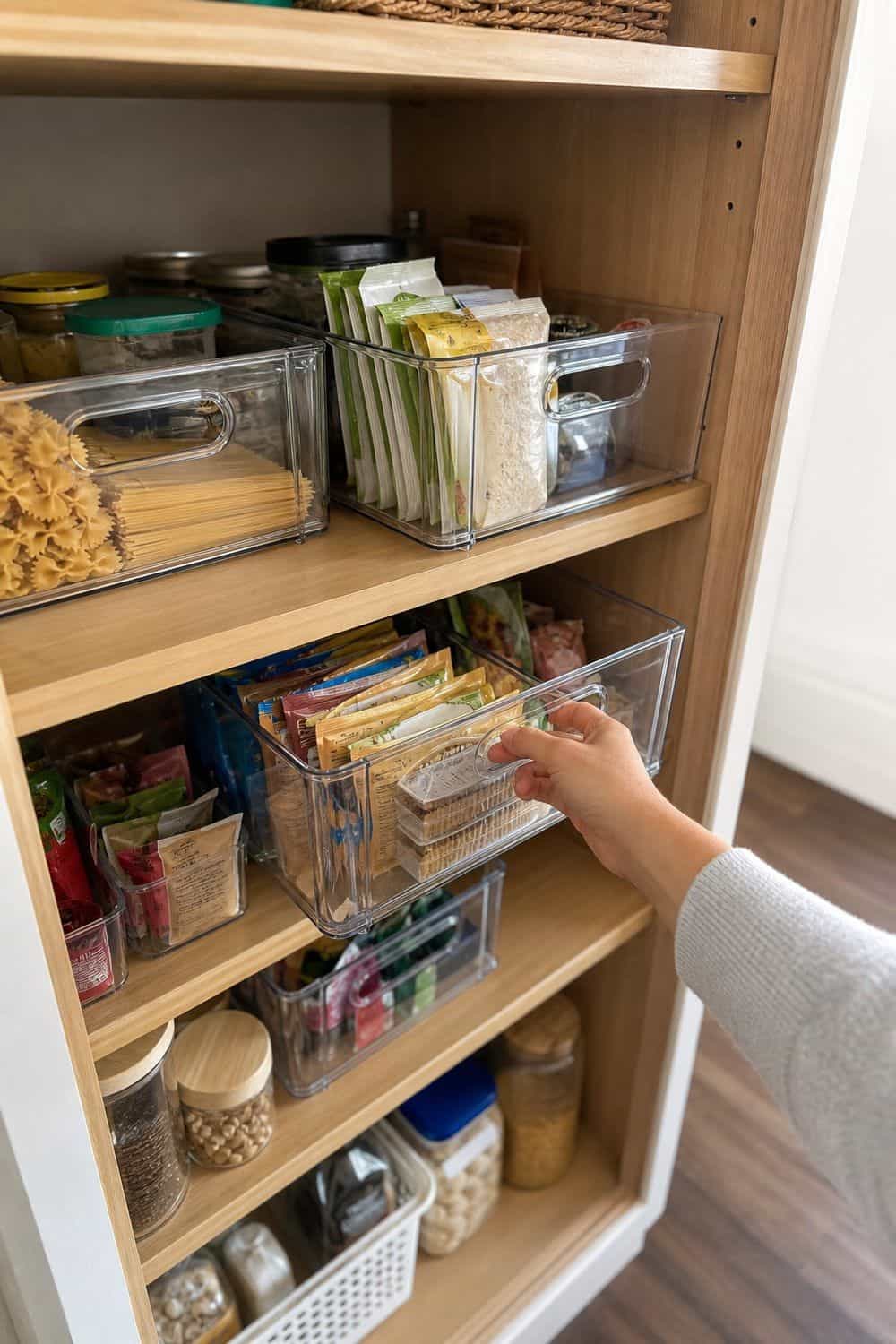
Clear pantry bins are helpful for shelves that hold snacks, pasta, rice packets, lunch supplies, tea, baking extras, or breakfast packets. The clear sides make inventory easier, while the bin keeps loose packaging from spreading. They are especially useful when several small packages share one shelf.
Use one category per bin and choose handles if shelves are deep. Keep labels simple enough that groceries can be unloaded quickly. Avoid making a giant mixed bin, because it only hides clutter inside something new.
5. Opaque Baskets for Messy Backstock
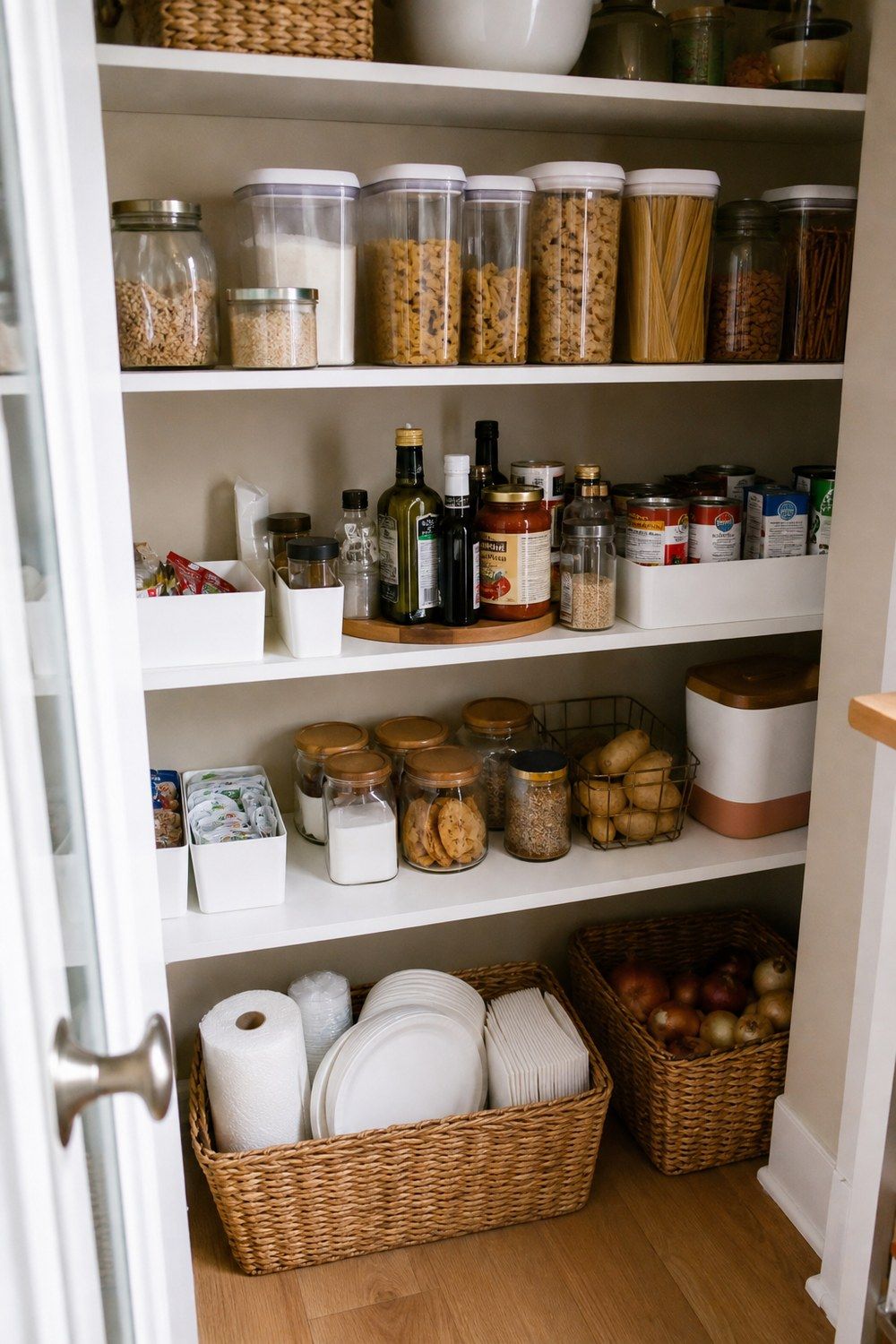
Pantry storage baskets are useful for backstock, paper goods, extra snack bags, seasonal baking items, and bulky packaging that looks chaotic in clear bins. Not every pantry item needs to be visible at all times. Opaque baskets can make open shelves feel calmer while still keeping extra supplies grouped. Add labels so the baskets do not become mystery storage, and keep the heaviest baskets on lower shelves. Avoid using closed baskets for daily food categories unless everyone can quickly find what is inside.

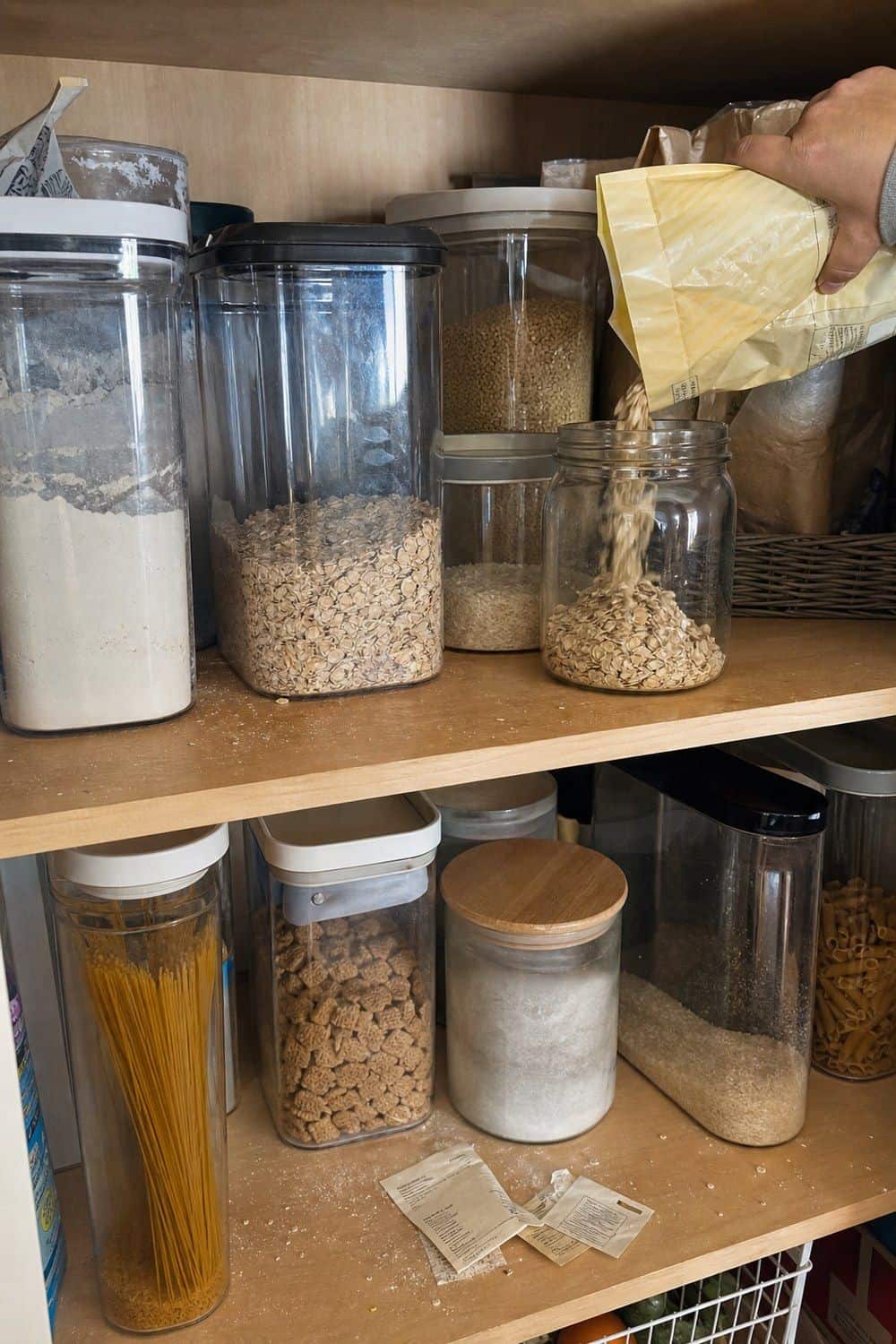
6. Realistic Decanting for Everyday Staples
Airtight pantry containers work well for staples used often: flour, sugar, oats, rice, pasta, cereal, coffee, and other dry goods that spill or go stale in opened packaging. Choose containers by food volume, not by matching-set fantasy. A half-empty oversized container can waste as much room as the original bag. Occasional specialty ingredients can stay in original packaging inside a bin. Add dates when decanting, especially for flour, nuts, grains, and open cereal. Avoid removing every item from its package if that makes cooking harder.
7. Original Instructions Saved with Specialty Foods
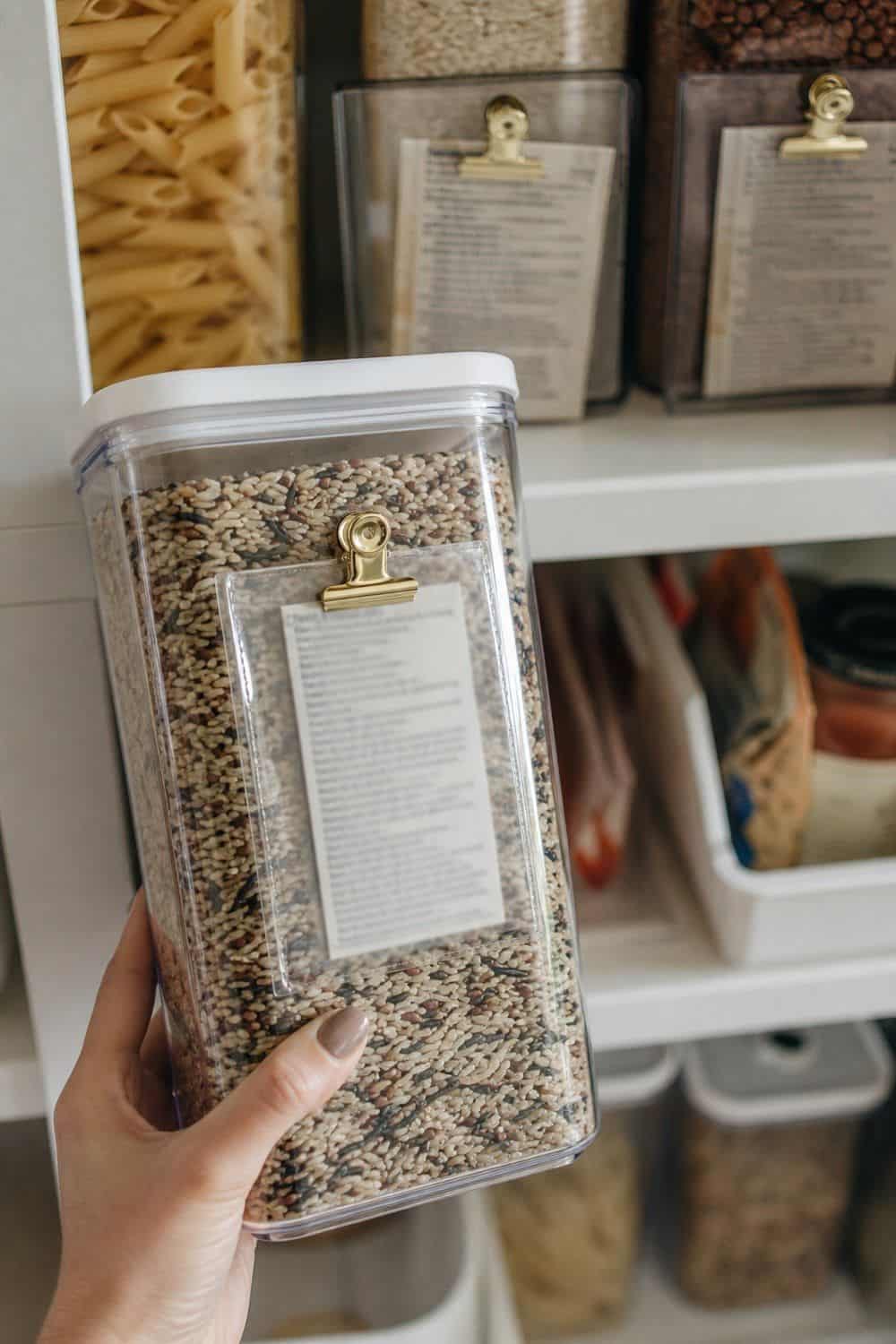
Pantry label clips help keep cooking instructions, allergen notes, and best-by dates attached to specialty foods. Some rice blends, cake mixes, imported noodles, grains, sauces, and baking mixes are easier to use when the package directions stay nearby. Clip the label to the bag, cut instructions into the bin, or keep the whole package inside a category container. This keeps the pantry practical instead of purely styled and reduces second-guessing during dinner prep. Avoid decanting foods you cannot confidently cook without the original information.
8. Clear Labels That Everyone Understands
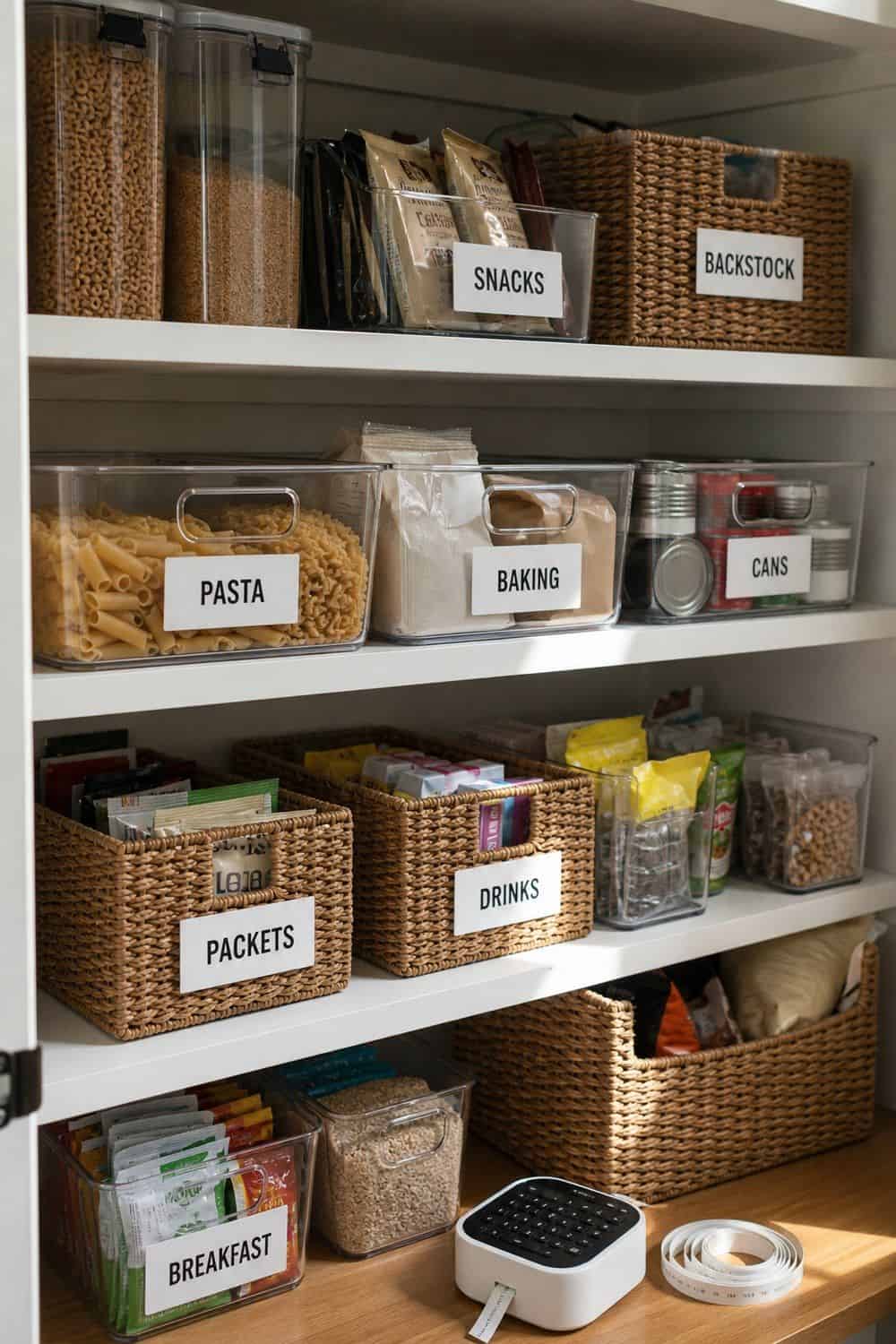
A pantry label maker helps people return items to the same shelf after cooking or unloading groceries. Labels should be plain and useful: snacks, pasta, breakfast, baking, cans, drinks, packets, and backstock. Use wording that matches how the household speaks, not a perfect category system; familiar language matters more than label-maker polish.
Use updateable labels if categories change by season, school year, or shopping habits. Place labels where they can be read from the front of the pantry. Avoid overly cute labels that hide the real job of the shelf.
9. Breakfast Foods in One Morning Zone
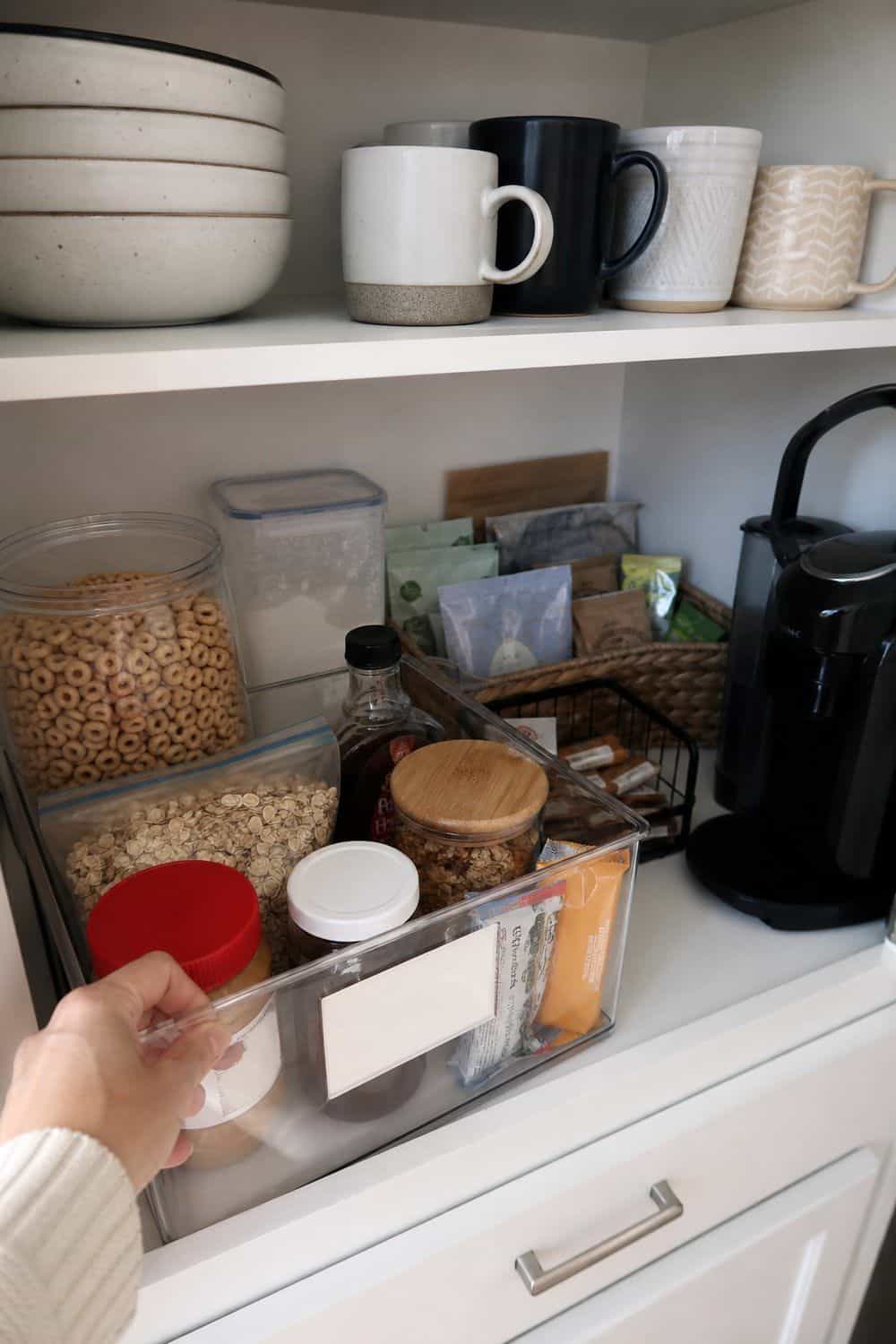
A breakfast pantry bin can gather cereal, oats, granola, pancake mix, syrup, nut butter, breakfast bars, coffee add-ins, and quick weekday staples. Place the zone near bowls, mugs, or the coffee area if the pantry layout allows it. A morning zone keeps sleepy searching to a minimum and helps everyone see what needs restocking. Keep backup cereal or extra boxes in backstock, then restock the active bin when space opens. Avoid mixing breakfast items with random snack overflow if mornings already feel rushed.
10. Kid-Friendly Snack Shelf with Boundaries
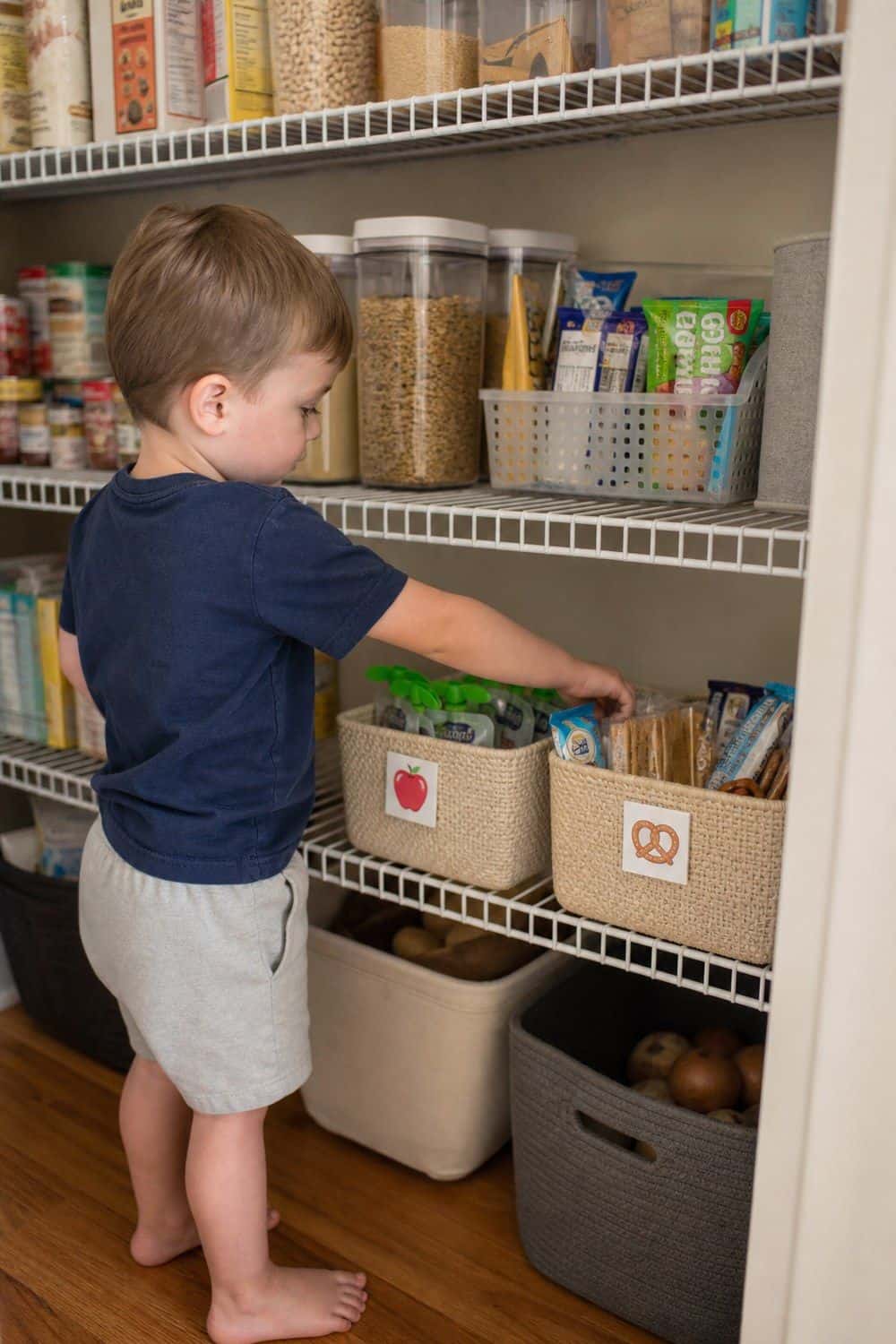
Snack organizer bins can create a lower shelf for approved snacks, bars, crackers, fruit cups, lunch add-ins, or after-school options. The shelf should offer access with boundaries, not open every box at once. Use smaller bins when portions need a natural stopping point. Keep backup boxes higher or in a separate backstock bin. Match placement to age and household rules, and leave the front of the shelf easy to scan. Avoid placing fragile jars or messy baking supplies in the same kid-access zone.
11. Dinner Ingredients Grouped for Weeknights
A dinner pantry bin helps weeknight cooking by grouping pasta, rice, beans, jarred sauce, broth, coconut milk, taco shells, curry paste, and meal bases. This turns pantry organization into cooking support instead of shelf styling. Keep the category broad enough for actual meals but specific enough that it does not become a dumping zone.
Place frequently used ingredients at eye level or near the front, with taller bottles behind shorter packages. Avoid hiding dinner staples behind snacks, paper goods, or rarely used baking extras.

12. Baking Basics in a Dedicated Section
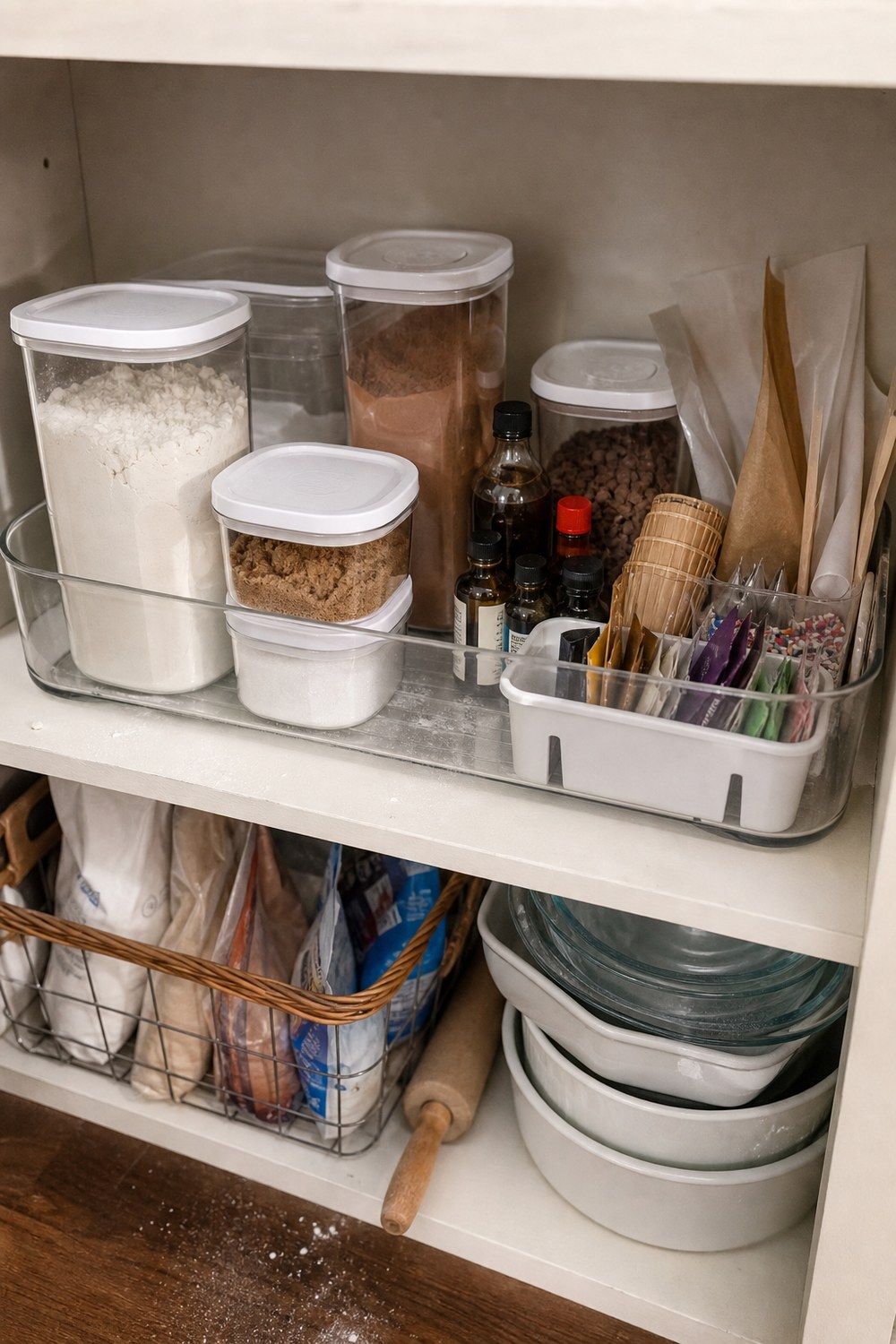
A baking pantry bin or shelf keeps flour, sugars, baking powder, baking soda, cocoa, chocolate chips, extracts, sprinkles, and parchment in one place. It is most useful when the household bakes often enough to need the basics together.
This does not need to become a full baking pantry; it simply keeps the basics together. Small jars or divided bins can hold little decorating items without taking over a whole shelf.
Use airtight containers for messy staples and bins for smaller extras. Store open bags upright when possible so flour and sugar do not leak onto the shelf. Avoid scattering baking ingredients across the pantry, because missing one staple can interrupt a recipe.
13. Tiered Can Risers for Better Visibility
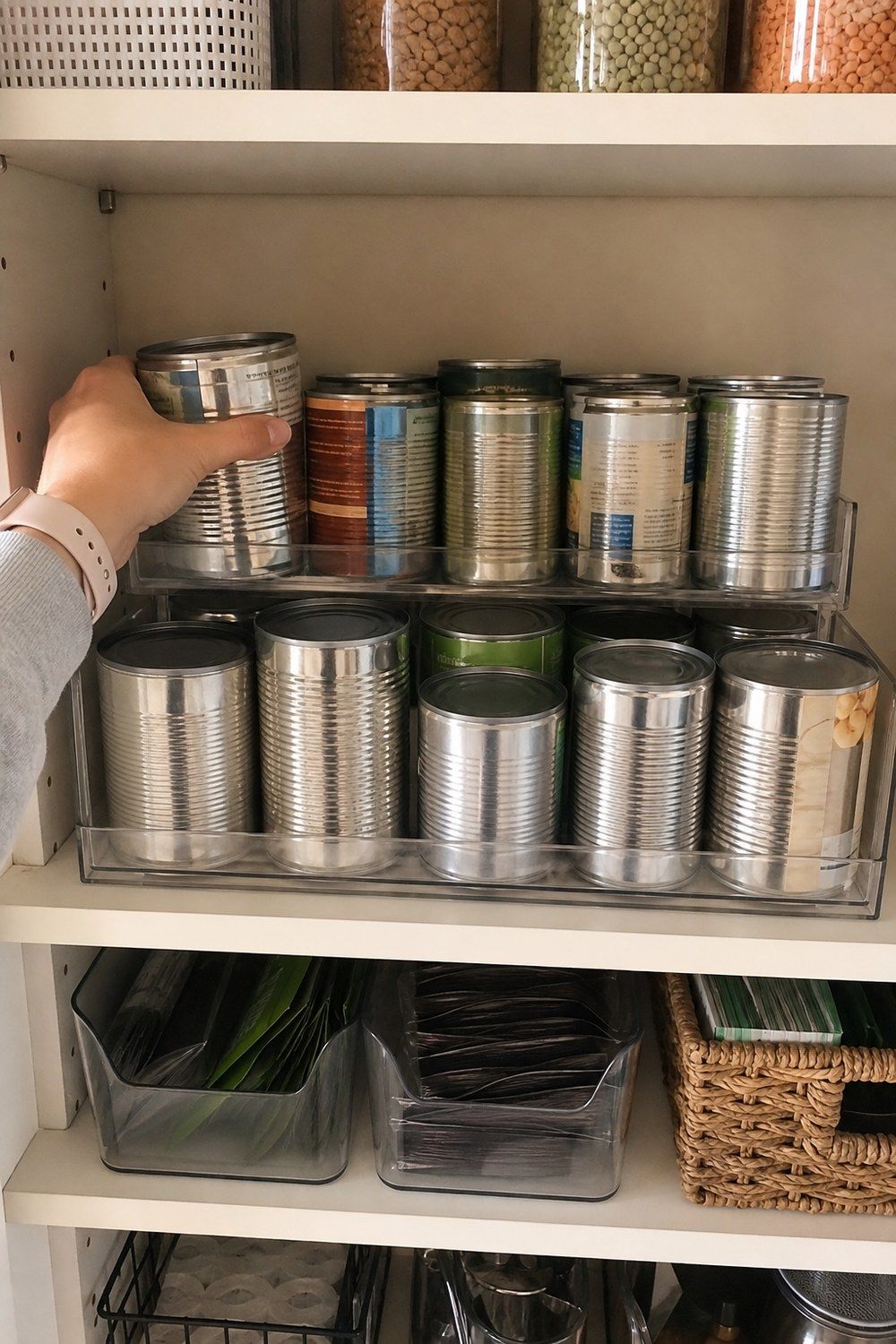
A pantry can riser makes canned beans, tomatoes, soup, vegetables, tuna, coconut milk, pumpkin, and broth easier to see. Tiered storage helps prevent duplicate buying because the back row is no longer hidden. Group cans by type and keep older dates toward the front so they get used first. Measure shelf height before choosing a riser, especially if cans share space with taller bottles. Keep the labels facing forward after grocery unloading. Avoid mixing loose snack bags or packets on the same tiered riser.
14. Lazy Susans for Bottles and Jars
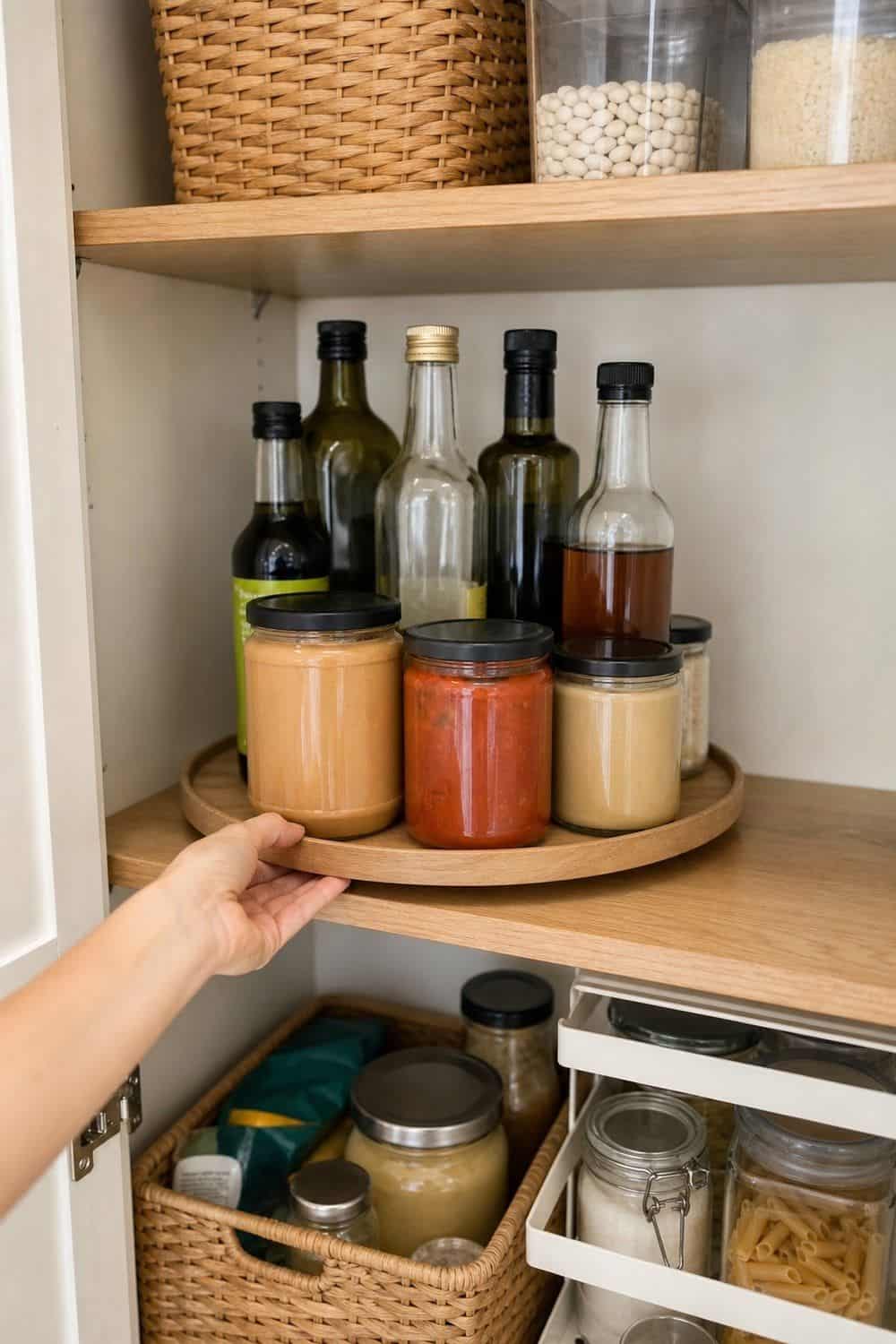
A pantry lazy Susan works well for oils, vinegars, sauces, syrups, nut butters, spreads, and condiments. It belongs where the shelf is deep enough that bottles usually disappear.
Round jars and bottles are easier to rotate than line up in rows that disappear behind each other. A raised edge helps contain narrow bottles, especially when a shelf is deep or shared.
Keep heavy glass on stable lower shelves and use one category per turntable when possible. Wipe sticky bottle bottoms before returning them so the turntable stays clean. Avoid overloading the turntable until it becomes hard to spin.
15. Door Storage for Lightweight Pantry Extras
An over door pantry organizer can hold packets, spices, tea, wraps, small bottles, snack bars, and lightweight refills without taking shelf space. Door storage is especially helpful in small pantry organization because it creates a narrow extra zone.
Check door clearance before loading the rack, and keep labels facing forward if items are small. Use the shallowest shelves for items that would otherwise vanish behind boxes. Avoid heavy bulk goods, glass jars, or large bottles on the door because they can strain hardware and stop the door from closing.

16. Shelf Risers for Short Boxes and Jars
Pantry shelf risers create a second level for short boxes, small jars, tea boxes, baking decorations, tiny cans, and small pantry extras. They are different from can risers because they help mixed short items stay visible on a normal shelf.
Choose risers that fit the shelf depth and leave enough space to grab items underneath. Use them where vertical space is wasted, especially above low jars or short boxes. Avoid stacking heavy items on flimsy risers that can sag or slide.

17. Upright Packet Storage in Divided Containers
A divided pantry organizer keeps seasoning packets, drink mixes, oatmeal packets, sauce mixes, tea bags, and instant soup from disappearing flat under boxes. Upright packets are easier to read, count, and restock. This setup also keeps thin items from sliding under heavier pantry staples.
Sort by type so packet storage does not become a tiny junk drawer. Check dates while sorting, then put the soonest dates toward the front. Avoid keeping expired mixes just because they are hidden in a divider.

18. Lunch Packing Supplies in One Pull Zone
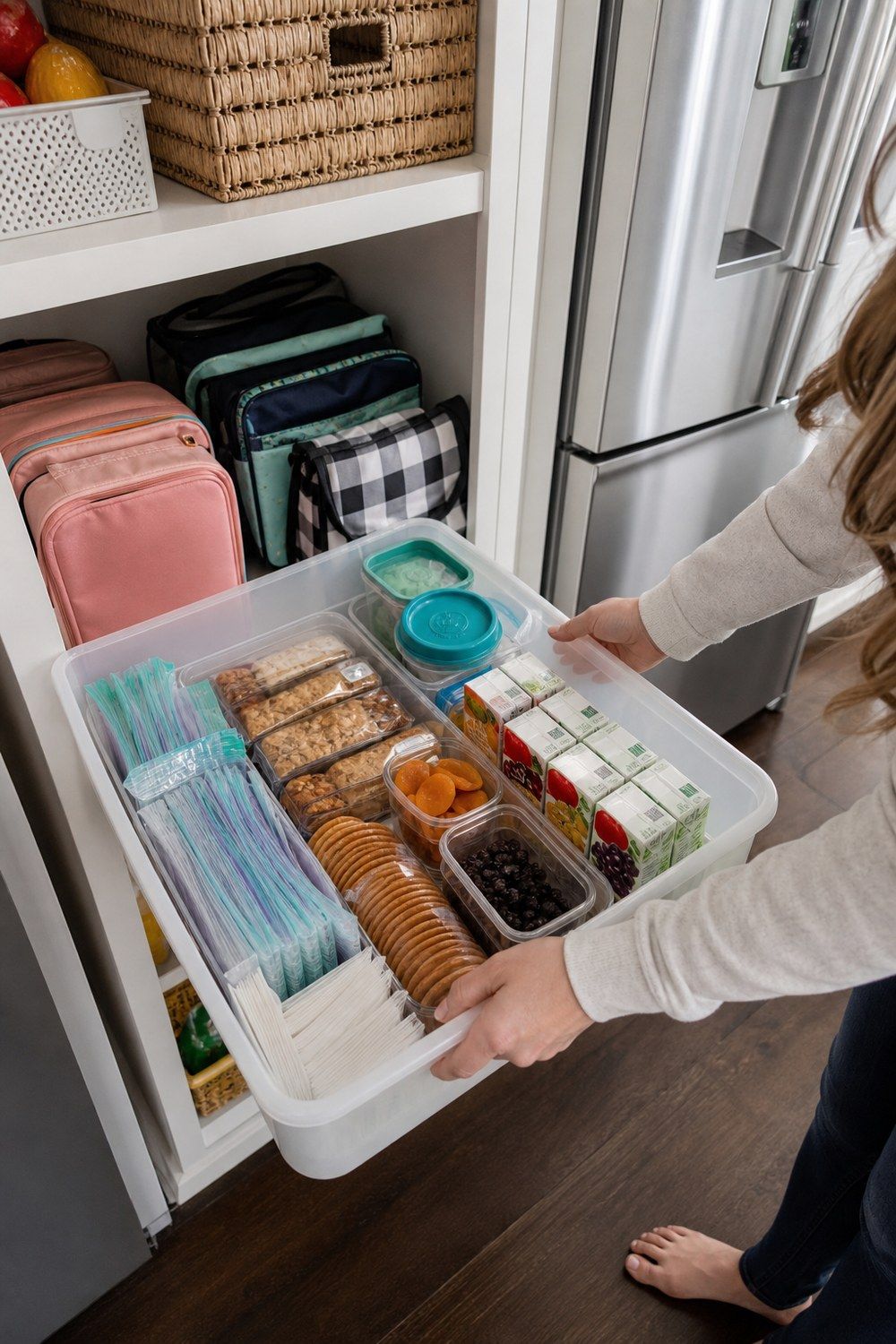
A lunch packing organizer can gather lunch bags, snack bags, bars, crackers, dried fruit, juice boxes, napkins, and reusable containers if the pantry has room. This is different from the snack shelf because the purpose is fast assembly. Keep grab-and-pack items together so lunches do not require pulling from five shelves. Store backup boxes behind or below the active bin, and keep small supplies in a divider. Avoid mixing lunch supplies with dinner ingredients if weekday mornings already feel chaotic.
19. Separate Backstock for Unopened Duplicates
Backstock storage bins hold unopened duplicates such as extra pasta, cereal, snacks, broth, condiments, paper goods, flour, sugar, and baking staples. Active items should stay in their meal zones, while backups live together until needed. This makes it easier to see whether the pantry is truly low.
This keeps the pantry from feeling overstuffed at eye level. Label the backstock bin clearly so extra groceries do not spread into every open gap. Avoid opening duplicate packages before the active one is finished, because that creates clutter and stale food.
20. Paper Goods Away from Prime Food Shelves
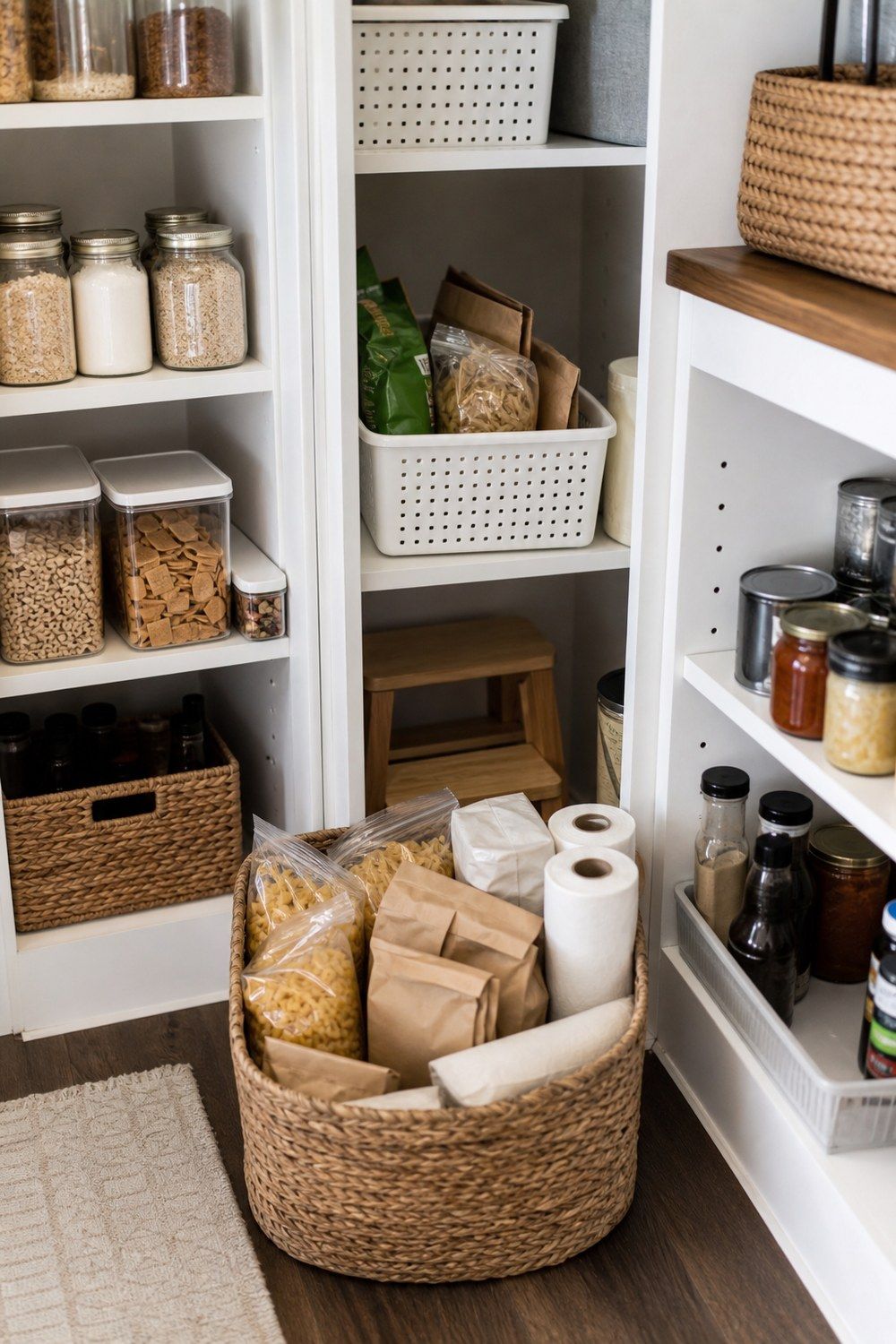
A paper towel storage basket can hold napkins, paper towels, plates, cups, party supplies, and other bulky paper goods. These items can live high, low, or in a labeled basket, but they usually do not need prime eye-level pantry space. Keep the easiest shelves for daily food categories and cooking staples. Paper goods can waste useful space if they sit in the middle of the pantry. Avoid mixing them with snacks or baking goods just because the packaging is bulky.
21. Pull-Out Drawers for Low or Deep Shelves
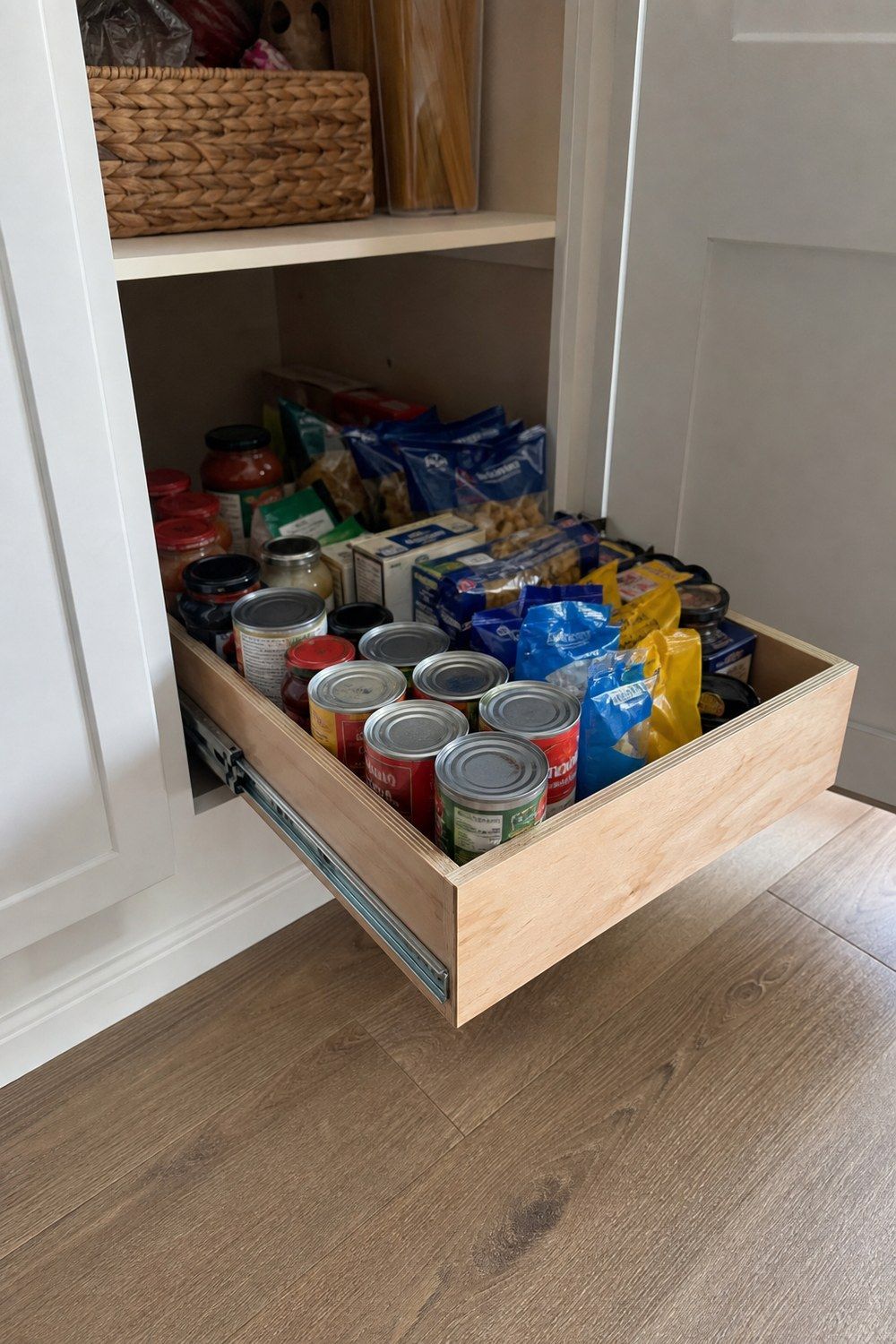
Pull out pantry drawers are useful for awkward low shelves, deep shelves, snacks, cans, packets, and heavy categories that are hard to reach. They bring the back of the shelf forward so nothing disappears behind taller items. Measure shelf width, depth, height, and weight limits before installing.
Use pull-outs for categories accessed often, not for rare party supplies. Leave room for fingers to grab the handle. Avoid buying deep drawers without checking whether the pantry door or shelf frame allows them to open fully.
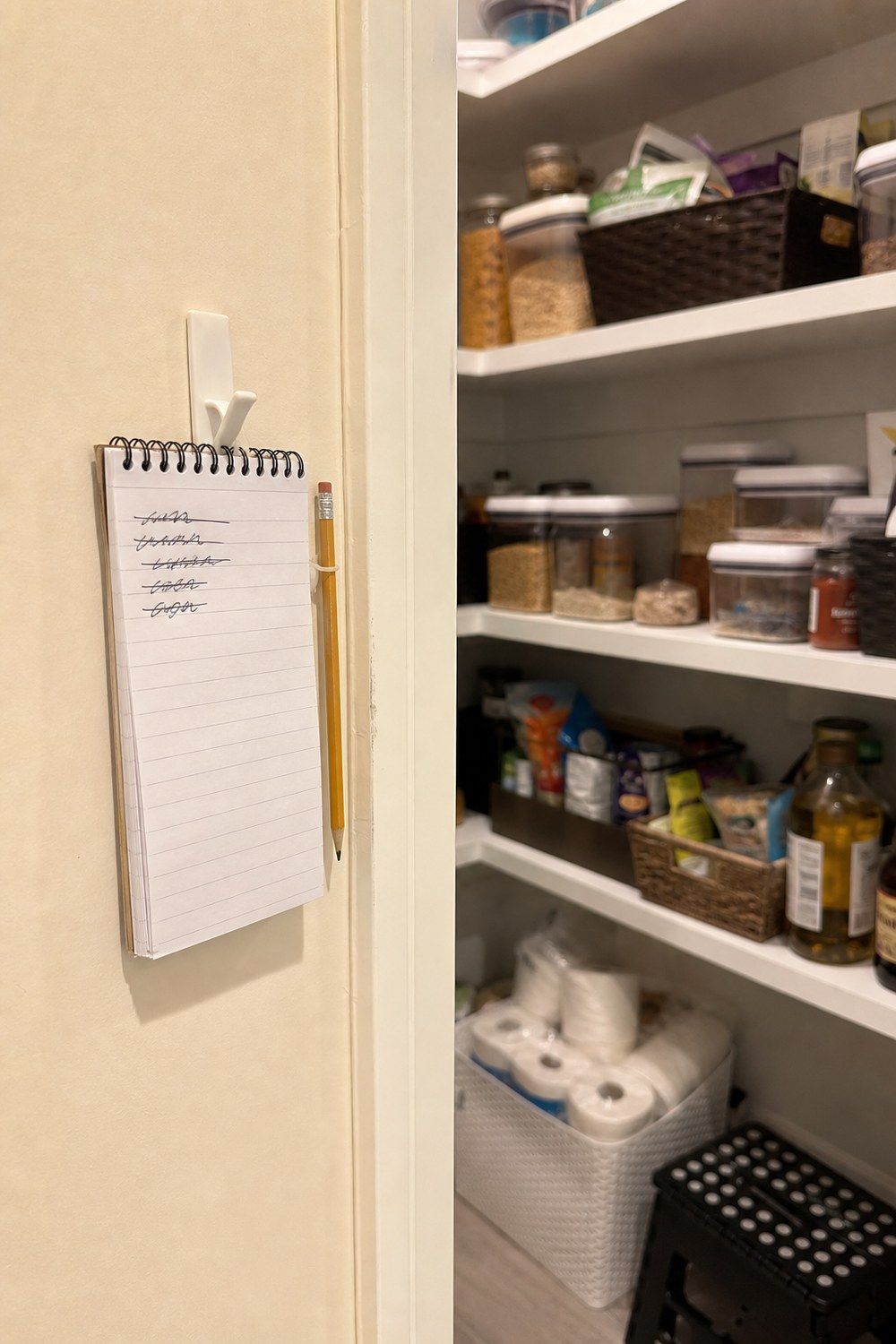
22. Inventory Notepad Near the Pantry Door
A pantry inventory notepad helps track oats, cereal, pasta, rice, flour, sugar, broth, snacks, and paper goods as they run low. Place it near the door, inside the pantry, or beside the grocery list so updates happen in the moment. A simple checkbox list is usually enough.
A visible list prevents duplicate buying and forgotten staples. It also helps when someone else does the shopping or unloads groceries after a busy day. Avoid keeping inventory only in your head if several people cook or unload groceries.
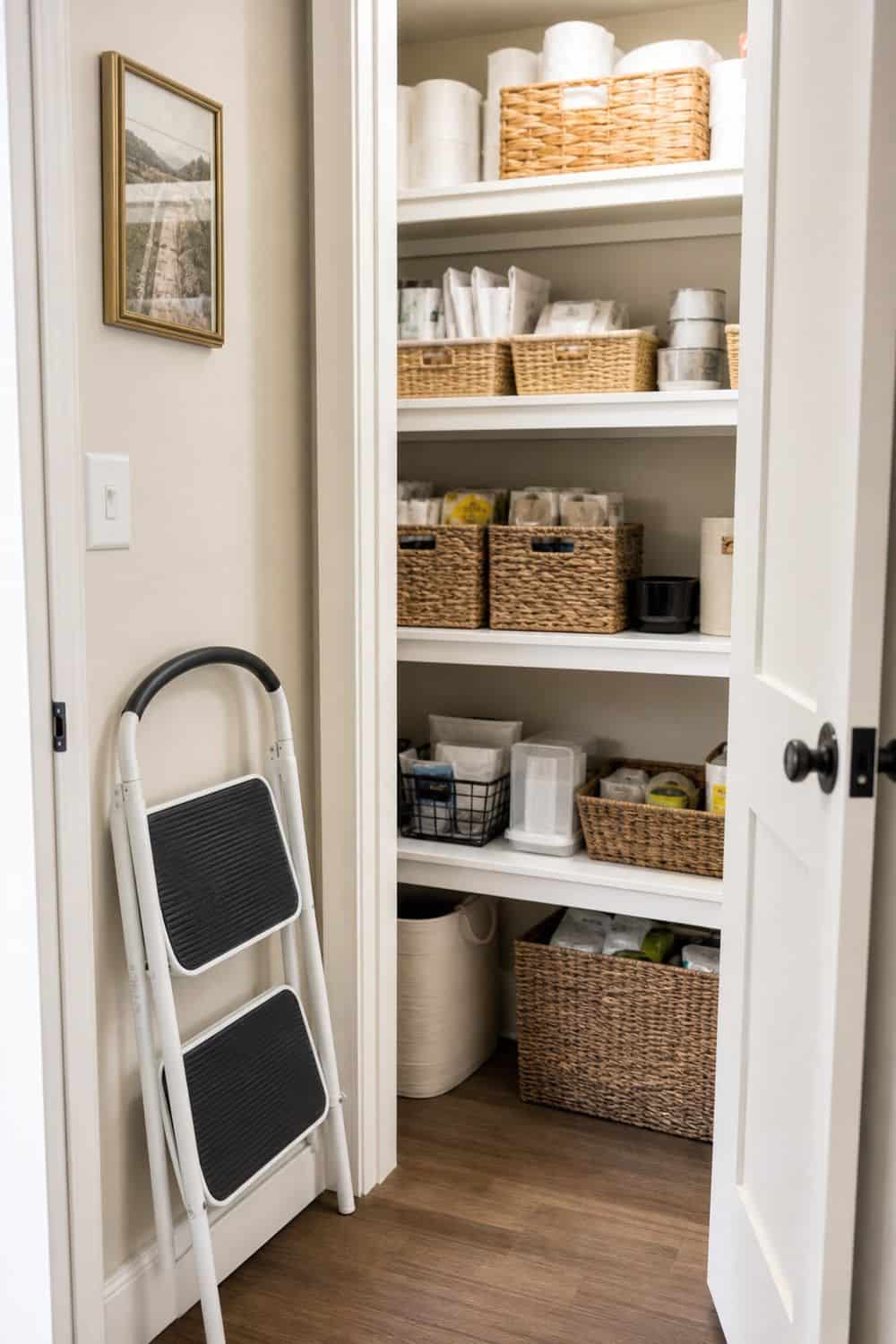
23. Folding Step Stool for High Shelves
A folding step stool makes high pantry shelves more useful and safer. Store light backstock, seasonal items, extra paper goods, or occasional supplies up high, then keep the stool nearby so those shelves are reachable. Heavy glass jars, daily snacks, and cooking staples should stay lower. Choose a slim stool that can tuck beside the pantry or behind a door, and keep the floor area clear enough to open it. Avoid designing the pantry so everyday items require climbing, stretching, or lifting above shoulder height.
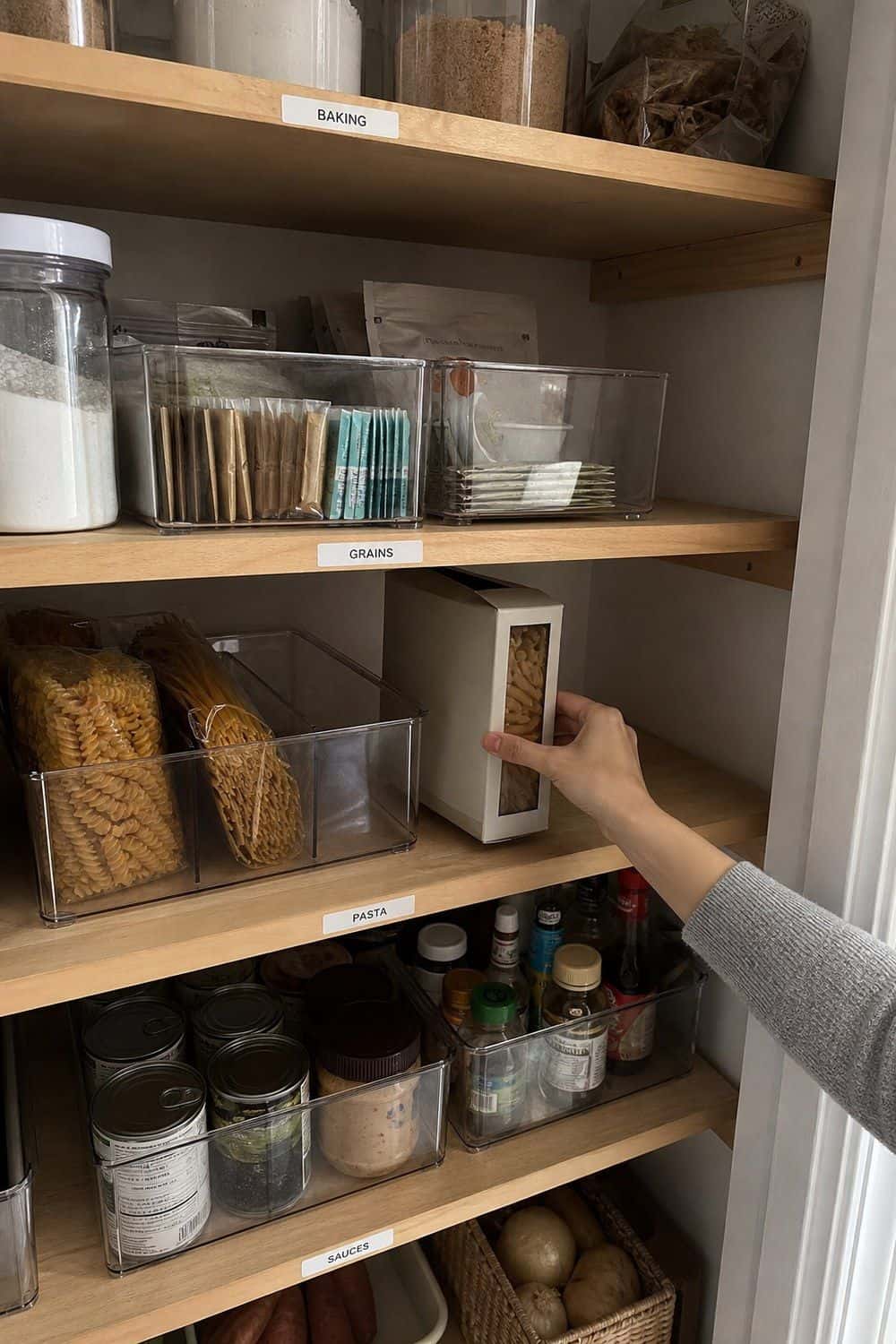
24. Breathing Room on Every Pantry Shelf
Pantry shelf labels help categories stay contained, but the shelf also needs a little breathing room. A pantry packed to the edge is hard to shop from, restock, and clean. Empty space is part of the system, especially after grocery day.
Leave space for a new box, odd-shaped item, or grocery-day overflow. If a category keeps overflowing, shrink the category or move backstock elsewhere. Avoid filling every inch with containers, because tight shelves make the system harder to maintain after shopping.
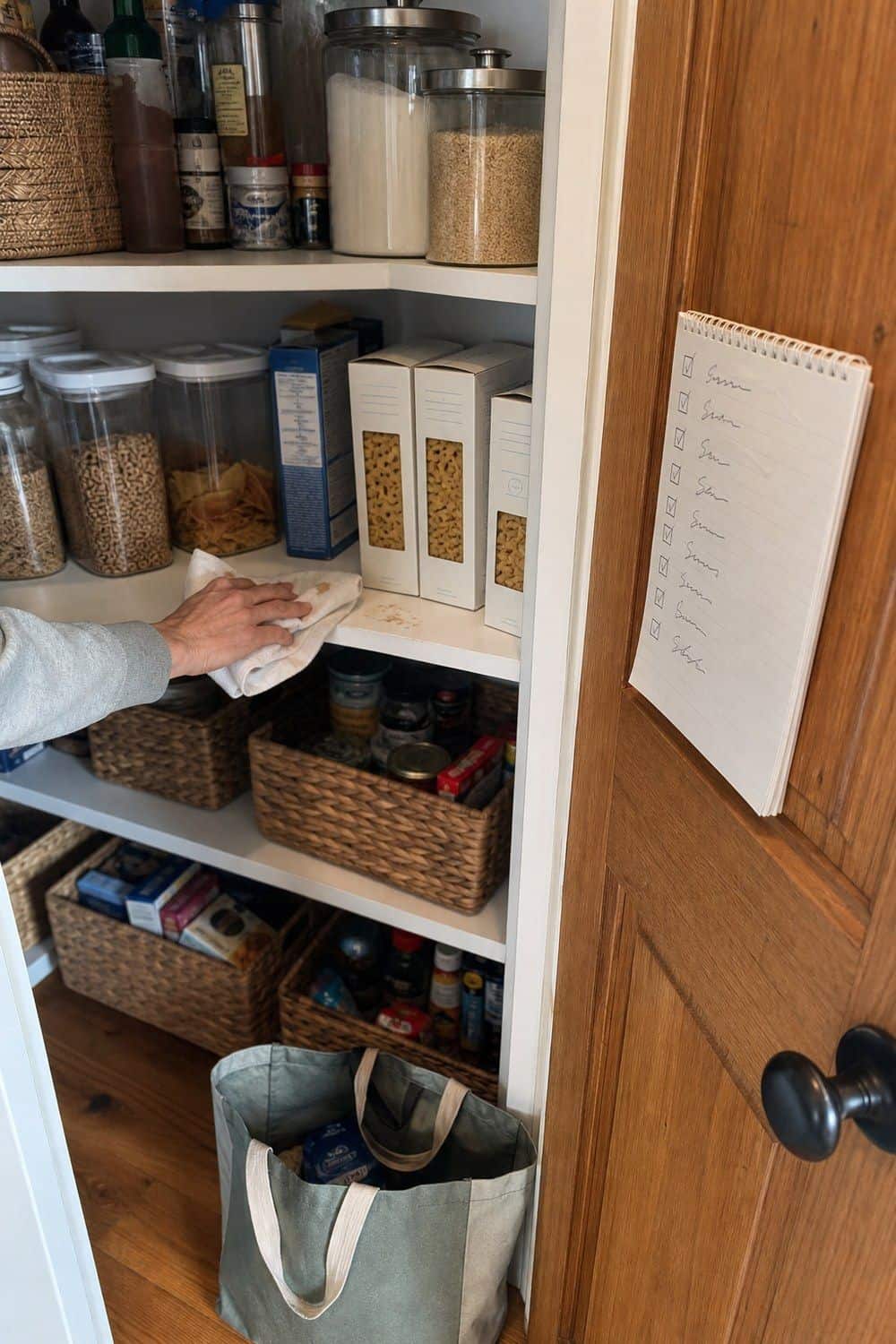
25. Five-Minute Pantry Reset Before Shopping
A pantry organization checklist keeps the system alive after the big setup day. Before grocery shopping, check zones, toss stale items, pull duplicates forward, wipe spills, update the inventory list, and note what is missing.
This habit prevents the pantry from slowly turning into mixed backstock and forgotten ingredients. Keep the reset short enough to do regularly, even if it only covers the busiest shelves. Avoid waiting until every shelf is crowded, sticky, or expired before dealing with the pantry again.
How to Choose Pantry Organizers by Problem
Clear bins are best when visibility matters, while opaque baskets are better for messy packaging and backstock. Airtight containers help frequently used staples stay fresh, and original packaging still makes sense when instructions or dates matter.
Risers work for short items, turntables work for bottles and jars, door racks work for lightweight extras, and pull-out drawers work for low or deep shelves. Choose the product after identifying the shelf problem.
At eye level, store the foods used most often. Low shelves can hold heavier categories, high shelves can hold light backstock, and backstock should stay separate from open active items.
Frequently Asked Questions
What is the best way to organize a pantry?
Clean one shelf at a time, group items by meal or category, use bins and labels, store daily foods at reachable height, and keep unopened backstock separate from active food.
What categories should I use in my pantry?
Useful pantry categories include breakfast, snacks, dinner ingredients, baking, cans, bottles, packets, drinks, paper goods, lunch packing, and backstock. Adjust the zones to match how your household cooks.
Should I put pantry food in containers?
Decant staples used often, such as flour, sugar, rice, oats, pasta, and cereal. Keep specialty foods in packaging or labeled bins when instructions, allergens, and best-by dates matter.
How do I organize a small pantry?
Use vertical space, clear bins, shelf risers, door storage, turntables, and category limits. A small pantry works better when every shelf has a job and backstock stays contained.
How do I keep my pantry organized after grocery shopping?
Put open items in active zones, place unopened duplicates in backstock, update the inventory list, rotate older food forward, and avoid overfilling shelves after a grocery run.
What should go at eye level in a pantry?
Eye level should hold the most-used foods, such as breakfast, snacks, dinner staples, baking basics, or everyday cooking ingredients. Put lighter occasional items higher and heavier items lower.
Are baskets or clear bins better for pantry organization?
Clear bins are better for foods you need to see quickly. Opaque baskets are better for messy packaging, backstock, paper goods, and bulky categories that look cluttered.
How often should you clean out a pantry?
Do a quick pantry check before grocery shopping and a deeper clean when categories overflow, spills appear, or expired items start accumulating. Shelf-by-shelf resets are easier to maintain.
Final Thoughts
Pantry organization ideas are strongest when they support real cooking, snacking, shopping, and restocking. Measure first, group foods by category, choose organizers by problem, label clearly, keep backstock separate, and reset the pantry before groceries so the system stays useful.
Last update on 2026-11-10 / Affiliate links / Images from Amazon Product Advertising API