
Sear 1.5 kg of chuck in batches until it is deep brown, cook onion, garlic and tomato paste in the same pot, then reduce 350 ml of dry red wine and add 720 ml of beef stock. Braise covered at 165°C (325°F) for 2 hours, add carrots and potatoes for a final hour, and finish with peas. It feeds 6 and tastes even better reheated the next day.
Old-fashioned beef stew does not need a long ingredient list. It needs a hard sear, a wine you would drink and enough time in a low oven for chuck to turn from chewy to spoon-tender. Get those three right and the rest of this beef stew recipe is chopping vegetables.
Plan for about 3 hours 25 minutes start to finish, most of it hands-off. If you can, cook it a day early. The sauce settles overnight and the stew you reheat on day two is the one people remember.
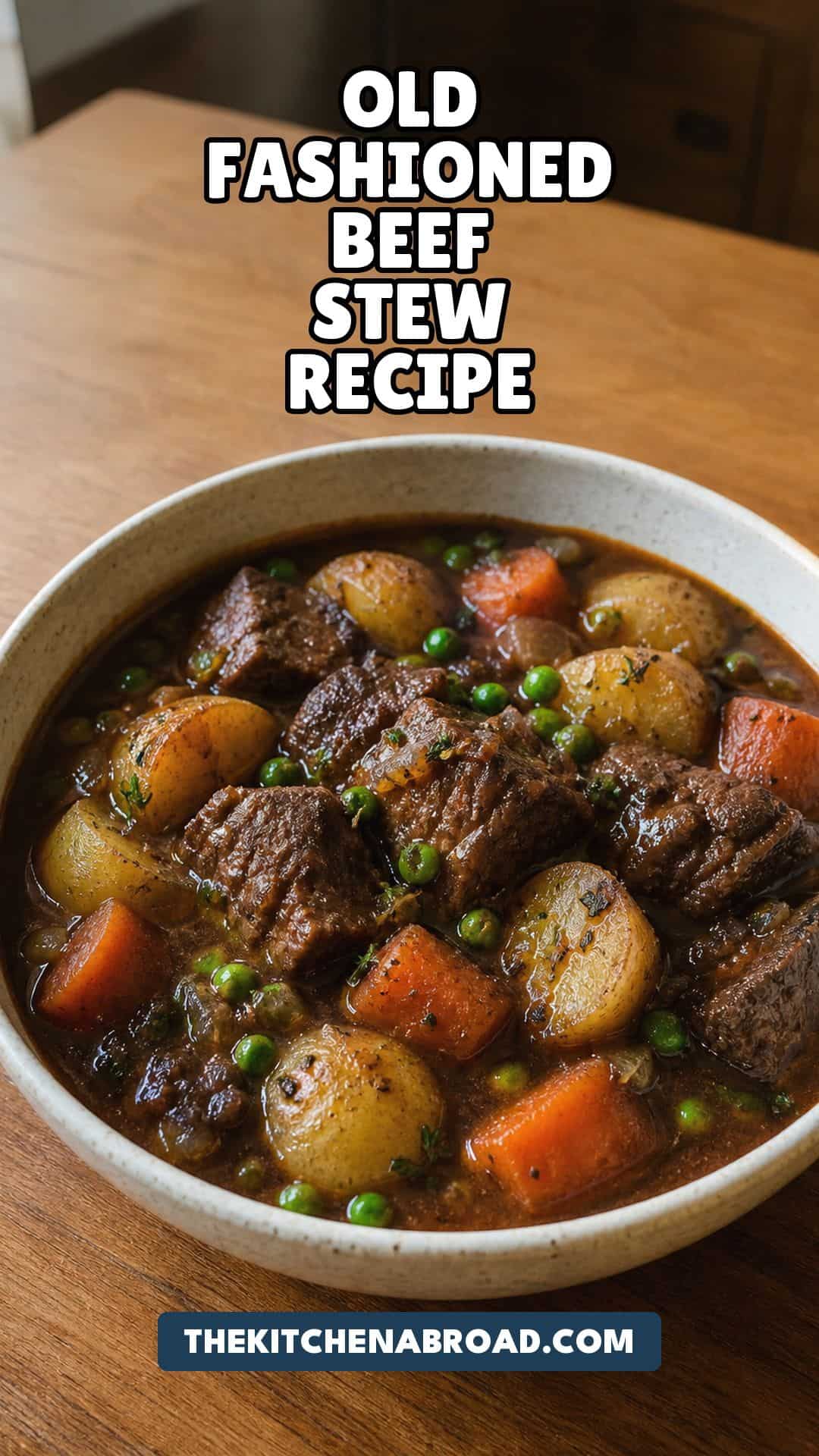
A heavy Dutch oven does most of the work here: it browns on the stove and braises in the oven without a pan change. A scale for the beef and an instant-read thermometer help too.


Why chuck is the only cut worth buying for stew
Chuck comes from the shoulder, a hard-working muscle laced with fat and connective tissue. Those are exactly what you want in a braise. After a couple of hours of gentle heat, the collagen melts into gelatin, which is what gives the sauce body and makes the meat feel moist even though it has been cooking for hours.
Lean cuts like sirloin or tenderloin have almost no collagen, so they just tighten up and dry out. Skip them. Boneless short ribs are a richer option, and brisket point works if you give it extra time.
Cut the chuck into large 5 cm (2 inch) cubes. Smaller pieces shrink and shred before the vegetables are done. Then pat every cube dry with paper towels. Wet beef steams in the pot, and steamed beef never browns properly.
How brown should the beef get before the wine goes in?
Darker than you think. Each cube should have a deep brown crust on every side, which takes 6 to 8 minutes per batch at medium-high heat. That crust, plus the brown film it leaves on the pot, is where most of the flavor in the finished sauce comes from.
Work in three batches. A crowded pot drops in temperature, the meat releases liquid and you end up boiling it in its own juice. In restaurant kitchens this is the step cooks get told off for rushing, because no amount of seasoning later can replace it.
The tomato paste needs the same patience. Stir it in the hot fat with the garlic for 2 to 3 minutes, until it turns from bright red to brick red and smells nutty. Raw tomato paste tastes tinny; cooked, it adds depth and a little sweetness.
Which red wine works in beef stew?
Use a dry red you would happily drink with dinner. Cabernet Sauvignon gives the boldest sauce, Merlot a softer one, and Côtes-du-Rhône is the good-value middle ground. Pinot Noir is too delicate to stand up to three hours of braising.
Avoid bottles labeled cooking wine. They are salted, which throws off the seasoning of the whole pot before you have even tasted it.
No wine in the house, or cooking for someone who avoids alcohol? Replace it with an extra 240 ml (1 cup) beef stock, 2 Tbsp balsamic vinegar and 1 Tbsp Dijon mustard. The vinegar and mustard bring back the acidity and edge the wine would have given. The result is a little less complex and still very good.
Old-fashioned beef stew recipe
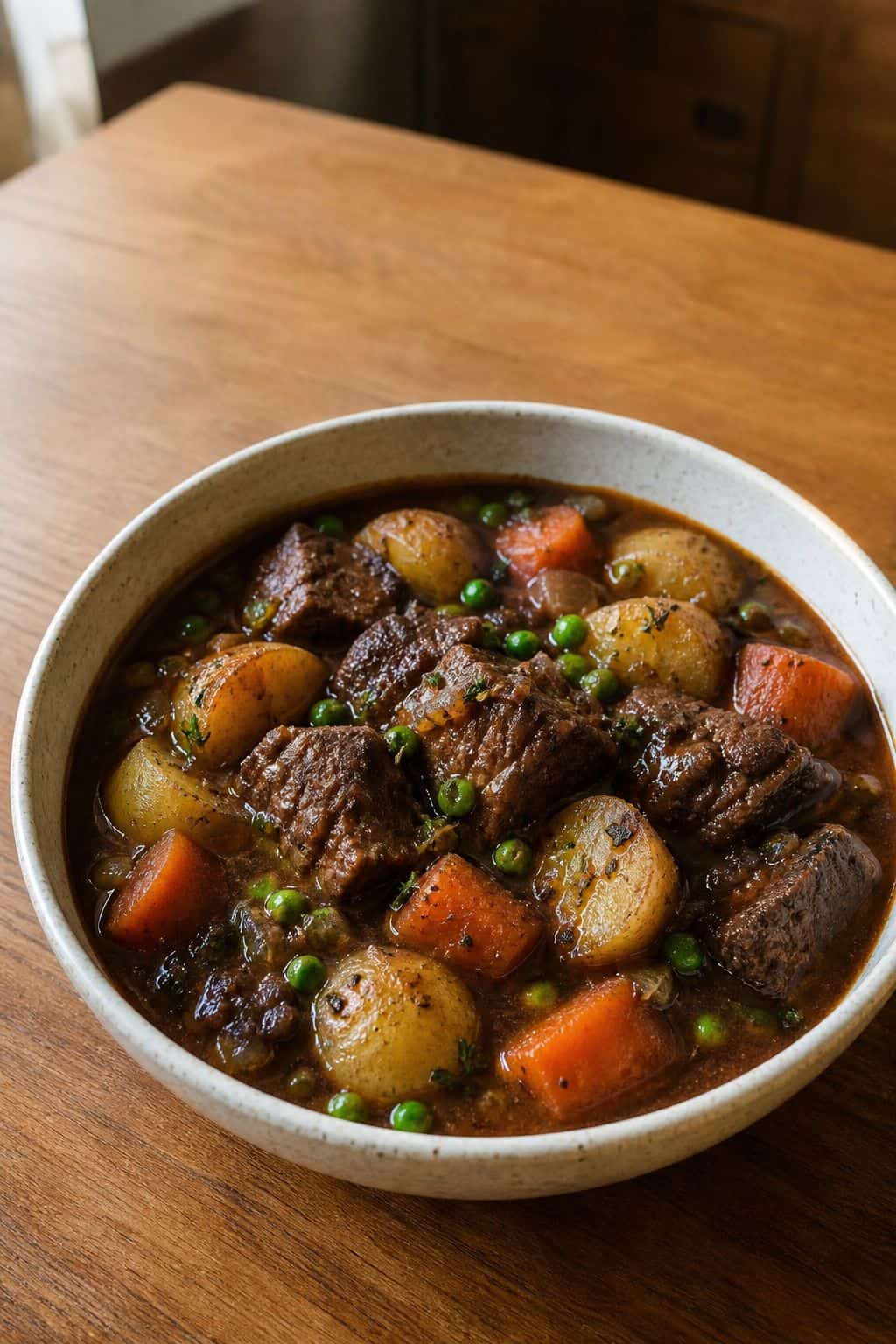
Prep time: 25 minutes. Cook time: 3 hours. Total time: 3 hours 25 minutes. Serves: 6.
Ingredients
- 1.5 kg (3.3 lb) chuck roast, cut into 5 cm (2 inch) cubes
- 45 ml (3 Tbsp) olive oil
- 30 g (2 Tbsp) unsalted butter
- 1 large yellow onion (about 200 g), diced
- 4 cloves garlic, minced
- 30 g (2 Tbsp) tomato paste
- 350 ml (1½ cups) dry red wine (Cabernet, Merlot, or Côtes-du-Rhône)
- 720 ml (3 cups) beef stock
- 2 Tbsp Worcestershire sauce
- 2 Tbsp fresh thyme leaves
- 1 tsp fresh rosemary, finely chopped
- 2 bay leaves
- 4 medium carrots (about 300 g), cut into 5 cm (2 inch) pieces
- 700 g (1.5 lb) baby Yukon Gold potatoes, halved if larger
- 150 g (1 cup) frozen peas
- 2 tsp kosher salt (about 12 g), divided
- 1 tsp freshly cracked black pepper
- Chopped fresh parsley, for serving
Instructions
- Preheat the oven to 165°C (325°F) with a rack in the lower middle.
- Pat the beef cubes very dry on paper towels. Season with 1.5 tsp salt and 1 tsp black pepper.
- Heat 45 ml (3 Tbsp) olive oil in a large Dutch oven over medium-high heat. When the oil shimmers, add the beef in a single layer, working in 3 batches. Sear each batch for 6 to 8 minutes total, turning every 1 to 2 minutes, until deep brown on all sides. Move to a plate.
- Lower the heat to medium. Melt 30 g (2 Tbsp) butter in the same pot, add the onion and a pinch of salt, and cook for 5 to 6 minutes, scraping up the browned bits, until the onion is soft.
- Add the garlic and 30 g (2 Tbsp) tomato paste. Stir constantly for 2 to 3 minutes until the paste turns brick red and smells nutty.
- Pour in 350 ml (1½ cups) red wine and scrape the bottom of the pot clean. Simmer for 4 to 5 minutes, until reduced by about a third.
- Add 720 ml (3 cups) beef stock, 2 Tbsp Worcestershire, the thyme, rosemary and bay leaves. Return the beef and its juices to the pot. The liquid should come about halfway up the meat.
- Bring to a simmer, cover and transfer to the oven. Braise for 2 hours.
- Take the pot out and stir in the carrots and potatoes. Taste the liquid and add salt if needed; it should taste boldly seasoned, because the potatoes will absorb some.
- Cover and braise for 1 more hour, until the vegetables are tender and the beef pulls apart with a fork.
- Remove the bay leaves. Stir in 150 g (1 cup) frozen peas; the heat of the stew warms them in about 2 minutes.
- Rest for 10 minutes, scatter with parsley and serve in shallow bowls.
Notes
If the beef is still firm after the full 3 hours, give it another 30 to 60 minutes. Chuck varies, and it is done when it is tender, whatever the clock says.
Why does beef stew taste better the next day?
On day one you can still taste the separate parts: wine here, tomato there, a hit of thyme. After a night in the fridge the gelatin sets, the seasoning spreads evenly through the meat and potatoes, and the sauce tastes like one thing. It also gets easier to remove fat, which hardens on the surface and lifts off with a spoon.
To reheat, warm it gently on the stove over medium-low heat, or covered in a 165°C (325°F) oven, stirring once or twice. Bring it to a full bubble before serving.
Easy changes that keep it old-fashioned
Mushrooms are the most worthwhile addition. Stir 225 g (8 oz) sliced cremini in with the carrots and potatoes; they give up their water, then soak up the sauce. For a deeper, earthier stew, soak 15 g (1/2 oz) dried porcini in 240 ml (1 cup) hot water, add the mushrooms to the pot and pour in the soaking liquid, leaving the grit behind in the bottom of the cup.
Peas are there for color and a little sweetness at the end. Frozen peas are fine here, since they only need warming through. For more on buying and cooking them, see this guide to green peas and how to use them explains it.
Cold-weather table for a crowd? Double the batch and serve it from the pot with bread and a sharp green salad, as part of a relaxed winter dinner party.
Can you make beef stew in a slow cooker or pressure cooker?
Yes to both, as long as you keep the browning. Sear the beef, cook the aromatics and reduce the wine on the stove (or on the pressure cooker sauté setting) before switching methods.
In a slow cooker, cook on low for 8 hours and add the carrots and potatoes for the last 2. In a pressure cooker, cook on high for 35 minutes with a natural release, then add the vegetables and cook on high for another 8 minutes. Both give tender beef; the oven version gives the deepest sauce because some liquid evaporates under the lid.
How long does beef stew keep?
Refrigerate leftovers in an airtight container within two hours of cooking and eat them within 3 to 4 days, the window USDA food safety guidance on leftovers gives. Shallow containers cool faster than one deep pot.
The stew freezes well for about 3 months. Cool it completely, portion it into flat zip-top bags of around 2 cups each and lay them flat to freeze, so they stack like files. If your freezer is already a jumble, these freezer organization ideas make it easier to find the stew again. Thaw overnight in the fridge and reheat until it bubbles.
Beef stew FAQ
What is the best cut of beef for stew?
Chuck is the best cut for beef stew. It has enough fat and connective tissue to turn tender and juicy after 2 to 3 hours of braising, while lean cuts dry out.
Why is my beef still tough after 2 hours?
Tough stew beef usually needs more time, not less. Chuck takes 2.5 to 3 hours to break down fully, so keep it covered in the oven for another 30 to 60 minutes and check again.
How do I thicken beef stew that is too thin?
Mash a few cooked potatoes against the side of the pot and stir them in. You can also simmer the stew uncovered on the stove for 10 to 15 minutes to reduce the liquid.
Do I have to use wine in beef stew?
No, wine is optional. Swap it for an extra 240 ml (1 cup) beef stock with 2 Tbsp balsamic vinegar and 1 Tbsp Dijon mustard to keep the acidity.
What do you serve with beef stew?
Crusty bread for the sauce and a green salad with a sharp vinaigrette are the classic sides. A glass of the same red wine you cooked with works well at the table.
Key takeaways
- Buy chuck and cut it into large 5 cm cubes so it stays in pieces.
- Dry the beef and sear it in three batches until deep brown.
- Cook the tomato paste until brick red before adding the wine.
- Braise covered at 165°C (325°F): 2 hours for the beef, 1 more with the vegetables.
- Make it a day ahead, keep leftovers 3 to 4 days in the fridge or about 3 months frozen.
Turning the leftovers into tomorrow’s dinner
If there is stew left after day two, spoon it into a baking dish, top it with mashed potatoes and bake until the top browns. You have a beef version of an easy shepherd’s pie with almost no extra work.
Old-Fashioned Beef Stew
Deep-flavored beef stew comes from a hard sear, dry red wine, and a long oven braise. Chuck cubed and seared in batches until deep brown. Onion, garlic, tomato paste bloomed. 350 ml (1½ cups) drinkable red wine reduced, then 720 ml (3 cups) beef stock.
Ingredients
- 1.5 kg (3.3 lb) chuck roast, cut into 5 cm (2 inch) cubes
- 45 ml (3 Tbsp) olive oil
- 30 g (2 Tbsp) unsalted butter
- 1 large yellow onion (about 200 g), diced
- 4 cloves garlic, minced
- 30 g (2 Tbsp) tomato paste
- 350 ml (1½ cups) dry red wine (Cabernet, Merlot, or Côtes-du-Rhône)
- 720 ml (3 cups) beef stock
- 2 Tbsp Worcestershire sauce
- 2 Tbsp fresh thyme leaves
- 1 tsp fresh rosemary, finely chopped
- 2 bay leaves
- 4 medium carrots (about 300 g), cut into 5 cm (2 inch) pieces
- 700 g (1.5 lb) baby Yukon Gold potatoes, halved if larger
- 150 g (1 cup) frozen peas
- 2 tsp kosher salt (about 12 g), divided
- 1 tsp freshly cracked black pepper
- Chopped fresh parsley, for serving
Instructions
- Preheat the oven to 165°C (325°F) with a rack in the lower middle.
- Pat the beef cubes very dry on paper towels. Season generously with 1.5 tsp salt and 1 tsp black pepper.
- Heat 45 ml (3 Tbsp) olive oil in a large Dutch oven over medium-high heat. When the oil shimmers, add the beef in a single layer, working in 3 batches so the pan does not crowd.
- Reduce the heat to medium. Add 30 g (2 Tbsp) butter to the same pot. When it melts, add the diced onion and a pinch of salt. Cook for 5 to 6 minutes, scraping the browned bits off the bottom, until the onion softens.
- Add the minced garlic and 30 g (2 Tbsp) tomato paste. Stir constantly for 2 to 3 minutes until the tomato paste darkens to brick red and smells nutty.
- Pour in 350 ml (1½ cups) red wine. Scrape up any remaining browned bits on the bottom of the pot. Let the wine simmer for 4 to 5 minutes until reduced by about a third.
- Add 720 ml (3 cups) beef stock, 2 Tbsp Worcestershire, the fresh thyme, rosemary, and bay leaves. Return the seared beef and any juices from the plate to the pot. The liquid should come about halfway up the beef.
- Bring to a simmer, then cover the pot and transfer it to the preheated 165°C (325°F) oven. Braise for 2 hours.
- After 2 hours, remove the pot from the oven. Stir in the carrots and potatoes. Taste and adjust salt if needed (the stew should taste assertively seasoned because the potatoes will absorb some salt as they cook).
- Cover and return to the oven for 1 more hour, until the vegetables are tender and the beef pulls apart easily with a fork.
- Remove the pot from the oven. Discard the bay leaves. Stir in 150 g (1 cup) frozen peas; the residual heat warms them through in 2 minutes.
- Let the stew rest 10 minutes before serving (or refrigerate overnight; this stew is dramatically better the next day). Sprinkle chopped parsley over the top. Scoop into shallow bowls.
Notes
Sear the beef in batches. Crowded beef steams instead of browning, and the steam-stewed cubes never develop the deep crust that makes this dish.
Use a wine you would drink. Cooking wine has added salt that ruins the balance. A bottle of Côtes-du-Rhône is the home-cook sweet spot at $10 to $15.
Last update on 2026-10-03 / Affiliate links / Images from Amazon Product Advertising API