

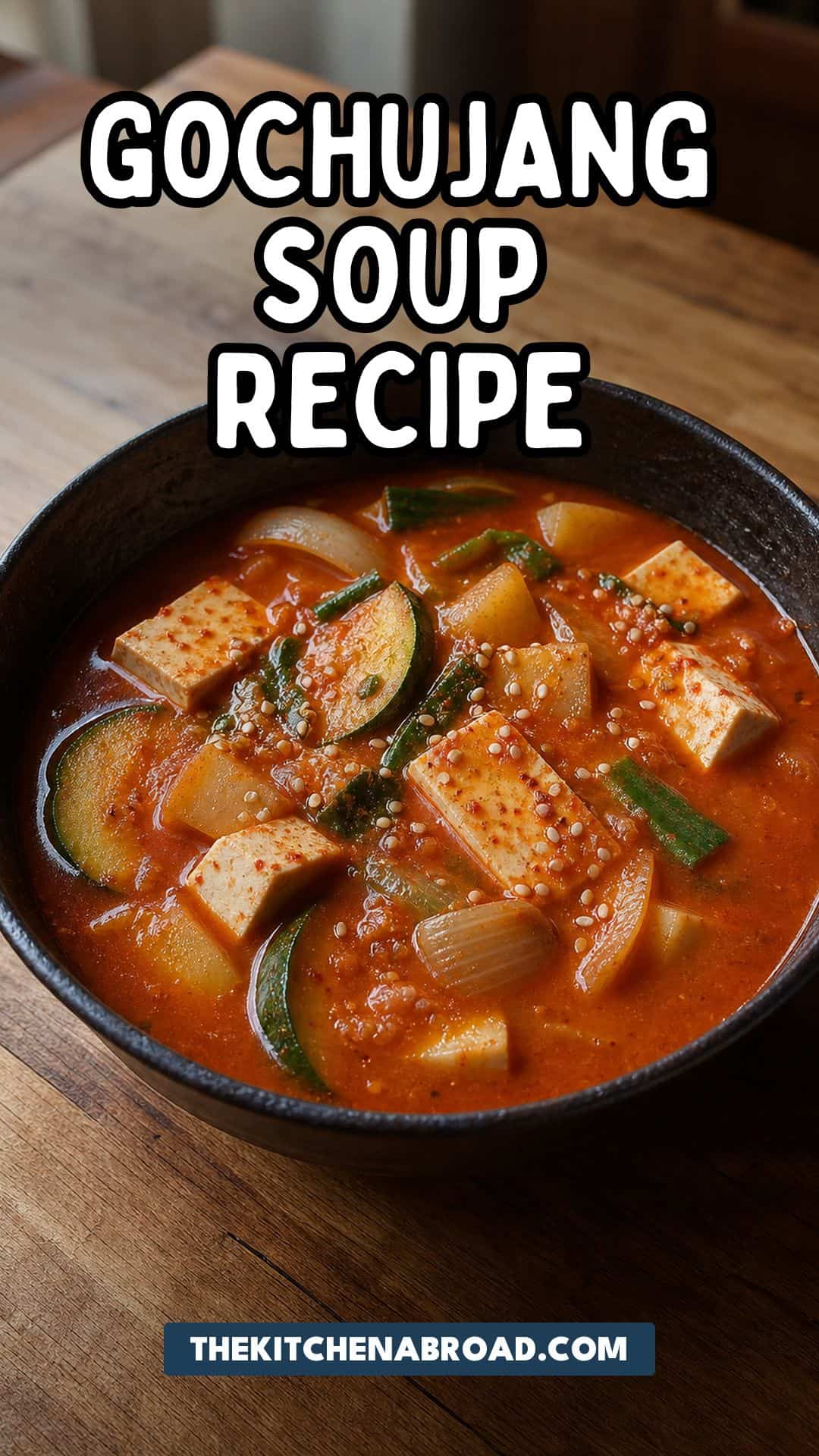
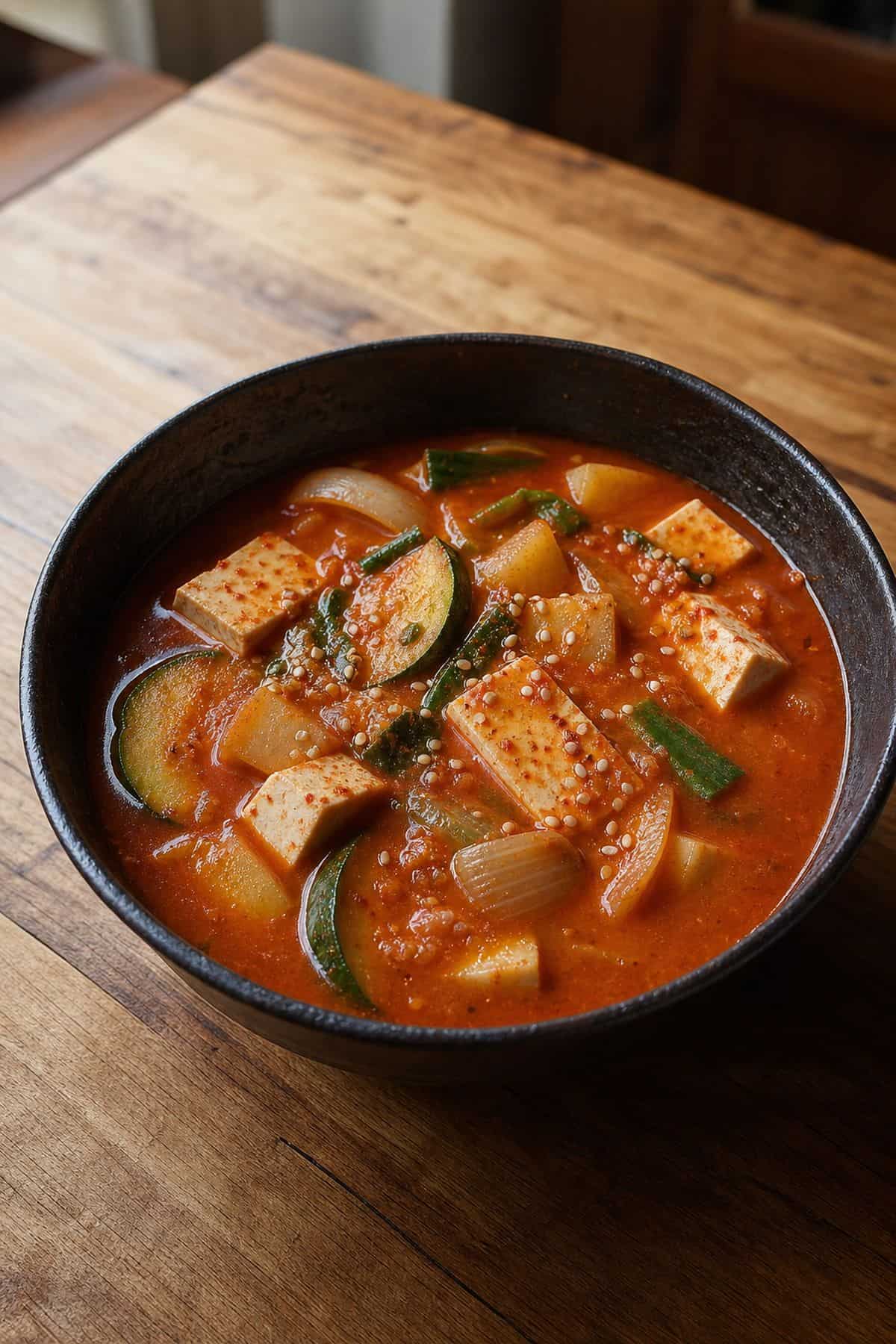
Gochujang soup is the Korean home stew known as gochujang jjigae, built by frying the paste in oil before any liquid hits the pot. That short bloom in fat caramelizes the sugars, softens the raw fermented bite, and turns the broth a deep brick red. Ready in about 30 minutes over a bowl of short-grain rice.
Everyone with a passing interest in Korean food has a tub of gochujang in the fridge that was bought for one marinade and then forgotten. Gochujang jjigae is the dish that actually uses it: a 30-minute weeknight stew built on a base of fried paste, anchovy stock, and whatever’s in the crisper. Korean home cooks treat the paste as a foundation, not a condiment, blooming a heaping spoonful in hot oil before any liquid hits the pot.
Gear That Helps
A heavy-bottomed pot or a small Korean earthenware ttukbaegi handles the long bloom and slow simmer without scorching the paste at the bottom. A fine-mesh strainer makes the anchovy stock cleaner. A flat wooden spatula is the easiest tool for working the paste into the oil without splattering.


Recommended Reads
- Korean Buckwheat Noodles
- Coconut Rice in a Rice Cooker
- Beef in Oyster Sauce
- Easy Sweet Soy Glaze
- Homemade Chili Oil
Why It Works
Gochujang jjigae is one of those everyday Korean stews that lives in the shadow of kimchi jjigae and doenjang jjigae. It is the weekday what-is-in-the-fridge stew, the one Korean moms make when the tub of paste needs using up. The dish is eaten over rice rather than as a separate course, which is why the seasoning runs hot and salty enough to flavor each spoonful of grain underneath.
The bloom step is the lever. Gochujang straight from the tub tastes raw, with a sour fermented edge that needs heat to settle. One to two minutes of frying in neutral oil mellows that edge and pulls out the natural sugars in the paste, which is why the broth ends up dark red instead of dull brown. Adding a spoonful of gochugaru (Korean chili flake) on top of the paste gives the soup a fresh chili note that the paste alone misses. The two ingredients sound interchangeable but they work in different registers, like cinnamon stick versus ground.
The stock matters more than people think. A 15-minute simmer of dried anchovies and a sheet of kombu produces myeolchi yuksu, the shortcut Korean home stock that gives jjigae its savory backbone. Without it the stew tastes thin even with the bloom. A vegan version using just kombu and dried shiitake also works, and the fermented paste carries enough depth to hold the dish together.
Vegetable layering is the last lever. Onion and potato want the full simmer to soften and release sweetness into the broth. Zucchini and tofu want to hold their shape, which means they go in for the last 3 to 4 minutes only. Drop everything in at once and the zucchini turns to mush by the time the potato is done.
Recipe: Gochujang Soup
Ingredients
- 2 tablespoons gochujang paste. The centerpiece. Look for a deep red, sticky paste from a Korean brand like Chung Jung One or Sempio. Cheaper supermarket versions taste flatter.
- 1 tablespoon gochugaru (Korean coarse chili flake), not Mexican chili powder. Adds bright top-note heat that the paste cannot give on its own.
- 30 g (about a small handful) dried anchovies, the bigger ones meant for stock. Pull the heads and dark guts before simmering or the broth turns bitter.
- 1 piece dried kombu, thumb-sized. Brings deep oceanic umami without any fishy taste.
- 1 medium yellow onion, cut in thick wedges so it holds shape through the simmer.
- 1 medium Yukon gold potato, peeled and diced in 2 cm (3/4 inch) cubes. Holds its edges better than russet and adds body to the broth.
- 1 medium zucchini, cut in 1 cm (1/2 inch) half-moons. Korean cooks use aehobak (Korean grey squash) when they can get it; regular zucchini is the everyday substitute.
- 200 g (7 oz) firm or medium-firm tofu, cubed. Silken collapses.
- 3 cloves garlic, minced, added with the bloom.
- 1 tablespoon soy sauce, to round out the salt and add a malty note.
- 150 g (5 oz) pork belly or beef brisket, thin-sliced, optional. Browned with the paste. The tofu-only version still hits.
- 2 scallions, greens reserved for the top, whites cooked into the base.
- 1 liter (4 cups) water, for the stock.
- 2 tablespoons neutral oil, for the bloom.
Instructions
- Start with the stock. Drop a thumb-sized piece of dried kombu and a small handful of cleaned dried anchovies into a saucepan with about 1 liter (4 cups) of cold water. Bring it to a low simmer, then lower the heat and hold it there for about 15 minutes. Strain through a fine-mesh sieve and set aside. The liquid should be a pale tea color and smell briny rather than fishy.
- While the stock simmers, prep everything else. Cut the onion in thick wedges, peel and dice the potato in 2 cm (3/4 inch) cubes, cut the zucchini in half-moons about 1 cm (1/2 inch) thick, and cube the tofu. If using pork belly or brisket, slice it thin against the grain.
- Heat about 2 tablespoons of neutral oil in a heavy pot over medium heat. If you are adding meat, brown the slices first until the edges crisp, about 3 minutes, then push them to the side. Add the white parts of the scallions and the garlic and let them sizzle for 30 seconds. Drop in a heaping 2 tablespoons of gochujang and 1 tablespoon of gochugaru, then work the paste into the oil with a flat spatula until the mixture turns dark red and a shade deeper in color, about 1 to 2 minutes. The kitchen will smell sweet and toasty rather than sharp.
- Pour in the strained stock and stir to dissolve the paste fully. Add the onion wedges and the potato cubes. Bring the pot to a gentle simmer and hold it there for about 10 minutes, until the potato is fork-tender at the center.
- Slide in the zucchini and the tofu. Cook for another 3 to 4 minutes, just until the zucchini is tender but still holds shape. Add a splash of soy sauce, taste the broth, and adjust with salt or another small spoonful of gochujang if it tastes flat. Cut the heat, scatter the green scallion tops over the surface, and bring the pot to the table.
- Serve over a bowl of hot short-grain rice with a fried egg on top if you like. A side of kimchi and any banchan you have in the fridge rounds it out.
Tips and Variations
Make it vegan
Swap the anchovy stock for a kombu-and-dried-shiitake stock. Steep 2 dried shiitake caps with the kombu in cold water for 30 minutes if you have time, then bring to a simmer for 15 minutes. The shiitake adds the meaty depth the anchovies were carrying.
Pork belly variation
About 120 g (4 oz) of thin-sliced pork belly, browned with the paste, turns this into a richer weekend version. The rendered fat blends into the bloom and adds a slick of flavor to every spoonful.
Heat dial
Standard gochujang sits around 1,000 to 2,000 Scoville units, so the soup is more warm than blazing. Bump it with extra gochugaru rather than more paste, which would push the salt and sugar too far. For a top-heat finish, a drizzle of homemade chili oil just before serving works well.
Add noodles for a fuller meal
A handful of cooked Korean buckwheat noodles dropped into the bowl turns the stew into a one-pot meal. Add them just before serving so they do not soak up too much broth.
What to Serve It With
Korean cooks rarely serve jjigae as a stand-alone dish. The bowl belongs in the middle of a small spread: a mound of short-grain rice in each diner’s bowl, the stew in the center, and two or three side dishes around it. Kimchi is non-negotiable. Pickled radish (mu saengchae), seasoned spinach (sigeumchi namul), and bean sprouts (kongnamul muchim) are the easy three.
A fried egg cracked over the rice is the move that turns this into a Sunday lunch. The runny yolk binds the rice and the broth into something close to bibimbap. For drink, cold barley tea (boricha) is the everyday choice. Makgeolli, the cloudy rice wine, is the weekend one.
Frequently Asked Questions
What is gochujang soup?
Gochujang soup, or gochujang jjigae, is a Korean home-style stew built on a base of fermented red chili paste bloomed in oil and simmered with anchovy stock, root vegetables, and tofu. It is one of the everyday jjigae styles eaten over rice rather than as a separate course.
Is gochujang the same as gochugaru?
No. Gochujang is a fermented red chili paste with rice and salt, sticky and slightly sweet. Gochugaru is dried Korean chili flake, dry and bright on the tongue. They work together in this soup because the paste gives depth and the flake gives top-note heat.
What can I substitute for anchovy stock?
A kombu-and-shiitake stock works for a vegan version. Plain dashi or even a light chicken broth is fine in a pinch. Avoid using only water; the bloom alone is not enough to carry the broth.
Can I make gochujang soup vegan?
Yes. Skip the anchovies and use a kombu-and-dried-shiitake stock. Most commercial gochujang is vegan but check the label, as some brands include fish sauce or anchovy extract.
What protein goes best in gochujang stew?
Thin-sliced pork belly is the most common in Korean home kitchens. Beef brisket works for a heavier version. Tofu alone holds the dish together for a lighter weeknight bowl.
How spicy is gochujang jjigae?
Moderate. Gochujang paste sits around 1,000 to 2,000 Scoville units, so the heat is warm and slow rather than sharp. The salt and sweet from the paste balance the burn. Add more gochugaru if you want a sharper finish.
Key Takeaways
- Bloom the gochujang in oil for 1 to 2 minutes before adding any liquid; this caramelizes the sugars and unlocks the deep red color.
- Build the broth from myeolchi yuksu, a 15-minute simmer of dried anchovies and kombu in water.
- Layer vegetables by density: onion and potato go in with the stock, zucchini and tofu join for the last 3 to 4 minutes.
- Use gochugaru (flake) alongside the paste for a fresher top-note heat.
- Serve over short-grain rice with kimchi on the side. A fried egg on the rice is the Sunday upgrade.
Final Thoughts
The thing that surprises most cooks the first time they make gochujang jjigae is how fast it comes together once the stock is going. Twenty minutes of active work, half an hour total, and the kitchen smells like a Korean grandmother’s. The recipe is forgiving of swaps as long as the bloom step is respected.
This is everyday food. It belongs to a Tuesday night with a bowl of rice and whatever banchan is in the fridge, not to a dinner party. Leftovers improve overnight as the broth thickens and the flavors settle, so making a larger pot is rarely a bad idea.
Gochujang Soup
Gochujang soup is the Korean home stew known as gochujang jjigae, built by frying the paste in oil before any liquid hits the pot. That short bloom in fat caramelizes the sugars, softens the raw fermented bite, and turns the broth a deep brick red.
Ingredients
- 2 tablespoons gochujang paste
- 1 tablespoon gochugaru (Korean coarse chili flake), not Mexican chili powder
- 30 g (about a small handful) dried anchovies, the bigger ones meant for stock
- 1 piece dried kombu, thumb-sized
- 1 medium yellow onion, cut in thick wedges so it holds shape through the simmer
- 1 medium Yukon gold potato, peeled and diced in 2 cm (3/4 inch) cubes
- 1 medium zucchini, cut in 1 cm (1/2 inch) half-moons
- 200 g (7 oz) firm or medium-firm tofu, cubed
- 3 cloves garlic, minced, added with the bloom
- 1 tablespoon soy sauce, to round out the salt and add a malty note
- 150 g (5 oz) pork belly or beef brisket, thin-sliced, optional
- 2 scallions, greens reserved for the top, whites cooked into the base
- 1 liter (4 cups) water, for the stock
- 2 tablespoons neutral oil, for the bloom
Instructions
- Start with the stock. Drop a thumb-sized piece of dried kombu and a small handful of cleaned dried anchovies into a saucepan with about 1 liter (4 cups) of cold water. Bring it to a low simmer, then lower the heat and hold it there for about 15 minutes.
- While the stock simmers, prep everything else. Cut the onion in thick wedges, peel and dice the potato in 2 cm (3/4 inch) cubes, cut the zucchini in half-moons about 1 cm (1/2 inch) thick, and cube the tofu.
- Heat about 2 tablespoons of neutral oil in a heavy pot over medium heat. If you are adding meat, brown the slices first until the edges crisp, about 3 minutes, then push them to the side.
- Pour in the strained stock and stir to dissolve the paste fully. Add the onion wedges and the potato cubes. Bring the pot to a gentle simmer and hold it there for about 10 minutes, until the potato is fork-tender at the center.
- Slide in the zucchini and the tofu. Cook for another 3 to 4 minutes, just until the zucchini is tender but still holds shape. Add a splash of soy sauce, taste the broth, and adjust with salt or another small spoonful of gochujang if it tastes flat.
- Serve over a bowl of hot short-grain rice with a fried egg on top if you like. A side of kimchi and any banchan you have in the fridge rounds it out.
Last update on 2026-10-03 / Affiliate links / Images from Amazon Product Advertising API
