

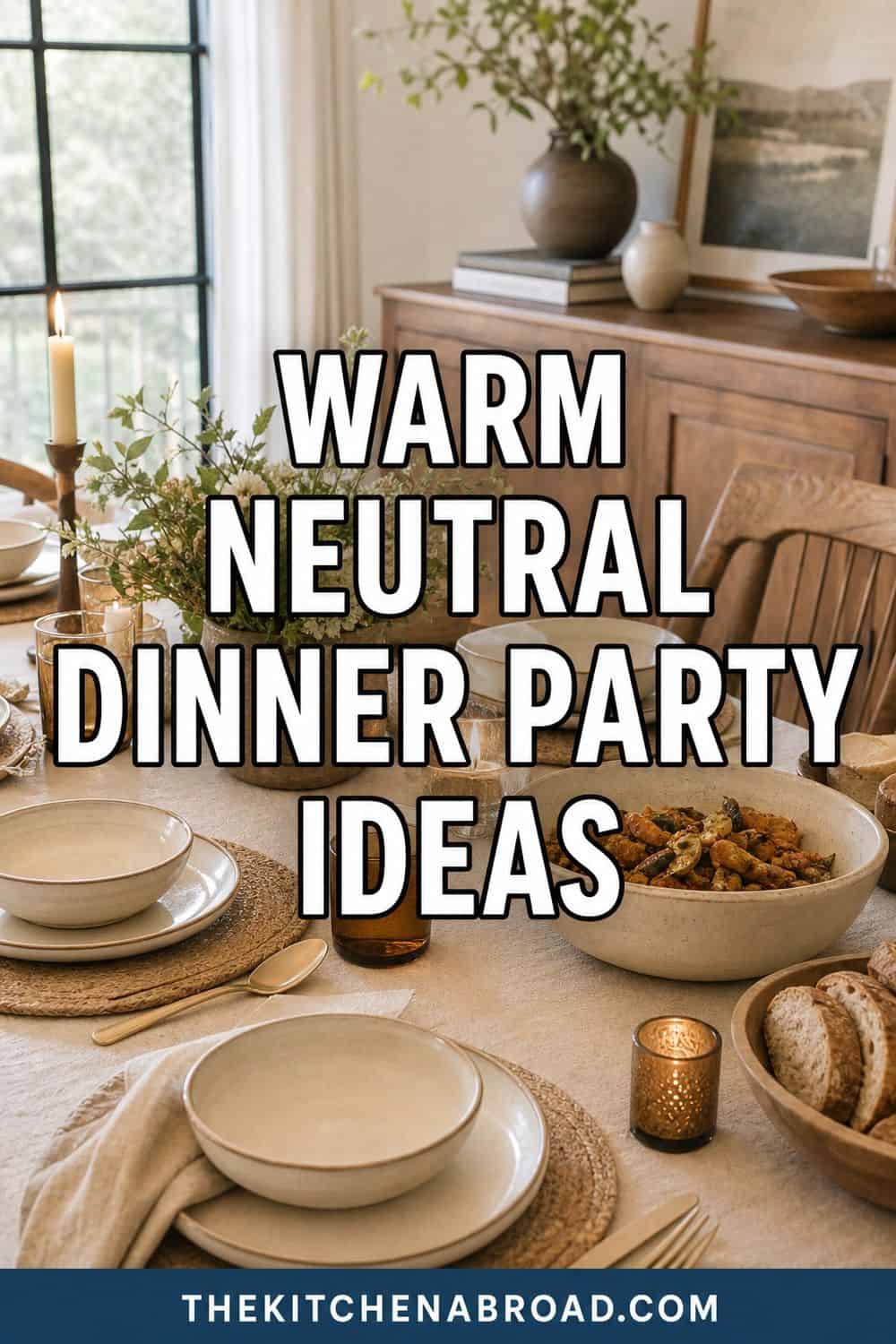
A warm neutral dinner table works best with flax linen, cream stoneware, rattan texture, amber glassware, espresso or chestnut napkins, low dried stems or bud vases, unscented candles, and a menu with roast chicken, mushroom pasta, squash, bread, caramel, pear, or coffee notes.
Warm neutral dinner party ideas should feel calm without turning into one flat beige table. The palette works when cream, flax, taupe, caramel, chestnut, espresso, amber, wheat, stone, and soft olive show up through texture, candlelight, glassware, and food color.
Think of the table as a hosting system, not just a color scheme. Linen sets the mood, plates and glasses shape each seat, low centerpieces protect conversation, and the menu brings the warm tones to life through roasted, buttery, earthy, and gently sweet dishes.
You Might Also Like These Blog Posts
- Dinner Party Ideas
- Tablescape Ideas
- Quiet Luxury Dinner Party Ideas
- Warm Neutral Kitchen Ideas
- Rustic Farmhouse Dinner Party Ideas
1. Start With a Flax Linen Tablecloth

A flax linen tablecloth gives a warm neutral dinner party its calm foundation. Choose oatmeal, mushroom, warm white, or taupe rather than a cold gray, and let the fabric look relaxed instead of sharply pressed. The softness keeps the table from feeling too formal before food arrives.
Washable linen is especially useful if the meal includes butter, wine, sauces, or family-style serving. Let the cloth cover the table without hiding every edge; a little wood or chair texture nearby keeps the setting grounded.
2. Add a Tonal Linen Runner Over Wood

A tonal runner is a good choice when the table itself has a warm wood surface worth showing. Layer taupe, flax, or warm beige linen down the center so it frames platters and candles without covering the whole table. The runner should be wide enough for serving pieces but narrow enough that plates and glasses sit securely on the table. This keeps the look layered while still giving guests stable space for eating. It also gives the center of the table a clear path for bread, candles, and shared bowls.
3. Use Cream Stoneware Instead of Bright White Plates
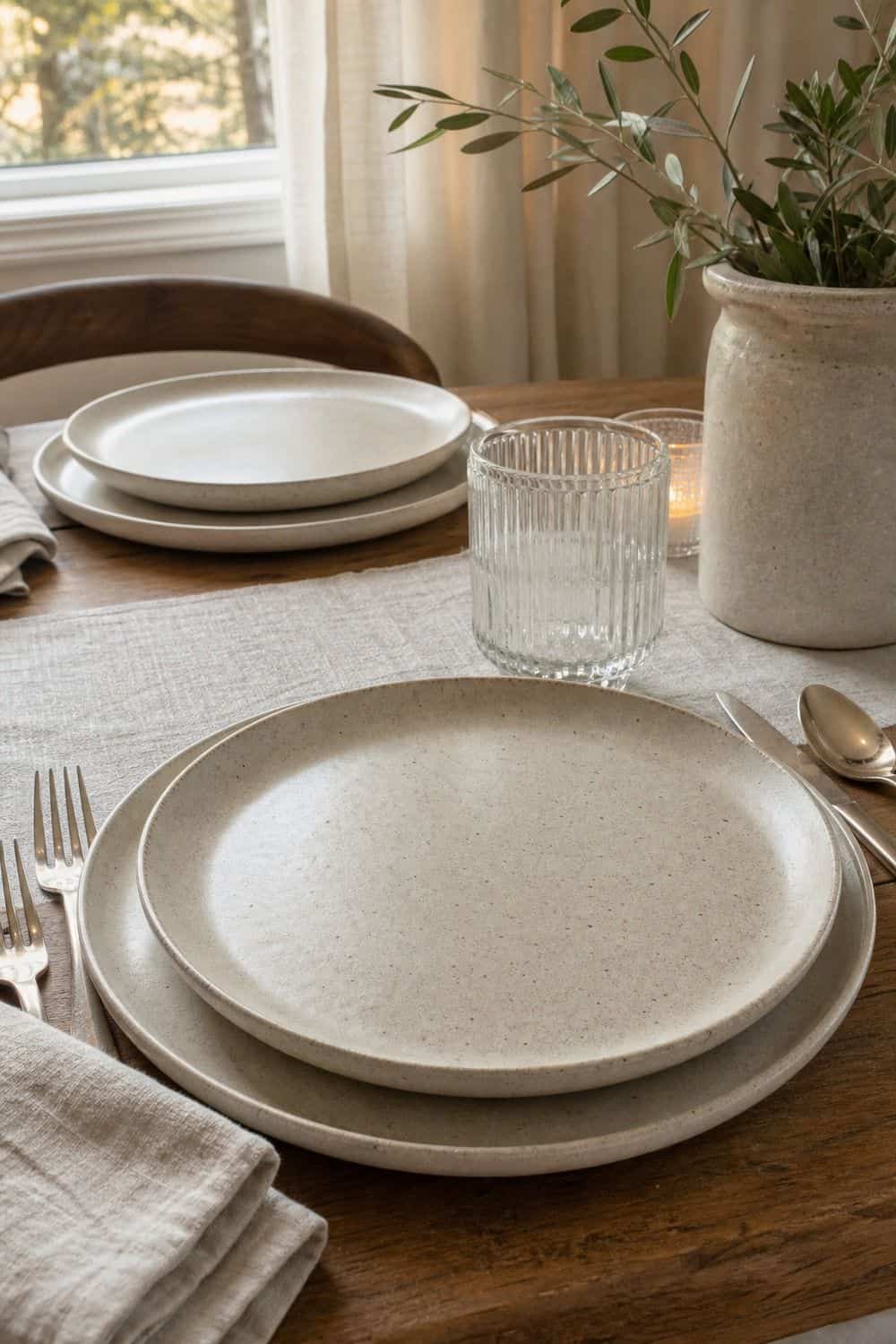
Cream stoneware feels softer than bright white plates under candlelight. Speckled cream, oatmeal, or warm ivory plates connect more naturally to flax linen, rattan chargers, amber glasses, and brown-toned food. The goal is not matching everything exactly; it is avoiding a sharp white circle that pulls the eye away from the rest of the table. Choose plates with enough weight for dinner, then let darker napkins, wood boards, or brass candleholders add the contrast. That softer plate color makes the whole setting feel warmer before any centerpiece is added.
4. Layer Rattan Chargers for Texture

Rattan chargers break up smooth linen and stoneware without adding another color. Use them under simple plates so each place setting gets texture before the centerpiece even starts. In a warm neutral palette, rattan also keeps cream and taupe from looking too flat or hotel-like. Check the charger size against your flatware and glassware before setting the whole table. If the table is narrow, skip extra woven baskets nearby so the charger texture has room to do its job. Their natural weave also warms the cream plates without adding another strong color.
5. Mix Amber Glasses With Clear Water Glasses
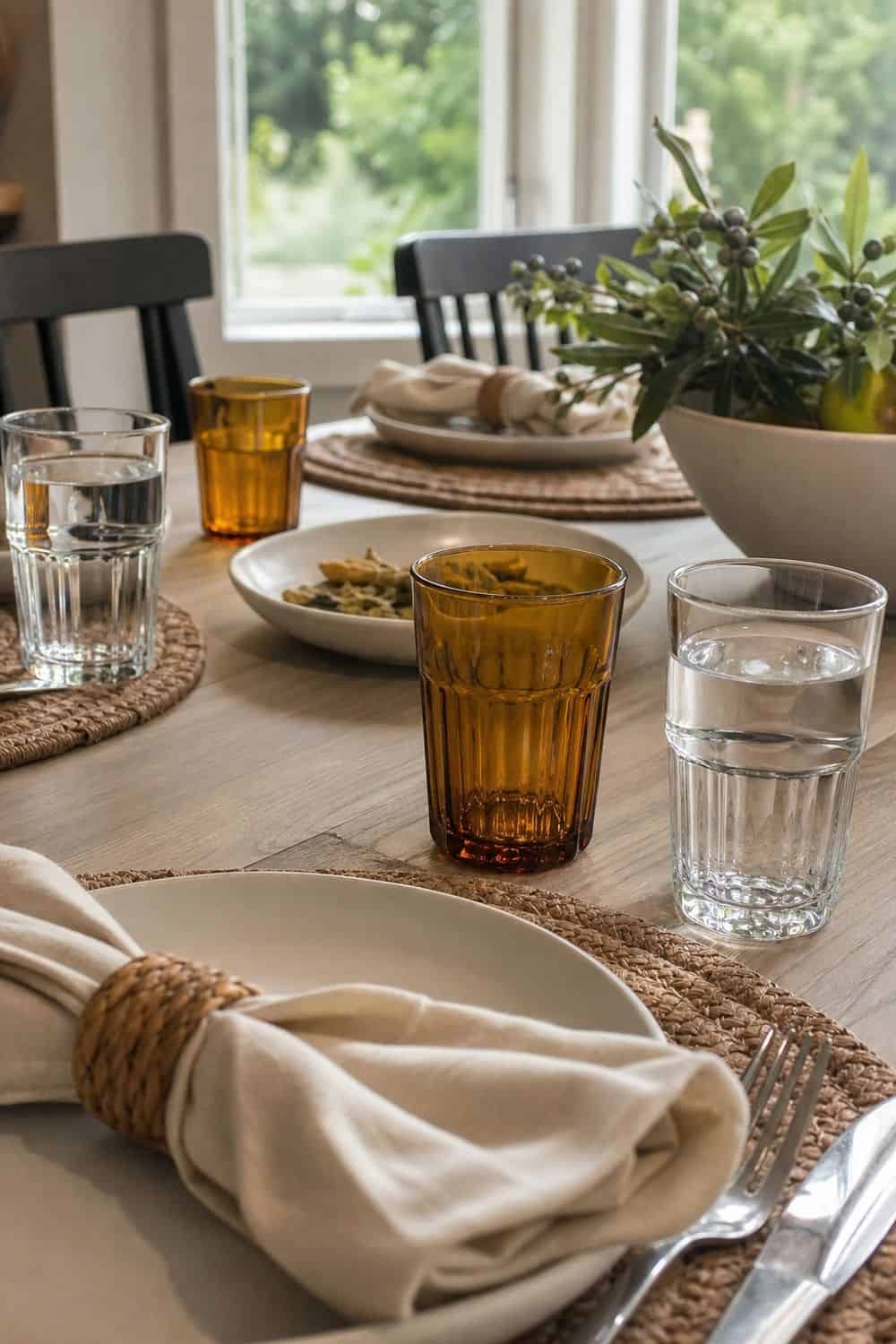
Amber glasses add a small color moment that still belongs in a neutral table. Use them for wine, spritzes, or a zero-proof drink, then keep clear glasses nearby for water so the table does not become too dark.
Honey, smoke, or soft olive glass can work the same way if amber feels too strong. The trick is repeating the glass color just enough to catch candlelight, while leaving the rest of the place setting calm and usable. Place the amber glasses where candlelight can catch them without blocking water service.
6. Fold Espresso Napkins With Cream Plates

Espresso napkins give cream plates a needed shadow. Fold them simply beside the fork, under the salad plate, or across the dinner plate so the dark textile feels warm instead of severe. Cocoa, tobacco, chestnut, and cinnamon tones also work if black feels too stark. Avoid complicated napkin shapes here; the color is already doing the design work. A relaxed fold keeps the table cozy and makes it easy for guests to pick up the napkin once dinner begins. The darker napkin also helps each place setting stand apart from the linen base.
7. Add Olive Wood Boards for Starters

Olive wood boards make starters feel generous and practical. Use them for cheese, bread, olives, roasted nuts, sliced pears, or a small butter dish, then place the board where guests can reach it without leaning through candles. The grain adds warmth that linen and ceramic cannot provide on their own. Keep the board lightly filled rather than piled high; a few good bites look better and leave room for knives, small spoons, and the first round of glasses. Add a small cheese knife or spoon before guests arrive so the board is ready to use.
8. Serve Bread With Honey Butter

Bread can be part of the tablescape when it is served with intention. Put sourdough, rolls, focaccia, or seeded bread in a low basket or on a board, then add honey butter, whipped butter, or olive oil in a small crock.
The warm tones of bread and honey fit naturally with cream stoneware, amber glass, and brass candlelight. Keep a bread knife or small spreader nearby from the start so guests do not have to interrupt the host for the simplest part of the meal.
9. Make Roast Chicken the Warm Main

Roast chicken is a natural anchor for a warm neutral dinner because it brings golden color, herbs, pan juices, and a family-style feeling. Serve it on a large platter with roasted garlic, lemon, potatoes, mushrooms, or herbs so the food looks generous without becoming overly styled. Place the platter where it can be carved or passed safely. If the table is tight, serve from a sideboard and bring only carved pieces or a smaller platter to the center. A warm platter also gives the table a natural focal point once the candles are lit.
10. Serve Mushroom Pasta in a Wide Bowl
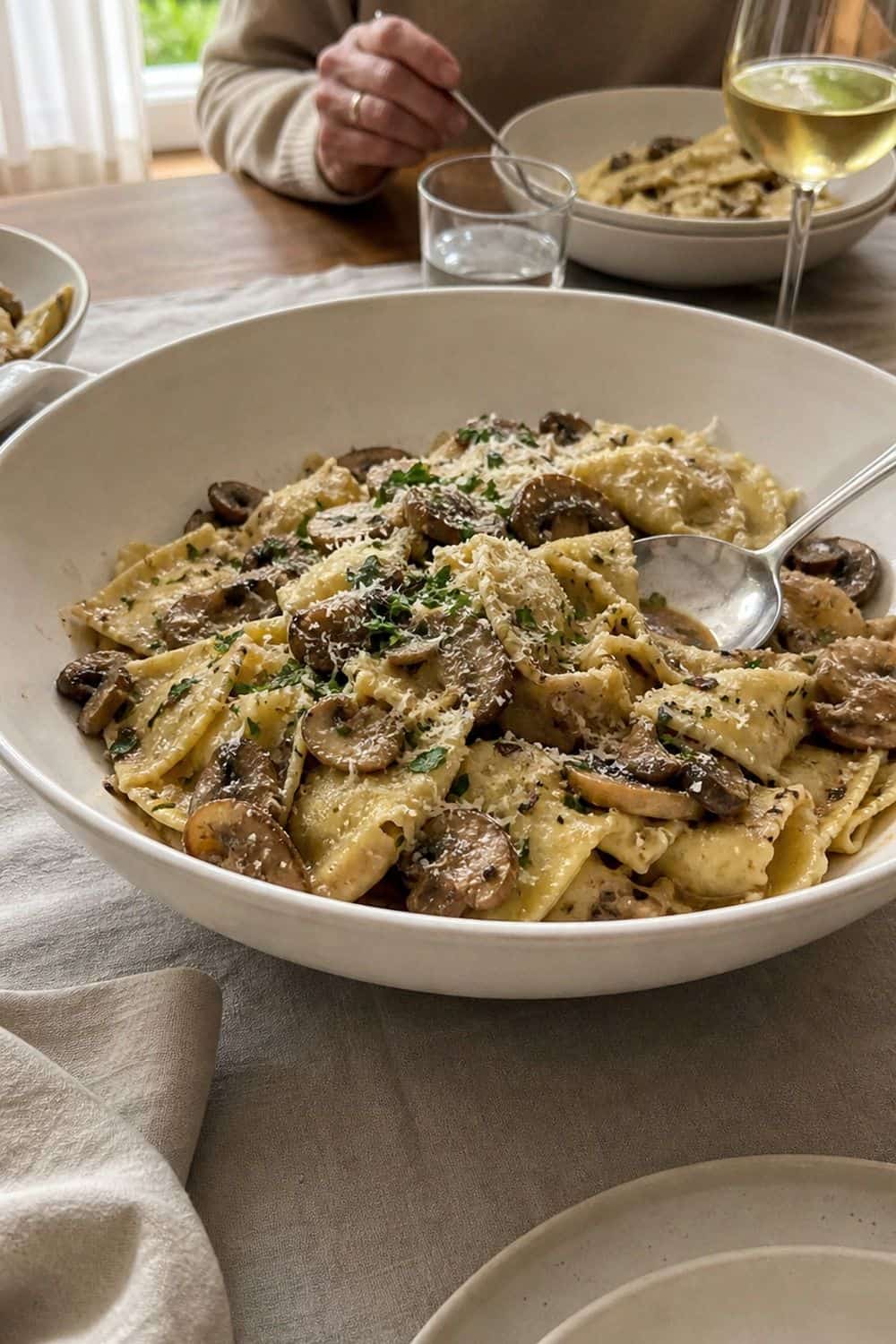
Mushroom pasta, brown butter ravioli, creamy polenta, or cacio e pepe can give the meal an earthy vegetarian anchor. A wide serving bowl helps the dish look abundant while keeping the color story soft and warm. Add herbs, toasted breadcrumbs, or a little parmesan so the bowl has texture instead of one beige surface. Keep tongs or a large spoon in the bowl before it reaches the table. Warm neutral hosting feels best when the food is beautiful and easy to serve.
11. Start With Butternut Squash Soup
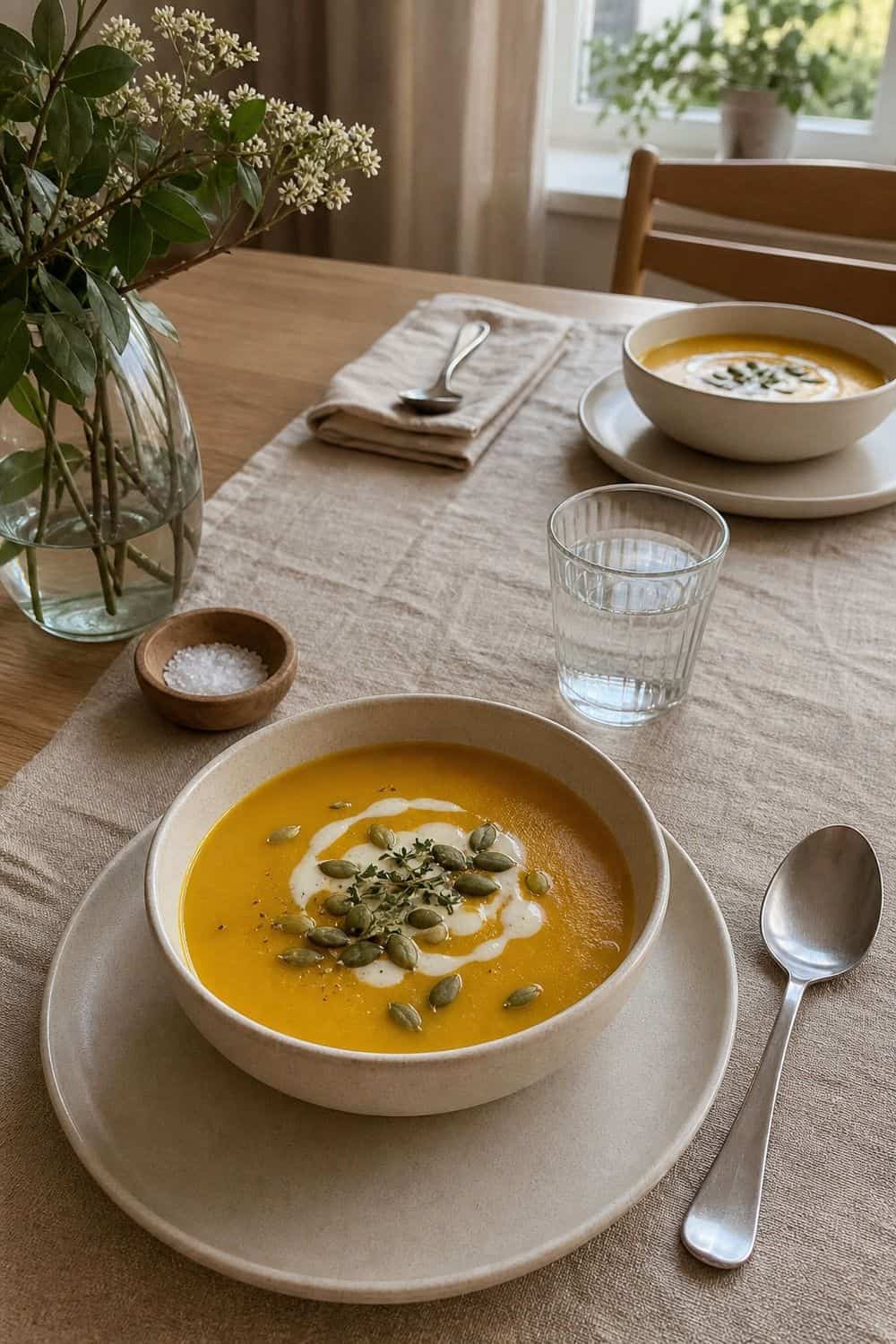
Butternut squash soup brings a golden first course without needing much decoration. Serve it in cream bowls with a small garnish of pepitas, brown butter, herbs, or cracked pepper so the color has a little contrast. The portion should be modest if a large main dish is coming. Set soup spoons before guests sit down, and keep the bowls low enough that the table still feels open. Squash, cauliflower, parsnip, or carrot ginger soup can all support this warm neutral mood.
12. Serve Brown Butter Vegetables
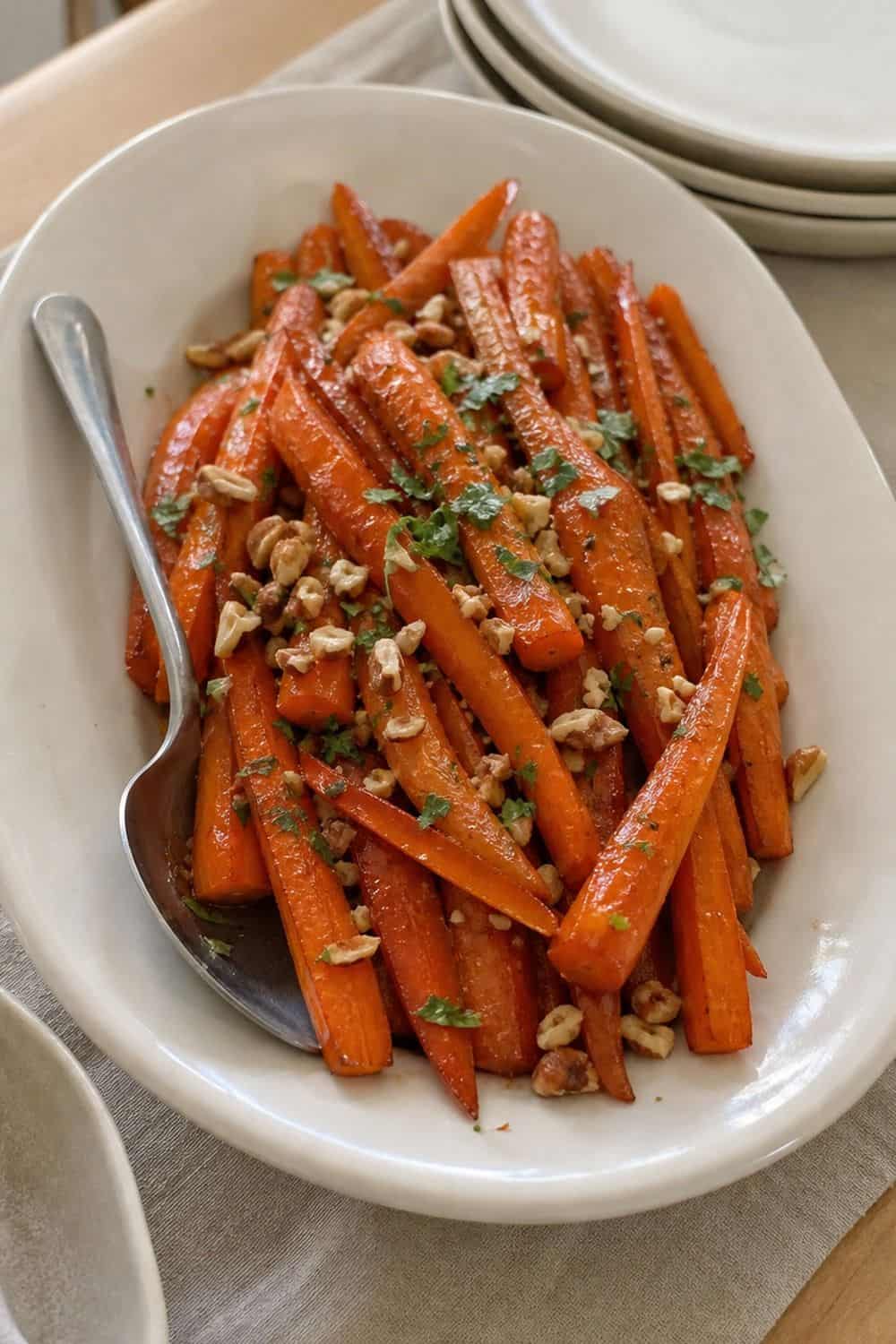
Brown butter vegetables add warmth to the menu and keep the table from relying only on linens and candles. Carrots, green beans, squash, Brussels sprouts, cauliflower, or potatoes all work with herbs, toasted nuts, lemon, or a little sea salt.
Use a ceramic platter that contrasts gently with the vegetable color so the dish does not disappear. Vegetables are also a good place to add green or orange tones without making the tablescape feel bright or off-theme. A little green herb or toasted nut keeps the side dish from blending into the table.
13. Put a Low Wheat Arrangement in the Center
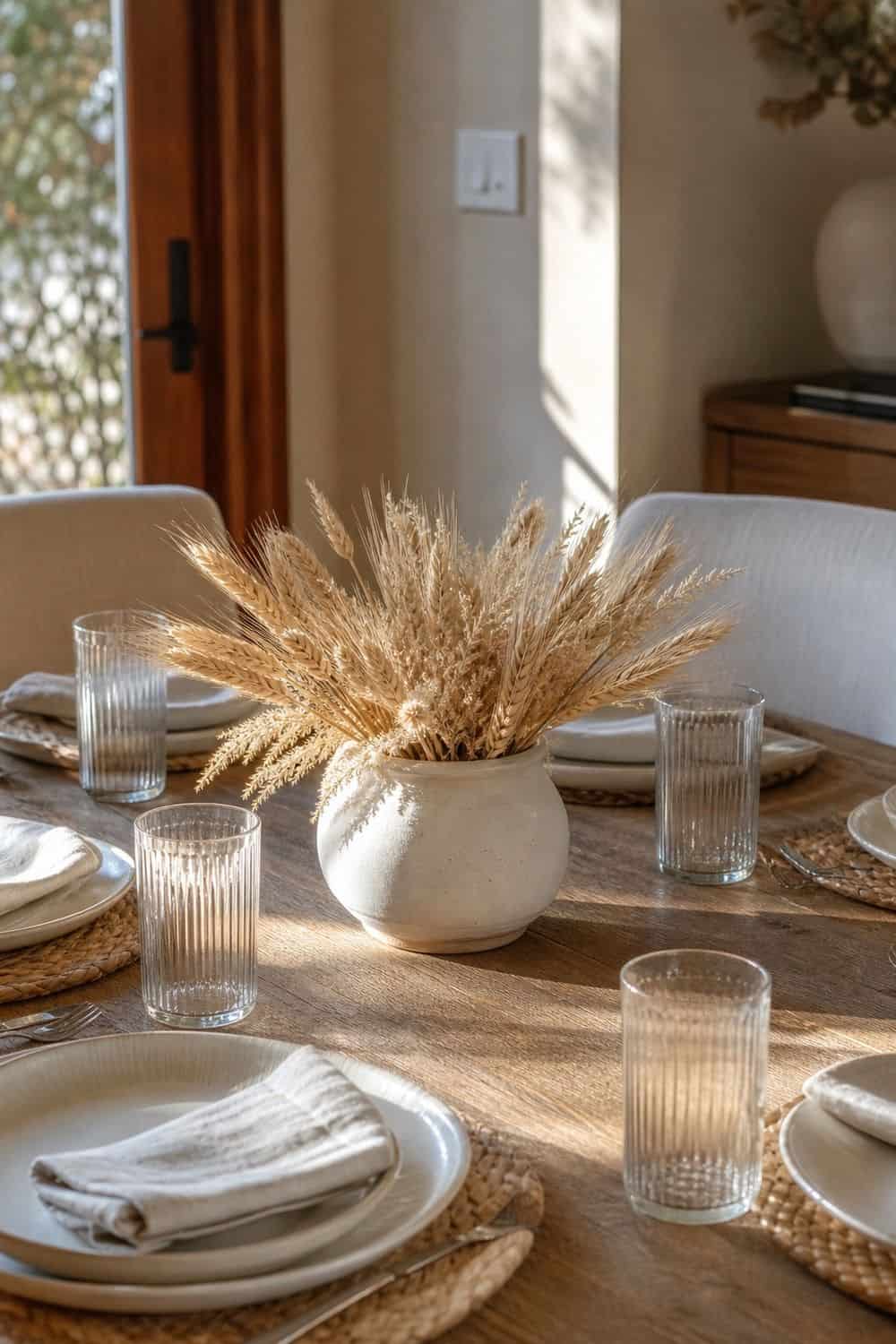
A low wheat arrangement gives height and texture without blocking faces. Use wheat, dried grasses, seed pods, or preserved stems in a shallow vessel, then keep the bundle loose enough that it does not look like a centerpiece from storage. Place it away from candle flames and leave gaps for platters. The dried texture works especially well with rattan chargers and flax linen, but it should stay low. If guests cannot see across the table, the arrangement is too tall.
14. Use Bud Vases With White or Blush Stems
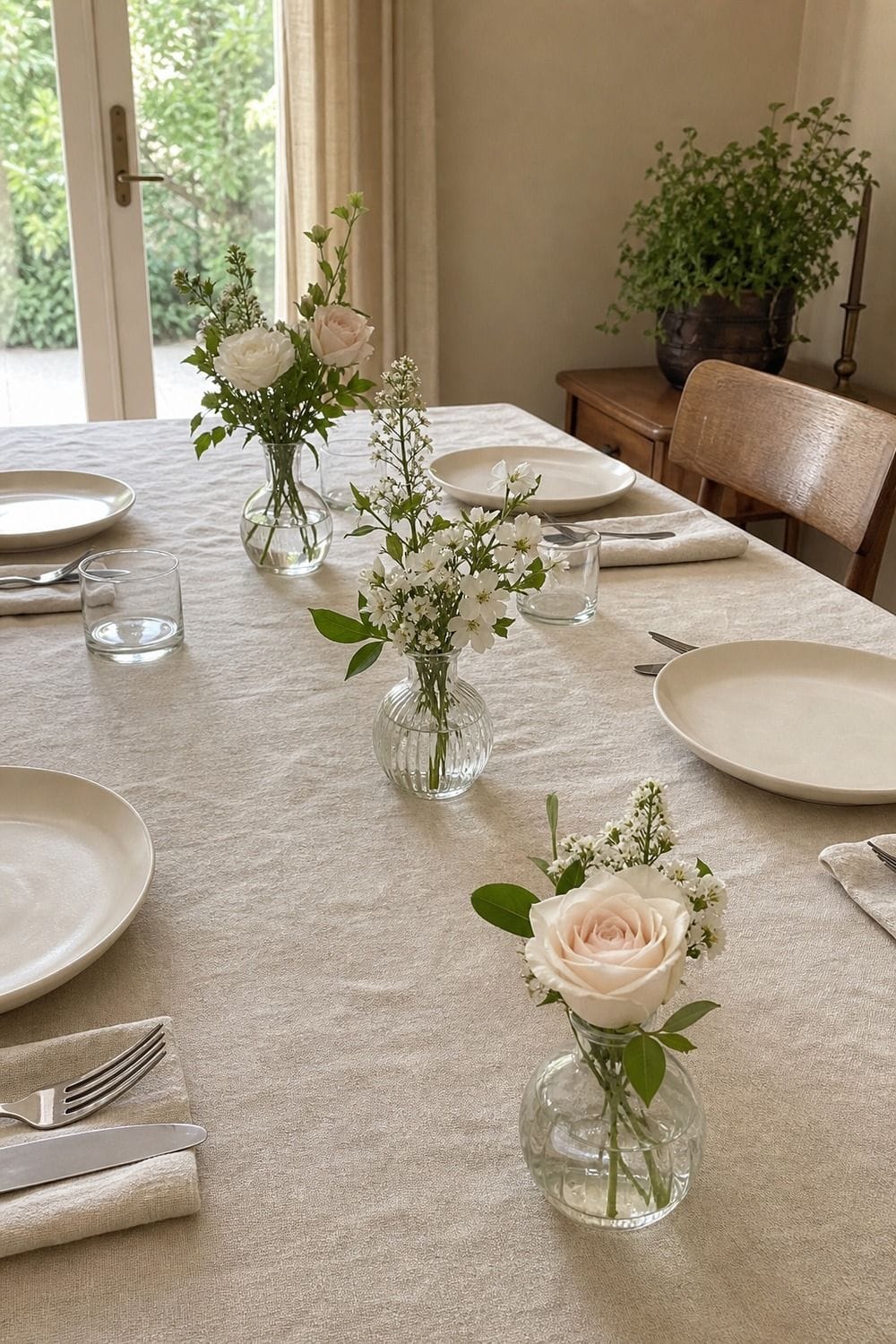
Bud vases are an easy way to bring softness to a warm neutral table. Use a few cream, blush, taupe, apricot, or soft white stems in small ceramic or glass vases, then spread them between candles and serving pieces. Warm neutral does not mean there can be no flowers; it means the color stays quiet. Keep each vase narrow enough that a bread basket, platter, or water carafe can still land nearby without forcing the table to be rearranged. Repeating two or three small vases usually feels softer than one tall arrangement.
15. Arrange Tapers in Aged Brass Holders
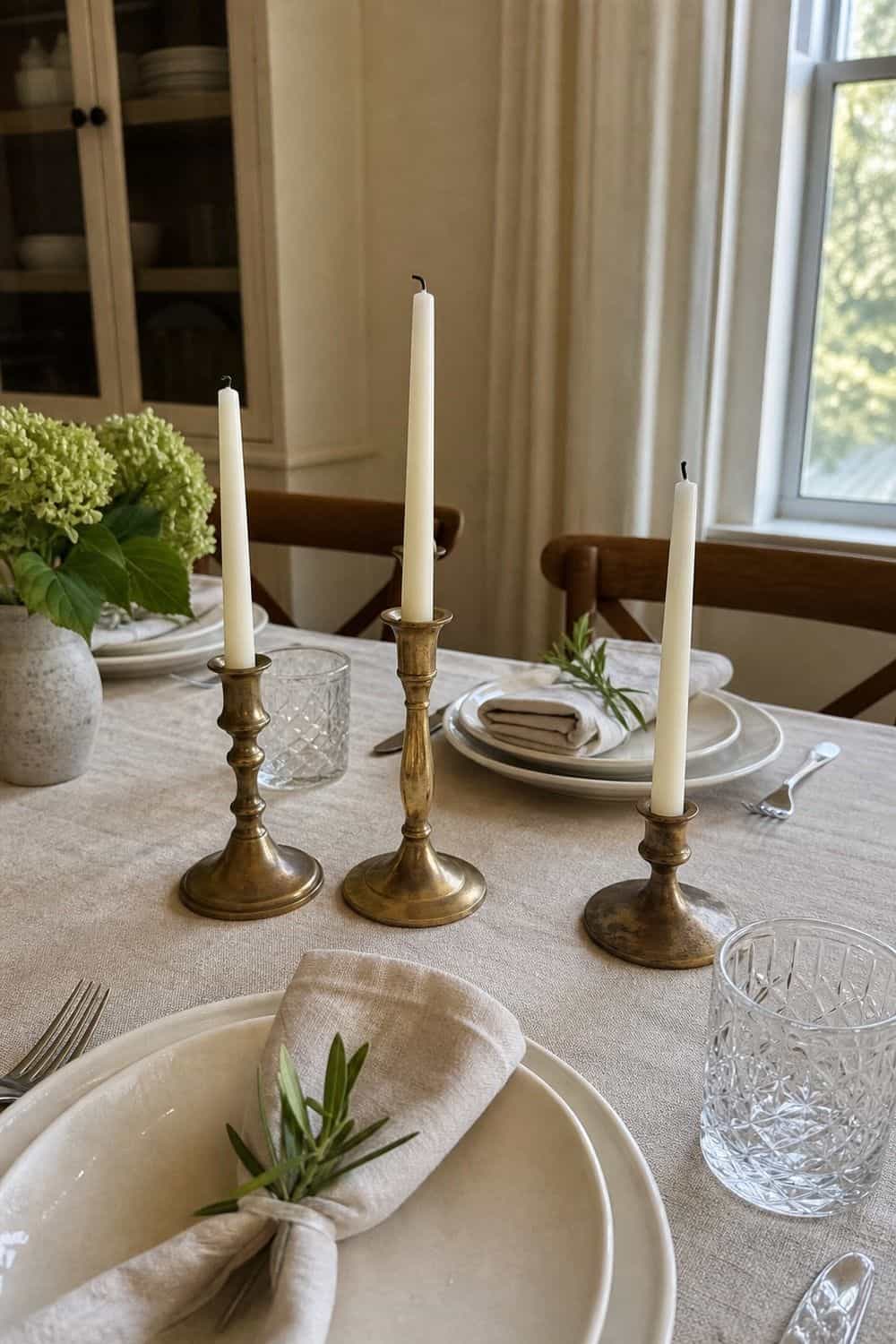
Aged brass taper holders add warmth without making the table shiny. Mix two or three heights, keep the candles unscented, and leave enough space for platters to move between them. Brass works beautifully beside cream plates, espresso napkins, and amber glasses because it catches light without adding a new color family. Do a quick reach test from a seated position before guests arrive. If someone has to dodge a flame to pass bread, move the candle before dinner starts. Keep the tallest holder away from the main serving path so guests can pass dishes easily.
16. Use Unscented Ivory Candles Near Food
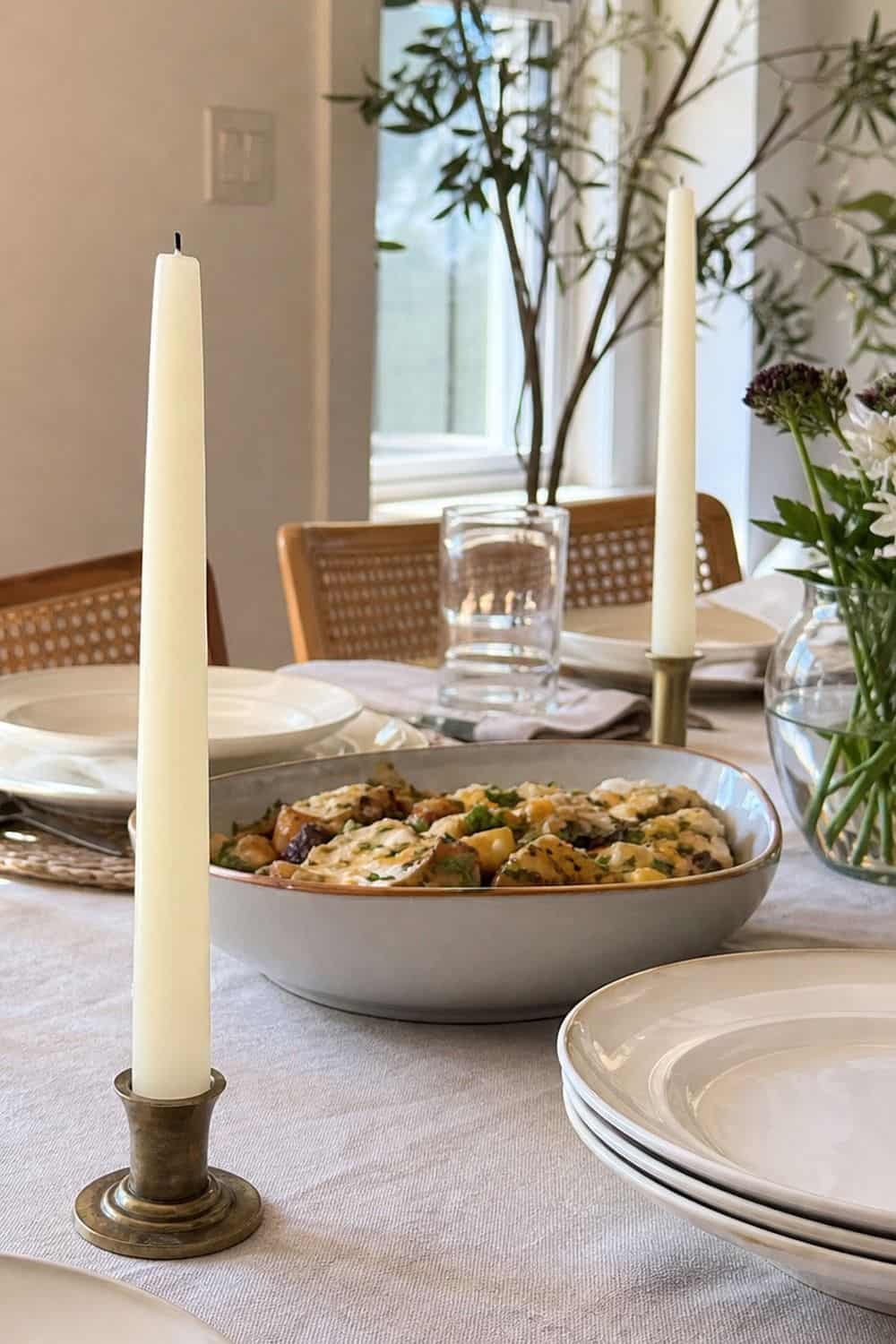
Candlelight belongs on a cozy neutral table, but fragrance does not. Use unscented ivory tapers, votives, or tea lights so the smell of the candles does not compete with roast chicken, mushroom pasta, soup, or dessert.
Ivory candles are softer than pure white and pair well with brass, stoneware, and linen. Keep them away from dried stems and napkin edges, and trim the wicks before lighting so the table glows instead of smoking. Small votives can fill gaps where tall tapers would make serving awkward.
17. Add Marble or Stone Salt Cellars
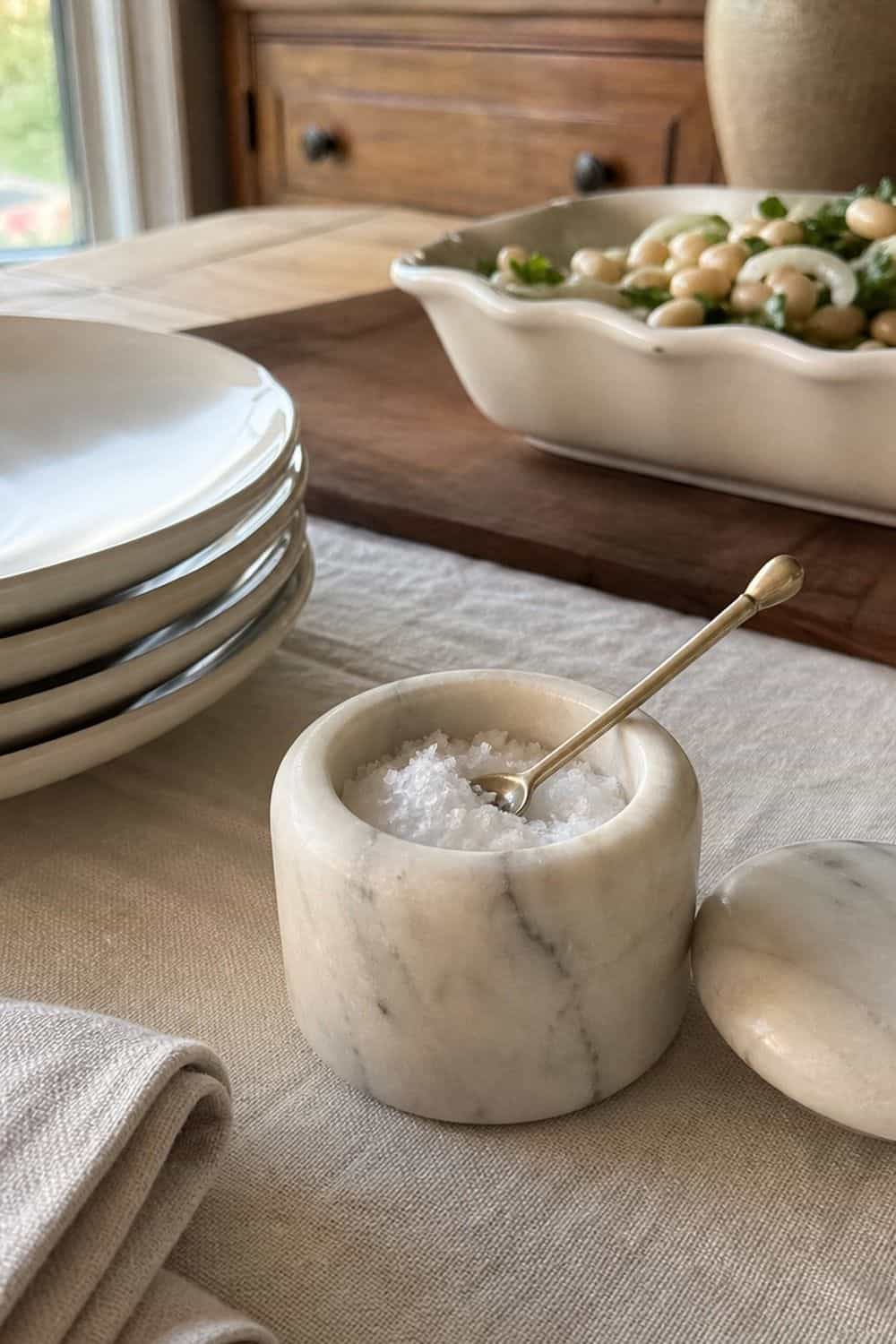
A marble or stone salt cellar brings in a cool material without turning the palette cold. Use it for flaky salt, pepper, or a small finishing spice that guests might actually reach for. The piece should be small and useful, not a random stone object placed for decoration. Put it near bread, vegetables, or the main platter with a tiny spoon or pinch bowl nearby. Stone works best as a quiet accent beside wood, linen, amber glass, and candlelight. The salt cellar should feel like part of the meal, not a separate decorative object.
18. Use Handwritten Kraft Place Cards
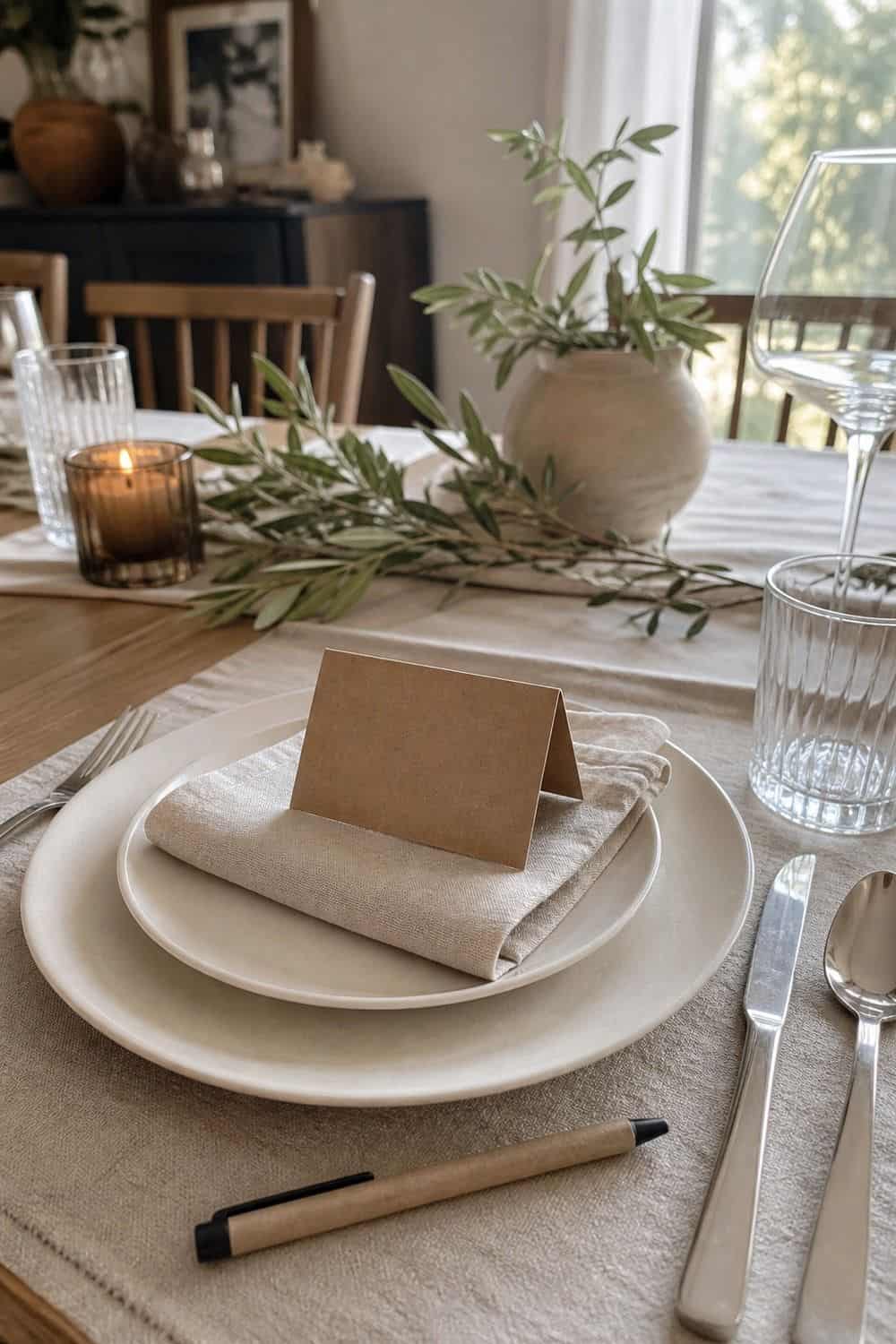
Handwritten kraft place cards make a neutral table feel personal without becoming formal. Use kraft paper, cream cards, or torn-edge paper, then tuck each card near the napkin or plate with a sprig of rosemary or thyme if it fits the menu. Keep the handwriting readable and the card low so it does not clutter the place setting. If the dinner is casual, names alone are enough. The point is warmth and ease, not a complicated seating display. This small paper detail adds warmth without taking space from plates or glasses.
19. Make a Spiced Pear Zero-Proof Pitcher

A spiced pear zero-proof pitcher gives the table a warm drink that can sit out beautifully. Try pear juice with sparkling water, ginger, lemon, cinnamon, or a little tea, then serve it in a clear glass pitcher so the color stays visible.
This kind of drink supports the palette without requiring the host to mix individual glasses all night. Add pear slices or a cinnamon stick if it feels useful, but keep the garnish simple enough that pouring stays easy.
20. Keep Water in Simple Glass Carafes
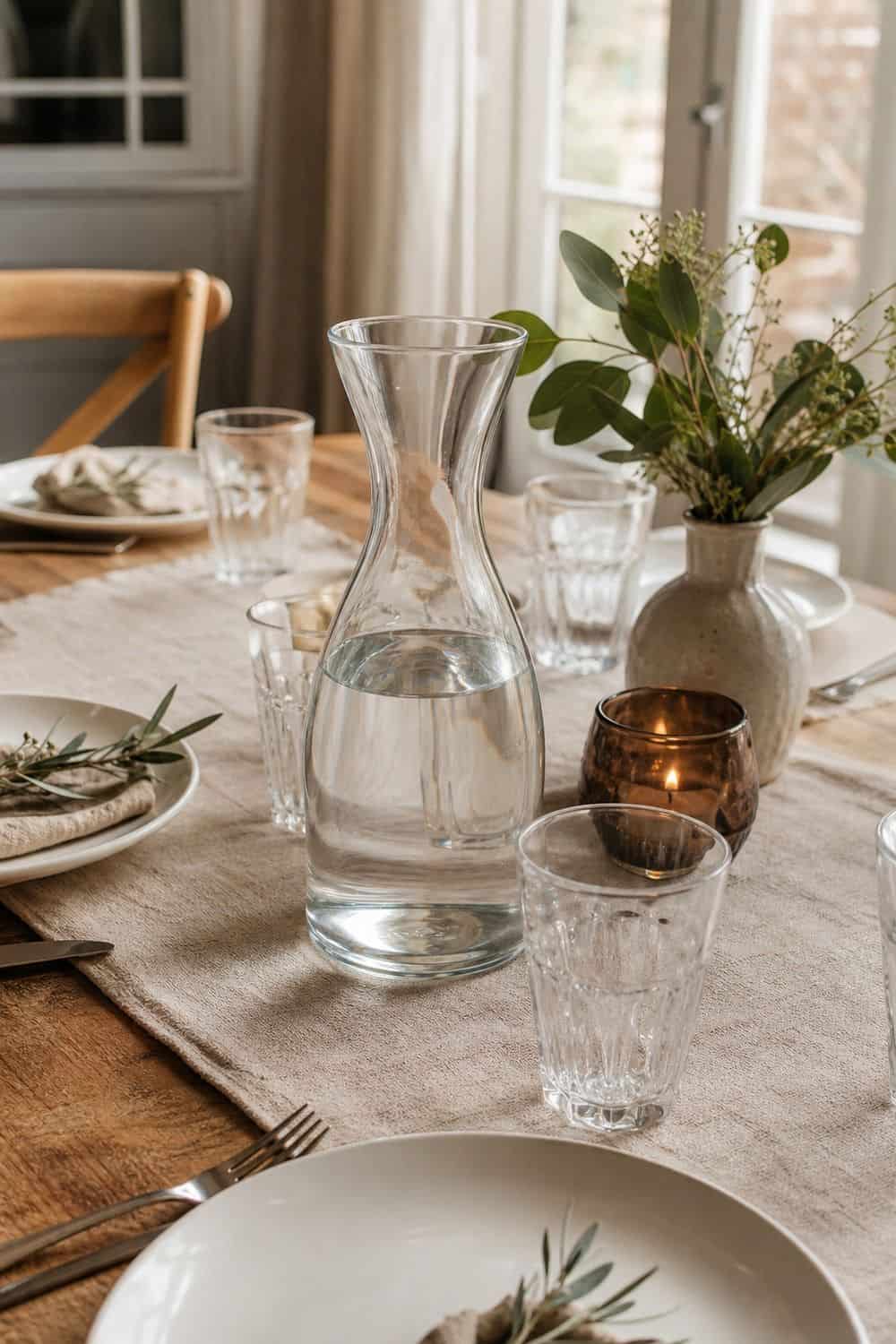
Water service should be easy on a dinner table, especially when the food is rich or buttery. Use simple glass carafes instead of plastic bottles, and place one near each section of the table so guests can refill without waiting for the host. Clear glass also gives the warm palette a little breathing room. If condensation is likely, set the carafe on a coaster or small tray. The goal is practical hydration that still looks calm beside amber glasses and candlelight.
21. Finish With a Caramel or Pear Dessert
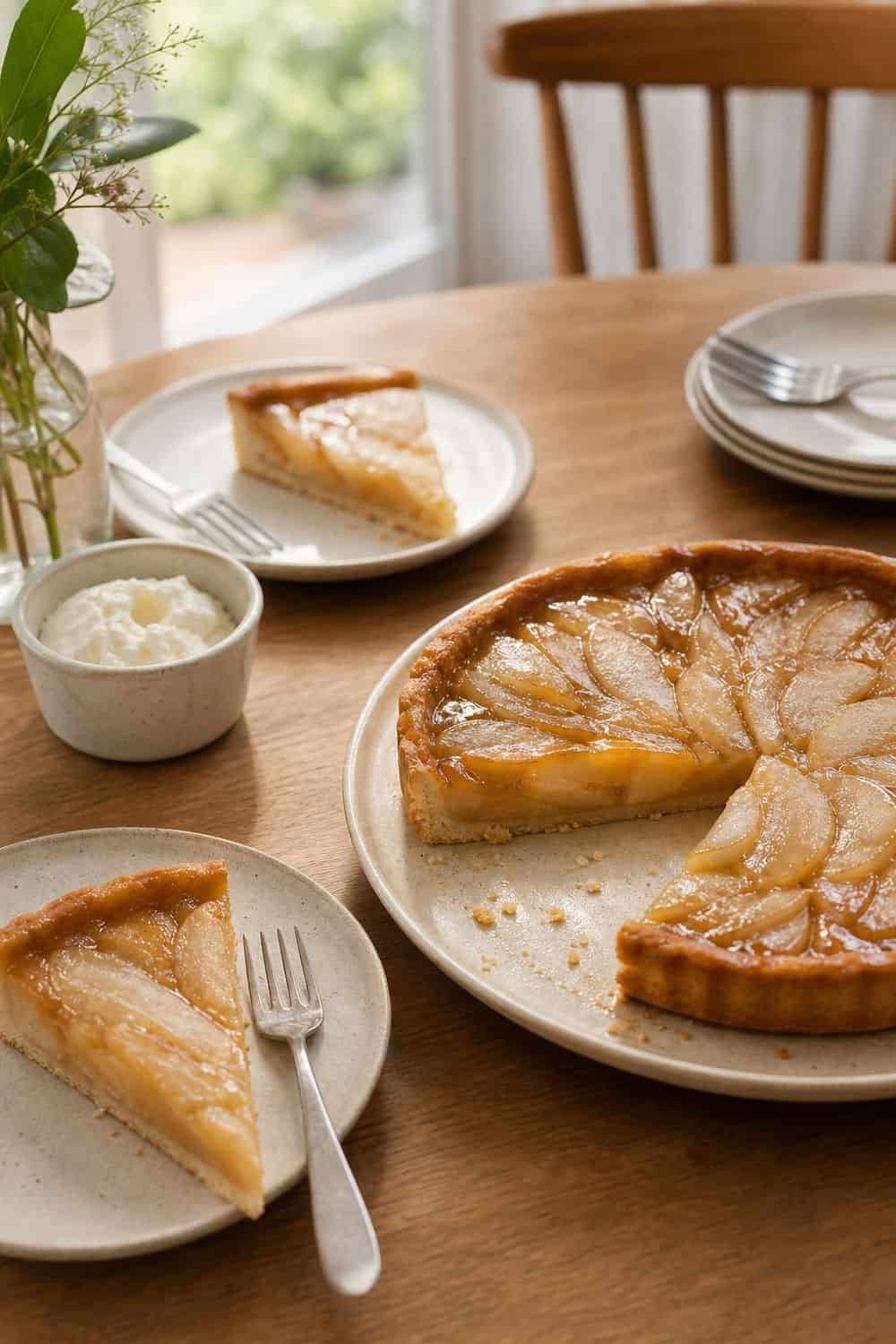
Dessert can extend the warm neutral palette without feeling forced. Caramel cake, pear tart, apple galette, olive oil cake, bread pudding, or panna cotta with honey all bring soft brown, cream, and golden tones to the end of the meal. Use a simple cake stand or platter rather than a fussy dessert display. If coffee is coming after dessert, set mugs and spoons nearby before serving so the final course feels relaxed instead of rushed. The dessert should feel easy to slice or spoon while guests are still settled at the table.
22. Serve Coffee in Stoneware Mugs
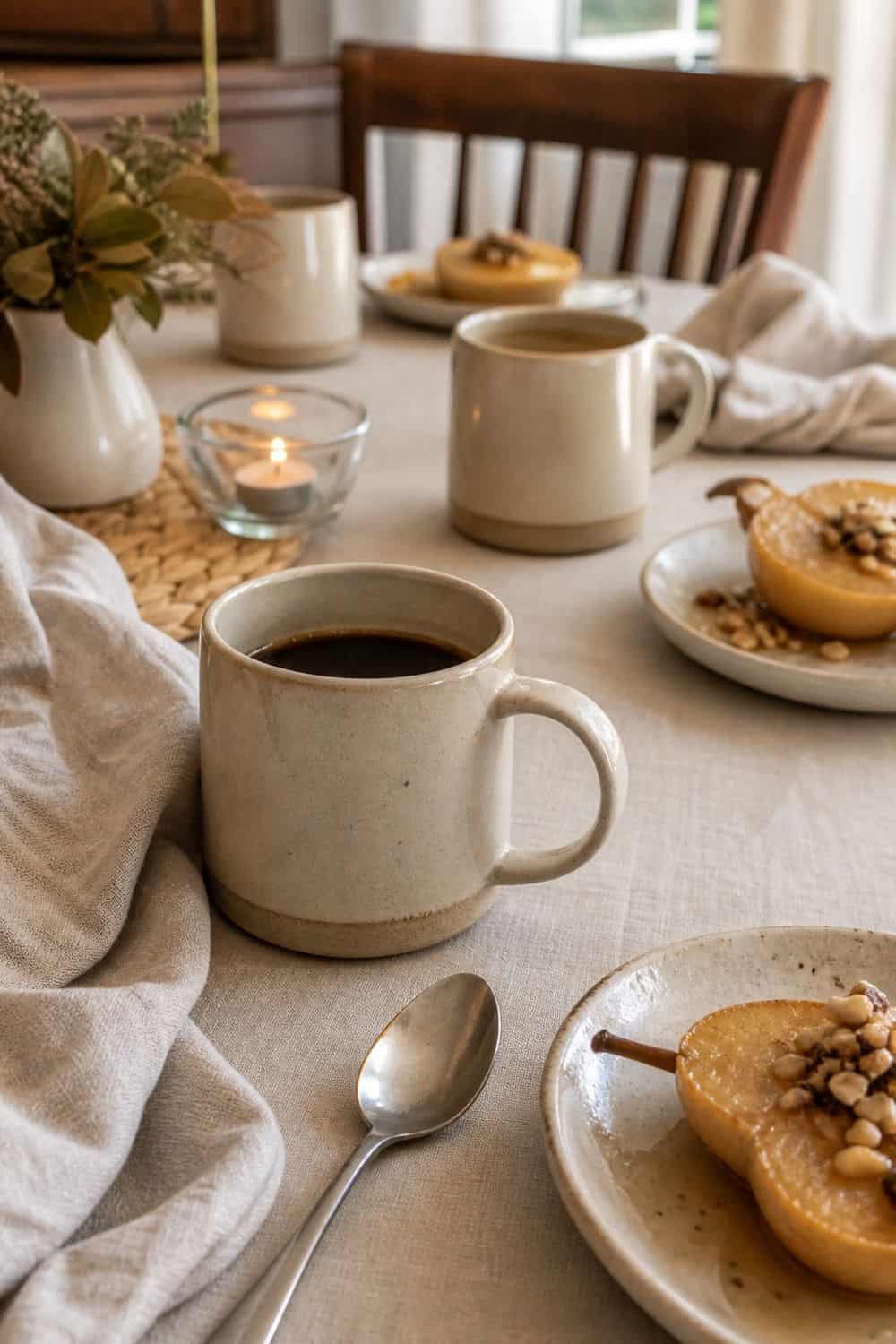
Stoneware mugs make after-dinner coffee feel like part of the table instead of a separate kitchen chore. Set mugs, spoons, cream, sugar, or a small pitcher near dessert before guests are ready for them, especially if the kitchen is far from the dining area.
Cream, taupe, or speckled mugs keep the warm neutral mood going without needing matching sets. If the table is crowded, move coffee service to a sideboard and bring mugs out once plates are cleared. A small tray for sugar and spoons keeps the coffee moment tidy after plates are cleared.
23. Add One Soft Black Detail
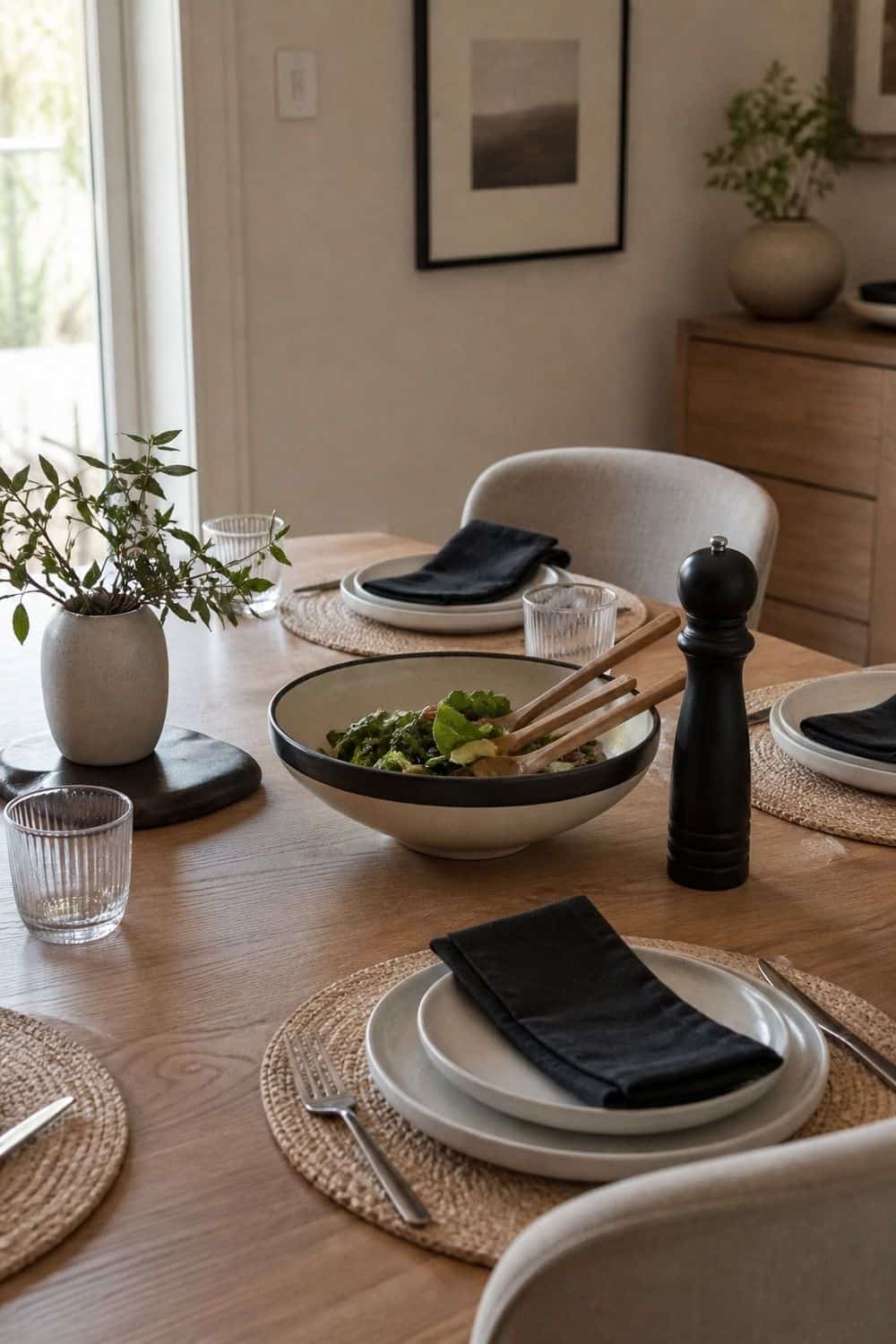
One soft black detail can keep a warm neutral table from floating away. Try matte black candlesticks, a dark iron pepper mill, black flatware, or one small serving bowl, then stop before the table turns graphic. The black should act like punctuation, not a new theme. It works best when surrounded by cream, caramel, wood, brass, and candlelight. If the table already has espresso napkins, choose a smaller black accent so the contrast feels layered rather than heavy. This small contrast keeps cream, flax, and caramel tones from blending together too much.
24. Leave Space Between Neutral Layers
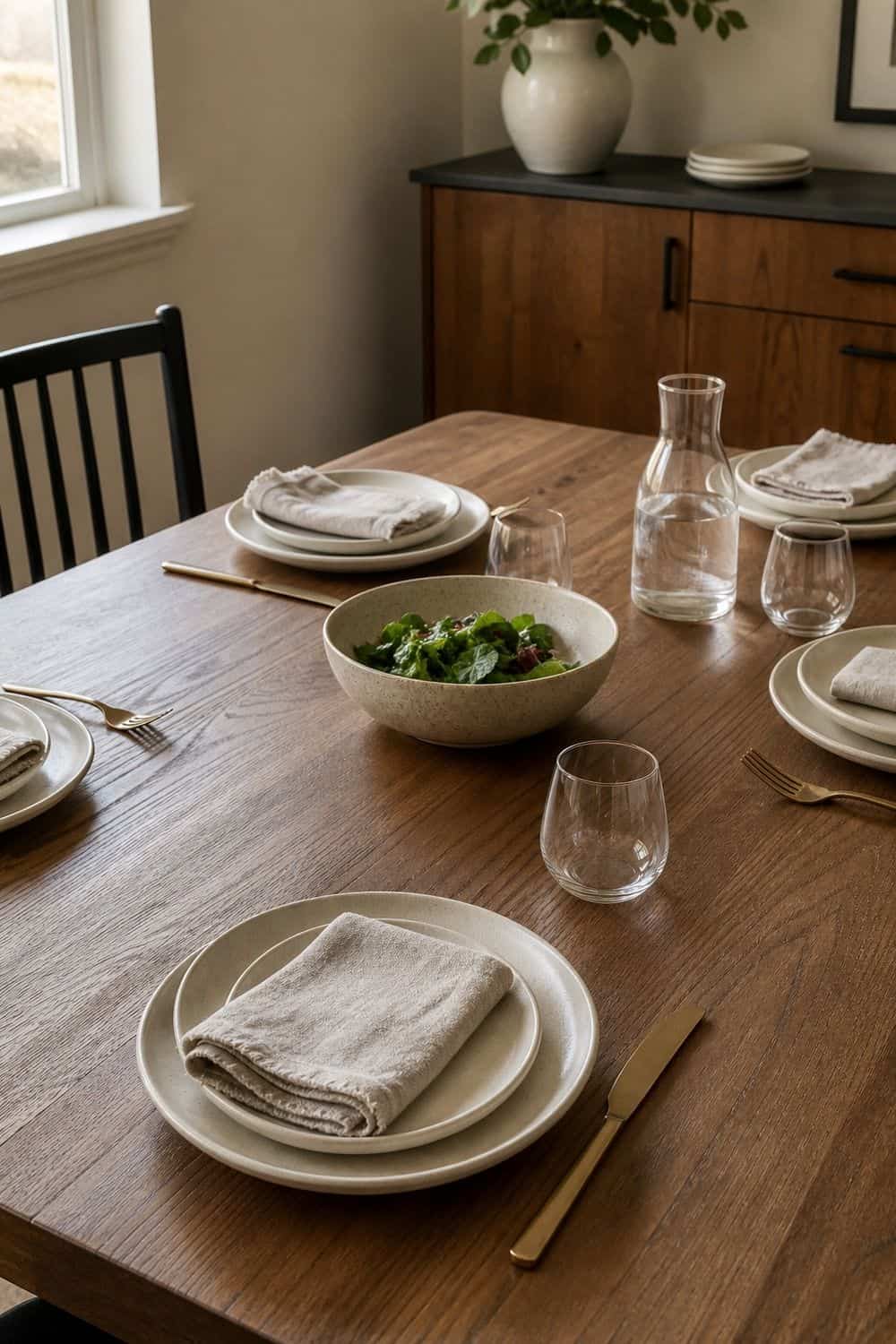
Warm neutral tables can become cluttered when every texture is layered at once. Leave open space for trays, serving bowls, glasses, bread, elbows, and the small movements that happen during dinner. A blank patch of linen or wood is not a failure; it helps the details read clearly. Before guests arrive, place the largest platter and water carafe on the table to test the flow. If something has to move immediately when food arrives, remove it before the meal starts.
25. Avoid a Flat Beige Table
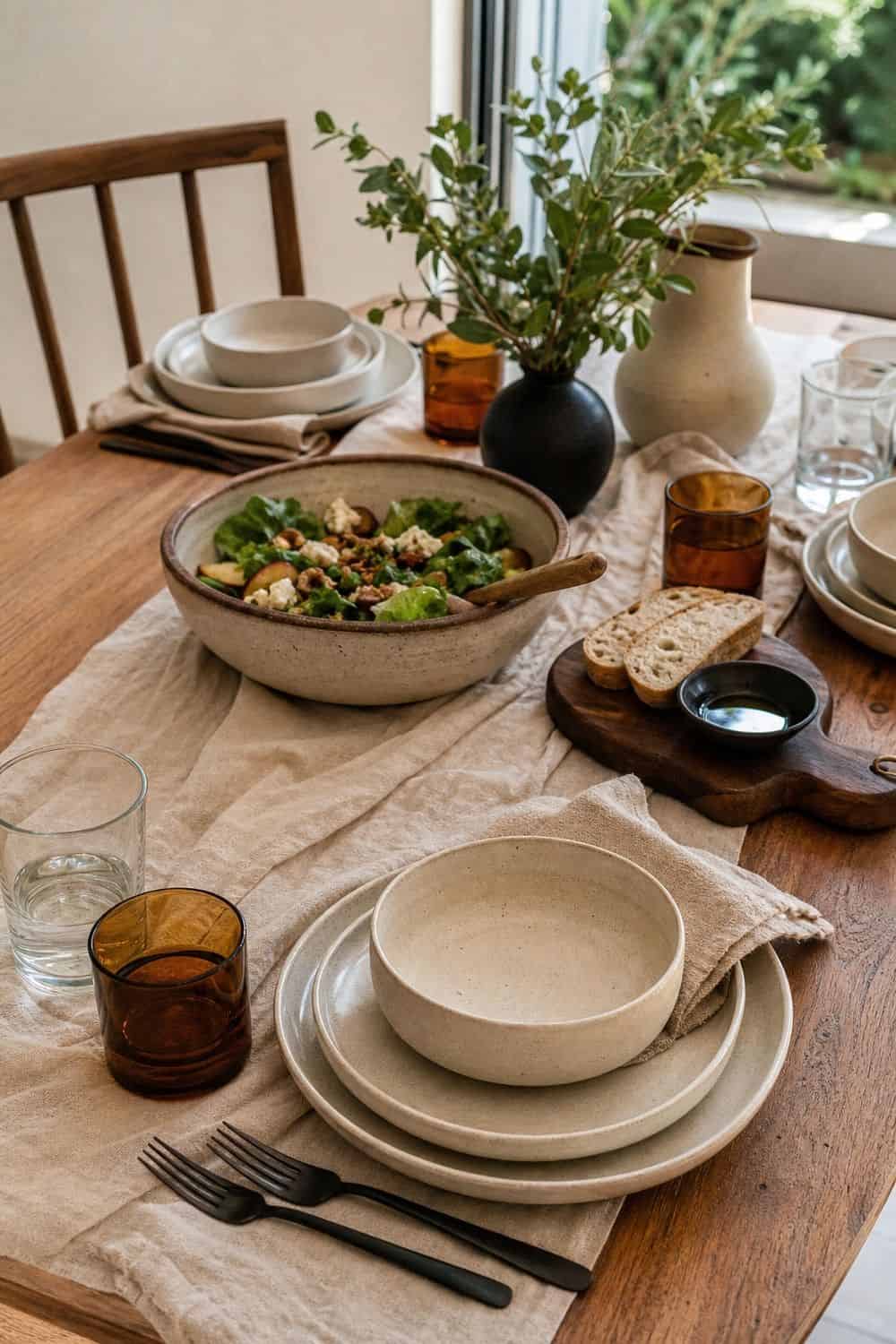
A flat beige table happens when every piece is the same pale tone with no texture, shine, shadow, or food color. Fix it by adding cream stoneware, wood grain, amber glass, espresso napkins, brass candlelight, stone accents, or a warm menu with squash, mushrooms, bread, pear, caramel, or coffee.
The table should still feel neutral, but it needs depth. Choose one darker note, one reflective note, and one natural texture, then leave space around them. Warm neutral hosting is calmest when the contrast is deliberate.
FAQs
What is a warm neutral dinner party?
A warm neutral dinner party is built around soft, cozy tones such as cream, flax, taupe, caramel, chestnut, espresso, amber, wheat, warm wood, and stone. The look feels calm, but it still needs texture, candlelight, and food color so the table does not become flat.
How do you decorate a warm neutral dinner table?
Start with linen, cream stoneware, rattan chargers, amber glasses, espresso or chestnut napkins, and low dried stems or bud vases. Add unscented candles and leave enough room for serving dishes, water, bread, and comfortable conversation.
What colors are warm neutrals for a table setting?
Good warm neutrals include cream, oatmeal, flax, taupe, mushroom, caramel, chestnut, espresso, wheat, warm white, amber, and soft olive. These colors work best when they are layered through fabric, dishes, glass, wood, food, and candlelight.
How do I keep a neutral table from looking boring?
Add contrast and texture instead of bright color. Use darker napkins, amber glass, rattan, wood grain, brass, candlelight, stone accents, and warm-toned food so the table has depth while still feeling calm.
What food fits a warm neutral dinner party?
Roast chicken, mushroom pasta, butternut squash soup, brown butter vegetables, good bread with honey butter, pear drinks, caramel cake, apple galette, and coffee all fit the palette naturally. The food should bring golden, brown, cream, and earthy tones to the table.
Are scented candles okay for a dinner party?
Scented candles are usually not a good choice near dinner because fragrance can compete with the food. Use unscented ivory tapers, votives, or tea lights instead, and keep them away from dried stems, napkins, and serving paths.
What centerpiece works for a warm neutral dinner?
Use something low and easy to talk over, such as wheat, dried grasses, bud vases, branches, ceramic bowls, fruit, or candle groupings. The centerpiece should add atmosphere without blocking conversation or taking over space needed for platters.
Can a warm neutral dinner party be budget-friendly?
Yes. Start with one linen base, use simple cream plates, thrift amber or clear glassware, add grocery-store flowers or dried stems, and let bread, soup, vegetables, and dessert bring color. You do not need a fully matching table to get the mood right.
Final Thoughts
The best warm neutral dinner party ideas use texture, candlelight, food color, and a few darker notes to keep the table calm without making it flat. Start with linen and cream stoneware, add wood, amber glass, brass, and low centerpieces, then leave enough open space for the meal to feel easy.


