
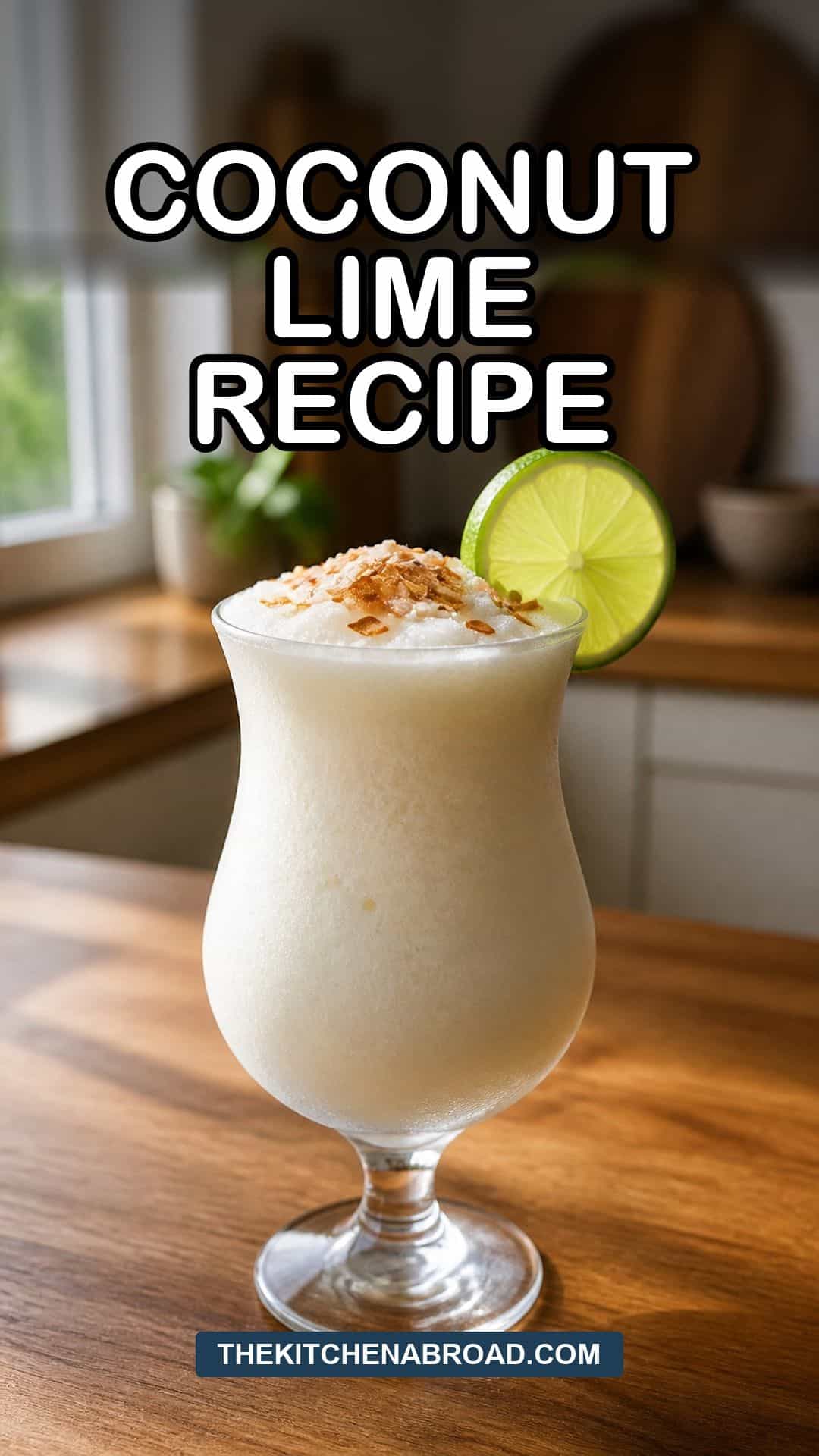
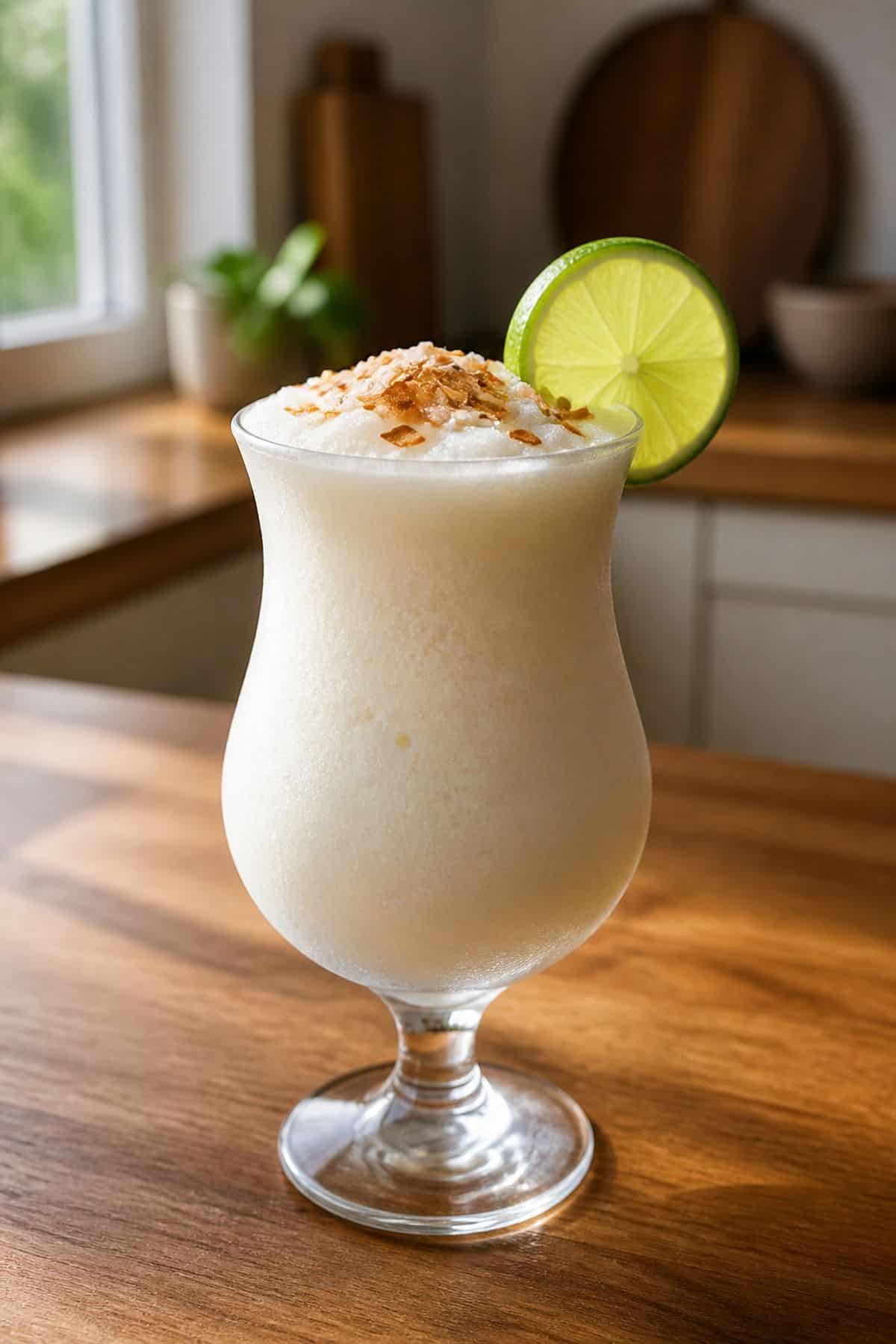
A coconut lime mocktail is a non-alcoholic tropical drink built from unsweetened coconut cream, fresh-squeezed lime juice, and a spoonful of simple syrup, blended cold until the fat and acid emulsify into something the color of beach sand. Think of it as a virgin piña colada with the pineapple swapped for citrus, same Caribe Hilton DNA, brighter finish. Five minutes from cold blender to hurricane glass. Serves two.
The glass is heavy in your hand, frosted on the outside, and the first sip lands somewhere between dessert and sea breeze. Coconut cream pulls velvet across your tongue. Fresh lime cuts a clean line through it. Five minutes ago this was a can of coconut cream and a paper bag of limes from the corner store. The trick is the blender, the cold, and the order things go in.
On the Counter
A pair of hurricane glasses gives the drink its tropical-bar silhouette and reads as a real cocktail, not a juice. A can of full-fat unsweetened coconut cream (Native Forest and Aroy-D are the workhorses) is the structural backbone. A hand-press citrus juicer pulls every drop from the limes without grinding bitter peel into the juice. A personal blender does the emulsification work a shaker cannot. Glass straws finish the visual.


Recommended Reads
- Margarita Cocktail Recipe
- Paloma Cocktail Recipe
- Best Fall Mocktails
- Virgin Piña Colada Recipe
- Strawberry Lime Mocktail Margarita
The Caribbean Roots of Coconut and Lime
The piña colada was created in 1954 at the Caribe Hilton in San Juan by a bartender named Ramón “Monchito” Marrero, who spent three months tuning the ratio of rum, coconut, and pineapple. The drink became Puerto Rico’s official beverage in 1978. The tiki revival of the 2010s pulled creamy coconut drinks back into mainstream rotation, and the sober-curious wave that followed gave the virgin version its own lane.
The coconut lime drink sits squarely in that lineage. Same emulsified-coconut-and-citrus DNA, with lime stepping in for pineapple to lift the whole thing toward something brighter, leaner, and more clearly summer.
A Few Notes on the Ingredients
- Coconut cream: Native Forest, Aroy-D, or Thai Kitchen Premium. Unsweetened, thick, whippable, around 24% fat. The recipe defaults here so sweetness stays adjustable.
- Cream of coconut: Coco Lopez or Coco Real. A heavily sweetened syrup designed to pull all the sugar duty itself. Not interchangeable with coconut cream. Use half the volume, skip the syrup, and top with regular coconut milk for body.
- Fresh lime juice: Non-negotiable. Bottled lime is preserved with sulfites and tastes flat from the start. Fresh limes carry the floral top notes from the peel oils that make the drink taste alive instead of canned. Budget two to three limes for a serves-two pour.
- Lime zest: A separate ingredient from the juice. Run a microplane around one lime before you cut it. The volatile peel oils do the aromatic work the juice cannot.
- Keep everything cold: Coconut fats are emulsions held by proteins, and acid plus heat can break those proteins and curdle the drink. Cold acid in a blender stays smooth. Chill the cans before you start.
- Order matters: Build the coconut base first, then add the lime last with a short blend. The blender mechanically suspends the coconut fat into the lime acid the way a vinaigrette holds when you whisk it hard.
- Simple syrup: Balances the unsweetened coconut cream. Skip entirely if you are using cream of coconut, which already carries the sugar.
Recipe: Sweet & Zesty Coconut Lime Drink
Prep time: 5 minutes | Total time: 5 minutes | Serves: 2
Ingredients
- 1 cup (240 ml) unsweetened coconut cream, cold from the can, OR 1/2 cup (120 ml) cream of coconut plus 1/2 cup (120 ml) full-fat coconut milk, cold
- 1/4 cup (60 ml) fresh lime juice (from 2 to 3 large limes)
- Zest of 1 lime, finely grated
- 2 tbsp (30 ml) simple syrup (skip if using cream of coconut)
- 1 cup (240 g) ice cubes
- 1/2 tsp vanilla extract, optional
- Lime wheel and toasted coconut flakes, to garnish
Instructions
- Chill two hurricane glasses in the freezer while you build the drink. Five minutes is enough to fog the outside and slow the melt once the drink hits the glass.
- Open the can of coconut cream and pour the contents into the blender. If the can has separated into solid and liquid layers, scrape every spoonful in. Add the simple syrup and the vanilla if you are using it. Pulse for 5 seconds to combine.
- Add the fresh lime juice and the lime zest. Pulse for another 5 seconds. The order matters here. Building the coconut base first and adding the lime last is what keeps the emulsion stable; pouring the acid in too early can break the texture.
- Add the ice last. Blend on high for 10 to 15 seconds, until the drink reaches a slushy, pourable consistency. Stop the moment it looks unified. Over-blending heats the mix and starts to break the emulsion.
- Pull the glasses from the freezer. Pour the blended drink in, dividing evenly between the two glasses. The texture should be thick enough to hold a straw upright but loose enough to sip.
- Garnish each glass with a lime wheel pressed onto the rim and a small pinch of toasted coconut flakes scattered on top. Serve immediately while the drink is still cold and the emulsion is still tight.
Notes
If the drink sits for more than fifteen minutes before serving, the ice will start to melt and the coconut fat will begin to separate from the lime juice. A short whisk or another five-second pulse in the blender brings it back together. Do not freeze the blended mix; it separates and the texture never quite returns.
For a kid-friendly variation, skip the vanilla, drop the lime juice to 2 tablespoons, and add 2 tablespoons of pineapple juice. The pineapple softens the citrus edge and the drink reads as a creamsicle-coconut hybrid that most kids drink without a fight.
To scale for a pitcher, multiply everything by four and blend in two batches if your pitcher is small. Pour into a chilled pitcher and stir gently before serving. Garnish at the rim of each glass, not the pitcher; coconut fat clings to the inside and looks streaky.
Tips and Variations
Coconut Cream vs. Cream of Coconut, the Deep Dive
The two product names sit next to each other on the shelf and read as synonyms, but the cans behave differently. Coconut cream is the thick layer that rises to the top of full-fat coconut milk: unsweetened, around 24% fat, faintly nutty. Cream of coconut is coconut cream blended with a high volume of cane sugar (about 50% by weight in Coco Lopez), designed as the all-in-one sweetener and dairy for tropical drinks. The recipe defaults to coconut cream because the flavor stays cleaner and the sweetness stays adjustable. With cream of coconut, follow the half-volume substitution and skip the syrup.
The Frozen-vs-Fresh Lime Decision
Fresh limes give the brightest flavor and the most floral peel oils. Frozen lime juice (in pouches or cubes) carries about 90% of fresh-juice flavor and works fine when batching for a crowd. Bottled lime juice from a plastic bottle is the bottom of the ladder; the sulfites flatten the top notes. Frozen lime cubes also work as the ice itself for a more lime-forward pour: skip the regular ice, add four to six frozen lime juice cubes, and let them break down in the blender.
Turning It Into a Frozen Blender Drink
Double the ice (2 cups instead of 1) and blend on high for 25 to 30 seconds for a full frozen-daiquiri texture. The drink holds its shape in the glass long enough for a slow afternoon sip. Add 1/4 cup of frozen pineapple chunks to the blender at the same time and you have a coconut-lime-pineapple version that splits the difference between this recipe and a classic virgin piña colada.
The No-Blender Shaker Workaround
If a blender is not on the counter, a cocktail shaker is a workable second choice. Warm the coconut cream slightly so it pours (10 seconds in the microwave), combine everything except the ice in the shaker tin, and stir with a bar spoon for 20 seconds to dissolve the syrup. Fill with ice, seal, and shake hard for 15 seconds. Strain into chilled hurricane glasses over fresh ice. The texture is smoother than expected but slightly less unified than the blender version; expect a thin separation line at the top within ten minutes.
A Dairy-Free Holiday Variation
The same base reads as a winter drink with a few swaps. Replace the simple syrup with maple syrup, add 1/4 teaspoon ground cinnamon and a pinch of nutmeg, and skip the vanilla. Garnish with a cinnamon stick instead of a lime wheel. The drink lands somewhere near a dairy-free coconut-lime eggnog and holds its own next to a hot meal.
The Toasted-Coconut Rim
Toast 1/4 cup of unsweetened shredded coconut in a dry skillet over medium heat, stirring constantly, until the flakes turn light caramel. Cool and chop fine. Spread on a small plate. Run a lime wedge around the rim of each hurricane glass and dip the wetted rim into the toasted coconut. The rim becomes the first taste with every sip and the finish reads as a beach-bar drink instead of a kitchen pour.
What to Serve It With
The drink wants tropical, citrus-bright, salty food alongside it. A pool party menu of grilled shrimp skewers, mango salsa with chips, and coconut rice on the side. A summer brunch of citrus salad with avocado, shrimp ceviche, and grilled pineapple. A beach picnic spread of cold sesame noodles and a watermelon-feta-mint salad. The drink is functionally a dessert and a beverage at once: sweet, creamy, citrus-finished, palate-clearing.
Frequently Asked Questions
What’s the difference between coconut cream and cream of coconut?
Coconut cream is unsweetened and around 24% fat (Native Forest, Aroy-D, Thai Kitchen Premium). Cream of coconut is a heavily sweetened syrup (Coco Lopez, Coco Real) at about 50% sugar by weight. They are not interchangeable. This recipe defaults to coconut cream so the sweetness stays adjustable.
Will the lime juice curdle the coconut?
Not if everything is cold and the drink goes through a blender. Heat breaks coconut proteins and lets the acid split the emulsion; cold acid blended hard with cold coconut fat stays smooth. Chill the cans, build the coconut base first, add the lime last, and blend short. A shaker leaves the drink slightly less unified, but it still holds.
What’s a non-alcoholic version of a piña colada?
A virgin piña colada uses coconut cream, pineapple juice, and ice in a blender. This coconut lime drink follows the same template with lime in place of pineapple, which lifts the drink toward something brighter and less dessert-coded. For a hybrid, add 1/4 cup of frozen pineapple chunks to the blender alongside the lime juice; you get the colada body with a citrus finish.
Can I make this coconut lime mocktail ahead of time?
Blend the drink up to four hours ahead and refrigerate in a sealed jar or pitcher. Before serving, whisk for 10 seconds or pulse in the blender for 5 seconds to re-tighten the emulsion. Pour over fresh ice or a small handful of ice in each glass; the originally blended ice will have melted by then. Do not freeze the mix; it separates and never quite returns.
What glass do you serve a coconut lime drink in?
A hurricane glass is the tropical default. A footed pilsner, stemless wine glass, or large rocks glass all work as substitutes. Clear glass shows off the pale sand color, and the rim should be wide enough for a lime wheel and a straw.
Should you blend or shake a coconut mocktail?
Blend. A high-speed blender mechanically suspends the coconut fat in the lime acid the way a shaker cannot, and the slushy texture from blended ice is part of the drink’s identity. Shaking is a workable second choice when no blender is on the counter, but expect a thinner texture and a small separation line within ten minutes of pouring.
Key Takeaways
- Coconut cream is unsweetened and thick. Cream of coconut is a sweetened syrup. They are not interchangeable; choose one and adjust the recipe accordingly.
- Fresh lime juice and lime zest are the two halves of the citrus flavor. The peel oils in the zest are what make the drink taste alive.
- A blender is the right tool. It mechanically emulsifies the coconut fat with the lime acid; a shaker leaves a thin separation.
- Build the coconut base first, then add lime juice, then ice. Order matters for the emulsion.
- Keep everything cold. Heat and warm fat are what break the emulsion and curdle the drink.
- Serve in a hurricane glass with a lime wheel and toasted coconut for the tropical-bar visual that earns the drink its name.
Final Thoughts
A coconut lime drink is a five-minute build that lives or dies on three small decisions made before the blender turns on. The right coconut product (unsweetened cream, not the syrup). Fresh limes, juiced and zested at the counter. Everything cold, and the lime added last so the emulsion holds. Get those three right and the rest of the recipe runs itself.
The piña colada lineage is real, but the lime version sits in its own lane. The pineapple drink is heavier and reads as a vacation pour with a paper umbrella. The lime version is leaner, brighter, and reads as a hot porch afternoon with the windows open. This one wears better in summer because the citrus does the cooling work the pineapple cannot.
Pour it at a pool party, a backyard summer brunch, or a beach picnic where the cooler holds nothing more complicated than ice and a few cans of coconut cream. Add a lime wheel, a pinch of toasted coconut, and a glass straw. Everything else is the blender and the cold.
Sweet & Zesty Coconut Lime Drink
A coconut lime mocktail is a non-alcoholic tropical drink built from unsweetened coconut cream, fresh-squeezed lime juice, and a spoonful of simple syrup, blended cold until the fat and acid emulsify into something the color of beach sand.
Ingredients
- 1 cup (240 ml) unsweetened coconut cream, cold from the can, OR 1/2 cup (120 ml) cream of coconut plus 1/2 cup (120 ml) full-fat coconut milk, cold
- 1/4 cup (60 ml) fresh lime juice (from 2 to 3 large limes)
- Zest of 1 lime, finely grated
- 2 tbsp (30 ml) simple syrup (skip if using cream of coconut)
- 1 cup (240 g) ice cubes
- 1/2 tsp vanilla extract, optional
- Lime wheel and toasted coconut flakes, to garnish
Instructions
- Chill two hurricane glasses in the freezer while you build the drink. Five minutes is enough to fog the outside and slow the melt once the drink hits the glass.
- Open the can of coconut cream and pour the contents into the blender. If the can has separated into solid and liquid layers, scrape every spoonful in. Add the simple syrup and the vanilla if you are using it. Pulse for 5 seconds to combine.
- Add the fresh lime juice and the lime zest. Pulse for another 5 seconds. The order matters here. Building the coconut base first and adding the lime last is what keeps the emulsion stable; pouring the acid in too early can break the texture.
- Add the ice last. Blend on high for 10 to 15 seconds, until the drink reaches a slushy, pourable consistency. Stop the moment it looks unified. Over-blending heats the mix and starts to break the emulsion.
- Pull the glasses from the freezer. Pour the blended drink in, dividing evenly between the two glasses. The texture should be thick enough to hold a straw upright but loose enough to sip.
- Garnish each glass with a lime wheel pressed onto the rim and a small pinch of toasted coconut flakes scattered on top. Serve immediately while the drink is still cold and the emulsion is still tight.
Notes
If the drink sits for more than fifteen minutes before serving, the ice will start to melt and the coconut fat will begin to separate from the lime juice. A short whisk or another five-second pulse in the blender brings it back together. Do not freeze the blended mix; it separates and the texture never quite returns.
For a kid-friendly variation, skip the vanilla, drop the lime juice to 2 tablespoons, and add 2 tablespoons of pineapple juice. The pineapple softens the citrus edge and the drink reads as a creamsicle-coconut hybrid that most kids drink without a fight.
Last update on 2026-08-24 / Affiliate links / Images from Amazon Product Advertising API