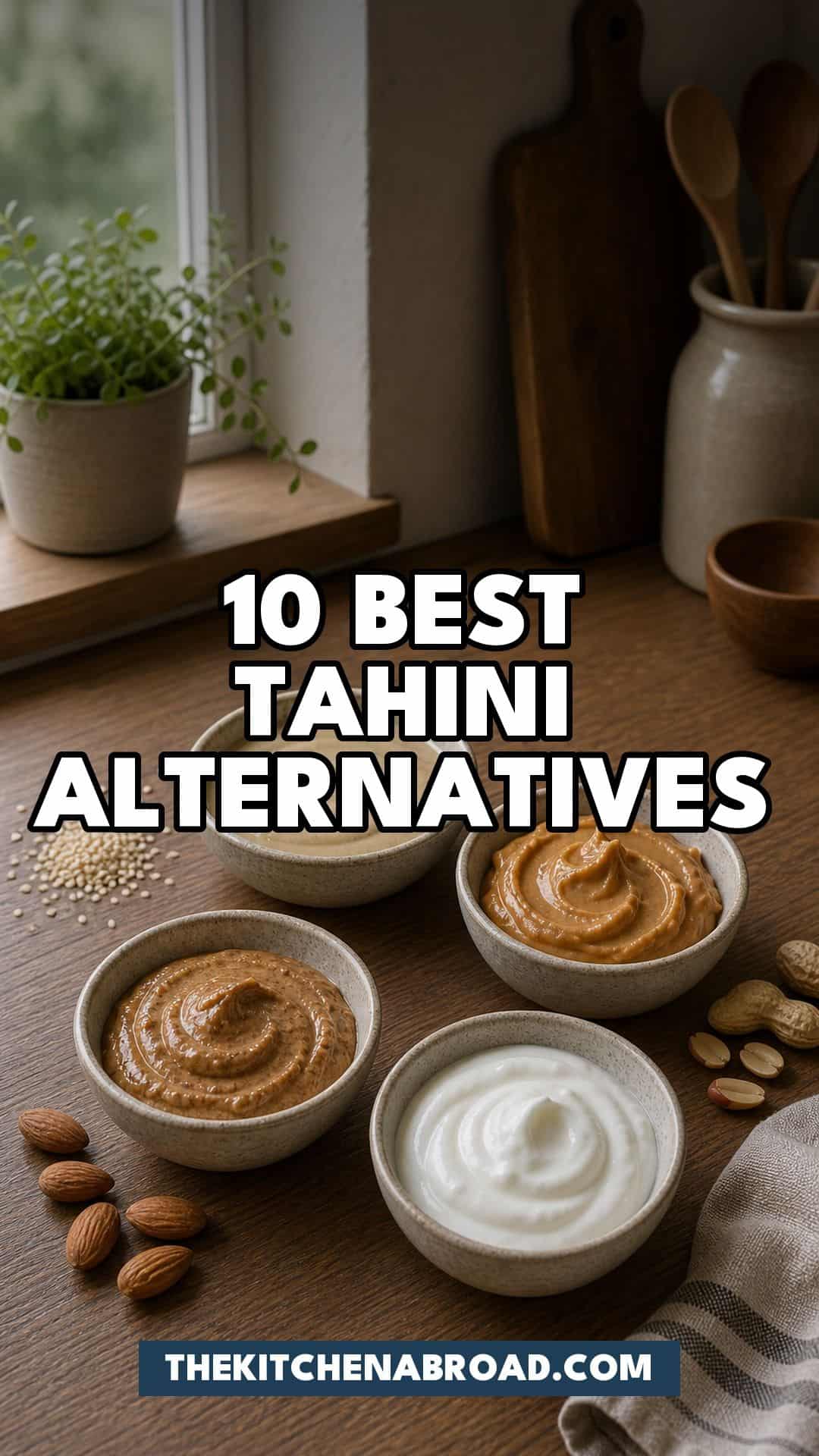
Sunflower seed butter is the closest all-round tahini substitute, and it’s the one to grab if sesame is off the table for allergy reasons. Cashew butter wins for creamy sauces, Chinese sesame paste wins on flavor, and Greek yogurt works for dressings. Sesame oil alone never works, because it has the taste but none of the body.
The jar is empty, the chickpeas are already drained, and the hummus recipe wants a third of a cup of tahini. Annoying, but fixable. The right tahini alternative depends on one question: what was the tahini doing in that recipe?
Sometimes it’s there for body, that thick, almost fudgy weight that turns lemon juice and garlic into a sauce. Sometimes it’s there for flavor, the toasty, slightly bitter sesame note you’d miss in hummus. Usually both. Pick a swap that covers the job your recipe cares about and nobody at the table will notice.


What does tahini actually do in a recipe?
Tahini is sesame seeds ground into a paste, the same way peanuts become peanut butter. It does three things in cooking, and they matter differently depending on the dish.
First, structure. Tahini is mostly fat and protein, so it thickens. In hummus it gives the dip its dense, spreadable weight. In a dressing it holds oil, lemon and water together so they don’t split on the salad.
Second, flavor. Sesame is nutty with a bitter edge, closer to dark toast than to almonds. Third, richness: it makes vegetables and grains taste fuller without butter or cream.
So before you swap, ask which of those you can live without. A drizzle over roasted vegetables forgives a lot. Hummus forgives almost nothing.
The 10 best tahini alternatives, ranked by usefulness
Ranked by how often they save the dish. One rule for all of them: start with the same amount the recipe asks for in tahini, then adjust the liquid, because nut and seed butters vary a lot in thickness.
1. Sunflower seed butter
The best all-rounder and the go-to sesame-free swap. It has a similar earthy, slightly bitter taste and the same pasty texture, so it behaves like tahini in hummus, sauces, dressings and cookies. Buy an unsweetened one if you can, since many jars are sweetened for sandwiches. One quirk: sunflower butter can turn faintly green in baked goods that contain baking soda. It’s harmless, just odd-looking.
2. Cashew butter
Mild, smooth and very creamy. Cashew butter is what I’d reach for in a tahini sauce for falafel or roasted vegetables, because it thins out beautifully with water and lemon and doesn’t fight garlic. It’s sweeter than tahini, so add an extra squeeze of lemon and a pinch more salt.
3. Almond butter
Nuttier and a bit coarser than cashew. Fine in dressings and noodle sauces, very good in sweets. Smooth almond butter works better than the crunchy kind, which leaves bits in a dip.
4. Chinese sesame paste
The closest in flavor, because it is sesame. The difference is that the seeds are toasted much darker before grinding, so the taste is deeper and more roasted. Use about three quarters of the amount and thin it with a little extra water or neutral oil. Obviously not an option for a sesame allergy.
5. Greek yogurt
Tangy, light and great in cold dressings or a dip for grilled meat. It brings creaminess but no nuttiness, and it won’t survive long cooking without splitting. Use full-fat yogurt; the low-fat kind goes watery fast.
6. Peanut butter
Use it only where peanut flavor belongs. A peanut-lime dressing on a cabbage slaw is great. Peanut hummus tastes like a mistake. Natural, unsweetened peanut butter thins out better than the shelf-stable sweetened type.
7. Sesame oil with a creamy base
If you’re simply out of tahini and allergies aren’t the issue, combine a creamy base (yogurt, cashew butter or white bean puree) with a few drops of toasted sesame oil. Treat the oil like perfume. Half a teaspoon is often enough for a whole bowl of sauce.
8. White bean puree
Cannellini or butter beans blitzed with olive oil, lemon and garlic. It gives a mild, creamy body and makes a decent tahini-free hummus base. Add an extra tablespoon of olive oil to make up for the missing fat.
9. Store-bought hummus
A shortcut for wraps, grain bowls and plates where a tahini sauce was going to be drizzled anyway. Thin a few spoonfuls with lemon juice and water until it pours. It already contains tahini, so skip it for allergies.
10. Vegan mayo
For creamy dressings only. It gives body and gloss with no nutty depth at all, so stir in some lemon zest or garlic to keep it from tasting flat.
Which substitute should you use for hummus, dressing or baking?
Match the swap to the dish and you’ll rarely go wrong.
For hummus, texture is everything. Sunflower seed butter is the best replacement, followed by cashew butter. If you have neither, skip the tahini, add an extra two tablespoons of olive oil and blend longer. You’ll get a lighter, smoother dip. Yogurt tastes pleasant but turns it into a different dish. If you’re building a mezze spread, these Mediterranean dinner party ideas show where a tahini-free hummus fits on the table.
For dressings, you can be looser. Lemon, garlic, salt, water and almost any creamy base will make a good dressing even if it no longer tastes like tahini. Cashew butter, Greek yogurt and white bean puree all work here. Big-batch dressings for jar salads and lunch boxes keep best with nut or seed butter, since yogurt goes sour after a few days; these summer meal prep ideas use exactly that kind of make-ahead sauce.
For roasted vegetables, a thinned cashew or sunflower sauce does the same job as tahini sauce. Try it on this roasted baby cauliflower.
For baking and sweets, pick something that gets along with sugar. Almond and cashew butter are the friendliest in cookies, brownies and blondies. Sunflower butter works too, with the green-tint caveat. Yogurt and mayo don’t belong here.
For drinks, cashew or almond butter blended into warm milk gives the same nutty body that tahini adds to this tahini hot chocolate.
What if you need a sesame-free swap for allergies?
Then the rules get stricter. Sesame is one of the nine major food allergens in the US, and the FDA’s food allergy guidance has required it on ingredient labels since January 2023. That means sesame oil, Chinese sesame paste and store-bought hummus are all out.
Sunflower seed butter is the safest bet, but read the label anyway. Some brands are made on lines shared with peanuts, tree nuts or sesame, and that matters when allergies are the reason you’re substituting. In a professional kitchen, an allergy ticket gets its own clean board, pan and spoon for exactly this reason. Do the same at home: one stray spoon from the tahini jar undoes the whole swap.
How do you get a nut butter as smooth as tahini sauce?
Whisk in cold water slowly. This trick comes straight from tahini itself: when you add lemon juice, the paste seizes and looks broken. Keep whisking, add cold water a tablespoon at a time, and it turns pale, smooth and pourable.
Nut and seed butters behave the same way. They go from stiff to silky if you’re patient, and they turn gluey if you dump all the water in at once. Aim for the consistency of heavy cream for a drizzle and thick yogurt for a dip.
A last note on storage. Natural nut and seed butters separate the same way tahini does. Stir the oil back in before measuring, or your sauce will be greasy on top and dry at the bottom.
Before swapping, see what tahini is. It’s the base of tahini sauce and creamy chicken tahini.
Questions about tahini substitutes
What is the closest substitute for tahini?
Chinese sesame paste is closest in flavor, and sunflower seed butter is closest in texture without any sesame. For most recipes, sunflower seed butter is the better pick because it works in both savory and sweet dishes.
Can I use peanut butter instead of tahini?
Yes, but only where a peanut taste belongs. It works well in noodle sauces and slaw dressings and tastes wrong in hummus or baba ghanoush.
Can I make hummus without tahini?
Yes. Replace the tahini with sunflower seed butter or cashew butter, or leave it out and add two extra tablespoons of olive oil. The hummus will taste lighter and less nutty, but it will still be creamy.
Is sesame oil the same as tahini?
No. Tahini is ground whole sesame seeds, so it has body, while sesame oil is only the fat pressed from the seeds. Oil can add sesame flavor to a substitute, but it can’t replace tahini on its own.
What can I use instead of tahini in a dressing?
Cashew butter, Greek yogurt or white bean puree, whisked with lemon, garlic, salt and cold water. Cashew butter keeps the longest in the fridge.
Key takeaways
- Decide what the tahini was doing in the recipe (body, flavor or richness) before you pick a swap.
- Sunflower seed butter is the best all-round and sesame-free substitute.
- Cashew butter makes the smoothest sauce, and Chinese sesame paste tastes most like tahini.
- Sesame oil adds flavor only, so pair it with a creamy base.
- For allergies, check labels for shared-facility warnings.
Your next jar of hummus, without the tahini
If you only keep one backup in the pantry, make it sunflower seed butter. It covers hummus, sauces, dressings and cookies, and it’s safe for sesame allergies. Next time the tahini runs out, blend it into your chickpeas with a little extra lemon and cold water and taste before you add more.
Last update on 2026-11-19 / Affiliate links / Images from Amazon Product Advertising API