

Sweet soy glaze is a quick reduction of soy sauce, brown sugar, ginger, garlic, and a splash of rice vinegar, simmered until it coats the back of a spoon. Eight to twelve minutes over medium heat reduces the mix by half. Pull it off the stove a little before it looks done, because the glaze tightens as it cools. Use it on salmon, chicken thighs, pork tenderloin, roasted vegetables, and rice bowls.
Sweet soy glaze is the sticky, dark, slightly syrupy sauce that turns plain rice into dinner. A 10-minute reduction of soy sauce, brown sugar, ginger, and garlic, simmered down until a spoon drawn through it leaves a clean line. Drizzle it over salmon, glaze grilled chicken thighs, or spoon it onto roasted broccoli the way you would teriyaki, only better.
What You’ll Need
A small saucepan, a whisk, a microplane for the ginger and garlic, and a glass jar for storage. A heat-resistant silicone spatula is helpful for scraping the reduced glaze out of the pan without losing any of it.


Recommended Reads
- Beef in Oyster Sauce
- Mushroom Oyster Sauce
- Homemade Chili Oil
- Vietnamese Nuoc Cham
- Korean Buckwheat Noodles
What’s Going On Here
The glaze is a reduction, which means most of the work is happening through evaporation, not chemistry. Soy sauce is mostly water with dissolved salts, amino acids, and sugars. Heat the pan, the water steams off, and what’s left behind is concentrated soy plus the brown sugar you’ve added. The brown sugar holds the reduction together and gives the glaze a sticky, lacquered body when it cools.
The rice vinegar does two things. It cuts the sweetness so the glaze doesn’t read as one-note dessert sauce, and it adds a little brightness that mimics the way kecap manis is sometimes finished with tamarind in Indonesia. Ginger and garlic are aromatic background; they’re not the headline.
Where the glaze sits in the Asian sauce family: kecap manis is the Indonesian original, thicker and sweeter, made with palm sugar that gives it a smoky-molasses note. Teriyaki is Japanese, soy and mirin (sometimes sake), thinner, less sweet, and meant for grilling. Hoisin is Chinese, a fermented soybean paste with sugar, garlic, and chili, much denser. Sweet soy glaze (the HelloFresh-Americanized version) sits between teriyaki and kecap manis in body and is the easiest of the three to make from a standard pantry.
Recipe: Sweet Soy Glaze
Ingredients
- 120 ml (1/2 cup) soy sauce. Regular soy, not low-sodium. Kikkoman, Lee Kum Kee Premium, or any standard Japanese or Chinese light soy works.
- 100 g (1/2 cup, packed) brown sugar, light or dark. Dark gives more molasses depth.
- 60 ml (1/4 cup) water. Loosens the soy at the start so the sugar dissolves cleanly before the reduction kicks in.
- 2 teaspoons fresh ginger, microplaned (not minced).
- 1 small clove garlic, smashed or finely grated. Don’t crush more than this; raw garlic can dominate the glaze after the reduction.
- 1 teaspoon unseasoned rice vinegar. Cuts the sugar. Apple cider vinegar works in a pinch.
- 1/2 teaspoon toasted sesame oil, optional. Stirred in off the heat at the end.
Instructions
- Combine the soy sauce, brown sugar, and water in a small saucepan. Whisk over medium heat until the sugar fully dissolves, about a minute. The mixture should look loose and dark amber.
- Stir in the grated ginger, garlic, and rice vinegar. Bring the mixture to a gentle simmer (small, even bubbles across the surface) and let it reduce. Don’t walk away. The first six or seven minutes look like nothing is happening, then the bubbles get bigger and the surface starts to shine, and the reduction tightens fast in the last two minutes.
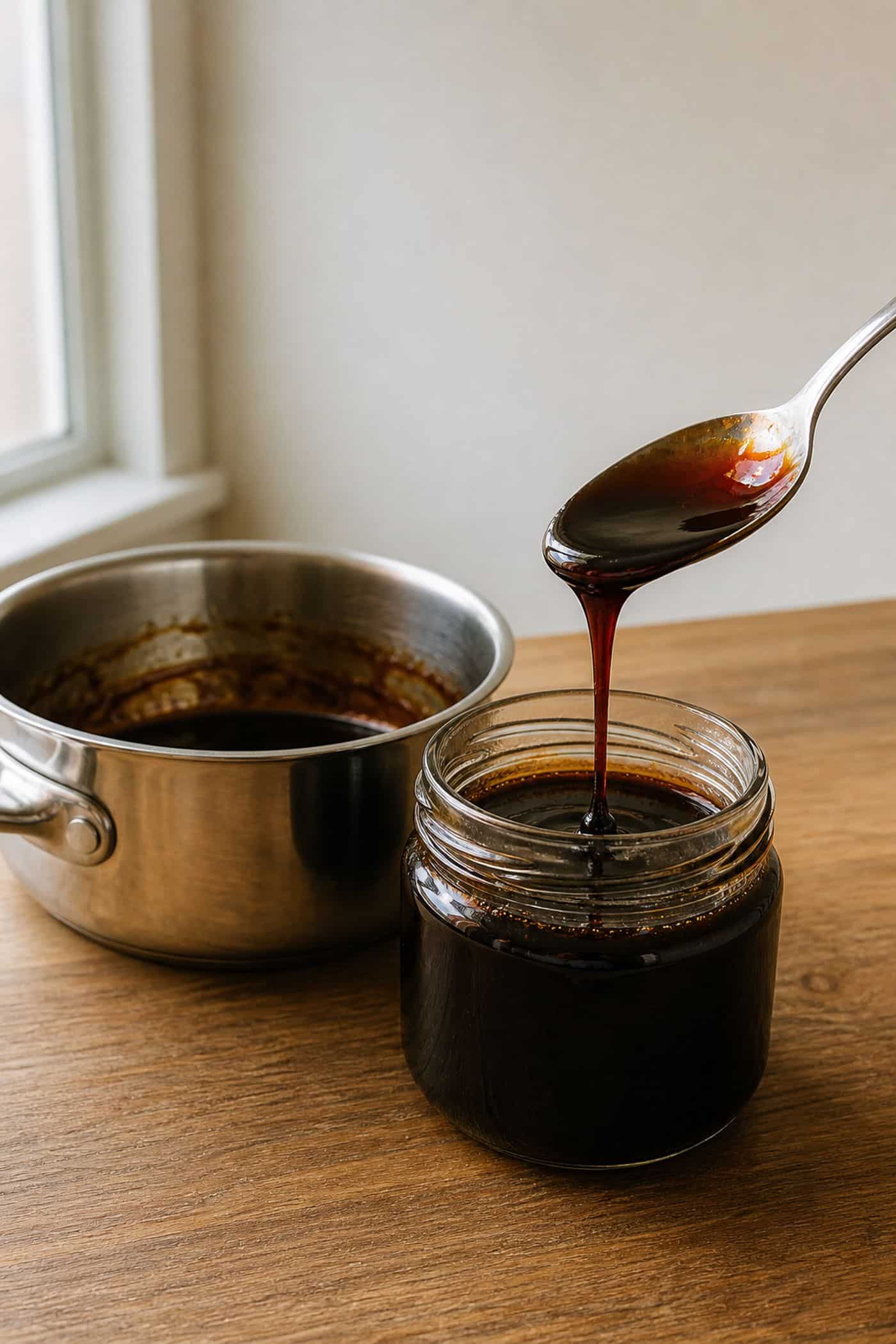
- After about 8 to 12 minutes total, the glaze should be reduced by half and coat the back of a spoon. A finger drawn through the coating on the spoon should leave a clean line that holds for a few seconds before closing back up. Pull the pan off the heat right when it gets to this stage. The glaze will tighten more as it cools.
- If you’re using sesame oil, stir it in now, off the heat. Let the glaze sit in the pan for 5 minutes, then transfer it to a heat-safe jar or container. It will thicken further to a slow-pour syrup consistency at room temperature.
Tips and Variations
Pushing It Toward Kecap Manis
For something closer to the Indonesian original, swap half the brown sugar (50 g / 1/4 cup) for molasses or grated palm sugar (gula merah). Add a single star anise pod to the simmer and pull it out before bottling. The result is denser, smokier, and a little more bitter than the standard quick glaze, much closer to what you’d find in a bottle of ABC Manis at an Indonesian grocery.
Pairing with Chili Oil
A spoonful of chili oil stirred into the finished glaze gives a sweet-spicy hybrid that works especially well on salmon, eggplant, and tofu. Start with a half teaspoon and taste before adding more. The chili oil’s aromatics can take over the glaze fast.
Fixing a Glaze That’s Too Thick
If the glaze cools to a hard, gummy consistency, you reduced it past the point it needed. Return it to the pan with a tablespoon or two of water and warm it gently, whisking until it loosens to a syrup again. This works on the first day; after a week in the fridge, the glaze will sometimes need a longer warming with another splash of water.
Doubling the Recipe
Doubling works, but the reduction time goes up by more than half (closer to 15 to 18 minutes for a doubled batch). Watch for the back-of-the-spoon stage rather than the clock. Use a wider saucepan if you have one; a wider surface area means the water evaporates faster.
Common Mistakes
The two errors that wreck a homemade sweet soy glaze, in order of frequency: reducing too far, and using low-sodium soy sauce. Reducing too far happens because the glaze looks loose right up until the moment it tightens, and then it tightens fast. Set a timer at the eight-minute mark and start spoon-checking. The other error, low-sodium soy, gives a thinner, more watery reduction that never quite gets to a coating consistency because the salt-to-sugar ratio is off; regular soy is the right choice here, even if you usually keep low-sodium on the shelf.
A third smaller issue: adding the garlic and ginger at the start instead of after the sugar dissolves. The aromatics will scorch on the bottom of the pan if they’re in cold liquid that hits high heat. The order in the recipe (soy, sugar, water first, then aromatics) prevents that.
How to Use It
Brush sweet soy glaze on salmon during the last few minutes of broiling, toss with sticky chicken thighs straight out of the oven, glaze pork tenderloin while it rests, and drizzle over grilled or roasted eggplant. It also goes over roasted broccoli, stir-fried green beans, bao bun fillings, ramen eggs, dumplings (as a dipping sauce thinned with a touch of water), and rice bowls. A small drizzle finishes a soy-glazed bowl of beef in oyster sauce with another layer of sweet against the savory base.
Frequently Asked Questions
What is sweet soy glaze made of?
Soy sauce, brown sugar, ginger, garlic, and a splash of rice vinegar, reduced by half over medium heat. Some versions add sesame oil at the end. The Indonesian original (kecap manis) uses palm sugar instead of brown sugar and is reduced further to a thicker syrup.
What’s the difference between sweet soy glaze and teriyaki?
Teriyaki is Japanese and uses mirin (sometimes sake) for sweetness, which gives it a thinner, lighter, slightly alcoholic finish. Sweet soy glaze uses brown sugar or molasses, which makes it thicker, darker, and more dessert-leaning. Teriyaki is built for grilling; sweet soy glaze is built for brushing and drizzling.
What can I substitute for sweet soy glaze?
Kecap manis is the closest, and it’s sold in most Asian grocery stores under brands like ABC or Bango. Hoisin sauce thinned with soy and a splash of water is a passable shortcut. A 1:1 mix of soy and honey simmered for two minutes works in an emergency, though it lacks the depth of the brown sugar version.
Is kecap manis the same as sweet soy glaze?
Close but not identical. Kecap manis is the Indonesian original, traditionally made with palm sugar (gula merah) and aged, with a thicker, more molasses-like body. The quick sweet soy glaze in this recipe is the Americanized weeknight version, thinner and a little less complex. The variation in the tips section pushes the glaze closer to kecap manis if that’s the flavor you’re after.
How do you thicken sweet soy glaze?
Keep reducing it. The glaze thickens as water evaporates, and it tightens further as it cools. If you need an immediate thickener (you don’t have time to reduce), whisk in a half teaspoon of cornstarch slurry (a teaspoon of cornstarch mixed with a tablespoon of cold water) and simmer for 30 seconds. Reduction is better; cornstarch can leave a slightly cloudy finish.
How long does homemade sweet soy glaze last?
About three to four weeks in a sealed jar in the fridge. The sugar acts as a preservative. The glaze thickens to a hard syrup when cold; warm it gently with a splash of water to bring it back to brushing consistency.
Key Takeaways
- Sweet soy glaze is a quick reduction of soy sauce, brown sugar, ginger, garlic, and rice vinegar.
- Reduce by half over medium heat, about 8 to 12 minutes, until the glaze coats the back of a spoon.
- Pull the pan off the heat slightly before it looks done. The glaze tightens as it cools.
- For a closer-to-kecap-manis flavor, swap half the brown sugar for molasses or palm sugar and add a star anise pod.
- Keeps three to four weeks in the fridge. Warm with a splash of water to bring back to brushing consistency.
- Use on salmon, chicken thighs, pork tenderloin, eggplant, ramen eggs, and rice bowls.
Final Thoughts
The quick weeknight version is the one most people are looking for when they search “sweet soy glaze,” and it’s fine on its own. The kecap manis variation in the tips section is worth doing once if you have palm sugar in the pantry; the depth is noticeably different.
Brush it on salmon under the broiler for the last two minutes, or on chicken thighs straight out of the oven. The glaze sets to a thin lacquered coat as it cools, which is the texture the dish is built around.
A jar in the fridge covers a lot of weeknight cooking. It keeps for three to four weeks, warms back to a brushing consistency with a splash of water, and turns a sheet-pan dinner into something that looks like it took effort. That’s most of what a good pantry sauce is supposed to do.
Sweet Soy Glaze
Sweet soy glaze is a quick reduction of soy sauce, brown sugar, ginger, garlic, and a splash of rice vinegar, simmered until it coats the back of a spoon. Eight to twelve minutes over medium heat reduces the mix by half.
Ingredients
- 120 ml (1/2 cup) soy sauce
- 100 g (1/2 cup, packed) brown sugar, light or dark
- 60 ml (1/4 cup) water
- 2 teaspoons fresh ginger, microplaned (not minced)
- 1 small clove garlic, smashed or finely grated
- 1 teaspoon unseasoned rice vinegar
- 1/2 teaspoon toasted sesame oil, optional
Instructions
- Combine the soy sauce, brown sugar, and water in a small saucepan. Whisk over medium heat until the sugar fully dissolves, about a minute. The mixture should look loose and dark amber.
- Stir in the grated ginger, garlic, and rice vinegar. Bring the mixture to a gentle simmer (small, even bubbles across the surface) and let it reduce. Don't walk away.
- After about 8 to 12 minutes total, the glaze should be reduced by half and coat the back of a spoon. A finger drawn through the coating on the spoon should leave a clean line that holds for a few seconds before closing back up.
- If you're using sesame oil, stir it in now, off the heat. Let the glaze sit in the pan for 5 minutes, then transfer it to a heat-safe jar or container. It will thicken further to a slow-pour syrup consistency at room temperature.
Last update on 2026-10-03 / Affiliate links / Images from Amazon Product Advertising API
