

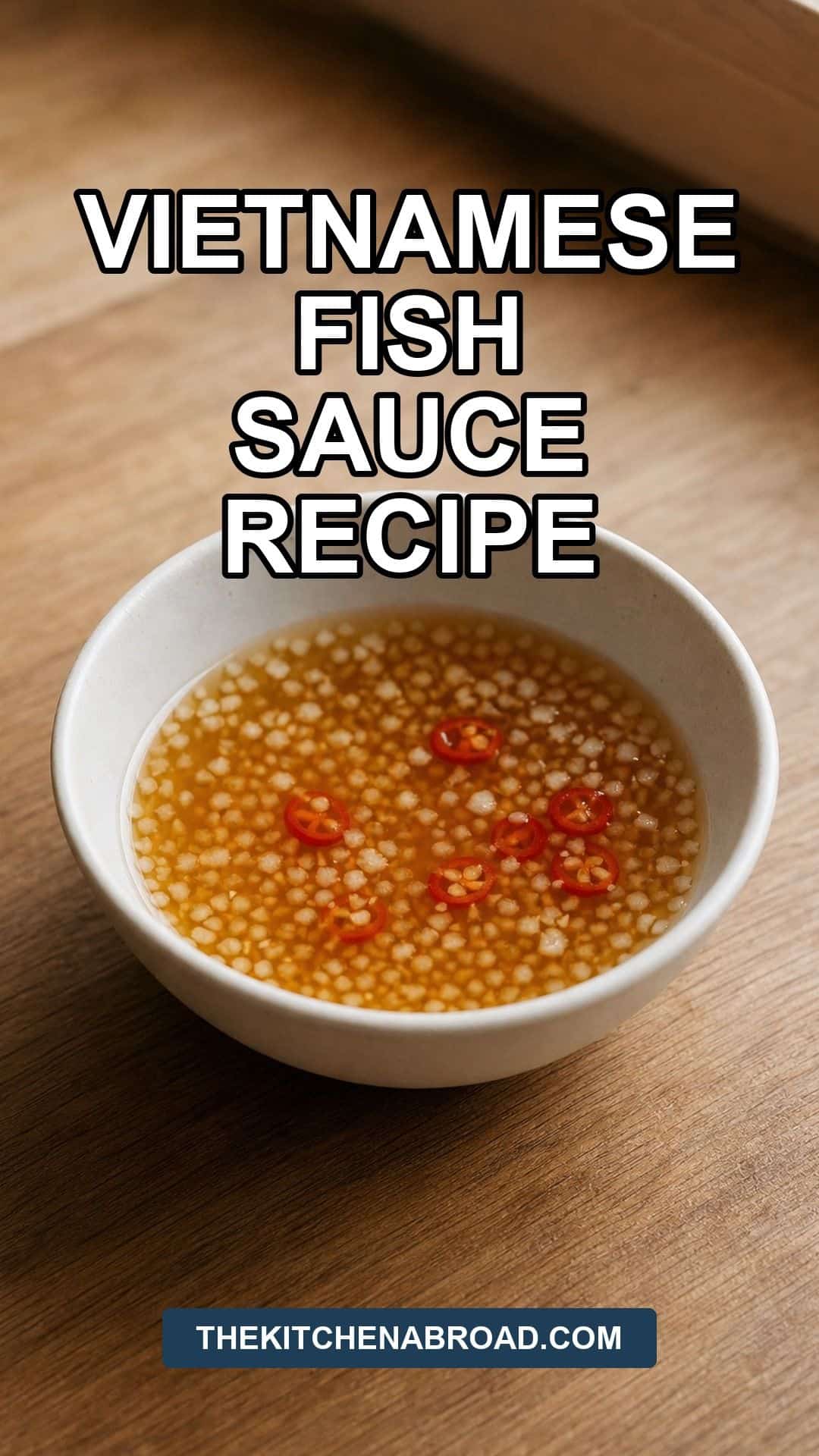
Nuoc cham is the Vietnamese table sauce built on a 4:3:2:1 ratio of hot water, sugar, fish sauce, and lime juice, finished with garlic and chili. Dissolve the sugar in hot water first to make a syrup base, then stir in the fish sauce, then the acid, then the aromatics so they float on top. The finished sauce should taste salty, sweet, sour, and lightly spicy in roughly equal weight, ready for grilled meat, fresh spring rolls, and vermicelli bowls.
Nuoc cham is the table sauce of Vietnamese cooking, set out at bun cha stalls in Hanoi, com tam shops in Saigon, and banh xeo houses up and down the coast. Every household has its own ratio and most cooks won’t tell you theirs, so the version below is a clean 4:3:2:1 reference batch: four parts hot water, three parts sugar, two parts fish sauce, one part lime juice. Treat the numbers as a starting point and adjust to the fish sauce on your shelf.
Gear That Helps
A small whisk, a citrus juicer, a microplane for the garlic, and a clean glass jar with a tight lid for storage. Nothing fancy, but a microplane really does matter here because raw garlic chunks can dominate the sauce if they’re too big.


Recommended Reads
- Homemade Chili Oil
- Easy Sweet Soy Glaze
- Coconut Rice in Rice Cooker
- Korean Buckwheat Noodles
- Beef in Oyster Sauce
Why the Ratio Matters
Vietnamese cooks talk about nuoc cham in parts because the brand of fish sauce on the counter changes the math. A 40N (40 grams nitrogen per liter) sauce like Red Boat or Three Crabs is salty and concentrated, and the 4:3:2:1 ratio holds. A milder grocery-store fish sauce often needs a touch more salt or less water to taste right. The numbers exist so you can taste, adjust, and rebuild the sauce in the same proportion the next time.
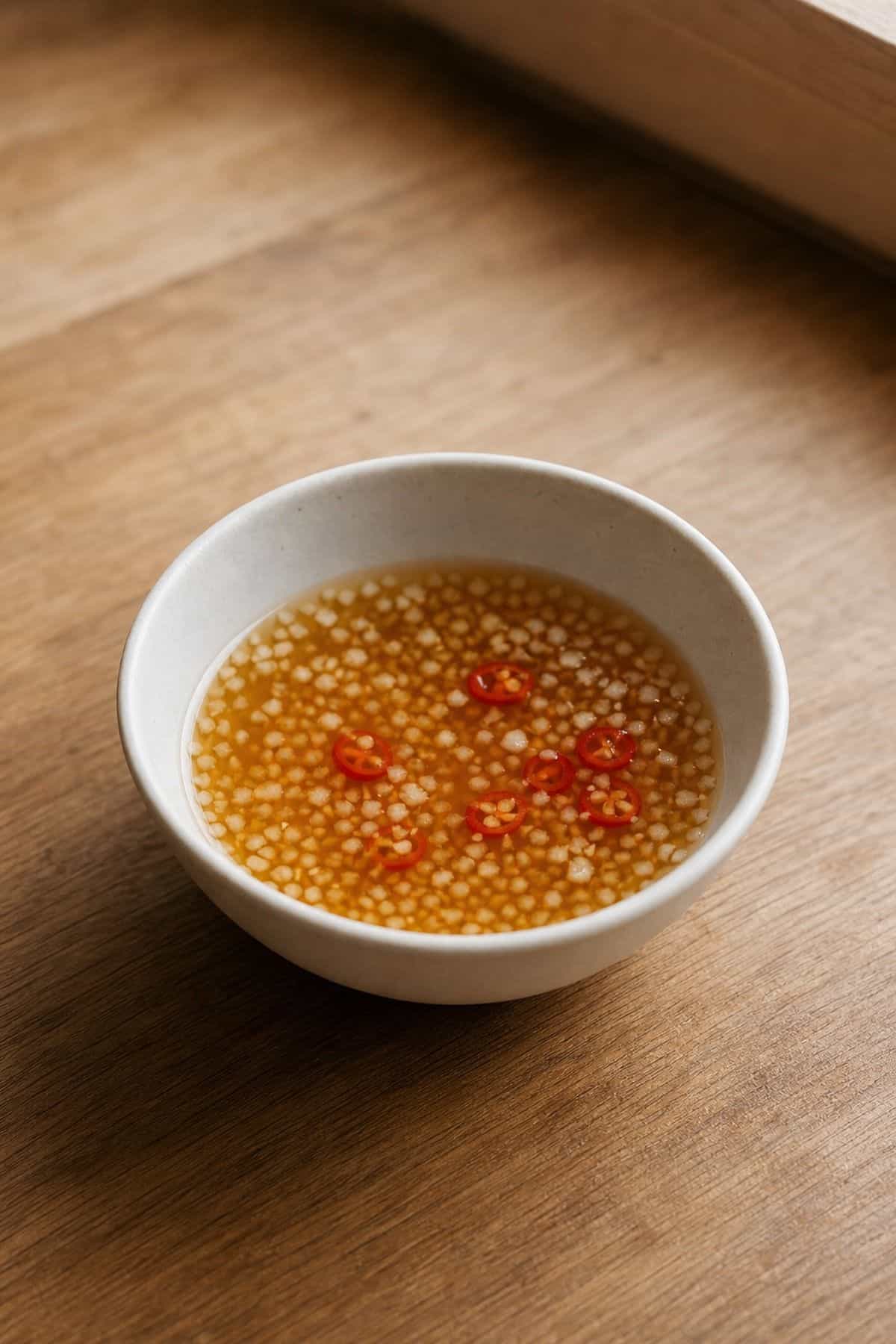
The order of operations matters too. Hot water dissolves the sugar into a thin syrup, and that syrup carries the salt of the fish sauce evenly through the bowl. Skip the dissolve step and you get sugar grit on the bottom of the jar a day later. Lime juice goes in after the salt because acid in a still-cold base never integrates as cleanly. Garlic and chili come in last so they float to the top, which is also how they’re served at the table in Vietnam (a spoonful of floating aromatics is part of the visual signal that the sauce is fresh).
Recipe: Nuoc Cham
Ingredients
- 60 ml (4 tablespoons) hot water, just-boiled, not boiling. It needs to dissolve the sugar but not cook off the aromatics later.
- 45 g (3 tablespoons) granulated sugar. White sugar gives the cleanest flavor; palm sugar works and adds a faint caramel note.
- 30 ml (2 tablespoons) fish sauce. Use a Vietnamese or Thai brand with anchovy and salt as the only ingredients. Red Boat, Three Crabs, and Squid are reliable.
- 15 ml (1 tablespoon) fresh lime juice, strained of seeds. Bottled lime juice is flat and metallic.
- 1 small clove garlic, microplaned or finely minced. Raw, not cooked.
- 1 small bird’s eye chili, thinly sliced. Thai red chili or half a serrano if that’s what you have. Seeds in or out depending on your tolerance.
- 5 ml (1 teaspoon) unseasoned rice vinegar, optional. For a shelf-stable version, swap a teaspoon of the lime for rice vinegar; it keeps longer in the fridge.
Instructions
- Pour the hot water into a small bowl or measuring cup and add the sugar. Stir until the sugar fully dissolves and the liquid runs clear, about 30 seconds. This is the base of the sauce; if there are still grains on the bottom of the bowl, the sauce will taste uneven later.
- Add the fish sauce and stir to combine. Taste the base now (before the lime goes in) so you have a reference point. It should taste salty, sweet, and faintly fermented, like a thin broth.
- Squeeze in the lime juice and stir again. Taste a second time. The sauce should land somewhere between salty and sour, with the sugar smoothing the edges. If it skews too salty for your fish sauce, add another teaspoon of water; if it’s too sweet, add half a teaspoon more lime.
- Stir in the microplaned garlic and sliced chili last. They should float on the surface in a loose cluster. The sauce is ready to serve right away, though it tastes a little rounder after 10 to 15 minutes of sitting. If you’re swapping in the rice vinegar for shelf life, add it with the lime in the previous step.
Tips and Variations
Adjusting for Different Fish Sauces
The grade on the bottle (often labeled in degrees of nitrogen, like 40N or 30N) tells you how concentrated the sauce is. A 40N sauce is saltier and more pungent and may need an extra tablespoon of water in this recipe. A milder 25N to 30N sauce often hits the right balance with the standard ratio, or even needs a half-tablespoon less water.
A Punchier Version for Bun Cha
Hanoi-style nuoc cham for bun cha is leaner, with more water and shredded green papaya or pickled carrot and daikon stirred in at the end. Double the water (so 120 ml / 8 tablespoons), keep everything else the same, and add a small handful of julienned papaya or pickled vegetables before serving. It dilutes the salt and makes the bowl easier to drink at the end of the meal.
A Punchier Version with Chili Oil
For something more aggressive (and decidedly not traditional), stir in a teaspoon of homemade chili oil at the end. The infused oil adds a smoky depth that fresh chili alone can’t carry. Good for grilled pork, less good for delicate fresh spring rolls.
Making It Vegetarian
Swap the fish sauce for a 1:1 mix of light soy sauce and water, plus a quarter teaspoon of miso paste for funk. It’s not nuoc cham anymore (the fermented anchovy is the dish), but it’s a workable dipping sauce for fresh spring rolls and rice paper rolls when you need a meat-free option.
Regional Differences You’ll Notice
Nuoc cham looks like one sauce on a menu but it’s really three or four. Northern (Hanoi) versions are pale, thin, and less sweet, often diluted further at the table with extra hot water and stirred up with pickled vegetables. Central (Hue) versions skew saltier and spicier. Southern (Saigon) versions, the ones most American Vietnamese restaurants serve, lean noticeably sweet, with more sugar and sometimes a touch of coconut water in place of regular water.
If you’ve eaten nuoc cham at a Vietnamese restaurant in the US and want to recreate that flavor at home, you’re probably after the Southern version. Bump the sugar up to 4 tablespoons and the water down to 3, keeping fish sauce and lime steady. For a more authentic Hanoi-style sauce, double the water and cut the sugar back to 2 tablespoons.
What to Use It On
Nuoc cham goes with grilled pork patties for bun cha, sliced grilled chicken over rice noodles, broken rice plates with grilled pork chop and a fried egg, fresh spring rolls with shrimp and pork, fried spring rolls, banh xeo (the crackly turmeric pancake), green papaya salad, and vermicelli noodle bowls. It also works as a punchy salad dressing thinned with a touch more water and tossed with butter lettuce, herbs, and a poached chicken thigh. Pair the dipping bowl with cold lager or a glass of unoaked white if you’re at the table for a long meal.
Frequently Asked Questions
What does nuoc cham taste like?
Salty, sweet, sour, and lightly spicy in roughly equal weight. The fish sauce gives it a fermented anchovy backbone, the sugar smooths the edges, and the lime keeps it bright. A good nuoc cham tastes balanced, never one note louder than the others.
Is nuoc cham the same as nuoc mam?
No. Nuoc mam is pure fish sauce (the straight bottled ingredient). Nuoc cham, sometimes called nuoc mam cham, is the prepared dipping sauce made from fish sauce, water, sugar, lime, garlic, and chili. The distinction matters when you’re shopping in a Vietnamese market.
How long does nuoc cham keep in the fridge?
About one to two weeks in a sealed glass jar with lime juice. Swap a teaspoon of the lime for unseasoned rice vinegar and the sauce will hold closer to two months. The garlic and chili lose their snap after the first few days even when the sauce itself is still fine.
Can I use lemon instead of lime?
You can, but the sauce loses its Southeast Asian register. Lemon brings a brighter, more floral acidity that reads more Italian than Vietnamese. If lime is the only thing you can’t find, use a 1:1 swap and add a small splash more sugar to balance.
What’s the ratio for nuoc cham?
The reference ratio is 4:3:2:1 (four parts hot water, three parts sugar, two parts fish sauce, one part lime juice). Vietnamese household ratios vary widely, with some Hanoi versions running closer to 5:3:1.5:1 (more water, less salt) and southern versions running sweeter. Start with 4:3:2:1 and adjust based on the fish sauce you have.
What do you eat nuoc cham with?
Grilled pork and chicken over vermicelli noodles, fresh and fried spring rolls, banh xeo, com tam, green papaya salad, and rice paper rolls. It also works as a vinaigrette over butter lettuce or shaved cabbage if you thin it with another tablespoon of water.
Key Takeaways
- The reference ratio is 4:3:2:1 (water, sugar, fish sauce, lime). Adjust to the salt level of your fish sauce.
- Dissolve the sugar in hot water first to make a syrup base. Skipping this step gives you grit on the bottom of the jar.
- Add fish sauce, then lime, then aromatics in that order. Garlic and chili should float on top.
- Use a Vietnamese or Thai fish sauce with anchovy and salt as the only ingredients. Red Boat, Three Crabs, and Squid all work.
- For shelf life past two weeks, swap a teaspoon of the lime for unseasoned rice vinegar.
- Pairs with bun cha, com tam, fresh spring rolls, banh xeo, and vermicelli noodle bowls.
Final Thoughts
The first jar of nuoc cham you make at home will probably need an adjustment after the first taste. That’s not a sign the recipe is wrong, it’s a sign the fish sauce on your shelf has its own personality. Make it twice in a week with the same bottle and the ratio you land on will be yours.
Set it out on the table in a small bowl with a spoon. Grilled pork, a tangle of cold rice noodles, a fistful of herbs and lettuce, and the dipping bowl beside it: that’s the Vietnamese meal the sauce was made for. A bottle of sweet soy glaze next to it covers the sweet-and-sticky side of the same table.
The sauce keeps a week or two in the fridge if you stick with all-lime, longer if you sneak in the rice vinegar. Pull it out for fresh spring rolls on a weeknight, drizzle it over a rice bowl at lunch, or thin it with water and use it as a salad dressing.
Last update on 2026-10-04 / Affiliate links / Images from Amazon Product Advertising API