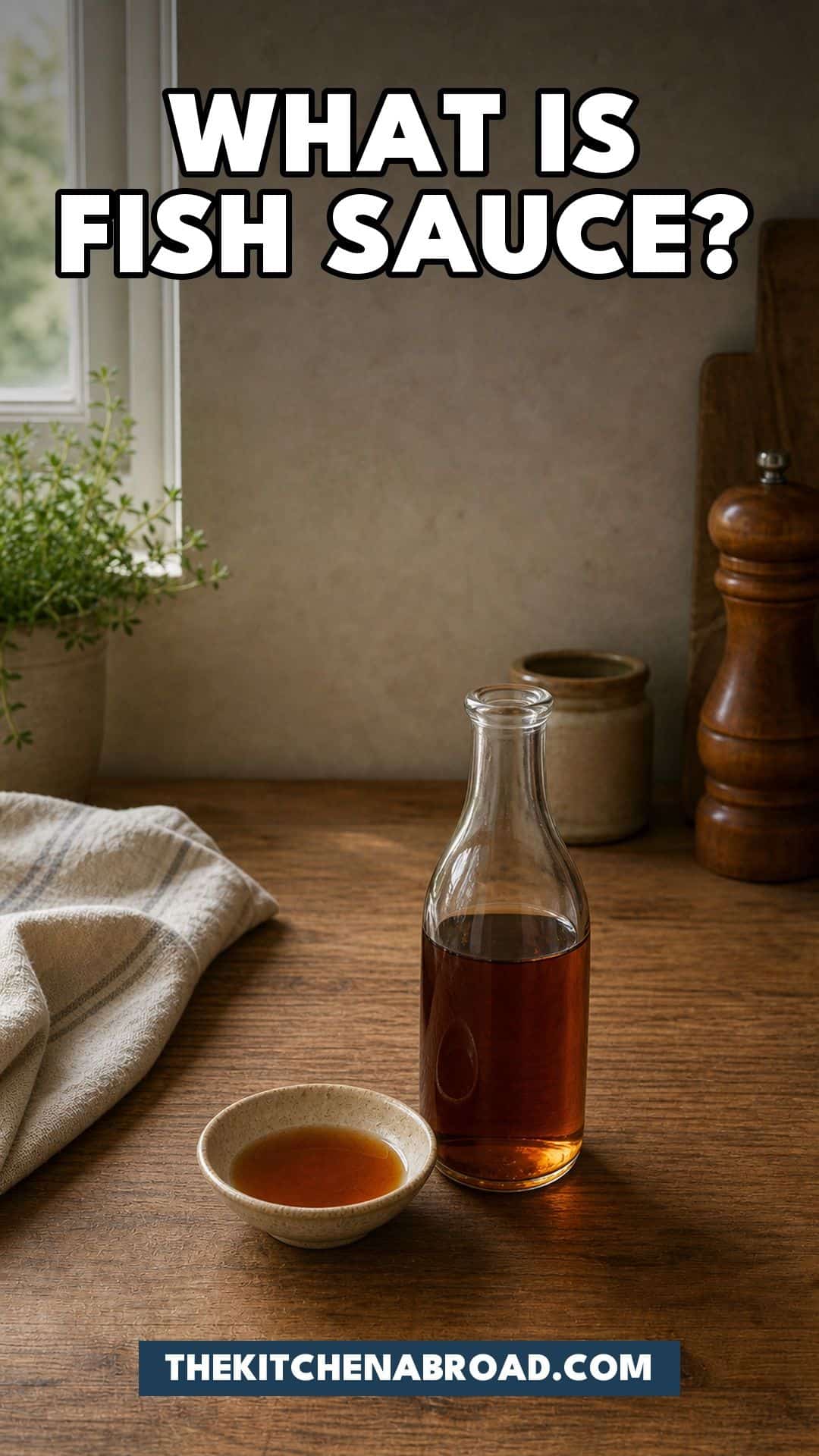
Fish sauce is a thin, amber liquid made by fermenting small fish, usually anchovies, with salt for a year or more. It tastes intensely salty and savory, and in cooking it adds depth rather than fishiness. It is the main seasoning in Thai, Vietnamese and Filipino food.
Open a bottle of fish sauce and the smell will make you doubt the whole idea. Then stir a spoonful into a curry, a dipping sauce or a pot of soup and the fishy edge disappears. What stays is a round, savory saltiness that is very hard to get any other way.
Here is what fish sauce is, how the Thai, Vietnamese and Filipino styles differ, how to choose a good bottle, and what to use when you have none.
How is fish sauce made?
Small fish, most often anchovies, are layered with salt in large barrels or tanks, roughly three parts fish to one part salt. Over many months the fish break down in their own enzymes. The liquid that drains off, slowly and clear, is fish sauce. The first pressing is the richest; later extractions get thinner and are often blended or sweetened.
Nothing else is strictly needed. The best bottles list two ingredients, fish and salt. Sugar, hydrolyzed protein and MSG show up in cheaper ones to smooth out a thin first press.
Thai, Vietnamese or Filipino fish sauce?
All three do the same job. The difference is in strength and how they are used at the table.
- Nam pla (Thailand) is the most common bottle in Western shops. It is salty and fairly sharp, built for cooking: curries, stir-fries, larb and papaya salad.
- Nuoc mam (Vietnam) is often lighter in salt and more fragrant. Vietnamese labels show a protein rating in degrees N; a higher number means a richer, more concentrated sauce.
- Patis (Philippines) is milder and is used both in the pot and as a table seasoning, sometimes with a squeeze of calamansi.
Patis and bagoong come from the same idea. Bagoong is the fermented paste itself, and patis is the liquid side of that process. If you cook Filipino food, read what bagoong is and how it is used next.
Does fish sauce taste fishy?
From the bottle, yes. In a finished dish, no, when the amount is right. Heat, acid and sugar change it. A spoon of fish sauce in a beef stew reads as “rich”, and in a lime dressing it reads as “salty and bright”. If you can taste fish, you used too much or the bottle has gone dark and stale.
How to use fish sauce in cooking
Treat it as liquid salt and add it the way a Thai cook does: a little at a time, tasting between splashes. Start with one teaspoon for two servings.
Where it shines:
- Dipping sauces, balanced with lime, sugar, garlic and chili.
- Curries, added in the last minutes so the aroma stays fresh.
- Stir-fries like Thai basil shrimp, where it goes in with the sauce at the end.
- Sour soups such as Filipino pork sinigang, seasoned with patis instead of salt.
- Marinades for grilled pork and chicken.
The classic way to taste it is Vietnamese nuoc cham: fish sauce, lime juice, sugar, water, garlic and chili, stirred until the sugar dissolves. There is a full Vietnamese fish sauce dip recipe with the ratios.
Fish sauce vs oyster sauce
They are not interchangeable. Fish sauce is thin, salty and clear. Oyster sauce is thick, sweet and glossy, made from oyster extract with sugar and starch. One seasons, the other coats. The side-by-side is in oyster sauce vs fish sauce.
What can you substitute for fish sauce?
No swap is perfect, so pick by what the dish needs:
- Soy sauce, one to one, plus a squeeze of lime. Closest for salt and savoriness; see what soy sauce is for which kind to grab.
- Vegan fish sauce made from seaweed, mushrooms or soy, for plant-based cooking.
- Anchovy paste thinned with water, for marinades and dressings.
- Light miso loosened with a little water, for soups.
- Salt and a little sugar, as a last resort, for dipping sauces.
How to store fish sauce
An opened bottle keeps in a cool, dark cupboard for months because of the salt. Over time it darkens and the flavor gets stronger and less clean, so refrigerate it if you use it slowly. White crystals in a cold bottle are salt, not spoilage. Wipe the rim after pouring, or the cupboard will smell of it.
Fish sauce FAQ
Is fish sauce vegetarian?
No, traditional fish sauce is made from fish. Look for bottles labeled vegan fish sauce, which use seaweed, mushrooms or soy.
Is fish sauce gluten-free?
Pure fish sauce made from only fish and salt is naturally gluten-free. Some brands add hydrolyzed wheat protein, so check the ingredient list.
How much fish sauce should I use?
Start with one teaspoon per two servings and taste. You can always add another splash, but you cannot take salt back out.
Does fish sauce go bad?
It rarely spoils, but it does lose quality. If it has turned very dark, smells harsh rather than savory, or tastes bitter, buy a new bottle.
What does fish sauce add to food?
Fish sauce adds salt and umami at the same time. That combination makes soups, curries and dressings taste deeper and more finished.
Key takeaways
- Fish sauce is fermented anchovies and salt; good bottles list only those two.
- Nam pla is sharper, nuoc mam can be lighter and more fragrant, patis is mild.
- Used in the right amount it tastes savory, not fishy.
- Soy sauce with lime is the easiest everyday substitute.
- Refrigerate opened bottles you use slowly; salt crystals are harmless.
Make a dipping sauce first
The fastest way to get comfortable with fish sauce is a bowl of nuoc cham. Mix one batch, taste it on rice or grilled meat, and the bottle stops being scary. After that, try it in a Thai curry such as chicken panang curry.