
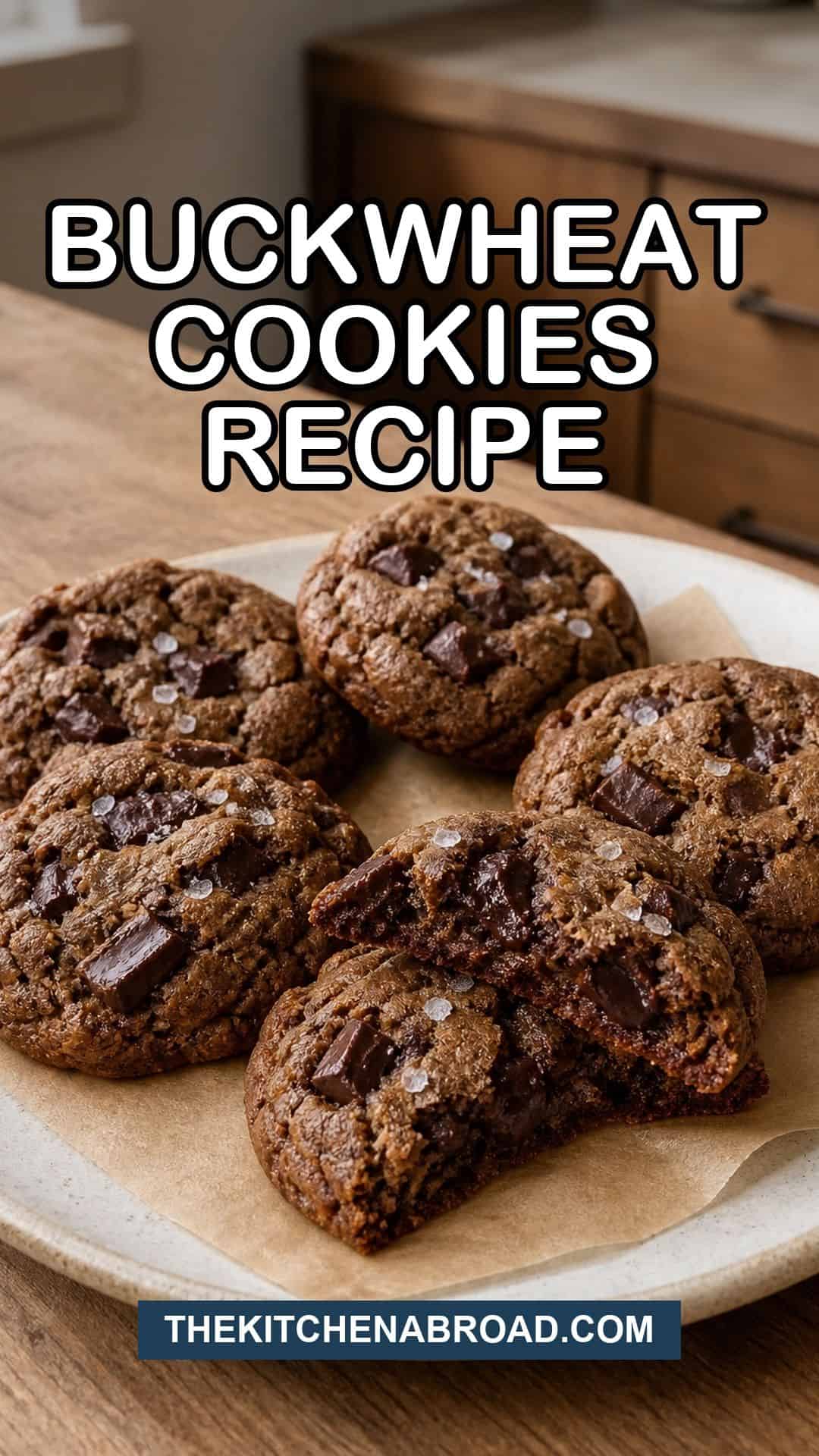
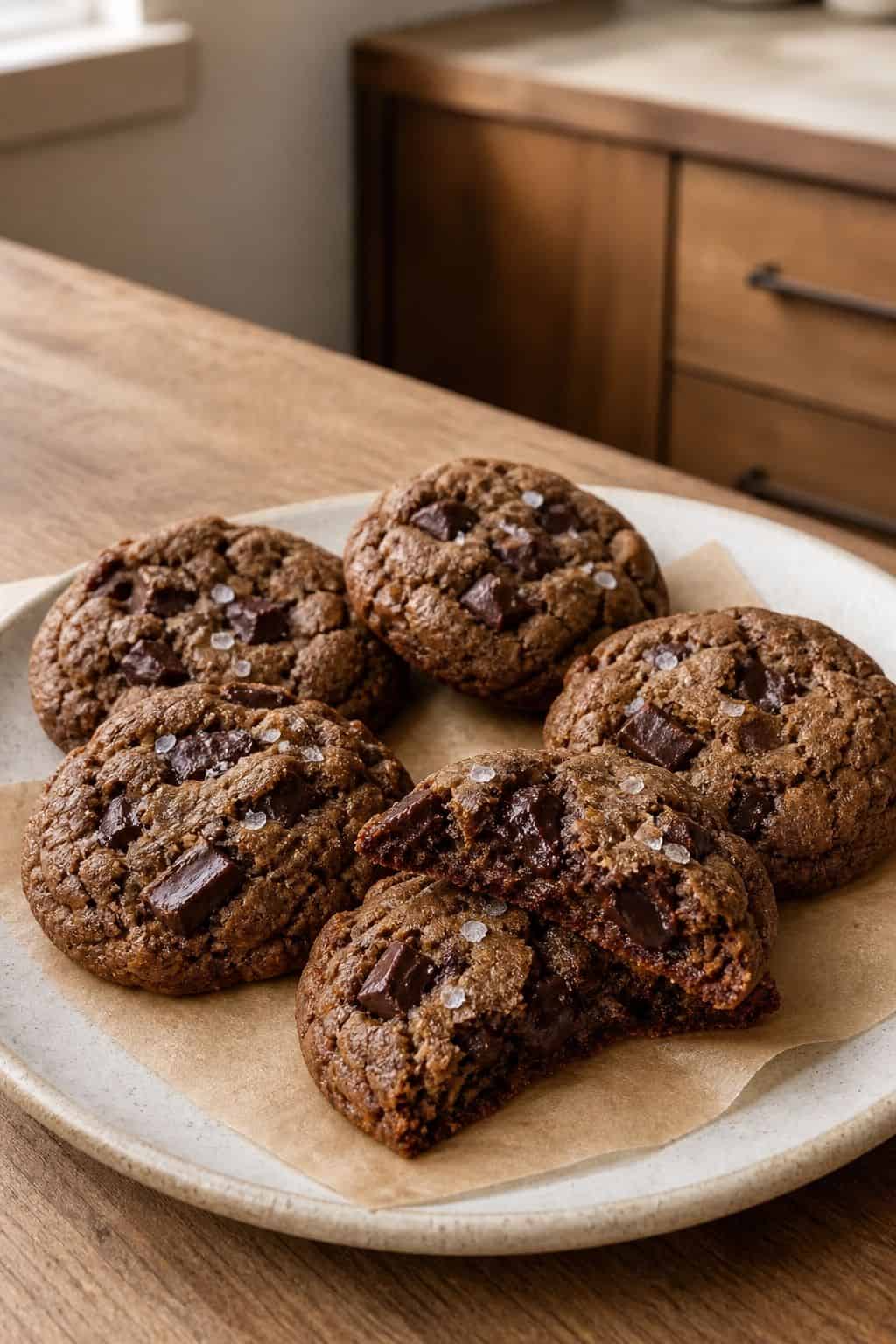
This buckwheat cookies recipe turns out chewy in the center with a crackly top and zero grit, thanks to a 1:1 buckwheat-to-all-purpose ratio, browned butter, and an overnight chill. Bake at 175°C (350°F) for 11 to 13 minutes for chocolate-chunk cookies that taste like toasted hazelnut and dark sugar. Makes about 18 cookies and keeps for four days in a tin.
Buckwheat cookies sit in the small category of bakes where the flour itself does the talking. Toasted-hazelnut character that you’d recognize from a Breton galette, baked into a chewy chocolate-chunk cookie with a crackly top. The version below is the one I make in batches on a Sunday afternoon, with a 1:1 buckwheat-to-all-purpose cut and an overnight rest in the fridge.
Gear That Helps
Browned butter wants a light-colored saucepan so you can read the color of the milk solids. A heavy half-sheet pan and a cookie scoop keep the bake even and the rounds the same size, which matters when you are working with a flour that browns faster than wheat alone.


Recommended Reads
- Banana Buckwheat Pancakes
- Korean Buckwheat Noodles
- Oat Muffins with Berries and Coconut
- Crème Bavarois
- Apple Sour Cream Slice
Why Buckwheat Works in a Cookie
Buckwheat is not a wheat at all. It is a pseudo-grain related to rhubarb and sorrel, milled into a darker flour with no gluten and a high level of polyphenols that read on the palate as toasted nuts and cocoa. The grit problem cooks worry about comes from the bran fraction in dark buckwheat flour. Two things solve it. The first is cutting the buckwheat 1:1 with all-purpose, which puts gluten back into the dough for chew and structure. The second is hydration time: a 24-hour rest in the fridge lets the bran soften and the flour absorb the butter and sugar fully, so the baked cookie reads as smooth and chewy rather than sandy.
Browned butter is the second lever. Cooking the butter past the foaming stage until the milk solids turn the color of weak tea drives off water and develops nutty, caramel-toffee compounds that double down on the toasted notes already in the buckwheat. Pair that with dark muscovado or molasses-rich brown sugar and the cookie tastes the way the kitchen smells when a galette pan is hot. For a deeper buckwheat-in-breakfast use, the Banana Buckwheat Pancakes recipe runs on the same flavor logic.
One more note on the flour itself. Light buckwheat flour, sometimes labeled fine or hulled, has had most of the dark bran sifted out. It bakes paler, reads smoother, and is the closest in behavior to a standard wheat flour. Dark buckwheat is whole-grain, with more bran, more flavor, and more grit risk. Either one works in this recipe; the dark version doubles the buckwheat character at the cost of a slightly more rustic crumb. If your buckwheat flour has been sitting in the pantry for more than three or four months, taste it before you bake. Buckwheat’s high oil content means it goes rancid faster than wheat, and stale flour will tank an otherwise good cookie. Keep it in the fridge or freezer if you bake with it occasionally.
Recipe: Buckwheat Cookies
Ingredients
- 120 g (1 cup) buckwheat flour. Light buckwheat flour gives a cleaner crumb; dark buckwheat is fine if you don’t mind a more rustic look.
- 125 g (1 cup) all-purpose flour. Provides the gluten that gives the cookie chew. A 1:1 ratio with buckwheat is the safest entry point.
- 170 g (12 tablespoons) unsalted butter, browned and cooled to room temperature.
- 200 g (1 cup, packed) dark brown sugar. Muscovado or dark brown for the molasses depth that matches buckwheat.
- 50 g (1/4 cup) granulated sugar. Balances the brown sugar and helps the cookie spread.
- 1 large egg plus 1 extra yolk. The extra yolk adds richness and a chewier set.
- 2 teaspoons vanilla extract.
- 3/4 teaspoon baking soda.
- 3/4 teaspoon fine sea salt, plus flaky salt for finishing.
- 200 g (7 oz) bittersweet chocolate, chopped into rough chunks of 1 to 2 cm.
Instructions
- Brown the butter first. Cut it into pieces, drop them into a light-colored saucepan, and set it over medium heat. The butter will melt, foam, then quiet down as the water cooks off. Keep swirling. After about six to eight minutes the milk solids on the bottom will turn the color of weak tea and the smell will shift from butter to toasted hazelnut. Pour it into a heatproof bowl, scrape every bit of the browned solids in with it, and let it cool to room temperature. You can hurry this along in the fridge, stirring every few minutes, until the butter is soft but no longer warm.
- Whisk the two flours, baking soda, and fine sea salt together in a bowl and set aside. In a larger bowl, combine the cooled browned butter with both sugars and whisk hard for a minute until the mixture looks smooth and a shade lighter. Whisk in the egg, the extra yolk, and the vanilla, beating until the batter is smooth and ribbons off the whisk.
- Switch to a spatula and fold in the dry ingredients in two additions, stopping the moment no streaks remain. Add the chopped chocolate and fold once or twice to distribute. The dough will feel loose at this point, which is correct. Press a sheet of plastic wrap right onto the surface and chill the dough for at least 12 hours and up to 48. This is not optional. The chill is what hydrates the buckwheat and gets you the chewy texture you came for.
- When you are ready to bake, heat the oven to 175°C (350°F) and line two sheet pans with parchment. Scoop the dough into 50 g balls (about 2 generous tablespoons) and space them 5 cm (2 inches) apart on the pans. If the dough is rock hard from a long chill, let the scooped balls sit on the counter for 15 minutes so they don’t crack at the edges.
- Bake one pan at a time for 11 to 13 minutes, until the edges are set and golden and the centers look just barely underdone. Pull them while the middle still has a slight sheen. Sprinkle the tops with flaky salt and let the cookies rest on the pan for 5 minutes before moving them to a rack. They firm up as they cool, and the crackly top sets in the first ten minutes off the heat.
- If the cookies spread too thin during the bake, the dough was probably too warm when it went into the oven. Chill the next pan another 15 minutes before baking. If the cookies stay too domed, the dough was too cold. Let the next pan come up slightly closer to room temperature, or press a spatula gently on each cookie the moment it comes out of the oven to flatten the dome and crack the top further. This is the trick that gets the magazine-cover crackle without overbaking.
Tips and Variations
Going gluten-free
Swap the all-purpose for a 1:1 gluten-free baking blend that already contains xanthan gum. The cookies will spread a little more and read slightly more crumbly, but the buckwheat flavor still leads. A second yolk in place of the whole egg helps the chew if you are going fully gluten-free.
Pushing the buckwheat percentage
If you want a more rustic, deeper-toasted cookie, push the ratio to 60 percent buckwheat and 40 percent all-purpose. Beyond that, the cookie can read sandy without an even longer rest. A full 100 percent buckwheat dough is workable but reads more like a shortbread than a chewy cookie.
Add-ins beyond chocolate
Toasted hazelnuts, candied orange peel, or 1/2 teaspoon of ground cardamom each play well with buckwheat’s earthy side. For a more nordic take, swap half the chocolate for dried sour cherries and a tablespoon of cocoa nibs.
Make-ahead and storage
The unbaked dough holds in the fridge for 48 hours and freezes well as portioned scoops for up to two months. Bake straight from frozen, adding one or two extra minutes. Baked cookies keep in a tin at room temperature for four days; warm them for 30 seconds in a low oven if they lose their edge.
What to Serve Them With
These cookies want an espresso, a black tea, or a glass of cold milk. Crumbled, they make a quick streusel over vanilla ice cream or alongside a spoonful of Crème Bavarois. They also sandwich beautifully with a smear of dulce de leche or chocolate ganache. For a packed lunch they hold their texture for three days in a tin, which is more than most cookies can claim.
Frequently Asked Questions
Are buckwheat cookies gluten-free?
Buckwheat flour itself is naturally gluten-free, but the version in this recipe is cut 1:1 with all-purpose for chew and structure, which means it contains gluten. To make the cookies gluten-free, swap the all-purpose for a 1:1 gluten-free baking blend.
What does buckwheat taste like in cookies?
Toasted hazelnut, a faint cinnamon edge, and a slight cocoa note on the finish. It reads earthier than wheat flour and pairs especially well with dark chocolate, brown sugar, and browned butter.
Can I use 100% buckwheat flour?
You can, but the cookie will read more like a shortbread, with less chew and more crumble. A 1:1 cut with all-purpose is the easiest entry point. If you want to push the buckwheat percentage, 60/40 buckwheat to all-purpose is the limit before the texture gets sandy.
Why is my buckwheat cookie gritty?
Grit comes from underhydrated bran in dark buckwheat flour. The fix is time. A 12 to 48 hour chill in the fridge lets the flour absorb the wet ingredients fully, and the baked cookie reads smooth. Using light buckwheat flour helps even more.
Can I substitute buckwheat flour 1:1 for all-purpose in other cookies?
Not without consequences. Buckwheat has no gluten, so a full swap will give you a crumbly, more delicate cookie. A 25 to 50 percent swap usually works in most chocolate chip or brown sugar cookie recipes with no other adjustments.
Do I have to chill the dough overnight?
Yes, if you want the chewy center and clean texture. A short 30-minute chill will get you a baked cookie, but the flavor and texture both improve significantly between 12 and 24 hours of rest. Treat the chill as part of the recipe, not an optional step.
Key Takeaways
- A 1:1 buckwheat to all-purpose ratio gives the cleanest chew without losing the toasted-nut character of the flour.
- Browned butter doubles down on buckwheat’s natural malty notes.
- Chill the dough 12 to 48 hours. This single step removes the gritty texture often blamed on the flour itself.
- Bake at 175°C (350°F) for 11 to 13 minutes and pull them while the centers still look just underdone.
- Dough freezes well in scooped portions and bakes straight from frozen with an extra minute or two.
Final Thoughts
Buckwheat is one of the few flours that brings real character to a cookie without working hard for it. The flavor does most of the lifting, and the recipe is mostly about getting out of its way: brown the butter, cut the flour, give the dough time.
They hold up for a packed lunch, they read as a more grown-up version of a chocolate chip cookie when you set them out with coffee after dinner, and they crumble well over ice cream when there’s nothing else in the freezer. A small batch travels well too, which is rare for chewy cookies.
If you bake a lot, keep a 1 kg bag of light buckwheat flour in the freezer and a block of bittersweet chocolate next to it. The dough comes together in twenty minutes and the long fridge rest does the rest of the work overnight. By the time you wake up, the buckwheat has done its job in the bowl, and the only thing left is the oven.
Buckwheat Cookies
This buckwheat cookies recipe turns out chewy in the center with a crackly top and zero grit, thanks to a 1:1 buckwheat-to-all-purpose ratio, browned butter, and an overnight chill.
Ingredients
- 120 g (1 cup) buckwheat flour
- 125 g (1 cup) all-purpose flour
- 170 g (12 tablespoons) unsalted butter, browned and cooled to room temperature
- 200 g (1 cup, packed) dark brown sugar
- 50 g (1/4 cup) granulated sugar
- 1 large egg plus 1 extra yolk
- 2 teaspoons vanilla extract
- 3/4 teaspoon baking soda
- 3/4 teaspoon fine sea salt, plus flaky salt for finishing
- 200 g (7 oz) bittersweet chocolate, chopped into rough chunks of 1 to 2 cm
Instructions
- Brown the butter first. Cut it into pieces, drop them into a light-colored saucepan, and set it over medium heat. The butter will melt, foam, then quiet down as the water cooks off. Keep swirling.
- Whisk the two flours, baking soda, and fine sea salt together in a bowl and set aside. In a larger bowl, combine the cooled browned butter with both sugars and whisk hard for a minute until the mixture looks smooth and a shade lighter.
- Switch to a spatula and fold in the dry ingredients in two additions, stopping the moment no streaks remain. Add the chopped chocolate and fold once or twice to distribute. The dough will feel loose at this point, which is correct.
- When you are ready to bake, heat the oven to 175°C (350°F) and line two sheet pans with parchment. Scoop the dough into 50 g balls (about 2 generous tablespoons) and space them 5 cm (2 inches) apart on the pans.
- Bake one pan at a time for 11 to 13 minutes, until the edges are set and golden and the centers look just barely underdone. Pull them while the middle still has a slight sheen.
- If the cookies spread too thin during the bake, the dough was probably too warm when it went into the oven. Chill the next pan another 15 minutes before baking. If the cookies stay too domed, the dough was too cold.
Last update on 2026-08-08 / Affiliate links / Images from Amazon Product Advertising API