

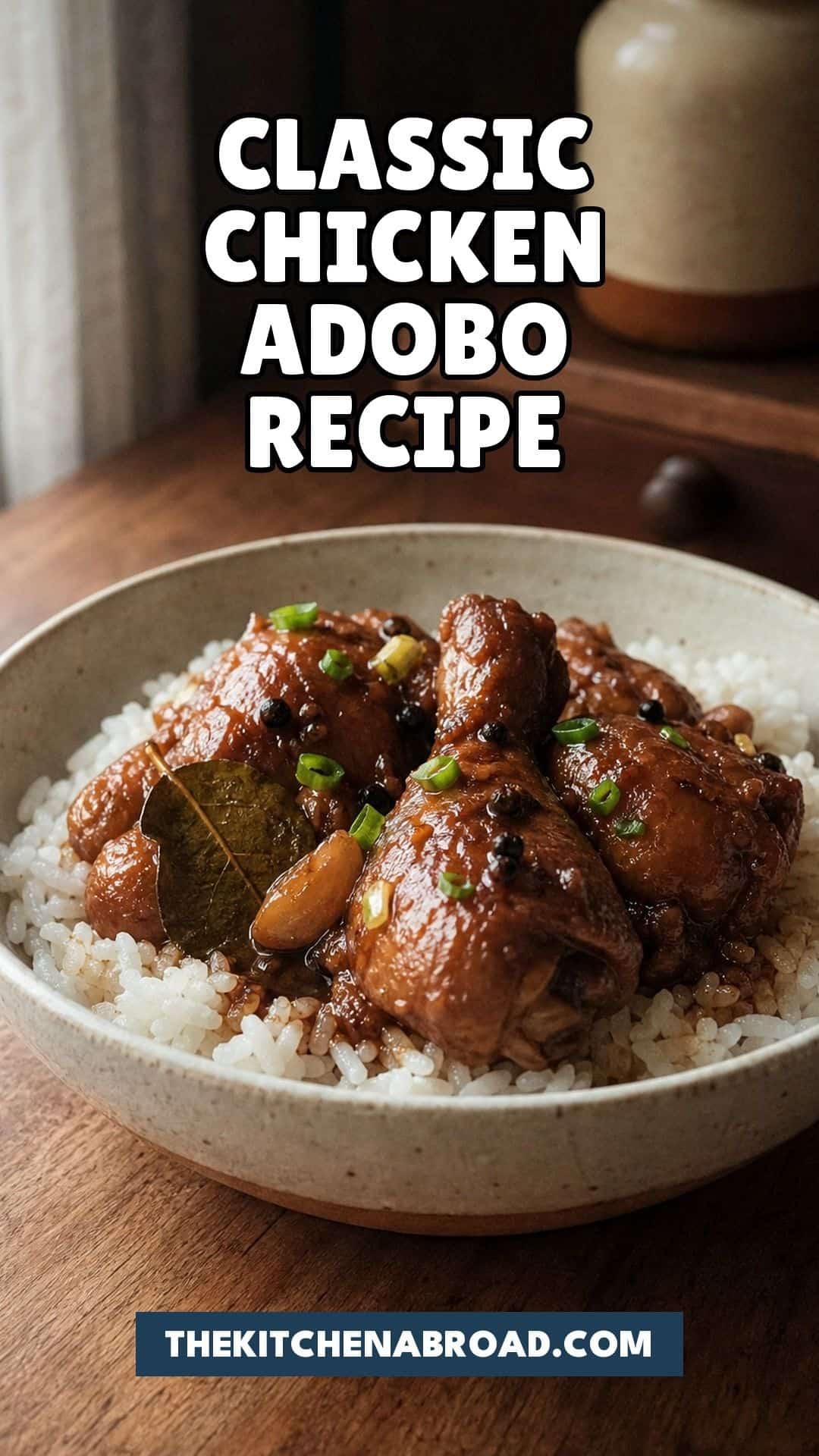
Chicken adobo is bone-in chicken browned, then braised in soy sauce, vinegar, lots of garlic, bay leaves and whole peppercorns until the liquid cooks down into a dark, sticky glaze. This version takes 50 minutes start to finish and feeds 4 to 6 with rice. The one rule that matters: let the vinegar boil before you stir it.
Eight cloves of garlic, half a cup of soy sauce, a third of a cup of vinegar. That is most of what goes into a classic chicken adobo recipe, and it still ends up as one of the most satisfying things you can put on a plate. Salty, sour, garlicky, with a glaze that soaks straight into the rice underneath.
I’m Filipino and spent fourteen years cooking in professional kitchens in Finland, and adobo is still the dish I make when I want dinner to cook itself. You brown the chicken, build the sauce in the same pot and walk away for half an hour. The work is small. The timing details are where most people go wrong, so that’s what this post spends its time on.
Four tools make this easier. A heavy pot matters most; the rest is convenience.


What makes adobo taste like adobo?
Adobo is a cooking method before it’s a recipe. Meat simmered in vinegar with garlic, pepper and bay, usually with soy sauce for salt and color. Every Filipino household argues about the ratio, and there’s no single correct one. This version sits on the traditional side: no sugar, no coconut milk, no oyster sauce.
The vinegar does two jobs. It gives the dish its sharp backbone, and it keeps well, which is why adobo was a sensible thing to cook in a hot country long before fridges. Soy sauce brings the deep brown color and most of the salt. If you want to understand why one bottle of soy can taste so different from another, I broke that down in a piece on cooking with soy sauce.
Then the aromatics. Smashed garlic softens in the braise and turns almost sweet. Whole peppercorns stay intact and give little bursts of heat when you bite into one. Dried bay leaves add a faint herbal, tea-like note you’d miss if it were gone (more on choosing and storing them in this guide to what bay leaves actually do).
Why you shouldn’t stir the vinegar right away
Ask any Filipino cook about adobo and this comes up fast. When the vinegar goes in, bring the pot to a boil and leave it alone for 2 to 3 minutes before stirring.
The practical reason: boiling drives off some of the harsh, volatile acidity, and the sauce ends up rounder. Stir too early and the raw sour edge hangs around through the whole simmer. You’ll taste the difference side by side, and it’s the most common reason people say their adobo turned out “too sour.”
If it still tastes sharp at the end, a small pinch of sugar evens it out. Don’t add more soy to fix sourness; you’ll just get a saltier sour sauce.
Which chicken and which vinegar work best?
Bone-in thighs and drumsticks. Skip breasts. Dark meat stays juicy through a 30-minute braise, and the bones and skin give the sauce body so it reduces into a glaze instead of a thin puddle.
Boneless thighs work on a weeknight when that’s what you have. Cut them into large chunks and shorten the covered simmer to about 20 minutes. The sauce will be a little thinner.
The vinegar question
Filipino cane vinegar (sukang maasim) gives the cleanest, most familiar flavor. Look for it in Asian grocery stores, often next to the coconut vinegar. White distilled vinegar is the easy substitute and works well. Rice vinegar is milder, so the finished dish will taste softer.
Avoid balsamic and apple cider vinegar. Both bring a fruity sweetness that fights the soy. Coconut vinegar is traditional in some regions too; if that’s the bottle in your cupboard, here’s how it compares in this guide to coconut vinegar and its substitutes.
Where does the deep flavor come from?
Pat the chicken dry. Wet skin steams instead of browning, and you want a deep golden crust plus the sticky brown layer it leaves on the bottom of the pot. In a restaurant kitchen we’d call that fond, and it’s free flavor. When the soy, vinegar and water hit the pan, scrape it up and it dissolves straight into the sauce.
Don’t crowd the pot. Two batches is better than one pale, steamed batch.
The last 8 to 10 minutes, lid off, is where adobo becomes adobo. The liquid bubbles down until it coats the back of a spoon and clings to the chicken. Watch it near the end. Soy sauce goes from glossy to scorched fast once the water is gone.
Variations worth trying
For heat, drop in a few whole bird’s eye chilies with the bay leaves, or a pinch of red pepper flakes.
A splash of coconut milk stirred in near the end turns it into adobo sa gata, softer and richer. If you like that direction, the same coconut-and-vinegar idea runs through this Filipino coconut salmon (paksiw na salmon sa gata).
Peeled hard-boiled eggs added for the last 10 minutes pick up the color and salt and stretch the pot further. Pork belly, or a mix of pork and chicken, is just as common in the Philippines as chicken alone.
Classic chicken adobo recipe
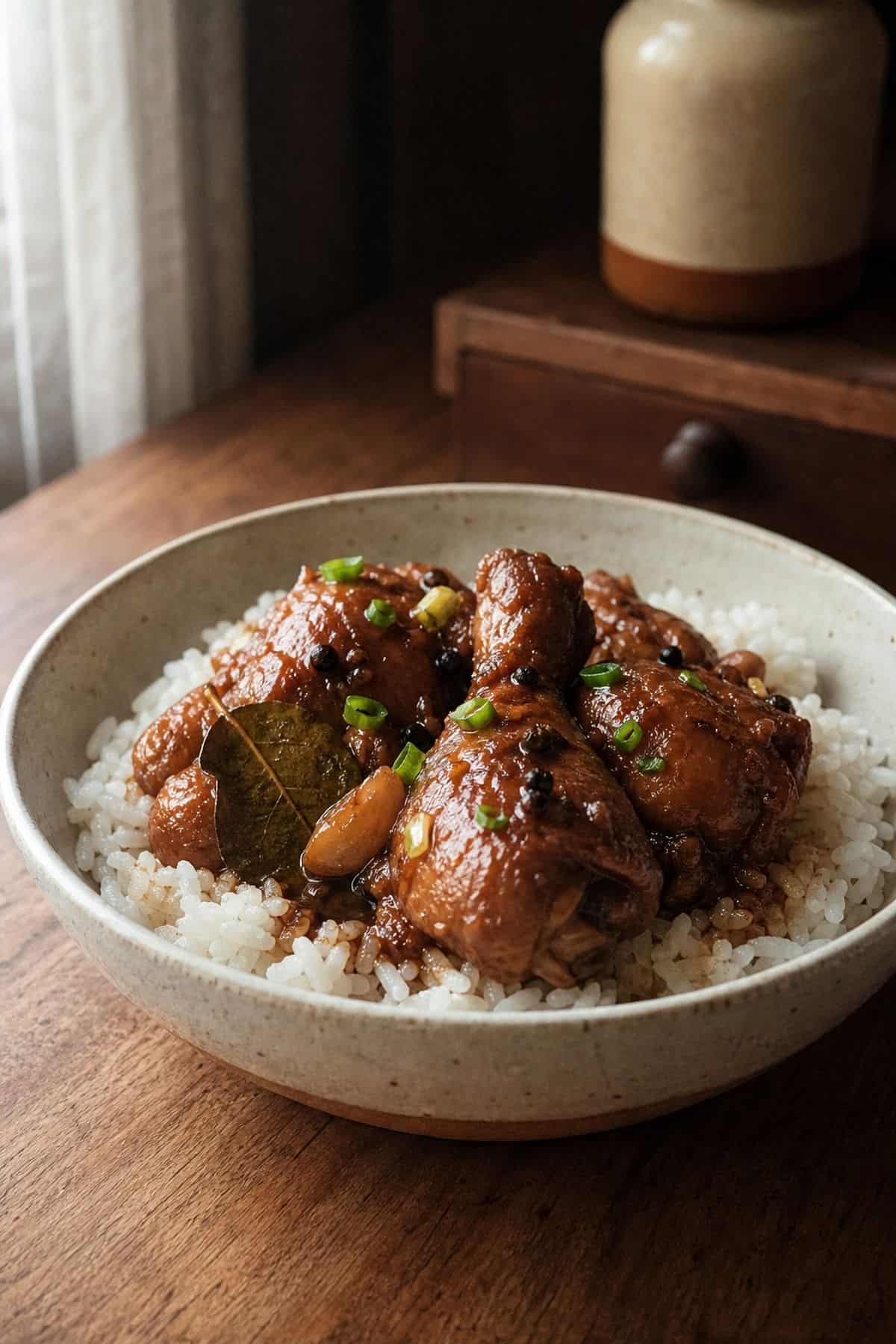
Prep time: 10 minutes. Cook time: 40 minutes. Total time: 50 minutes. Servings: 4 to 6.
Ingredients
- 2 lbs bone-in chicken pieces (drumsticks and thighs work best)
- 1 tablespoon neutral oil (vegetable or canola)
- 8 cloves garlic, smashed and peeled
- 1/2 cup soy sauce
- 1/3 cup white vinegar or cane vinegar
- 1 cup water
- 3 dried bay leaves
- 1 teaspoon whole black peppercorns
- Salt to taste
- Steamed white rice, for serving
- Sliced green onions, for garnish (optional)
Instructions
- Pat the chicken dry with paper towels and season lightly with salt.
- Heat the oil in a large heavy-bottomed pot or Dutch oven over medium-high heat. Brown the chicken on all sides, in batches if needed, about 3 to 4 minutes per side, until deep golden. Move it to a plate.
- Lower the heat to medium. Add the garlic and cook for about 1 minute, stirring often, until fragrant and lightly golden.
- Pour in the soy sauce, vinegar and water. Add the bay leaves and peppercorns. Bring to a boil and let it bubble undisturbed for 2 to 3 minutes, then scrape up the browned bits from the bottom.
- Return the chicken to the pot and nestle it into the liquid. Bring back to a boil, then reduce to low. Cover and simmer for 30 minutes, turning the chicken halfway.
- Uncover, raise the heat to medium and reduce the sauce for 8 to 10 minutes, until it turns glossy and coats the chicken. The thickest piece should read 165°F (74°C) at the bone.
- Taste, add salt if needed and discard the bay leaves.
- Serve over steamed rice with plenty of sauce spooned on top. Scatter green onions over if using.
Notes
Adobo tastes better the next day once the flavors settle. Refrigerate leftovers within 2 hours and eat them within 3 to 4 days, which is the window the USDA gives for cooked chicken. It freezes well for up to 3 months. Reheat gently in a pot over low heat with a splash of water if the glaze has set too thick.
Chicken adobo questions
Why does my adobo taste too sour?
Usually because the vinegar was stirred before it boiled. Let it bubble untouched for 2 to 3 minutes after it goes in, and the sharp edge cooks off during the simmer. A tiny pinch of sugar at the end fixes any leftover sourness.
Can I make chicken adobo with boneless chicken?
Yes, boneless thighs work. Cut them into large chunks and simmer covered for about 20 minutes instead of 30. The sauce will be slightly thinner because there are no bones or skin adding body.
What vinegar is best for chicken adobo?
Filipino cane vinegar is the traditional choice and gives the cleanest flavor. White distilled vinegar is the best easy substitute, and rice vinegar works if you want a milder dish. Avoid balsamic and apple cider vinegar, which add sweetness.
Should chicken adobo be dry or saucy?
Both styles are traditional. This recipe reduces the sauce to a glaze that coats the chicken with a few spoonfuls left for the rice. For a saucier adobo, stop the final reduction after 3 to 4 minutes.
Is chicken adobo good for meal prep?
It’s one of the best braises for it, since the flavor improves overnight. Keep portions in the fridge for 3 to 4 days or freeze them for up to 3 months, and reheat on the stove so the glaze loosens again.
Key takeaways
- Brown bone-in thighs and drumsticks well; the crust and fond flavor the whole sauce.
- Let the vinegar boil 2 to 3 minutes before stirring for a rounder, less sour adobo.
- Cane vinegar or white distilled vinegar work best; skip balsamic and cider vinegar.
- Reduce uncovered for 8 to 10 minutes until the sauce glazes the chicken.
- Leftovers keep 3 to 4 days in the fridge and taste better on day two.
What to cook with your adobo next
Adobo is rich and salty, so it wants something sour or fresh alongside it. If you’re building a Filipino dinner, make this pork sinigang in tamarind broth the next night; it uses the same pot and the same rice, and its bright sourness is the perfect contrast to a weekend of soy and garlic.
Classic Chicken Adobo Recipe (Chicken in Garlic Soy Sauce Glaze)
This classic chicken adobo recipe braises chicken in a mixture of soy sauce, vinegar, garlic, bay leaves, and black peppercorns until the meat is fall-off-the-bone tender and the sauce is thick and glossy.
Ingredients
- 2 lbs bone-in chicken pieces (drumsticks and thighs work best)
- 1 tablespoon neutral oil (vegetable or canola)
- 8 cloves garlic, smashed and peeled
- 1/2 cup soy sauce
- 1/3 cup white vinegar or cane vinegar
- 1 cup water
- 3 dried bay leaves
- 1 teaspoon whole black peppercorns
- Salt to taste
- Steamed white rice for serving
- Sliced green onions for garnish (optional)
Instructions
- Pat the chicken pieces dry with paper towels and season lightly with salt.
- Heat the oil in a large, heavy-bottomed pot or Dutch oven over medium-high heat. Working in batches if needed, brown the chicken on all sides, about 3 to 4 minutes per side until golden. Transfer to a plate.
- Lower the heat to medium. Add the smashed garlic to the pot and cook for about 1 minute, stirring often, until fragrant and lightly golden.
- Pour in the soy sauce, vinegar, and water. Add the bay leaves and peppercorns. Stir gently to scrape up any browned bits from the bottom of the pot.
- Return the chicken to the pot, nestling the pieces into the liquid. Bring everything to a boil, then reduce the heat to low. Cover and simmer for 30 minutes, turning the chicken halfway through.
- Remove the lid and increase the heat to medium. Let the sauce reduce for about 8 to 10 minutes until it thickens into a glossy glaze that coats the chicken.
- Taste and adjust seasoning with salt if needed. Discard the bay leaves.
- Serve the chicken over steamed white rice, spooning the sauce generously over everything. Garnish with sliced green onions if desired.
Notes
Storage: Chicken adobo keeps in the fridge for up to 5 days and actually tastes better the next day as the flavors continue to develop. The vinegar acts as a natural preservative. Reheating: Warm gently in a pot over low heat, adding a splash of water if the sauce has thickened too much. Freezing: This recipe freezes well for up to 3 months. Thaw overnight in the fridge and reheat on the stove. If you enjoy making big batches of comforting meals, a pot of kimchi stew with chicken is another great option for the week.
Last update on 2026-10-03 / Affiliate links / Images from Amazon Product Advertising API
