

Great chili oil comes down to two stages of oil temperature. First, infuse a neutral oil with star anise, cassia cinnamon, bay leaf, and Sichuan peppercorn at a low 110°C (225°F) for 30 to 60 minutes, then strain. Second, reheat the infused oil and pour it over the chili flakes in three separate pours at 175°C (350°F), 150°C (300°F), and 120°C (250°F). The descending temperatures give you a deep red-orange oil instead of a burnt black one.
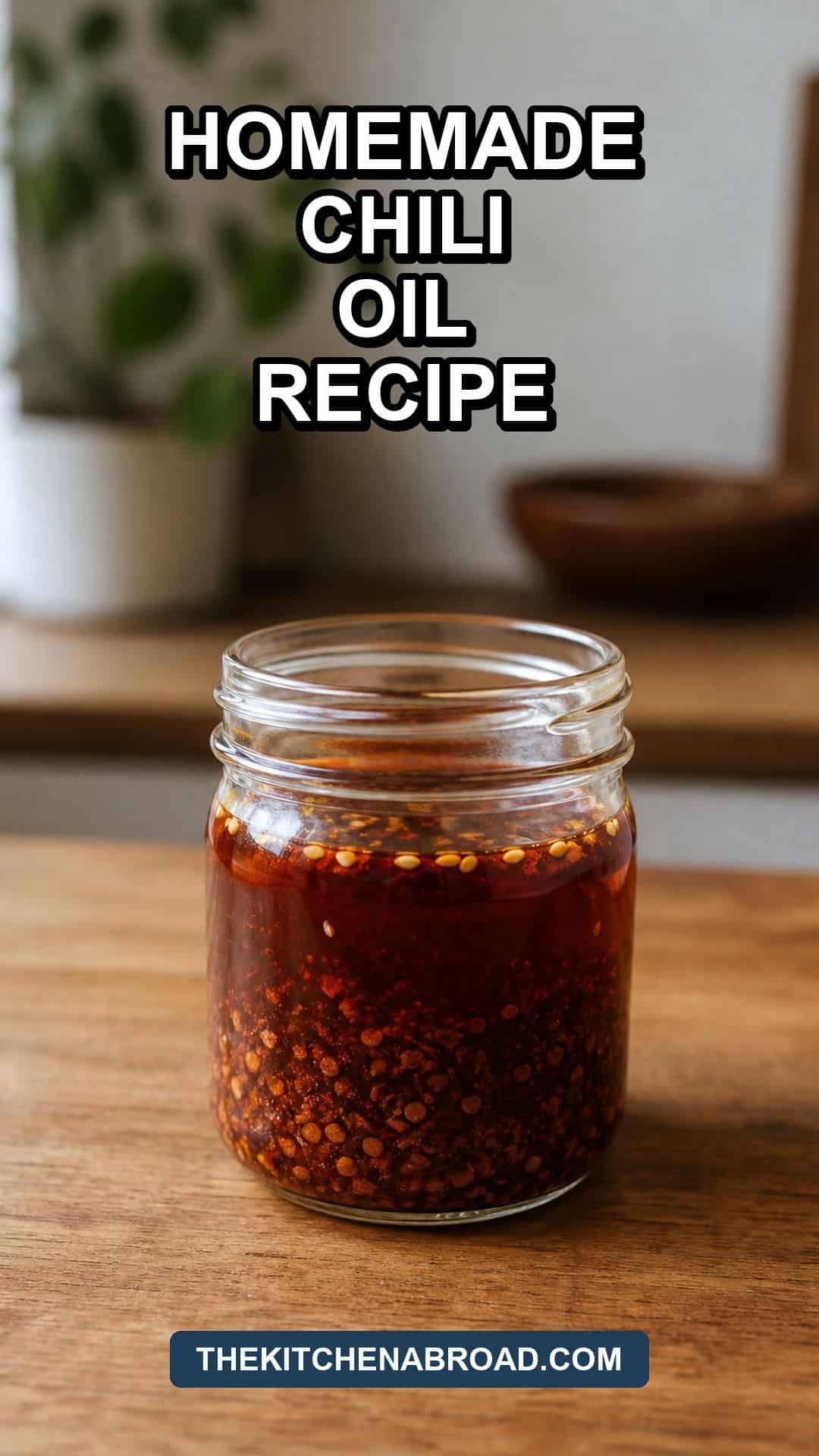
Sichuan chili oil, hong you or “red oil,” is the table condiment in Chengdu kitchens, ladled over cold sesame noodles and dumplings the way ketchup gets reached for in the US. The version below is the home-batch one with the full Sichuan aromatic lineup: star anise, cassia, fennel, Sichuan peppercorn. The temperature work is the only piece of real technique, and once the pours are right the oil lasts a month in the fridge.
Tools You’ll Want
A small heavy-bottomed saucepan, an instant-read thermometer or a candy thermometer (this recipe is a temperature recipe, and guessing will burn the oil), a fine-mesh strainer, a heatproof bowl for the chili flakes, and a glass jar with a tight lid for storage. The thermometer is the single most important piece of gear on the list.


Recommended Reads
- Vietnamese Nuoc Cham
- Easy Sweet Soy Glaze
- Beef in Oyster Sauce
- Mushroom Oyster Sauce
- Korean Buckwheat Noodles
Why the Three Pours Matter
Chili flakes contain three things you want in the finished oil: capsaicin (heat), carotenoid pigments (red color), and volatile aromatic compounds (the fresh, slightly fruity smell of dried chili). Each comes out at a different temperature. The first pour at 175°C (350°F) hits the flakes hot enough to wake up the capsaicin and trigger a sizzling, foaming reaction (this is the loud, dramatic stage). The second pour at 150°C (300°F) pulls out the carotenoids and gives the oil its red-orange color. The third pour at 120°C (250°F) preserves the aromatic compounds, which would burn off entirely at higher heat.
Skip the staged pours and pour the oil over the chili flakes all at once at 175°C and you get heat and color, but the smell is flat and the flakes taste a little burnt. Pour it on too cool and the chili doesn’t bloom at all. The staged temperature is what gives a homemade chili oil the smell that a store-bought version usually loses to oxidation on the shelf.
The aromatics in stage one work the same way. A long, low infusion (around 110°C / 225°F) pulls the volatile oils out of star anise, cassia cinnamon, bay leaf, and Sichuan peppercorn without breaking the more delicate compounds. Cooks who rush this step and use a high heat end up with bitter, woody aromatics in the finished oil.
Recipe: Chili Oil
Ingredients
- 480 ml (2 cups) neutral oil. Grapeseed, vegetable, or canola. Avoid olive oil (too strong) and toasted sesame (saved for finishing).
- 2 whole star anise pods.
- 1 cassia cinnamon stick, about 5 cm (2 inches). Cassia, not Ceylon. The cheap grocery-store cinnamon is usually cassia.
- 2 dried bay leaves.
- 2 teaspoons Sichuan peppercorns, red or green. Look for fragrant, oily ones, not dusty grocery jars.
- 1 black cardamom pod, cracked, optional. Adds smoky depth. Skip if you can’t find it.
- 3 thick coins fresh ginger, skin-on, lightly smashed.
- 2 cloves garlic, skin-on, lightly smashed.
- 60 g (about 1/2 cup) Chinese chili flakes. Sichuan or Korean coarse gochugaru both work. Indian or Mexican grocery-store red pepper flakes are too small and burn fast.
- 1 tablespoon toasted sesame seeds.
- 1 teaspoon black vinegar. Chinkiang vinegar if you can find it.
- 1 teaspoon fine sea salt.
Instructions
- Combine the oil, star anise, cassia, bay leaves, Sichuan peppercorns, black cardamom (if using), ginger, and garlic in a small heavy-bottomed saucepan. Set it over the lowest heat your stove will hold and clip on the thermometer. The target is 110°C (225°F), with the oil barely shimmering and a slow, lazy stream of bubbles rising off the aromatics. Hold it there for 30 to 60 minutes, checking the temperature every five minutes or so. The garlic should turn deep golden brown but never black, and the aromatics should smell warm and slightly resinous, not bitter.
- While the oil infuses, put the chili flakes, sesame seeds, and salt in a heatproof bowl (a wide ceramic bowl works well) and set it next to the stove. Have the strainer and a spoon ready.
- Strain the infused oil into a clean measuring cup or another small saucepan and discard the aromatics. Wipe out the original pan if you’re reusing it, then return the strained oil to the heat. Bring it up to 175°C (350°F) and immediately pour about a third of the oil over the chili flakes. The bowl should foam, sizzle, and release a strong sweet-pepper smell. Stir once with the back of a spoon and let it settle for about 30 seconds.
- Let the oil in the pan drop to 150°C (300°F) (just pull it off the heat for a minute, then check the thermometer), and pour the next third over the chili flakes. The sizzle should be smaller this time and the oil in the bowl should start to take on a deep red-orange color. Stir again.
- Drop the oil one more time to 120°C (250°F) and pour the last third over the flakes. There should be almost no sizzle now. Add the black vinegar and give the whole bowl a final stir. The vinegar will hiss faintly and the smell will change one more time as it hits the oil.
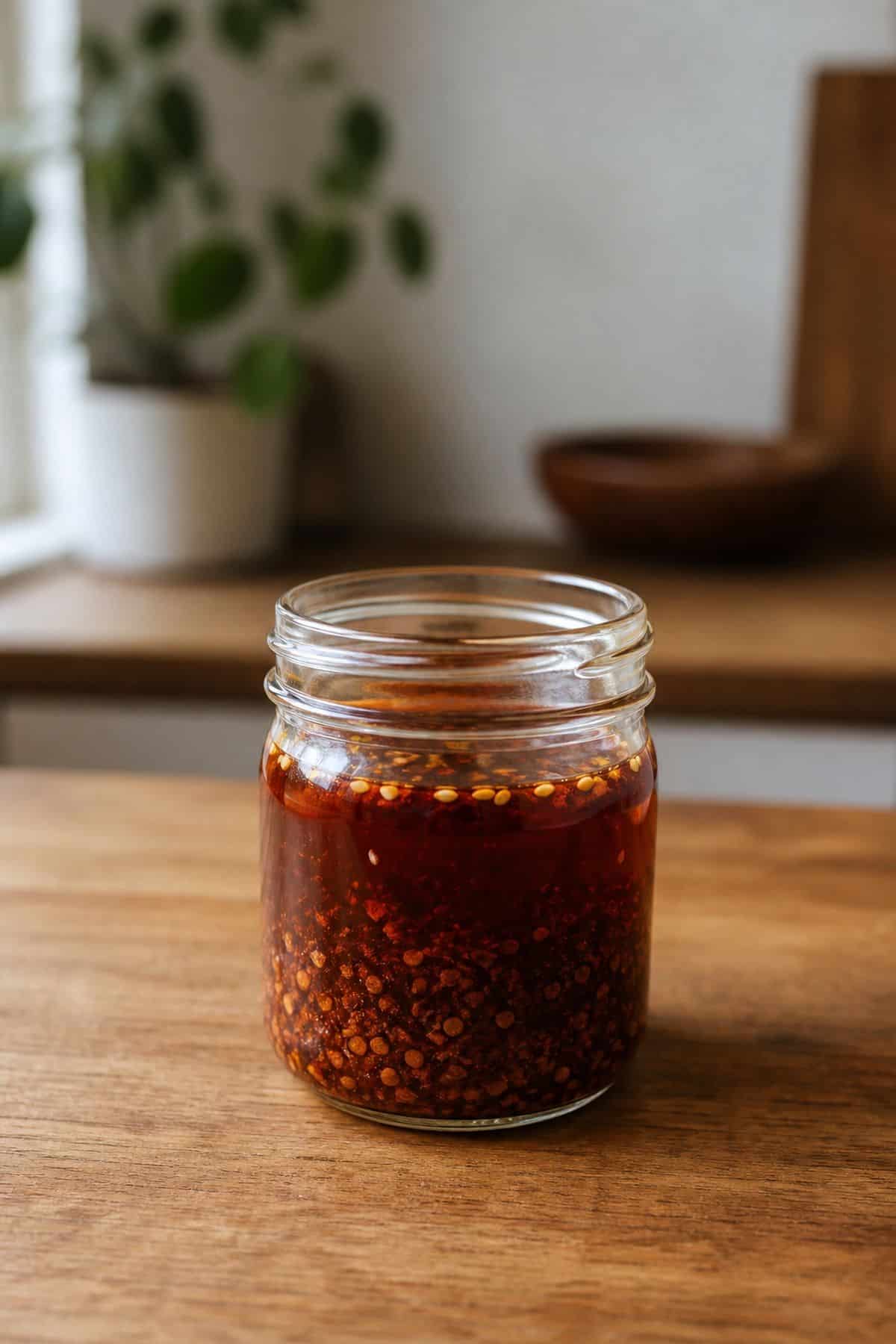
- Let the finished chili oil cool to room temperature, about an hour. Pour it (flakes and all) into a clean glass jar. The flavor improves overnight as the chili flakes settle and the oil takes on more color.
Tips and Variations
Picking the Right Chili Flake
Sichuan chili flakes (sometimes labeled “facing heaven” or “erjingtiao”) give the most authentic Sichuan flavor and a moderate heat. Korean gochugaru works too and brings a slightly sweeter, fruitier note. Avoid the dried Italian peperoncino flakes or American crushed red pepper, which are smaller, drier, and burn almost immediately when the hot oil hits them. If you can’t find a coarse Asian chili flake, blitz dried whole Chinese or Korean chilies in a spice grinder until they’re flake-sized.
Making a Crispy Version (Chili Crisp)
Chili crisp is chili oil with crunchy bits. To make it, add 1/3 cup of thinly sliced shallots and 1/3 cup of thinly sliced garlic to the infusion oil in stage one. Fry them in the oil at 110°C (225°F) until they’re golden and crisp (about 20 to 30 minutes), then strain them out and reserve. Continue with the chili flake pours as written, then stir the crispy shallots and garlic back into the finished oil along with the sesame seeds.
Adjusting the Heat
The recipe as written is moderately spicy. For a milder version, use half Sichuan chili flakes and half coarse Korean gochugaru (gochugaru is sweeter and less intense). For a hotter version, add a teaspoon of cayenne or a few crumbled Tianjin chilies to the flakes before the first pour. Heat builds as the oil sits, so a moderate batch on day one will feel hotter by day three.
Pairing It with Nuoc Cham
The Sichuan and Vietnamese pantries don’t usually share a table, but a small spoonful of chili oil stirred into a bowl of nuoc cham makes for a punchy dipping sauce for grilled pork or fried spring rolls. Use it sparingly; the chili oil’s aromatics are heavy enough to overwhelm a delicate dipping sauce if you pour with abandon.
How to Use It
Chili oil goes over cold sesame noodles, dan dan noodles, Sichuan wontons, dumplings, congee, mapo tofu, and smashed cucumber salad. Less traditionally but just as well, it goes on fried eggs, scrambled eggs, avocado toast, roasted vegetables, ramen, pizza, and stirred into mayo for a quick spicy aioli. A spoonful drizzled over beef in oyster sauce right at the table adds a layer of heat without changing the sauce underneath.
Frequently Asked Questions
How long does homemade chili oil last?
About two months in a sealed glass jar at room temperature, and up to six months in the fridge. The oil itself is shelf-stable, but the aromatics fade after the first two months. The chili oil tastes best in weeks two through six, after the flavors have settled but before the volatile compounds have started to oxidize.
What chili flakes should I use?
Sichuan chili flakes (often labeled “facing heaven” or “erjingtiao”) are the traditional choice. Coarse Korean gochugaru is a close second and a little easier to find. Avoid the small, dry American crushed red pepper or Italian peperoncino flakes; they burn almost the moment the hot oil hits them.
Does chili oil need to be refrigerated?
Not strictly. The oil is shelf-stable at room temperature for about two months as long as it’s kept in a sealed container away from sunlight. Refrigeration extends the life to about six months but solidifies the oil; let it warm to room temperature before using.
What’s the difference between chili oil and chili crisp?
Chili oil is the infused oil plus chili flakes. Chili crisp is chili oil plus crunchy bits, usually fried shallots, fried garlic, and sometimes fermented black beans or peanuts. Lao Gan Ma is the classic supermarket chili crisp; homemade Sichuan chili oil is the leaner, more aromatic cousin.
Can I use olive oil for chili oil?
Not for a Sichuan-style chili oil. Olive oil has its own assertive flavor and a lower smoke point that fights the aromatics. Stick with a neutral oil (grapeseed, vegetable, canola, or sunflower) that lets the chili and spices do the talking.
What oil is best for Sichuan chili oil?
Caiziyou (Chinese rapeseed oil) is the traditional choice in Sichuan; it has a slightly nutty flavor and high smoke point. Grapeseed and standard vegetable oil are the most practical substitutes outside China. Avoid extra-virgin olive oil and toasted sesame oil for the main infusion.
Key Takeaways
- The recipe is two stages: a low infusion of aromatics at 110°C (225°F), then three pours over chili flakes at 175°C (350°F), 150°C (300°F), and 120°C (250°F).
- Use a thermometer. Guessing the oil temperature is the most common reason a homemade chili oil burns.
- Coarse Sichuan or Korean chili flakes (not American crushed red pepper) hold up to the hot oil without burning.
- Keep the finished oil in a sealed glass jar away from sunlight. It lasts about two months at room temperature, six months in the fridge.
- Flavor improves overnight and peaks between weeks two and six.
- For chili crisp, fry sliced shallots and garlic in the infusion oil and stir them back into the finished sauce.
Final Thoughts
Homemade chili oil sits somewhere between a pantry staple and a small project. The infusion takes the better part of an hour, but most of that is unattended, and once the jar is on the shelf, every meal that needs heat gets one spoonful better.
Use it where you’d use a store-bought chili crisp: over fried eggs at breakfast, into a bowl of noodles at lunch, drizzled across a plate of dumplings at dinner. The aromatics from the infusion are what carry it past a single-note heat into something that tastes like the cooking it comes from.
The oil keeps for months and improves for the first two weeks, so a single afternoon’s work covers a long stretch of dinners. If the jar runs out before you’ve made the next batch, you’ll notice; supermarket chili crisp tastes different after you’ve had the homemade kind in the fridge.
Chili Oil
Great chili oil comes down to two stages of oil temperature. First, infuse a neutral oil with star anise, cassia cinnamon, bay leaf, and Sichuan peppercorn at a low 110°C (225°F) for 30 to 60 minutes, then strain.
Ingredients
- 480 ml (2 cups) neutral oil
- 2 whole star anise pods
- 1 cassia cinnamon stick, about 5 cm (2 inches)
- 2 dried bay leaves
- 2 teaspoons Sichuan peppercorns, red or green
- 1 black cardamom pod, cracked, optional
- 3 thick coins fresh ginger, skin-on, lightly smashed
- 2 cloves garlic, skin-on, lightly smashed
- 60 g (about 1/2 cup) Chinese chili flakes
- 1 tablespoon toasted sesame seeds
- 1 teaspoon black vinegar
- 1 teaspoon fine sea salt
Instructions
- Combine the oil, star anise, cassia, bay leaves, Sichuan peppercorns, black cardamom (if using), ginger, and garlic in a small heavy-bottomed saucepan. Set it over the lowest heat your stove will hold and clip on the thermometer.
- While the oil infuses, put the chili flakes, sesame seeds, and salt in a heatproof bowl (a wide ceramic bowl works well) and set it next to the stove. Have the strainer and a spoon ready.
- Strain the infused oil into a clean measuring cup or another small saucepan and discard the aromatics. Wipe out the original pan if you're reusing it, then return the strained oil to the heat.
- Let the oil in the pan drop to 150°C (300°F) (just pull it off the heat for a minute, then check the thermometer), and pour the next third over the chili flakes.
- Drop the oil one more time to 120°C (250°F) and pour the last third over the flakes. There should be almost no sizzle now. Add the black vinegar and give the whole bowl a final stir.
- Let the finished chili oil cool to room temperature, about an hour. Pour it (flakes and all) into a clean glass jar. The flavor improves overnight as the chili flakes settle and the oil takes on more color.
Last update on 2026-10-03 / Affiliate links / Images from Amazon Product Advertising API
