
Japandi kitchen decor finds should make the kitchen feel calmer, warmer, and easier to use through natural materials, quiet colors, and objects with a real job. Look for light wood trays, ceramic crocks, bamboo organizers, stoneware dishes, paper lighting, linen textiles, glass canisters, and low-profile storage that reduce visual clutter instead of adding more to manage.
Japandi kitchen decor works when the room feels pared back but not bare. The strongest pieces bring Japanese restraint and Scandinavian warmth into daily kitchen routines: tea, cooking, drying dishes, setting the table, storing pantry staples, and keeping counters visually calm.
For a shopping guide, the useful question is not whether an item looks minimal. It is whether the piece helps one kitchen surface, shelf, drawer, or ritual feel quieter and more tactile. These Japandi kitchen decor finds keep that balance front and center.
Top Recommended Products


You Might Also Like These Blog Posts
- Japandi Kitchen Ideas
- Minimalist Kitchen Ideas
- Modern Organic Kitchen Ideas
- Natural Wood Kitchen Ideas
- Warm Neutral Kitchen Ideas
Best Japandi Kitchen Decor Finds
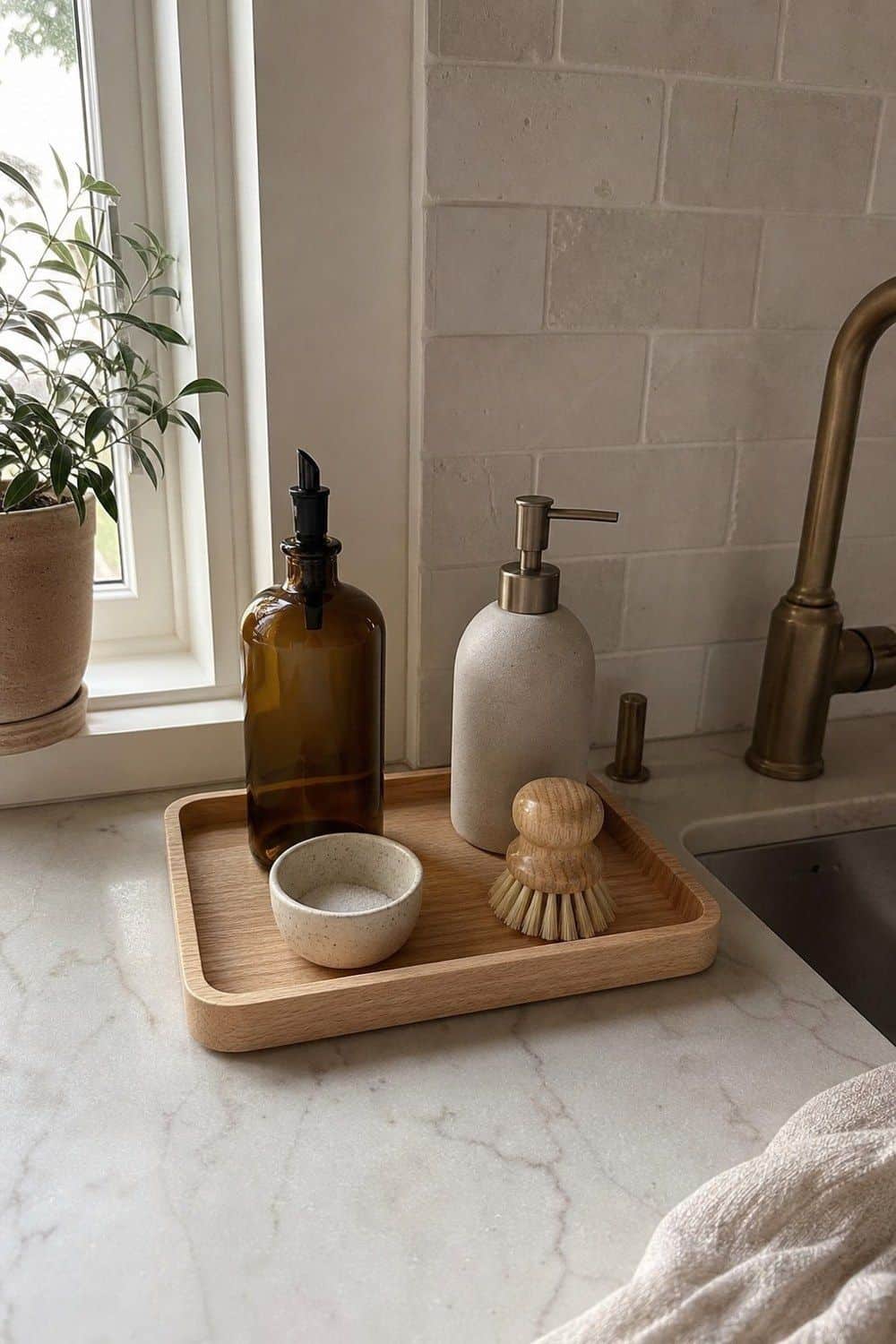
1. Light Wood Counter Tray for Quiet Counter Styling
A light wood tray gives small counter items a boundary without making the surface feel decorated for display. Use it for olive oil, salt, tea, a soap bottle, or a small cleaning brush near the sink. Pale oak, beech, or bamboo keeps the look low-contrast, especially on white, cream, stone, or wood counters.
Keep the tray shallow so it does not become a catchall. Japandi counters should feel considered, not empty, and one contained group is easier to maintain than scattered useful items.
2. Ceramic Utensil Crock for Minimal Tool Storage
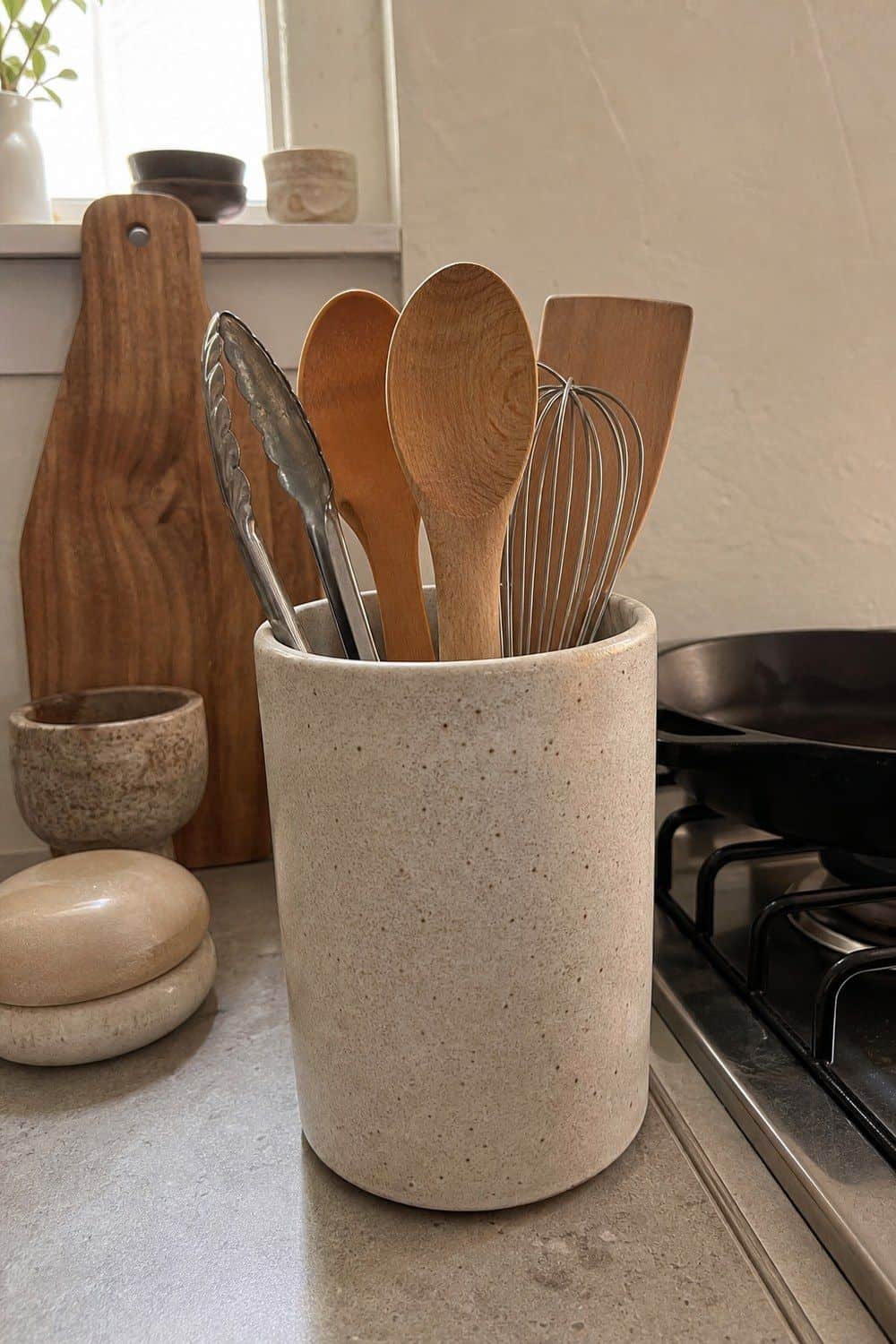
A ceramic crock keeps everyday tools visible while softening the cooking zone. Choose matte white, oatmeal, warm gray, sand, or speckled ceramic, then limit the contents to the spoons, spatulas, tongs, and whisks used most often. A heavier base helps the crock stay steady when tools are pulled out quickly.
The shape should be plain enough to fade into the counter but tactile enough to feel handmade. Avoid ornate patterns or glossy finishes if the rest of the kitchen is calm.
3. Bamboo Drawer Organizer for Natural Hidden Order
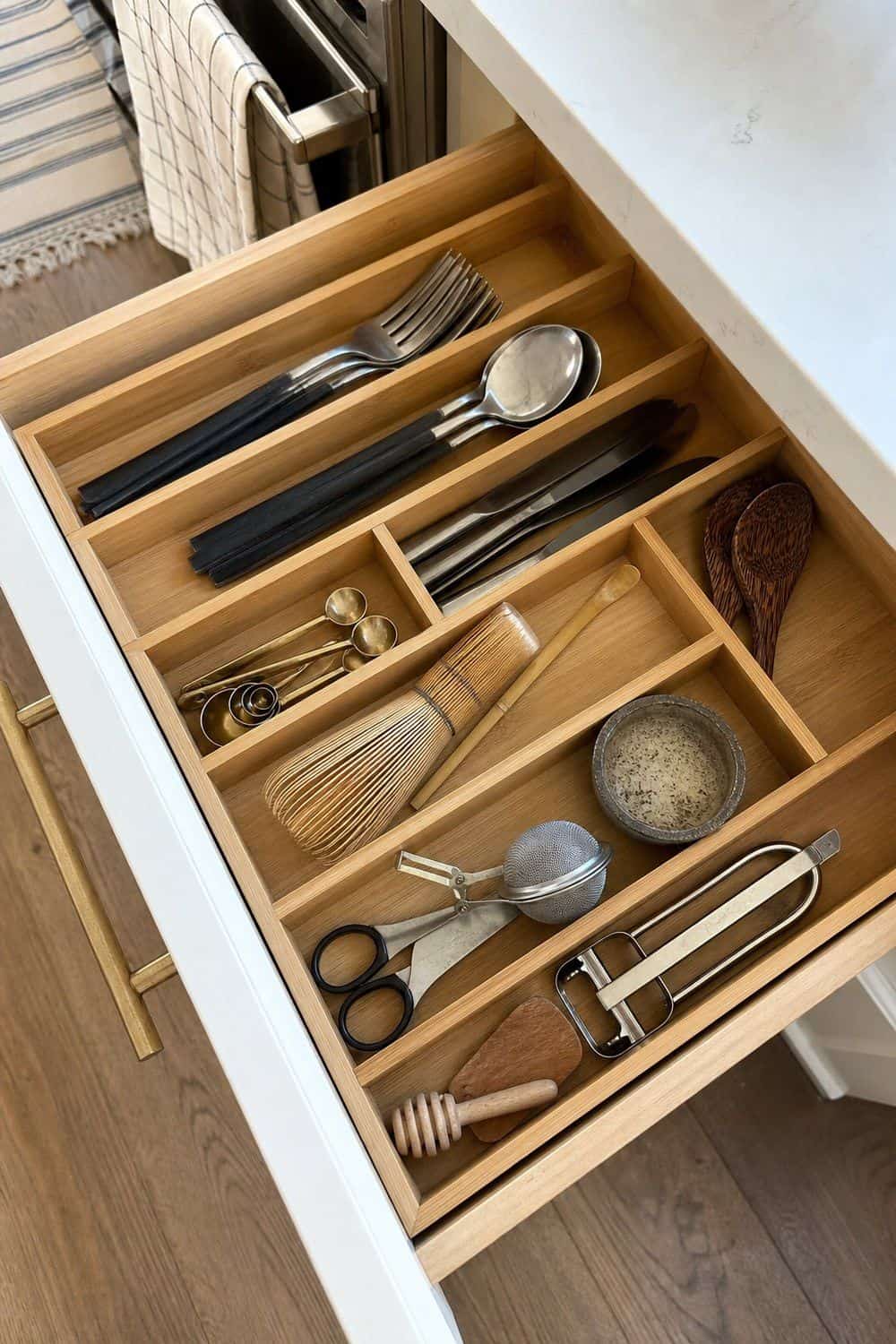
Bamboo drawer organizers bring Japandi order to the spaces you do not see from across the room. Use them for flatware, measuring spoons, tea tools, small prep items, or cooking utensils that would otherwise slide around. The natural finish feels warmer than plastic and more relaxed than shiny metal. Measure the drawer before buying, including depth and side clearance. Adjustable dividers are helpful in older kitchens where drawers have unusual widths, rounded interior corners, or shallow clearance under the counter.
4. Stoneware Dinnerware Set for Everyday Shelf Display
A calm stoneware set creates a useful base for open shelves, glass cabinets, and everyday meals. Warm white, taupe, sand, soft gray, charcoal, or muted green all fit the Japandi palette. Repeating one set keeps shelves easier to style because the dishes already share color, shape, and texture. Check weight before buying a full set. Heavy stoneware can look beautiful on a shelf but feel tiring for daily breakfast, lunch, and dishwasher loading, especially if children also use the dishes.
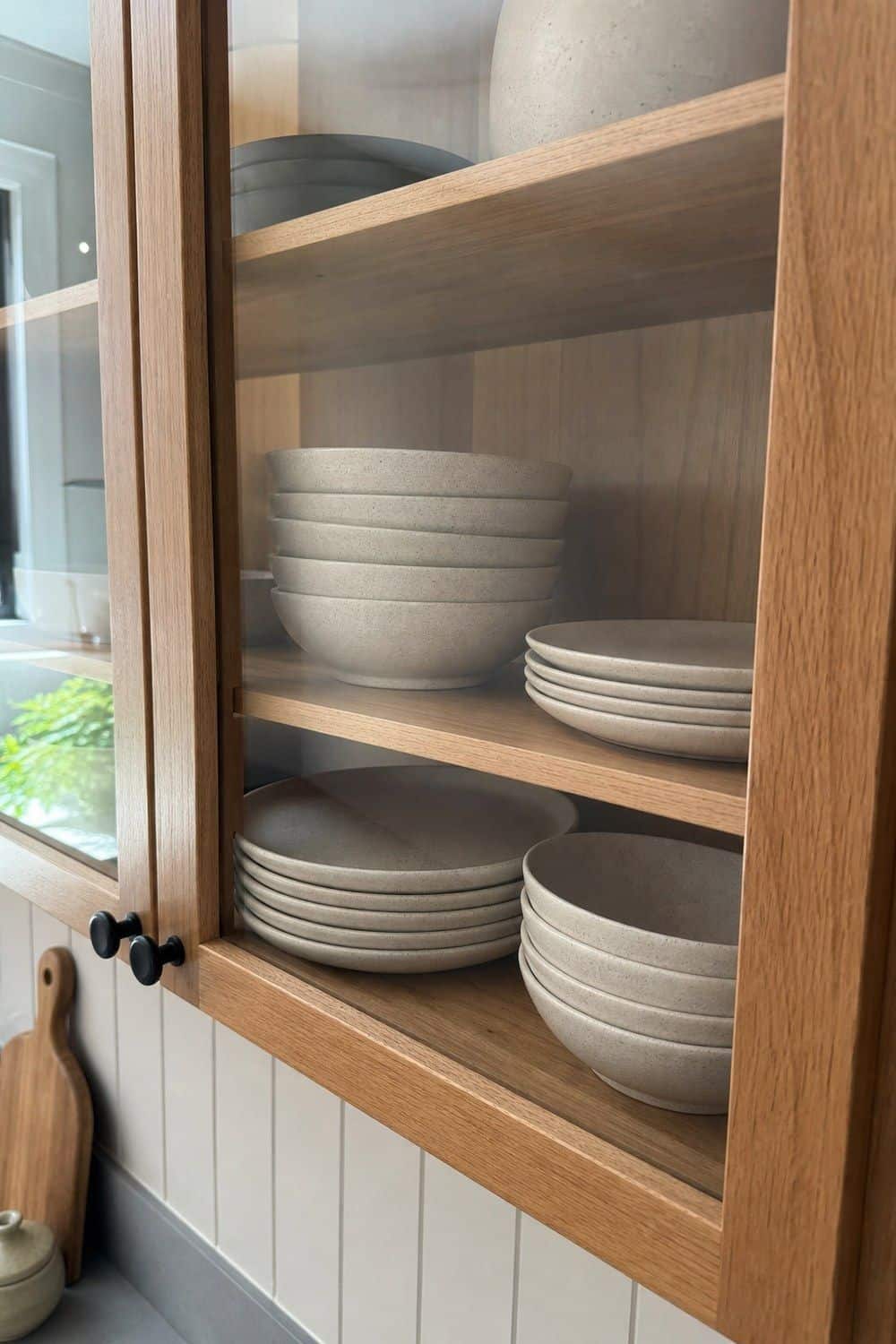
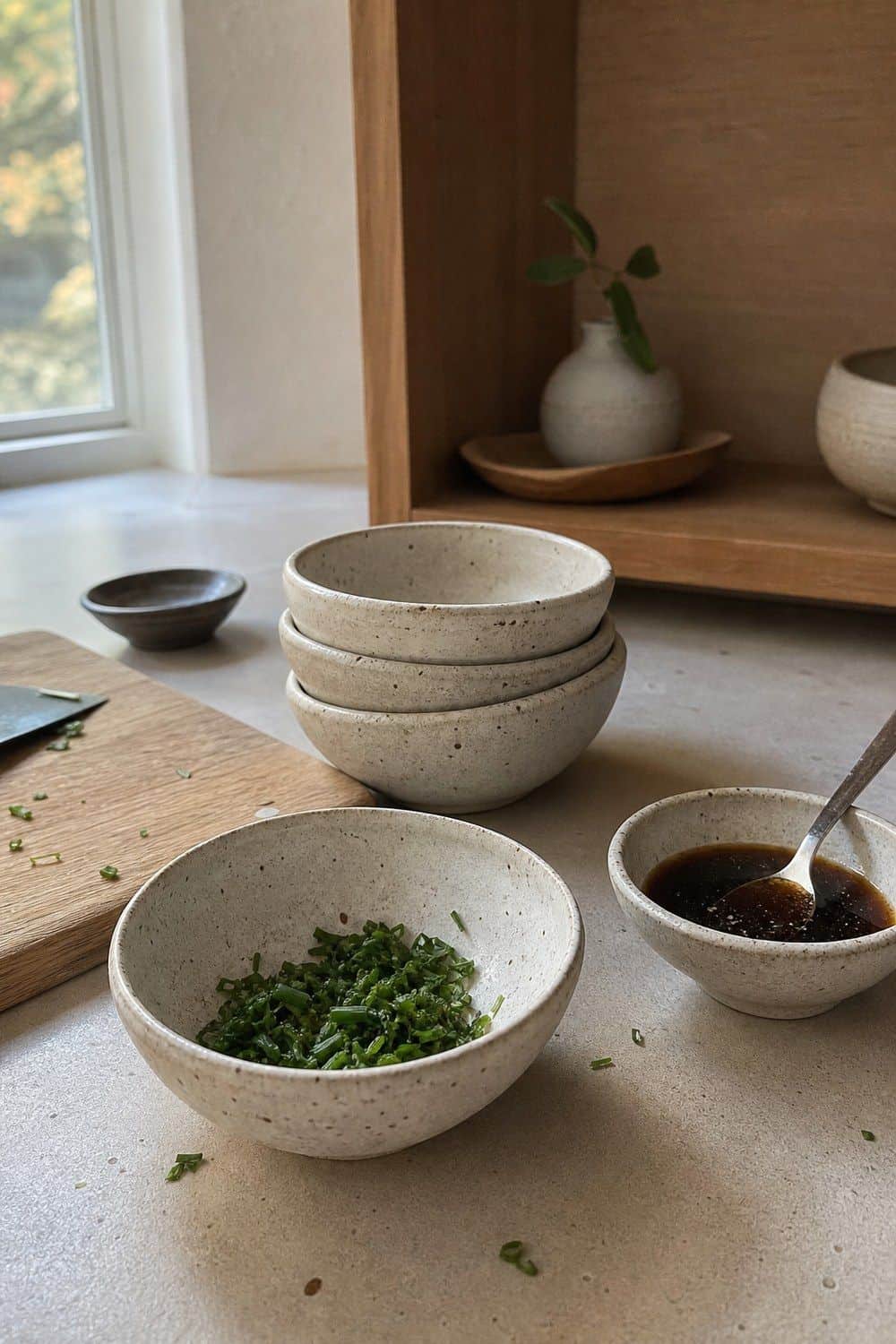
5. Speckled Ceramic Bowls for Breakfast and Prep
Speckled bowls add handmade texture to the small meals and prep moments that happen every day. Use them for rice, yogurt, miso soup, snacks, sauces, chopped herbs, or mise en place before cooking. A stack of smaller bowls can sit on an open shelf without feeling like extra decor. Choose a shape that nests neatly if storage is tight. Subtle speckling gives enough variation, so the color can stay simple, easy to repeat, and useful beside plain dinner plates or wood serving pieces.
6. Matte Black Cabinet Pulls for Subtle Contrast
Matte black pulls add a clean dark line to wood, white, mushroom, or taupe cabinets without making the kitchen feel high-contrast. Slim bar pulls or quiet tab pulls usually suit Japandi kitchens better than ornate hardware. Measure the center-to-center screw spacing before ordering so the update does not require extra holes later.
Use black sparingly if the room is very light. The purpose is structure, not a graphic black-and-white kitchen. A matte finish also hides fingerprints better than glossy hardware.

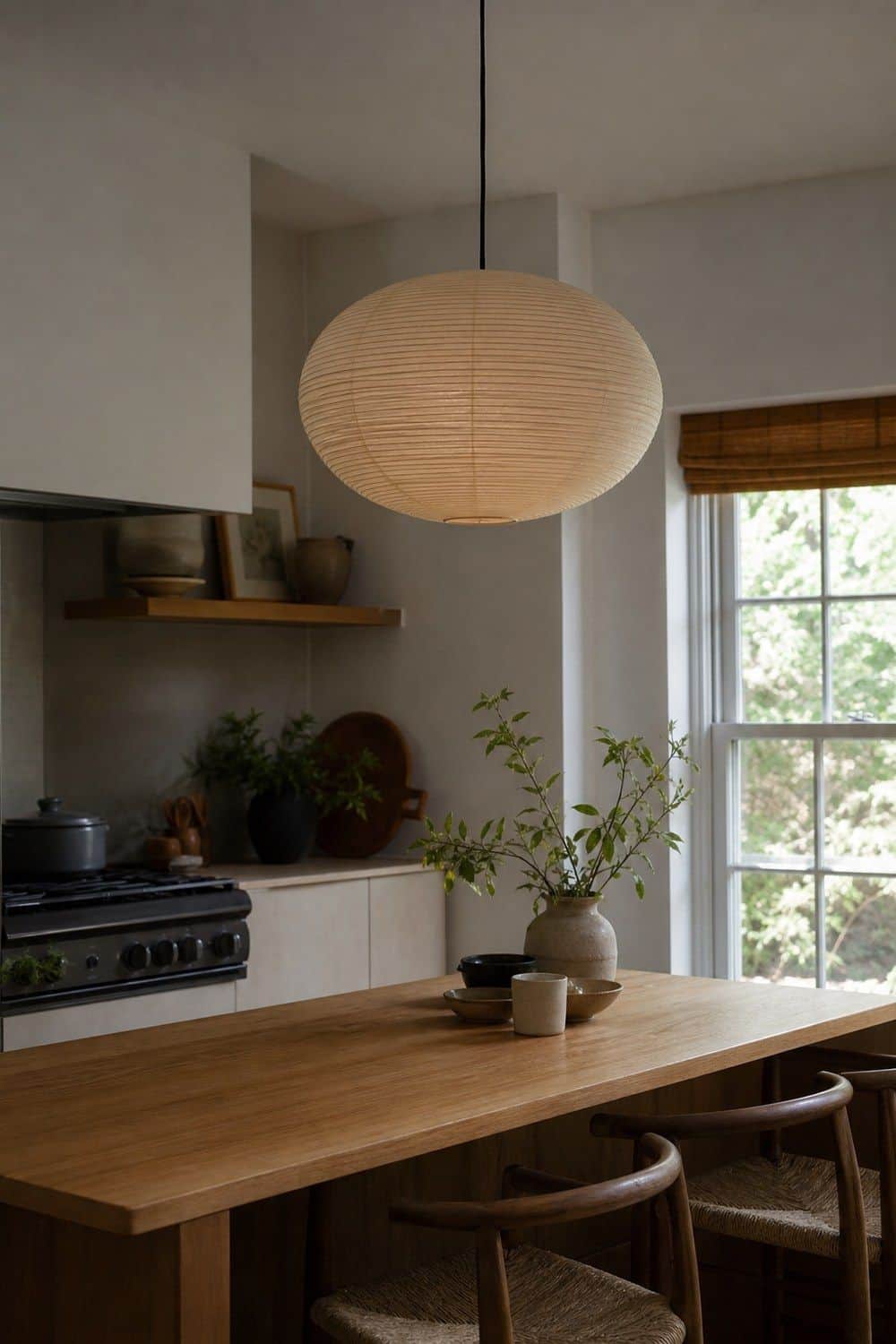
7. Paper Pendant Light for Soft Overhead Glow
A paper pendant adds diffused light over a breakfast nook, island, or small dining table. The texture feels Japanese-inspired without being loud, and the shade can soften sharp cabinet lines. Check ceiling height, shade diameter, and bulb warmth before buying so the light feels gentle rather than dim or oversized. Keep delicate paper-style shades away from steam-heavy cooking zones. They are better over eating areas or light prep spots than directly above a greasy range, especially if the shade is hard to wipe clean.
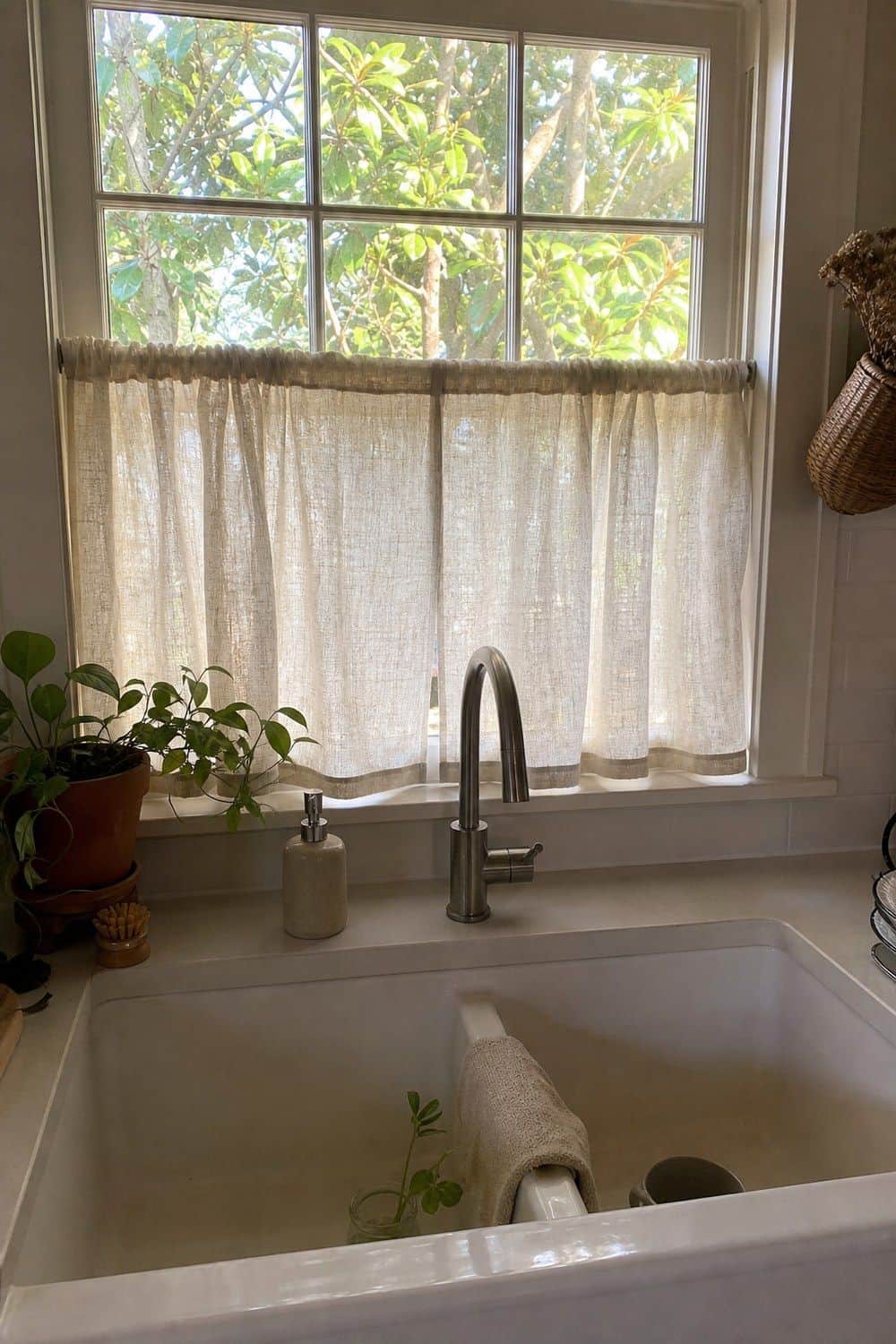
8. Linen Cafe Curtains for a Soft Sink Window
Linen cafe curtains filter light at the sink while keeping the window relaxed and minimal. Off-white, oat, mushroom, flax, and warm gray are easier to live with than bright white or strong pattern. Half-window coverage gives privacy without blocking all daylight, which suits the quiet, nature-connected side of Japandi style. Look for washable fabric if the window sits near water, dishes, or cooking splatter. A simple rod, light folds, and plain rings usually look better than heavy pleats at home.
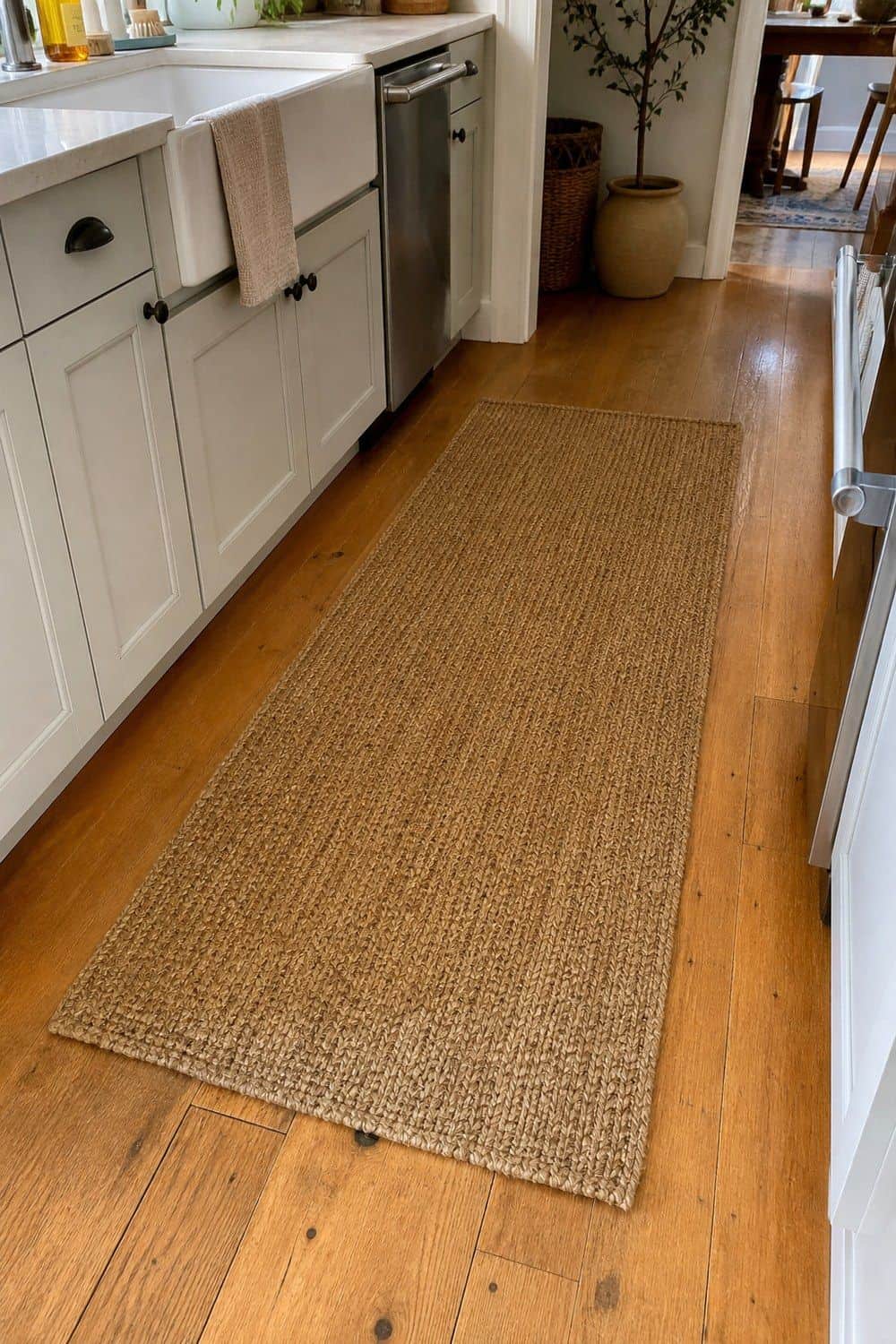
9. Jute Kitchen Runner for Natural Floor Texture
A jute runner adds natural texture underfoot without introducing a busy pattern. It can ground a sink aisle, galley kitchen, or long cabinet run where the floor feels too plain. Choose a flat weave and use a rug pad so the runner stays steady during cooking and cleanup. Jute is better away from constant splashes and greasy prep zones. If the sink area gets wet often, use the runner in a drier walkway or dining side of the kitchen instead.
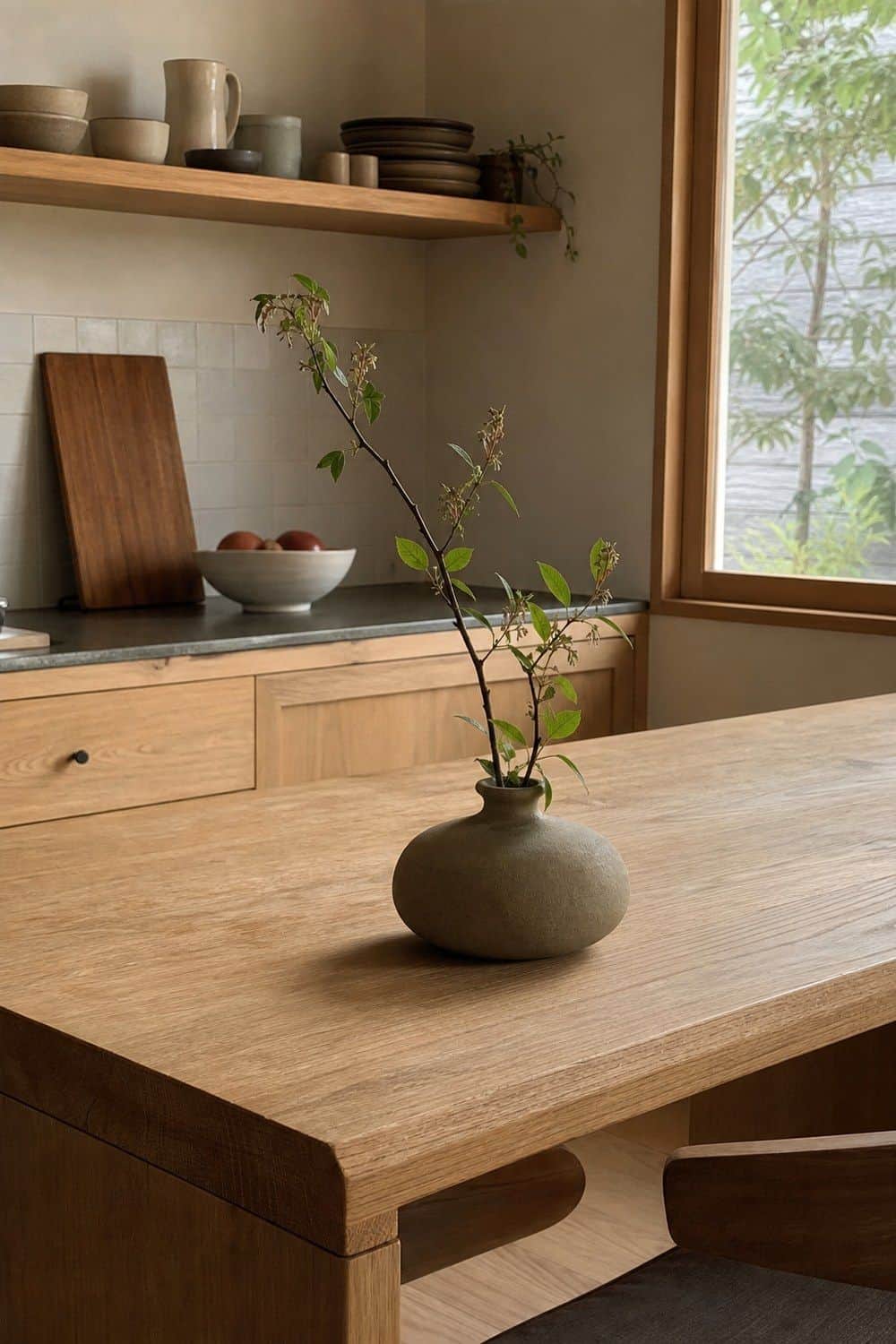
10. Low Ceramic Vase for Branches and Stems
A low ceramic vase brings one restrained nature moment to an island, dining table, shelf, or side counter. Use a single branch, a few herbs, or one seasonal stem arrangement rather than a lush bouquet. The lower shape keeps the kitchen usable and prevents the arrangement from blocking conversation or prep.
Matte ceramic, soft curves, and quiet colors work well here. Leave space around the vase so it reads as one calm focal point instead of part of a crowded vignette.
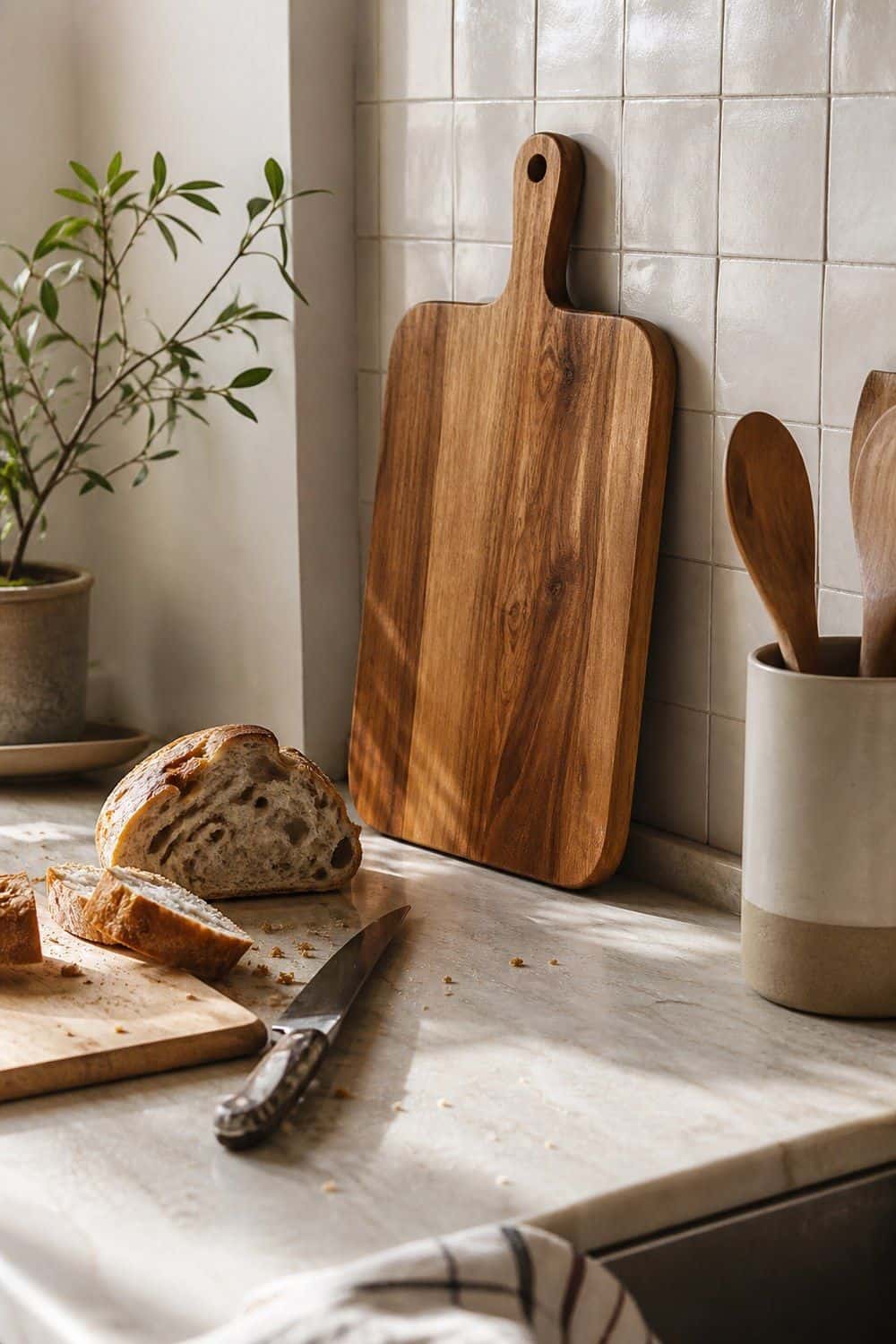
11. Acacia Cutting Board for Leaning Wood Warmth
An acacia board adds a warm wood plane to the backsplash, prep area, or open shelf. Use it for cutting, bread, serving, or a simple leaning layer behind the counter. The grain gives a softer note to stone, white tile, and flat cabinet fronts without needing extra color.
Oil the board when it starts to look dry and keep it away from standing water. A medium-size board is usually easier to use and display than an oversized one that blocks outlets.
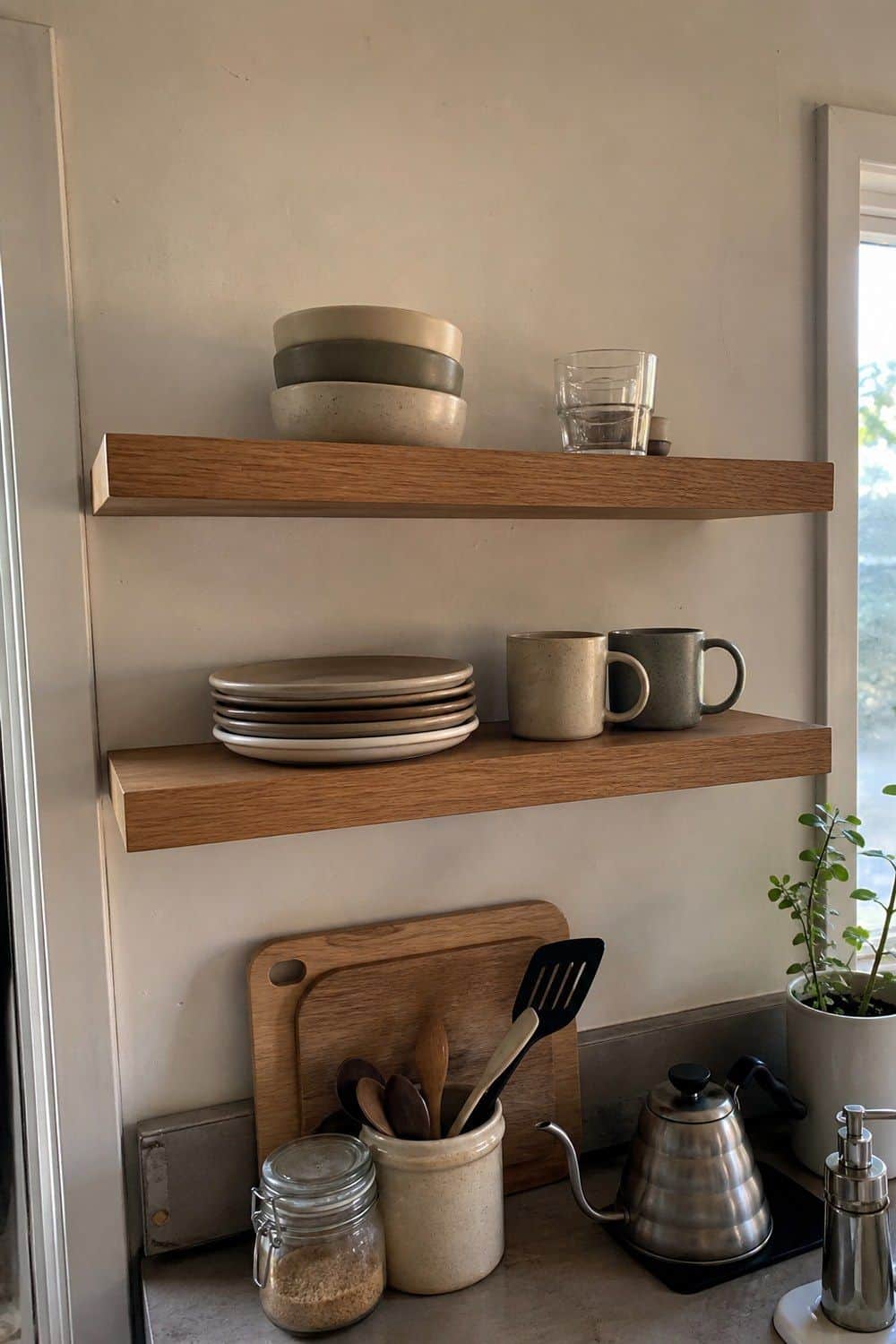
12. Floating Oak Shelves for Controlled Open Storage
Floating oak shelves can make open storage feel calm when they hold the dishes and mugs you actually use. Keep the shelf depth practical, check the weight rating, and repeat colors across bowls, plates, and glassware. The wood brings warmth, while the limited object count keeps the shelves from looking busy. Leave breathing room between stacks, and avoid placing every attractive object on one shelf. Japandi shelves look strongest when each visible piece supports meals, tea, storage, or daily reach.
13. Ceramic Tea Canister for a Calm Tea Corner
A ceramic tea canister turns loose tea bags or sachets into a small ritual object for the counter or shelf. Choose an airtight lid and a size that fits the tea you actually drink, not a giant container that sits half empty. Warm white, charcoal, or speckled ceramic keeps the tea corner calm.
Place it near mugs, a kettle, or a small tray so the setup feels useful. The canister should support a morning or evening routine rather than become another decorative jar.

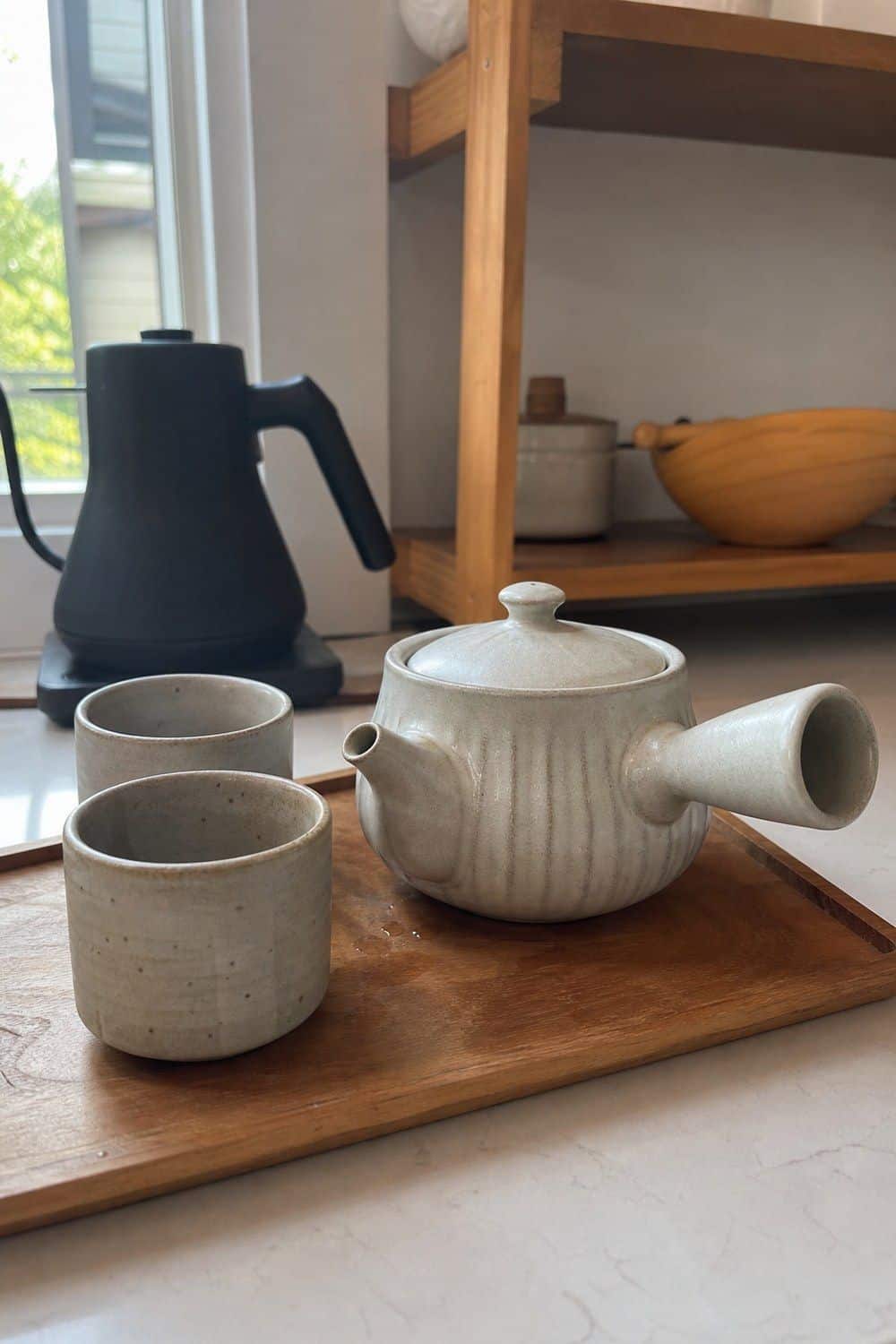
14. Japanese Tea Pot for Counter or Shelf Ritual
A Japanese tea pot adds function and quiet shape to a shelf, tray, or tea station. Choose by capacity, handle comfort, and whether an infuser is included. A small pot is useful for solo tea, while a larger one makes more sense for households that serve tea at the table.
Keep it close to the kettle or cups if it will be used often. A tea pot that only sits on a high shelf can start to feel like theme decor instead of a useful ritual piece.
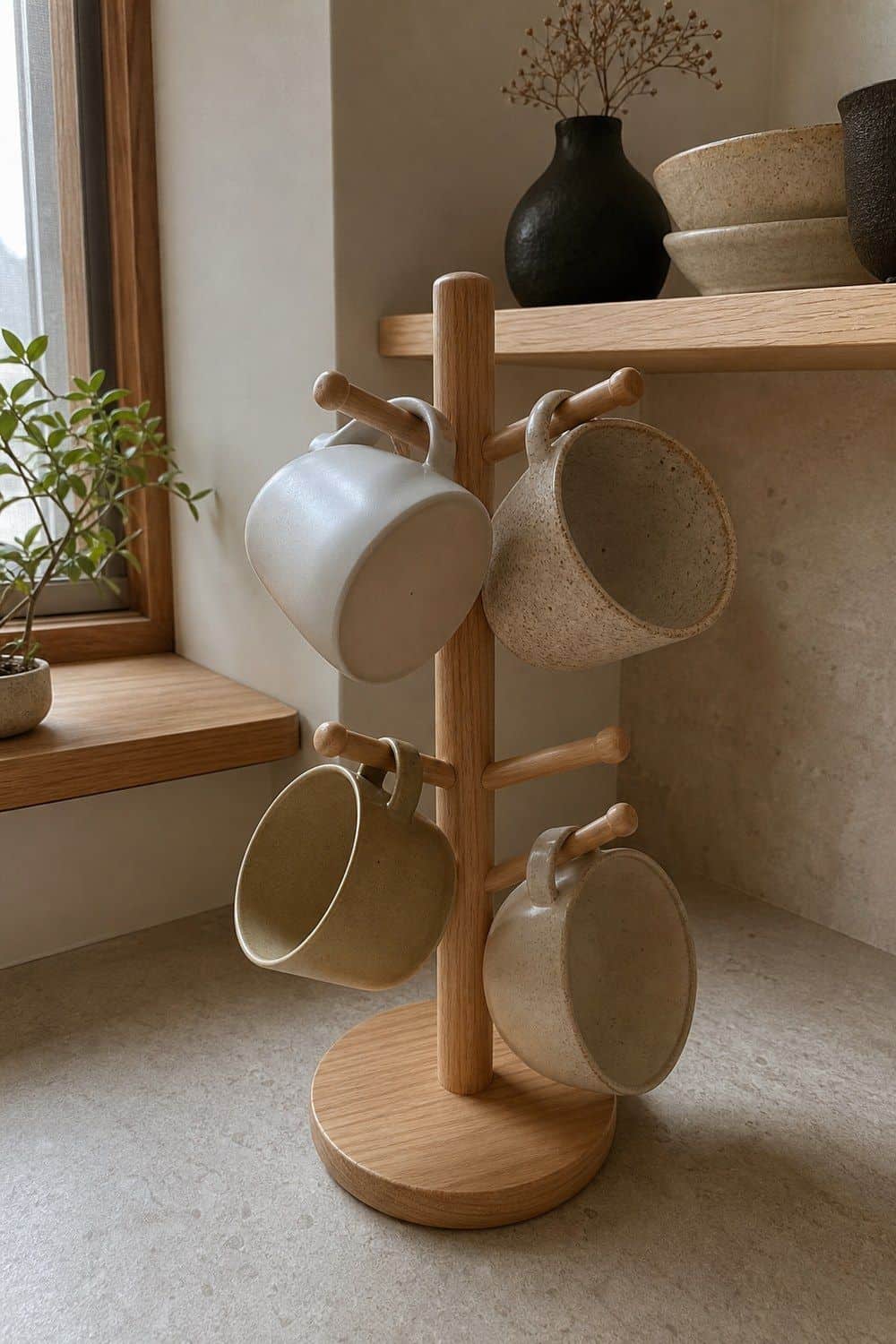
15. Wooden Mug Rack for Simple Cup Display
A wooden mug rack gives favorite mugs a vertical home without crowding an open shelf. Use it near a coffee or tea corner and limit the display to a small set of neutral mugs. Light wood, rounded pegs, and a compact footprint keep the rack quiet rather than decorative. Check the spacing between pegs before buying. Thick stoneware handles need more clearance than thin porcelain handles, and a low rack is easier to clean around on a busy counter surface.
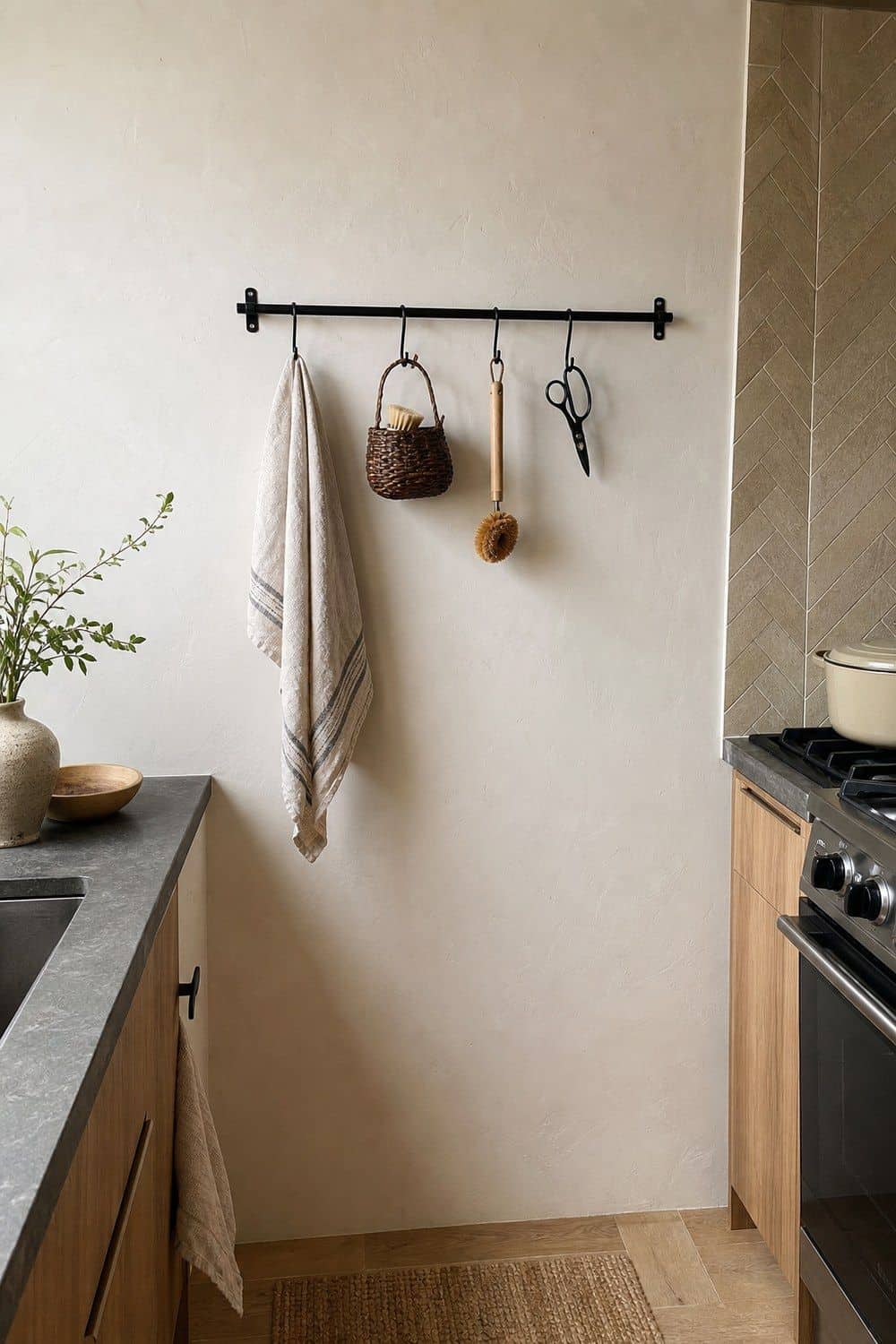
16. Black Metal Wall Rail for Minimal Hanging Storage
A black rail gives towels, small baskets, utensils, or light cooking tools a thin utility line on the wall. The dark finish adds structure while taking up less visual space than bulky shelving. Keep the rail restrained so it supports function rather than becoming a place for every small tool. Mount it safely and choose the location by use. Towels belong near the sink, while small baskets or tools should sit closer to prep, with enough spacing that items can dry or be removed easily.
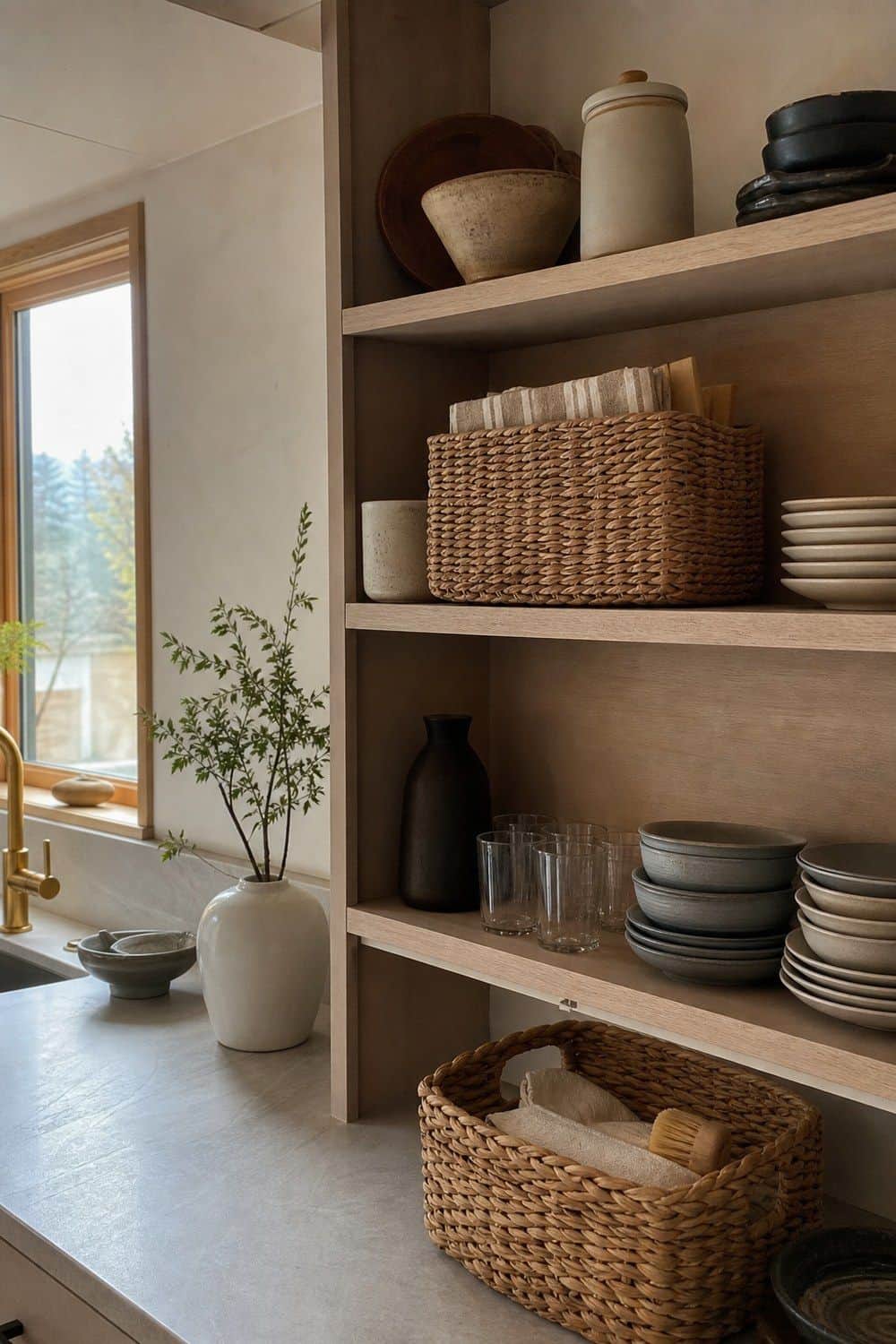
17. Woven Storage Basket for Open-Shelf Softness
A woven basket hides pantry extras, towels, small packages, or backup supplies while adding natural texture to open storage. Use one or two matching baskets rather than filling every shelf with fiber. That keeps the shelf line calm and prevents the kitchen from drifting into generic basket storage. Choose a size that fits the shelf depth and can be pulled out easily. A basket that is too deep will scrape walls or hide items you use often during cooking prep.
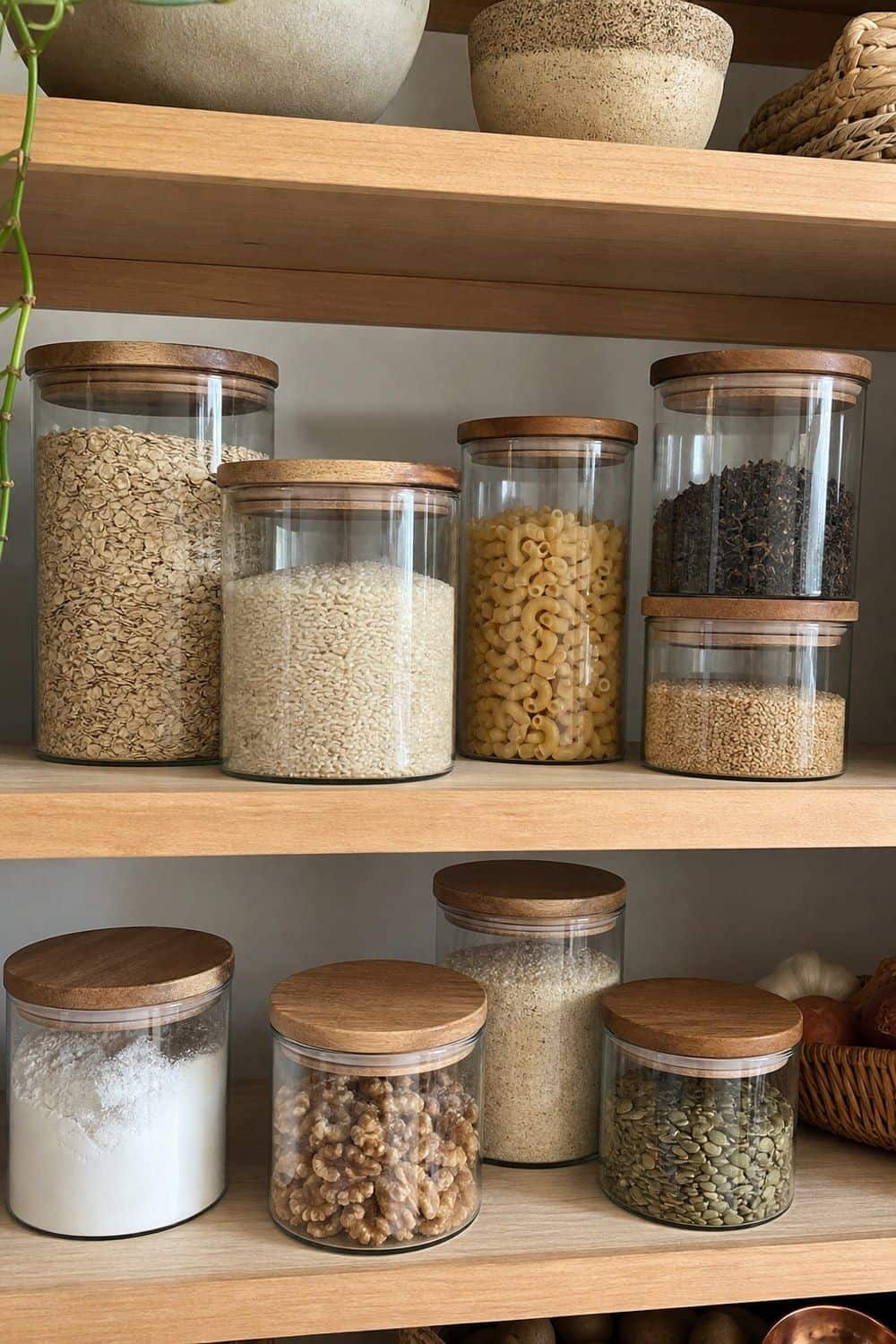
18. Clear Glass Canisters with Wood Lids for Pantry Calm
Glass canisters with wood lids make dry goods look uniform while keeping the contents visible. Use them for oats, rice, pasta, tea, snacks, or baking staples on open shelves or inside a pantry. Repeating a few sizes creates a calmer line than a mix of bags and boxes. Check the seal before buying if the canisters will hold food for more than a few days. Airtight lids matter more than a perfect display, especially in humid kitchens or busy pantries.
19. Fluted Glass Cabinet Film for Soft Visual Blur
Fluted glass film softens the view through glass-front cabinets, pantry doors, or small windows. It is helpful when the storage behind the glass is useful but not perfectly styled. The ribbed texture adds a gentle visual blur while keeping the cabinet lighter than solid doors.
Measure carefully, clean the glass first, and choose removable film if you want a lower-commitment update. Smooth installation is important because bubbles can make the finish look messy from across the room, especially in daylight.

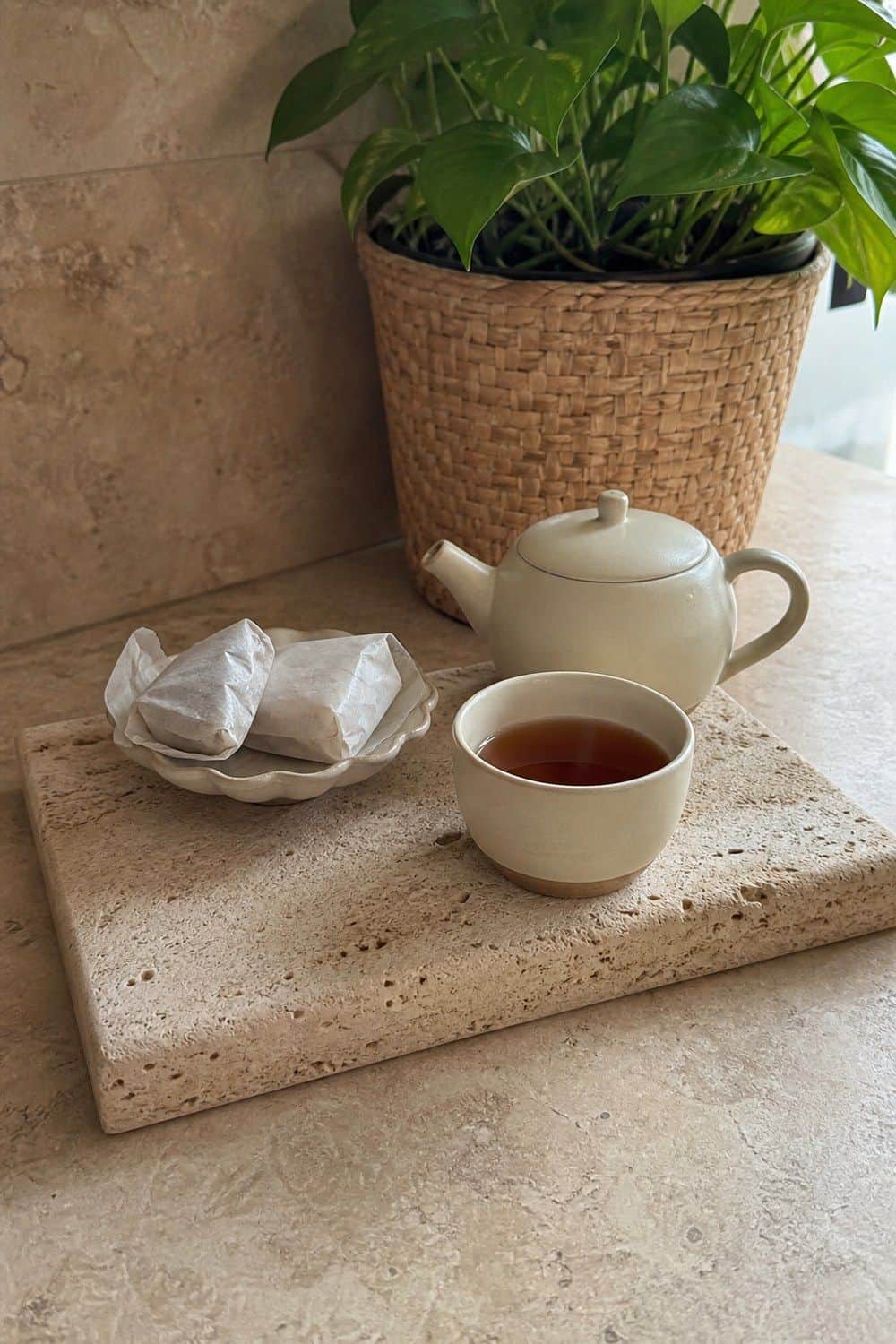
20. Travertine Serving Board for Stone Texture
A travertine serving board adds small-scale stone texture to a coffee corner, shelf, sideboard, or table. Use it for dry serving, wrapped pastries, a tea setup, or a few contained items that need weight. The porous surface gives the kitchen tactile depth without requiring stone counters or a larger renovation project.
Check care instructions before using it with oily or wet foods. If the board is mostly for display, keep the styling sparse so the stone remains the focus, and add felt feet if it sits on a delicate counter.
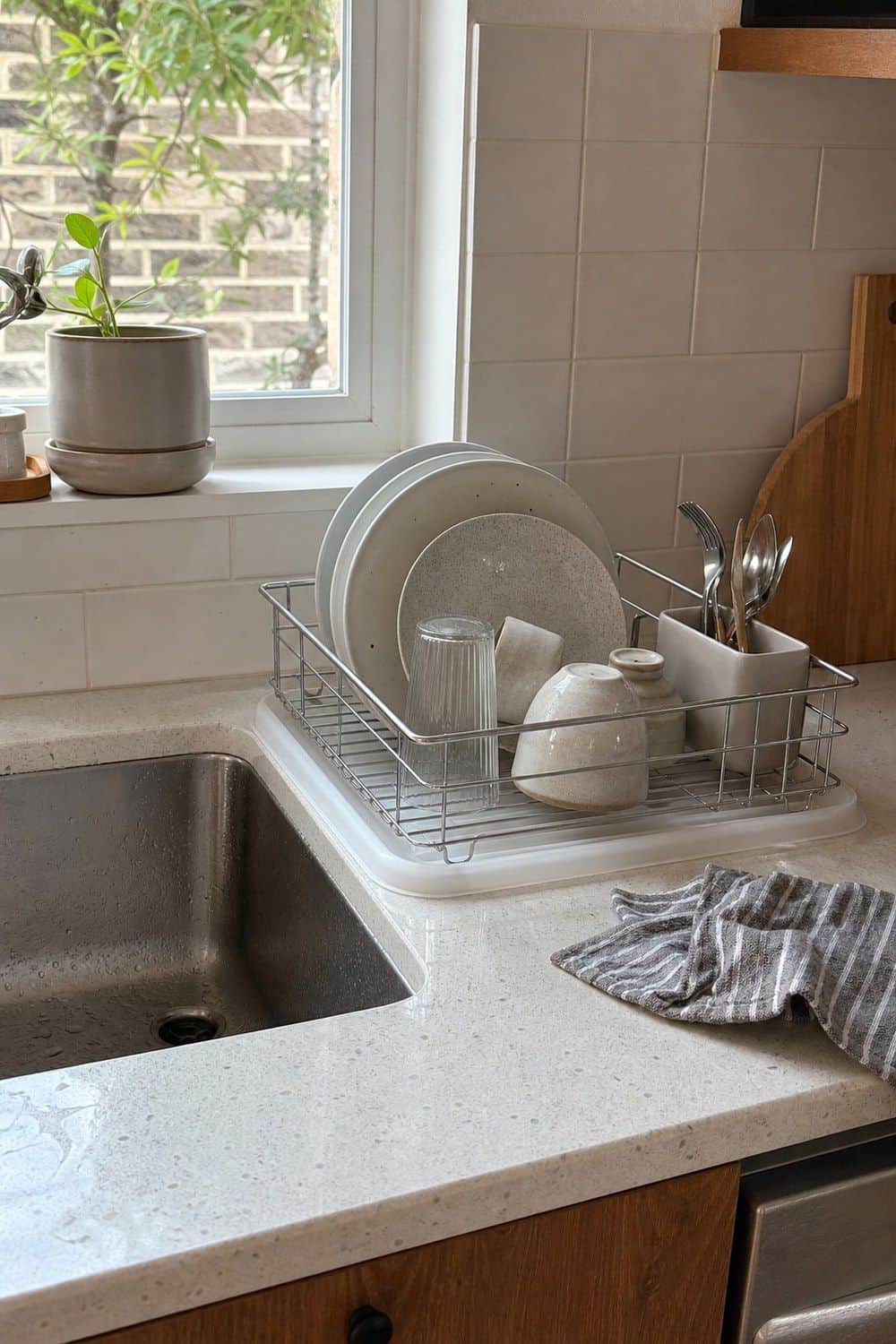
21. Minimal Dish Rack for a Cleaner Sink Zone
A low-profile dish rack keeps drying dishes controlled so the sink zone does not dominate the whole room. Look for stainless, white, black, or wood-accented finishes with a footprint that matches your actual daily dish load. The rack should make cleanup calmer, not stay full on the counter all day.
Compact racks work well in smaller kitchens, but they still need drainage that protects the counter. Choose a style that can be cleaned easily around corners, utensil cups, and removable trays.
22. Wooden Salt Cellar for Cooking Ritual
A wooden salt cellar keeps salt accessible while adding a small tactile moment beside the stove or prep area. Choose a lid style that protects the salt from dust and steam, and decide whether you want an attached spoon or a simple pinch opening. Light or medium wood keeps the counter warm.
Keep it away from direct steam so the salt does not clump. Pair it with a board, ceramic crock, or tray to make the cooking zone feel orderly.

23. Indoor Bonsai Planter for a Focused Green Accent
An indoor bonsai planter gives the kitchen one sculptural green focal point instead of scattered plants on every surface. Place it where it receives the light it needs and where you will remember to care for it. A low planter and structured silhouette suit the quiet side of Japandi style well.
If bonsai feels too high-maintenance, use a small structured plant with a similar calm shape. One cared-for green accent is enough; the kitchen does not need a collection of random pots.

24. Linen Placemats for a Quiet Dining Layer
Linen placemats soften a breakfast table, island seating area, or small dining nook with natural fabric. Oatmeal, warm white, charcoal, muted green, and mushroom tones work well with stoneware and wood. The texture adds warmth without needing a patterned table setting or extra centerpiece, and the pieces store flatter than bulky woven mats in drawers.
Choose washable or easy-care fabric if the placemats will be used daily. A slightly rumpled linen surface suits Japandi dining better than a stiff formal mat.

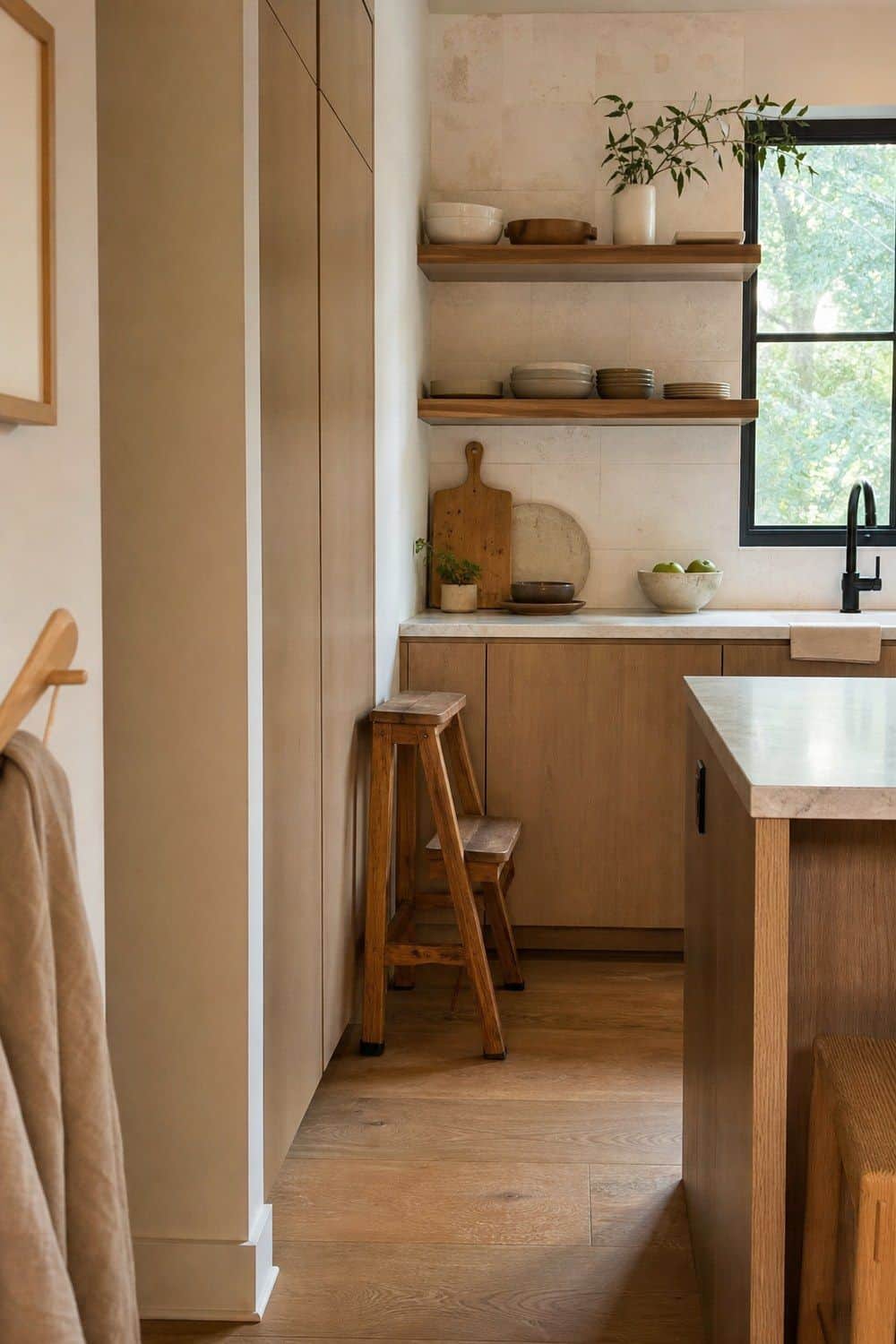
25. Slim Wooden Step Stool for Useful Display and Reach
A slim wooden step stool can help reach upper shelves while adding one small sculptural wood piece beside a cabinet or pantry wall. Choose stable construction, nonslip feet, and a shape narrow enough to tuck away. It is especially useful in kitchens with tall storage or open shelves above shoulder height.
Keep the finish close to nearby wood tones so the stool feels connected to the room. It should look calm when parked in view and feel secure when used.
How to Choose Japandi Kitchen Decor Finds That Stay Warm
Japandi kitchen decor finds stay warm when clean lines are balanced with wood, ceramic, linen, stone, glass, bamboo, jute, paper-like lighting, and soft natural color. A tight palette helps: warm white, sand, taupe, mushroom, charcoal, muted green, oak, bamboo, acacia, and a little matte black for structure.
Use open shelves for fewer, better objects: daily bowls, a tea pot, glass canisters, mugs, and one natural basket if needed. Let each visible piece carry a function, then leave space around it. That is what keeps the kitchen lived-in without becoming visually busy.
Frequently Asked Questions
What should I buy first for a Japandi kitchen?
Start with useful pieces that calm a visible daily zone: a light wood tray, ceramic utensil crock, stoneware dinnerware set, linen cafe curtains, glass canisters with wood lids, or a low ceramic vase. These items change counters, shelves, windows, and storage without requiring a remodel.
What colors suit Japandi kitchen decor?
Warm white, sand, oatmeal, taupe, mushroom, soft gray, charcoal, muted green, natural oak, bamboo, and acacia all work well. The palette should feel quiet, but not cold. A small amount of matte black can add structure when the room has mostly pale wood and light neutrals.
How do I make a kitchen look Japandi on a budget?
Focus on small, functional swaps before larger purchases. Add a bamboo drawer organizer, light wood tray, ceramic crock, linen towel, wood salt cellar, or fluted glass film. Then reduce visual crowding on counters and shelves so the pieces you already own have more space to breathe.
Can Japandi decor work in a compact kitchen?
Yes. Compact kitchens often suit Japandi decor because the style favors fewer objects and better storage. Use scaled pieces with real jobs, such as a minimal dish rack, glass canisters, a narrow tray, linen curtains, one plant, and a small set of visible dishes.
What materials are best for Japandi kitchen accessories?
Bamboo, oak, acacia, stoneware, ceramic, linen, jute, glass, travertine, paper-style shades, woven fiber, and matte black metal all fit Japandi kitchen accessories. Choose materials by the zone: washable fabric near water, sealed storage for food, and durable wood or ceramic near cooking.
How do I style open shelves in a Japandi kitchen?
Use fewer objects and repeat material, color, and shape. Stack daily stoneware, line up a few mugs, add glass canisters, place one basket for hidden items, and leave open space between groups. Avoid filling shelves with decorative objects that do not support meals, storage, or tea routines.
Is Japandi kitchen decor the same as minimalist decor?
Not exactly. Japandi decor is minimal, but it also values warmth, craftsmanship, texture, and nature. A plain minimalist kitchen can feel very sleek, while a Japandi kitchen usually includes wood, ceramic, linen, stoneware, soft light, restrained greenery, and practical handmade-looking pieces.
How do I add warmth to a Japandi kitchen?
Add warmth through natural wood, linen, ceramic, stoneware, jute, soft bulbs, muted green, and small tactile objects used daily. A wood tray, paper pendant, linen cafe curtain, acacia board, or ceramic tea piece can soften the room without adding clutter.
Final Thoughts
The best Japandi kitchen decor finds make the kitchen feel calm, tactile, and useful at the same time. Choose pieces that support real routines, repeat quiet materials, keep the palette warm, and leave enough open space for the room to feel settled rather than styled.
Last update on 2026-09-17 / Affiliate links / Images from Amazon Product Advertising API