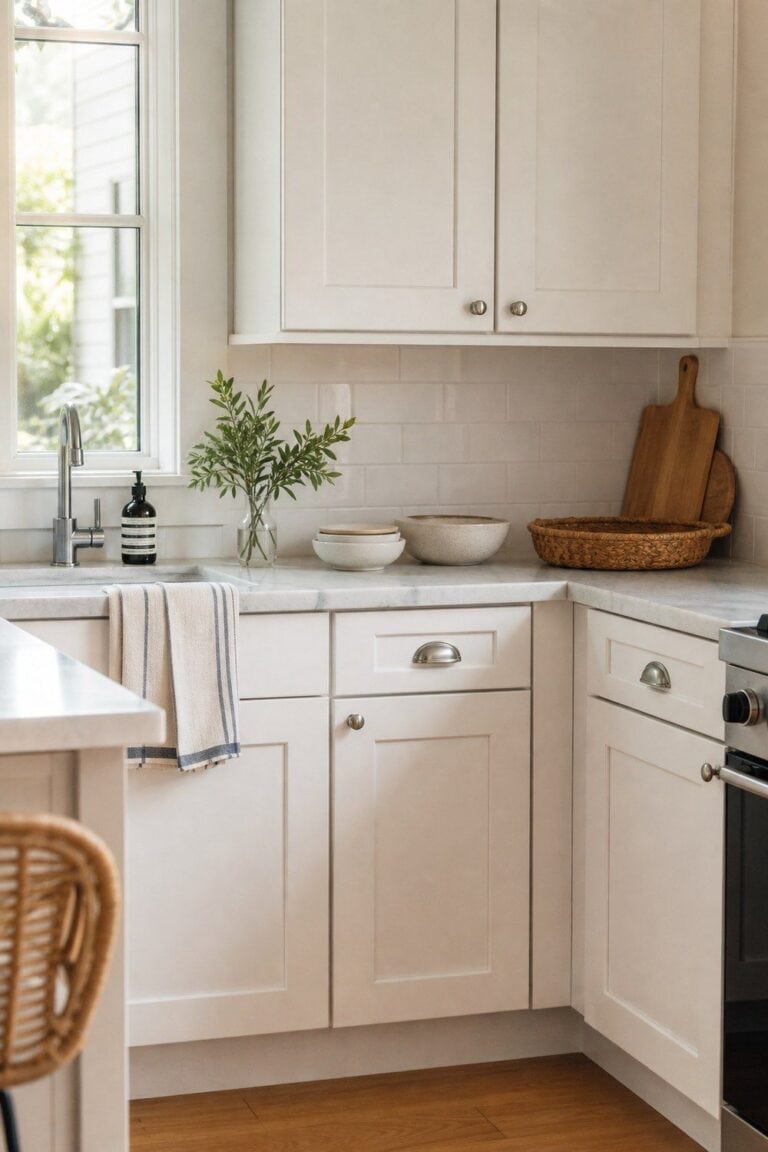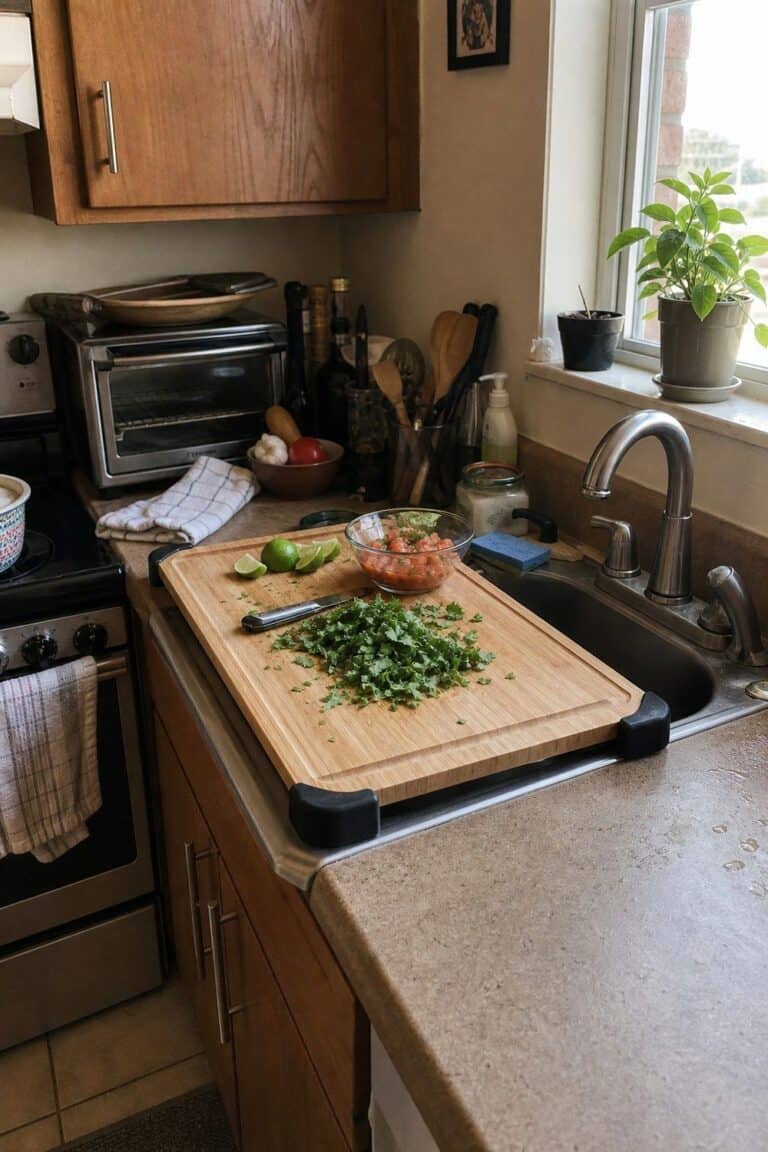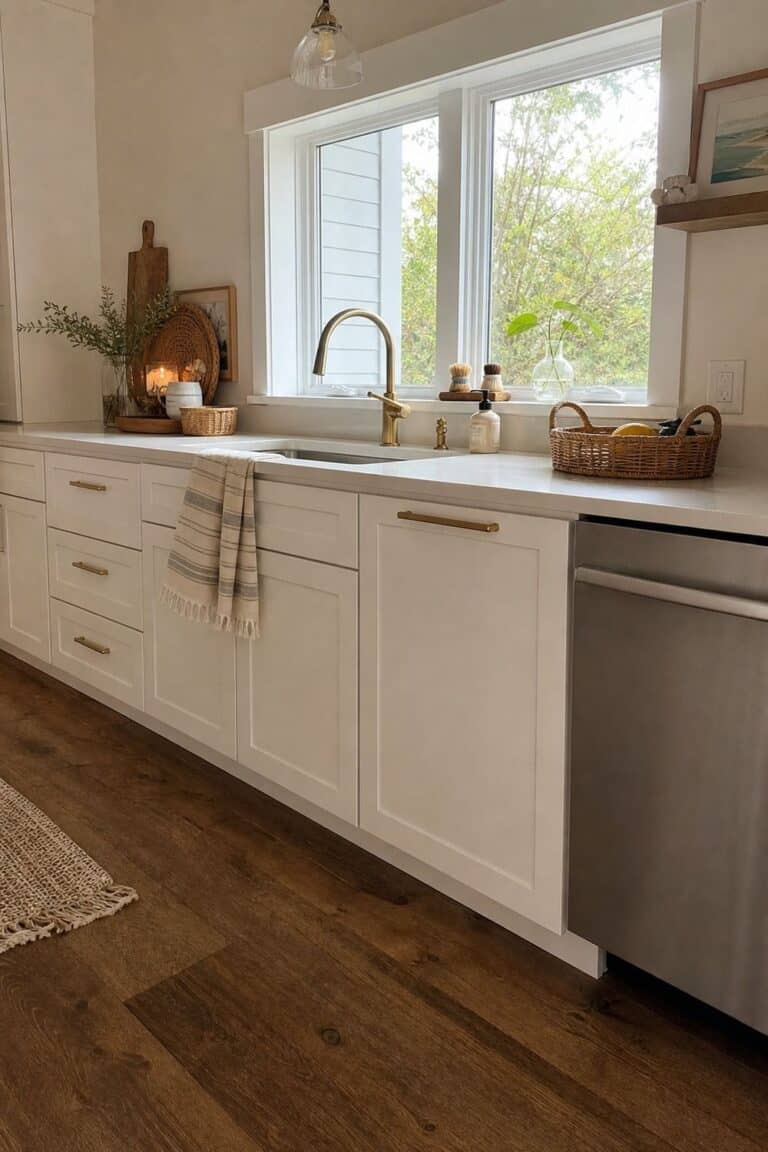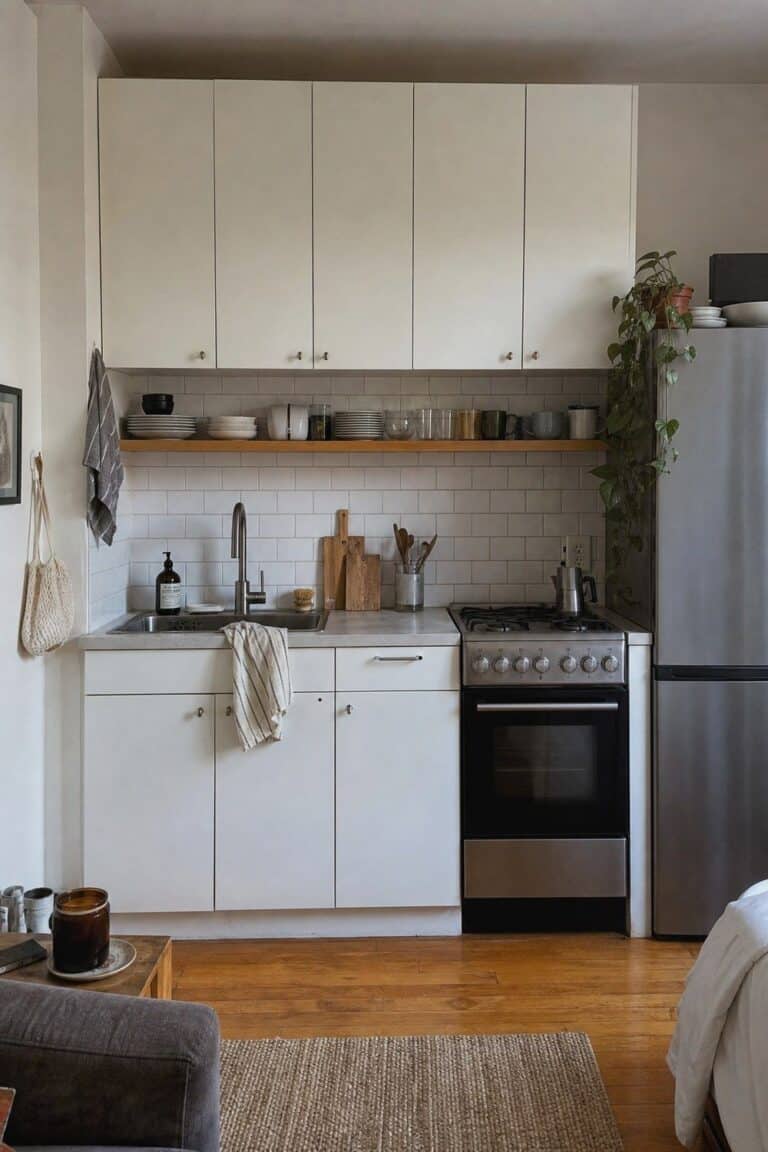
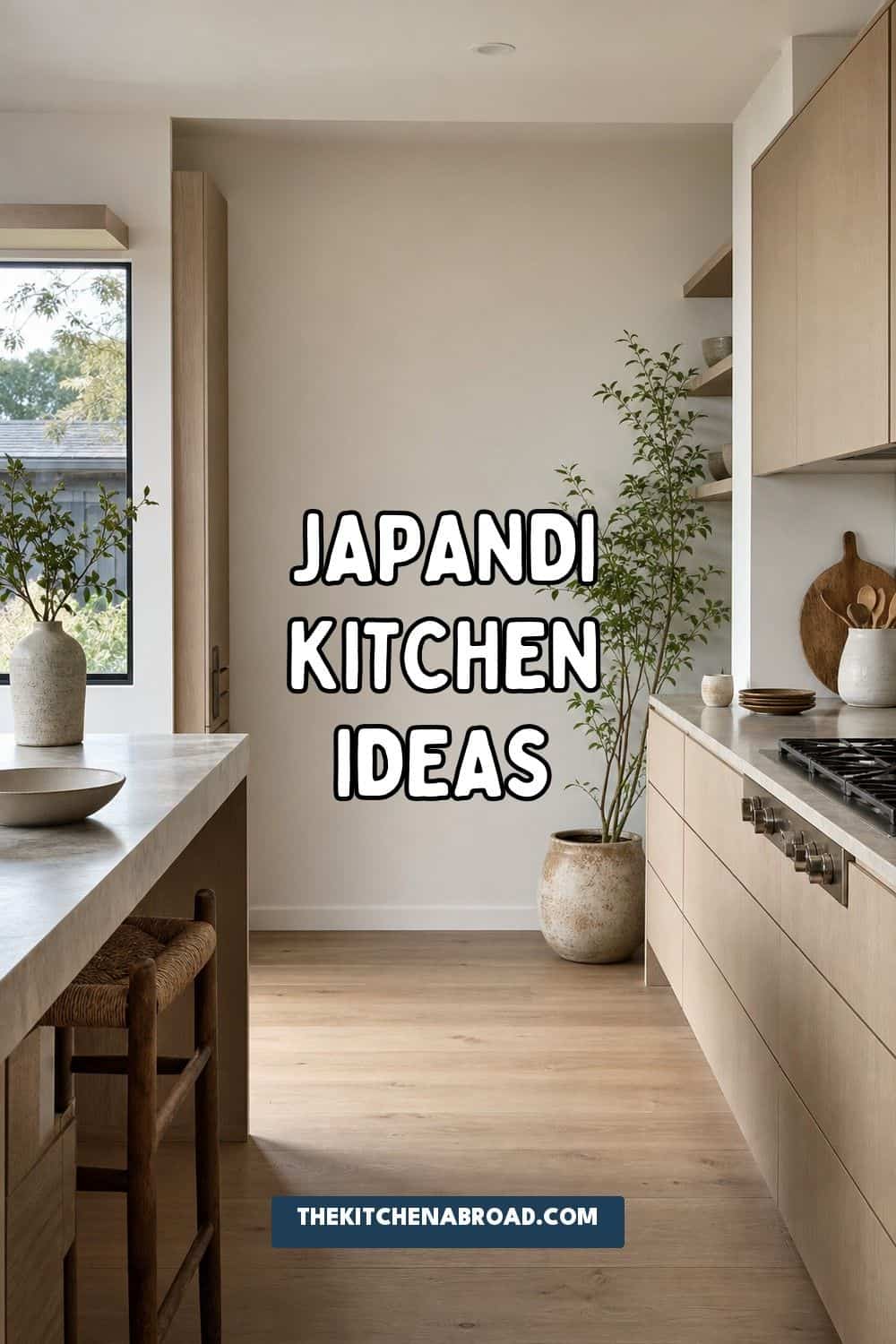
A Japandi kitchen uses warm neutrals, pale wood, simple cabinet fronts, hidden storage, natural stone, handmade ceramics, linen or rattan texture, soft lighting, and very limited decor. The style feels strongest when the kitchen is calm but still easy to cook in. Focus on quiet materials, useful storage, and a few natural details instead of filling the room with decorative extras.
Japandi kitchen ideas are about more than a beige palette or a bare countertop. The style blends Japanese simplicity with Scandinavian comfort, so the kitchen should feel ordered, warm, tactile, and practical enough for daily cooking.
The best Japandi kitchen design choices usually come down to restraint: fewer visible objects, better storage, softer light, natural materials, and finishes that age quietly. A warm minimalist kitchen should make routines feel easier, not make the room too precious to use.
You Might Also Like These Blog Posts
- 25 Contemporary Kitchen Ideas for a Clean, Polished Layout
- 25 Warm Neutral Kitchen Ideas for a Softer, Calmer Cooking Space
- 25 Natural Wood Kitchen Organization Ideas
- 25 Minimalist Kitchen Organization Ideas for a Calmer Cooking Space
- 25 European Kitchen Ideas That Feel Warm, Collected, and Practical
1. Warm Neutral Cabinet Colors
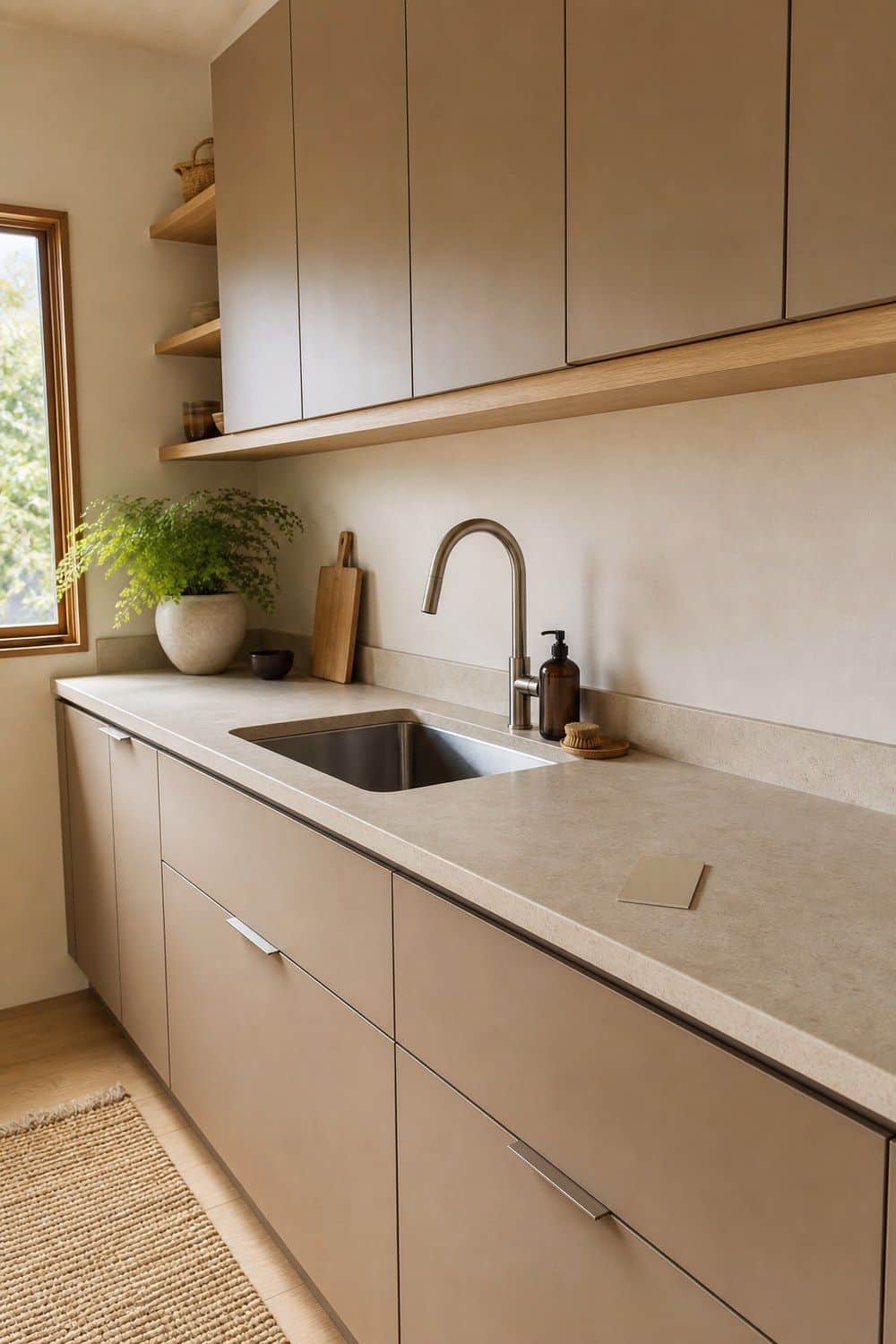
Start with a cabinet color that feels warm in real daylight, not just pretty on a paint card. Japandi kitchens usually lean toward warm white, mushroom, taupe, greige, pale clay, or a muted green that still feels quiet beside wood and stone.
Undertones matter more than drama here. A beige that turns yellow beside pale oak can feel dated, while a gray that turns blue can make the kitchen colder than you wanted. Test large samples next to the floor, counter, and backsplash before choosing.
2. Light Wood Cabinet Texture
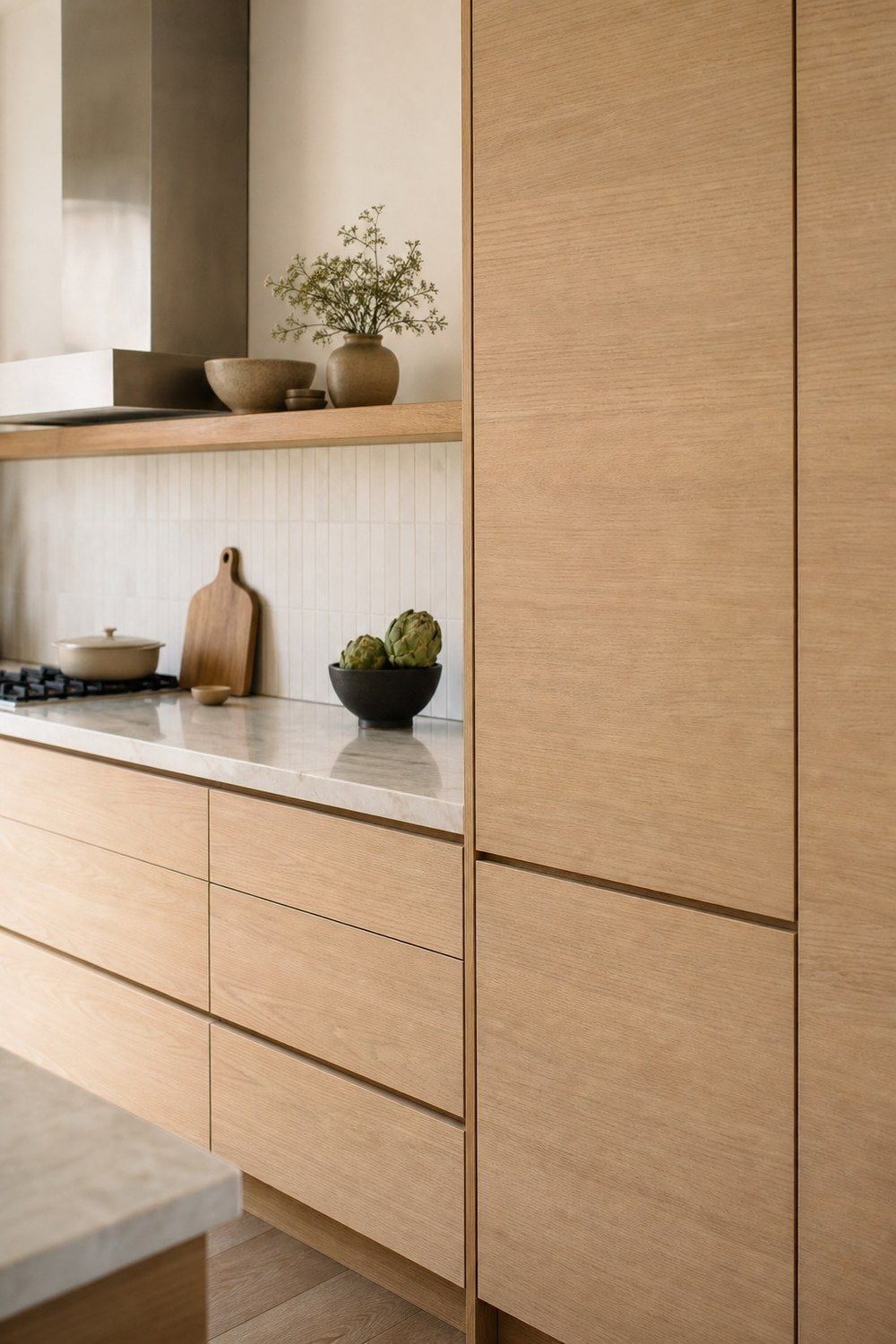
Pale wood cabinet fronts bring the Scandinavian side of Japandi into the kitchen without needing extra decoration. Oak, ash, birch, maple, or another light wood adds grain and movement while the overall room still feels clean. Keep the door profile simple so the wood can be the texture, and avoid heavy distressing, orange stain, or knotty rustic finishes if you want the kitchen to feel calm rather than farmhouse. A matte or low-sheen finish usually suits the mood best, especially beside stone counters and quiet tile.
3. Flat Cabinet Door Profiles
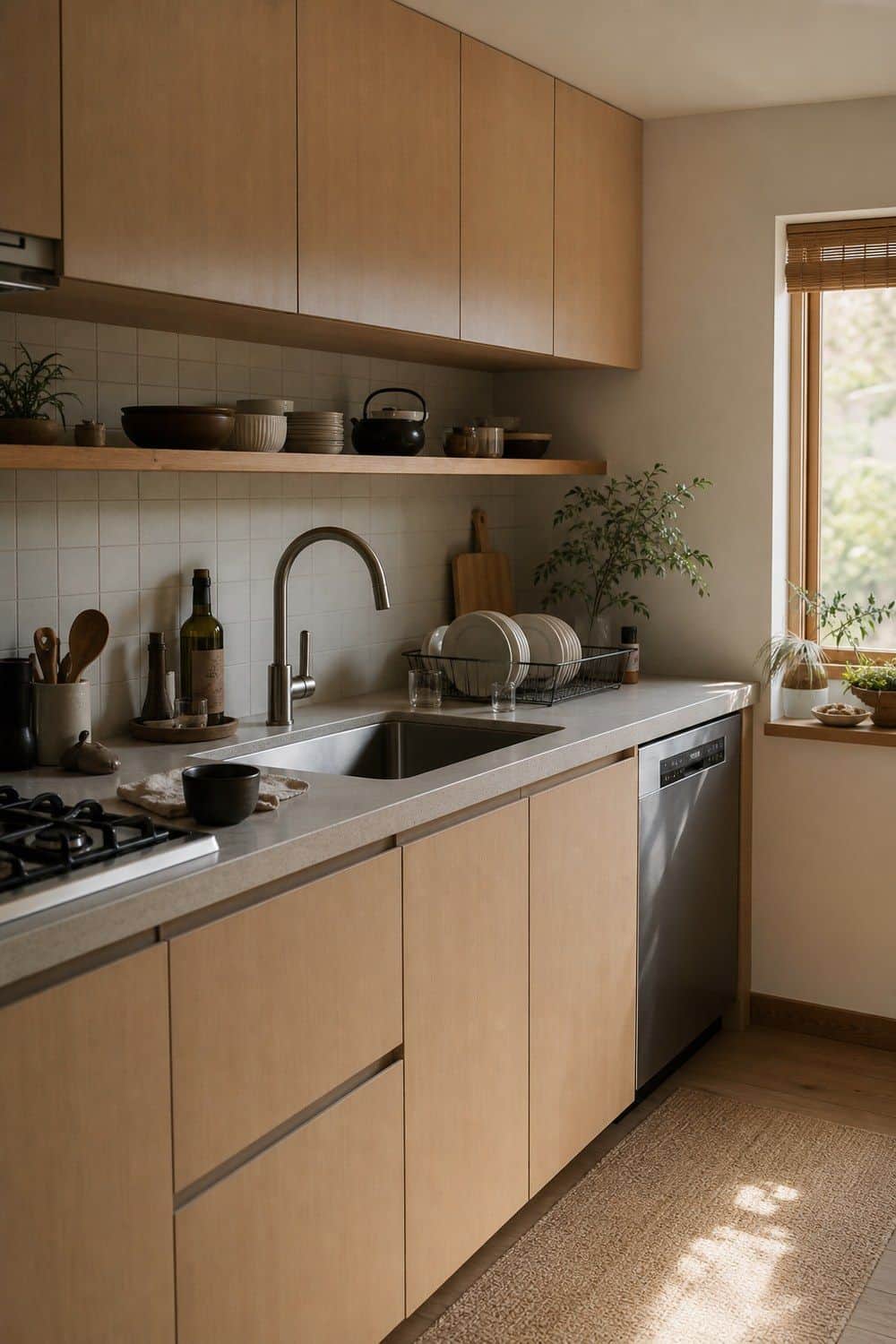
Slab or handleless cabinet doors are one of the clearest ways to make a Japandi kitchen feel calm. They reduce the visual rhythm of rails, raised panels, and busy hardware, which helps a small kitchen feel less crowded and a larger kitchen feel more composed.
The doors still need to feel good in real life. A finger pull, recessed channel, or very simple integrated grip can be practical, especially near the dishwasher, trash pull-out, and everyday drawers where wet hands and fingerprints are part of cooking.
4. Slim Black Hardware for Gentle Contrast
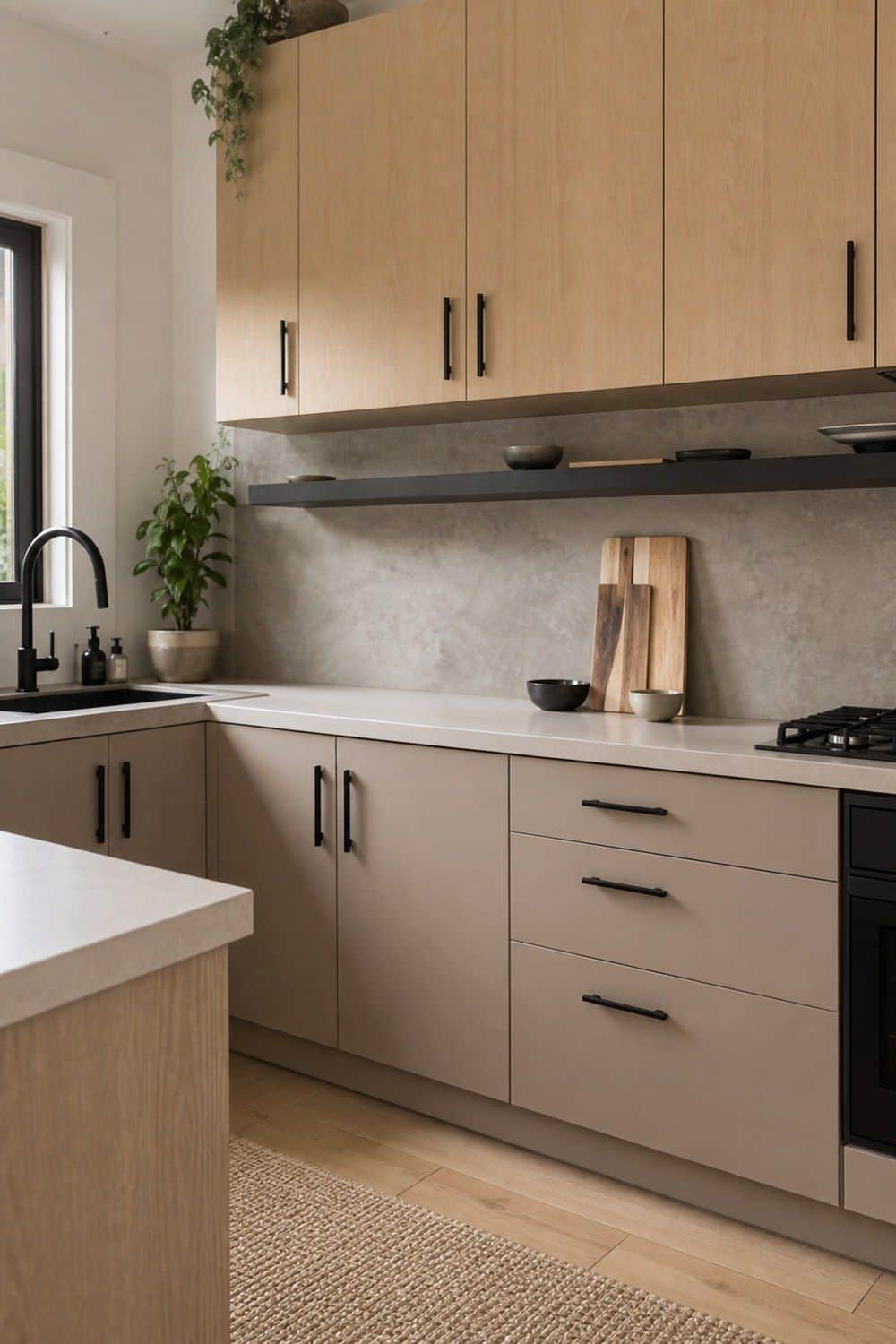
Use black as a fine line, not as the main personality of the room. Slim matte black pulls can define pale wood or warm neutral cabinets without turning the kitchen into something industrial. Narrow pulls, small knobs, and simple edge details usually work better than chunky hardware. If the room needs another black touch, repeat it once in a faucet, pendant stem, stool frame, or shelf bracket, then let the warmer materials lead. Keep the finish matte so it feels soft.
5. Appliances Behind Cabinet Panels

Panel-ready refrigerators and dishwashers help a Japandi kitchen stay visually calm, especially when the kitchen is visible from the dining or living area. The point is not to hide every trace of cooking, but to let the cabinet lines feel continuous.
If full appliance panels are outside the budget, choose quiet finishes and keep the surrounding cabinet lines clean. A plain stainless dishwasher or simple white fridge will usually look calmer than a glossy black appliance with lots of visual contrast.
6. Hidden Appliance Cabinet
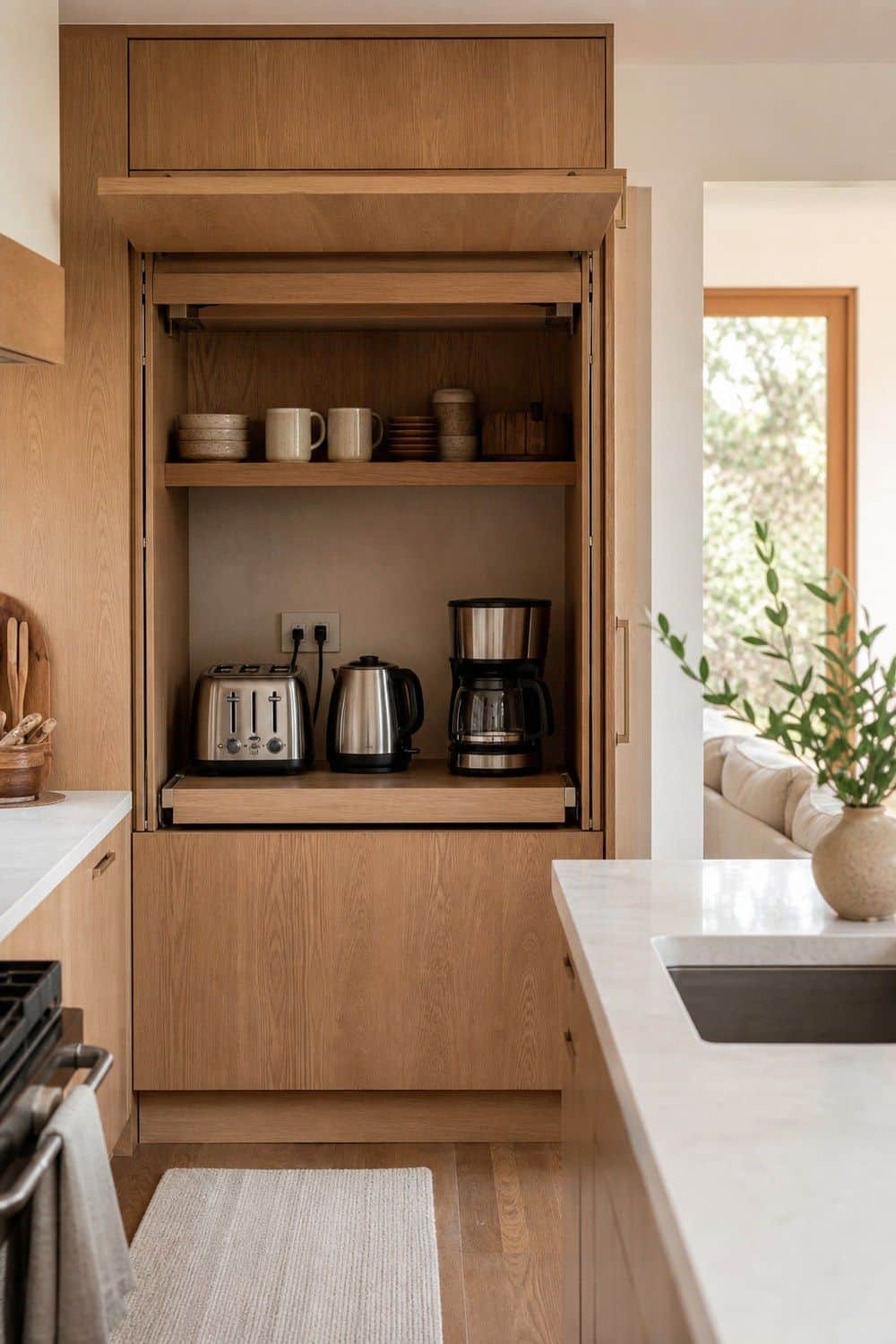
Create a daily-use cabinet for small appliances so the counter can stay open. Japandi minimalism only works when storage is easy enough to use every day, so a hidden appliance cabinet can hold the toaster, blender, coffee maker, kettle, or breakfast supplies while keeping the main prep counter clear.
Plan this cabinet around the way you actually move in the morning. If the coffee maker is used daily, it needs a shelf height, outlet, and door style that do not make the routine annoying.
Pocket, lift-up, or retractable doors can work well when there is enough clearance. Leave room for heat and steam, and add a small tray inside the cabinet to catch grounds, crumbs, and drips.
7. Natural Stone Countertops

Natural stone gives Japandi kitchens quiet texture without needing extra decoration. Honed marble, limestone-look surfaces, soapstone, quartzite, or a subtle stone-look quartz can all work when the pattern feels soft rather than flashy.
Look for movement that feels organic and low contrast, then let the counter be one of the main materials in the room. Busy veining, high gloss, or sharp color contrast can pull the kitchen toward luxury drama instead of calm warmth, so sample the surface beside the cabinets first.
8. Stone Slab Backsplash

A stone slab backsplash gives the kitchen one continuous surface instead of many grout lines. That quieter backdrop suits Japandi style especially well behind a range, sink, or long counter run where busy tile would break up the calm.
The slab does not have to be dramatic. Soft veining, warm gray, creamy beige, pale taupe, or limestone tones usually feel more natural than high-contrast stone, and the smooth surface is easier to wipe in hardworking cooking zones after dinner. Let the veining move gently rather than dominate the room.
9. Handmade Tile in a Muted Shade
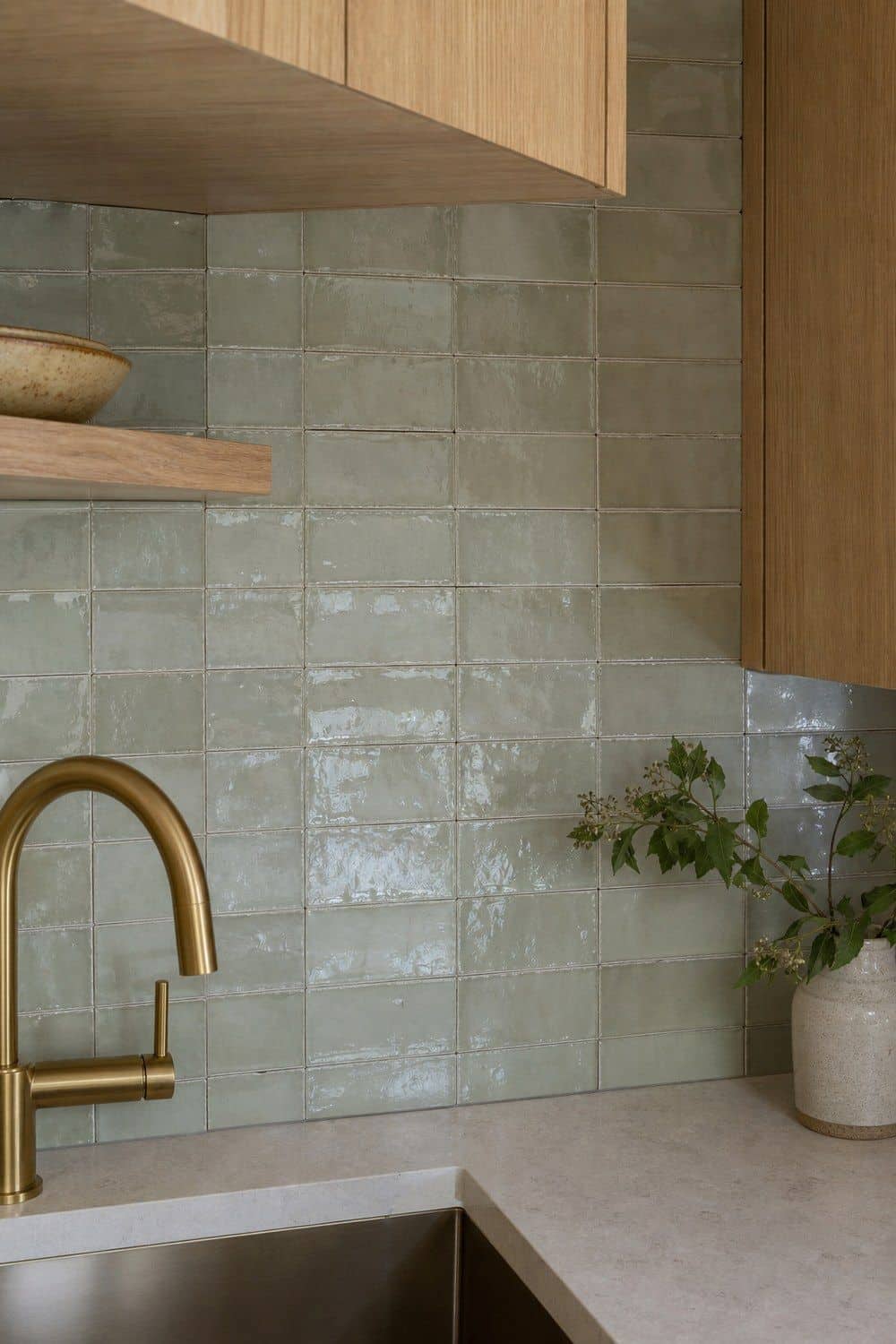
Bring in handmade texture without turning the backsplash into a busy pattern. If a full slab backsplash feels too polished or too expensive, handmade ceramic tile is a softer alternative.
Look for matte or softly glazed tile in warm white, taupe, sage, clay, sand, or stone gray. The slight variation between tiles gives the wall life, which helps a minimal kitchen avoid feeling flat.
Keep the layout simple, such as stacked, vertical stacked, or a quiet offset pattern. Use grout close to the tile color so the wall stays calm instead of graphic.
10. Soft Mineral Wall Finish

Limewash or mineral-look walls can soften minimal cabinets without adding objects to the counter. Use this finish in low-splash areas, such as a dining nook, pantry wall, open doorway, or breakfast corner, while keeping wipeable surfaces behind the sink and range.
For the calmest look, choose warm plaster white, clay beige, stone gray, or mushroom tones that sit close to the cabinet color. The texture should feel like a soft background, not a feature wall asking for attention. It should make morning light gentler, not compete with the cabinets.
11. Very Simple Open Shelving

Treat open shelves as useful storage for a few beautiful daily objects. Open shelving can work in a Japandi kitchen, but only when it is restrained.
One short run of floating wood shelves is usually stronger than a whole wall of exposed dishes. Use the shelf for objects that earn their place: everyday bowls, mugs, tea canisters, a small stack of plates, a ceramic pitcher, or one plant.
Keep labels, plastic packaging, and rarely used serving pieces behind closed doors. Leave empty space on the shelf. That pause is part of the design, and it keeps the display from turning into visual clutter.
12. Handmade Ceramics in Small Groups

Handmade ceramics bring the wabi-sabi side of Japandi into the kitchen through small imperfections, softened edges, and touchable glaze. A few bowls, cups, plates, or a pitcher can make the room feel personal without leaning on signs, prints, or seasonal decorations. Keep the grouping small and useful: three pieces on a shelf, a stack of everyday bowls, or one serving pitcher on the counter feels more natural than filling every surface with ceramic objects just to prove the style. Daily pieces feel best here.
13. Minimal Cafe Curtains for Natural Light
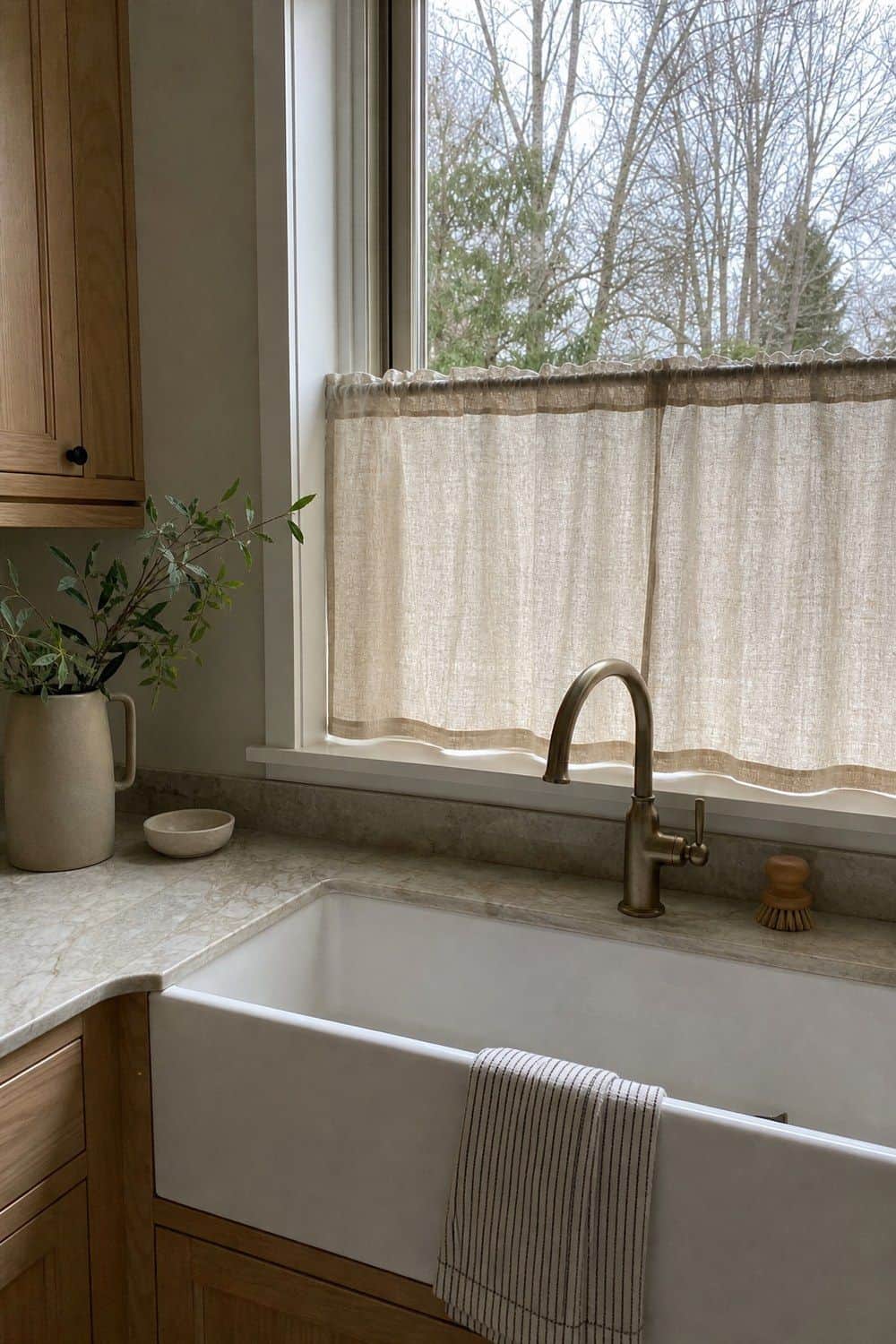
Minimal cafe curtains can filter sharp light without making the window feel dressed up. Choose linen, cotton, or a linen-look fabric in a color close to the wall, cabinet, or wood tone so the fabric softens the view instead of becoming the loudest thing in the room. Keep the length practical around sinks and prep areas, where fabric should stay clear of standing water, stove heat, and heavy splashes. A soft off-white or oat shade usually blends best with Japandi wood and stone.
14. Rattan or Woven Counter Stools
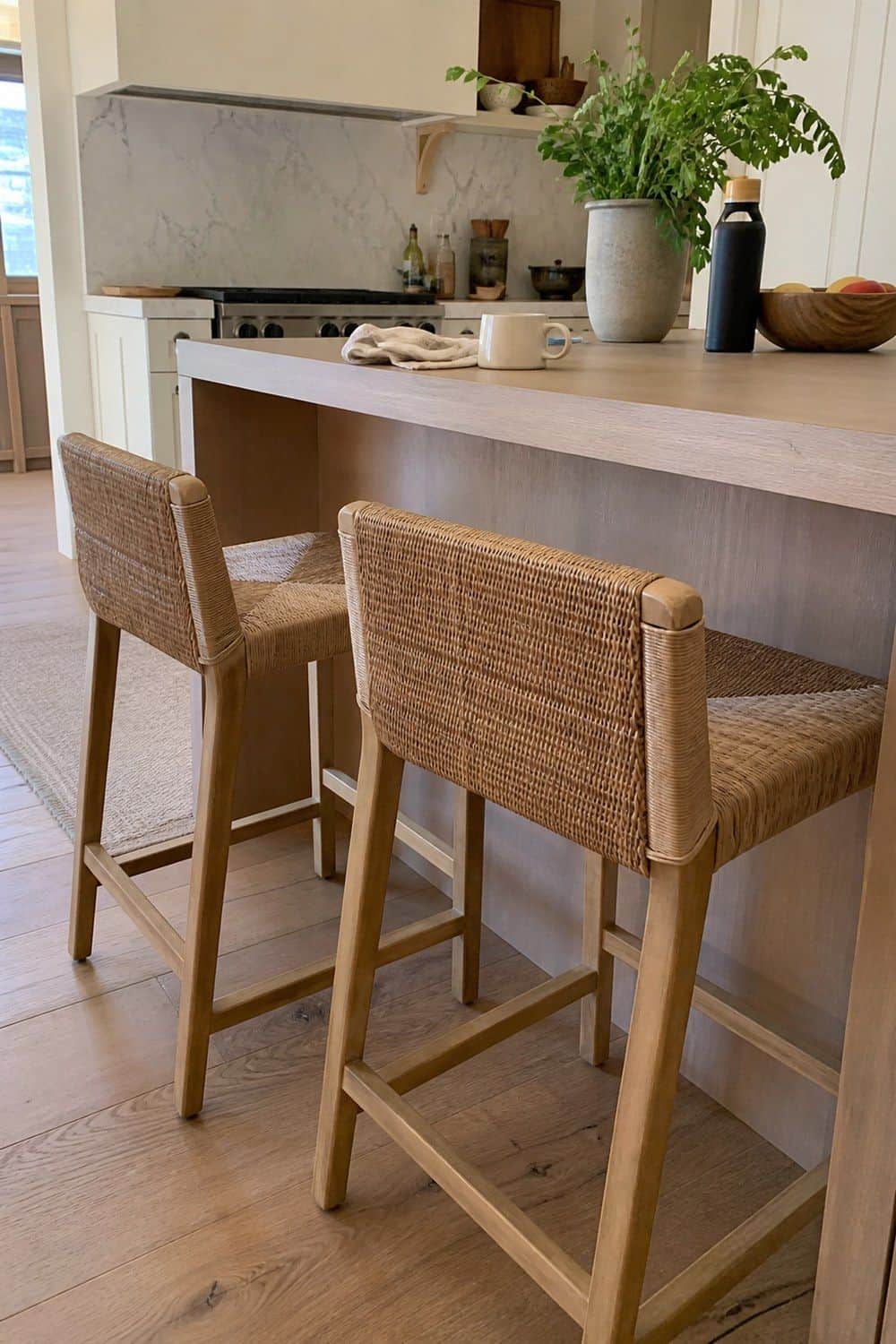
Add natural texture at the island without piling decor onto the counter. Rattan, cord, cane, or woven counter stools can warm up a simple island because the texture sits at a practical touchpoint instead of becoming another object to move before cooking.
Check the seat height before buying. A stool that is too tall or too low can make a calm kitchen frustrating to use, especially if the island doubles as a breakfast spot or homework station. For easier maintenance, choose a wipeable frame and a weave that does not catch every crumb.
15. Simple Ceramic Pendant Lights

Use lighting as a warm sculptural detail, not as a flashy focal point. Ceramic pendant lights suit Japandi kitchen lighting because they feel tactile and quiet, and paper, linen, wood, or matte metal fixtures can also work when the shape is simple.
Over an island, two or three pendants give enough rhythm without crowding the ceiling. Over a small dining nook, one slightly larger pendant can make the eating area feel finished; keep bulbs warm and soft so the fixture never feels harsh.
16. Warm Under-Cabinet Lighting
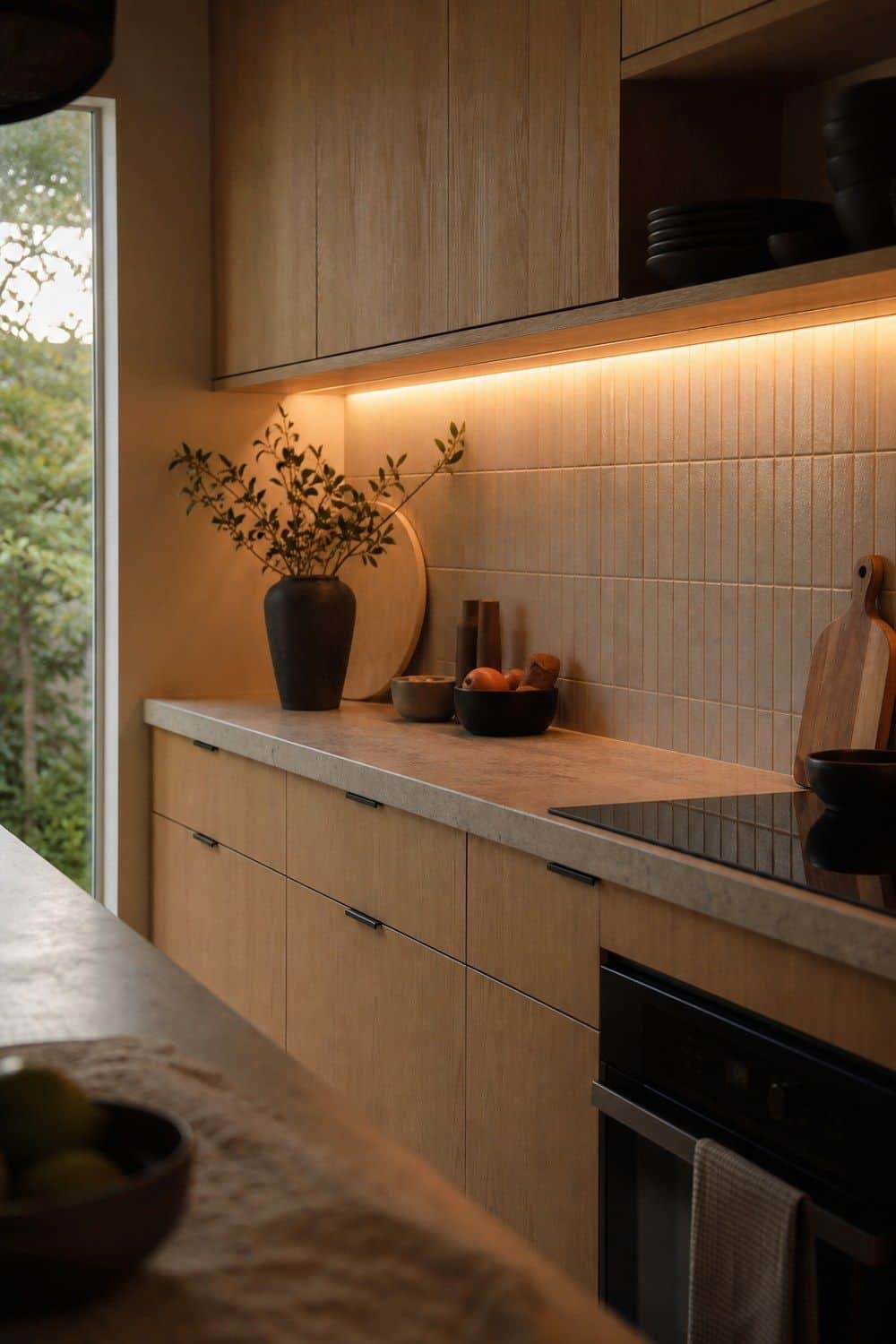
Under-cabinet lighting is one of the most useful upgrades in a warm minimalist kitchen. It helps with chopping, rinsing, and evening cleanup while keeping the room from relying only on bright ceiling lights.
Choose a warm color temperature rather than blue-white light, and use dimmers if the kitchen shifts from prep space to evening gathering spot. Hide cords, drivers, and visible strips when possible so the light supports the materials instead of adding another visual line. The glow should skim the backsplash, not announce the fixture.
17. Natural Fiber Runner

A runner can add texture and softness in front of the sink, stove, or a long cabinet run while keeping the palette quiet. Choose a flat-weave, washable cotton, wool, or natural-fiber look with enough grip to stay put during real cooking.
Muted stripes, warm solids, and softened geometric patterns usually feel more Japandi than bold contrast. Use a rug pad where needed, and leave appliance doors free to open so the textile makes the kitchen calmer instead of harder to use.
The best runner feels good underfoot and still handles crumbs, splashes, and quick cleaning.
18. One Large Plant Instead of Many Small Decor Pieces
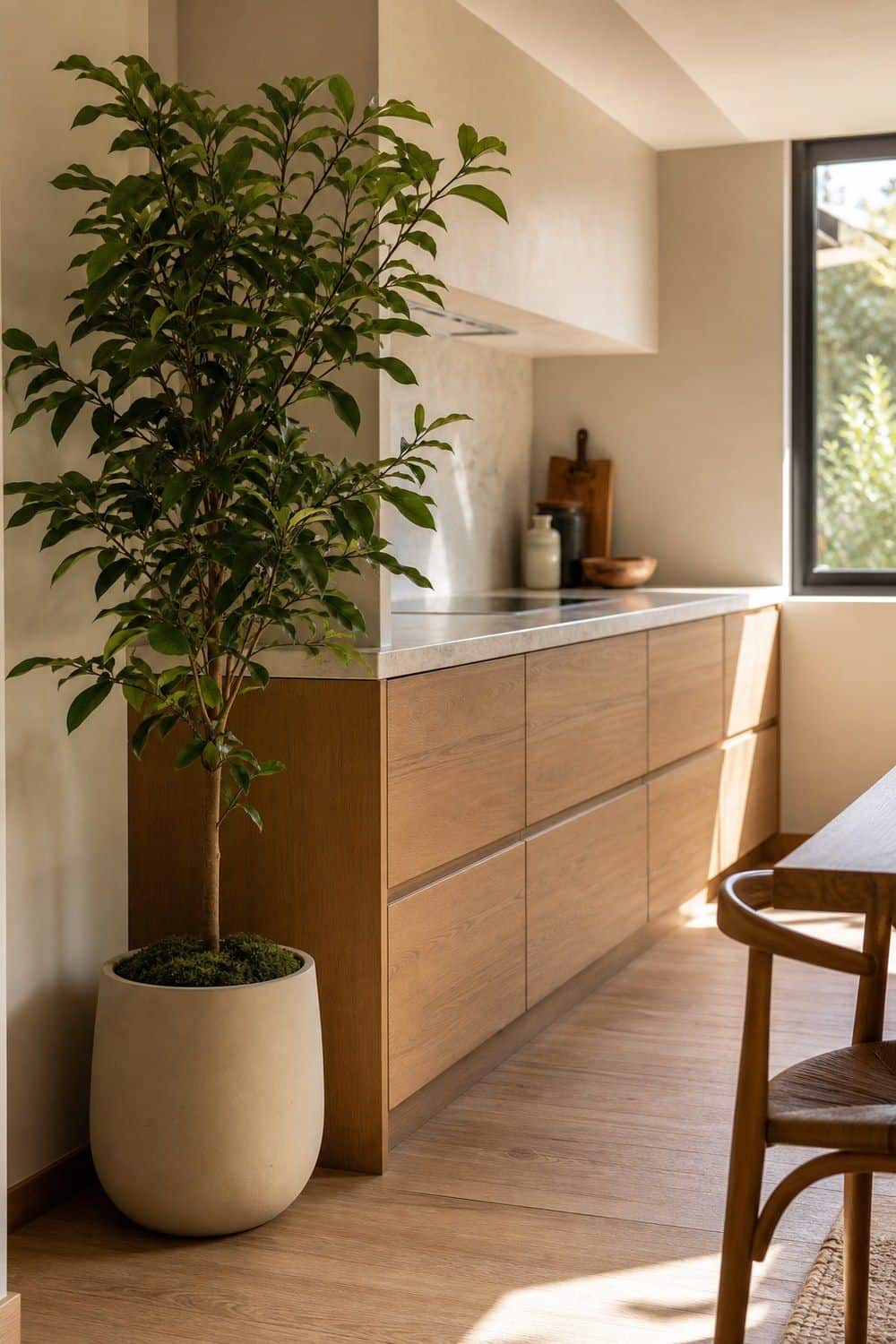
Japandi design values a connection to nature, but a kitchen can feel crowded fast when every windowsill and shelf has a tiny pot. One larger plant often looks calmer than several small pieces of greenery scattered around the room.
Place it where it will not block cabinet doors, appliance vents, or prep space. A bright corner, dining nook, or open end of a cabinet run usually works better than the main counter, and the plant should match the light you actually have.
19. Low and Useful Countertop Styling
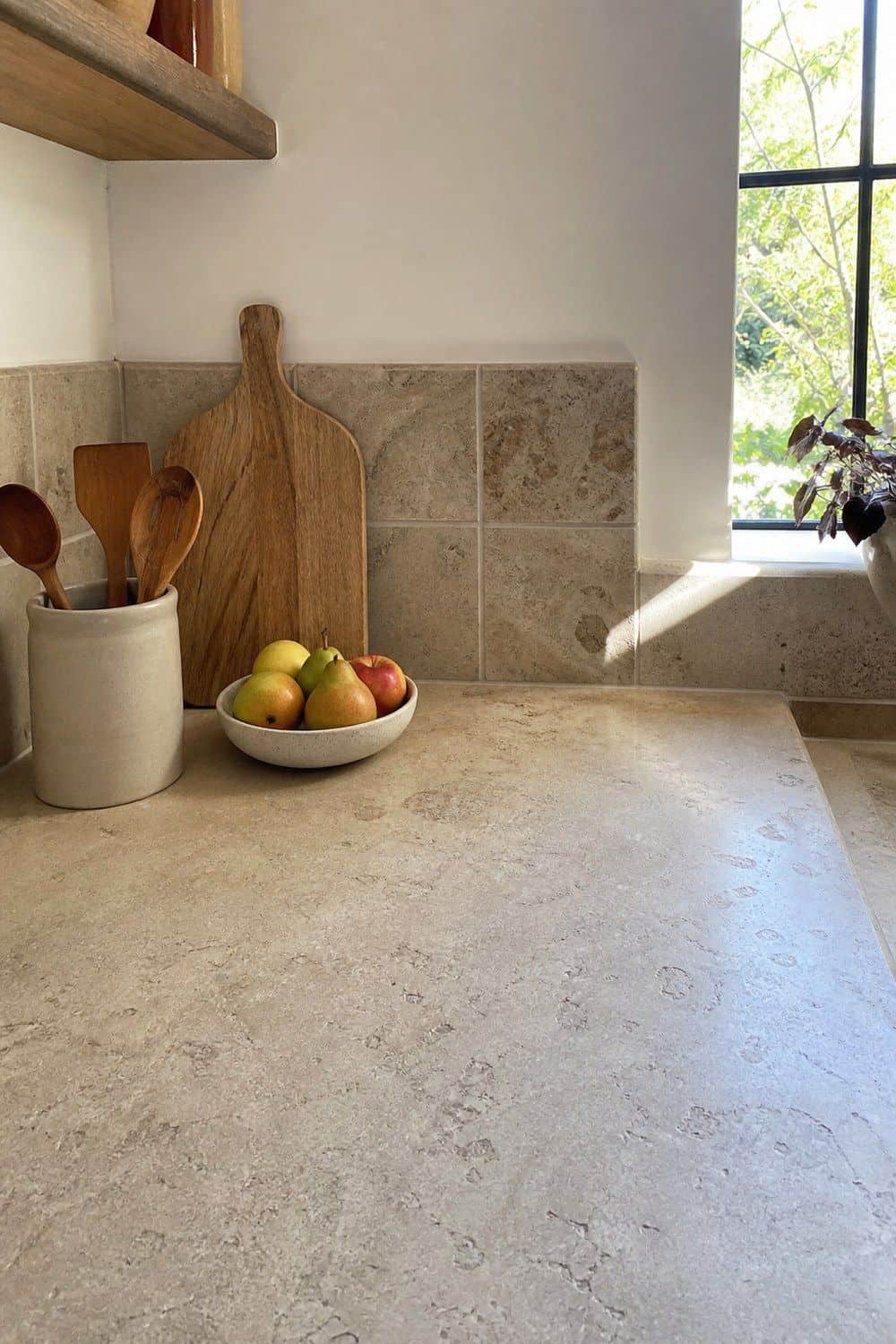
Let counter objects be useful first and decorative second. A Japandi kitchen does not need a bare counter, but every visible piece should earn its spot: a ceramic utensil holder, wood board, fruit bowl, soap tray, or tea canister can be enough for an entire work zone.
Keep pieces low so the backsplash and cabinet lines can breathe. If you have to move something every time you cook, it probably belongs in a cabinet. One useful object with good material texture is stronger than several small things competing for attention.
20. Wood Cutting Boards as Warm Functional Decor
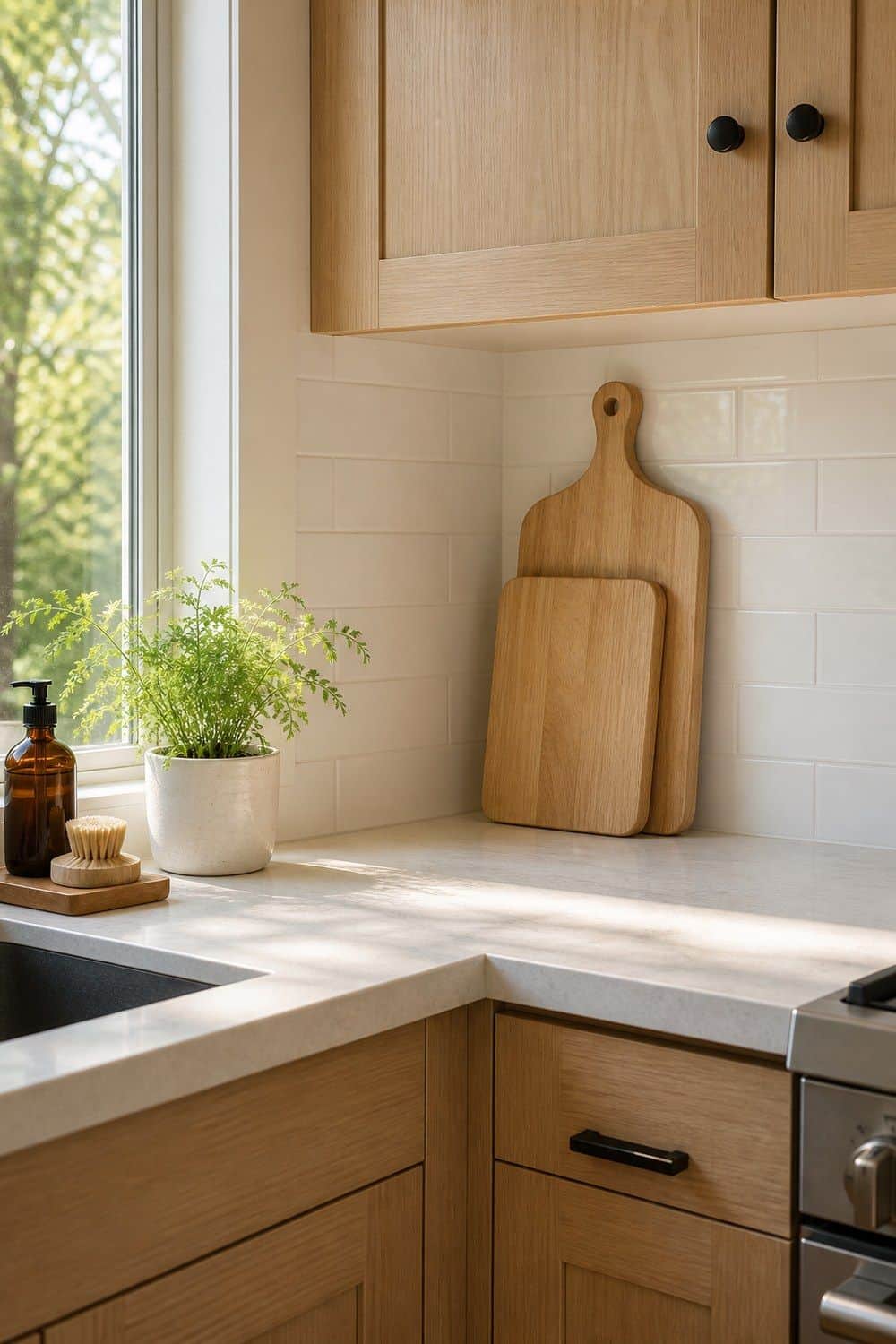
Wood cutting boards are an easy way to bring warmth into a Japandi kitchen because they are useful, tactile, and naturally quiet. Lean one or two boards against the backsplash near prep, or store them upright where you actually reach for them.
Choose shapes and wood tones that echo the cabinets, stools, or shelves instead of building a crowded board display. The best arrangement gives you a little warmth on the counter while still leaving enough open surface for chopping, plating, and cleanup.
Keep boards away from heavy splatter zones so they stay pleasant to use.
21. Matte Black or Brushed Metal Faucet
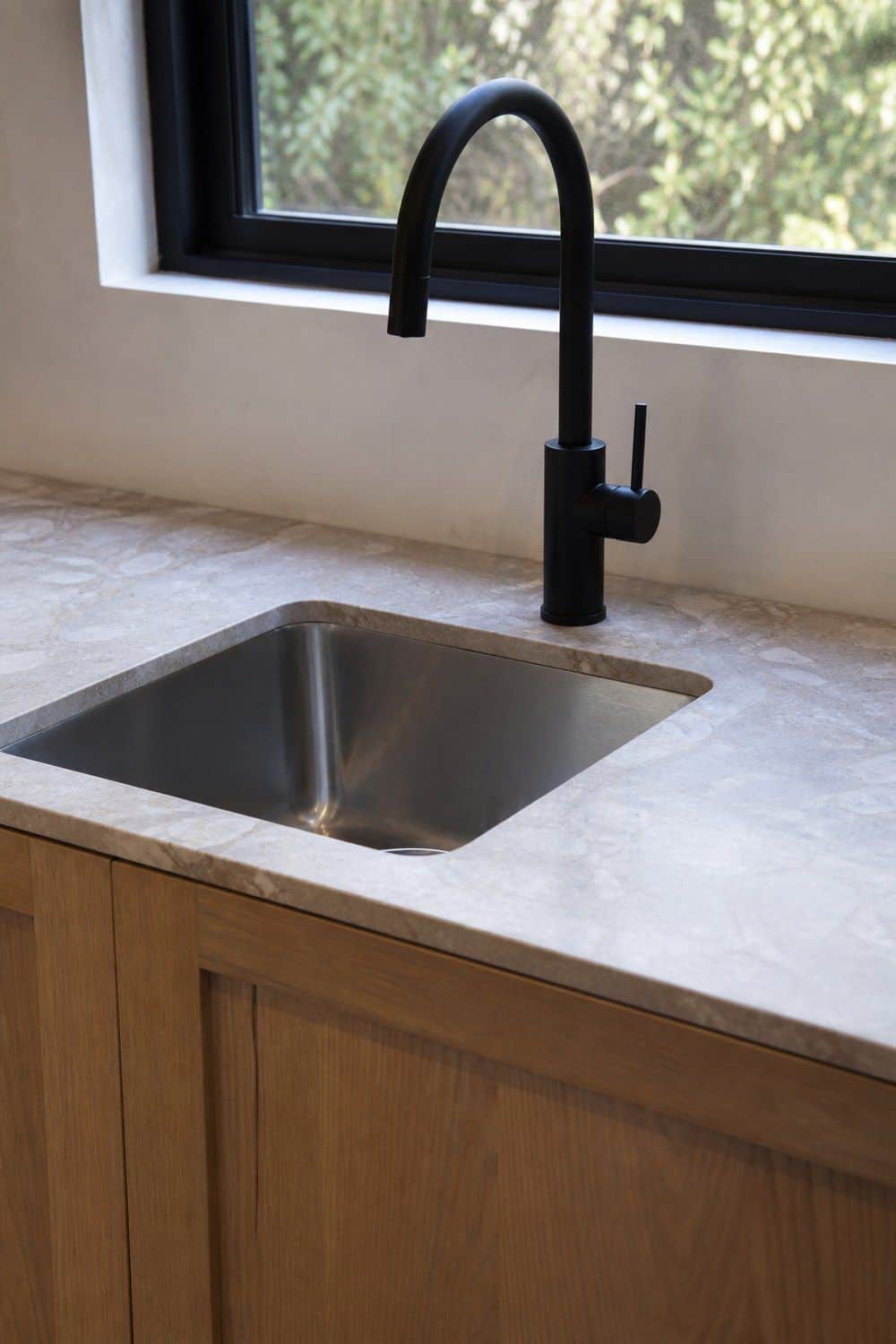
A faucet can add gentle contrast without taking over the whole kitchen. Matte black works well with pale oak and warm stone, while brushed nickel, stainless, or soft brass can feel quieter in a lighter palette.
Keep the silhouette simple and easy to wipe. A faucet with too many curves, seams, or shiny details can pull attention away from the calm material mix, so look for a clean profile that feels good in your hand and suits the sink size.
The finish should support the room, not become its loudest feature.
22. Closed Storage for Visual Calm
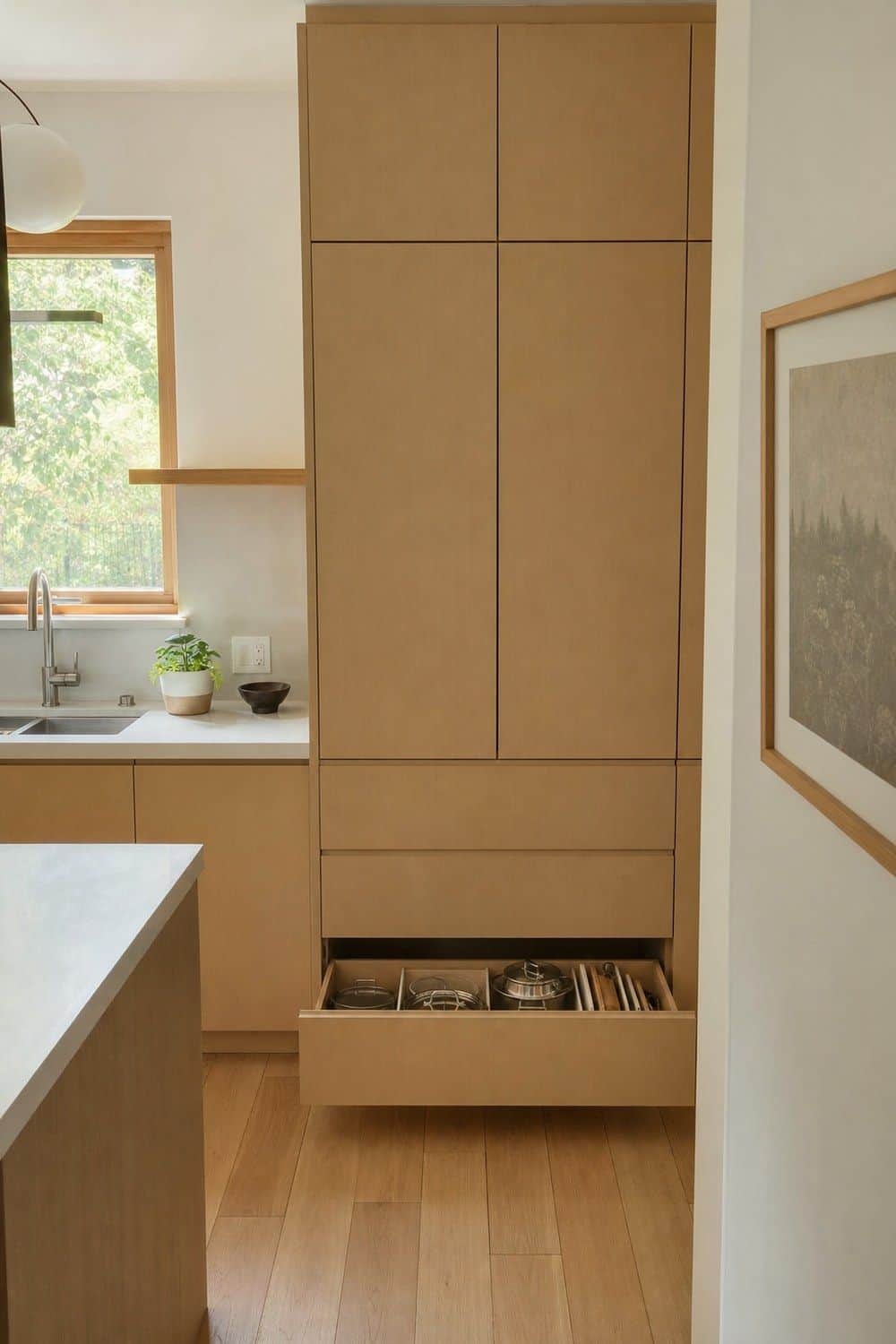
Make hidden storage the foundation of the whole kitchen, not an afterthought. Closed storage is the reason Japandi kitchens can look peaceful while still functioning for real meals. Pull-out pantries, tall cabinets, appliance cabinets, drawer inserts, and deep lower drawers help food, tools, and small appliances disappear when they are not in use. This is especially important in small kitchens.
Clean cabinet fronts and pale wood help visually, but the room will only feel calm if packaging, extra cookware, cleaning supplies, and duplicate tools have a specific home. Before adding more decor, improve the storage that supports your daily routine. That is the less glamorous part of Japandi style, and often the most effective.
23. Low-Contrast Dining Nook Nearby
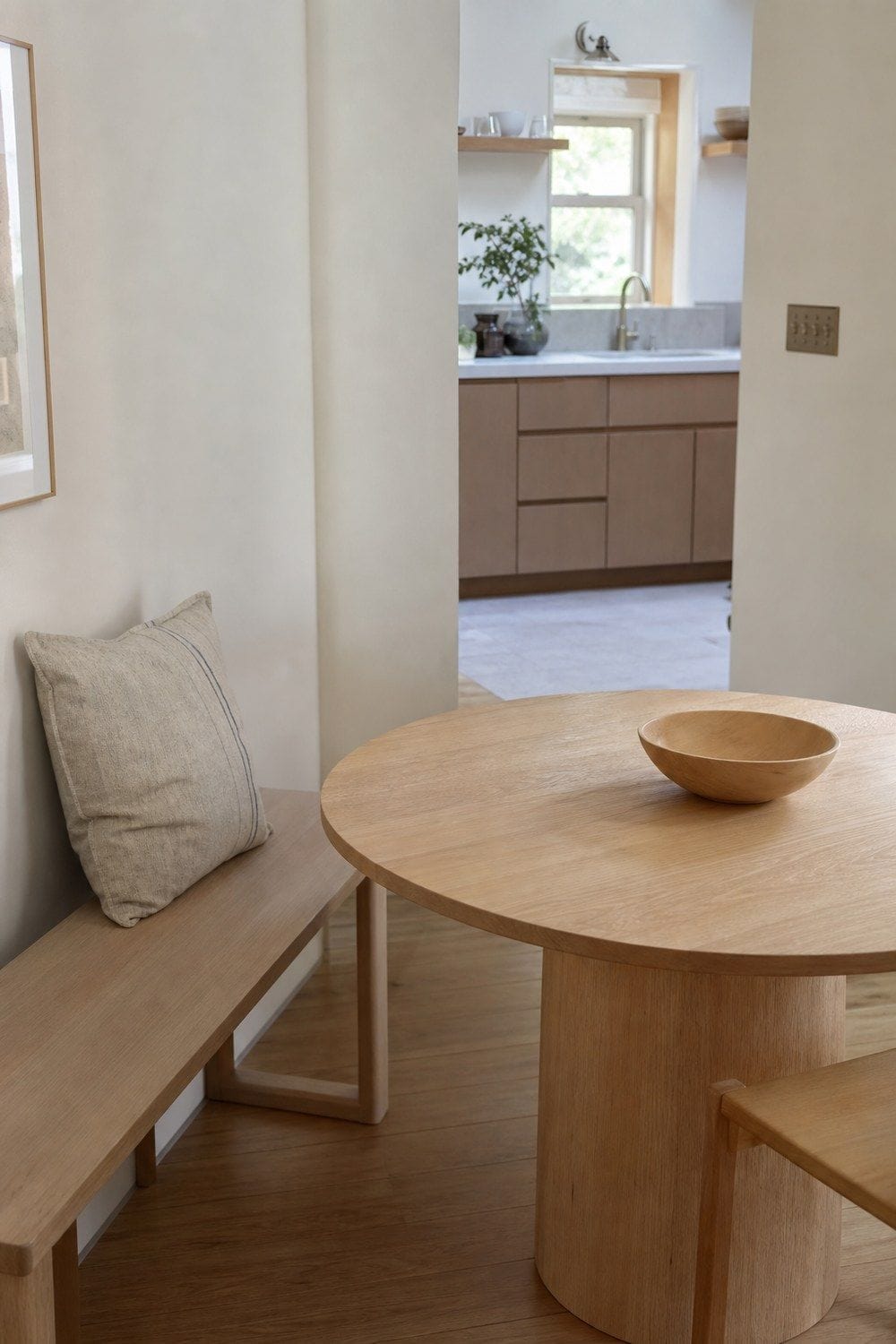
If the kitchen connects to a dining area, keep the nearby nook in the same low-contrast language. A simple wood bench, round table, muted cushion, or pale chair can make the cooking and eating zones feel connected without adding a new decorating story. Repeat one material from the kitchen, such as oak, black metal, linen, or stone-colored fabric, then leave breathing room around the table so the nook feels easy to sit down in. Low, quiet pieces help the dining area support the kitchen instead of competing with it.
24. Angular Cabinets with Rounded Accessories
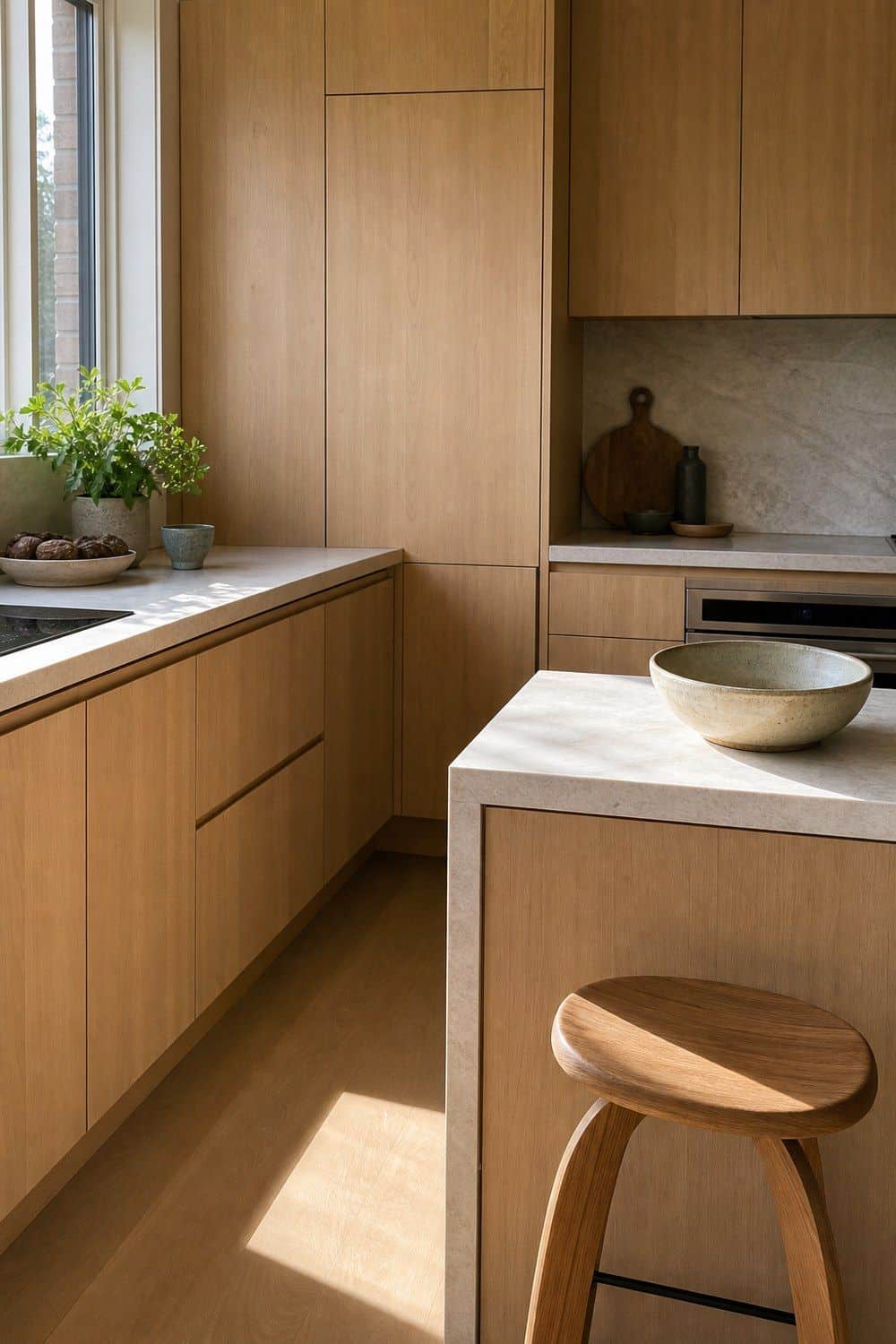
Balance straight cabinet lines with a few soft shapes. Slab cabinets, stone edges, and rectangular islands can make a kitchen feel crisp, but too many hard lines may also feel severe beside the quiet materials.
Try one round ceramic vase, a curved bowl, a paper pendant, a stool with a rounded seat, or a round dining table near the kitchen. A few rounded pieces are enough to balance the geometry while still keeping the room pared back, and they make the space feel friendlier without adding pattern.
25. Kitchen Reset Before Adding Japandi Decor

Pare back duplicates, packaging, and counter clutter before buying more visible decor. Japandi feels calmest when the everyday pressure points have a place to land: extra mugs, unused gadgets, bulky boxes, random containers, and appliances that rarely leave the counter.
Use bins inside cabinets, drawer dividers, pull-out shelves, and pantry zones first. After that, choose only the pieces that solve a problem or add natural texture, so the kitchen feels calmer because there is less to manage, not because it looks empty.
What to Avoid in a Japandi Kitchen
Japandi kitchens can lose their warmth when every finish becomes too glossy, too cold, or too synthetic. Be careful with bright white lighting, shiny plastic organizers, high-contrast busy tile, overly dramatic stone, and open shelves packed with small accessories.
The style is also cleaner and more ordered than wabi-sabi alone. Imperfect ceramics, natural stone, and visible grain are welcome, but the overall kitchen should still feel structured, pared back, and easy to use.
Budget-Friendly Ways to Get the Japandi Look
You do not need a full renovation to make a kitchen feel more Japandi. Start with smaller changes that reduce noise and add natural texture: switch to simple cabinet pulls, simplify the counter, add one wood shelf, use a linen shade, choose a muted runner, group handmade ceramics, or improve storage inside cabinets.
Lighting is another high-impact change. Warmer bulbs, under-cabinet lighting, and a simple ceramic or paper pendant can make existing cabinets feel softer. If the kitchen still feels cluttered after that, the next best upgrade is usually better closed storage rather than more decor.
Frequently Asked Questions
What is a Japandi kitchen?
A Japandi kitchen blends Japanese simplicity and wabi-sabi influence with Scandinavian comfort. It usually includes natural materials, warm neutrals, clean cabinet fronts, hidden storage, soft lighting, and restrained decor that keeps the room calm but usable.
What colors are used in a Japandi kitchen?
Common Japandi kitchen colors include warm white, beige, taupe, mushroom, greige, soft gray, pale oak, muted green, clay, brown, and small touches of black. The palette should feel nature-based and low contrast rather than stark or overly bright.
What cabinets work best for a Japandi kitchen?
Slab, handleless, pale wood, warm neutral, and simple flat-front cabinets work best for Japandi kitchen cabinets. Strong hidden storage is just as important as the door style because it keeps counters and shelves visually quiet.
How do you make a Japandi kitchen feel warm?
Use wood, stone, linen, rattan, ceramics, warm lighting, natural fiber rugs, and a few handcrafted objects. Warmth should come from material texture and soft light rather than lots of small decorative pieces.
Is Japandi the same as minimalist kitchen design?
No. Japandi is minimal, but it is warmer and more tactile than many minimalist kitchens. It uses nature, craftsmanship, imperfect ceramics, wood grain, stone, and soft textiles so the kitchen does not feel cold or empty.
What backsplash works in a Japandi kitchen?
Good Japandi backsplash options include stone slab backsplashes, handmade ceramic tile, muted zellige-style tile, or quiet matte tile with natural texture. Avoid busy patterns and high-contrast grout if you want the room to feel calm.
Can Japandi work in a small kitchen?
Yes. Japandi can work especially well in a small kitchen because hidden storage, clean cabinet fronts, pale wood, warm neutrals, and limited decor can make the space feel calmer and easier to use.
What decor belongs in a Japandi kitchen?
Japandi kitchen decor should be minimal and useful. Good choices include handmade ceramics, wood cutting boards, one plant, linen window treatments, a natural runner, and a few textured pieces that support the kitchen instead of crowding it.
Final Thoughts
The strongest Japandi kitchen ideas are the ones that make daily cooking feel calmer. Warm neutrals, pale wood, stone, hidden storage, soft lighting, and useful natural textures all help the kitchen feel minimal without feeling cold.
Start with what creates the most visual noise, then add only the materials and objects that make the room easier or more pleasant to use. That is where Japandi style becomes more than a look and turns into a better kitchen rhythm.