Natural wood kitchen organization works well when wood and bamboo organizers solve real storage jobs: cutlery trays, wood drawer dividers, knife inserts, spice drawers, plate pegs, glass jars with wood lids, bamboo pantry bins, wood trays, natural wood shelves, and dry maintenance for wood surfaces.
Natural wood kitchen organization should make daily cooking feel warmer and easier, not simply prettier. The best wood kitchen organizers belong where they help with cutlery, utensils, knives, spices, dishes, pantry staples, cutting boards, oils, island drawers, or table-setting supplies.
Wood and bamboo are strongest in dry drawers, pantry shelves, controlled counters, open shelves, and island storage. For wet, sticky, or leak-prone zones, use extra caution, washable liners, or a material that can handle moisture better.
You Might Also Like These Blog Posts
- Modern Organic Kitchen Organization Ideas
- Kitchen Organization Ideas
- Pantry Organization Ideas
- Open Shelving Kitchen Organization Ideas
- Warm Neutral Kitchen Organization Ideas
Natural Wood Kitchen Organization Ideas That Stay Useful
1. A Decluttered Category Before New Wood Organizers

Natural wood organizers look calm only after the category has been pared down. Empty the drawer, shelf, or pantry bin first, then remove duplicates, broken tools, mystery lids, and pieces that never get used. Measure the actual space before buying a bamboo drawer organizer set, including drawer depth and any raised cabinet trim. Once you know what stays, choose organizers that fit the category instead of using pretty wood boxes to hide too much stuff. This first reset keeps the wood storage from becoming expensive clutter.
2. Bamboo Cutlery Tray Near the Dining Zone

A bamboo cutlery tray is one of the easiest natural wood kitchen organization upgrades because flatware already needs clear categories. Place it near the dining table, island seating, or dishwasher unload zone so forks, knives, spoons, and serving pieces return to the right place quickly.
Expandable trays are helpful when drawer width is awkward, while removable sections make deep cleaning easier. Wipe bamboo dry after cleaning and avoid putting damp flatware directly into the tray. If the drawer is deep, leave a small back section for serving spoons or chopsticks so everyday flatware stays easy to grab.
3. Wood Drawer Dividers for Cooking Tools
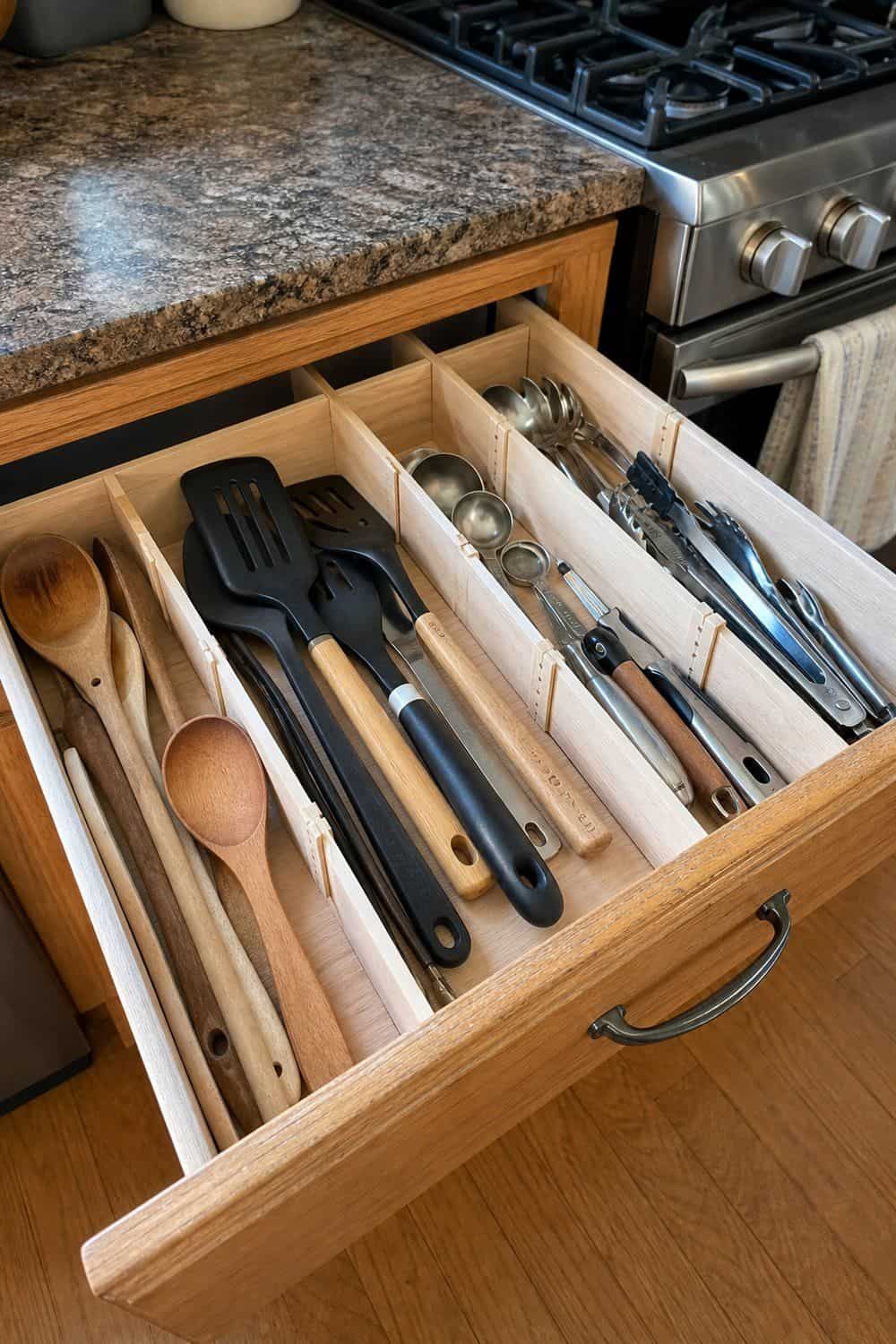
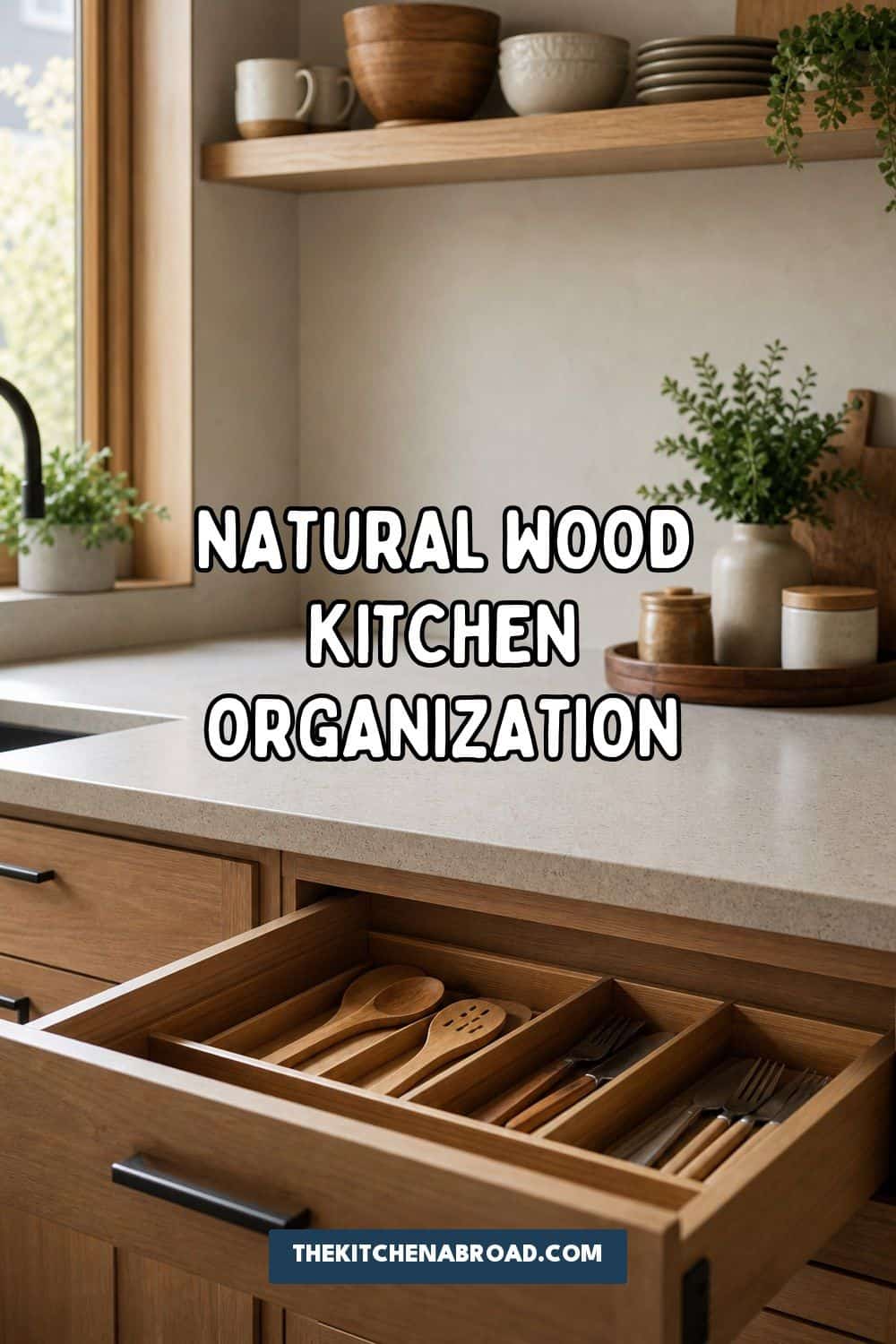
Wood drawer dividers are useful for spatulas, wooden spoons, tongs, whisks, peelers, measuring spoons, and small prep tools. Instead of sorting by shape alone, group tools by cooking task: stirring, flipping, measuring, peeling, and serving. Keep this drawer near the stove or main prep zone so the dividers support the way you cook. Adjustable dividers are especially helpful in older drawers where standard trays leave wasted space, and they make it easier to change the layout when your tool mix changes.
4. Wooden Knife Drawer Insert for Safer Prep
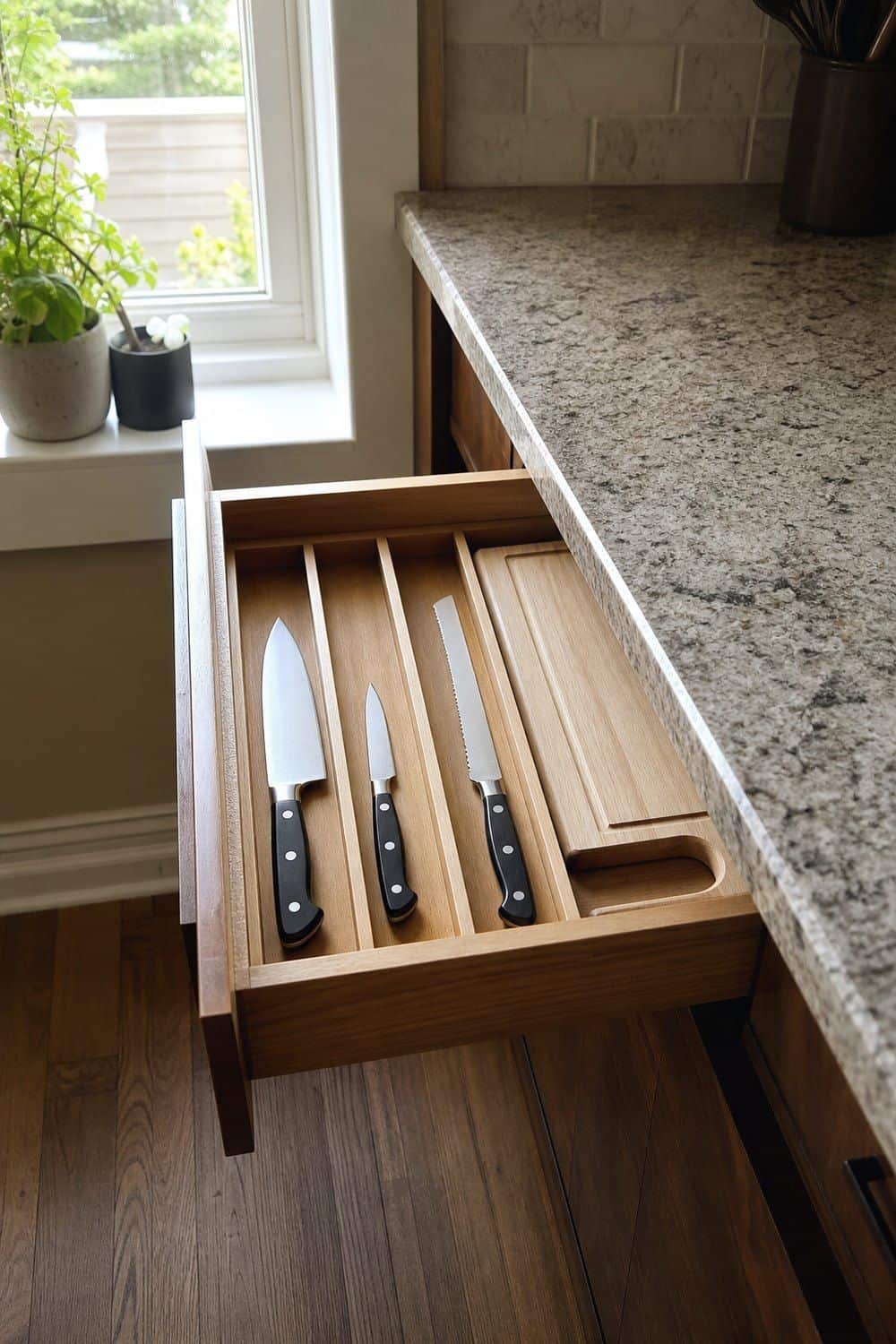
A wooden knife drawer insert protects blades, frees counter space, and keeps sharp tools away from loose utensil clutter. It belongs near the main prep surface, ideally close to cutting boards and trash or compost access.
Measure the length of your longest knife before buying, because some inserts are too short for chef’s knives. Keep the drawer dry and avoid storing dirty or wet blades in the slots. If children use nearby drawers, choose a location that supports your household’s safety habits.
5. Bamboo Spice Drawer Organizer Beside the Stove

A bamboo spice drawer organizer can turn a messy spice shelf into a readable cooking station. Store jars flat or angled in a drawer near the stove or prep counter, then add lid labels so the names are visible from above.
Use the reset to combine duplicates and check old spices. A wooden spice drawer looks beautiful, but it still needs practical limits so every jar can be reached without digging.
Keep backup spices elsewhere so this drawer stays focused on what you actually cook with during the week. A small date check during refills keeps the drawer from becoming pretty but stale.
6. Wood Peg Drawer System for Plates and Bowls

Wood plate pegs make deep drawers more useful for plates, bowls, and serving dishes. Adjustable pegs stop stacks from sliding, reduce rattling, and make lower storage easier to lift from than an overhead cabinet. This is especially helpful near a dishwasher or island because dishes can move straight from cleaning to storage. Check peg height and drawer depth before choosing large dinner plates or heavy bowls, and keep the heaviest stacks in the lowest drawer for safer daily use every day.
7. Deep Bamboo Dividers for Bowls and Mugs
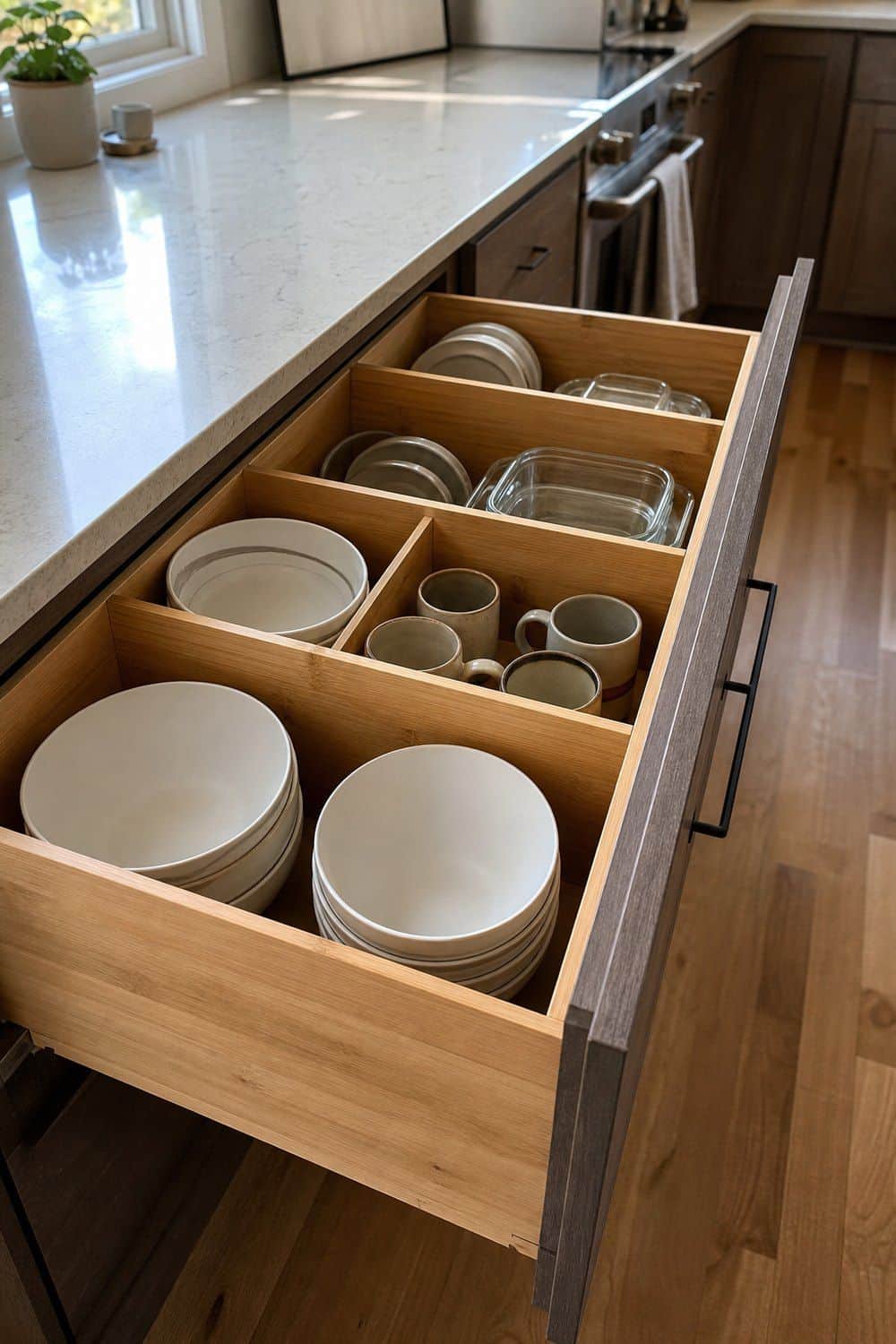
Deep bamboo drawer dividers can separate stacks of bowls, mugs, glass food containers, lids, or small serving pieces. They are most helpful in wide drawers where everything slides together each time the drawer opens.
Add non-slip lining if dishes shift, and keep heavy stacks low. The wood brings warmth inside the drawer, but the real value is making each stack visible and easy to reset. Leave a little space between categories so mugs and bowls can be lifted without bumping the whole drawer.
8. Upright Cutting Board Station by the Prep Area
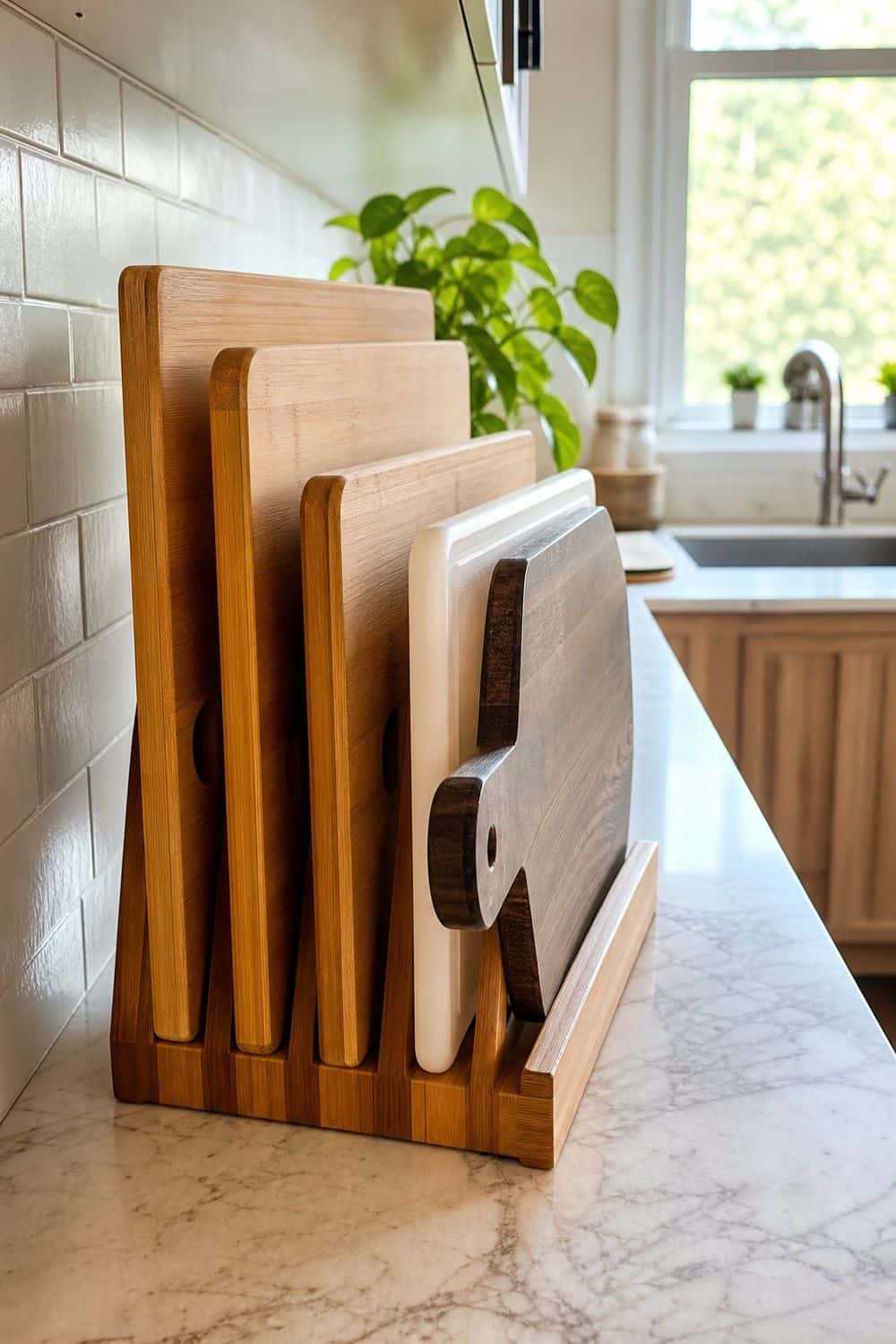
A cutting board organizer keeps boards upright, dry, and easy to grab during prep. Place it near the main chopping area and separate wood boards, plastic boards, meat-specific boards, and small serving boards into clear slots.
Upright storage helps boards dry better than a stacked pile. Leave enough space between boards for airflow, and wipe the base often because crumbs and moisture collect there quickly. If the organizer sits beside the sink, check it more often so damp boards do not sit against wood for hours.
9. Wood Countertop Tray for Oils and Salt
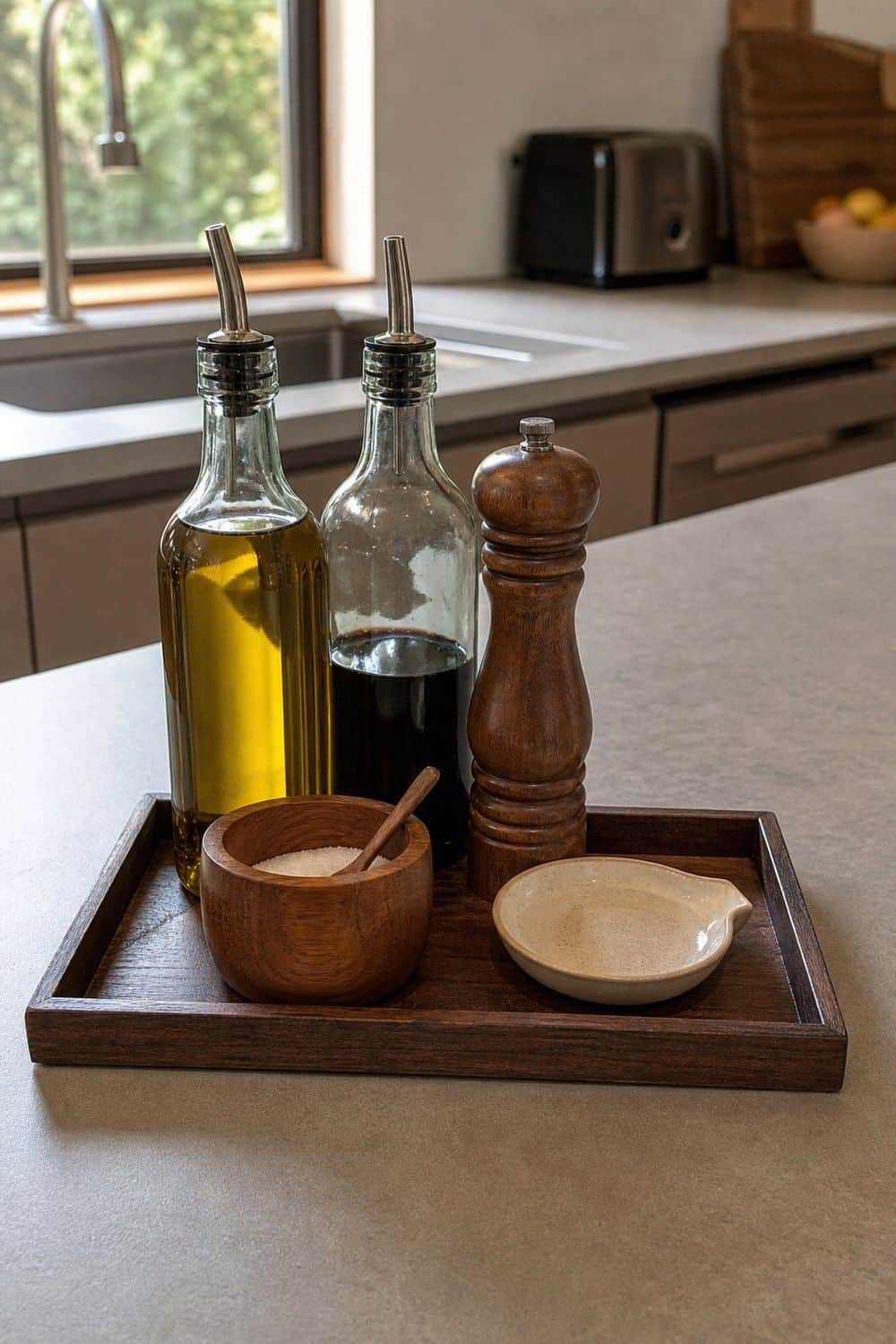
A wood countertop tray makes daily cooking items look contained instead of scattered. Use it for olive oil, vinegar, salt, pepper, a spoon rest, a small pepper mill, or the seasonings you reach for every day. Keep the tray washable or lined if oil drips are common. Wood can get sticky around bottles, so lift everything during weekly resets and wipe both the tray and counter underneath. A tray is most useful when it holds daily-use items, not every attractive bottle in the kitchen.
10. Two-Tier Bamboo Organizer for Daily Counter Items

A two-tier bamboo countertop organizer can add vertical storage for tea, coffee, vitamins, small oils, or morning routine items. It works only when the items are truly used every day and belong on the counter.
Avoid turning the tiers into a catchall for receipts, random snacks, keys, and unopened mail. Keep categories tight, wipe the shelves regularly, and leave enough counter space for actual prep.
If the organizer starts collecting unrelated items, move it into a cabinet or reduce it to one beverage or morning category. Countertop bamboo should make the surface easier to use, not harder to wipe down.
11. Wood Pantry Shelves for Everyday Staples

Wood pantry shelves can make natural pantry organization feel warmer, but shelf depth matters more than the material. Use them for everyday breakfast, baking, dinner, snack, and beverage categories that you can see and reach.
Avoid shelves that are so deep everything disappears behind the front row. Add shelf liners if wood needs protection from oils, sticky jars, or containers that get pulled forward often. Group categories by meal or task so the shelves do more than look warm in pantry photos.
12. Glass Jars With Wood Lids for High-Turnover Staples

Glass jars with wood lids are best for high-turnover dry staples like oats, rice, pasta, flour, sugar, coffee, nuts, and frequently used baking ingredients. They make sense when the food gets used fast enough to stay fresh. Label jars clearly and keep backstock somewhere separate so the visible shelf does not become overfilled. Check lid seals, avoid damp scoops, and clean crumbs from the wood lids during pantry resets. If you rarely finish an ingredient quickly, leave it in its original dated package.
13. Bamboo Pantry Bins for Packets and Pouches
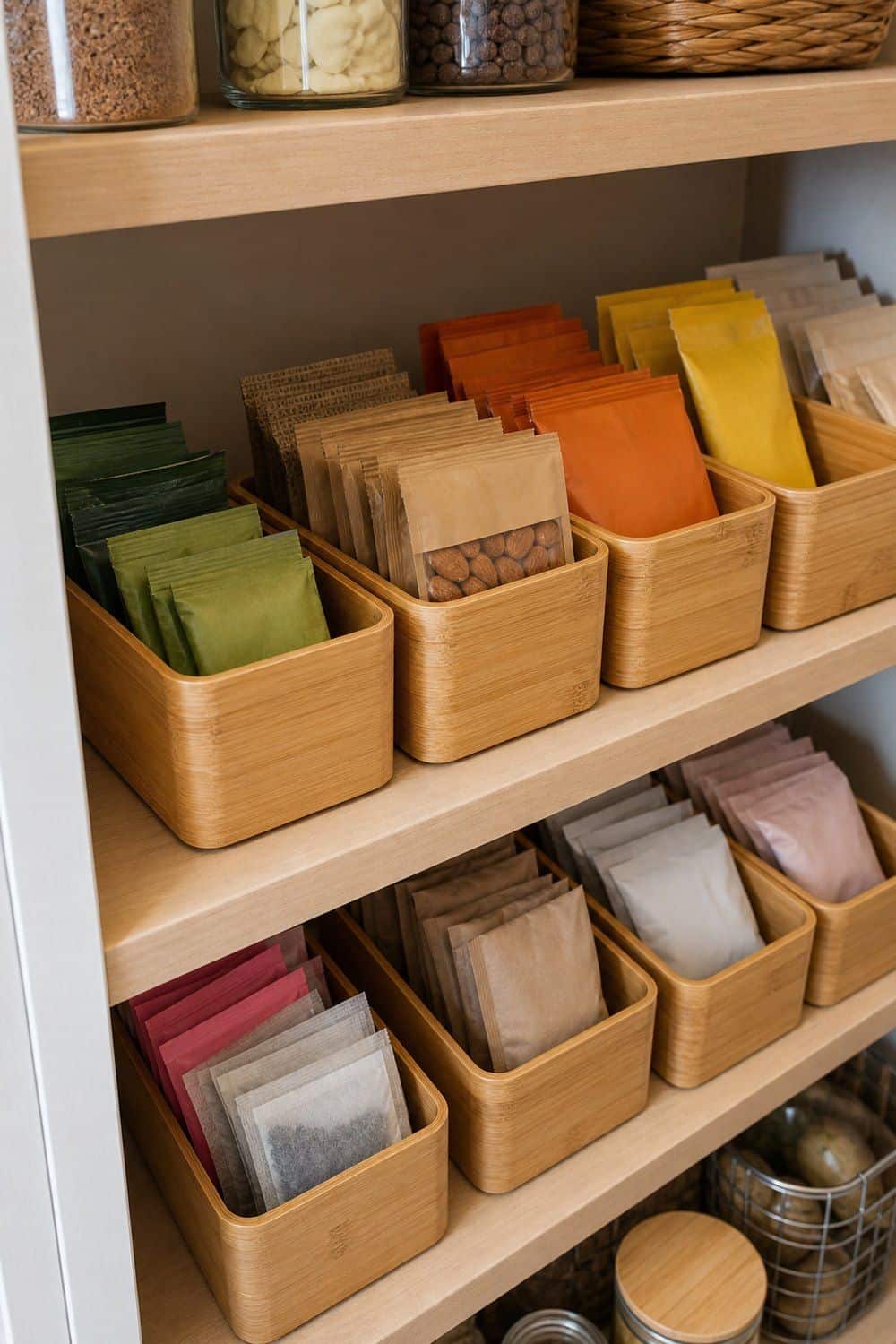
Bamboo pantry bins are helpful for loose packets, snack bags, breakfast bars, tea boxes, wraps, baking pouches, seasoning envelopes, and small backstock categories. Each bin should have one job so it can be checked quickly before shopping.
Choose bins with enough height to hide visual clutter but not so much depth that packets disappear. Add simple labels on the front and wipe the inside when crumbs collect. Bamboo bins are best for dry packets and wrapped food, not sticky produce or anything likely to leak.
14. Wooden Lazy Susan for Oils and Condiments

A wooden lazy Susan can organize oils, vinegars, sauces, condiments, extracts, or small jars in a cabinet, pantry corner, or fridge-adjacent shelf. It is most useful when the turntable brings back-row bottles forward.
Avoid loading it with too many tall unstable bottles. Keep heavy glass low, wipe sticky rings quickly, and choose a raised edge if bottles tend to slide while turning.
One turntable per category is easier to maintain than a mixed tray of oils, snacks, vitamins, and sauces. If the bottles are sticky, add a liner or choose a washable turntable instead.
15. Wood Bread Box With Real Food Boundaries
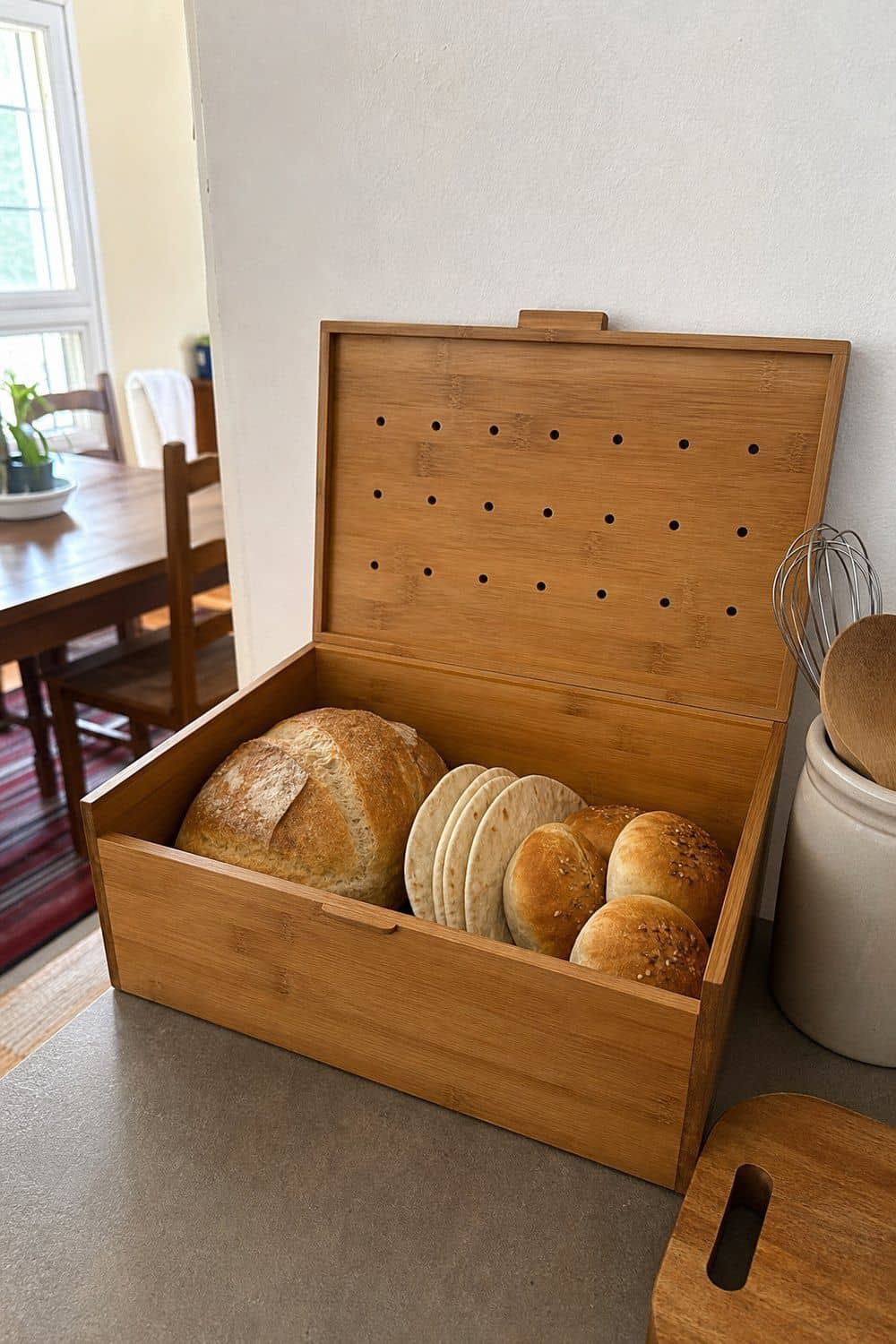
A wood bread box or bread drawer can keep bread, rolls, tortillas, or breakfast baked goods contained and out of direct sun. Place it away from stove heat and choose a spot that does not block prep space. Crumb cleanup is the maintenance piece people forget. Empty the box often, wipe it dry, and do not let it become a random snack drawer for every half-open package. If the household buys several bread products at once, set a clear limit for what belongs inside.
16. Natural Wood Open Shelves With Limited Categories
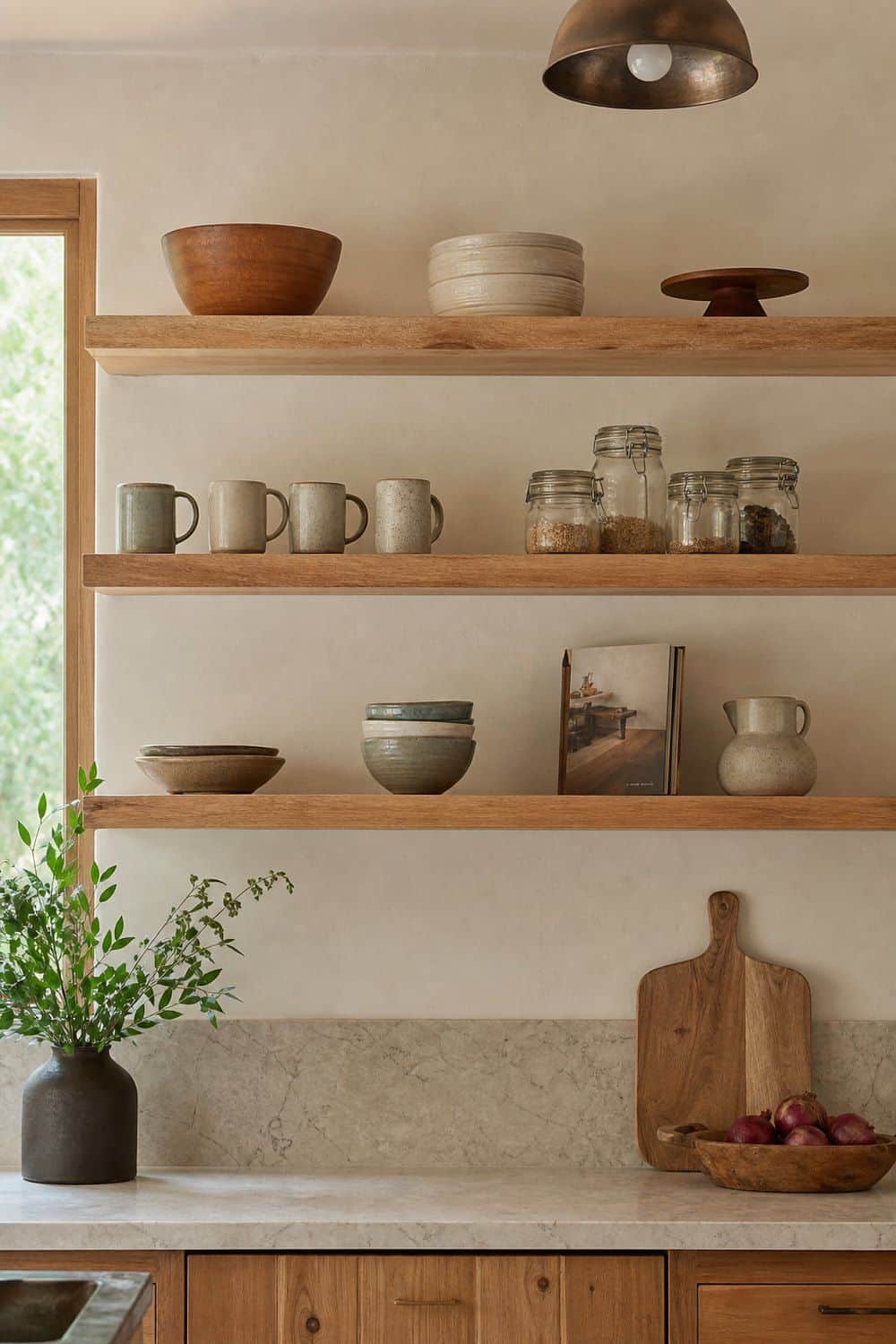
Natural wood floating shelves can be beautiful organization when they hold daily-use pieces, not random display clutter. Use them for bowls, mugs, glass jars, cookbooks, or a few serving pieces that are easy to dust and reset.
Visible wood shelves collect grease and dust in busy kitchens, so limit the categories and leave breathing room. Repeating glass, ceramic, linen, and metal keeps the shelf warm without making it one-note.
Put the most-used pieces at the front so the shelves stay active storage instead of becoming a static display. Daily movement helps open shelves stay cleaner because dishes rotate through use.
17. Wood Cabinet Shelf Risers for Mugs and Bowls
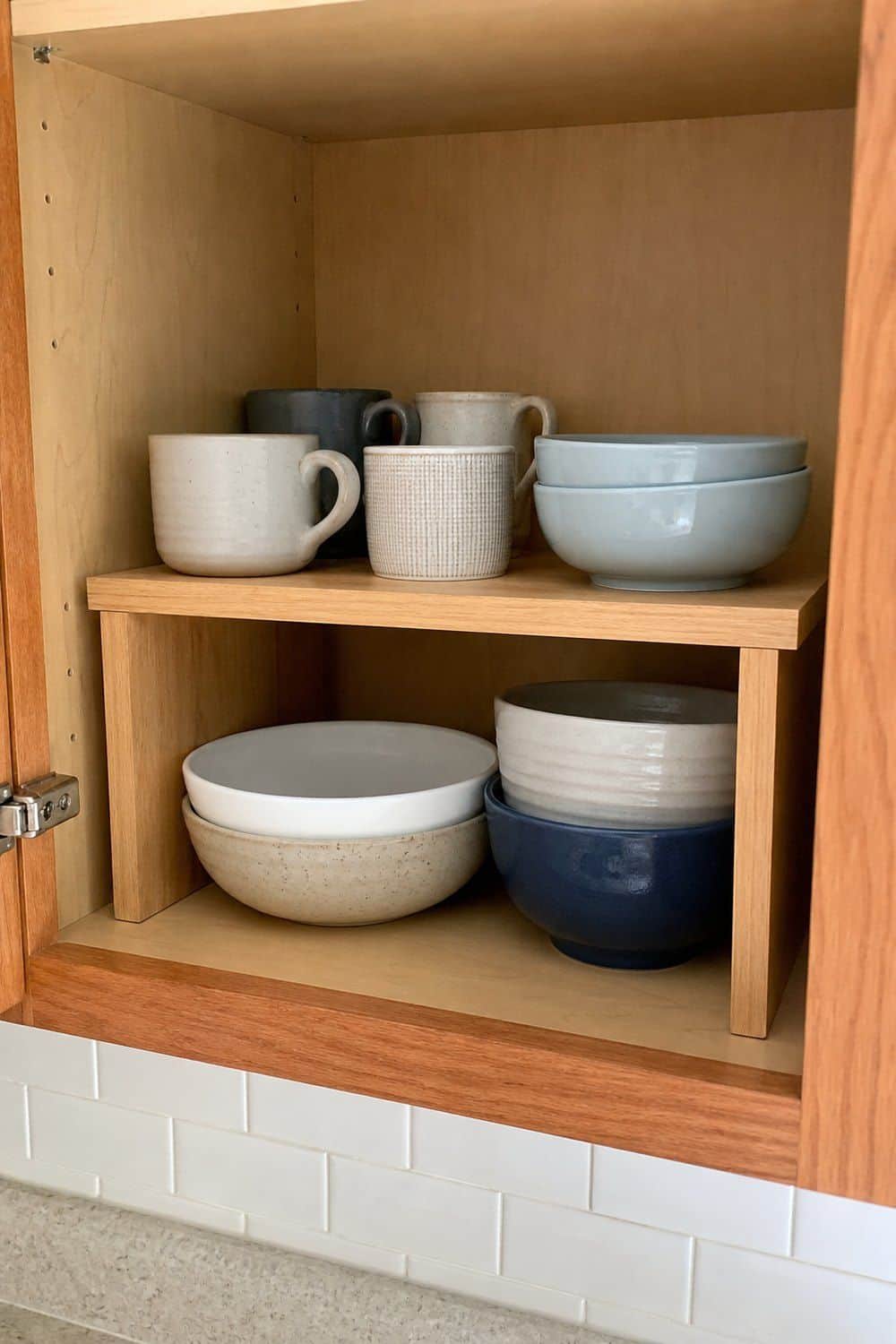
Wood cabinet shelf risers add a second level inside cabinets for mugs, bowls, plates, cans, or small pantry jars. They are especially useful when cabinet shelves are tall but the items themselves are short.
Measure cabinet height before buying so the riser does not create a cramped top layer. Keep heavier dishes on the bottom and use the riser for lighter pieces that can be lifted easily. A riser should make the cabinet easier to scan, not create a second layer of hidden clutter.
18. Ventilated Wood Crates for Produce

Wood produce crates can hold potatoes, onions, garlic, apples, citrus, or squash when the storage spot has airflow and stays dry. Use them on low pantry shelves, in a cabinet, or under a console where the crate can slide out. Separate onions and potatoes, and check produce often so one soft item does not spoil the whole bin. Add a washable liner if skins or dirt collect in the crate, and avoid using solid wood boxes in damp pantry corners.
19. Vertical Wood Dividers for Sheet Pans and Boards

A vertical baking sheet organizer turns flat kitchen items into a readable row. Use it for cutting boards, sheet pans, muffin tins, cooling racks, serving trays, and thin baking dishes near the oven or baking area.
Vertical storage prevents the noisy pileup that happens when everything is stacked horizontally. Make sure the organizer is sturdy enough for metal pans and wide enough for the boards you use most. Keep frequently used pans in the easiest slots and seasonal trays farther back.
20. Bamboo Island Drawer Organizers by Real Workflow

Island drawers should match the island’s real job, not a perfectly symmetrical storage idea. Use bamboo island drawer organizers for prep tools, towels, serving pieces, kid dishes, lunch-packing supplies, baking tools, or coffee accessories.
If the island is where you chop, keep knives, boards, towels, and measuring tools nearby. If it is where people eat, prioritize napkins, placemats, utensils, and serving pieces instead.
The organizer should follow the island’s daily role, even if that means two drawers look completely different inside. A prep island and a homework island rarely need the same internal layout.
21. Wood Pantry Labels for Calm Repeat Categories

Wood pantry labels can make bins, jars, shelves, and drawers easier to read while keeping the storage warm and simple. Use clear category names like baking, snacks, pasta, rice, breakfast, tea, towels, or lunch supplies. Readable labels matter more than decorative script. Keep them consistent across repeat categories, and avoid labeling so narrowly that every grocery trip requires a new tag. A calm label system should help the pantry reset faster, not make it feel fussy or overdesigned for daily cooking.
22. Bamboo Coffee Drawer for a Natural Beverage Routine
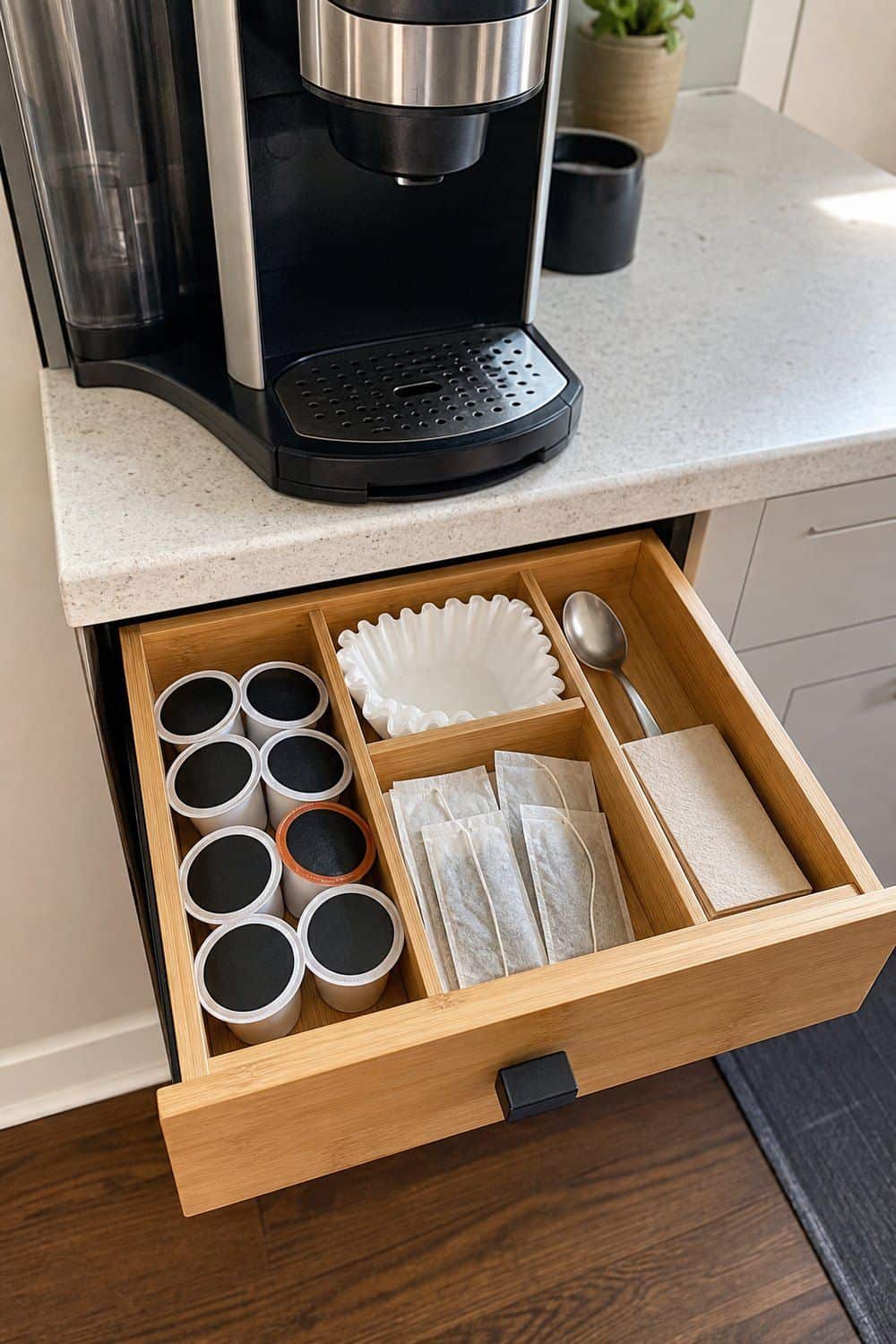
A bamboo coffee pod organizer can turn a messy coffee area into a calm drawer routine. Store coffee pods, filters, tea bags, spoons, sugar packets, stirrers, and small napkins near the coffee maker.
Keep the drawer to daily beverage supplies only, not every mug or backup bag of coffee. If sugar packets spill or pods shed dust, lift the organizer and wipe underneath during resets. Backstock coffee can stay on a pantry shelf so the drawer remains quick in the morning.
23. Bamboo Under-Sink Organizer With Moisture Checks
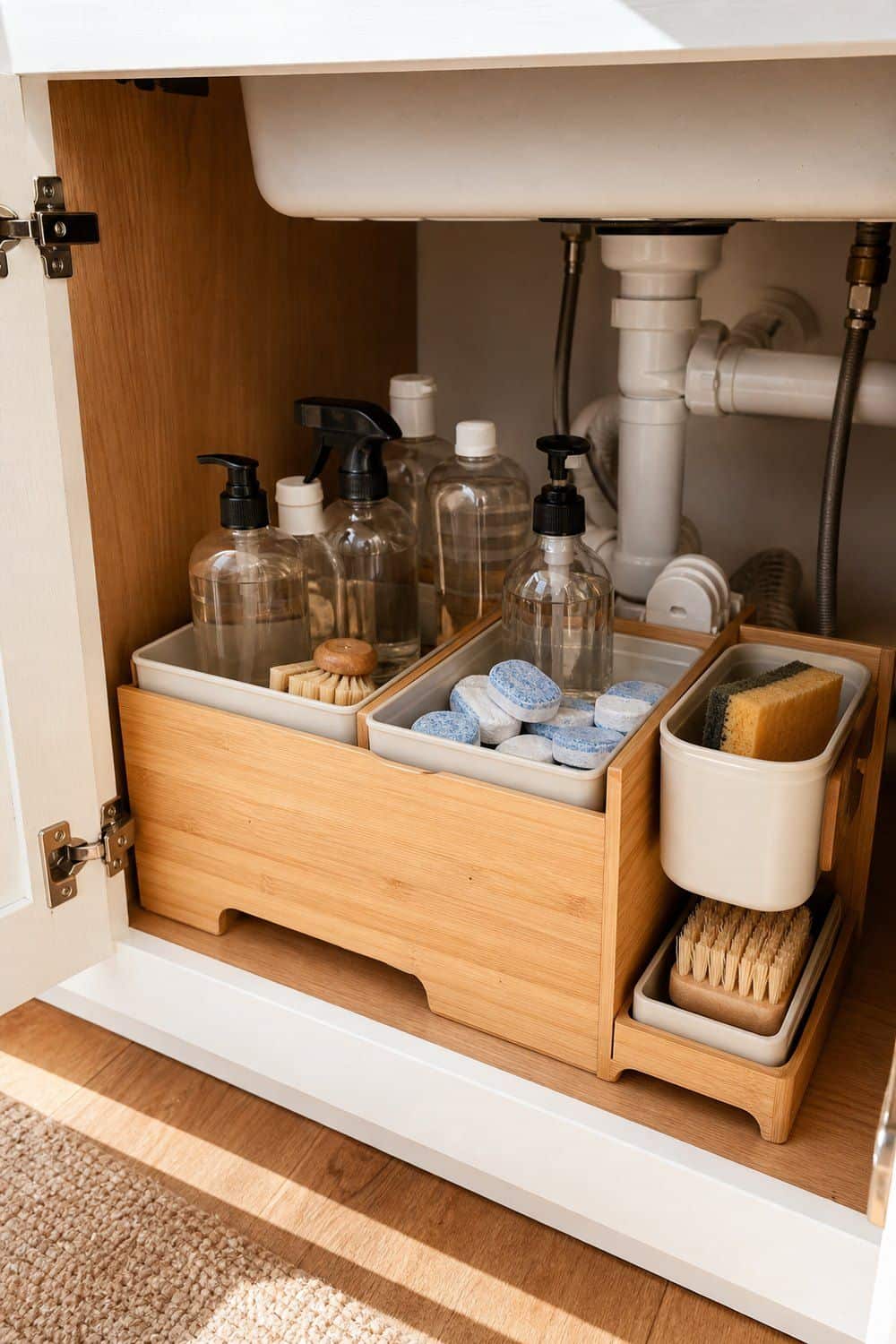
A bamboo under-sink organizer can hold cleaning sprays, brushes, dishwasher tabs, cloths, and sponges if the cabinet stays dry. This is one place where natural wood kitchen organization needs extra caution.
Check for leaks, damp cloths, and standing moisture often. Use washable trays or bins for messy products, and move bamboo out if the area regularly gets wet or humid.
If you store sponges or brushes here, keep them in a removable cup rather than directly against bamboo. Under-sink wood only makes sense when moisture can be checked quickly.
24. Wooden Serving Tray for Table-Setting Supplies

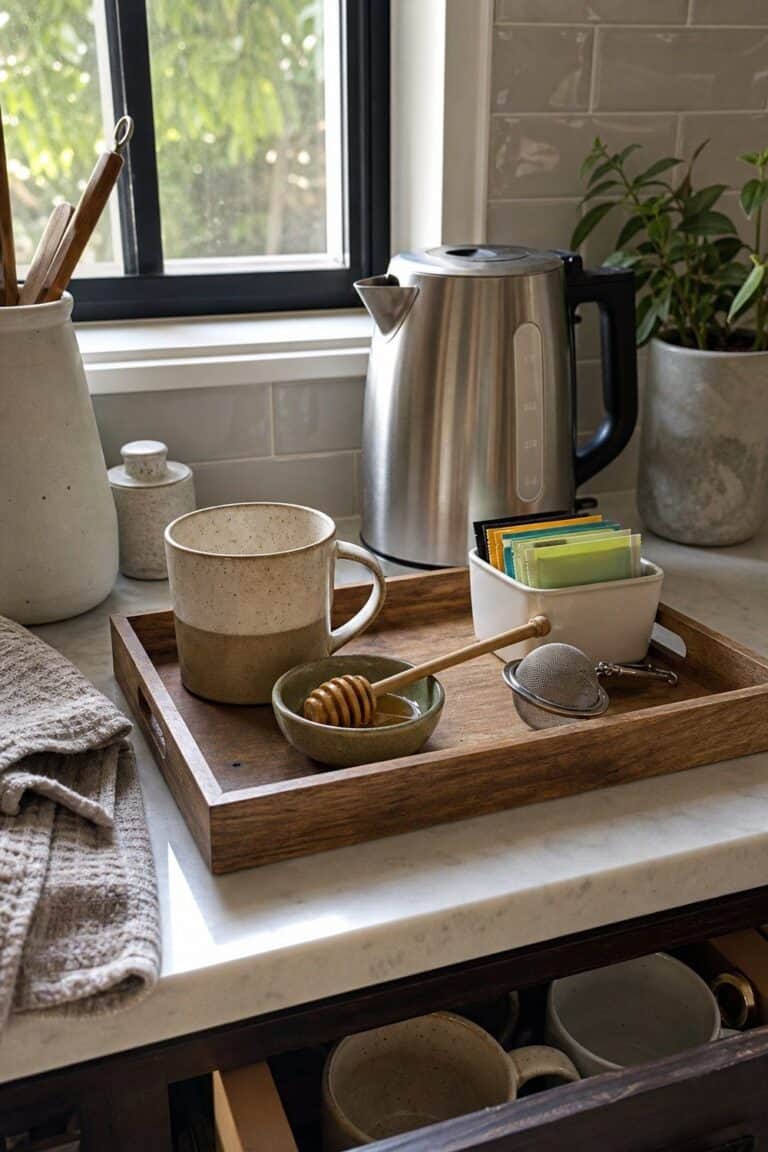
A wooden serving tray can group napkins, salt, pepper, placemats, breakfast supplies, or everyday condiments in one movable setup. It works well on an island, side counter, breakfast nook, or open shelf. The benefit is portability: the whole tray can move from kitchen to table and back again. Wipe spills quickly and avoid storing damp linens directly on the wood. Keep the tray light enough that people will actually move it instead of leaving everything scattered across the counter after meals.
25. Dry Reset Routine for Wood Kitchen Organizers
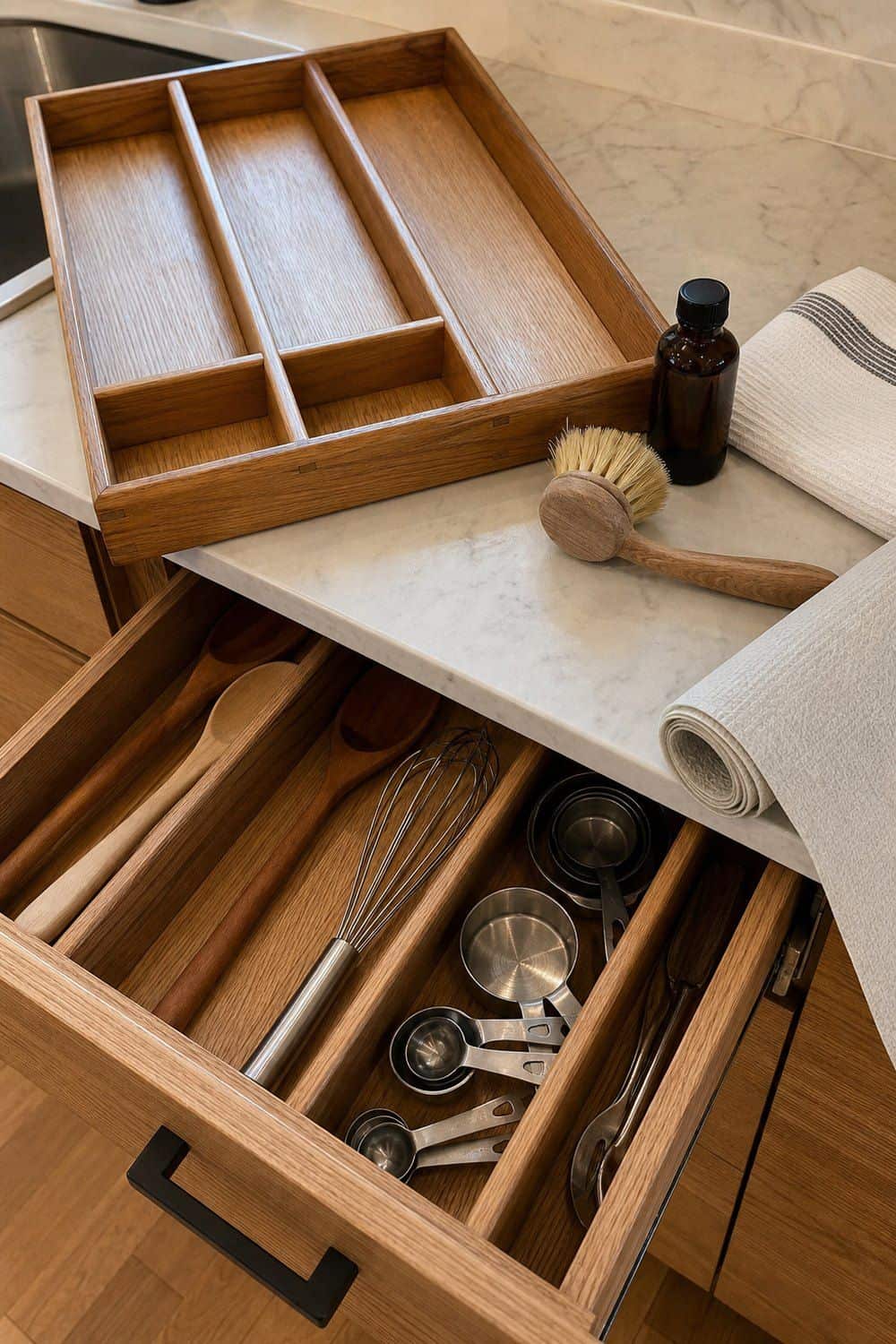
Wood organizers need a dry reset to stay useful. Wipe crumbs from trays, dry bamboo after cleaning, check for sticky oil spots, wash liners, and oil cutting boards when they start to look dry.
If an organizer is not helping the workflow, remove it instead of forcing it to stay because it looks nice. Natural wood storage should make the kitchen calmer, cleaner, and easier to use. A quick monthly reset also catches loose crumbs, damp spots, and categories that have quietly outgrown their trays.
Where Natural Wood Kitchen Organization Makes Sense
Natural wood kitchen organization is strongest in dry areas: cutlery drawers, utensil drawers, pantry shelves, island drawers, cabinet shelves, controlled countertop trays, and open shelves with daily-use items.
Before buying wood or bamboo organizers, measure drawer width, depth, and height; cabinet shelf height; pantry shelf depth; island drawer clearance; and the size of the items being stored. A beautiful organizer that almost fits becomes daily friction.
Mix wood with glass, linen, ceramic, and metal so the kitchen does not become one flat material story. Use plastic, metal, or washable bins where spills, leaks, raw food, or standing moisture are more likely.
Frequently Asked Questions
How do I organize a kitchen with natural wood organizers?
Start by decluttering and measuring drawers, shelves, cabinets, and pantry spaces. Then use wood or bamboo dividers, trays, jars, bins, labels, and shelves by category.
Are bamboo drawer organizers good for kitchens?
Yes, bamboo drawer organizers are useful for cutlery, utensils, spices, knives, deep drawers, and island storage as long as they fit correctly and stay dry.
What should I store in glass jars with wood lids?
Use glass jars with wood lids for high-turnover dry staples like oats, flour, sugar, rice, pasta, coffee, nuts, and frequently used baking ingredients.
How do you keep wood kitchen organizers clean?
Wipe crumbs, dry wood and bamboo thoroughly, avoid soaking, clean sticky oil spots quickly, use liners where needed, and oil cutting boards when they look dry.
Are wood organizers better than plastic?
Wood and bamboo look warmer and can be durable in dry areas. Plastic may be better for wet, messy, spill-prone, or under-sink storage zones.
How do I organize kitchen drawers naturally?
Use bamboo trays, wood drawer dividers, knife inserts, spice inserts, peg systems, and deep drawer dividers arranged around cooking, prep, and unloading workflow.
Can wood storage work under the sink?
Wood storage can work under the sink only if the area stays dry. Check for leaks often and use washable trays or bins for cleaning products.
How do I make open wood shelves look organized?
Limit open wood shelves to daily-use dishes, jars, mugs, cookbooks, or serving pieces. Repeat materials, leave breathing room, and dust regularly.
Final Thoughts
Natural wood kitchen organization is most useful when every tray, divider, shelf, jar, bin, and label has a real job. Use wood and bamboo where they improve drawers, pantry storage, counters, islands, and shelves, then keep those pieces dry, measured, and easy to reset.