
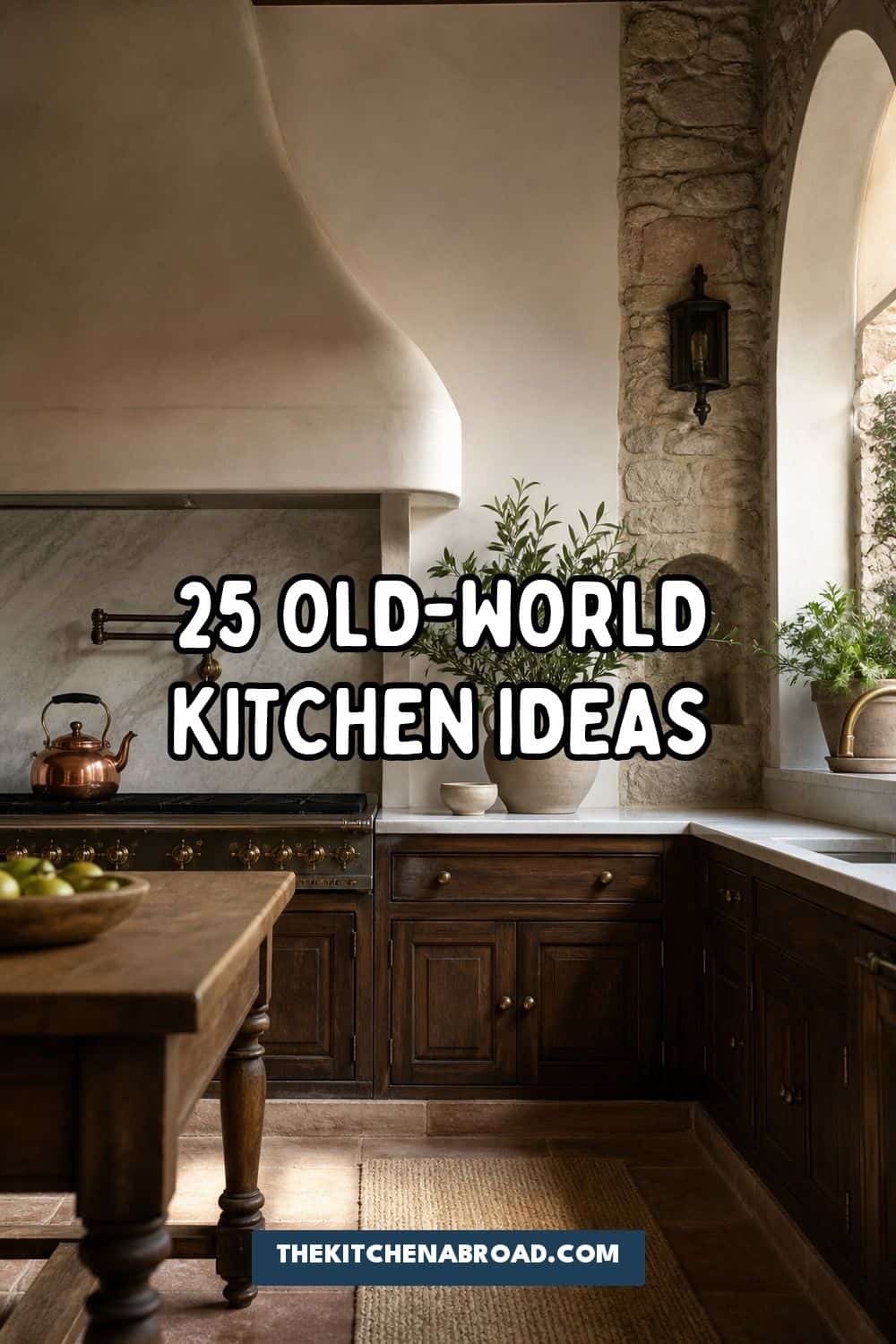
The best old-world kitchen ideas combine stone or plaster walls, dark wood cabinetry, a plaster or arched range hood, honed stone, aged brass, copper, handmade tile, warm lighting, freestanding storage, and modern pantry function. The room should feel collected and material-rich, but still have clear prep space, real ventilation, usable storage, and easy cleanup surfaces.
An old-world kitchen is not a costume. It comes from materials that look as if they have belonged in the room for years: stone, plaster, dark wood, handmade tile, copper, aged brass, worn textiles, and lighting that softens the hard surfaces.
For a kitchen that feels rich rather than dated, use old-world kitchen ideas as a filter for function as much as atmosphere. Every heavy detail should help the room cook, store, light, seat, or clean better.
Top Recommended Products


You Might Also Like These Blog Posts
- European Kitchen Ideas
- French Country Kitchen Ideas
- Mediterranean Kitchen Ideas
- Rustic Kitchen Ideas
- Vintage Kitchen Ideas
Old-World Kitchen Ideas With Modern Function
1. Stone Wall Moment

A stone wall moment gives an old-world kitchen immediate weight, especially behind a range, inside a breakfast nook, or along one short focal wall. Stone veneer wall panels can suggest age without rebuilding the room, but restraint matters. Choose grout that feels soft rather than high-contrast, and pair the stone with smoother plaster, wood, or plain cabinetry so it does not fight every other surface. Keep the surrounding shelf styling quiet so the wall reads as architecture, not backdrop for clutter.
2. Dark Wood Cabinetry

Walnut cabinet fronts, mahogany stain, or rich oak can give dark wood kitchen cabinets the depth that old-world rooms need. The trick is balance: dark doors need lighter counters, warm walls, and enough layered lighting to keep the room from feeling closed in. Use rich wood where it supports storage and daily cooking, not just as a visual weight. A run of lower cabinets, a pantry wall, or a hutch-style section can be enough, especially if the upper walls stay lighter.
3. Plaster Range Hood
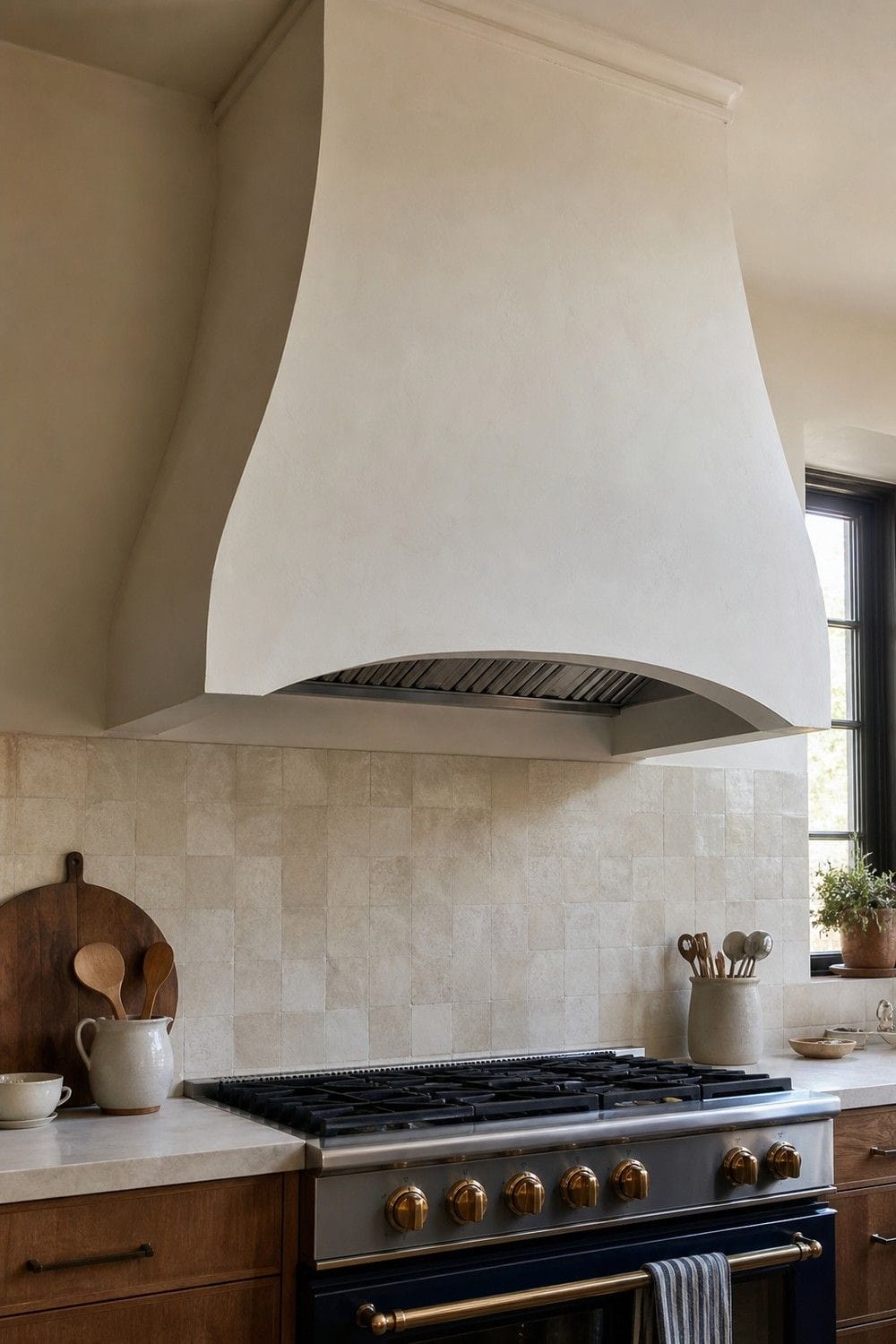
A plaster range hood is one of the clearest old-world kitchen design signals because it makes the cooking zone feel architectural. An arch, soft curve, or gently boxed shape can work, as long as the scale fits the range and ceiling height. Keep cleanable surfaces near the burners, and make sure the hood has real ventilation behind the finish. The old-world look should frame cooking, not make grease and steam harder to manage. A stone or tile band around the range can protect the most active splash zone.
4. Honed Range-Wall Stone
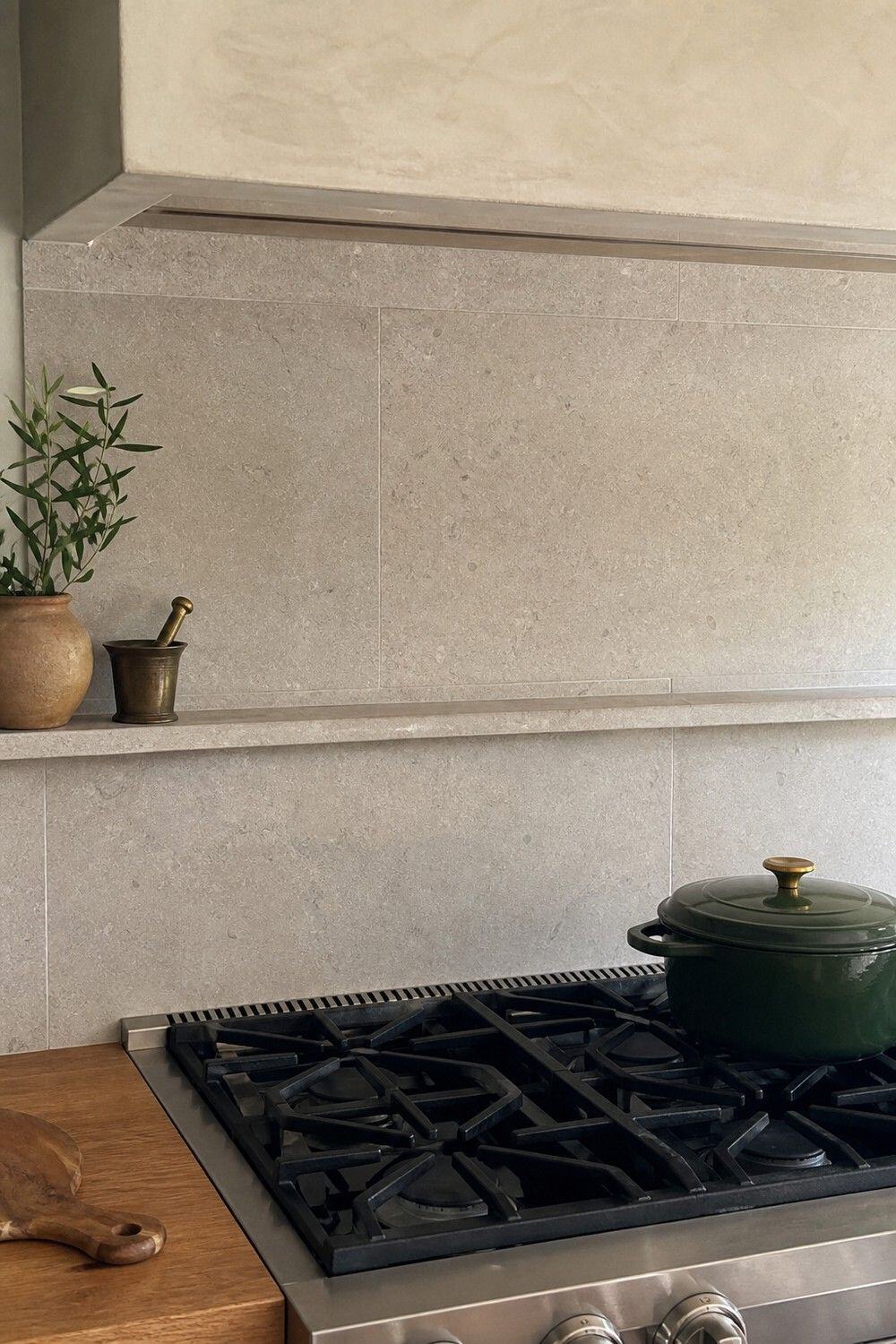
Honed stone behind the range feels quieter and older than glossy tile. Marble, limestone, soapstone, or quartzite-look surfaces can all work if the color connects to the counters, hood, or cabinetry. A honed stone backsplash needs realistic maintenance expectations. Ask about sealing, staining, and cleaning before choosing a slab, especially if the range wall gets heavy use from oil, tomato sauce, or daily cooking. Keep seams and shelf edges simple so the stone stays calm, and use a wipeable ledge only where it will not collect grease.
5. Richly Veined Marble

Richly veined marble can make a European old-world kitchen feel layered, but it is strongest as one focal point. Use Calacatta Viola marble slab on an island, backsplash, open shelf, or pastry board rather than spreading dramatic stone across every surface. Let the surrounding finishes stay quieter. Dark wood, warm plaster, and plain brass can support the marble, while too many patterned tiles or shiny metals make the room feel busy. If you love dramatic veining, repeat one of its colors in art or textiles instead of adding another statement surface.
6. Aged Brass Hardware

Aged brass cabinet pulls add warmth without making the room look newly polished. Use latches, knobs, bin pulls, or simple handles where they feel comfortable for real cooking hands, especially on drawers that open many times a day. The finish should develop patina instead of looking bright and mirror-like. Match every piece only if the kitchen needs calm; otherwise, brass can mix with iron, copper, or dark bronze. Test the pull depth before buying, because shallow hardware can be annoying on heavy drawers.
7. Copper Near the Cooking Zone

Copper belongs in an old-world kitchen when it looks like working cookware, not random decoration. A copper pot rack can hold a few pans near the range, but it needs secure mounting and enough clearance so handles do not interrupt the prep path. Let copper darken naturally or polish it on purpose, but do not mix both looks in the same area. A few visible pieces are stronger than a crowded ceiling display. Keep the pans you actually reach for lowest so the rack supports cooking.
8. Handmade Tile in Muted Color

Handmade ceramic backsplash tile brings the slight variation that old-world kitchen decor needs. Muted green, cream, ochre, blue-gray, tobacco, or brown can feel aged without turning the room into a theme.
Use tonal variation instead of a busy mosaic overload. If the cabinets are dark or the stone is dramatic, choose a quieter tile so the backsplash adds texture rather than another loud statement. Slightly uneven edges look best when the grout color is close to the tile and the lighting is soft.
9. Arched Coffee or Pantry Niche

An arched wall niche shelf can turn coffee, oils, cookbooks, pantry jars, or ceramics into a useful architectural moment. The arch gives the room softness, while the niche adds a specific storage or serving job. Plan depth before styling it. A niche that is too shallow becomes display only, while a deeper niche can hold mugs, jars, or oils with a small light tucked above. Keep the contents limited to one purpose so the arch stays useful. If it holds coffee pieces, include an outlet nearby.
10. Freestanding Cabinet for Dish Storage

A freestanding kitchen cabinet makes the room feel collected, especially when it holds platters, linens, serving bowls, or pantry overflow. It can break up long fitted cabinet runs and add a furniture-like layer that feels older than a fully built-in wall. Choose one that stores real kitchen pieces. Glass doors are lovely for dishes, but closed lower storage is better for anything that would make the room look cluttered. Check door swing and drawer clearance before placing it near an island or table.
11. Hidden Pantry Behind Character Doors

Character doors can hide a very modern pantry inside. Use old-world paneling, arched doors, or rich wood fronts outside, then add pantry cabinet organizer pullouts, labels, dry-goods bins, and appliance storage behind them.
This is where timeless kitchen ideas need discipline. The visible door can feel historical, but the interior should make snacks, baking supplies, small appliances, and breakfast items easier to reach. A beautiful pantry door still fails if the shelves hide everyday food. Use the lowest pullouts for heavy appliances.
12. Exposed or Faux Wood Beams

Faux wood ceiling beams can add age overhead when the scale fits the room. Use them to echo dark wood cabinetry, a worktable, or a pantry door, but keep the finish believable rather than overly distressed. Ceiling height matters too. In a low room, slim beams or a single beam line feels better than a heavy grid that presses the kitchen down. Leave enough plain ceiling visible so the beams feel structural, and avoid blocking recessed lights or hood ventilation paths.
13. Muted, Rich Cabinet Color

Oxblood cabinet paint, deep green, muted blue, mushroom, charcoal-brown, or tobacco can make cabinetry feel grounded and old-world. These colors feel strongest when they have some softness, not a flat high-saturation finish.
Pair rich cabinet color with stone, plaster, and wood so it feels embedded in the room. If the color is dark, add warm bulbs and pale counters to keep the kitchen usable. Sample paint near the floor and backsplash because rich colors shift beside stone and evening light.
14. Layered Wall Sconces

Antique brass wall sconce lighting can soften an old-world kitchen, especially above shelves, beside windows, or near a range wall. Sconces add atmosphere, but they should not replace task lighting where knives, burners, and cleanup happen. Choose warm bulbs and place the lights where they flatter material texture. Stone, plaster, aged brass, and handmade tile all look better with angled light than with a single harsh ceiling fixture. Add dimmers if possible so the same kitchen can cook brightly and eat softly.
15. Statement Lantern Over the Table

A wrought iron lantern pendant can anchor a dining table, island, or banquette without adding another cabinet finish. The shape should be large enough to hold its own against stone and wood, but not so low that it blocks conversation or prep work. Use warm bulbs and check clearance from every seat. One good lantern is usually stronger than several ornate fixtures competing across the kitchen. If the lantern has glass, choose a style that can be cleaned easily after cooking steam drifts through the room.
16. Built-In Banquette

A kitchen banquette bench gives an old-house corner feeling even in a newer room. It can turn an awkward wall or window area into a breakfast spot, homework table, or small dinner nook. Use washable cushions, storage drawers, and a table with enough clearance for people to slide in comfortably. The banquette should support daily meals, not become a padded display zone that no one wants to use. Add lighting nearby so the corner works at night, and choose fabric that can handle crumbs.
17. Vintage Runner on Stone or Wood
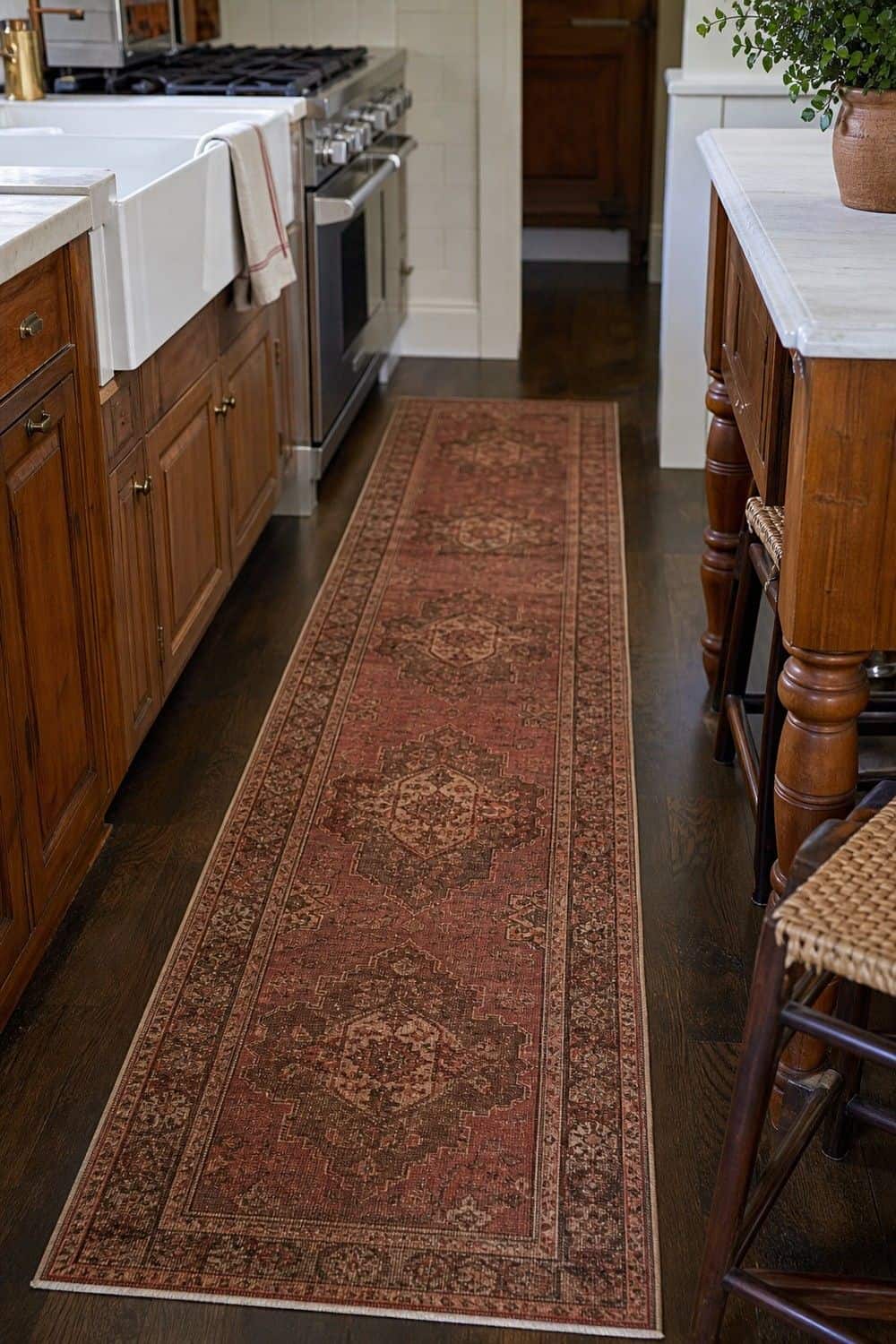
A vintage kitchen runner adds softness over stone, tile, or dark wood flooring. Choose low-pile, washable, or durable vintage-style rugs so crumbs, spills, and chair movement do not become constant problems.
Keep edges flat and avoid thick rugs near the sink or range. The runner should warm the walking path while still letting the kitchen function as a real workroom. Choose pattern that can hide crumbs between cleanings without looking muddy. Rug pads help, but the corners still need to stay flat.
18. Framed Art Instead of Signs

Vintage kitchen wall art feels more old-world than word signs or theme plaques. Landscapes, still lifes, architectural prints, and small oil-style pieces add history without spelling out the style.
Hang art away from heavy grease and steam, especially near the range. A small framed piece beside a pantry door or breakfast nook can do more than a large gallery wall. Old wood frames, muted mats, and still-life subjects suit the kitchen without turning it into a theme or sign collection.
19. Worktable-Style Island

A freestanding kitchen work table is an old-world alternative to a blocky island. It can hold prep space, drawers, open shelves, or a few stools while keeping the room lighter on its feet.
Check traffic clearance before choosing one. A table that looks charming but blocks the refrigerator, oven, or sink will make the kitchen feel staged instead of useful. Open shelves can hold mixing bowls or baskets, but leave knee room if stools are part of the plan for daily meals.
20. Soapstone or Marble Pastry Area

A marble pastry board gives a kitchen a stone moment without changing every counter. Use it for dough, cooling cookies, rolling pastry, or setting down a hot tray where the material allows.
This works especially well when the kitchen already has wood or laminate counters. Store the board vertically or on a shelf so it feels like a working piece, not a heavy object taking prep space. The stone should be easy to lift and clean after flour, butter, or sugar.
21. Cut-Out or Decorative Cabinet Details
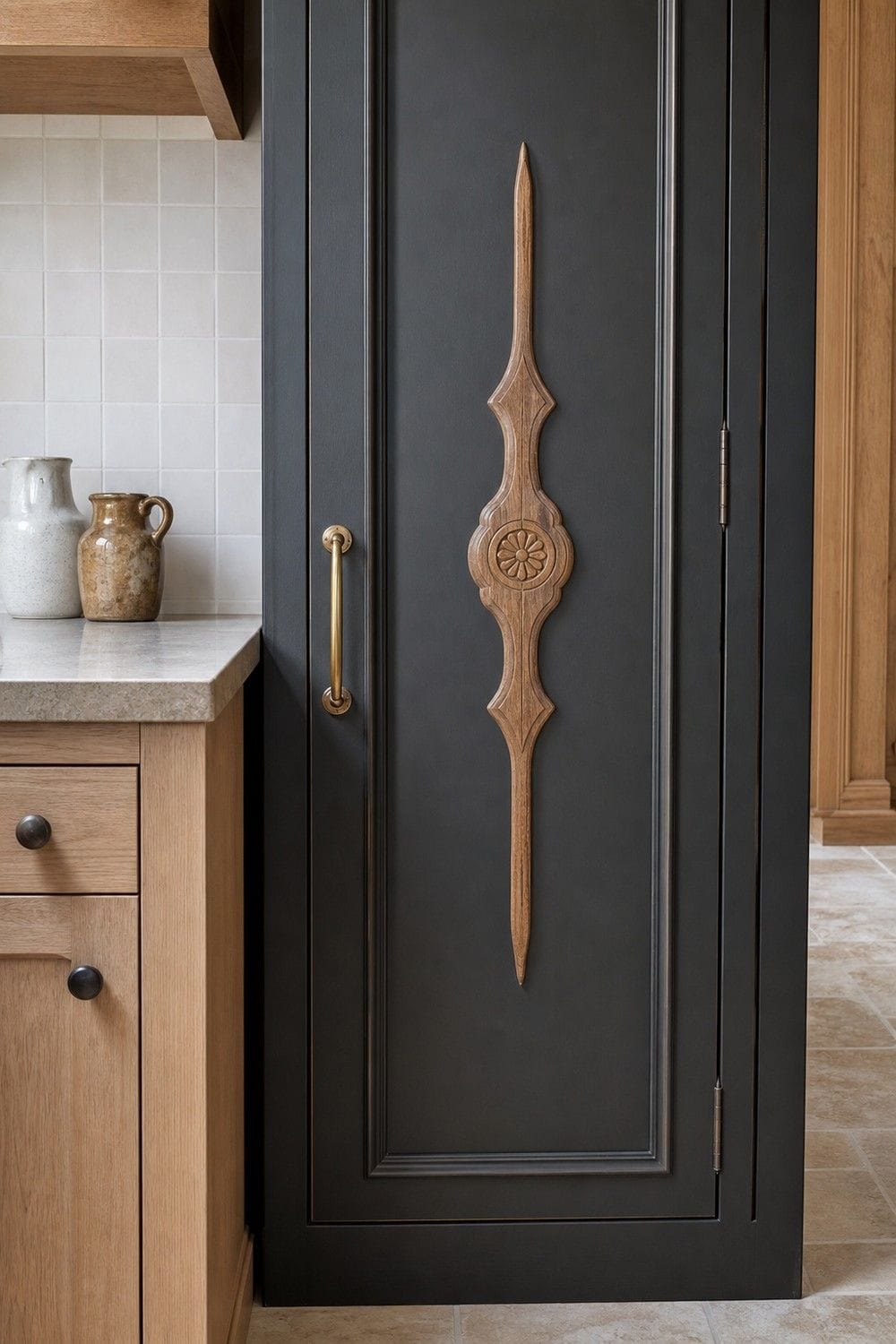
A wood cabinet onlay can add craftsmanship when it is used with restraint. Try one pantry door, a range hood detail, or a freestanding piece instead of putting ornate trim on every cabinet.
The detail should feel carved into the room’s story, not pasted on for theme. Keep nearby hardware and tile simpler so the decorative cabinet moment has room to breathe. A small onlay can also rescue a plain pantry door without changing every cabinet. Paint it the same color as the door for a quieter effect.
22. Plate Rail for Collected Dishes
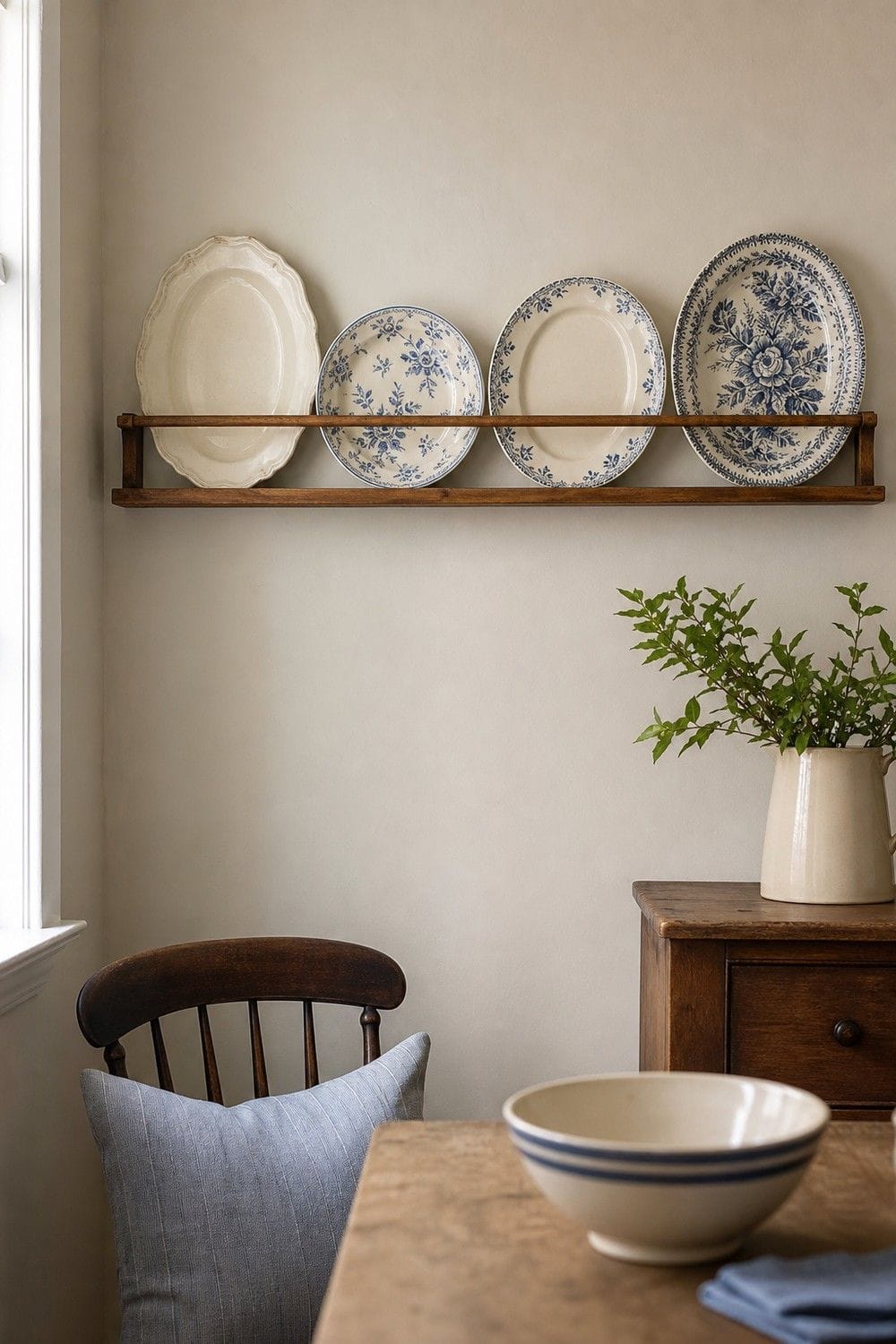
A wall mounted plate rail can show a few platters, serving dishes, or plates that actually get used. Keep the rail narrow and securely mounted, especially if it sits near a doorway or breakfast nook.
Do not crowd it with every dish you own. A small row of collected pieces feels more timeless than a packed display that collects dust and makes the wall feel busy. Choose platters that can come down for serving so the rail remains part of the kitchen.
23. Iron Hooks for Towels and Tools

Wrought iron wall hooks add old-world storage for aprons, towels, copper tools, or market bags. Place them near the sink, pantry, or worktable so they support real movement through the kitchen.
Limit what hangs there. A few useful pieces look collected, while too many tools turn the wall into visual noise and make daily cleanup harder. Leave space between hooks so towels can dry and tools do not clatter together. Mount them into solid backing if they will hold heavier bags.
24. Stoneware Crocks for Utensils

A stoneware utensil crock beside the range can hold wooden spoons, whisks, and spatulas in a way that feels practical and aged. Choose a heavy crock that will not tip when tools are pulled out quickly.
One crock is usually enough. Too many countertop containers steal prep space, so keep only the tools used for everyday cooking and store the rest in drawers. Place it close enough to the range to help, but not where oil splatter coats every handle.
25. Rich Character With Modern Function
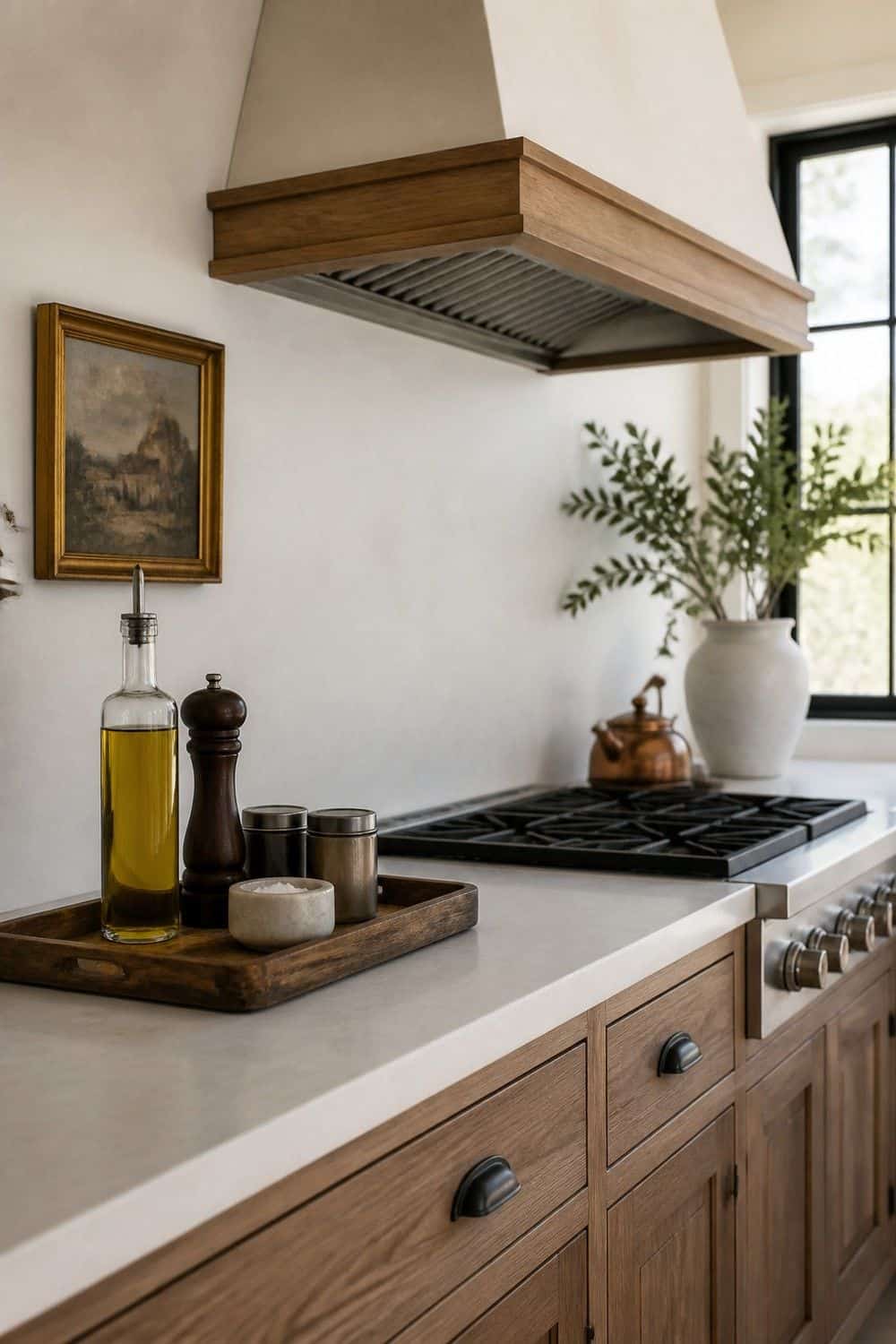
A wood countertop tray can gather oils, salt, spices, or a pepper mill into one controlled spot while keeping prep zones open. This final layer is the old-world quality filter: authentic materials, useful storage, clear counters, good lighting, and fewer faux-aged objects. Rich character should never block ventilation, appliance access, pantry storage, landing space, or cleanup. If a detail adds history and helps the kitchen work, it belongs; if it only adds theme, leave it out. Review every display piece the same way before it earns counter space.
Old-World Style Without Dated Tuscan Heaviness
Old-world character comes from material depth, not orange-heavy faux finishes, oversized scrollwork, or theme decor. Stone, plaster, dark wood, aged brass, copper, handmade tile, and art should feel useful, restrained, and connected to the kitchen’s architecture.
Maintenance should be part of the design choice. Plaster near cooking zones needs cleanable neighbors, stone and marble may need sealing, copper will patina, dark wood shows dust, runners need flat edges, and handmade tile varies from piece to piece.
For no-remodel old-world touches, focus on art, a runner, warm sconces, aged brass hardware, a wood tray, a stone pastry board, copper, stoneware crocks, or one freestanding cabinet. Keep the room functional with pantry storage, appliance hiding, task lighting, ventilation, landing zones, and easy cleanup surfaces.
Frequently Asked Questions
What is an old-world kitchen?
An old-world kitchen is a kitchen that feels rooted in natural materials, age, and craftsmanship. Common elements include stone, plaster, dark wood, arches, aged metals, handmade tile, freestanding storage, warm lighting, and useful details that feel collected rather than newly themed.
How do I make my kitchen look old-world?
Start with one strong material or architectural cue, such as a plaster hood, stone wall, dark wood cabinet section, aged brass hardware, or handmade tile. Then add warm lighting, art, a runner, copper, or freestanding storage while keeping counters and prep zones clear.
What colors work in an old-world kitchen?
Good old-world kitchen colors include mushroom, cream, deep green, oxblood, muted blue, tobacco, charcoal brown, warm gray, terracotta, walnut, and soft plaster tones. Balance dark colors with warm lighting, pale stone, reflective metal, or lighter walls.
What backsplash fits an old-world kitchen?
Honed stone, handmade ceramic tile, limestone, marble, muted patterned tile, or a plaster-and-stone combination can all fit an old-world kitchen. Choose a backsplash that connects to the range hood, counters, cabinet color, and cleaning needs.
How do you keep an old-world kitchen from looking dated?
Use authentic-feeling materials, restrained ornament, modern storage, good lighting, and clear work zones. Avoid orange-heavy faux finishes, theme signs, oversized scrollwork, and too many distressed objects. Let stone, wood, plaster, tile, and metal carry the character.
Are dark wood kitchens coming back?
Rich wood tones feel current again when they are balanced with lighter surfaces, useful storage, warm walls, and layered lighting. Walnut, oak, and deeper stains can add old-world depth, especially when the room still has enough light and prep space.
What lighting works in an old-world kitchen?
Old-world kitchens work well with wall sconces, lantern pendants, under-cabinet task lighting, and warm bulbs. Use decorative lighting for atmosphere, but keep task lighting strong enough for chopping, cooking, reading labels, and cleaning.
Can I add old-world character without remodeling?
Yes. Add old-world character with aged brass hardware, framed art, a vintage-style runner, copper cookware, stoneware crocks, iron hooks, a marble pastry board, warm lighting, a wood tray, or a freestanding cabinet. Choose pieces that also improve storage or daily use.
Final Thoughts
The strongest old-world kitchen ideas create richness through stone, plaster, wood, metal, tile, lighting, and storage that still serve the way the kitchen works. Keep the palette warm, the materials honest, the lighting layered, and the counters useful, and the room can feel timeless without turning heavy or theatrical.
Last update on 2026-09-18 / Affiliate links / Images from Amazon Product Advertising API