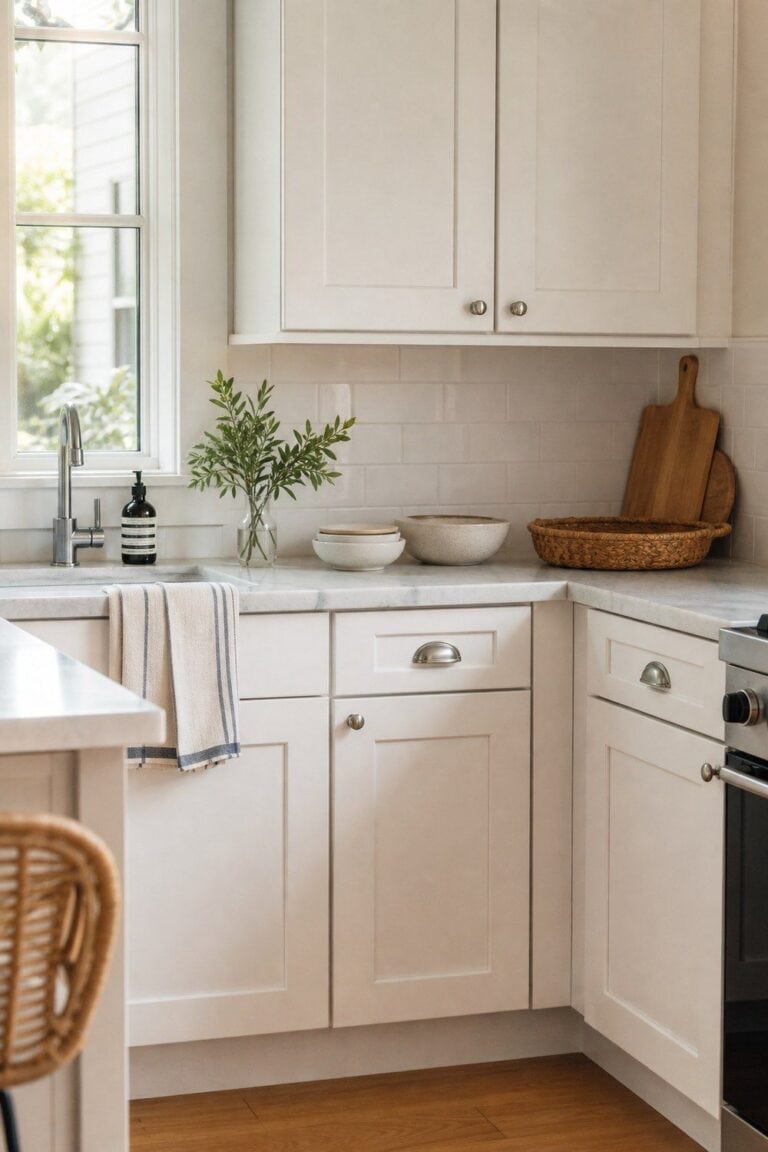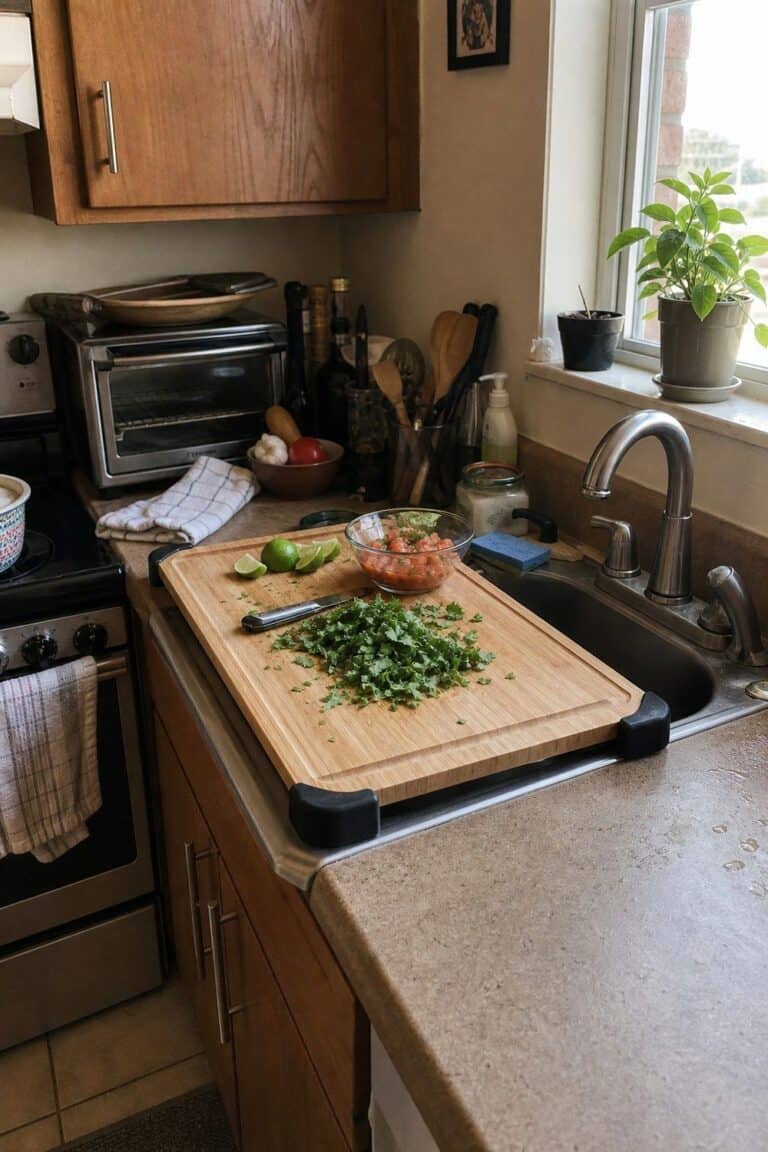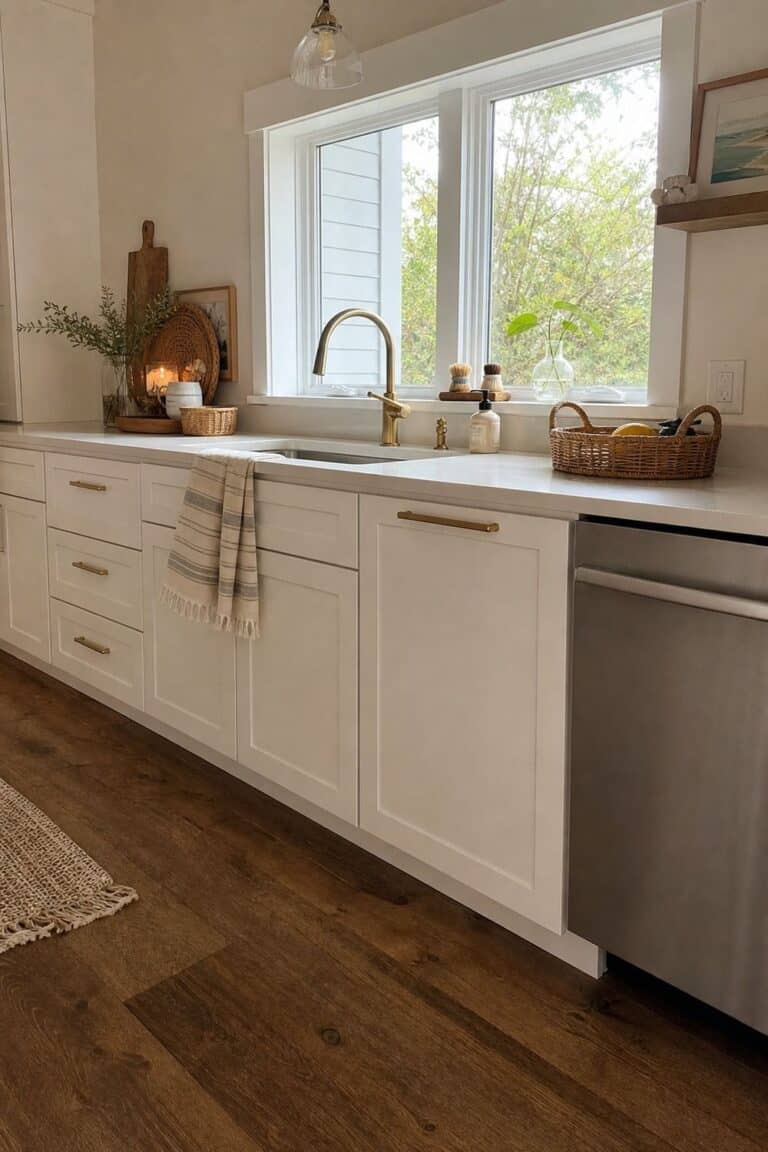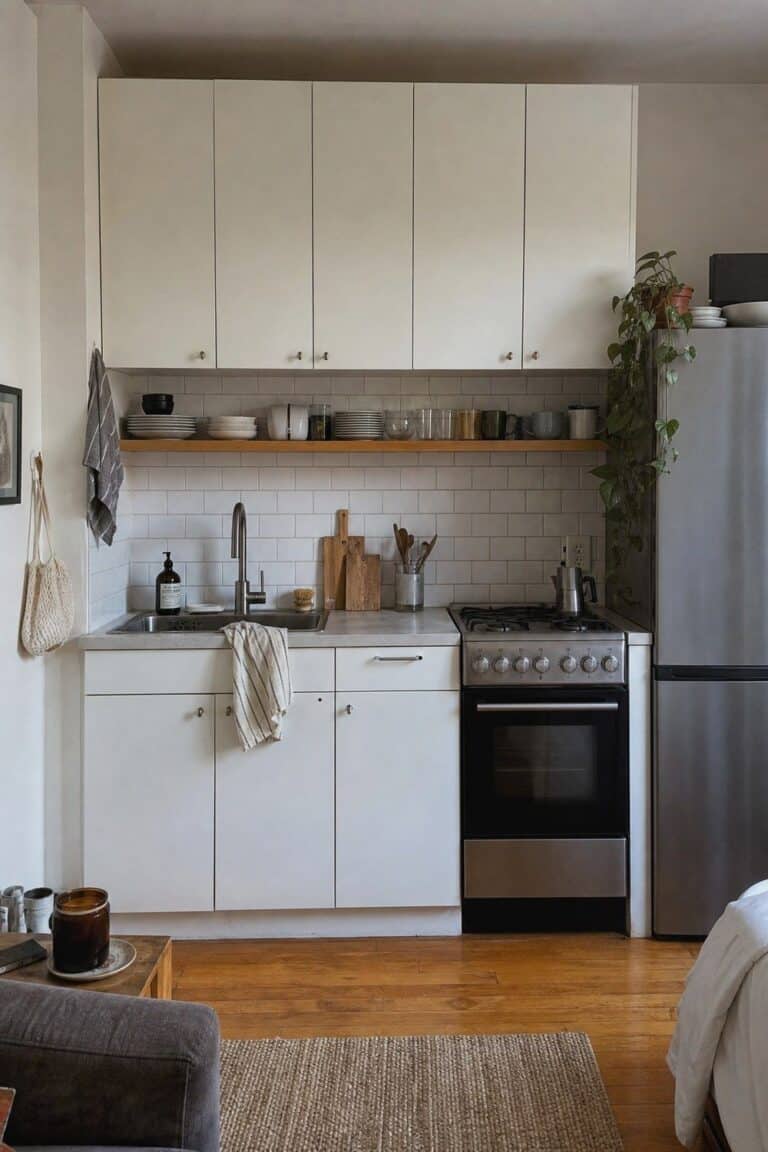
The best rustic kitchen ideas use reclaimed beams, warm wood cabinets, stone or brick texture, butcher block, handmade tile, iron hardware, warm lighting, open daily storage, and pared-back natural decor that supports real cooking. Rustic style should feel grounded and tactile, not dark, dusty, or overly themed. Keep rough textures balanced with washable surfaces, clear prep space, and enough lighting to make the kitchen easy to use.
A rustic kitchen works when the materials feel honest: wood with grain, stone with texture, metal with a softer finish, and dishes or tools that look like they belong in an everyday cooking space. The danger is pushing too far into faux-distressed signs, heavy orange stain, or a room that feels more staged than useful.
Rustic kitchen ideas feel strongest when warmth, texture, and function support each other. The goal is a kitchen that feels grounded and collected, but still bright enough to prep dinner, easy enough to wipe down, and restrained enough to avoid looking dated.
You Might Also Like These Blog Posts
- 25 Farmhouse Kitchen Ideas for Warm Everyday Cooking
- 25 Old-World Kitchen Ideas for Rich, Timeless Character
- 25 Cottage Kitchen Ideas for Soft, Collected Charm
- 25 Modern Farmhouse Kitchen Ideas for Clean Rustic Style
- 25 Warm Neutral Kitchen Ideas for a Cozy, Timeless Space
1. Reclaimed Wood Beams

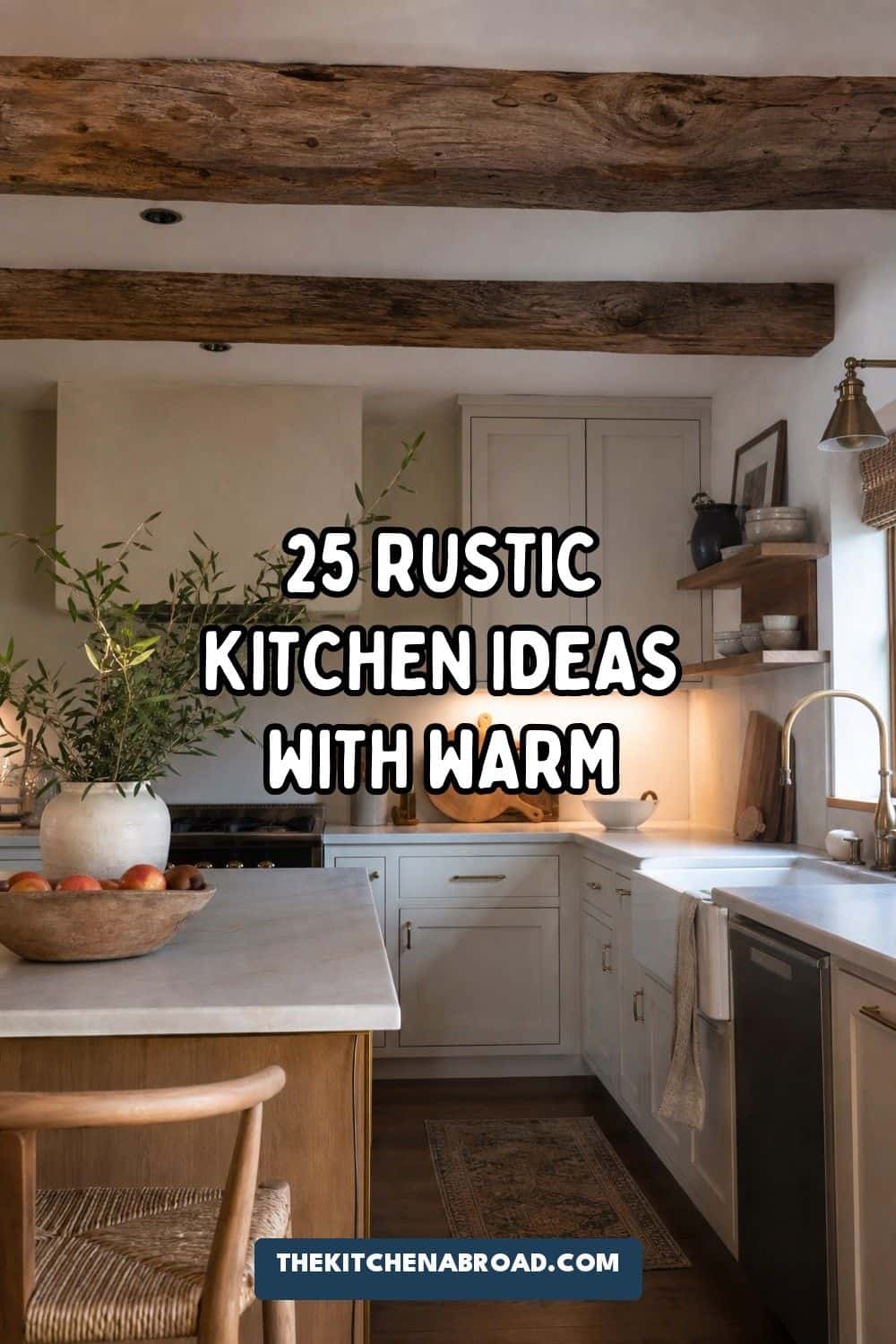
Reclaimed wood beams give a rustic kitchen instant structure because they bring grain, age, and shadow overhead without taking up counter space. Keep the scale tied to the ceiling: chunky beams suit vaulted rooms, while slimmer box beams feel better in a lower kitchen. Let the finish stay natural, softly stained, or weathered brown rather than glossy orange. If the beams are dark, balance them with warm white walls, pale counters, and enough task lighting so the room feels grounded instead of heavy.
2. Stone Wall Behind the Dining Nook
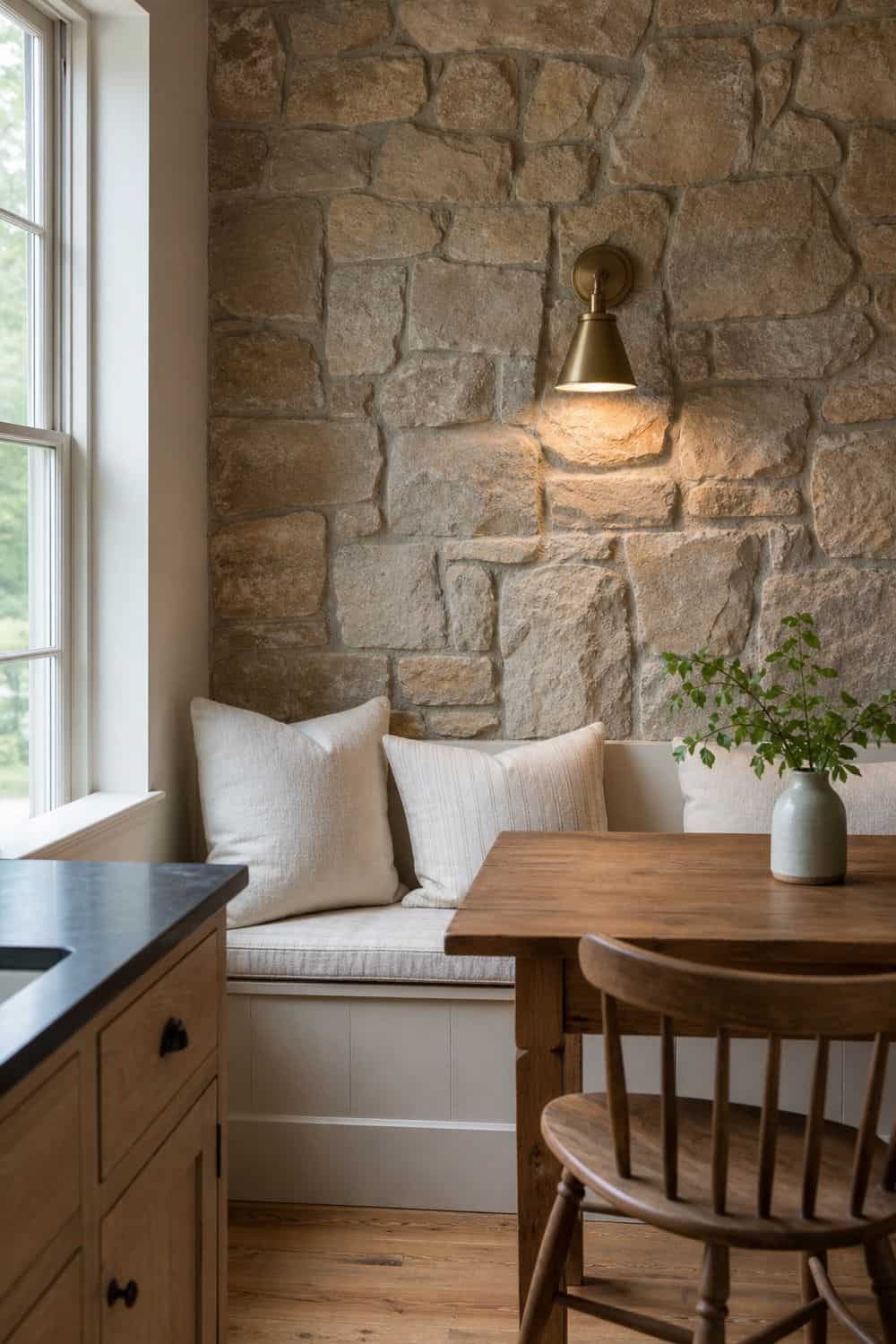
A stone wall belongs where it can be admired without taking constant grease and splash abuse. Behind a breakfast bench, dining nook, or open shelf area, stone gives the kitchen that grounded farmhouse feeling while keeping the main cooking wall easier to clean.
Choose a stone color that repeats the floor, counter, or cabinet undertone so it feels built into the room. Rough stone needs proper sealing, especially near food or drinks.
Add a sconce, picture light, or nearby pendant so the texture still shows at night instead of becoming a dark patch on the wall. A cushioned bench or simple wood table nearby can make the stone feel like part of a lived-in eating area.
3. Sawn Wood Cabinet Fronts

Sawn or textured wood cabinet fronts are a cleaner way to bring rustic character into a modern kitchen. You still get visible grain and touchable texture, but the look feels quieter than fake distressing or ornate raised panels. Use this finish on lower cabinets, an island, or a pantry wall if a full kitchen feels too heavy. Simple hardware and smooth counters help the wood read as warm and crafted, not busy. If the grain is strong, keep the backsplash calmer.
4. Butcher Block on One Work Zone

Butcher block feels most useful when it has one clear job. Put it on an island, baking counter, coffee zone, or side prep surface rather than covering every counter by default. Wood brings warmth, but it also needs oiling, quick spill cleanup, and distance from constant sink water. Pair butcher block with stone, quartz, or tile in wetter zones so the rustic texture does not become a maintenance problem. A mixed counter plan often feels more natural than matching wood everywhere.
5. Matte Brick Backsplash
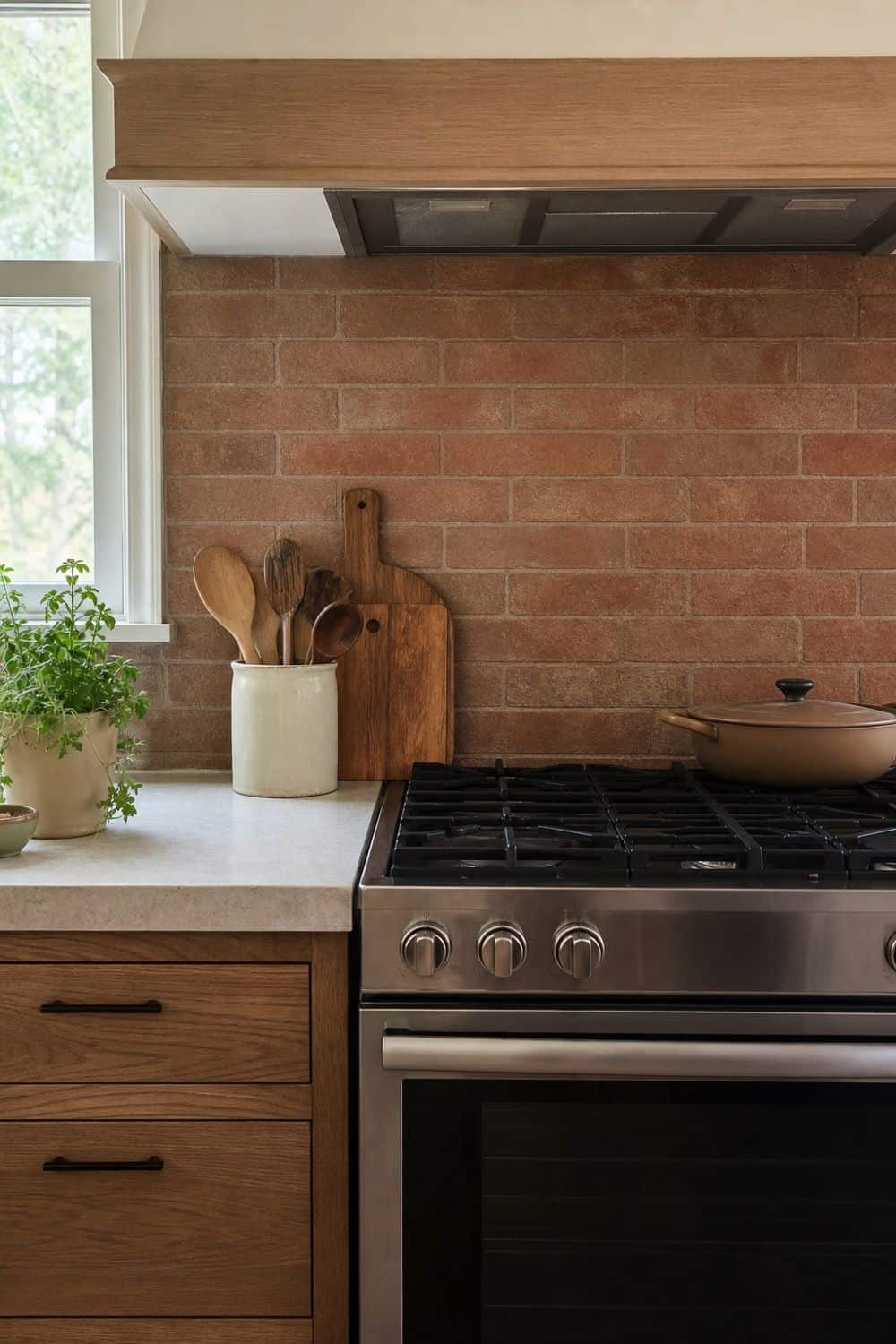
Matte brick, thin brick, or brick-look tile can add warmth behind a range, sink, or prep counter, but the finish needs to be kitchen-friendly. Sealed brick is easier to wipe, and a softer tone usually ages better than shiny red brick with bright grout.
Choose grout close to the brick color so the wall reads as texture rather than stripes. If the cabinets already have heavy grain, keep the brick quiet and let one material lead.
A matte brick backsplash should make the room feel settled, not harder to clean after weeknight cooking. If you cook often, a smoother brick-look tile may be friendlier than true brick right behind the range.
6. Handmade Ceramic Tile

Handmade ceramic tile gives a rustic kitchen movement through uneven edges, glaze variation, and a softer shine than factory-flat tile. Cream, clay, moss, ochre, smoky blue, and warm white all sit nicely with wood and stone. Keep the layout simple if the tile already has texture; a stacked, vertical stacked, or quiet offset pattern lets the glaze do the work. This is especially useful behind a sink or coffee zone, where a little irregularity can soften all the straight cabinet lines.
7. Worktable-Style Island
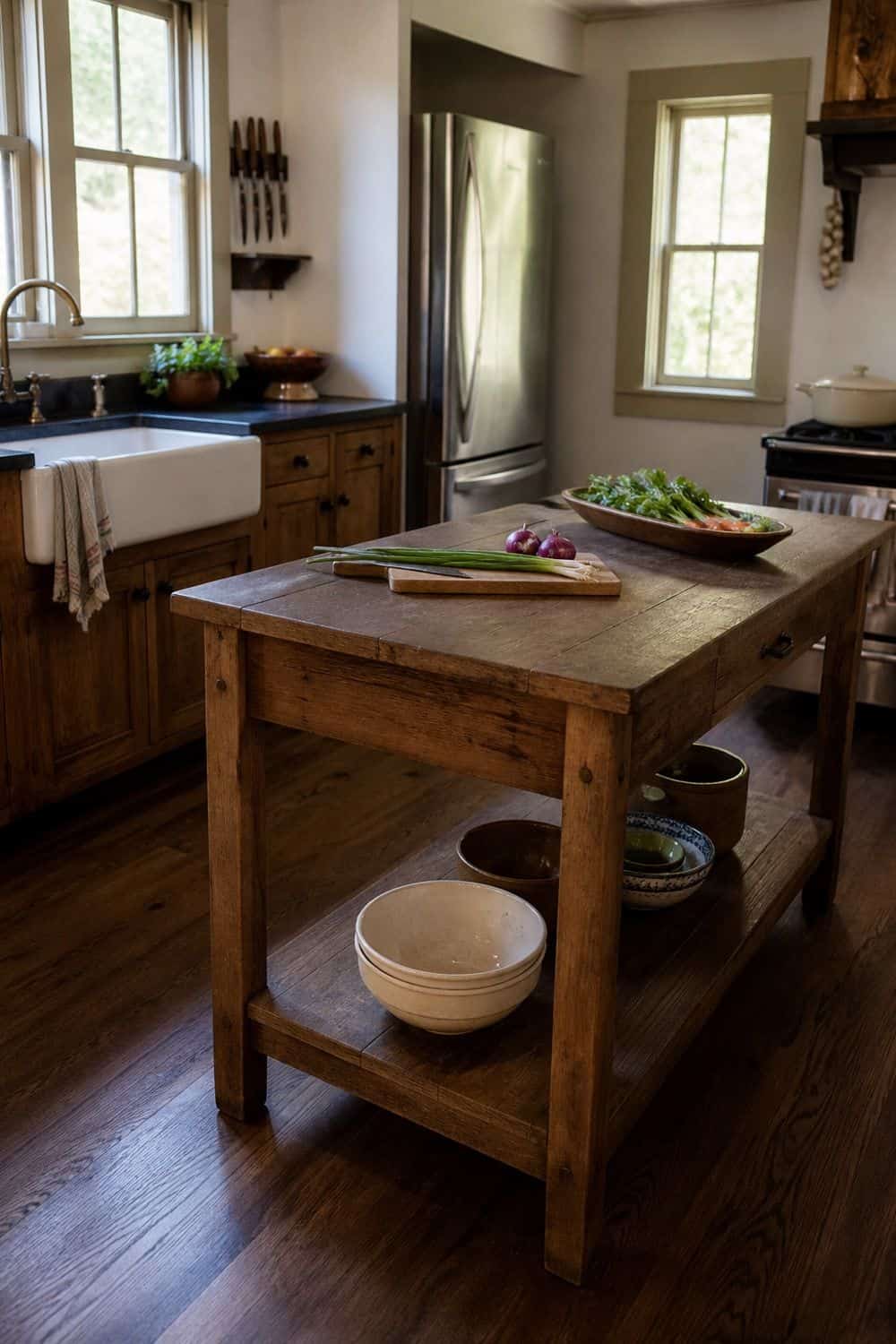
A worktable-style island brings rustic character through legs, shelves, drawers, and a lighter furniture shape. It works especially well when a solid built-in island would make the kitchen feel cramped or too new. Look for a top that can handle prep, serving, or baking, not just a pretty display surface.
Measure clearance for appliance doors, stools, and serving paths before choosing the size. Open shelves can hold mixing bowls, baskets, or serving pieces if those items are used often.
The island should improve prep flow and give the kitchen a gathered feeling, not become an obstacle in the middle of the room.
8. Iron Hardware With a Soft Finish
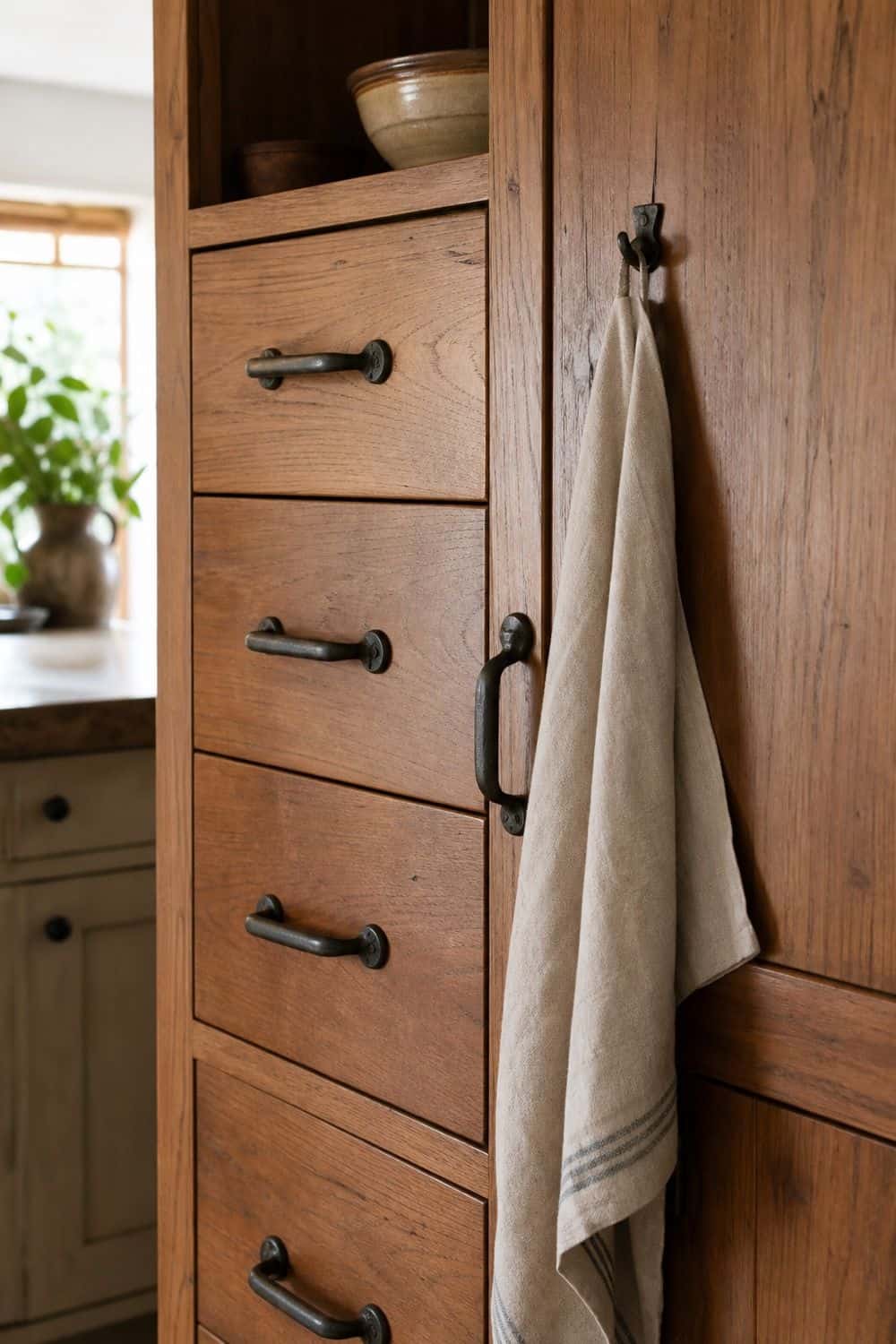
Iron pulls, latches, hooks, and shelf brackets can ground rustic kitchen cabinets, but too much black hardware can make the room feel severe. Look for rubbed, aged, oil-rubbed, or softly worn finishes that sit well against wood grain. Comfort matters as much as finish, especially on deep drawers and pantry doors.
Test the pull with wet or floury hands if you can, and repeat the metal in only a few places so it feels connected rather than heavy. A small finish repeat at the light fixtures or hooks is usually plenty.
9. Warm Stone or Concrete-Look Counters
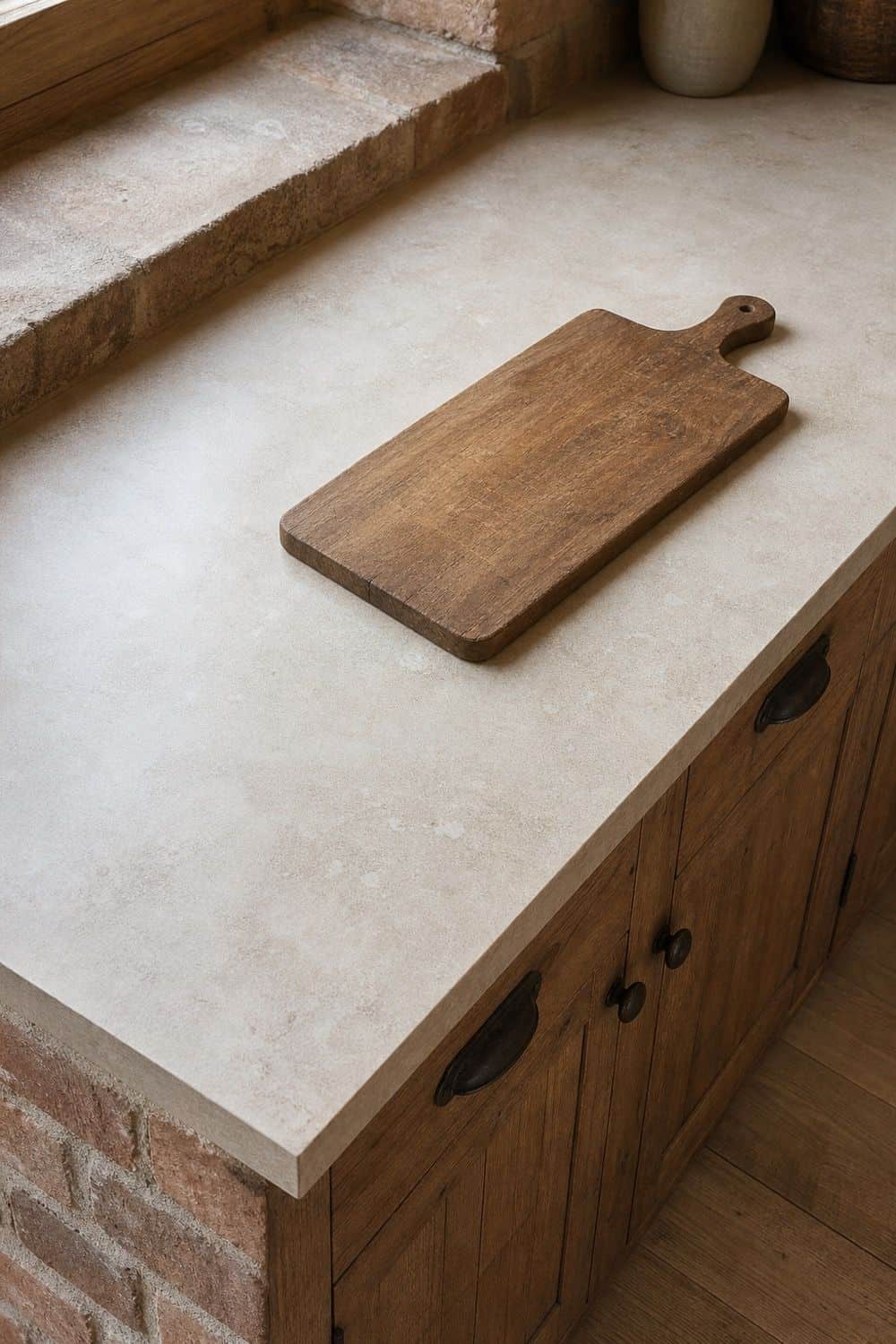
Soapstone, limestone-look quartz, honed stone, and warm concrete-look counters all work in a rustic kitchen because they feel solid without looking glossy. They also calm down strong wood grain, brick, or handmade tile, which keeps the room from becoming all texture at once.
Real stone has its own care routine, so be honest about stains, sealing, and daily cleanup before choosing it. If you want a lower-maintenance version, a warm stone-look or concrete-look quartz can still sit nicely beside wood, brick, and iron.
Smooth counters are important when the room already has textured beams, tile, or cabinets.
10. Open Shelves for Heavy Everyday Dishes
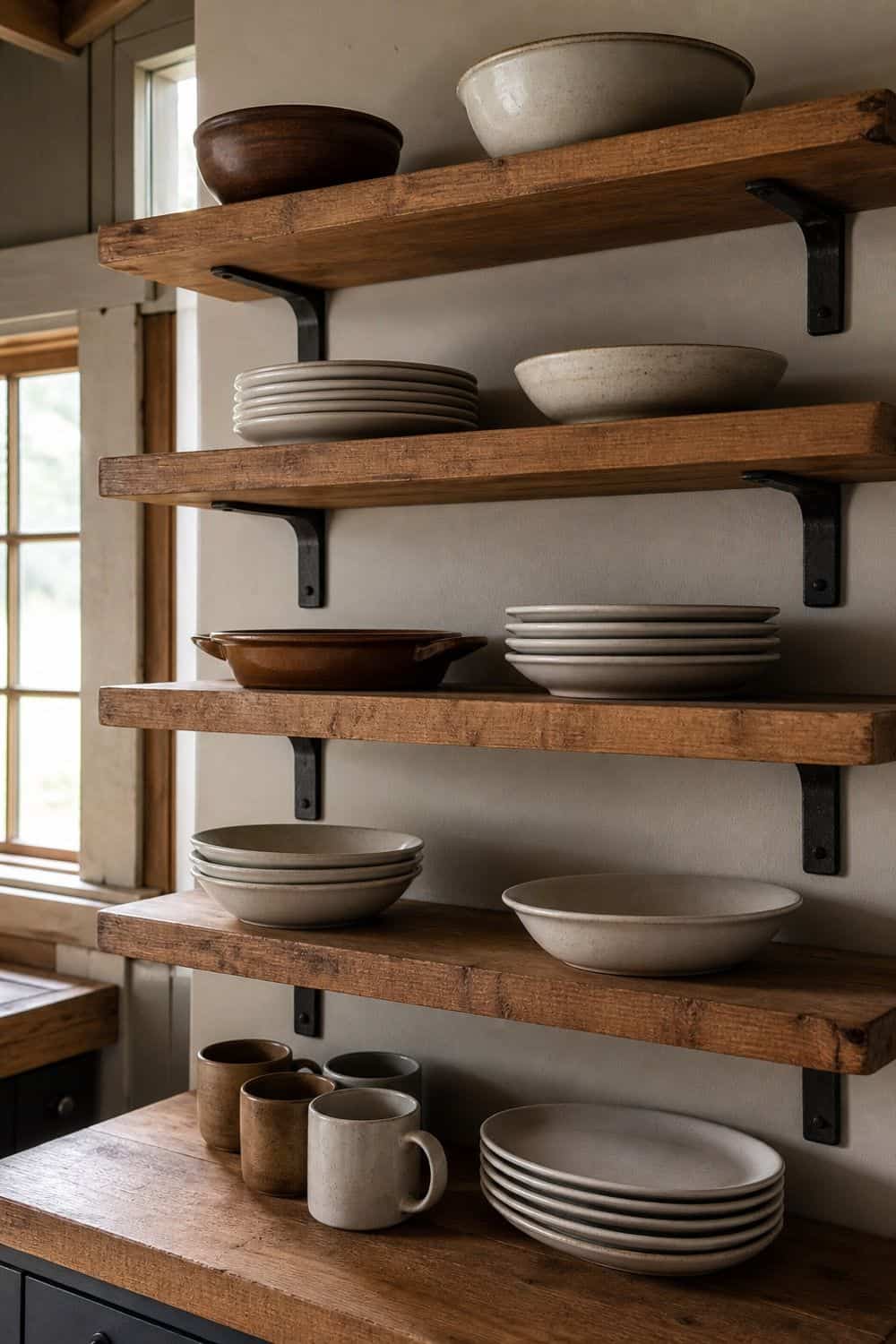
Open shelves feel rustic when they look sturdy enough for real plates, bowls, mugs, and serving dishes. Choose a depth that fits your dinnerware and mount shelves securely into studs or proper supports.
Keep everyday pieces on display so dust does not become a problem, and tuck rarely used platters behind doors. A few heavy dishes on thick wood shelves can feel warm and useful; a wall of crowded objects usually just makes the kitchen harder to wipe down. Leave breathing room between stacks so the shelves still feel calm.
11. Freestanding Hutch for Storage
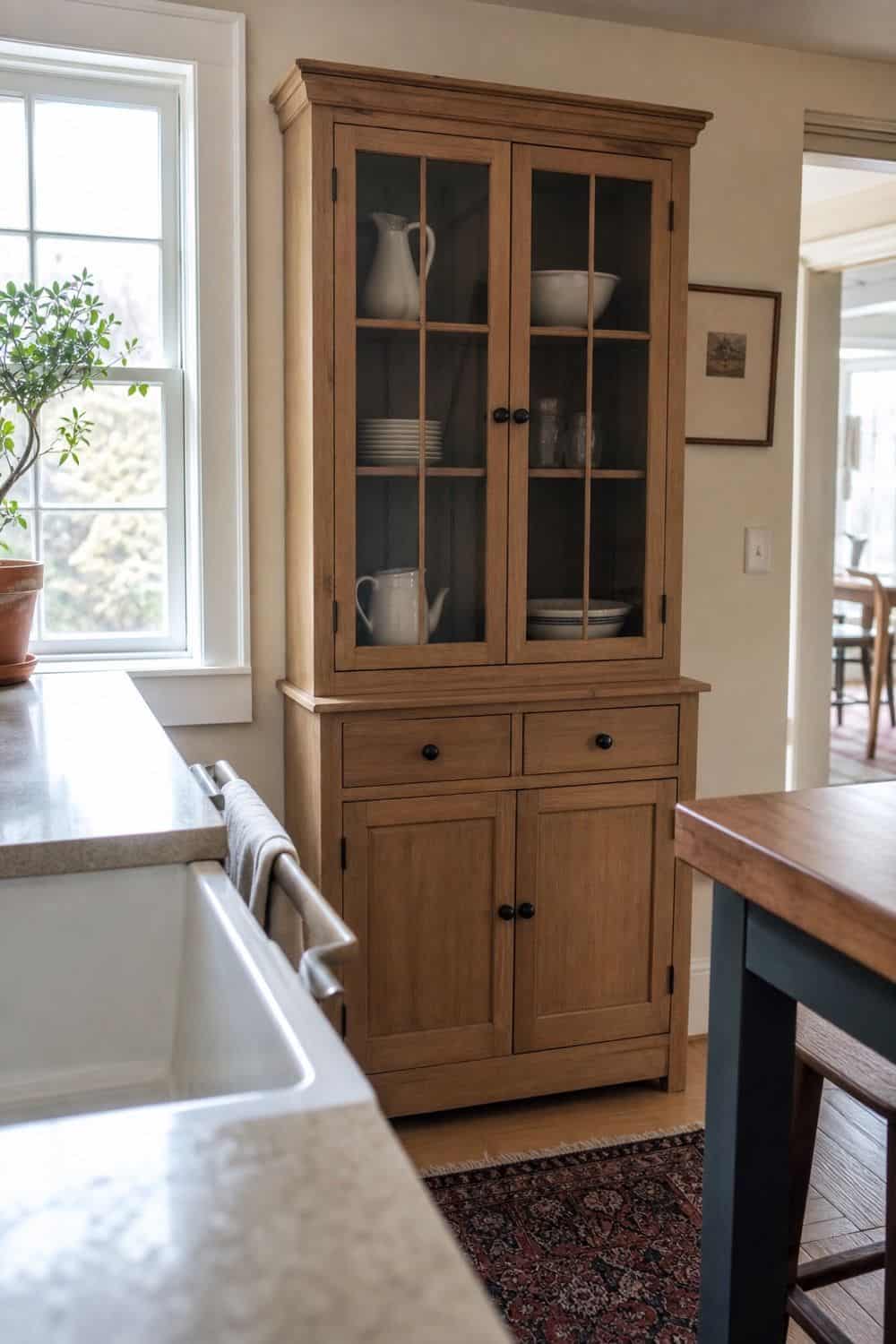
A freestanding hutch can hold platters, pitchers, linens, cookbooks, or seasonal serving pieces while giving the kitchen a more layered feeling. It is especially useful when you want rustic texture but still need closed storage for the pieces that do not look good on open shelves.
Choose a hutch that fits the kitchen’s scale. A massive dark cabinet can swallow a small room, while a slimmer piece in warm wood or painted mushroom can feel collected without dominating.
Give the top shelves to pretty, useful pieces and the lower storage to extras that would clutter the counter. If the hutch has glass doors, keep the visible pieces simple so it feels charming rather than packed.
12. Deep Farmhouse Sink
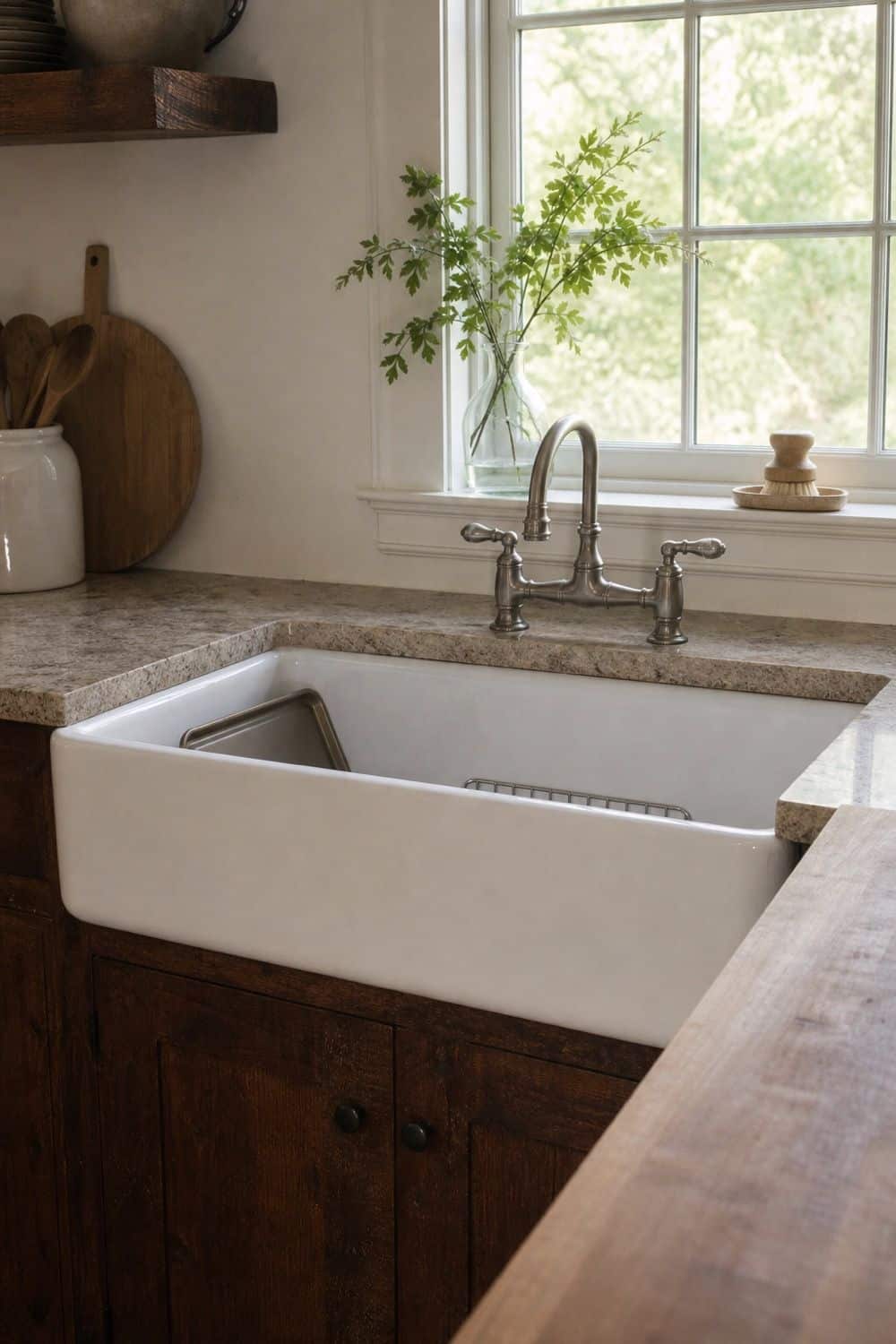
A deep fireclay or apron-front sink suits rustic kitchen design because it looks substantial and handles real kitchen tasks. It is useful for washing produce, soaking sheet pans, filling vases, and dealing with family dishes, so the choice should be practical as well as charming. Check cabinet support, faucet reach, and sink depth before installing one. A sink mat can help protect the basin and soften the sound of heavy pans, especially if the sink sits near stone or butcher block.
13. Warm Earthy Cabinet Color
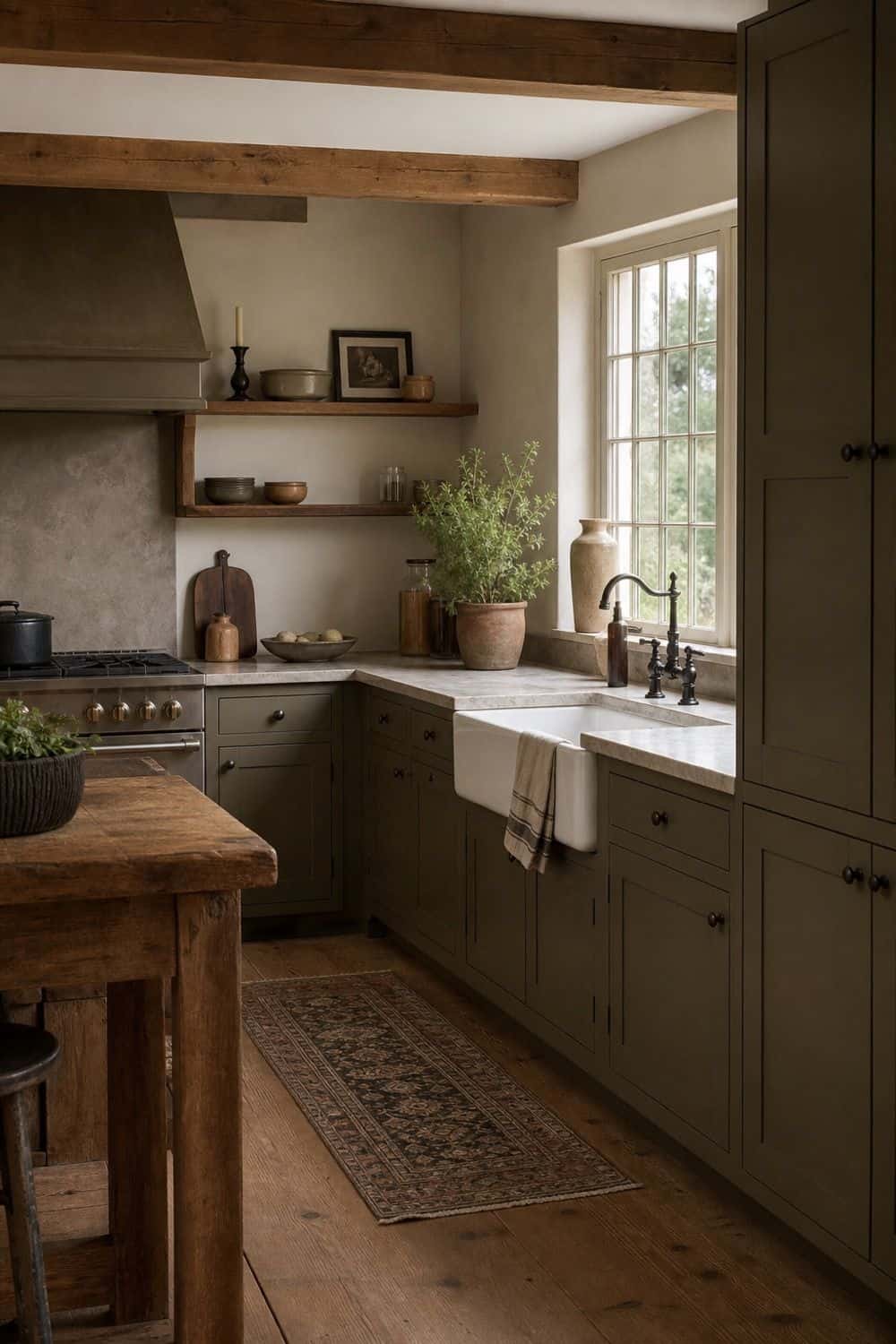
Rustic kitchen cabinets do not have to be all wood. Olive, moss, clay, mushroom, tobacco, cream, and warm taupe can give the room an earthy base while letting beams, shelves, or floors carry the stronger wood texture.
Muted color works better than bright paint here. The goal is depth and warmth, not a cabinet color that pulls attention away from stone, tile, and natural grain.
Test paint next to your wood tones in daylight and at night, because rustic kitchens often shift dramatically under warm bulbs. A slightly muddy undertone is usually easier to live with than a clean pastel in this style.
14. Task Lighting With Lanterns
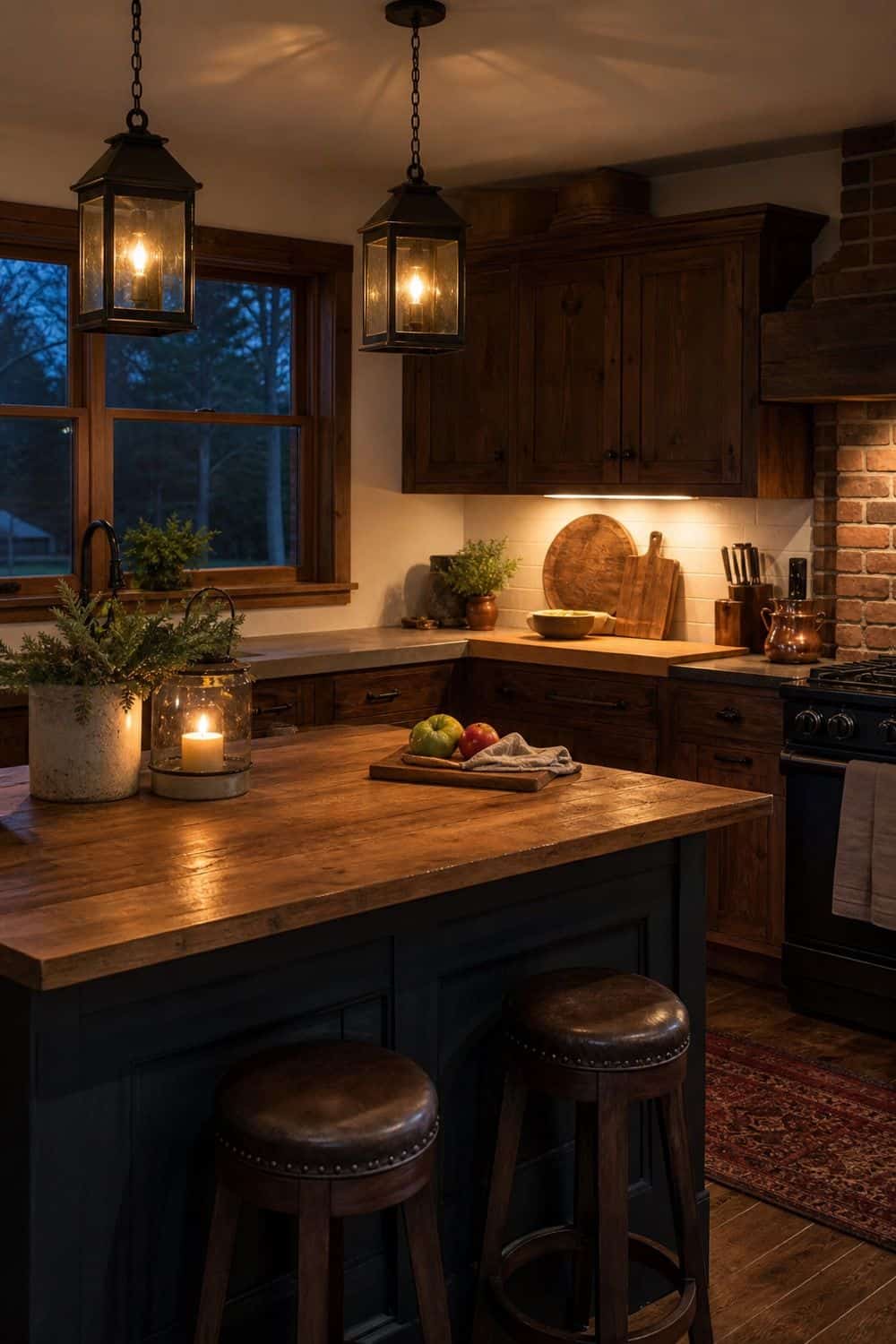
Lantern pendants and shaded fixtures can give a rustic kitchen atmosphere, but they should not be the only light source. Rooms with dark wood, stone, or brick can feel dim quickly, especially in the evening.
Add under-cabinet lighting, sconces, or ceiling spots where you prep, wash, and cook. Warm bulbs keep the mood soft while still making the counters usable. A rustic fixture should add glow and character, not leave you squinting over the cutting board. Put the prettiest fixture where it can set the tone, then let quieter task lights do the daily work.
15. Wall Sconces Near Shelves
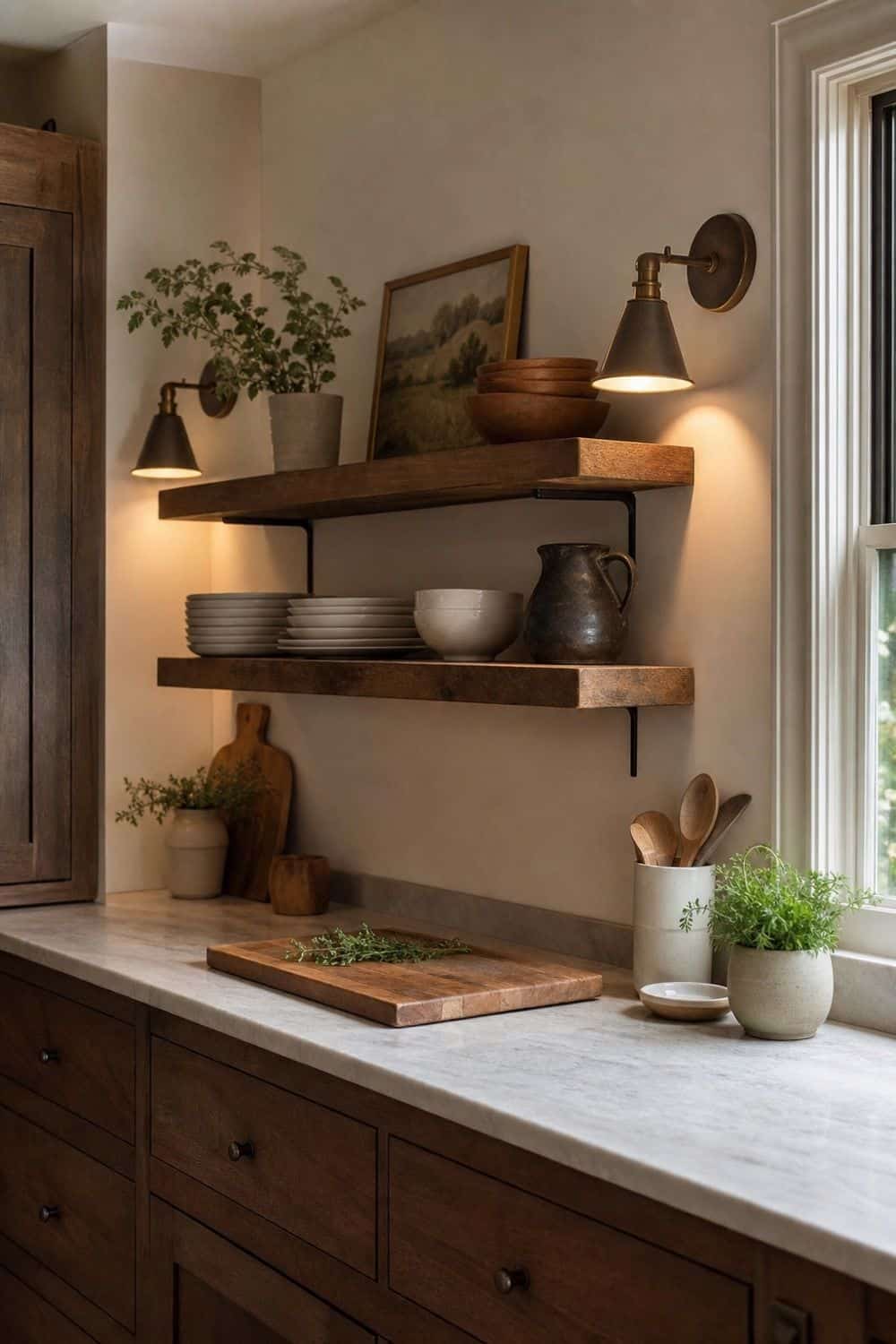
Wall sconces can brighten open shelves, a sink wall, a stone nook, or a small dining corner. They help rustic texture show up without relying on a single overhead fixture, and they make shelves feel more finished without adding more objects.
Check cabinet door swings and shelf clearance before placing them. A sconce that looks perfect in a photo can become annoying if an upper cabinet bumps it every day.
Bronze, aged brass, or soft black can all work if the finish repeats elsewhere in small amounts. Put the light where it helps you actually see dishes, cookbooks, or a prep corner, not just where the wall looks empty.
16. Durable Stone-Look Floor

Stone floors feel naturally rustic, but stone-look porcelain can be more forgiving in a busy kitchen. Look for warm limestone, slate, or travertine tones rather than cold gray if you want the room to feel inviting. Consider slip resistance, grout color, and comfort underfoot before choosing the final tile. A washable runner can soften the standing zone between sink and range without hiding the whole floor, and it gives you a little warmth if the tile feels hard in winter.
17. Vintage-Style Runner
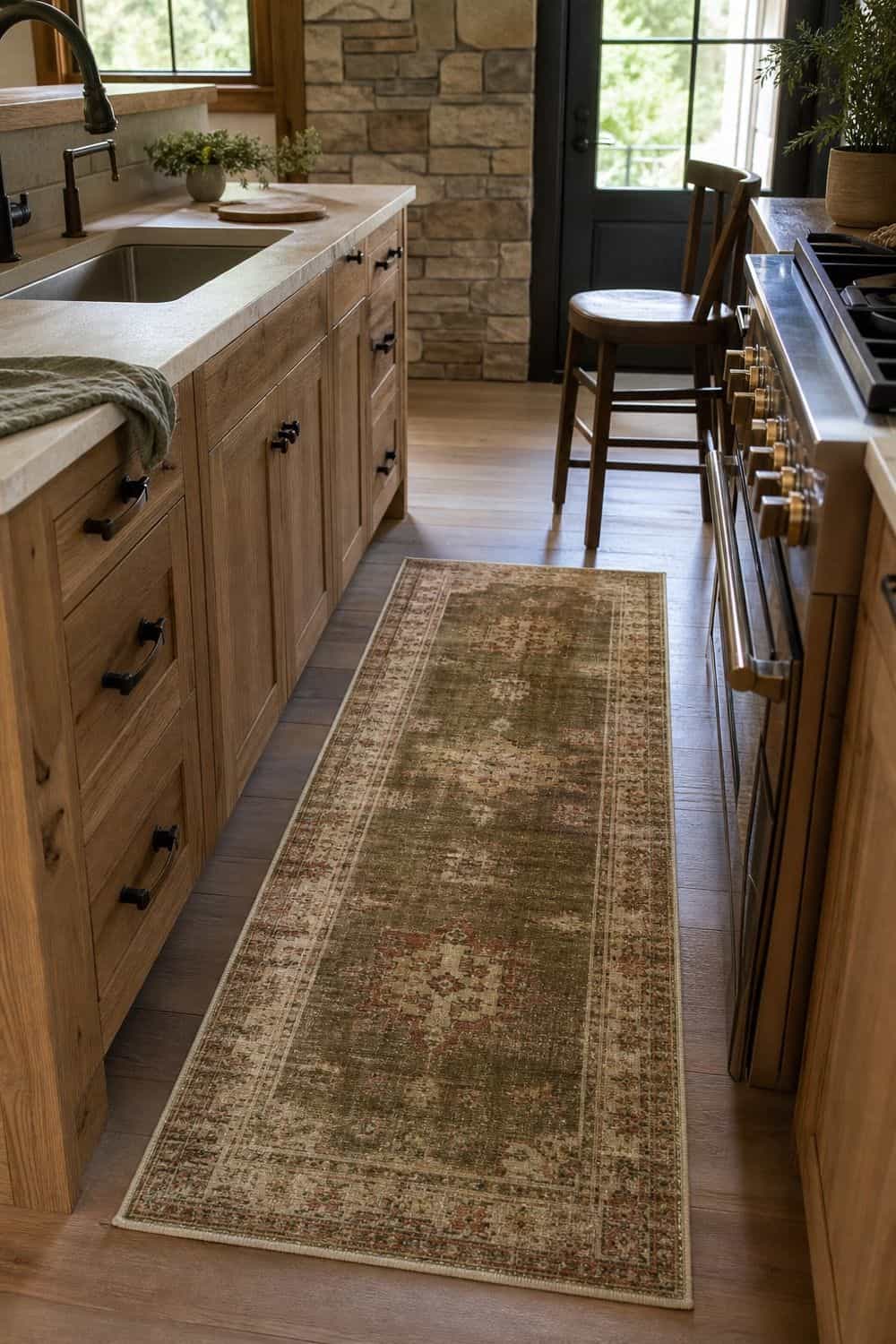
A low-pile runner between the sink and range or along the island can make a rustic kitchen feel more layered. Choose colors that echo wood, stone, olive, rust, cream, or muted clay so the textile connects to the room instead of floating on top of it.
Keep it washable or easy to vacuum. High pile and fringe can become frustrating in a kitchen where crumbs, drips, and chair legs are part of daily life.
A runner is also one of the easiest low-commitment rustic updates if you are not changing cabinets or tile. A faded pattern hides daily crumbs better than a flat solid color.
18. Stoneware Crocks for Tools

A stoneware crock near the range can hold wooden spoons, spatulas, tongs, and a whisk so the counter feels lived-in without becoming cluttered. Keep only the tools you reach for often, then move duplicates and specialty pieces into a drawer.
Choose stoneware with a handmade feel, matte glaze, or warm neutral color. One sturdy crock is usually enough; several crowded crocks can make the cooking zone harder to wipe and less pleasant to use. If the crock is heavy, place it where you will not need to slide it every time you clean.
19. Wood Peg Rail for Aprons and Towels
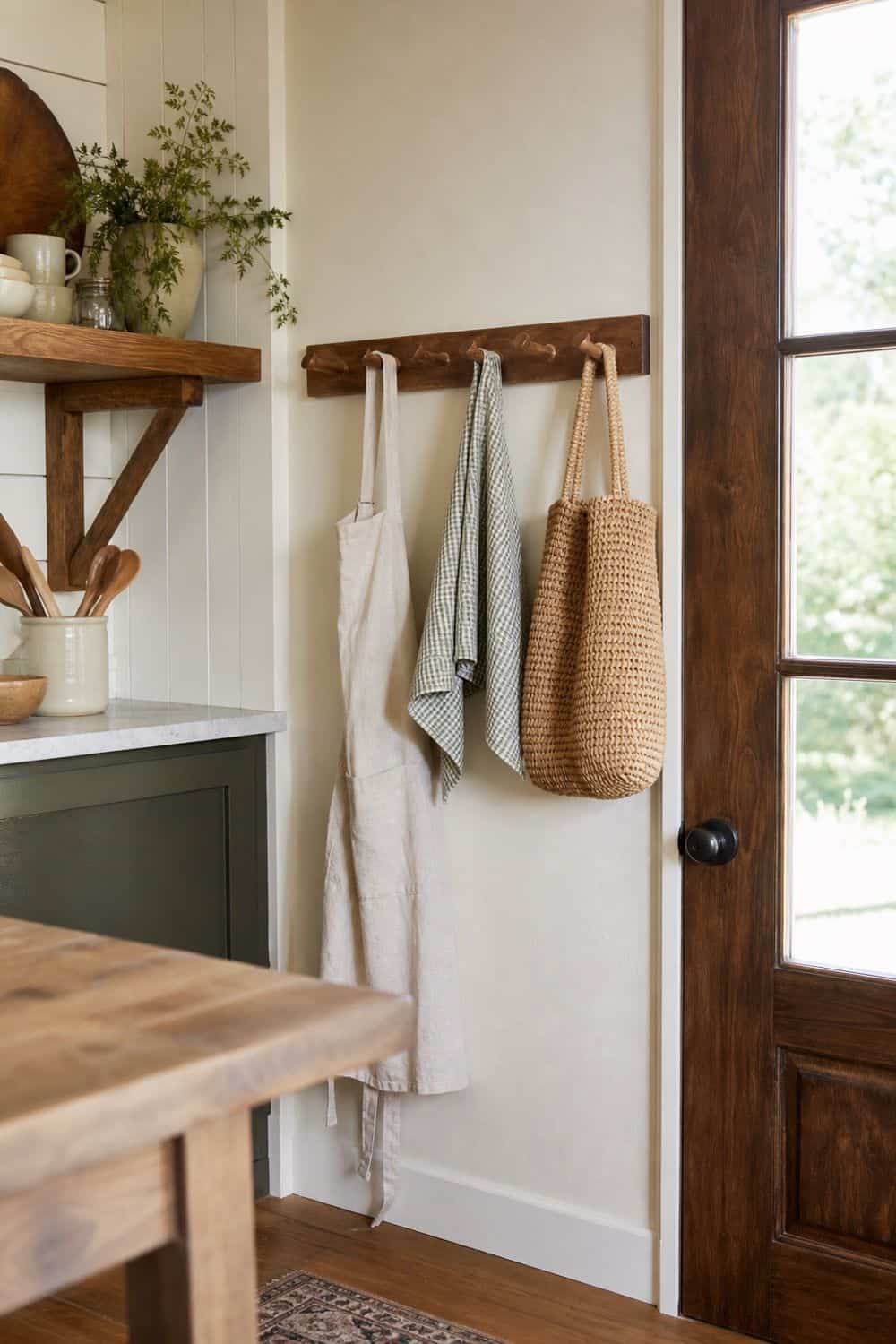
A wood peg rail can hold aprons, dish towels, market bags, small baskets, or a brush near the pantry, sink, or back door. It looks best when the items hanging from it are used regularly and share a quiet color palette.
Keep it out of the busiest cooking splash zone. A peg rail should make daily routines easier, not collect random decor on a wall that already has enough texture. Match the rail finish to shelves, beams, or cutting boards for a quiet connection.
20. Firewood or Basket Texture Moment
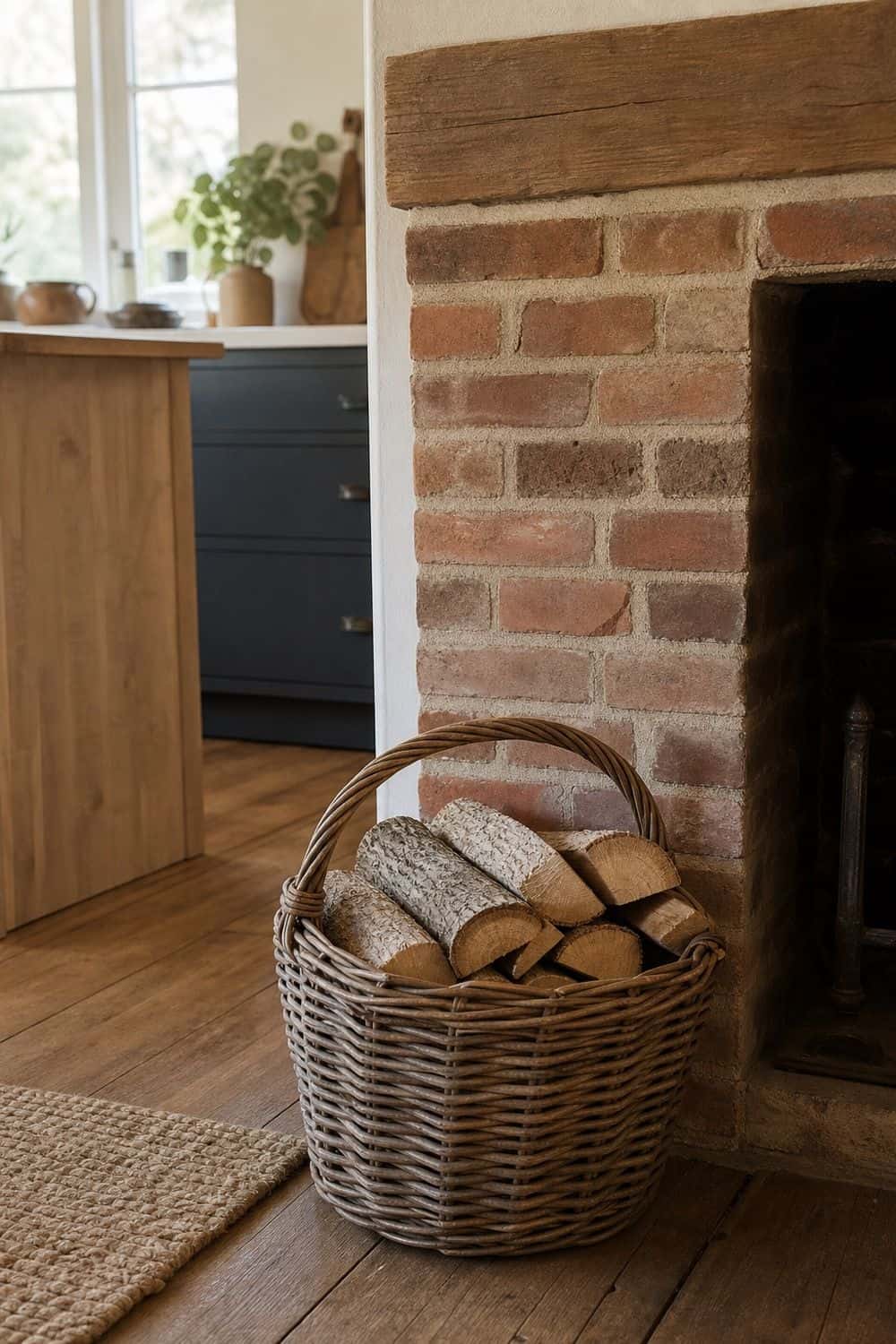
If your kitchen connects to a hearth or fireplace, a log basket can add natural texture in a way that makes sense. If not, a large basket can still work for linens, market bags, extra towels, or root vegetables in a pantry corner. The important part is giving the basket a job. Empty baskets placed only for styling can push rustic decor into theme territory fast, while one useful woven piece adds softness and gives everyday items a better landing spot.
21. Vintage Cutting Boards as Working Pieces
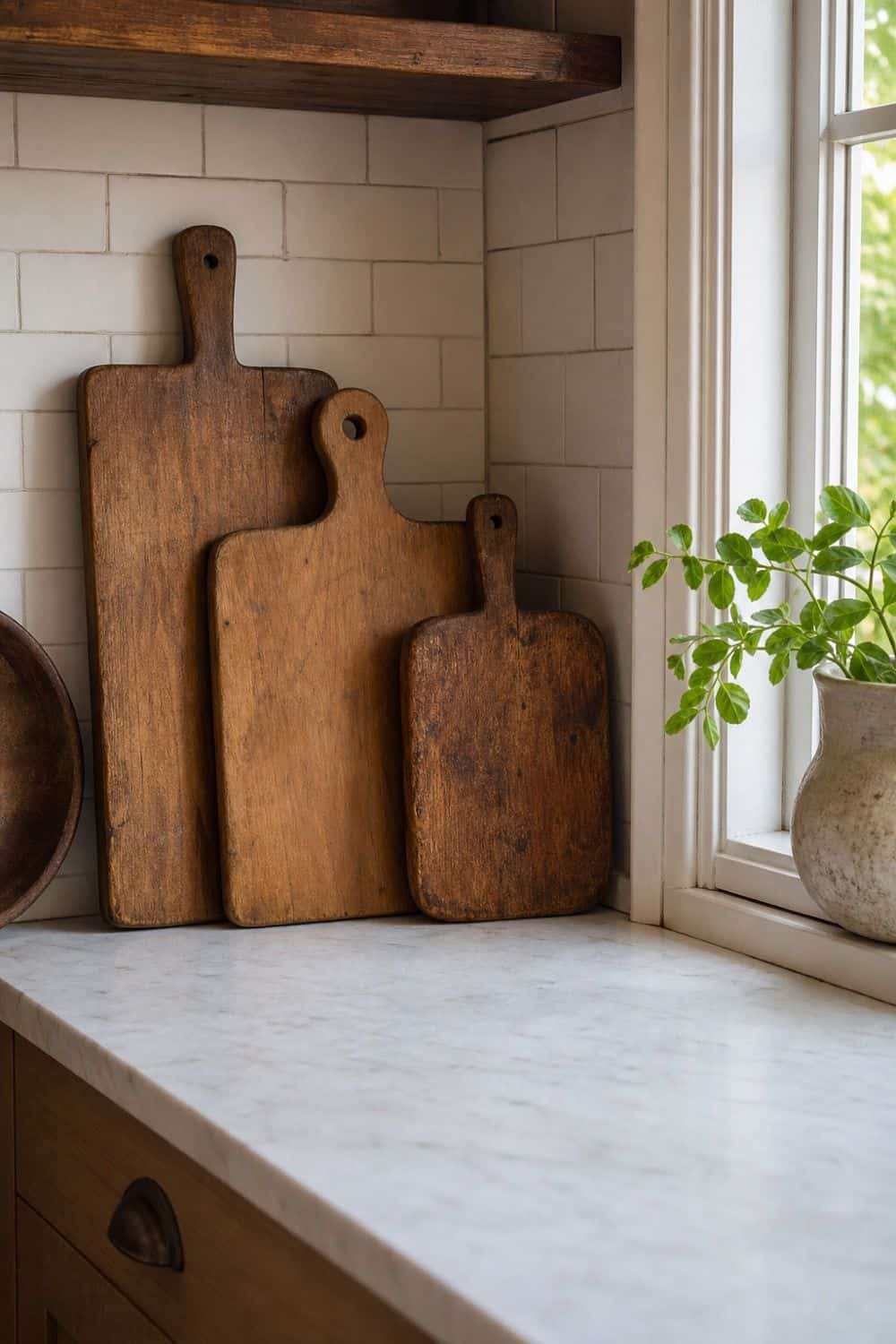
Two or three wood cutting boards leaned near a backsplash can add warmth without taking over the counter. Use them for bread, serving, quick prep, or protecting a work surface, and keep the prettiest one visible only if it is still easy to grab.
Clean and oil boards regularly, especially if they sit near the sink or range. If a board is too fragile for food, keep it away from wet zones and let the working boards stay closer to prep. Vary height and shape, but keep the group small enough that you can still wipe the counter easily.
22. Appliances Behind Rustic Wood Doors

Rustic kitchens still need a toaster, blender, coffee grinder, chargers, and small appliances. Tucking them behind reclaimed wood, beadboard, rough-sawn, or stained doors keeps the function close without making the counters feel busy.
Plan outlets, ventilation, and shelf depth before adding doors, especially for anything that makes heat or steam. The concealment should feel like part of the kitchen, not a pretty cover over an awkward appliance pile. A shallow appliance garage is only helpful if the doors open easily during a rushed breakfast.
23. Aged Metal Mixing Bowls or Trays
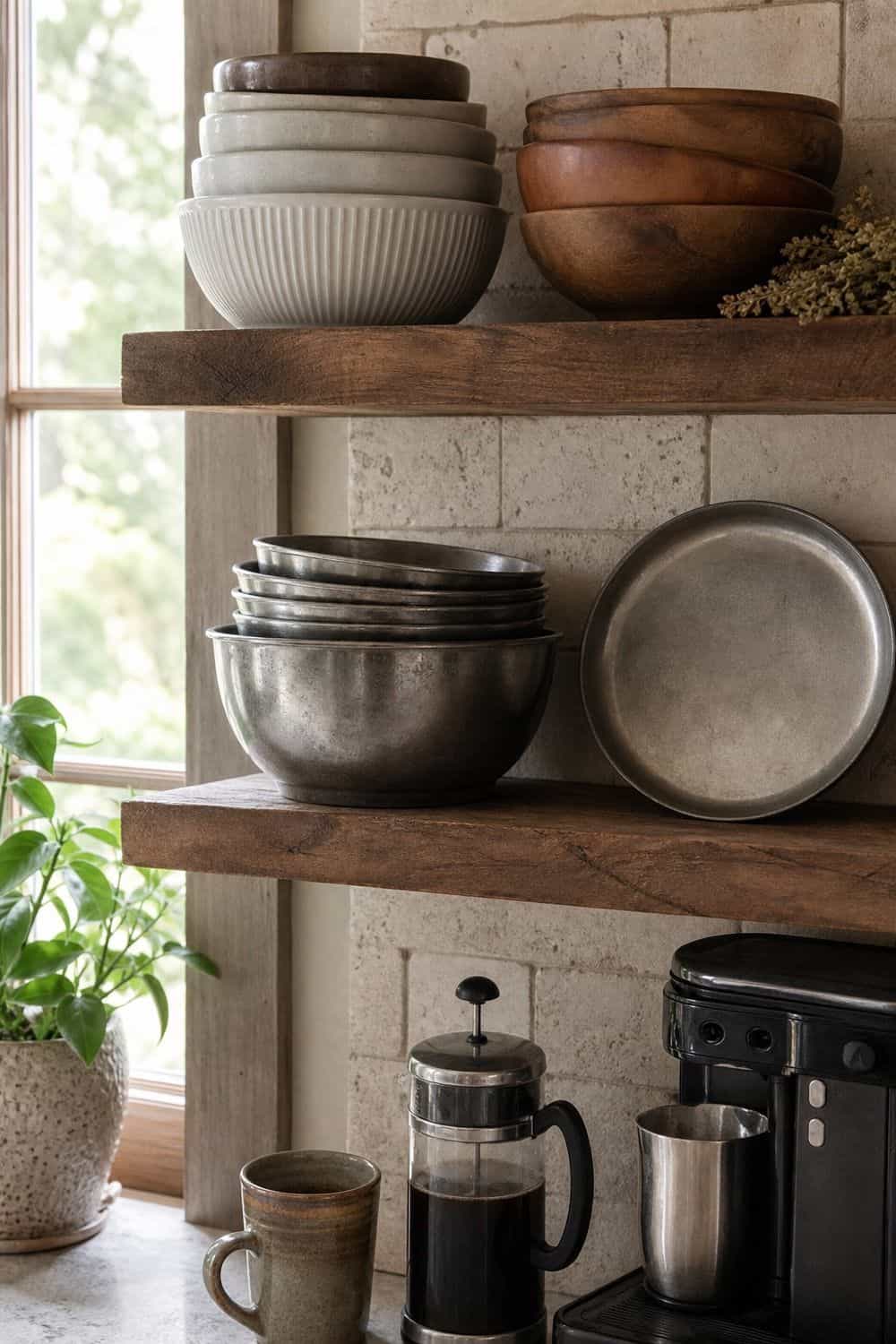
Metal bowls, trays, and colanders bring a softer shine into a rustic kitchen, especially when the room has a lot of wood and stone. They also support baking, prep, washing produce, or serving, which makes them better than purely decorative metal pieces.
A stack of mixing bowls on an open shelf makes sense if you bake often; a tray near the coffee zone can gather mugs, spoons, or sugar. Aged brass, pewter, stainless, and bronze can all work as long as the finish repeats with restraint.
24. Herb Pots and Produce
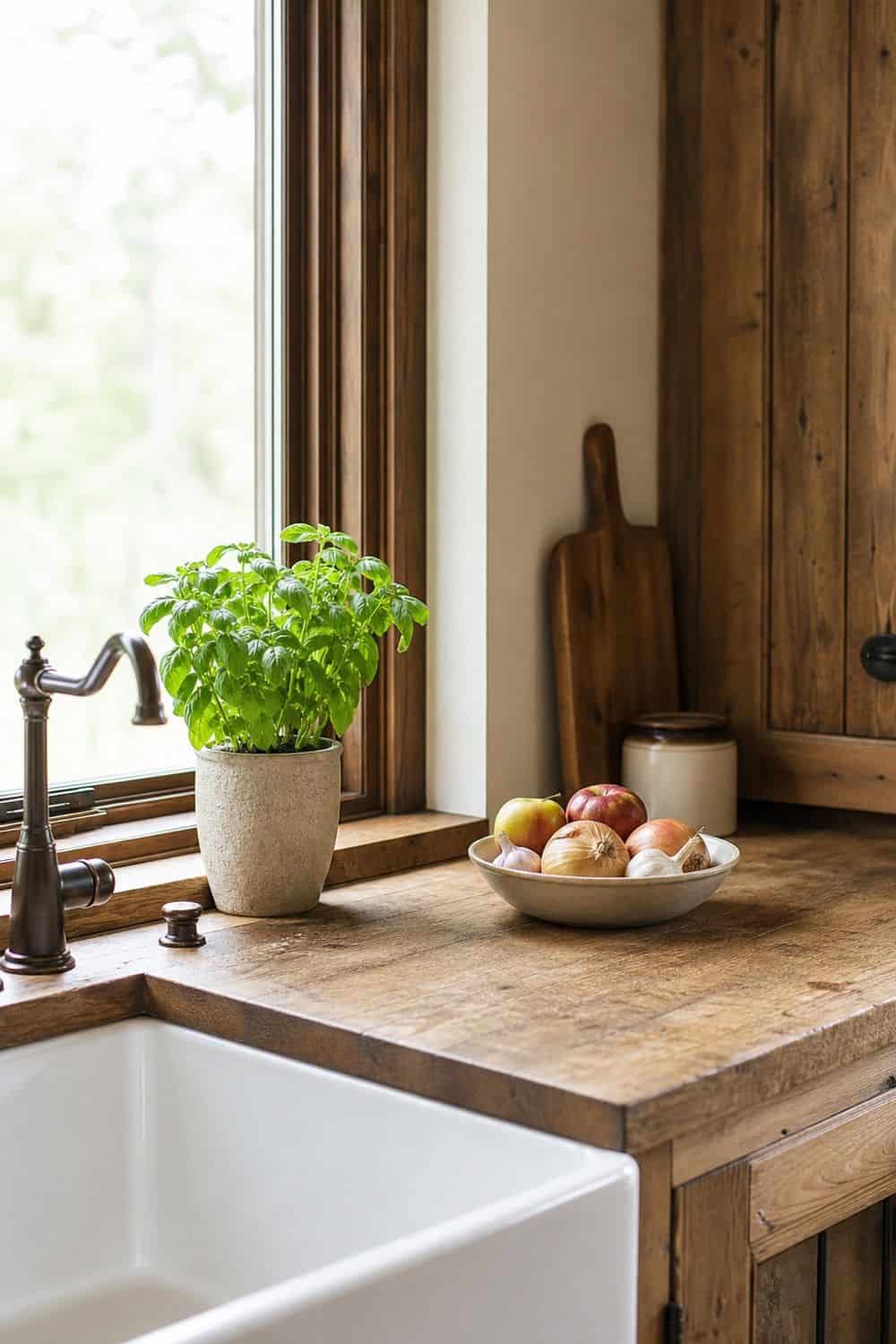
Herbs, onions, potatoes, apples, citrus, tomatoes, or garlic can make a rustic kitchen feel alive because they belong to cooking. A small herb planter near a window or a bowl of produce on the island adds color and texture without feeling staged. Pay attention to airflow and freshness, though. Produce should not sit in a damp corner or pile up until it becomes clutter. Keep the display edible, modest, and easy to move when the counter is needed. That little bit of real food often feels warmer than another decorative object.
25. Rustic Texture Pared Back and Cleanable

Rustic does not mean every surface needs rough wood, stone, baskets, and vintage objects. The strongest rustic kitchens use texture where it matters and leave enough clear counter space for chopping, mixing, and cleaning.
Group oils, salt, spices, or coffee supplies on a tray if they live on the counter. Near water and grease, choose sealed and washable finishes instead of raw porous materials. If something is dusty, hard to move, or always in the way, it is not adding useful rustic character; it is just clutter wearing a wood finish.
What Rustic Kitchen Style Really Means
Rustic kitchen style is warm, natural, textured, and material-led. It uses wood, stone, brick, handmade tile, iron, earthy color, and useful working pieces. It is not the same as farmhouse, which often leans more painted and pastoral, or old-world style, which can feel more ornate and European.
A modern rustic kitchen should still have storage, lighting, and surfaces that support real cooking. The best rooms balance rougher materials with smooth counters, clear prep zones, and everyday dishes that can handle use.
Easy Low-Commitment Rustic Updates
If you are not renovating, start with a runner, peg rail, cutting boards, iron pulls, a stoneware crock, herb pots, thicker shelves, warmer bulbs, or a small wood tray. These updates add texture without locking you into built-in materials.
To brighten a rustic kitchen, use warm white walls, lighter stone, layered task lighting, reflective metal, and fewer heavy dark pieces. Simplifying is often more effective than adding another rustic object.
Frequently Asked Questions
What makes a kitchen rustic?
A rustic kitchen uses natural wood, stone, tactile texture, warm earthy colors, simple storage, handmade details, and durable working surfaces. It should feel grounded and practical rather than themed or overly distressed.
How do I make my kitchen look rustic?
Add rustic character with wood beams, open shelves, butcher block, brick or stone texture, iron hardware, warm lighting, vintage cutting boards, earthy cabinet color, and useful stoneware pieces.
What colors suit a rustic kitchen?
Cream, mushroom, olive, moss, clay, rust, tobacco, warm taupe, charcoal brown, and natural wood tones all work well in a rustic kitchen. Muted colors usually feel more current than bright novelty shades.
What backsplash works in a rustic kitchen?
Good rustic kitchen backsplash options include matte brick, handmade ceramic tile, stone, plaster-look finishes, and warm neutral tile with texture. Choose sealed, washable surfaces near cooking zones.
How do you make a rustic kitchen look modern?
Make a rustic kitchen look modern with cleaner wood fronts, integrated storage, better lighting, restrained open shelves, smooth counters, and fewer decorative pieces. Let texture come from real materials rather than faux distressing.
Are reclaimed wood kitchens hard to maintain?
Reclaimed wood can be easy to live with if it is sealed, dusted, and protected from standing water. It needs extra care near sinks, dishwashers, and cooking zones where moisture and grease are common.
What flooring is best for a rustic kitchen?
Stone, stone-look porcelain, engineered wood, brick-look tile, and durable washable runners can all work in a rustic kitchen. Choose flooring that handles spills, traffic, and cleaning, not just the look.
How do you keep a rustic kitchen from looking too dark?
Use lighter walls, layered task lighting, pale stone, reflective metal, open sightlines, and fewer heavy dark pieces. Rustic texture needs contrast and light so the kitchen still feels fresh and usable.
Final Thoughts
The best rustic kitchen ideas make the room feel warm, textured, and grounded while still supporting daily cooking. Use honest materials, choose cleanable finishes, add enough lighting, and keep rustic decor pared back so the kitchen feels lived-in rather than themed.