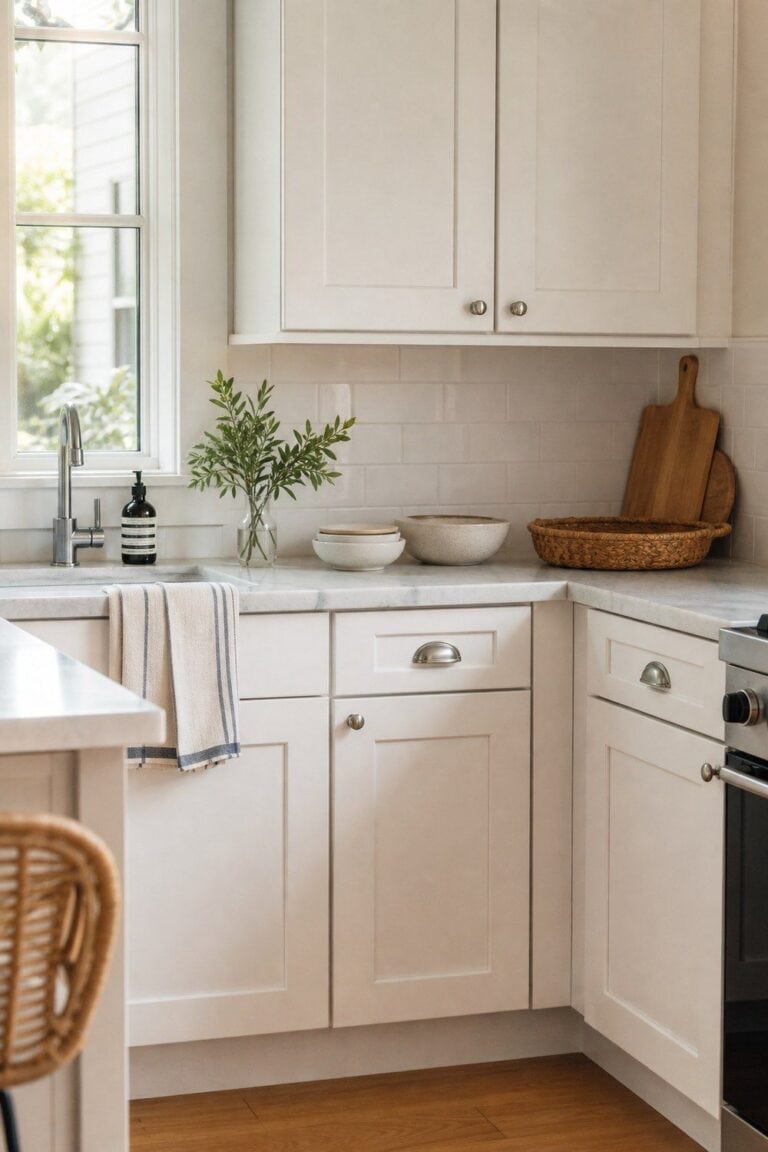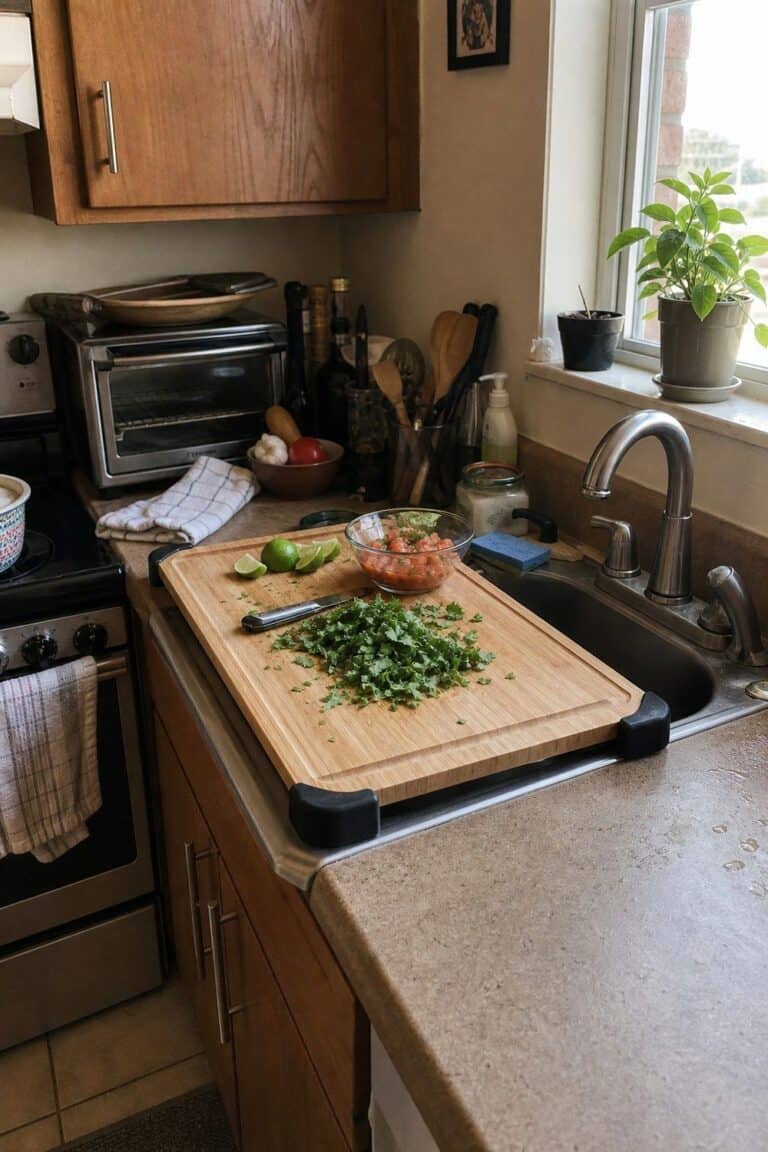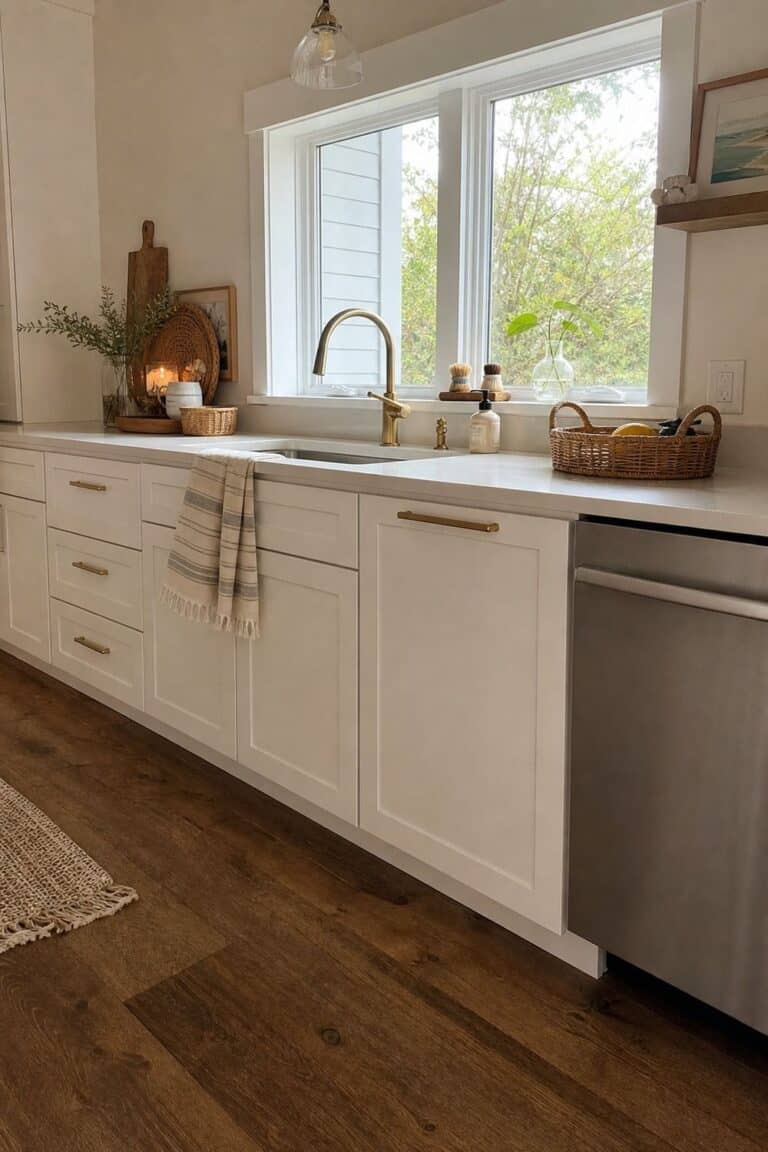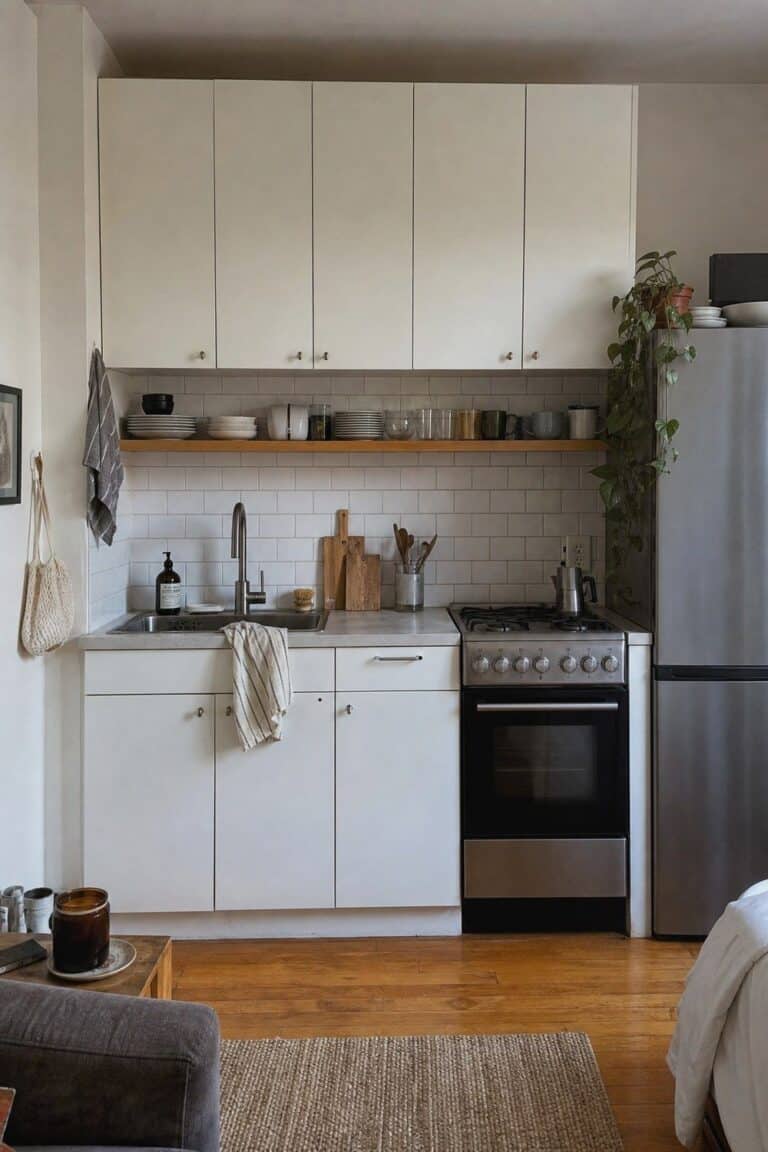
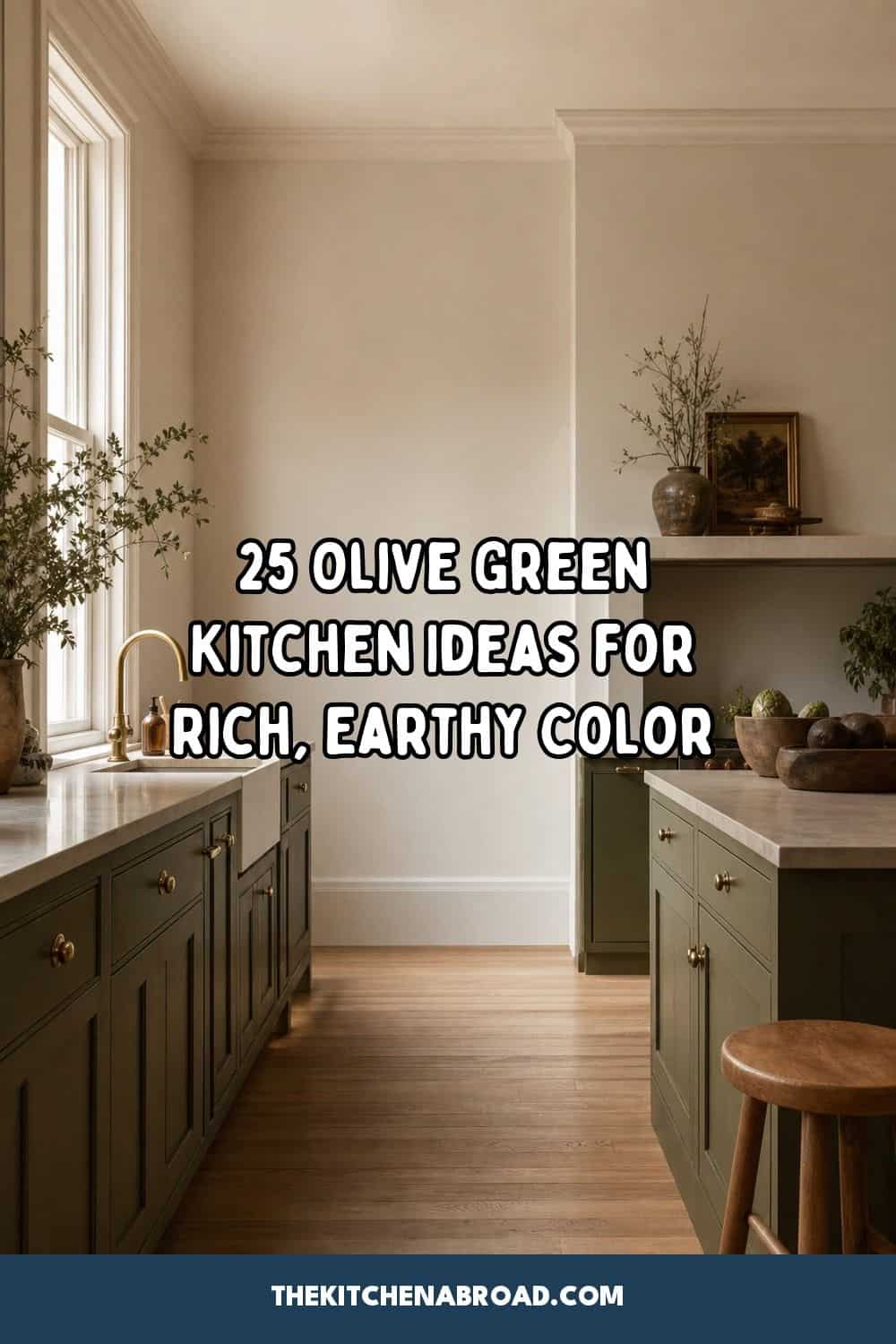
Olive green kitchen ideas work well when the color is treated like a warm earthy neutral, not just a bold cabinet choice. Use olive on cabinets, an island, backsplash tile, hardware pairings, textiles, or small appliances, then balance it with cream, wood, brass, stone, and warm lighting.
Olive green has more depth than sage and more warmth than many forest greens, which is why it can make a kitchen feel grounded without turning it gloomy. The trick is watching the undertone: olive can read golden, brown, khaki, or muddy depending on the light around it.
Good olive green kitchen ideas use the color with a plan. Cabinet finish, wall color, backsplash texture, hardware, wood tone, and evening lighting all decide whether olive feels rich and earthy or too dark for the room.
You Might Also Like These Blog Posts
- Sage Green Kitchen Ideas
- Earthy Kitchen Ideas
- Natural Wood Kitchen Ideas
- Cream Kitchen Ideas
- Winter Kitchen Decor Ideas
Olive Green Kitchen Ideas
1. Olive Green Lower Cabinets
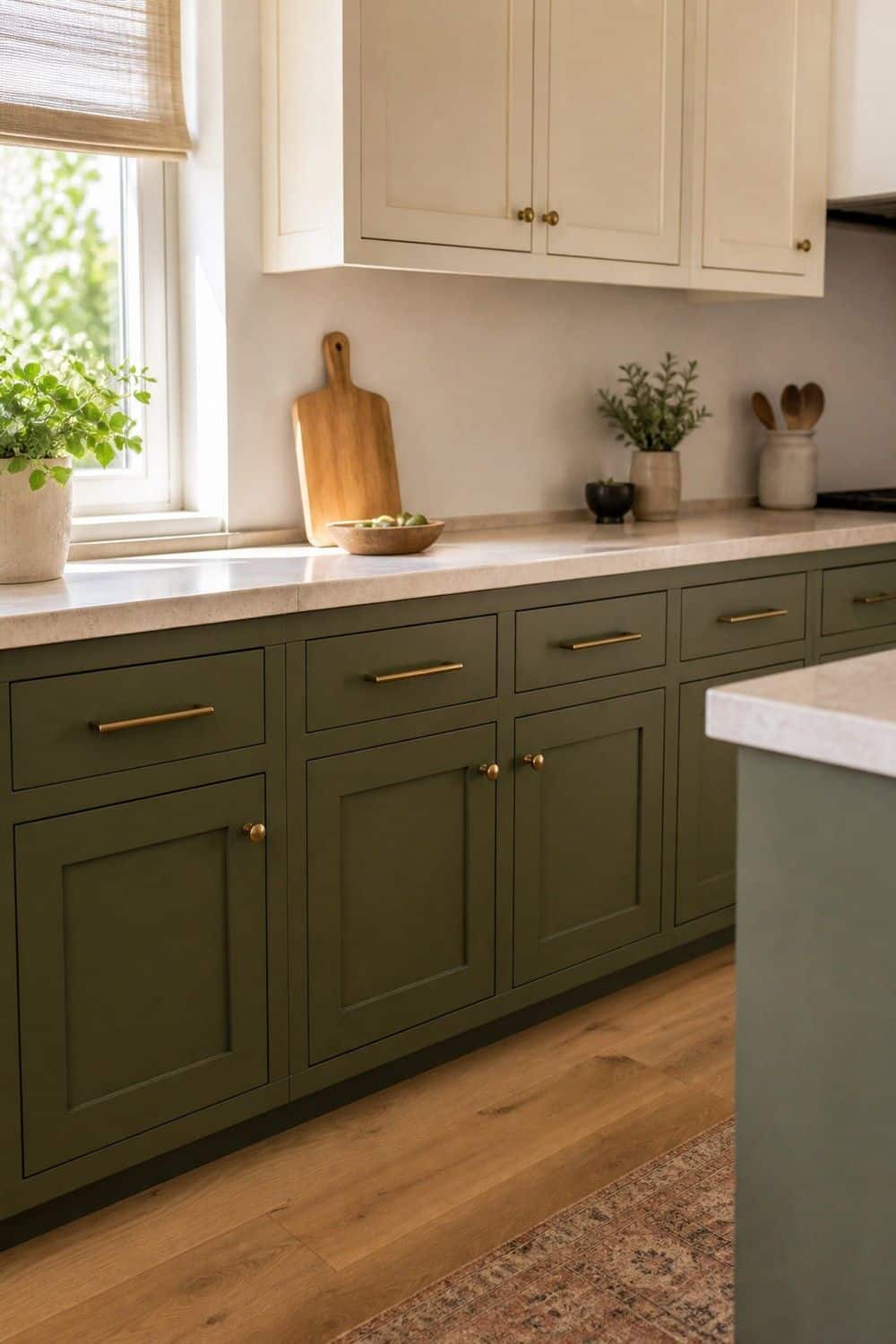
Lower cabinets are the easiest place to make olive green feel grounded without wrapping the entire kitchen in dark color. The shade sits below eye level, so upper cabinets, walls, or open shelves can stay in cream, wood, or warm white.
This approach suits olive green kitchen cabinets because the color has enough depth to anchor the room. Use satin or semi-gloss cabinet paint, then check how the olive reads beside floors, counters, and hardware before painting the full run.
2. Full Olive Green Cabinets for a Rich Look

Full olive cabinetry can look rich and enveloping when the room has enough daylight, warm wood, or pale stone to balance it. The key is choosing an olive that feels earthy rather than muddy against the existing surfaces.
Paint large sample boards and view them in morning light, afternoon light, and evening light. North-facing rooms may pull olive cooler, while warmer rooms can make yellow-brown undertones more obvious. Keep the backsplash and counters quieter if all cabinets carry the color.
3. Kitchen Island in Olive Green
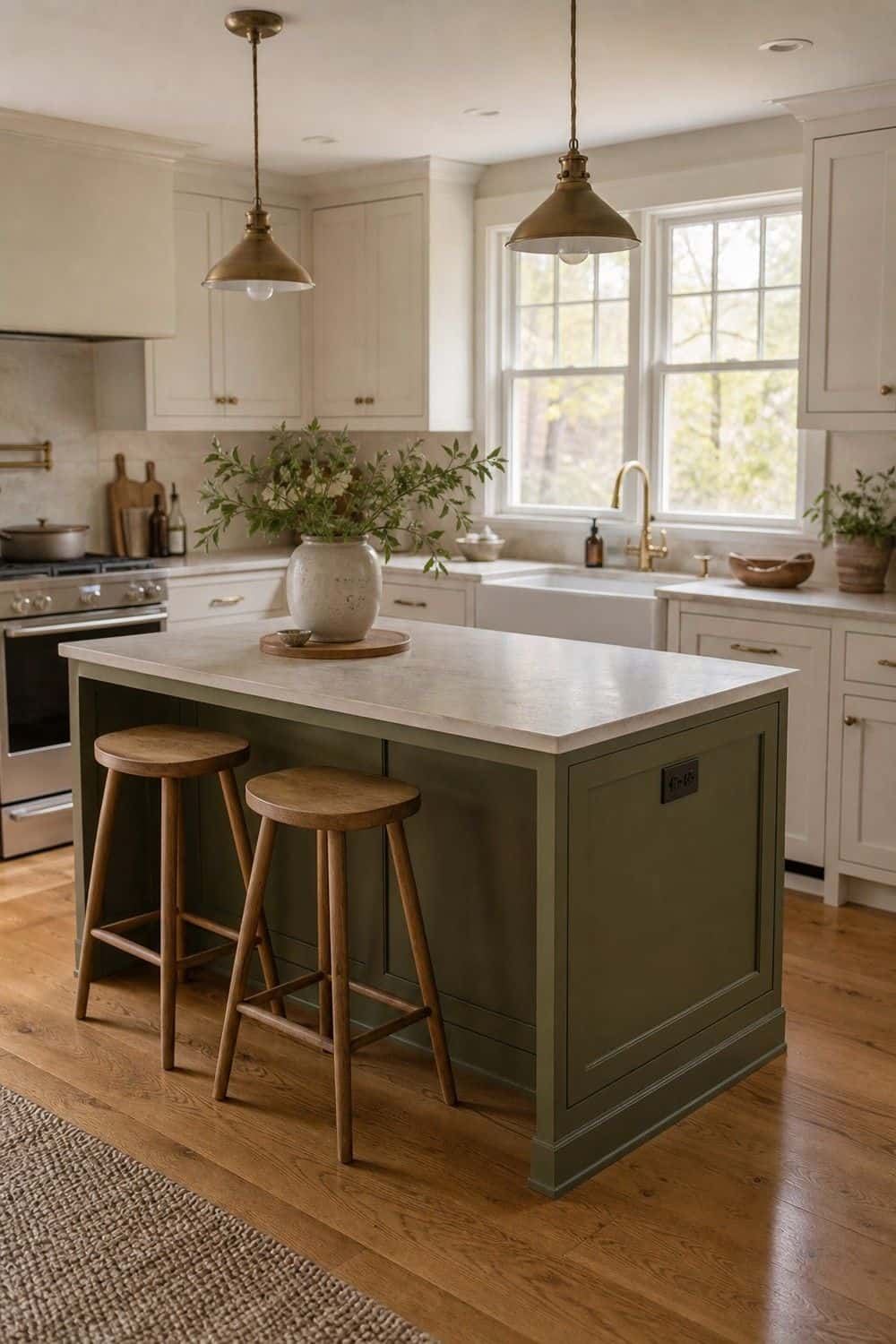
An olive green kitchen island gives the room a focal point without changing every cabinet. It works especially well with cream perimeter cabinets, wood stools, stone counters, or brass pendants because the island can carry the deepest color. Repeat the olive once in a runner, ceramic piece, framed print, or pantry accent so the island does not feel isolated. If the island has seating, choose stool materials that soften the color instead of adding another heavy finish near the counter.
4. Aged Brass Hardware With Olive Cabinets
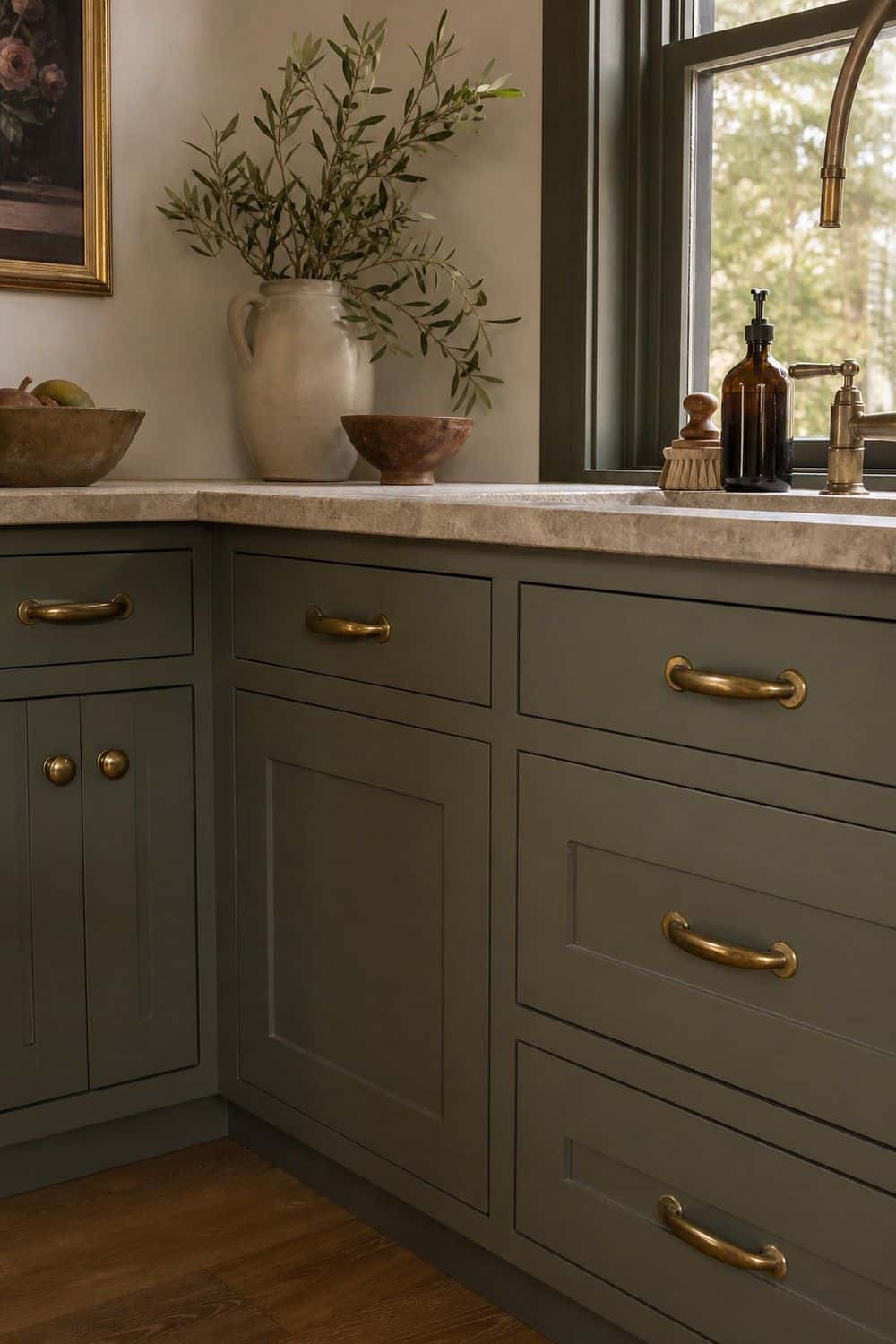
Aged brass brings out the golden side of olive green kitchen hardware without looking as sharp as bright yellow gold. The finish feels softer on cabinet pulls, knobs, latches, and pendant details, especially beside cream walls or warm stone in natural daylight.
Use brass where hands naturally touch the kitchen, not only as decoration. Pull length, backplate style, and finish sheen all affect the look. Unlacquered and aged finishes suit olive because they develop a quieter, lived-in surface over time.
5. Bronze Pulls for a Moodier Olive Kitchen
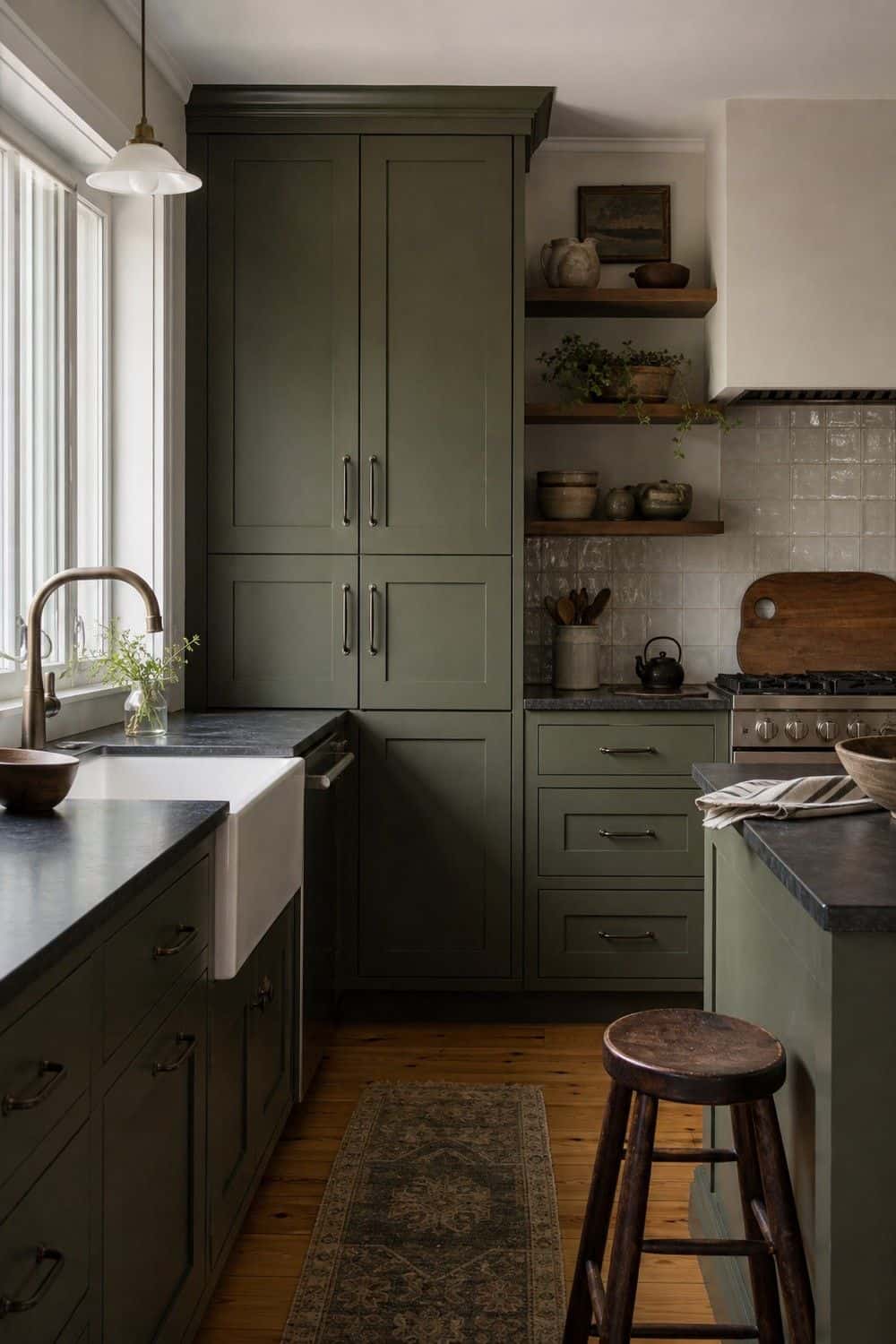
Bronze hardware makes olive cabinets feel darker, calmer, and more grounded than brass. It is a good choice for deeper olive paint, walnut accents, soapstone counters, traditional cabinet fronts, or kitchens with a more collected mood. Keep the bronze finish consistent with nearby hinges, lighting, or faucet details so the room does not look mismatched. Aged bronze can disappear into dark olive, so use enough contrast if the cabinets already have a low-light corner near the sink wall or pantry.
6. Copper Accents for Extra Warmth
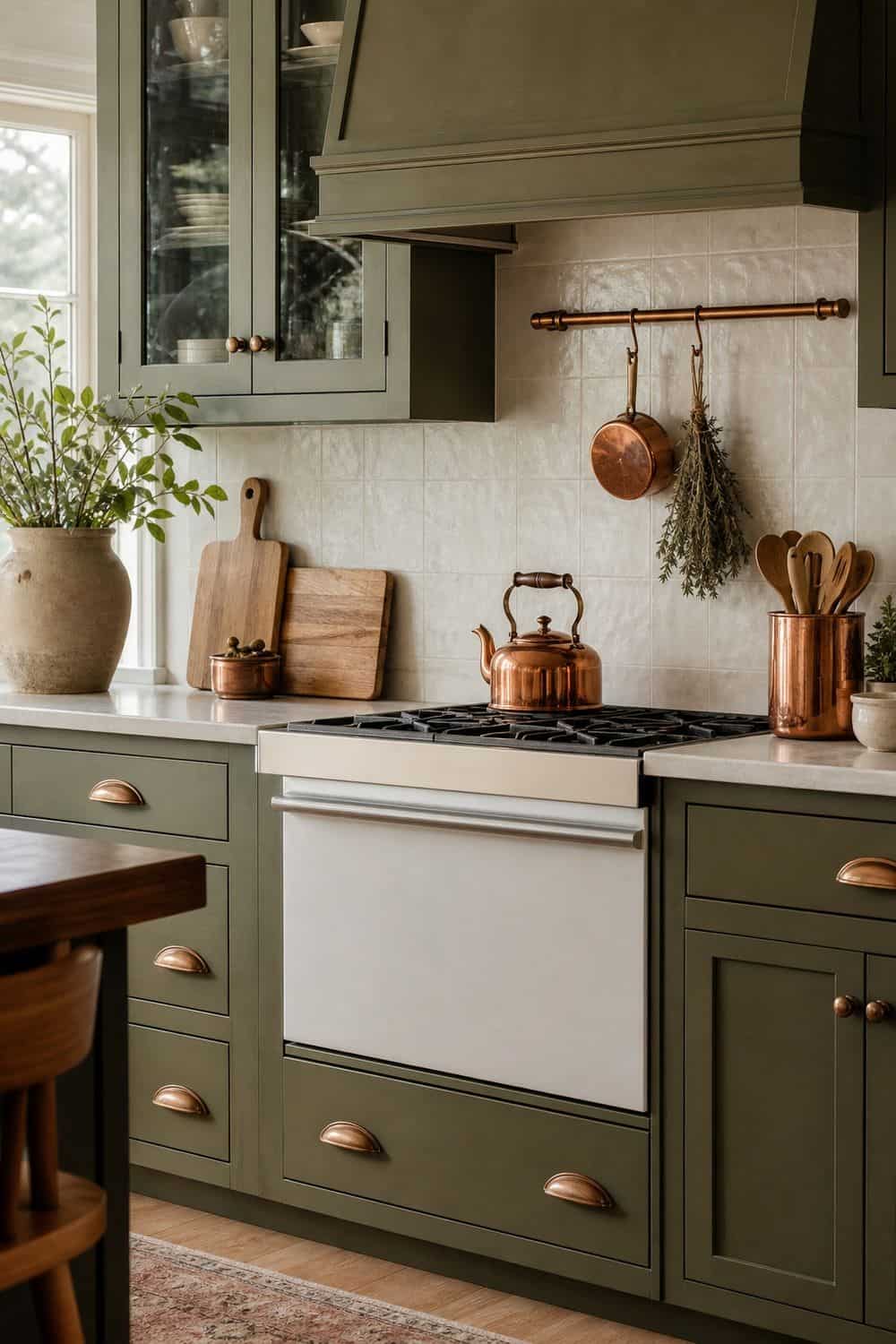
Copper can warm an olive kitchen quickly, but it should stay an accent rather than the whole metal palette. A kettle, utensil crock, rail, cookware piece, or small light can add glow without making the room visually busy near open shelving.
Use copper where it has a reason to be visible, such as near the range, coffee station, or open shelf. It pairs well with cream tile and wood, but too many copper pieces can fight the earthy calm of olive.
7. Natural Wood With Olive Green
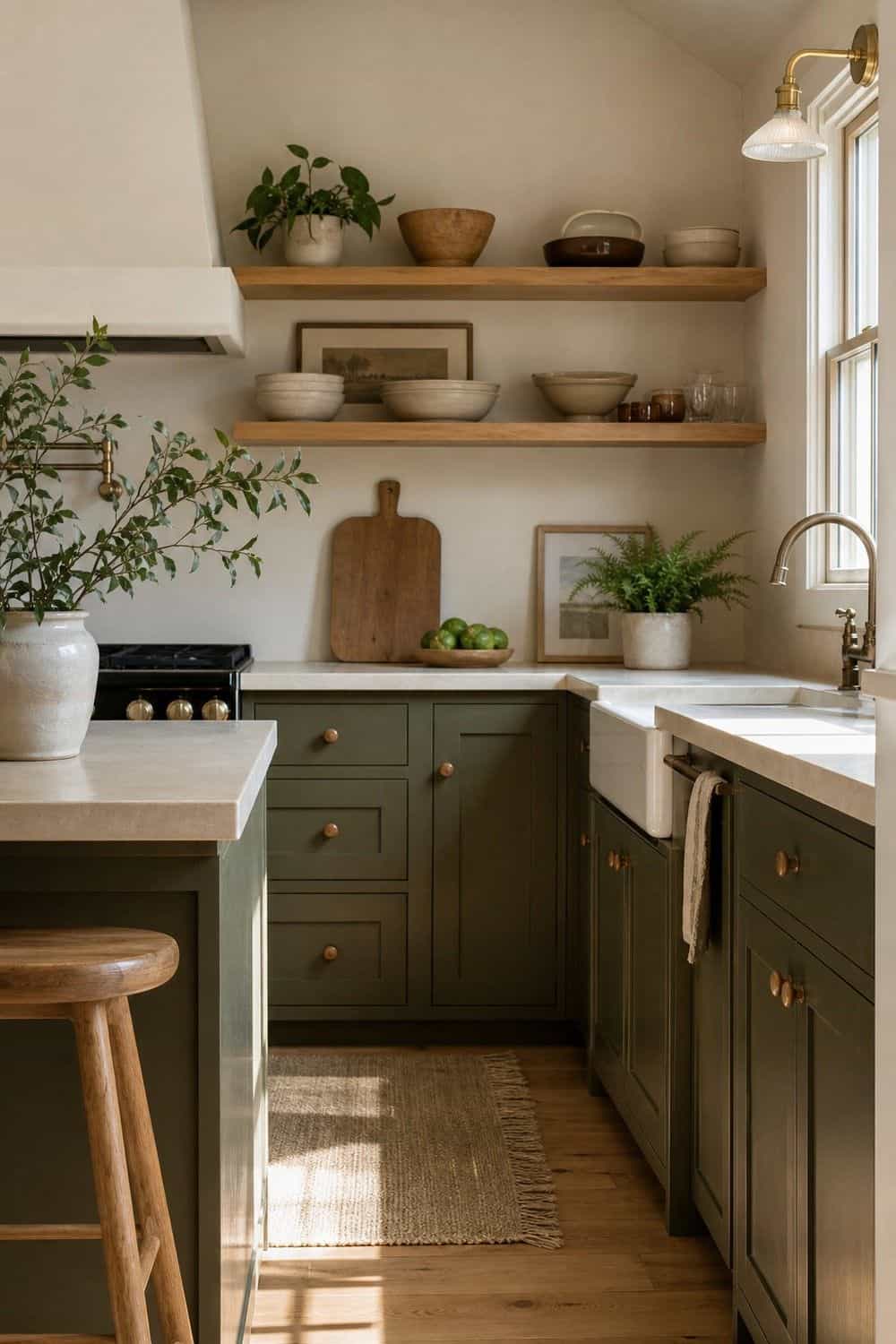
Natural wood keeps olive green from feeling flat because it adds grain, warmth, and variation. Wood shelves, stools, cutting boards, beams, trim, or flooring can all make an olive palette feel organic instead of overly painted.
Oak gives olive a lighter, casual feeling, while darker stain makes it richer and more traditional. Keep wood tones coordinated across the kitchen so the olive and wood read as a planned pairing rather than separate accents.
This pairing is especially useful in an olive green and wood kitchen where the color needs texture, movement, and a natural bridge to the surrounding finishes.
8. Walnut With Olive Green
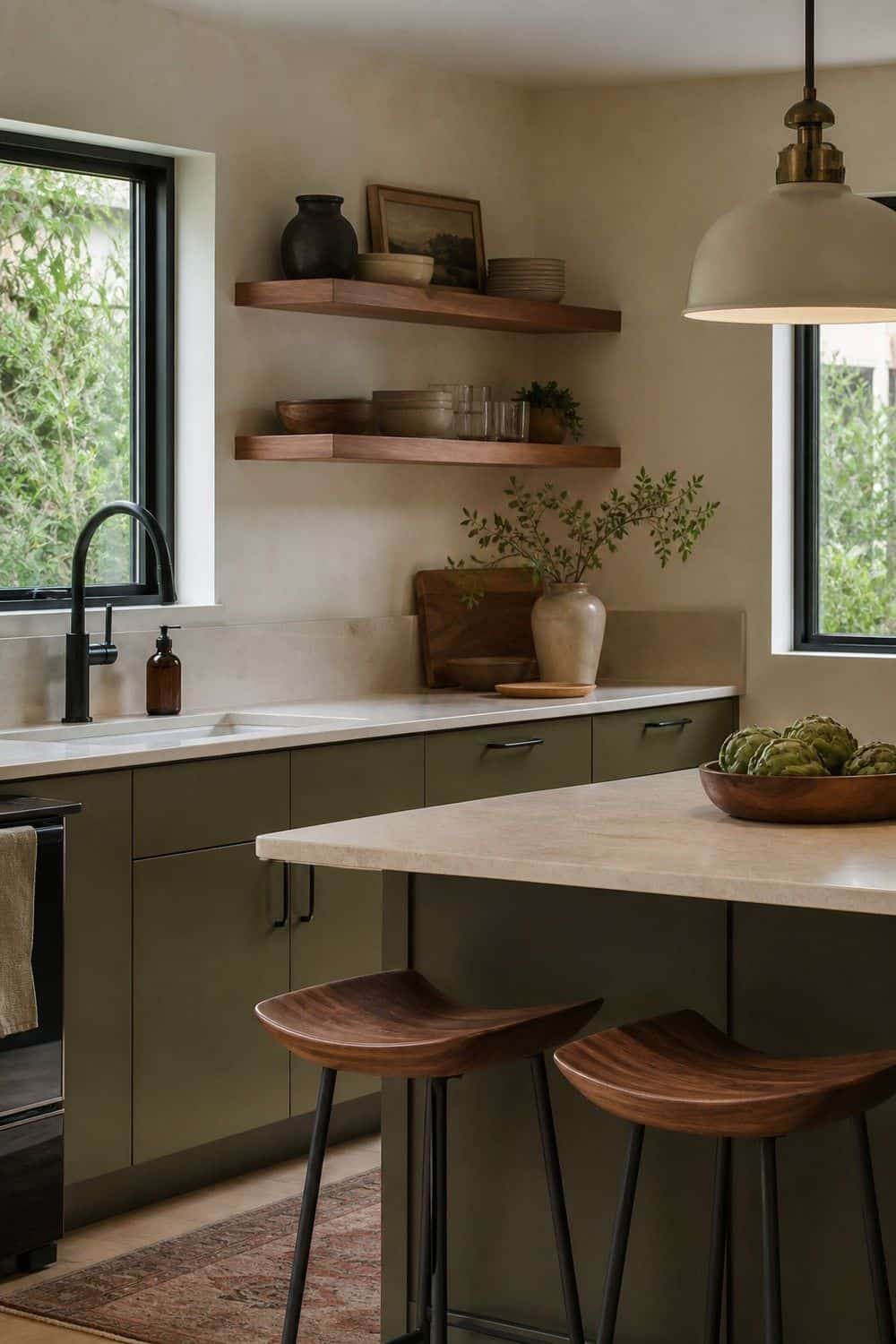
Walnut gives olive green a darker, more elegant mood than pale oak or maple. The rich grain can make olive cabinets, an island, or a pantry wall feel more refined without losing the earthy quality of the color.
Use walnut on stools, floating shelves, drawer fronts, open cubbies, or a hutch-style piece. Because both walnut and olive have depth, add cream walls, warm lighting, or lighter stone so the kitchen still has contrast and relief around the work zones and shelves.
9. Cream Walls to Soften Olive Cabinets

Cream walls can keep olive cabinets from looking too heavy, especially when the cabinetry has a brown or khaki undertone. The warmth of cream supports olive better than a stark cool white that can make the color look dull at night after sunset.
Test wall paint beside cabinet samples, backsplash tile, counters, and trim. A cream that looks gentle on its own can turn yellow beside olive, while a cleaner warm white may give the cabinets the softness they need.
10. Tonal Green Palette

A tonal green palette layers olive with nearby greens so the room feels soft instead of high contrast. Moss, sage, celadon, khaki, and muted eucalyptus can sit around olive if their undertones are checked together. Use the deepest green on cabinets, island paint, or a pantry nook, then keep lighter greens in textiles, ceramics, artwork, or tile variation. Too many unrelated greens can look accidental, so sample them beside the same counter material, hardware, backsplash, and wall color at the same time.
11. Blush or Clay Accents
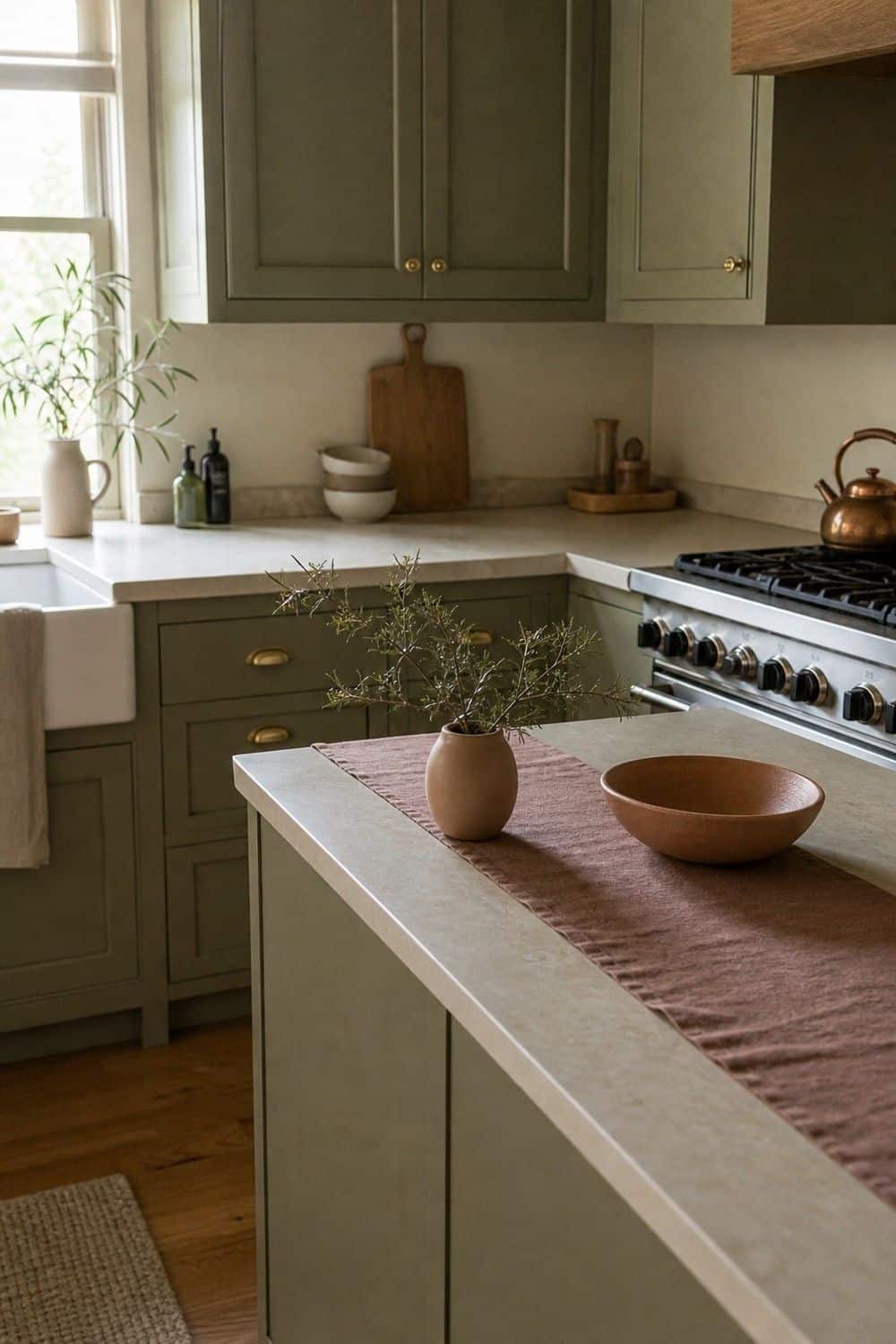
Blush, clay, dusty pink, and terracotta can warm olive without pushing the kitchen into a red-and-green contrast. The trick is using muted accents, not bright pink pieces that fight the grounded color of the cabinets or tile.
Try the accent through a runner, framed art, ceramic bowl, linen shade, or small vase. Clay tones are especially good with olive, cream, walnut, and brass because they add warmth while staying earthy and quiet.
Keep the accent small enough that olive remains the main color story across the cabinets, backsplash, runner, or open-shelf pieces in view from the cooking area.
12. Handmade Olive Green Tile
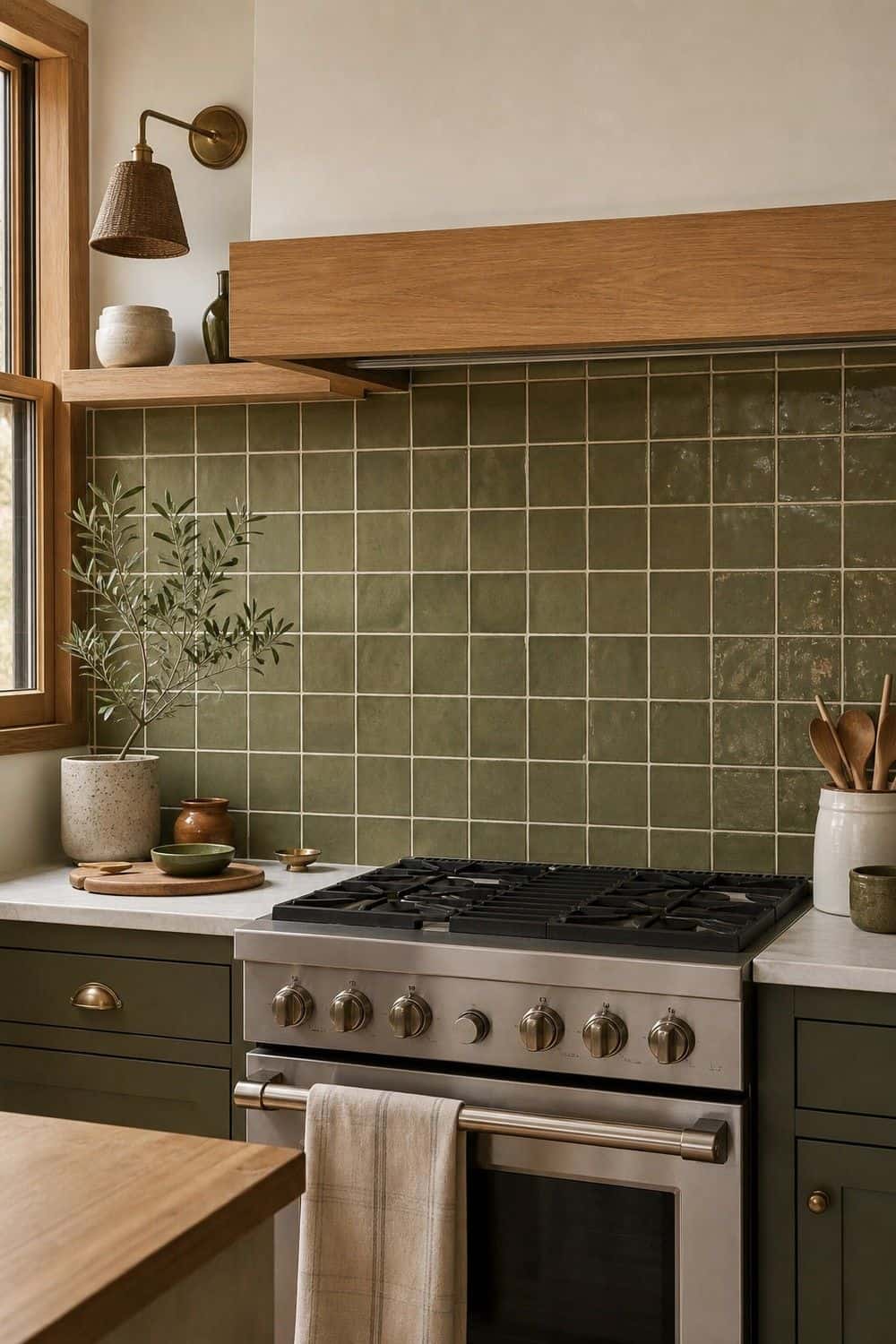
Handmade olive green kitchen backsplash tile adds texture and color without relying only on painted cabinets. Zellige, softly glazed ceramic, or matte handmade-look tile can make the wall feel alive because the color shifts from piece to piece. Use it behind a range, sink, coffee bar, or full-height backsplash when the rest of the room is quiet. Cream grout softens the look, while darker grout outlines the tile and can make the olive feel more graphic around the cooking zone.
13. Stone Slab Backsplash
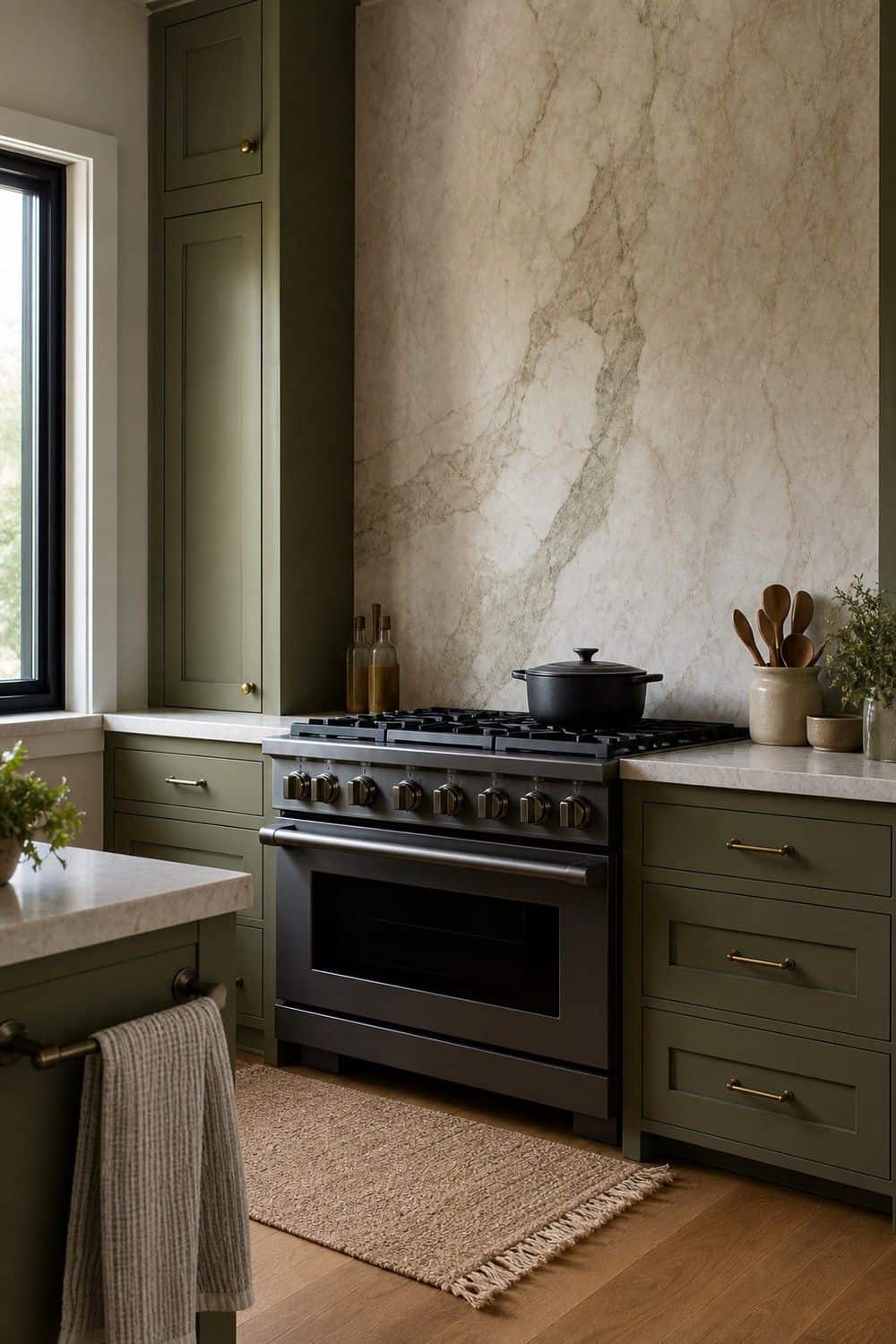
A stone slab backsplash can make olive cabinets feel more current and integrated than a busy mosaic. Marble, quartzite, limestone, soapstone, or dramatic veined stone gives the wall movement while keeping the material field calm. Check the stone undertone beside the olive before choosing. Cool gray veining may make olive look muddier, while cream, taupe, gold, or brown movement often supports its warmth. A full-height slab also reduces visual breaks behind darker cabinets and range areas nearby behind the stove.
14. Marble Countertops With Olive Green
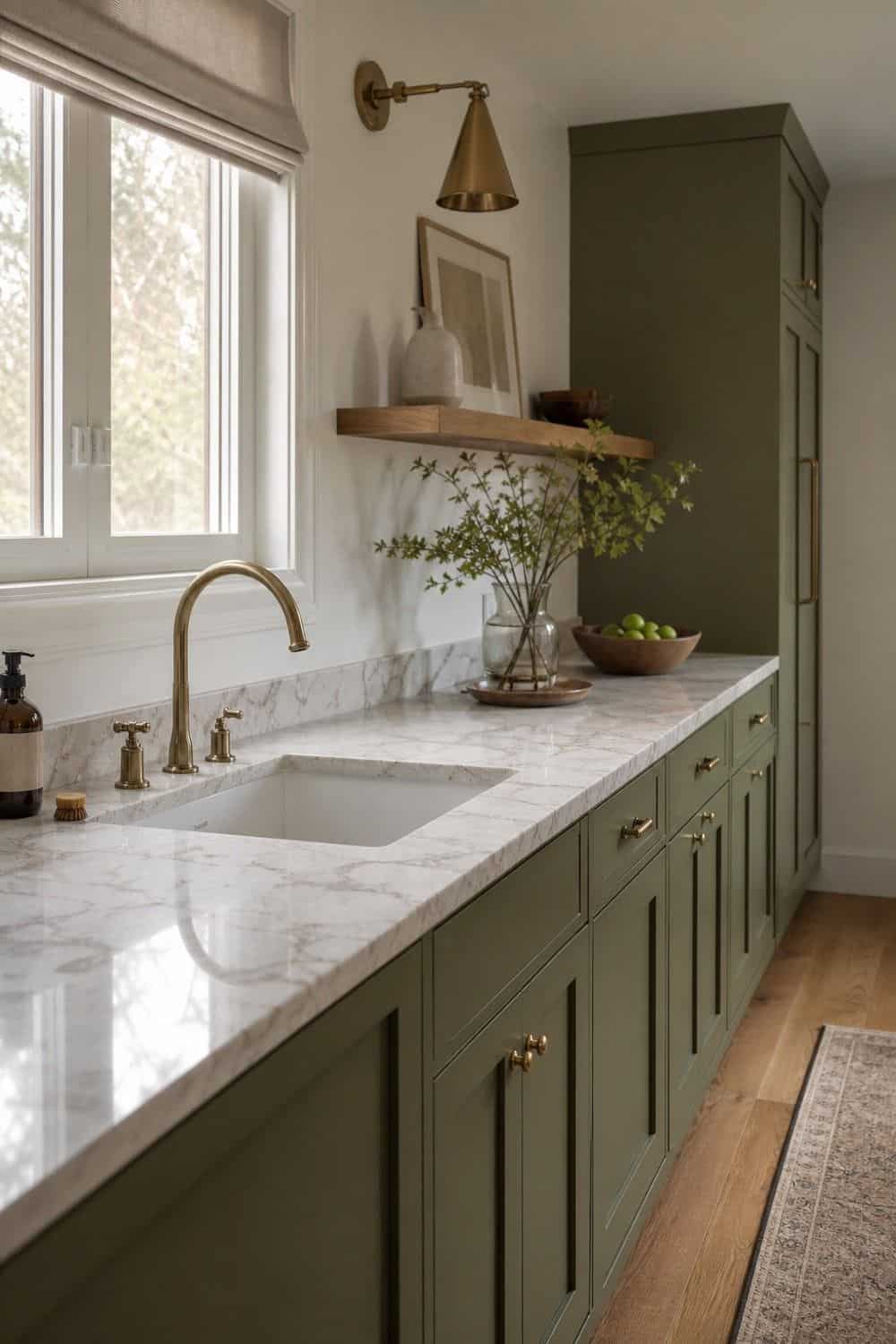
Marble and marble-look surfaces brighten olive green because the pale base and veining add movement. This pairing is especially helpful when olive appears on lower cabinets, an island, or a full cabinet wall that needs contrast.
Choose marble with veining that supports the cabinet undertone. Soft gray can look clean, but cream, taupe, or warmer movement may feel more natural with olive. For a low-commitment color test, use marble-look material on a side counter, cart, or temporary work surface near a window.
15. Dark Stone for a Moody Kitchen
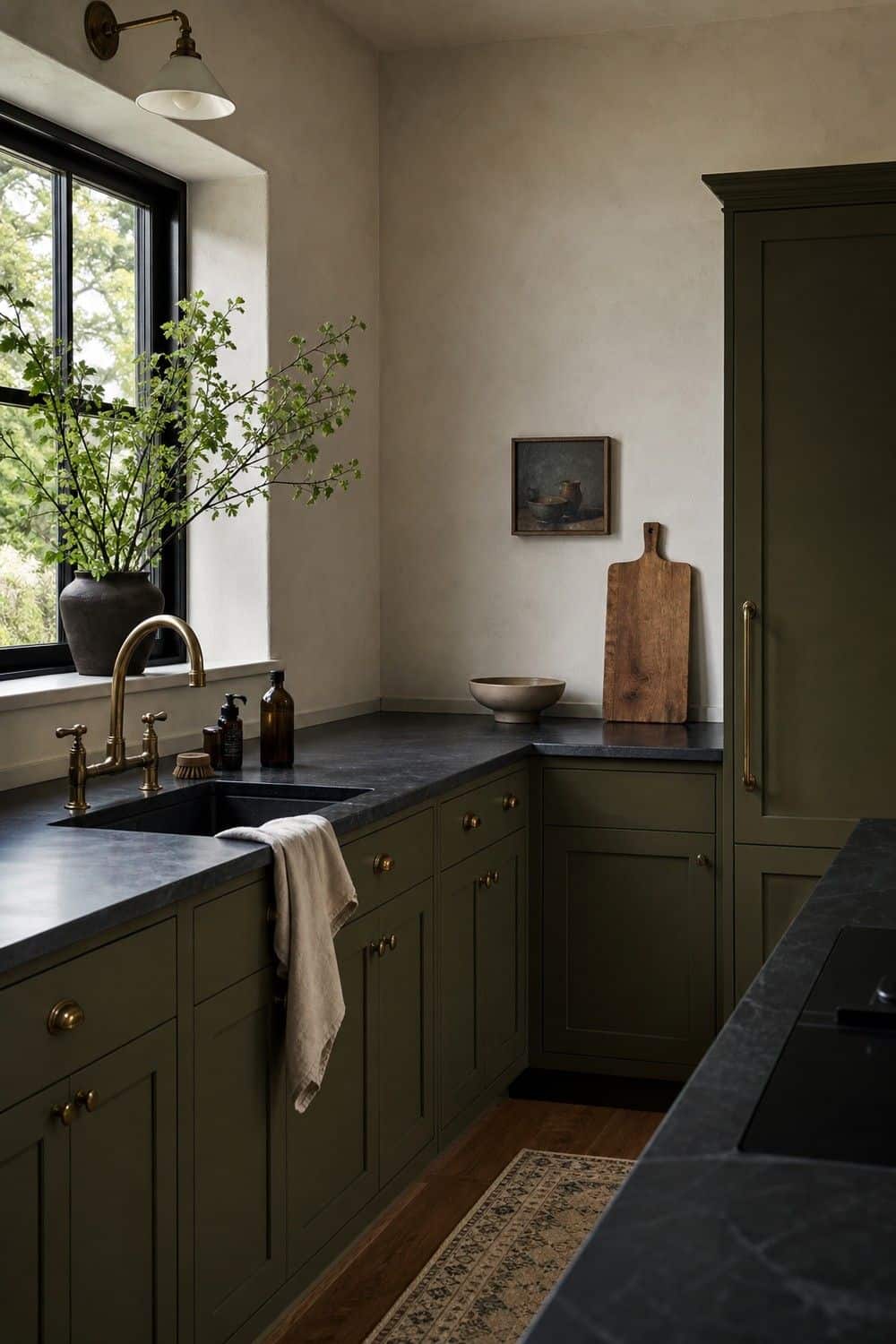
Dark stone can make olive feel dramatic and grounded, especially with soapstone, black granite, dark quartz, or deep honed surfaces. The combination is strongest when there is enough warmth from wood, brass, cream walls, or soft lighting. Avoid letting every surface become dark at once. If the counters are deep and the cabinets are olive, use a lighter wall, warm pendant light, pale stone detail, or wood shelf to keep the kitchen from feeling flat around the worktop and backsplash.
16. Open-Shelf Styling in Olive Green
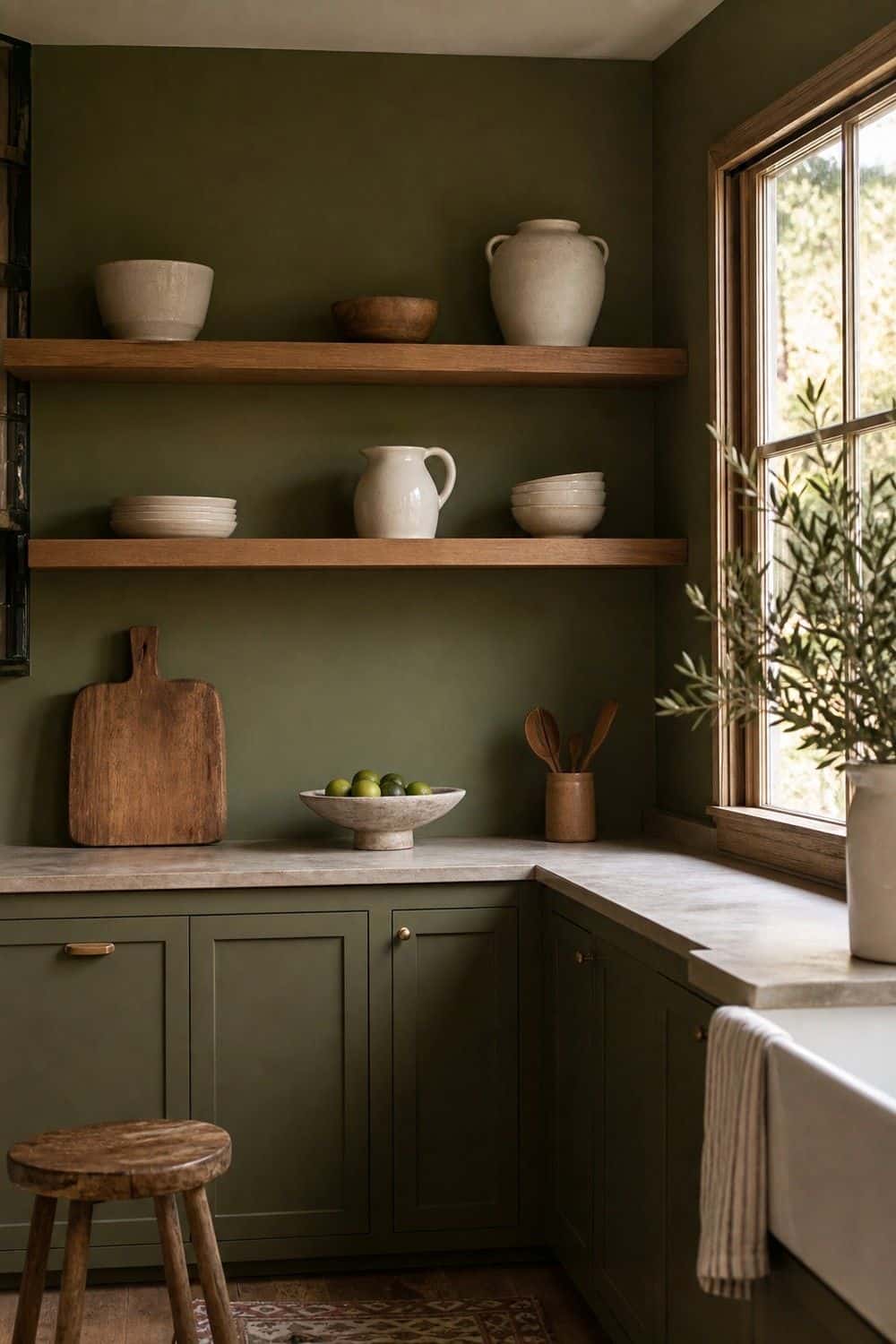
Open shelves are a gentle way to test olive before changing fixed finishes. Olive bowls, mugs, pitchers, vases, or serving pieces can bring the color into the room while the cabinets and backsplash stay neutral. Repeat one or two olive pieces rather than scattering many unrelated greens across the shelf. The color looks cleaner beside white dishes, clear glass, wood boards, cream ceramics, or a small brass detail that echoes the hardware near the sink area and everyday dishes below.
17. Cafe Curtains in Olive Green
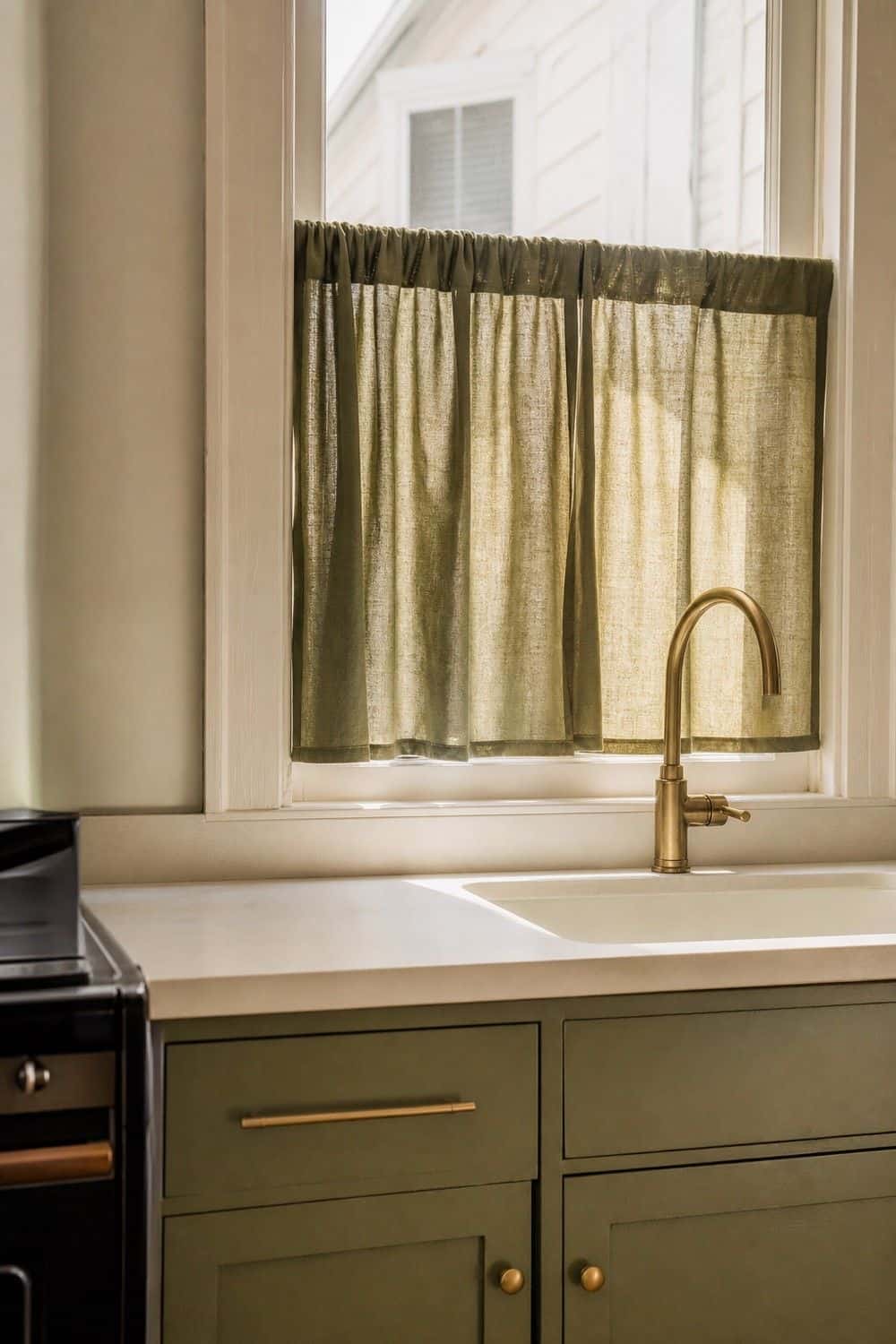
Olive cafe curtains add softness near a sink window, breakfast nook, pantry window, or side door. They bring the color to eye level without repainting cabinetry, which makes them useful when the room already has strong counters or tile. Choose washable fabric in linen, cotton, gingham, stripe, or a subtle woven texture. Olive curtains look especially good with cream walls, wood shelves, brass hardware, and stone counters because the fabric softens all the harder surfaces nearby around the sink window.
18. Olive Kitchen Runner
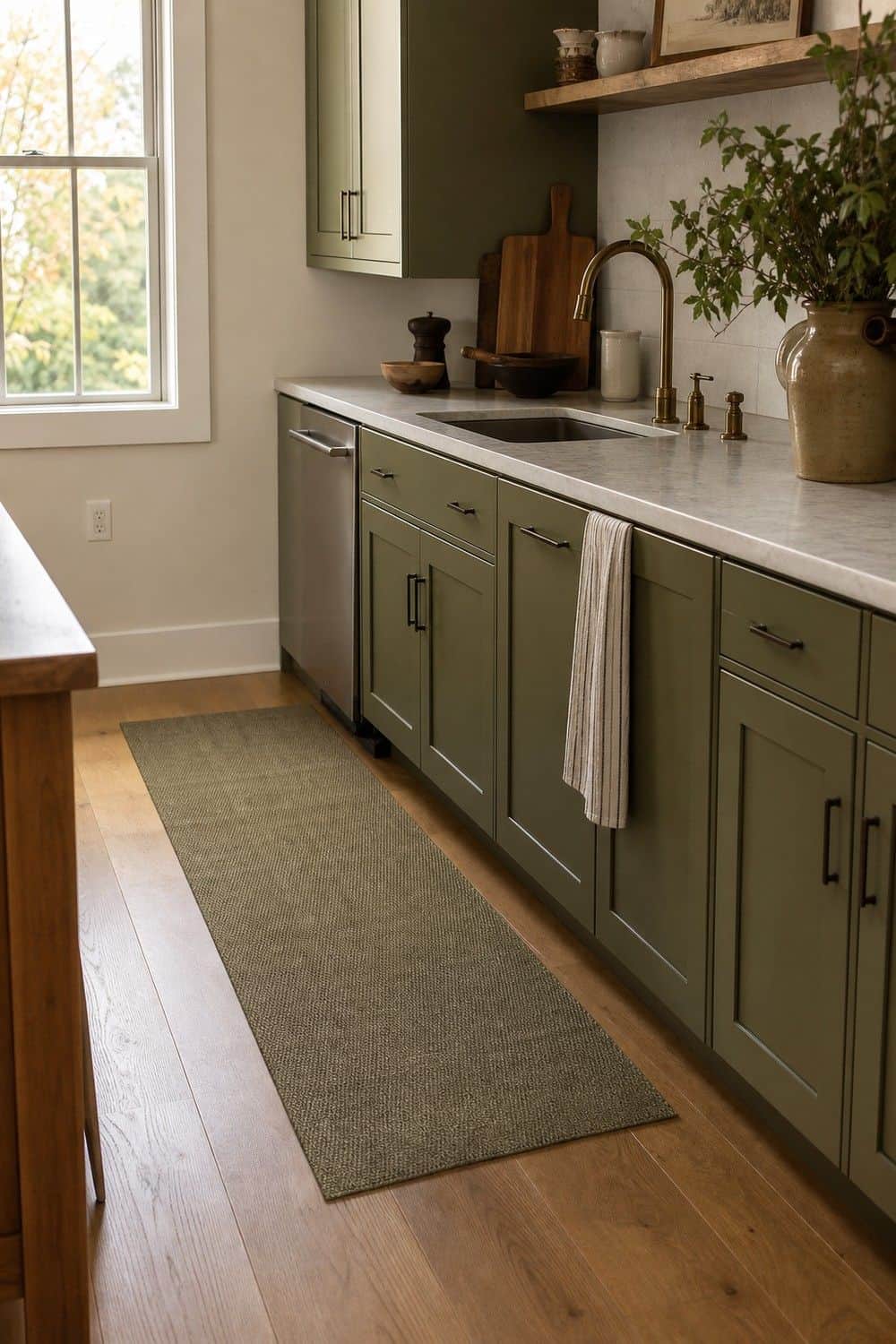
An olive runner adds color on the floor and helps you see how the shade works with existing cabinets, counters, and appliances. It is also easier to change than paint if the undertone feels wrong in the space. Use a low-pile washable runner with a rug pad, especially in a galley path, sink zone, or island walkway. Olive and cream feels softer, olive and black feels modern, and olive with terracotta can look warmer near wood cabinets and cabinet bases.
19. Small Appliances in Olive Green
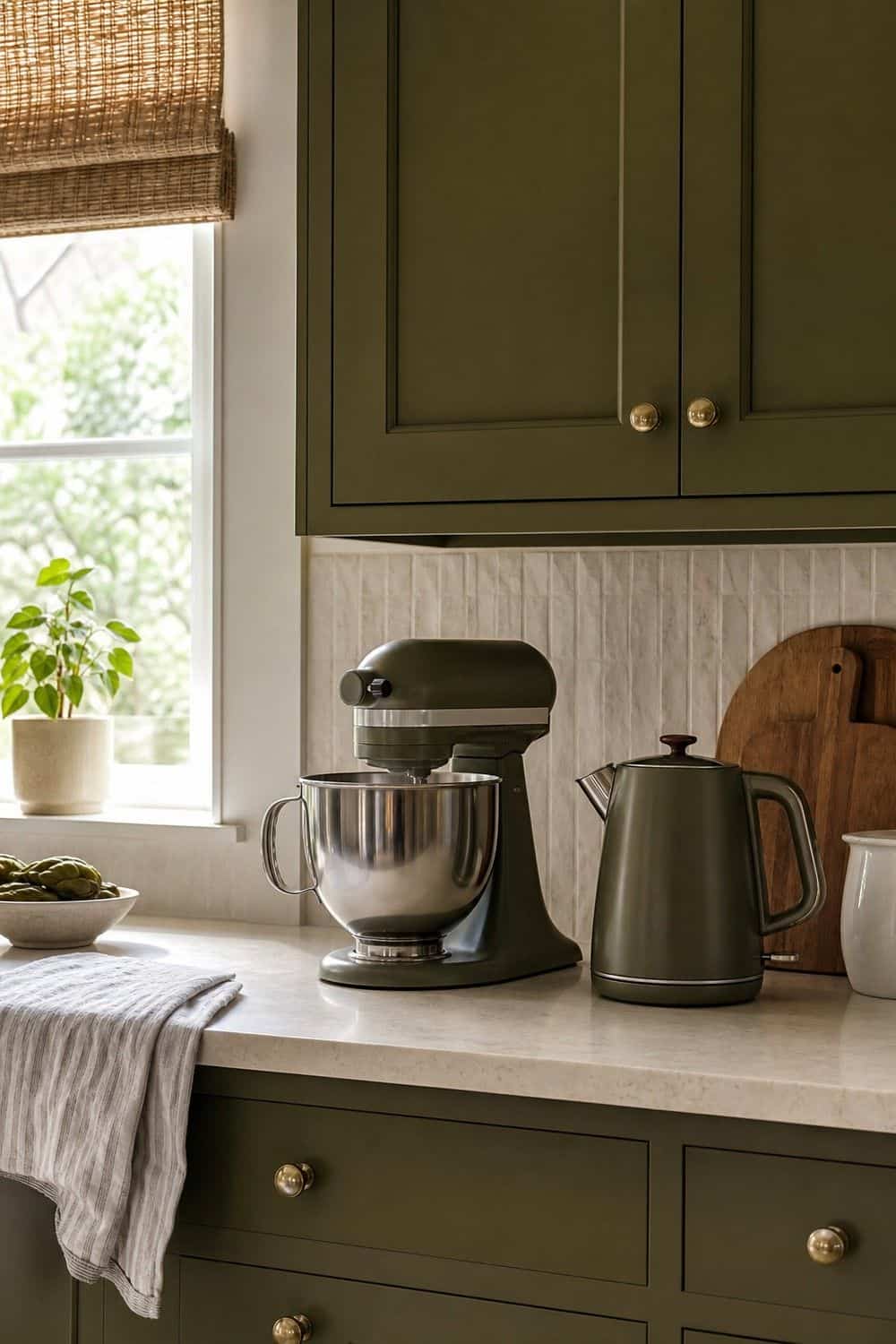
Small appliances let olive appear in the kitchen without changing cabinets or tile. A toaster, kettle, stand mixer, coffee machine, or mini appliance can add the color in a way that still has a daily function.
This is clearest when the appliance sits in one planned spot, such as a coffee station, baking zone, or open shelf. Keep the surrounding counter quiet so the olive reads as a color choice instead of random clutter.
Repeat the tone once through a runner, towel, ceramic bowl, or small framed print so the appliance color feels connected to the wider kitchen instead of isolated.
20. Olive Pantry or Coffee Nook
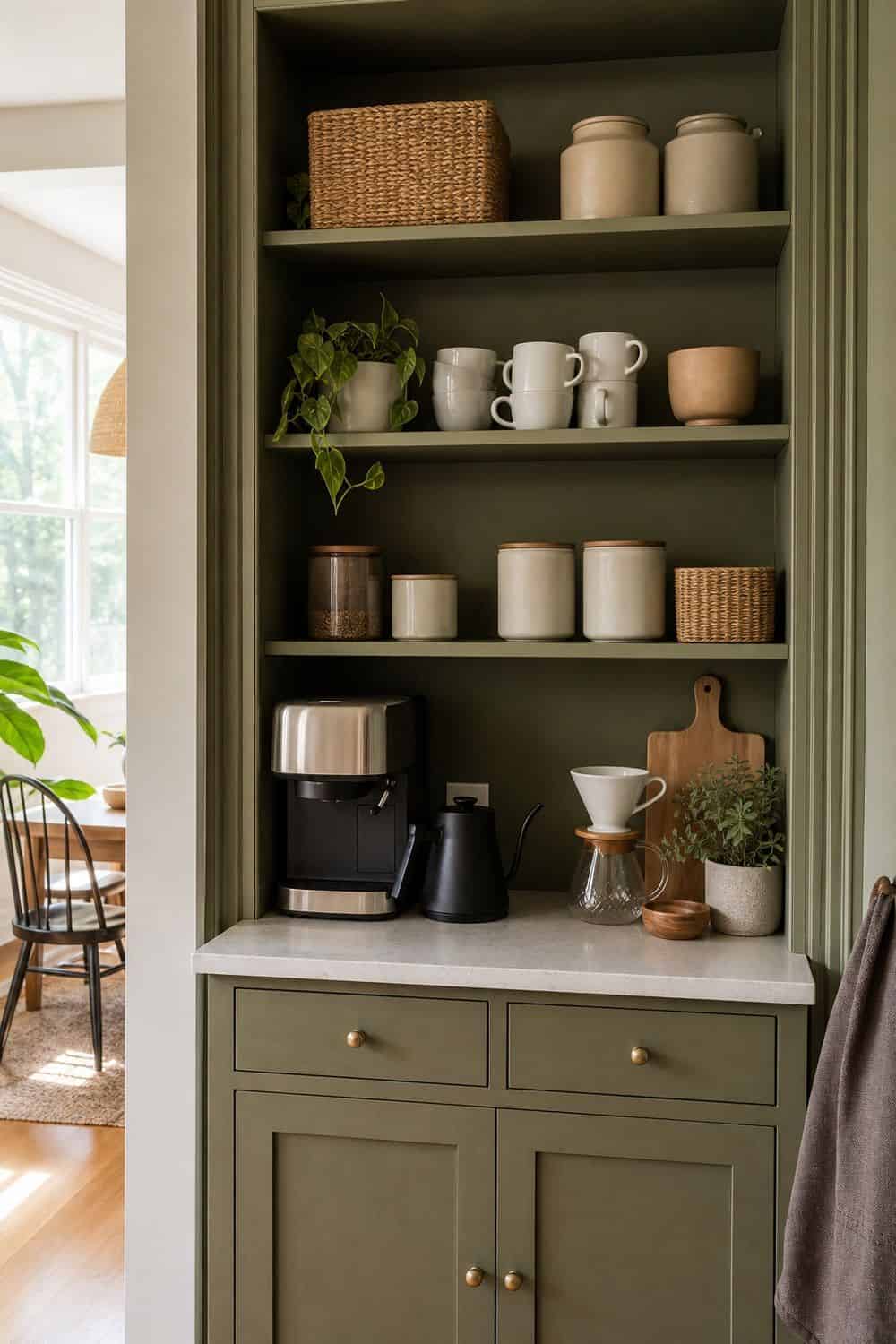
A pantry, coffee nook, hutch, breakfast corner, or small niche can carry olive green without taking over the full kitchen. This is useful when you want the depth of olive but the main cabinet run needs to stay neutral.
Paint the back wall, cabinet interior, shelving, or nook trim, then repeat the color with one object in view. Peel-and-stick wallpaper can also create a low-commitment olive test zone on a smooth, clean surface away from heavy heat or splash.
21. Range Hood in Olive Green

An olive range hood or hood surround creates a strong focal point above the stove. It works well when the surrounding cabinets are cream, wood, or a quieter olive, because the hood can carry the architectural color moment.
Pair the hood with tile or stone that keeps the wall integrated. A cream zellige field, slab backsplash, or warm stone can support the olive without making the range wall too busy. Match the hood sheen to the cabinetry and nearby trim.
22. Warm Pendant Lighting
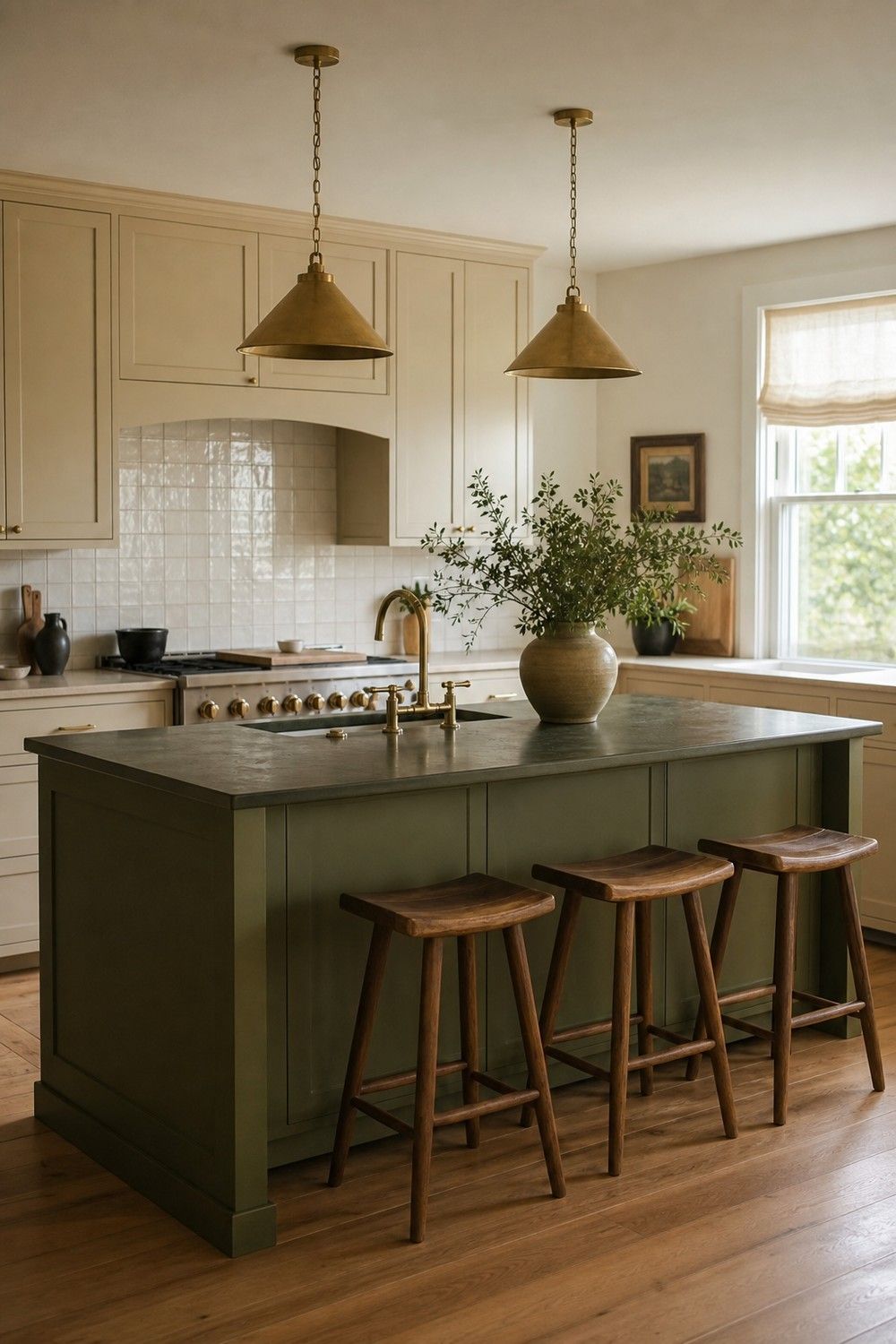
Lighting changes olive dramatically, especially at night. Warm brass pendants, milk glass shades, woven pendants, or soft white bulbs can keep olive cabinets from looking gray, dull, or too brown after daylight fades. Use pendants over an island, peninsula, breakfast table, or sink area where the color needs a flattering glow. Cool bulbs can make olive look muddy, so check paint samples under the same lighting you plan to use before choosing the final shade for cabinets and trim after dark.
23. Black Accents for Contrast
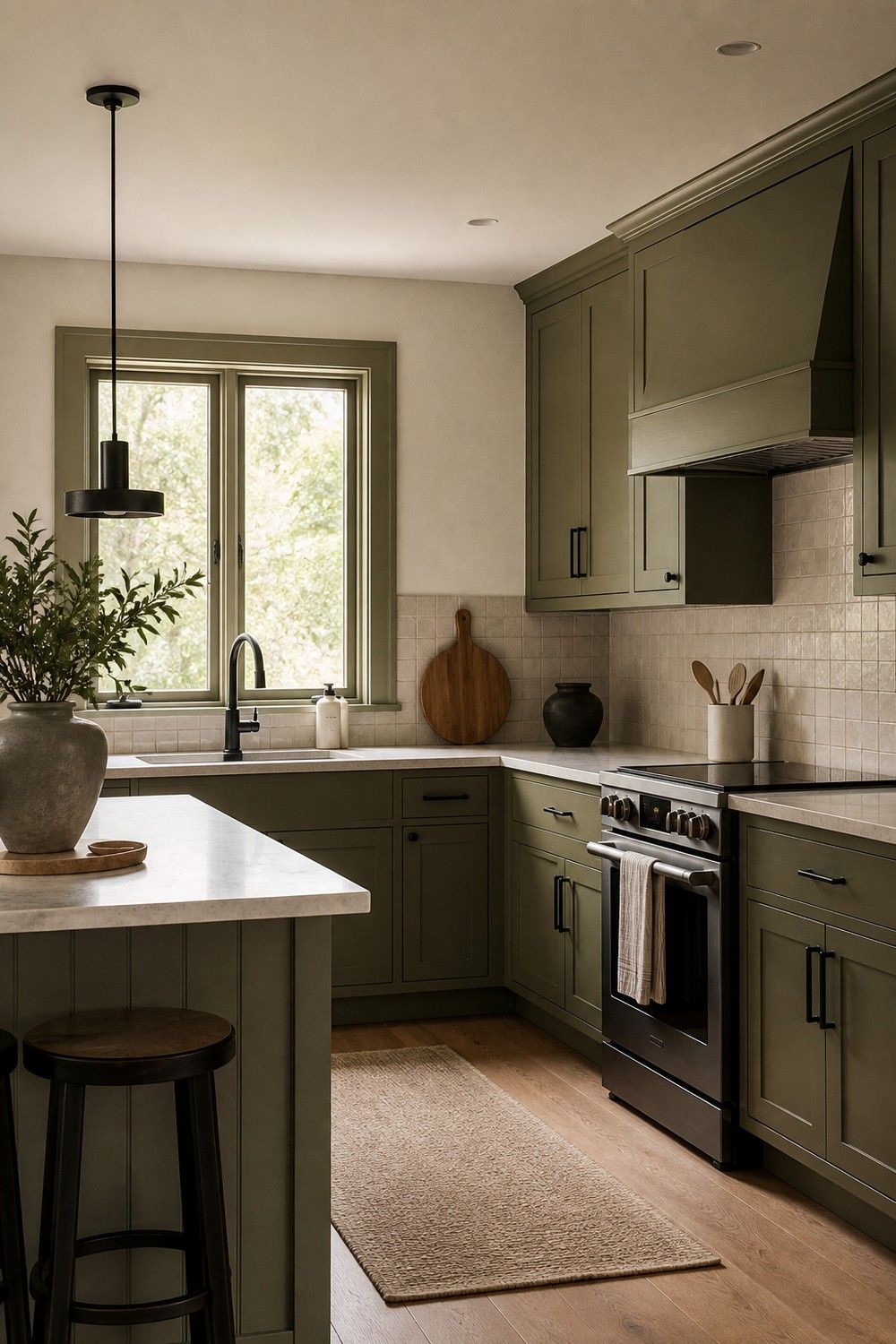
Black accents can make olive green feel more modern when they are used with restraint. Matte black pulls, stools, window frames, light fixtures, or a slim faucet can sharpen the palette without overpowering the earthy color.
Balance black with cream, wood, stone, or brass so the kitchen does not become harsh. This pairing is strongest when olive appears on cabinets or an island and black is used as a clear supporting line.
Keep large black surfaces limited unless the room has generous daylight, pale counters, or enough warm wood to soften the stronger contrast around the olive color.
24. Low-Commitment Olive Backsplash
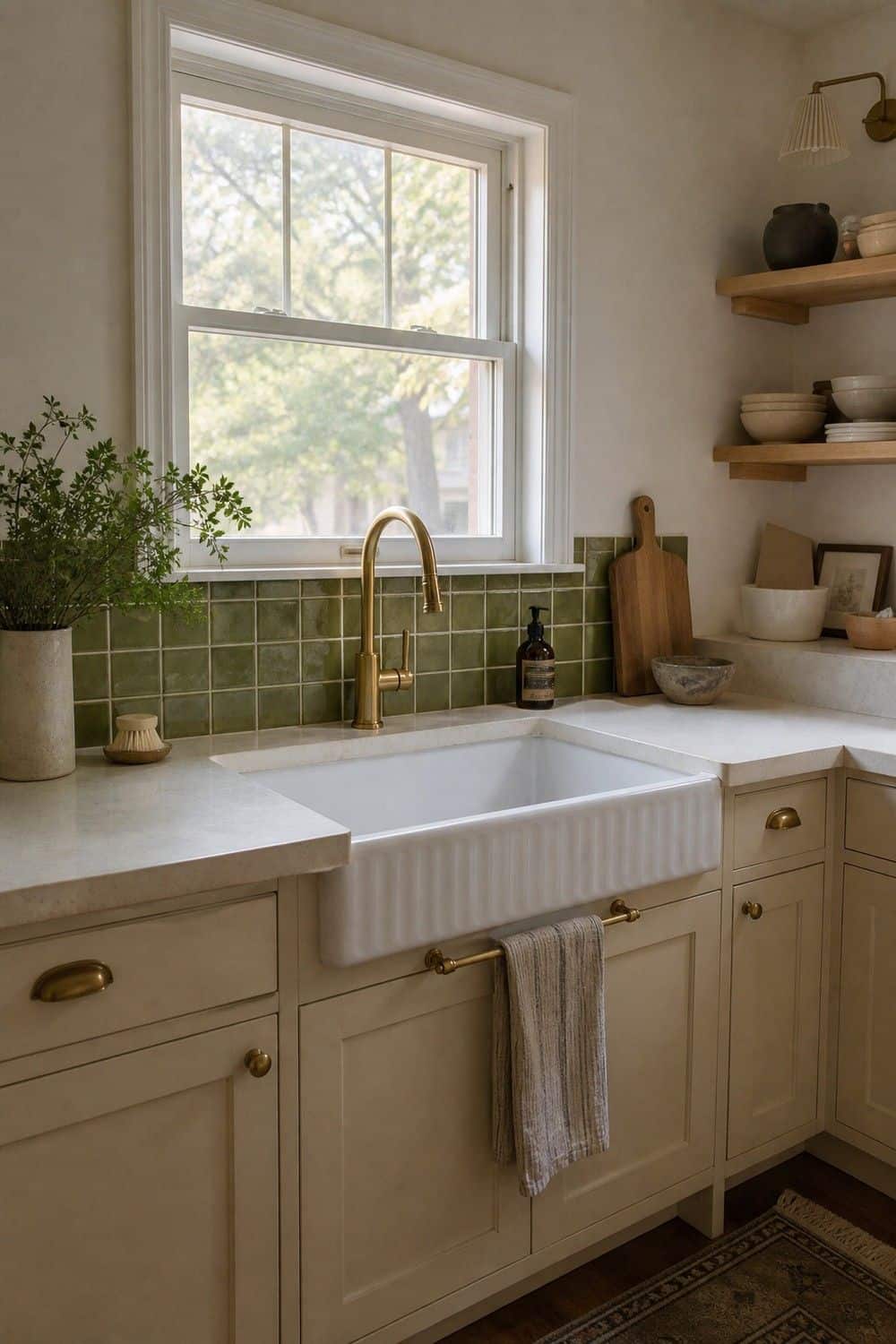
Peel-and-stick olive tile can help test the color behind a sink, coffee bar, pantry counter, or short backsplash area. It gives the eye a real surface to judge before moving toward paint, tile, or a larger finish. Use it only where the product is appropriate for heat, moisture, and cleaning needs. A contained backsplash panel is easier to adjust than full cabinetry, and it can show whether olive looks rich or muddy beside the counters and wall color under kitchen light.
25. Olive, Sage, Moss, and Forest Green Comparison
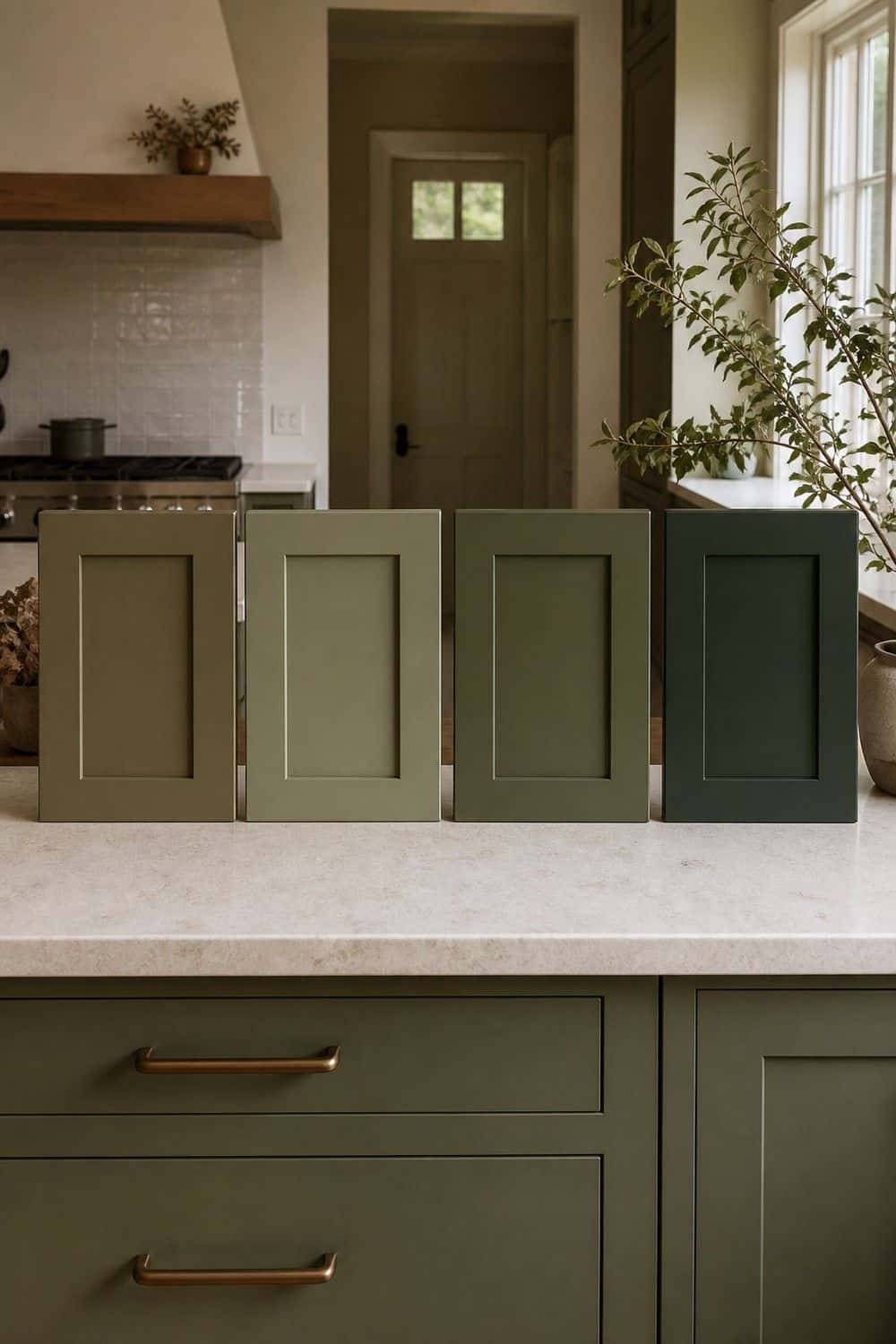
Color clarity is important because olive, sage, moss, and forest green can look close on a tiny swatch. Olive usually has warmer yellow-brown undertones, sage is cooler and grayer, moss feels muted and natural, and forest green is deeper.
Compare large samples beside counters, floors, backsplash, trim, hardware, and nearby wood. If olive looks muddy, try a cleaner green, a creamier wall color, or warmer lighting. If sage feels too soft, olive may give the kitchen the depth you wanted.
Frequently Asked Questions
Is olive green a good color for a kitchen?
Yes, olive green works well in kitchens because it behaves like an earthy neutral with more depth than cream or beige. It pairs naturally with wood, marble, brass, bronze, cream, black, handmade tile, and warm stone.
What colors go with an olive green kitchen?
Olive green pairs well with cream, warm white, walnut, oak, brass, bronze, copper, blush, terracotta, matte black, marble, limestone, soapstone, and other stone tones. The best pairing depends on whether the olive leans golden, brown, or khaki.
What hardware looks best with olive green cabinets?
Aged brass, unlacquered brass, bronze, copper, and matte black can all work with olive green cabinets. Brass feels warmer, bronze feels moodier, copper adds glow, and matte black gives the cabinets a cleaner modern edge.
Is olive green darker than sage green?
Olive green is usually darker, warmer, and more yellow-brown than sage green. Sage tends to be cooler and grayer, while olive feels earthier and richer. Always compare samples in the actual kitchen lighting before choosing.
How do you make olive green cabinets look modern?
Use cleaner cabinet fronts, slim pulls, integrated stone backsplash, warm lighting, and quieter counters. Olive green cabinets can feel modern when the surrounding details stay restrained and the color is balanced with cream, wood, or stone.
How can you add olive green without painting cabinets?
Try olive through peel-and-stick tile, cafe curtains, a kitchen runner, small appliances, ceramics, open-shelf pieces, removable wallpaper, or a painted cart if the surface allows it. These lower-commitment choices help test the undertone first.
What backsplash works with olive green cabinets?
Handmade tile, zellige, marble, limestone, soapstone, slab stone, cream tile, and subtle textured tile all work with olive green cabinets. Avoid glossy busy mosaics if they make the olive feel dated or visually crowded.
Does olive green make a limited-space kitchen look dark?
It can if every surface is dark, but olive can still work in a limited layout. Use it on lower cabinets, an island, runner, curtains, shelves, or small appliances, then balance it with cream, wood, reflective stone, and warm lighting.
Final Thoughts
The best olive green kitchen ideas pay attention to undertone, light, and material pairings. Olive can look golden, brown, khaki, or muted depending on nearby whites, woods, stone, hardware, and the color temperature of the room.
Start with the surface that makes the biggest difference for your kitchen, whether that is cabinets, an island, tile, curtains, hardware, or a runner. When olive is balanced with cream, wood, brass, stone, and warm lighting, it can feel rich, earthy, and easy to live with.