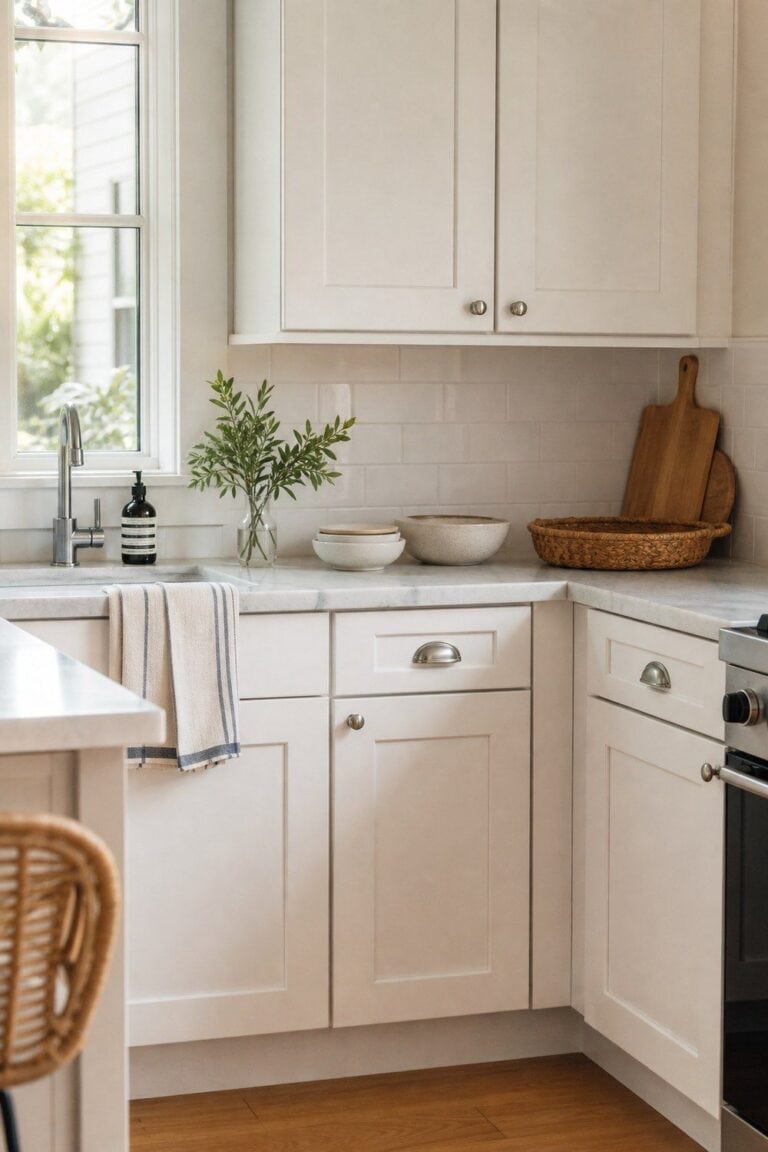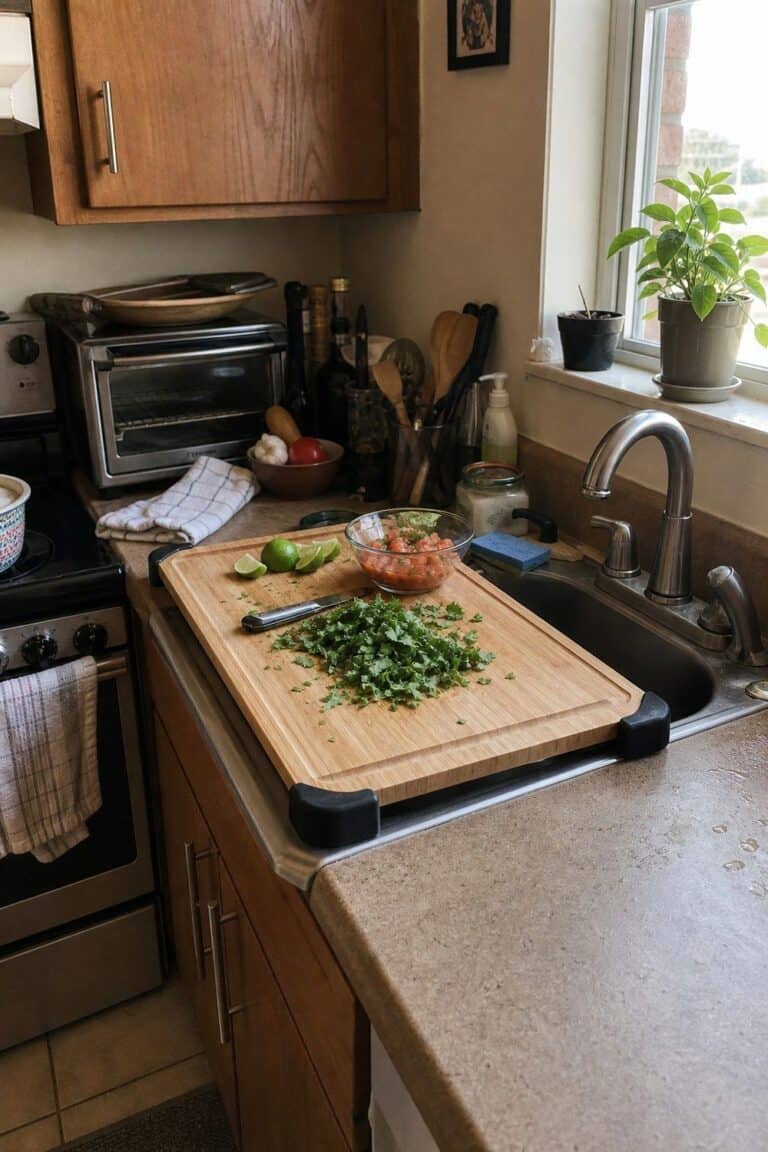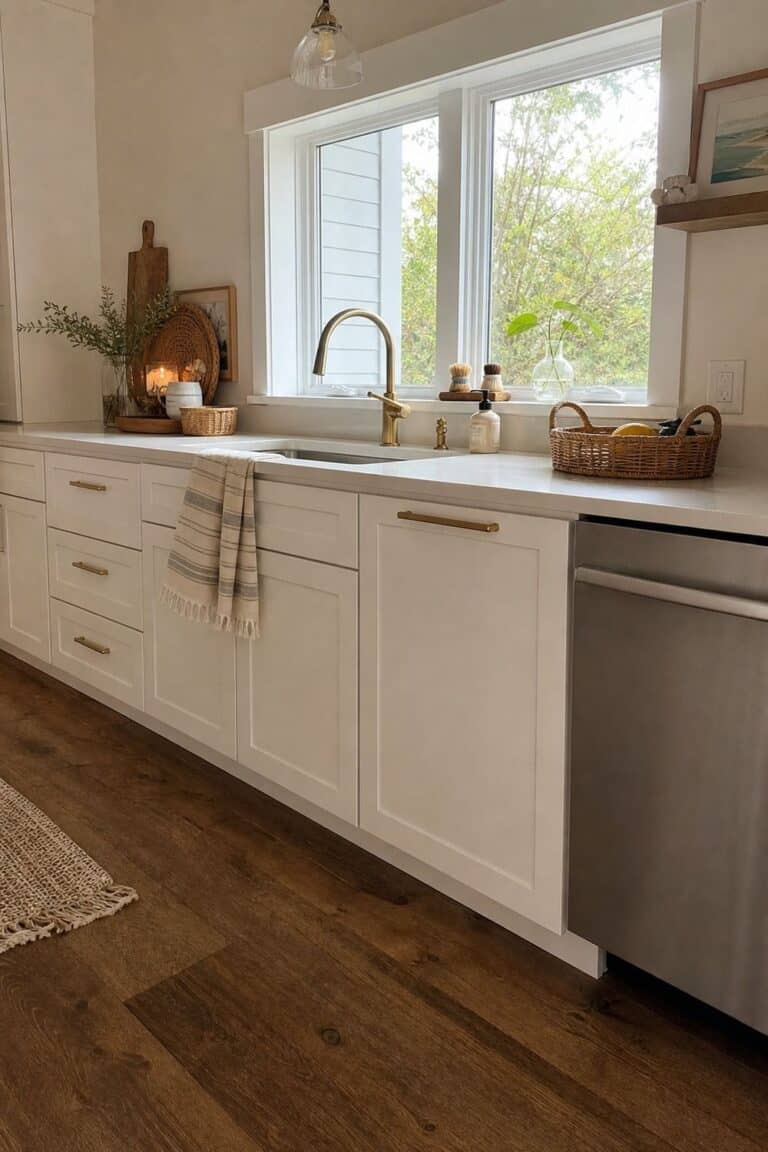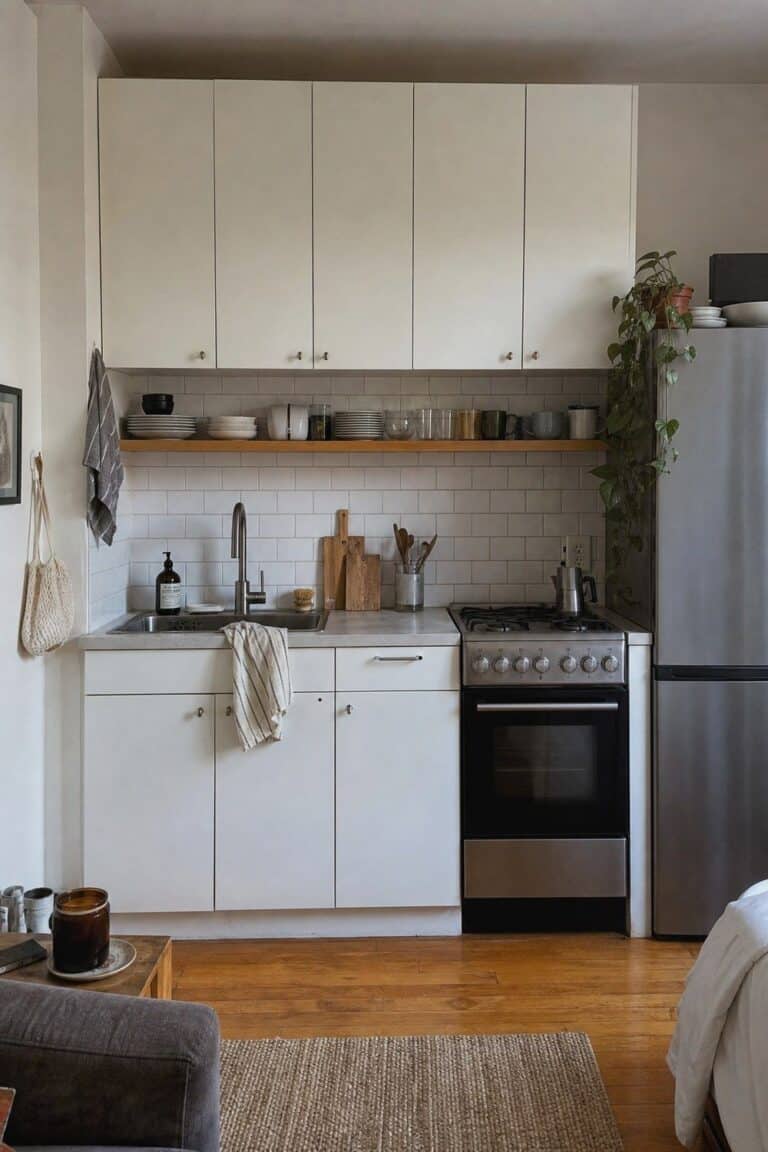
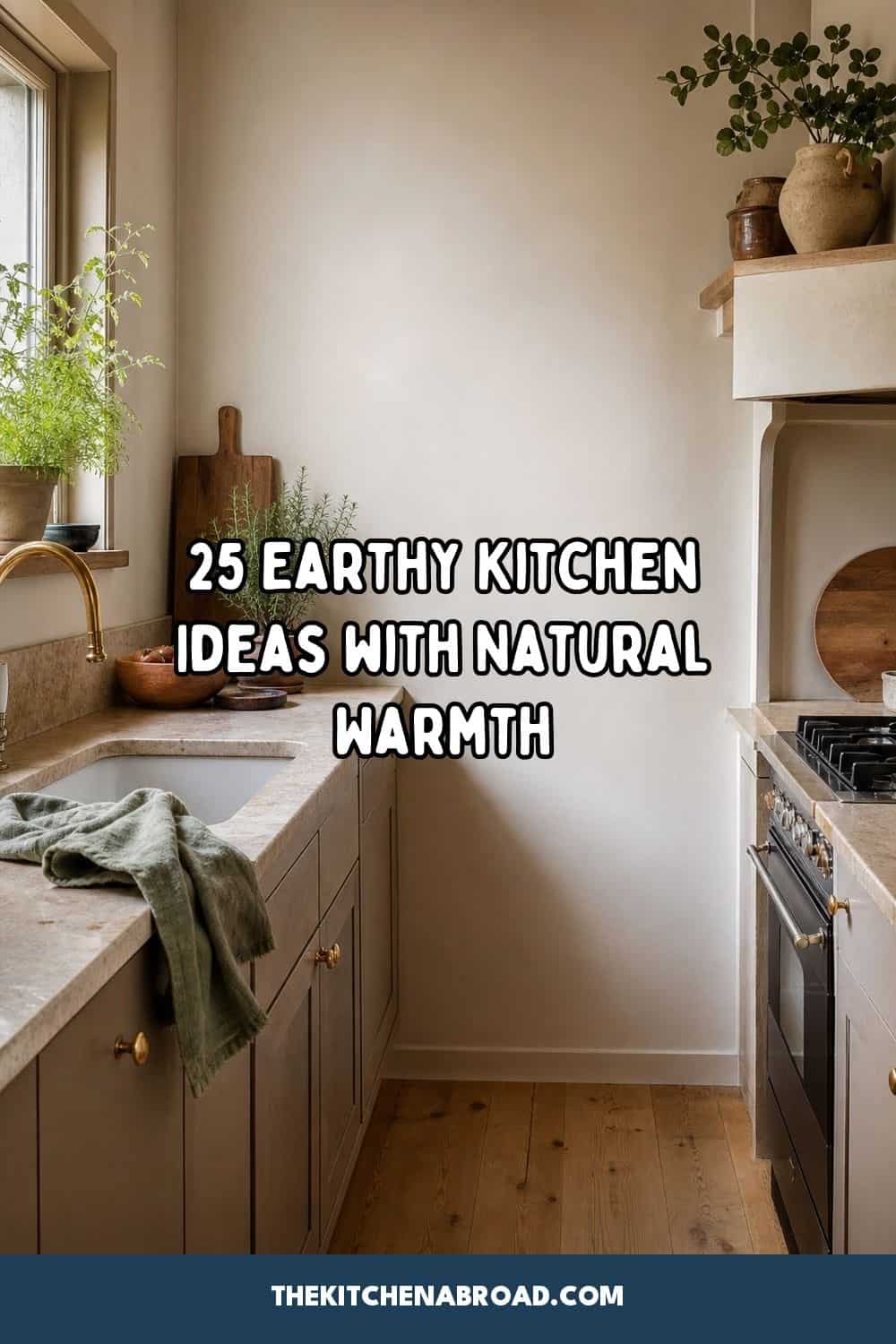
The easiest earthy kitchen ideas start with one grounded palette, then layer natural wood, stone, clay, warm lighting, matte metals, and useful texture. Choose colors like mushroom, sage, olive, tan, terracotta, chocolate brown, or warm cream, then balance them with lighter surfaces so the kitchen feels natural instead of muddy or heavy.
Earthy kitchens work best when the materials feel connected to real cooking: wipeable counters, comfortable lighting, useful shelves, grounded textiles, and finishes that age well. The look can be soft and modern, rustic around the edges, or quietly European, but it should never feel like a pile of brown decor gathered on the counter.
Use this guide as a practical way to build earthy kitchen decor without losing clarity. Each idea focuses on one color, finish, material, or buying decision so the room can feel warm, layered, and easy to live with.
You Might Also Like These Blog Posts
- 25 Natural Wood Kitchen Ideas for a Beautiful Kitchen
- 25 Terracotta Kitchen Ideas for a Beautiful Kitchen
- 25 Sage Green Kitchen Ideas for a Beautiful Kitchen
- 25 Olive Green Kitchen Ideas for a Beautiful Kitchen
- 25 Warm Neutral Kitchen Ideas for a Cozy Home
- Choose tan, oat, mushroom, or warm stripe patterns.
- Avoid thick curled edges in traffic paths.
- Keep the runner narrower than the cabinet run so it does not bunch.
Earthy Kitchen Ideas That Feel Warm and Livable
1. Earthy Palette Around One Anchor Color
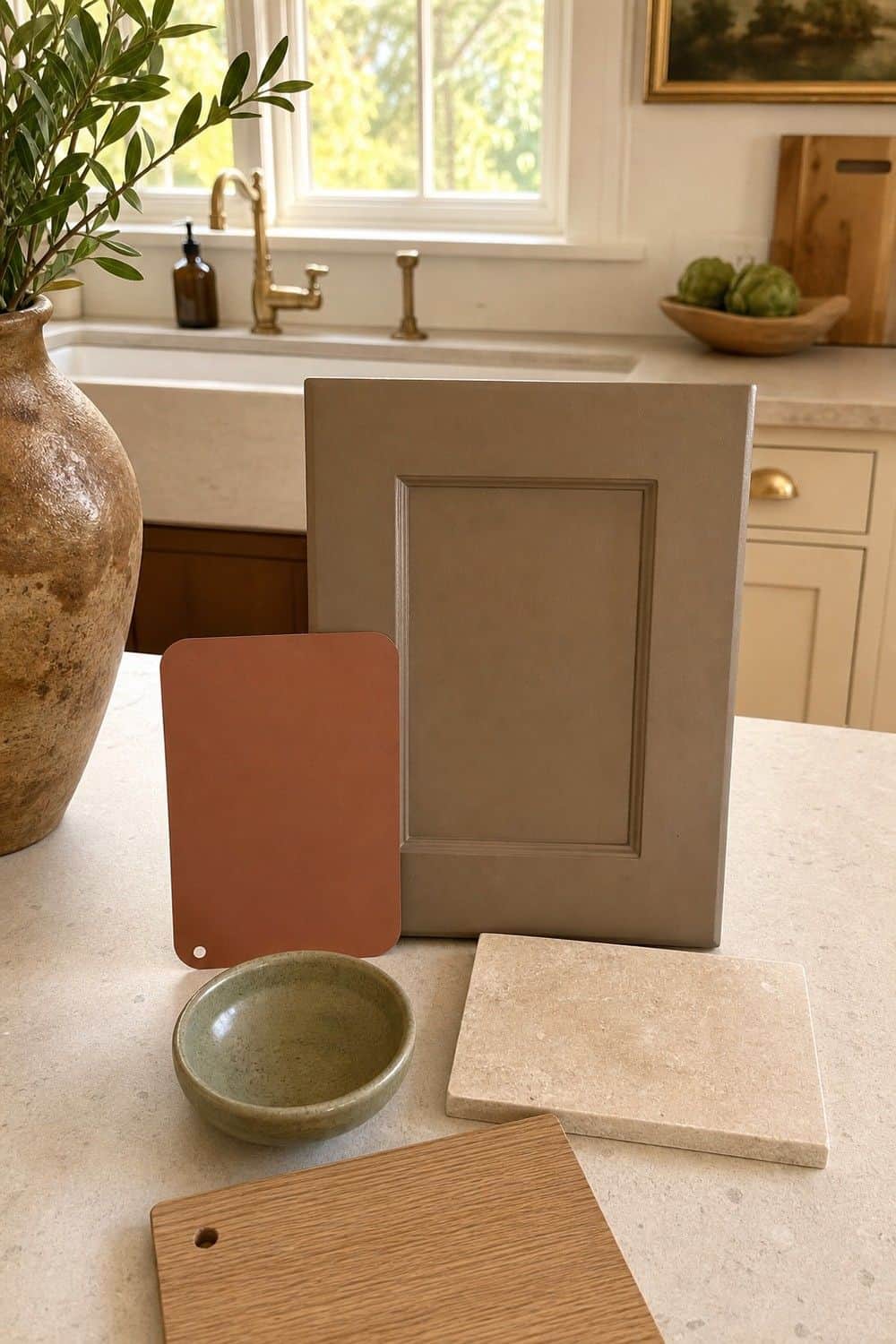
Start by choosing the color that should lead the room, then let every other finish support it. Clay, sage, mushroom, tan, olive, chocolate, and warm cream can all create an earthy kitchen, but they do different jobs. Clay feels sunbaked and warm, sage feels fresh, mushroom is soft and quiet, and chocolate adds depth.
An earthy cabinet paint sample helps you test undertones beside the floor, counters, backsplash, and daylight before choosing the finish. Paint that looks balanced online can turn orange, gray, yellow, or flat once it meets your actual kitchen lighting. The mistake is building the palette from scattered decor. Let the permanent surfaces decide the mood, then use bowls, towels, hardware, and lighting to refine it.
2. Mushroom or Taupe Cabinet Base
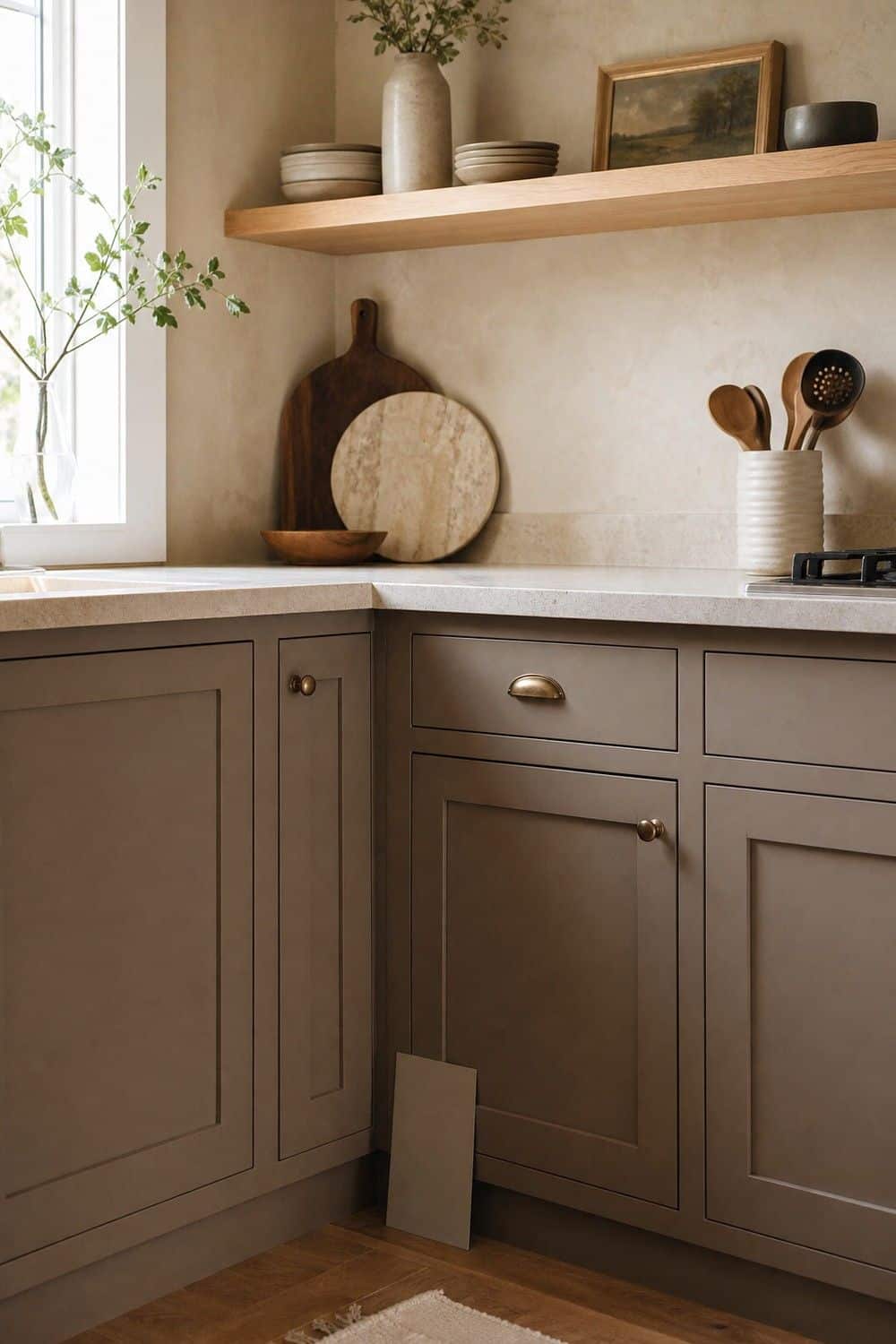
Cabinet color sets the whole room’s temperature, and mushroom or taupe is one of the gentlest ways to make a kitchen feel earthy. These shades sit between beige, gray, and brown, so they add depth without the heaviness of dark wood or the commitment of terracotta cabinetry.
A mushroom cabinet paint sample is useful because undertone matters. Some taupes lean pink, some lean green, and some turn flat next to cool white counters. Hold the sample against flooring, backsplash tile, and trim during morning and evening light. This base works especially well with white oak, cream stone, aged brass, linen shades, and handmade tile. Avoid pairing mushroom cabinets with cold blue-gray walls or icy chrome if you want the room to read natural instead of flat neutral.
3. Terracotta Clay Accent

Clay-colored accents can warm up a pale kitchen quickly, especially when the rest of the room is cream, oak, stone, or soft green. Terracotta works because it feels mineral and sunbaked rather than candy-bright, but it becomes overpowering when every object is the same burnt orange.
A terracotta serving bowl gives the color a useful role on an island, open shelf, or dining-side counter. Use it for citrus, onions, napkins, or everyday serving so the piece earns its space. Keep the surrounding palette calm. Terracotta pairs beautifully with walnut, black, brass, warm white, plaster, sage, and stone, but it needs breathing room. Avoid adding too many matching planters, towels, stools, and prints at the same time, especially in compact kitchens.
4. Sage Green With Warm Wood
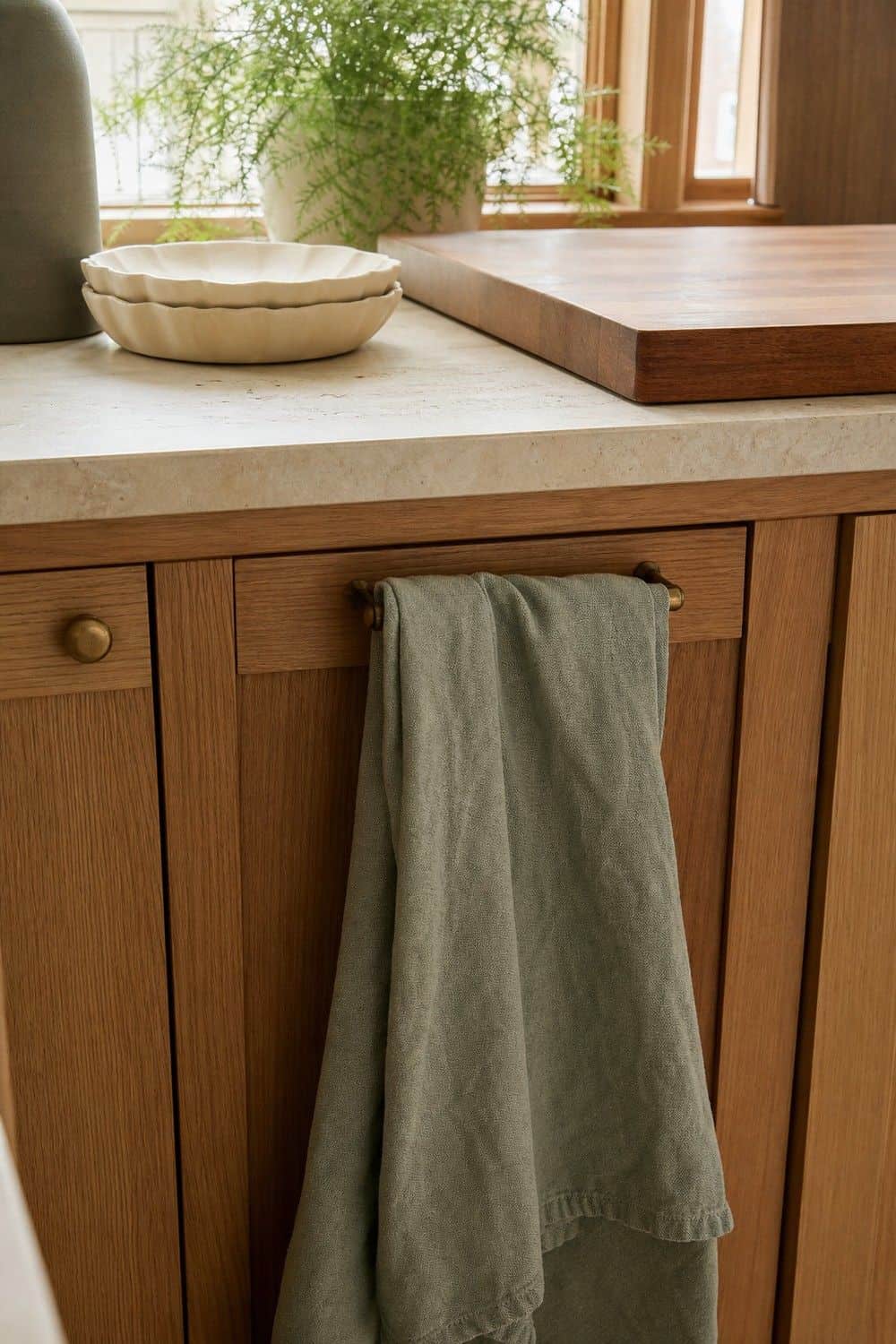
Sage green brings the leafy side of an earthy kitchen without making the room look dark. It softens white cabinets, freshens wood tones, and gives cream or stone surfaces a quiet color story.
Sage green kitchen towels are a low-risk place to test the color before painting cabinets or ordering tile. Hang them near oak, walnut, butcher block, or brass and notice whether the green feels gray, minty, or balanced in your light. This pairing is strongest when the wood stays warm and the green stays muted. Bright green can feel too garden-themed, while cold gray-green can drain warmth from the kitchen.
Add cream dishes, stoneware, or a woven tray if the palette needs more softness. If the cabinets are already white or wood, let sage appear in textiles, a small painted stool, or a backsplash sample before using it on every wall.
5. Olive Green for a Deeper Mood

Olive is richer and moodier than sage, which makes it useful when an earthy kitchen feels too pale or washed out. It works well with walnut, black accents, bronze hardware, creamy stone, and rustic clay, but it should be handled with a little restraint.
An olive green ceramic vase lets you try the deeper tone without repainting. Place it on a shelf, sideboard, or table with branches, herbs, or nothing at all if the shape is strong. The finish should look matte or softly glazed, not glossy and bright. In a narrow kitchen, keep olive near natural light or beside cream so it feels rich rather than shadowy.
6. White Oak for Natural Warmth
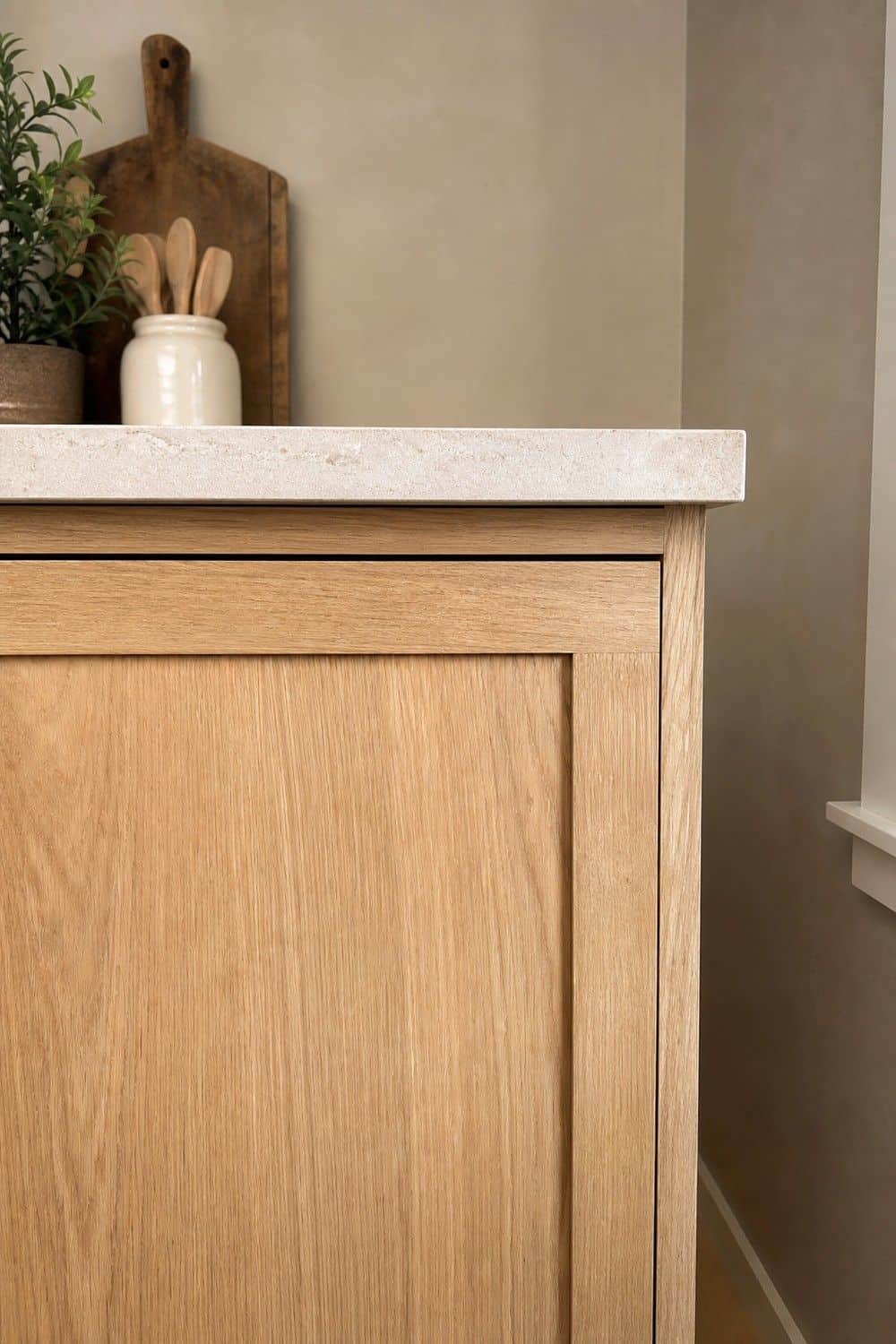
White oak gives an earthy kitchen a natural base without making the room look cabin-dark. The grain adds movement, the color works with warm whites and stone, and the material can look modern, Scandinavian, organic, or European depending on the door style.
A white oak cabinet door sample is worth seeing in person because finish changes everything. Clear matte finishes feel pale and airy, while amber finishes can turn more golden. Vertical grain reads calmer on tall cabinets, while busy grain can make a narrow kitchen feel restless. White oak pairs beautifully with mushroom paint, honed stone, handmade tile, sage textiles, and matte bronze. Avoid mixing too many competing wood tones unless one clearly leads and the others appear as smaller accents.
7. Walnut Accents for Depth
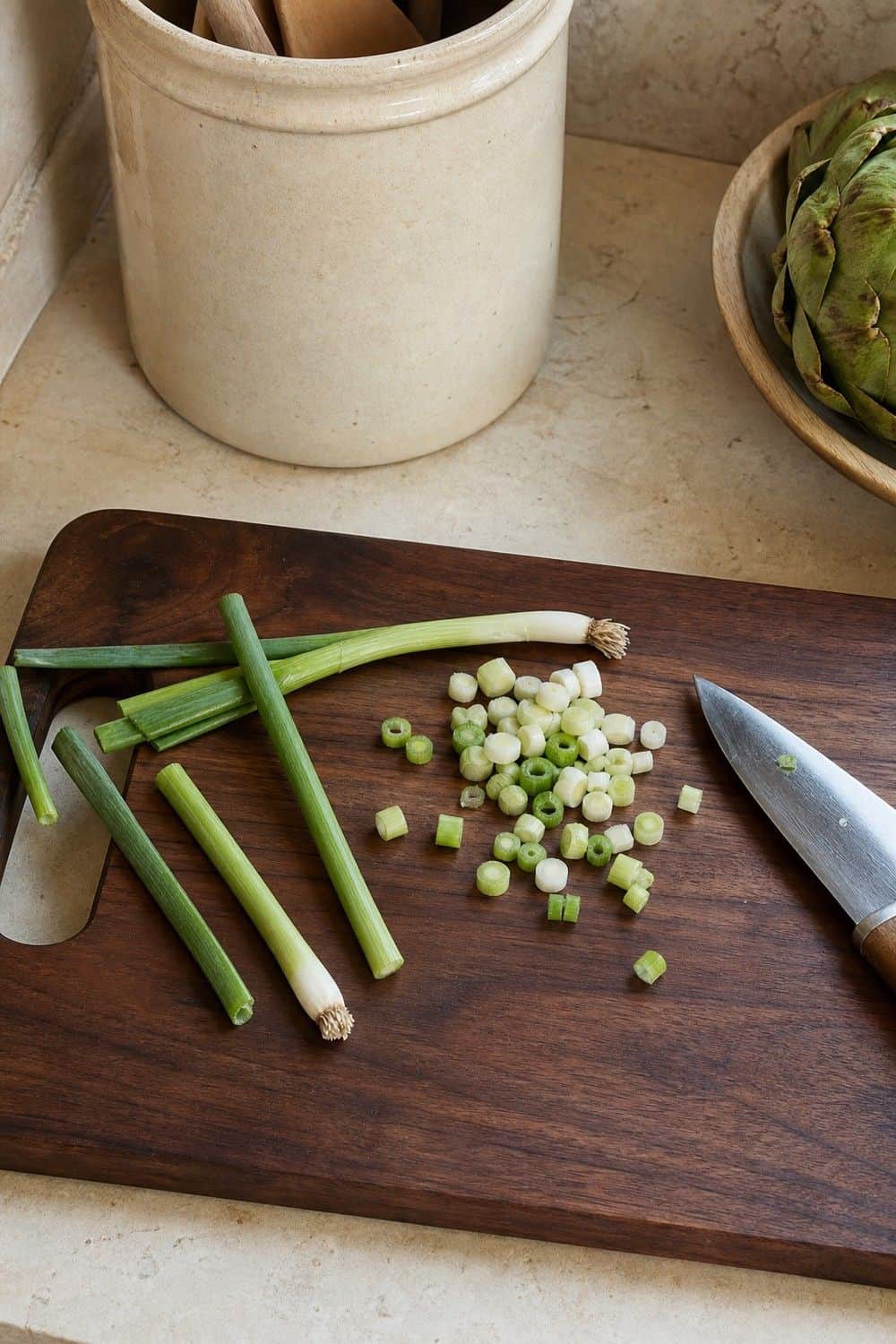
Light earthy kitchens can sometimes feel unfinished until they have one darker natural note. Walnut adds that depth through cutting boards, stools, shelves, drawer fronts, or an island detail without requiring a full dark kitchen.
A walnut cutting board is the simplest test. Lean it against a backsplash, use it beside a stoneware crock, or keep it near the prep zone if it is actually food-safe and easy to clean. The darker wood grounds cream, sage, terracotta, and pale oak. Keep walnut deliberate. One or two pieces can look collected, while a crowd of dark boards, dark stools, dark shelves, and dark hardware can flatten the palette. Let walnut act like punctuation, not the whole sentence. If your floors are already dark, keep walnut higher up as a board or shelf instead of repeating more darkness at floor level.
8. Honed Stone or Stone-Look Counters

Counters carry a large visual load, so the finish matters as much as the color. Honed, leathered, matte, or softly veined stone usually feels earthier than a glossy white surface with sharp contrast.
The goal is a mineral feeling that supports daily cooking.
A honed stone countertop sample helps you compare veining, background color, and maintenance expectations. Quartzite, granite, soapstone, limestone-look porcelain, and marble-look surfaces can all work, but each has different sealing, staining, and etching tradeoffs. Bring samples home with cabinet doors or paint swatches nearby. Stone that looks quiet alone can become too busy beside strong wood grain or handmade tile.
9. Handmade Tile Texture

Backsplash tile is one of the best places to add texture because it sits at eye level. Handmade ceramic, zellige-style tile, clay tile, and softly uneven glazed tile bring movement that feels natural without turning the kitchen into a pattern-heavy space.
A handmade backsplash tile sample lets you see the glaze variation, edge irregularity, and color shift in your own light. Cream, mushroom, sage, clay, olive, and warm white can all look earthy when the finish has depth. The mistake is choosing a busy mosaic when quiet irregularity would do more work. Keep grout color close enough to the tile that the texture reads softly, especially behind a range where visual clutter builds quickly. For easier cleaning, use the most textured tile where splatter is lighter and choose a wipeable finish behind heavy cooking zones.
10. Seamless Stone Backsplash

Slab or countersplash stone gives an earthy kitchen a calmer kind of texture than tile. Instead of many grout lines, the eye sees veining, mineral movement, and a clean vertical surface behind the counter.
A stone backsplash sample is helpful because the same material can look warm, cool, dramatic, or quiet depending on the veining. For an earthy look, consider soft beige, limestone, travertine tones, warm marble, quartzite, or stone-look porcelain with restrained movement. This is especially strong behind a range or sink where wipeability matters. Avoid choosing a heavily patterned slab just because it looks impressive in a showroom. In a real kitchen, the stone should support cabinets, lighting, and daily mess. Ask how seams, outlets, and edge returns will look before installation so the calm surface does not become visually chopped up.
11. Matte Bronze or Aged Brass Hardware
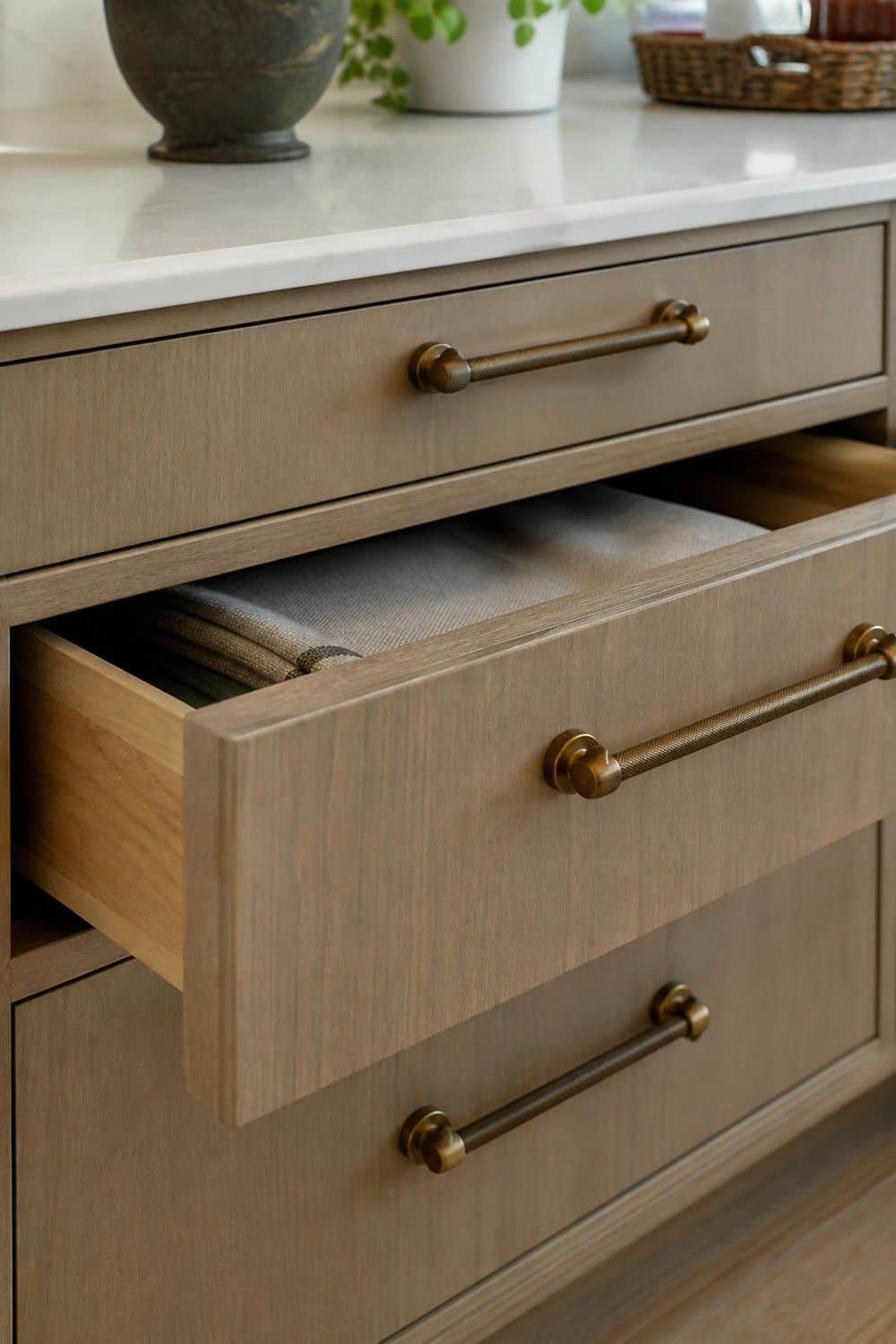
Hardware can warm up cabinets faster than almost any small change. Matte bronze and aged brass work beautifully in earthy kitchens because they echo soil, clay, wood, and old metal rather than bouncing light like polished chrome.
Matte bronze cabinet pulls are a good fit for mushroom, cream, white oak, olive, sage, terracotta, and walnut palettes. Choose simple shapes that feel sturdy in the hand. Overly ornate pulls can push the room toward theme decor, while ultra-sleek chrome can feel too cold. If the kitchen already has warm lighting and wood floors, a slightly darker bronze can add definition without turning shiny or formal.
12. Woven Texture Without Counter Clutter
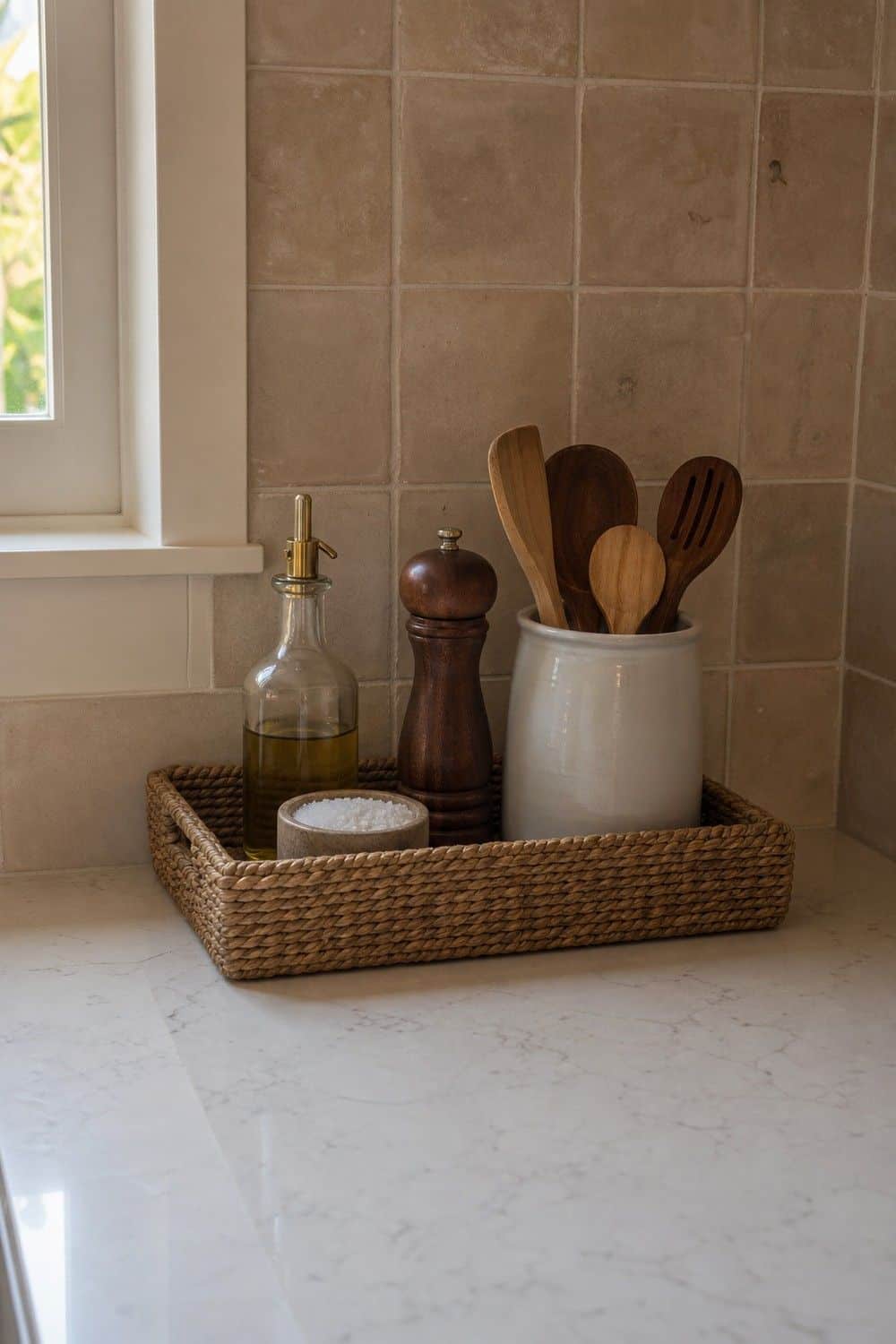
Woven texture can make an earthy kitchen feel softer, but it has to organize something real. A woven counter tray works best when it gathers olive oil, salt, pepper, a small crock, tea tins, or coffee items that already live on the counter.
The tray should fit the depth of the counter and leave prep space clear. Choose a low, wipeable, tightly woven style near cooking zones, since loose fibers and crumb-catching baskets can become annoying beside a sink or stove. Use one woven element, then stop and look at the room. Too many baskets, rattan shades, woven stools, and textured trays can make the kitchen feel more boho than earthy, especially when the palette is already warm. Keep woven pieces away from constant splatter unless they are sealed or easy to shake clean.
13. Jute or Warm Neutral Kitchen Runner
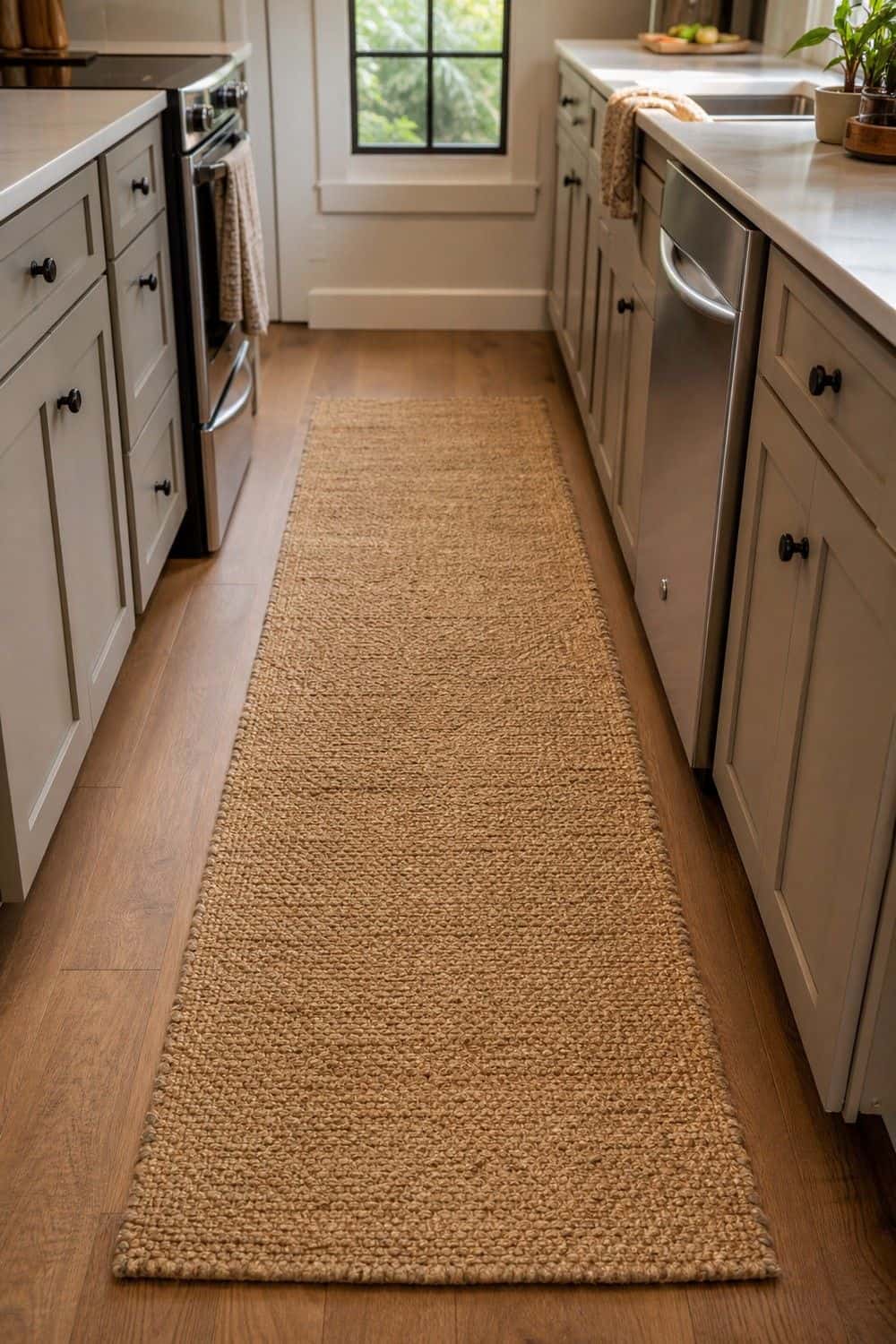
Floor texture changes the feeling of a kitchen without touching cabinets or tile. A jute kitchen runner can soften a galley, warm up plain flooring, or connect wood and stone tones in a finished kitchen.
Look for low-profile construction, a secure pad, and a size that clears cabinet doors and appliance fronts. Real jute has an organic look but can be harder to clean, so washable jute-look runners may be smarter near the sink, dishwasher, or main prep zone.
In a narrow kitchen, measure the full drawer and dishwasher swing before buying so the runner adds warmth without catching under moving parts.
14. Clay or Stoneware Pieces in Daily Use
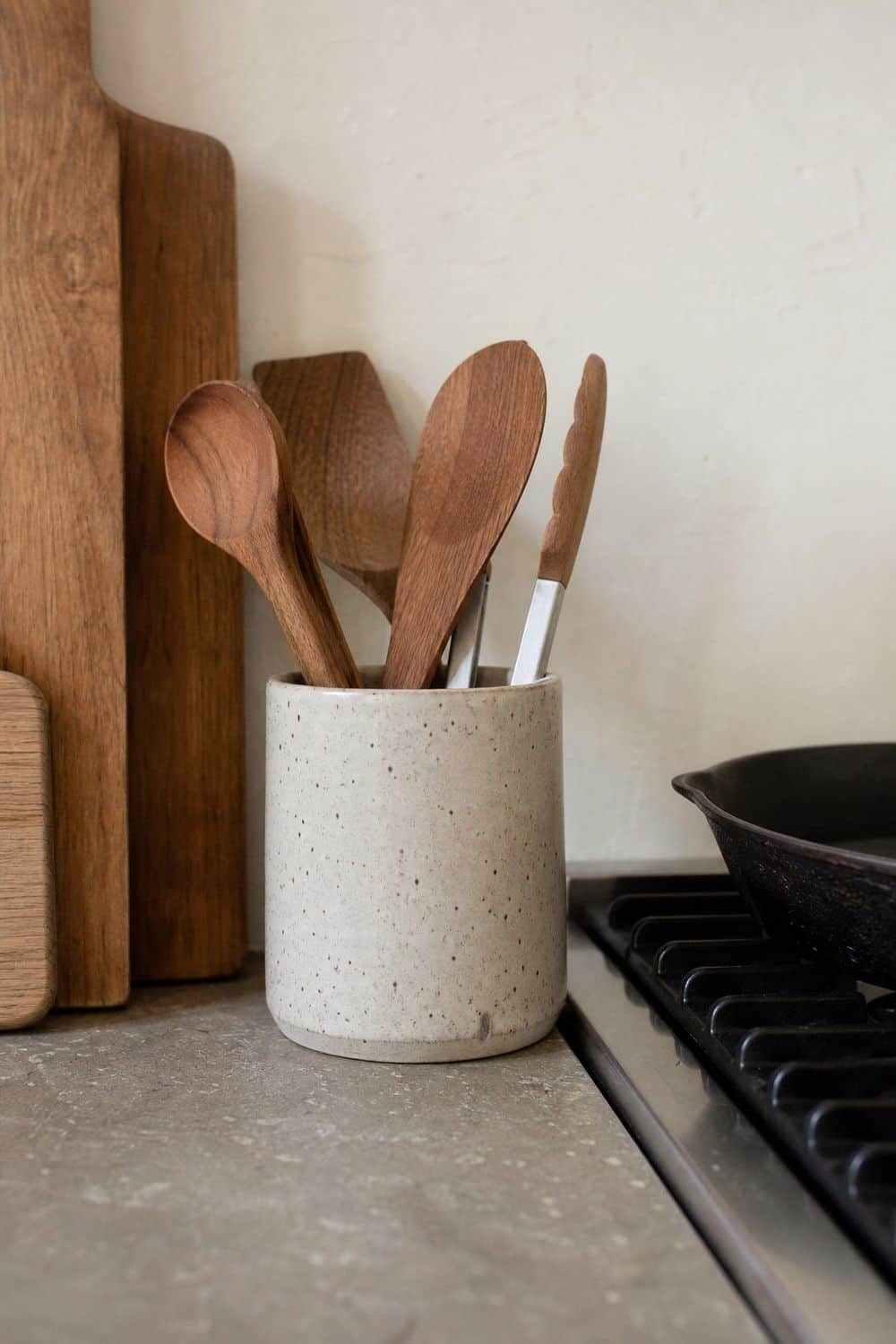
Useful stoneware gives an earthy kitchen weight without turning shelves into a display-only moment. Crocks, bowls, mugs, canisters, and serving pieces bring clay, cream, brown, olive, and speckled finishes into the room in a way that belongs near food.
A stoneware utensil crock is a practical place to start because it holds wooden spoons, spatulas, tongs, or a small set of daily tools. Check the height and opening before buying so tools stand upright without flopping over the counter.
Keep the finish easy to wipe and heavy enough that it will not tip. The common mistake is buying pretty pieces that are too narrow, too porous, or too precious to use near sauce, oil, and flour. If a piece sits on open shelving, repeat its color once nearby through a bowl or mug so it looks connected rather than random.
15. Plants and Herbs as Living Texture
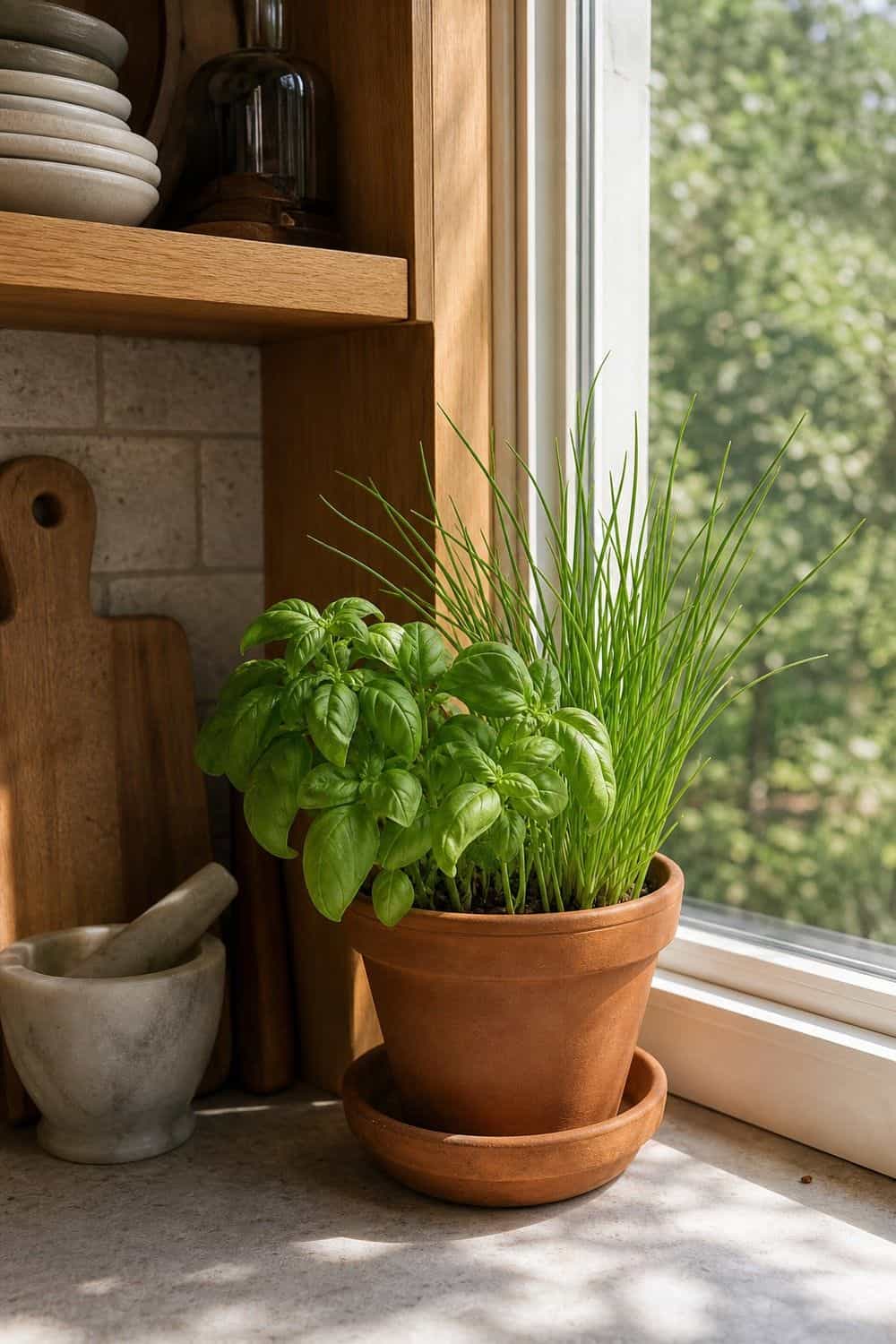
Living green keeps an earthy kitchen from feeling like a static palette of paint and objects. Herbs near a window, a small hardy plant, or one olive-style tree can add softness without covering counters in decor.
An indoor herb planter is best when it fits the actual light in the kitchen. Basil, mint, parsley, and chives need enough sun and regular trimming, while darker corners may need a different plant or no plant at all. Keep pots away from stovetop steam and use saucers so water does not mark wood shelves. Choose one healthy plant over several struggling ones.
Fresh herbs also make the room look connected to cooking, which is the difference between earthy design and random plant styling.
16. Gentle Lighting Under the Cabinets
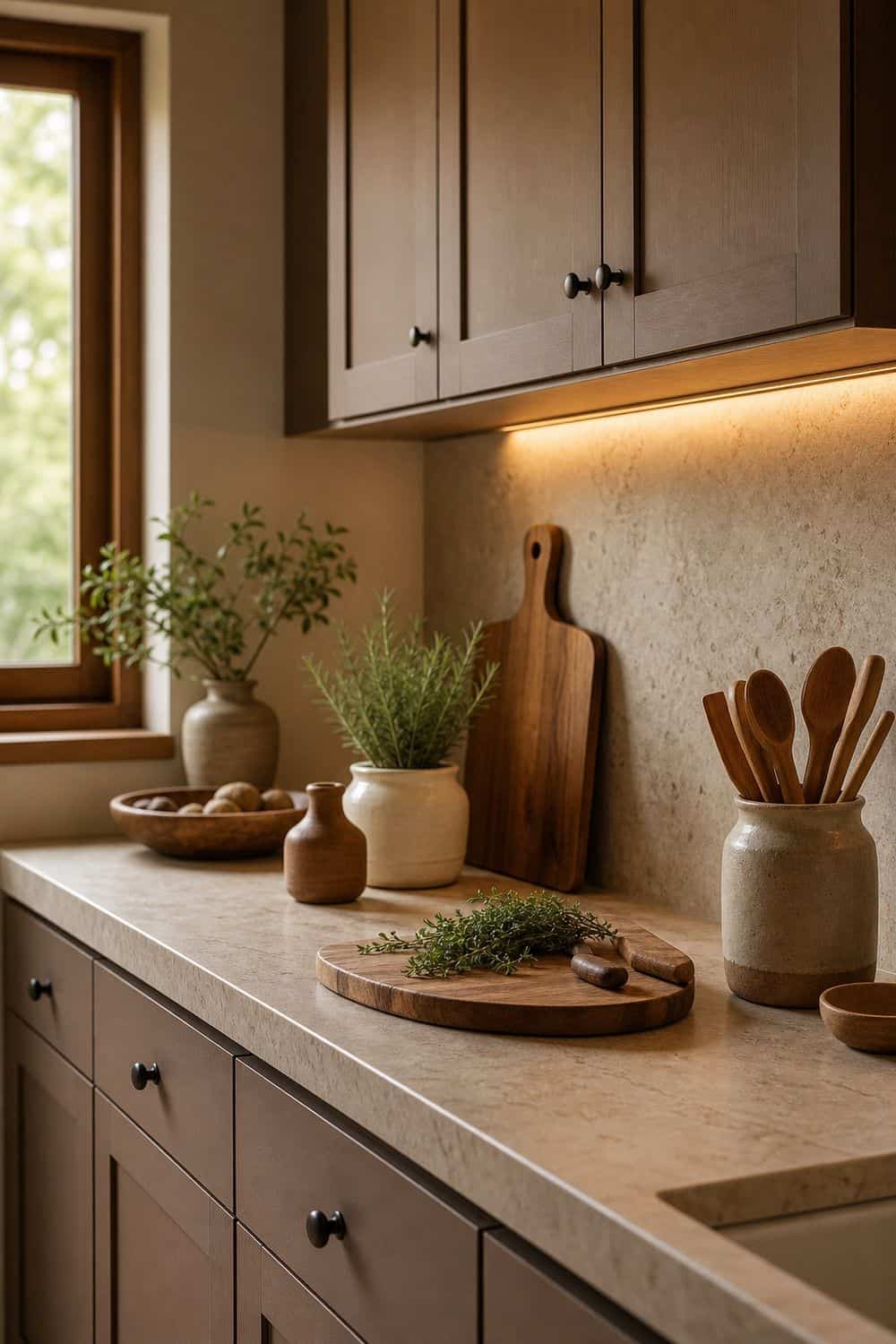
Lighting can make or break earth tones. Clay, mushroom, olive, tan, and brown can look rich in warm task light, then turn muddy under cold bulbs or dim overhead fixtures.
Warm under cabinet lighting helps wood grain, stone veining, tile texture, and matte metals read as deliberate. Choose even light rather than harsh spots, and place it where you actually chop, pour, plate, or make coffee.
Pay attention to color temperature. Very yellow light can make brown surfaces look dingy, while cool white can flatten cream and clay. A warm neutral glow is usually the safest choice for an earthy kitchen that still needs clear prep visibility. Use the same light temperature across nearby fixtures so counters, backsplash, and cabinet paint do not shift from warm to cold in one view.
17. Dark Brown or Chocolate Accent

Chocolate brown gives an earthy kitchen a softer kind of contrast than black. It feels connected to wood, coffee, soil, leather, and clay, which makes it useful when the palette needs grounding but not a sharp graphic line.
Chocolate brown kitchen towels are an easy trial because they can sit near cream cabinets, pale oak, terracotta bowls, or stone counters. If the color feels rich instead of dull, you can repeat it in a stool, frame, art print, or darker board.
The key is contrast with relief. Pair brown with warm white, sage, tan, or stone so it has space around it. Too many brown finishes at the same height can make the kitchen feel heavy and underlit. Try the color in a washable textile first if your floor, island, or dining table is already dark wood.
18. Black as a Mineral Accent
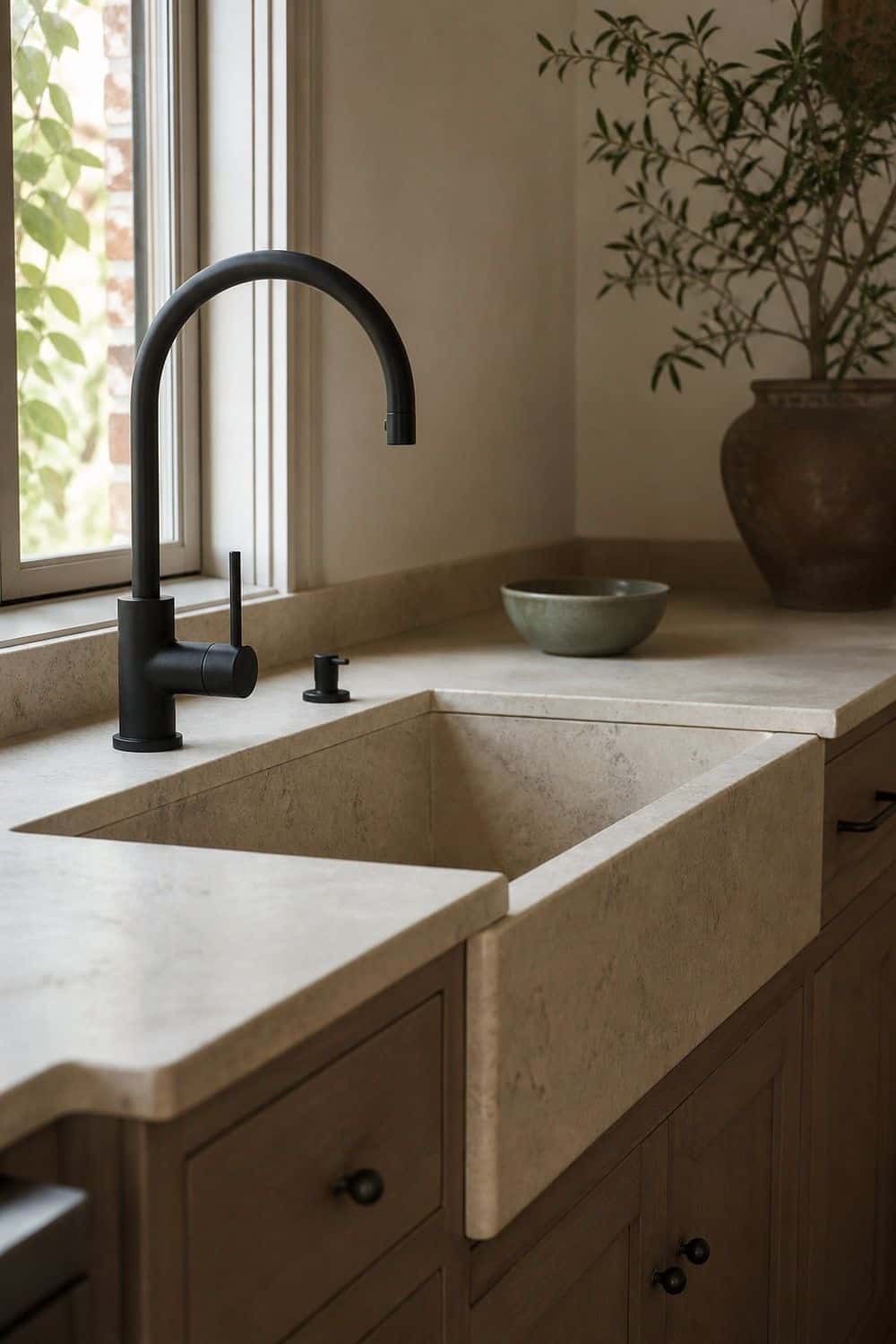
Black can sharpen an earthy kitchen when it acts like a mineral detail instead of taking over. Think of a faucet, sconce, small handle, window frame, or thin chair leg rather than a room full of black cabinets and heavy lighting.
A matte black kitchen faucet works well with stone, wood, sage, mushroom, and terracotta because it creates a clear line at the sink. Matte finishes usually feel more grounded than glossy black, especially beside natural textures. Repeat the finish once or twice so the accent feels deliberate instead of isolated.
Use black where the layout needs definition, then stop before it starts to dominate the room. Avoid pairing too much black with already-dark counters and floors. If black feels too stark, aged bronze or dark brown can give the same outline with a softer earthy effect.
19. Limewash or Plaster-Look Walls
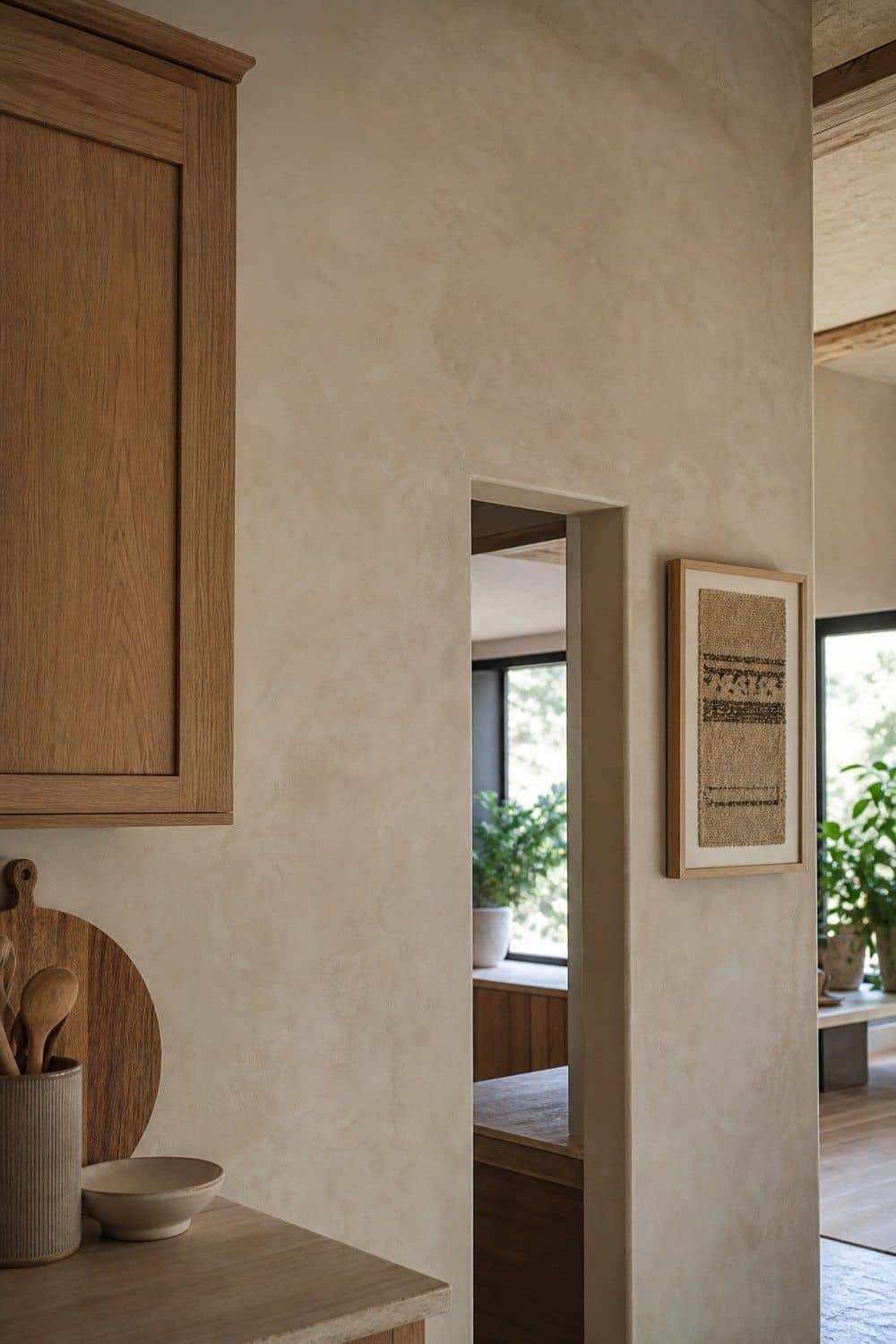
Matte mineral walls can make earthy kitchen colors feel softer and more layered. Limewash, plaster-look paint, warm putty, and soft beige wall finishes bring movement to plain walls without relying on busy art or open-shelf clutter.
A limewash paint sample shows whether the finish looks chalky, streaky, warm, or too rustic in your room. Test it near cabinets and backsplash edges, not just on an empty wall, because kitchen materials change how the color reads.
For a low-commitment change, use removable paint-look wallpaper, framed textile art, or a large warm-neutral print instead of changing walls. Avoid rough finishes right behind heavy splatter zones unless the surface can be cleaned. Keep this finish quiet if the backsplash already has strong variation, since two competing textures can make a narrow kitchen feel busy.
20. Collected Open Shelves Without Clutter
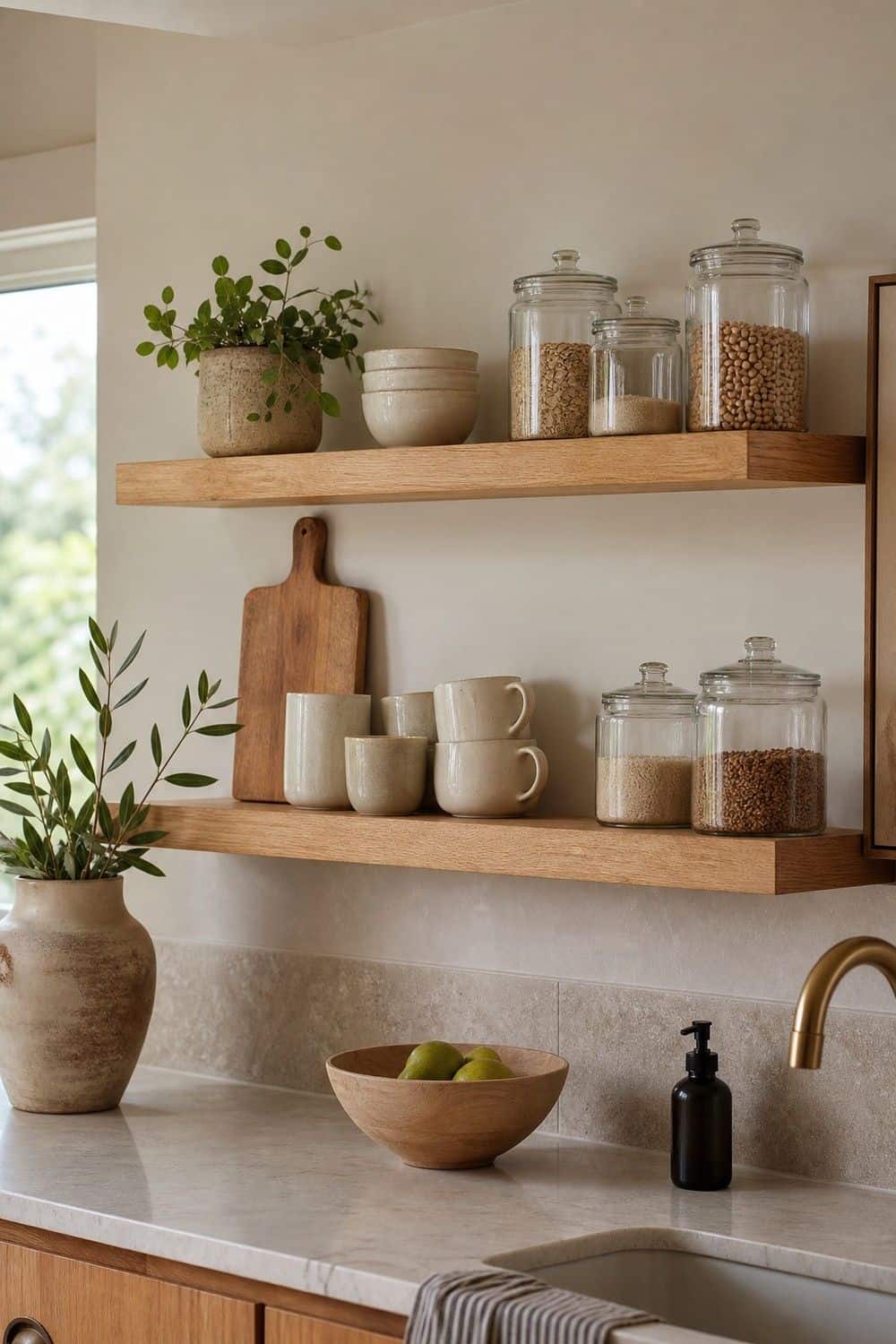
Open shelves can support an earthy kitchen when they hold useful, natural-looking pieces with restraint. Dishes, stoneware mugs, glass jars, cutting boards, one small plant, and a few cookbooks can feel collected without becoming cluttered.
Natural wood floating shelves should match the room’s wood story. Pale oak looks lighter and modern, walnut adds depth, and rustic reclaimed wood can skew farmhouse quickly if every other surface is already rough.
Keep shelf depth practical. Too deep, and items disappear behind one another. Too shallow, and everyday dishes feel precarious. The mistake is adding baskets, signs, trailing plants, and decorative-only objects until the kitchen feels staged instead of usable. Leave a little open space between stacks so the shelves feel open and the pieces can be reached without moving half the display.
21. Earthy Removable Tile for Low-Commitment Color
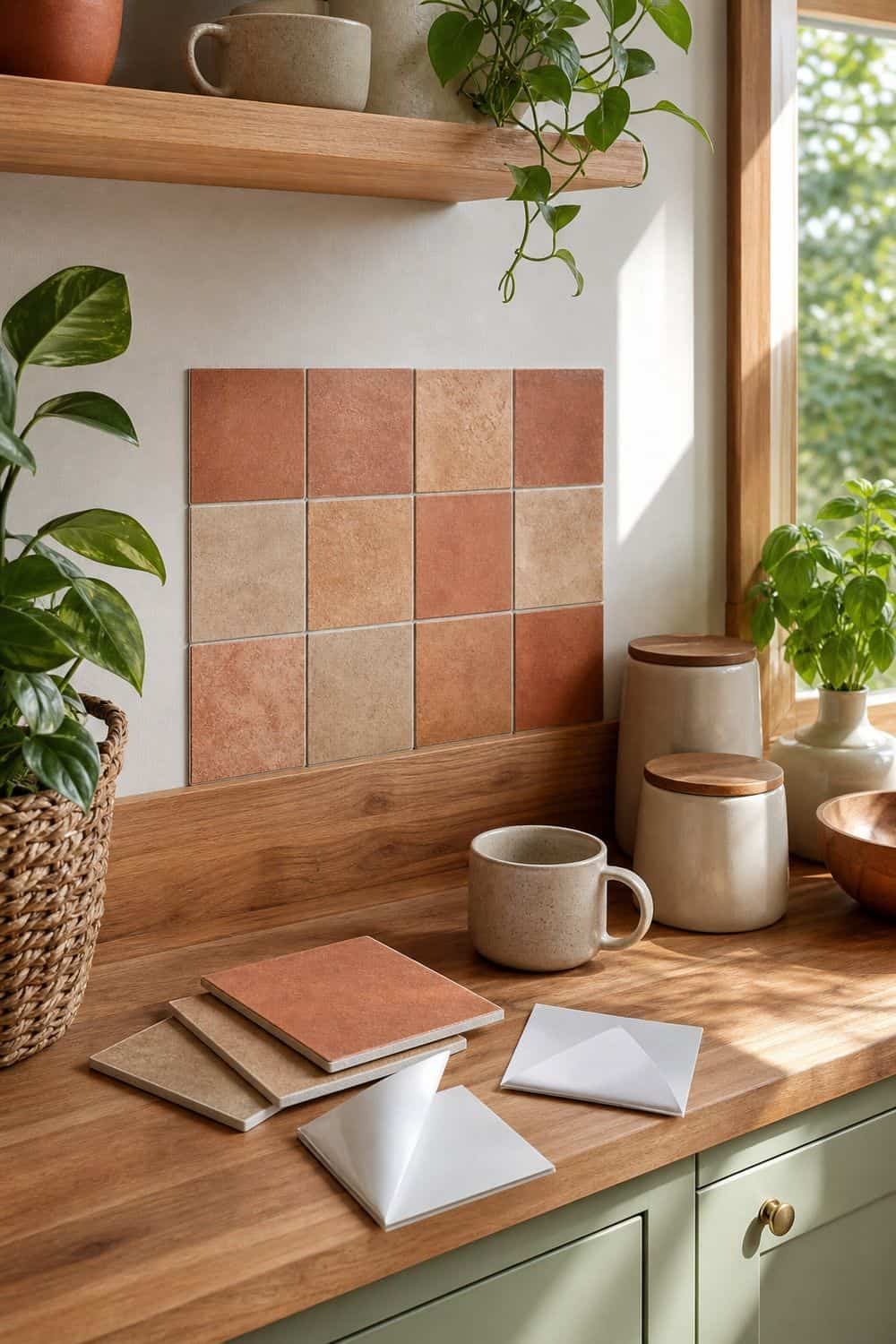
Removable tile can test an earthy palette before you commit to permanent stone or clay. Look for matte terracotta, warm beige, muted clay, or soft stone-look designs that work with the cabinets and counters already in the room.
Keep the scale believable and use it on a clean, low-splash wall when possible. Check heat and moisture guidance before placing it near the stove or sink, and avoid loud orange patterns that feel exciting for a week but exhausting after that.
22. Light Balance in Earthy Kitchens
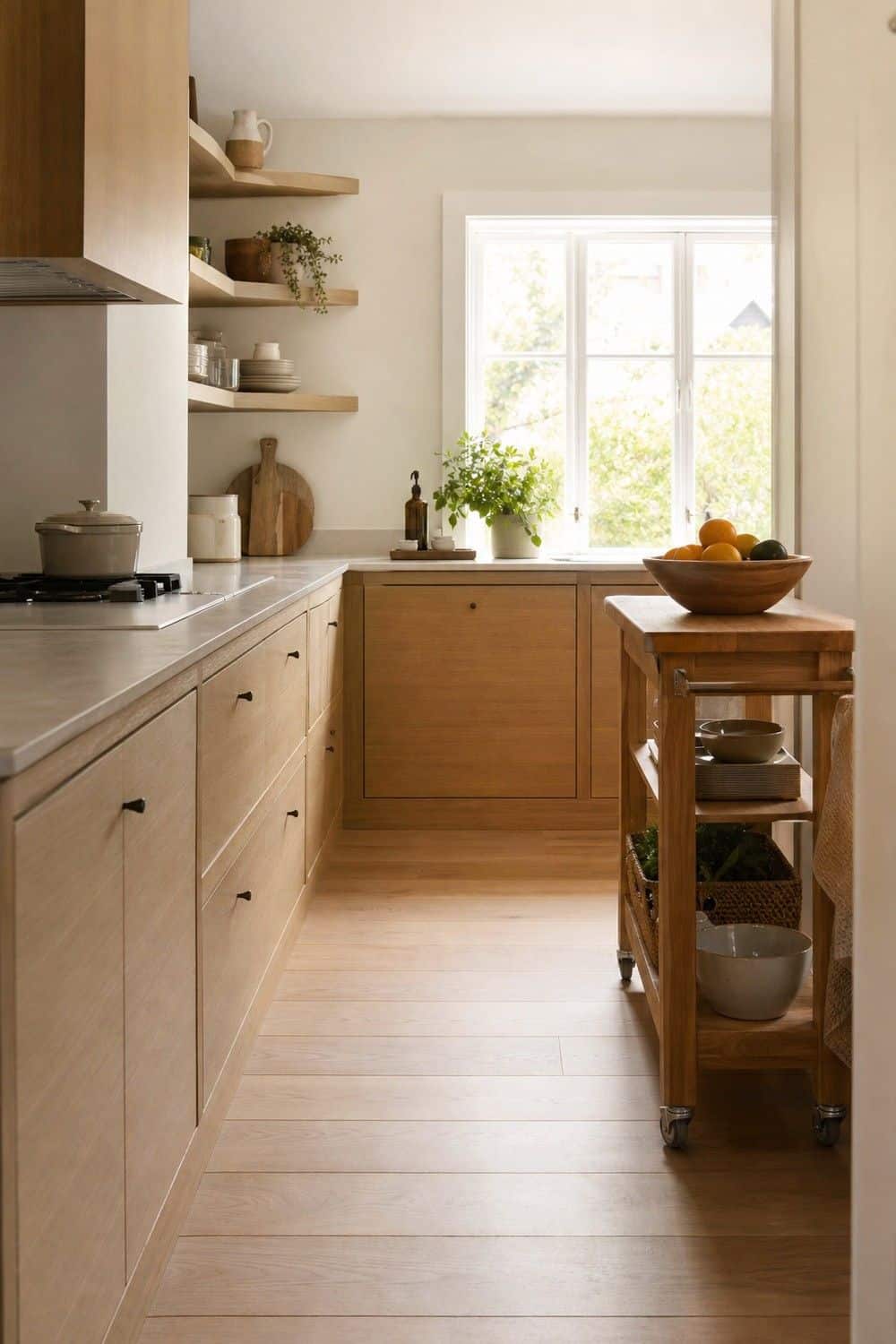
Small kitchens need earthy warmth without visual weight. Pale oak, mushroom paint, warm white walls, light stone, slim furniture, and good task lighting can all keep the room from feeling cramped or overly brown.
A slim wood rolling cart can add natural texture and storage when there is no island, but size matters. Choose a cart that clears walkways, rolls easily, and holds specific items like fruit, coffee supplies, cookbooks, or extra bowls.
Open storage should stay spare in a small room. If every shelf, rail, cart, and counter holds earthy decor, the kitchen will feel smaller. Let one wood piece, one plant, one runner, and good lighting do more of the work. Choose closed containers for visual noise and open shelves only for the few items that look good and get used often.
23. Muddy All-Brown Palette Check
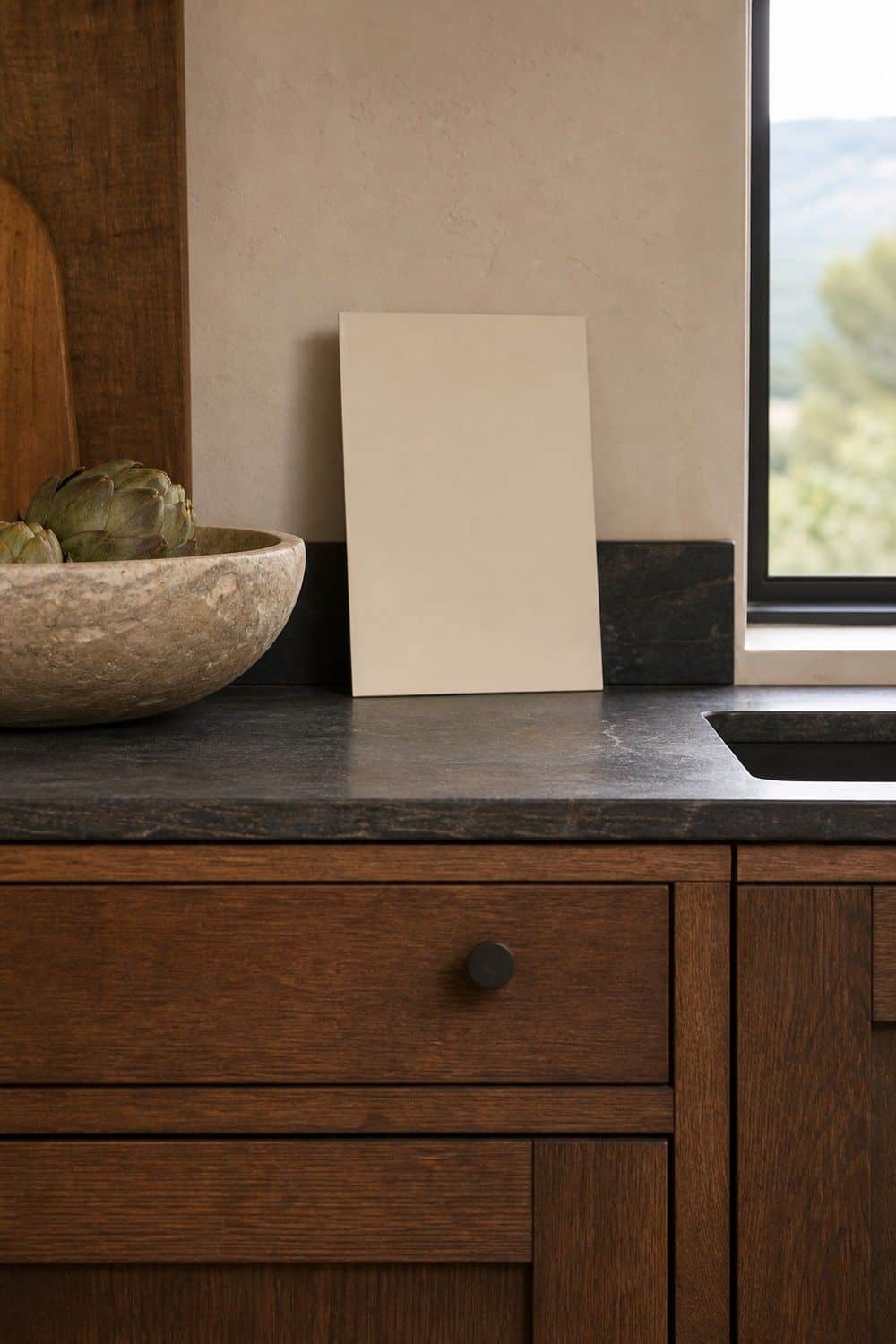
The fastest way for an earthy kitchen to go wrong is layering brown on brown without contrast. Brown cabinets, brown floors, tan walls, dark counters, amber bulbs, and wood decor can blur together until the room looks flat.
A warm neutral paint sample can help you add relief. Cream, stone, warm white, pale mushroom, soft sage, or lighter oak can break up heavy surfaces while staying inside an earth tone kitchen palette.
Good lighting is part of the fix, too. Brown tones need clarity, not dim yellow light. If the room still feels flat, remove one dark item before buying another accent. The palette often comes back into balance when one heavy piece leaves the view.
24. Cook-Friendly Earthy Styling

Grounded styling still has to leave room for real cooking. The best earthy styling keeps prep space clear, tools reachable, and surfaces easy to wipe, especially around the sink, stove, coffee area, and main chopping zone.
A countertop organizer tray is useful when it gathers daily items instead of displaying random objects. Use it for oil, salt, pepper, a spoon rest, coffee jars, or a small plant only if those pieces belong in that spot.
Avoid rough baskets beside wet areas, too many decorative bowls on working counters, and open textures that trap flour or crumbs. Earthy kitchen ideas should make the room look natural, but they should not make dinner harder to cook. Leave at least one clear landing spot beside the stove or sink so the styling does not compete with real cooking.
25. Slow Layering for Earthy Details

Slow layering keeps an earthy kitchen from becoming a pile of unrelated brown and green purchases. Start with the color or material that has the biggest effect, then add smaller details only when they solve a visual or practical gap.
A runner, tray, towels, bowls, herb pot, or one piece of stoneware can be enough if the main finishes already feel warm. The room will look more confident when every new layer earns its place instead of repeating the same natural idea again.
Frequently Asked Questions
What colors make a kitchen feel earthy?
The best earthy kitchen colors include sage, olive, mushroom, taupe, tan, cream, terracotta, clay, chocolate brown, ochre, and warm white. The strongest palettes use one anchor color with lighter supporting tones so the room looks layered rather than muddy.
How do I make my kitchen look earthy without renovating?
Use low-commitment updates like a warm neutral runner, sage towels, matte bronze hardware, a woven counter tray, stoneware crocks, an herb planter, peel-and-stick tile, and warmer under-cabinet lighting. Keep counters clear so the room looks natural, not crowded.
What materials work best in an earthy kitchen?
Wood, stone, clay, terracotta, matte metal, jute, linen, zellige-style tile, limewash, plaster-look finishes, and stoneware all work well. Choose materials that can handle real kitchen use, especially near water, heat, oil, and food prep.
Are earthy kitchens still in style?
Yes. Earthy kitchens fit current interest in warm neutrals, natural finishes, terracotta, sage green, wood, stone, matte metals, and rooms that feel softer than stark white or cool gray kitchens. The most current versions are pared back, practical, and not overly rustic.
How do you keep an earthy kitchen from looking too dark?
Use cream, warm white, pale oak, lighter counters, soft stone, and good task lighting. Keep dark brown, olive, black, or walnut as accents unless the kitchen has enough natural light and visual breathing room.
What backsplash works in an earthy kitchen?
Handmade tile, zellige-style ceramic, stone slab, terracotta-look tile, limestone-look tile, and muted warm neutral tile all work well. Choose texture and natural color over a busy pattern, especially if the counters or cabinets already have movement.
What is the difference between earthy and rustic kitchen style?
Earthy style is about nature-inspired color, natural materials, matte finishes, and grounded warmth. Rustic style usually leans more weathered, rugged, farmhouse, or cabin-like. An earthy kitchen can be modern, soft, European, minimal, or cottage without becoming fully rustic.
What hardware goes with an earthy kitchen?
Matte bronze, aged brass, matte black, simple wood pulls, and leather pulls can all work. Match the hardware to the palette: bronze with mushroom or olive, brass with sage or cream, black with stone and wood, and wood pulls with soft neutral cabinetry.
Final Thoughts
Earthy kitchen ideas work when color, material, lighting, and daily function all support the same natural feeling. Choose one grounded palette, add wood or stone where it matters, use clay and green accents with restraint, and keep the cooking zones clear.
The result should feel warm and connected to nature without becoming dark, cluttered, or overly themed. A few well-chosen earthy details can often do more than a room full of matching decor.