
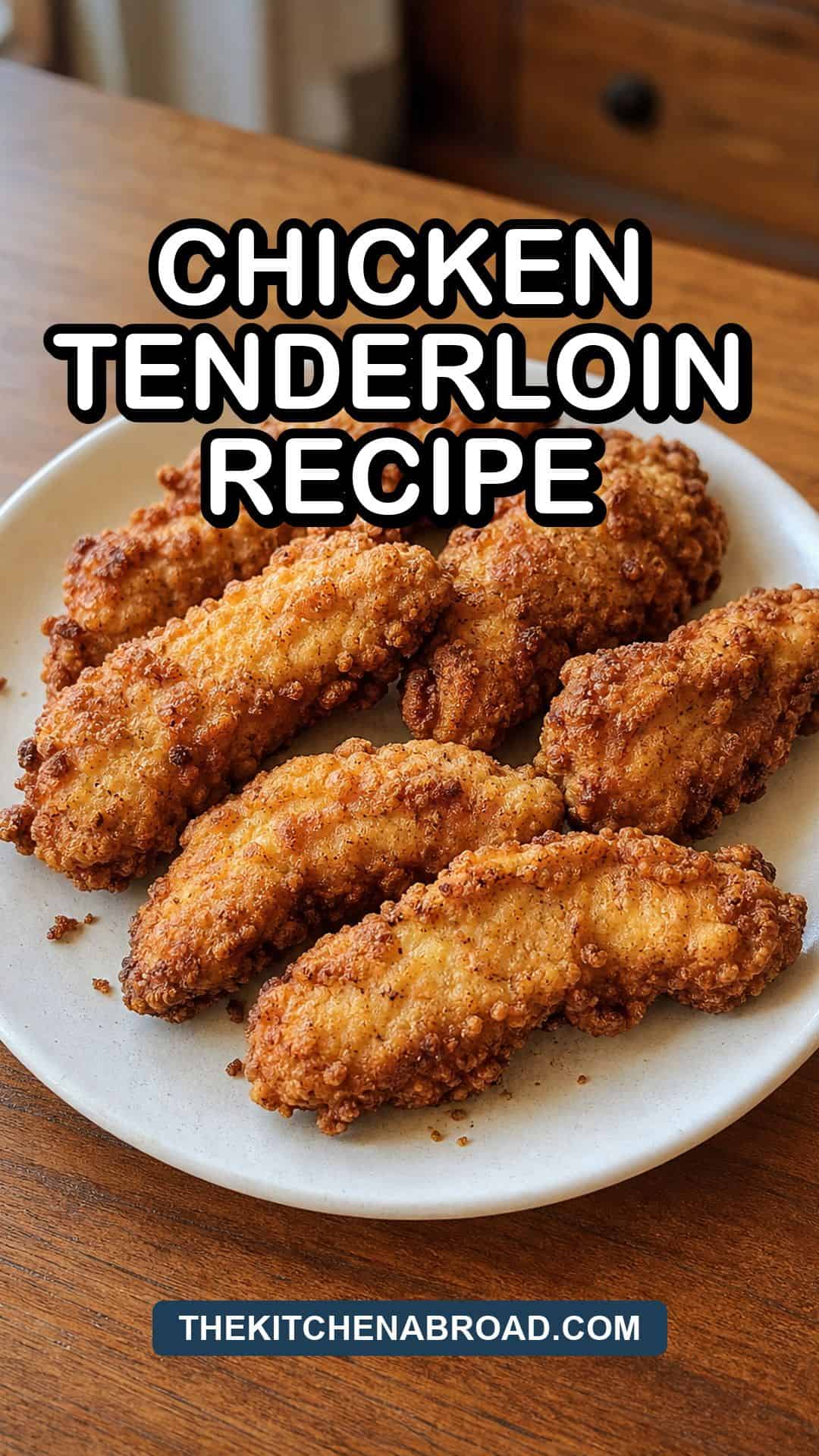
Soak chicken tenderloins in buttermilk for at least 30 minutes, coat them in seasoned flour, then egg, then flour again, and shallow-fry in 175°C (350°F) oil for about 3 1/2 to 4 minutes on the first side and 3 to 3 1/2 on the second. They’re done at 74°C (165°F) inside. Allow about 55 minutes in all, most of it hands-off marinating.
The oil is where most home chicken tenders go wrong. Too cool and the breading drinks it up and goes greasy; too hot and the crust is dark brown while the middle is still raw. This pan-fried chicken tenderloin recipe fixes that with a thermometer, a heavy pan and small batches.
The other two steps matter almost as much. A buttermilk soak keeps the meat juicy and seasons it all the way through. A double dredge (flour, egg, flour) builds a thick, craggy crust that cracks when you bite it. None of it is hard. It just has to happen in the right order.
A cast iron skillet, an instant-read thermometer and a wire rack do the heavy lifting here. These are the ones worth having.


Why does the oil temperature matter so much?
Because cold chicken lowers it the moment it goes in. A thin pan can lose 30°C as soon as raw meat hits it, and at that point the flour soaks up oil instead of frying crisp. Cast iron holds heat, so the temperature drops less and recovers faster.
Fry four tenders at a time, no more, and check the thermometer between batches. Nudge the burner up or down to bring it back to 175°C before the next round. In restaurant kitchens, the fryer has a thermostat doing this for you; at home, you are the thermostat.
Drain on a wire rack set over a sheet pan, never on paper towels. Steam gets trapped under chicken lying on paper and the bottom crust goes soft within a minute or two. While it rests, check the thickest piece with the thermometer: 74°C (165°F) is the safe minimum for poultry on the FoodSafety.gov temperature chart.
What does the buttermilk soak do?
Buttermilk is mildly acidic, and with the salt in it, it seasons and tenderises the chicken as it sits. Thirty minutes is the minimum and four hours is the most I’d give it; much longer and the texture of tenderloins starts to turn soft and mushy at the surface.
The buttermilk left on the chicken also helps the first layer of flour stick. Let the excess drip off, though. A thick coat of liquid turns the flour into paste, and that paste is what slides off in the pan. No buttermilk in the fridge? A dairy-free almond buttermilk works for the soak.
Flour, egg, flour: why the double dredge?
The first flour coat dries the surface so the egg can grip. The egg glues on the second coat. That second layer of flour is the one that fries into crisp shards, so press it on firmly.
The cornstarch in the flour mix is doing quiet work too. At 200 g flour to 50 g cornstarch, the crust has enough structure to hold together and enough cornstarch to stay crisp after the chicken cools. All flour gives a softer crust; too much cornstarch turns glassy and hard.
If you have time, let the breaded tenders rest on a plate for 5 minutes before frying. The coating hydrates and sets, and it holds on better when you flip.
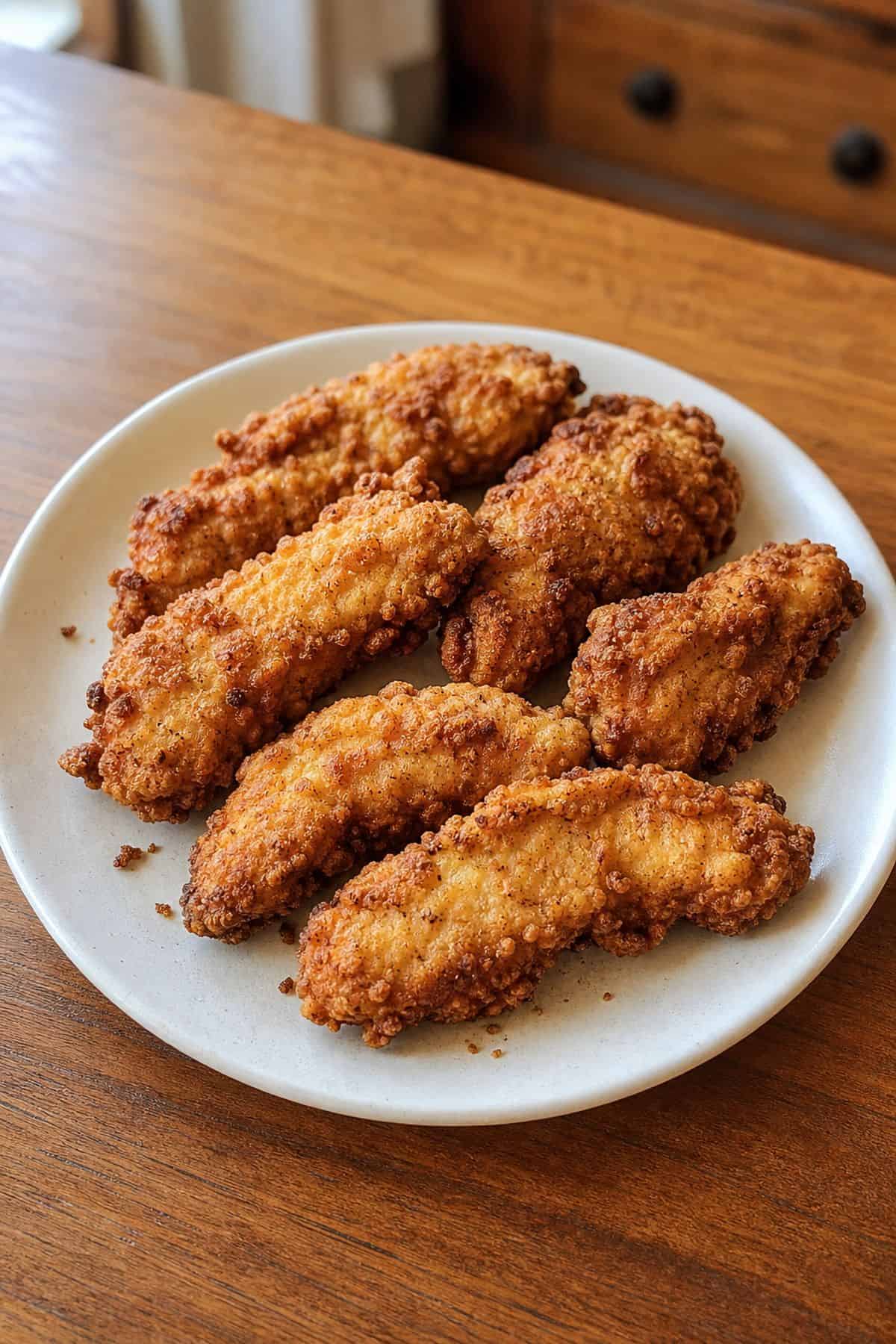
Pan-fried chicken tenderloin recipe
Prep time: 10 minutes. Marinating time: 30 minutes. Cook time: 15 minutes. Total time: 55 minutes. Serves: 3 to 4 as a main.
Ingredients
- 700 g (1½ lb) chicken tenderloins (about 12 strips)
- 240 ml (1 cup) full-fat buttermilk
- 1 tsp hot sauce, such as Frank’s RedHot (optional)
- 1 tsp fine sea salt (for the marinade)
- 200 g (1⅓ cups) all-purpose flour
- 50 g (⅓ cup) cornstarch
- 2 tsp fine sea salt
- 1½ tsp smoked paprika
- 1 tsp garlic powder
- 1 tsp onion powder
- ½ tsp freshly ground black pepper
- 2 large eggs, beaten
- 500 to 700 ml (2 to 3 cups) avocado oil, for frying
Instructions
- Whisk the buttermilk, hot sauce (if using) and 1 tsp salt in a large bowl. Add the chicken, turn to coat, cover and refrigerate for at least 30 minutes and up to 4 hours.
- In a wide shallow bowl, whisk the flour, cornstarch, 2 tsp salt, smoked paprika, garlic powder, onion powder and pepper. Put the beaten eggs in a second shallow bowl.
- Pour about 1½ cm (1/2 inch) of oil into a cast iron skillet and heat over medium-high until it reads 175°C (350°F). Set a wire rack over a sheet pan next to the stove.
- Lift one tenderloin from the buttermilk and let the excess drip off. Dredge it in the flour and shake off the excess, dip it in egg, then press it into the flour again for a thick coat. Repeat with the rest.
- Fry 4 tenderloins at a time, lowering each into the oil away from you. Cook for 3½ to 4 minutes, until deep golden, then flip with a wide spatula and fry for 3 to 3½ minutes more.
- Move to the wire rack and check the thickest piece: it should read 74°C (165°F).
- Bring the oil back to 175°C before frying the next batch. Serve straight away with your favourite dipping sauce.
Notes
Leftovers keep 3 days in an airtight container in the fridge. Reheat on a wire rack in a 200°C (400°F) oven for 8 minutes; the microwave makes the crust soggy. To feed more people, double everything and fry in more batches.
What to serve with crispy chicken tenders
Honey mustard and pickles are the classic pairing. For something fresher, a crisp green salad with a sharp sherry vinaigrette cuts through the fried crust nicely.
Tenders also travel well to a cookout. Fry them an hour ahead, keep them on the rack in a low oven, and set them out with the slaw and corn from these backyard BBQ food ideas.
Chicken tenderloin questions
Can I use chicken breast instead of tenderloins?
Yes, slice each breast lengthwise into 3 or 4 even strips about 1.5 cm (1/2 inch) thick and follow the same method. They need about 4 to 5 minutes per side, so check for 74°C (165°F) in the thickest strip.
What is the best oil for pan-frying chicken tenderloins?
A neutral oil with a high smoke point, such as avocado, canola, peanut or refined sunflower oil. Olive oil and butter burn at frying temperature and leave the crust bitter.
How do I know the oil is hot enough without a thermometer?
Drop a small cube of bread into the oil: at 175°C (350°F) it turns golden in about 60 seconds. A pinch of flour should also sizzle and rise straight away.
Can I bake or air-fry breaded chicken tenderloins?
Yes, though the crust comes out a little less crisp. Bake on a wire rack, sprayed with oil, at 220°C (425°F) for 16 to 18 minutes, or air-fry at 200°C (400°F) for 10 to 12 minutes, flipping halfway either way.
Why does the breading fall off my chicken?
Usually because too much buttermilk was clinging to the chicken, the tenders were flipped too early, or the egg wash was too thin. Let the excess drip off, use whole beaten eggs, and leave each side the full 3 1/2 minutes before turning.
How long do fried chicken tenderloins keep?
They keep 3 days in an airtight container in the fridge, or up to 2 months in the freezer. Reheat on a wire rack in a 200°C (400°F) oven, about 8 minutes from the fridge or 15 minutes from frozen.
Key takeaways
- Soak the tenderloins in salted buttermilk for 30 minutes to 4 hours.
- Dredge twice, flour then egg then flour, and press the second coat on firmly.
- Keep the oil at 175°C (350°F), fry 4 at a time, and check the chicken reaches 74°C (165°F).
- Drain on a wire rack, never paper towels, and reheat in the oven instead of the microwave.
More fast chicken for busy weeknights
When frying isn’t on the cards, the same tenderloins cut into strips go straight into this quick chicken stir-fry.
Pan-Fried Chicken Tenderloin Recipe (Crispy, 15 Minutes)
Pan-fried chicken tenderloin is buttermilk-marinated chicken double-dredged in seasoned flour and shallow-fried in avocado oil at 175°C (350°F) for 4 minutes per side until shatter-crisp on the outside and juicy in the middle.
Ingredients
- 700 g (1½ lb) chicken tenderloins (about 12 strips)
- 240 ml (1 cup) full-fat buttermilk
- 1 tsp Frank's RedHot or similar hot sauce (optional)
- 1 tsp fine sea salt (for marinade)
- 200 g (1⅓ cups) all-purpose flour
- 50 g (⅓ cup) cornstarch
- 2 tsp fine sea salt
- 1½ tsp smoked paprika
- 1 tsp garlic powder
- 1 tsp onion powder
- ½ tsp freshly ground black pepper
- 2 large eggs, beaten
- 500–700 ml (2–3 cups) avocado oil, for frying
Instructions
- In a large bowl, whisk together the buttermilk, hot sauce (if using), and 1 teaspoon of salt. Add the chicken tenderloins and turn to coat fully. Cover and refrigerate for at least 30 minutes, up to 4 hours.
- In a wide shallow bowl, whisk together the flour, cornstarch, 2 teaspoons of salt, smoked paprika, garlic powder, onion powder, and black pepper.
- Pour 1½ cm (about ½ inch) of avocado oil into a cast iron skillet. Heat over medium-high until the oil reaches 175°C (350°F) on an instant-read thermometer.
- Set up a wire rack over a sheet pan beside the stove for draining the cooked chicken.
- Working one tenderloin at a time, lift the chicken from the buttermilk and let excess drip off. Dredge in the seasoned flour, shaking off excess. Dip in the beaten egg, letting excess drip off.
- Fry 4 tenderloins at a time (do not crowd the pan, which drops the oil temperature). Lower each tenderloin into the hot oil, away from you to avoid splashing. Fry for 3½ to 4 minutes on the first side, until deeply golden.
- Transfer to the wire rack to drain. Check the internal temperature with the thermometer at the thickest part; it should read 74°C (165°F).
- Adjust burner heat to keep the oil at 175°C, then fry the next batch. Serve immediately with your favorite dipping sauce.
Notes
The buttermilk marinade is the tender-meat step. Thirty minutes is the floor. Four hours is the ceiling. Skipping the marinade entirely is the difference between fast-food-quality chicken tenders and restaurant-quality ones.
The double-dredge gives you shatter crust. Flour, then egg, then flour again. The second flour layer is the one that crisps into shards when fried.
Last update on 2026-10-03 / Affiliate links / Images from Amazon Product Advertising API