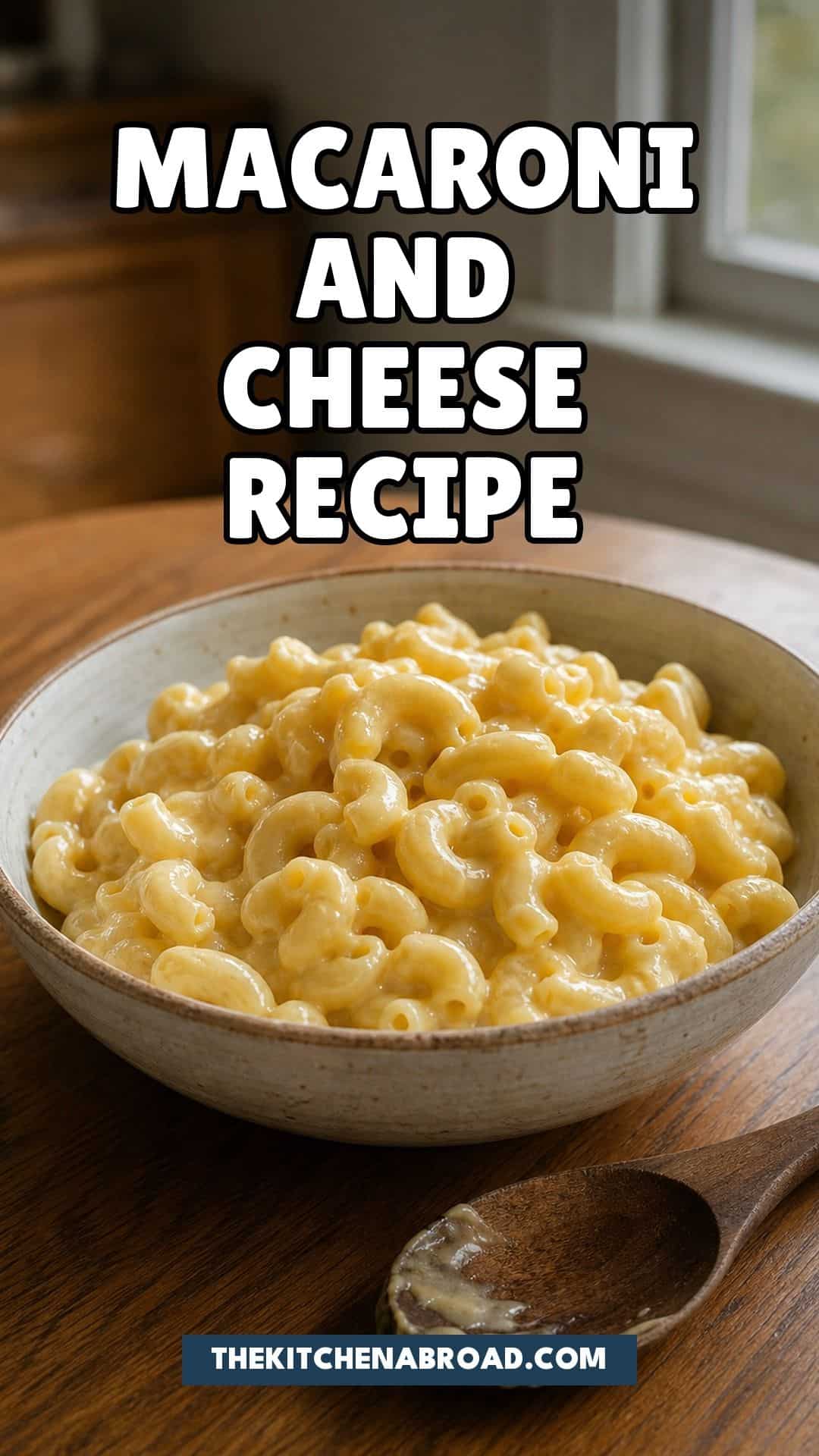
A proper stovetop mac and cheese is the twenty-minute, one-pot, no-roux version that lands on the family weeknight table while the kids are still washing their hands. Elbow macaroni cooks in well-salted water, gets drained with a splash of starchy water held back, then meets evaporated milk, sharp cheddar, Gruyere, and a whisper of Parmesan in a single deep saucepan. The cheese goes in off the heat, which is the whole trick. No oven, no casserole dish, no breadcrumbs, no flour. Four generous bowls in twenty minutes flat.
It is six o’clock on a Tuesday and dinner is the question of the hour. The deep saucepan goes on the burner, the elbows hit the water, and twenty minutes later there is a bowl of shiny, weeknight macaroni and cheese on every placemat. The sauce coats the back of the wooden spoon. The kids stop asking when dinner is ready because dinner is ready. Looking for the baked roux-and-three-cheese version with the breadcrumb crust? That is our creamy baked macaroni and cheese, built around a butter-and-flour roux and a long stretch in the oven. This is the stovetop one-pot version that lands in twenty minutes, no roux and no oven required.
Recommended Reads
- Creamy Baked Macaroni and Cheese
- Creamy Potatoes au Gratin
- Cheesy Broccoli Casserole
- Best Easter Side Dishes
- Friendsgiving Side Dishes
Where Macaroni and Cheese Came From
The dish on the American table traces back to James Hemings, the enslaved chef in the Jefferson household who trained in Paris between 1784 and 1789 and brought macaroni-and-cheese back to Monticello at the end of the seventeen-hundreds. Hemings learned classical French technique under master chefs in Paris, ran the Jefferson kitchen in New York and Philadelphia, and earned his freedom in 1796 after years of negotiation. His version layered cooked macaroni with butter and grated cheese, then warmed it through, the structural ancestor of every American mac and cheese that followed. Monticello documents the lineage in detail, and the dish is properly credited to Hemings, not to Jefferson.
From Monticello the dish moved into the American comfort-food canon. By the nineteenth century it was a Southern staple, baked with cheese and eggs into a custardy casserole. By the twentieth it lived in two registers: the boxed-blue weeknight bowl and the holiday baked dish with the breadcrumb crust. This recipe lives in a third register, the stovetop one-pot version that the home cook reaches for on a Tuesday night when there is no time for a roux and no patience for the oven. The technique here owes its smooth finish to J. Kenji Lopez-Alt and the Serious Eats kitchen, where the evaporated-milk method got tested and championed.
A Few Notes on the Ingredients
- Elbow macaroni: The classic answer. Short tubes and a hollow center give a clean spoon scoop and good sauce-hold. Cavatappi is the upgrade for serious sauce-hold; medium shells are the kid-favorite version. Skip penne and ziti, since the longer tubes let the sauce slide off.
- Evaporated milk: The move that makes this recipe work without a flour roux. Whole milk reduced by about sixty percent, which concentrates the casein proteins into a viscous base that emulsifies the cheese fat on its own. Carnation is the supermarket default and works fine.
- Sharp cheddar: The lead cheese, grated from the block. Brings the recognizable American mac flavor and melts cleanly. Pre-shredded bagged cheese is coated in cellulose anti-caking agents that refuse to melt smoothly, so grate from the block every time.
- Gruyere: The supporting cheese. Adds nutty depth and a longer pull behind the cheddar. Grate from the block alongside the sharp cheddar.
- Parmesan: A small handful rounding the back of the cheese stack. Layers in salt-savory edge without taking over the sauce.
- Reserved pasta water: Hold back a quarter cup before draining. The starch loosens the sauce if it tightens after the cheese goes in.
- The off-heat rule: Cheese goes in off the heat, in handfuls, whisked one at a time. Past 170 degrees Fahrenheit the casein structure seizes and the fat separates, which is exactly what produces grainy, broken sauce.
Recipe: Macaroni and Cheese

Prep time: 5 minutes | Cook time: 15 minutes | Total time: 20 minutes | Serves: 4
Ingredients
- 8 oz (225 g) elbow macaroni or cavatappi
- 1 1/2 cups (360 ml) evaporated milk
- 2 cups (200 g) sharp cheddar, grated on the box grater
- 1/2 cup (50 g) Gruyere, grated on the box grater
- 1/4 cup (25 g) Parmesan, grated on the box grater
- 1 tsp Dijon mustard
- 1/2 tsp fine sea salt
- 1/4 tsp white pepper
- 1/4 tsp ground nutmeg
- 2 tbsp (28 g) unsalted butter
Instructions
- Bring a deep three-quart stainless steel saucepan of well-salted water to a rolling boil. Add the 8 oz (225 g) elbow macaroni or cavatappi and cook to al dente, about 7 minutes, stirring occasionally.
- Reserve 1/4 cup of the starchy pasta water in a measuring cup, then drain the pasta. Do not rinse.
- Return the drained pasta to the same deep saucepan over low heat. Add the 2 tbsp (28 g) unsalted butter and the 1 1/2 cups (360 ml) evaporated milk and stir to coat, warming through for 60 to 90 seconds until the milk steams gently at the edges.
- Pull the saucepan off the heat. This is the move that prevents graininess. Wait 30 seconds, then add the 2 cups (200 g) sharp cheddar in three handfuls, whisking after each addition until smooth-smooth and fully emulsified before the next handful goes in. Whisk in the 1/2 cup (50 g) Gruyere, then the 1/4 cup (25 g) Parmesan.
- Whisk in the 1 tsp Dijon mustard, 1/2 tsp salt, 1/4 tsp white pepper, and 1/4 tsp ground nutmeg. Taste and adjust the salt.
- If the sauce looks tighter than you want, add a splash of the reserved pasta water (one tablespoon at a time) and stir to loosen.
- Serve immediately in warm bowls. The sauce thickens as it sits, so this one rewards bringing the bowls to the table fast.
Notes
The off-heat cheese rule is the whole point of this recipe. Direct burner heat past roughly 170 degrees Fahrenheit seizes the casein and breaks the sauce into curds and grease. Pull the pan, wait, whisk in the cheese gradually, and the residual warmth of the pasta and milk does the melting cleanly.
To reheat leftovers, warm gently in a saucepan over low heat with a splash of milk (regular or evaporated), stirring constantly to loosen the sauce. Skip the microwave on high power; it tightens the cheese and dries the pasta.
To scale for 8, double every ingredient and use a deep five- or six-quart stainless steel pot to give the pasta room to boil and the cheese room to whisk in cleanly. Cook time stays the same; the off-heat cheese addition just takes one extra handful.
Tips and Variations
Why Evaporated Milk Beats Flour Roux for Stovetop
A flour roux is the right move for baked mac and cheese, where the long oven time needs the structural backbone of a bechamel to keep the sauce from breaking. On the stovetop, where the dish gets served immediately, the roux is overkill. Evaporated milk is whole milk reduced by about sixty percent, which concentrates the casein and the lactose into a base that is already viscous and already protein-rich. Those proteins emulsify the cheese fat on their own, no flour required. The result is a cleaner, glossier sauce that tastes of cheese rather than of flour-thickened bechamel. This is the technique J. Kenji Lopez-Alt tested into the canon at Serious Eats, and it is the reason this recipe lands in twenty minutes.
How to Pick the Right Pasta Shape
Elbow macaroni is the classic and the safest answer; the short tube with the hollow center gives a clean spoon scoop and a fair sauce-hold. Cavatappi (the corkscrew) is the upgrade for serious sauce-hold, with both an outer spiral groove and an inner channel. Medium shells trap pools of cheese in the cup and read kid-friendly in a way the other two do not. Skip penne and ziti for stovetop mac; the longer tubes let the sauce slide off, and the bowl splits between dry pasta and a puddle at the bottom. Whichever shape you reach for, cook it to true al dente and reserve a quarter cup of the starchy pasta water before draining.
The Off-Heat Cheese Rule That Prevents Graininess
Grainy mac and cheese is almost always a heat problem. Dairy proteins (the casein in the cheese, the casein in the milk) hold their structure up to about 170 degrees Fahrenheit, and past that line they seize, contract, and squeeze the fat out into a separate layer. That is what graininess is: clumped protein and weeping butterfat. The fix is mechanical, not chemical. Pull the saucepan off the burner before any cheese touches the pan. Wait thirty seconds for the temperature to drop. Add the cheese in three handfuls, whisking each one in completely before the next goes in. The residual warmth of the pasta and the evaporated milk does the melting, and the sauce stays smooth. Also: grate from the block. Pre-shredded bagged cheese carries cellulose anti-caking powder that refuses to melt cleanly, and that is the second most common reason for grainy sauce.
Adding Bacon and Caramelized Onions for Dinner-Party Mac
For a dressed-up version that crosses from family weeknight into dinner-party territory, cook 6 ounces (170 g) of bacon until crisp, drain on paper towels, and chop. In a tablespoon of the bacon fat, slowly cook one large yellow onion sliced thin until deeply caramelized, about 25 minutes over medium-low. Fold the bacon and the caramelized onions into the finished sauce just before serving. The smoke and the sweetness reset the dish into something you would happily put on a plate next to a green salad and a glass of wine on a Saturday night.
Making This for a Crowd of 8
To feed 8, double every ingredient: 1 lb (450 g) pasta, 3 cups (720 ml) evaporated milk, 4 cups (400 g) sharp cheddar, 1 cup (100 g) Gruyere, 1/2 cup (50 g) Parmesan, 2 tsp Dijon, 1 tsp salt, 1/2 tsp white pepper, 1/2 tsp nutmeg, and 4 tbsp (56 g) butter. Use a deep five- or six-quart stainless steel pot so the pasta has room to boil and the cheese has room to whisk in without clumping. Cook time stays the same; the off-heat cheese addition just spreads across four handfuls instead of three.
What to Serve It With
This is the family weeknight dinner that works on its own with a green salad and a side of steamed broccoli, the kid-favorite plate that pairs with sheet-pan chicken tenders, the BBQ side that travels easily to a backyard potluck next to pulled pork or ribs (because the stovetop version does not need to bake on arrival), and the comfort-food bowl that sits next to creamy potatoes au gratin when the table goes full holiday. For a casual Friday night, set out a bowl alongside a roast chicken and a simple lemon vinaigrette salad and call it dinner.
For the mustard, see what Dijon mustard is.
FAQ
What is the secret to creamy mac and cheese?
Two moves do most of the work. First, evaporated milk instead of regular milk; the concentrated proteins emulsify the cheese fat without a flour roux. Second, the cheese goes in off the heat, in handfuls, whisked one at a time. Past 170 degrees Fahrenheit, dairy proteins seize and the sauce breaks. Pull the pan, wait, whisk, and the sauce stays smooth.
Why does my stovetop mac and cheese turn out grainy?
Usually one of two reasons. The pan was too hot when the cheese went in (anything past about 170 degrees Fahrenheit and the casein seizes), or the cheese came pre-shredded from a bag. Pre-shredded cheese is coated in cellulose anti-caking powder that does not melt cleanly. Pull the pan off the heat before any cheese touches it, and grate from the block.
Can you make mac and cheese without flour?
Yes. That is the whole point of this recipe. Evaporated milk provides the concentrated proteins that a flour roux usually provides, and the starchy pasta water you reserve before draining handles any final loosening or thickening. No flour, no cornstarch, no slurry.
What is the most reliable cheese for mac and cheese?
Sharp cheddar is the standard, grated from the block. Gruyere brings nutty depth and a longer pull, and a small handful of Parmesan layers in savory edge. Monterey Jack adds stretch if you want a more melty texture, and a tablespoon of cream cheese smooths the sauce if you have it on hand. Skip pre-shredded bagged cheese; it does not melt cleanly.
Can I use evaporated milk instead of regular milk in mac and cheese?
Yes, and you should for stovetop mac. Evaporated milk is whole milk reduced by about sixty percent, which concentrates the casein proteins and lets the sauce emulsify without a flour roux. Do not confuse it with sweetened condensed milk; that one is sugared and belongs in dessert.
Can I bake this stovetop version?
Technically yes (pour into a buttered baking dish, top with breadcrumbs and a little extra grated cheese, bake at 375 degrees for 15 to 20 minutes), but if the baked, breadcrumb-topped casserole is what you actually want, our creamy baked macaroni and cheese is built for that lane from the start, with a proper roux and a three-cheese blend designed for long oven time.
Key Takeaways
- This is the stovetop, one-pot, no-roux version. Twenty minutes, no oven. For the baked casserole, see our creamy baked macaroni and cheese.
- Evaporated milk replaces the flour roux. Concentrated proteins emulsify the cheese without bechamel.
- Cheese goes in OFF the heat, in handfuls, whisked one at a time. Past 170 degrees Fahrenheit the sauce breaks.
- Grate from the block. Pre-shredded bagged cheese refuses to melt cleanly.
- Elbows are classic, cavatappi holds the most sauce, shells are the kid favorite. Skip penne and ziti.
- Reserve a quarter cup of starchy pasta water before draining; splash in to loosen the sauce if it tightens.
Final Thoughts
The reason this version of mac and cheese matters is the speed and the lane. The baked casserole has its own place at the holiday table, with the breadcrumb crust and the long oven time and the bubbling edges. This is the other half of the family, the Tuesday-night version that lands in twenty minutes in a single saucepan and asks nothing of the oven.
The single move that changes the dish most is the off-heat cheese addition. Direct burner heat past 170 degrees Fahrenheit breaks the sauce; the residual warmth of the pan does the melting cleanly. The second move is the evaporated milk, which carries the proteins that a flour roux would otherwise provide. Together they are the difference between a weeknight mac and cheese that arrives shiny and a weeknight mac and cheese that arrives grainy.
Make it on a Tuesday for the kids, on a Saturday with bacon and caramelized onions for a small dinner party, or for eight on a weekend night when the cousins are over. Bring the bowls to the table fast; the sauce tightens as it sits, and the first spoon in is the moment everyone came for.