
Tender homemade meatballs come from a 50/50 blend of 80/20 ground beef and sweet Italian sausage, bound with a milk-soaked-bread panade and an egg, then pan-seared and finished by simmering in tomato sauce for 30 minutes. The sausage brings fat and seasoning, the panade keeps the texture tender, the sear builds flavor, and the simmer lets the meatballs absorb the tomato. Served over spaghetti with freshly grated parmesan.
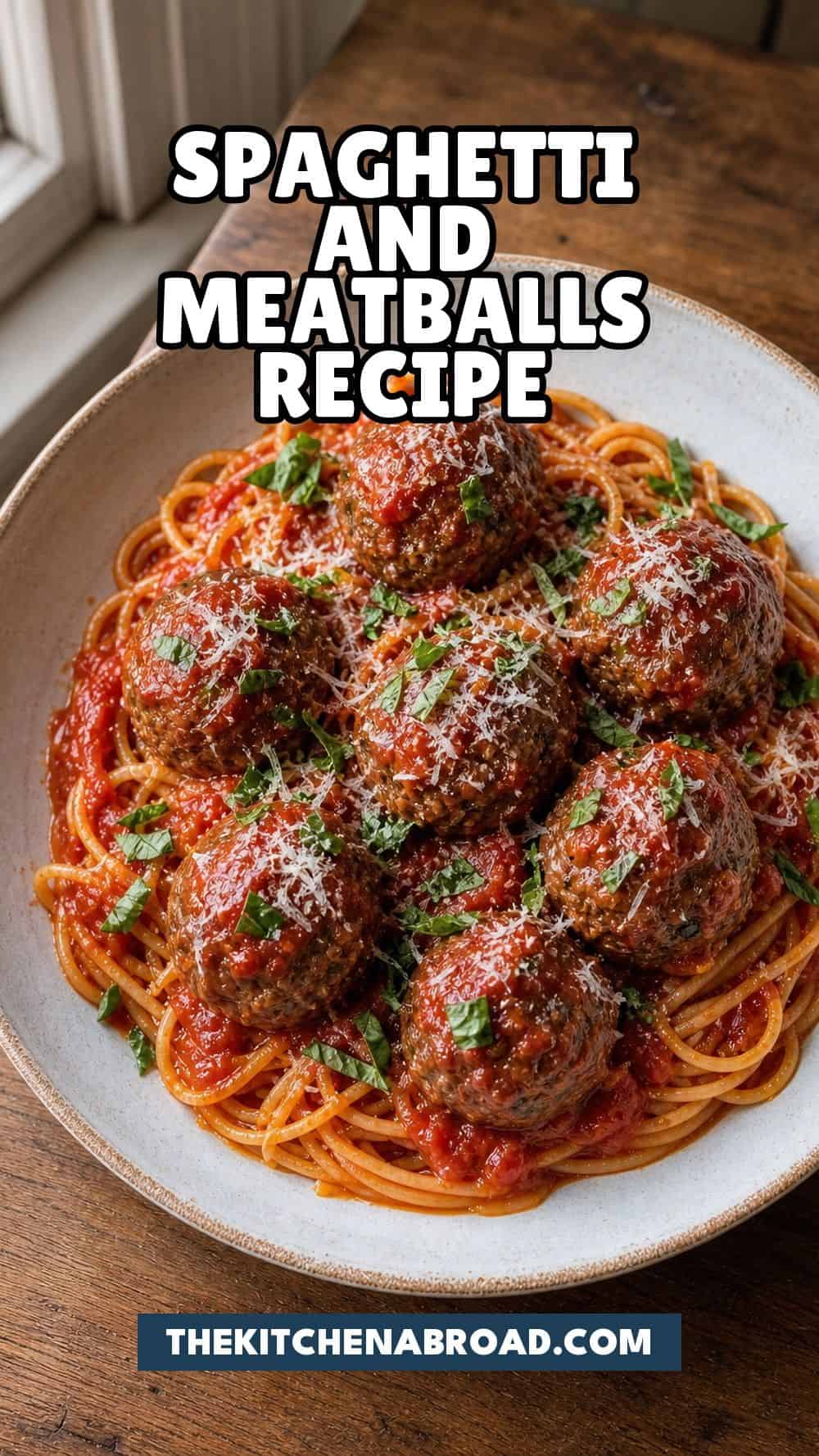
Spaghetti and meatballs is American, not Italian, which is the small fact most diners do not know about the dish they ordered. Italian-American cooks in the early 1900s scaled up polpette into big meatballs and paired them with the long pasta they could finally afford on a worker’s wage, and the dish on the menu today came out of those kitchens. Sunday-supper food at its most generous, with a sauce that improves on day two.
Tools That Make This Easier
A heavy cast iron skillet for the sear; the retained heat gives the meatballs their golden crust. A wide pot for simmering the sauce and finishing the meatballs.
A microplane for grating parmesan over the finished dish. A wooden spoon for stirring without breaking the meatballs.


Recommended Reads
- Baked Chicken Alfredo
- Classic Vegetarian Lasagna
- Easy Stuffed Peppers
- Chicken Parmesan
- Creamy Tomato Pasta with Spinach and Mushrooms
How Meatballs Became Italian-American
Italians do not really eat spaghetti and meatballs the way Americans imagine. Polpette (Italian meatballs) exist, but they are usually smaller, served as antipasti or in broth, and rarely over pasta. The marriage of large meatballs and long pasta is an Italian-American invention.
The dish took shape in the immigrant kitchens of New York, Boston, and Philadelphia in the early 20th century, when ground beef was cheap and abundant in a way it had never been in Italy. Italian-Americans scaled up the meatballs, paired them with the long pasta they could afford to eat daily, and the red-sauce restaurant standard was born.
The recipe below sits in that Italian-American tradition. Big meatballs, real tomato sauce, spaghetti tossed at the end. Family-style, served from the pot to the table.
A Few Notes on the Ingredients
Ground beef and sweet Italian sausage (50/50 blend): 500 g (1.1 lb) 80/20 ground beef + 500 g (1.1 lb) sweet Italian sausage with casings removed. The sausage brings fat, salt, fennel, and pre-seasoning. The blend is what gives Italian-American meatballs their distinctive flavor.
The panade: 3 slices white sandwich bread (about 90 g), crusts removed, torn small. Soaked in 180 ml (3/4 cup) whole milk until pulpy. The single most important move for tender meatballs.
Eggs: 2 large eggs, beaten. The binder. Both eggs are needed for a kilogram of meat; one is not enough.
Freshly grated parmesan: 50 g (1/2 cup) into the meatball mix, plus more for serving. Grate from a block; pre-shredded does not melt as smoothly into the meat.
Garlic, parsley, and oregano: 4 cloves garlic minced, 1/4 cup chopped fresh flat-leaf parsley, 1 tsp dried oregano. Folded into the meat for flavor.
Tomato sauce base: 1 can (790 g / 28 oz) crushed tomatoes (San Marzano or Mutti are the gold standards). Plus 3 cloves garlic, 2 Tbsp olive oil, 1 tsp dried oregano, and a pinch of red pepper flakes.
Spaghetti: 500 g (1.1 lb) quality dried spaghetti (De Cecco, Rummo, Garofalo). Cooked al dente; the long pasta is the textural counterpoint to the soft meatballs.
Olive oil for searing: 60 ml (1/4 cup) for pan-frying the meatballs in batches.
Recipe: Spaghetti and Meatballs
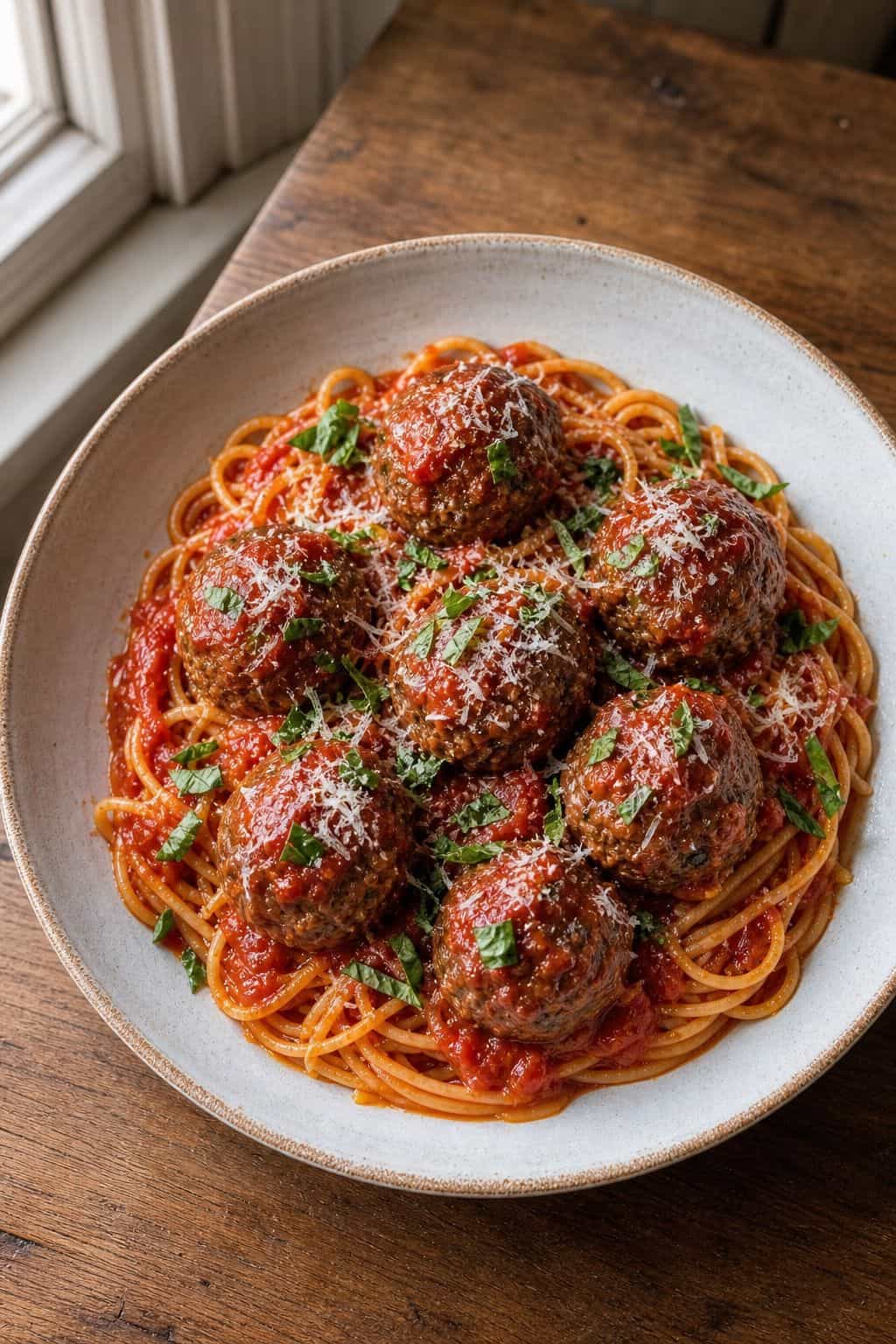
Prep time: 25 minutes | Cook time: 50 minutes | Total time: 1 hour 15 minutes | Serves: 6
For the Meatballs
- 500 g (1.1 lb) ground beef, 80/20
- 500 g (1.1 lb) sweet Italian sausage, casings removed
- 3 slices white sandwich bread (about 90 g), crusts removed, torn small
- 180 ml (3/4 cup) whole milk
- 2 large eggs, beaten
- 50 g (1/2 cup) freshly grated parmesan
- 4 cloves garlic, minced
- 1/4 cup chopped fresh flat-leaf parsley
- 1 tsp dried oregano
- 1 tsp kosher salt (about 6 g)
- 1/2 tsp freshly cracked black pepper
- 60 ml (1/4 cup) olive oil, for searing
For the Sauce and Pasta
- 1 can (790 g / 28 oz) crushed tomatoes
- 3 cloves garlic, smashed
- 2 Tbsp olive oil
- 1 tsp dried oregano
- 1/4 tsp red pepper flakes
- 1/2 tsp kosher salt
- 500 g (1.1 lb) dried spaghetti
- Freshly grated parmesan and chopped basil, for serving
Instructions
- Tear the white bread into small pieces and place in a small bowl. Pour 180 ml (3/4 cup) whole milk over the bread and let it soak for 5 minutes, until the bread breaks down into a wet pulp.
- In a large bowl, combine the ground beef and the Italian sausage (with the casings already removed). Add the milk-soaked bread panade, 2 beaten eggs, 50 g (1/2 cup) grated parmesan, minced garlic, chopped parsley, 1 tsp oregano, 1 tsp salt, and 1/2 tsp black pepper.
- Mix with your hands until just combined. Do not overmix. The mixture should look like uniformly seasoned meat with no large lumps of plain ground beef.
- Wet your hands lightly and roll the mixture into golf-ball-sized meatballs (about 50 g / 2 oz each). You should get around 20 meatballs. Set them on a parchment-lined sheet pan.
- Heat 60 ml (1/4 cup) olive oil in a large heavy skillet over medium-high heat. When the oil shimmers, add the meatballs in a single layer, working in two batches so the pan does not crowd. Sear for 2 minutes on the first side, then turn with tongs and sear another 2 minutes on a second side. Keep turning every 1 to 2 minutes until the meatballs are deeply golden on all sides, about 8 to 10 minutes total per batch. They do not need to be cooked through; the sauce finishes them. Transfer to a clean plate.
- While the meatballs sear, start the sauce. In a wide pot or Dutch oven, heat 2 Tbsp olive oil over medium heat. Add the smashed garlic cloves and cook for 1 to 2 minutes until fragrant and just turning golden. Do not let them brown.
- Add the crushed tomatoes, 1 tsp oregano, 1/4 tsp red pepper flakes, and 1/2 tsp salt. Stir, bring to a simmer, and let it reduce slightly for 5 minutes.
- Transfer the seared meatballs into the sauce, including any juices from the plate. Spoon a little sauce over each meatball. Reduce the heat to low, cover, and simmer gently for 30 minutes. Stir occasionally, being careful not to break the meatballs.
- While the meatballs simmer, bring a large pot of well-salted water to a boil. Add the spaghetti and cook to al dente, according to package time. Reserve 240 ml (1 cup) of pasta water before draining.
- Drain the spaghetti and either toss directly with some of the sauce (Italian-American style), or plate the pasta first and ladle meatballs and sauce on top. Add a splash of pasta water if the sauce needs loosening. Serve with freshly grated parmesan and chopped basil.
Notes
The hard sear before the simmer is what gives the meatballs depth. Skipping this step and dumping raw meatballs straight into the sauce gives you pale, less-flavorful results.
The 30-minute simmer in the sauce is what makes the meatballs tender and flavorful. Less time and they taste like seared meat in plain tomato sauce.
Do not overmix the meat. Stop the moment the ingredients look evenly distributed.
Tips and Variations
Why the Sear-Then-Simmer Beats Baking
Baked meatballs dry out. The oven cooks them from all sides at the same time, the surface seals before the inside has a chance to render, and the result is denser than seared-and-simmered.
The pan sear builds the Maillard crust on the outside; the simmer keeps the inside tender by cooking it slowly in liquid. Same recipe, dramatically different result.
What Meat and Pasta Swaps Actually Work
The 50/50 beef-and-sausage blend is the upgrade. Pure beef works (use 80/20) but tastes flatter. The traditional Italian-American “meatball mix” of beef + pork + veal is also excellent.
For pasta, spaghetti is the classic. Bucatini is the upgrade (thicker, with a hollow center that catches sauce). Linguine works in a pinch. Avoid short pasta shapes; long noodles with meatballs is the format.
How to Make This Vegetarian Without Losing the Soul
Use plant-based ground meat (Impossible or Beyond) and skip the sausage. Add 1 tsp fennel seeds, 1 tsp Italian seasoning, and 1/2 tsp smoked paprika to replace the sausage flavor.
For a non-meat-substitute version, swap the meat for 2 cans (425 g each) drained cannellini beans + 225 g (8 oz) finely chopped sautéed cremini mushrooms + 60 g (1/3 cup) walnut crumbs. The result is a different dish but a satisfying one.
The Sunday Sauce Upgrade Worth Doing
For a slower, deeper version (the proper Sunday sauce), brown a piece of pork shoulder, beef short ribs, or chicken thighs in the sauce alongside the meatballs. Simmer for 2 to 3 hours instead of 30 minutes. The sauce reduces and concentrates; the meatballs and braised meat both end up tender.
Serve the braised meats separately as a second course, with the spaghetti and meatballs first. This is how Italian-American Sunday dinners were eaten in immigrant households for decades.
How Long This Keeps and How to Freeze
Cooked meatballs in sauce keep 4 days in the fridge in an airtight container. Reheat over medium-low heat with a splash of water if the sauce has thickened too much. The pasta should be cooked fresh; do not store it in the sauce or it bloats.
Cooked meatballs (without sauce) freeze for 3 months. Pack tightly in zip-top bags. Thaw overnight in the fridge and warm in fresh sauce on the stove. The make-ahead version is a strong weeknight move.
Frequently Asked Questions
Can I bake the meatballs instead of pan-searing?
Yes, but the result is drier and less flavorful. Bake at 200°C (400°F) for 18 to 20 minutes on a parchment-lined sheet pan. Transfer to the sauce and simmer 20 minutes. Faster but less good.
Do I have to use Italian sausage?
No, but the meatballs will taste flatter without it. The sausage brings fat, salt, fennel, and pre-seasoning that pure beef cannot replicate. If you skip it, use 1 kg (2.2 lb) of 80/20 ground beef and add 1 tsp fennel seeds, 1/2 tsp paprika, and an extra 1/2 tsp salt to compensate.
Why do my meatballs fall apart?
Two possible reasons. One, the meatballs were under-bound (not enough egg or panade). Two, you stirred the sauce aggressively while they were simmering. Stir gently and try not to disturb the meatballs while they cook.
Can I use jarred marinara instead?
Yes, in a pinch. Use a quality jarred marinara (Rao’s, Mutti, Victoria) at the same volume. Skip steps 6 and 7 and add the seared meatballs straight to the warmed jarred sauce.
What goes on the side?
A simple green salad with vinaigrette, garlic bread, and a glass of Chianti or Sangiovese. The pasta and meatballs are the meal; sides should be light and acidic.
Key Takeaways
- 50/50 beef and Italian sausage gives the meatballs proper Italian-American flavor.
- Milk-soaked-bread panade keeps the meatballs tender. Skip dried breadcrumbs.
- Pan-sear, then simmer in sauce for 30 minutes. Baking dries them out.
- Do not overmix. Stop the moment the meat is evenly seasoned.
- Freeze cooked meatballs (no sauce) for 3 months; warm in fresh sauce when needed.
Final Thoughts
Spaghetti and meatballs is the Italian-American Sunday dinner that earned its place because every component is doing real work. The beef-sausage blend is what makes the meatballs taste right, the panade is what keeps them tender, and the 30-minute simmer is what lets them absorb the sauce.
The sear-then-simmer technique is the move that separates this version from the average. Eight minutes of patient browning, thirty minutes of gentle simmering. The dish more or less makes itself once the work is done.
Make it for Sunday dinner, a family-style dinner party, or just because you want a big pot of comfort food. Freeze leftover meatballs for fast weeknight dinners later. A glass of Chianti and garlic bread finish the meal.
Spaghetti and Meatballs
Tender homemade meatballs come from a 50/50 blend of 80/20 ground beef and sweet Italian sausage, bound with a milk-soaked-bread panade and an egg, then pan-seared and finished by simmering in tomato sauce for 30 minutes.
Ingredients
- 500 g (1.1 lb) ground beef, 80/20
- 500 g (1.1 lb) sweet Italian sausage, casings removed
- 3 slices white sandwich bread (about 90 g), crusts removed, torn small
- 180 ml (3/4 cup) whole milk
- 2 large eggs, beaten
- 50 g (1/2 cup) freshly grated parmesan
- 4 cloves garlic, minced
- 1/4 cup chopped fresh flat-leaf parsley
- 1 tsp dried oregano
- 1 tsp kosher salt (about 6 g)
- 1/2 tsp freshly cracked black pepper
- 60 ml (1/4 cup) olive oil, for searing
- 1 can (790 g / 28 oz) crushed tomatoes
- 3 cloves garlic, smashed
- 2 Tbsp olive oil
- 1/4 tsp red pepper flakes
- 1/2 tsp kosher salt
- 500 g (1.1 lb) dried spaghetti
- Freshly grated parmesan and chopped basil, for serving
Instructions
- Tear the white bread into small pieces and place in a small bowl. Pour 180 ml (3/4 cup) whole milk over the bread and let it soak for 5 minutes, until the bread breaks down into a wet pulp.
- In a large bowl, combine the ground beef and the Italian sausage (with the casings already removed).
- Mix with your hands until just combined. Do not overmix. The mixture should look like uniformly seasoned meat with no large lumps of plain ground beef.
- Wet your hands lightly and roll the mixture into golf-ball-sized meatballs (about 50 g / 2 oz each). You should get around 20 meatballs. Set them on a parchment-lined sheet pan.
- Heat 60 ml (1/4 cup) olive oil in a large heavy skillet over medium-high heat. When the oil shimmers, add the meatballs in a single layer, working in two batches so the pan does not crowd.
- While the meatballs sear, start the sauce. In a wide pot or Dutch oven, heat 2 Tbsp olive oil over medium heat. Add the smashed garlic cloves and cook for 1 to 2 minutes until fragrant and just turning golden. Do not let them brown.
- Add the crushed tomatoes, 1 tsp oregano, 1/4 tsp red pepper flakes, and 1/2 tsp salt. Stir, bring to a simmer, and let it reduce slightly for 5 minutes.
- Transfer the seared meatballs into the sauce, including any juices from the plate. Spoon a little sauce over each meatball. Reduce the heat to low, cover, and simmer gently for 30 minutes. Stir occasionally, being careful not to break the meatballs.
- While the meatballs simmer, bring a large pot of well-salted water to a boil. Add the spaghetti and cook to al dente, according to package time. Reserve 240 ml (1 cup) of pasta water before draining.
- Drain the spaghetti and either toss directly with some of the sauce (Italian-American style), or plate the pasta first and ladle meatballs and sauce on top. Add a splash of pasta water if the sauce needs loosening.
Notes
The hard sear before the simmer is what gives the meatballs depth. Skipping this step and dumping raw meatballs straight into the sauce gives you pale, less-flavorful results.
The 30-minute simmer in the sauce is what makes the meatballs tender and flavorful. Less time and they taste like seared meat in plain tomato sauce.
Last update on 2026-10-03 / Affiliate links / Images from Amazon Product Advertising API