For a goat cheese quiche, blind-bake a butter crust at 375°F (190°C) for 18 minutes, cover the base with leeks softened slowly in butter and thyme, drop on torn pieces of fresh chevre, then pour over 4 eggs whisked with 1 cup (240 ml) heavy cream. Bake at 350°F (175°C) for 35 to 40 minutes, until the center barely wobbles.
Five of France’s protected goat cheeses come from the Loire Valley, from tiny Crottin de Chavignol to the ash-dusted Valençay, so it makes sense that a goat cheese quiche from that part of the world puts the chevre front and center. A lot of English-language versions bury it under spinach, peppers and sun-dried tomatoes, and by the time you’ve chewed through the vegetables you’ve forgotten there was cheese in there at all.
This quiche chevre recipe keeps it simple: leeks and thyme underneath, soft goat cheese in pieces so you get creamy pockets instead of a chalky crumble, and a custard that sets with a slight wobble in the middle. Below you’ll find why each of those choices matters, the full recipe with the original amounts, how to stop a soggy bottom and how to make it a day ahead (it tastes even better on day two).
What You’ll Need

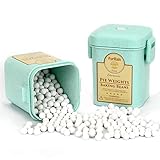


A fluted tart pan with a removable bottom gives you clean wedges, pie weights keep the crust flat while it blind-bakes, and a fine sieve makes the custard silky.
Recommended Reads
- Zucchini Goat Cheese Tart
- Cantaloupe Salad
- Classic Sherry Vinaigrette
- Christmas Lunch Ideas
- Christmas Breakfast Ideas
Why the Loire Version Beats the Spinach Version
Because the cheese gets to be the main character. Goat cheese has a fresh, tangy flavor that’s easy to drown, and leeks are the one allium that supports it without shouting. Onions go sweet and loud when they cook, while leeks go soft, mild and a little buttery, which is exactly what you want under a layer of chevre.
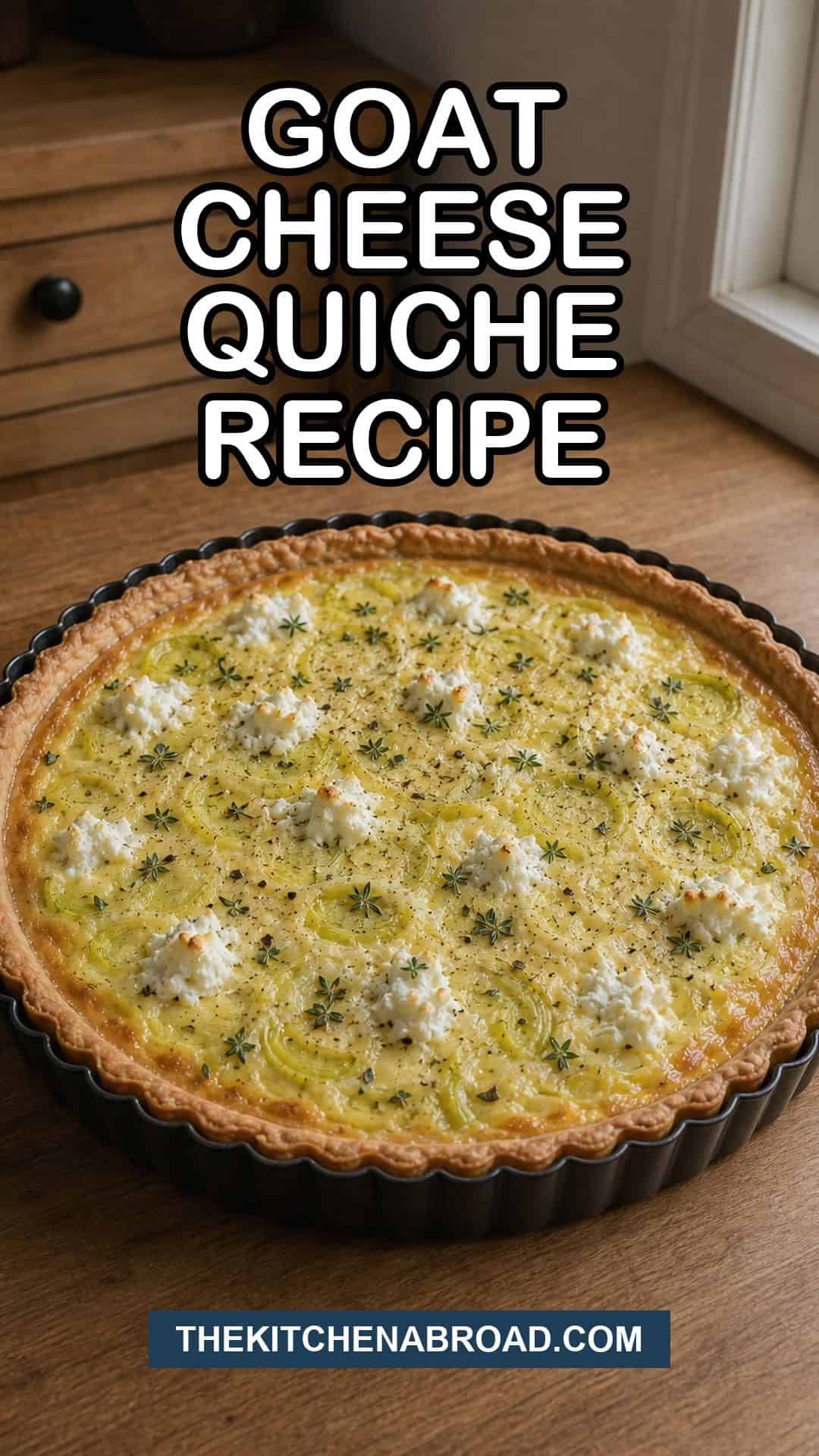
The way you add the cheese matters just as much. Crumble it finely and it spreads through the custard like dust, so every bite tastes the same and none of them tastes much of goat cheese. Tear it into pieces and drop them on the leeks, and they melt into soft white pockets (the pale spots you can see across the top of the quiche in the photos), so every other forkful hits you with warm, tangy cheese.
Then there’s the crust. Custard is wet and the bake is long, so a raw crust goes soggy before the filling sets. Blind-baking it first, 15 minutes with weights and 3 without, sets the floor so it stays crisp under all that cream.
A Few Notes on the Ingredients
Fresh, soft goat cheese is the one to buy, the spreadable log kind sold at most cheese counters. Pre-crumbled goat cheese is drier and won’t make those creamy pockets, and an aged, firm goat cheese won’t melt at all.
Two medium leeks give you about two cups sliced, using only the white and pale green parts. Wash them well after slicing, because grit hides between the layers, and cook them slowly in butter until they’re soft and pale, never brown.
For the custard, 4 large eggs to 1 cup (240 ml) heavy cream sets firm enough to slice but still soft in the middle. Half-and-half makes a thinner quiche, and whole milk on its own tends to weep.
A little nutmeg is the quiet ingredient that pulls the leeks, cream and goat cheese together, so don’t skip it. You’ll also need fresh thyme (or half the amount dried), butter for the leeks and the crust, flour, salt and pepper. A store-bought all-butter pie crust works if you’re short on time.
Recipe: Quiche au Chevre
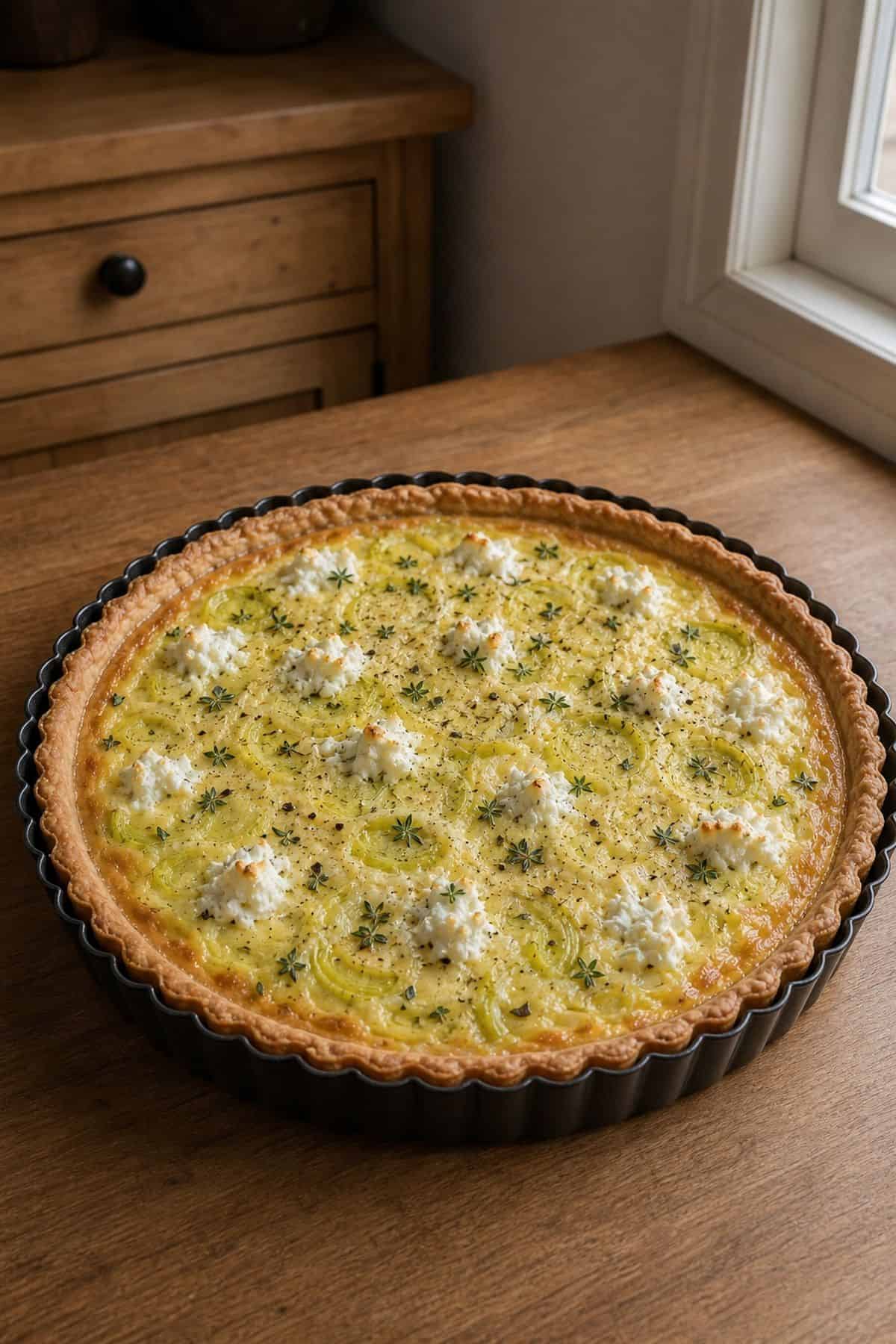
Prep time: 25 minutes | Chill time: 30 minutes | Cook time: 1 hour 5 minutes | Total time: 2 hours | Serves: 8
Ingredients
- 180 g (1 1/2 cups) all-purpose flour
- 1/2 tsp fine sea salt, for the dough
- 120 g (1 stick) cold unsalted butter, cubed
- 4 to 5 Tbsp ice water
- 2 medium leeks, white and pale-green parts only, sliced thin (about 2 cups)
- 30 g (2 Tbsp) unsalted butter, for the leeks
- 1 Tbsp fresh thyme leaves
- 4 large eggs
- 240 ml (1 cup) heavy cream
- 1/2 tsp fine sea salt, for the custard
- Freshly cracked black pepper
- Pinch of freshly grated nutmeg
- 180 g (6.5 oz) fresh soft chevre, torn into 2.5 cm (1 inch) chunks
Instructions
- Make the pate brisee. Pulse the flour and salt in a food processor briefly. Add the cold cubed butter and pulse until the mixture looks like coarse meal with pea-sized bits of butter still visible. Drizzle in the ice water, 1 Tbsp at a time, pulsing just until the dough holds together when pinched. Turn out, shape into a flat disk, wrap, and chill for at least 30 minutes.
- Roll the chilled dough on a lightly floured counter to a circle roughly 30 cm (12 inch) across. Lift into a 23 cm (9 inch) tart pan with a removable bottom, pressing the dough into the corners and trimming the edge flush with the rim. Prick the bottom with a fork. Chill 15 more minutes while the oven heats.
- Heat the oven to 190°C (375°F). Line the chilled crust with parchment and fill with pie weights or dried beans. Blind-bake for 15 minutes. Lift out the parchment and weights, return the crust to the oven, and bake 3 more minutes until the floor is pale gold and set. Set the crust aside on a rack. Lower the oven to 175°C (350°F).
- While the crust bakes, sweat the leeks. Melt the 2 Tbsp butter in a wide skillet over medium-low. Add the leeks and a pinch of salt and cook gently, stirring occasionally, for 12 to 15 minutes, until soft, sweet, and pale; do not let them brown. Stir in the thyme leaves and cook another minute. Remove from the heat and let cool slightly.
- Whisk the eggs and cream together in a bowl with the salt, several cracks of pepper, and a pinch of nutmeg. Strain through a fine-mesh sieve into a measuring jug for a cleaner custard.
- Spread the cooked leeks evenly across the par-baked crust. Drop the torn chevre chunks over the leeks, distributing them so each future slice gets a few pockets. Do not press the chevre down.
- Pour the custard slowly over the leeks and chevre, filling the crust to just below the rim. Some chevre chunks will sit slightly above the custard; that is correct.
- Bake at 175°C (350°F) for 35 to 40 minutes, until the edges are set and pale gold but the center still wobbles slightly when you nudge the pan. The custard will continue to set as it rests.
- Cool the quiche in its pan on a rack for at least 20 minutes before slicing. Lift out of the tart pan, slice with a sharp serrated knife or pizza cutter, and serve warm or at room temperature.
Notes
A slight wobble in the center when you take it out is the doneness you want. If the middle is already firm and flat, it’s overbaked, and the custard will taste more like scrambled eggs than silk.
Let it rest for at least 20 minutes. The custard keeps setting as it cools, and a quiche cut straight from the oven runs all over the plate.
Quiche holds at room temperature for up to 2 hours, which makes it great for a brunch table or a lunch you bake in the morning. To serve it warm again, reheat at 325°F (160°C) for 12 to 15 minutes.
Tips and Variations
Pick the Right Goat Cheese
Not every goat cheese melts the same way, and picking the wrong one is the fastest way to a disappointing quiche. Here’s how they behave in the custard:
- Fresh soft chevre logs melt into creamy pockets. This is the one you want.
- Pre-crumbled goat cheese stays dry and dusty, and it disappears into the custard.
- Aged, firm goat cheese like a hard crottin barely melts and turns chewy.
- Bloomy-rind goat cheese works if you trim off the rind first, because the rind tastes bitter once it’s baked.
If your cheese counter only has one kind, ask for the soft log and you’ll be fine.
Make Ahead and Reheat
Quiche is one of those rare dishes that’s better the next day. Overnight, the leeks get sweeter and the goat cheese settles into the custard, so the flavor tastes rounder and fuller than it did straight out of the oven.
Cool the quiche completely, wrap it and keep it in the fridge overnight. Reheat at 325°F (160°C) for about 15 minutes, straight from the fridge. The crust softens a little compared to a fresh bake, which is a small price for having lunch ready before your guests even ring the bell.
A Shortcut Crust That Still Works
Is a store-bought crust cheating? Not really, and nobody at the table will complain. Making pâte brisée from scratch is lovely on a slow Sunday, but on a weeknight a chilled all-butter pie crust does the job well. Press it into the tart pan, prick the bottom with a fork, chill it for 15 minutes and blind-bake it exactly like the homemade one, with weights for 15 minutes and then 3 more uncovered. The homemade crust is shorter and crisper, I won’t pretend otherwise, but a good store-bought one holds the custard, browns nicely and gets dinner on the table an hour sooner, which on a Tuesday matters more than flakiness.
Freeze Slices for Quick Lunches
A whole quiche is a lot for two people, so freezing slices turns one bake into a week of easy lunches.
- Cool the quiche completely, then cut it into wedges.
- Freeze the wedges on a sheet pan until firm, so they don’t stick together.
- Move them to a freezer bag and keep them for up to 2 months.
- Reheat from frozen at 350°F (175°C) for 18 to 20 minutes, until hot in the middle.
Add a green salad and you’ve got lunch in about 20 minutes with nothing to wash but one plate.
Push It Toward Brunch
For brunch, cut the quiche into smaller wedges and set it out with a green salad tossed in sherry vinaigrette, a bowl of berries and a big pot of coffee. It’s a great choice for a holiday morning table too, because it doesn’t need to be piping hot. The quiche is happy at room temperature for a couple of hours, so it survives guests who arrive late, people who go back for seconds and the person who spends forty minutes on the first cup of coffee (there’s always one). Bake it the night before and all you have to do in the morning is slice.
Pairings
A cold glass of Sancerre or Pouilly-Fumé is the natural match. Both are Sauvignon Blanc from the same valley as the cheese, and their acidity cuts through the cream and the tang of the chevre. A green salad with sherry vinaigrette is the classic bistro side.
For a bigger summer lunch, add a cantaloupe salad, or serve it next to the zucchini goat cheese tart for a two-tart table. It also makes a lovely centerpiece for a Christmas lunch spread.
How Do You Keep a Quiche From Getting Soggy?
Blind-bake the crust and let the leeks cool before they go in. The crust needs 15 minutes with weights and 3 minutes without, so the floor is set and pale gold before any custard touches it. Warm leeks steam the base, and an oven that’s too cool makes the bake drag on, so stick to 350°F (175°C).
You’ll find this one in my vegetarian dinner recipes, Easter brunch ideas and Galentine’s brunch ideas too.
Frequently Asked Questions
What’s the difference between quiche lorraine and quiche chevre?
Quiche lorraine is made with bacon and often gruyère, while quiche au chèvre uses goat cheese, usually with leeks. The egg and cream custard is the same, but the goat cheese version tastes fresher and tangier.
Do you have to blind-bake the crust for quiche?
Yes. The custard is wet and bakes for a long time, so an unbaked crust turns soggy before the filling sets. Blind-bake it at 375°F (190°C) for 15 minutes with weights, then 3 minutes uncovered.
What’s the right egg-to-cream ratio for quiche?
For a 9-inch (23 cm) tart pan, use 4 large eggs to 1 cup (240 ml) heavy cream. More cream gives a softer, spoonable custard, and more eggs make it firmer and closer to a frittata.
Can you make goat cheese quiche ahead?
Yes. Bake it a day ahead, cool it, wrap it and refrigerate it, then reheat at 325°F (160°C) for about 15 minutes. It also freezes well in wedges for up to 2 months.
Can you use crumbled goat cheese in quiche?
You can, but soft goat cheese from a log melts better. Crumbled goat cheese is drier, so it spreads through the custard instead of making creamy pockets.
Key Takeaways
- Blind-bake the crust for 15 minutes with weights and 3 without.
- Cook the leeks slowly in butter and let them cool before filling.
- Tear soft goat cheese into pieces instead of crumbling it.
- Use 4 eggs to 1 cup heavy cream for a 9-inch tart pan.
- Pull the quiche while the center still wobbles and rest it 20 minutes.
Back to the Loire, One Wobbly Slice at a Time
Those five Loire goat cheeses I mentioned at the start all have one thing in common: they taste best when nothing gets in their way, and that’s the whole idea behind this quiche. Leeks, thyme, a little nutmeg and a custard that still wobbles, so the chevre is the first thing you taste and the last thing you remember. Bake it on Sunday, have a slice with a cold glass of Sancerre, and save a wedge for Monday, because the day-old slice is even better.
Last update on 2026-11-19 / Affiliate links / Images from Amazon Product Advertising API