
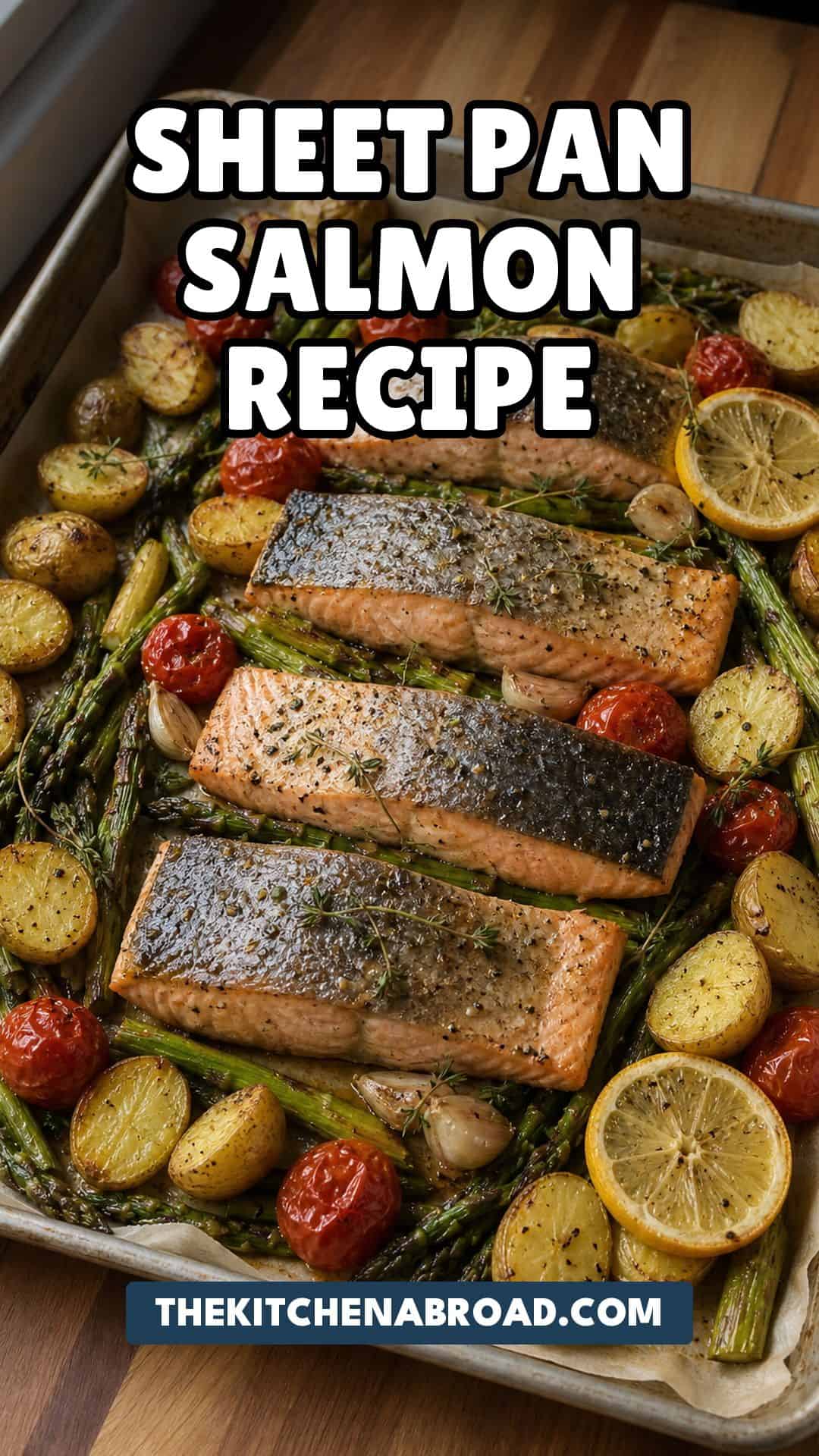
Sheet pan salmon and roasted vegetables in 35 minutes, with potatoes given a 20-minute head start at 220°C (425°F) so they actually crisp, and the salmon, asparagus, and cherry tomatoes added together for the final 10 to 12 minutes. Salmon finishes at 52°C (125°F) internal for medium. One pan, two batches of cooking time, no fuss.
Final Thoughts
Sheet pan salmon is what every weeknight cook should have in their back pocket. One pan, 25 minutes, dinner for four, minimal cleanup. The whole appeal is in the simplicity.
The Vegetable Timing Chart is the part of this recipe that does the most heavy lifting. Once you understand which vegetables go in with the salmon and which need a head start, you can swap freely week to week without overthinking it.
Make it on a Tuesday after a long day. Pair it with a simple grain (couscous, rice, farro) and a glass of crisp white wine. It eats like more effort than it took.
Sheet pan dinners are easy in theory and disappointing in practice. The standard advice (toss everything on a pan, roast until done) produces overcooked salmon and undercooked potatoes, or rubbery vegetables and dry fish. The fix is a staggered cook: start the root vegetables alone, then add the protein and quick-cooking vegetables later. The pan goes in once, comes out once. Nordic Ware aluminum, parchment paper, a fish spatula, an instant-read thermometer, and an olive oil dispenser cover every piece of equipment you need.
Tools That Make This Easier


Recommended Reads
- Pan-Fried Chicken Tenderloin Recipe (Crispy, 15 Minutes)
- Garlicky Roasted Cauliflower Steaks Recipe (Oven, Easy)
- Creamy Tuscan Shrimp Recipe (Sun-Dried Tomato, 20 Minutes)
- Aglio Olio Pasta Recipe
- Lohikeitto Recipe: Creamy Finnish Salmon Soup with Dill
The Method
The whole strategy comes down to matching cooking times. Potatoes cut into 2 cm cubes take about 32 minutes to roast through at 220°C. Asparagus takes 10 minutes. Cherry tomatoes burst in 8 to 10 minutes. Salmon at 1.5 cm thick reaches 52°C internal in 10 to 12 minutes. The math is simple: potatoes go in first, alone, for 20 minutes. Then the pan comes out, the potatoes get pushed to one side, the salmon and quick-cooking vegetables fill the rest of the pan, and everything finishes in the second 10-to-12-minute window.
The temperature target on the salmon matters more than the cook time. Salmon “until flaky” means well done, which on most farmed Atlantic salmon is dry. Medium is 52°C (125°F) at the thickest part of the fillet, which gives you a fillet that flakes apart but stays moist in the center. Medium-rare is 49°C (120°F). Well done is 60°C (140°F) and the fish has lost most of its moisture. A small instant-read thermometer takes the guesswork out. For a crispier skin, switch the oven to broil for the last 2 to 3 minutes of cooking with the rack in the upper third.
Where Sheet Pan Cooking Came From
The sheet pan dinner is a 2010s American invention, popularized by food bloggers and Pinterest more than by any restaurant or chef. The premise borrowed from European traybake traditions (English Sunday roasts, French tian, Italian rosticceria), but the format of “one protein plus three vegetables on a single pan, 25 minutes, weeknight” is distinctly American. Salmon became the protein of choice once farmed Atlantic salmon hit grocery store ubiquity in the 1990s and home cooks needed easier ways to cook it. Sheet pan salmon is the marriage of cheap pan, expensive fish, and an oven that finishes the whole dinner without a second dish to wash.
A Few Notes on the Ingredients
Salmon: About 600 g of skinless fillet, cut into 4 portions. Wild-caught (sockeye, king) has a stronger flavor; farmed Atlantic is milder and the version most home cooks have access to. Either works. Pat the fillet dry before it goes in the oven so the surface can take on color rather than steam.
Quick-cooking vegetables: Broccoli, bell peppers, asparagus, and cherry tomatoes go in with the salmon. The Vegetable Timing Chart in the Tips section is the most useful tool here. Frozen vegetables are the one swap to avoid; they release water and steam the salmon instead of roasting it.
Slow-cooking vegetables: Carrots, potatoes, and Brussels sprouts need a 10-15 minute head start before the salmon goes in. Cut them uniform-sized so they cook evenly.
Seasoning: Olive oil, kosher salt, freshly cracked black pepper, garlic powder, and a generous squeeze of lemon at the end.
Honey-Dijon glaze (optional upgrade): 1 Tbsp honey + 1 Tbsp Dijon + 1 Tbsp olive oil whisked together, brushed on the salmon before baking. Gives the fillet a glaze.
Fresh herbs: Dill, parsley, or chives off the heat to finish the plate.
Recipe: Sheet Pan Salmon with Roasted Vegetables
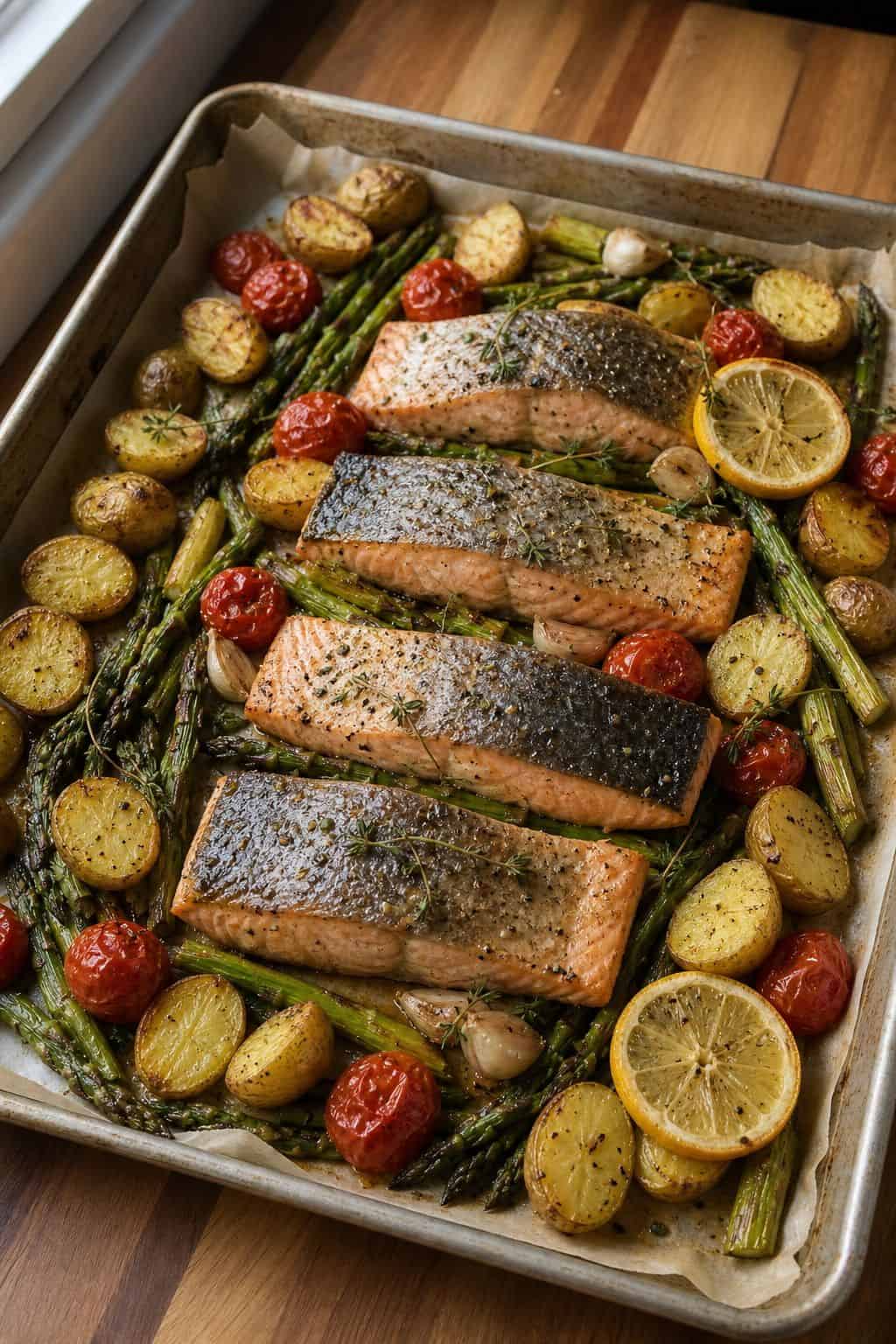
Prep Time: 10 minutes | Cook Time: 32 minutes | Total Time: 42 minutes | Servings: 4
Ingredients
- 4 skin-on salmon fillets, about 150 g (5 oz) each, 1.5 cm thick
- 500 g (1 lb) baby potatoes, halved or quartered into 2 cm pieces
- 1 bunch asparagus (450 g / 1 lb), woody ends snapped off
- 1 pint (280 g) cherry tomatoes
- 4 tbsp (60 ml) extra-virgin olive oil, plus more for drizzling
- 4 garlic cloves, smashed but left whole
- 4 sprigs fresh thyme (or 1 tsp dried)
- 2 lemons (one sliced into rounds, one for juicing off-heat)
- 1 tsp fine sea salt, plus more to taste
- ½ tsp freshly ground black pepper
- ¼ tsp red pepper flakes (optional)
Instructions
- Preheat the oven to 220°C (425°F). Line a half sheet pan with parchment paper.
- In a small bowl, whisk together the olive oil, smashed garlic, thyme sprigs (or dried thyme), 1 teaspoon salt, black pepper, and optional red pepper flakes.
- Toss the potatoes with about half of the oil mixture and spread in a single layer across the sheet pan. Roast for 20 minutes.
- While the potatoes roast, pat the salmon fillets dry with paper towels. Brush both sides with a small amount of the remaining oil mixture and season lightly with salt and pepper. Toss the asparagus and cherry tomatoes with the rest of the oil mixture in a separate bowl.
- After 20 minutes, remove the sheet pan from the oven. Push the potatoes to one side. Place the salmon fillets skin-side-down in the middle of the pan. Lay 2 to 3 lemon slices on top of each fillet. Scatter the asparagus and cherry tomatoes around the salmon.
- Return the pan to the oven. Roast for 10 to 12 more minutes, until the salmon reaches 52°C (125°F) internal at the thickest part for medium.
- For crispier salmon skin, switch the oven to broil for the last 2 to 3 minutes with the rack in the upper third. Watch closely.
- Remove from the oven. Squeeze the second lemon over the salmon and vegetables. Drizzle with a little fresh olive oil. Serve immediately, straight from the pan.
Tips and Variations
The Vegetable Timing Chart That Solves Everything
The chart below is the most useful thing in this section for swapping vegetables in or out:
| Vegetable | When to Add |
|---|---|
| Broccoli, cauliflower, asparagus | With the salmon |
| Bell peppers, zucchini, mushrooms | With the salmon |
| Carrots, parsnips, sweet potato | 10 minutes before salmon |
| Potatoes (small), Brussels sprouts | 15 minutes before salmon |
| Cherry tomatoes, spinach | Last 5 minutes |
Why Salmon Temperature Is the One Thing to Get Right
Pull the salmon at 125°F internal temperature for medium (still translucent in the center) or 130°F for medium-well (just opaque). The fish continues cooking 3-5 degrees after it comes out of the oven, so pulling at 125°F gives you a true medium on the plate. Past 135°F internal, salmon goes from buttery to chalky fast. An instant-read thermometer in the thickest part of the fillet is the only reliable way to hit this.
What Fish and Vegetable Swaps Actually Work
Steelhead trout swaps in 1-to-1 for salmon and behaves identically. Arctic char also works at the same temperature. White fish (cod, halibut) cooks faster and needs to come out at 130°F internal; add it 5 minutes after the vegetables start instead of at the same time. For vegetables, anything that holds up to 400°F dry heat will work in the timing chart above. Frozen vegetables are the one swap to avoid; they release too much water and steam the salmon rather than roasting it.
How Long This Keeps and Whether It Freezes
Leftovers keep in an airtight container in the fridge for 3 days. Salmon reheats badly in the microwave (it gets fishy and rubbery), so eat it cold over a salad or warm it gently in a 275°F oven for 8-10 minutes. The vegetables hold up fine to reheating either way. This dish does not freeze well, both the salmon texture and the vegetable texture suffer.
Frequently Asked Questions
What temperature should sheet pan salmon be cooked to?
Pull the salmon when it reaches 52°C (125°F) internal at the thickest part for medium, which is the sweet spot for moist flaky fish. Medium-rare is 49°C (120°F) and tastes a touch underdone if you have not eaten salmon that way before. Well done is 60°C (140°F) and the fish has lost most of its moisture by then. An instant-read thermometer is the only reliable way to hit the target; “flakes with a fork” is a vague test that usually means overcooked.
Why do I have to add the salmon and vegetables at different times?
Potatoes need about 32 minutes at 220°C to roast through. Salmon needs 10 to 12. Asparagus needs 10. Cherry tomatoes need 8 to 10. If everything goes on the pan at the start, the potatoes are still hard when the salmon is done. If everything goes on at the end, the potatoes are raw. The staggered cook fixes the mismatch: potatoes get a 20-minute head start, then the salmon and the quick-cooking vegetables join for the final 10 to 12 minutes.
Can I use frozen salmon?
Yes, with one note: thaw the salmon overnight in the refrigerator before cooking. Frozen-to-roast does not work for this method because the cooking time changes and the outside overcooks before the inside reaches the internal temperature target. If you forgot to thaw, place the sealed salmon in a bowl of cold (not warm) water for 30 to 45 minutes to thaw quickly.
What if I do not have asparagus?
Broccoli florets, zucchini coins, green beans, or snap peas all work in roughly the same 10-to-12-minute window. Avoid leafy vegetables like spinach or kale (they wilt to nothing) and avoid carrots or other root vegetables (they need longer and should go in with the potatoes). The vegetable timing chart in the Tips section above has substitutions and timing.
Should I use skin-on or skinless salmon?
Skin-on is the better choice for sheet pan cooking. The skin protects the bottom of the fillet from drying out against the hot pan, and it crisps up beautifully under a broiler finish at the end. Skinless salmon works but is more likely to overcook on the bottom and stick to the parchment. If using skinless, reduce the second-stage roast time by 1 to 2 minutes.
How do I know when the salmon is done without a thermometer?
Press gently on the thickest part of the fillet with a finger. Medium salmon has a slight give but feels firm; medium-rare has more give and feels soft like the pad of your thumb when your hand is relaxed; well done is firm and bouncy. The color test is less reliable but useful as a backup: medium salmon is opaque pink throughout with a slightly more translucent center; well done is uniformly opaque pink. A thermometer is more reliable than either method and worth the small investment.
Key Takeaways
- Start the potatoes alone for 20 minutes. They take longer than anything else on the pan and need the head start.
- Add the salmon, asparagus, and cherry tomatoes together for the second stage. All three finish in 10 to 12 minutes.
- Pull the salmon at 52°C (125°F) internal for medium. Carryover heat brings it up to 53 by the time you serve.
- Optional broiler finish for the last 2 to 3 minutes crisps the salmon skin and chars the vegetable tops slightly.
- Use skin-on salmon. The skin protects the bottom from drying out and crisps up under the broiler.
This is the kind of dinner that hits the table on a busy Tuesday and tastes like a slower Saturday. One pan in the sink, one timer to watch, four servings ready in under 45 minutes. Pair with a green salad and a glass of dry white wine if you are feeling fancy, or eat it straight off the pan if you are not.
Sheet Pan Salmon with Roasted Vegetables
Sheet pan salmon and roasted vegetables in 35 minutes, with potatoes given a 20-minute head start at 220°C (425°F) so they actually crisp, and the salmon, asparagus, and cherry tomatoes added together for the final 10 to 12 minutes.
Ingredients
- 4 skin-on salmon fillets, about 150 g (5 oz) each, 1.5 cm thick
- 500 g (1 lb) baby potatoes, halved or quartered into 2 cm pieces
- 1 bunch asparagus (450 g / 1 lb), woody ends snapped off
- 1 pint (280 g) cherry tomatoes
- 4 tbsp (60 ml) extra-virgin olive oil, plus more for drizzling
- 4 garlic cloves, smashed but left whole
- 4 sprigs fresh thyme (or 1 tsp dried)
- 2 lemons (one sliced into rounds, one for juicing off-heat)
- 1 tsp fine sea salt, plus more to taste
- ½ tsp freshly ground black pepper
- ¼ tsp red pepper flakes (optional)
Instructions
- Preheat the oven to 220°C (425°F). Line a half sheet pan with parchment paper.
- In a small bowl, whisk together the olive oil, smashed garlic, thyme sprigs (or dried thyme), 1 teaspoon salt, black pepper, and optional red pepper flakes.
- Toss the potatoes with about half of the oil mixture and spread in a single layer across the sheet pan. Roast for 20 minutes.
- While the potatoes roast, pat the salmon fillets dry with paper towels. Brush both sides with a small amount of the remaining oil mixture and season lightly with salt and pepper.
- After 20 minutes, remove the sheet pan from the oven. Push the potatoes to one side. Place the salmon fillets skin-side-down in the middle of the pan. Lay 2 to 3 lemon slices on top of each fillet. Scatter the asparagus and cherry tomatoes around the salmon.
- Return the pan to the oven. Roast for 10 to 12 more minutes, until the salmon reaches 52°C (125°F) internal at the thickest part for medium.
- For crispier salmon skin, switch the oven to broil for the last 2 to 3 minutes with the rack in the upper third. Watch closely.
- Remove from the oven. Squeeze the second lemon over the salmon and vegetables. Drizzle with a little fresh olive oil. Serve immediately, straight from the pan.
Last update on 2026-10-03 / Affiliate links / Images from Amazon Product Advertising API