

Brush 2.5 cm cauliflower slabs with olive oil that has soaked with smashed garlic for 30 minutes, then roast them at 220°C for 15 minutes and 190°C for another 10 to 12. Strain the garlic out first so nothing burns, and add lemon zest and parsley only after the tray leaves the oven. One large head gives 2 to 4 servings.
Most garlicky roasted cauliflower steaks go wrong in one of two places. The garlic scorches on the tray and turns the whole thing bitter, or the steaks come out pale and soft because the oven was never hot enough to brown them.
This recipe fixes both. The garlic never goes into the oven raw. It sits in cold olive oil while you slice, and only the oil gets brushed on. The oven starts hot for color and drops lower to cook the stem through. Lemon zest and parsley go on at the very end, when they still smell like something.
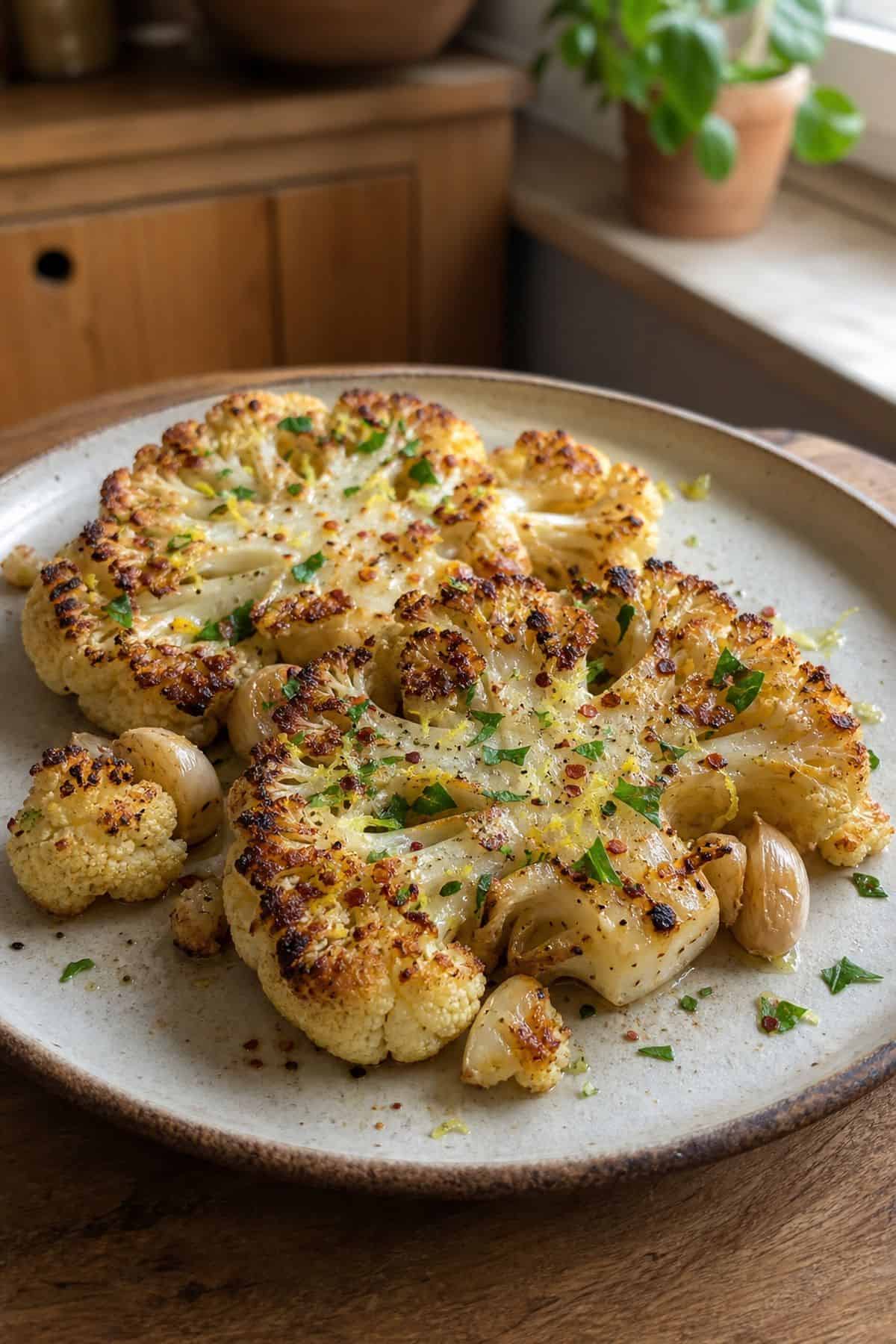
You need very little gear. A heavy half sheet pan browns evenly and doesn’t warp at 220°C, a sharp chef’s knife makes the clean center cuts, and a microplane handles the lemon. A wide spatula gets the steaks to the plate in one piece.


How do you cut cauliflower steaks that don’t fall apart?
The stem is the glue. Every steak needs a piece of the core running through it, or the florets drift apart as soon as they soften.
Pull off the outer leaves but leave the stem end flat and intact. Stand the head on its stem and cut straight down through the middle. From each half, slice one or two slabs about 2.5 cm (1 inch) thick, cutting parallel to that first cut. The two center slabs hold best because they carry the most core.
Expect some loss. The outer edges of a head have no stem to hold them, so they break into loose florets. Don’t throw them out. They roast on the same tray, they get crispier than the steaks, and plenty of people fight over them.
Pick a big, heavy head, around 1.2 to 1.5 kg, with tight white florets. Yellow or brown patches mean it has been sitting around. A larger head gives you wider steaks and fewer crumbs.
Why the garlic soaks in cold oil first
Raw garlic on a 220°C sheet pan burns in about 8 to 10 minutes. The steaks need more than twice that. So if you scatter chopped garlic over the cauliflower, you get little black bitter flecks long before the vegetable is done.
The fix is a cold infusion. Smash four cloves with the flat of your knife, drop them into half a cup of olive oil and leave the bowl on the counter for 30 minutes. Smashing breaks the cell walls so the flavor moves into the oil, while keeping the cloves whole enough to strain out later. If you want to know why crushed garlic smells so much stronger than a whole clove, this guide to garlic and its best substitutes covers it.
Use a good extra-virgin oil here, since it carries all the flavor. A peppery, grassy oil tastes noticeably better on cauliflower than a flat one, and this explainer on what extra-virgin olive oil actually is helps you pick one.
Strain before brushing. Then put the spent cloves back to work: scatter them on the tray for the last 10 minutes and they turn soft and sweet, good enough to smear on bread.
One safety note. Make the infused oil on the day you cook and use it the same day. If you have some left over, keep it in the fridge and use it within 4 days, which matches the garlic-in-oil storage advice from Ask Extension. Garlic in oil at room temperature for days is a botulism risk.
Two oven temperatures, one tray
In a restaurant kitchen you’d sear the steaks in a pan and finish them in the oven. At home, the temperature drop does the same job without a second pan.
The first 15 minutes at 220°C (425°F) are for color. The cut faces brown deeply and the edges char in spots, which is where the roasted, nutty flavor comes from. Then you open the door and turn it down to 190°C (375°F) for another 10 to 12 minutes so the thick stem cooks through without the surface going black.
Stay at 220°C the whole time and the edges burn before the core softens. Stay at 190°C and you get something that looks steamed.
How do you know it’s done? Slide a paring knife into the thickest part of the stem. It should go in with no push at all.
What to serve with cauliflower steaks
As a main, two steaks per person with the florets on the side and a pile of rice or couscous make a full plate. As a side, one steak sits next to fish or a roast chicken without competing. They also share the oven happily with sheet pan salmon with roasted vegetables if you want the whole dinner on two trays.
A drizzle of tahini or thick yogurt sauce over the top turns it into something closer to a restaurant plate. A tomato and feta salad cuts through the oil.
Want to change the direction? A pinch of cumin in the infusion leans it Middle Eastern. A tablespoon of capers tossed onto the tray for the last 10 minutes adds salty pops. Thyme in place of parsley makes it taste more French. If you’d rather go sticky and sweet-savory, the glaze in this Asian cauliflower recipe works on the loose florets.
Leftovers keep for 3 days in the fridge. Reheat them on a wire rack in a 200°C (400°F) oven for about 7 minutes. Skip the microwave, which turns them watery.
Recipe: garlicky roasted cauliflower steaks
Prep: 10 minutes. Garlic infusion: 30 minutes (prep happens during it). Cook: 27 minutes. Total: 67 minutes. Serves 2 to 4.
Ingredients
- 1 large head cauliflower (1.2 to 1.5 kg / 2.5 to 3 lb)
- 120 ml (½ cup) extra-virgin olive oil
- 4 garlic cloves, smashed with the side of a knife
- 1 tsp Aleppo pepper or ½ tsp red pepper flakes
- 1 tsp fine sea salt
- ½ tsp freshly ground black pepper
- Zest of 1 lemon
- 3 tbsp chopped fresh flat-leaf parsley
- Optional: a squeeze of lemon juice to finish
Instructions
- Stir the olive oil and smashed garlic together in a small bowl. Leave on the counter for 30 minutes while you do the rest of the prep.
- Heat the oven to 220°C (425°F). Line a half sheet pan with parchment paper.
- Trim the leaves from the cauliflower, leaving the stem intact. Stand it stem-side down and cut straight down through the center. From each half, cut one or two 2.5 cm (1 inch) slabs that include part of the stem. Keep the loose florets.
- After 30 minutes, strain the oil through a fine mesh strainer. Keep the garlic cloves if you want to roast them. Stir the Aleppo pepper, salt and black pepper into the oil.
- Lay the steaks on the tray and brush both sides generously with the oil. Scatter the florets around them and toss them in the leftover oil.
- Roast for 15 minutes, until the surface is deep golden with darker char on some edges.
- Turn the oven down to 190°C (375°F). Add the strained garlic cloves to the tray if using. Roast 10 to 12 minutes more, until a knife slides easily into the thickest part of the stem.
- Right out of the oven, scatter over the lemon zest and parsley. Add a squeeze of lemon juice if you like.
- Serve straight away with the roasted florets and soft garlic cloves.
Notes
Don’t add the zest or parsley before roasting. Oven heat flattens the lemon aroma and turns parsley dark and limp.
Cauliflower steak questions
Why do my cauliflower steaks fall apart?
They fall apart when a slab has no stem running through it. Cut from the center of the head so each steak keeps a piece of the core, keep them about 2.5 cm thick, and move them with a wide spatula. The outer pieces will always crumble, so roast them as florets.
Can I use minced garlic for the infusion?
You can, but it’s harder to strain out completely, and any bits left on the cauliflower will burn at 220°C. Smashed whole cloves give the same flavor and strain cleanly. If minced is all you have, strain the oil through a coffee filter or a few layers of cheesecloth.
Can I grill cauliflower steaks instead of roasting them?
Yes. Heat the grill to medium-high, about 200°C (400°F), brush both sides with the garlic oil and grill for 8 minutes per side over direct heat. Then move them to indirect heat, or close the lid, for another 5 minutes to finish the center.
What is Aleppo pepper, and what can I use instead?
Aleppo pepper is a mild, fruity dried chili from Syria and southern Turkey with a slow, warm heat. Middle Eastern grocers and spice shops carry it. Use half the amount of regular red pepper flakes plus a pinch of paprika for color if you can’t find it.
How long do leftover cauliflower steaks keep?
They keep for 3 days in an airtight container in the fridge. Reheat them on a wire rack in a 200°C (400°F) oven for about 7 minutes so the edges crisp up again; the microwave makes them soggy.
Key takeaways
- Smash the garlic into cold olive oil for 30 minutes and strain it out, so only the oil goes into the oven.
- Cut 2.5 cm steaks from the center of the head so each one keeps part of the stem.
- Roast at 220°C for 15 minutes for color, then 190°C for 10 to 12 minutes to cook the stem through.
- Lemon zest and parsley go on after the oven, never before.
- Leftover infused oil goes in the fridge and gets used within 4 days.
Got a second head of cauliflower?
Make it the small-and-whole way next time. This roasted baby cauliflower uses the same hot oven and looks like you tried much harder than you did. And keep the garlic oil trick in your back pocket for potatoes, carrots or anything else you’d normally roast with chopped garlic.
Last update on 2026-10-04 / Affiliate links / Images from Amazon Product Advertising API
