
The easiest spice cabinet organization system starts by pulling out every jar, tossing stale spices, choosing one sorting method, and then using the right cabinet tool for the space. Tiered racks help standard jars stay visible, door racks free up shelf space, turntables work in deep corners, and pull-outs make narrow cabinets easier to use. Keep refills separate, label dates clearly, and move spices away from heat and steam so the cabinet stays useful after the first tidy-up.
A spice cabinet can look tidy from the front and still slow you down every time dinner starts. The trouble usually is not the number of jars. It is the mix of old spices, duplicate bottles, refill bags, tall grinders, and labels facing the wrong direction.
Good spice cabinet organization makes the cabinet easier to cook from, not just nicer in a photo. The best setup shows you what you own, keeps everyday seasonings close, stores refills out of the main row, and protects flavor by avoiding the hottest, steamiest cabinet in the kitchen.
Top Recommended Products


You Might Also Like These Blog Posts
- Kitchen Cabinet Organization: What Actually Works
- Kitchen Drawer Organization: What Actually Works
- Spice Drawer Organization: What Actually Works
- 25 Pantry Organization Ideas That Actually Work
- 20 Best Spice Jars and Labels Worth Buying
1. Full Spice Cabinet Empty-Out

Start by pulling every spice, blend, refill bag, extract, and tiny packet out of the cabinet. A real empty-out is the only way to see duplicates hiding behind taller jars, stale bottles pushed into corners, and bulk bags that have become long-term clutter. Wipe the shelves before anything goes back, especially if paprika, turmeric, or dried herbs have spilled. This first step should feel like a reset, not a shopping trip. Once the cabinet is empty and clean, the right organizer becomes much easier to choose.
2. Aroma Check for Stale Spices

Spices do not usually spoil like fresh food, but they do fade. Open older jars and check the aroma, color, clumping, and date before giving them space in the cabinet. If ground cumin smells like dust or paprika has lost its color, it is not helping dinner. This step reduces clutter before you buy a single organizer. Keep the spices that still smell alive, and make a short replacement list for the ones you truly use. Tossing stale jars is often the cheapest cabinet upgrade.
3. One Clear Cabinet Sorting Method
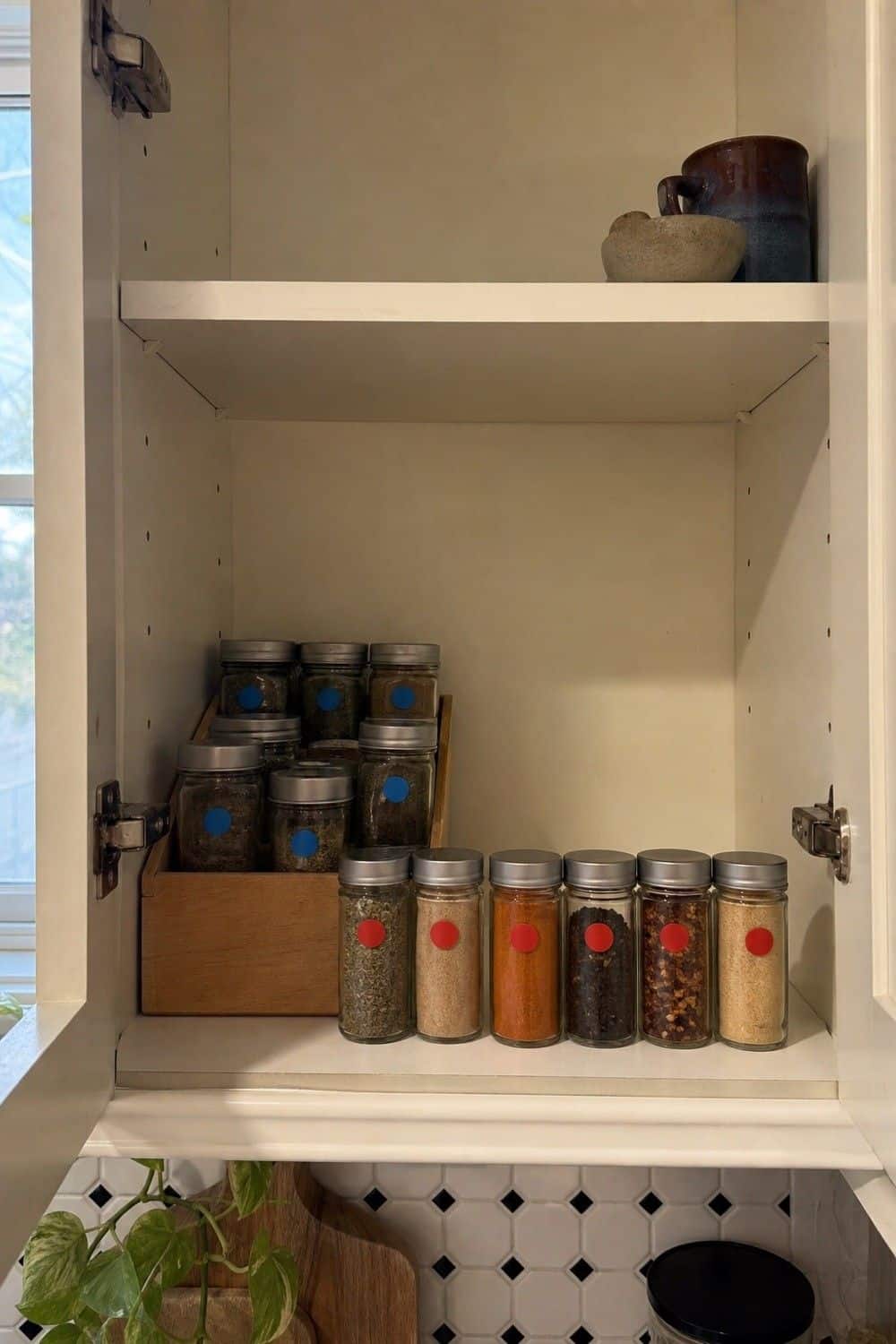
Pick one sorting method before you reload the shelves. Alphabetical order works well for big collections or shared kitchens, while category sorting works better if you cook in predictable groups: baking, grilling, heat, everyday dinner spices, or cuisine-specific blends. The system only has to make sense to the people who cook in the kitchen. If jars keep drifting to random spots, the method is probably too clever. A simple daily-use front row with backup categories behind it is often enough.
4. Daily Spices on the Easiest Shelf

The easiest shelf should hold the jars you reach for all week: garlic powder, onion powder, paprika, cumin, oregano, black pepper, chili flakes, or whatever your household uses most. Put those spices at eye level or the front of the most reachable shelf. Rare spices can live higher, lower, or farther back. This is not about making every jar equally visible; it is about making normal dinner faster. If you use cinnamon daily and saffron twice a year, the cabinet should admit that.
5. Tiered Rack for Standard Spice Jars
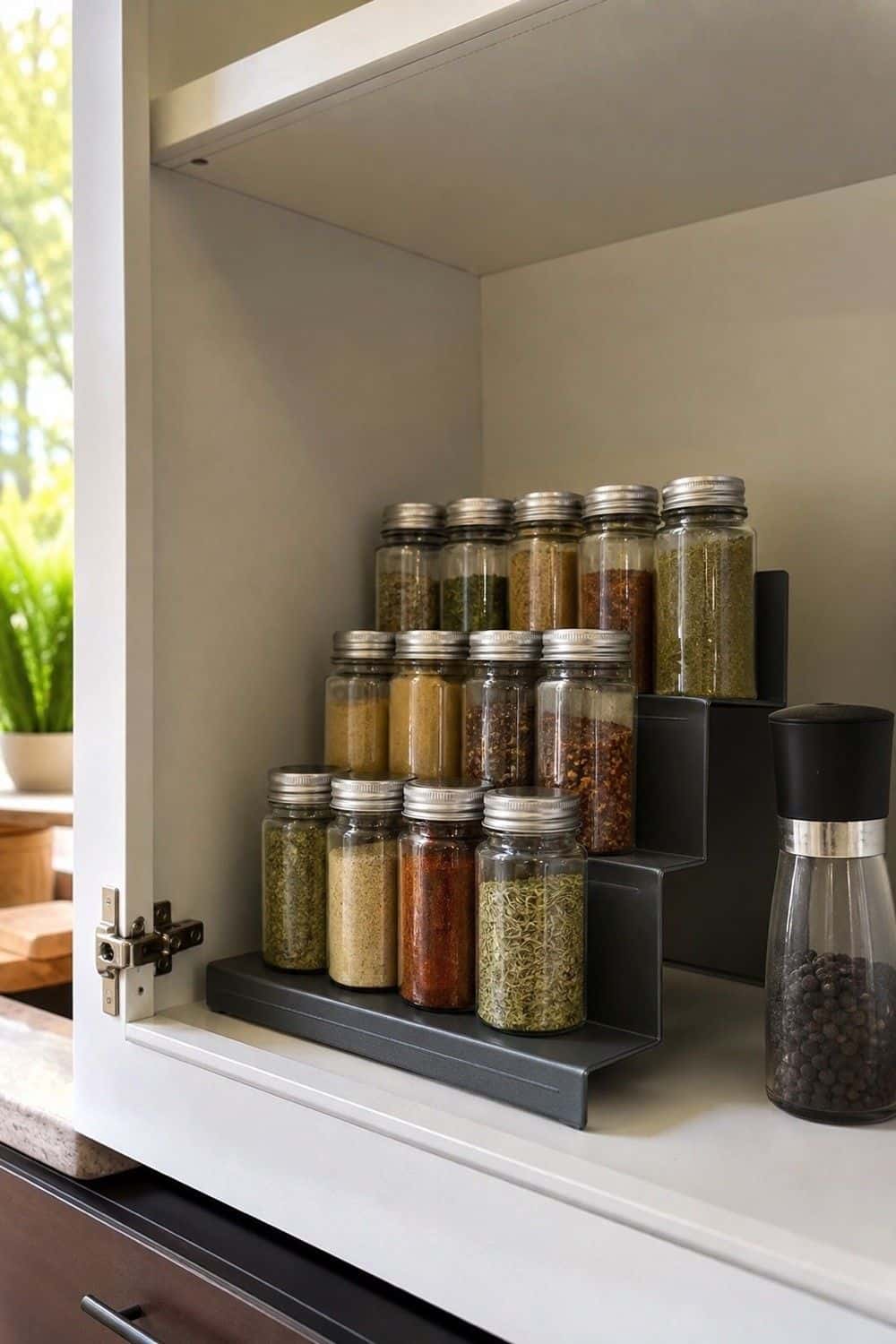
A tiered rack is the easiest fix for a standard cabinet shelf because it lifts the back rows into view. It suits jars that are close in height, especially everyday spice bottles with front labels. Measure shelf width, depth, and height before buying. Tall grinders, extract bottles, or oversized seasoning blends may hit the shelf above once they sit on a riser. Keep those odd shapes in a separate row so the tiered rack can do its actual job cleanly.
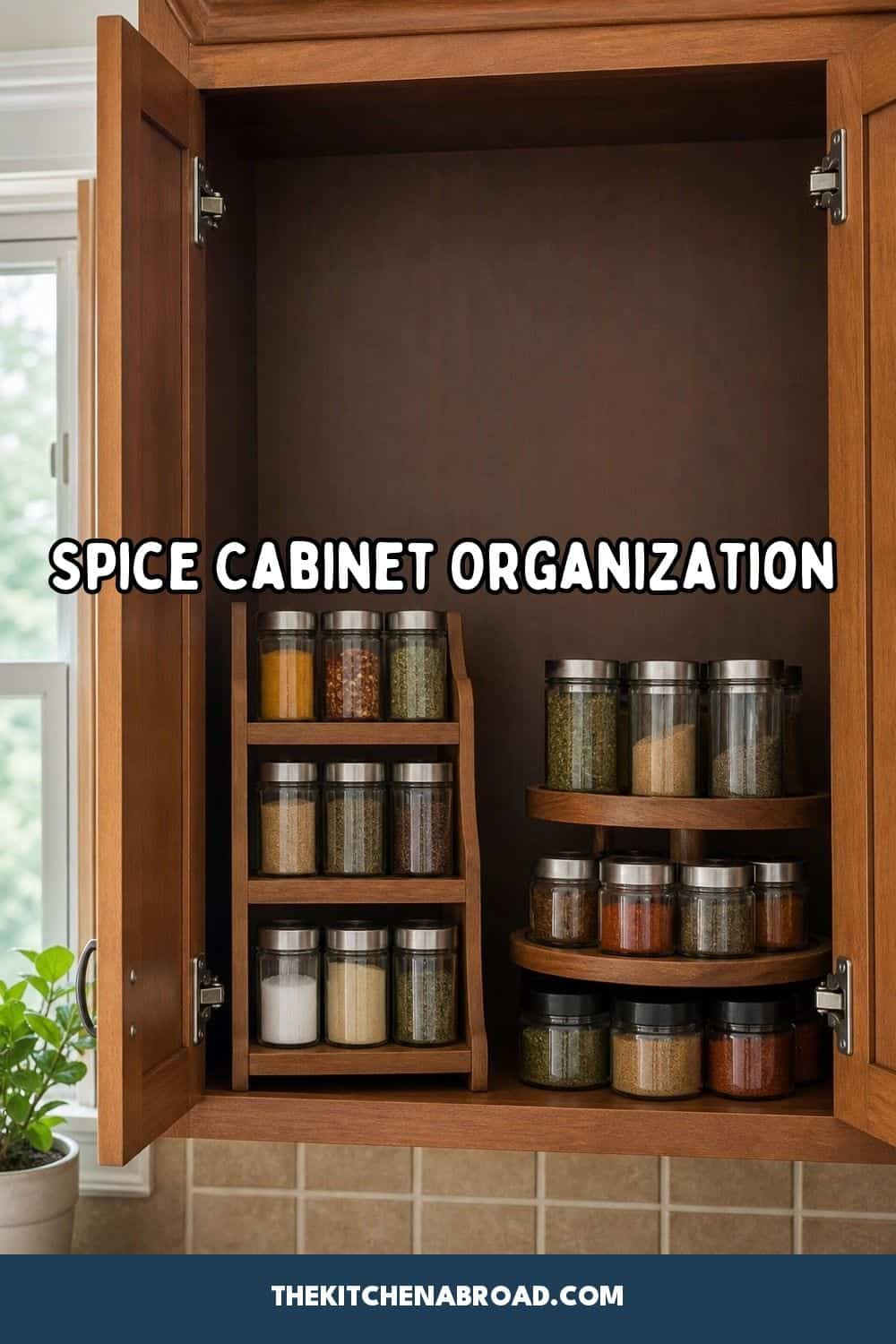
6. Lazy Susan for Deep Cabinet Corners

A lazy Susan helps in deep cabinets and corner shelves where jars disappear behind each other. It is especially good for round jars, spice blends, extracts, small bottles, and seasonings you want to spin into view instead of digging for. Choose a turntable with a non-skid surface or a raised edge so bottles do not slide when it moves. Do not overload it with every spice you own; the jars still need room to rotate freely with labels visible and reachable.
7. Cabinet Door Spice Rack for Light Jars
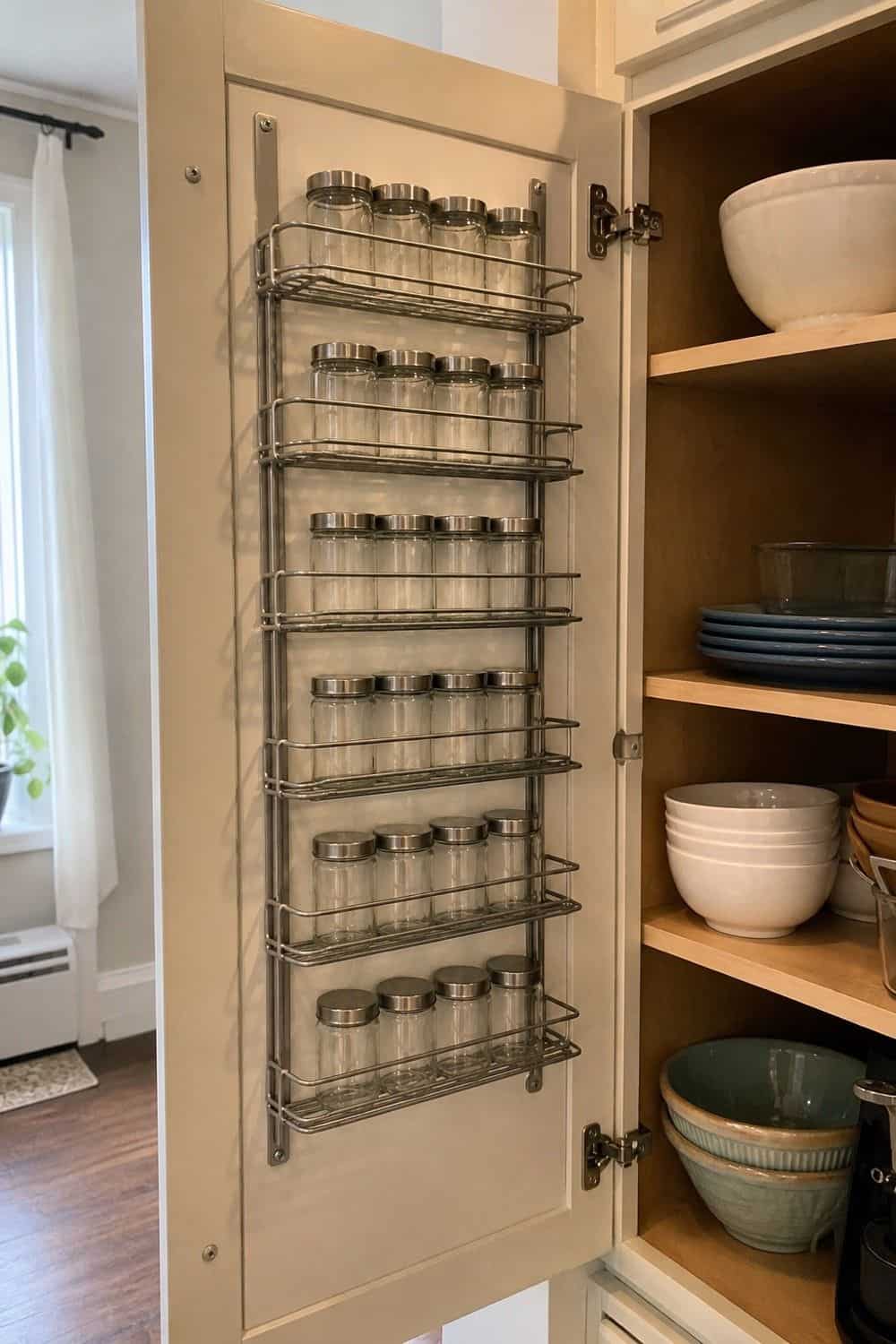
A cabinet door spice rack can free up shelf space when the cabinet is crowded. It is best for standard jars only, not heavy bottles or fragile containers that make the door feel overloaded.
Measure door clearance, hinge space, shelf depth, and jar height before installing anything. Close the cabinet slowly during the test, with the tallest jar in place.
Use this for lighter jars you grab often. If the rack hits the shelves or keeps the door from closing cleanly, it will become annoying no matter how much storage it promises.
8. Pull-Out Spice Organizer for Deep Cabinets
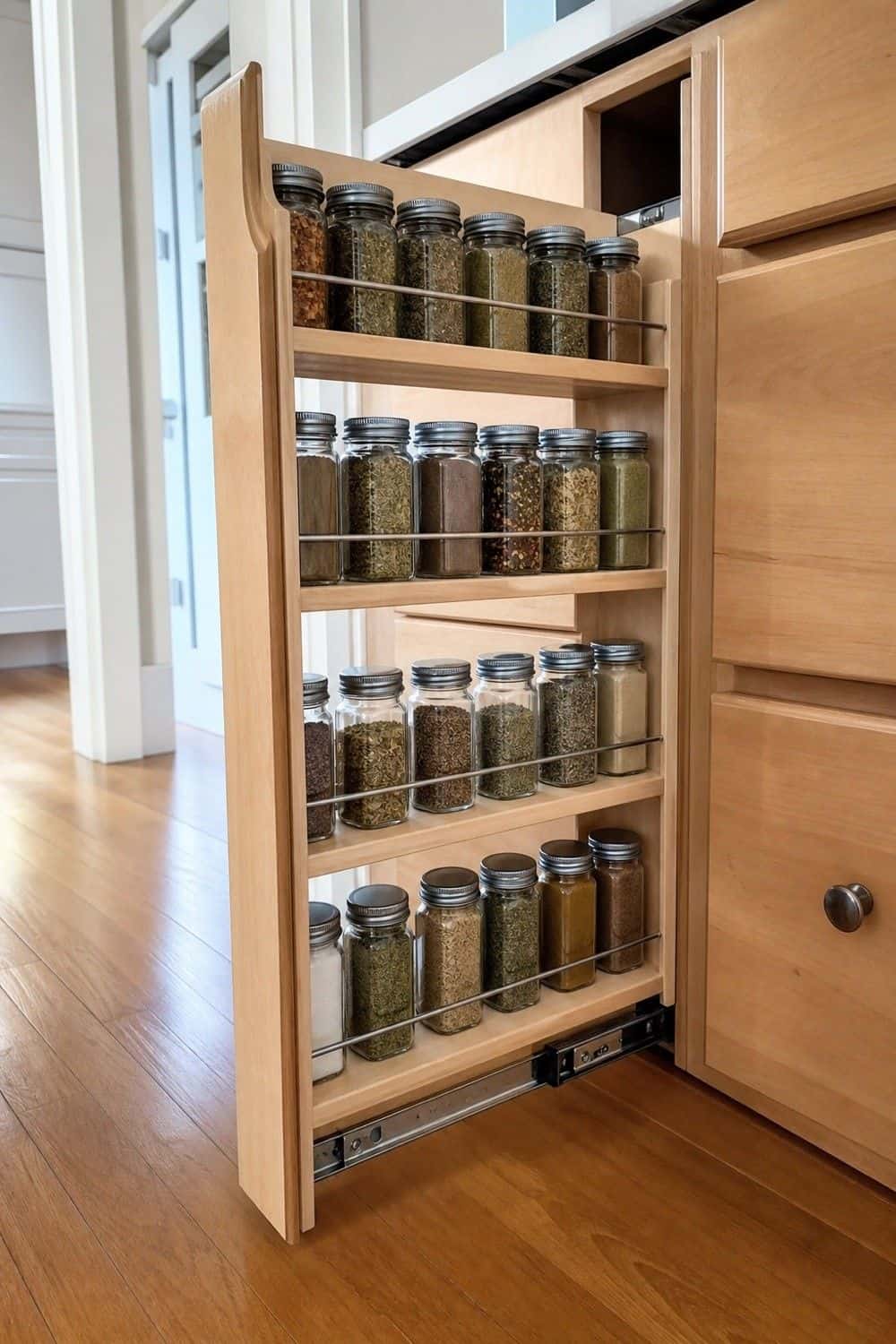
A pull-out spice organizer can turn a deep cabinet into useful storage, especially when jars currently hide in a back row. It lets you see side labels and reach the back without unloading the front row.
Check the cabinet width, slide clearance, shelf height, and installation requirements before choosing one. Pull-outs are helpful only when they move smoothly and leave enough room for the jars you actually buy. If installation feels too fussy, a removable bin may be simpler and easier to clean when spice dust spills around the cabinet floor.
9. Tall Bottles and Extracts in a Separate Row

Vanilla, extracts, seasoning grinders, cinnamon sticks, oils, vinegars, and tall blends can make a tidy spice shelf look messy fast. They do not usually fit well on tiered racks, and they can block labels on shorter jars.
Give taller items their own side row, narrow bin, or turntable where the height will not interrupt shorter jars or hide labels behind taller bottles.
Keep them upright and easy to grab, but do not let them dominate the daily spice zone. A separate row also makes refills easier to spot. Mixed heights are fine when the cabinet has a plan for them.
10. Front Labels for Cabinet Shelves
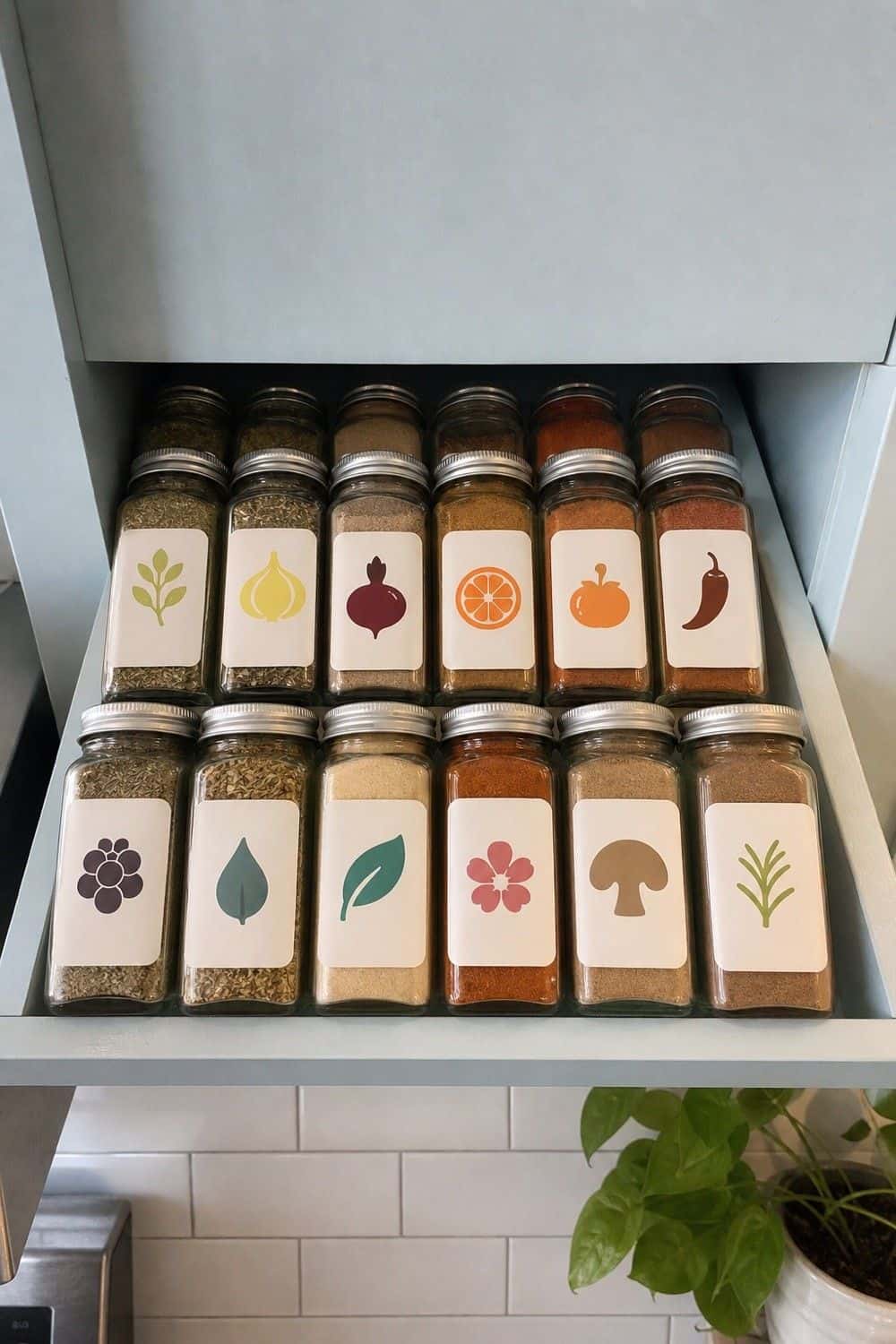
Front labels matter in a cabinet because jars stand upright and are scanned from the front. Use large, high-contrast labels that can be read quickly, especially on the back row of a tiered rack. Keep names consistent so your eye does not have to decode every jar. If you use both cumin seed and ground cumin, say so clearly. Use the same wording on grocery lists so replacements are easier. Matching labels are nice, but readability matters more than a perfect label style.
11. Date Labels for New and Decanted Spices
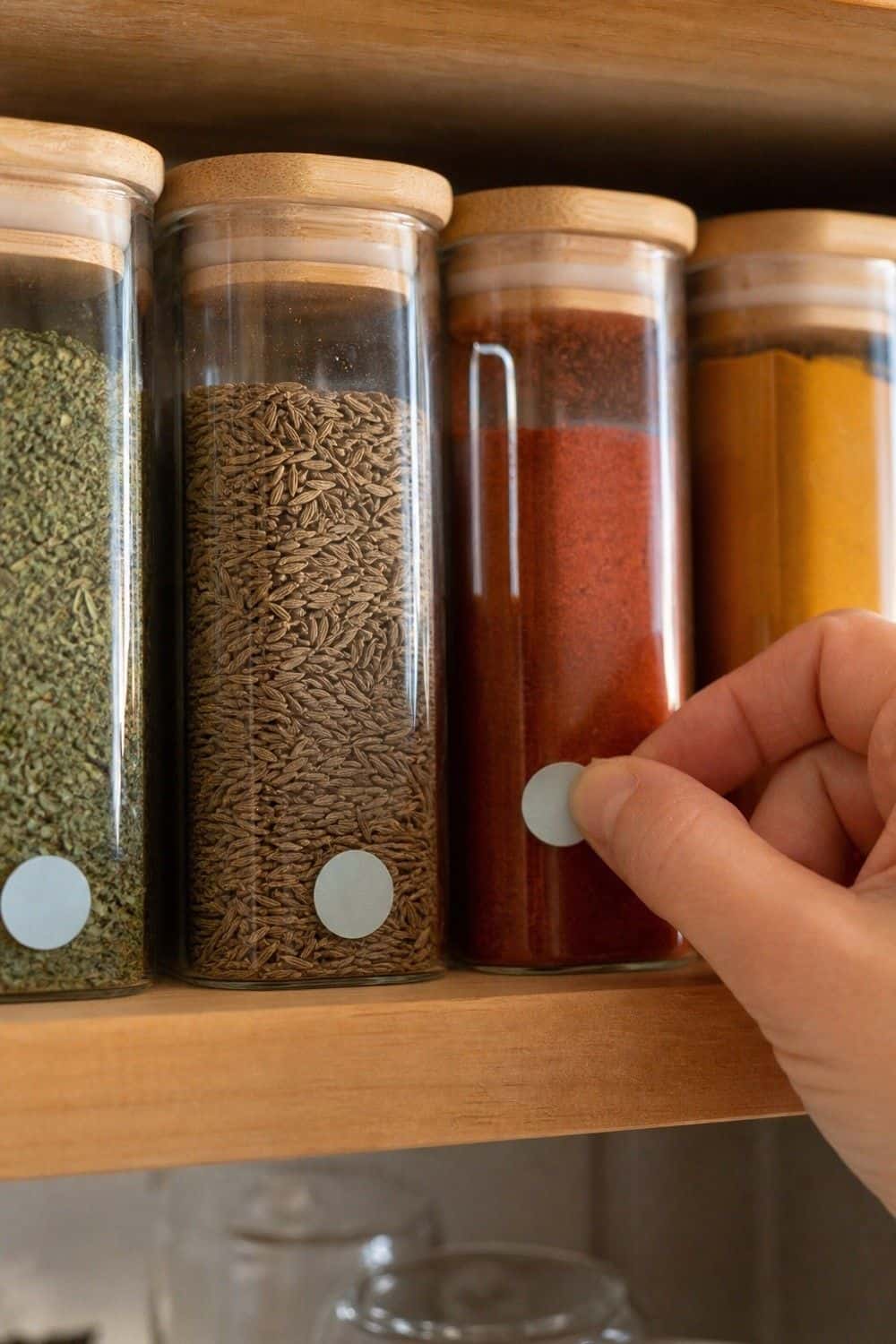
Date labels keep a neat spice cabinet honest. Add the purchase date, open date, refill date, or best-by date somewhere small but visible enough to check during a cabinet audit. This is especially useful when spices are decanted into matching jars.
The date does not need to crowd the main label. A tiny sticker on the back, bottom, or side is enough. The point is to prevent beautiful jars from aging quietly in the cabinet for years, especially after refill days.
12. Decant Only the Spices That Need Uniform Fit
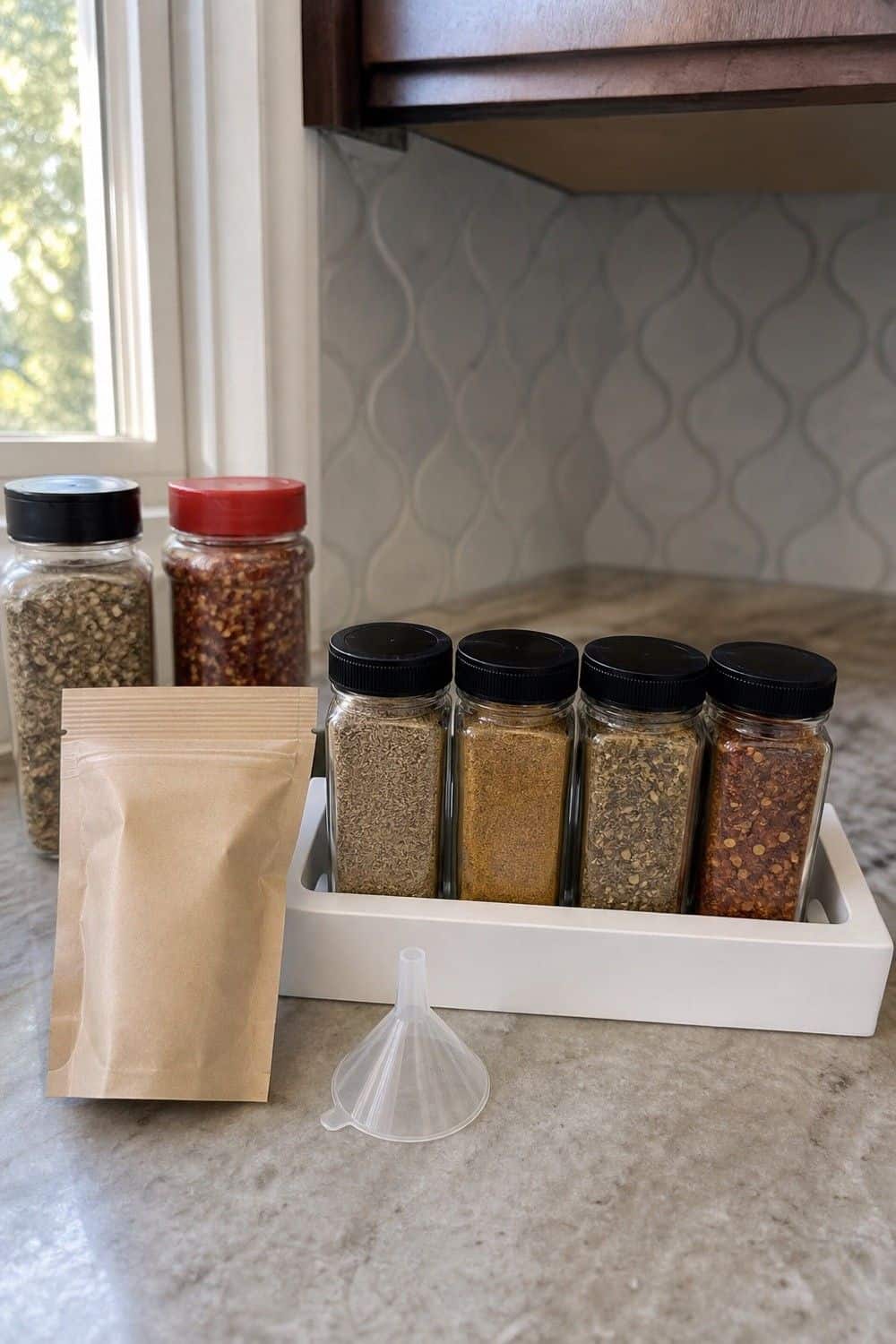
Matching jars can make a spice cabinet easier to scan, but they are not required. Decant only when uniform jars improve shelf fit, label visibility, or freshness tracking. If the original bottles fit your rack and stay readable, they may be perfectly fine.
Label before transferring, not later. It is surprisingly easy to confuse similar ground spices once they leave their packaging. If you decant, keep a note of the date and any blend details so the pretty jar does not cost you useful information.
13. Backstock Bin for Refill Bags
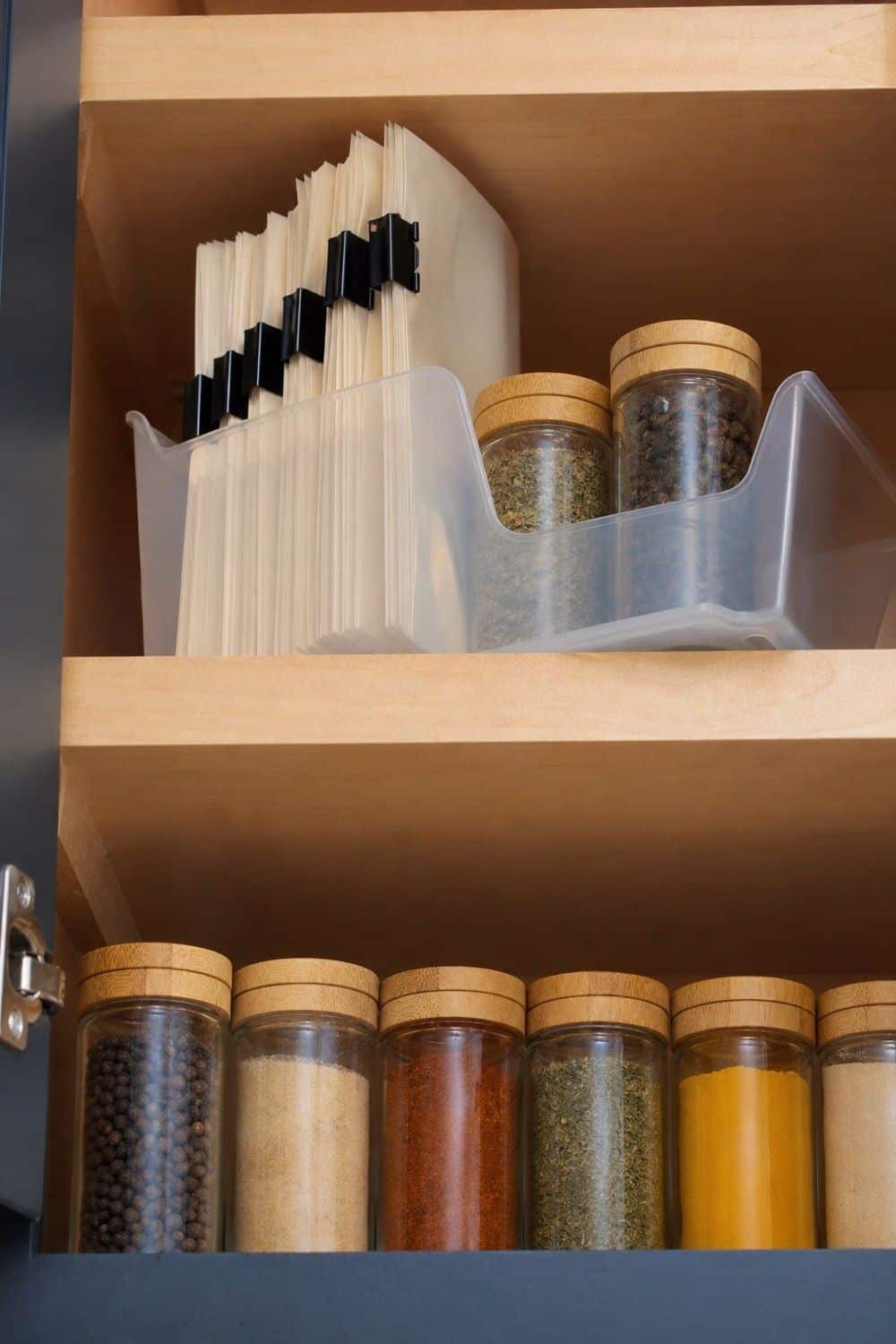
Bulk bags, backup jars, extra blends, and refill packets should not crowd the daily spice shelf. Put them in a backstock bin above, behind, or beside the main cabinet area so the active jars stay easy to read. Check that bin before buying more cumin, paprika, cinnamon, garlic powder, or chili flakes, because refills are useful only when you remember they exist. Add a small label to the bin, and clip open bags tightly before the cabinet fills with spice dust.
14. Separate Baking Spices From Savory Cooking Spices

Cinnamon, nutmeg, cloves, ginger, cardamom, allspice, and extracts are easier to find when they live together. If your household bakes often, give them a clear row or bin. If baking is seasonal, they can sit slightly higher or farther back.
Savory dinner spices should stay closer to the everyday cooking zone. Separating the two groups prevents cinnamon from interrupting taco night and cumin from wandering into the baking area. It is a small split that makes the cabinet easier to trust.
15. Heat-Sensitive Spices Away From the Stove
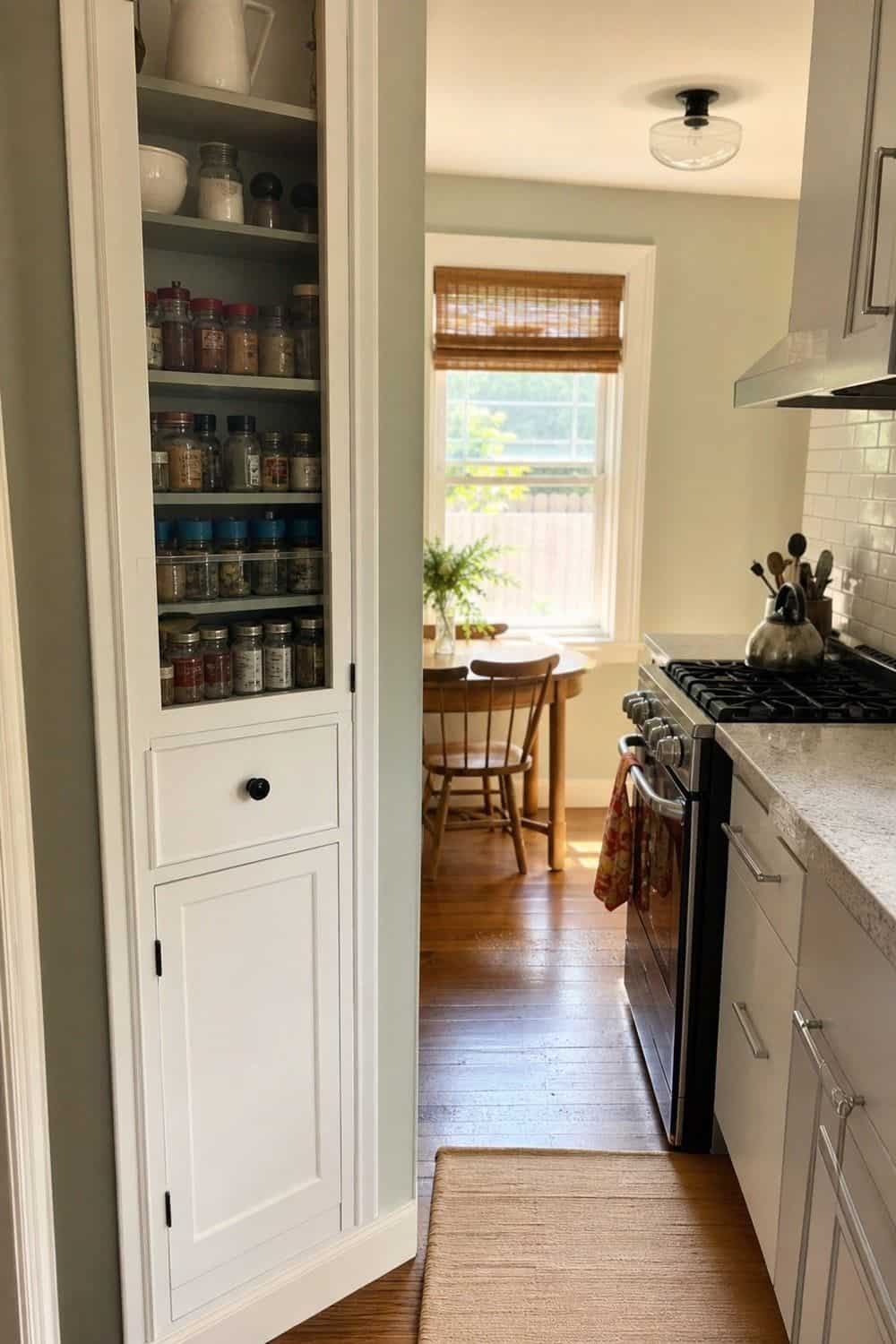
The cabinet above or beside the stove may be convenient, but heat and steam can dull spices faster. If you have another option, choose a nearby cooler cabinet, pantry shelf, or wall rack away from direct cooking heat.
Keep this practical, not dramatic. You do not have to redesign the whole kitchen for oregano, but delicate ground spices and blends will hold their flavor longer away from steamy burners. If the stove cabinet is your only option, keep small amounts there and store refills elsewhere in a cooler backup spot.
16. Salt and Pepper Outside the Main Cabinet
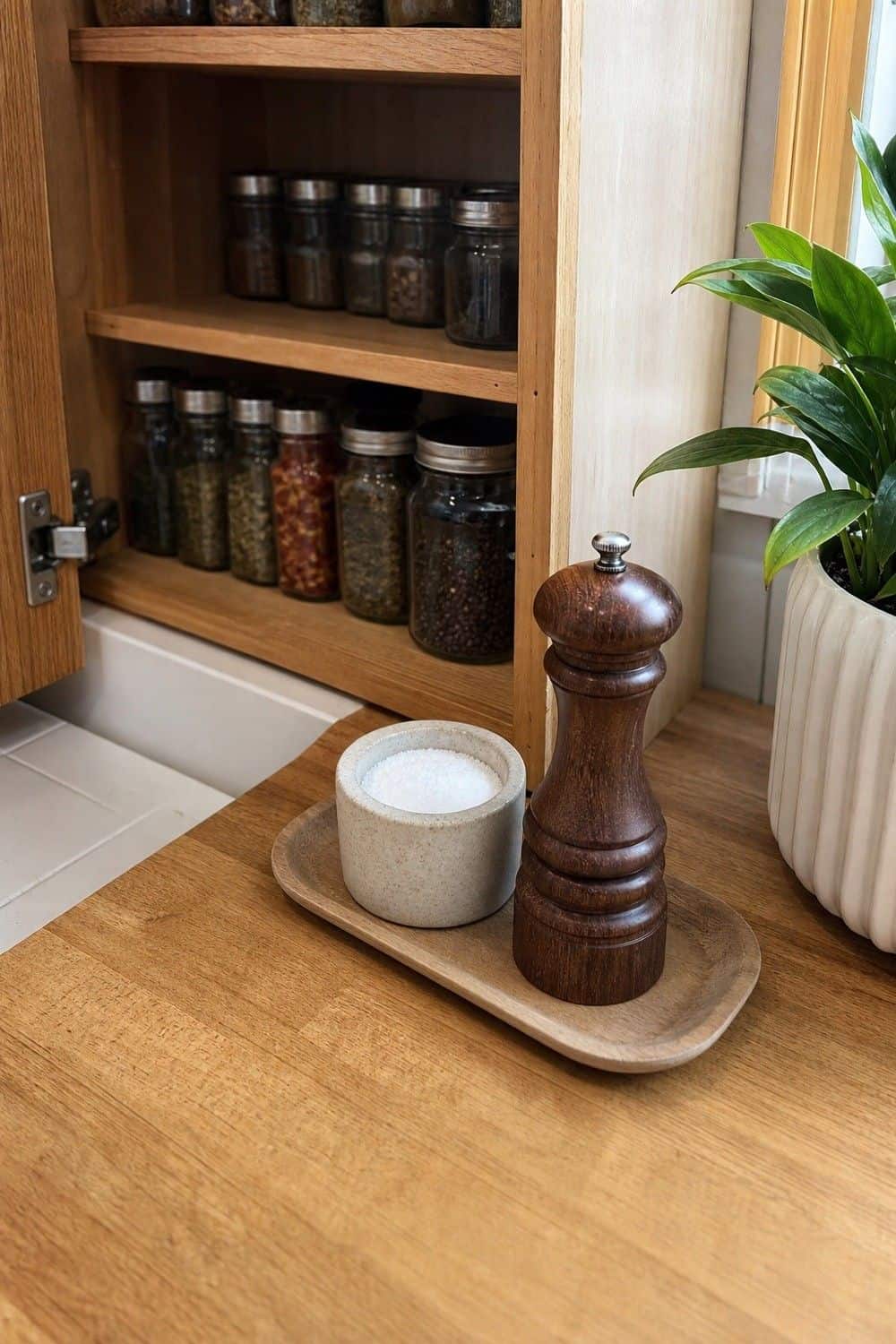
Salt and pepper behave differently from most spices because they come out constantly. They may belong near the stove, prep board, or table instead of inside the main spice cabinet. That keeps the cabinet from being opened every few minutes.
Use a grinder, cellar, or small tray that fits the way you cook. Specialty salts, peppercorn refills, and extra grinders can still live in the cabinet, but the daily pair should sit where your hand already reaches. Keep refills nearby but not in the daily spot.
17. Duplicate Check Before Grocery Shopping
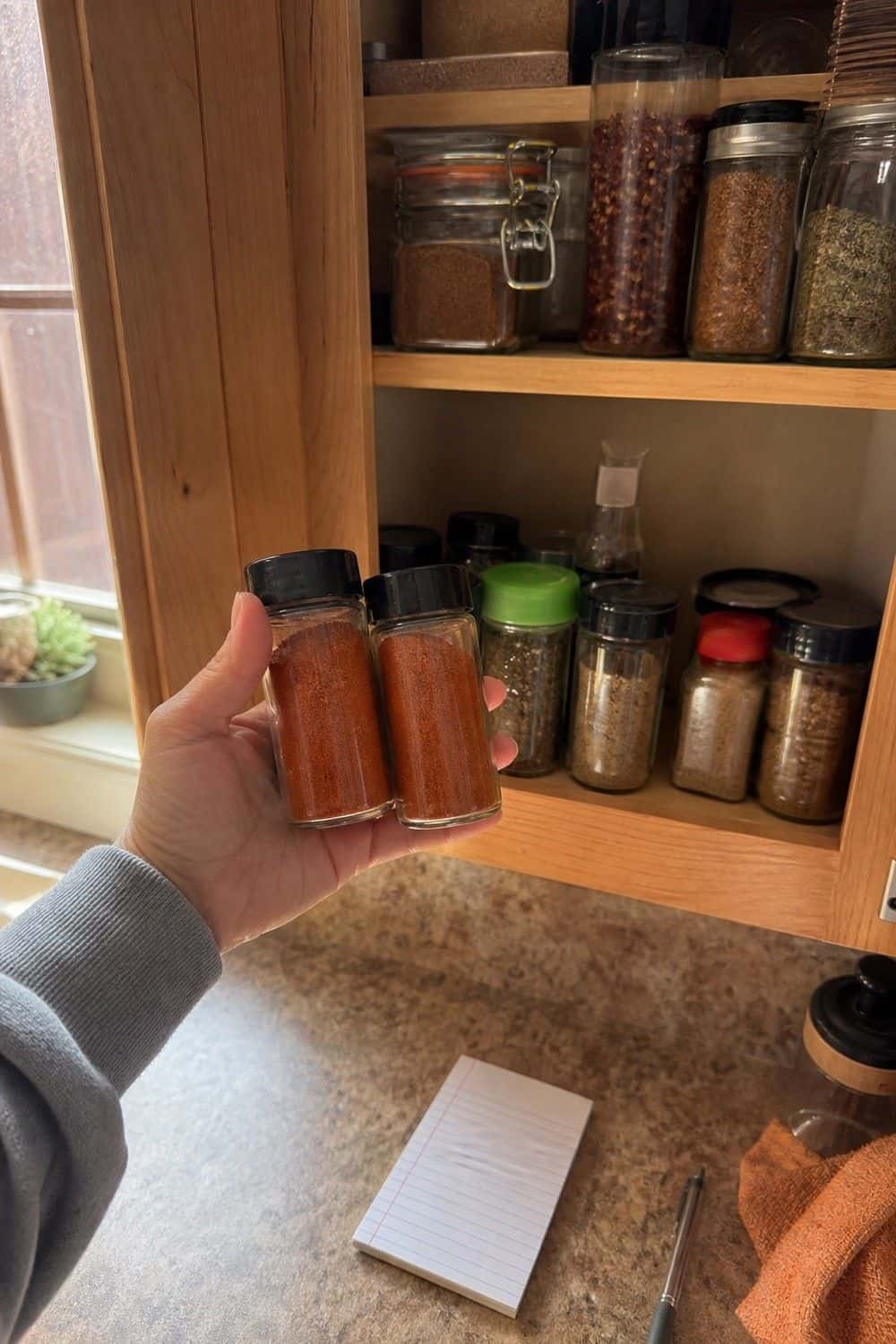
Before grocery shopping, open the cabinet and check the spices most likely to duplicate: cumin, chili powder, oregano, cinnamon, paprika, garlic powder, and taco seasoning. These are the jars people rebuy because they cannot remember what is already there.
A quick duplicate check keeps the cabinet from becoming a backstock shelf by accident. If you keep a grocery list nearby, write down what is truly low, not what looks familiar in a recipe. This habit protects both space and flavor.
18. A Small Gap for New Spices
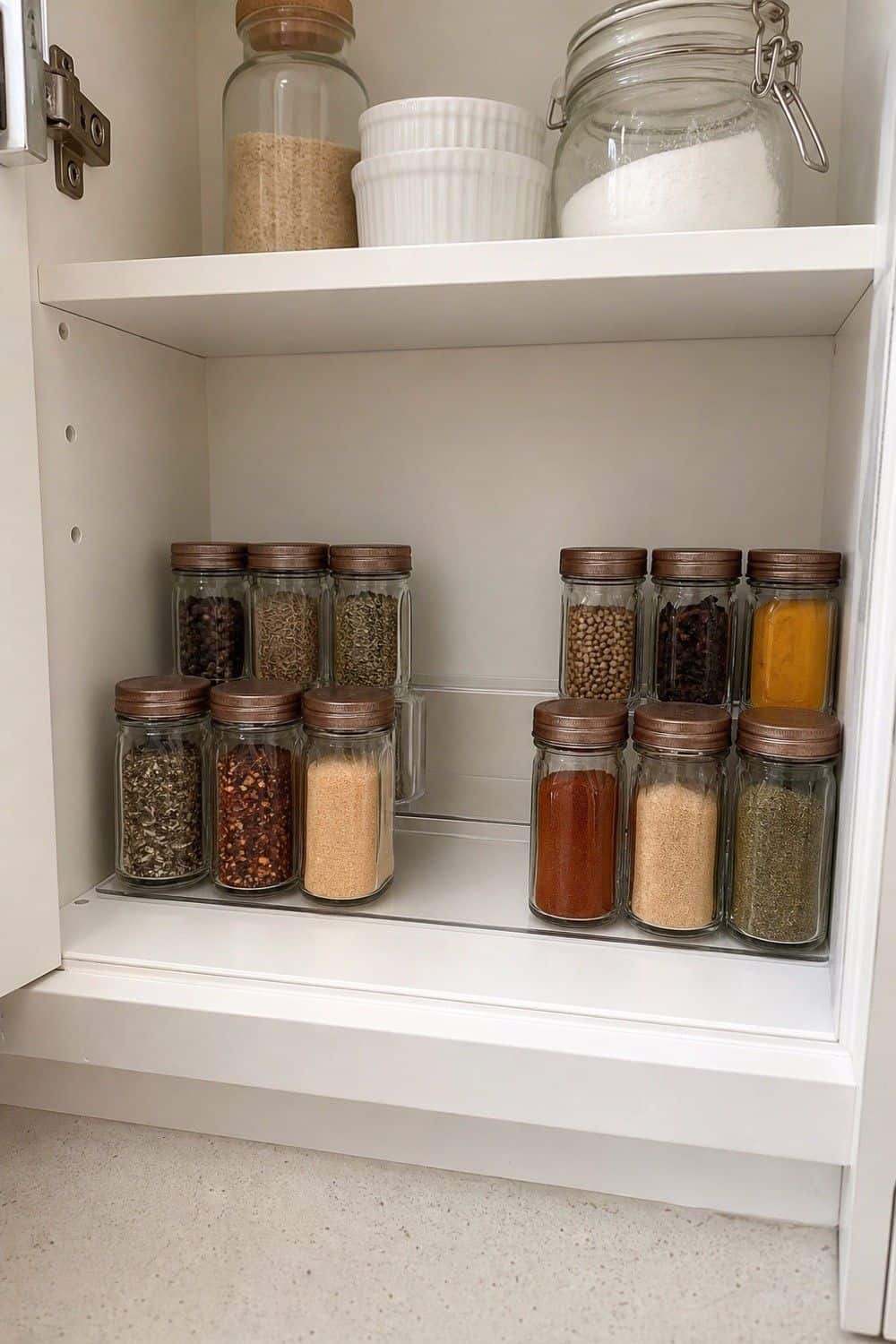
Leave one small open space for a new recipe spice, seasonal blend, or fresh refill. A spice cabinet packed edge to edge becomes hard to scan and even harder to maintain. The gap gives the system a little forgiveness.
This does not mean wasting a whole shelf. It can be one empty slot on a rack or a little room in the backstock bin. If every inch is already full after organizing, the cabinet will start falling apart the next time you buy a new spice.
Cabinet Fit, Freshness, and Sorting Notes
Measure before buying any cabinet spice organizer. Check shelf width, shelf depth, shelf height, door clearance, hinge swing, and the height of your tallest jar. A rack that technically fits the shelf can still fail if the door will not close or the top row hits the shelf above.
Cabinet spice storage is different from drawer spice storage. Cabinets need front-facing labels, risers, turntables, door racks, and pull-outs. Drawers rely on top labels and angled trays. If you are using a cabinet, design for upright jars and face-level scanning.
For freshness, keep spices away from direct heat, steam, strong light, and moisture whenever you can. Check aroma, color, clumping, and dates during each deeper cleanout. Matching jars help when they improve fit, but original jars are perfectly fine when they are readable, fresh, and easy to reach.
Sorting can be alphabetical, daily-use, cuisine-based, baking-focused, or heat-level. The best method is the one your household can follow when cooking quickly. If jars keep wandering, the system is probably too complicated for the way you actually cook.
Frequently Asked Questions
How do you organize a spice cabinet?
Pull every jar out first, toss spices with weak aroma or very old dates, then choose one sorting method. After that, match the organizer to the cabinet problem: tiered racks for visibility, lazy Susans for deep corners, door racks for small cabinets, and pull-outs for narrow shelves.
Is it better to organize spices alphabetically or by category?
Alphabetical order works well for large collections or shared kitchens because everyone can find the same jar quickly. Category grouping often works better for cooks who use predictable sets, such as baking spices, grilling spices, everyday dinner spices, or spicy seasonings.
What is the best organizer for a spice cabinet?
The best organizer depends on the cabinet. Use a tiered rack for standard jars, a lazy Susan for deep corners, a door rack when shelf space is tight, and a pull-out rack for narrow cabinets where back jars are hard to reach.
Should spices be stored above the stove?
A cabinet above the stove is convenient, but heat and steam can make spices lose flavor faster. A nearby cooler cabinet is usually better if you have one, especially for delicate ground spices and blends you want to keep fragrant.
Are matching spice jars worth it?
Matching jars are worth it when they improve cabinet fit, label visibility, and freshness tracking. They are optional if the original jars are easy to read, fit your organizer, and still have clear dates or labels.
How often should you clean out a spice cabinet?
Do a quick duplicate check before grocery shopping and a deeper freshness audit about every six months. The deeper check should include aroma, color, clumping, dates, refill bags, and whether the current sorting method still matches how you cook.
Where should refill spice bags go?
Keep refill bags in a separate backstock container above, behind, or beside the daily-use spices. They should be easy to check before shopping, but they should not hide the jars you reach for while cooking.
How do you organize spices in a small cabinet?
Use narrow tiered racks, a cabinet door spice rack, a small turntable, or a compact pull-out if the cabinet allows it. Keep only the daily spices in the main cabinet, move refills to backstock, and remove duplicates so the small space stays scannable.
Final Thoughts
The strongest spice cabinet organization system is the one that supports real cooking. Start with freshness, choose a sorting method your household can maintain, and then pick cabinet tools that solve the actual problem in front of you.
A tiered rack, door rack, pull-out, or turntable can help, but only after old jars, duplicates, and refill bags are under control. Once every label is visible and the daily spices sit where your hand already reaches, the cabinet starts working like part of the cooking routine instead of a shelf full of tiny surprises.
Last update on 2026-10-03 / Affiliate links / Images from Amazon Product Advertising API