
The fastest spice drawer organization system uses a shallow drawer near prep, inserts that fit the drawer height, top labels you can read from above, and rows grouped by cooking habit. Use angled inserts when there is enough clearance, flat rows when the drawer is short, and keep refill bags outside the active drawer so meal prep stays quick.
A spice drawer works beautifully when it is planned for top-down visibility. It also becomes frustrating fast when jars roll, labels face sideways, or a deep drawer turns into a pile of half-hidden bottles.
The best spice drawer organization starts with the drawer itself: height, width, jar shape, row direction, and whether your hand can scan the spices while you are cooking. This is different from a cabinet system. Drawers need lid labels, anti-roll control, and a clear row plan more than front-facing shelves.

Top Recommended Products


You Might Also Like These Blog Posts
- Spice Cabinet Organization: What Actually Works
- Kitchen Drawer Organization: What Actually Works
- Kitchen Cabinet Organization: What Actually Works
- 20 Best Spice Jars and Labels Worth Buying
- 25 Kitchen Organization Ideas That Actually Work
1. Drawer Interior Measurements Before Buying Inserts
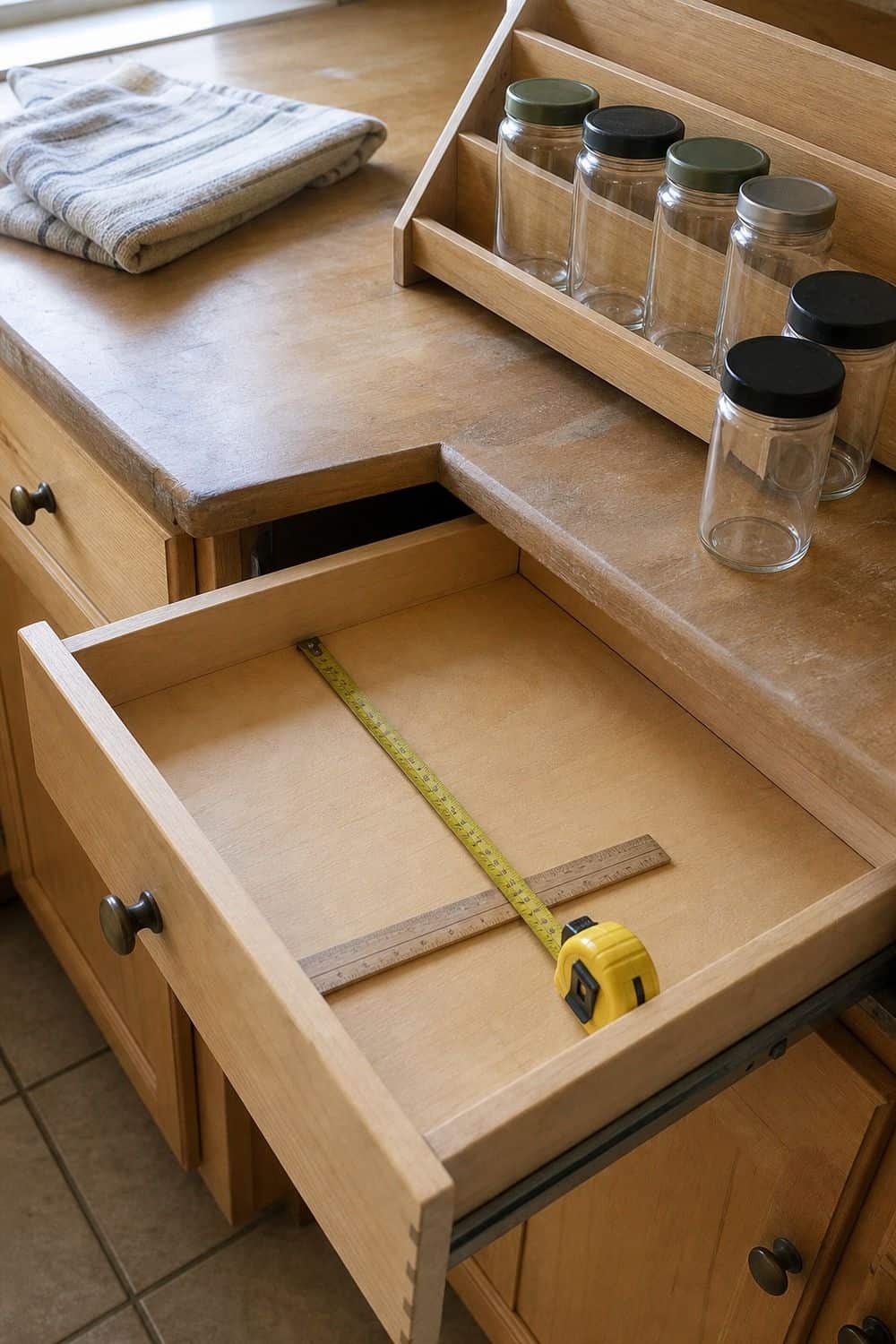
Measure the drawer before buying jars, trays, or angled inserts. You need the interior width, depth, height, and the clearance under the counter lip when the drawer closes. Spice jars can look short online and still bump the frame once an insert lifts them. Measure lid diameter too, because wide lids may steal a whole row. A few minutes with a tape measure prevents the classic spice drawer mistake: a pretty organizer that only fits half the spices you actually own.
2. Shallow Drawer Near Prep or Cooking
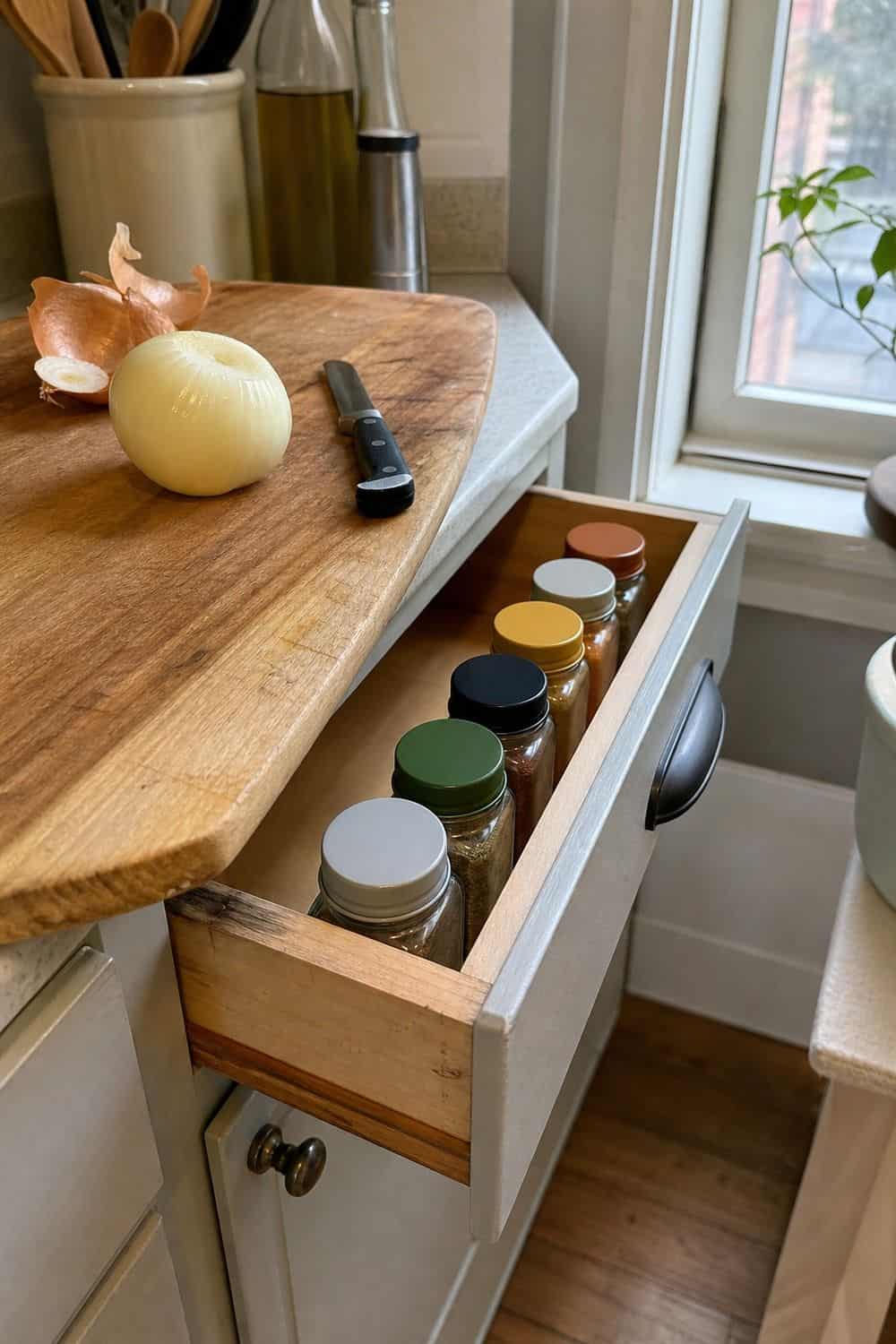
A spice drawer belongs near the place where seasoning actually happens. A shallow drawer beside the prep counter, range, or main cutting board lets you scan labels from above while you cook. Avoid drawers that sit directly beside heat, steam, or a dishwasher vent if the jars get warm or damp. The goal is a short reach, not a perfect-looking drawer in the wrong zone. If the best drawer is compact, keep only daily cooking spices there and move baking spices or backups elsewhere.
3. Angled Insert for Label Visibility

An angled insert is the classic spice drawer solution because it tilts each jar toward you. That makes top or lid labels easier to read without lifting every bottle.
Choose an insert that matches your jar diameter and drawer height, not just the drawer width. Check whether the tray can be lifted out for cleaning, because spice dust gathers quickly in angled grooves.
Count the rows before buying. A three-row insert may look generous but still leave odd jars loose at the back. If you cook with many spices, modular angled trays may work better than one fixed organizer because you can leave space for packets or tall specialty jars.
4. Flat Jars When the Drawer Is Too Short
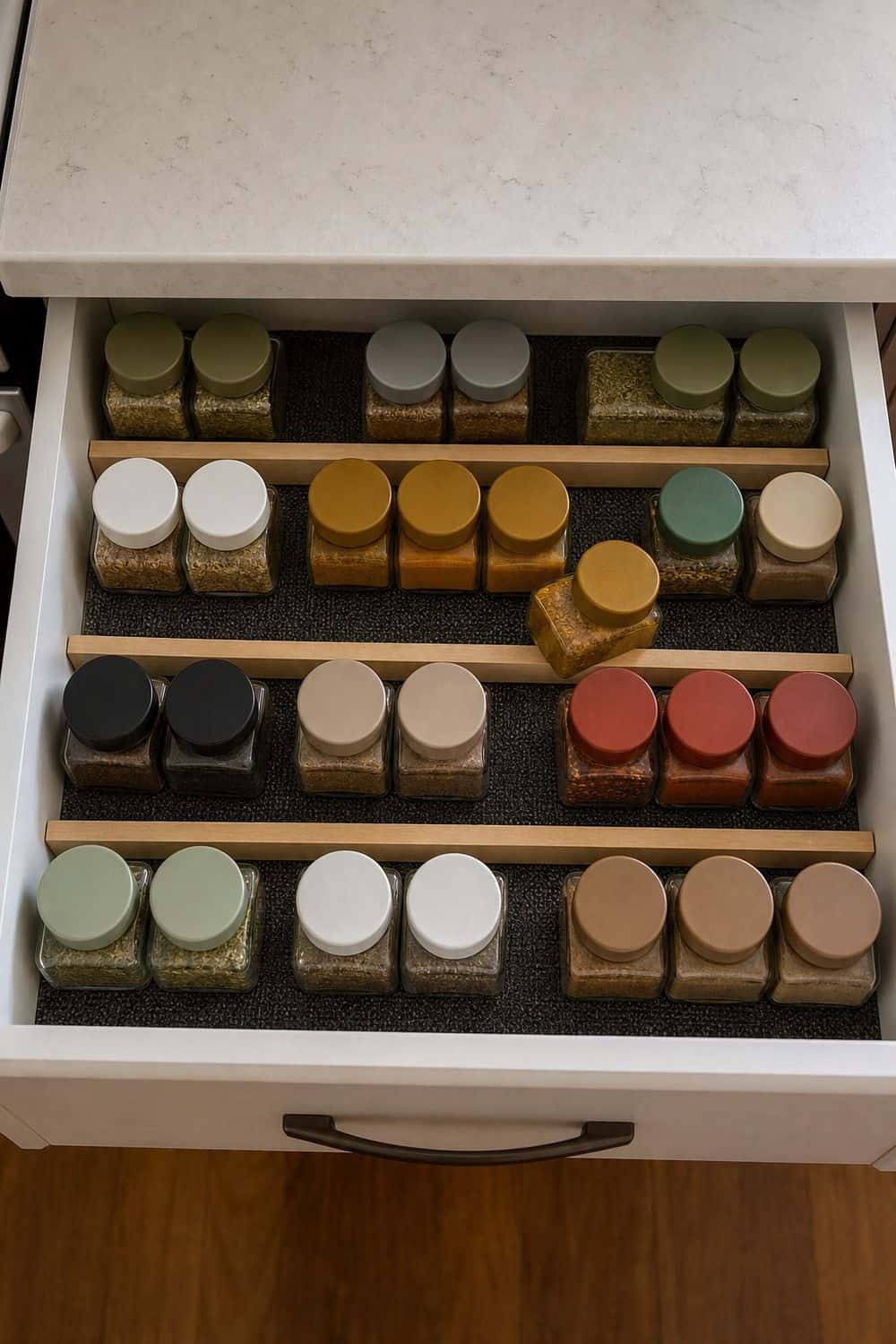
If the drawer is too short for angled trays, lay jars flat with labels facing upward. This works especially well with matching short jars, but it can also work with original spice bottles if the lids stay aligned and easy to read. Use shallow dividers, non-slip liner, or narrow bins to stop the jars from rolling when the drawer opens. Keep the rows by category rather than trying to force perfect symmetry. Flat rows should still help you cook faster, not turn the drawer into a puzzle.
5. Short Jars With Wide Lids
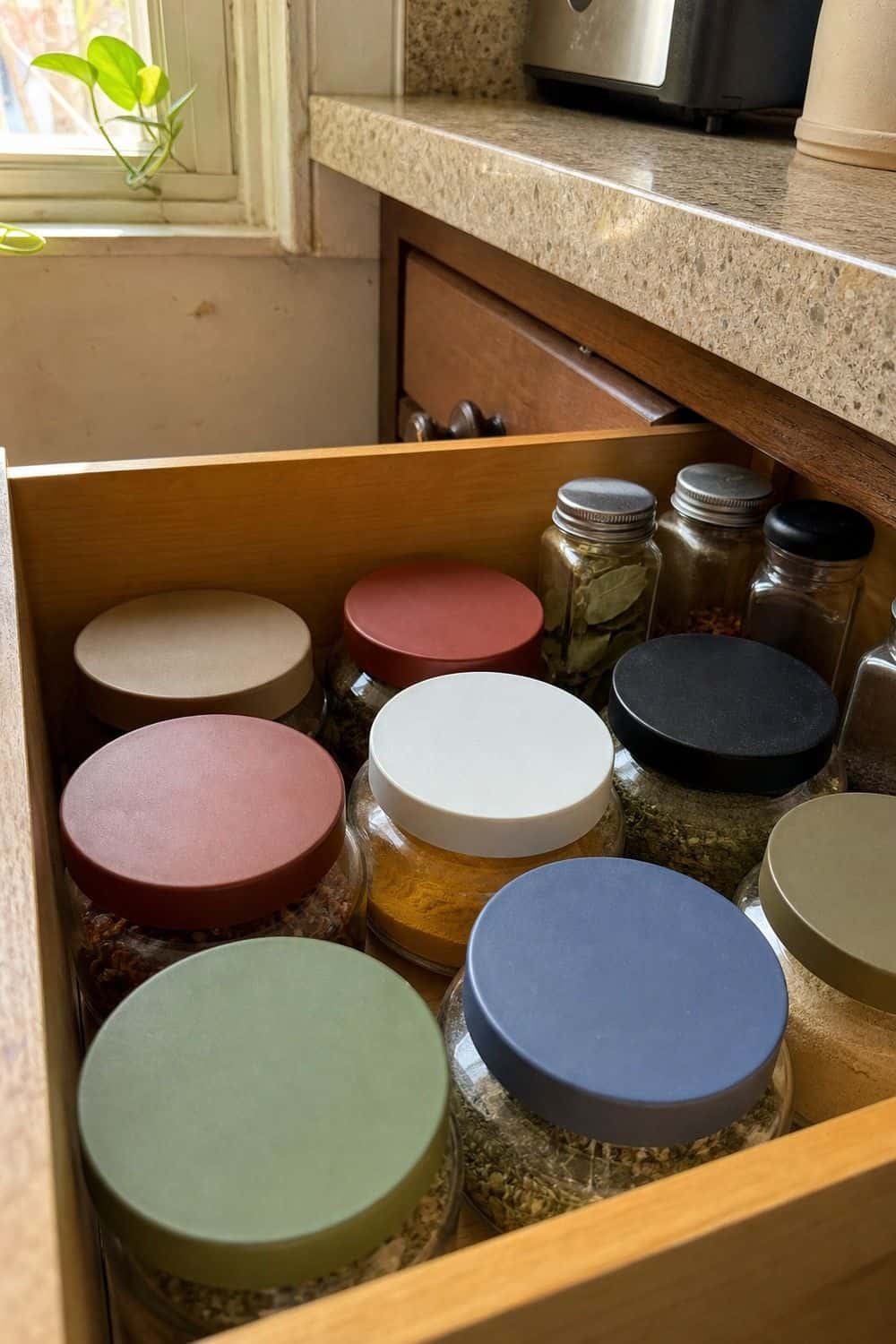
Low, wide-lidded jars are easier to read in a drawer than tall narrow bottles. The lid gives you room for a clear label, and the shorter body helps the jar fit under the counter when angled or lying flat.
Decanting is only worth it if you will label and date everything right away. Otherwise, original bottles may be more honest and easier to maintain. If you do choose matching jars, buy a few extras so new spices can join the system without wrecking the drawer.
6. Top Labels Instead of Front Labels
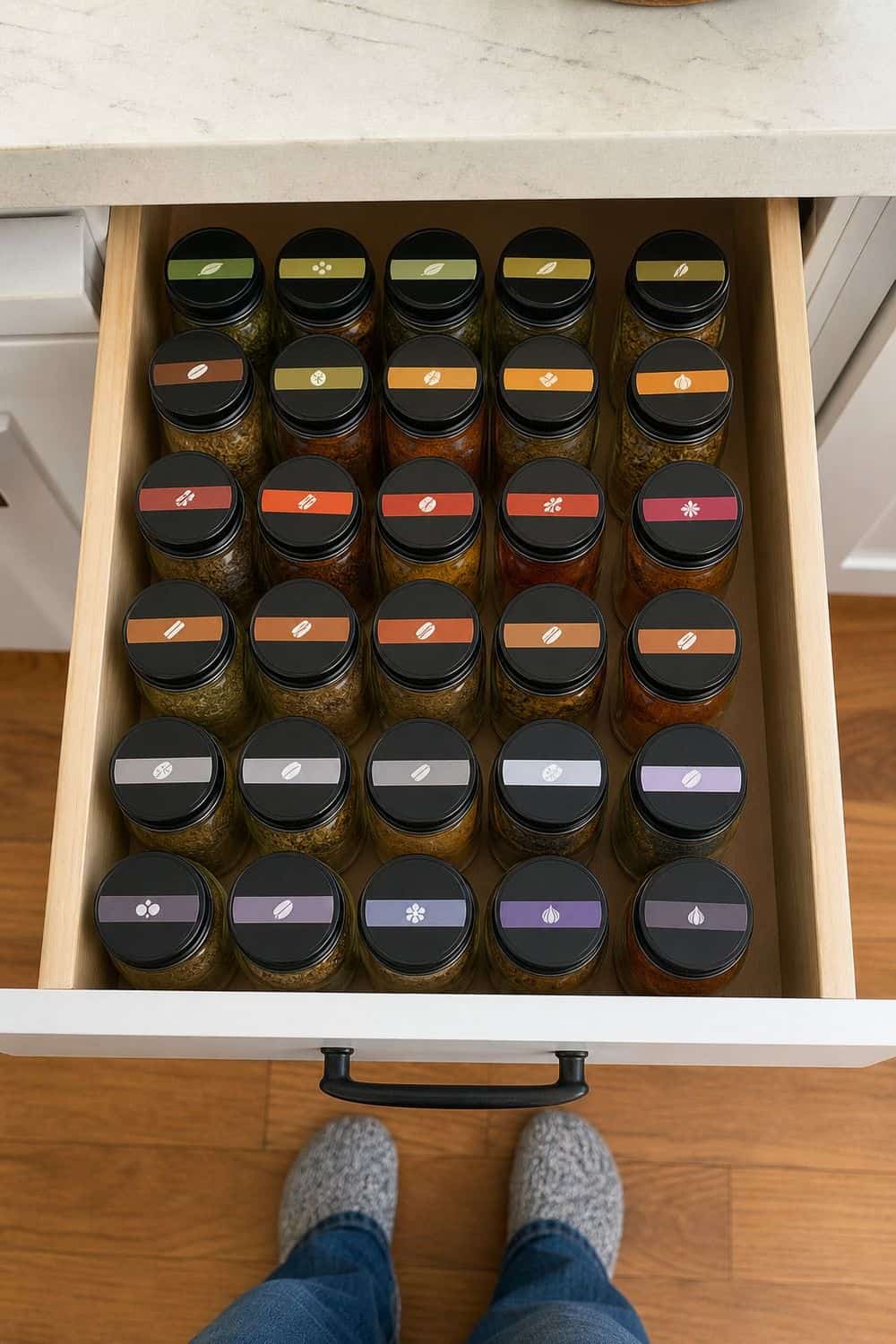
Drawer spices are viewed from above, so top labels matter more than front labels. Use a clear, high-contrast label on each lid, and keep the spice names simple: cumin, smoked paprika, cinnamon, oregano, chili flakes. Fancy fonts are less helpful when dinner is already sizzling. Front labels still make sense in a cabinet, where jars stand upright and are scanned from eye level. In a drawer, they usually disappear, so keep the lid label large and let the front label be secondary.
7. Date Labels on the Back or Bottom
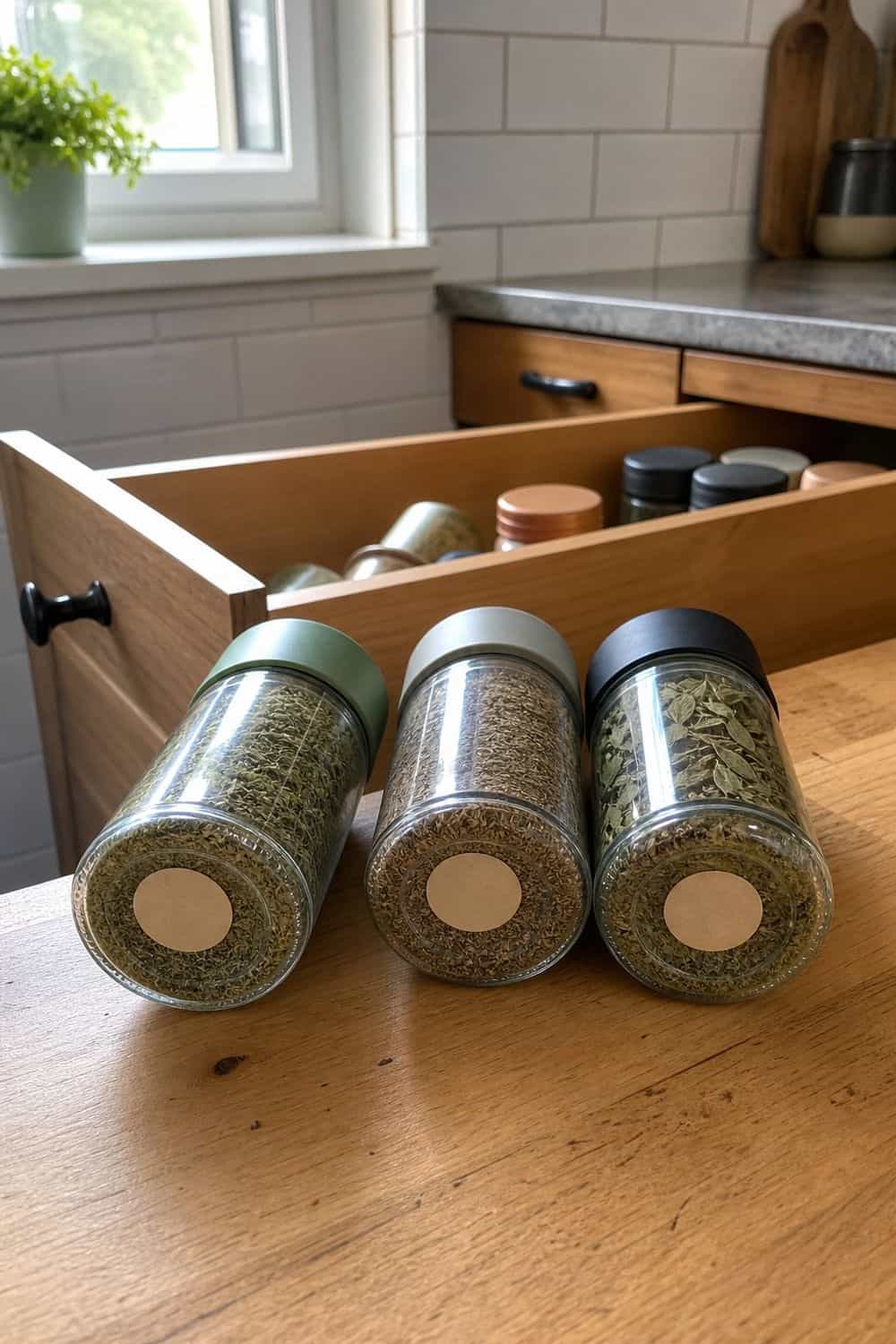
A spice drawer can look perfectly tidy while quietly hiding old spices. Add a small date label to the back, bottom, or side of each jar so you know when it was bought or refilled. This matters most for ground spices, which fade faster than whole seeds.
Do not crowd the main top label with too much information. The cooking label should stay easy to read; the date is just a quiet maintenance note. A simple month and year is usually enough.
8. Daily Savory Spice Row
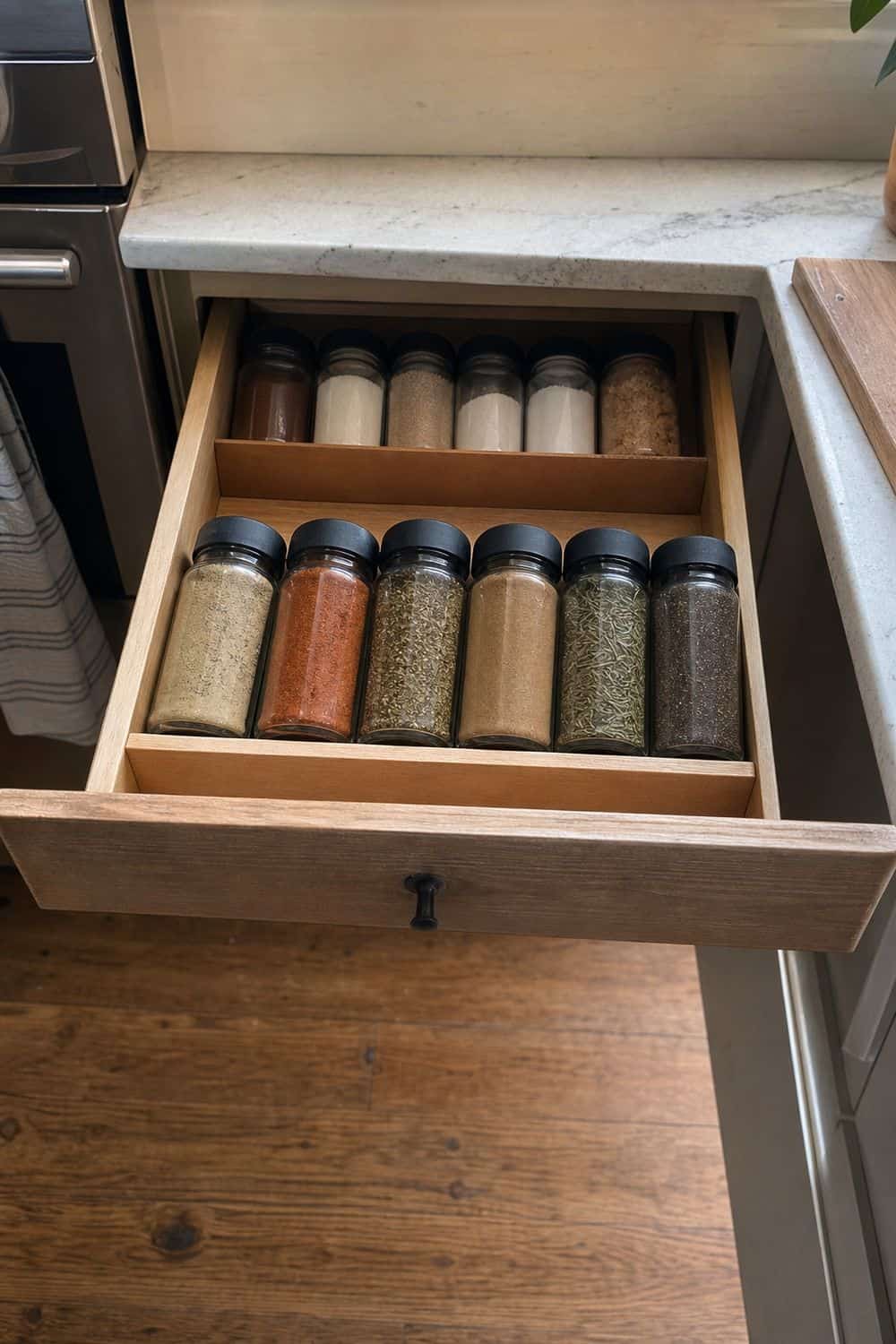
Create one row for the savory spices you reach for all week: garlic powder, onion powder, paprika, cumin, oregano, black pepper, chili powder, or the seasonings your household actually uses. Place that row closest to the drawer pull or your dominant hand. This is the row that saves time on busy nights, so do not bury it behind baking spices, specialty blends, or refill bags. If a spice is used once a month, it does not deserve the fastest spot.
9. Separate Baking Spice Row
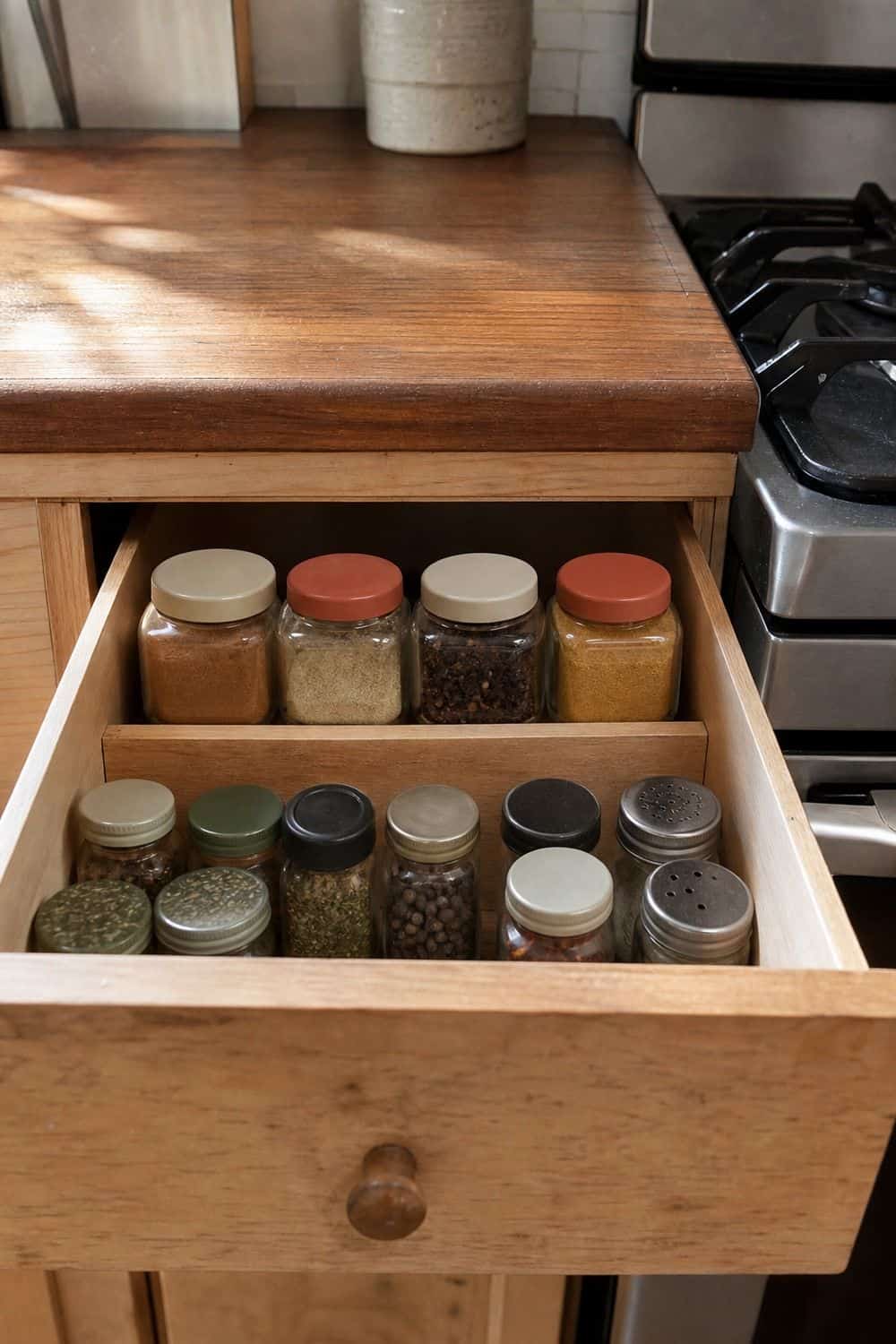
Cinnamon, nutmeg, cloves, ginger, cardamom, allspice, vanilla powder, and baking blends deserve their own row. They are easy to confuse with savory spices when labels are small, and they tend to come out together during baking seasons.
Keep the baking row slightly farther back if dinner prep is the daily priority. If you bake often, give it a prime spot and move rarely used savory jars to a side bin. The drawer should reflect how you cook, not a universal alphabetized fantasy.
10. Heat and Chili Row
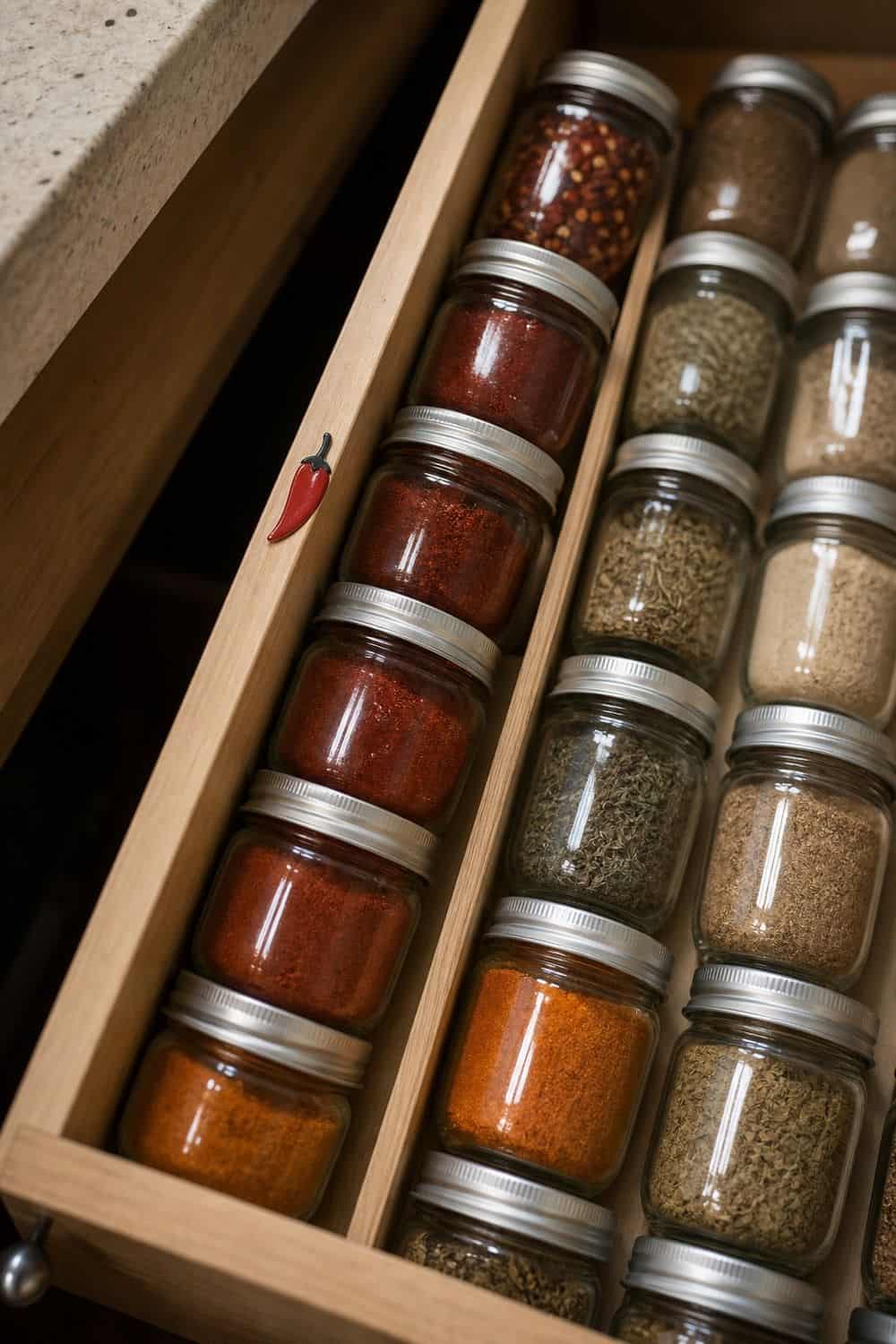
Use one row for crushed red pepper, cayenne, chili powder, gochugaru, chipotle, smoked paprika, and hot blends. Heat-related spices are easier to compare when they sit together, which helps you avoid grabbing the wrong level of fire mid-recipe. If you have multiple chili powders, label them clearly by flavor or heat. A sweet paprika, a smoked paprika, and a hot paprika can all look similar from above. This row is less about perfection and more about preventing a tablespoon-sized surprise.
11. Blends and Rubs in Their Own Section
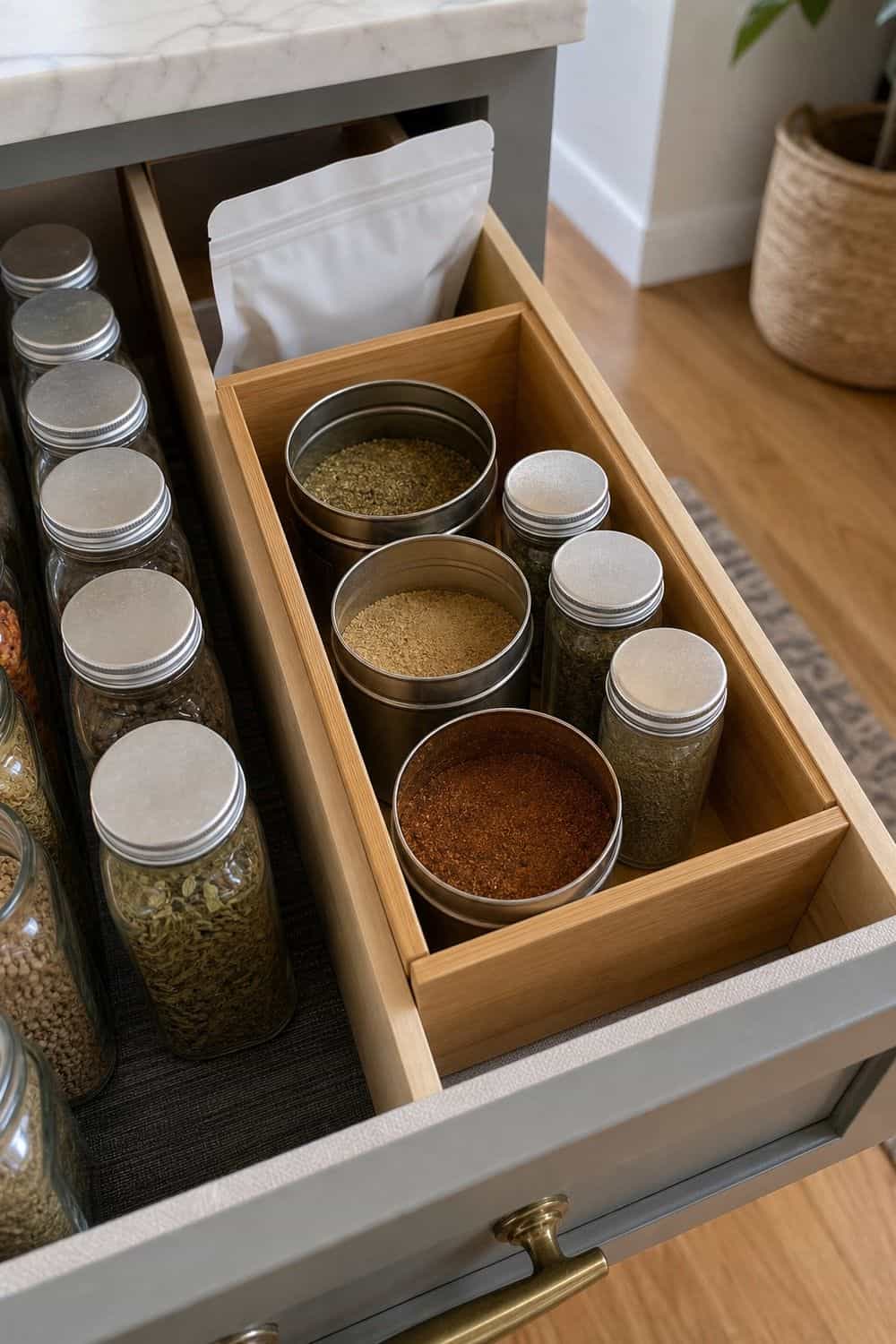
Separate taco seasoning, curry powder, poultry seasoning, barbecue rubs, Italian seasoning, and house blends from single-ingredient spices. Blends often duplicate ingredients, so grouping them helps you see when you already have three versions of the same flavor profile. This section can sit toward the back or side of the drawer unless you use a blend every week. If a rub comes in a wide tin or bag, decant only if the label and date can travel with it. Otherwise, keep the original package in a small bin.
12. Non-Slip Liner to Stop Rolling
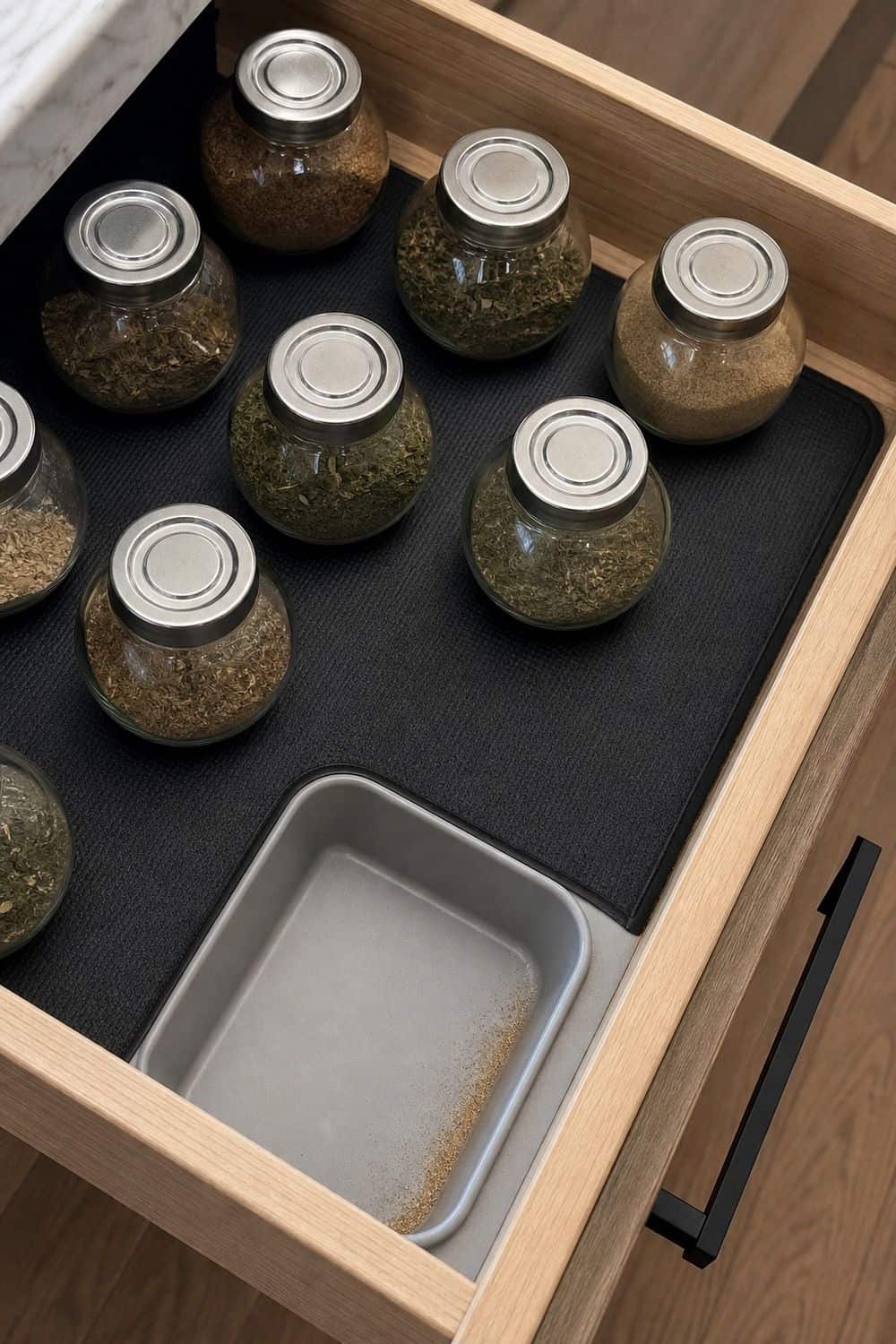
A washable non-slip liner keeps jars from sliding every time the drawer opens. It is especially helpful when jars lie flat, when inserts do not fill the whole drawer, or when a few original spice bottles are mixed with matching jars.
Trim the liner neatly so it does not bunch under the trays. Choose a surface you can wipe after paprika, turmeric, or cinnamon spills, because spice dust will find every little ridge.
A liner should make the drawer easier to reset, not harder to clean, so skip anything with deep texture that traps ground spices after every refill.
13. Packets and Tiny Bags in a Small Drawer Bin

Spice packets, taco packets, saffron tins, bay leaf bags, cinnamon sticks, and tiny seasoning envelopes need a home that is not the bottom of the drawer. Use a small open bin or shallow divider so these odd pieces stay visible.
Keep the bin deliberately small. If it grows too large, it becomes the new junk drawer. Check it before grocery shopping, because packets are exactly the things people forget they already bought. Toss empty envelopes and stale packets during the same pass so the bin stays useful.
14. Refill Bags Outside the Active Drawer
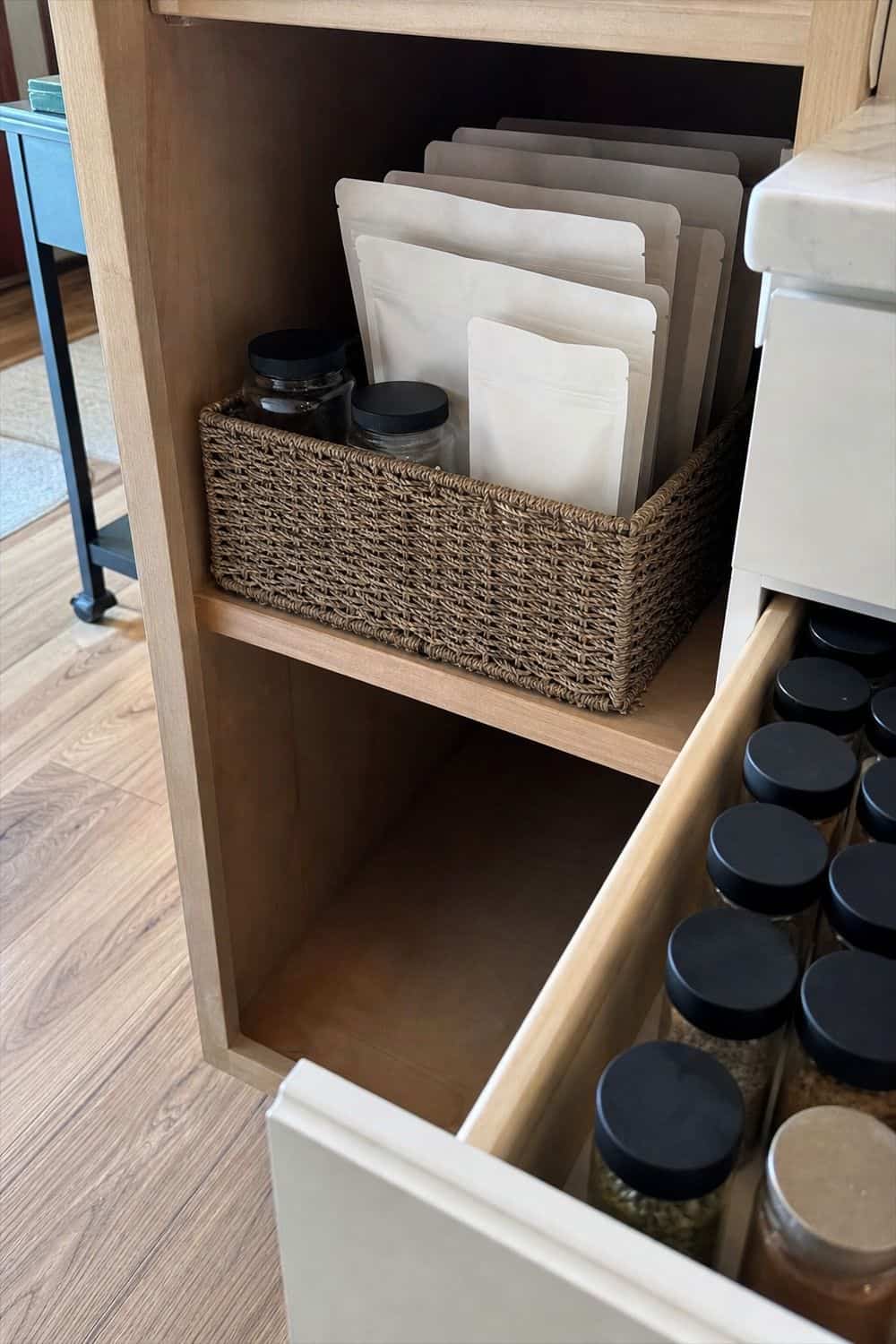
Refill bags and backup jars do not belong in the active spice drawer. They crowd the labels, make jars harder to lift, and usually spill little clouds of herbs or paprika when the drawer gets busy. Keep refills in a pantry bin or backstock basket instead.
Before shopping, check the refill bin and the drawer together. That one habit prevents duplicate cumin, paprika, cinnamon, and chili powder from multiplying in two separate places. It also tells you which jars should be topped up before they run out mid-recipe.
15. Measuring Spoons Beside the Spice Drawer

Measuring spoons do not have to live inside the spice drawer, but they should be close. Keep them in the neighboring utensil drawer, clipped to a small rail, or tucked into a narrow side compartment if there is room. The point is to avoid hunting for a teaspoon while the drawer is open and the pan is hot. If the spoons make the spice drawer cramped, move them one drawer over. Fast meal prep still wins over perfect grouping, especially during weeknight cooking.
16. Stacked Jars to Avoid in a Deep Drawer

Deep drawers seem generous, but they can become messy fast if jars are stacked in layers. Once one jar sits on top of another, labels disappear and the drawer starts working like a box, not a system.
If a deep drawer is your only option, stand jars upright with lid labels or use a deep organizer that keeps them in rows. Do not bury small jars under refill bags or oversized bottles. A shallow drawer is often better for spices if you have one available.
17. Removable Inserts for Flexible Storage
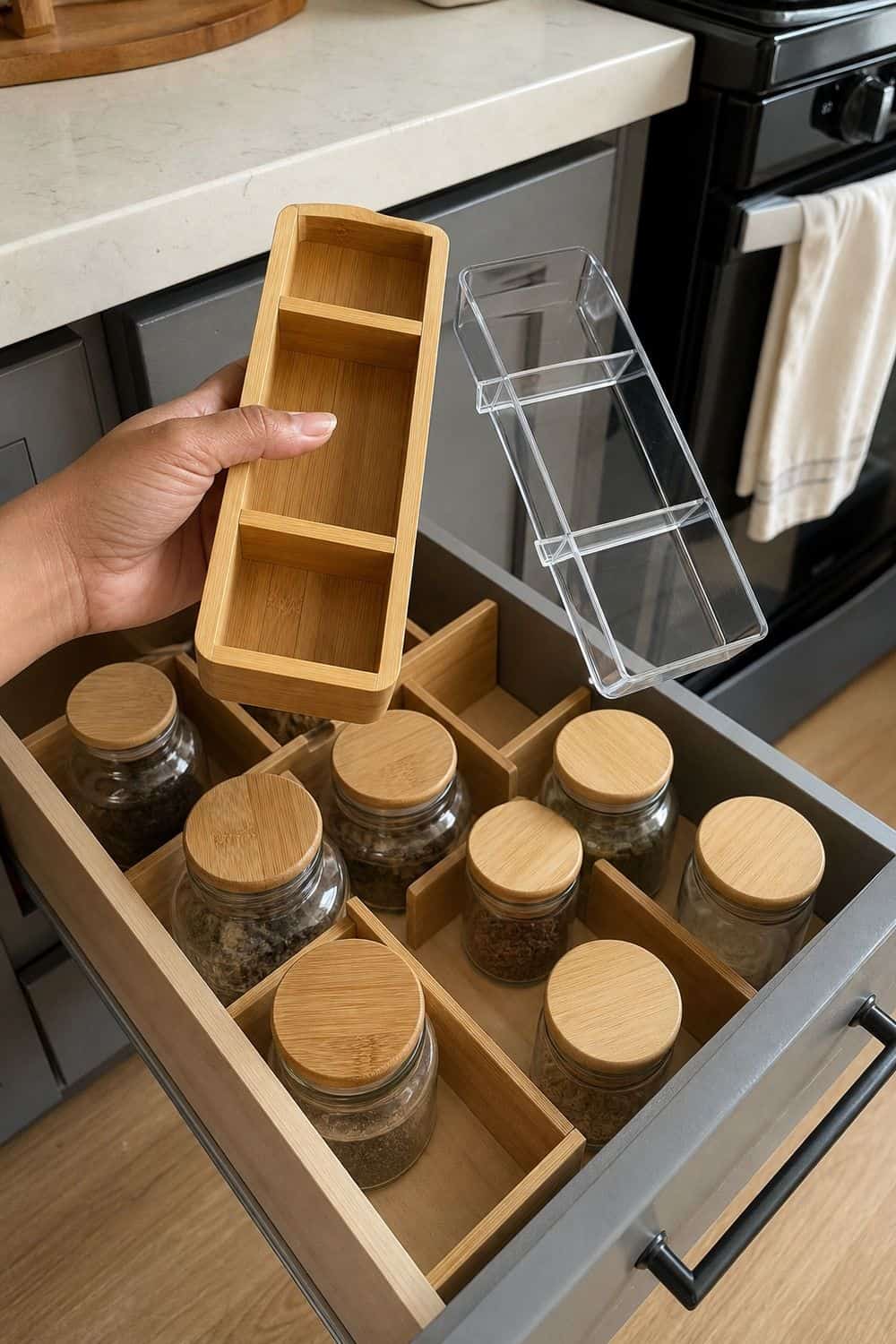
Removable inserts are useful when you want the drawer to stay flexible. Bamboo, acrylic, foam, or expandable trays can lift out for cleaning, move to another drawer, or adjust when your spice collection changes.
This is better than committing to a fixed system before you know how the drawer behaves. If your jars change size often, choose adjustable dividers instead of a custom insert with exact slots. Flexibility is not less polished; it is what keeps the drawer usable after the first week.
18. Drawer Audit Before Big Grocery Trips
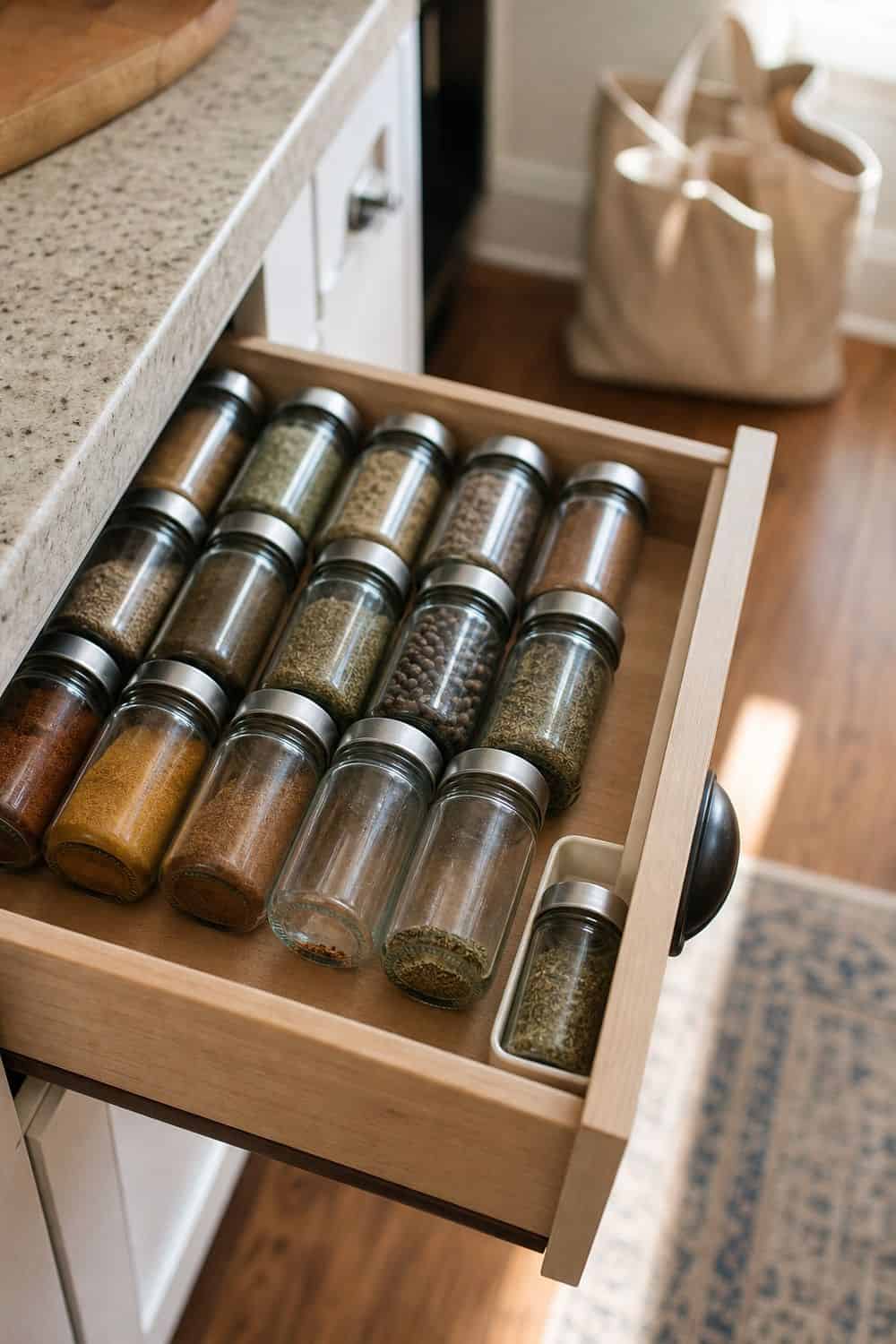
Before a big grocery trip, open the spice drawer and scan each row. Note low jars, stale spices, nearly empty packets, and duplicates hiding in the wrong section. This quick habit prevents the drawer from filling with three cinnamons and no cumin.
Smell older spices before keeping them in the active row. If a jar has no aroma, it will not do much for dinner. A tidy drawer is helpful, but a fresh drawer is what actually makes meal prep better.
Spice Drawer Fit, Labels, and Freshness Notes
For drawer fit, check drawer height, jar length, lid diameter, insert angle, row count, and drawer pull clearance before buying organizers. A drawer spice rack only works if the jars fit after the insert lifts or angles them.
Top labels are the drawer version of front labels in a cabinet. If the spices are lying flat or angled, the label should face upward. Front labels are better for cabinet shelves, where jars stand upright and are scanned from the front.
Angled inserts are best when the drawer has enough height and you want labels tilted toward you. Flat rows work in short drawers. Upright jars can work in deep drawers only when the lid labels stay readable and jars are not stacked.
Keep drawer spice storage separate from cabinet spice storage by focusing on what the drawer does best: top-down scanning, anti-roll rows, short jars, and meal-prep speed. For freshness, avoid hot or steamy drawers, date decanted spices, and smell-check older jars before keeping them in the active row.
Frequently Asked Questions
How do you organize spices in a drawer?
Measure the drawer first, then choose angled inserts or flat rows based on the drawer height. Add top labels, group spices by how you cook, and keep refills outside the active drawer so the rows stay easy to scan.
What labels suit spice drawers?
Top labels suit spice drawers because you read the jars from above. Choose large, high-contrast labels with consistent spice names so you can find the right jar without lifting several bottles.
Are spice drawers better than spice cabinets?
Spice drawers can be better when the drawer is shallow, close to prep, and easy to scan from above. Spice cabinets may work better for tall bottles, large collections, or kitchens without a useful shallow drawer.
What kind of jars suit a spice drawer?
Short jars with wide lids usually suit a drawer because they fit under the counter and leave room for readable top labels. Consistent jar sizes also help rows sit evenly in angled inserts or flat trays.
How do you keep spice jars from rolling in a drawer?
Use angled inserts, flat trays, divider strips, or a washable non-slip drawer liner. The goal is to keep each row from shifting when the drawer opens and closes.
Should spices be stored near the stove?
Spices can be near the cooking zone for convenience, but avoid drawers that get hot or steamy. Heat and moisture can weaken flavor, especially in ground spices and blends.
Where should spice refill bags go?
Store refill bags in a separate pantry backstock box instead of the active spice drawer. Check that box before shopping, then refill the short jars when needed.
How often should you clean out a spice drawer?
Wipe spills as soon as they happen and do a deeper freshness and duplicate audit before large grocery trips or at least twice a year. Check dates, aroma, clumping, and whether the row plan still matches how you cook.
Final Thoughts
Strong spice drawer organization is about speed from above. When the drawer is measured, the jars fit, labels face upward, and rows match the way you cook, seasoning dinner becomes easier.
Do not force a drawer to behave like a cabinet. Let it do what drawers do best: show short jars in clear rows, stop bottles from rolling, and keep the most-used spices ready for meal prep. With refills stored elsewhere and freshness dates easy to check, the drawer stays useful long after the first reset.
Last update on 2026-10-03 / Affiliate links / Images from Amazon Product Advertising API