Warm neutral kitchen organization is strongest when storage looks calm but still solves everyday mess. Use repeated woven baskets, bamboo boxes, glass jars, warm wood drawer dividers, hidden appliance zones, and simple labels so pantry shelves, counters, and drawers feel coordinated instead of crowded.
A cream or taupe kitchen can look serene in photos and still feel chaotic by breakfast if every snack bag, bottle, charger, and baking extra is sitting in plain view. The goal of warm neutral kitchen organization is not to make every shelf look empty. It is to choose storage that fits the way you cook while keeping visible materials quiet, repeated, and easy to live with.
Think of this as a material-led organization plan. Glass works for staples you want to see, bamboo hides busy packaging, woven baskets soften open shelves, wood dividers make drawers feel finished, and doors protect the less attractive parts of real kitchen life. Measure first, sort before buying, and let the calm palette serve the routine instead of becoming another thing to maintain.

You Might Also Like These Blog Posts
- Kitchen Organization Products
- Budget Kitchen Organization
- Kitchen Cabinet Organization
- Pantry Organization Ideas
- Warm Neutral Kitchen Ideas
1. Matching Woven Baskets With Real Jobs
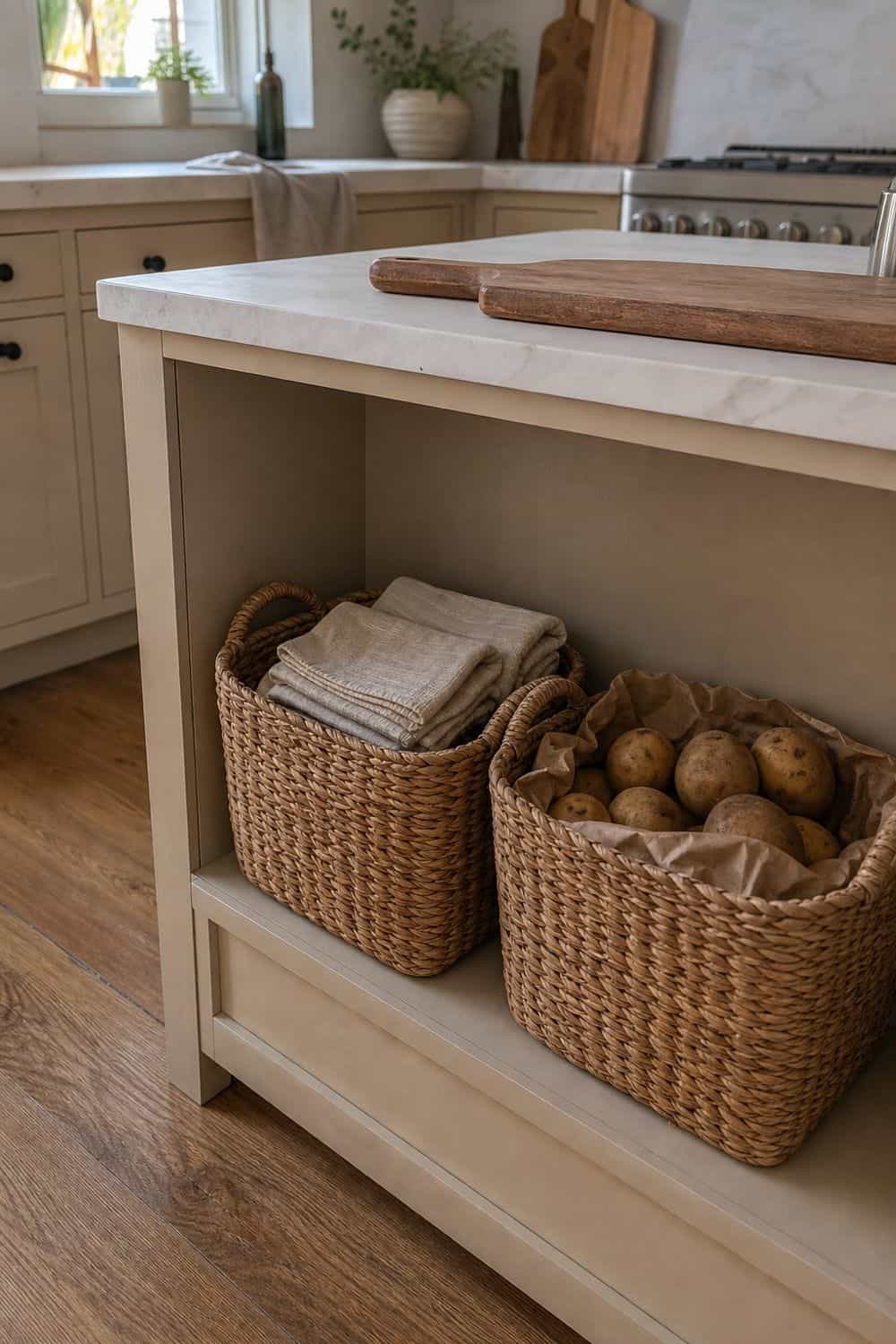
Matching woven baskets are lovely when they hide visual noise, but they need real jobs before they become another matching set to manage in a busy kitchen.
They are strongest for potatoes, extra dish towels, kids’ snacks, coffee backstock, or paper goods rather than anything you need to see at a glance.
I like baskets on lower shelves, open pantry cubbies, or the end of an island where the texture softens all the cabinet lines. Add a small clip label only if several baskets sit together; otherwise the basket should feel calm, not like a filing system.
2. Bamboo Boxes for Opaque Pantry Storage
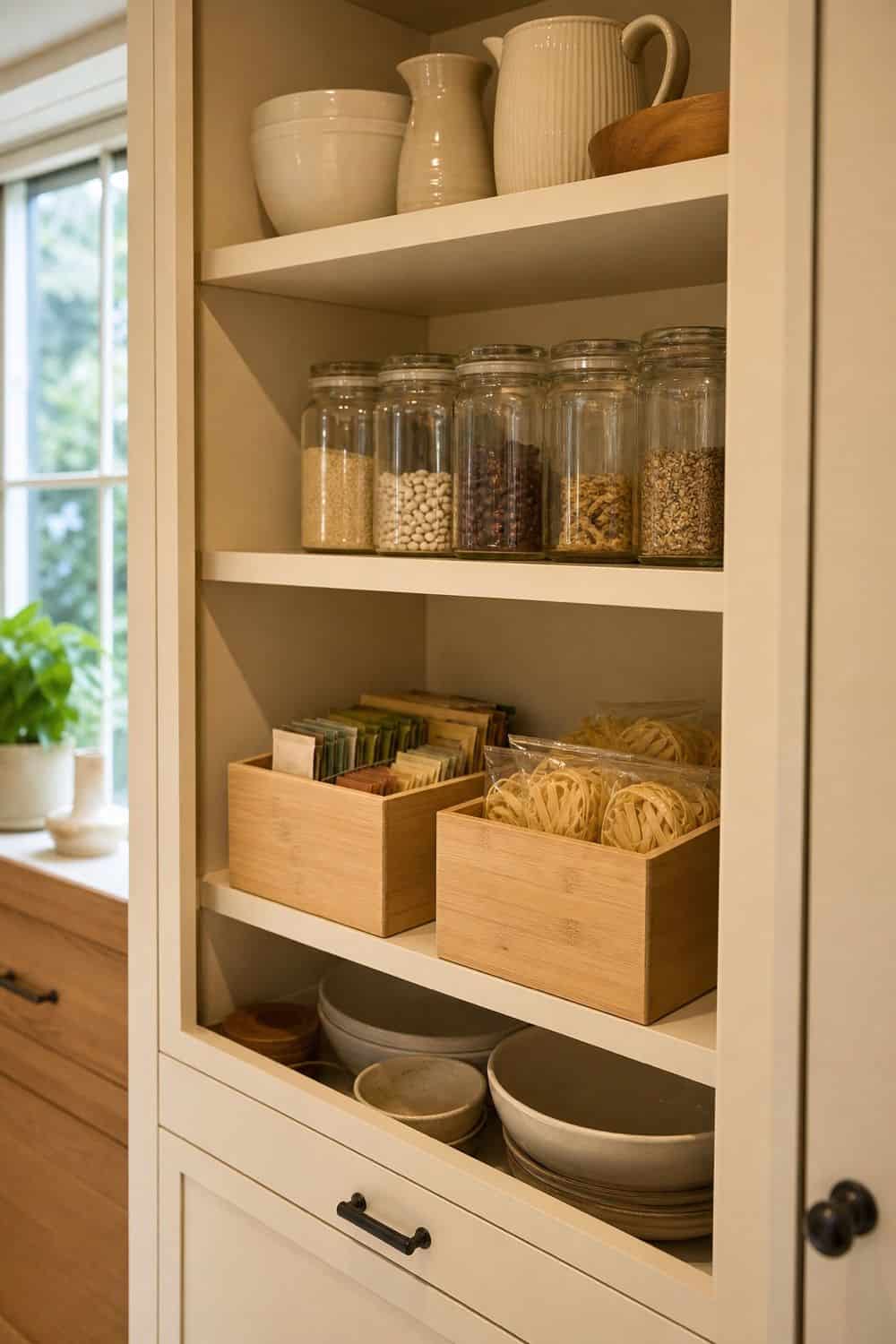
Bamboo boxes are best for pantry categories that look messy in half-open packaging: tea, pasta packets, baking chips, tortillas, snack bars, or spice refill bags. The opaque sides keep the shelf quiet, while the warmer finish still feels softer than a row of plastic bins. Measure the shelf depth and decide whether the box will be pulled down or slid forward before buying a full set, because a pretty box that is too tall or too deep quickly becomes the place where food expires in silence.
3. Glass Jars for Often-Used Staples
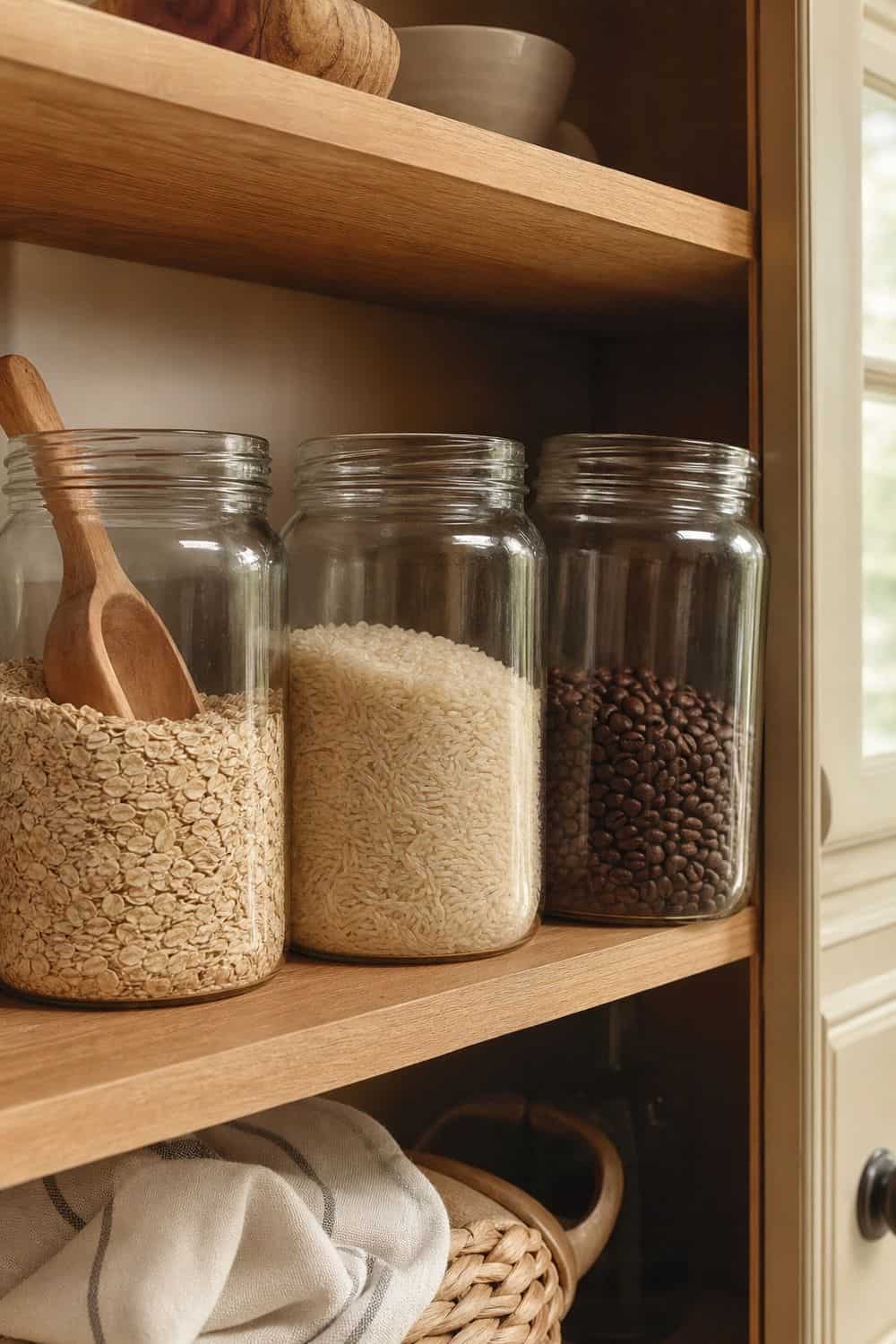
Glass jars make sense for staples you use often enough to finish before they go stale, like oats, rice, lentils, granola, flour, sugar, and coffee beans. They give a warm neutral pantry that nice little rhythm of texture and shadow without hiding the amount you have left. Wide-mouth jars are best for anything scooped with a measuring cup, and the original cook time or expiration date can stay on a small label underneath or behind the jar, so the look stays clean while the kitchen still behaves like a working kitchen.
4. Cream Pantry Labels for Quiet Shelves

Cream pantry labels are helpful when the containers are already doing the right work and just need a quiet naming system. Keep the wording plain: flour, rice, oats, snacks, tea, baking, breakfast, refills. Long label phrases start to feel busy, especially on open shelves. Choose one label style for the visible pantry and let hidden cabinets be more relaxed. A warm neutral kitchen can have a soft visual language without forcing every backup bag and half-used packet to wear a matching costume.
5. Warm Wood Drawer Dividers

Wood drawer dividers are a good place to spend attention because drawers are touched every day. Use them for utensils, measuring spoons, peelers, tea towels, bag clips, lunch tools, or small prep pieces that become annoying when they slide into one heap.
Fit matters more than the finish here. The divider should sit snugly, leave enough finger room to lift pieces out, and create compartments based on what your hand reaches for together, not just what looks balanced from above.
6. Neutral Cutlery Tray That Fits

The everyday drawer stays calmer when the cutlery tray fits the pieces you actually use. Look for long enough slots for dinner knives, shallow side compartments for teaspoons, and a finish that works with the drawer interior. If you host often, keep serving spoons and steak knives somewhere else instead of cramming them beside daily cutlery. The drawer feels better when the pieces you use at breakfast, lunch, and dinner have room to land cleanly, without a daily scrape through crowded compartments.
7. Wood Turntable for Oils
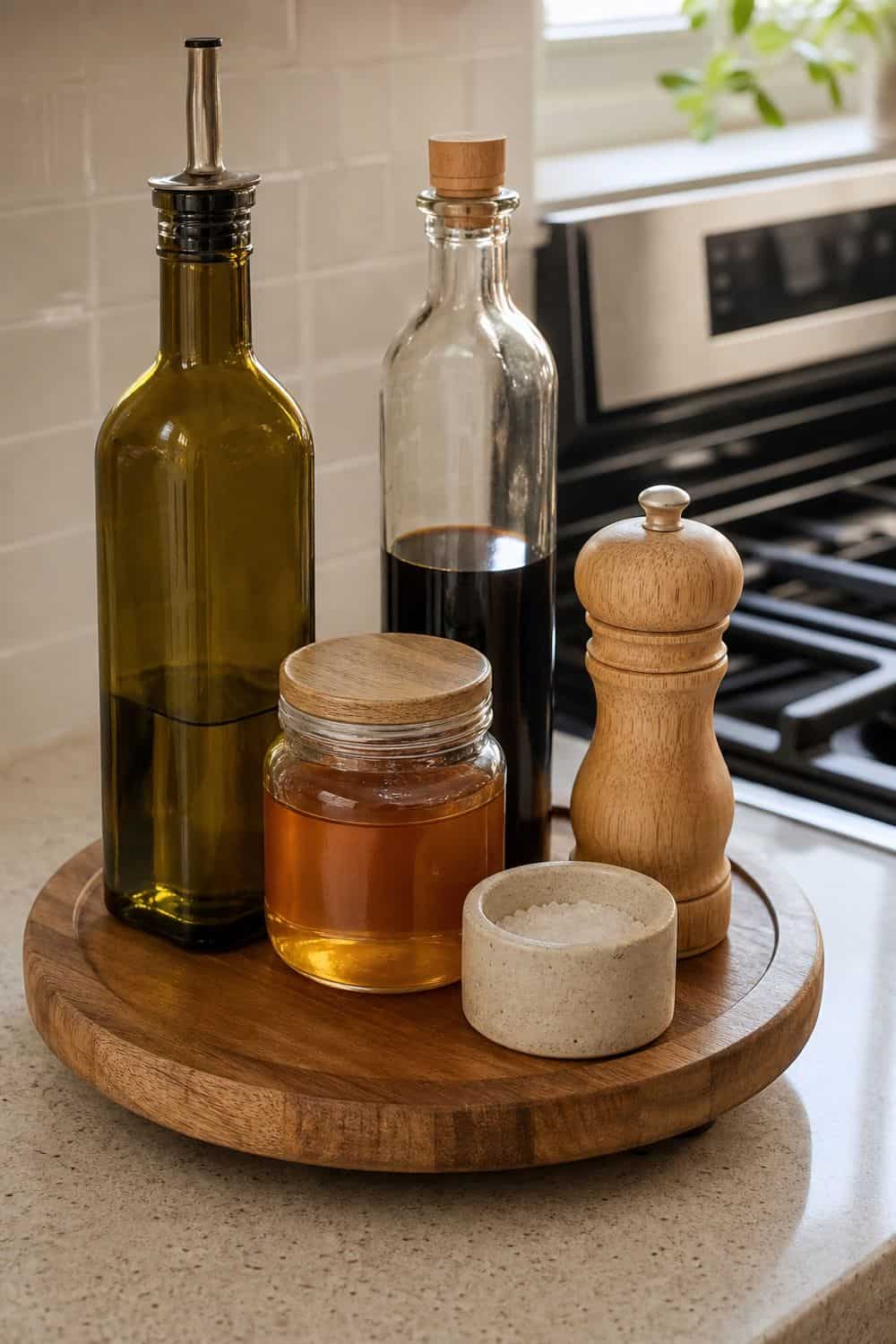
Oils, vinegars, honey, soy sauce, chili crisp, and salt feel more settled when the daily bottles sit on one wood turntable near the stove. It makes the group feel chosen rather than scattered, and the round shape softens a square cabinet or corner shelf.
Do not overload it with every condiment you own. Keep the daily bottles on the turntable, wipe the base often, and store sticky backups somewhere lower so the visible setup stays useful instead of slowly collecting drips.
8. Style a Contained Counter Tray

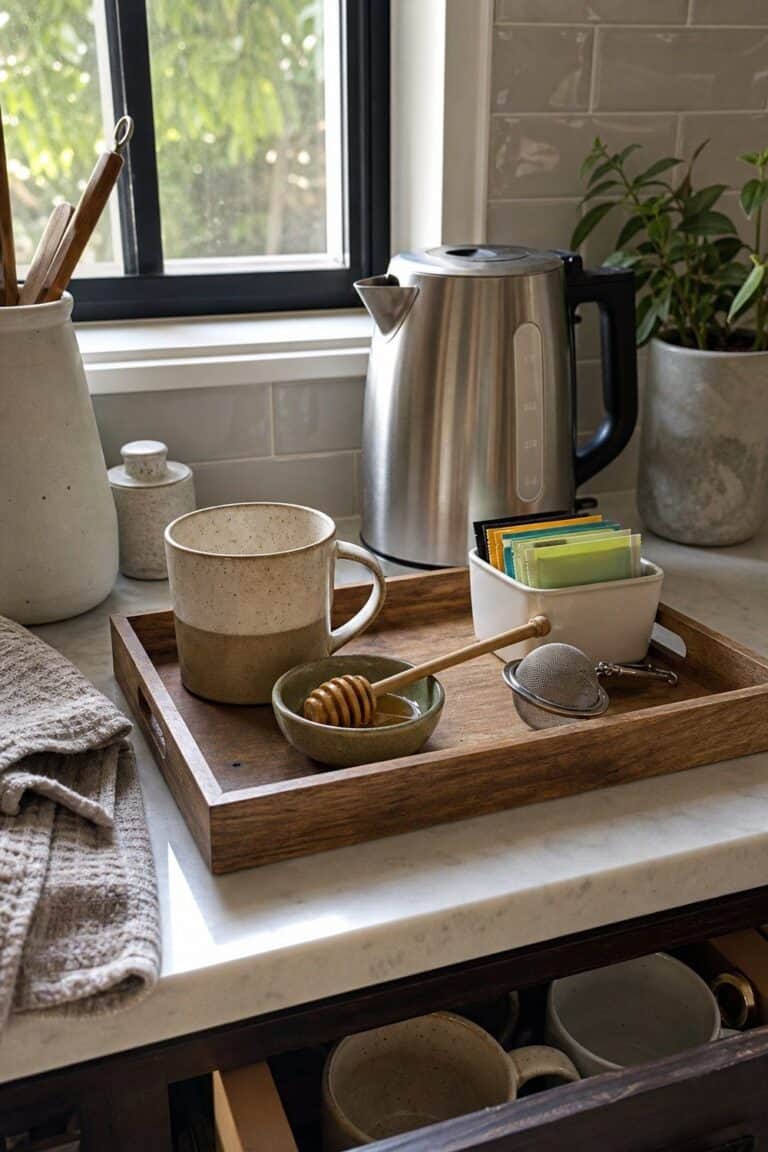
Counter trays are most useful when the items truly need to live out: olive oil, salt cellar, pepper grinder, a small crock, a candle, or the coffee scoop. The tray gives those pieces a boundary so the counter reads as styled rather than slowly taken over. Choose a low wood, stoneware, or woven tray that is easy to lift for wiping. If the tray has to hold mail, vitamins, keys, and receipts too, it is no longer a kitchen styling moment; it needs a different home.
9. Appliances Behind Pocket Doors

Pocket doors are dreamy for warm neutral kitchens because they let appliances disappear without turning the cabinet wall into a row of heavy doors during daily use.
They work well for a toaster, mixer, blender, microwave, or coffee setup that needs access but does not need to be on display all day.
Map outlets, heat clearance, and crumb cleanup before the cabinet is built. The inside should have a wipeable shelf, enough height for the appliance lid, and a landing spot nearby so the hidden station still works when breakfast gets busy.
10. Warm Neutral Coffee Cabinet
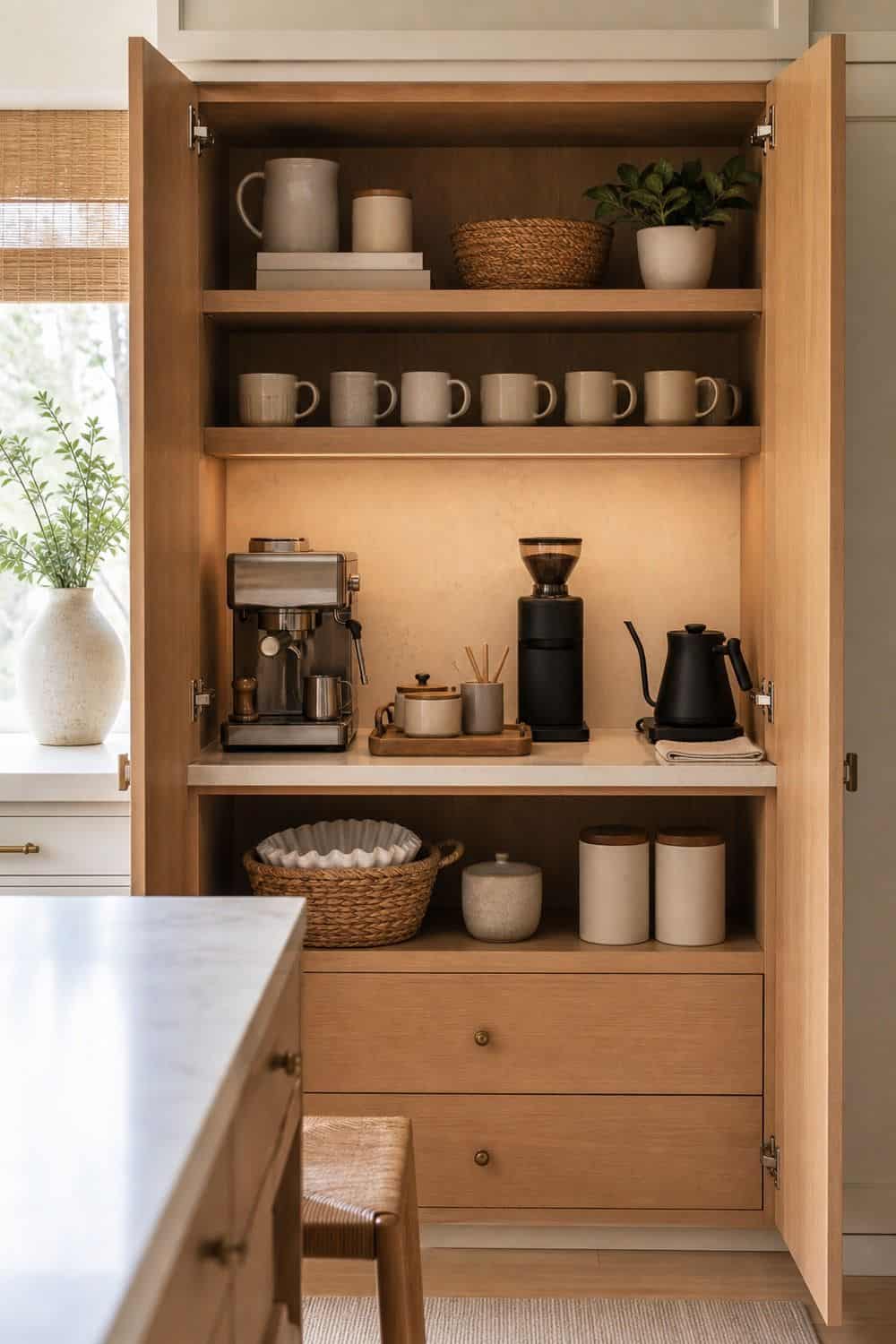
The coffee cabinet feels best when it acts like a tiny morning pantry, with beans, filters, mugs, tea, sweetener, spoons, and backup pods gathered together.
If the machine lives nearby, leave enough open shelf space for filling, measuring, and wiping grounds before the door closes again without awkward balancing inside the cabinet.
A mix of closed boxes and open shelves works better than lining up every mug you own. A few favorite cups, a small tray for the grinder or kettle, and one basket for refills make the cabinet feel generous without becoming a display case.
11. Pantry Door Storage for Narrow Items
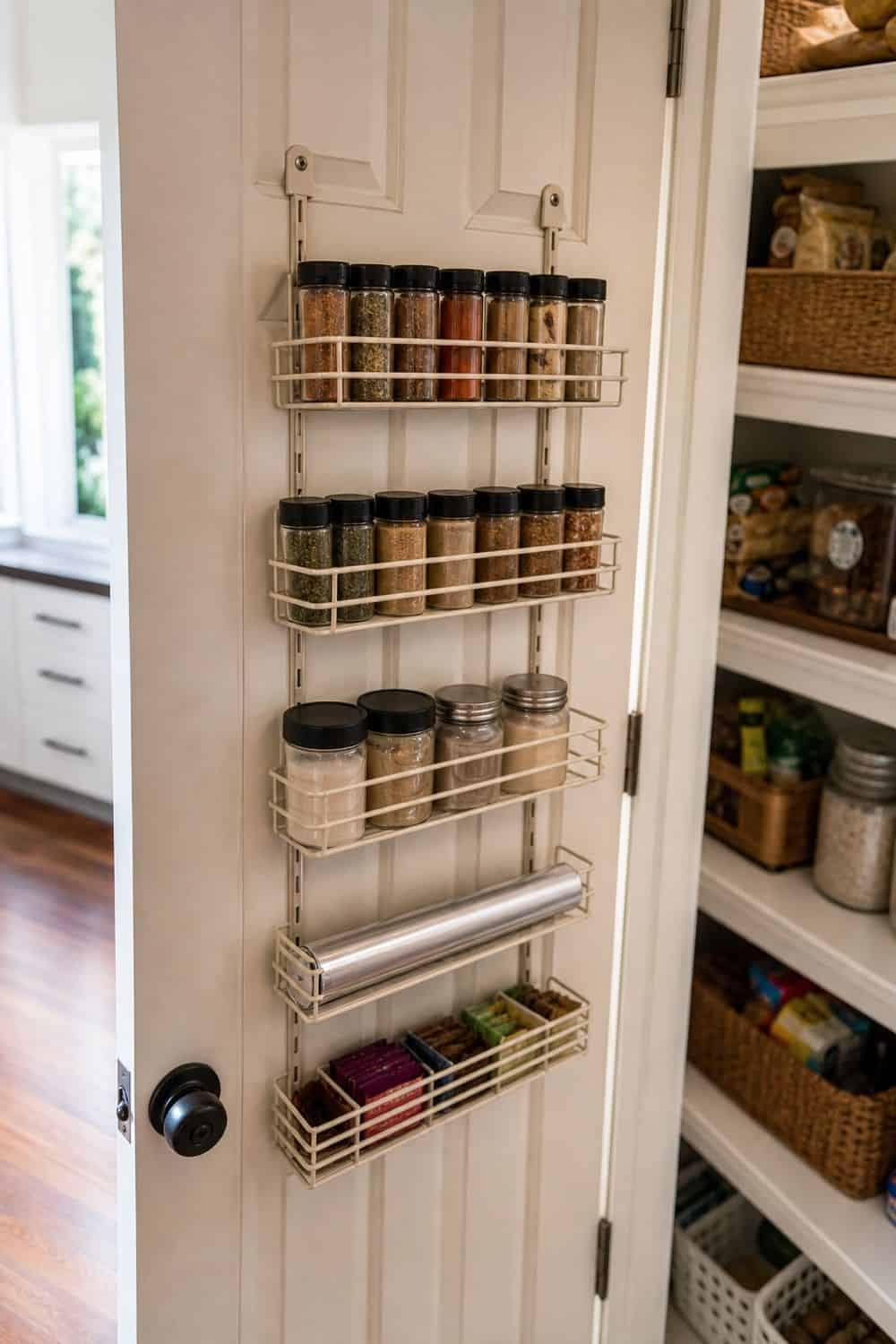
Behind-door pantry racks are best for light, narrow items that disappear on deep shelves: spices, wraps, tea boxes, drink packets, extracts, sprinkles, or small snacks. In a warm neutral kitchen, choose a cream, wood-accent, or matte metal rack so it feels quiet when the door swings open.
Check door clearance before loading it. The rack should not knock into interior shelves, and heavier bottles belong lower or elsewhere so the door still closes smoothly without turning every snack run into a balancing act.
12. Toe-Kick Drawers for Flat Items
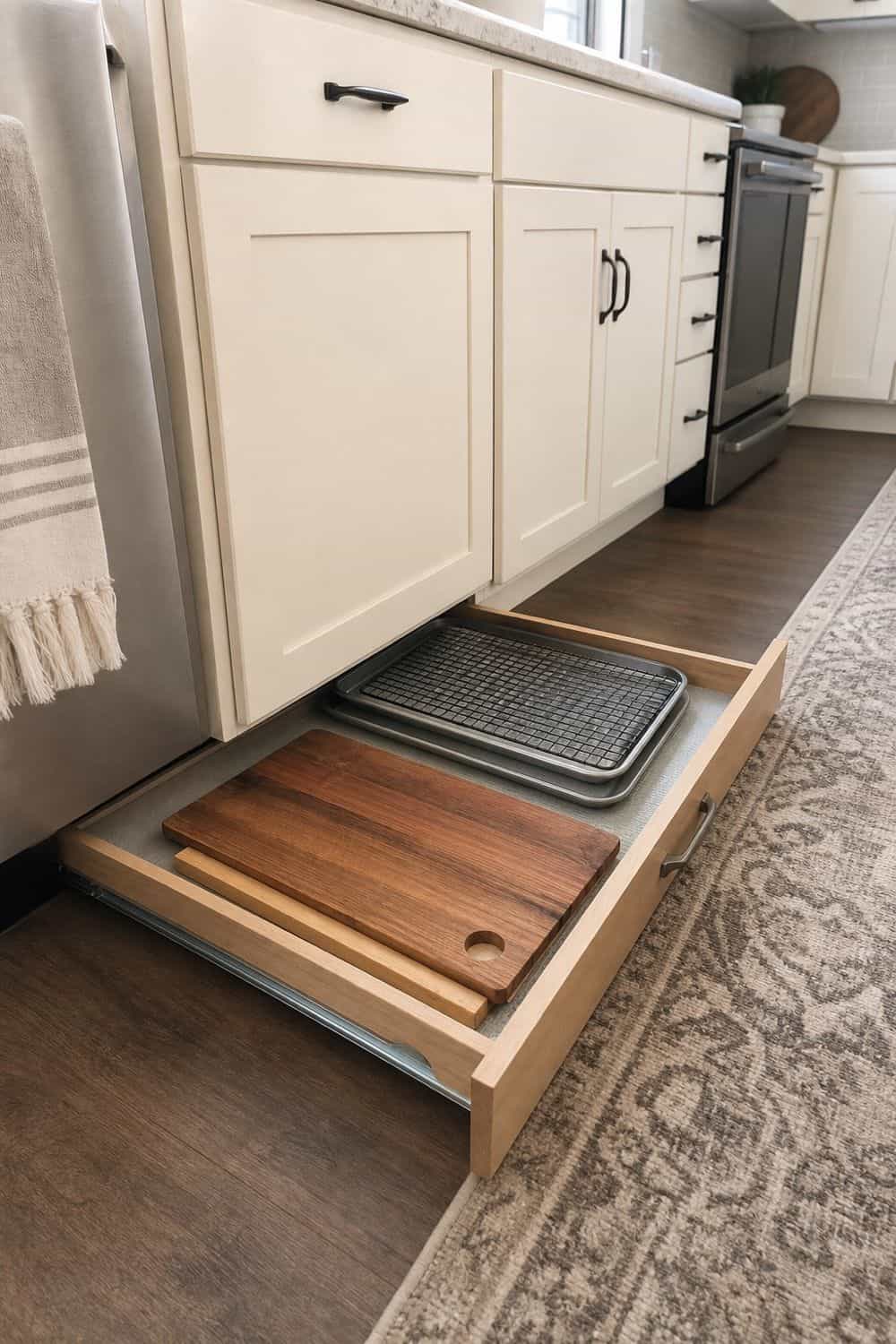
Toe-kick drawers are clever for flat things you do not need every hour: sheet pans, cooling racks, placemats, cutting boards, extra trivets, or holiday linens. They add storage without adding another visible cabinet, which suits a warm neutral kitchen that wants calmer surfaces.
Use them for pieces that can handle a lower, dustier spot, and avoid anything you reach for with wet hands while cooking. A slim pull, soft-close hardware, and a wipeable liner make the drawer feel built-in rather than improvised.
13. Charging Cords Inside the Island

An island charging drawer keeps cords from spreading across the counter, especially if the kitchen is where phones, tablets, school devices, and recipe screens all end up. Add a shallow insert for cords, charging blocks, earbuds, and a screen cloth.
Keep this drawer away from flour, oil, and sink splashes if you can. The best version feels like a quiet command point: devices charge, cords stay untangled, and the island remains available for chopping, serving, or sitting with coffee after dinner.
14. Warm Neutral Baking Zone
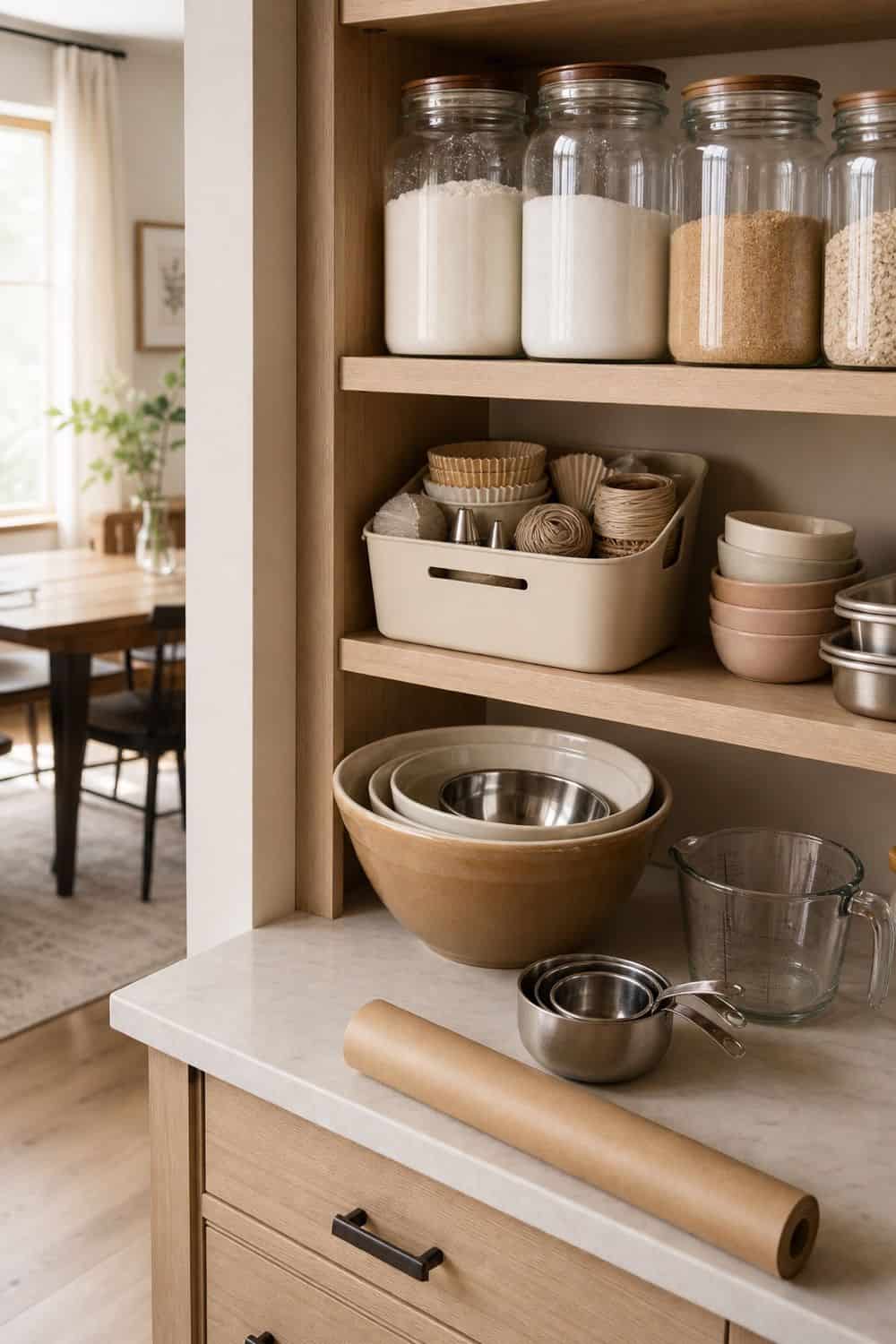
The baking zone should keep the heavy, dusty, and frequently paired items together: flour, sugar, baking powder, vanilla, cocoa, chocolate chips, measuring cups, parchment, and mixing bowls.
Wood dividers, cream bins, or glass jars belong here only when they make the work faster, not just softer to look at on the shelf.
I would store the prettiest ingredients at eye level and the messier refill bags in a lower bin. Baking already creates enough cleanup, so the zone should help you start quickly and put everything back before the counter turns into a flour cloud.
15. Stoneware Canisters for Daily Items

Stoneware canisters are best for daily items that deserve a little counter space, not for every pantry staple you own. Use them for coffee, tea bags, sugar, dog treats, or granola if those things are reached for constantly and the lids seal well. Vary the height slightly so the group feels collected, then keep the color family tight: cream, oat, taupe, clay, or soft gray. If a canister needs a scoop, give the scoop a home too, or the counter will collect crumbs around the prettiest piece.
16. Linens in a Neutral Basket

Linens are easier to grab when towels, napkins, aprons, or tablecloths are folded by type instead of stuffed by size. Put the pieces used every week on top and keep seasonal linens somewhere higher or farther away. Texture is doing a lot of design work here, so choose a basket that will not snag fabric. A low rectangular shape is easier to search than a deep round one, especially when you are setting the table in a hurry for guests.
17. Transparent Bins Where Visibility Helps

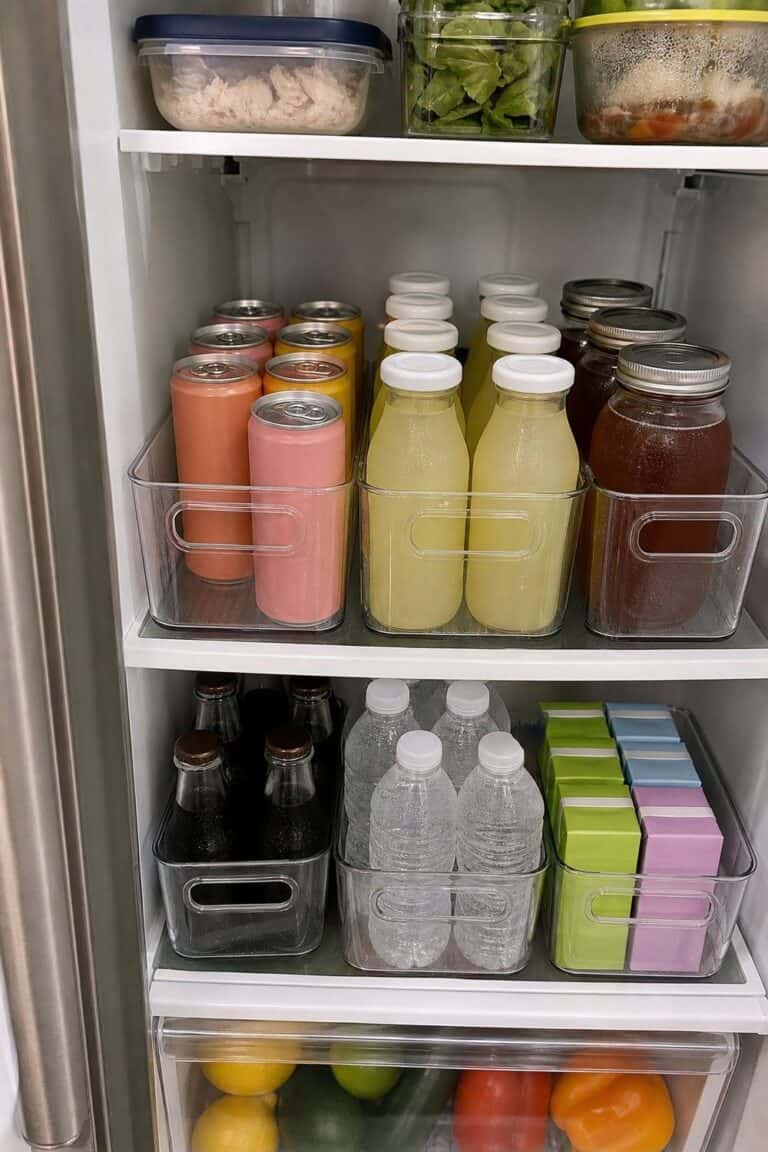
Clear bins are useful in a warm neutral kitchen when visibility solves the problem: produce, yogurt, leftovers, lunch items, open snacks, or small pantry packets. They are less useful when the contents are naturally chaotic and would make the shelf look busier.
Use clear storage in the fridge and high-turnover pantry zones, then switch to bamboo, woven, or cream bins for categories with mixed packaging. That little contrast keeps the kitchen calm without pretending every grocery label can disappear completely.
18. Neutral Spice Jar System

Spice jars are worth standardizing only if they make cooking faster, not just prettier, because the drawer should guide your hand while dinner is moving.
Choose jars that fit the drawer or shelf, label the tops if they lie flat, and keep the spices you use most in the easiest row. Overflow packets belong somewhere else so the visible spice area does not become a second storage problem.
Decant slowly, starting with the spices that are fresh enough to keep. I would write the refill date somewhere discreet, because a beautiful jar of flavorless paprika is still just cabinet clutter wearing a nice outfit at dinner time.
19. Pull-Out Basket for Root Vegetables

Root vegetables need airflow, darkness, and a home that comes forward easily. A pull-out basket works for onions, potatoes, garlic, squash, or similar produce, and the woven or wood look suits a warm neutral kitchen. Keep onions and potatoes separated if possible, and avoid a basket so deep that older produce hides underneath. A washable liner or loose paper bag helps catch dirt without making the basket feel fussy between grocery trips, especially if the basket sits close to the main prep area.
20. Neutral Snack Drawer

The snack drawer earns its space when it stops boxes from multiplying across the pantry. Use shallow bins for bars, crackers, fruit pouches, popcorn, nuts, or lunch snacks, and keep one front row for opened items. The drawer should be easy for the people who use it most. If kids pack lunches, keep labels simple and portions visible; if it is mainly for adults, group salty, sweet, and protein snacks so the drawer does not become a sugar cave after every grocery run.
21. Under-Sink Pullout in Warm Finishes

An under-sink pullout in a warm finish can make cleaning supplies feel less chaotic, but the measurements have to come first. Pipes, disposal parts, water lines, and cabinet hinges decide what fits, not the product photo.
Use the pullout for daily dish soap, dishwasher tabs, sponges, cloths, and one or two cleaners. Keep bulky refills somewhere else so the drawer glides easily and the sink cabinet does not become the secret messy corner of a calm kitchen later on after cleanup.
22. Rolling Cart With a Real Job

Rolling carts belong in a warm neutral kitchen only when they have a real zone to support. One can hold baking tools, coffee overflow, lunch packing supplies, cookbooks, produce, or serving pieces, but it should not become a wandering shelf for leftovers.
Choose wood, cream, or matte metal if the cart stays visible, and leave the top surface partly open. The cart feels more like furniture when it has breathing room and less like a utility shelf that never found a wall.
23. Display Only the Pretty Everyday Pieces
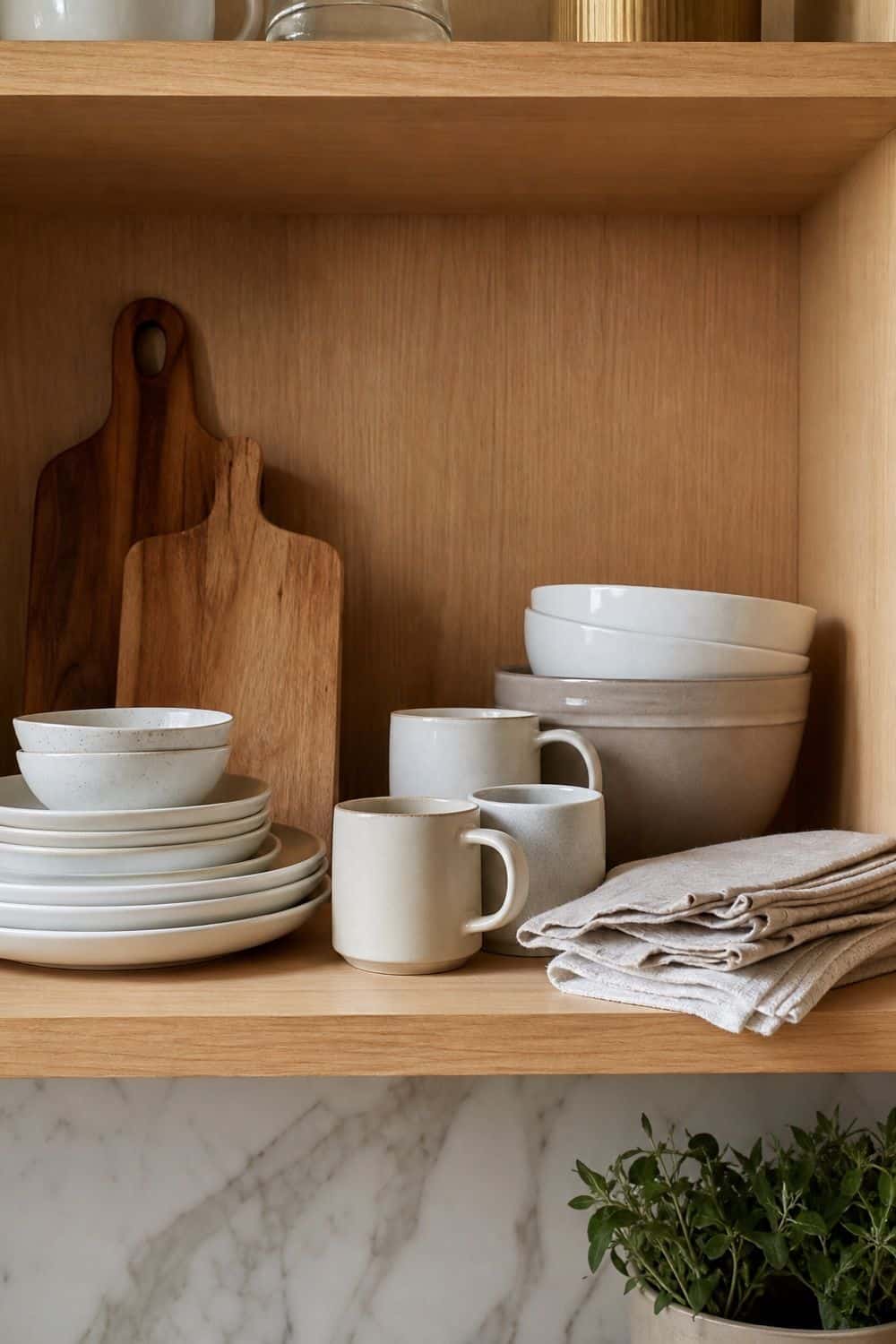
Open display feels strongest when it shows the everyday pieces that already earn their place: white plates, wood boards, mugs, mixing bowls, linen napkins, or a favorite pitcher. A warm neutral kitchen does not need a shelf full of objects that never move. Keep the display one layer deep so it is easy to dust and easy to use. If you have to move three things to grab a bowl, the shelf is decorating the kitchen more than helping it.
24. Bulk Backstock Away From Prime Shelves

Bulk items should not live on the shelves your hands visit every day. Store extra flour, paper towels, backup pasta, unopened oils, and spare snacks on higher shelves, in a lower cabinet, or in a labeled backstock bin.
That leaves prime shelves for the food, dishes, and tools that keep the kitchen moving. Warm neutral organization looks calmer when the visible storage is not packed to the edge with warehouse-size packaging, duplicate groceries, or bulky backup bags waiting around all week.
25. Storage Materials as a Palette

Think of the visible organizers as a palette before buying more pieces. If the room already has wood shelves, brass hardware, stone counters, and cream cabinets, you may only need one or two storage finishes to pull everything together.
Test a basket, jar, label, tray, and drawer divider in the actual kitchen light before buying a full set for every visible shelf and drawer.
The goal is quiet consistency, not a showroom match; a little variation keeps the room human and easier to live with every day after groceries arrive.
Warm Neutral Storage Notes
Warm neutral organization feels more finished when the materials are chosen with the same care as the layout. Mix no more than a few visible finishes at once, such as woven texture, pale wood, cream ceramic, clear glass, and brushed metal, then use the strongest storage pieces in the spots that carry daily work.
Frequently Asked Questions
How do you organize a warm neutral kitchen?
Organize a warm neutral kitchen by pairing real storage zones with repeated natural materials. Use woven baskets for packaged goods, bamboo boxes for busy categories, glass jars for staples, wood dividers for drawers, simple labels for clarity, and closed storage for appliances, cords, bulk overflow, and mismatched packaging.
What storage containers look best in a neutral kitchen?
Glass jars, bamboo boxes, woven baskets, stoneware canisters, warm wood drawer organizers, and selective clear bins usually look best. The key is not using every material at once. Pick a few that match your cabinets, counters, and shelves, then repeat them consistently.
How do I make pantry organization look warm and cohesive?
Repeat basket sizes, keep labels consistent, decant only the staples you use often, and hide busy packaging in bamboo boxes or woven bins. Keep categories broad enough to maintain, such as breakfast, baking, snacks, and backstock, instead of labeling every small item separately.
Are clear bins good for warm neutral kitchen organization?
Clear bins are good when visibility matters, especially for snacks, breakfast packets, lunch supplies, and small backstock items. Use them selectively with wood, bamboo, glass, or woven storage so the pantry does not feel overly plastic or visually busy.
What should I hide in a warm neutral kitchen?
Hide appliances, cords, extra chargers, bulk overflow, messy packaging, cleaning supplies, rarely used gadgets, and mismatched storage. Keep everyday pieces visible only when they are attractive, easy to reach, and useful enough to justify the space.
How do I organize a coffee station in a neutral kitchen?
Group mugs, coffee, tea, filters, pods, syrups, spoons, napkins, and sweeteners in one cabinet, drawer, or contained tray. Use glass jars for attractive staples, bamboo or woven storage for packets, and a nearby drawer for tools so the counter stays clear.
How do I avoid buying the wrong kitchen organizers?
Declutter first, measure shelves and drawers, then choose organizers by category and frequency of use. Avoid random basket sets, fixed inserts that do not fit, and containers bought before you know how much space the category actually needs.
How can I make kitchen organization look expensive?
Use hidden storage for visual clutter, repeat containers, choose natural materials, keep labels discreet, sort open shelves, and give cords and appliances a closed home. Expensive-looking organization usually comes from restraint, fit, and consistency more than from buying every matching product.
Final Thoughts
Warm neutral kitchen organization is strongest when the storage feels connected to the room and useful during a real day of cooking. Let woven baskets soften packaged goods, bamboo hide visual noise, glass show staples, wood organize drawers, and closed cabinets handle the less attractive parts of the routine.
Start with the area that bothers you most, whether that is the pantry, counter, coffee zone, under-sink cabinet, or open shelves. When every visible organizer has a reason and a repeated material, the kitchen feels calmer without losing the storage you actually need.