
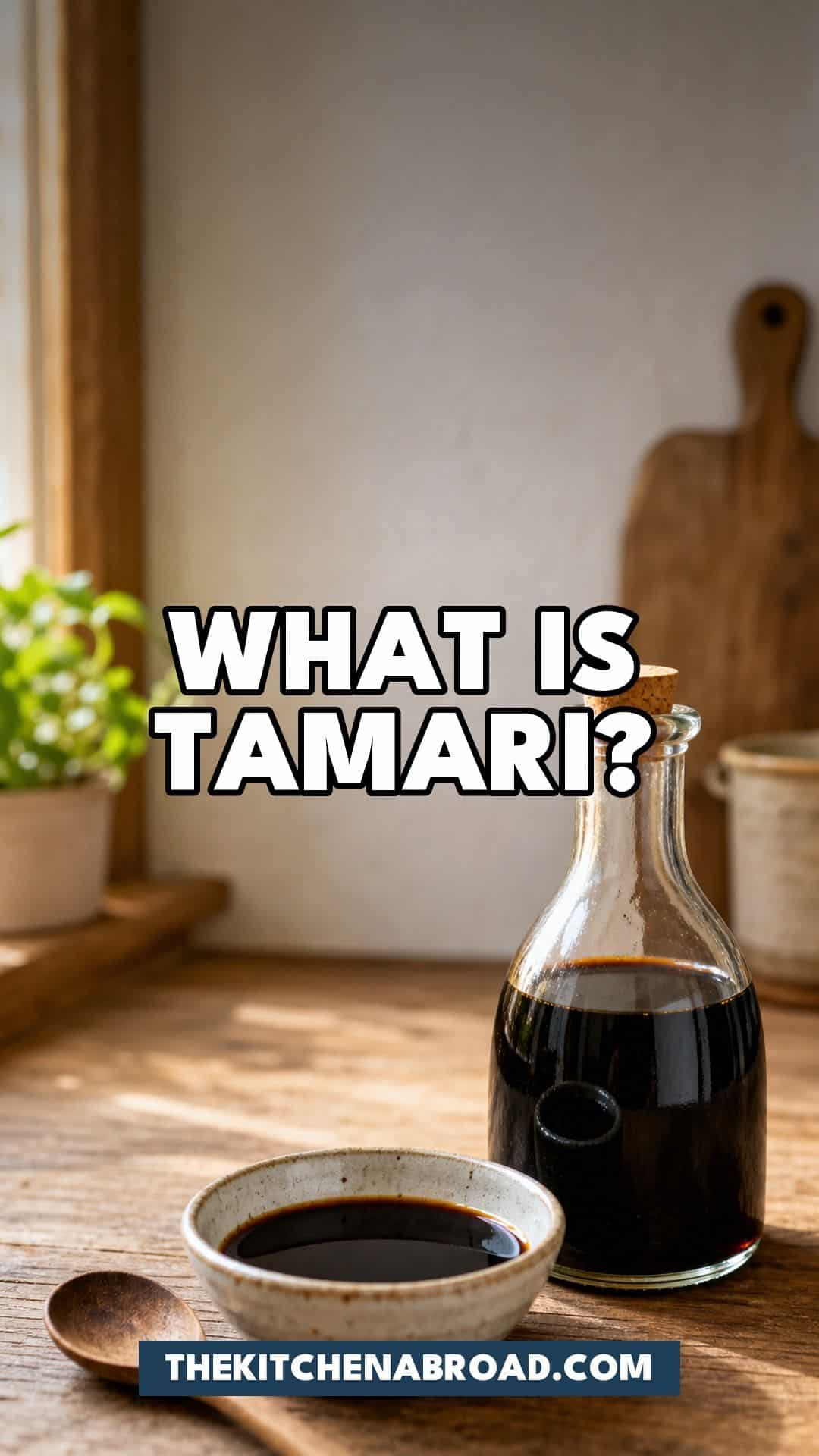
Tamari is a Japanese-style soy sauce that is often richer, darker, and less wheat-forward than regular soy sauce. Many tamari brands are gluten-free, but not all, so check the label.
Tamari is the soy sauce I reach for when I want deeper savoriness without as much sharpness. It tastes rounded and a little plush, which makes it lovely in dipping sauces, marinades, noodles, and quick glazes.
Recommended products


Recommended reads:
- What Is Shoyu?
- What Is Coconut Aminos?
- What Is Light Soy Sauce?
- What Is Dark Soy Sauce?
- Easy Sweet Soy Glaze
What is tamari?
Tamari is traditionally connected to miso production and is usually made with little or no wheat. Modern bottles vary, but the flavor is generally darker and smoother than many all-purpose soy sauces.
Culinary uses of tamari
Use tamari in dipping sauces, stir-fries, ramen eggs, marinades, salad dressings, sushi bowls, roasted vegetables, tofu, and meat glazes.
Tamari alternatives and substitutes
- Soy sauce: easy and salty, but often sharper and wheat-based
- Shoyu: Japanese soy sauce with a balanced everyday flavor
- Coconut aminos: sweeter and less salty, useful for soy-free cooking
- Liquid aminos: salty and savory, though not as rounded
- Miso plus water: fermented depth for sauces when liquid soy is missing
How to store tamari
Store tamari tightly capped in a cool pantry before opening. After opening, refrigeration helps preserve the clean aroma, especially for gluten-free or naturally brewed bottles.
Where to buy tamari
Look for tamari near soy sauce, Japanese ingredients, or gluten-free sauces. If gluten matters, choose a bottle clearly labeled gluten-free.
Common mistakes using this product
Do not assume every tamari is gluten-free. Also, do not pour it heavily just because it tastes smoother; it is still salty.
Famous dishes this is used
Sushi dipping sauce, tamari-glazed salmon, ramen eggs, stir-fried vegetables, tofu bowls, teriyaki-style sauces, and sesame noodles.
Tips on how to use tamari
Use it when soy sauce tastes too sharp. Tamari gives salt and umami with a rounder finish, so it works beautifully in simple dips.
Recipes that use or pair well with tamari
These recipes are helpful next stops because they use this ingredient, use a related ingredient, or give you a real dish to try the flavor with:
- Easy Sweet Soy Glaze
- Sweet Soy Sauce Recipe
- Easy Chicken Pad Thai
- Quick and Easy Chicken Stir-Fry
- Thai Chicken Cashew Nuts
FAQ
Is tamari gluten-free?
Not automatically. Some bottles are wheat-free and some are not, so the label matters more than the name.
Can I use tamari instead of soy sauce?
Usually yes, but taste first. Salt level, sweetness, color, and thickness can all change the dish.
Does tamari need refrigeration?
Many bottles are shelf-stable, but refrigeration after opening keeps flavor cleaner if you use it slowly.
Why does tamari taste so salty?
It is a concentrated seasoning. Use it like liquid salt with flavor, then balance with acid, sweetness, broth, or water.
What is the closest substitute for tamari?
Tamari, shoyu, soy sauce, coconut aminos, or a soy-sugar blend are the best options depending on the recipe.
Conclusion
Tamari is a useful bottle when you want soy-sauce depth with a smoother edge. Check the gluten label, use it with restraint, and let it do the quiet savory work.
Last update on 2026-08-09 / Affiliate links / Images from Amazon Product Advertising API