
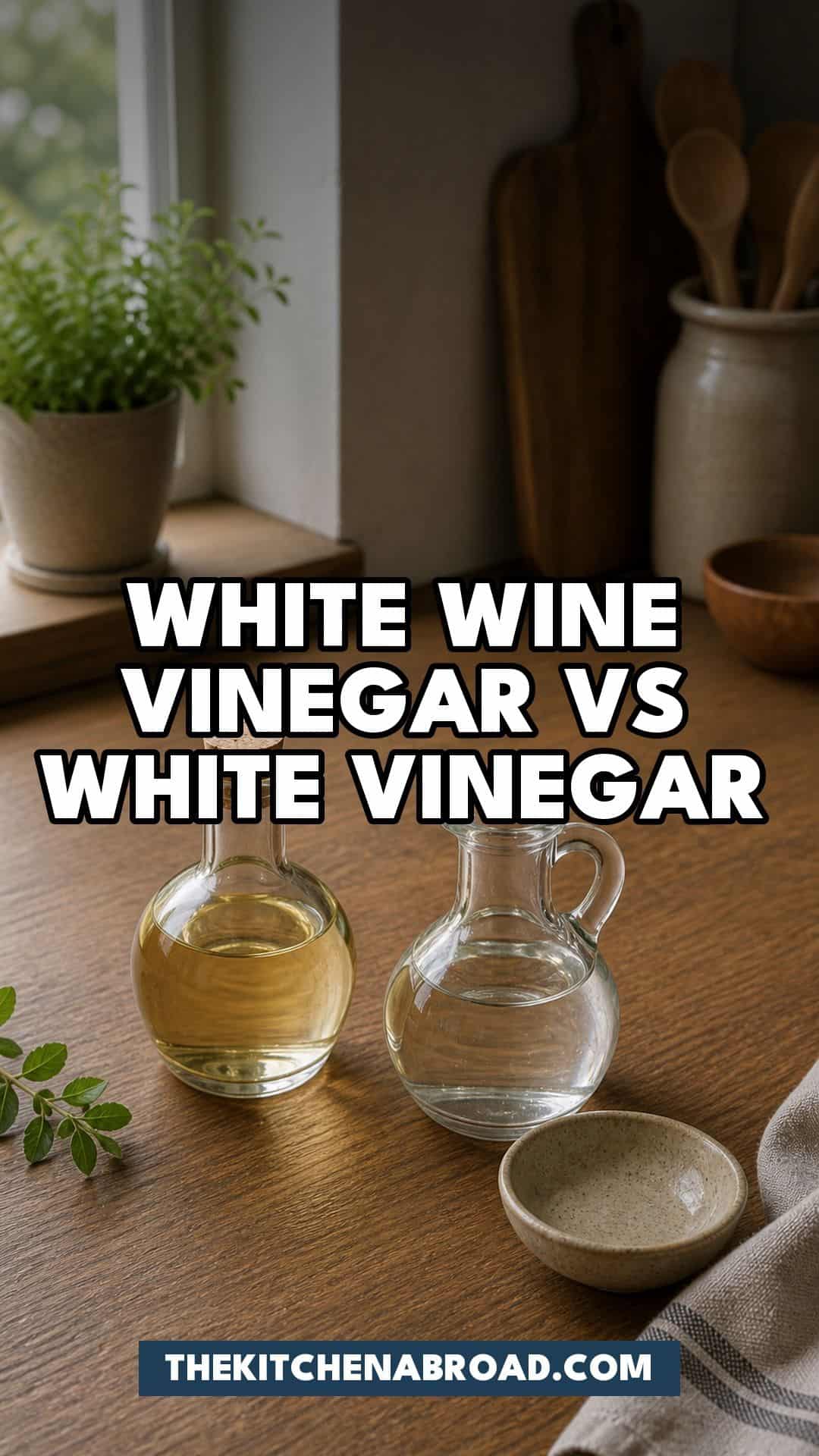
White wine vinegar is made from white wine and tastes soft and lightly fruity, so it belongs in dressings and sauces. White vinegar, also called distilled vinegar, comes from grain alcohol and tastes sharp and neutral, which makes it better for pickles and slaws. Swap them in cooked food, but use less white vinegar.
Both bottles are pale, both say vinegar and both sit on the same shelf, and that’s where the similarity ends. One will make a vinaigrette taste like a French bistro, and the other will make it taste like you’ve just cleaned the windows.
So this white wine vinegar vs white vinegar guide is really about where each bottle belongs and what happens when you use the wrong one. You’ll get how they’re made, what each does best, how to swap them when you’ve only got one, and the one situation where you shouldn’t swap at all.
Recommended reads:
What is the difference between white wine vinegar and white vinegar?
The starting ingredient makes all the difference. White wine vinegar is white wine that has been fermented a second time into acetic acid, so a bit of the wine’s fruit and roundness survives in the bottle. White vinegar starts from distilled grain alcohol, which has almost no flavor of its own, and that’s why what you get tastes of pure sharp acid and nothing else.
In the mouth, that means one tastes gentle and a little floral, with acidity usually in the 5 to 7 percent range, and the other hits you straight in the back of the throat, usually at around 5 percent for the bottles sold for food. The percentages are similar, which surprises people, but the flavor around the acid is what your tongue actually notices.
Raw food shows the difference most. A dressing has nowhere to hide its vinegar, while a big batch of pickle brine full of dill, garlic and sugar doesn’t care nearly as much.
Culinary uses of white wine vinegar and white vinegar
Use white wine vinegar when the vinegar will be tasted: vinaigrettes, pan sauces, homemade mayonnaise, marinades for fish and chicken, and anything delicate like a salad of soft greens.
White vinegar is for the jobs where you want acid and only acid:
- Quick pickled onions, cucumbers and other vegetables
- Coleslaw dressings with plenty of sugar and mustard
- A tablespoon in the poaching water to help eggs hold together
- Buttermilk stand-ins, with a tablespoon stirred into a cup of milk
White wine vinegar and white vinegar alternatives and substitutes
Out of one and don’t want to run to the store? These work best for white wine vinegar, roughly 1:1 in a dressing unless noted:
- Champagne vinegar is the closest thing there is, a little lighter and more delicate.
- Rice vinegar is milder and slightly sweet, so check you’ve got the unseasoned kind.
- Sherry vinegar is nuttier and rounder, and it makes a really good vinaigrette.
- Apple cider vinegar is fruitier and stronger, so start with three quarters of the amount.
- Lemon juice is fresh and bright for dressings and finishing, but keep it far away from anything you’re canning.
How to store white wine vinegar and white vinegar
A cool cupboard with the cap on tight is all either bottle needs, and neither needs the fridge. Vinegar is acidic enough to look after itself for a very long time, though white wine vinegar slowly loses some of its aroma once it’s been opened, so a bottle you’ve had for years will taste flatter than a new one.
If a cloudy blob appears in the bottle, that’s a vinegar mother, and it’s harmless. Strain it out if it bothers you, and only worry if the bottle smells off.
Where to buy white wine vinegar and white vinegar
Both are in the regular supermarket oil and vinegar aisle, and white vinegar is usually one of the cheapest things in the store. Check that the label says it’s for food, because cleaning vinegar lives nearby in very similar packaging and it’s not meant to be eaten. For white wine vinegar, the mid-priced bottle is fine for everyday dressings, and I wouldn’t spend big money on a bottle unless you’re making something where it’s the star.
Common mistakes using this product
Swapping white vinegar straight into a vinaigrette at the same amount is the most common mistake, because it comes out harsh and thin. Use about half to two thirds as much, add a teaspoon of water and a little honey or mustard to soften the edges, and taste it.
Grabbing cleaning vinegar is the more serious one. Its acidity can be higher than food vinegar and it isn’t made or labeled for eating, so it stays with the mops and away from your salad.
And home canning is where you should stop freestyling altogether. A tested recipe depends on a specific acidity to keep food safe, so use the vinegar it calls for, labeled with at least 5 percent acidity, and don’t dilute it.
Famous dishes this is used in
White wine vinegar is the backbone of a classic beurre blanc and of béarnaise and hollandaise reductions, along with French vinaigrettes and pickled shallots for oysters. White vinegar goes into American-style dill pickles, many hot sauces and classic coleslaw, where its plainness lets the other ingredients do the talking.
Tips on how to use white wine vinegar and white vinegar
Season a dressing the way you’d season a sauce, in small steps and tasting as you go. Start with one part vinegar to three parts oil, add salt and a bit of Dijon, and adjust from there. Acid is also what fixes food that tastes flat, so if a soup or a stew seems dull and you’ve already salted it, stir in half a teaspoon of white wine vinegar before reaching for more salt.
Quick pickles go the other way. Use white vinegar for a clean, loud brine, heat it with equal parts water plus some sugar and salt until dissolved, and pour it over sliced vegetables for a jar that’s ready in about an hour.
Keep the two bottles in different spots if you mix them up often (or write on the caps with a marker, it works).
TKA recipes that use or pair well with white wine vinegar and white vinegar
These are useful next stops because they either use one of these vinegars directly or teach the same sharp-versus-soft thinking:
For red wine vinegar swaps, see the best red wine vinegar substitutes.
Can You Use White Vinegar Instead of White Wine Vinegar?
Yes, in cooked dishes and marinades, as long as you use about half to two thirds as much and adjust from there. In raw dressings it will taste much sharper, so soften it with a bit of water, honey or mustard. For canning, stick to whatever the tested recipe specifies.
Is White Wine Vinegar Stronger Than White Vinegar?
It tastes weaker even though it can have the same or slightly higher acidity. White wine vinegar is usually 5 to 7 percent acid and grocery store white vinegar about 5 percent, but the fruitiness of the wine softens how it lands on your tongue, so distilled vinegar comes across as much harsher.
White Vinegar vs White Wine Vinegar FAQ
Is white wine vinegar the same as white vinegar?
No, they’re two different products. White wine vinegar is made from wine and tastes softly fruity, while white vinegar is made from grain alcohol and tastes sharp and neutral, so they behave differently in raw food.
Is cleaning vinegar safe for cooking?
No, cleaning vinegar isn’t made or labeled for food and can be more acidic. Use only vinegar sold for food, and check the label if the bottle is on the household shelf.
Which is better for pickling?
White vinegar is the usual choice for pickling because it’s clean, consistent and doesn’t color the vegetables. White wine vinegar works too for a softer brine, as long as it’s labeled at least 5 percent acidity for canning.
Key Takeaways
- White wine vinegar for anything raw and delicate.
- White vinegar for pickles, slaws and clean acidity.
- Use less white vinegar when you swap it in.
- Never cook with cleaning vinegar.
- Follow canning recipes exactly.
If You Only Buy One Bottle, Buy the White Wine Vinegar
Unless you make pickles every other weekend, white wine vinegar is the one that earns its place, since it handles dressings, sauces, marinades and even a decent quick pickle, while white vinegar mostly excels at being cheap and sharp. Taste a tiny bit of each side by side on a spoon tonight, and you’ll never mix them up again.