
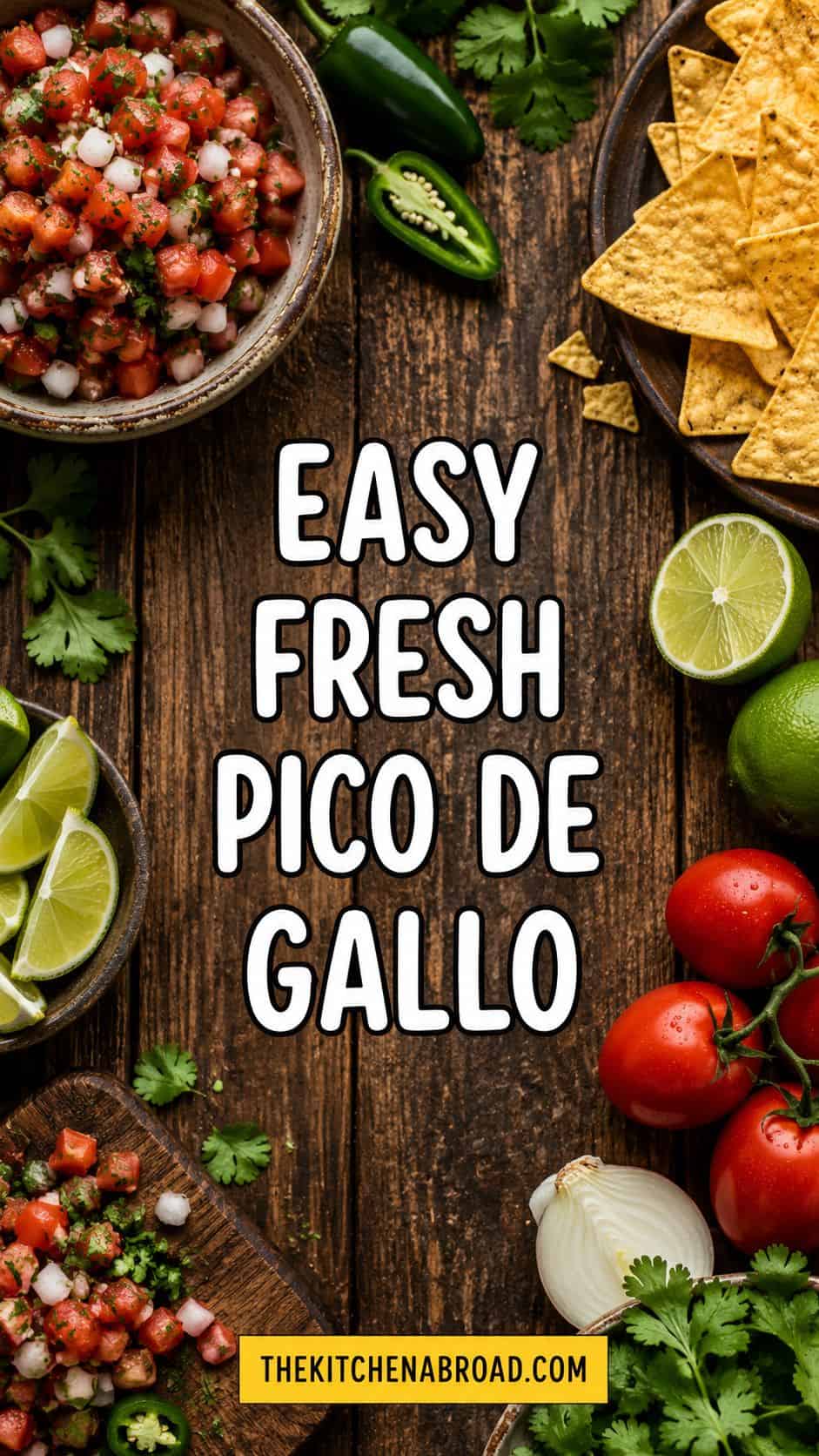
Pico de gallo is seeded ripe tomatoes, white onion, jalapeño, cilantro, and fresh lime juice in a 50/50 tomato-to-onion ratio, salted and rested 20 minutes before serving. The salt-and-drain step keeps the salsa from going watery in the bowl. Total time about 10 minutes plus 20 minutes of rest. Yields about 3 cups.
Pico de gallo is one of those dishes that looks impossible to mess up and gets messed up all the time. The two failure modes are watery salsa pooling at the bottom of the bowl and an aggressive raw-onion bite. Both are easy to fix. Dice the tomatoes, salt them, and let them sit in a colander for twenty minutes so the excess liquid drains off. Use white onion (the Mexican standard), not red.
On the Counter
A sharp chef’s knife is the only piece of equipment that really matters. The Victorinox Fibrox is what restaurant kitchens reach for because it sharpens easily and holds an edge. The rest is supporting cast: a small fine mesh strainer for the salt-and-drain, a microplane in case you want a touch of lime zest stirred in at the end, a Chef’n FreshForce squeezer for clean lime juice without seeds, and a Mason jar with a tight lid for fridge storage.


![SEWANTA Wide Mouth Mason Jars 32 oz [4 Pack] With Mason Jar Lids and Bands,...](https://www.thekitchenabroad.com/wp-content/plugins/aawp/public/image.php?url=YUhSMGNITTZMeTl0TG0xbFpHbGhMV0Z0WVhwdmJpNWpiMjB2YVcxaFoyVnpMMGt2TkRFd04zQk5NbWhaUzB3dVgxTk1NVFl3WHk1cWNHYz18MTc5MTIyMjEyOQ= "Easy Fresh Salsa Recipe (Pico de Gallo)")


Recommended Reads
- Beef Tacos with Homemade Guacamole
- Chicken Enchiladas (Red Sauce, Easy Roll)
- Coconut Rice Recipe (In a Rice Cooker)
- Sambal Oelek Recipe (Indonesian Chili Paste)
- Tahini Sauce Recipe (Lemon-Garlic, 5 Minutes)
A Brief History of Pico de Gallo
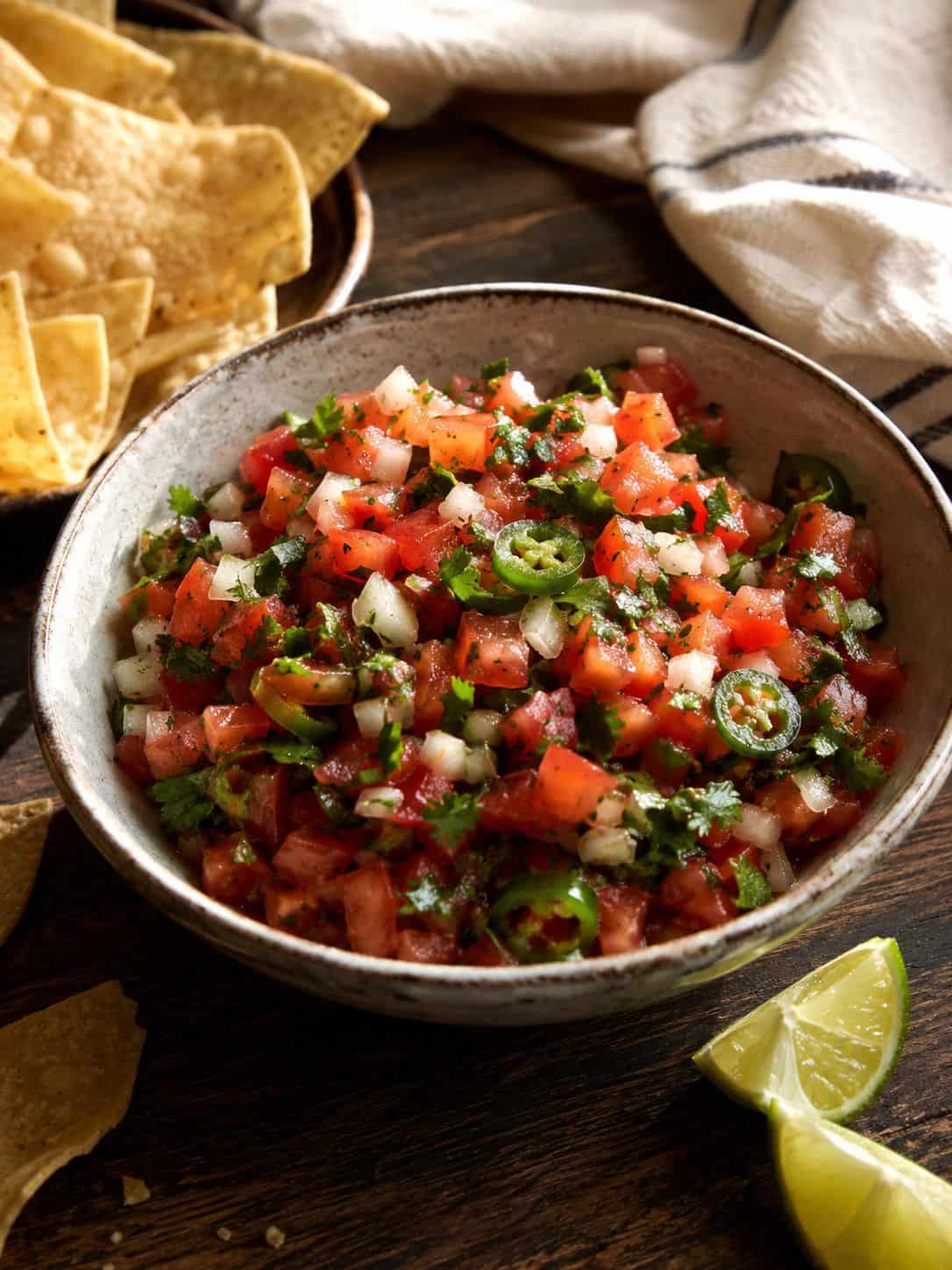
The Spanish name pico de gallo translates to “rooster’s beak.” Most food historians trace it to either the small chopped pieces (the way a rooster pecks at grain) or the way the salsa was once eaten, pinched between thumb and forefinger like a beak. The dish itself traces back to central and northern Mexico, where it has been the standard table salsa for generations, served alongside almost every kind of taco and grilled meat.
The traditional Mexican version sticks closely to five ingredients in a roughly 50/50 ratio of tomato to onion: ripe tomatoes, white onion (not red, which is a Tex-Mex substitution), serrano or jalapeño peppers, fresh cilantro, and lime juice. Salt is the only seasoning. The Tex-Mex version that took hold in the US sometimes adds garlic and uses red onion, both of which drift the flavor in a slightly different direction. The recipe below sticks with the Mexican original.
A Few Notes on the Ingredients
Tomatoes: About 450 g Roma or vine-ripened, ripe enough to taste sweet on their own. Heirlooms in summer if you can get them; never hothouse tomatoes from the supermarket cold case. Seeded and diced gives you 2 cups, which is the foundation of the salsa.
White onion: Half a medium onion, finely diced. White is the Mexican standard because the flavor reads sharper and cleaner; red drags the salsa toward potato-salad territory. The half-onion is the right amount for a 50/50 ratio with the tomato.
Jalapeño: 1 medium pepper, minced fine. Seeds and ribs removed for moderate burn, left in for spicy. Serrano is the hotter cousin and a fine swap. Bell pepper holds up texturally if you’re cooking for someone heat-averse.
Fresh cilantro: About 1/3 cup chopped, stems and leaves both. The stems carry as much flavor as the leaves and add a small crunch. If cilantro tastes like soap to you, parsley substitutes without anyone really noticing.
Fresh lime juice (not bottled): 2 Tbsp, from 2 medium limes. Bottled lime juice has a flat, slightly bitter character that ruins this salsa. This is the one swap that’s non-negotiable.
Fine sea salt: Does double duty. 1/2 tsp for the tomato salt-rest pulls water out of the tomatoes; another pinch at the end seasons the finished salsa. Without the rest step you get watery pico.
Garlic (optional): 1 clove finely minced or grated. Traditional Mexican pico de gallo doesn’t usually include it; the Tex-Mex version often does. Add or skip based on preference.
Recipe: Easy Fresh Salsa (Pico de Gallo)
Prep Time: 10 minutes | Rest Time: 20 minutes | Total Time: 30 minutes | Yield: About 3 cups (serves 6 to 8 as an appetizer)
Ingredients
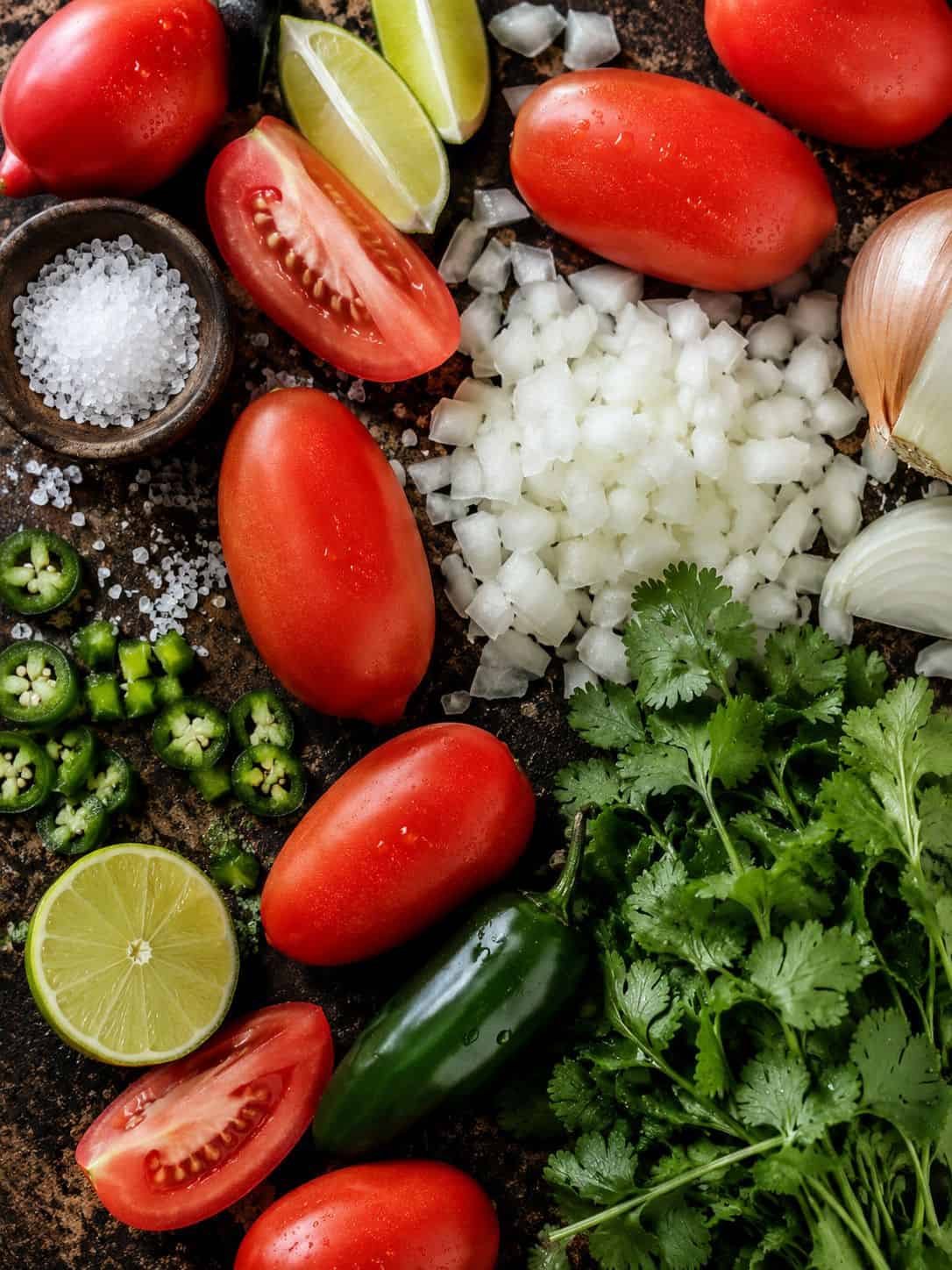
- 450 g (1 lb / about 4 medium) ripe tomatoes, seeded and diced
- ½ tsp fine sea salt (for the salt-rest), plus more to taste
- ½ medium white onion (about 100 g), finely diced
- 1 medium jalapeño, finely minced (seeds removed for moderate heat)
- ⅓ cup chopped fresh cilantro (about 15 g), stems and leaves
- 2 tbsp (30 ml) fresh lime juice, from about 2 medium limes
- Optional: 1 garlic clove, finely minced or grated
Method
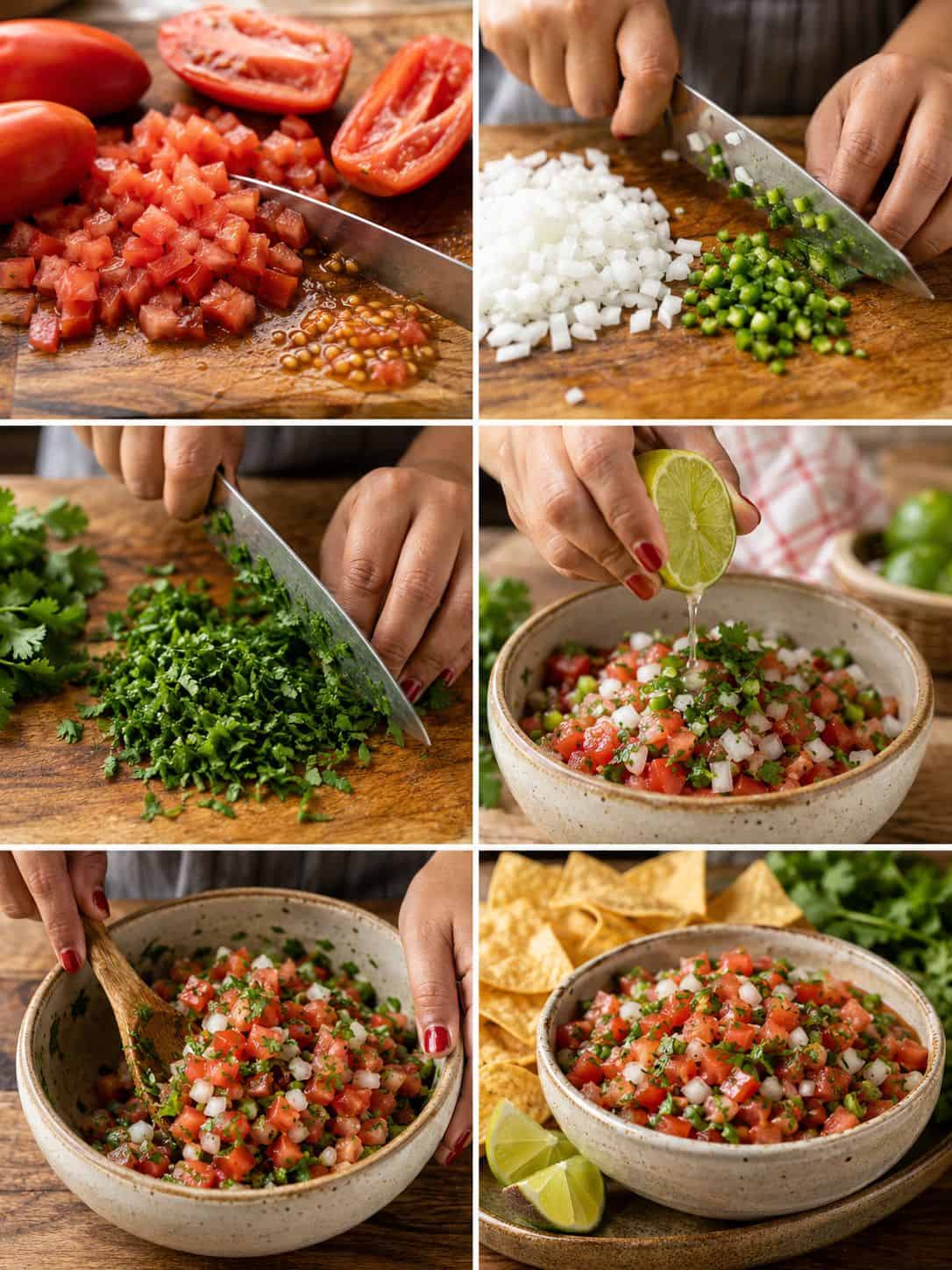
Halve the tomatoes lengthwise. Scoop out the seeds and watery cores with a teaspoon. Dice the seeded flesh into 5 mm pieces. Transfer to a fine mesh strainer set over a bowl, toss with the ½ teaspoon of salt, and let drain at room temperature for 20 minutes.
While the tomatoes drain, finely dice the white onion and jalapeño, chop the cilantro, and juice the limes.
After 20 minutes, transfer the drained tomatoes to a mixing bowl. Add the onion, jalapeño, cilantro, lime juice, and optional garlic. Toss to combine. Taste, adjust with more salt or lime as needed.
Let the salsa sit at room temperature for 5 minutes before serving. Serve with tortilla chips, on tacos, over grilled fish, or alongside scrambled eggs.
Notes
The salt-and-drain is the technique. Without it, the tomatoes release water into the bowl over the next hour and the salsa goes soupy. Twenty minutes draining over a bowl is the fix. The water in the bowl can be drunk on its own (it tastes like a light tomato consommé) or used as part of a Bloody Mary.
White onion, not red. White is the traditional Mexican choice. Red onion is for guacamole, not pico de gallo. The flavor profiles are different and the dish tastes off when you substitute.
Storage. Pico de gallo keeps in an airtight container in the fridge for 3 days. The texture is best on day one. By day three it gets softer but still tastes great. Drain off any liquid that has pooled in the container before serving leftovers.
Tips and Variations
How to Dial the Heat Up or Down
For mild pico, remove both the seeds and the white membrane (the ribs) from the jalapeño before mincing. The capsaicin lives mostly in the ribs, so removing them cuts the heat significantly. For spicy, leave the seeds and ribs in. For very spicy, substitute serrano peppers or add half a habanero finely minced. Bell pepper gives the same texture with no heat for cooking with kids.
What Ingredient Swaps Actually Work
Parsley works in place of cilantro if cilantro tastes like soap to you. Yellow onion substitutes for white in a pinch (red is the one to avoid). Bottled lime juice is the one swap that does not work; it tastes flat and slightly bitter and ruins the salsa. Serrano peppers swap straight in for jalapeño if you want more heat.
How Long This Keeps in the Fridge
Pico de gallo keeps in an airtight container in the fridge for 3 days. Day one is the best; by day three the tomatoes are noticeably softer and the lime has started to dominate. Drain off any liquid that has pooled in the container before serving leftovers, and add a fresh squeeze of lime to brighten.
Whether You Can Freeze It (Short Answer: Don’t)
Do not freeze pico de gallo. The texture of the tomatoes turns mealy on thaw and the salsa loses its character entirely. If you have leftover pico past day three, blend it into a quick salsa verde-style cooked sauce or stir it into scrambled eggs. Both routes use up the flavor without the texture problem.
Frequently Asked Questions
What is the difference between pico de gallo and salsa?
Pico de gallo is a fresh chunky salsa made with raw tomatoes, white onion, jalapeño, cilantro, and lime juice. Never cooked. The Spanish name translates to “rooster’s beak,” likely a reference to either the small chopped pieces or the way it was once eaten by hand. Other salsas (salsa roja, salsa verde, restaurant-style salsa) are typically cooked or blended into a sauce-like consistency. Pico de gallo is the only common “salsa” served in chunky, raw form.
Why use white onion instead of red?
White onion is the Mexican standard for pico de gallo because its flavor is sharper, cleaner, and less sweet than red onion. The traditional version always uses white. Red onion’s slightly sulfurous, sweeter profile is right for guacamole and grain salads, but it changes the character of pico de gallo in a way that does not feel quite right.
Should I remove the tomato seeds?
Yes. The seeds and the watery jelly around them are the part of the tomato that makes pico de gallo soupy. Halve the tomatoes lengthwise, scoop out the seed pockets with a teaspoon, and dice only the flesh. The salsa stays bright and chunky instead of pooling water at the bottom of the bowl.
How do I make pico de gallo less spicy or spicier?
For mild: remove both the seeds and the white membrane (the ribs) from the jalapeño before mincing. The capsaicin lives mostly in the ribs, so removing them cuts the heat significantly. For spicy: leave the seeds and ribs in. For very spicy: substitute serrano peppers for jalapeño, or add half a habanero finely minced. Bell pepper gives you the same texture with no heat at all if cooking for kids.
How long does pico de gallo keep in the fridge?
3 days in an airtight container. Day one is the best. By day two the salsa softens slightly but tastes great. By day three the tomatoes are noticeably softer and the lime has started to dominate. Drain off any liquid that has pooled before serving leftovers, and add a fresh squeeze of lime to brighten the flavor.
What can I serve pico de gallo with?
Warm tortilla chips for dipping. On top of tacos, fajitas, quesadillas, or burritos. Spooned over grilled fish, shrimp, or chicken. Mixed into scrambled eggs with a sprinkle of cotija cheese. As a side to carnitas or carne asada. Stirred into rice for a quick Mexican-style rice. Mixed with diced avocado for a quick chunky guacamole. The salsa is one of those condiments that goes with almost anything savory.
Key Takeaways
- Seed the tomatoes. Scoop out the watery seed pockets and dice only the flesh. The seeds are what make pico de gallo soupy.
- Salt the diced tomatoes and let them drain in a fine mesh strainer for 20 minutes before mixing with anything else. This is the single biggest texture improvement.
- Use white onion, not red. White is the Mexican standard for pico de gallo. Red is for guacamole.
- Use fresh lime juice from real limes. Bottled lime juice tastes flat and bitter and ruins the salsa.
- Adjust heat by removing the jalapeño’s seeds and ribs for mild, leaving them in for spicy, or swapping to serrano for hotter.
Final Thoughts
Pico de gallo is the kind of recipe that lives or dies on the quality of the tomatoes. In peak summer, with ripe Romas or heirlooms, the salsa is a 7-ingredient revelation. In winter with mealy supermarket tomatoes, the same recipe is just fine.
The two moves that elevate it past the average bowl on the chip-and-dip table are the salt-and-drain step and the commitment to fresh lime. The first prevents watery salsa; the second is the brightness the whole dish hangs on.
Make a double batch for taco nights, game days, or any time you want something fresh on the table without much effort. Day-one pico is the best. After day three, blend leftovers into a cooked salsa rather than throwing them out.
Easy Fresh Salsa Recipe (Pico de Gallo)
Pico de gallo is seeded ripe tomatoes, white onion, jalapeño, cilantro, and fresh lime juice in a 50/50 tomato-to-onion ratio, salted and rested 20 minutes before serving. The salt-and-drain step keeps the salsa from going watery in the bowl.
Ingredients
- 450 g (1 lb / about 4 medium) ripe tomatoes, seeded and diced
- ½ tsp fine sea salt (for the salt-rest), plus more to taste
- ½ medium white onion (about 100 g), finely diced
- 1 medium jalapeño, finely minced (seeds removed for moderate heat)
- ⅓ cup chopped fresh cilantro (about 15 g), stems and leaves
- 2 tbsp (30 ml) fresh lime juice, from about 2 medium limes
- Optional: 1 garlic clove, finely minced or grated
Instructions
- Seed the tomatoes. Scoop out the watery seed pockets and dice only the flesh. The seeds are what make pico de gallo soupy.
- Salt the diced tomatoes and let them drain in a fine mesh strainer for 20 minutes before mixing with anything else. This is the single biggest texture improvement.
- Use white onion, not red. White is the Mexican standard for pico de gallo. Red is for guacamole.
- Use fresh lime juice from real limes. Bottled lime juice tastes flat and bitter and ruins the salsa.
- Adjust heat by removing the jalapeño's seeds and ribs for mild, leaving them in for spicy, or swapping to serrano for hotter.
Notes
The salt-and-drain is the technique. Without it, the tomatoes release water into the bowl over the next hour and the salsa goes soupy. Twenty minutes draining over a bowl is the fix. The water in the bowl can be drunk on its own (it tastes like a light tomato consommé) or used as part of a Bloody Mary.
White onion, not red. White is the traditional Mexican choice. Red onion is for guacamole, not pico de gallo. The flavor profiles are different and the dish tastes off when you substitute.
Last update on 2026-10-03 / Affiliate links / Images from Amazon Product Advertising API