
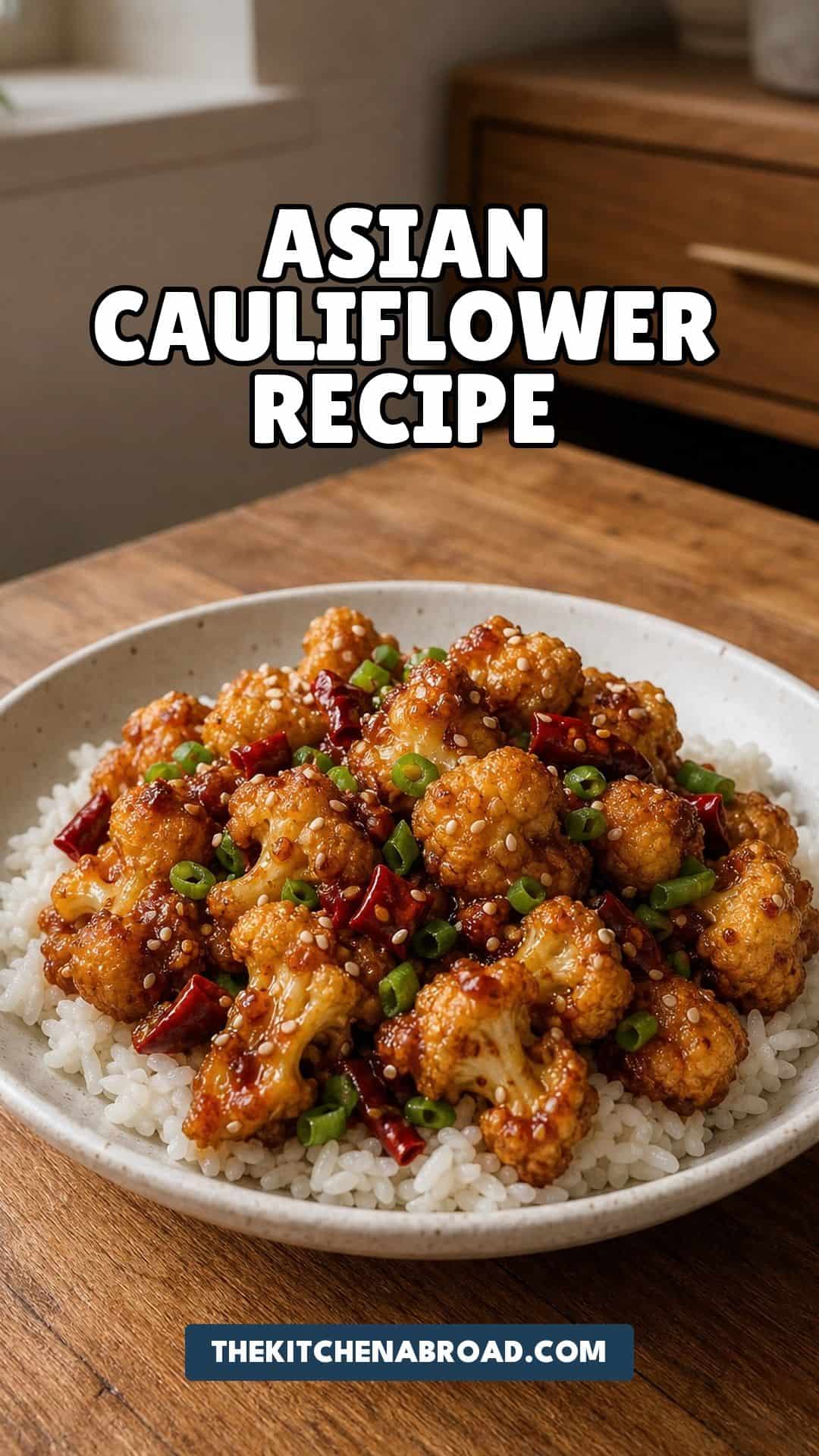
The right Asian cauliflower is double-fried: 325°F (165°C) for 4 minutes to cook through, rest 5 minutes, then 375°F (190°C) for 2 to 3 minutes to deep-gold the crust. Coat the florets in a cornstarch slurry (cornstarch plus a splash of water) so the crust comes out craggy, not powdery. Build the sauce in a wok off to the side, then toss the florets in for only 30 seconds at the end. Two sauce options here: General Tso (soy, rice vinegar, sugar, ginger, dried chili) or Korean gochujang (gochujang, honey, soy, garlic, sesame). Serve over rice with scallions and sesame.
Asian cauliflower is a takeout-restaurant invention that landed at home long before most home cooks attempted it. The American-Chinese kitchens that ran the General Tso program in the 1970s built the format; the cauliflower version is a plant-based riff that started showing up on menus in the 2010s and never left. The dish lives on the contrast between a craggy fried crust and a sticky sauce that hits it at the last second.
What You’ll Want on the Counter
A carbon-steel wok or a deep cast-iron pan for the frying step, a fine-mesh spider for lifting the florets clean out of the oil, a small saucepan or a second skillet for the sauce, and an instant-read thermometer so you can hold the oil at 325°F (165°C) and 375°F (190°C) without guessing. A wire rack set over a sheet pan gives the first-fry florets a rest spot where steam can escape from underneath.


Recommended Reads
- Roasted Baby Cauliflower That Looks Fancy
- Easy Sweet Soy Glaze (10 Minutes)
- Homemade Chili Oil (15 Minutes)
- Coconut Rice in a Rice Cooker
- Gochujang Soup (30 Minutes)
Where Asian Cauliflower Came From
General Tso’s chicken was named for a Qing dynasty general who never tasted it. The dish was built in 1970s Taiwanese-American restaurants in New York and tuned for an American palate that liked things crispy and sticky-sweet. The cauliflower version came decades later as plant-based menus grew, and the move was a smart one: cauliflower florets have more craggy surface area than chicken thigh chunks, which means more crust per bite and more sauce holding on.
The Korean gochujang direction comes from a different lineage. Korean fried chicken (KFC) was itself shaped by American military influence after the Korean War and codified in Seoul restaurants in the 1980s. The double-fry technique that gives KFC its shattering crust is the same one used here. Swap in a gochujang-honey-soy glaze and the cauliflower reads as a Korean street-snack take. Neither version is traditional cooking. Both are restaurant kitchens improvising, and both work at home if the frying is right.
A Few Notes on the Ingredients
Cauliflower: One large head, about 900 g (2 lb), cut into florets roughly 4 cm (1.5 inch) wide. Florets beat steaks here because the rough edges and crevices grip more sauce per bite. Trim the stems flat so they sit upright in the oil.
Cornstarch: 1 cup (120 g) for the slurry coating. Mix with 1 cup cold water until smooth. The slurry produces a thicker, craggier crust than dry dredging. Tapioca starch works the same way if that’s what you have.
Neutral frying oil: About 4 cups (1 L) of peanut, vegetable, or canola oil. Enough depth to fully submerge the florets in a wok or 6-quart Dutch oven.
For the General Tso sauce: Soy sauce, rice vinegar, sugar, fresh garlic, fresh ginger, dried red chilies (Tianjin or chile de arbol), and a small cornstarch slurry to thicken at the end. Toasted sesame oil to finish.
For the Korean gochujang sauce: Gochujang (Korean fermented chili paste), honey, soy sauce, rice vinegar, fresh garlic, sesame oil, and toasted sesame seeds. Use a Korean brand of gochujang (Chung Jung One or Sempio); the supermarket sriracha is a different ingredient and not a swap.
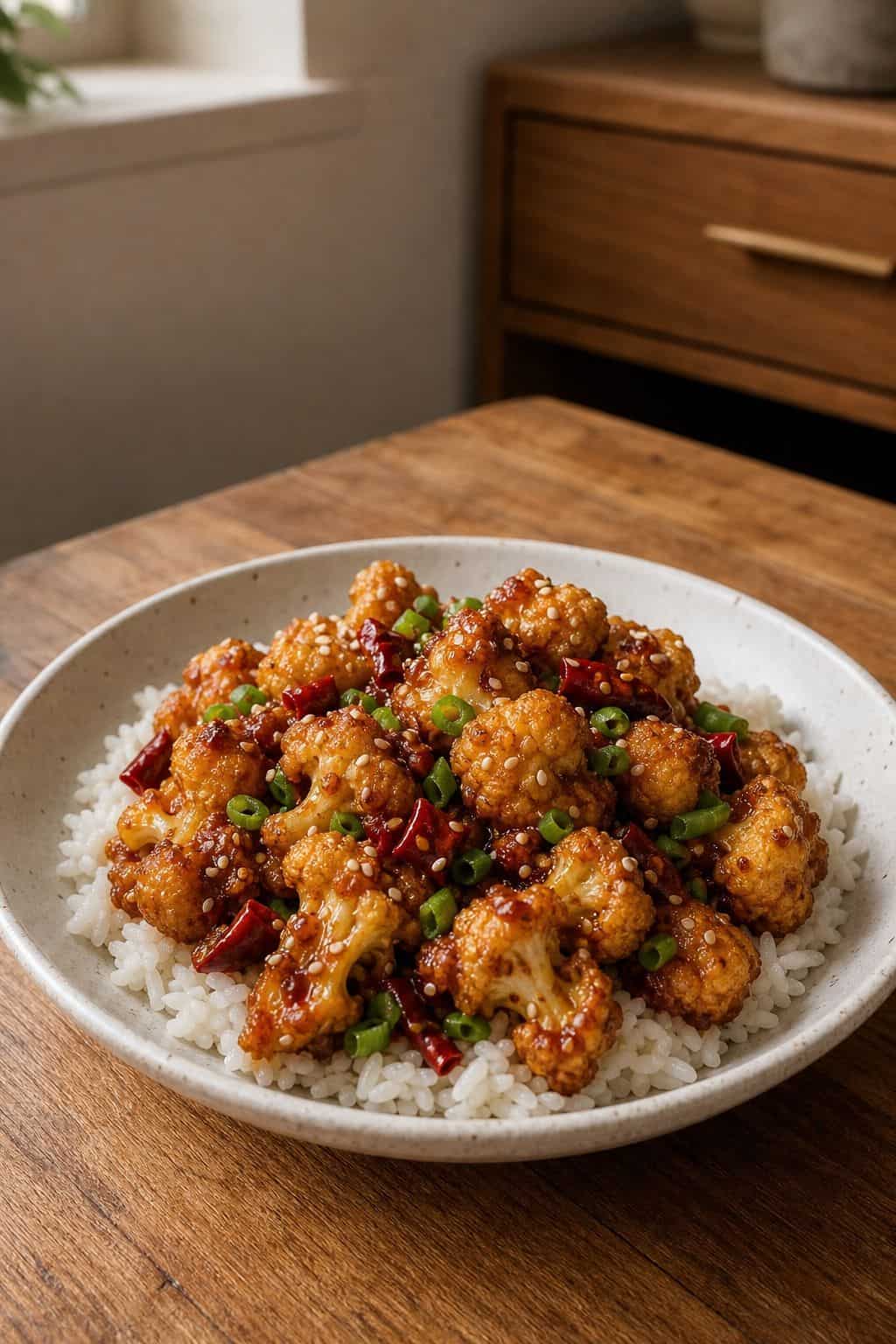
To finish: Sliced scallions, toasted sesame seeds, and a final drizzle of chili oil if you want extra heat. Steamed jasmine or coconut rice underneath.
Recipe: Asian Cauliflower
Prep time: 15 minutes | Cook time: 25 minutes | Total time: 40 minutes | Serves: 4
Ingredients
- 1 large head cauliflower, about 900 g (2 lb), cut into 4 cm (1.5 inch) florets
- 1 cup (120 g) cornstarch
- 1 cup (240 ml) cold water
- 4 cups (1 L) neutral frying oil (peanut, vegetable, or canola)
- 2 scallions, sliced thin, for serving
- 1 Tbsp toasted sesame seeds, for serving
- Steamed jasmine or coconut rice, for serving
For the General Tso sauce
- 3 Tbsp soy sauce
- 2 Tbsp rice vinegar
- 2 Tbsp sugar
- 1 Tbsp grated fresh ginger
- 3 cloves garlic, minced
- 6 dried red chilies (Tianjin or chile de arbol), broken in half
- 1 tsp toasted sesame oil
- 1 Tbsp cornstarch mixed with 2 Tbsp cold water
For the Korean gochujang sauce
- 3 Tbsp gochujang
- 2 Tbsp honey
- 2 Tbsp soy sauce
- 1 Tbsp rice vinegar
- 3 cloves garlic, minced
- 1 tsp toasted sesame oil
- 1 tsp toasted sesame seeds
Instructions
- Mix the cornstarch and cold water in a large bowl until smooth. The slurry should pour like thin pancake batter and coat a finger lightly. Set aside.
- Heat the frying oil in a wok or Dutch oven until an instant-read thermometer reads 325°F (165°C). Have a wire rack set over a sheet pan ready next to the stove.
- Whisk the slurry once to redistribute the starch, then drop in about a third of the cauliflower florets and turn them with chopsticks or tongs until every face is coated. Lift each floret out, let the excess drip back into the bowl, and lower into the oil.
- Fry the first batch for about 4 minutes, turning occasionally, until the coating is set and pale, the cauliflower just cooked through. Remove with a spider to the wire rack. Repeat with the remaining florets in two more batches. Rest the fried florets for 5 minutes.
- Bring the oil up to 375°F (190°C). While it heats, build the sauce in a wok or large skillet over medium-high. For the General Tso version: warm 1 Tbsp of the frying oil in the pan, add the dried chilies and toast for 30 seconds, then add the garlic and ginger and cook another 30 seconds until fragrant. Pour in the soy sauce, rice vinegar, and sugar. Bring to a simmer for 1 minute, then stir in the cornstarch slurry and cook until the sauce thickens enough to coat the back of a spoon, about 1 more minute. Finish with sesame oil. Take off the heat.
- For the Korean gochujang version instead: warm 1 Tbsp of the frying oil in the pan, add the garlic and cook 30 seconds until fragrant. Add the gochujang, honey, soy sauce, and rice vinegar. Simmer 1 to 2 minutes until thickened slightly. Finish with sesame oil and sesame seeds. Take off the heat.
- Once the oil is at 375°F (190°C), return the rested florets to the pot in batches and fry a second time for 2 to 3 minutes, until deep gold and shatteringly crisp. Remove to the wire rack and season lightly with salt.
- Bring the sauce back to a gentle simmer. Add all the fried cauliflower at once and toss for no more than 30 seconds, just long enough to glaze every floret. Pull off the heat the moment the florets are coated.
- Serve immediately over jasmine or coconut rice. Top with sliced scallions and toasted sesame seeds. Eat hot, before the sauce softens the crust.
Notes
The 5-minute rest between fries is doing real work. It lets the steam escape and the coating set, which is what produces the second-fry crunch.
Florets do not stay crisp once sauced. This dish is meant to be eaten the second it lands on the table; cook the rice and slice the scallions before you start the second fry so nothing waits.
If the slurry thickens while you’re working, whisk in a splash of cold water to bring it back. It should pour, not clump.
Tips and Variations
Why the Double Fry Beats a Single Fry
A single fry at 375°F (190°C) browns the outside before the cauliflower cooks through. A single fry at 325°F (165°C) cooks the inside but never gets crisp enough on the outside. The two-pass method splits the job: the first pass cooks the floret, the second pass builds the crust. This is the same logic Korean fried chicken uses and the reason both dishes hold their crunch for longer than a single fry ever would.
The Baked Version If You Don’t Want to Fry
Toss the florets in the slurry, spread on a wire rack set over a sheet pan, and bake at 425°F (220°C) for 25 to 30 minutes, flipping once. The crust will not be as craggy or as shattering as fried, but the dish still works as a weeknight version. Sauce the same way at the very end so the bake stays as crisp as it gets.
How to Layer the Heat
The General Tso sauce gets its heat from dried chilies that toast in oil. The gochujang sauce gets it from the fermented paste itself. Both can take a final drizzle of homemade chili oil at the table for a third heat register. If you want a sweeter, milder version, leave out the chilies from the Tso sauce or cut the gochujang to 2 Tbsp and add an extra Tbsp of honey.
Make It a Bowl
Plate the cauliflower over coconut rice or steamed jasmine. Add a handful of pickled cucumber or a quick smashed-cucumber salad on the side for the acid the dish needs. Finish with a fried egg if you want to push it toward a Korean rice-bowl format.
Holding Florets Crisp for a Crowd
Fry both rounds ahead of time, hold the second-fry florets on a wire rack in a 200°F (95°C) oven for up to 20 minutes. Build and warm the sauce just before serving. Toss the florets in the sauce only when the table is ready to eat. Coated florets soften within 5 minutes, so timing matters.
Pairings
The dish wants cold beer. A pilsner or a Japanese lager (Sapporo, Asahi) cuts through the sticky sauce. Off-dry Riesling works for the Korean version, where the heat of the gochujang reads better against a hint of sweetness. Serve over steamed jasmine or coconut rice for the bowl format, with a side of pickled cucumber or quick smashed cucumber for the acid that the rich crust calls for. For a fuller table, pair with a brothy gochujang soup as a starter.
Frequently Asked Questions
How do you make cauliflower crispy?
Two things matter: a cornstarch slurry coating (not dry dredge) and a double fry at 325°F (165°C) then 375°F (190°C). The slurry produces a craggy crust; the second fry sets it. Dry-dredged cauliflower fries up powdery and soggy under sauce.
Is General Tso cauliflower vegan?
The General Tso sauce in this recipe is vegan. Check your soy sauce label (most are vegan; some have added flavorings) and double-check that the rice vinegar is unseasoned. The Korean gochujang version is also vegan if you swap the honey for maple syrup or sugar.
What’s the difference between gochujang and sriracha?
Gochujang is a thick, fermented Korean chili paste made from gochugaru, glutinous rice, fermented soybeans, and salt. Sriracha is a thinner, vinegar-based Thai-American chili sauce. The two are not substitutes. Gochujang gives the dish depth and umami; sriracha would just give it sharp heat.
Can you bake cauliflower instead of frying?
Yes, with caveats. Bake at 425°F (220°C) on a wire rack for 25 to 30 minutes, flipping once. The crust will not match a double fry. The fried version stays crisp for about 5 minutes after saucing; the baked version softens immediately, so plate fast.
Why is my fried cauliflower soggy?
Usually one of three issues: the oil was too cold (under 325°F / 165°C on the first fry), the batch was overcrowded so the temperature dropped, or the sauce sat on the florets too long before serving. Hot oil, small batches, and a 30-second sauce toss are the fix.
Key Takeaways
- Cornstarch slurry, not dry dredge. Coats craggy, holds sauce.
- Double fry: 325°F (165°C) for 4 minutes, rest 5 minutes, then 375°F (190°C) for 2 to 3 minutes.
- Sauce builds separately in a wok. Florets toss in for only 30 seconds at the end.
- Two sauce directions work: General Tso (soy, vinegar, sugar, chili) or Korean gochujang (gochujang, honey, soy).
- Eat hot. Sauced florets soften within 5 minutes.
Final Thoughts
Asian cauliflower is one of those dishes that proves the technique matters more than the protein. Florets fried right outperform chicken on surface area and crust-to-sauce ratio, and the double-fry method is the difference between a soggy weeknight attempt and a real restaurant version.
Pick the sauce direction based on what the rest of the meal wants. The Tso version reads as American-Chinese takeout, sweet-sour with a back-of-throat heat from dried chilies. The gochujang version reads as Korean street food, deeper fermented heat with honey rounding it out. Both work over the same fried base.
Cook the rice first. Slice the scallions first. Build the sauce before the second fry. Then move quickly. The 30 seconds between sauce and table is the whole point.
Asian Cauliflower
The right Asian cauliflower is double-fried: 325°F (165°C) for 4 minutes to cook through, rest 5 minutes, then 375°F (190°C) for 2 to 3 minutes to deep-gold the crust.
Ingredients
- 1 large head cauliflower, about 900 g (2 lb), cut into 4 cm (1.5 inch) florets
- 1 cup (120 g) cornstarch
- 1 cup (240 ml) cold water
- 4 cups (1 L) neutral frying oil (peanut, vegetable, or canola)
- 2 scallions, sliced thin, for serving
- 1 Tbsp toasted sesame seeds, for serving
- Steamed jasmine or coconut rice, for serving
- 3 Tbsp soy sauce
- 2 Tbsp rice vinegar
- 2 Tbsp sugar
- 1 Tbsp grated fresh ginger
- 3 cloves garlic, minced
- 6 dried red chilies (Tianjin or chile de arbol), broken in half
- 1 tsp toasted sesame oil
- 1 Tbsp cornstarch mixed with 2 Tbsp cold water
- 3 Tbsp gochujang
- 2 Tbsp honey
- 2 Tbsp soy sauce
- 1 Tbsp rice vinegar
- 3 cloves garlic, minced
- 1 tsp toasted sesame oil
- 1 tsp toasted sesame seeds
Instructions
- Mix the cornstarch and cold water in a large bowl until smooth. The slurry should pour like thin pancake batter and coat a finger lightly. Set aside.
- Heat the frying oil in a wok or Dutch oven until an instant-read thermometer reads 325°F (165°C). Have a wire rack set over a sheet pan ready next to the stove.
- Whisk the slurry once to redistribute the starch, then drop in about a third of the cauliflower florets and turn them with chopsticks or tongs until every face is coated. Lift each floret out, let the excess drip back into the bowl, and lower into the oil.
- Fry the first batch for about 4 minutes, turning occasionally, until the coating is set and pale, the cauliflower just cooked through. Remove with a spider to the wire rack. Repeat with the remaining florets in two more batches.
- Bring the oil up to 375°F (190°C). While it heats, build the sauce in a wok or large skillet over medium-high.
- For the Korean gochujang version instead: warm 1 Tbsp of the frying oil in the pan, add the garlic and cook 30 seconds until fragrant. Add the gochujang, honey, soy sauce, and rice vinegar. Simmer 1 to 2 minutes until thickened slightly.
- Once the oil is at 375°F (190°C), return the rested florets to the pot in batches and fry a second time for 2 to 3 minutes, until deep gold and shatteringly crisp. Remove to the wire rack and season lightly with salt.
- Bring the sauce back to a gentle simmer. Add all the fried cauliflower at once and toss for no more than 30 seconds, just long enough to glaze every floret. Pull off the heat the moment the florets are coated.
- Serve immediately over jasmine or coconut rice. Top with sliced scallions and toasted sesame seeds. Eat hot, before the sauce softens the crust.
Notes
The 5-minute rest between fries is doing real work. It lets the steam escape and the coating set, which is what produces the second-fry crunch.
Florets do not stay crisp once sauced. This dish is meant to be eaten the second it lands on the table; cook the rice and slice the scallions before you start the second fry so nothing waits.
Last update on 2026-08-08 / Affiliate links / Images from Amazon Product Advertising API