
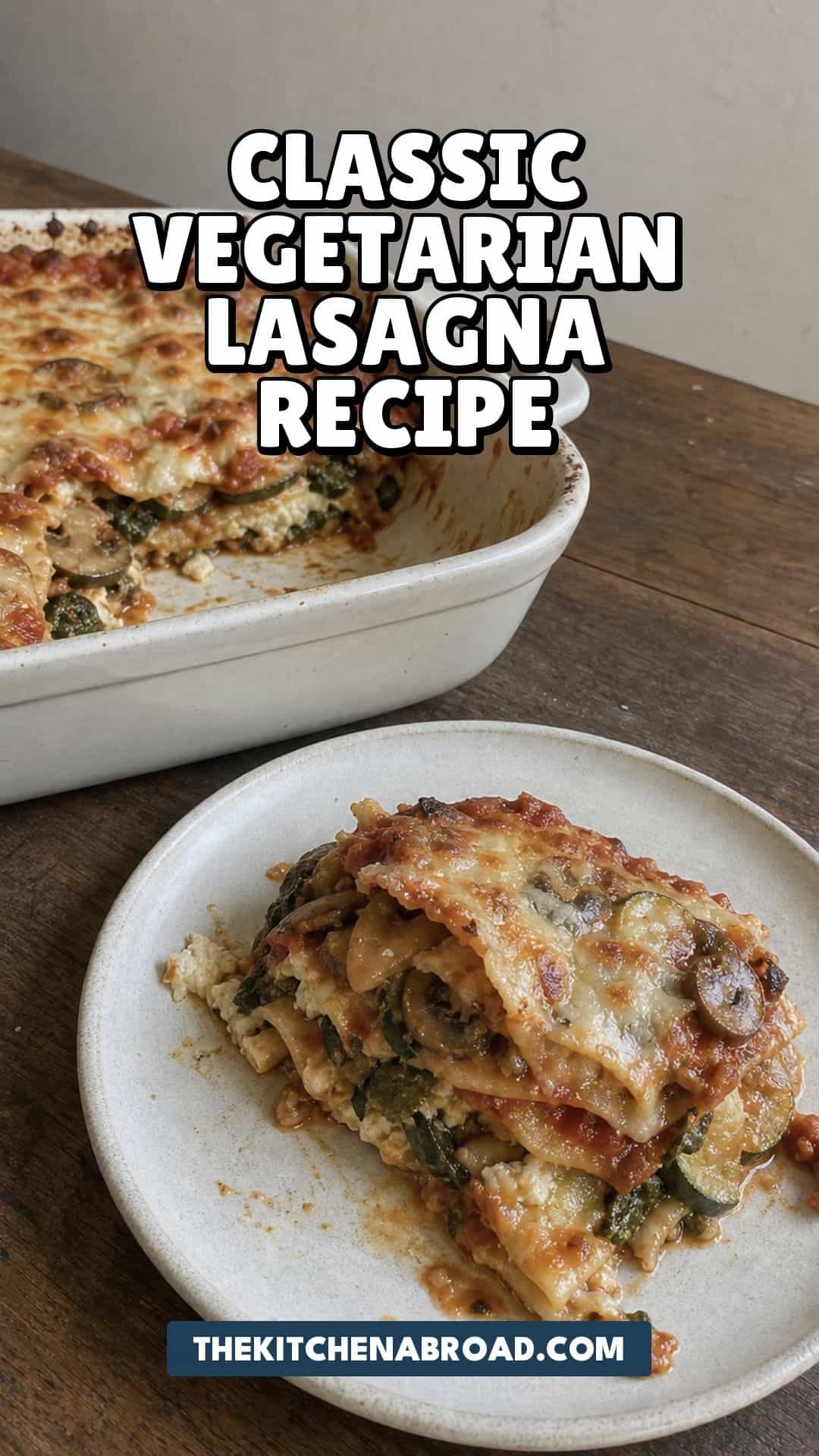
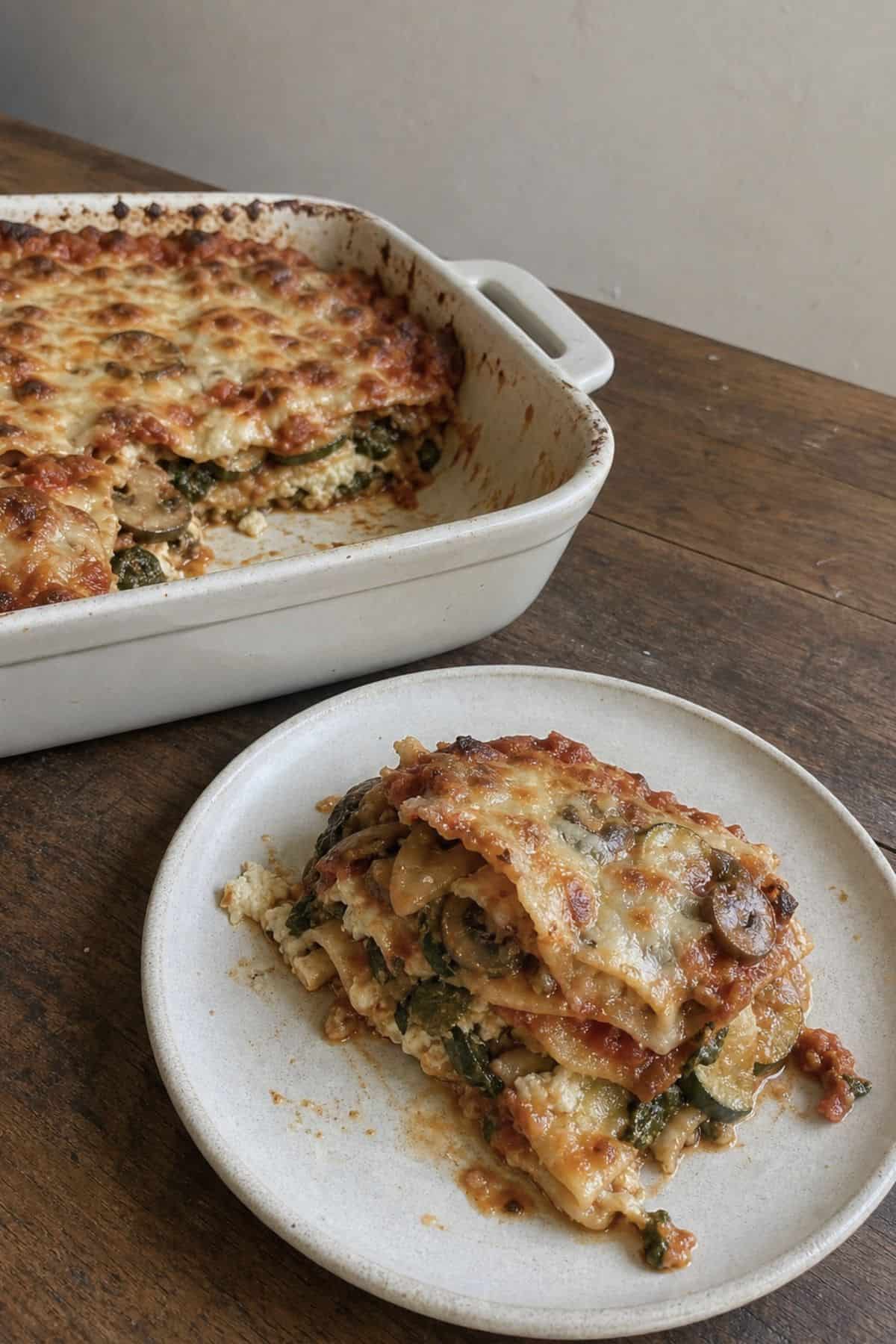
Soupy vegetarian lasagna is the universal home-cook problem with the dish, and the fix is dry-sautéing the mushrooms and zucchini separately before they go into the layers. No oil first, just heat. The vegetables release their water onto the hot pan, the water evaporates, then you finish with oil. The lasagna comes out structurally clean: distinct layers, tender noodles, ricotta that holds its shape on the cut.
Final Thoughts
Vegetarian lasagna is one of the dishes most home cooks have a complicated relationship with. The standard versions are soupy and forgettable. The dry-sauté-the-vegetables-first version is the one that actually delivers.
The two moves to remember are the dry-sauté on the mushrooms and zucchini (drives off the water that would otherwise wreck the bake) and the egg in the ricotta (binds the layer so it slices clean). Everything else is supporting cast.
Make this for Sunday dinner, a potluck, or a make-ahead dinner-party main. The fully assembled unbaked lasagna freezes for two months; thaw overnight and bake. A glass of Chianti and a green salad finish the meal.
Most vegetarian lasagnas turn soupy because the mushrooms and zucchini release their water during the bake instead of before. The dry-sauté is a Batch 3 move from the creamy tomato pasta with spinach and mushrooms recipe, and it solves the lasagna problem entirely. No-boil noodles do the rest of the work; they absorb the right amount of moisture from the dish and stay tender. Five layers, 45 minutes covered, 15 minutes uncovered, 10 minutes of rest before slicing.
Tools for This Assembly
A Dutch oven or heavy 9×13 baking dish (cast iron holds heat steadier and gives the best bottom). A large skillet for the dry-sauté step. A wooden spoon for stirring without scratching the pan. A microplane for the parmesan and lemon zest in the ricotta. Parchment paper to line the dish for clean cleanup.


Recommended Reads
- Hearty Vegetarian Chili
- Homemade Black Bean Burgers
- Creamy Tomato Pasta with Spinach and Mushrooms
- Baked Chicken Alfredo
- Parmesan Cauliflower Steaks
The Italian Story Behind Lasagna
Lasagna in Italy is regional and disputed. The Bolognese version (Emilia-Romagna) is the meaty, béchamel-rich one most Americans picture, layered with green spinach pasta sheets. The Neapolitan version (Campania) is meatless or near-meatless, built around ricotta and tomato. The vegetarian lasagna that lives on food blogs today descends most directly from the Neapolitan tradition, with American additions: more cheese, no-boil dried pasta sheets, and a wider vegetable mix than what Naples cooks would recognize. The dry-sauté move that solves the soupiness problem is a modern home-cook adaptation; no nonna in Italy is dry-sautéing zucchini, but the technique earns its place in an American oven.
A Few Notes on the Ingredients
No-boil lasagna noodles: One standard box (12 sheets) for a 9×13 dish. They absorb the right amount of moisture from the dish during the bake. Regular boil-and-drain noodles work too but require an extra step.
Marinara sauce: 4 cups (about two 24-oz jars). Rao’s, Mutti, or homemade are the gold-standard options. A flat or sweet sauce makes a flat lasagna.
Cremini mushrooms: 16 oz, sliced. Need the dry-sauté treatment described in Tips; raw mushrooms in the layers release their water and turn the lasagna soupy.
Zucchini: 2 medium, sliced into thin rounds. Same dry-sauté rule. Driving the water off before assembly is the entire technique.
Baby spinach: 10 oz fresh. Wilts in the pan in 90 seconds. Drain very thoroughly in a fine mesh strainer; press the water out with the back of a spoon.
Whole-milk ricotta: 15 oz (not part-skim; the lower fat breaks the binding). Strain in a fine mesh strainer over a bowl for 20 minutes to remove excess whey.
Ricotta seasoning: 1 large egg + 1/2 tsp kosher salt + 1/4 tsp black pepper + zest of 1 lemon + a pinch of grated nutmeg + 1/2 cup grated parmesan. The egg binds, the lemon zest and nutmeg lift it from bland to interesting.
Mozzarella: 16 oz low-moisture whole-milk shredded. Fresh mozzarella balls release too much water and make the top soupy.
The Assembly
Five layers, bottom to top. Each layer matters; the order matters; the proportions matter.
| Layer | What goes in |
|---|---|
| Bottom | 1 cup marinara spread thin to coat the dish |
| Layer 1 | Noodles → ricotta mix → 1/3 of vegetables → marinara → mozzarella |
| Layer 2 | Noodles → ricotta mix → 1/3 of vegetables → marinara → mozzarella |
| Layer 3 | Noodles → ricotta mix → 1/3 of vegetables → marinara → mozzarella |
| Top | Final noodles → marinara → heavy mozzarella → parmesan dusting |
The top layer is sauce + cheese only; no ricotta or vegetables. This is what gives you a properly browned, slightly crisp top instead of a wet ricotta surface.
Recipe: Classic Vegetarian Lasagna
Prep time: 35 minutes | Cook time: 60 minutes | Rest time: 10 minutes | Total time: 1 hour 45 minutes | Serves: 8
Ingredients
- 12 no-boil lasagna noodles
- 4 cups (1 L) good-quality marinara sauce
- 16 oz (450 g) cremini mushrooms, sliced
- 2 medium zucchini, thinly sliced into rounds
- 10 oz (280 g) fresh baby spinach
- 15 oz (425 g) whole-milk ricotta, strained 20 minutes
- 1 large egg
- ½ cup (50 g) grated parmesan, plus more for top
- 16 oz (450 g) low-moisture whole-milk shredded mozzarella
- Zest of 1 lemon
- ½ tsp kosher salt
- ¼ tsp black pepper
- Pinch of freshly grated nutmeg
- 2 Tbsp olive oil
- 2 cloves garlic, minced (for spinach)
Instructions
- Preheat the oven to 375°F (190°C). Line a 9×13 baking dish with parchment paper (optional but helpful for cleanup).
- Dry-sauté the mushrooms. Heat a large dry skillet over medium-high heat, no oil. Add the sliced mushrooms in batches if needed. Cook 6-8 minutes, stirring occasionally, until they release water, the water evaporates, and the mushrooms start to brown. Transfer to a bowl. Repeat with the zucchini, 4-5 minutes. Transfer to the bowl.
- Wilt the spinach. Wipe out the pan, add 1 Tbsp olive oil and the minced garlic. Cook 30 seconds. Add the spinach in batches, wilting each batch before adding more. About 2 minutes total. Transfer to a fine mesh strainer set over a bowl. Press out excess water with the back of a spoon. Add to the bowl with the mushrooms and zucchini.
- Mix the ricotta. In a separate bowl, combine strained ricotta, egg, ½ cup parmesan, lemon zest, salt, pepper, and nutmeg. Stir until smooth.
- Assemble. Spread 1 cup of marinara on the bottom of the prepared dish. Layer 4 noodles to cover (break to fit if needed). Spread ⅓ of the ricotta mixture. Spread ⅓ of the vegetables. Drizzle with ¾ cup marinara. Sprinkle ⅓ of the mozzarella. Repeat for layers 2 and 3, ending with noodles on top.
- Top. Spread the remaining marinara over the top noodles. Cover with the remaining mozzarella. Dust generously with extra parmesan.
- Bake covered 45 minutes. Cover the dish tightly with foil. Bake at 375°F for 45 minutes.
- Bake uncovered 15 minutes. Remove the foil. Continue baking until the top is golden brown and bubbling at the edges.
- Rest 10 minutes. Critical step. Let the lasagna rest 10 minutes before slicing; this is what lets the layers set so you can portion clean pieces. Slice and serve.
Notes
If using regular boil-cook noodles: Cook 1 minute shy of al dente, drain, lay flat on parchment to cool. Reduce the marinara by ½ cup since the noodles are pre-hydrated.
Pressing the spinach is the move: The water you press out is the water that would otherwise turn your lasagna soupy. Press hard.
The 10-minute rest is non-negotiable. Sliced hot, lasagna oozes. Sliced after a 10-minute rest, it holds its layers like a proper food photograph.
Tips and Variations
Why the Dry-Sauté Is the Whole Game
Mushrooms are 90% water by weight. Zucchini is 95%. Both release their water on heat. If they release it in the lasagna, the dish is soup. If they release it in a hot dry pan first, the water evaporates into the kitchen instead. Heat a large skillet over medium-high heat, dry, no oil. Add the mushrooms in batches if needed and cook 6-8 minutes until they release their water AND it evaporates AND they start to brown. Repeat for the zucchini, 4-5 minutes. Then add a tablespoon of oil at the end for flavor. That’s the move.
Why the Egg in the Ricotta Is Non-Negotiable
The egg sets when the ricotta gets above 145°F in the oven, which is what binds the ricotta layer into something that holds its shape on the cut. Without the egg, the ricotta layer collapses into the bottom of the dish and the lasagna is impossible to portion neatly. One egg per 15 oz of ricotta is the ratio. Also: strain the ricotta for 20 minutes before mixing. Excess whey weakens the binding.
What Vegetable and Cheese Swaps Actually Work
Roasted eggplant slices swap in for zucchini and bring more body. Roasted bell peppers add sweetness; roast them whole at 425°F, peel, slice. Spinach can be replaced with kale (chopped, sautéed 4-5 minutes). For cheeses, cottage cheese (4% milkfat, well-drained) is the budget swap for ricotta and works surprisingly well. Provolone in place of half the mozzarella gives a sharper bite. Fresh mozzarella is the swap that doesn’t work, too much water released during the bake.
How to Make This Vegan in Three Swaps
The recipe is already vegetarian. For full vegan: One: replace the ricotta with a cashew-tofu blend (1 cup soaked cashews + 14 oz silken tofu + ¼ cup nutritional yeast + ¼ cup lemon juice + 1 tsp salt, blended smooth). Two: replace the mozzarella with a quality plant-based shredded cheese (Violife or Daiya). Three: skip the egg in the ricotta layer (the cashew-tofu blend binds on its own). The parmesan dusting is replaced with extra nutritional yeast. Everything else stays.
Make-Ahead, Freeze, and Reheat Strategy
Assembled-but-unbaked lasagna holds 24 hours in the fridge (cover with foil). Bake from cold; add 10 minutes to the covered phase. Frozen unbaked lasagna keeps 2 months wrapped in plastic wrap and then foil; thaw overnight in the fridge before baking. Baked leftovers keep 4 days in the fridge and freeze 2 months. Reheat individual portions in a 325°F oven for 20 minutes covered, or microwave covered with a damp paper towel for 2 minutes per slice. The make-ahead version actually slices cleaner than the same-day version because the layers have had time to set.
Frequently Asked Questions
Why is my lasagna soupy?
One of three reasons. One: the vegetables weren’t dry-sautéed, so they released their water during the bake. Two: the spinach wasn’t pressed dry enough. Three: too much marinara per layer. Fix all three and the lasagna comes out structurally clean.
Can I skip the egg in the ricotta?
Not really. The egg is the binder that lets the ricotta layer hold its shape on the cut. Without it, the ricotta is too loose and the lasagna falls apart into the dish. For an egg-free version, swap in a cashew-tofu blend (see the vegan section).
Should I cover the lasagna while baking?
Yes, for the first 45 minutes. The cover keeps moisture in so the noodles cook through and the cheese melts without the top drying out. Then uncovered for 15 minutes to brown the top. Both phases matter.
Can I freeze leftover lasagna?
Yes, and it freezes beautifully. Cut into individual portions, wrap each in plastic wrap, then in foil. Freeze 2 months. Thaw overnight in the fridge and reheat at 325°F for 20 minutes covered.
What do I serve with this?
A simple green salad with a sharp vinaigrette, garlic bread, and a glass of red wine. The lasagna is rich enough to be the entire dinner; sides should be light and acidic to cut through.
Key Takeaways
- Dry-sauté mushrooms and zucchini separately to prevent a soupy lasagna.
- Press the wilted spinach hard to remove excess water.
- The egg in the ricotta is what binds the layer and lets the lasagna slice clean.
- No-boil noodles absorb the right moisture; regular noodles work but need adjustment.
- Rest 10 minutes after baking, before slicing. Non-negotiable.
This is the version that finally makes vegetarian lasagna live up to the beef one.
Classic Vegetarian Lasagna
Soupy vegetarian lasagna is the universal home-cook problem with the dish, and the fix is dry-sautéing the mushrooms and zucchini separately before they go into the layers. No oil first, just heat.
Ingredients
- 12 no-boil lasagna noodles
- 4 cups (1 L) good-quality marinara sauce
- 16 oz (450 g) cremini mushrooms, sliced
- 2 medium zucchini, thinly sliced into rounds
- 10 oz (280 g) fresh baby spinach
- 15 oz (425 g) whole-milk ricotta, strained 20 minutes
- 1 large egg
- ½ cup (50 g) grated parmesan, plus more for top
- 16 oz (450 g) low-moisture whole-milk shredded mozzarella
- Zest of 1 lemon
- ½ tsp kosher salt
- ¼ tsp black pepper
- Pinch of freshly grated nutmeg
- 2 Tbsp olive oil
- 2 cloves garlic, minced (for spinach)
Instructions
- Preheat the oven to 375°F (190°C). Line a 9x13 baking dish with parchment paper (optional but helpful for cleanup).
- Dry-sauté the mushrooms. Heat a large dry skillet over medium-high heat, no oil. Add the sliced mushrooms in batches if needed. Cook 6-8 minutes, stirring occasionally, until they release water, the water evaporates, and the mushrooms start to brown.
- Wilt the spinach. Wipe out the pan, add 1 Tbsp olive oil and the minced garlic. Cook 30 seconds. Add the spinach in batches, wilting each batch before adding more. About 2 minutes total. Transfer to a fine mesh strainer set over a bowl.
- Mix the ricotta. In a separate bowl, combine strained ricotta, egg, ½ cup parmesan, lemon zest, salt, pepper, and nutmeg. Stir until smooth.
- Assemble. Spread 1 cup of marinara on the bottom of the prepared dish. Layer 4 noodles to cover (break to fit if needed). Spread ⅓ of the ricotta mixture. Spread ⅓ of the vegetables. Drizzle with ¾ cup marinara. Sprinkle ⅓ of the mozzarella.
- Top. Spread the remaining marinara over the top noodles. Cover with the remaining mozzarella. Dust generously with extra parmesan.
- Bake covered 45 minutes. Cover the dish tightly with foil. Bake at 375°F for 45 minutes.
- Bake uncovered 15 minutes. Remove the foil. Continue baking until the top is golden brown and bubbling at the edges.
- Rest 10 minutes. Critical step. Let the lasagna rest 10 minutes before slicing; this is what lets the layers set so you can portion clean pieces. Slice and serve.
Notes
If using regular boil-cook noodles: Cook 1 minute shy of al dente, drain, lay flat on parchment to cool. Reduce the marinara by ½ cup since the noodles are pre-hydrated.
Pressing the spinach is the move: The water you press out is the water that would otherwise turn your lasagna soupy. Press hard.
Last update on 2026-10-03 / Affiliate links / Images from Amazon Product Advertising API