
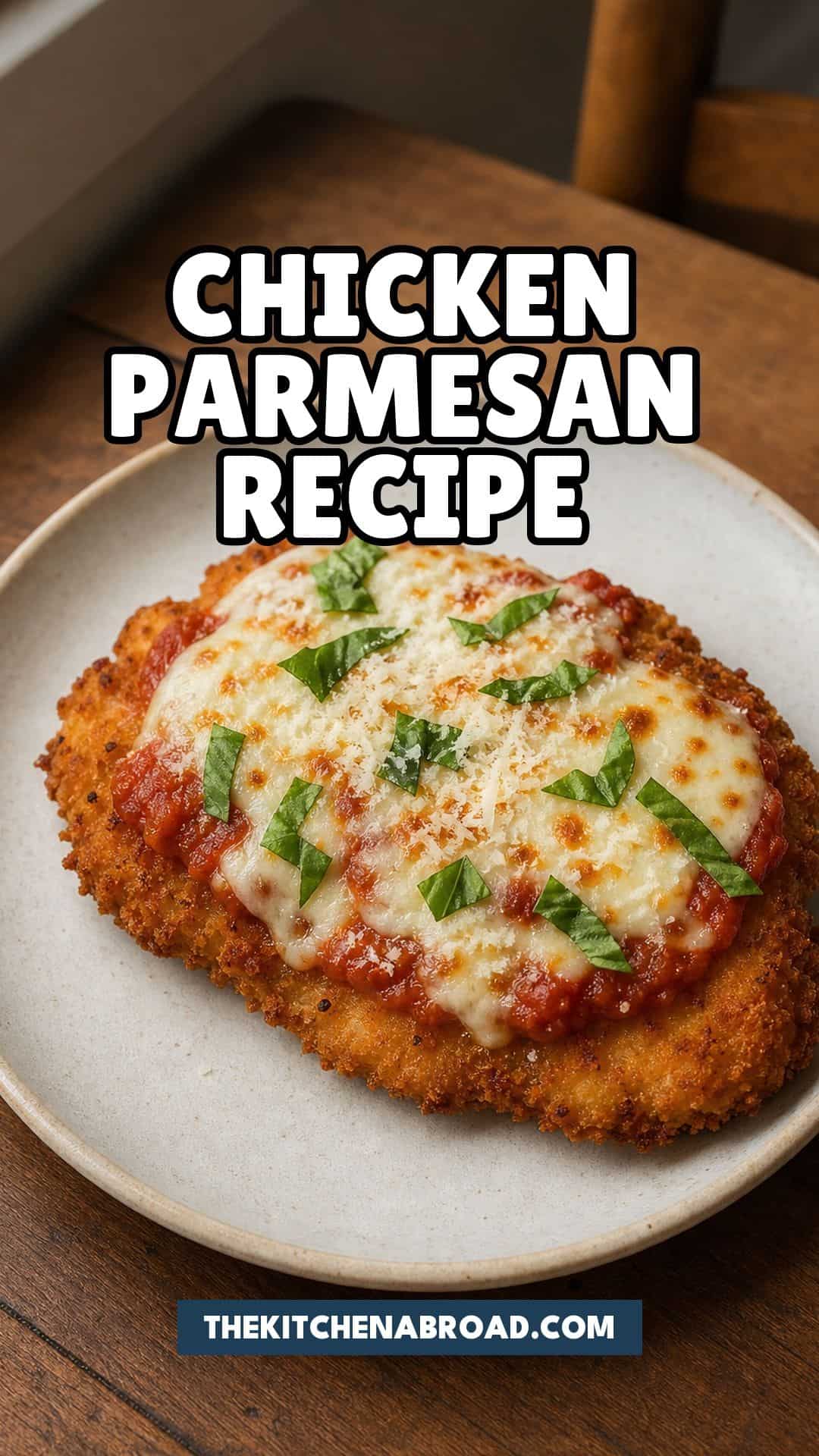
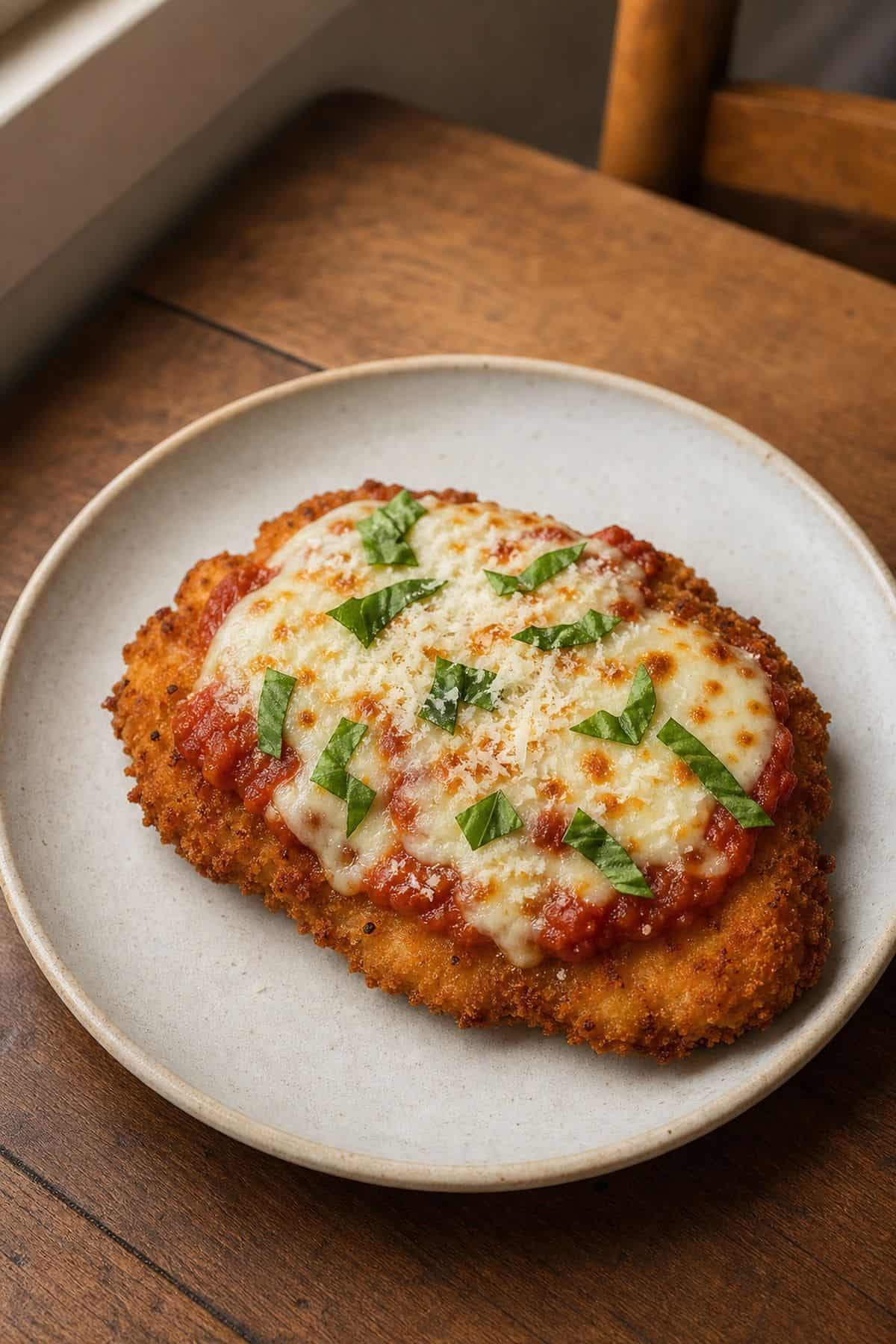
Chicken parmesan is boneless skinless chicken breast halved horizontally and pounded to even ½-inch thickness, dredged in flour-egg-panko-parmesan, pan-fried in olive oil until golden, then topped with simple marinara and low-moisture mozzarella and broiled for 90 seconds. Total time about 40 minutes. Serves 4 with pasta or salad on the side.
Chicken parmesan lives or dies in the broiler. Too much sauce on top and the crust goes soft underneath in the 90 seconds it takes to brown the cheese. The home version below uses a panko-and-parmesan dredge, a quick pan-fry, and just enough marinara to coat the cutlet before the cheese goes on. Then 90 seconds under the broiler. Pull it the moment the cheese bubbles, not a second later.
What You’ll Need to Make This Recipe
A heavy 12-inch cast iron skillet for the pan-fry stage; the thermal mass holds the oil temperature steady when cold chicken hits the pan. An OXO meat tenderizer or any heavy meat mallet for pounding the chicken to even thickness. A Pyrex 9×13 oven-proof baking dish for the broil-finish stage. An instant-read thermometer to confirm 74°C (165°F) internal temperature. A microplane for fine-grating the parmesan into the breading and onto the finished dish.


Recommended Reads
- Parmesan Cauliflower Steaks Recipe (Crispy, Roasted)
- Pan-Fried Chicken Tenderloin Recipe (Crispy, 15 Minutes)
- Creamy Tomato Pasta with Spinach and Mushrooms
- Aglio Olio Pasta Recipe
- Creamy Tuscan Shrimp Recipe (Sun-Dried Tomato, 20 Minutes)
Why Pound-Fry-Broil Is the Right Sequence
Chicken breast varies in thickness from about 1 inch at the thick end to about ½ inch at the thin end. Cooking at that variable thickness produces uneven results: the thin end overcooks while the thick end is still raw. Slicing the breast horizontally into two thinner pieces (called butterflying when the slice does not go all the way through, but going all the way through is fine here) creates two cutlets of roughly equal thickness. Pounding each cutlet to a uniform ½-inch thickness with a meat mallet finishes the job. Even thickness produces even cooking, and even cooking produces consistent juicy texture across the entire piece.
The pan-fry stage uses shallow oil (1 cm deep) at moderate-high heat (170 to 175°C / 340 to 350°F) for 3 minutes per side. This is enough to cook the ½-inch-thick chicken through to 74°C (165°F) internal temperature while developing a deep golden crust. The chicken is fully cooked at this stage; the broiler step that follows is only to melt the cheese and brown the top, not to finish the cooking. Deep frying is the wrong technique here (too much oil, too messy for home use). Baking instead of frying gives a softer less crispy crust; the pan-fry is the right middle path.
The broil-finish stage is short and specific. 90 seconds under a broiler with the rack in the upper-middle position is enough to melt the low-moisture mozzarella into bubbling pools and brown the top edges of the cheese, but not enough for the crust underneath to absorb sauce moisture and soften. A longer broil overcooks the chicken (it was already fully cooked) and ruins the crust. A shorter broil leaves the cheese unmelted in pockets. Watch the dish through the oven window; broilers vary in intensity. The first edges of brown on the cheese is the signal to pull it out.
Chicken Parmesan Ingredients, Briefly
Boneless skinless chicken breasts. 2 large breasts, about 700 g (1.5 lb) total. Halved horizontally to create 4 cutlets, then pounded to even ½-inch thickness.
All-purpose flour. 80 g (⅔ cup). The dry first-layer dredge.
Eggs. 2 large eggs, beaten with a splash of water. The binder layer between the flour and the panko.
Panko breadcrumbs. 120 g (1½ cups). Use Japanese-style panko, not regular breadcrumbs. Panko is flakier and crisper, which is what this dish needs.
Grated parmesan. 60 g (¾ cup) for the breading, plus more for finishing. Freshly grated from a wedge is significantly better than pre-grated tub parmesan.
Dried oregano. 1 tsp for the breading. Dried basil also works.
Salt and black pepper. For the chicken before dredging and for the breading mix.
Olive oil. 120 ml (½ cup) for the pan-fry. A mix of olive oil and a higher smoke-point oil (canola, avocado) prevents the oil from burning at the medium-high heat.
Marinara sauce. 240 ml (1 cup). Homemade simple marinara (crushed San Marzano + garlic + basil + olive oil) is the upgrade if you have it. Good jarred marinara (Rao’s, Carbone, Cucina Antica) works perfectly.
Low-moisture mozzarella. 200 g (about 2 cups shredded). Use block low-moisture mozzarella and shred it yourself; bagged pre-shredded mozzarella has anti-caking starches that prevent it from melting smoothly. Fresh mozzarella is the wrong choice; releases too much liquid during the broil.
Fresh basil. 8 leaves, torn, for finishing.
Tips and Variations
Halve and pound the breasts. Lay each breast flat. Slice horizontally with a sharp knife to create two cutlets. Place each cutlet between two sheets of plastic wrap. Pound to even ½-inch thickness with the smooth side of a meat mallet.
The three-stage dredge. Flour first (dries the surface and gives the egg something to grip). Egg next (binder). Panko-parmesan-oregano third (the crust). Press the panko mixture firmly onto the chicken so it adheres.
Low-moisture mozzarella shredded yourself. Buy a block, grate it on the large holes of a box grater. Bagged pre-shredded mozzarella has cellulose powder added to prevent caking, which also prevents smooth melting. Self-shredded melts into bubbling pools the way restaurant chicken parm does.
The thin-sauce-layer rule. Spread just enough marinara over each cutlet to cover the surface in a thin layer, about 2 tablespoons per cutlet. More than this and the crust underneath turns soggy under the broiler. The remaining marinara serves alongside as dipping sauce or over the pasta.
Broil 90 seconds, no more. Watch through the oven window. Pull when the cheese is bubbling and the first edges of brown appear. Longer broil overcooks the chicken and dries the crust.
What to serve with chicken parmesan. Spaghetti with the remaining marinara is the classic. Caesar salad. Garlic bread. Aglio olio pasta as a lighter pasta side. Roasted vegetables for a healthier balance.
Storage and reheat. Refrigerated for 3 days. Reheat in a 200°C (400°F) oven on a wire rack for 10 minutes to restore the crust. Microwave reheating turns the breading soggy and is not recommended.
Recipe: Chicken Parmesan (Crispy, Italian-American Classic)
Prep Time: 15 minutes | Cook Time: 25 minutes | Total Time: 40 minutes | Servings: 4
Ingredients
- 2 large boneless skinless chicken breasts (700 g / 1.5 lb), halved horizontally and pounded to even ½-inch thickness
- 1 tsp fine sea salt
- ½ tsp freshly ground black pepper
- 80 g (⅔ cup) all-purpose flour
- 2 large eggs, beaten with 1 tbsp water
- 120 g (1½ cups) panko breadcrumbs
- 60 g (¾ cup) freshly grated parmesan, plus more for serving
- 1 tsp dried oregano
- 120 ml (½ cup) olive oil (or 60 ml olive + 60 ml avocado oil)
- 240 ml (1 cup) marinara sauce
- 200 g (2 cups shredded) low-moisture mozzarella (block, shredded fresh)
- 8 fresh basil leaves, torn
Instructions
- Slice each chicken breast horizontally to create 4 cutlets total. Place each cutlet between two sheets of plastic wrap. Pound to even ½-inch (1.25 cm) thickness with the flat side of a meat mallet.
- Season the cutlets on both sides with the salt and black pepper.
- Set up three shallow bowls for the dredge station: bowl 1 with the flour, bowl 2 with the beaten eggs, bowl 3 with the panko, grated parmesan, and dried oregano combined.
- Working one cutlet at a time, dredge in the flour, shaking off excess. Dip in the beaten eggs, letting excess drip off. Press firmly into the panko-parmesan mixture, coating both sides thickly. Set on a plate.
- Heat the olive oil in a heavy 12-inch cast iron skillet over medium-high heat until it reaches 175°C (350°F).
- Pan-fry the cutlets two at a time. 3 minutes on the first side, until deeply golden. Flip carefully and cook 3 minutes on the second side. Internal temperature should reach 74°C (165°F).
- Transfer the fried cutlets to a 9×13 oven-proof baking dish, arranging in a single layer.
- Preheat the broiler to high with the rack in the upper-middle position.
- Spoon about 2 tablespoons of marinara sauce over each cutlet, spreading in a thin even layer. Top each with about ½ cup shredded mozzarella, distributed evenly.
- Broil for 90 seconds, watching closely through the oven window. The cheese should be bubbling and the first edges of brown should appear.
- Remove from the oven. Top with torn fresh basil and additional grated parmesan. Serve immediately, with the remaining marinara on the side or over pasta.
Notes
Pound to even thickness. ½-inch thick all the way across. Even thickness produces even cooking. This is the foundational step.
Three-stage dredge with panko-parm-herb. Flour, then egg, then panko mixed with parmesan and oregano. Press the breading firmly into the surface.
Thin sauce layer. Just enough to cover. More sauce on top means soggy crust underneath after the broil.
Self-shredded low-moisture mozzarella. Block mozzarella shredded fresh melts better than bagged pre-shredded. Fresh mozzarella releases too much water and ruins the broil.
Broil 90 seconds only. Watch closely. Pull at the first edges of brown on the cheese.
Storage. 3 days refrigerated. Reheat in a 200°C oven on a wire rack for 10 minutes.
Frequently Asked Questions
Why do I need to pound the chicken breast?
Chicken breast is naturally thicker at one end and thinner at the other. Cooking at variable thickness gives variable doneness: the thin end overcooks while the thick end is still raw. Slicing the breast horizontally and pounding to even ½-inch thickness produces cutlets that cook evenly across their entire surface, with juicy interior and crispy exterior together. The pound also tenderizes the meat by breaking up some of the muscle fibers.
What is the best mozzarella for chicken parmesan?
Low-moisture mozzarella in block form, shredded fresh on a box grater. Block mozzarella melts smoothly into bubbling pools the way restaurant chicken parm does. Bagged pre-shredded mozzarella has cellulose powder added as anti-caking agent, which prevents smooth melting. Fresh mozzarella (the soft white balls in water) is the wrong choice for this dish; releases too much liquid during the broil and turns the crust soggy.
Why use just a thin layer of sauce?
Too much sauce on top of the breaded crust during the broil creates steam that soaks into the crust and turns it soggy in the 90 seconds it takes to brown the cheese. A thin layer (about 2 tablespoons per cutlet) gives the dish the marinara flavor without enough moisture to compromise the crust. The remaining marinara goes on the side or over pasta, where the chicken can be dipped or eaten alongside without soaking it directly.
Can I bake chicken parmesan instead of pan-frying?
Yes, with some compromise. Place the breaded cutlets on a wire rack set over a sheet pan. Spray generously with olive oil on both sides. Bake at 220°C (425°F) for 18 to 20 minutes, flipping halfway. The crust is softer than pan-fried but still crispy. Air fryer is the third option: 200°C (400°F) for 12 to 14 minutes, flipping halfway, with similar results to baking.
How long do leftovers keep?
Refrigerated in an airtight container, 3 days. Reheat in a 200°C (400°F) oven on a wire rack for 10 minutes to restore the crispy crust. Microwaving turns the breading soggy and is not recommended. Frozen for up to 2 months; thaw overnight in the refrigerator before reheating in the oven.
What should I serve with chicken parmesan?
Spaghetti with the remaining marinara is the classic Italian-American pairing. Caesar salad with creamy dressing. Garlic bread or focaccia. Aglio olio pasta as a lighter alternative. Roasted vegetables (broccoli, zucchini, asparagus) for a healthier balance. A simple arugula salad with lemon vinaigrette also cuts through the richness of the cheese and breading.
Key Takeaways
- Halve the chicken breast horizontally and pound to even ½-inch thickness. Even thickness gives even cooking.
- Three-stage dredge: flour, egg, then panko mixed with grated parmesan and dried oregano. Press the breading firmly to adhere.
- Pan-fry in olive oil at 175°C for 3 minutes per side. The chicken is fully cooked at this stage; the broiler only melts cheese.
- Use just enough marinara to cover the surface in a thin layer. Too much sauce makes the crust soggy under the broiler.
- Shred low-moisture mozzarella from a block yourself. Bagged pre-shredded has anti-caking starches that prevent smooth melting.
Final Thoughts
Chicken parmesan is the Italian-American classic that every home cook attempts once and either nails or struggles with. The fix is mostly restraint: even thickness, the right breading, just enough sauce, just the right broiler time. Forty minutes from cutting board to plate, and the result is the kind of dinner that families ask for again the next week.
Serve over spaghetti with the remaining marinara, or alongside a Caesar salad and garlic bread for the full Italian-American diner experience. Leftovers reheat well in the oven on a wire rack and might be even better as a sandwich on a toasted hoagie roll the next day.
Chicken Parmesan Recipe (Crispy, Italian-American Classic)
Chicken parmesan is boneless skinless chicken breast halved horizontally and pounded to even ½-inch thickness, dredged in flour-egg-panko-parmesan, pan-fried in olive oil until golden, then topped with simple marinara and low-moisture mozzarella and broiled.
Ingredients
- 2 large boneless skinless chicken breasts (700 g / 1.5 lb), halved horizontally and pounded to even ½-inch thickness
- 1 tsp fine sea salt
- ½ tsp freshly ground black pepper
- 80 g (⅔ cup) all-purpose flour
- 2 large eggs, beaten with 1 tbsp water
- 120 g (1½ cups) panko breadcrumbs
- 60 g (¾ cup) freshly grated parmesan, plus more for serving
- 1 tsp dried oregano
- 120 ml (½ cup) olive oil (or 60 ml olive + 60 ml avocado oil)
- 240 ml (1 cup) marinara sauce
- 200 g (2 cups shredded) low-moisture mozzarella (block, shredded fresh)
- 8 fresh basil leaves, torn
Instructions
- Slice each chicken breast horizontally to create 4 cutlets total. Place each cutlet between two sheets of plastic wrap. Pound to even ½-inch (1.25 cm) thickness with the flat side of a meat mallet.
- Season the cutlets on both sides with the salt and black pepper.
- Set up three shallow bowls for the dredge station: bowl 1 with the flour, bowl 2 with the beaten eggs, bowl 3 with the panko, grated parmesan, and dried oregano combined.
- Working one cutlet at a time, dredge in the flour, shaking off excess. Dip in the beaten eggs, letting excess drip off. Press firmly into the panko-parmesan mixture, coating both sides thickly. Set on a plate.
- Heat the olive oil in a heavy 12-inch cast iron skillet over medium-high heat until it reaches 175°C (350°F).
- Pan-fry the cutlets two at a time. 3 minutes on the first side, until deeply golden. Flip carefully and cook 3 minutes on the second side. Internal temperature should reach 74°C (165°F).
- Transfer the fried cutlets to a 9x13 oven-proof baking dish, arranging in a single layer.
- Preheat the broiler to high with the rack in the upper-middle position.
- Spoon about 2 tablespoons of marinara sauce over each cutlet, spreading in a thin even layer. Top each with about ½ cup shredded mozzarella, distributed evenly.
- Broil for 90 seconds, watching closely through the oven window. The cheese should be bubbling and the first edges of brown should appear.
- Remove from the oven. Top with torn fresh basil and additional grated parmesan. Serve immediately, with the remaining marinara on the side or over pasta.
Notes
Pound to even thickness. ½-inch thick all the way across. Even thickness produces even cooking. This is the foundational step.
Three-stage dredge with panko-parm-herb. Flour, then egg, then panko mixed with parmesan and oregano. Press the breading firmly into the surface.
Last update on 2026-08-08 / Affiliate links / Images from Amazon Product Advertising API