

Drain two cans of oil-packed tuna hard, fry them with garlic and onion until the bottom turns crisp and golden, then season with soy sauce, vinegar, calamansi and chili. Tip it onto a smoking-hot, buttered cast iron plate and serve. The whole thing takes about 15 minutes and costs a fraction of pork sisig.
Pork sisig is a project. You boil the pig’s face and ears, grill them, then chop everything fine before any of it meets a hot plate. This tuna sisig recipe skips all of that. Two cans of tuna, an onion and a few pantry sauces give you the same sour, salty, chili-hot plate that Filipino bars put down next to a bucket of cold beer.
I cooked professionally in Finnish restaurant kitchens for fourteen years, and the food I make most at home is still the Filipino stuff that asks for almost nothing. Tuna sisig sits near the top of that list. The one move that makes it good (leaving the tuna alone in a hot pan) takes no skill at all. Only patience.
The gear that makes the sizzle happen is below. If you don’t own a sizzling plate yet, a cast iron skillet will do the same job.


Where sisig comes from, and why tuna works in it
Sisig comes from Pampanga, the province north of Manila whose cooks have a reputation for out-cooking the rest of the country. The original was a smart way to use the parts of the pig nobody else wanted: face, ears, sometimes liver, chopped small and soured with vinegar and chili.
What carries the dish is the seasoning, more than the meat. Sour comes from vinegar and calamansi, the small Filipino lime. Salt comes from soy sauce. Chili brings the heat and onion brings a little sweetness. Change the protein and the plate still tastes like sisig, which is why tuna, tofu, chicken and squid versions all exist.
Tuna sisig caught on in the Visayas and Mindanao, where fresh tuna is plentiful and cheap. Canned tuna took it everywhere else, including my kitchen outside Tampere, where a tin of tuna is a lot easier to find than a pig’s ear.
The flavor family will feel familiar if you’ve had bistek tagalog with its soy and calamansi sauce. Sisig is the louder, crunchier cousin.
Which tuna gives you the crispiest sisig?
Canned tuna packed in oil. It’s already cooked, it’s cheap, and the oil clinging to the flakes helps them brown. In the Philippines, Century Tuna and San Marino are the usual picks. Elsewhere, any chunk light tuna in oil works.
Water-packed tuna is fine too. It browns a little slower, so give the pan an extra splash of oil and expect to wait an extra minute for color.
Whatever you buy, drain it harder than feels necessary. Tip the cans into a sieve, press the fish with the back of a spoon and leave it there while you chop the onion. Any liquid left in the tuna turns to steam in the pan, and steamed tuna goes soft and grey instead of crisp.
Fresh tuna is the weekend version. Cut it into small cubes, marinate for 10 minutes in a little soy sauce and calamansi, then sear the cubes in a very hot pan before seasoning. You get a firmer, meatier bite that feels closer to restaurant sisig. Canned is still what most Filipino households cook on a Tuesday, and there’s no shame in that.
Why you leave the tuna alone for three minutes
Spread the tuna across the pan in one even layer and don’t touch it for 2 to 3 minutes. That’s the whole secret.
Browning needs contact and heat. Every time you stir, you lift the flakes off the hot metal and the pan has to start over. In a restaurant kitchen you’d see cooks do the same thing with crispy pork on a flat-top: press it down, walk away, come back when the edges have gone dark gold. At home, the equivalent is a wide pan so the tuna sits thin. Two cans in a small pan pile up and steam.
Once the bottom is crisp, flip it in sections with a spatula, then add the liquids. Soy sauce, vinegar (Filipino cane vinegar if you have it, plain white vinegar if you don’t), calamansi juice and liquid seasoning all go in together. Cook until the pan looks almost dry. If you serve it while it’s still wet, the crust you waited for goes soggy on the way to the table.
Mayo, egg, or neither?
Filipino cooks argue about mayonnaise in sisig the way other people argue about pineapple on pizza. A tablespoon makes the tuna creamier and binds it together. Leave it out and the result is drier and crunchier. My vote: skip it with oil-packed tuna, add it with water-packed tuna that needs the fat.
The raw egg is less controversial. Crack it onto the sisig the second it hits the sizzling plate and stir it through fast. The heat of the plate sets it into a glossy, slightly sticky coating. If you want the full bar version, do the egg.
Chili is up to you. Bird’s eye chili (siling labuyo) is properly hot. For a milder plate, use long green chili (siling haba), take the seeds out, or leave chili out of the pan and put hot sauce on the table.
Do you need a sizzling plate?
You need something heavy that holds heat. A cast iron sizzling plate does it best: it keeps frying the tuna for minutes after it leaves the stove, and the butter underneath foams and spits, which is where the noise comes from. A set with a wooden base usually costs somewhere around $10 to $20.
A well-seasoned cast iron skillet works almost as well. Heat it on the stove until very hot, melt the butter in it, add the sisig and carry the whole pan to the table on a trivet or folded towel. Warn people. That handle stays dangerous for a long time.
Skip thin metal plates and non-stick pans. They cool down within a minute, and the sisig stops crisping right when you start eating.
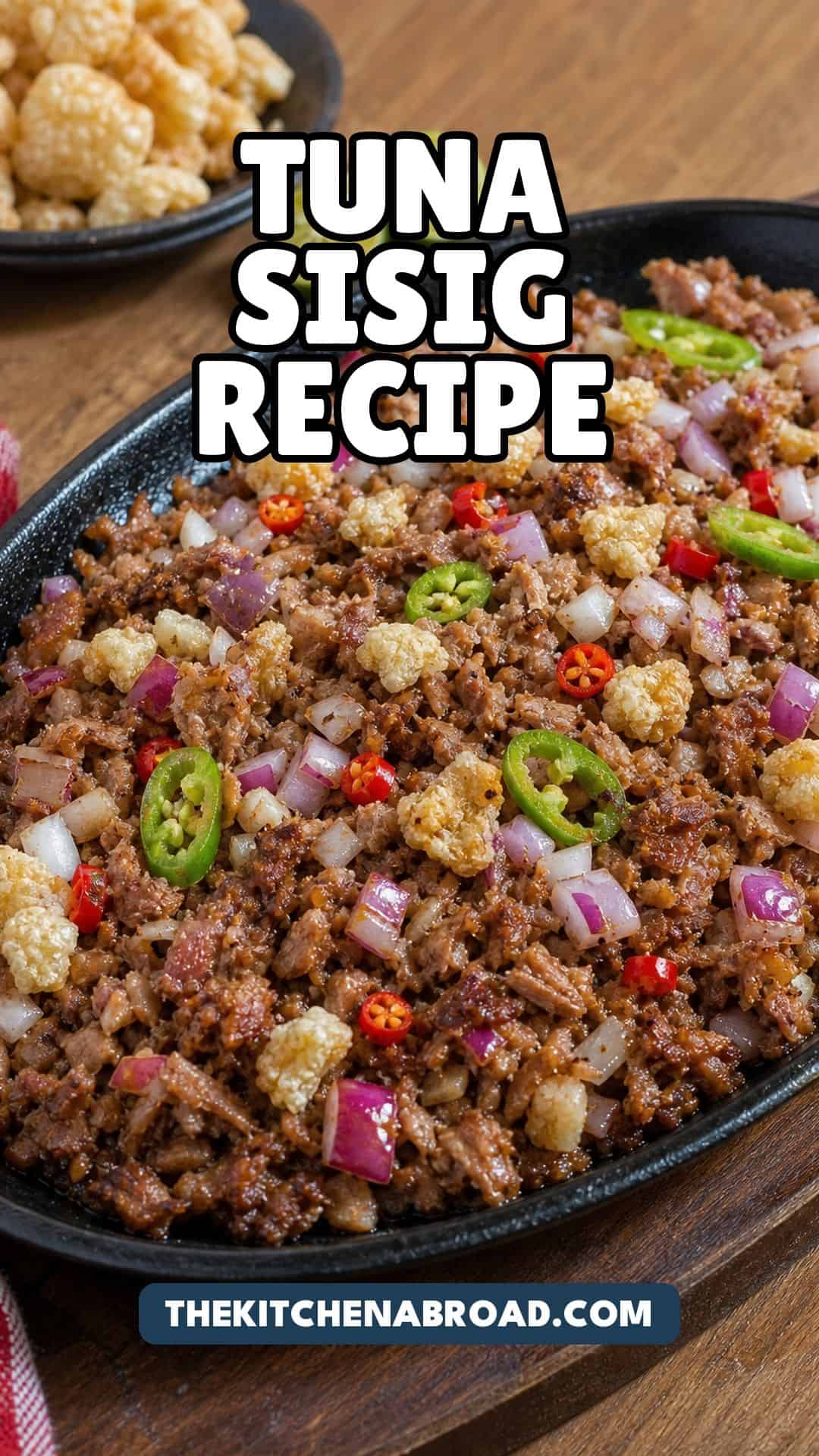
Sizzling tuna sisig recipe

Prep time: 5 minutes
Cook time: 10 minutes
Total time: 15 minutes
Servings: 2 to 3
Ingredients
- 2 cans (150g each) tuna in oil, well drained
- 1 tablespoon cooking oil
- 4 cloves garlic, minced
- 1 medium onion, finely diced
- 2 tablespoons soy sauce
- 1 tablespoon vinegar (cane vinegar or white vinegar)
- Juice of 2 calamansi or 1 small lemon
- 1 teaspoon liquid seasoning (Knorr or Maggi)
- 2 bird’s eye chili peppers, chopped (adjust to taste)
- 1 tablespoon mayonnaise (optional)
- Salt and black pepper to taste
- 1 tablespoon butter (for the sizzling plate)
- Crushed chicharon (pork cracklings), for topping
- 1 raw egg (optional, for serving)
- Calamansi wedges, for serving
Instructions
- Heat the cooking oil in a wide pan over medium-high heat. Add the garlic and cook until fragrant, about 30 seconds.
- Add the onion and cook until it softens and turns translucent, 1 to 2 minutes.
- Add the drained tuna. Break up big chunks with your spatula and spread the fish in an even layer across the pan.
- Leave it alone for 2 to 3 minutes, until the underside is crisp and golden. Flip it in sections.
- Add the soy sauce, vinegar, calamansi juice and liquid seasoning. Toss and cook for about 2 minutes, until the liquid is mostly absorbed and the pan sounds like it is frying again.
- Stir in the chili and the mayonnaise, if using. Season with salt and pepper and cook 1 more minute.
- Meanwhile, heat a cast iron sizzling plate over high heat for 2 to 3 minutes until very hot. Add the butter and let it melt and foam.
- Pile the tuna onto the plate. It should hiss loudly. If using the egg, crack it on top and stir it through quickly while the plate is still screaming hot.
- Scatter crushed chicharon over the top and serve right away with calamansi wedges and steamed rice.
Notes
Leftovers (without the egg and chicharon) keep in an airtight container in the fridge for up to 2 days. Reheat them in a hot, dry pan so the edges crisp again, and add fresh chicharon only at the table or it goes soft.
To prep ahead, cook the tuna through step 6 and refrigerate it. When you’re ready to eat, heat the plate, add butter and finish the dish in under 5 minutes.
Tuna sisig questions people ask
What is tuna sisig made of?
Tuna sisig is flaked tuna fried with garlic and onion, then seasoned with soy sauce, vinegar, calamansi and chili and served on a hot plate. Mayonnaise, a raw egg and crushed chicharon are common extras.
Can I use tuna in water instead of oil?
Yes, water-packed tuna works as long as you drain and press it well. Add an extra splash of oil to the pan, since it has less fat to help it brown, and give it a minute longer before flipping.
Is tuna sisig healthy?
Tuna sisig is much lighter than pork sisig, because the base is lean fish instead of fatty pork face. Canned light tuna is on the FDA’s Best Choices list for eating fish, which points to it as a lower-mercury option. The mayonnaise, butter and chicharon add most of the fat, so trim those if you’re keeping it light.
Can I make tuna sisig without a sizzling plate?
Yes. A cast iron skillet heated until very hot does almost the same job, and you can serve straight from it. Even a regular pan works; you lose the sizzle at the table, but the flavor is the same.
How long does tuna sisig keep?
Cooked tuna sisig keeps for up to 2 days in the fridge in a sealed container. Leave the egg and chicharon off anything you plan to store, and reheat in a hot pan instead of the microwave so it crisps up again.
What do you serve with tuna sisig?
Steamed white rice is the standard, with calamansi wedges on the side. As pulutan it needs nothing but a cold drink, and as dinner it’s good next to a sour soup like pork sinigang in tamarind broth.
Key takeaways
- Use oil-packed canned tuna and drain it hard; leftover liquid steams the fish instead of crisping it.
- Spread the tuna thin and leave it untouched for 2 to 3 minutes before you flip or season it.
- Add soy, vinegar and calamansi only after the crust forms, and cook until the pan is nearly dry.
- A smoking-hot cast iron plate with butter keeps the sisig frying at the table; a cast iron skillet is a fine stand-in.
- The whole recipe takes about 15 minutes and serves 2 to 3 with rice.
Got the plate hot? Try tofu on it next
Once you own a sizzling plate, it earns its cupboard space fast. The same soy, calamansi and chili treatment works on crisp-fried bean curd, and my Filipino-style sizzling tofu is the meat-free plate to make next. Cook both, put them side by side with a pot of rice, and you have a proper Filipino bar spread at home.
Sizzling Tuna Sisig
Tuna sisig is a budget-friendly Filipino appetizer made with canned or fresh tuna, soy sauce, calamansi, onions, and chili peppers, served sizzling hot on a cast iron plate.
Ingredients
- 2 cans (150g each) tuna in oil, well drained
- 1 tablespoon cooking oil
- 4 cloves garlic, minced
- 1 medium onion, finely diced
- 2 tablespoons soy sauce
- 1 tablespoon vinegar (cane vinegar or white vinegar)
- Juice of 2 calamansi or 1 small lemon
- 1 teaspoon liquid seasoning (Knorr or Maggi)
- 2 bird's eye chili peppers, chopped (adjust to taste)
- 1 tablespoon mayonnaise (optional)
- Salt and black pepper to taste
- 1 tablespoon butter (for the sizzling plate)
- Crushed chicharon (pork cracklings) for topping
- 1 raw egg (optional, for serving)
- Calamansi wedges for serving
Instructions
- Heat cooking oil in a pan over medium-high heat. Add the minced garlic and cook until fragrant, about 30 seconds.
- Add the diced onion and cook until slightly softened and translucent, about 1-2 minutes.
- Add the well-drained tuna flakes. Break up any large chunks with your spatula and spread the tuna in an even layer across the pan.
- Let the tuna cook without stirring for 2-3 minutes so the bottom gets crispy and golden. This is where the texture comes from, so resist the urge to move it around.
- Add the soy sauce, vinegar, calamansi juice, and liquid seasoning. Toss everything together and cook for another 2 minutes until the liquid is mostly absorbed.
- Stir in the chopped chili peppers and mayonnaise (if using). Season with salt and pepper. Cook for 1 more minute.
- Heat a cast iron sizzling plate on the stove over high heat for 2-3 minutes until very hot. Add the butter and let it melt and start to foam.
- Transfer the tuna sisig onto the sizzling plate. It should hiss and sizzle loudly. If using an egg, crack it on top of the sisig and stir it in quickly while the plate is still screaming hot.
- Top with crushed chicharon and serve immediately with calamansi wedges and steamed rice on the side.
Notes
Storage: Leftover tuna sisig (without the egg and chicharon) keeps in an airtight container in the fridge for up to 2 days. Reheat in a hot pan to restore the crispiness. The chicharon should be added fresh right before serving or it will go soggy.
Make-ahead tip: You can prep the tuna mixture ahead of time and store it in the fridge. When ready to serve, just heat up the sizzling plate and finish the dish in under 5 minutes. This makes it perfect for entertaining alongside other sizzling dishes like tofu sisig .
Last update on 2026-10-03 / Affiliate links / Images from Amazon Product Advertising API
