Mid-century modern kitchen ideas feel strongest when warm wood, flat-front cabinets, geometric tile, globe lighting, slim furniture, and restrained retro color are balanced with modern appliances and uncluttered storage. Aim for retro warmth, not a novelty time capsule.
A mid-century modern kitchen should feel warm, useful, and clean-lined. Walnut, teak, olive, mustard, burnt orange, terrazzo, globe lighting, and slim furniture can all belong, but the best rooms use those details with restraint instead of turning every surface into a retro reference.
For current mid-century modern kitchen ideas, think in anchors: one strong wood tone, one tile shape, one lighting style, one accent color, and storage that still supports daily cooking. That balance lets the kitchen feel collected and period-aware while still working for appliances, prep space, cleanup, and family routines.

You Might Also Like These Blog Posts
- Contemporary Kitchen Ideas
- Vintage Kitchen Ideas
- Warm Neutral Kitchen Ideas
- Japandi Kitchen Ideas
- Luxury Kitchen Ideas
Mid-Century Modern Kitchen Ideas for Retro Warmth
1. Walnut Cabinet Fronts
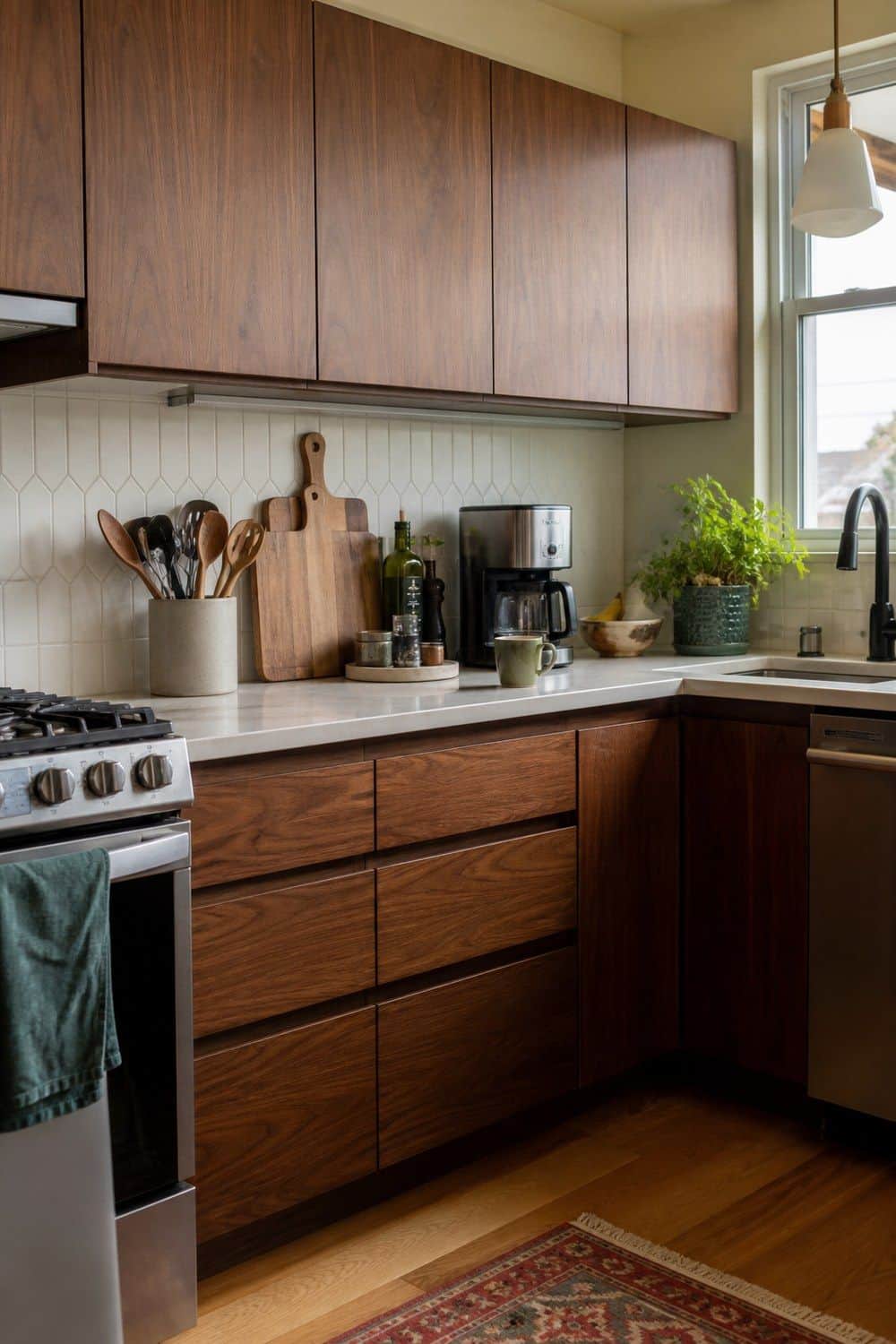
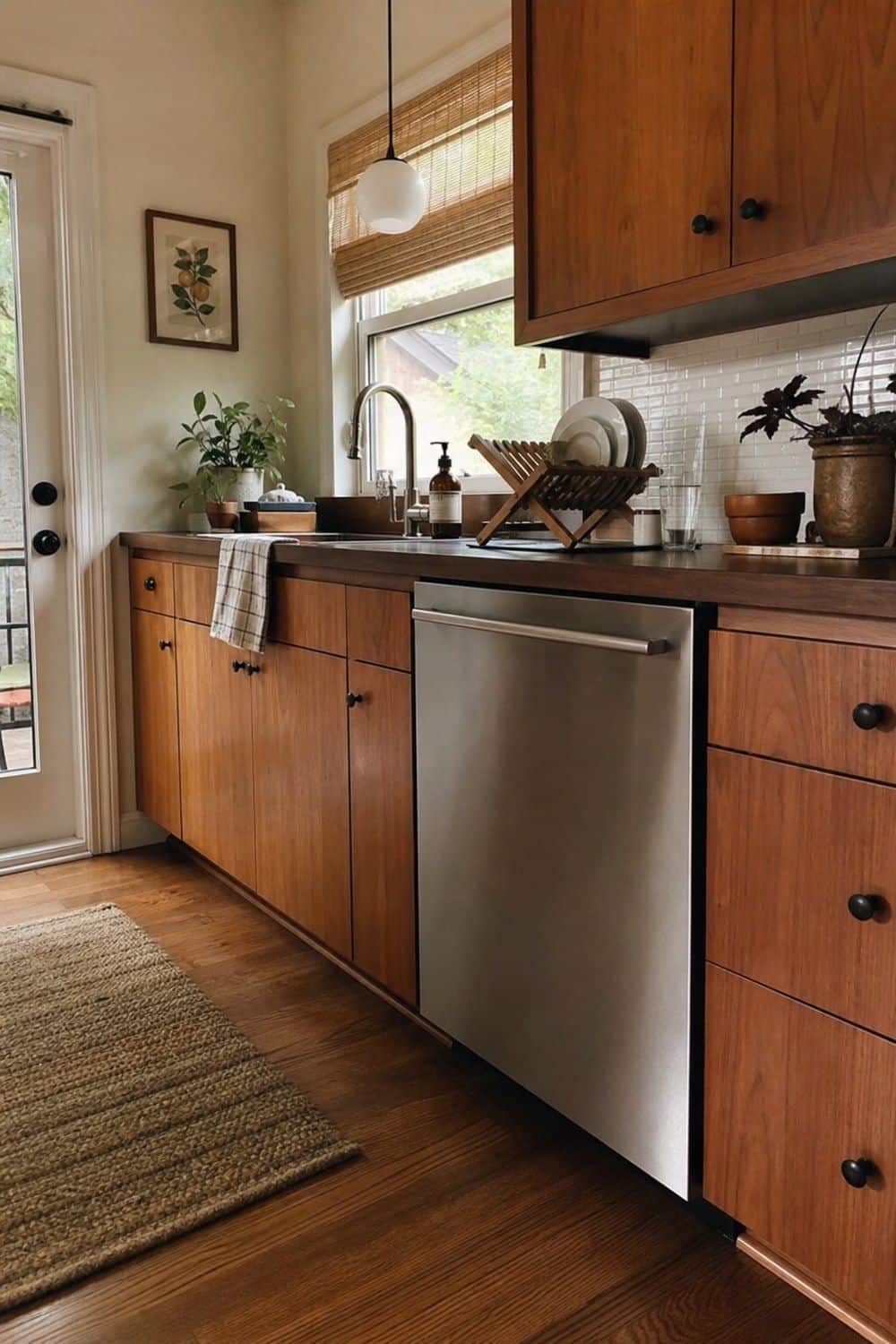
Walnut cabinet fronts are one of the clearest mid-century modern kitchen signals because they bring warmth, grain, and depth without needing extra decoration. Slab or flat-front doors keep the look clean, while visible wood grain gives the kitchen the organic material quality that makes MCM style feel grounded. Balance darker walnut with light counters, cream walls, simple tile, or warm white paint so the room does not feel heavy. Avoid ornate trim if you want the kitchen to feel current and still cook well.
2. Teak Accents Instead of Full Teak Cabinets
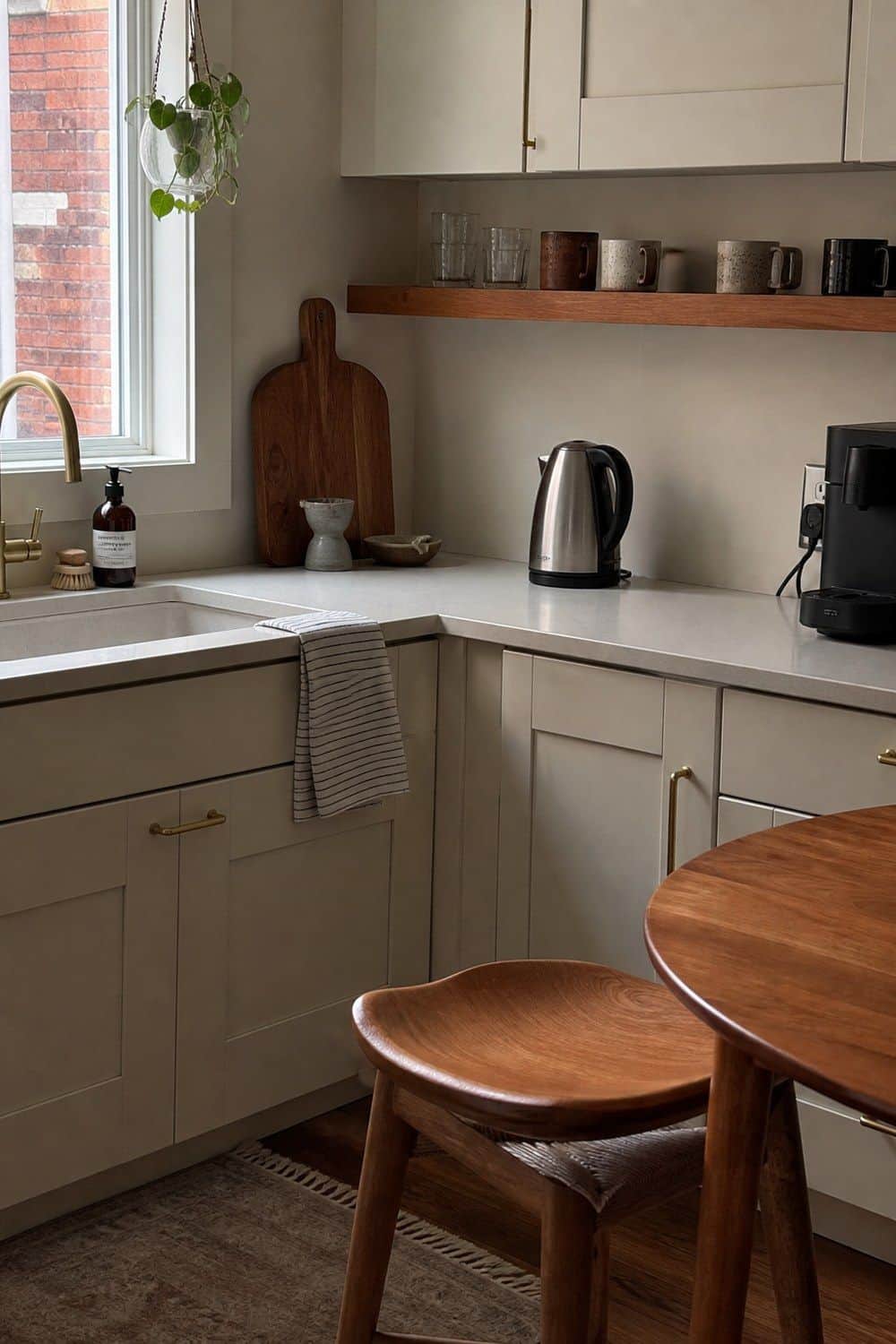
Teak can add a strong MCM material note, but it is easy for a whole kitchen to feel too orange or visually heavy. Smaller accents are often more flexible: a teak cutting board, a slim shelf, a stool frame, or a small breakfast table can warm the room without turning every cabinet into the same wood tone.
This approach is helpful when the cabinets are already painted or when a full remodel is not realistic. Repeat teak once or twice so it feels deliberate, then let cream, black, stone, or olive details keep the palette balanced.
3. Simple Flat Cabinet Doors
Flat-front cabinet doors support the clean lines that make a mid century modern kitchen feel simple and functional. They work in walnut, warm white, olive, muted blue, or a two-tone palette, and they usually look more authentic than highly detailed shaker or raised-panel doors. This detail can matter more than adding retro accessories everywhere. A simple cabinet profile gives the room an MCM foundation, while tile, lighting, stools, and color can layer in the era-specific character without making the kitchen feel like a set.

4. Integrated or Slim Cabinet Pulls
Slim cabinet pulls keep the cabinet face clean, which suits mid-century modern design better than ornate hardware. Integrated finger pulls, narrow brass pulls, matte black pulls, or minimalist knobs can all work as long as the shape stays simple and linear. Brass adds warmth to walnut, olive, and cream cabinets, while black creates a thin graphic line. Match the hardware finish to another small detail, such as stool legs, a faucet, a pendant, or shelf brackets, so the kitchen feels planned rather than patched together.

5. Globe Pendant Lights
Globe pendant lights give an immediate MCM shape without overwhelming the kitchen. A single globe can work over a sink or breakfast nook, while two or three scaled pendants can define an island. Warm bulbs are important because cool light can flatten wood and make retro colors feel harsher. Keep the fixture simple if the backsplash, stools, or island color already carries the style. Clear, opal, brass, or black details can all work, but the globe should feel like a shaped light source, not random retro decor.

6. Sputnik-Inspired Fixture With Breathing Room
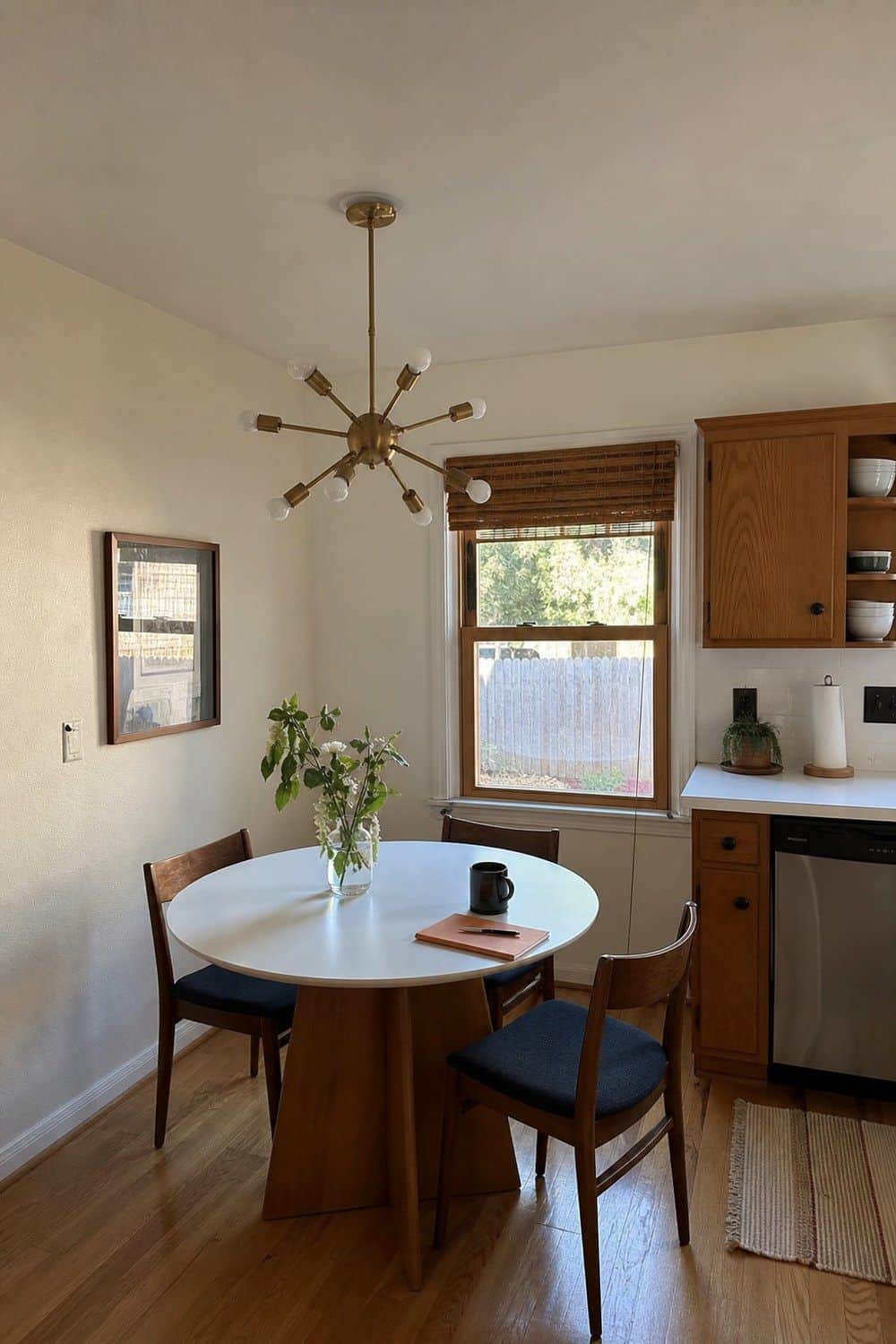
A Sputnik-inspired fixture can bring a sculptural mid-century moment over a breakfast nook, small dining table, or open kitchen corner. It needs enough visual breathing room because the arms and bulbs naturally become a focal point. Choose a smaller-scale version for kitchens with low ceilings, narrow islands, or nearby upper cabinets. Tie the finish to the hardware or faucet so the fixture looks connected to the rest of the space instead of floating alone overhead at night during dinner prep.
7. Square Tile for a Retro Grid
Square ceramic tile often feels more mid-century than standard subway tile because it creates a clean grid. Cream, warm white, olive, pale blue, mustard, rust, or soft beige can all work depending on the cabinet color and how bold the rest of the room is. Matching grout keeps the grid quieter, while contrast grout makes the pattern stronger. For a current kitchen, the tile should feel crisp and purposeful rather than busy, especially if the cabinets are already wood or a saturated color.

8. Geometric Tile in One Controlled Area
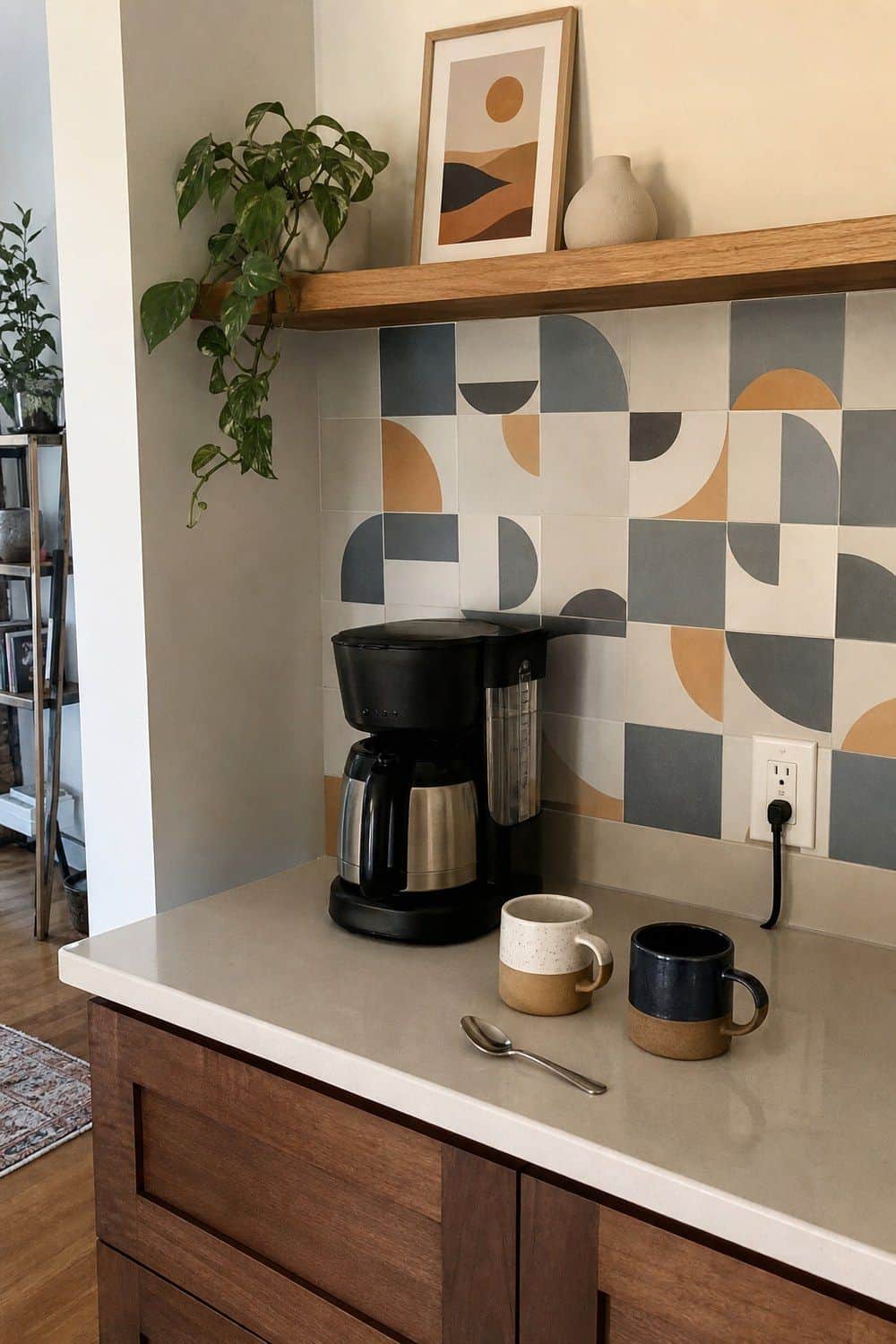
Geometric tile can nod to the era beautifully, but it needs a defined job. Let one area carry the pattern: the backsplash, a small bar nook, a floor inset, or a coffee station wall. Mixing bold backsplash tile with a bold floor and colorful stools can make the kitchen feel chaotic quickly.
If you want a temporary update, removable geometric tile can work in a small, low-risk area. Keep the pattern scale smaller when the cabinets are wood or olive, and use simpler surrounding surfaces so the geometry has room to stand out.
9. Terrazzo in a Small Dose
Terrazzo suits MCM kitchens because the flecks can pull together cream, rust, green, black, gold, or stone neutrals in one surface. It can appear as flooring, backsplash tile, a small counter accent, a tray, or even a stool detail. The key is restraint. Large areas of busy terrazzo can feel visually noisy, especially with walnut grain or geometric tile nearby. A smaller dose gives the kitchen retro texture while still keeping the cooking zone calm and easy to read during prep.

10. Olive Green Island
An olive green island gives a kitchen period-appropriate color without making it feel novelty retro. Olive feels earthy beside walnut, teak, warm white, stone, black, and brass, so it can act as the main accent while the rest of the kitchen stays quieter. Use it on an island, lower cabinets, a pantry wall, or a small cabinet run rather than every surface. A muted olive usually ages better than a bright green and still feels natural in daylight or evening light.

11. Muted Orange Through Small Accents
Muted orange belongs in many MCM palettes, but it looks better in small controlled accents than across the whole kitchen. Burnt orange towels, stool cushions, art, a small bowl, or a patterned rug can bring the retro warmth without making the room feel loud.
Look for clay, rust, pumpkin, or terracotta-adjacent shades instead of neon orange. Pair the color with walnut, cream, black, olive, or terrazzo so it feels grounded in materials, not just added as a theme color near the sink.

12. Mustard or Ochre as a Secondary Accent
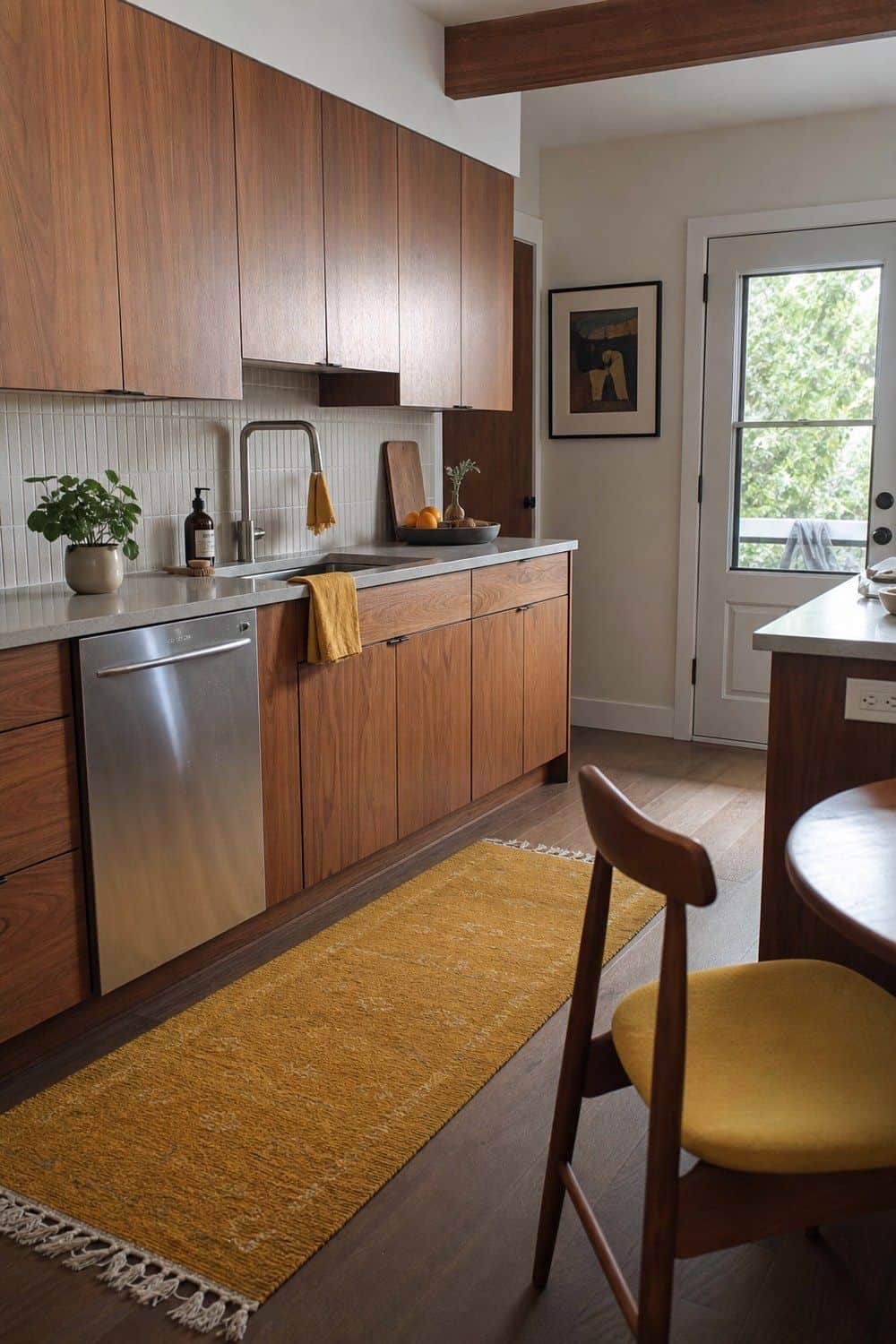
Mustard and ochre can warm up a mid-century kitchen when they stay secondary to the main wood and neutral surfaces. A mustard yellow kitchen rug, a chair cushion, a dish towel, a print, or a small tile moment can give the room color without overwhelming it. This color pairs especially well with walnut, olive, cream, and thin black accents. Keep the shade muted and slightly earthy so the kitchen feels retro-modern rather than cartoon-bright beside food and cookware on counters.
13. Pedestal Table for an Eat-In Corner
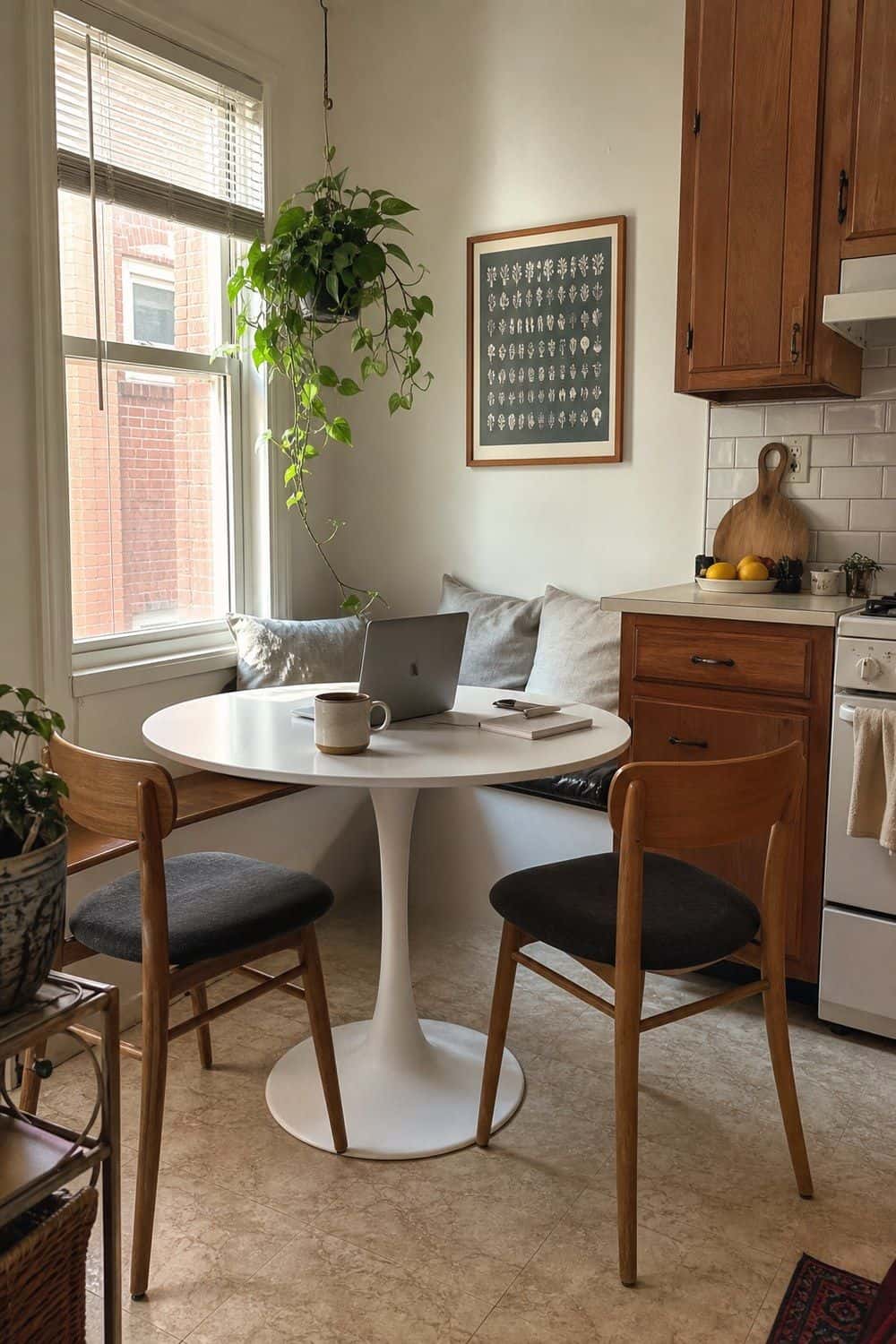
A tulip-style dining table is a strong fit for eat-in kitchens and breakfast nooks because the pedestal base keeps the footprint clean. It is easier to slide into a small nook than a table with four corner legs, which helps when the kitchen doubles as a coffee, homework, or casual meal spot. Pair it with simple chairs, a globe pendant, or a built-in bench. Keep the tabletop clear enough that the sculptural base remains visible from the main cooking area.
14. Leggy Counter Stools
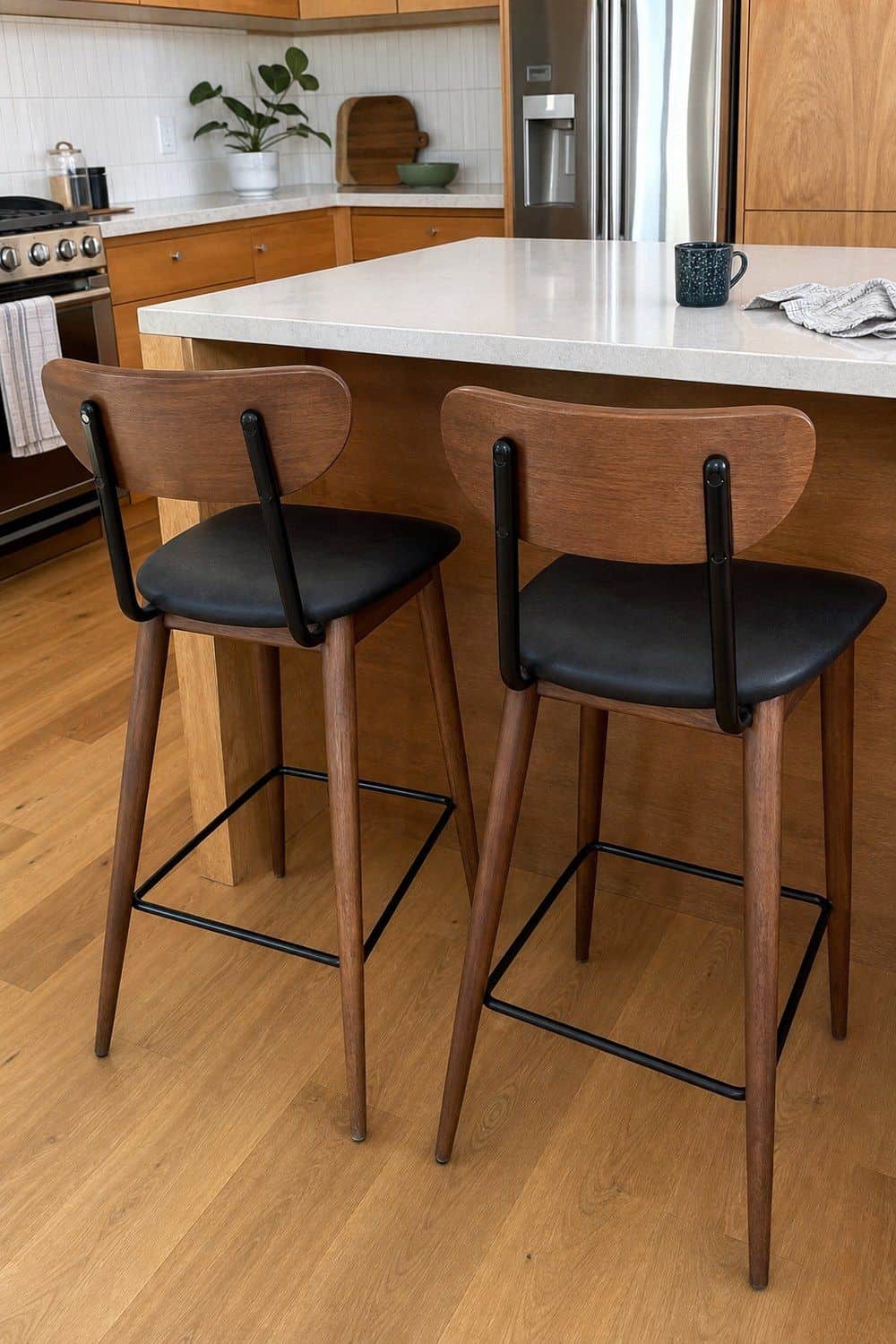
Leggy counter stools bring the lightness that many MCM kitchens need around an island or peninsula. Look for slim wood frames, tapered legs, curved backs, simple upholstered seats, or a mix of wood and black metal. The stools should feel open enough that they do not block the cabinet or island design.
Check counter height, seat depth, and spacing before buying. Wipeable materials are helpful in a kitchen, but comfort still matters if the island is used for breakfast, laptop work, or after-school snacks.
15. Slim Open Shelf Run
A short run of walnut floating shelves can add display space without turning the kitchen into a wall of collectibles. Use it for mugs, glassware, bowls, cookbooks, small ceramics, or one piece of art, keeping the arrangement useful and easy to dust.
Mid-century display feels strongest when it stays functional. Walnut shelves can tie back to cabinet fronts, stool frames, or a dining table, while the objects on them should repeat the palette rather than introduce several new colors or dust traps.

16. Warm White Walls Around Wood Cabinets
Warm white walls keep walnut, teak, olive, or orange accents from feeling too heavy. A creamy white or soft ivory usually works better than a stark blue-white, especially in kitchens with limited natural light or darker wood cabinets. The wall color should support the wood grain, not fight it. If the room feels dim, test paint samples at different times of day before choosing the final warm white, including under evening bulbs and task lighting near the counters and backsplash.
17. Wood With Stone or Laminate
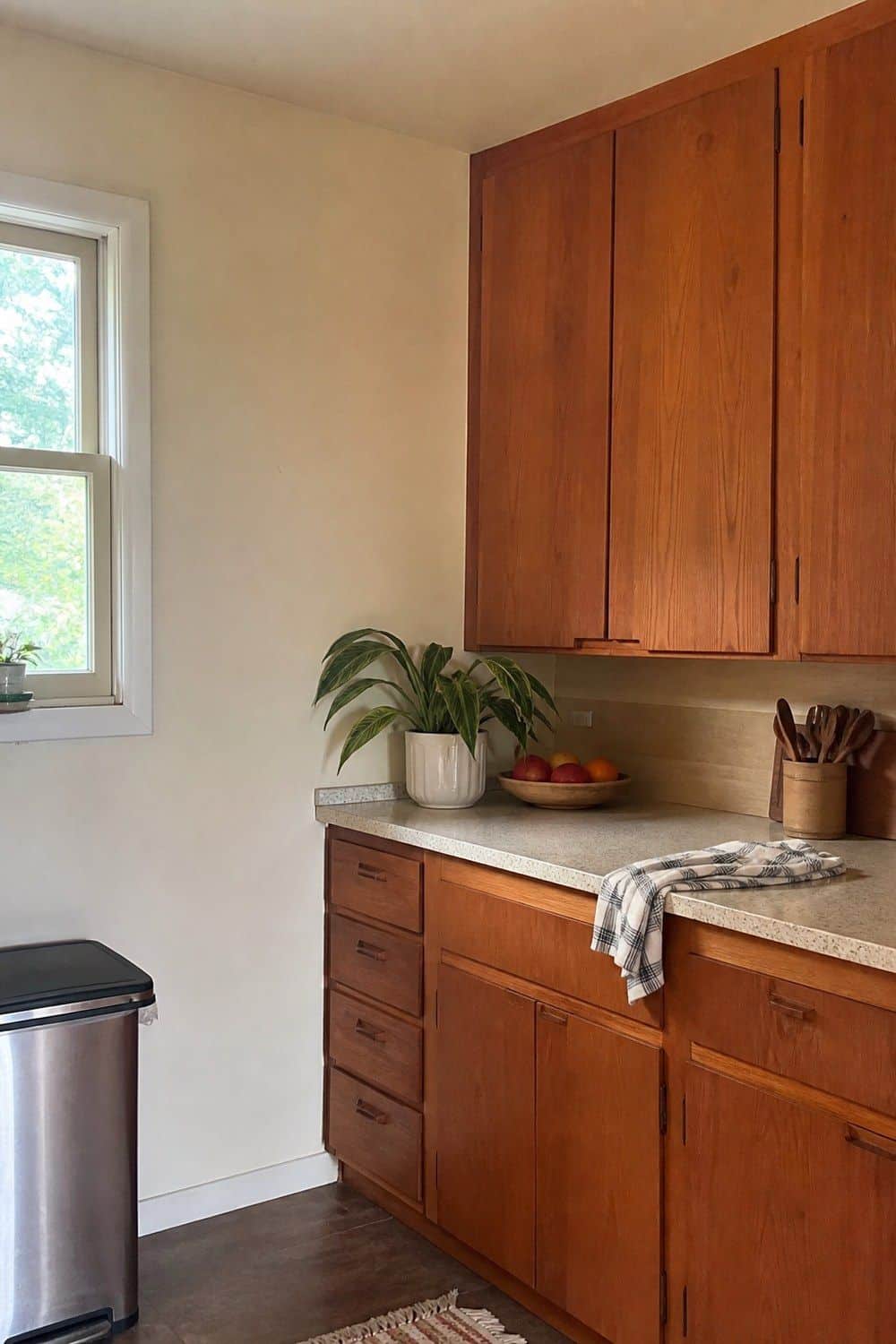
Mid-century kitchens historically mixed wood, laminate, metal, and stone, so a current version does not need to be all wood. Walnut cabinets can work with white quartz, stone-look porcelain, terrazzo, warm laminate, or simple counters that are durable enough for real cooking.
The mix should feel practical first. If you cook often, prioritize counters that clean easily, resist stains, and keep prep space bright. The material contrast will make the wood look richer without turning the whole kitchen dark or heavy.

18. Modern Appliances That Stay Visually Quiet
Modern appliances can work in an MCM kitchen when they stay visually quiet. Panel-ready dishwashers, simple stainless appliances, or clean black and white finishes can sit comfortably with walnut, tile, and retro color because they do not compete for attention. Novelty retro appliances can be charming, but they should fit the whole kitchen and not become the only thing the room is about. Let function lead the appliance choices, especially for cooking, cleaning, storage, ventilation, and daily use in busy households.
19. Natural Light as a Design Feature
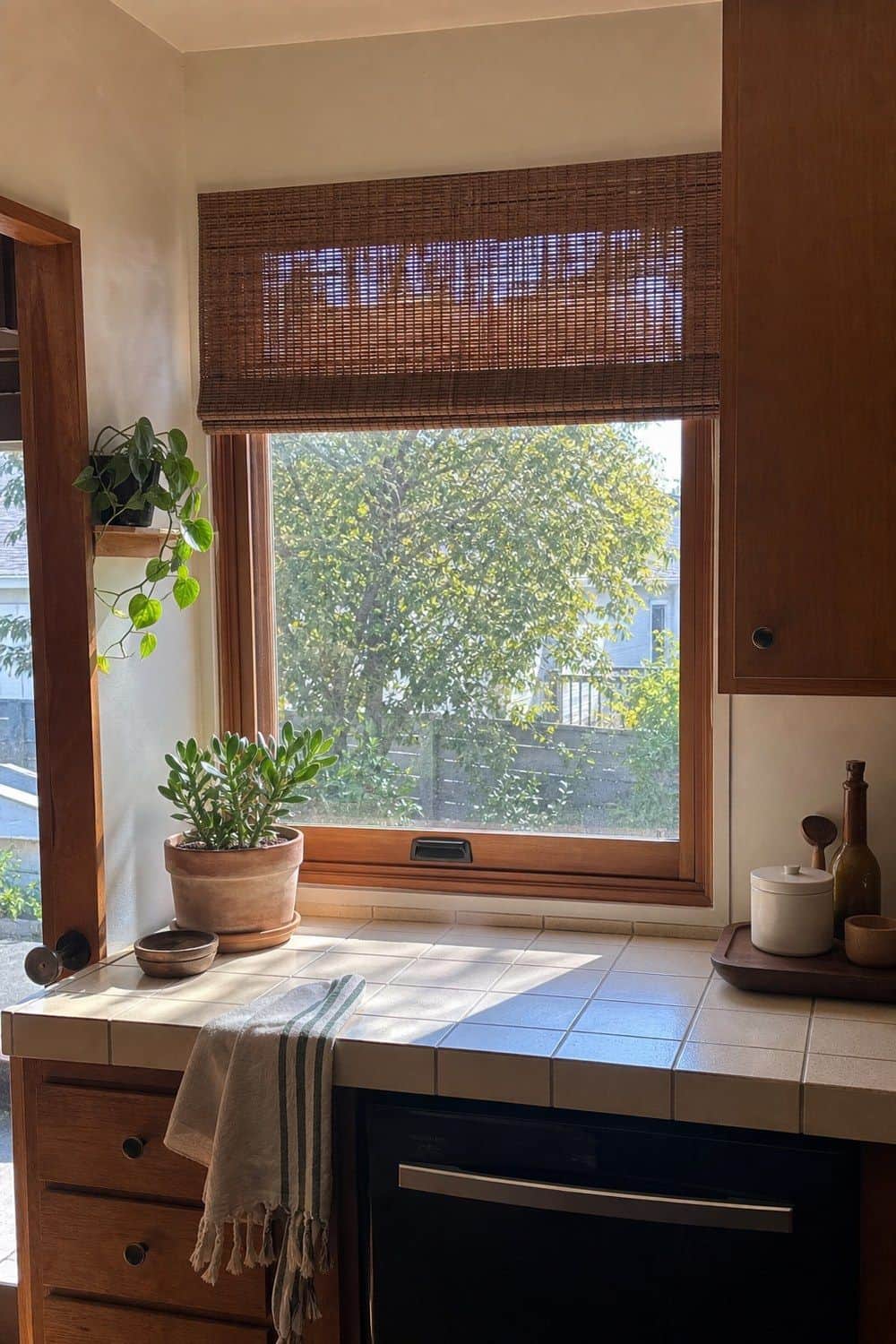
Natural light is part of what keeps mid-century modern kitchen ideas feeling open rather than heavy. If privacy allows, leave windows mostly uncovered so the cabinet lines, wood grain, tile, and furniture shapes can breathe during the day.
When coverage is needed, choose simple linen cafe curtains or light-filtering shades. Keep the fabric minimal so the window shape stays clean. This is especially helpful in smaller kitchens, where heavy window treatments can make the room feel cramped and hide the cabinet lines.
20. Graphic Wall Art as One Strong Accent
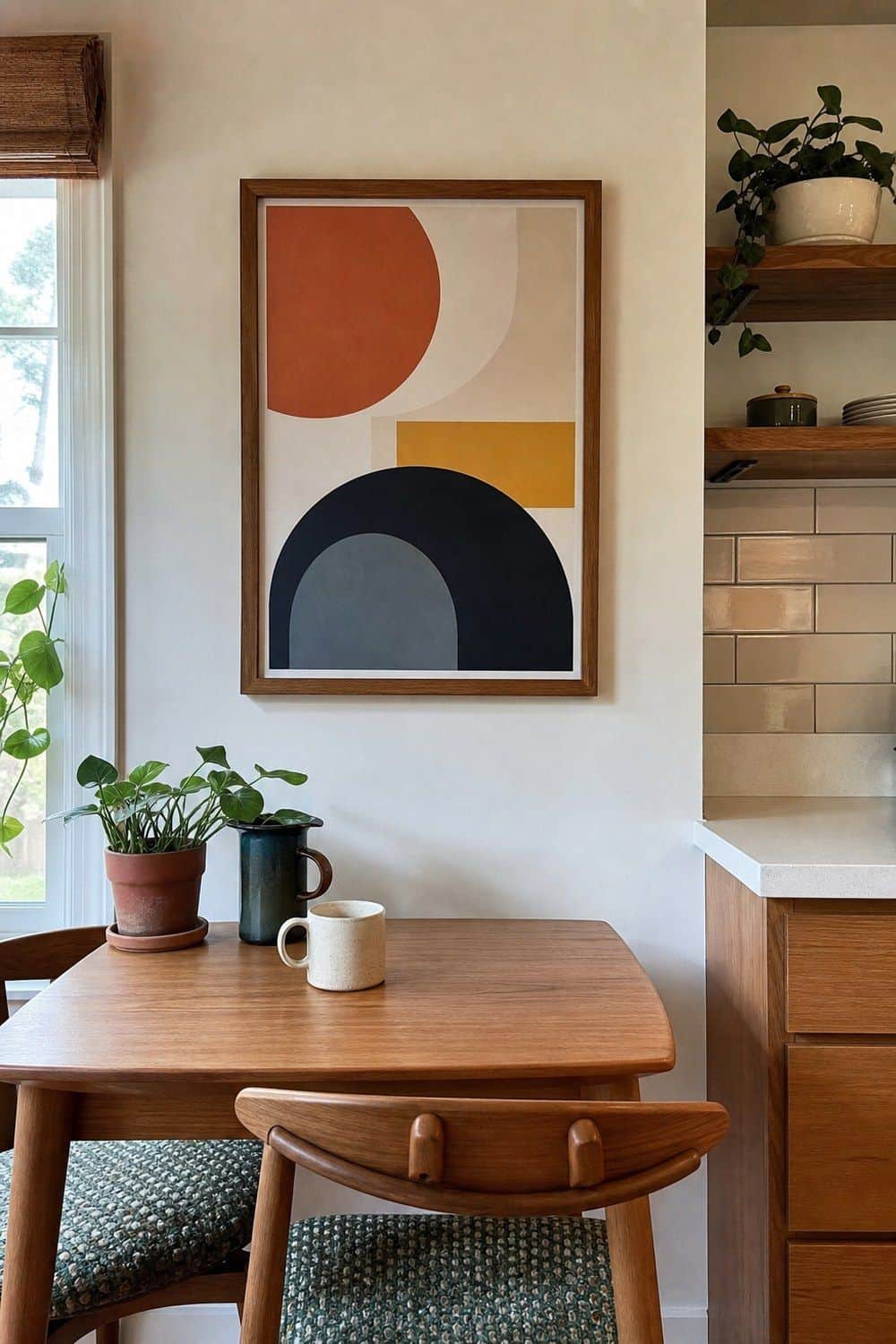
One piece of graphic wall art can finish a breakfast nook, open wall, or coffee corner without turning the kitchen into a gallery. Abstract prints, vintage-style posters, or simple geometric artwork can echo MCM shapes and colors when the rest of the room is fairly restrained.
Avoid filling every gap with retro signs. The art should support the palette, not announce the theme. A single larger print often looks more current than several small novelty pieces scattered around the room.
21. Black Accents as Thin Lines
Black works well in a mid-century kitchen when it appears as a thin line rather than a dominant surface. Matte black cabinet pulls, stool legs, shelf brackets, a faucet, window frames, or pendant details can add graphic contrast to wood and warm colors.
Too much black can overpower the retro warmth and make the kitchen feel more industrial than MCM. Repeat it in two or three narrow places, then let walnut, cream, olive, tile, and brass carry the main mood.

22. Removable MCM Backsplash
Peel and stick geometric tile can create a temporary mid-century backsplash when a full tile project is not possible. Look for subtle square, stacked, or geometric patterns that add shape without making the wall too busy. Test removability first, and avoid high-heat areas unless the product is rated for that placement. A small coffee nook, pantry wall, or short backsplash run is usually a better trial area than the entire kitchen, especially with wood cabinets or bold stools nearby in daylight.

23. Compact MCM Breakfast Nook
A compact breakfast nook can carry mid-century style in a smaller kitchen without needing a full remodel. A mid century dining bench, small tulip table, globe pendant, and one warm accent color can create the mood in a corner that still works for breakfast, coffee, or laptop use.
If storage is tight, choose a bench with hidden storage underneath. Keep the upholstery, table shape, and light fixture simple so the nook feels integrated with the kitchen instead of like a separate retro vignette.

24. No Novelty Diner Decor
The fastest way to make a mid-century kitchen look dated is to overuse novelty diner decor. Too many retro signs, checkerboard surfaces, bright clocks, and saturated colors can flatten the style into a theme instead of a livable kitchen. Choose useful pieces with MCM shapes or materials instead. A ceramic utensil holder, simple bowl, sculptural lamp, slim stool, or graphic print can bring the era into the room while still supporting daily cooking, serving, cleanup, storage, and counter order every day.

25. Retro Warmth With Current Function
The best modern retro kitchen feels warm and functional, not frozen in the past. Choose a few anchors: wood cabinets or shelves, one tile shape, one light style, one accent color, and storage that supports the way you cook. A kitchen design planner can help if you are juggling several choices at once. Map the big surfaces first, then add smaller details. This keeps MCM style from becoming a pile of unrelated retro objects around the room, shelves, and counters.

How to Keep a Mid-Century Kitchen Current
A current MCM kitchen usually has fewer strong references than people expect. Walnut, teak, cream, warm white, olive, mustard, burnt orange, teal, black, terrazzo, and stone neutrals can all work, but they do not all need to appear in the same room. Pick one main wood, one or two colors, and one graphic element.
Cabinets, backsplash, lighting, and furniture should do most of the style work. Small decor can support the palette, but too many novelty signs, clashing patterns, or orange wood tones will make the kitchen feel like a literal period replica. Modern appliances, durable counters, good storage, and clear prep surfaces are what keep the look livable.
Smaller kitchens can still use MCM style well. Focus on slim stools, a compact nook, one removable backsplash area, warm lighting, and wood accents that do not crowd the counters. The room should still be easy to cook in, clean, and move through.
Frequently Asked Questions
What makes a kitchen mid-century modern?
A mid-century modern kitchen usually combines clean lines, warm wood, flat-front cabinets, organic shapes, geometric details, retro color accents, and functional layouts. Current versions often add modern appliances, durable counters, and uncluttered storage so the kitchen feels inspired by the era without becoming a replica.
What colors work in a mid-century modern kitchen?
Good MCM kitchen colors include walnut, teak, cream, warm white, olive, mustard, muted orange, teal, black, and stone neutrals. The most livable palettes use one or two retro colors with wood and neutral surfaces, rather than filling the whole kitchen with saturated shades.
How do you make a mid-century kitchen look current?
Use authentic materials, clean cabinet lines, simple lighting, and modern appliances. Limit novelty decor, avoid competing geometric patterns, and keep storage functional. A current mid-century kitchen should feel warm, uncluttered, and practical for daily cooking, not like a preserved period room.
What backsplash works in a mid-century modern kitchen?
Square tile, stacked tile, geometric tile, terrazzo, subtle zellige, and warm neutral tile can all work in a mid-century modern kitchen. Choose the backsplash based on how bold the cabinets are. Wood cabinets often look better with simpler tile, while plain cabinets can handle more pattern.
Are walnut cabinets good for mid-century kitchens?
Yes, walnut cabinet fronts are one of the strongest choices for mid-century kitchens. They add warmth, grain, and clean-lined character. For a current look, pair walnut with light counters, warm white walls, simple hardware, and tile that does not compete with the wood grain.
Can mid-century modern work in a smaller kitchen?
Mid-century modern can work well in a smaller kitchen if the details stay slim and functional. Try flat-front cabinets, leggy stools, a compact breakfast nook, warm wood accents, one simple light fixture, and restrained color. Avoid bulky furniture or too many display pieces.
What lighting fits a mid-century kitchen?
Globe pendants, dome pendants, Sputnik-inspired fixtures, warm under-cabinet lighting, and simple brass or black fixtures all fit mid-century kitchens. Scale the lighting to the island, sink, or dining nook, and use warm bulbs so wood and retro colors feel inviting.
How do I avoid making a mid-century kitchen look too retro?
Avoid novelty diner decor, too many orange tones, and multiple bold geometric patterns. Choose a few MCM anchors, such as walnut cabinets, globe lighting, square tile, or slim stools, then balance them with current storage, quiet surfaces, and modern appliances.
Final Thoughts
Mid-century modern kitchen ideas are strongest when they combine retro warmth with practical modern function. Let wood, clean cabinet lines, geometric tile, sculptural lighting, and one or two warm colors lead the style, then keep the rest of the room calm enough for everyday cooking.