
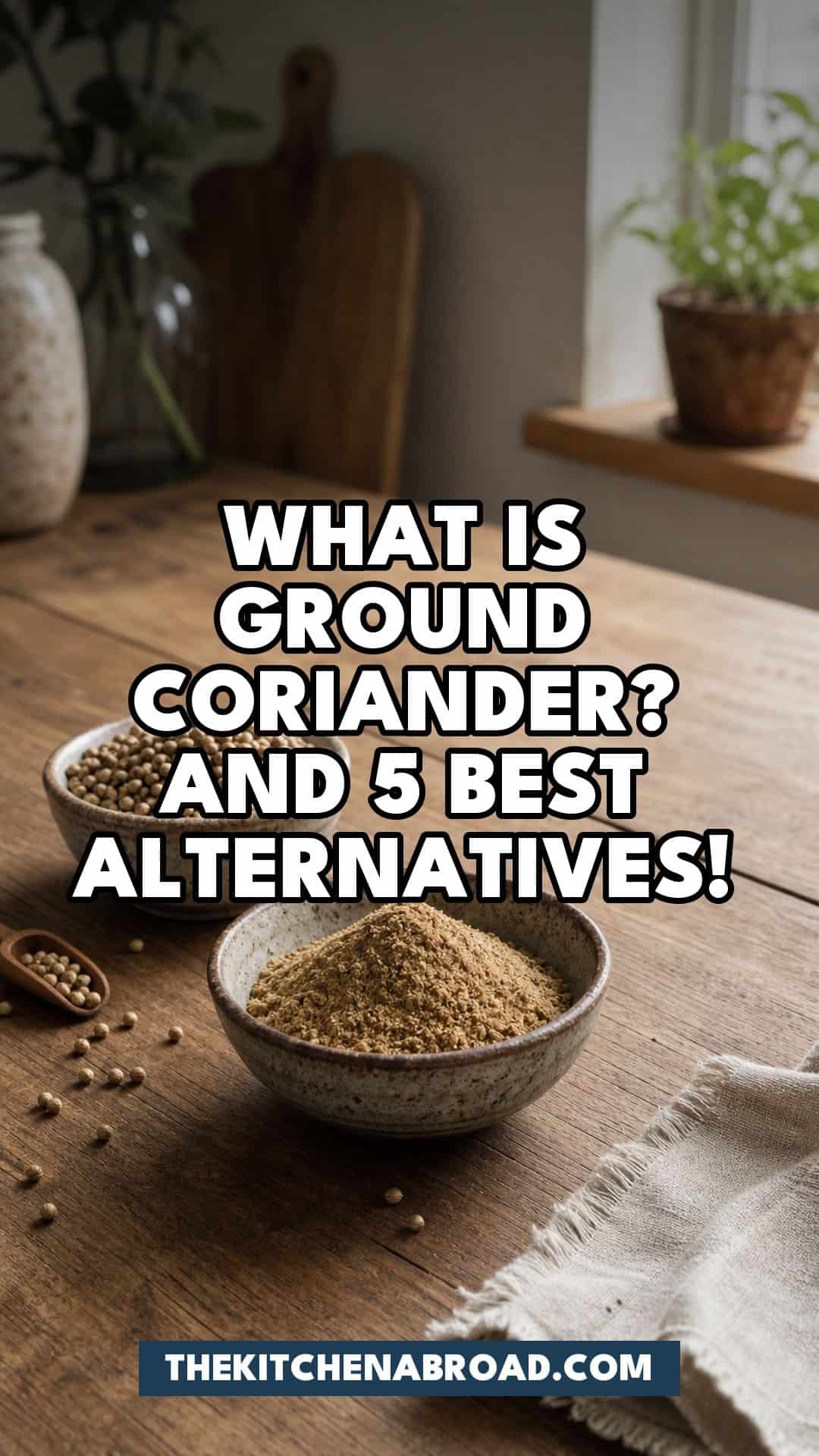
Ground coriander is the dried seed of the coriander plant, ground into a tan powder. It tastes warm, lemony and a little sweet, nothing like the fresh leaves people call cilantro, and it goes into curries, chili, spice rubs, lentils, sausages and baked goods. Keep it airtight and replace it once the smell fades.
Is ground coriander just dried cilantro? Nope, and that one mix-up is behind most of the confused messages and ruined dinners around this spice. Ground coriander is made from the round seeds of the plant, while cilantro is the leafy top, and the two taste so different that swapping one for the other changes the whole dish. In Filipino kitchens the leaves even get their own name, wansoy, and nobody grabbing a bunch at the market is thinking about the little seeds the plant makes later.
So let’s sort it out properly: what ground coriander actually is, what it tastes like, the dishes where it does the heavy lifting, the five swaps that work when the jar is empty, and the boring but important part about keeping it fresh. Because a jar of coriander that smells like dust will cook like dust too.
Recommended reads:
- Easy Vegetable Curry
- Thai Chicken Cashew Nuts
- Homemade Chili Oil
- Old-Fashioned Beef Stew
- Roasted Spring Vegetables
What is ground coriander?
It’s whole coriander seed that has been dried and milled into a fine, sandy-colored powder. The seeds come from Coriandrum sativum, the same plant whose leaves are sold as cilantro in the US and as fresh coriander in most other countries (that naming difference causes half the confusion, and recipes from the UK, Australia or Asia often just say “coriander” for the leaves).
The seeds are small, round and light brown, and they crack open easily between your fingers. Once ground, they smell warm and citrusy, a bit like orange peel crossed with toasted nuts. The taste is mild and slightly sweet, with none of the soapy, grassy bite some people hate in the fresh herb. So if you’re one of those cilantro-haters, relax, the powder is a completely different animal.
Culinary uses of ground coriander
Use it in dishes that cook for a while or need a warm, rounded spice base. It rarely stars on its own, but it makes cumin, chili and garlic taste fuller and less harsh, which is why so many spice blends use it as the filler that quietly holds everything together.
Three easy ways to start using it this week:
- Stir a teaspoon into a pot of lentil soup or dal along with the onions, and taste how much softer the cumin becomes.
- Rub it with salt, paprika and a little brown sugar onto chicken thighs or pork chops before roasting.
- Add half a teaspoon to a carrot or pumpkin soup, where its sweetness matches the vegetables really well.
It also turns up in sausage seasoning, pickling mixes, meatballs, chili con carne, tagines, and some cakes and cookies, especially the spiced ones that come out in December.
Ground coriander alternatives and substitutes
The best substitute for ground coriander is whole coriander seed you grind yourself, and after that it depends on the dish. Here are five swaps, closest first:
- Whole coriander seeds: toast them in a dry pan for a minute, then grind. Same spice, stronger and fresher, so start with a little less.
- Cumin: earthier and louder, so use about three quarters of the amount and add a squeeze of lemon if the dish needs the citrus note back.
- Caraway: warm with a mild anise edge. Good in rye bread, sausages and cabbage, and use a little less than the recipe asks for.
- Garam masala: already contains coriander plus other warm spices. Use about half the amount in curries and stews.
- Fennel seed: sweeter and more licorice-like, best in tomato sauces and pork dishes, used sparingly.
If the recipe calls for “coriander” and you can’t tell whether it means seed or leaf, look at how it’s measured. Teaspoons usually mean the ground seed, while handfuls, sprigs or “chopped” mean the fresh leaves.
How to store ground coriander
Keep ground coriander in a tightly closed jar in a cool, dark cupboard, away from the stove and the sunny windowsill. Heat and light flatten it, air finishes the job, and ground coriander loses its smell much faster than whole seeds because all that surface area is exposed.
It doesn’t go bad in the food-safety sense if it stays dry, it just slowly turns into tan powder that tastes of nothing much. The easiest test costs nothing: open the jar, rub a pinch between your fingers and smell it. Bright and citrusy means keep cooking with it. Faint, dusty or like cardboard means it’s time for a new jar, whatever the date on the label says.
If you only use it now and then, buy whole seeds instead and grind small amounts as you go. They hold their aroma far longer, and a cheap pepper mill or a mortar and pestle does the job.
Where to buy ground coriander
You’ll find ground coriander in the spice aisle of almost any supermarket, usually next to cumin. For better prices and fresher stock, try Indian, Middle Eastern, Latin American or Asian grocery stores, where it moves off the shelf fast and often comes in bigger, cheaper bags.
Bulk spice shops are handy too, because you can buy just a few tablespoons. A small amount you finish in a few months beats a giant tub that fades in the back of the cupboard (we’ve all got one of those, I’m sure).
Common mistakes using this product
The biggest mistake is treating ground coriander and fresh cilantro as the same ingredient. A curry that needs a tablespoon of ground seed won’t taste right with a handful of leaves, and a salsa that wants fresh cilantro won’t be saved by sprinkling powder on top.
The second one is adding it at the very end like a garnish. Raw ground coriander tastes a little chalky and flat, so it needs a minute in hot oil or a few minutes of simmering to wake up.
The third is using an old jar and then deciding you don’t like coriander. Give a fresh jar a fair chance before you write the spice off.
Is ground coriander the same as cumin?
No, ground coriander and cumin are two different seeds from two different plants, even though they look similar in the jar and often go into the same recipes. Cumin is darker, earthier and slightly bitter, with that smoky taco-night smell, while coriander is lighter, lemony and sweeter.
They work so well together because each one fills in what the other is missing. That’s why you see them side by side in curry powder, chili seasoning and many Middle Eastern spice mixes, often in roughly equal amounts or with more coriander than cumin. If you’re out of one, the other can stand in, but taste as you go and use less cumin than coriander.
Famous dishes this is used in
You’ve probably eaten it many times without knowing. It shows up in:
- Curry powder and garam masala, where it’s often one of the main ingredients
- Indian dal, chana masala and many chicken curries
- Moroccan tagines and the spice blend ras el hanout
- Falafel and other Middle Eastern chickpea dishes
- Chili con carne and Tex-Mex spice rubs
- South African boerewors and other sausages
- Pickling spice for cucumbers and vegetables
- Gingerbread-style cookies and spiced cakes
Tips on how to use ground coriander
Bloom ground coriander in hot oil or butter for 30 seconds to a minute before the liquid goes in. Watch it closely, because it turns from fragrant to burnt quickly, and burnt coriander tastes bitter. As soon as it smells toasty and the onions around it look glossy, add your tomatoes, stock or coconut milk.
Measure all your ground spices into one small bowl before you start cooking (cooks call it mise en place, I call it not panicking). When the onions are ready, everything goes in together, nothing scorches while you hunt for a jar, and the spices bloom evenly.
If you’ve got whole seeds, toast them in a dry pan until they smell nutty and start to pop, cool them for a minute and then grind. That two-minute step gives you the brightest coriander flavor you can get at home.
More TKA reads
- Easy Vegetable Curry
- Thai Chicken Cashew Nuts
- Homemade Chili Oil
- Old-Fashioned Beef Stew
- Roasted Spring Vegetables
Ground Coriander FAQ
Is ground coriander the same as cilantro?
No. Ground coriander comes from the dried seeds of the plant, while cilantro is the fresh leaves and stems. They come from the same plant but taste completely different, so they can’t replace each other in recipes.
What does ground coriander taste like?
It tastes warm, mildly sweet and citrusy, with a light floral, nutty note. It’s much gentler than cumin and has none of the grassy or soapy taste of fresh cilantro.
What can I use instead of ground coriander?
Freshly ground coriander seeds are the closest replacement. After that, use about three quarters as much cumin, a little less caraway, or about half as much garam masala, and taste as you go.
Does ground coriander go bad?
Not in the unsafe sense, as long as it stays dry, but it loses aroma and flavor over time. Rub a pinch between your fingers and smell it, and replace the jar once it smells faint or dusty.
Is coriander seed the same as ground coriander?
Yes, ground coriander is simply coriander seed that has been ground. Whole seeds keep their flavor longer, so many cooks buy seeds and grind small amounts as needed.
Key Takeaways
- Ground coriander is ground coriander seed, not dried cilantro leaves.
- It tastes warm, lemony and mild, and makes cumin and chili taste rounder.
- Bloom it in hot oil for under a minute instead of sprinkling it on at the end.
- Whole seeds you toast and grind are the best substitute, then cumin or garam masala.
- Store it airtight and dark, and trust your nose over the date on the jar.
Smell Your Coriander Jar Before Dinner Tonight
Go open your spice cupboard, find the coriander and give it a sniff before you plan anything else. If it smells warm and citrusy, put it in tonight’s lentils, chicken or soup with the onions and see how much rounder everything tastes. If it smells like the inside of an old cardboard box, put a new jar (or better, a bag of whole seeds) on your shopping list, because no recipe can fix a spice that has already given up.