Hakklihakaste is Estonian minced meat sauce: ground beef browned in butter with onion and garlic, thickened with a spoonful of flour, simmered with water or stock and a bay leaf, then finished with sour cream. It takes about 30 minutes from cold pan to table, and the classic way to eat it is spooned over boiled potatoes.
Half a kilo of mince, one onion, a tub of sour cream. That is most of the shopping list for hakklihakaste, the Estonian minced meat sauce that shows up on family tables on ordinary weeknights. The name is as plain as the dish. Hakkliha means minced meat. Kaste means sauce.
Nobody puts it on a tasting menu, and that’s fine. It’s cheap and fast, and it tastes far better than the ingredient list suggests. I cooked professionally in Finland for fourteen years, a short ferry ride from Tallinn, and this kind of flour-and-sour-cream pan sauce is the backbone of home cooking on both sides of the Gulf.
The whole recipe hangs on two small moments: how long you cook the flour, and how hot the pan is when the sour cream goes in. Get those right and you can make it half asleep.
Pans and Tools for a Proper Hakklihakaste


A wide, heavy skillet is the one I’d care about here, since crowded mince steams instead of browning.
Is hakklihakaste the same as beef stroganoff?
No. They’re cousins, though. Stroganoff usually means strips of beef, mushrooms and often mustard, with cream or sour cream stirred through. Hakklihakaste uses mince, skips the mushrooms and leans on a small roux for body, so the sauce clings to a potato instead of pooling around it.
Think of it as a gravy that happens to be full of meat. That’s also why it reheats so well: flour-thickened sauces hold together the next day, where a pure cream sauce tends to break.
Finland has the same habit with sausages. Our Finnish nakkikastike is chopped frankfurters in a creamy mustard gravy, made with nearly the same method. If you can make one, you can make the other.
Why the flour goes in after the meat
In a restaurant kitchen you’d usually cook a roux on its own, butter and flour stirred in a pot until it smells like toasted biscuits, then whisk in hot stock. At home there’s no need. By the time the mince has browned, the pan already holds butter and rendered beef fat. Sprinkle the flour straight over the meat and that fat becomes your roux.
Stir it for a full minute before any liquid goes in. Raw flour tastes like wallpaper paste, and one minute over medium heat is enough to cook that out. You’ll see the meat look slightly dry and coated, almost sandy. That’s what you want.
Two tablespoons of flour to 250 ml of liquid gives a sauce that coats the back of a spoon. It should be loose enough to run into the cracks of a split potato, thick enough to stay there.
Brown the meat, don’t stir it to death
Gray mince is the most common mistake with any dish like this. Once the meat hits the pan, break it up and then leave it alone for 2 to 3 minutes. The underside needs contact with hot metal to brown. Stir constantly and it steams in its own juices instead.
If your skillet is small, give the meat more room by pushing the onions to the edges. Crowded meat steams. A wide, heavy pan is worth more here than any special ingredient.
Water and a bouillon cube is the traditional move
This is thrifty home food, and plenty of Estonian cooks use plain water with a stock cube. Use beef stock if you have it and the sauce gets deeper and darker. The bay leaf is easy to skip and you shouldn’t. You barely notice it when it’s there. You notice when it isn’t.
Which mince works best?
Beef with around 15 to 20 percent fat is the classic choice and gives the richest sauce. Skip the extra-lean packs here. Five percent mince turns grainy and dry after simmering, and there’s no fat left to carry the flour.
A 50/50 mix of beef and pork is just as traditional and, to my taste, a little better. Pork brings sweetness and a softer texture. Supermarkets in Estonia and Finland sell ready-mixed pork and beef mince for exactly this kind of cooking, and in other countries you can buy one pack of each.
Minced chicken or turkey works if you want something lighter, but expect a paler, milder sauce. Whatever you use, cook it through: the USDA recommends cooking ground beef to 160°F (71°C), and with mince simmered this long you’ll be well past it.
How do you keep sour cream from curdling in a hot sauce?
Mostly with fat and temperature. Full-fat sour cream, ideally over 20 percent, is much more stable than light versions, which split almost the moment they meet heat. If your shop sells smetana, the richer Eastern European sour cream, grab it. It is made for exactly this job.
Take the sour cream out of the fridge 20 to 30 minutes before you start cooking. Cold dairy dropped into a hot pan is asking for trouble. For extra insurance, stir two spoonfuls of the hot sauce into the sour cream first, then tip it all back into the pan.
Turn the heat to its lowest setting before the sour cream goes in, and keep it there. A lazy bubble at the edges is the most you want. If it does split a little, take the pan off the heat and stir hard. It usually comes back.
What to serve with hakklihakaste
Boiled potatoes are the classic, and they’re the right call. Floury varieties soak up the sauce, waxy ones hold their shape on the plate. Mashed potatoes are the comfort-food version. Wide egg noodles work well too, and so does plain steamed rice if that’s what’s in the cupboard.
On the side, the traditional partner is a quick cucumber salad: thin slices, a pinch of salt and a splash of vinegar. The sharpness cuts straight through the sour cream.
Feeding more people? Start with a bowl of Finnish vegetarian cabbage soup and you have a proper Nordic two-course dinner for very little money.
Hakklihakaste recipe
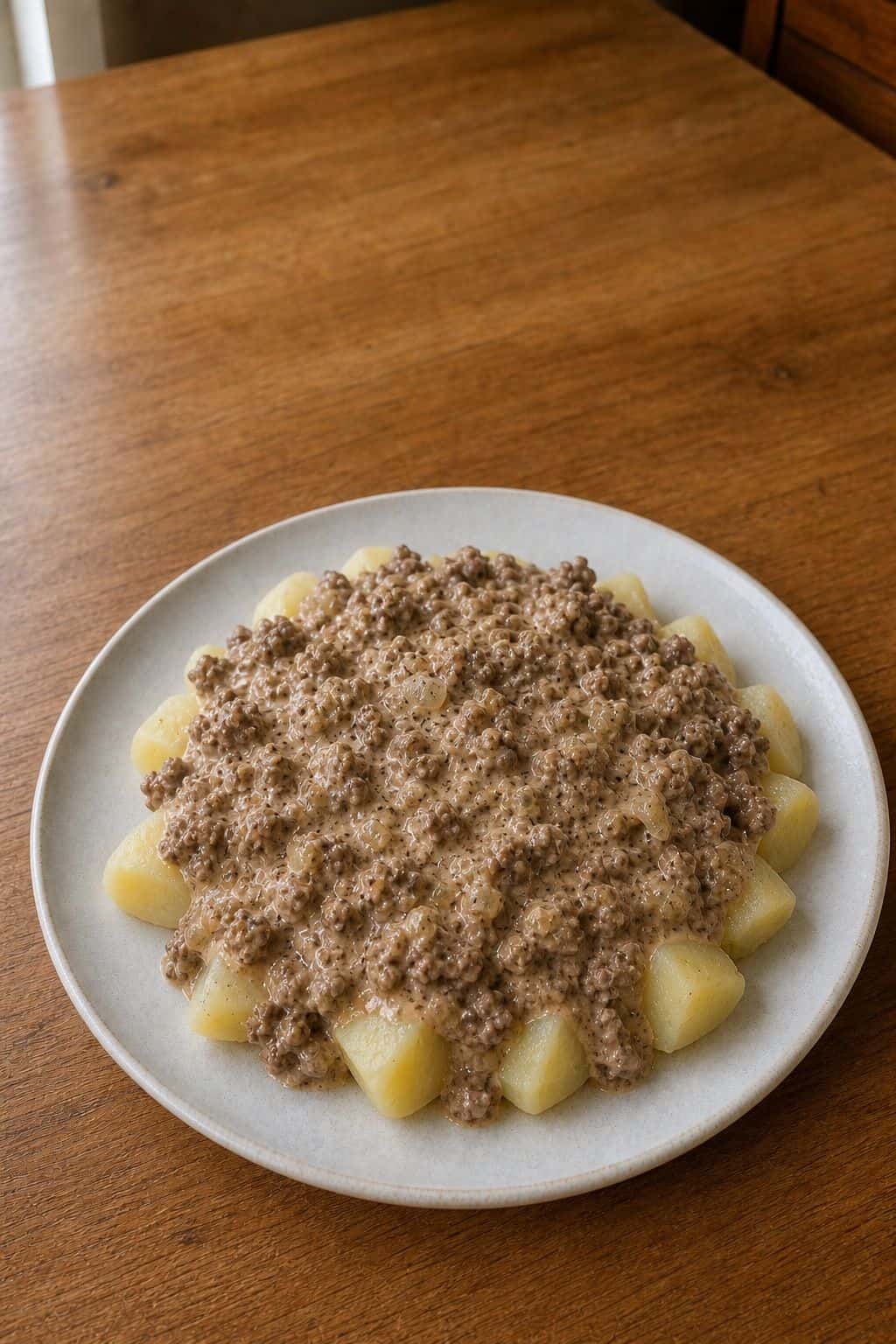
Here it is the way it usually lands on an Estonian table: browned mince in a light sour cream gravy, spooned over chunks of boiled potato, nothing fancy on the side.
Prep time: 5 minutes | Cook time: 25 minutes | Total time: 30 minutes | Servings: 3 to 4
Ingredients
- 500 g minced beef (or pork, chicken, or a mix)
- 2 tbsp butter
- 1 large onion, finely diced
- 3 cloves garlic, minced
- 2 tbsp all-purpose flour
- 250 ml water (or beef stock)
- 1 bay leaf
- 1 bouillon cube (optional)
- 200 ml sour cream, at room temperature
- Salt and black pepper, to taste
Instructions
- Melt the butter in a heavy skillet over medium heat. Add the onion and cook for about 5 minutes, until soft and lightly golden at the edges.
- Add the garlic and cook for 1 minute, until fragrant.
- Add the mince and break it up with a spoon. Leave it undisturbed for 2 to 3 minutes, then stir and keep cooking until no pink remains and the meat has some brown color, about 8 minutes in total.
- Sprinkle the flour over the meat and stir for 1 minute, until the meat looks evenly coated and slightly dry.
- Pour in the water or stock, add the bay leaf and the bouillon cube if using, and season with black pepper. Stir, bring to a gentle simmer and cook for 8 to 10 minutes, until the sauce thickens and coats the back of a spoon.
- Turn the heat down to low. Stir in the sour cream gently until the sauce is smooth and pale. Let it barely simmer for 5 more minutes without boiling. Taste and adjust the salt and pepper.
- Remove the bay leaf. Serve hot over boiled or mashed potatoes, pasta or rice.
Notes
Too thick? Add a splash of water and stir over low heat. Too thin? Simmer uncovered for a few more minutes. Never let it boil hard once the sour cream is in. Leftovers keep for 3 days in the fridge and reheat gently with a splash of water. To freeze, stop before the sour cream, freeze the meat base, and stir fresh sour cream in when you reheat.
Hakklihakaste sits close to the Finnish weeknight table too: serve it with Finnish mashed potatoes, and if you like it, pyttipannu and hernekeitto come from the same no-fuss tradition.
Hakklihakaste questions people ask
What does hakklihakaste mean in English?
Hakklihakaste means minced meat sauce. Hakkliha is Estonian for minced or ground meat, and kaste means sauce, so the name describes the dish exactly.
Can I make hakklihakaste without sour cream?
Yes, crème fraîche is the best swap because its higher fat content makes it even more heat-stable than sour cream. Full-fat Greek yogurt works too if you add it over the lowest heat. Avoid low-fat dairy of any kind, and see this list of sour cream substitutes for other options.
Can I make it without flour?
You can, by simmering the sauce longer so it reduces and thickens on its own. For a quicker fix, mix 1 tablespoon of cornstarch with 2 tablespoons of cold water and stir it into the simmering sauce just before the sour cream goes in.
Can you freeze hakklihakaste?
Yes, but freeze it before the sour cream is added. Dairy-finished sauces turn grainy after freezing, while the browned meat base freezes perfectly. Thaw it, warm it through and stir in fresh sour cream at the end.
Does hakklihakaste taste better the next day?
It does. A night in the fridge lets the onion, bay and beef flavors settle into the sauce. Reheat it slowly with a splash of water, and add an extra spoonful of sour cream before serving to bring back the tang.
Is minced meat sauce the same as mincemeat?
No. Minced meat sauce, like hakklihakaste, is ground beef or pork simmered in a savory gravy. British mincemeat is a sweet mix of dried fruit, suet and spices used in mince pies, and usually has no meat in it at all.
What is traditional Estonian food?
Traditional Estonian food is simple farmhouse cooking built on potatoes, pork, rye bread, dairy and fish. Everyday dishes include hakklihakaste, verivorst (blood sausage), mulgipuder (potato and barley mash), rosolje (beet and herring salad) and kama, a roasted grain flour stirred into buttermilk or yogurt.
Key takeaways
- Brown the mince undisturbed for 2 to 3 minutes before stirring, or it steams and turns gray.
- Cook the flour in the pan fat for a full minute before adding liquid.
- Use full-fat sour cream at room temperature and add it over the lowest heat.
- Beef with 15 to 20 percent fat, or a beef and pork mix, gives the best sauce.
- Freeze the meat base without the sour cream and finish it fresh.
Your next Nordic weeknight dinner
Once hakklihakaste is in your rotation, the next dish to learn is Finnish makaronilaatikko. It starts with the same pan of browned mince, then gets baked with macaroni under an egg and milk custard. Buy a double pack of mince this week and make both.
Want to keep the whole meal Nordic? Finish with a slab of Finnish oven pancake (pannukakku) and a spoonful of berry jam. Cloudberry is the fancy choice, and if you’ve never had it, here’s what cloudberry is and why Finns love it.
Last update on 2026-10-14 / Affiliate links / Images from Amazon Product Advertising API