Pyttipannu, Finnish sausage and potato hash, is the first dish I’d point to for easy Finnish recipes at home: cold boiled potatoes, sausage, bacon and onion fried in one hot pan until crusty, then topped with a fried egg. The name comes from the Swedish pytt i panna, “small bits in a pan.” It takes about 30 minutes, feeds 2 to 3, and Finns eat it with ketchup.
It’s Tuesday. There’s a bowl of boiled potatoes from Sunday in the fridge and half a pack of sausages nobody has claimed. In Finland that combination has one answer: pyttipannu, the sausage potato hash that turns leftovers into a proper dinner in half an hour.
The name gives the game away. This is food made of small pieces in a pan. The potatoes go crisp at the edges, bacon fat soaks into everything, the onion turns sweet, and the fried egg on top becomes a sauce the second you break the yolk. No shopping trip needed, which is the reason the dish exists at all.
The pan does half the work


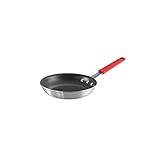
Pyttipannu asks one thing of you, which is patience at the stove. A heavy pan and a flat spatula do most of the rest, and those are the tools I’d reach for.
Why do the potatoes have to be cold?
Because cold, day-old potatoes brown and fresh ones steam. As boiled potatoes cool overnight, part of the starch firms up again and the surface dries out, so the cubes keep their shape and crisp when they hit hot fat. Straight from the pot, they’re wet inside and soft outside. In the pan they stick, crumble and turn into something closer to mash.
Restaurant kitchens treat this as basic prep. Potatoes meant for frying get boiled ahead, cooled on a tray and chilled before anyone cuts them. The same logic works at home.
Pick a firm, waxy potato if you’re buying for this. Finnish bags label them kiinteä (firm), and those hold their corners far better than the floury jauhoinen type, which is made for mash.
No leftovers? Boil the potatoes in salted water until a knife slides in with a little resistance, drain, spread them on a tray and refrigerate for at least two hours. Overnight is better. The next time you make Finnish mashed potatoes (perunamuusi), boil a few extra whole ones and you’ve done half of tomorrow’s dinner already.
Where does pyttipannu come from?
Pyttipannu is the Finnish spelling of the Swedish pytt i panna, which means roughly “small bits in a pan.” Every Nordic country cooks some version. Norwegians call it pyttipanne, Danes make biksemad, and Swedes often add leftover beef or pork next to the sausage and serve pickled beetroot on the side.
Here’s how the Nordic hash family lines up:
| Country | Name and usual twist |
| Finland | Pyttipannu: potatoes, onion, sausage, bacon and a fried egg, with ketchup |
| Sweden | Pytt i panna: often leftover beef or pork, served with pickled beetroot |
| Norway | Pyttipanne: much the same hash under a Norwegian spelling |
| Denmark | Biksemad: diced meat and potatoes, often with a fried egg and brown sauce |
The Finnish version stays plain: potatoes, onion, sausage, usually bacon, an egg. You’ll find frozen bags of ready-cut pyttipannu in almost every Finnish supermarket freezer, which tells you how ordinary this dish is. Homemade beats the bag every time, though. You control the size of the potato chunks, and leftover boiled potatoes give a far better crust than frozen raw cubes.
It sits in the same family of everyday Finnish food as makaronilaatikko, the Finnish macaroni casserole. Cheap. Filling. Built by cooks who refused to throw anything away.
Which sausage is best for pyttipannu?
Nakki is the classic. These thin, mild, hot dog style sausages turn up all over Finnish home cooking, from lunchboxes to Finnish sausage soup (nakkikeitto), and they brown fast while staying juicy inside.
Smoked sausage gives a deeper, meatier hash, and it’s what I use when I want the dish to taste like more than the sum of its leftovers. Kielbasa and bratwurst work too. Chorizo pushes everything toward paprika and heat, which makes a different dish, but a very good one.
Whatever you choose, it should be fully cooked. Raw sausage needs its own cooking time and leaks liquid into the pan, and liquid is the enemy of crust.
Bacon is listed as optional in the recipe. I’d still use it. Rendered first, its fat becomes the frying medium for everything that follows and seasons the potatoes from the outside in. Leave it out and you’ll want butter or oil plus a slightly heavier hand with salt.
How do you get a crust instead of a soggy pile?
Start with the widest heavy pan you own. A 28 cm cast iron or carbon steel skillet holds enough heat that a load of cold potatoes doesn’t knock the temperature flat. Crowd a small pan and you’re steaming, no matter how hot the burner is.
Then stop stirring. Spread the potatoes in a single layer, give them 3 to 4 minutes, and only turn them when the edges look golden. Flip in sections with a flat spatula rather than tossing everything with a spoon, so the browned sides land face up and the pale sides go down. Repeat until most pieces have color on several sides.
It feels slow. That slowness is the technique.
If the pan looks dry, add a drizzle of oil. Dry potatoes stick, and when you scrape them loose you tear off the crust you just waited for.
What do Finns serve with pyttipannu?
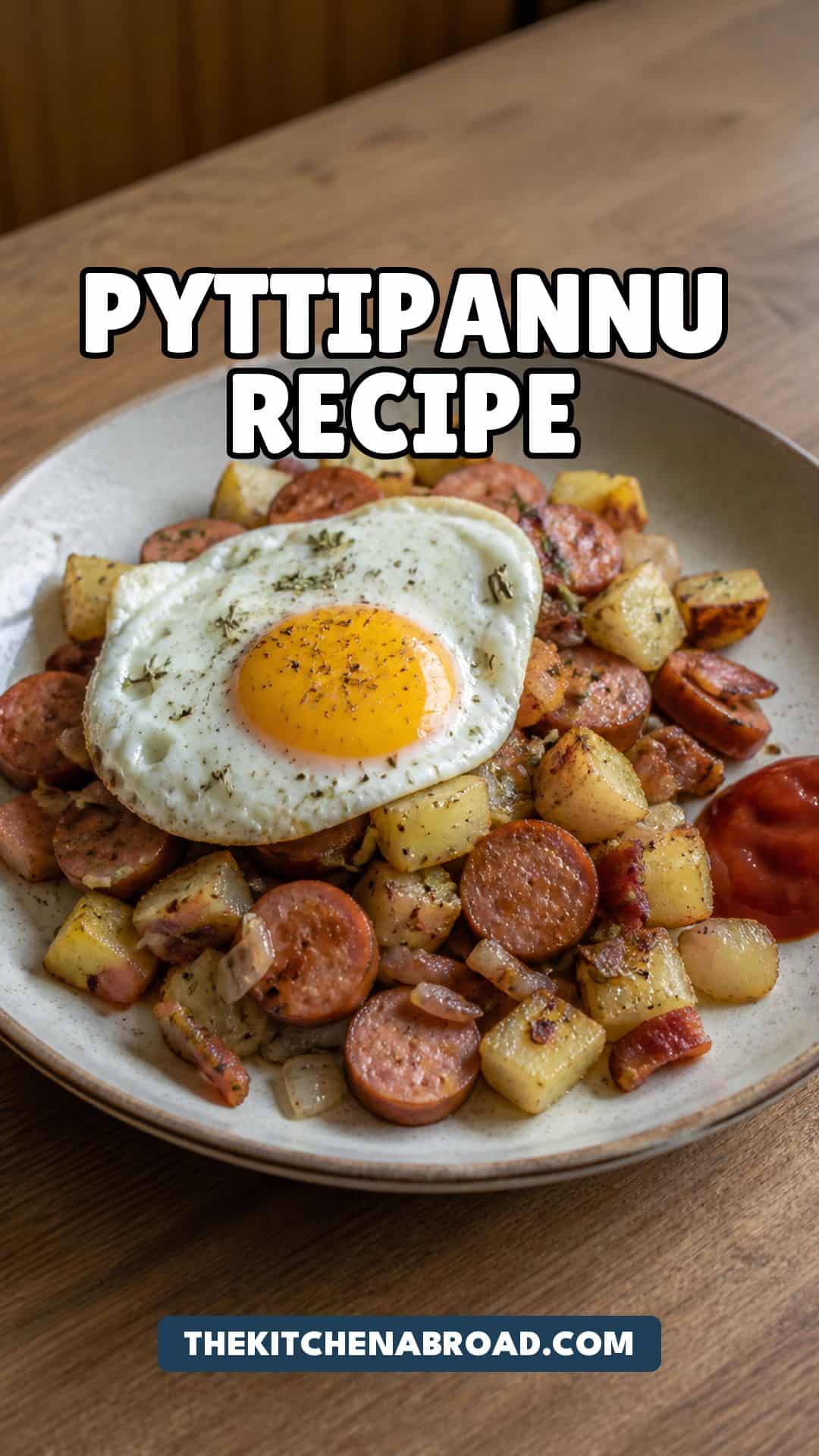
Ketchup, nearly always. In Finland that usually means a thick, slightly sweet supermarket ketchup, and it really does suit the salty bacon and sausage. A fried egg per person is standard.
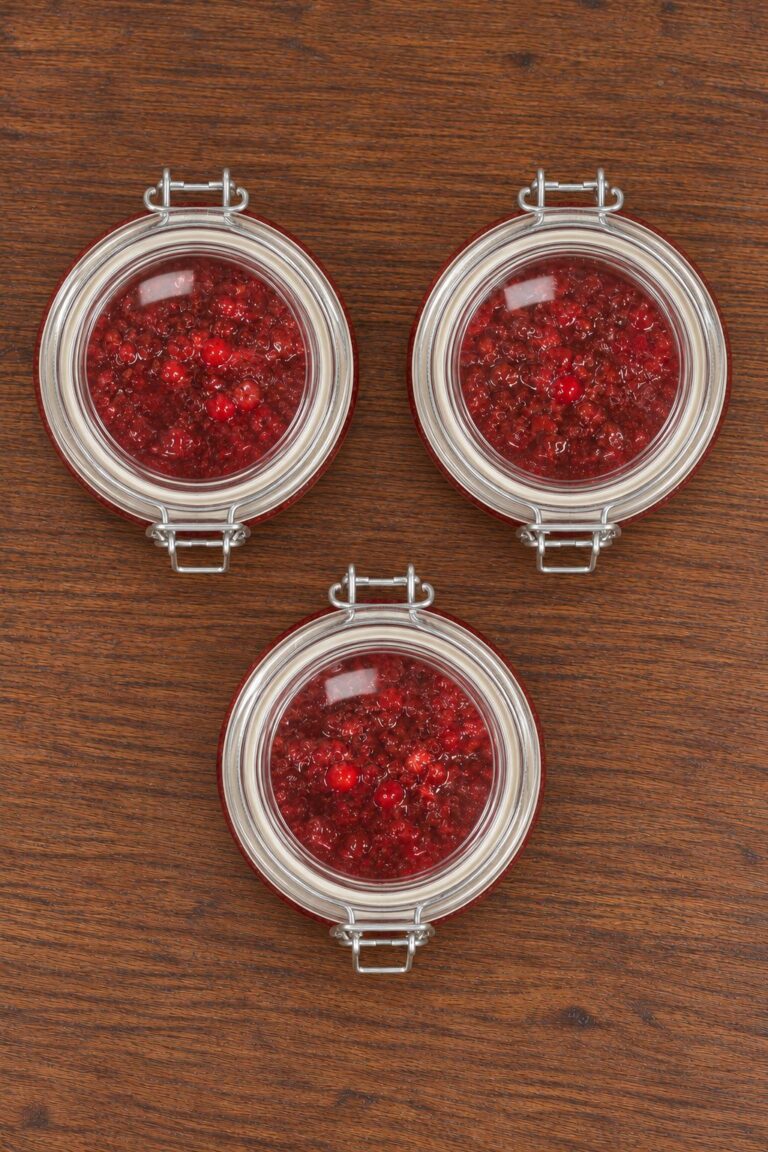
Beyond that, add something sharp. Pickled cucumbers or pickled beetroot cut through the fat, and a spoonful of homemade lingonberry jam (puolukkahillo) brings the tart, fruity note Finns put next to most savory food. A plain green salad works if you want something fresh on the plate.
Pyttipannu recipe

That’s the plate: potato cubes with dark golden edges, rounds of browned sausage, little bits of bacon and soft onion, a sunny-side-up egg sprinkled with herbs, and ketchup on the side. The ketchup is technically optional. Technically.
Prep time: 10 minutes. Cook time: 20 minutes. Total time: 30 minutes. Servings: 2 to 3.
Ingredients
- 4 to 5 medium boiled potatoes, cold (day-old preferred), cut into 2 cm chunks
- 200 g Finnish sausages (nakki) or smoked sausage, sliced into rounds
- 3 to 4 strips bacon, cut into pieces (optional but recommended)
- 1 medium onion, diced
- 2 to 3 eggs
- 1 tsp dried thyme
- ½ tsp dried rosemary
- Salt and black pepper to taste
- Cooking oil as needed
- Ketchup, to serve
Instructions
- Heat a large heavy-bottomed skillet over medium heat. Add the bacon and cook until the fat renders and the bacon starts to crisp, about 4 to 5 minutes.
- Add the diced onion and cook in the bacon fat until soft and lightly caramelized, about 4 minutes.
- Add the sausage slices and cook until they take on color on both sides, about 3 minutes.
- Add the potato chunks. Season with the thyme, rosemary, salt and pepper. Drizzle in a little oil if the pan looks dry.
- Leave the hash undisturbed for 3 to 4 minutes to build a crust, then flip it in sections with a flat spatula. Repeat until the potatoes are golden and crisp on several sides, about 10 to 12 minutes in total.
- While the hash browns, fry the eggs sunny side up in a small pan over medium-low heat until the whites are set and the yolks still wobble.
- Taste the hash and adjust the seasoning. Divide it between plates, top each portion with a fried egg and serve right away with ketchup on the side.
Notes
Cold potatoes give the best texture, so boil them a day ahead when you can. Leftover hash keeps up to 3 days in an airtight container in the fridge. Reheat it in a hot, dry skillet and leave it alone for a few minutes so the crust comes back; the microwave turns the potatoes soft. Fry a fresh egg when you serve it.
Cool and refrigerate the hash promptly. The USDA’s leftovers guidance says cooked food should go into the fridge within 2 hours, and the same applies to the potatoes you boil for the next batch.
More easy Finnish recipes to cook at home
Pyttipannu is a good first step into Finnish food because it’s so forgiving, and the rest of everyday Finnish cooking works the same way: cheap ingredients, one pot or one pan, nothing fussy. If you liked this, these are the next ones I’d cook:
- Pannukakku, the Finnish oven pancake, baked in one tray and served warm with jam.
- Finnish cabbage soup, a slow, sweet vegetable soup that costs almost nothing.
- Makaronilaatikko, the macaroni and minced meat casserole that’s a Finnish school lunch staple.
- Lingonberry jam, the tart side that goes next to nearly every savory Finnish plate.
Nakki also carries two other Finnish weeknight staples: nakkikastike, the sausage sauce served over mashed potatoes, and Thursday’s split pea soup, hernekeitto.
Pyttipannu questions people ask
Can I make pyttipannu without bacon?
Yes, fry everything in a tablespoon of butter or oil instead and season a little more generously. You lose some smoky depth, and using smoked sausage wins most of it back.
Can I use raw potatoes instead of boiled?
Not if you want real pyttipannu. Raw cubes take much longer to cook through, soak up oil before they soften and come out greasy and uneven. Boil and chill them first, even if you only have two hours.
Is pyttipanna Swedish or Finnish?
Pyttipanna is Swedish in origin, and Finland took both the dish and the name, spelling it pyttipannu. Today it’s just as ordinary in Finland as in Sweden, and every Nordic country has its own version.
What are the ingredients in pyttipanna?
Pyttipanna is made from diced boiled potatoes, onion and cooked meat, usually sausage, ham or leftover pork, plus bacon in many Finnish kitchens, all fried in one pan and topped with an egg. Salt, pepper and a little thyme are enough seasoning.
What is pyttipannu called in English?
Pyttipannu in English (pyttipannu englanniksi) is usually just Finnish hash, or sausage and potato hash. In Sweden it’s pytt i panna, and the Finnish name is borrowed from that.
Key takeaways
- Pyttipannu is a Finnish one-pan hash of cold boiled potatoes, sausage, bacon and onion, finished with a fried egg.
- Day-old potatoes brown; freshly boiled ones steam and fall apart.
- A wide heavy pan and very little stirring give you the crust.
- Nakki is traditional, but any fully cooked sausage works.
- Ketchup is standard, and lingonberry jam or pickles make a good second side.
Boil a double batch of potatoes this weekend
The easiest way to make pyttipannu a habit is to plan the leftovers. Boil twice the potatoes you need on Sunday, eat half, and the rest becomes a 30-minute hash midweek. And those extra boiled potatoes have another job waiting: a minced meat sauce with sour cream, the Estonian-style gravy that goes over plain potatoes on the nights you don’t feel like frying.
Then, when you’ve worked through the savory side of the Finnish table, find out what cloudberry is and why Finns get so excited about a jar of the jam.
Last update on 2026-11-11 / Affiliate links / Images from Amazon Product Advertising API