

Gochujang mayo is a 3-minute Korean spicy mayo dialed precisely to your heat tolerance. Three ratios cover the spectrum: mild (1 tbsp gochujang to 6 tbsp mayo), medium (1 to 4), hot (1 to 3). Plus rice vinegar for tang, honey for balance, sesame oil for depth. Holds 7 days refrigerated.
If gochujang aioli is the elaborate cousin (roasted garlic, raw garlic, multiple tweaks), gochujang mayo is the everyday workhorse. Three ingredients minimum, ready in three minutes, lives in the fridge for a week, gets used on almost everything. The aim of this post is precision: a ratio chart so you can hit your exact heat tolerance every single time, no guesswork.
Most home cooks find gochujang mayo by accident. They taste it on a poke bowl or a fish sandwich at a restaurant, ask what is in it, and the answer is two ingredients. They try at home, eyeball the gochujang, end up with a sauce that is either too mild to bother with or too spicy to enjoy. The fix is just to weigh or measure the ratio. Once you know your number, you can riff for the rest of your life.
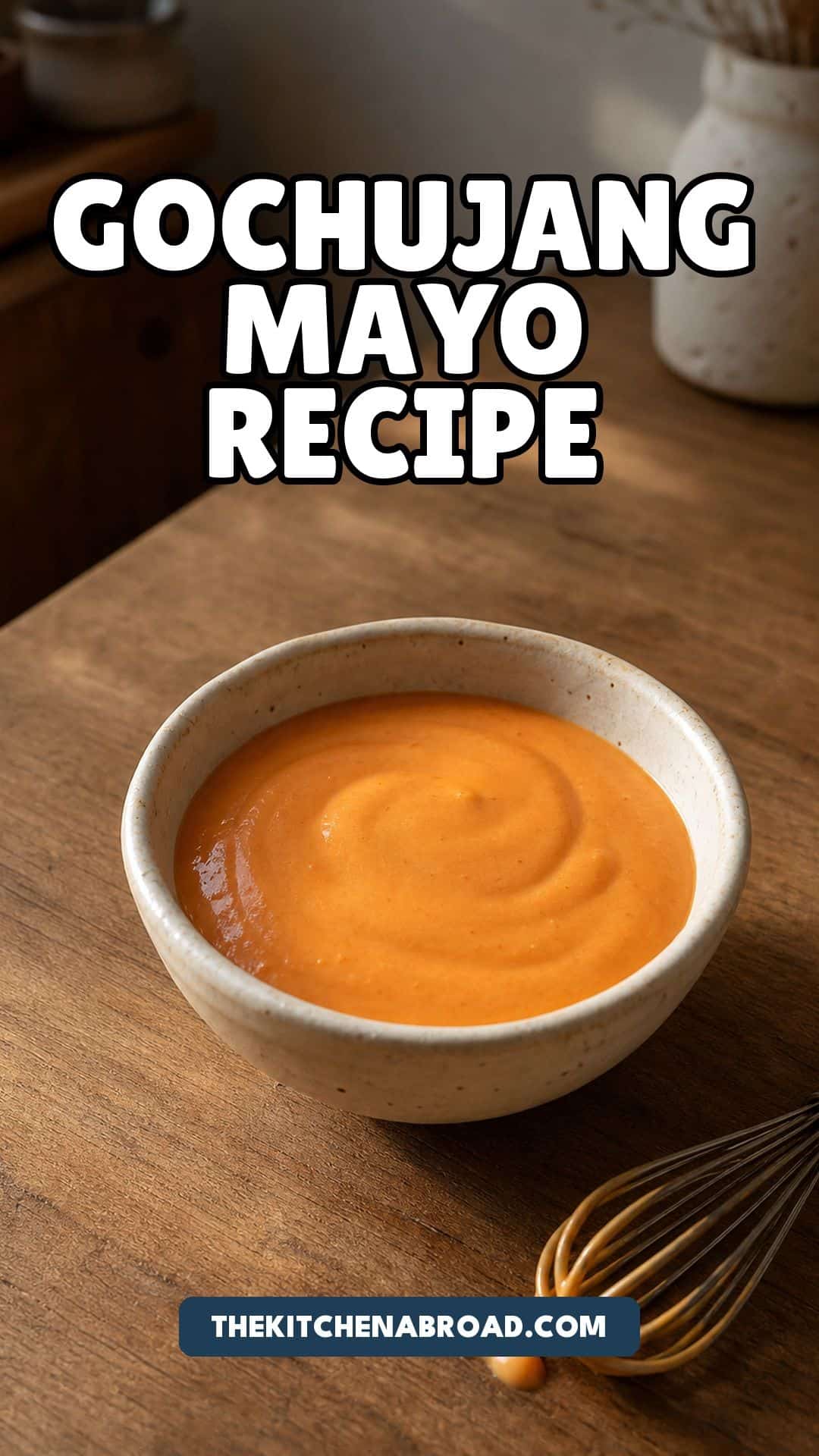
The version below uses kewpie Japanese mayo as the base because the egg-yolk-only formula gives a richer, more umami-forward result than American mayo. Rice vinegar (not citrus juice) for tang. Honey to soften the heat. A teaspoon of toasted sesame oil at the end for depth. Once you taste this version against a generic restaurant gochujang mayo, the difference is obvious. Metric and imperial throughout.
What You’ll Need to Make This Recipe
Real Japanese kewpie mayo, real Korean gochujang, real toasted sesame oil. A small whisk gets the sauce smooth in 30 seconds. A glass squeeze bottle is the right vessel for storage and serving. Glass mason jars work too. A wooden utensil stays clean since the gochujang stains everything else.
![Gochujang – Premium Korean Red Chili Paste [ Medium | 1.1 lb (500g) ] – 0...](https://www.thekitchenabroad.com/wp-content/plugins/aawp/public/image.php?url=YUhSMGNITTZMeTl0TG0xbFpHbGhMV0Z0WVhwdmJpNWpiMjB2YVcxaFoyVnpMMGt2TkRFd2FUUnFhR2gyZUV3dVgxTk1NVFl3WHk1cWNHYz18MTc5MTIyOTE4NA= "Gochujang Mayo Recipe (Spicy Korean Mayo)")


Recommended Reads
- Gochujang Aioli Recipe (Spicy Korean Garlic Mayo)
- Gochujang Pasta Recipe (Creamy, Spicy, 20 Minutes)
- Gochujang Chicken Wings Recipe (Sticky Korean Glaze)
- Crispy Gochujang Tofu Recipe (Baked)
- Gochujang Pork Ribs Recipe (Oven-Baked, Korean Glaze)
Why This Gochujang Mayo Works
The ratio chart is the most useful thing about this recipe. Most online recipes give one ratio (usually around 1:4 gochujang to mayo) and call it done. That ratio is medium heat, which is too spicy for some palates and too mild for others. Publishing a single ratio means readers either over-spice or under-spice their first attempt, then either give up or never get the sauce right. The ratio chart fixes that. Pick your tolerance, follow the number, hit the right sauce on the first try.
Rice vinegar instead of lemon or lime juice is the second important choice. Lime juice pushes the sauce toward Mexican territory (tinga, fish taco crema). Lemon juice pushes the sauce toward American (lemon mayo on a fried chicken sandwich). Rice vinegar keeps the sauce Korean. The tang is gentler, the acid less aggressive, and the flavor profile clean.
The honey is the third detail. Gochujang is sweet-spicy by default, but the sweetness comes from rice malt, which is mellow. A teaspoon of honey amplifies the sweet side and balances the chili heat without making the sauce candy-sweet. Sugar works as a substitute but does not dissolve as cleanly into cold mayo. Maple syrup works too.
Gochujang Mayo Ingredients, Briefly
Kewpie mayo. Japanese mayonnaise in the red squeeze bottle. Available at Asian grocery stores, Whole Foods, and online. The egg-yolk-only formula has more umami than American mayo. Hellmann’s works as a downgrade.
Gochujang. Korean fermented chili paste. Medium heat (Chung Jung One red tub) is the default. Use mild for a gentler sauce, hot for a serious burn. The flavor profile is similar across heat levels.
Rice vinegar. Unseasoned rice vinegar. The right acidic note for a Korean sauce. Lemon or lime juice will push the flavor profile elsewhere.
Honey. One teaspoon to round the heat. Maple syrup works as a substitute. Sugar works in a pinch.
Toasted sesame oil. Half a teaspoon for depth. Kadoya brand is the gold standard. Skip cheap blends labeled just “sesame oil”.
Optional, but worth it. A teaspoon of soy sauce for umami depth, or a small grated garlic clove for sharpness. Both are good additions, neither is required.
Tips and Variations
The heat ratio chart. Mild: 1 tbsp gochujang to 6 tbsp mayo. Medium (default): 1 tbsp to 4 tbsp. Hot: 1 tbsp to 3 tbsp. Nuclear: 1 tbsp to 2 tbsp plus a teaspoon of sriracha. Find your number, write it down, never guess again.
The 5-minute rest improves the sauce. Freshly mixed gochujang mayo tastes good. The same sauce after 5 minutes on the counter tastes better. The gochujang oils bloom through the mayo. Twenty minutes in the fridge is even better.
What to put it on. French fries, sweet potato fries, fish tacos, burgers, fried chicken sandwiches, sushi rolls, poke bowls, deviled eggs, dumplings, salmon, shrimp, tofu, eggs in the morning. The sauce is genuinely universal.
Vegan version. Substitute a vegan kewpie-style mayo (Just Mayo or vegan Hellmann’s plus a teaspoon of rice vinegar to fake the umami). Confirm your gochujang is vegan-friendly.
Korean fried chicken mayo. Mix gochujang mayo with a tablespoon of finely chopped pickled radish (danmuji) and a teaspoon of toasted sesame seeds. Use as a dipping sauce for fried chicken. Restaurant move.
The poke bowl drizzle. Thin the sauce with a tablespoon of water to make it pourable. Drizzle generously over a poke bowl with sushi rice, cubed tuna, avocado, cucumber, edamame, and sesame seeds.
Recipe: Gochujang Mayo (Spicy Korean Mayo)
Prep Time: 3 minutes | Cook Time: 0 minutes | Total Time: 3 minutes | Yield: About 120 ml (½ cup), serves 4 to 6 as a condiment
Ingredients
- 120 ml (½ cup / 8 tbsp) kewpie Japanese mayonnaise
- 2 tbsp gochujang (medium heat) – adjust per the heat chart in Tips
- 1 tsp unseasoned rice vinegar
- 1 tsp honey (or maple syrup)
- ½ tsp toasted sesame oil
- ½ tsp soy sauce (optional)
Instructions
- Add the kewpie mayo, gochujang, rice vinegar, honey, toasted sesame oil, and soy sauce (if using) to a small bowl.
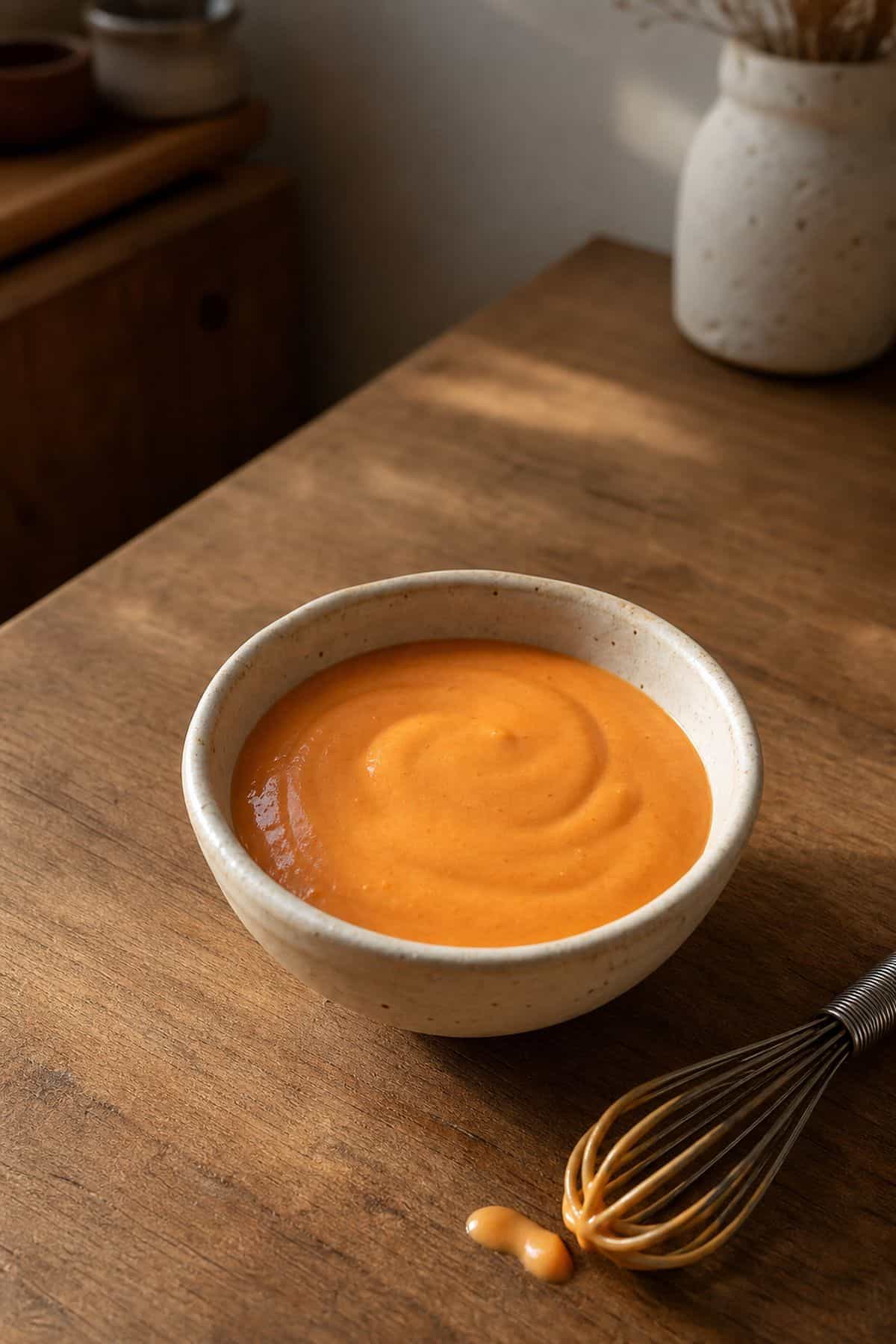
- Whisk thoroughly with a small whisk or fork for 30 seconds, until the sauce is completely uniform in color and texture. The mayo should turn from pale yellow to a tangerine orange with no streaks of red gochujang visible.
- Taste. Adjust the heat (add a teaspoon more gochujang for spicier, a tablespoon more mayo for milder), the sweetness (more honey if needed), or the tang (more rice vinegar).
- Transfer to a glass jar or squeeze bottle. Refrigerate for 5 to 20 minutes before serving for the best flavor (the gochujang oils bloom). Holds 7 days refrigerated.
Notes
The heat ratio chart is the takeaway. Write it down on a sticky note inside your spice cabinet. Mild 1:6, medium 1:4, hot 1:3. Make the same sauce every time without thinking.
The 5-minute rest is worth it. Freshly mixed sauce is good. Five minutes later it is noticeably better as the gochujang oils integrate. Twenty minutes in the fridge takes it from good to excellent.
Store in glass, not plastic. Gochujang stains plastic permanently. Glass jars or squeeze bottles only.
Thickens slightly overnight. The sauce thickens a bit after the first night as the mayo proteins absorb the gochujang liquid. Whisk with a teaspoon of warm water to thin it back out if needed.
Frequently Asked Questions
What is gochujang mayo used for?
Gochujang mayo is a universal Korean-leaning condiment. It works as a dip for fries and dumplings, a spread for burgers and sandwiches, a drizzle for poke bowls and sushi, a glaze for grilled meats, and a finishing sauce for fried chicken. Once you have a jar in the fridge, it shows up in 80 percent of your dinners for the next week.
How spicy is gochujang mayo?
The heat depends on your gochujang and your ratio. Using mild gochujang at a 1:6 ratio (gochujang to mayo) gives a gentle warmth most palates can handle. Medium gochujang at 1:4 is the most common restaurant ratio, moderately spicy. Hot gochujang at 1:3 plus a teaspoon of sriracha is a serious sweat-inducing version. Pick your ratio based on the heat tolerance chart in the Tips section.
How long does gochujang mayo last in the fridge?
Seven days in an airtight glass jar refrigerated. The flavor improves through day 2 as the gochujang oils integrate fully. By day 5 the sauce may thicken slightly, whisk in a teaspoon of warm water if needed. Beyond day 7 the texture starts to break down and the color darkens.
Can I use Hellmann’s mayo instead of kewpie?
Yes, but the sauce will be noticeably less rich. Kewpie is built on egg yolks only and rice vinegar, giving more umami and tang. Hellmann’s is built on whole eggs and lemon juice, which gives a milder profile. If using Hellmann’s, add an extra teaspoon of rice vinegar to compensate.
What is the difference between gochujang mayo and sriracha mayo?
Sriracha mayo is sharper, vinegary, and one-dimensional in flavor (sriracha is essentially a hot sauce with garlic and vinegar). Gochujang mayo is rounder, sweet-savory, and deeper because gochujang is a fermented chili paste with soybean umami. The two sauces are not interchangeable, they sit in different flavor neighborhoods.
Can I freeze gochujang mayo?
No. Mayo-based sauces do not freeze well. The emulsion breaks when thawed and the sauce turns watery and grainy. Make a small batch you can use within a week.
Key Takeaways
- Memorize the ratio chart. Mild 1:6, medium 1:4, hot 1:3 (gochujang to mayo).
- Use kewpie mayo for richer umami. Hellmann’s works as a downgrade, add a teaspoon of rice vinegar to compensate.
- Rice vinegar, not lemon or lime. Keeps the sauce Korean.
- Honey balances the heat. Sugar works, maple syrup works. Skip it and the sauce tastes hotter.
- Holds 7 days refrigerated. Improves through day 2. Store in glass, not plastic.
Final Thoughts
Gochujang mayo is the kind of recipe that does not really need a recipe once you know the ratio. The whole point of this post is the ratio chart. Find your number, commit it to memory, never look up another gochujang mayo recipe again. Six ingredients, three minutes, a sauce that lasts a week and goes on everything.
Make it before grilling weekend, before a Friday night burger, before a Tuesday-night fish taco. The squeeze bottle in the fridge becomes the most-used item in the door for the next 7 days. That is the math worth doing.
Gochujang Mayo Recipe (Spicy Korean Mayo)
Gochujang mayo is a 3-minute Korean spicy mayo dialed precisely to your heat tolerance. Three ratios cover the spectrum: mild (1 tbsp gochujang to 6 tbsp mayo), medium (1 to 4), hot (1 to 3). Plus rice vinegar for tang, honey for balance, sesame oil for depth.
Ingredients
- 120 ml (½ cup / 8 tbsp) kewpie Japanese mayonnaise
- 2 tbsp gochujang (medium heat) – adjust per the heat chart in Tips
- 1 tsp unseasoned rice vinegar
- 1 tsp honey (or maple syrup)
- ½ tsp toasted sesame oil
- ½ tsp soy sauce (optional)
Instructions
- Add the kewpie mayo, gochujang, rice vinegar, honey, toasted sesame oil, and soy sauce (if using) to a small bowl.
- Whisk thoroughly with a small whisk or fork for 30 seconds, until the sauce is completely uniform in color and texture. The mayo should turn from pale yellow to a tangerine orange with no streaks of red gochujang visible.
- Taste. Adjust the heat (add a teaspoon more gochujang for spicier, a tablespoon more mayo for milder), the sweetness (more honey if needed), or the tang (more rice vinegar).
- Transfer to a glass jar or squeeze bottle. Refrigerate for 5 to 20 minutes before serving for the best flavor (the gochujang oils bloom). Holds 7 days refrigerated.
Notes
The heat ratio chart is the takeaway. Write it down on a sticky note inside your spice cabinet. Mild 1:6, medium 1:4, hot 1:3. Make the same sauce every time without thinking.
The 5-minute rest is worth it. Freshly mixed sauce is good. Five minutes later it is noticeably better as the gochujang oils integrate. Twenty minutes in the fridge takes it from good to excellent.
Last update on 2026-10-03 / Affiliate links / Images from Amazon Product Advertising API
