

Gochujang aioli is a 5-minute Korean garlic mayo built on Japanese kewpie mayo, roasted garlic for sweetness, a single raw clove for sharpness, gochujang, rice vinegar, and a finishing splash of toasted sesame oil. Best after a 30-minute rest. Holds 5 days refrigerated.
The combination of kewpie mayo and gochujang has been quietly dominating restaurant menus for about a decade. You see it on poke bowls, on burgers, drizzled over Korean fried chicken, dolloped next to dumplings, painted across tuna tartare. There is a reason for the ubiquity. Kewpie mayo is built on egg yolks and rice vinegar, which gives it more umami and tang than American mayo, and gochujang is built on fermented soybeans and rice, which gives it depth that no other chili paste can match. Together they form a sauce that punches well above the sum of its parts.
This recipe is technically a garlic mayonnaise, not a true aioli. True aioli is an emulsion of garlic and oil whisked by hand, which is a different dish entirely. The word aioli has been borrowed by modern menus to mean any flavored mayo, which is what most home cooks mean when they say it. The version below leans into the modern usage and earns its name with two kinds of garlic, roasted for sweetness and raw for bite.
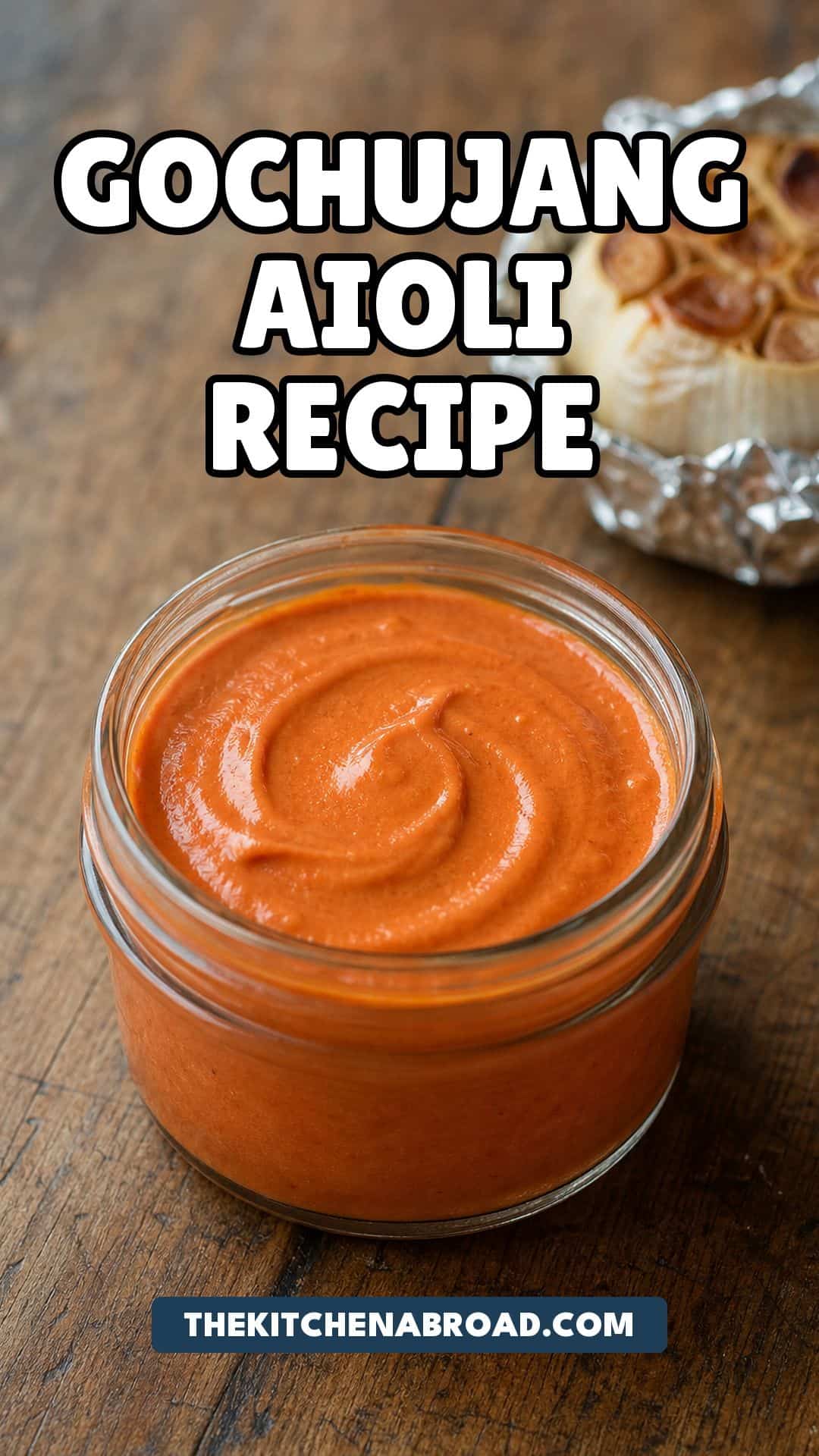
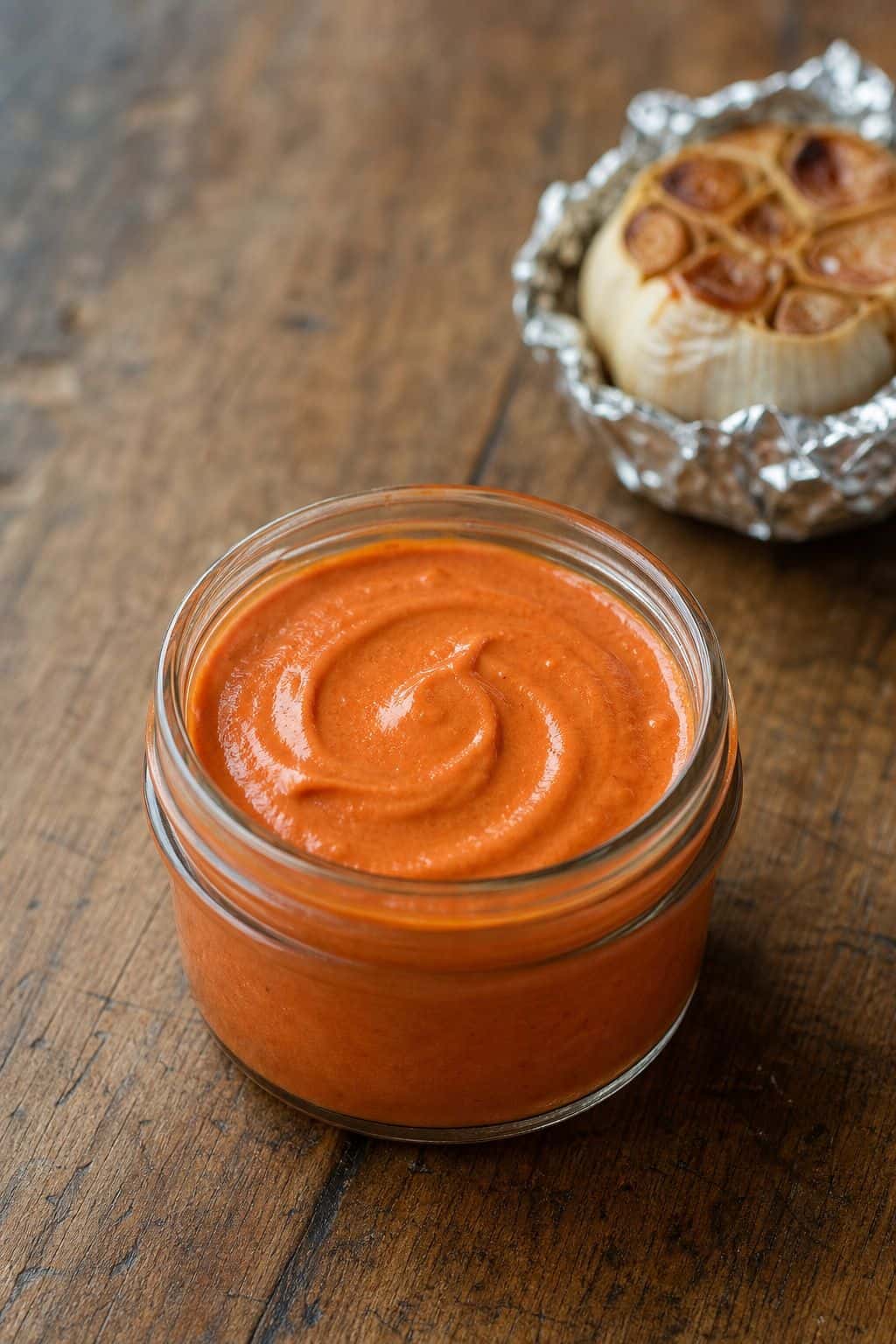
The roasted garlic trick is the move that takes this from good to bracing. Slice the top off a whole head of garlic, drizzle olive oil, wrap in foil, roast at 400°F for 35 minutes. You will get caramelized, jammy, sweet garlic that smashes into the mayo with no harshness. Add one tiny raw clove on top for the sharp bright note. The contrast is what makes the sauce sing.
What You’ll Need to Make This Recipe
The ingredients matter more than the gear for a sauce this simple. Real Japanese kewpie mayo (in the red squeeze bottle) is non-negotiable. Real Korean gochujang in the red tub is non-negotiable. Real toasted sesame oil (not the cheap blends) makes the finish. A microplane handles the raw garlic. Glass jars are the right storage, plastic absorbs the gochujang color.

![Gochujang – Premium Korean Red Chili Paste [ Medium | 1.1 lb (500g) ] – 0...](https://www.thekitchenabroad.com/wp-content/plugins/aawp/public/image.php?url=YUhSMGNITTZMeTl0TG0xbFpHbGhMV0Z0WVhwdmJpNWpiMjB2YVcxaFoyVnpMMGt2TkRFd2FUUnFhR2gyZUV3dVgxTk1NVFl3WHk1cWNHYz18MTc5MTIyOTA4Mg= "Gochujang Aioli Recipe (Spicy Korean Garlic Mayo)")


Recommended Reads
- Gochujang Mayo Recipe (Spicy Korean Mayo)
- Gochujang Pasta Recipe (Creamy, Spicy, 20 Minutes)
- Crispy Gochujang Tofu Recipe (Baked)
- Gochujang Chicken Wings Recipe (Sticky Korean Glaze)
- Cucumber Kimchi Recipe (Oi Kimchi) with Gochugaru
Why This Gochujang Aioli Works
The kewpie mayo base is doing most of the heavy lifting. American mayo (Hellmann’s, Best Foods) is built on whole eggs and lemon juice, which gives it a fluffy, mild profile. Kewpie is built on egg yolks only and rice vinegar, which gives it a richer, more umami-forward flavor. The egg yolks contain more lecithin, an emulsifier, which makes kewpie hold sauces and dressings tighter than American mayo. Substituting American mayo for kewpie is technically possible but you will get a noticeably less interesting sauce.
The two-garlic approach is the second big move. Roasted garlic is sweet, jammy, and gentle, perfect for melting into a mayo base. Raw garlic is sharp, punchy, and aromatic, perfect for adding a bright top note. Using only roasted garlic gives you a sweet one-note sauce. Using only raw garlic gives you a harsh sauce that tastes like garlic-flavored mayo. Using both gives you complexity that no single garlic could achieve.
The 30-minute rest is the third detail. Freshly mixed sauce tastes good. Same sauce after 30 minutes in the fridge tastes great. The gochujang oils bloom through the mayo, the garlic mellows, the rice vinegar integrates, and the toasted sesame oil aromatics spread through the sauce. The chemistry needs a little time. Make it ahead and you will be glad you did.
Gochujang Aioli Ingredients, Briefly
Kewpie mayo. The Japanese mayo in the squeeze bottle with the baby logo on the cap. Available at most Asian grocery stores, Whole Foods, or online. The Japanese version (made in Japan) is slightly different from the USA version (made for the American market), both work fine here.
Gochujang. Medium heat Korean fermented chili paste. Chung Jung One in the red tub is the standard. The paste should be thick and the color a deep brick red.
Roasted garlic. Half a head, roasted whole at 400°F for 35 minutes. The cloves squeeze out as a sweet jammy paste. Make extra and store in olive oil for the next week, roasted garlic is one of the most useful things to have on hand.
One tiny raw garlic clove. Grated on a microplane. The sharpness on top of the roasted garlic’s sweetness is the chord this sauce needs.
Rice vinegar. Unseasoned rice vinegar adds tang without being too sharp. Lime juice works as a substitute but pushes the flavor toward Mexican. Rice vinegar keeps the sauce squarely Korean-leaning.
Toasted sesame oil. Kadoya brand (the gold standard) or another quality toasted sesame oil. The cheap blends labeled just “sesame oil” are not the same product. You want the dark, fragrant, toasted version.
Honey. A teaspoon to balance the heat. Maple syrup works as a substitute. Sugar works in a pinch but does not dissolve as cleanly.
Soy sauce. Half a teaspoon for an umami push. Optional but recommended.
Tips and Variations
The roasted garlic shortcut. If you do not want to roast a whole head for half a portion, smash 4 cloves and saute them in 2 tablespoons of olive oil over low heat for 15 minutes until golden and soft. Not quite the same depth as oven-roasted but close enough for a 5-minute sauce.
Spicier version. Use hot gochujang or add a teaspoon of sriracha alongside the medium gochujang. The heat builds quickly so taste as you go.
Vegan version. Substitute a quality vegan kewpie-style mayo (Just Mayo or Hellmann’s Vegan, plus a teaspoon of rice vinegar to fake the umami). The dish still works.
What to use this on. Burgers, sandwiches, fries, sweet potato fries, fish tacos, tuna tartare, poke bowls, grilled corn, deviled eggs, dumpling dipping, Korean fried chicken, BLTs, BBQ chicken wraps. The sauce works on almost any savory food in the house.
Storage. Refrigerated in an airtight glass jar, the sauce holds for 5 days. The color may darken slightly over time as the gochujang oils bleed through, which is purely cosmetic. The flavor actually improves through day 2.
Burger fingerprint. Top a smashburger with a generous swipe of this sauce, a slice of American cheese, and quick-pickled red onions. The sauce becomes the burger’s defining flavor.
Recipe: Gochujang Aioli (Spicy Korean Garlic Mayo)
Prep Time: 5 minutes (plus 35 minutes for roasted garlic, or use leftover) | Cook Time: 0 minutes | Rest Time: 30 minutes recommended | Total Time: 40 minutes | Yield: About 240 ml (1 cup), serves 8 to 10 as a condiment
Ingredients
- 180 ml (¾ cup) kewpie Japanese mayonnaise
- 2 tbsp gochujang (medium heat)
- 5 to 6 cloves roasted garlic (from half a head)
- 1 small raw garlic clove, grated on a microplane
- 1 tbsp unseasoned rice vinegar
- 1 tsp toasted sesame oil
- 1 tsp honey (or maple syrup)
- ½ tsp soy sauce (optional)
- Pinch of fine sea salt
For the roasted garlic (if not already on hand):
- 1 whole head garlic
- 1 tbsp olive oil
- Pinch of salt
Instructions
- If you do not have roasted garlic on hand, make it now. Slice ¼ inch off the top of a whole garlic head, exposing the tops of the cloves. Drizzle with olive oil, sprinkle with salt, wrap in foil. Roast at 200°C (400°F) for 35 minutes. The cloves will be soft, deeply golden, and squeeze out like paste. Cool slightly before using.
- In a medium bowl, squeeze 5 to 6 cloves of roasted garlic into the bowl (about 1 tablespoon of paste). Mash with a fork into a smooth paste.
- Grate the raw garlic clove directly into the bowl using a microplane.
- Add the kewpie mayo, gochujang, rice vinegar, toasted sesame oil, honey, soy sauce (if using), and a pinch of salt.
- Whisk thoroughly until the sauce is uniform in color, a deep coral red. The mayo should be smooth with no streaks of gochujang showing.
- Transfer to a glass jar. Cover and refrigerate for at least 30 minutes before serving. The sauce keeps for 5 days refrigerated.
Notes
The 30-minute rest matters. Freshly mixed sauce is good. Sauce after 30 minutes in the fridge is great. The flavors integrate, the gochujang blooms, the garlic mellows.
Roast a whole head of garlic even if you only need half. The other half goes into pasta, on toast, into vinaigrettes. Roasted garlic is one of the best things to have sitting in the fridge.
Use a glass jar for storage. Plastic absorbs the chili color from gochujang and stains permanently. Glass is the right material here, and a small mason jar with a tight lid is the ideal vessel.
Adjusting heat. If you want it spicier, use hot gochujang instead of medium. If you want it milder, use mild gochujang or reduce to 1 tablespoon. The other ingredients stay the same.
Frequently Asked Questions
What is the difference between gochujang aioli and gochujang mayo?
Both are mayo-based sauces with gochujang as the chili element. Gochujang aioli is the slightly more elaborate version, built with kewpie mayo, roasted garlic, raw garlic, and toasted sesame oil. Gochujang mayo is the simpler version, often just kewpie mayo, gochujang, and a touch of rice vinegar. Both belong in the same family of Korean spicy mayo sauces.
Can I use regular American mayo instead of kewpie?
Yes, but the result will be a noticeably less interesting sauce. Kewpie mayo (Japanese) is built on egg yolks and rice vinegar, giving it more umami and tang. American mayo (Hellmann’s, Best Foods) is built on whole eggs and lemon juice, giving it a milder profile. If you must substitute, use American mayo plus 1 teaspoon of rice vinegar to fake the umami push.
How long does gochujang aioli keep in the fridge?
Five days in an airtight glass jar refrigerated. The flavor actually improves through day 2 as everything integrates. By day 5 the garlic flavor may sharpen slightly but the sauce is still good. After day 5, the texture starts to thin out and the gochujang color may darken.
What can I serve with gochujang aioli?
Almost any savory food. Burgers and sandwiches as a spread, fries and sweet potato fries as a dip, fish tacos as a sauce, poke bowls as a drizzle, grilled corn as a coating, deviled eggs as a filling base, dumplings as a dipping sauce, Korean fried chicken as a side, tuna tartare as a finishing dollop. The sauce is genuinely versatile.
Is gochujang aioli vegetarian?
Yes, the basic recipe is vegetarian (mayo contains eggs). For a vegan version, substitute a vegan kewpie-style mayonnaise and verify your gochujang is vegan-friendly (most commercial gochujang brands are, but a few include fish-based ingredients).
Why does my gochujang aioli taste raw or harsh?
Three likely causes. Too much raw garlic (one small clove only, grated finely). Skipped the 30-minute rest in the fridge (the flavors need time to integrate). Or used a low-quality gochujang that has a harsher unfermented profile. Use a quality Korean brand like Chung Jung One and let the sauce rest properly.
Key Takeaways
- Use kewpie mayo, not American mayo. The egg-yolk-only Japanese formula has more umami and emulsifies the sauce better.
- Combine roasted garlic (sweetness) with one tiny raw garlic clove (sharpness). The contrast is what makes this sauce taste complex.
- Let the sauce rest 30 minutes in the fridge before serving. The gochujang oils bloom, the flavors integrate.
- Store in a glass jar, not plastic. Gochujang stains plastic permanently.
- Holds 5 days refrigerated. Flavor actually improves through day 2.
Final Thoughts
Once you have a jar of this sauce in the fridge, the question becomes what to put it on, not whether to make it. The answer is everything. Burgers, fries, eggs, dumplings, fish, chicken, vegetables, sandwiches, tacos. The kewpie-gochujang-sesame oil combination has been quietly running modern restaurant menus for a reason, and it deserves a permanent place in your fridge.
Make a double batch. Roast a whole head of garlic when you do. The other half of the garlic goes into the next pasta dish or onto toast tomorrow morning. The aioli holds the week.
Gochujang Aioli Recipe (Spicy Korean Garlic Mayo)
Gochujang aioli is a 5-minute Korean garlic mayo built on Japanese kewpie mayo, roasted garlic for sweetness, a single raw clove for sharpness, gochujang, rice vinegar, and a finishing splash of toasted sesame oil. Best after a 30-minute rest.
Ingredients
- 180 ml (¾ cup) kewpie Japanese mayonnaise
- 2 tbsp gochujang (medium heat)
- 5 to 6 cloves roasted garlic (from half a head)
- 1 small raw garlic clove, grated on a microplane
- 1 tbsp unseasoned rice vinegar
- 1 tsp toasted sesame oil
- 1 tsp honey (or maple syrup)
- ½ tsp soy sauce (optional)
- Pinch of fine sea salt
- 1 whole head garlic
- 1 tbsp olive oil
- Pinch of salt
Instructions
- If you do not have roasted garlic on hand, make it now. Slice ¼ inch off the top of a whole garlic head, exposing the tops of the cloves. Drizzle with olive oil, sprinkle with salt, wrap in foil. Roast at 200°C (400°F) for 35 minutes.
- In a medium bowl, squeeze 5 to 6 cloves of roasted garlic into the bowl (about 1 tablespoon of paste). Mash with a fork into a smooth paste.
- Grate the raw garlic clove directly into the bowl using a microplane.
- Add the kewpie mayo, gochujang, rice vinegar, toasted sesame oil, honey, soy sauce (if using), and a pinch of salt.
- Whisk thoroughly until the sauce is uniform in color, a deep coral red. The mayo should be smooth with no streaks of gochujang showing.
- Transfer to a glass jar. Cover and refrigerate for at least 30 minutes before serving. The sauce keeps for 5 days refrigerated.
Notes
The 30-minute rest matters. Freshly mixed sauce is good. Sauce after 30 minutes in the fridge is great. The flavors integrate, the gochujang blooms, the garlic mellows.
Roast a whole head of garlic even if you only need half. The other half goes into pasta, on toast, into vinaigrettes. Roasted garlic is one of the best things to have sitting in the fridge.
Last update on 2026-10-03 / Affiliate links / Images from Amazon Product Advertising API
