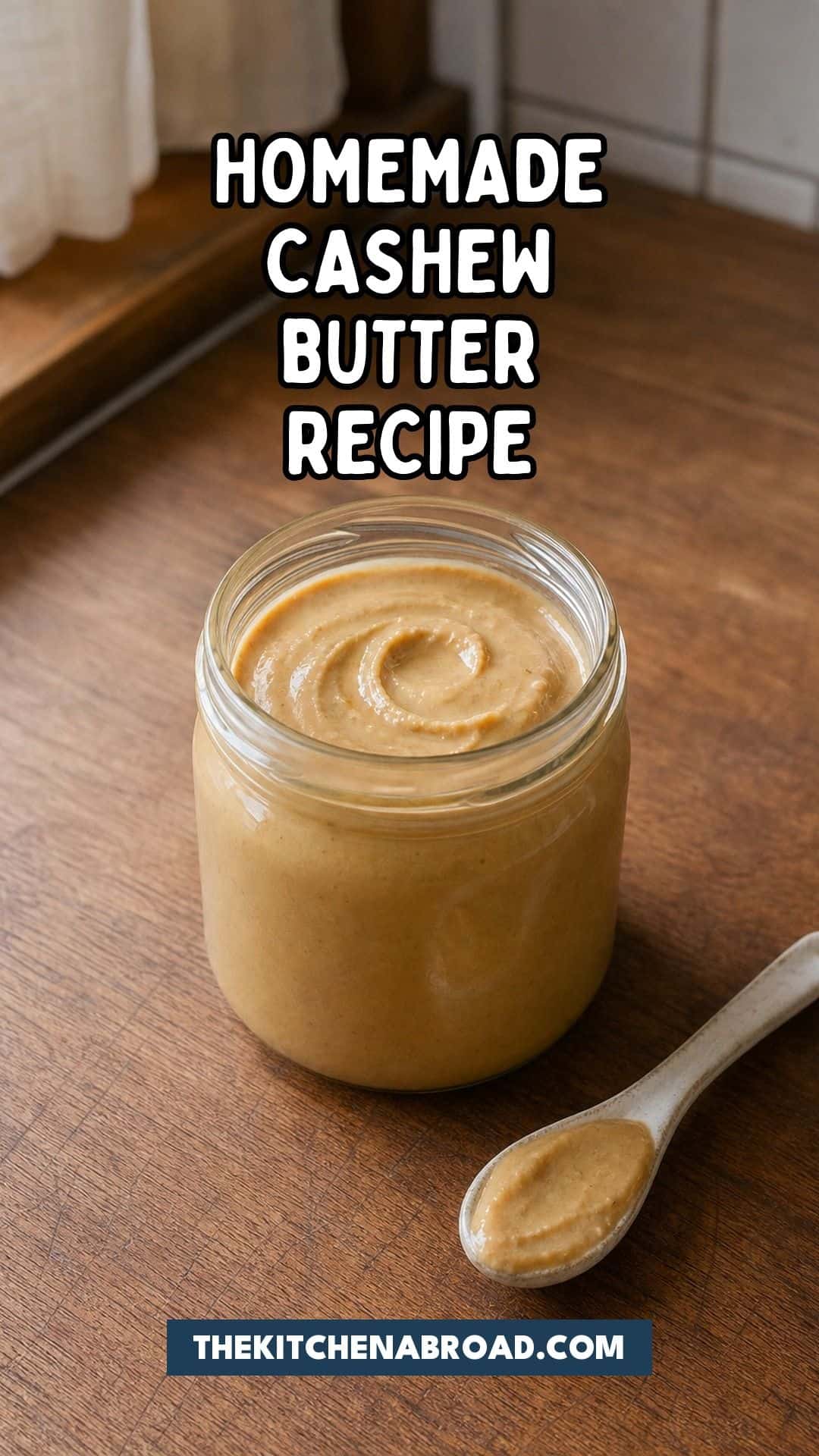
Homemade cashew butter turns smooth when warm roasted cashews are processed long enough to move from crumbs to clumps to a glossy spread. Add maple syrup, vanilla, cinnamon, and salt only after the butter is already smooth so the texture stays loose and spoonable.
Homemade cashew butter is a simple recipe, but it is not instant. For the first few minutes, the food processor makes the cashews look dry and hopeless. Keep going. The nuts eventually release their oils and turn into a creamy spread without needing much added oil.
This version is lightly sweet with maple, vanilla, and cinnamon. The flavor is cozy enough for toast and oatmeal, but the butter still tastes like cashews first. The main rule is timing: roast first, process fully, flavor last.
What Makes Homemade Cashew Butter So Much Better
Store-bought cashew butter is convenient, but homemade lets you control the roast, salt, sweetness, and texture. Warm roasted cashews blend faster and taste deeper than raw cashews straight from the bag.
The texture changes in stages. First the cashews become crumbs. Then they gather into thick clumps. After more processing, the clumps loosen into paste, and finally the paste turns glossy. That glossy stage is the point where flavorings can go in safely.
Maple syrup and vanilla should not go in at the beginning. Liquid sweeteners can make nut butter tighten if the oils have not released yet. Add them once the cashew butter is smooth, then process again until the spread relaxes.
Homemade Cashew Butter Recipe

This makes about 1 1/2 cups (about 360 g) of cashew butter. The exact yield depends on how long you process it and whether you add oil.
Ingredients
- 3 cups (420 g) raw cashews
- 1/2 teaspoon (3 g) fine salt
- 1 teaspoon (2 g) ground cinnamon
- 1 teaspoon (5 ml) vanilla extract or vanilla bean paste
- 1 to 2 tablespoons (15 to 30 ml) maple syrup, to taste
- 1 to 2 teaspoons (5 to 10 ml) neutral oil, only if needed
Instructions
- Heat the oven to 325°F (165°C). Spread the cashews on a baking sheet.
- Roast for 8 to 10 minutes, until the cashews smell nutty and look lightly golden.
- Let the cashews cool for about 5 minutes so they are warm, not hot.
- Transfer the warm cashews to a food processor and process until they move from crumbs to clumps to thick paste.
- Scrape the bowl as needed and keep processing until the butter turns smooth and glossy.
- Add salt and cinnamon, then process again.
- Add vanilla and maple syrup only after the cashew butter is smooth. Process until the butter loosens again.
- Add a teaspoon or two of neutral oil only if the butter stays too thick.
- Transfer to a clean jar and let cool before sealing.
Notes
- Do not add maple syrup before the cashews are fully smooth.
- Pause the food processor if the motor feels hot.
- Oil separation is normal. Stir before using.
- For unsweetened cashew butter, skip the maple syrup and vanilla.
- For a thinner drizzle, warm a spoonful with a splash of hot water and stir until smooth.
Ways to Serve Cashew Butter Beyond Toast
Spread it on toast, pancakes, waffles, banana bread, or rice cakes. Spoon it over oatmeal or yogurt with fruit. Use it as a dip for apples, dates, or pretzels.
For savory meals, thin it with warm water, lemon juice, soy sauce, and garlic for a quick noodle or grain bowl sauce. Unsweetened cashew butter is best for savory sauces, but the maple-cinnamon version is excellent with breakfast foods.
Storage and Texture Tips
Store homemade cashew butter in a clean jar for about 2 weeks at room temperature or up to 1 month in the refrigerator. Refrigerated cashew butter firms up, so let it sit at room temperature before spreading.
If the butter thickens after adding maple syrup, keep processing for another minute. If it still feels stiff, add neutral oil a few drops at a time. Avoid adding water unless you are turning it into a sauce to use immediately.
Frequently Asked Questions
Do I need a food processor to make cashew butter?
A food processor is the easiest tool because it lets the cashews move from crumbs to paste to butter without needing as much liquid. A high-powered blender can work, but you will need the tamper and more pauses.
Why is my cashew butter not getting smooth?
It probably needs more time. Cashews go through a dry crumb stage, then a thick clump stage, before their oils release and the mixture turns glossy.
Why did my cashew butter turn thick after adding maple syrup?
Maple syrup contains water, and water can tighten nut butter. Add maple syrup only after the cashews are already smooth, and add it gradually.
Can I make cashew butter without maple syrup?
Yes. Leave it unsweetened, or use only cinnamon, vanilla, and salt. Unsweetened cashew butter is more flexible for sauces and savory recipes.
How long does homemade cashew butter last?
Homemade cashew butter keeps about 2 weeks at room temperature or up to 1 month in the refrigerator when stored in a clean sealed jar.
Can I use roasted salted cashews?
Yes, but skip the extra salt and do not roast them again for long. Warm them briefly if needed so they process more easily.
Key Takeaways
- Roast cashews before blending for deeper flavor and easier processing.
- Process through the crumb, clump, paste, and glossy stages.
- Add maple syrup only after the cashew butter is smooth.
- Pause and scrape the food processor so the motor does not overheat.
- Store in a clean jar and stir before using if oil separates.
Wrapping Up
Homemade cashew butter is mostly about patience. The food processor will look like it is making dry crumbs before it makes anything spreadable, but the glossy stage does come. Wait for that before adding maple and vanilla.
Once you have the base method down, the flavor can go wherever you want: cinnamon-maple for breakfast, plain salted for sauces, or vanilla-heavy for spooning over fruit. The process stays the same: roast, blend, scrape, and flavor at the end.