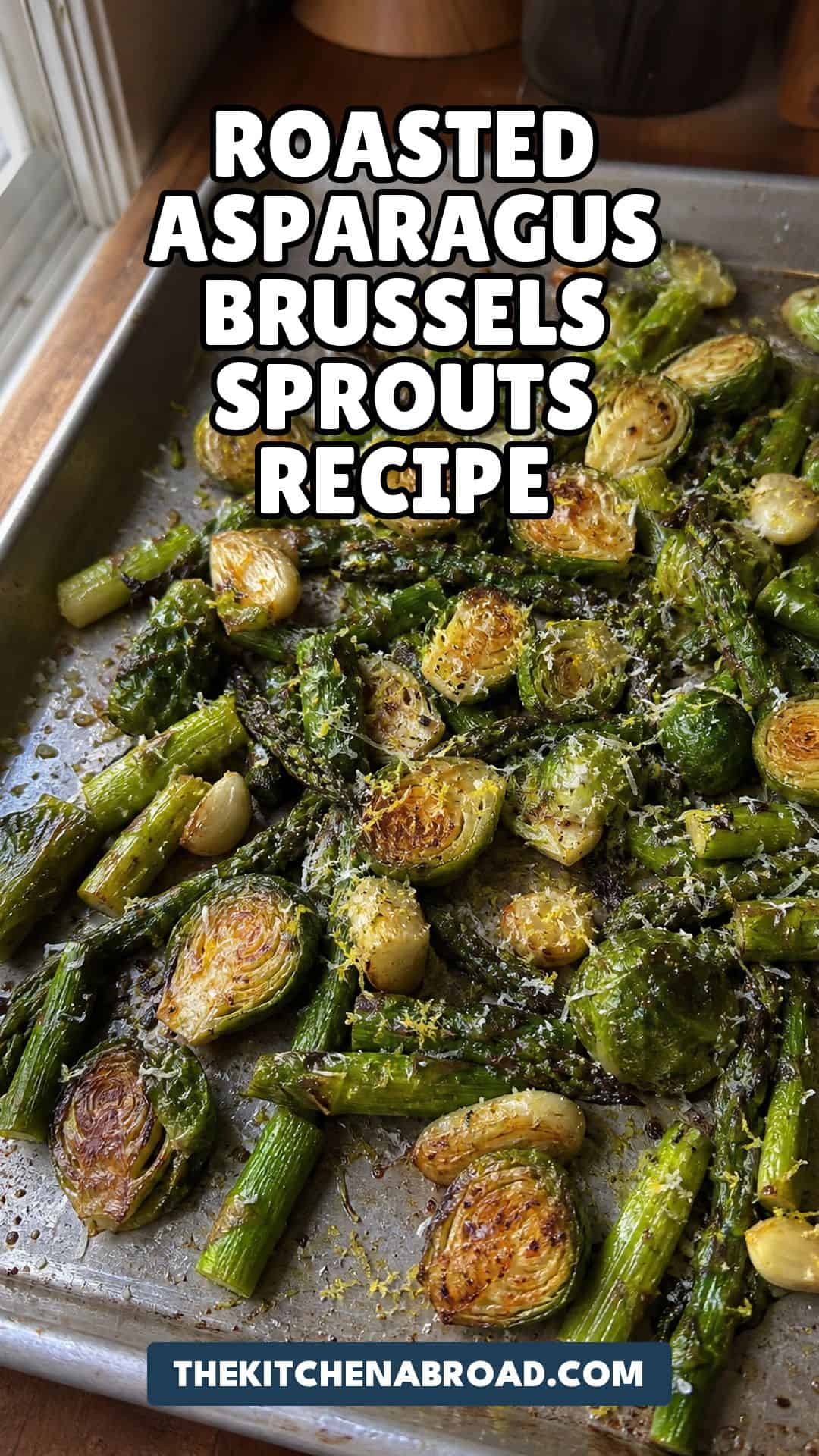
A one-pan roasted asparagus and brussels sprouts built on a staggered roast: brussels halved cut-side-down on a preheated half sheet pan at 425°F (220°C), alone for the first fifteen minutes so the dense, water-heavy sprouts can drive off moisture and Maillard the cut face. Asparagus tossed with the second pour of olive oil and scattered across the open half of the pan for the final ten minutes, just long enough for the spears to blister without going limp. Pulled from the oven and finished off heat with a generous shower of finely grated Parmigiano, the zest of one lemon, and a squeeze of juice. Two vegetables, two densities, one pan, one temperature. Serves four to six as a side.
Brussels sprouts and asparagus do not share a timeline. The sprouts are dense and water-heavy and need close to twenty-five minutes of hard heat before the cut face caramelizes; the asparagus is delicate and ninety-three percent water and goes from green to gray inside fifteen. Throw them on the same sheet pan at the same time and you end up with either undercooked sprouts or limp spears, which is why most one-pan versions of this side disappoint. The fix is a staggered roast on one preheated sheet pan: brussels get a fifteen-minute head start cut-side-down on the hot metal, the asparagus joins for the final ten with a fresh pour of olive oil, and the whole thing finishes off heat with Parmigiano and lemon zest. This is the two-vegetable combo lane, not the single-veg deep dive. If you want brussels alone with balsamic, that is the single-veg roasted brussels sprouts post. If you want asparagus alone with the Parmesan timing window, that is the lemon Parmesan asparagus post. This one is the one-pan pairing, spring vegetable meets fall vegetable, built for a Sunday roast or a weeknight side.
What You’ll Need
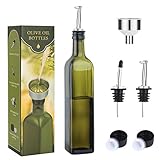
A heavy aluminum half sheet pan large enough to hold a pound of halved brussels sprouts in a single layer with breathing room for the asparagus to join later, a sharp eight-inch chef’s knife for halving the sprouts cleanly through the stem so the cut face stays flat against the pan, a Microplane for zesting the lemon into the off-heat finish without dragging in the bitter white pith, a good olive oil dispenser for the two separate pours (the brussels get the first, the asparagus gets the second when it joins the pan), and a stainless box grater for shredding the Parmigiano fine enough that it melts on contact with the hot pan. None of these are fussy, none of them are optional. The preheated sheet pan in particular is the entire technique.



Recommended Reads
- Roasted Brussels Sprouts
- Lemon Parmesan Asparagus
- Chopped Asparagus Salad
- Roasted Spring Vegetables with Lemon Herb Drizzle
- Best Easter Dinner Ideas
Why Staggered Timing Beats Same-Time Roasting
The problem with roasting brussels sprouts and asparagus together on one pan is the density gap. Brussels sprouts are dense, low-water-content cruciferous vegetables that need close to twenty-five minutes at 425°F before the cut faces caramelize and the centers turn tender. Asparagus is the opposite, ninety-three percent water by weight and thin enough to blister inside twelve minutes at the same temperature. Send them into the oven together and one of them is wrong. Either you pull the pan when the asparagus is right and the sprouts are still squeaky in the middle, or you pull when the sprouts are right and the asparagus has gone limp and gray and shed every bit of texture it walked in with. The staggered roast solves the mismatch by giving each vegetable its actual cook time on the same sheet pan. Brussels go in first, alone, cut-side-down on hot metal. Asparagus joins ten minutes from the finish line.
The preheated sheet pan is the other half of the technique. A cold pan with cold vegetables sitting on it for the first five minutes of the roast steams the bottoms instead of searing them, which is why so many home-roasted brussels sprouts come out pale and soft. Slide the pan into the oven while it heats to 425°F, then carefully pull it out, toss the brussels in oil and salt in a bowl, and lay them cut-side-down on the hot metal. The sizzle is the entire point. The one-pan combo of brussels and asparagus belongs to a specific moment in American home cooking, the 2010s sheet-pan dinner mainstay popularized by Melissa Clark at NYT Cooking, Half Baked Harvest, and the Bon Appétit Basically vertical. The genre’s defining move is exactly this: two or more vegetables of different densities, staggered onto one pan, finished bright. This recipe is the cleanest version of the genre because it lives on a single principle. Two vegetables, two densities, one pan, one temperature, one stagger.
A Few Notes on the Ingredients
- Brussels sprouts: One pound, trimmed and halved lengthwise through the stem. Keep the halves cut-side-down on the hot pan for the first fifteen minutes; that flat face is where the Maillard reaction happens and where the caramelized flavor lives. Whole sprouts steam from the inside instead of browning.
- Asparagus: One pound, thick spears. Snap or cut off the woody bottom inch, then cut the spears into pieces about 1.5 inches long. Thick spears hold their bite through ten minutes at 425°F; thin pencil spears overcook and go limp before the brussels are ready to come out.
- Olive oil: Two to three tablespoons total, used generously and in two pours. The first tablespoon and a half coats the brussels at the start; the second tablespoon goes on the asparagus when it joins the pan. Dry asparagus on a hot sheet pan dehydrates instead of roasting.
- Kosher salt and black pepper: Diamond Crystal kosher salt and freshly cracked black pepper. Half goes on the brussels, half goes on the asparagus when it joins. Season both vegetables generously; you are seasoning the pan as much as the food.
- Garlic: Four cloves, smashed flat with the side of a knife and left whole, not minced. Smashed cloves perfume the pan as they roast and stay sweet for the full twenty-five minutes. Minced garlic at 425°F burns inside five.
- Parmigiano and lemon zest: Finely grated Parmigiano-Reggiano and the zest of one lemon, added the second the pan leaves the oven, never under the broiler. Residual pan heat melts the cheese; the zest stays fresh and bright. Send either back into the oven and you waste both.
Recipe: Roasted Asparagus and Brussels Sprouts

Prep time: 10 minutes | Cook time: 25 minutes | Total time: 35 minutes | Serves: 4 to 6
Ingredients
- 1 lb (450 g) brussels sprouts, trimmed and halved lengthwise through the stem
- 1 lb (450 g) asparagus, thick spears, tough ends trimmed, cut into 1.5-inch pieces
- 3 tbsp (45 ml) olive oil, divided
- 4 cloves garlic, smashed
- 1 tsp kosher salt, divided
- 1/2 tsp black pepper, divided
- 1/4 cup (25 g) freshly grated Parmigiano-Reggiano
- Zest of 1 lemon
- Juice of 1/2 lemon
Instructions
- Place a heavy aluminum half sheet pan on the lower-middle rack of the oven and heat the oven to 425°F (220°C). The pan stays in the oven through the preheat. This step is non-negotiable; the hot metal is what gives the brussels their head start on the Maillard reaction.
- While the oven heats, trim the brussels sprouts and halve each one lengthwise through the stem. In a large mixing bowl, toss the halved brussels with 2 tablespoons of the olive oil, half the kosher salt, half the black pepper, and the smashed garlic cloves. Toss until every cut face is coated.
- Carefully pull the hot sheet pan from the oven and set it on the stovetop. Working quickly, spread the brussels sprouts on the pan cut-side-down in a single layer with space between each one. Crowding steams; spacing roasts. Slide the smashed garlic cloves in among the sprouts. Return the pan to the oven and roast for fifteen minutes undisturbed. Do not toss, do not flip, do not open the door.
- While the brussels roast, return to the same bowl and toss the cut asparagus pieces with the remaining 1 tablespoon olive oil, the remaining salt, and the remaining pepper. The bowl still carries the seasoning and oil residue from the brussels, which is the point.
- At the fifteen-minute mark, carefully pull the sheet pan from the oven. Use a spatula to push the brussels sprouts to one half of the pan, then scatter the seasoned asparagus pieces in a single layer across the open half. Return the pan to the oven and roast for ten more minutes, until the asparagus is crisp-tender with the tips just beginning to char and the brussels show deep brown cut faces.
- Pull the pan from the oven and immediately scatter the grated Parmigiano-Reggiano, the lemon zest, and a squeeze of juice from half a lemon across the whole pan. Toss gently with tongs so the cheese melts against the hot vegetables and the zest distributes. Transfer to a serving platter and serve straight away.
Notes
The preheated sheet pan is the move that gets cited and the one most home cooks skip. A cold pan with cold brussels sitting on it for the first three or four minutes of the roast steams the cut faces instead of searing them, and once you have lost that window you cannot get it back. Slide the pan in while the oven heats, listen for the sizzle when the sprouts hit the metal, and you have a jump on the Maillard reaction before the timer even starts.
Cut-side-down brussels is non-negotiable. The whole point of halving the sprouts is to give yourself a flat face to brown, and the only way that face browns properly is in direct contact with the hot pan for an uninterrupted stretch. Do not toss the brussels at any point during the first fifteen minutes. Do not flip them when the asparagus joins. The cut face goes down at minute zero and stays down until the pan leaves the oven.
Thin asparagus is the failure mode you want to avoid. Pencil-thin spears overcook inside seven minutes at 425°F and shed every bit of texture they walked in with by minute ten. Buy the thick spears for this recipe, the ones with stalks about the diameter of a Sharpie. They hold their bite through the full ten minutes and finish with the snap you want against the deeply browned brussels.
Tips and Variations
Why Preheating the Sheet Pan Beats Cold Pan
A cold sheet pan with cold vegetables on it spends the first four or five minutes of the roast climbing up to oven temperature, and during that climb the moisture on the cut face of the brussels steams off instead of browning. By the time the pan and the vegetables are actually at 425°F, the cut face has already lost its window. A preheated pan flips the math. The brussels hit metal that is already at 425°F, the moisture flashes off as steam in the first ten seconds, and the cut face starts caramelizing immediately. This is the exact principle behind a preheated pizza stone and a preheated cast-iron skillet for seared steak. Hot metal sears; cold metal steams. The pan goes in when you turn the oven on, comes out only when you are ready to load it, and goes back in for the full twenty-five minutes. That is the technique.
Staggered Timing on One Pan (Brussels First, Asparagus Last)
The whole reason this recipe earns the one-pan label is the stagger. Brussels need close to twenty-five minutes; asparagus needs ten. Run both at the same time and one of them is wrong. The fix is to load the pan in two passes. Brussels go in alone at minute zero, cut-side-down on the hot pan, and roast for the first fifteen minutes undisturbed. At minute fifteen, the pan comes out, the brussels get pushed to one side, and the asparagus goes on the open half with a second pour of olive oil. Both finish at minute twenty-five. The brussels have spent the full twenty-five minutes on the pan, the asparagus has spent exactly ten, and both leave the oven at peak texture. The same bowl handles both tosses, so cleanup is one pan and one bowl. If you bought thinner asparagus, push the join to minute seventeen instead of fifteen and pull at twenty-five regardless.
Cut-Side-Down Brussels for Caramelization
Halving the brussels through the stem gives you two flat faces per sprout, and the flat face is where the browning happens. Lay each half cut-side-down on the hot pan and leave it alone. The Maillard reaction needs continuous contact with hot metal for at least eight to ten minutes to develop the deep brown crust that defines a properly roasted brussels sprout, and every time you flip or toss the sprouts you reset that clock. Most home cooks toss too early and end up with sprouts that are evenly heated but not browned. The right move is the opposite. Place the cut face down once, walk away, and let the pan do the work. When the asparagus joins at minute fifteen, do not flip the brussels then either. The cut face stays down through the full twenty-five minutes. When you finally pull the pan, the bottom of each sprout will be a deep mahogany brown and the inside will be tender.
Adding Toasted Almonds or Pancetta for a Main
The side becomes a main with two additions. Sliced almonds toasted in a dry pan over medium heat for three or four minutes, until they smell nutty and go pale gold, get scattered over the finished platter alongside the Parmigiano. The crunch carries the dish, and a handful of almonds adds enough protein and fat to make the side dinner-worthy on its own. For a meatier version, dice four ounces of pancetta or thick-cut bacon and render it in a skillet over medium heat until crisp, about eight minutes. Scatter the pancetta and a tablespoon of the rendered fat over the vegetables when they come out of the oven, before the Parmigiano and lemon. The fat coats the brussels and asparagus, the pancetta adds salt and chew, and the whole pan reads as a one-dish meal. Serve over a scoop of soft polenta or alongside a fried egg for a Sunday lunch that takes half an hour and feels like more.
Make-Ahead: Trim and Halve the Vegetables the Night Before
The active prep on this recipe is ten minutes, and almost all of it is knife work. Trimming and halving the brussels sprouts and cutting the asparagus into pieces can happen the night before with no loss of quality. Trim the brussels, halve them through the stem, and store them in a zip-top bag or airtight container in the fridge overnight. Cut the asparagus into 1.5-inch pieces and store separately in the same fridge. The next day, when you are ready to roast, the only step left is tossing each vegetable with oil and seasoning in the same bowl. This is the move for a holiday dinner where the oven is doing six things at once. Prep on Saturday night, roast on Sunday afternoon, and the side comes together in the thirty-five minutes the main is resting. The asparagus is the more delicate of the two; if you are prepping more than twelve hours ahead, wrap the cut pieces in a damp paper towel inside the container to keep them from drying out.
What to Serve It With
The side anchors any protein that benefits from a sharp, bright finish, which is most of them. A Sunday roast chicken at 425°F finishes on a second rack while the brussels and asparagus run on theirs, and both pans pull at the same time. The recipe earns its Easter dinner slot as a green-and-bright counter to glazed ham or roast lamb; the full Easter table roundup gives the rest of the supporting cast. For weeknights, the side handles pan-seared salmon, pork tenderloin, or a quick steak with no extra effort. Leftovers fold into a grain bowl with farro or barley and a soft-boiled egg, or stuff into a baguette with shaved Parmigiano for next-day lunch. If you want more on the pan, the five-vegetable spring medley stretches the genre further with carrots, leeks, and radishes. For wine, pour a dry rosé, a Grüner Veltliner, or an unoaked Chardonnay. Light reds work too; Beaujolais and Pinot Noir both hold their own against the caramelized brussels.
Frequently Asked Questions
Do brussels sprouts and asparagus cook at the same time?
No, and that is the whole problem this recipe solves. Brussels sprouts need close to twenty-five minutes at 425°F to caramelize the cut face and tenderize the centers. Asparagus needs about ten minutes at the same temperature before it starts to overcook. Roast both on the same pan at the same time and one of them is wrong. The fix is a staggered roast: brussels go in first, alone on a preheated sheet pan, for the first fifteen minutes. Asparagus joins for the final ten with a second pour of olive oil. Both finish at the twenty-five-minute mark, both at peak texture, on the same pan.
What temperature do you roast asparagus and brussels sprouts at?
425°F (220°C) for both. The temperature is hot enough to caramelize the cut faces of the brussels sprouts in twenty-five minutes and hot enough to blister the asparagus tips in ten. Lower temperatures (375°F or 400°F) under-brown the brussels and leave the asparagus limp; higher temperatures (450°F) scorch the asparagus tips before the brussels finish. 425°F is the working sweet spot, and it stays constant across the full roast. Do not adjust when the asparagus joins the pan, do not turn on the broiler at the end.
How long does it take to roast brussels sprouts and asparagus together?
Twenty-five minutes total at 425°F, structured as a fifteen-plus-ten stagger. Brussels go on a preheated sheet pan cut-side-down for the first fifteen minutes, alone. Asparagus joins for the final ten on the same pan with a fresh pour of olive oil. The total active prep is about ten minutes; the oven handles the rest. From the moment you turn on the oven to the moment you scatter the Parmigiano and lemon zest over the finished pan is about thirty-five minutes, give or take how long your oven takes to hit 425°F.
Why are my roasted brussels sprouts mushy?
Three culprits, and one of them is almost always the problem. A crowded pan is the first; brussels need space to roast, and any two halves touching each other steam where they touch instead of browning. A cold pan is the second; if the sheet pan and the brussels are both cold going into the oven, the first five minutes are spent climbing temperature, and the cut faces steam off their moisture instead of caramelizing. The third is whole sprouts instead of halved; an unhalved brussels has no flat face, no Maillard surface, and ends up soft through. Halve the sprouts, preheat the pan, give each half breathing room cut-side-down. Mushy goes away.
Should you cut brussels sprouts in half before roasting?
Yes, always, for this recipe and most others. Halving the sprouts through the stem gives you a flat cut face that browns properly against a hot sheet pan, and the cut also lets steam escape from the center instead of building up inside the leaves. Whole brussels sprouts roasted at 425°F end up soft and steamed on the inside without the deep brown crust that defines a properly roasted sprout. Trim the stem end, slice each one in half lengthwise through the stem so the leaves stay attached, and place the halves cut-side-down on the pan. Bigger sprouts (over two inches across) can be quartered; smaller ones (under one inch) can roast whole if you must, but halving is still the better move.
What protein goes with roasted asparagus and brussels sprouts?
Almost anything roasted, seared, or grilled benefits from this side. A Sunday roast chicken at 425°F on a second pan pairs cleanly since both finish at the same oven temperature. Pan-seared salmon, pork tenderloin, and a quick rib-eye all work for weeknights. For holiday meals, the side anchors a glazed ham or a roast leg of lamb at the Easter table. For vegetarian mains, fold the leftovers into a grain bowl with farro and a soft-boiled egg or top with toasted almonds and crumbled feta for a lighter dinner. The bright lemon-Parmigiano finish on the vegetables cuts through richer proteins and complements lean ones equally.
Key Takeaways
- Preheat the half sheet pan in the oven while it heats to 425°F (220°C). Hot metal sears the cut face of the brussels on contact; cold metal steams.
- Stagger the roast on one pan: brussels go in alone for the first fifteen minutes cut-side-down, asparagus joins for the final ten with a second pour of olive oil.
- Halve the brussels lengthwise through the stem and lay them cut-side-down. Do not flip, do not toss, the cut face stays down through the full twenty-five minutes.
- Buy thick asparagus spears the diameter of a Sharpie. Thin pencil spears overcook before the brussels are ready to come out.
- Smashed garlic cloves stay sweet for the full roast; minced garlic at 425°F burns inside five minutes.
- Finish off heat with grated Parmigiano, lemon zest, and a squeeze of juice the second the pan leaves the oven. Residual pan heat melts the cheese; the zest stays bright.
Final Thoughts
This is the one-pan combo that earns its slot for the whole calendar year. Brussels sprouts belong to fall and winter; asparagus belongs to spring. The pairing belongs to neither season fully, which is exactly why it works as a permanent member of the weeknight rotation and an Easter side and a Sunday roast accompaniment and a holiday plate-builder all at once. Two vegetables, two densities, one pan, one temperature, one stagger.
The non-negotiables are the preheated pan and the cut-side-down brussels. Skip the preheat and you lose the head start on the Maillard reaction; flip the brussels at any point and you lose the crust you have been building. Everything else is forgiving. The asparagus join can stretch by a minute or two; the garlic can be three cloves or five; the Parmigiano can be Pecorino if that is what you have. The pan and the placement are what carry the recipe.
The off-heat finish is the move worth practicing. Pull the pan, scatter the cheese and the zest and the juice straight onto the hot vegetables, toss once with tongs, and serve from the pan or transfer to a platter. The cheese melts on contact, the zest stays fresh, the lemon brightens the whole plate. Send any of those back into the oven and you waste them. The pan leaves the oven, the finish goes on, the side goes to the table. That is the entire recipe.
Last update on 2026-10-16 / Affiliate links / Images from Amazon Product Advertising API