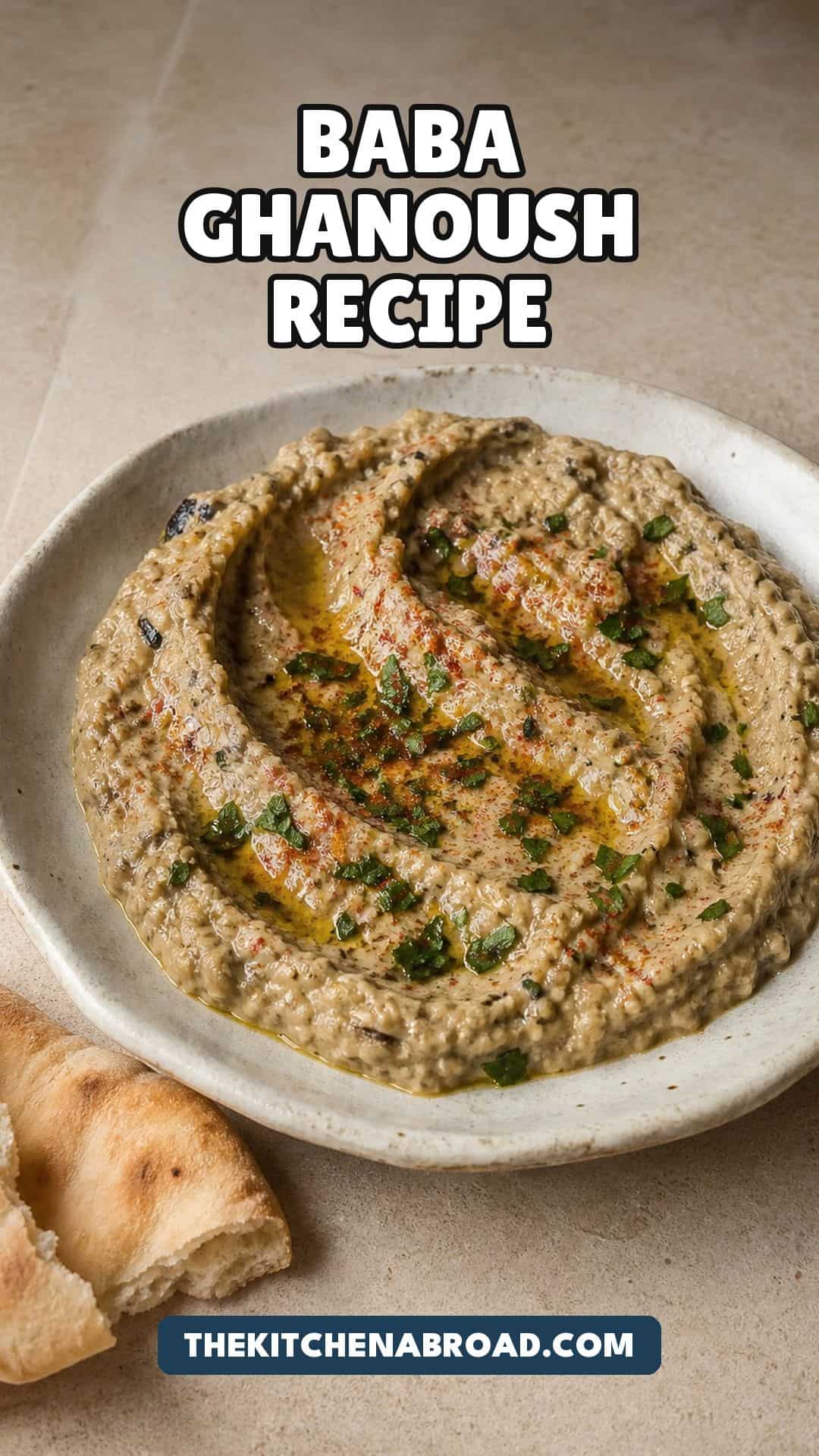
Baba ghanoush is the Levantine eggplant tahini dip built by charring whole eggplants black over a gas flame, draining the smoky flesh, then pulsing it with tahini, lemon, grated garlic, and olive oil to a deliberately chunky texture. Spread on a wide plate, dressed with paprika and parsley. Ready in about 40 minutes, serves 6 to 8 with warm pita.
This is the smoky charred-and-mashed dip, not a roasted eggplant side. If you came looking for roasted slabs of aubergine on a platter with tahini drizzled over the top, that is a different recipe (the Ottolenghi-coded roasted aubergine sibling), and you can find it at aubergine tahini. This recipe is baba ghanoush in its proper register, which means whole eggplants charred until the skin is fully black and the flesh has collapsed, peeled, drained, and pulsed with tahini, lemon, and garlic into a chunky scoopable dip. The Arabic name baba ghannouj translates loosely to “father of charcoal” or “pampered papa,” depending on which Lebanese cookbook you ask, and the name’s reference to charcoal is the entire technical point of the dish. Without the char, the dip is bland eggplant mash with tahini stirred in. With the char, it is one of the great Levantine mezze plates, and the smoky note threads through every bite of pita that gets dragged across the surface.
What You’ll Need
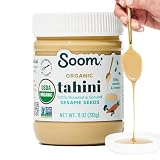
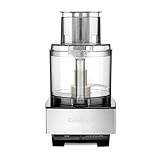
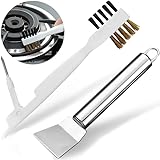
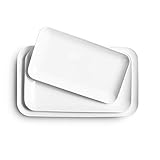
A jar of single-origin tahini (Soom Foods is the cleanest American option; Al Wadi al Akhdar and Seed + Mill are also reliable; grocery-store private label often runs bitter), a 14-cup food processor that can pulse the charred eggplant flesh into the chunky-but-cohesive texture the dip needs (a smaller 7-cup processor works but you may need to do it in two batches), a wire grill or burner-top grate that sits over a gas flame and supports a whole eggplant during the char (the manufacturer’s stovetop grate works too if it is heavy and stable enough), a Microplane for grating garlic to a paste so it disappears into the dip, and a wide ceramic platter for the final presentation because baba ghanoush is a flat-spread dip, not a bowl dip, and the swoosh of the spoon across the surface is part of the visual.


Recommended Reads
- Aubergine Tahini Recipe
- How to Make Tahini Sauce
- Chicken Tahini Recipe
- Roasted Red Pepper Hummus with Veggies
- Tahini Butter Recipe
Where Baba Ghannouj Came From
Baba ghannouj is a Levantine dip with deep roots in Lebanese, Syrian, and Palestinian home cooking. The Arabic name (بابا غنوج) translates literally to “father” plus “pampered” or “indulged,” though one widely repeated etymology renders it as “father of charcoal” in reference to the dish’s defining cooking method. The exact translation is debated; the technique is not. The dish exists across the Levant under regional variations: in Lebanon, the dip is traditionally chunky and skews lemon-forward; in Syria, the texture is sometimes smoother and the smoke is more pronounced; in Palestine, the dish is called mutabbal in some regions and the proportions of tahini to eggplant shift slightly. What unites every regional version is the requirement that the eggplant be charred whole over fire until the skin is blackened and the flesh is fully collapsed before any mashing or processing begins. The char is the dish.
The modern Anglophone canon for baba ghannouj has been shaped most directly by Lebanese-American food writers like Maureen Abood (Rose Water and Orange Blossoms) and Suzy Karadsheh (The Mediterranean Dish), both of whom have argued in print for keeping the dip chunky rather than processing it to a hummus-style puree. The Israeli-Palestinian framing pushed into Western kitchens through Yotam Ottolenghi and Sami Tamimi’s Jerusalem and Falastin treats baba ghannouj as part of a broader mezze tradition, anchored in the same charred-eggplant technique. The recipe below sits in that lineage: chunky texture, lemon-forward, smoke from a gas-flame char, no shortcut to a roasted-in-the-oven eggplant, and no smoothing-out in the processor past the point where the dip stops being baba ghannouj and starts being eggplant hummus. This is the dish in its proper register.
A Few Notes on the Ingredients
- Eggplant, charred whole: Two large globe eggplants (about 1 pound each) are the right size for a four-to-six-person dip. Smaller Italian or Japanese eggplants work but you will need three or four of them to hit the same volume. The skin has to be blistered fully black before peeling; pale brown is not done.
- Tahini: A third of a cup of single-origin sesame paste. Soom is the default American brand; Al Wadi al Akhdar and Seed + Mill are also reliable. Grocery-store private label is often bitter; the dip’s character depends on a clean tahini.
- Lemon juice: Three tablespoons of fresh juice (about one and a half lemons). The lemon is what lifts the smoky eggplant and balances the tahini’s richness; bottled juice is flat. Squeeze just before the dip is built.
- Garlic, grated on a Microplane: Two cloves, grated to a paste, not minced. Chunks of garlic compete with the eggplant texture; grated garlic disappears into the dip and perfumes the whole bowl.
- Salt: A half teaspoon of kosher salt in the processor, plus more to taste at the end. The eggplant absorbs salt unevenly; taste the finished dip and adjust before plating.
- Olive oil: A tablespoon in the food processor, then another tablespoon drizzled over the top of the plated dip. The first tablespoon emulsifies into the dip; the second sits on the surface as a finishing layer.
- Smoked paprika and parsley: A pinch of smoked paprika dusted over the top reinforces the smoke from the char and adds visual contrast against the cream-and-tan color of the dip. A scattering of chopped flat-leaf parsley adds grassy freshness. Both are part of the dish, not optional garnishes.
Recipe: Baba Ghanoush Eggplant Tahini

Prep time: 15 minutes | Cook time: 20 minutes char + 20 minutes cool/drain | Total time: 55 minutes | Serves: 4 to 6 as part of a mezze spread
Ingredients
- 2 large globe eggplants (about 2 lb / 900 g total)
- 1/3 cup (80 g) tahini, well-stirred from the bottom of the jar
- 3 tbsp (45 ml) fresh lemon juice, plus more to taste
- 2 cloves garlic, grated on a Microplane
- 1/2 tsp (3 g) kosher salt, plus more to taste
- 1 tbsp (15 ml) extra-virgin olive oil, plus more for finishing
To finish:
- 1 tbsp (15 ml) extra-virgin olive oil, for drizzling
- 1/2 tsp smoked paprika
- 2 tbsp (8 g) chopped fresh flat-leaf parsley
- Warm pita bread, for serving
Instructions
- Pierce each eggplant in two or three spots with the tip of a paring knife. This vents the steam that builds up inside as the eggplant chars; a sealed eggplant over an open flame can burst. The cuts should go through the skin but not deep into the flesh.
- Place a wire grill or stovetop grate directly over a gas burner and turn the flame to medium-high. Set the eggplants directly on the grate so they sit above the flame with the skin in direct contact with the fire.
- Char the eggplants for 15 to 20 minutes, turning every 4 to 5 minutes with tongs, until the skin is blistered fully black on all sides and the flesh has visibly collapsed inward. The eggplants should feel light and slumped, not firm. The kitchen will smell like a wood fire; turn on the vent hood if you have one.
- Transfer the charred eggplants to a colander set in the sink or over a bowl. Let them cool for 10 minutes; they will continue to soften and the steam will help separate the flesh from the skin.
- When the eggplants are cool enough to handle, slit each one lengthwise with a paring knife and peel away the charred skin in strips. Discard the skin and the stem. Some flecks of black char left in the flesh are correct; they reinforce the smoke. Do not rinse the flesh under water.
- Scoop the peeled flesh into the colander and let it drain for 10 minutes. Press lightly with the back of a spoon to help excess liquid release. Drained eggplant produces a denser, more concentrated dip; un-drained eggplant produces a watery one.
- Transfer the drained eggplant flesh to the food processor. Add the tahini, lemon juice, grated garlic, salt, and olive oil. Pulse 8 to 12 times in short bursts, scraping down the sides between pulses, until the mixture is cohesive but still visibly chunky. Stop as soon as the dip looks like coarse mashed potatoes; do not pulse to a smooth puree.
- Taste and adjust. The dip should be smoky, lemon-bright, and tahini-rich without any single element dominating. Add more salt by the quarter teaspoon and more lemon juice by the teaspoon if it needs lift.
- Spoon the baba ghanoush onto a wide ceramic platter or shallow bowl. Use the back of a large spoon to spread it in a thick layer with a swoosh pattern, creating shallow troughs where the olive oil can pool.
- Drizzle the finishing olive oil over the surface, dust with smoked paprika, and shower with the chopped parsley. Serve immediately with warm pita and a small bowl of olives on the side.
Notes
The char is the recipe. There is no acceptable shortcut. Roasting whole eggplants in a 425°F oven for 45 minutes will produce soft eggplant flesh, but the result is closer to eggplant puree than to baba ghanoush, and the smoky character that defines the dish is absent. The gas-flame char is the canonical method; if you do not have a gas stove, an outdoor grill works just as well, and a sheet pan under a broiler at high heat with the eggplants positioned 4 inches from the heat source is the third-best option (rotate every 5 minutes; the broiler char is less even than a flame).
The drain is non-negotiable. Charred eggplant releases a startling amount of water once the skin comes off, and skipping the 10-minute drain in the colander produces a dip that is watery and thin no matter how much tahini you add. Press lightly with the back of a spoon to help the liquid come out; do not squeeze the flesh in cheesecloth, which removes too much liquid and produces a dense, paste-like dip.
The texture is the wedge between this dip and eggplant hummus. Baba ghannouj is chunky by tradition; the flesh of the charred eggplant should be broken down to a coarse, scoopable consistency but still recognizable as eggplant rather than a smooth puree. Pulse 8 to 12 times in short bursts; stop as soon as the mixture looks like coarse mashed potatoes. If you over-process into a smooth paste, the dip is still good, but it is no longer baba ghannouj.
Tips and Variations
Gas Flame Versus Outdoor Grill Versus Broiler
The gas-stove flame is the home-kitchen default because it is fast, controllable, and accessible. An outdoor grill (charcoal or gas) is technically the canonical Levantine method and produces the most pronounced smoke; if you have a grill running for another reason, throw the eggplants on for 15 minutes while you cook the rest of dinner. The broiler is the third-best option for electric-stove households; position the eggplants on a sheet pan 4 inches from the broiler element, rotate every 5 minutes, and budget 20 to 25 minutes total. The broiler produces good charring on the skin but less of the deep smoke note because the heat is dry rather than open-flame. Do not roast the eggplants in a closed oven at 425°F; that produces baked eggplant, not charred eggplant, and the dish loses its center. The whole point of baba ghannouj is the smoke. Without it, the dip is bland.
Why the Drain Step Matters
Eggplant flesh is mostly water. A pound of raw eggplant contains roughly 12 ounces of water by weight, and charring releases that water into the flesh as the cells break down. Peel the eggplant straight into a food processor without draining first, and the dip will be soupy and thin no matter how much tahini you add to compensate. Drain the peeled flesh in a colander for 10 minutes, press lightly with the back of a spoon, and the dip will be dense, scoopable, and properly seasoned. Do not skip this step and do not try to fix a watery dip by adding more tahini; you will overload the tahini ratio and shift the dish into a different register. Drain first, build second. The 10 minutes in the colander is the difference between a baba ghannouj that holds its shape on the platter and a sad puddle on the plate.
Chunky Texture: Why Not Smooth
The single most common mistake home cooks make with baba ghannouj is processing the dip past the chunky stage into a smooth, hummus-like puree. The Levantine tradition keeps the dip chunky for a reason: the texture is the wedge that distinguishes it from hummus and eggplant puree, and the small irregularities of the charred eggplant flesh are part of what makes each scoop interesting. Maureen Abood writes in Rose Water and Orange Blossoms that her mother would mash the eggplant by hand with a fork in a bowl and refused to use a food processor on principle; that is the most traditional approach. The food processor is the home-kitchen compromise: pulse, scrape down, pulse, scrape down, and stop as soon as the mixture is cohesive. If your processor will not let you control the texture finely enough, mash the eggplant by hand with a fork in a wide bowl and stir in the tahini, lemon, garlic, and salt with a spoon. The fork-mash is the canonical move.
Regional Variations: Lebanese vs Syrian vs Palestinian
The dish has different fingerprints across the Levant. The Lebanese version is the one this recipe is calibrated to: lemon-forward, chunky-textured, garlic-grated rather than pounded, finished with olive oil and parsley. The Syrian version sometimes leans heavier on the tahini and lighter on the lemon, producing a creamier, less acidic dip; reduce the lemon juice to two tablespoons and bump the tahini to a half cup if you want to push the dip into Syrian register. The Palestinian version, called mutabbal in some areas, sometimes incorporates yogurt or pomegranate molasses; a quarter cup of plain whole-milk yogurt stirred into the dip at the end produces a tangier, lighter version. Mutabbal in other Palestinian households is the chunkier, lemon-forward version that overlaps with the Lebanese profile. The lines are blurry; the techniques are the same. Char, drain, pulse.
Make-Ahead and Storage
Baba ghannouj is one of the rare dips that improves with a few hours of rest in the fridge before serving. Make it in the morning, refrigerate covered for at least an hour and up to a day ahead, and let it come back to room temperature for 20 minutes before serving. The smoke deepens, the lemon integrates with the tahini, and the salt distributes more evenly through the eggplant flesh. Leftovers keep in a sealed container in the fridge for up to four days; the dip may release a little liquid as it sits, which is normal. Stir with a spoon to recombine and drain off any excess water before re-plating. Do not freeze; the eggplant cells rupture and the texture turns watery beyond rescue. The dip is also excellent spread thick on toasted sourdough as a snack the day after, topped with a fried egg and a sprinkle of za’atar.
What to Serve It With
Warm pita is the universal vehicle. Cut the pita into triangles and warm them in a 350°F oven for 5 minutes before serving; the warmth lifts the dip’s smoke and the bread tears cleanly for scooping. A small bowl of mixed Levantine olives (Castelvetrano and Kalamata together; oil-cured if you can find them) sits next to the platter as the saltier counterpoint. For a fuller mezze spread, add hummus (our roasted red pepper hummus is the lateral move in the same family), labneh dolloped with za’atar and olive oil, and a salad of cucumber-tomato-parsley dressed with lemon and olive oil. As a side to a main course, baba ghannouj works under grilled chicken, lamb skewers, or pan-seared fish; the dip catches the rendered fat and turns into a sauce. A glass of arak (the anise-based Levantine spirit, served with ice and water until it clouds) is the traditional drink call; chilled rosé or a crisp Lebanese white wine works for the wine drinkers.
For the paste itself, see what tahini is or the best tahini alternatives.
Frequently Asked Questions
Can I make this without a gas stove?
Yes, but the method shifts. An outdoor grill (charcoal or gas) is the next best option and produces excellent char and smoke; lay the whole eggplants directly on the grate over medium-high heat for 15 to 20 minutes, turning every 4 to 5 minutes. A broiler is the third-best option for electric-stove households; position the eggplants on a sheet pan 4 inches from the broiler element, rotate every 5 minutes, and budget 20 to 25 minutes. The broiler produces good skin char but less smoke than open flame, and the resulting dip is slightly less assertive. Do not bake the eggplants in a closed oven at 425°F; you will get soft eggplant but no char, and the dip will read flat. The char is the dish.
Is baba ghanoush the same as mutabbal?
The distinction varies by region and household. In some Lebanese and Syrian households, baba ghannouj and mutabbal are the same dish under different names. In other households, mutabbal refers specifically to a smoother, creamier version that sometimes includes yogurt and skews creamier, while baba ghannouj refers to the chunkier, more rustic version. In Palestinian cooking, the names are sometimes used interchangeably, and in other contexts, mutabbal is the broader category and baba ghannouj is the specific eggplant-tahini-lemon version. Both dishes start from charred whole eggplant; both involve tahini and lemon. If you encounter conflicting definitions from different home cooks, both are right within their own kitchens.
How do I know when the eggplant is fully charred?
Three signs. First, the skin is blistered fully black on all sides, with no remaining areas of brown or unburned skin. Second, the eggplant feels light and slumped when you turn it with tongs; a fully charred eggplant has lost most of its structural integrity and collapses slightly under its own weight. Third, the flesh inside, when you slit the eggplant open, is fully soft and creamy from edge to center, with no firm or raw spots. If any of these three checks fail, return the eggplant to the flame for another 5 minutes. Under-charring is the most common home-cook mistake; an eggplant that looks “done enough” is usually still firm in the center and will produce a dip with raw notes.
Why is my baba ghanoush watery?
Two likely causes. First, you skipped or shortened the drain step. Charred eggplant flesh releases a startling amount of water once peeled; without 10 minutes in a colander to drain, the moisture stays in the dip and produces a watery final texture. Second, you rinsed the eggplant flesh under water after peeling. Do not rinse the flesh; the bits of black char left from the skin are part of the dish’s flavor, and rinsing adds water on top of water. The fix is to drain the existing dip through a fine-mesh sieve over a bowl for 30 minutes, then return the drained flesh to the processor and pulse with an extra tablespoon of tahini to rebuild the texture.
Can I make this dairy-free or vegan?
The recipe is naturally both. Baba ghannouj contains no dairy and no animal products in its canonical form: eggplant, tahini (sesame paste), lemon juice, garlic, salt, and olive oil. The Palestinian mutabbal variation sometimes includes yogurt, but the Lebanese-style recipe here does not. Served with pita and olives, the entire mezze spread is naturally vegan, making baba ghannouj one of the most useful plant-based dips in the global pantry. Make sure the pita you serve on the side is also vegan (most commercial pita is, but read the label) and the dish is fully plant-based from start to finish.
Can I use Japanese or Italian eggplants instead of globe eggplants?
Yes, with adjustments. Japanese eggplants (long and slender) and Italian eggplants (medium, slightly pear-shaped) both work; you will need three or four of them to hit the same volume as two large globe eggplants. The smaller eggplants char faster (10 to 12 minutes instead of 15 to 20) because of their lower mass-to-surface-area ratio, so check them at the 8-minute mark. Smaller eggplants also have fewer seeds and thinner skin, which can produce a slightly milder, less smoky dip. The flavor profile is still recognizably baba ghannouj; the volume math is the main adjustment. Avoid white eggplants and graffiti-striped eggplants for this dish; they are excellent for other preparations but their flavor character is too neutral for a smoky char-based dip.
Key Takeaways
- Char the eggplants whole over an open gas flame (or outdoor grill) for 15 to 20 minutes until the skin is fully blistered black and the flesh has collapsed. The char is the dish.
- Cool the charred eggplants for 10 minutes, peel away the skin, and drain the flesh in a colander for another 10 minutes. The drain step is non-negotiable.
- Pulse in a food processor with tahini, lemon, grated garlic, salt, and olive oil to a chunky, scoopable texture. Stop before the mixture goes smooth.
- The texture is the wedge between baba ghannouj and eggplant hummus. Chunky is correct; smooth is a different dish.
- Spread on a wide platter, drizzle with olive oil, dust with smoked paprika, and shower with chopped parsley.
- Serve with warm pita and olives. The dip improves with a few hours of rest in the fridge before serving.
Final Thoughts
Baba ghannouj is one of those Levantine dishes whose entire character lives in a single cooking decision: the eggplant has to be charred whole, over an open flame, until the skin is fully black and the flesh has collapsed inside. Everything else (the tahini, the lemon, the garlic, the parsley) is the finishing kit. Skip the char or shortcut it with an oven roast, and the dip is still edible but is not baba ghannouj; it is eggplant tahini puree, which is a different and lesser thing.
The two non-negotiables are the char and the drain. Char the eggplants until the skin is blistered black on all sides and the flesh has slumped; drain the peeled flesh in a colander for ten minutes before processing. Both moves are technically simple; both are the moves home cooks most often skip; both are the moves that separate a homemade baba ghannouj from a store-bought tub.
The Levant has been making this dish for centuries, codified across Lebanese, Syrian, and Palestinian home cooking and refined through the writing of cooks like Maureen Abood, Suzy Karadsheh, and Sami Tamimi for a Western audience over the last two decades. The version above sits in that lineage. Char two eggplants, drain them, pulse them with tahini and lemon and garlic, plate them with olive oil and smoked paprika and parsley. Tear warm pita, scoop, repeat. The dish does what it has always done.
Last update on 2026-10-15 / Affiliate links / Images from Amazon Product Advertising API